Brookston Beer Bulletin

Jay R. Brooks on Beer

  • Home
  • About
  • Editorial
  • Birthdays
  • Art & Beer

Socialize

  • Dribbble
  • Email
  • Facebook
  • Flickr
  • GitHub
  • Instagram
  • LinkedIn
  • Pinterest
  • RSS
  • Twitter
  • YouTube

Powered by Genesis

Historic Beer Birthday: Frank Leonard Eppig

June 4, 2025 By Jay Brooks

eppig
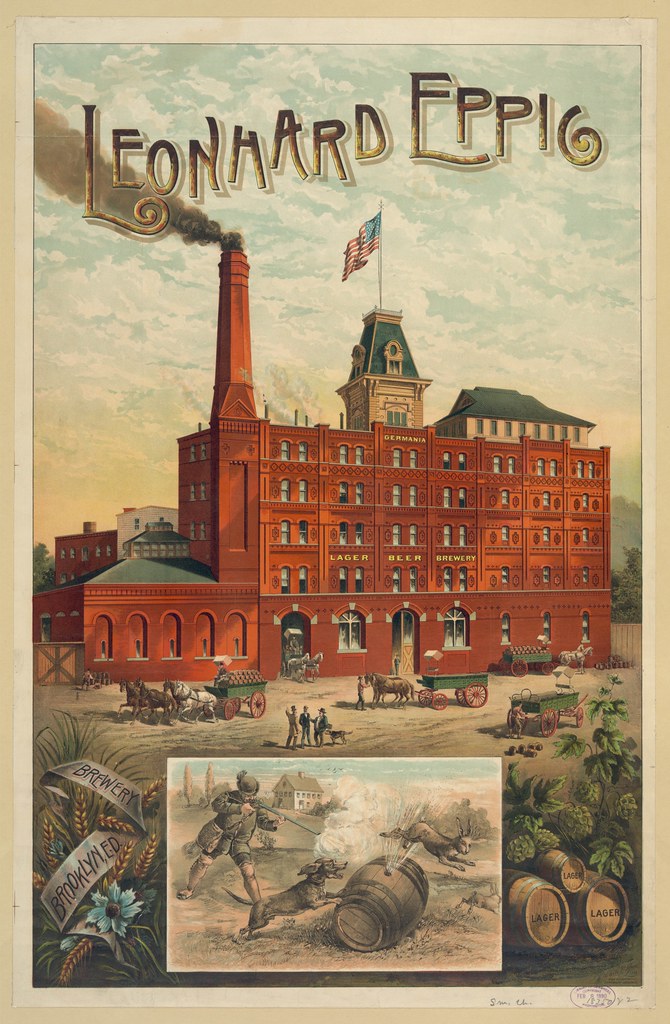
Today is the birthday of Frank Leonard Eppig (June 4, 1864-February 11, 1923). He was born in Brooklyn, New York, and was the son of Leonard or Leonhard Eppig, who owned the Leonard Eppig Brewing Co., but traded under the name Germania Brewery. When his father died, his sons, including Frank as president, continued running the brewery until it was closed down by prohibition in 1920. Frank died in 1923, but the rest of the remaining family reopened the brewery after repeal, but in 1935 sold it to George Ehret Brewery.
zimmermans-salooon-1877


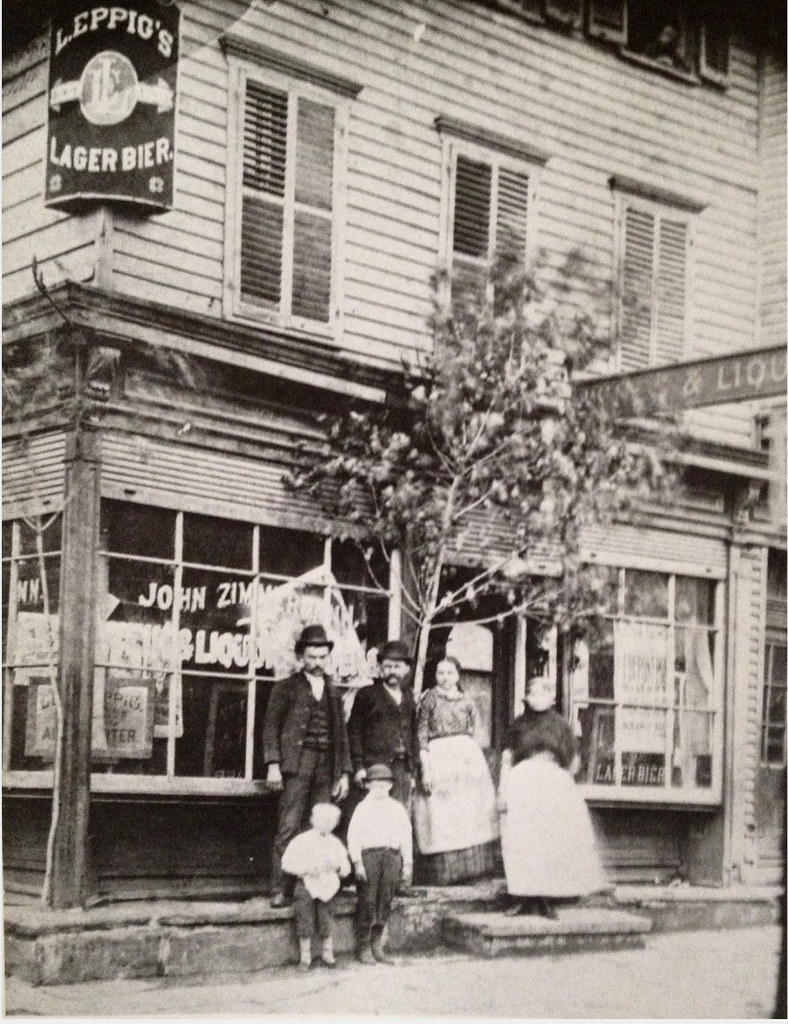
Zimmerman’s Saloon, located at the corner of Graham Ave and Moore Street, in Williamsburg, New York, in 1877, advertising that they carried Leonard Eppig beer.

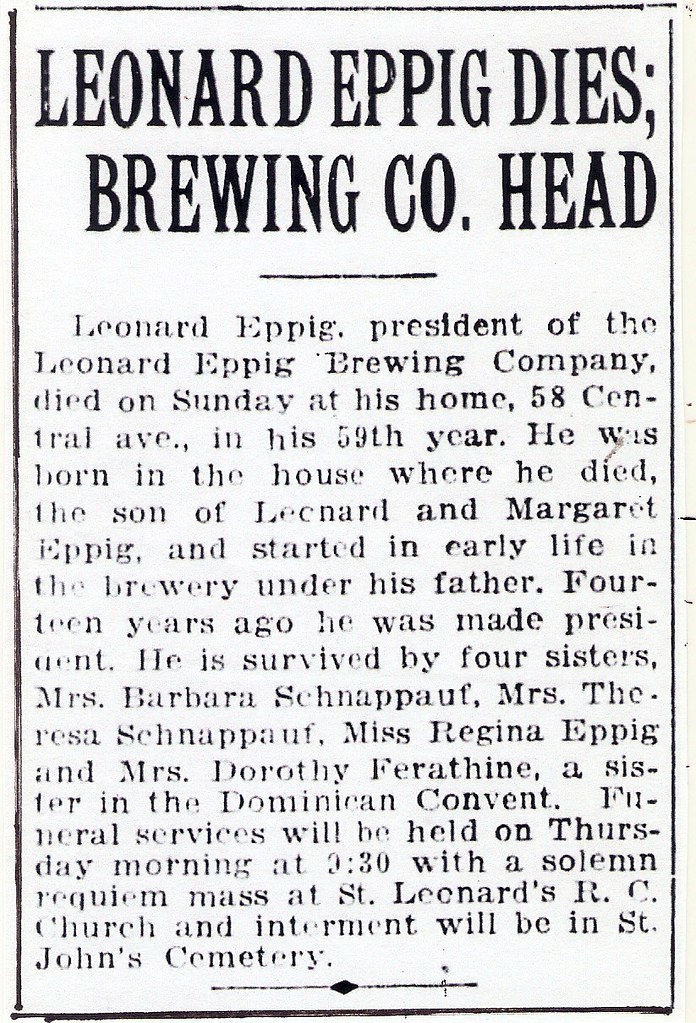
I’ve been unablt to find any photos of Frank, or much information, but this is Eppig’s obituary from the Brooklyn Daily Eagle, for February 13, 1923:
Eppig-obit

Leonhard_Eppig_Brewery_Poster_Historic

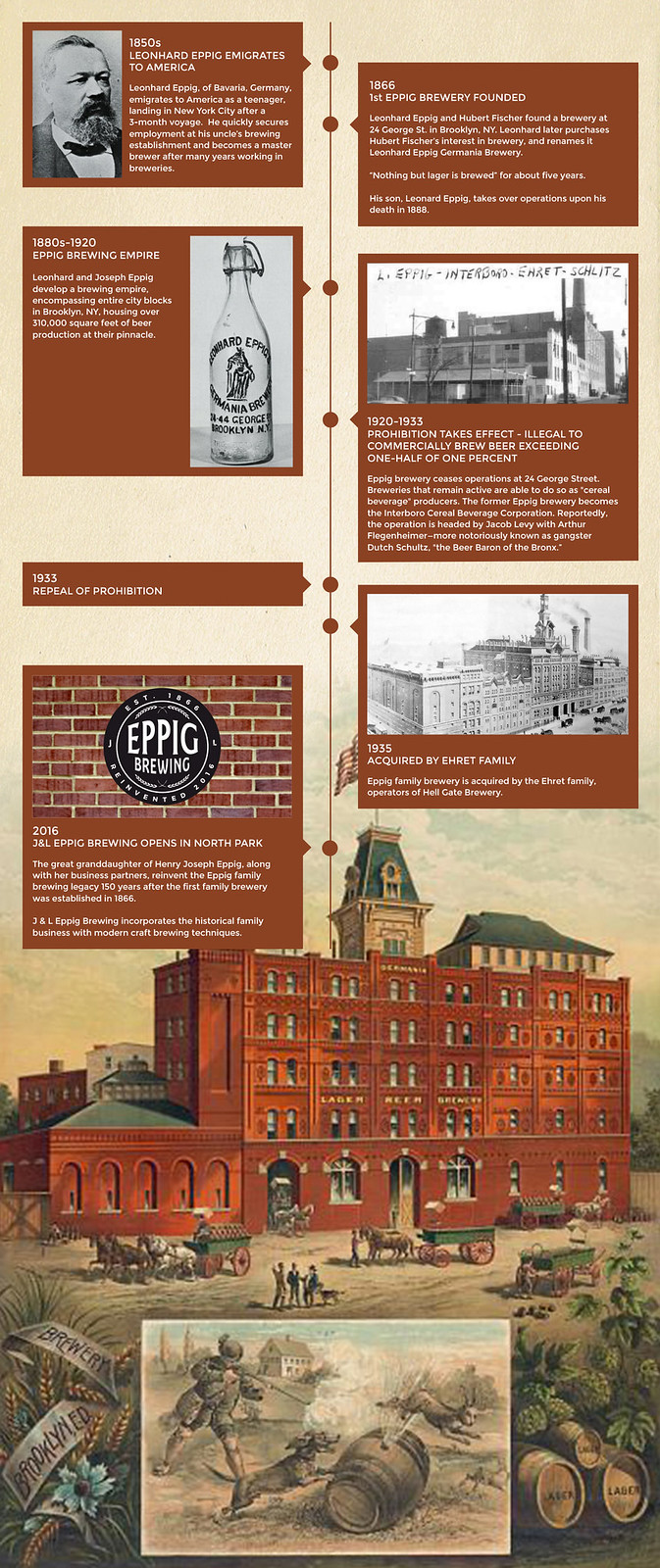
Recently, a descendant of the Eppig family opened a craft brewery in San Diego, which they named Eppig Brewing, and included this infographic in their website:
eppig-history-infographic

Filed Under: Birthdays, Breweries, Just For Fun Tagged With: History, New York

Historic Beer Birthday: August Schmid

June 4, 2025 By Jay Brooks

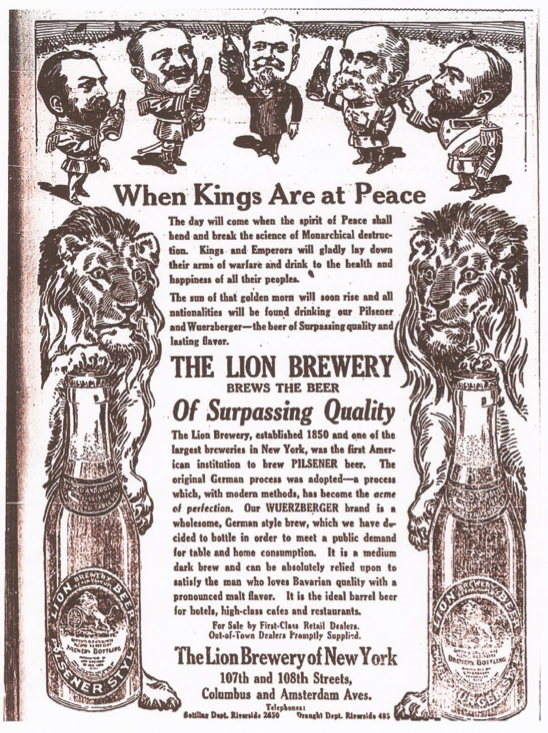
Today is the birthday of August Schmid (June 4, 1843-June 4, 1889). He was born in Switzerland, emigrated to the U.S., and in 1850 with a partner, Emanuel Bernheimer, he founded the Constanz Brewery on East 4th Street near Avenue B, and a couple of years later, Bernheimer and a different partner, James Speyers, started the Lion Brewery on Columbus Ave, between 107th and 108th Streets in Manhattan, next door to the beer garden at the Lion Park, and indeed it is sometimes referred to as the Lion Park Brewery. The business was reorganized in 1868, and August Schmid also became a partner in the Lion Brewery, and by 1890 its official name was the Bernheimer & Schmid Brewery, though they continued to trade under the Lion Brewery name. In 1895, it was the sixth-largest brewery in the U.S. After 1903, it was called the Lion Brewery of New York, presumably to avoid confusion with the many other breweries with Lion in their name. Lion survived prohibition but closed for good in 1942.

This is the beginning of Schmid’s obituary from the New York Times, but it’s oddly only available to subscribers.

August Schmid of the firm of Bernheimer Schmid, proprietors of the Lion Brewery, died early Monday morning at the Hotel Royal after an illness of three days with pneumonia.

Lion-kings

This is about the brewery from Wikipedia:

Shortly after immigrating to the United States, Swiss-German August Schmid and Emanuel Bernheimer founded the Costanz Brewery at East 4th Street near Avenue B in 1850. The brewery produced a lagered beer, a favorite among German immigrants. By 1852, they built a second Costanz Brewery at Four Corners in Staten Island, home to a large German community. Five years later, Bernheimer became the partner of another German immigrant, James Speyers and founded the Lion Brewery in 1857 in Manhattan Valley.

A group of Catholic Bavarians helped build the Lion Brewery. When it was built, they held masses in the Brewery on Sunday mornings.

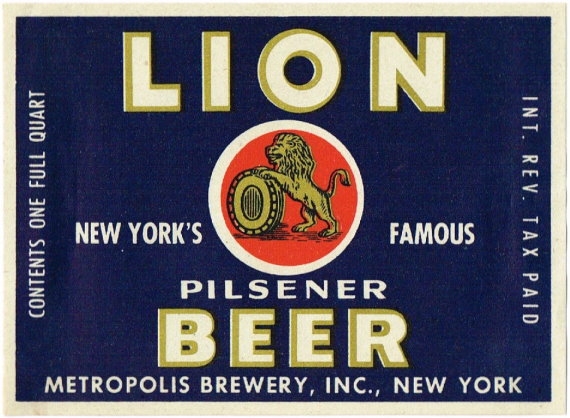
Lion-Pilsener-Beer-Labels-Metropolis-Brewery-Inc

At its peak, the Lion Brewery occupied about six square city blocks, from Central Park West to Amsterdam Avenue and from 107th to 109th Street. At the time Manhattan’s Upper West Side was an open area with inexpensive land housing, many public institutions and an insane asylum. There were about five to ten thousand living in shanties after being displaced by the creation of Central Park in 1859. Consequently, with the brewery and surrounding areas, the Upper West Side failed to increase its real estate value until the early twentieth century.

In 1862, a $1 tax on each barrel of beer hurt small brewers but not Lion. The anti-saloon movement in the late 19th and early 20th century encouraged Lion to clean up its own saloons. Lion Brewery got caught up in a wave of mergers and closings among some of the smaller New York Brewers in the early 1940s which continued until 1941, when the business closed. The brewery (including the canning facilities) was auctioned off on August 26, 1943. The plant was demolished in 1944 and more than 3,000 tons of steel were taken from the original brewery structure and recycled for the war effort.

After the Brewery was knocked down the lot was paved over with cinders. On Sundays, after the war, returning World War II Veterans formed a Softball League and played almost every Sunday afternoon. Home plate was located near 107th street and Columbus Avenue. Today, apartment houses occupy the Lion brewery’s former location.

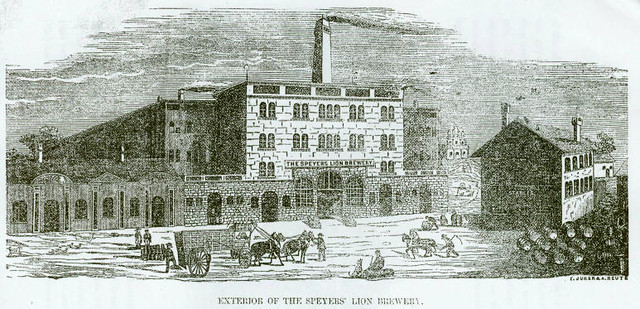
lionbrewery1

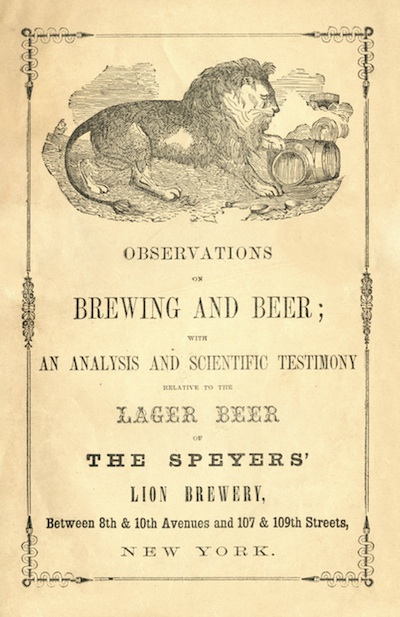
Around 1860, the brewery published a pamphlet titled “Observations on Brewing and Beer: With an Analysis and Scientific Testimony Relative to the Lager Beer of the Speyers’ Lion Brewery.” The pamphlet had a short history of the different kinds of beer, and an analysis showing that their lager beer was pure. The pamphlet also included some great line drawings of the brewery complex.

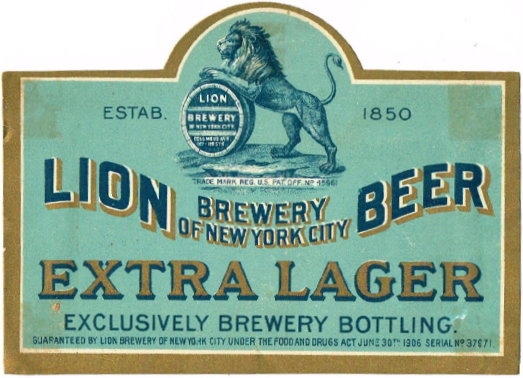
Lion-Extra-Lager-Beer--Labels-Lion-Brewery-Of-New-York-City

And here’s another story from Rusty Cans:

In 1850 recent Swiss German immigrants August Schmid and Emanuel Bernheimer founded the Costanz Brewery at East 4th Street near Avenue B. The brewery specialized in lagered beer, a favorites among their fellow immigrants. By 1852, their success encouraged them to build a second Costanz Brewery at Four Corners in Staten Island, then home to a large German immigrant community. Eight years later, Bernheimer became the partner of another German immigrant, James Speyers, in his Lion Brewery, established in 1857.

The Lion Brewery, depicted here, occupied a site bounded by what are now Central Park West and Amsterdam Avenue and extending from 107th to 109th Streets. The background view includes Central Park, with a glimpse of the Blockhouse, a relic from the War of 1812. (The Church of the Ascension is there now, built with the brewery’s help in the 1890s). During this period Manhattan’s Upper West Side was a relatively open area offering inexpensive land and it accommodated numerous public institutions including an insane asylum. Also clustered in the neighborhood were the shanty homes of between 5-10,000 thousand people displaced by the formal opening of Central Park in 1859. The combination of shanties, public institutions, and such foul-smelling industries as breweries explains why the Upper West Side failed to develop the real estate value of other areas bordering Central Park until the early twentieth century.

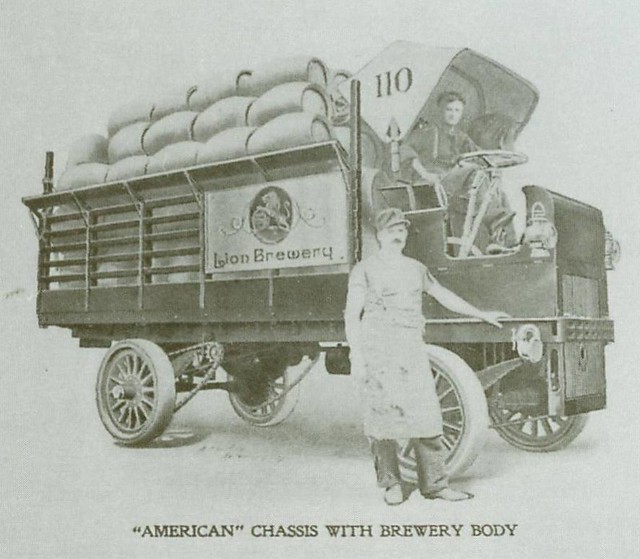
liontruck1

Late in the life of the Lion Brewery, it became involved in a number of mergers and acquisitions, eventually becoming The Greater New York Brewery, Inc.:

Lion brewing got caught up in a wave of mergers and closing among some of the smaller New York Brewers in the early 1940s. In late 1940, the Fidelio Brewing Co., located at 1st Ave. between 29th and 30th Streets., closed. However, on November 15, 1940, it reopened business as the Greater New York Brewery, Inc. In December 1940, the Greater New York Brewery merged with the Horton Pilsener Brewing Co., which was located at Amsterdam Ave. and 128th Street. Horton Brewing President Alex White became a director of Greater New York Brewery and they continued producing previous Horton products. In January 1941, the Greater New York Brewery merged with City Brewing Corporation of Queens. In February of 1941, Horton, as part of Greater New York Brewery, closed its doors. On April 9, 1941, City Brewing Corporation, as part of Greater New York Brewery, temporarily had its license canceled because of illegal merchandising in the form of gifts to retailers. (It apparently reopened at a later date.)

In May of 1941, Greater New York Brewery, Inc. acquired the Lion Brewery. It was the only brewery of the four that merged that had facilities to package beer in flat top cans. But by February of 1942, the Lion Brewery was closed and put up for sale. There being no buyers, the brewery (including the canning facilities) was auctioned off on August 26, 1943. In 1944 over 3,000 tons of steel were taken from the original brewery structure and recycled for the war effort. In April, 1946, the Greater New York Brewery, Inc. became known as the Greater New York Industries. This entity remained in operation until 1950.

For its short lifetime the former Lion Brewery continued to produce beer in cans labeled as products of the Greater New York Brewery. The two flat tops produced are scarce, but not truly rare. However, during its short life span, the Greater New York Brewery also produced a very rare crowntainer and two rare quarts containing Lion beer and ale. There are only 3 of the Beer quarts known today and the Ale is not much more common. Another rare Lion can, a Lion Pilsner, was produced by Pilsner Brewing in New York in the 1940s, but I do not yet know this company’s relationship to the original Lion Brewing. Today, apartment houses occupy the Lion brewery’s former location.

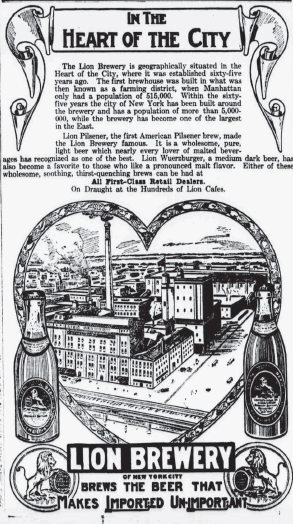
lion-1915

Filed Under: Birthdays, Breweries, Just For Fun Tagged With: New York, Switzerland

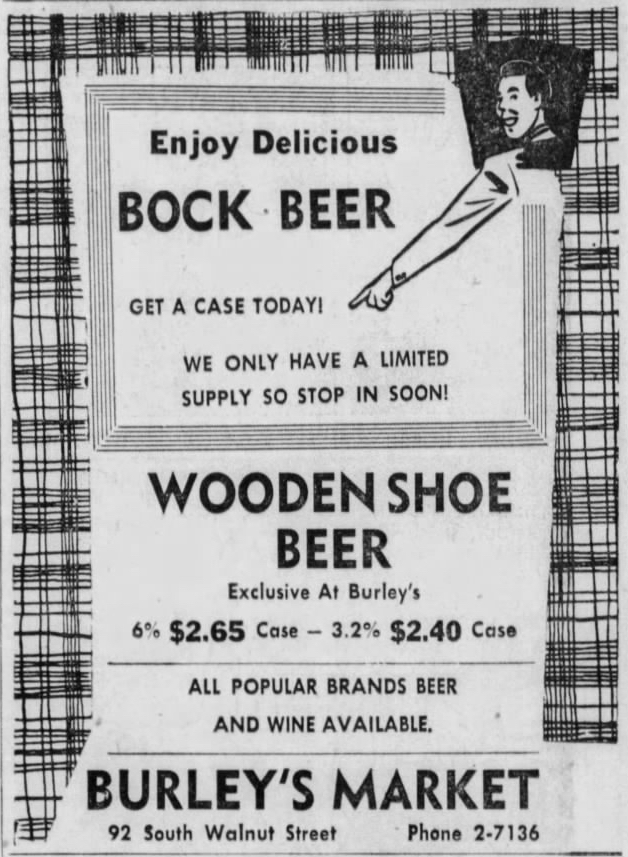
Beer In Ads #4987: Wooden Shoe Bock Beer

June 3, 2025 By Jay Brooks

Last year I decided to concentrate on Bock ads. Bock, of course, may have originated in Germany, in the town of Einbeck. Because many 19th century American breweries were founded by German immigrants, they offered a bock at certain times of the year, be it Spring, Easter, Lent, Christmas, or what have you. In a sense they were some of the first seasonal beers. “The style was later adopted in Bavaria by Munich brewers in the 17th century. Due to their Bavarian accent, citizens of Munich pronounced ‘Einbeck’ as ‘ein Bock’ (a billy goat), and thus the beer became known as ‘Bock.’ A goat often appears on bottle labels.” And presumably because they were special releases, many breweries went all out promoting them with beautiful artwork on posters and other advertising.

Tuesday’s ad is for Wooden Shoe Bock Beer. The ad was published on June 3, 1953. This one was for the Wooden Shoe Brewing Co. of Minster, Ohio, which was originally founded in 1869 by Franz Lange, though it became known by the Wood Shoe name after 1939 until it closed in 1954. This ad ran in the Chillicothe Gazette, of Chillocothe, Ohio.

Filed Under: Beers

Beer In Ads #4986: Cascade Bock Beer

June 2, 2025 By Jay Brooks

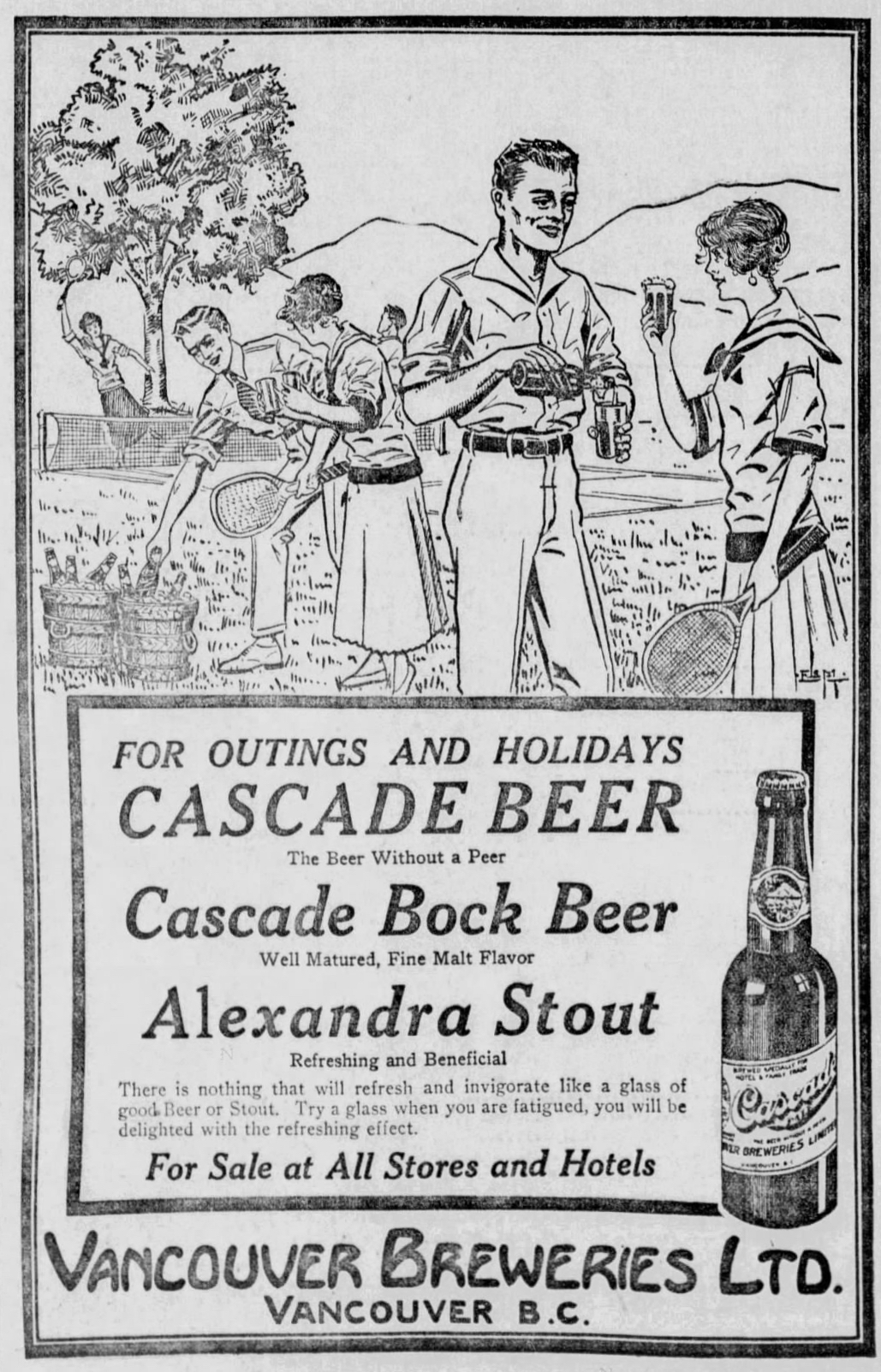
Last year I decided to concentrate on Bock ads. Bock, of course, may have originated in Germany, in the town of Einbeck. Because many 19th century American breweries were founded by German immigrants, they offered a bock at certain times of the year, be it Spring, Easter, Lent, Christmas, or what have you. In a sense they were some of the first seasonal beers. “The style was later adopted in Bavaria by Munich brewers in the 17th century. Due to their Bavarian accent, citizens of Munich pronounced ‘Einbeck’ as ‘ein Bock’ (a billy goat), and thus the beer became known as ‘Bock.’ A goat often appears on bottle labels.” And presumably because they were special releases, many breweries went all out promoting them with beautiful artwork on posters and other advertising.

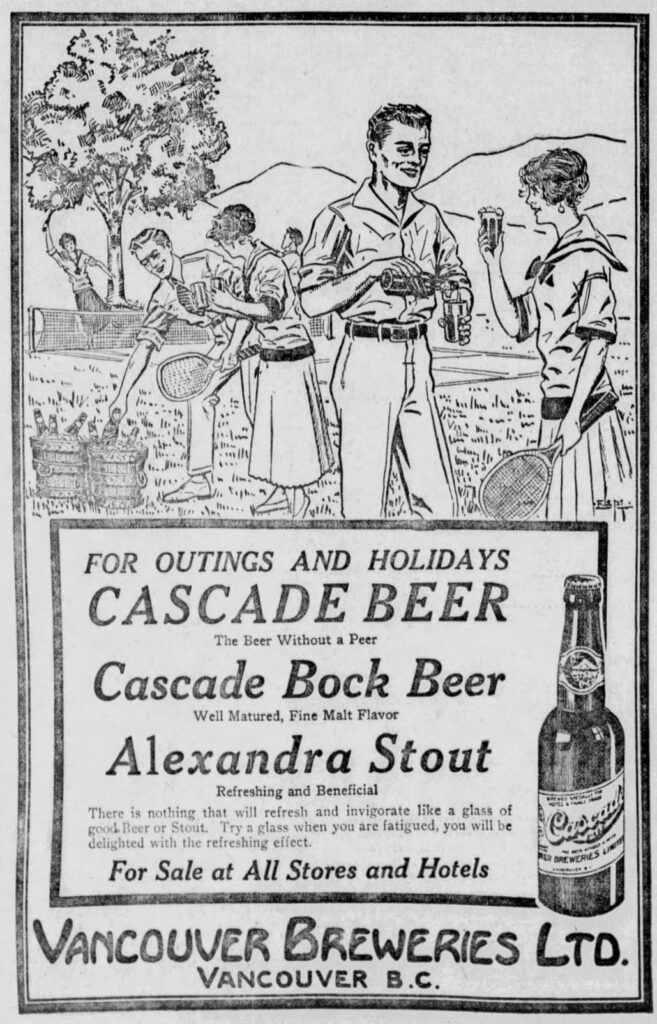
Monday’s ad is for Cascade Bock Beer. The ad was published on June 2, 1918. This one was for Vancouver Breweries Ltd., of Vancouver, British Columbia, which was originally founded in 1902 by a merger. This ad ran in The Vancouver Sun, of Vancouver, British Columbia, Canada.

Filed Under: Art & Beer, Beers, Breweries, Just For Fun Tagged With: Advertising, Bock, British Columbia, Canada, History, Vancouver

Beer In Ads #4985: Iron City Bock Beer

June 1, 2025 By Jay Brooks

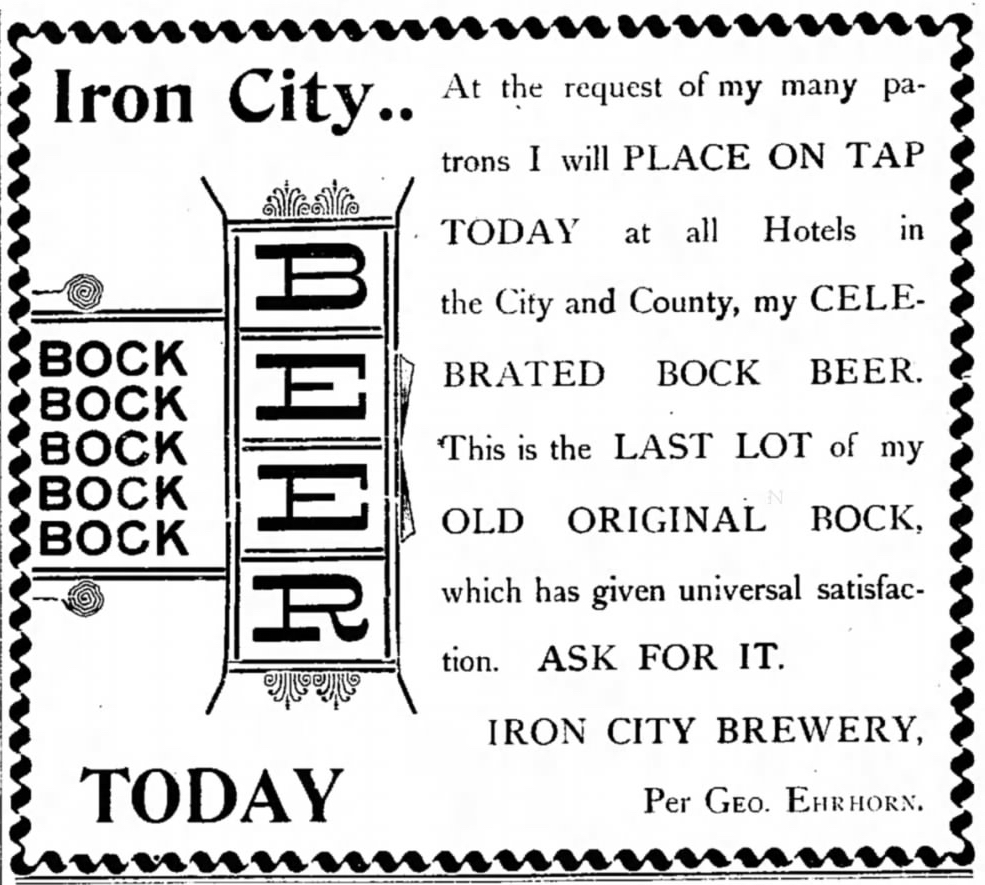
Last year I decided to concentrate on Bock ads. Bock, of course, may have originated in Germany, in the town of Einbeck. Because many 19th century American breweries were founded by German immigrants, they offered a bock at certain times of the year, be it Spring, Easter, Lent, Christmas, or what have you. In a sense they were some of the first seasonal beers. “The style was later adopted in Bavaria by Munich brewers in the 17th century. Due to their Bavarian accent, citizens of Munich pronounced ‘Einbeck’ as ‘ein Bock’ (a billy goat), and thus the beer became known as ‘Bock.’ A goat often appears on bottle labels.” And presumably because they were special releases, many breweries went all out promoting them with beautiful artwork on posters and other advertising.

Sunday’s ad is for Iron City Bock Beer. The ad was published on June 1, 1895. This one was for Iron City Brewing Co., which was located in Pittsburgh, Pennsylvania and was founded by Edward Frauenheim in 1861. This ad ran in the Lebanon Daily News, of Lebanon, Pennsylvania.

Filed Under: Art & Beer, Beers, Just For Fun Tagged With: Advertising, Bock, History, Pennsylvania

Beer In Ads #4984: Daufer’s Celebrated Bock Beer

May 31, 2025 By Jay Brooks

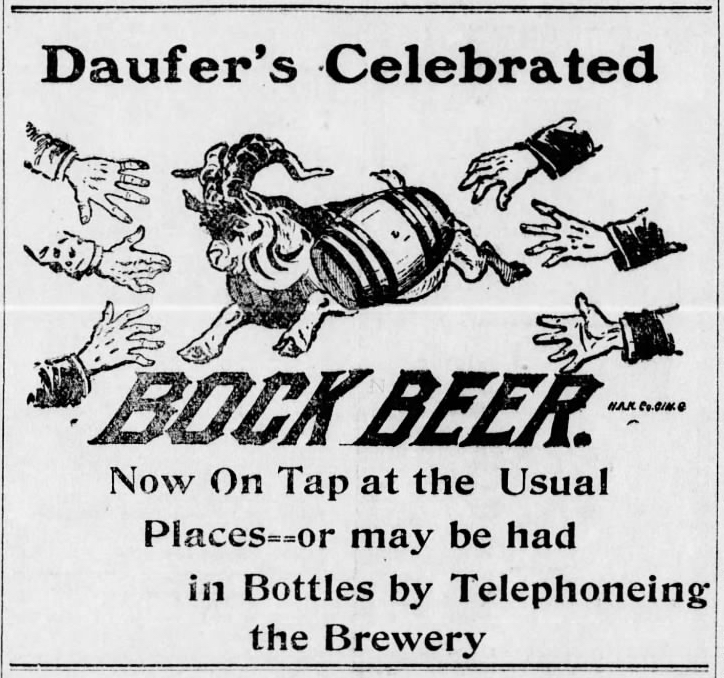
Last year I decided to concentrate on Bock ads. Bock, of course, may have originated in Germany, in the town of Einbeck. Because many 19th century American breweries were founded by German immigrants, they offered a bock at certain times of the year, be it Spring, Easter, Lent, Christmas, or what have you. In a sense they were some of the first seasonal beers. “The style was later adopted in Bavaria by Munich brewers in the 17th century. Due to their Bavarian accent, citizens of Munich pronounced ‘Einbeck’ as ‘ein Bock’ (a billy goat), and thus the beer became known as ‘Bock.’ A goat often appears on bottle labels.” And presumably because they were special releases, many breweries went all out promoting them with beautiful artwork on posters and other advertising.

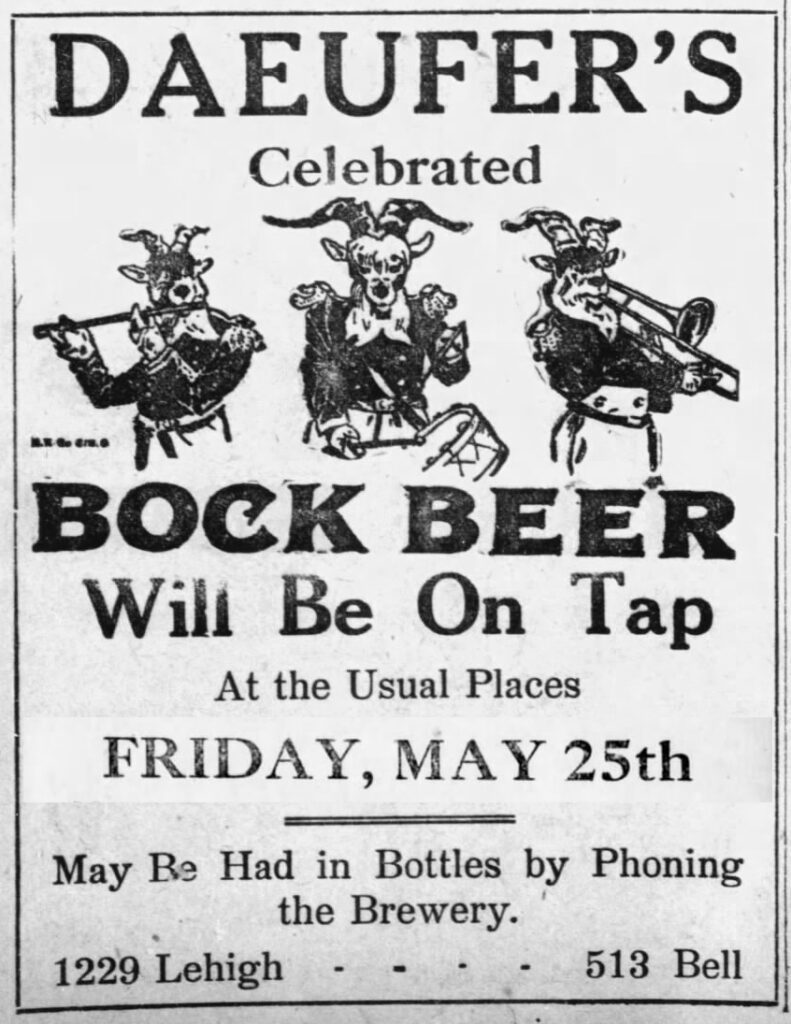
Saturday’s ad is for Daufer’s Celebrated Bock Beer. The ad was published on May 31, 1909. This one was for Daufer & Co., which was located in Allentown, Pennsylvania from 1860 until 1938, although it was known by a variety of names over that time period. This ad ran in the Allentown Democrat, also of Allentown, Pennsylvania.

Filed Under: Art & Beer, Beers, Breweries, Just For Fun Tagged With: Advertising, Bock, History, Pennsylvania

Beer In Ads #4983: Refresh Yourself With Delicious Bock Beer

May 28, 2025 By Jay Brooks

Last year I decided to concentrate on Bock ads. Bock, of course, may have originated in Germany, in the town of Einbeck. Because many 19th century American breweries were founded by German immigrants, they offered a bock at certain times of the year, be it Spring, Easter, Lent, Christmas, or what have you. In a sense they were some of the first seasonal beers. “The style was later adopted in Bavaria by Munich brewers in the 17th century. Due to their Bavarian accent, citizens of Munich pronounced ‘Einbeck’ as ‘ein Bock’ (a billy goat), and thus the beer became known as ‘Bock.’ A goat often appears on bottle labels.” And presumably because they were special releases, many breweries went all out promoting them with beautiful artwork on posters and other advertising.

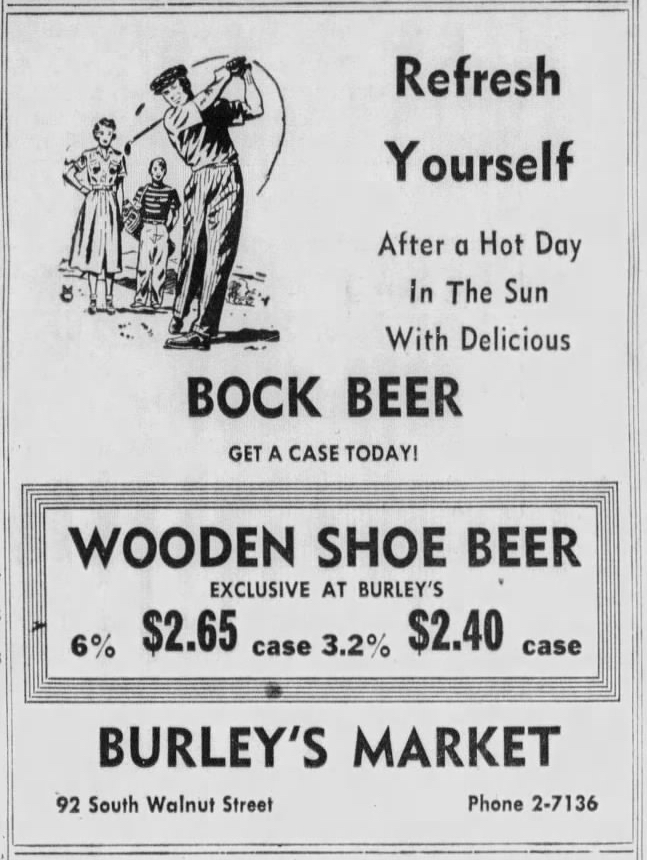
Wednesday’s ad is for Wooden Shoe Beer. The ad was published on May 28, 1953. This one was for the Wooden Shoe Brewing Co. of Minster, Ohio, which was originally founded in 1869 by Franz Lange, though it became known by the Wood Shoe name after 1939 until it closed in 1954. This ad ran in the Chillicothe Gazette, of Chillocothe, Ohio. I don’t think of bock as beer that goes well with athletics, so the text for this ad is a little odd: “Refresh Yourself After a Hot Day In The Sun With Delicious Bock Beer.” Um, no thanks. I also love how he brought his family along while he plays golf. The son, presumably, is carrying his clubs, but the wife? Is she just watching him play? Oh, 1950s, you were a weird time.

Filed Under: Art & Beer, Beers, Breweries, Just For Fun Tagged With: Advertising, Bock, History, Ohio

Beer In Ads #4982: Wiener Bock Beer

May 27, 2025 By Jay Brooks

Last year I decided to concentrate on Bock ads. Bock, of course, may have originated in Germany, in the town of Einbeck. Because many 19th century American breweries were founded by German immigrants, they offered a bock at certain times of the year, be it Spring, Easter, Lent, Christmas, or what have you. In a sense they were some of the first seasonal beers. “The style was later adopted in Bavaria by Munich brewers in the 17th century. Due to their Bavarian accent, citizens of Munich pronounced ‘Einbeck’ as ‘ein Bock’ (a billy goat), and thus the beer became known as ‘Bock.’ A goat often appears on bottle labels.” And presumably because they were special releases, many breweries went all out promoting them with beautiful artwork on posters and other advertising.

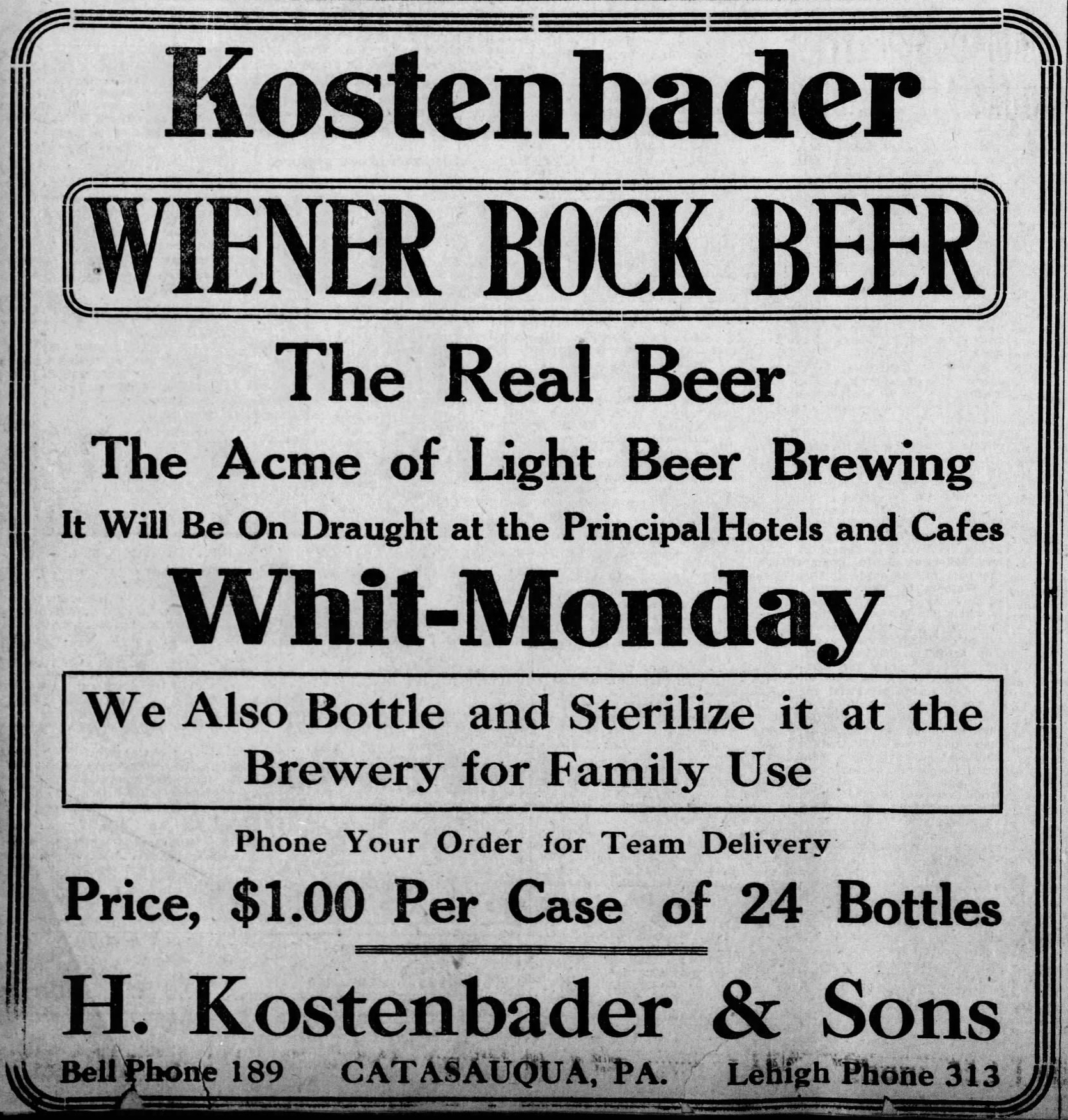
Tuesday’s ad is for Wiener Bock Beer. The ad was published on May 27, 1912. This one was for H. Kostenbader & Co. of Catasauqua, Pennsylvania, which was originally founded in 1867 and often known as the Eagle Brewery. This ad ran in the Morning Call, of Allentown, Pennsylvania. No word as to why they called it “Wiener Bock Beer,” or what makes it “The Real Beer.” But at least they “also Bottle and Sterilize it at the Brewery for Family Use.” For “Family Use?” What does that mean?

Filed Under: Art & Beer, Beers, Breweries, Just For Fun Tagged With: Advertising, Bock, History, Pennsylvania

Beer In Ads #4981: Christian Moerlein’s Bock Beer

May 26, 2025 By Jay Brooks

Last year I decided to concentrate on Bock ads. Bock, of course, may have originated in Germany, in the town of Einbeck. Because many 19th century American breweries were founded by German immigrants, they offered a bock at certain times of the year, be it Spring, Easter, Lent, Christmas, or what have you. In a sense they were some of the first seasonal beers. “The style was later adopted in Bavaria by Munich brewers in the 17th century. Due to their Bavarian accent, citizens of Munich pronounced ‘Einbeck’ as ‘ein Bock’ (a billy goat), and thus the beer became known as ‘Bock.’ A goat often appears on bottle labels.” And presumably because they were special releases, many breweries went all out promoting them with beautiful artwork on posters and other advertising.

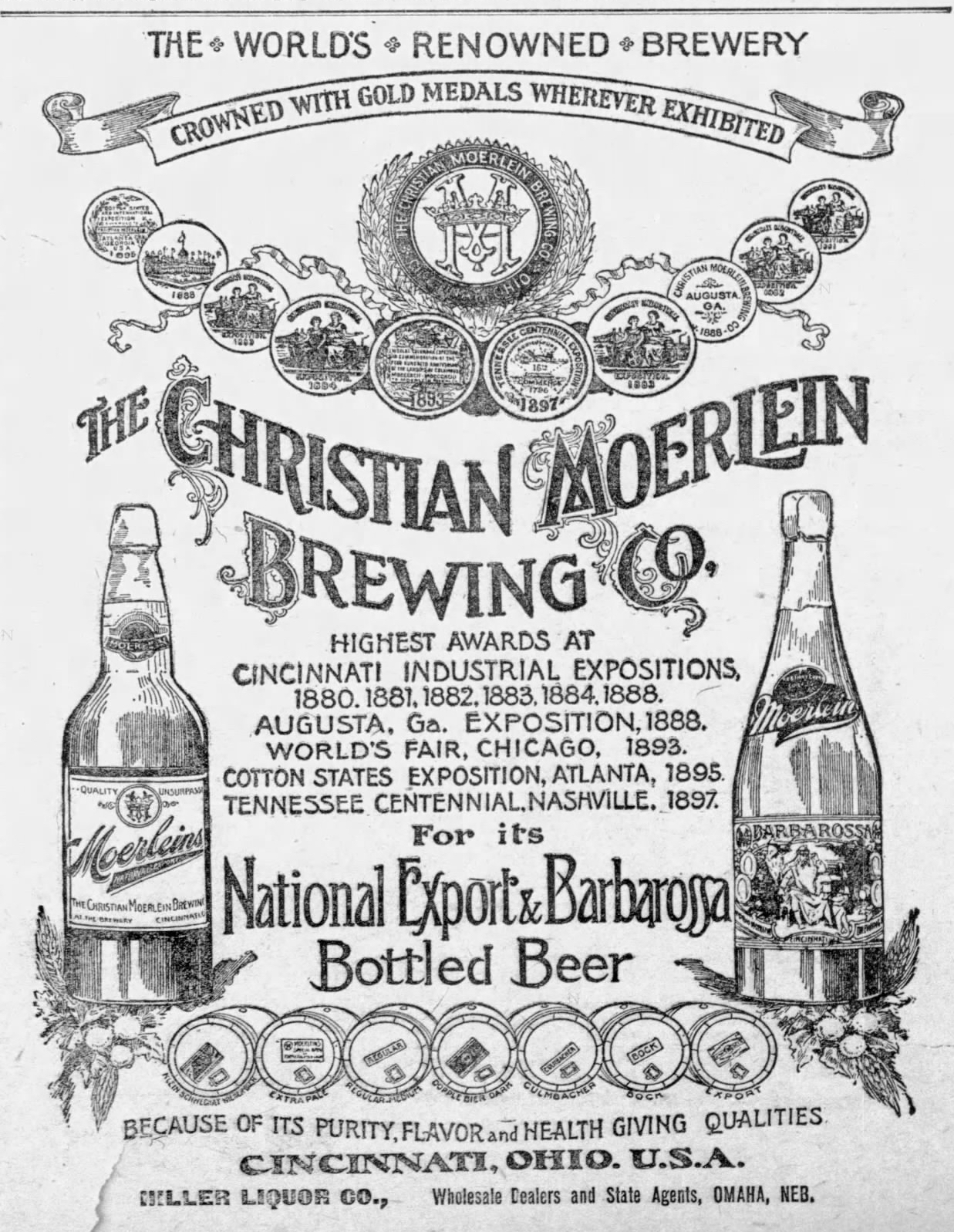
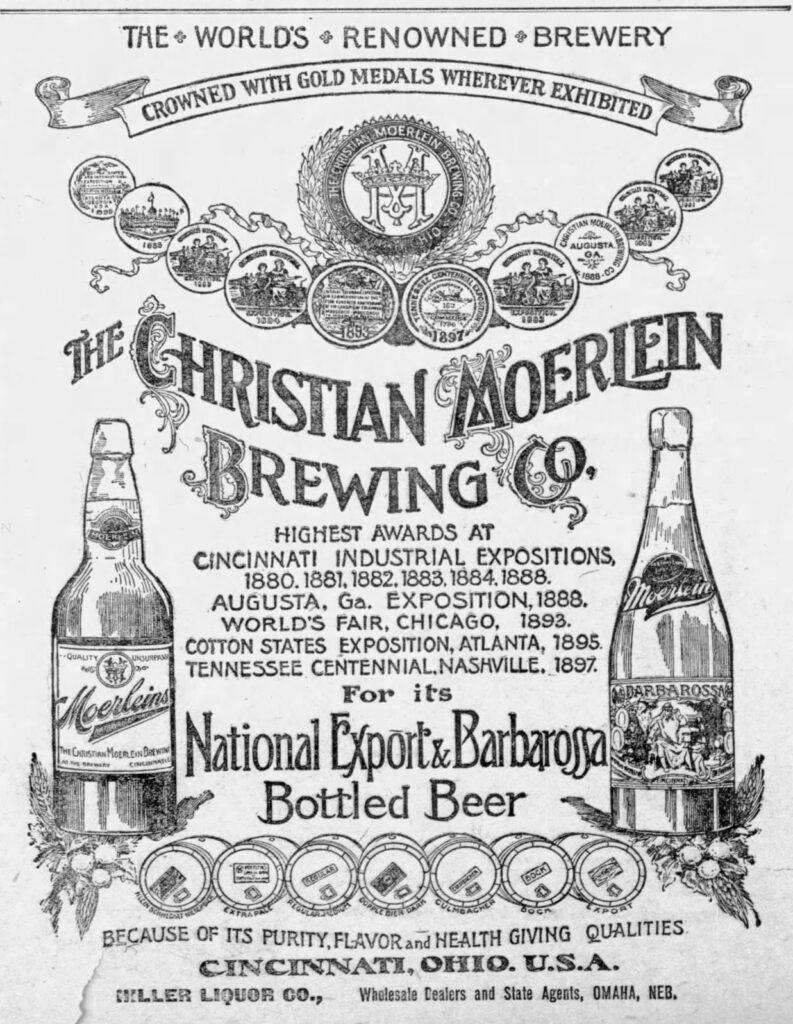
Monday’s ad is for Christian Moerlein’s Bock Beer. The ad was published on May 26, 1903. This one was for Christian Moerlein Brewing Co. of Cincinnati, Ohio, which was originally founded in 1853. This ad ran in the Omaha World Herald, of Omaha, Nebraska. The ad is promoting all of their beers, and it’s hard to see, but on the seven wooden barrels along the bottom there’s a different style on each one, with the second from the right listing their “Bock.”

Filed Under: Art & Beer, Beers, Breweries, Just For Fun Tagged With: Advertising, Bock, History, Nebraska, Ohio

Beer In Ads #4980: Daeufer’s Celebrated Bock Beer

May 25, 2025 By Jay Brooks

Last year I decided to concentrate on Bock ads. Bock, of course, may have originated in Germany, in the town of Einbeck. Because many 19th century American breweries were founded by German immigrants, they offered a bock at certain times of the year, be it Spring, Easter, Lent, Christmas, or what have you. In a sense they were some of the first seasonal beers. “The style was later adopted in Bavaria by Munich brewers in the 17th century. Due to their Bavarian accent, citizens of Munich pronounced ‘Einbeck’ as ‘ein Bock’ (a billy goat), and thus the beer became known as ‘Bock.’ A goat often appears on bottle labels.” And presumably because they were special releases, many breweries went all out promoting them with beautiful artwork on posters and other advertising.

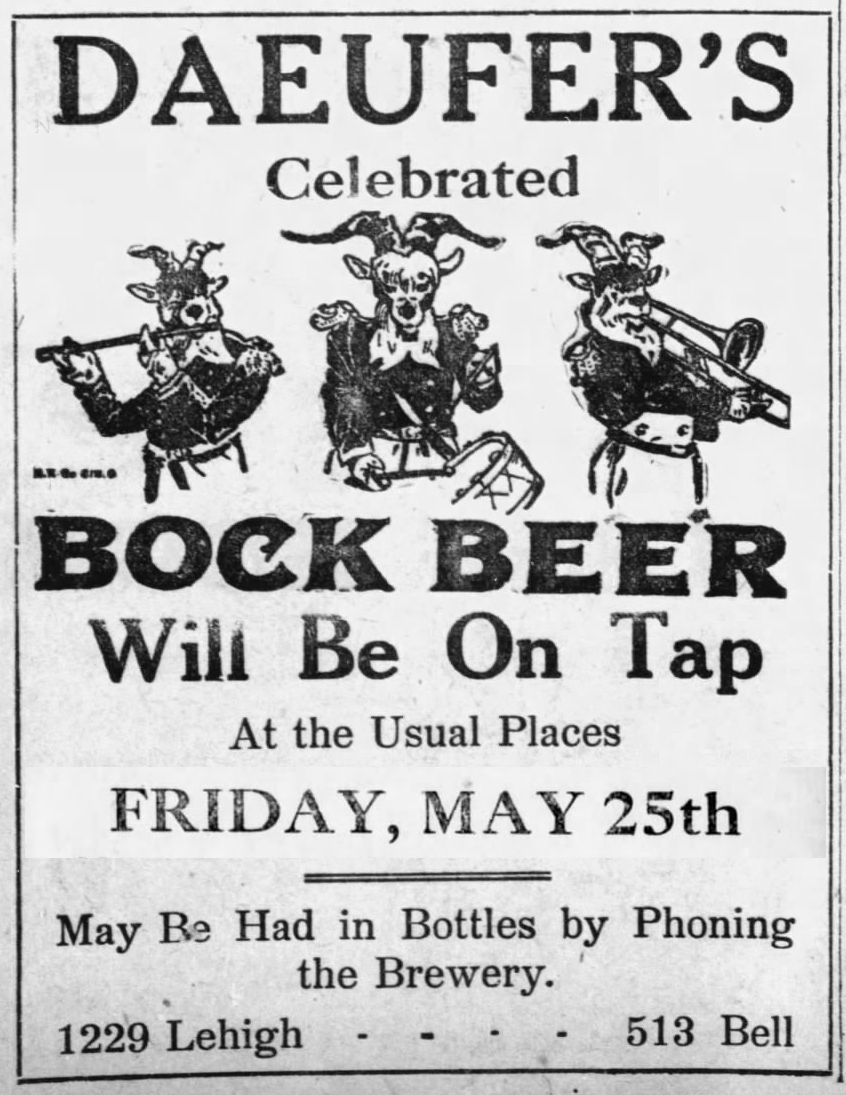
Sunday’s ad is for Daeufer’s Celebrated Bock Beer. The ad was published on May 25, 1917. This one was for Daeufer-Lieberman Brewing Co. of Allentown, Pennsylvania, which was originally founded in 1869 but was known by this name betweenn 1915-1938. This ad ran in the Allentown Leader, also of Allentown, Pennsylvania.

Filed Under: Art & Beer, Beers, Breweries, Just For Fun Tagged With: Advertising, Bock, History, Pennsylvania

« Previous Page
Next Page »

Find Something

Northern California Breweries

Please consider purchasing my latest book, California Breweries North, available from Amazon, or ask for it at your local bookstore.

Recent Comments

  • Bob Paolino on Beer Birthday: Grant Johnston
  • Gambrinus on Historic Beer Birthday: A.J. Houghton
  • Ernie Dewing on Historic Beer Birthday: Charles William Bergner 
  • Steve 'Pudgy' De Rose on Historic Beer Birthday: Jacob Schmidt
  • Jay Brooks on Beer Birthday: Bill Owens

Recent Posts

  • Historic Beer Birthday: David & Louis Kuntz June 4, 2026
  • Beer In Ads #5258: Enjoy Delicious Bock Beer June 3, 2026
  • Historic Beer Birthday: Emil G. Sick June 3, 2026
  • Beer Birthday: Don Tse June 3, 2026
  • Beer In Ads #5257: Dessower Schlossbrauerei Bockbier June 2, 2026

BBB Archives

Feedback

Head Quarter
This site is hosted and maintained by H25Q.dev. Any questions or comments for the webmaster can be directed here.