Brookston Beer Bulletin

Jay R. Brooks on Beer

  • Home
  • About
  • Editorial
  • Birthdays
  • Art & Beer

Socialize

  • Dribbble
  • Email
  • Facebook
  • Flickr
  • GitHub
  • Instagram
  • LinkedIn
  • Pinterest
  • RSS
  • Twitter
  • YouTube

Powered by Genesis

Beer In Ads #5088: Salvator Doppelbock

September 26, 2025 By Jay Brooks

Last year I decided to concentrate on Bock ads. Bock, of course, may have originated in Germany, in the town of Einbeck. Because many 19th century American breweries were founded by German immigrants, they offered a bock at certain times of the year, be it Spring, Easter, Lent, Christmas, or what have you. In a sense they were some of the first seasonal beers. “The style was later adopted in Bavaria by Munich brewers in the 17th century. Due to their Bavarian accent, citizens of Munich pronounced ‘Einbeck’ as ‘ein Bock’ (a billy goat), and thus the beer became known as ‘Bock.’ A goat often appears on bottle labels.” And presumably because they were special releases, many breweries went all out promoting them with beautiful artwork on posters and other advertising.

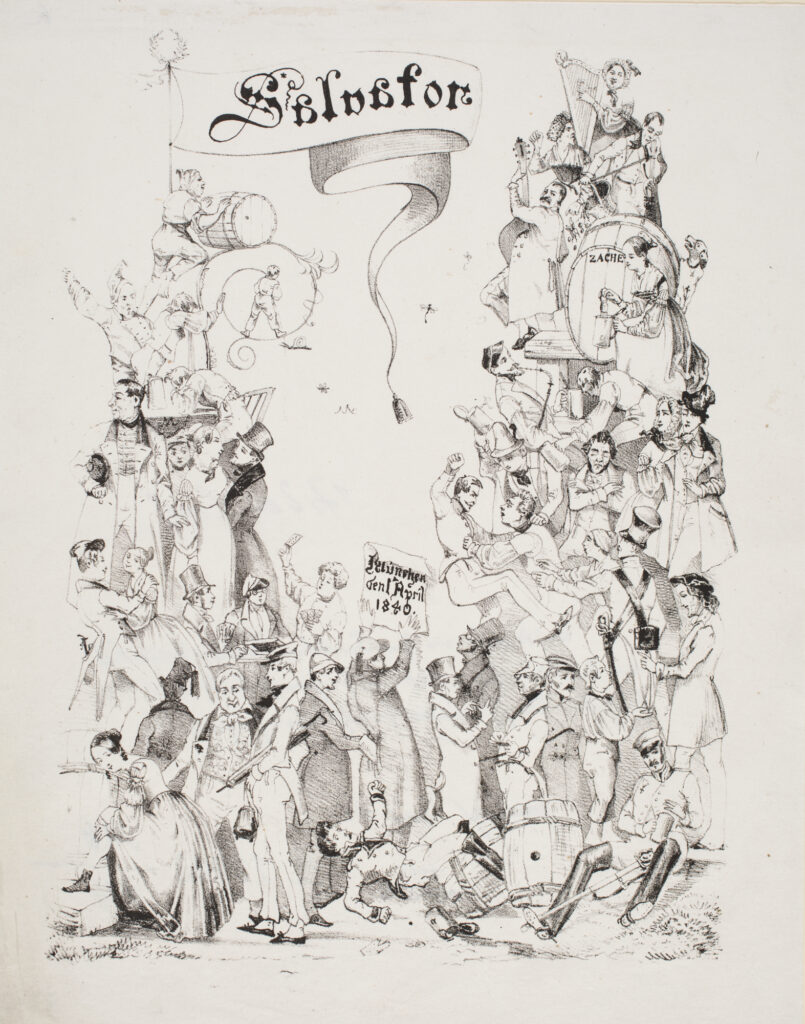
Friday’s lithograph is for Salvator Doppelbock, which was published in April of 1840. This one was for the Paulaner Brewery (Paulaner Brauerei München) of Munich, Germany, which was originally founded in 1634. The poster is called “Verschiedene Szenen beim Salvatorbier” (or “Various scenes at the Salvator beer”) at the Munich City Museum, although they don’t know who the artist was who created it. But here’s a translation of their description:

Salvator, a Doppelbock beer, dates back to the 17th-century Munich Paulaner monks, who sought a culinary way to bridge the austere Lent period. Under the motto ‘Liquids don’t break the fast,’ they brewed a particularly strong and high-calorie beer that soon enjoyed widespread popularity even outside the monastery walls. After secularization in 1806, the Paulaner brewery, and with it the recipe for the fortifying Doppelbock, passed to master brewer Franz Xaver Zacherl, who named the beer ‘Salvator’ (Latin for ‘redeemer’). Zacherl’s continuation of the traditional annual tapping of the strong beer, laid the foundation for the festivities during the strong beer season known as the ‘Fifth Season.'”
Filed Under: Art & Beer, Beers, Breweries Tagged With: Advertising, Bock, Germany, History

Beer In Ads #5087: It’s Like Old Times Again

September 25, 2025 By Jay Brooks

Last year I decided to concentrate on Bock ads. Bock, of course, may have originated in Germany, in the town of Einbeck. Because many 19th century American breweries were founded by German immigrants, they offered a bock at certain times of the year, be it Spring, Easter, Lent, Christmas, or what have you. In a sense they were some of the first seasonal beers. “The style was later adopted in Bavaria by Munich brewers in the 17th century. Due to their Bavarian accent, citizens of Munich pronounced ‘Einbeck’ as ‘ein Bock’ (a billy goat), and thus the beer became known as ‘Bock.’ A goat often appears on bottle labels.” And presumably because they were special releases, many breweries went all out promoting them with beautiful artwork on posters and other advertising.

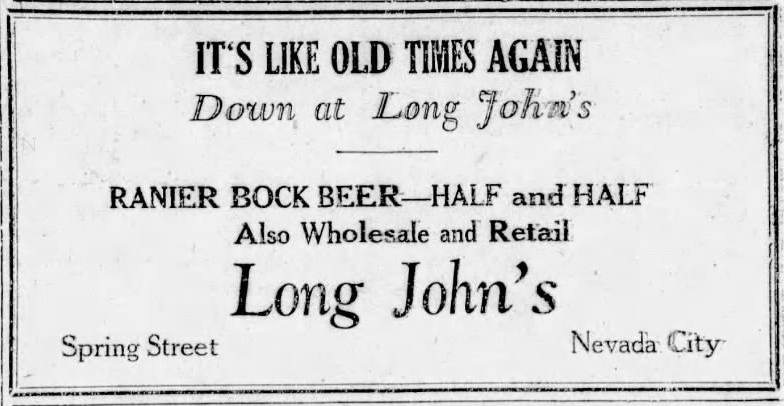
Thursday’s ad is for Rainier Bock Beer, which was published on September 25, 1933. This one was for the Rainier Brewing Co. of Seattle, Washington, which was originally founded in 1878, though it was mostly advertising Long John’s Tavern, which located in downtown Nevada City, California. The tagline was “It’s Like Old Times Again Down at Long John’s.” This ad ran in The Nevada County Nugget, from Nevada City, California.

Filed Under: Art & Beer, Beers, Breweries, Food & Beer Tagged With: Advertising, Bock, California, History, Pubs

Beer In Ads #5086: Ehrhart’s Party Store Bock Beer

September 24, 2025 By Jay Brooks

Last year I decided to concentrate on Bock ads. Bock, of course, may have originated in Germany, in the town of Einbeck. Because many 19th century American breweries were founded by German immigrants, they offered a bock at certain times of the year, be it Spring, Easter, Lent, Christmas, or what have you. In a sense they were some of the first seasonal beers. “The style was later adopted in Bavaria by Munich brewers in the 17th century. Due to their Bavarian accent, citizens of Munich pronounced ‘Einbeck’ as ‘ein Bock’ (a billy goat), and thus the beer became known as ‘Bock.’ A goat often appears on bottle labels.” And presumably because they were special releases, many breweries went all out promoting them with beautiful artwork on posters and other advertising.

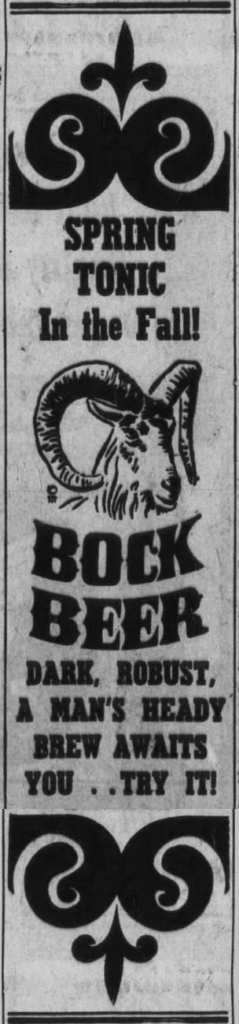
Wednesday’s ad is for an unknown Bock Beer, which was published on September 24, 1965. This one was not for a specific brand of bock beer, it was instead for a liquor store called Ehrhart’s Party Store. I cut out the middle of the ad, which consisted of some other ads for root beer along with information about the store and its hours. Surprisingly, sixty years after this ad ran, the store is still a going concern in Bucyrus, Ohio. This ad ran in The Bucyrus Telegraph-Forum, which serves Bucyrus, Crawford County and Ohio.

Filed Under: Art & Beer, Beers, Just For Fun Tagged With: Advertising, Bock, History, Ohio

Beer In Ads #5085: Celebrated Miller’s Bock Beer

September 23, 2025 By Jay Brooks

Last year I decided to concentrate on Bock ads. Bock, of course, may have originated in Germany, in the town of Einbeck. Because many 19th century American breweries were founded by German immigrants, they offered a bock at certain times of the year, be it Spring, Easter, Lent, Christmas, or what have you. In a sense they were some of the first seasonal beers. “The style was later adopted in Bavaria by Munich brewers in the 17th century. Due to their Bavarian accent, citizens of Munich pronounced ‘Einbeck’ as ‘ein Bock’ (a billy goat), and thus the beer became known as ‘Bock.’ A goat often appears on bottle labels.” And presumably because they were special releases, many breweries went all out promoting them with beautiful artwork on posters and other advertising.

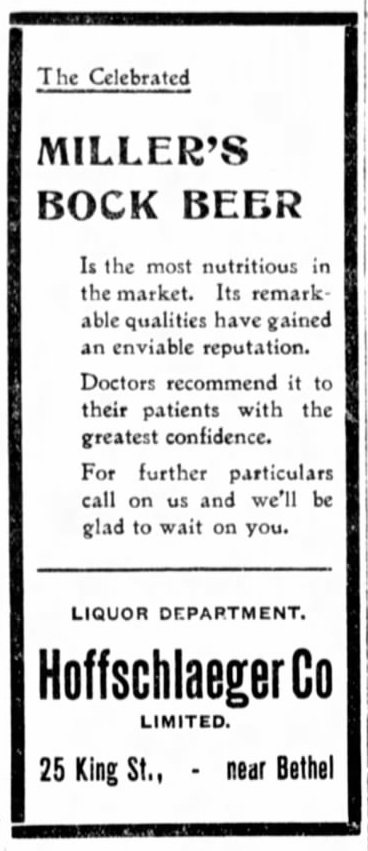
Tuesday’s ad is for Miller Bock Beer, which was published on September 23, 1903. This one was for the Miller Brewing Co. of Milwaukee, Wisconsin, which was originally founded in 1855. This ad ran in The Honolulu Star Bulletin, of Honolulu, Hawaii because the ad was really for the liquor department of the Hoffschlaeger Co., which also made whiskey. Miller apparently only made a bock from 1888-1920. I do love the remark about it being the “most nutritious in the market.” Plus, “Doctors recommend it to their patients with the greatest confidence,”

Filed Under: Art & Beer, Beers, Breweries, Just For Fun Tagged With: Advertising, Bock, Hawaii, History, Miller Brewing, Wisconsin

Beer In Ads #5084: It’s Simply A Matter Of Good Taste

September 20, 2025 By Jay Brooks

Last year I decided to concentrate on Bock ads. Bock, of course, may have originated in Germany, in the town of Einbeck. Because many 19th century American breweries were founded by German immigrants, they offered a bock at certain times of the year, be it Spring, Easter, Lent, Christmas, or what have you. In a sense they were some of the first seasonal beers. “The style was later adopted in Bavaria by Munich brewers in the 17th century. Due to their Bavarian accent, citizens of Munich pronounced ‘Einbeck’ as ‘ein Bock’ (a billy goat), and thus the beer became known as ‘Bock.’ A goat often appears on bottle labels.” And presumably because they were special releases, many breweries went all out promoting them with beautiful artwork on posters and other advertising.

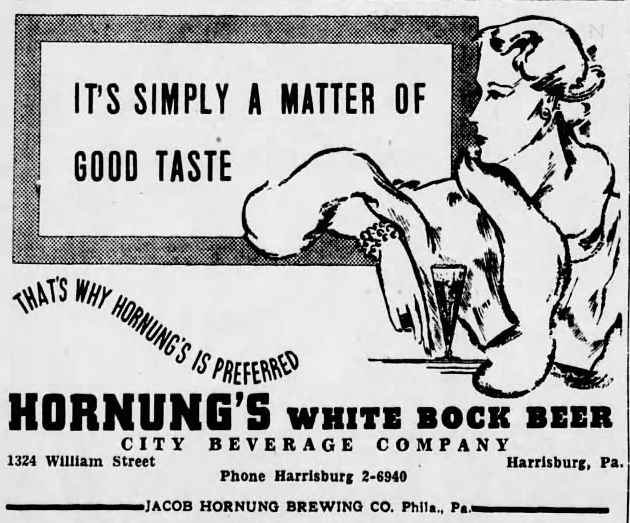
Saturday’s ad is for Hornung’s White Bock Beer, which was published on September 20, 1935. This one was for the Jacob Hornung Brewing Co. of Philadelphia, Pennsylvania, which was originally founded in 1885. This ad ran in The Harrisburg Telegraph, of Pennsylvania’s capital city. Curiously, this same ad ran today in a variety of newspapers across Pennsylvania and nearby states, including the Trenton Evening Times, the Evening News of Hanover, and the York Dispatch, to name a few. The only difference in the ads is the local distributor listed.

Filed Under: Art & Beer, Beers, Breweries, Just For Fun Tagged With: Advertising, Bock, History, Pennsylvania

Beer In Ads #5083: Löwenbräu Bock-Bier

September 19, 2025 By Jay Brooks

Last year I decided to concentrate on Bock ads. Bock, of course, may have originated in Germany, in the town of Einbeck. Because many 19th century American breweries were founded by German immigrants, they offered a bock at certain times of the year, be it Spring, Easter, Lent, Christmas, or what have you. In a sense they were some of the first seasonal beers. “The style was later adopted in Bavaria by Munich brewers in the 17th century. Due to their Bavarian accent, citizens of Munich pronounced ‘Einbeck’ as ‘ein Bock’ (a billy goat), and thus the beer became known as ‘Bock.’ A goat often appears on bottle labels.” And presumably because they were special releases, many breweries went all out promoting them with beautiful artwork on posters and other advertising.

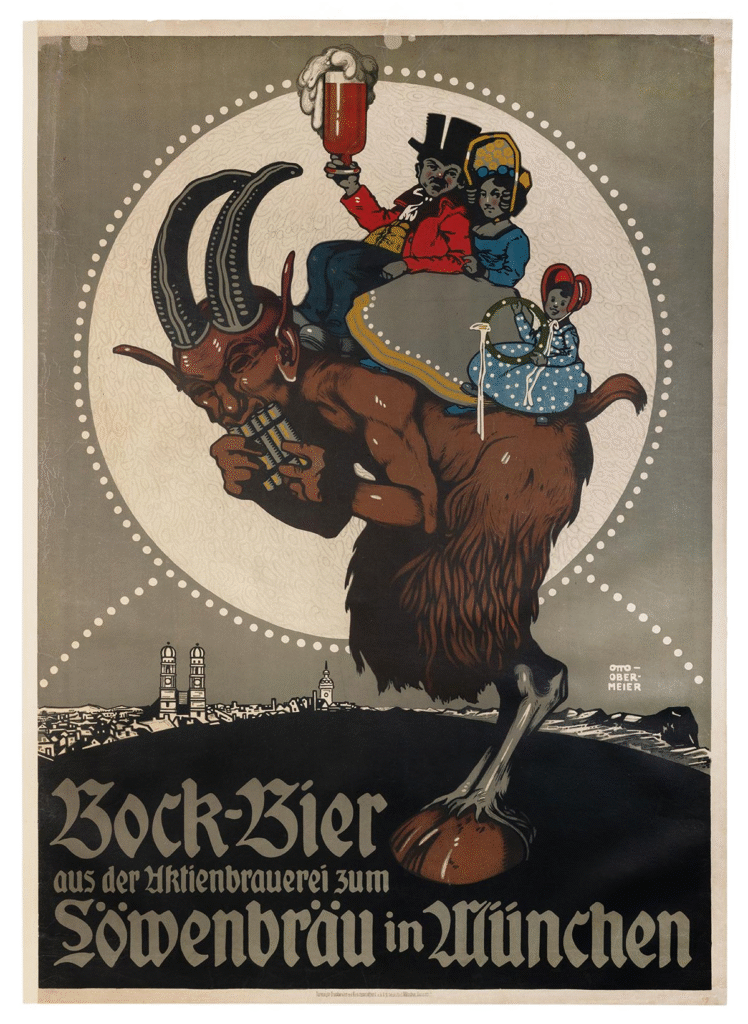
Friday’s ad is for Löwenbräu Bock, which is from the 1920s and was created for the Löwenbräu Brewery of Munich, Germany, which was originally founded in 1383. The artist who created the poster was Otto Obermeier (1883-1958), who was born in Germany. I’m not sure when it was completed, though my best guess is the 1920s or 30s. The poster is described like this on one auction site: “A giant anthropomorphic goat playing a pan flute ferries a German family on its back, the father holding a frothy glass of bock beer, in front of a full moon.”

Filed Under: Art & Beer, Beers, Breweries, Just For Fun Tagged With: Advertising, Bock, Germany, History

Beer In Ads #5082: Lucerne Bockbier

September 18, 2025 By Jay Brooks

Last year I decided to concentrate on Bock ads. Bock, of course, may have originated in Germany, in the town of Einbeck. Because many 19th century American breweries were founded by German immigrants, they offered a bock at certain times of the year, be it Spring, Easter, Lent, Christmas, or what have you. In a sense they were some of the first seasonal beers. “The style was later adopted in Bavaria by Munich brewers in the 17th century. Due to their Bavarian accent, citizens of Munich pronounced ‘Einbeck’ as ‘ein Bock’ (a billy goat), and thus the beer became known as ‘Bock.’ A goat often appears on bottle labels.” And presumably because they were special releases, many breweries went all out promoting them with beautiful artwork on posters and other advertising.

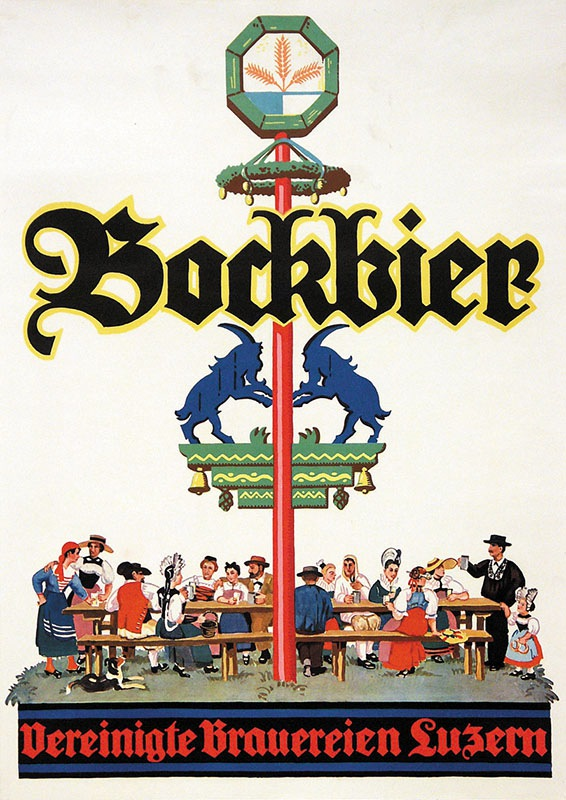
Thursday’s ad is for Bockbier, which is from the 1920s and was created for the Vereinigte Brauereien Luzern (or “United Breweries Lucerne”) of Lucerne, Switzerland, which was formed in 1922 by the merger of two local breweries. In 1937, it was renamed the Lucerne Brewery Eichhof, and in 1960 shortened again to Brewery Eichhof. Since 2008, it has been part of Heineken. I don’t know who the artist was that created the poster.

Filed Under: Art & Beer, Beers, Breweries, Just For Fun Tagged With: Advertising, Bock, History, Switzerland

Beer In Ads #5081: Manru Year-Round Bock

September 17, 2025 By Jay Brooks

Last year I decided to concentrate on Bock ads. Bock, of course, may have originated in Germany, in the town of Einbeck. Because many 19th century American breweries were founded by German immigrants, they offered a bock at certain times of the year, be it Spring, Easter, Lent, Christmas, or what have you. In a sense they were some of the first seasonal beers. “The style was later adopted in Bavaria by Munich brewers in the 17th century. Due to their Bavarian accent, citizens of Munich pronounced ‘Einbeck’ as ‘ein Bock’ (a billy goat), and thus the beer became known as ‘Bock.’ A goat often appears on bottle labels.” And presumably because they were special releases, many breweries went all out promoting them with beautiful artwork on posters and other advertising.

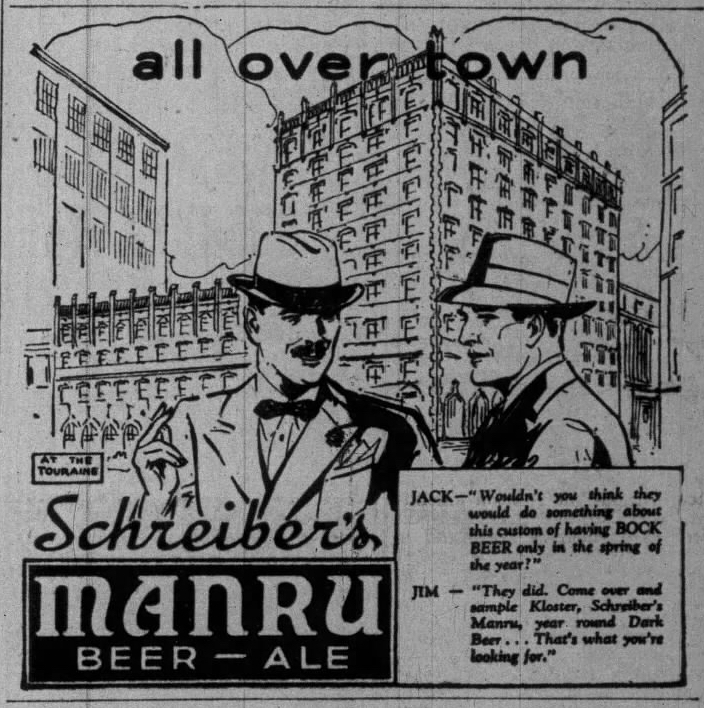
Wednesday’s ad is for Schreiber’s Manru Kloster, their year-round Bock Beer, which was published on September 17, 1936. This was for the Schreiber Brewing Co. of Buffalo, New York, which was founded in 1899. This ad ran in The Catholic Union and Times, of Buffalo, New York. The ad was part of a larger series of ads from the same year under the banner “all over town” showing different presumably well-known spots in Buffalo. For example, this one is set at the Touraine, which was a famous luxury hotel was located at

Filed Under: Art & Beer, Beers, Breweries, Just For Fun Tagged With: Advertising, Bock, History, New York

Beer In Ads #5080: Berg-Bräu Ur-Bock

September 16, 2025 By Jay Brooks

Last year I decided to concentrate on Bock ads. Bock, of course, may have originated in Germany, in the town of Einbeck. Because many 19th century American breweries were founded by German immigrants, they offered a bock at certain times of the year, be it Spring, Easter, Lent, Christmas, or what have you. In a sense they were some of the first seasonal beers. “The style was later adopted in Bavaria by Munich brewers in the 17th century. Due to their Bavarian accent, citizens of Munich pronounced ‘Einbeck’ as ‘ein Bock’ (a billy goat), and thus the beer became known as ‘Bock.’ A goat often appears on bottle labels.” And presumably because they were special releases, many breweries went all out promoting them with beautiful artwork on posters and other advertising.

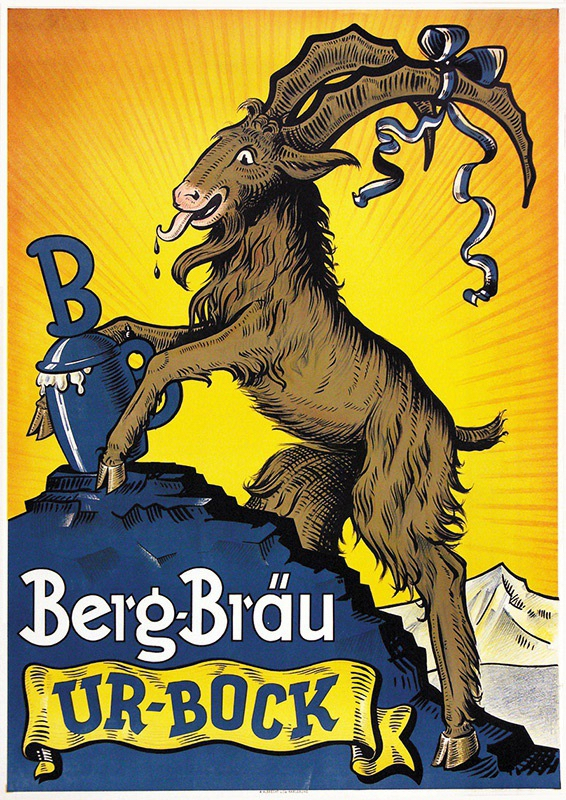
Tuesday’s ad is for Berg-Bräu Ur-Bock Beer, which is from the Privatbrauerei Bergbräu of Uslar, Germany, which was originally founded in 1868. It was created in 1948. The artist who created it is unknown, at least to me.

Filed Under: Art & Beer, Beers, Breweries, Just For Fun Tagged With: Advertising, Bock, Germany, History

Historic Beer Birthday: Simon Linser

September 16, 2025 By Jay Brooks

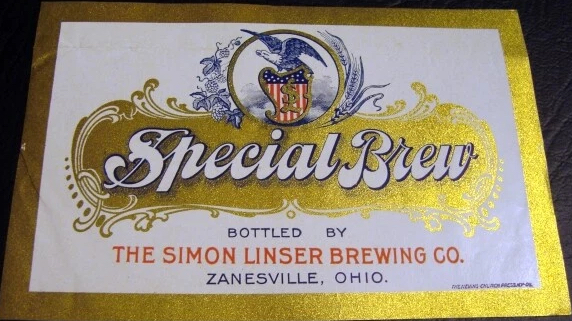
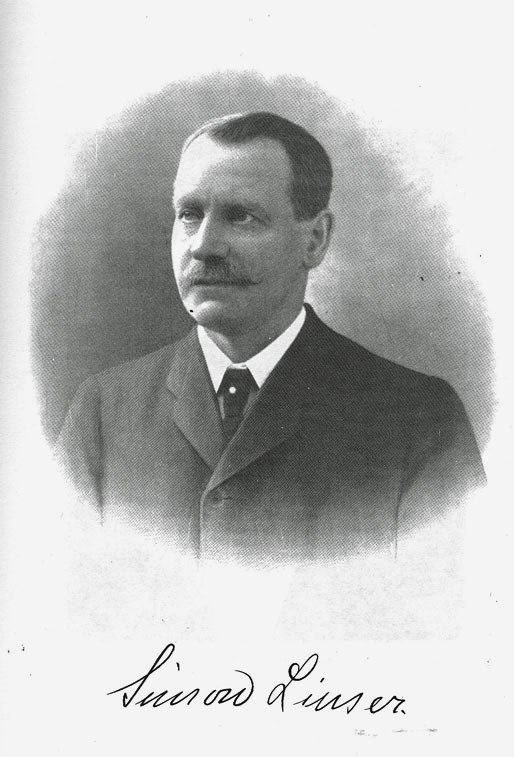
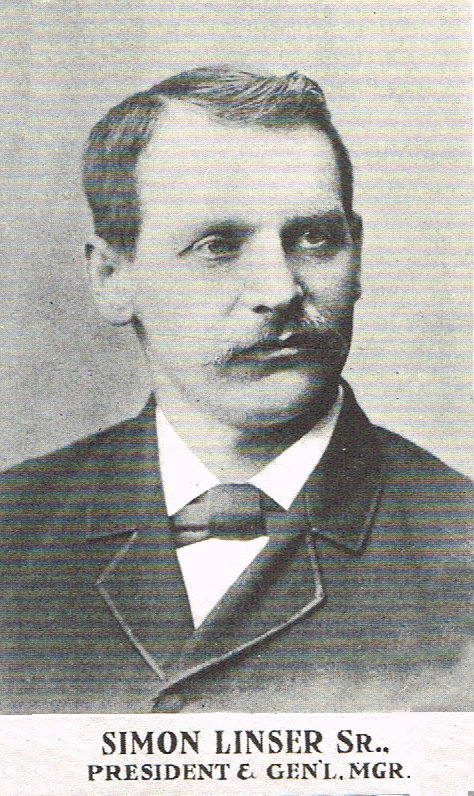
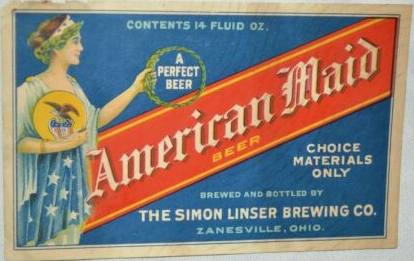
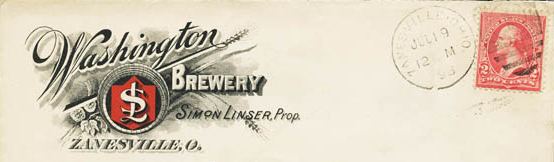
Today is the birthday of Simon Linser, sometimes spelled Lizner (September 17, 1852-May 4, 1941). He was born in Baden-Württemberg, Germany, but emigrated to the United States 1873, eventually settling in Ohio and became associated with the Washington Brewery of Zanesville, Ohio, later renaming it the Simon Lisner Brewing Co.

Here’s a more thorough biography of Lisner from Past and Present of the City of Zanesville, and Muskingum Co., Ohio (Published in Chicago by The S. J. Clarke Publishing Co., 1905)

SIMON LINSER, the president of the Simon Linser Brewing Company, at Zanesville, was born in Baden, Germany, in 1852, and came to the United States in 1873. He located in New York city, where he worked in Stein’s brewery for two years and then removed to Cincinnati, Ohio, where he was employed in Moerlein’s brewery until 1880. In that year he came to Zanesville, where he accepted the position of foreman in the Groener & Horn brewery, acting in that capacity for four years, when in 1884 he formed a partnership with Henry Zinnsmeister, and bought the Washington brewery. This they conducted until 1891, when Mr. Linser purchased his partner’s interest and carried on business alone until 1901, when the Star, Riverside and Washington breweries were consolidated and a stock company was formed under the name of the Simon Linser Brewing Company, the officers being Simon Linser, Sr., president; David Smith, vice president; and Simon Linser, jr., secretary and treasurer.
In 1875 Mr. Linser was married to Miss Regula Kramer, who was born in Wittenberg, Germany, in 1852. They have six children, four sons and two daughters, namely: Charles F., who is foreman of the Star brewery: Simon, who is secretary and treasurer of the Simon Linser Brewing Company; Herman who is foreman of the Washington brewery; Otto, Anna and Freda. Mrs. Linser is a member of St. Nicholas church and he belongs to the Odd Fellows society and the Knights of Pythias fraternity. In politics he is a democrat and has represented the fourth ward in the city council for six years, taking an active interest in all that pertains to the material upbuilding and progress of Zanesville.
The hope that led him to leave his native land and seek a home in America has been more than realized. He found the opportunities he sought, which, by the way, are always open to the ambitious, energetic man, and, making the best of these, he has steadily worked his way upward. He possesses the perseverance, resolution and reliability so characteristic of people of his nation, and his name is now enrolled among the best citizens of Muskingum county.

Here’s his obituary from the Zaneszille Signal from May 14, 1941:

And here’s another obituary from The Times Recorder:

Filed Under: Beers

« Previous Page
Next Page »

Find Something

Northern California Breweries

Please consider purchasing my latest book, California Breweries North, available from Amazon, or ask for it at your local bookstore.

Recent Comments

  • Bob Paolino on Beer Birthday: Grant Johnston
  • Gambrinus on Historic Beer Birthday: A.J. Houghton
  • Ernie Dewing on Historic Beer Birthday: Charles William Bergner 
  • Steve 'Pudgy' De Rose on Historic Beer Birthday: Jacob Schmidt
  • Jay Brooks on Beer Birthday: Bill Owens

Recent Posts

  • Beer Birthday: Will Meyers October 13, 2026
  • Thinking About Beer Color October 13, 2026
  • Beer Birthday: Megan Parisi October 13, 2026
  • Beer In Ads #5372: Valley Forge Bock Beer October 12, 2026
  • Beer Birthday: Luc De Raedemaeker October 12, 2026

BBB Archives

Feedback

Head Quarter
This site is hosted and maintained by H25Q.dev. Any questions or comments for the webmaster can be directed here.