Brookston Beer Bulletin

Jay R. Brooks on Beer

  • Home
  • About
  • Editorial
  • Birthdays
  • Art & Beer

Socialize

  • Dribbble
  • Email
  • Facebook
  • Flickr
  • GitHub
  • Instagram
  • LinkedIn
  • Pinterest
  • RSS
  • Twitter
  • YouTube

Powered by Genesis

Patent No. 4406301A: Keg-Tapping Structure

September 27, 2016 By Jay Brooks

patent-logo
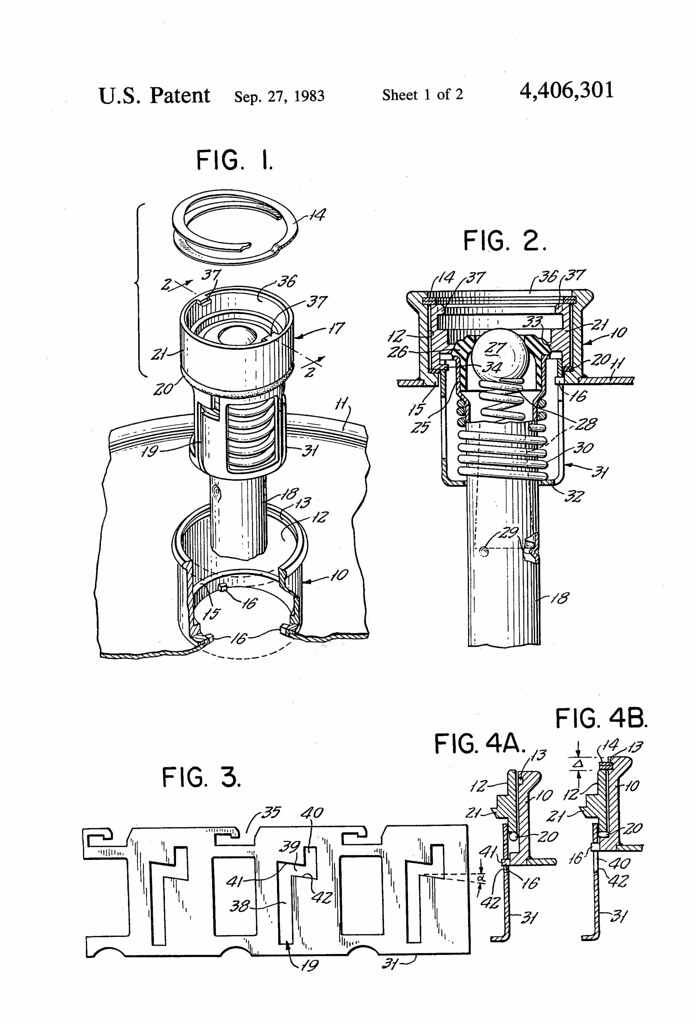
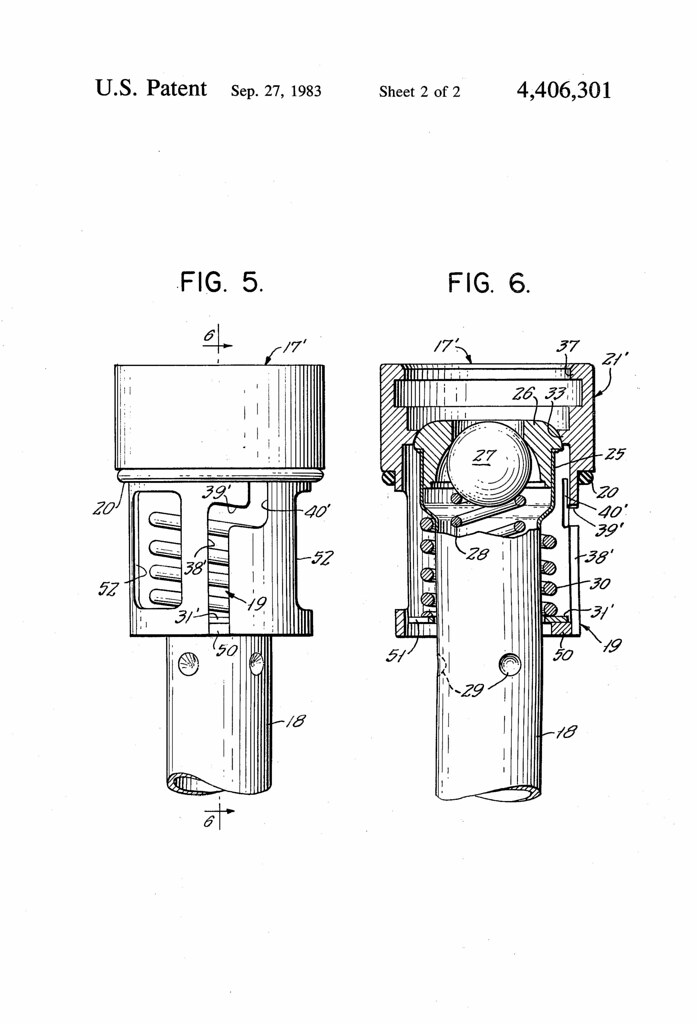
Today in 1983, US Patent 4406301 A was issued, an invention of Vincent J. Cerrato, for his “Keg-Tapping Structure.” Here’s the Abstract:

The invention contemplates removable structure to facilitate keg-tapping, and pressurized dispensing of liquid contents of the keg. A so-called Barnes neck forms part of the keg and has a bore with an elastomeric ring seal and flange at its lower end, and a valve-and-tube subassembly is inserted through the neck, to the point of valve-body compression of the seal, when secured by a removable retaining ring. In the course of such insertion, one or more radially inward lugs on the neck flange track corresponding slot formations in the subassembly. Each such slot formation has a first upward longitudinal course, leading to an angular bayonet-like offset course, and then to a second upward longitudinal course. The location of the angular offset is such that the valve body cannot compressionally load the seal ring in the absence of the partial rotation needed to develop lug alignment with the second upward longitudinal course.
US4406301-1
US4406301-2

Filed Under: Beers, Just For Fun, Politics & Law, Related Pleasures Tagged With: History, Kegs, Law, Patent

Patent No. D510083S1: Beer Bottle-Like Musical Speaker

September 27, 2016 By Jay Brooks

patent-logo
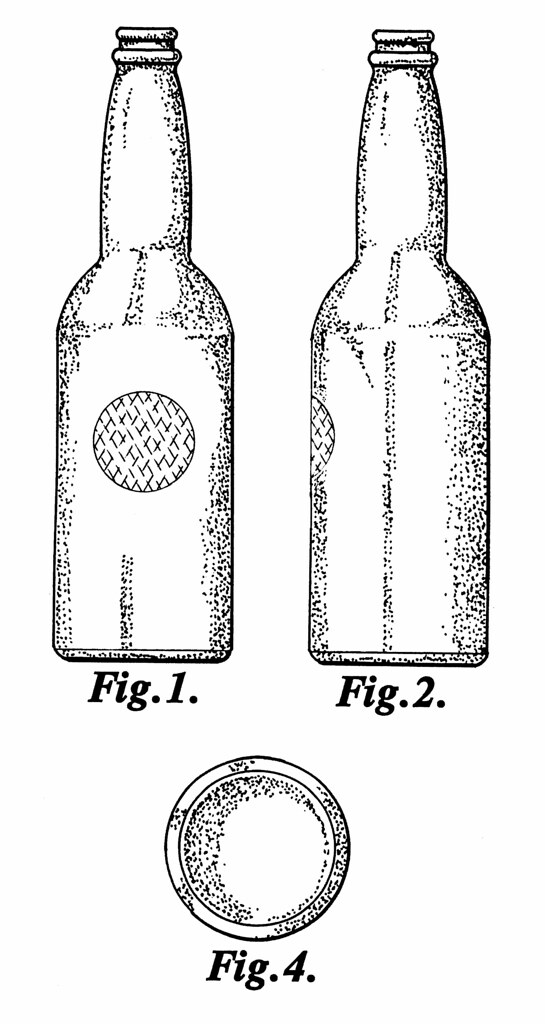
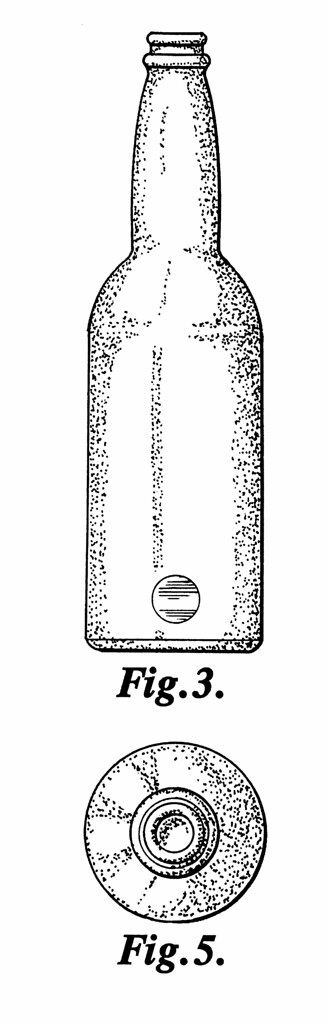
Today in 2005, US Patent D510083 S1 was issued, an invention of Kenneth L. Kasden, for his “Beer Bottle-Like Musical Speaker.” There’s no Abstract, although in the description it includes these claims:

The ornamental design for a beer bottle-like musical speaker, as shown and described.

USD0510083-20050927-D00001
USD0510083-20050927-D00002

Filed Under: Beers, Just For Fun, Politics & Law, Related Pleasures Tagged With: History, Law, Music, novelties, Patent

Beer In Ads #2045: The Brown Bottle Joke

September 26, 2016 By Jay Brooks


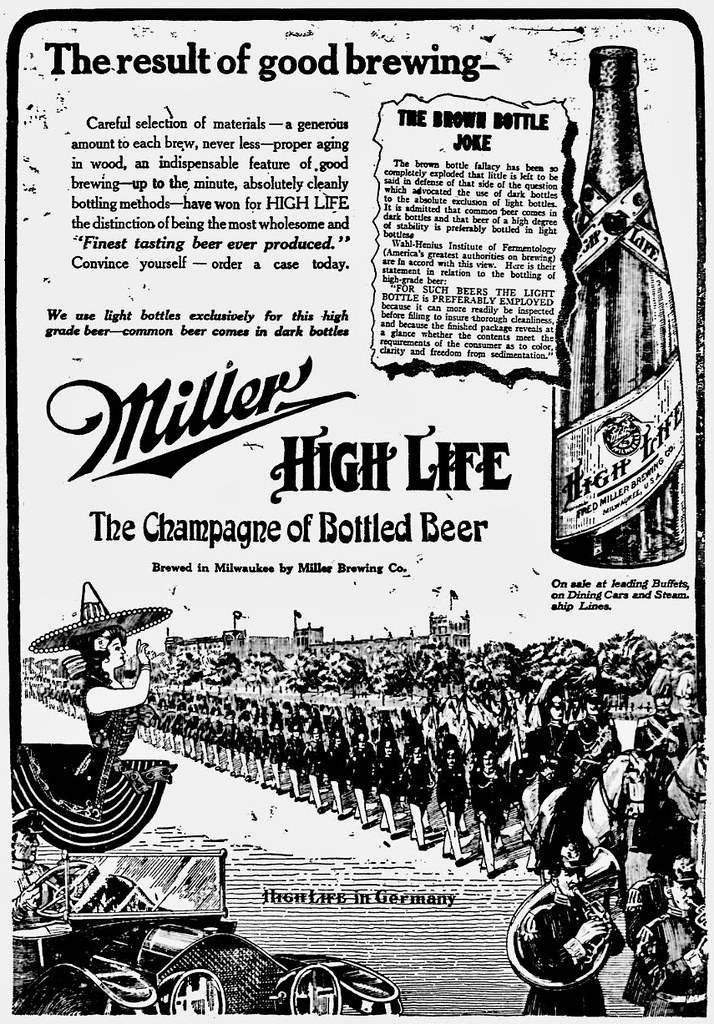
Monday’s ad is for Miller High Life, from 1913, published in the Telegraph Herald on July 2, 1913. In this curious ad, titled “The Result of Good Brewing—,” the scene is a parade of Germany soldiers. Though it’s hard to read, toward the bottom it reads “High Life in Germany,” while to the left the Miller Girl has been inserted into the illustration as if she’s watching the parade.

Miller-Telegraph-Herald-Jul-2-1913

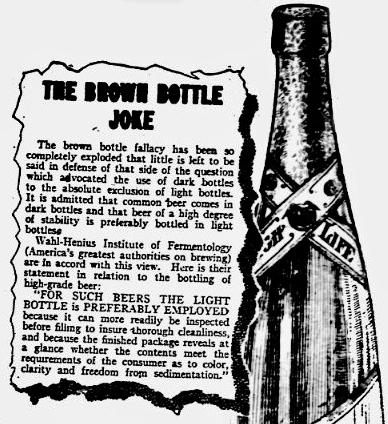
But even more curious about this ad is the inset box, “The Brown Bottle Joke,” where they try to explain why using a clear bottle is actually better than using brown, and they do so without even mentioning why brown is preferred or indeed anything about what effect light would have on the beer after bottling.

The brown bottle fallacy has been so completely exploded that little is left to be said in defense of that side of the question which advocated the use of dark bottles to the absolute exclusion of light bottles. It is admitted that common beer comes in dark bottles and that beer of a high degree of stability is preferably bottled in light bottles.

Wahl-Henius Institute of Fermentology (America’s greatest authorities on brewing) are in accord with this view. Here is their statement in relation to the bottling of high-grade beer:

“FOR SUCH BEERS THE LIGHT BOTTLE is PREFERABLY EMPLOYED because it can more readily be inspected before filling to insure thorough cleanliness and because the finished package reveals at a glance whether the contents meet the requirements of the consumer as to color, clarity and freedom from sedimentation.”

brown-bottle-joke

Filed Under: Art & Beer, Beers, Just For Fun Tagged With: Advertising, Bottles, History, Miller Brewing, Packaging

Patent No. 3693828A: Seamless Steel Containers

September 26, 2016 By Jay Brooks

patent-logo
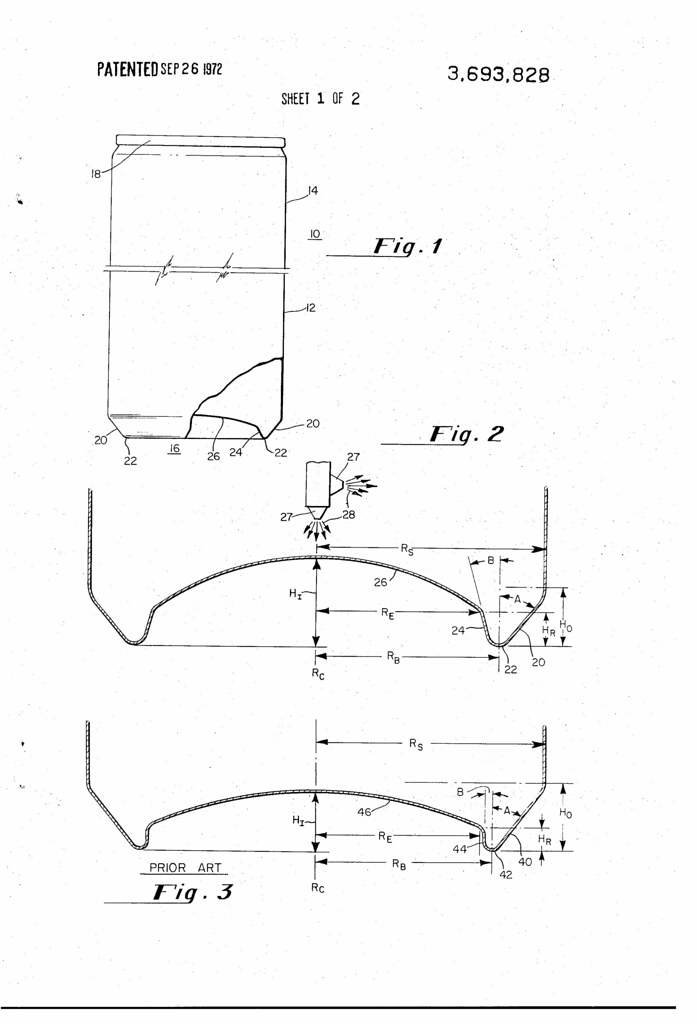
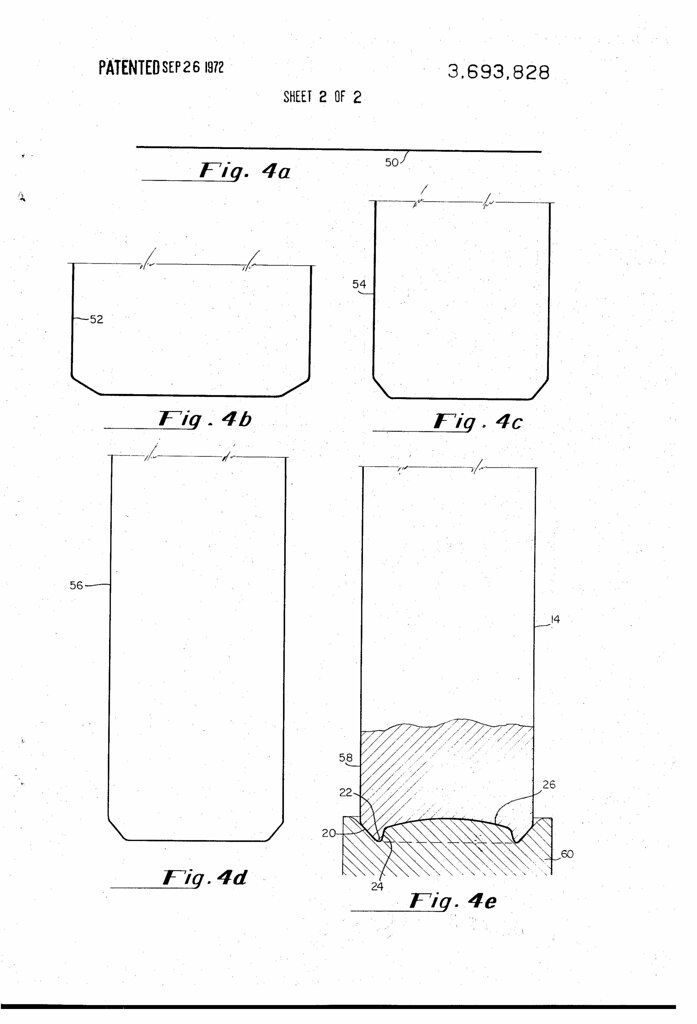
Today in 1972, US Patent 3693828 A was issued, an invention of Raymond H. P. Kneusel and Vinson S. Potts, assigned to Crown Cork & Seal Co., for their “Seamless Steel Containers.” Here’s the Abstract:

A steel beverage or beer can of the seamless type having a unitary body including seamless side walls and an integral bottom with an end double seamed to the top of the side walls. The bottom comprises an outer frustoconical surface extending downwardly and inwardly from the side walls, an annular bead for supporting the can, an inner frustoconical surface extending upwardly and inwardly from the annular supporting bead, and a recessed domed central panel extending inwardly and upwardly along the axis of the can from the second frustoconical surface.

US3693828-1
US3693828-2

Filed Under: Beers Tagged With: Cans, History, Law, Patent

Beer In Ads #2044: La Salle Street, Chicago

September 25, 2016 By Jay Brooks


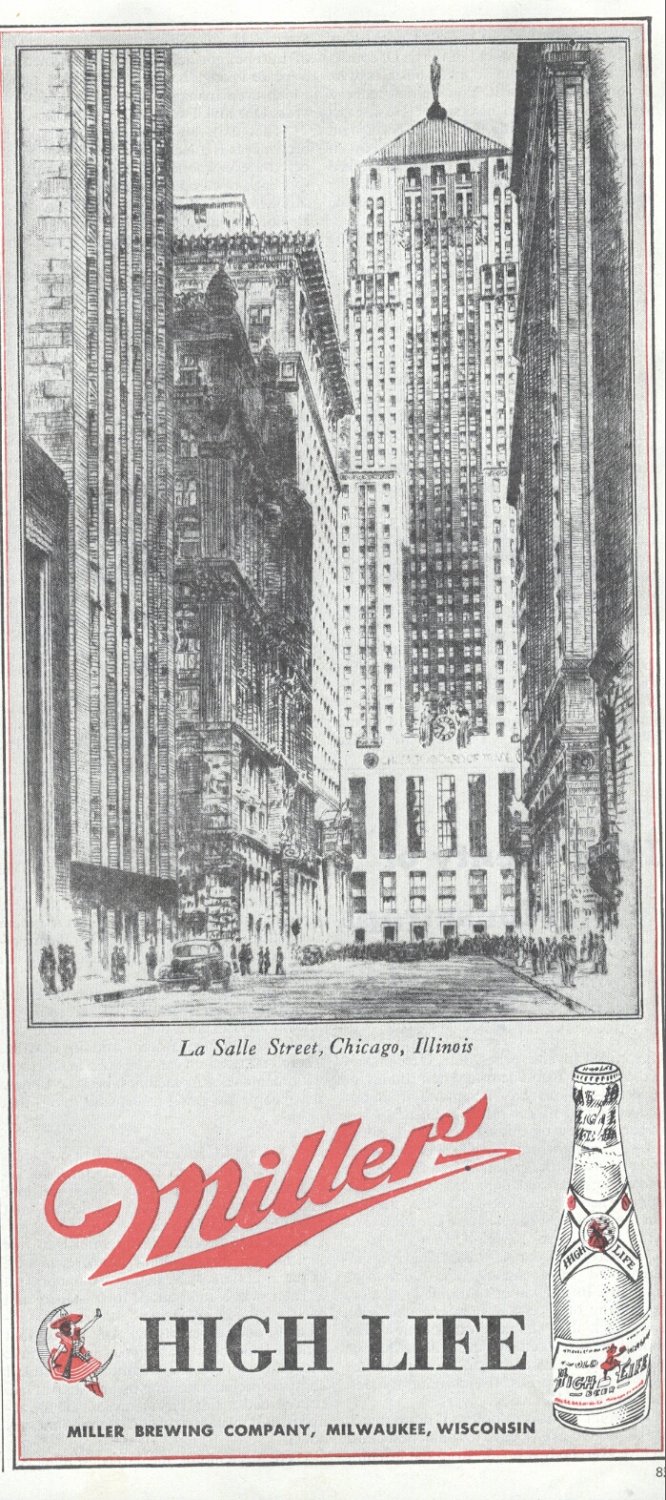
Sunday’s ad is for Miller High Life, from 1945. In this ad, it’s very simple, showing a detailed view of La Salle Street in Chicago, Illinois, with no text apart from the location and then the name of the beer below. I don’t know if this was part of a series showing other locations or if there’s some special significance to this street in 1945. This would have been toward the end of the Second World War, so perhaps that has something to do with, but in the end there are more questions than answers, but it’s still an oddly comforting ad.

Miller-1945-la-salle-street

Filed Under: Beers Tagged With: Advertising, Chicago, History, Miller Brewing

Patent No. 3760968A: Composite Container Article

September 25, 2016 By Jay Brooks

patent-logo
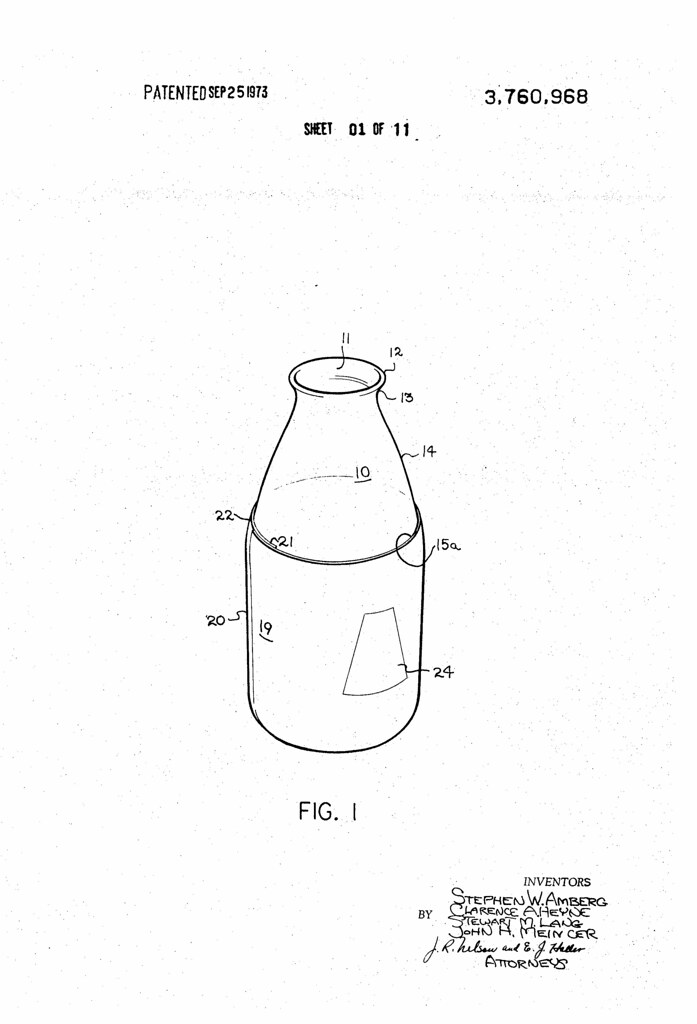
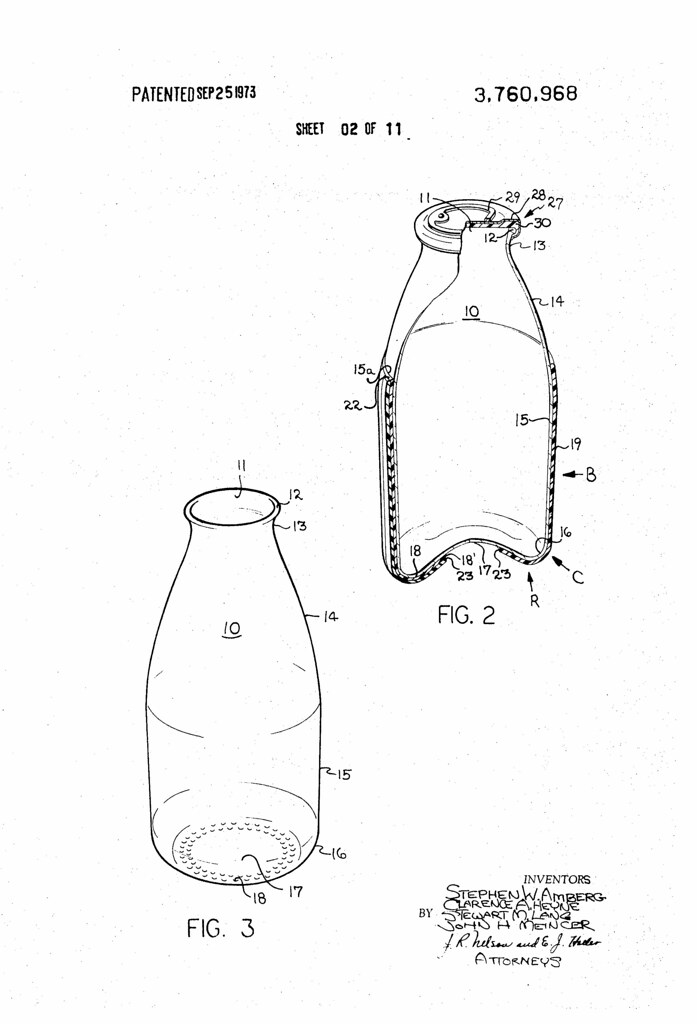
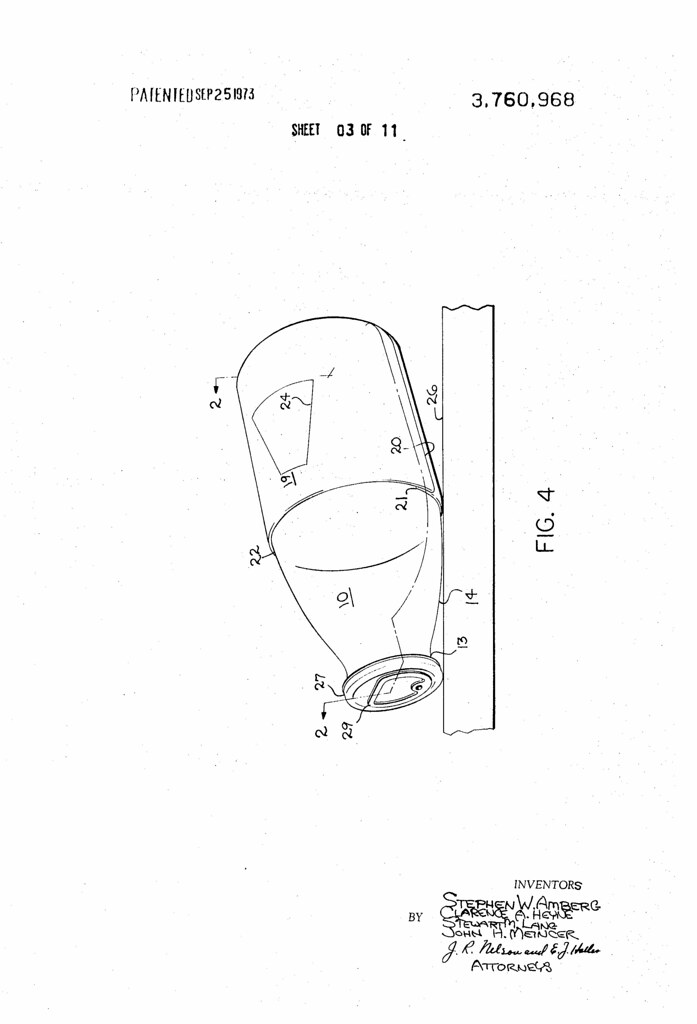
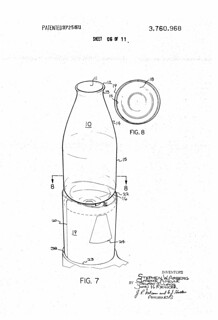
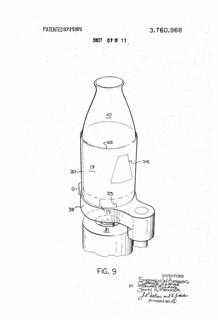
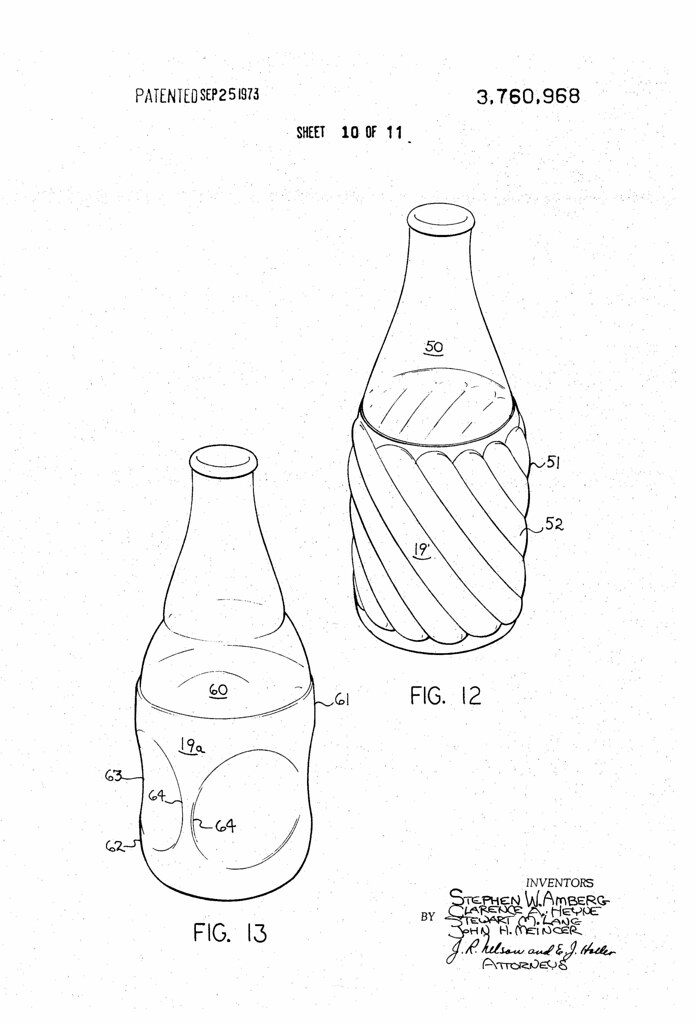
Today in 1973, US Patent 3760968 A was issued, an invention of S. Amberg, C. Heyne, and J. Meincer, assigned to Owens Illinois Inc., for their “Composite Container Article” Here’s the Abstract:

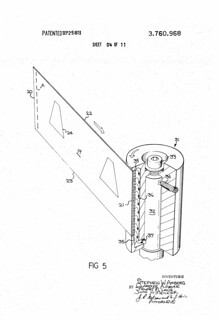
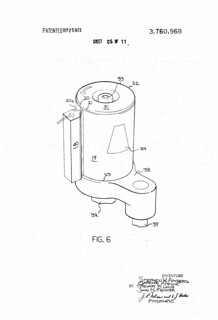
The invention disclosed relates to an improved container article for pressurized products, such as beer, beverages, and the like, which is made from a glass bottle or jar and a sheet of shrinkable plastic material pre-decorated as flat sheet, then wrapped on a mandrel to a sleeve that is telescopically inserted over the major side wall of the bottle so that a lower marginal end thereof overhangs the bottom end of the bottle. The sleeve may be of a pre-foamed or non-foamed plastic material and is shrunken in situ by heat so that it fits snugly on the bottle surface and conforms to the body around its shoulder, side wall and its lower corner radius or heel and onto the bottom end of the bottle protecting the glass against surface damage, providing a pre-printed label or decoration for the bottle and covering the bearing surface and lower corner radius of the bottle protecting those areas plus affording coaster protection to furniture or like surfaces. The orientation of the plastic is major on the peripheral dimension of the sleeve and minor on the axial dimension. Antistatic compounds are applied to the surface opposite the printed surface also priming the bottle for good cohesion of the sleeve. The plastic sleeve has a skin depth differential, the thicker skin being adjacent the bottle.

US3760968-1
US3760968-2
US3760968-3

US3760968-4 US3760968-5

US3760968-6 US3760968-7

US3760968-10

Filed Under: Beers, Breweries, Just For Fun, Politics & Law, Related Pleasures Tagged With: Bottles, History, Law, Packaging, Patent

Patent No. 831635A: Beer Pipe Cleaner

September 25, 2016 By Jay Brooks

patent-logo
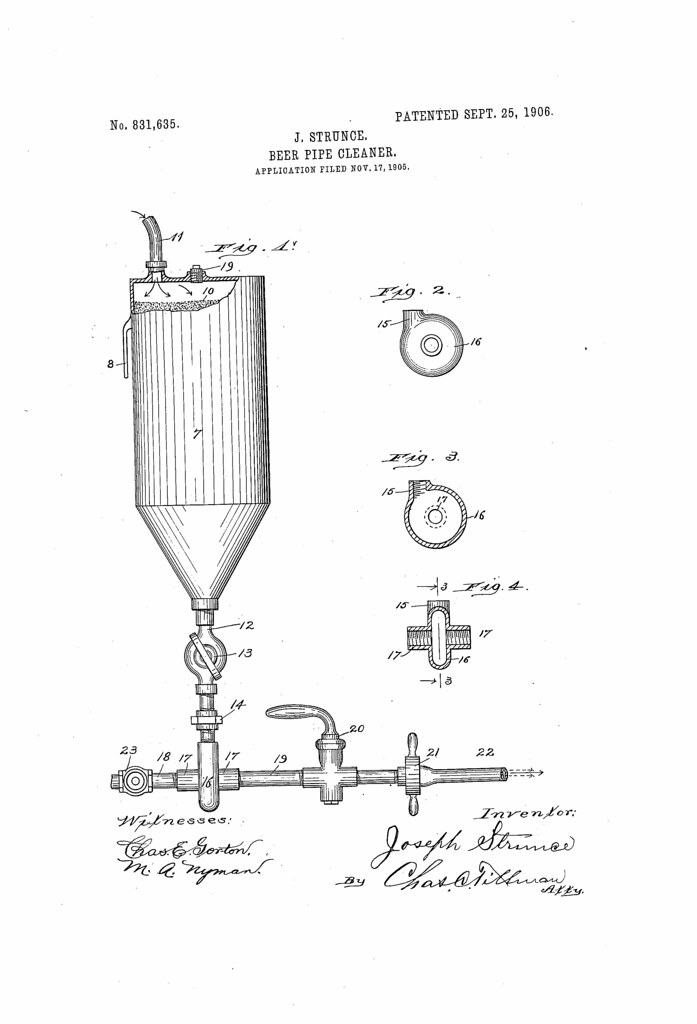
Today in 1906, US Patent 831635 A was issued, an invention of Joseph Strunce, for his “Beer Pipe Cleaner.” There’s no Abstract, although in the description it includes these claims:

This invention relates to certain new and useful improvements in an apparatus to be used for cleaning pipes, and while it is more especially intended to be employed for cleaning beer-pipes, such as are used for drawing beer from kegs, casks, or vessels, yet it is applicable for cleaning pipes used for other purposes; and it consists in certain peculiarities of the construction, novel arrangements, and operation of the various parts thereof, as will be hereinafter more fully set forth and specifically claimed.

US831635-0

Filed Under: Beers, Just For Fun, Politics & Law, Related Pleasures Tagged With: Brewing Equipment, History, Kegs, Law, Patent

Beer In Ads #2043: Terrific Twosome

September 24, 2016 By Jay Brooks


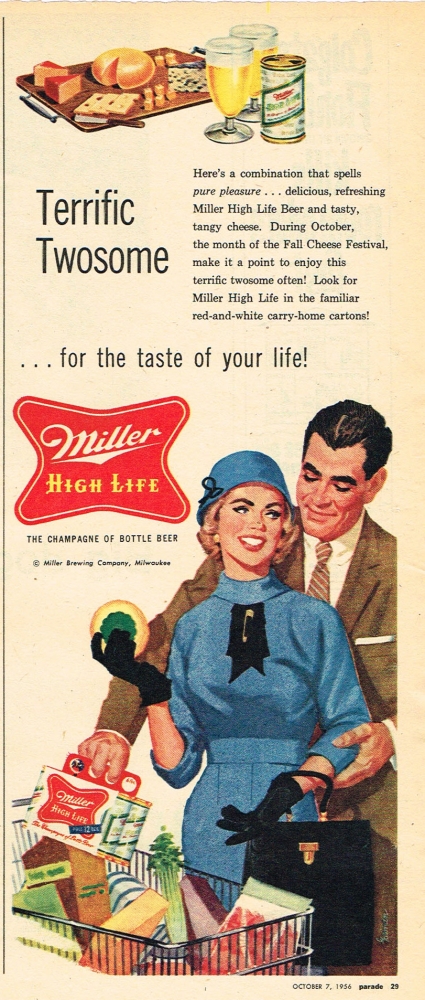
Saturday’s ad is for Miller High Life, from 1956. In this ad, a couple is grocery shopping — I just love their shopping outfits — as he’s putting a six-pack of Miller High Life in their cart. She’s holding up a half grapefruit? Or what is that? It looks like it has a yellow rind but a large green center. Is that the pairing alluded to by “Terrific Twosome.” Or is it simply the couple themselves?

Miller-High-Life-1956-shopping

Filed Under: Art & Beer, Beers Tagged With: Advertising, History, Miller Brewing

Patent No. 3104974A: Process For Improving The Brewing Characteristics Of Hops

September 24, 2016 By Jay Brooks

patent-logo
Today in 1963, US Patent 3104974 A was issued, an invention of Pavel Weiner, for his “Process For Improving the Brewing Characteristics of Hops.” There’s no Abstract, although in the description it includes these claims:

Hops which have been freshly picked and are then used either immediately, or after having been stored for a reasonably short period, for brewing, contain etheric oils which are of considerable importance for the taste of the resulting beer. Since hops cannot always be processed immediately after picking, the storage of hops represents a special problem, since hops stored in the open air start to decompose immediately even when given a conventional drying treatment to reduce their water content to from about 10 to 12% by weight. Decomposition proceeds more rapidly if the air in contact with the hops is moist, and if the temperature at which the hops are stored is high.

Known methods of ensuring that hops retain their desirable qualities even during long storage are, therefore, based on storing the hops at a low temperature and in dry air, or on keeping atmospheric air away from the hops while they are in store and while they are being conveyed to the brewery. The hops are therefore placed in gas-tight vessels, the air being then sucked out of the vessel and replaced by an inert gas, usually carbon dioxide. In another known process to improve the keeping properties of hops, they are compressed into a rigid block, then enclosed in a gas-previous envelope, and temporarily subjected to a low ambient pressure of from about 1.5 to 2.3 mm. of mercury, whereafter they can be stored in the open air for a longer but still limited time.

All these methods of storing or improving the keeping properties of hops are expensive, increase the cost of the hops, and cannot prevent the gradual advance of the decomposition processes which start immediately the hops have been picked. Such processes lead to the formation and collection in the hops of undesirable odorants and flavoring substances which are imparted very rapidly to the beer brewed with such hops. Although some of these volatile substances evaporate with the steam while the mash is being boiled with the hops, the flavor of the mash is nevertheless impaired and this deficiency is clearly perceptible in the finished beer.

The main groups of flavoring substances which impair the taste of beer are substances which are naturally present in some kinds of hops, substances arising out of natural aging of the hops, and substances produced by very bad storage conditions.

There are also other flavoring substances which the hops can pick up from the ambient air while they are in store.

Many breweries endeavour to improve the brewing properties of a hop having undesirable flavor substances by brewing or even boiling the hops before they are added to the mash. This step does not remove all the unwanted substances and also has the disadvantage of removing from the hops ingredients which are very important for brewing, for such ingredients are, like the unwanted decomposition products, etheric oils or resins which are readily soluble in water and are transferred into the water used for brewing or boiling and so separated from the hops with such water.

According to the present invention loose hops are introduced into a gas-tight vessel which is then evacuated to a pressure between 15 and mm. of mercury and maintained at that pressure for from 15 to 60 3,104,974 Patented Sept. 24, 1963 ice minutes by introducing pure air or a neutral gas as the remaining atmosphere is sucked out.

This process has the effect of removing from the hops every kind of flavor substance which impairs the beer, but only such substances, and so does not significantly reduce the content in the hops of these flavor substances which are important for brewing.

What the residual pressure maintained in the treatment vessel should be, within the limits specified, depends upon the extent to which unwanted flavor substances are present in the hops, but the pressure should not go any lower than the bottom limit of 5 mm. of mercury, since at this pressure the hops start to release the volatile aroma substances which are useful in brewing. Similarly, the treatment time largely depends upon the proportion of unwanted flavour substances, but it is better to treat the hops at a relatively high residual pressure in the vessel for a relatively long time, rather than to reduce the residual pressure to the lower limit specified or even further in order to shorten the treatment time.

The results of the treatment just outlined can very easily be determined directly after treatment by an odor test. If such a test is unsatisfactory, the treatment can readily be repeated one or more times.

To ensure that decomposition and production of further unwanted flavorings does not restart in hops which have been treated in accordance with the invention, it is preferable to apply the process according to the invention immediately before the hops are added to the mash.

If, as is often done, the hops are ground before being added to the mash, it is convenient to apply the process according to the invention after the hops have been ground, since unwanted flavoring substances are formed as a result of the heat generated when the hops are ground. Treatment after grinding removes these undesirable substances.

The apparatus for carrying out the process is very simple for instance, the vessel can have, in addition to the connection for the suction pump, another connection through which it can be connected to a fresh air or inert gas source. This other connection can take the form of a valve which opens when the required pressure in the vessel is reached, so that the air or gas enters the vessel as soon as the pressure to which the valve has been set is reached and for as long as that pressure is maintained.

Extended experiments and the practical application of the process according to the invention have confirmed that all the disadvantages associated with the hop are obviated, hop aroma is improved very considerably, and so unwanted flavoring substances or odorants do not enter the beer, thereby yielding in a beer having a very fine aroma.

Example From a hop pocket which had bee-n stored for several months, a proportion having an unpleasant cheesy smell was removed, loosened up by being crumbled, and subjected to a low pressure of 10 mm. of mercury for 15 minutes. The atmosphere which continued to be sucked out of the vessel after the pressure of 10 mm. of mercury had been reached because of continuing operation of the pump was replaced by a supply of fresh air. The cheesy smell was not perceptible after this treatment, and the beer brewed with the hops thus treated was free of any unwanted secondary flavor.

hops_v1.12

Filed Under: Art & Beer, Beers, Just For Fun, Politics & Law, Related Pleasures Tagged With: History, Hops, Law, Patent, Science of Brewing

Patent No. 3403029A: Reconstituted Beer Process Using Fractional Crystallization

September 24, 2016 By Jay Brooks

patent-logo
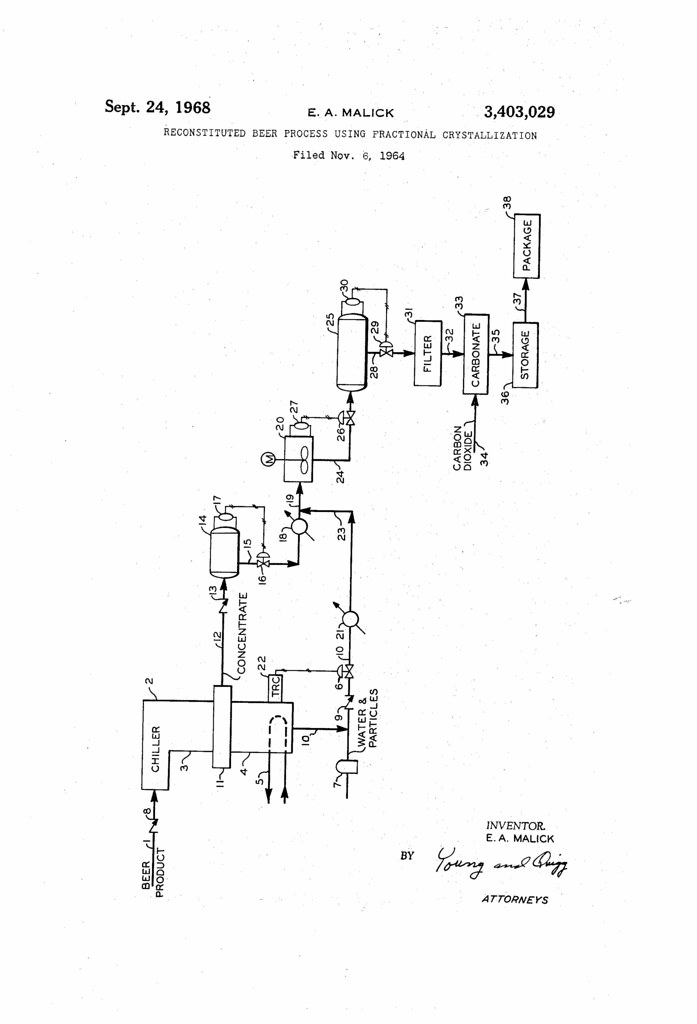
Today in 1968, US Patent 3403029 A was issued, an invention of Emil A. Malick, assigned to Phillips Petroleum Co., for his “Reconstituted Beer Process Using Fractional Crystallization.” There’s no Abstract, although in the description it includes these claims:

Reconstituted beer is formed by fractionally crystallizing a beer product to form a concentrate containing some precipitate and a separate precipitate containing fraction, holding at least the concentrate at the temperature of the fractional crystallization process to allow additional precipitation to take place, heating at least the concentrate to allow redissolving of flavor bodies and the like from the precipitate, combining the heated concentrate and separate precipitate containing fraction, and separating precipitate from the combination.

US3403029-0

Filed Under: Beers, Breweries, Just For Fun, Politics & Law, Related Pleasures Tagged With: History, Law, Patent, Science of Brewing

« Previous Page
Next Page »

Find Something

Northern California Breweries

Please consider purchasing my latest book, California Breweries North, available from Amazon, or ask for it at your local bookstore.

Recent Comments

  • Bob Paolino on Beer Birthday: Grant Johnston
  • Gambrinus on Historic Beer Birthday: A.J. Houghton
  • Ernie Dewing on Historic Beer Birthday: Charles William Bergner 
  • Steve 'Pudgy' De Rose on Historic Beer Birthday: Jacob Schmidt
  • Jay Brooks on Beer Birthday: Bill Owens

Recent Posts

  • Beer In Ads #5239: The National Drink May 2, 2026
  • Beer Birthday: Anders Kissmeyer May 2, 2026
  • Beer Birthday: Bruce Paton May 2, 2026
  • Beer Birthday: Brian Hunt May 2, 2026
  • Beer In Ads #5238: The First Of May Is Bock Beer Day May 1, 2026

BBB Archives

Feedback

Head Quarter
This site is hosted and maintained by H25Q.dev. Any questions or comments for the webmaster can be directed here.