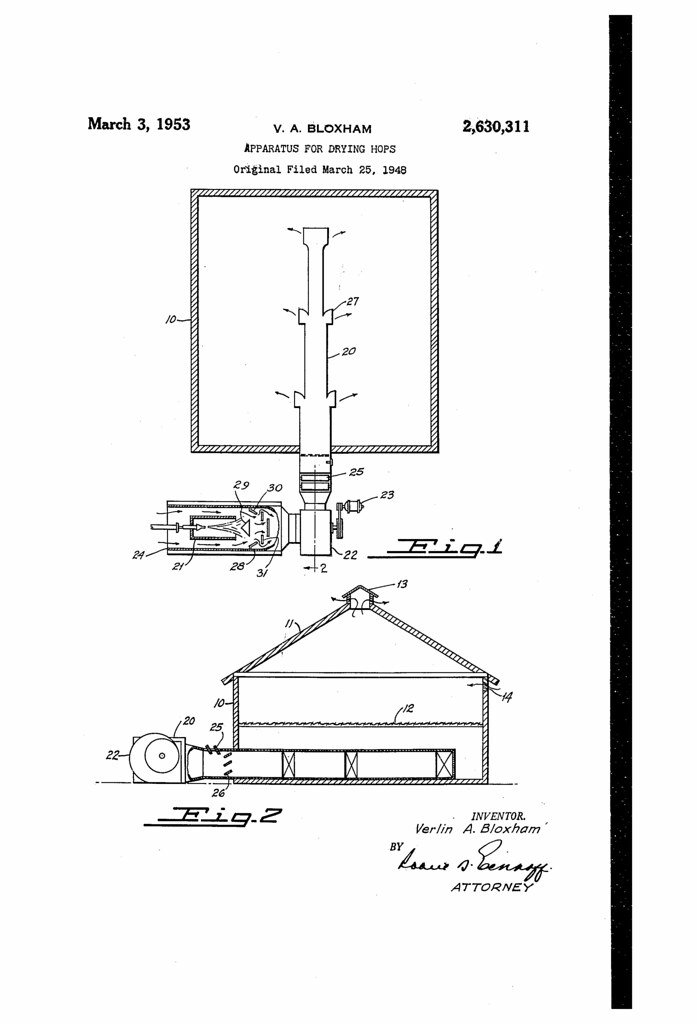
Today in 1953, US Patent 2630311 A was issued, an invention of Verlin A. Bloxham, for his “Apparatus For Drying Hops.” There’s no Abstract, but in the description it states that the “invention relates to an apparatus for drying hops. The apparatus commonly employed heretofore for drying hops includes a house-like structure having a reticulated floor upon which the hops are loaded. This floor may be some 20 feet above the ground. Beneath the floor is disposed a heater burning fuel of one sort or another. The products of combustion from the heater usually pass through a zig-Zag or similar arrangement of pipes. located perhaps 8 feet beneath the floor on the way to the chimney. Forced draft of air is not provided, but the house is built tall enough, compared to its section, to provide a stack effect.”
How To Spot Bad Science

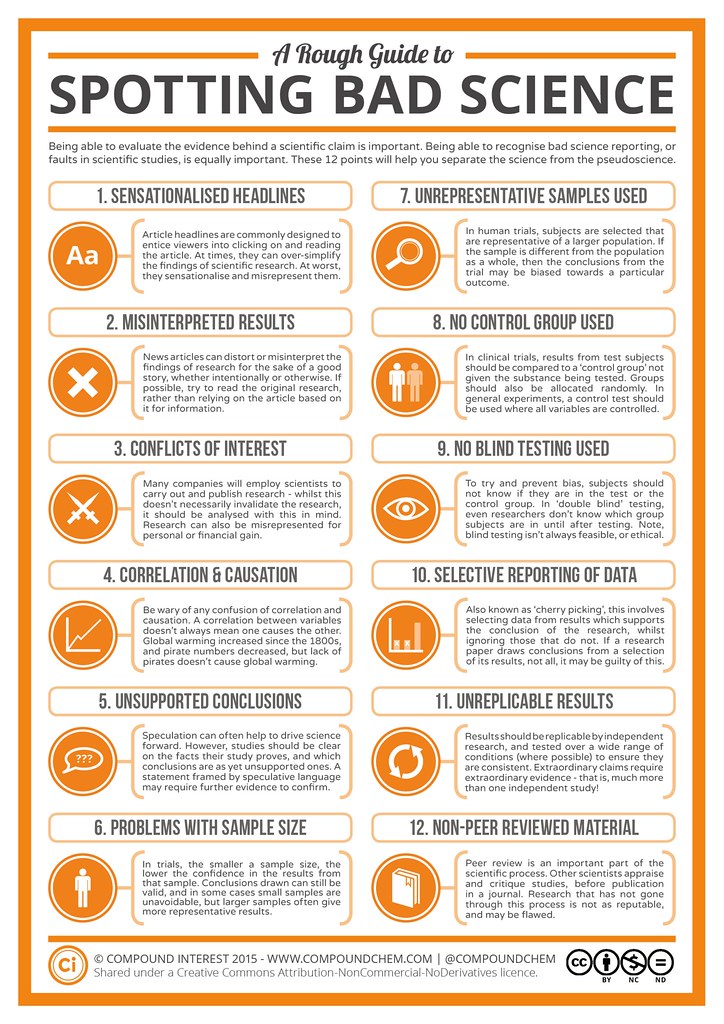
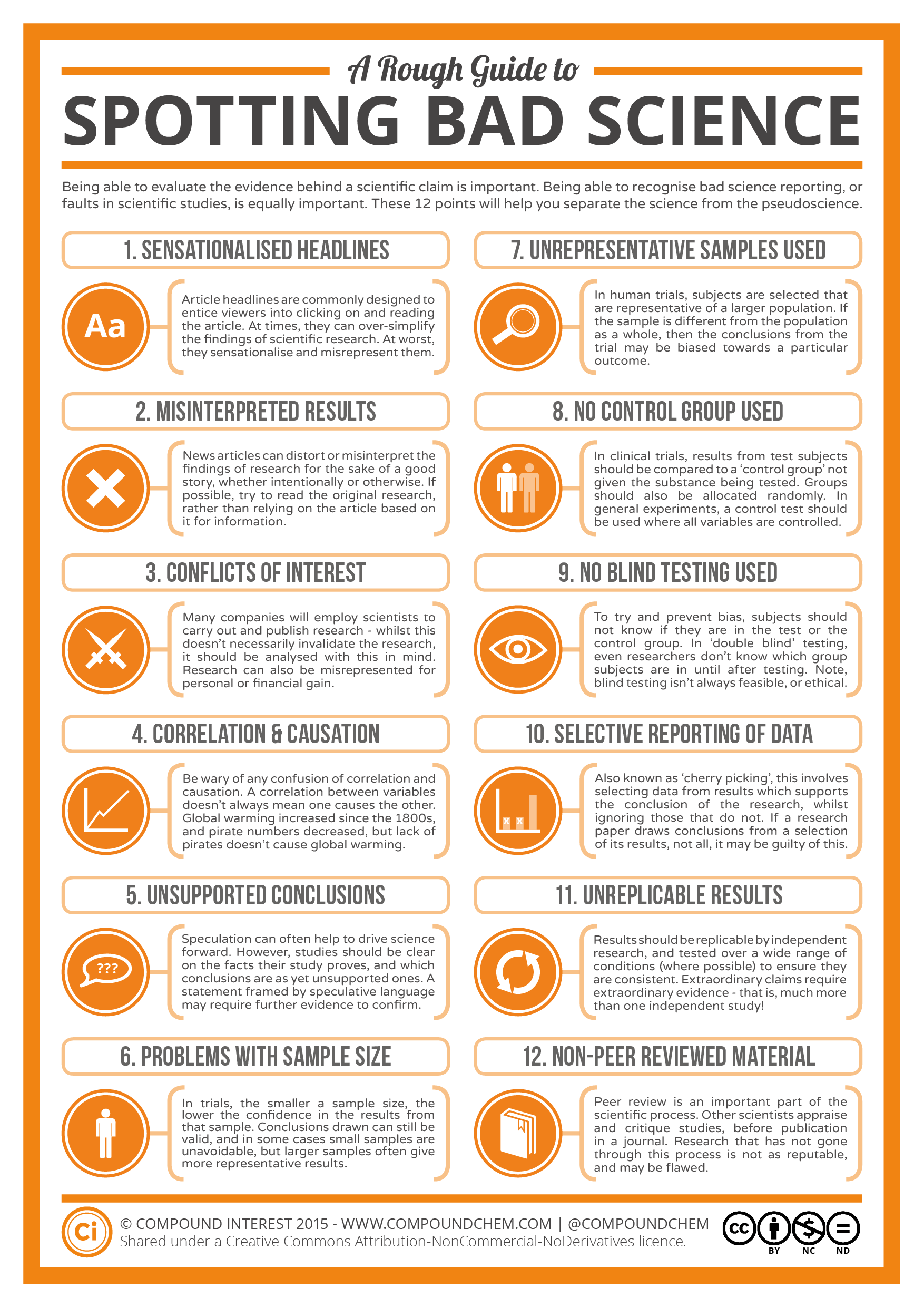
Longtime readers of the Bulletin know that I’m constantly examining and finding fault with questionable studies used by the modern prohibitionist groups using them to promote their agenda. I’m often amazed at some of the studies that make it into peer-reviewed journals. Apparently I’m not the only one. A British chemistry teacher, Andy Brunning, in his spare time, writes a great blog entitled “Compound Interest,” in which he “aims to take a closer look at the chemical compounds we come across on a day-to-day basis.” He created A Rough Guide to Spotting Bad Science, inspired by scientific research he looked at “which drew questionable conclusions from their results.” It “looks at the different factors that can contribute towards ‘bad’ science.”
The vast majority of people will get their science news from online news site articles, and rarely delve into the research that the article is based on. Personally, I think it’s therefore important that people are capable of spotting bad scientific methods, or realising when articles are being economical with the conclusions drawn from research, and that’s what this graphic aims to do. Note that this is not a comprehensive overview, nor is it implied that the presence of one of the points noted automatically means that the research should be disregarded. This is merely intended to provide a rough guide to things to be alert to when either reading science articles or evaluating research.
It’s nice to see an overview of a dozen of the more common ways in which studies are misused and the results are misrepresented. Sad to say, I see these all the time, so much so that I’ve started to question the way journals operate and how they select and accept articles. There are so many journals nowadays that they either are desperate for content and thus have lower standards than they used to, or the journals themselves have an agenda they’re promoting instead of simply providing a forum for progress in science. But this should give you a good start at figuring out why the next story you see about a study doesn’t seem to make any sense.
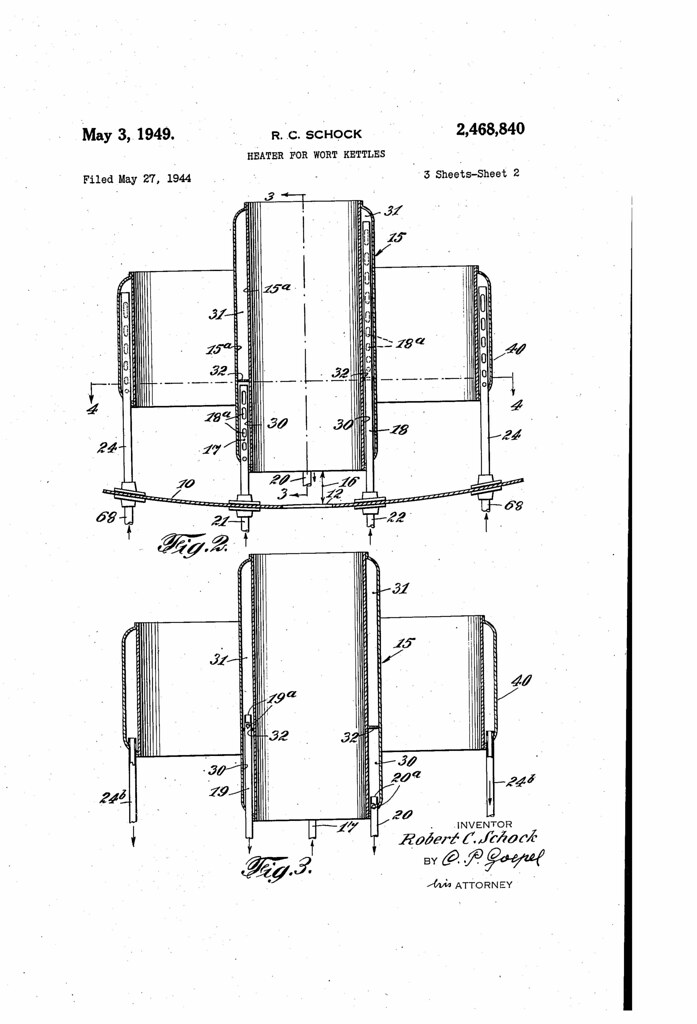
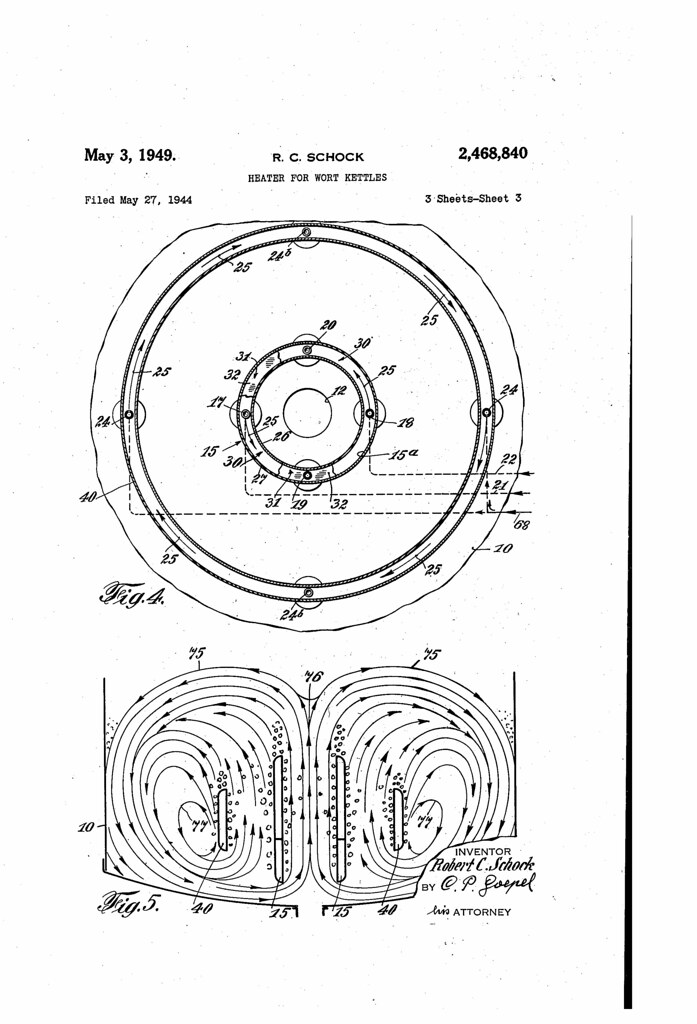
Patent No. 2468840A: Heater For Wort Kettles
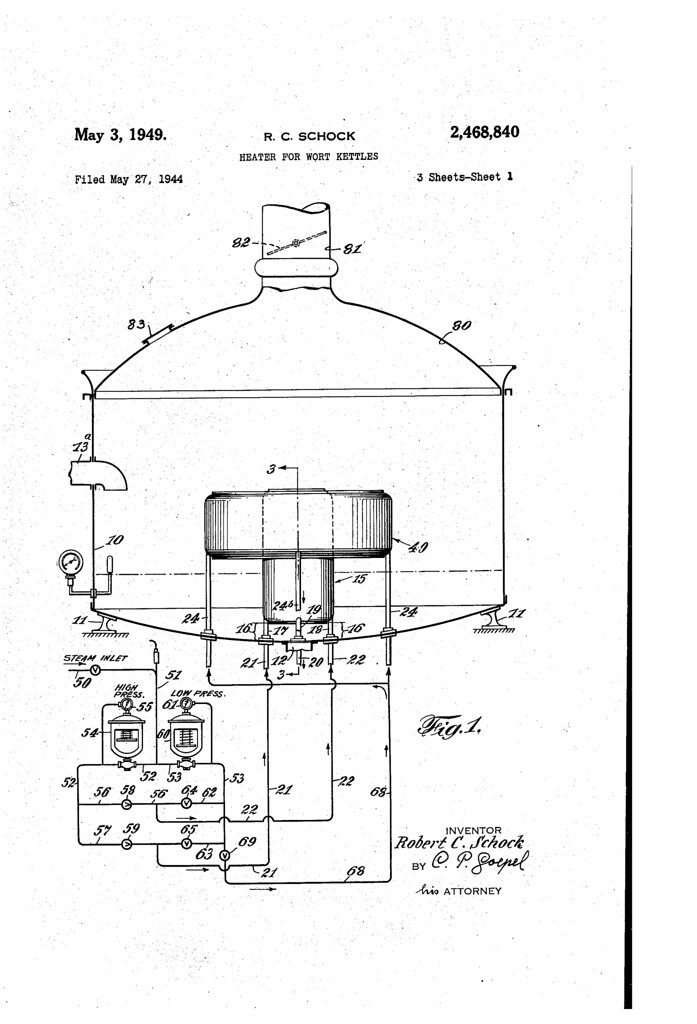
Today in 1949, US Patent 2468840 A was issued, an invention of Robert C. Schock, for his “Heater For Wort Kettles.” There’s no Abstract, but in the description it states that the “invention relates to means and methods of heating wort prior to its use in the making of beer.” A little later on, they add that the “invention comprises a heating unit having varying heat units supplied to it for their exchange with a mass to be heated, and to keep said mass heated, such exchange taking place at relatively lower temperatures, then at relatively higher temperatures, and then again at lower temperatures, the latter if desired.”
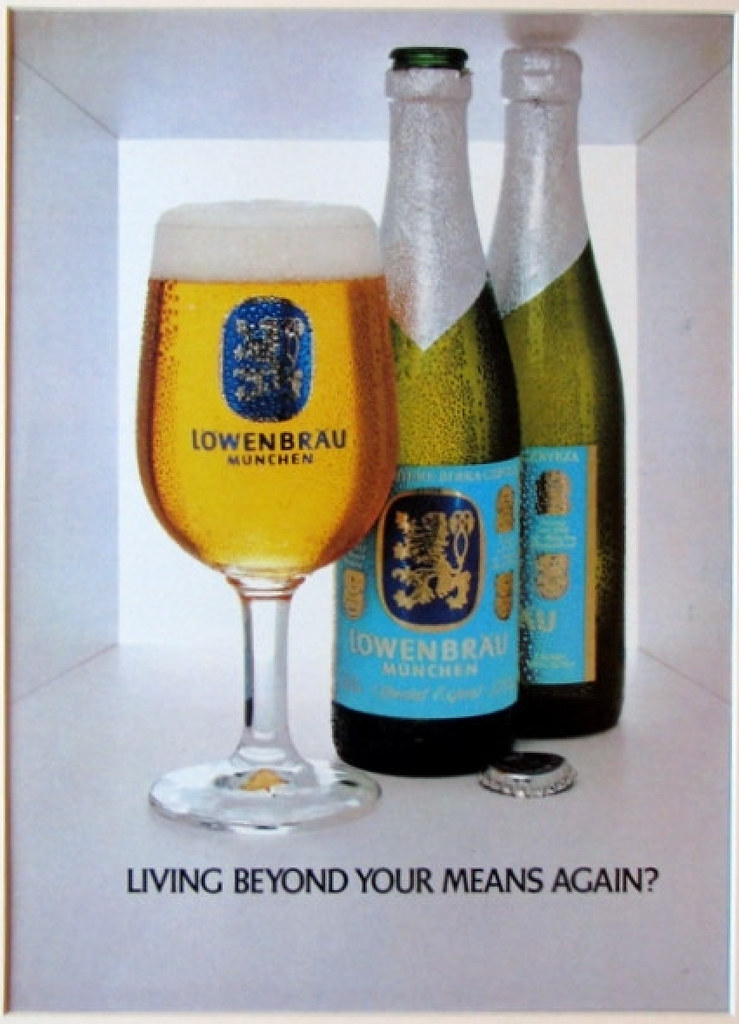
Beer In Ads #1543: Living Beyond Your Means Again?

Saturday’s ad is for Lowenbrau, from 1984. It’s a fairly simple ad showing two bottles of Lowenbrau, one of which was poured into a glass, at a time when it was sill considered a “premium” import, which seems laughable by today’s standards.
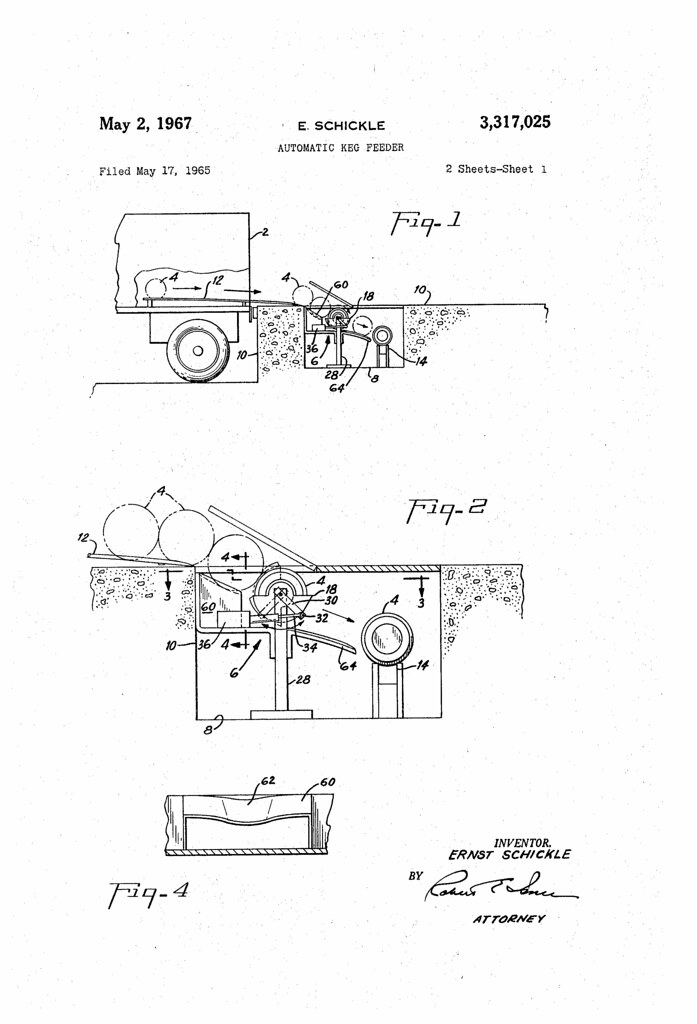
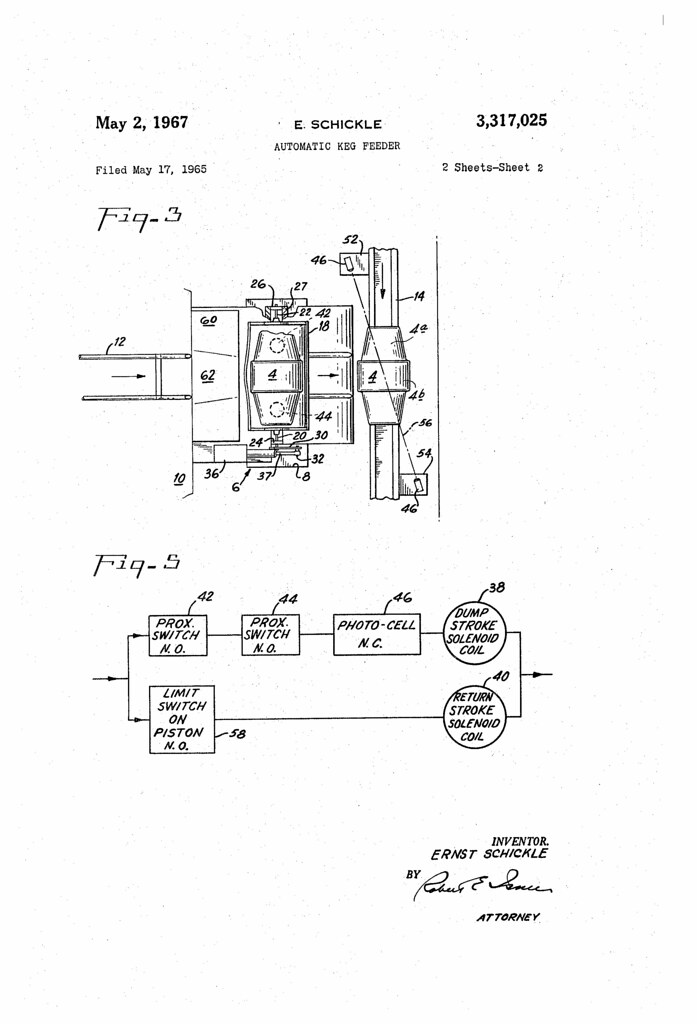
Patent No. 3317025A: Automatic Keg Feeder
Today in 1967, US Patent 3317025 A was issued, an invention of Ernst Schickle, assigned to Rheingold Breweries, for his “Automatic Keg Feeder.” There’s no Abstract, but in the description it states that the “invention relates generally to brewery operation and particularly to an improved apparatus for effecting transfer and controlled delivery of beer kegs or similar containers from a feeder location to an operating location.” A little later on, they add that the “invention may be briefly described as an improved beer keg transfer and delivery apparatus which includes, in its broad aspects, a keg receiving and neonmulating conveyor, a keg transfer unit, a delivery conveyor and associated means for effecting controlled keg delivery in spaced relation onto the delivery conveyor.”
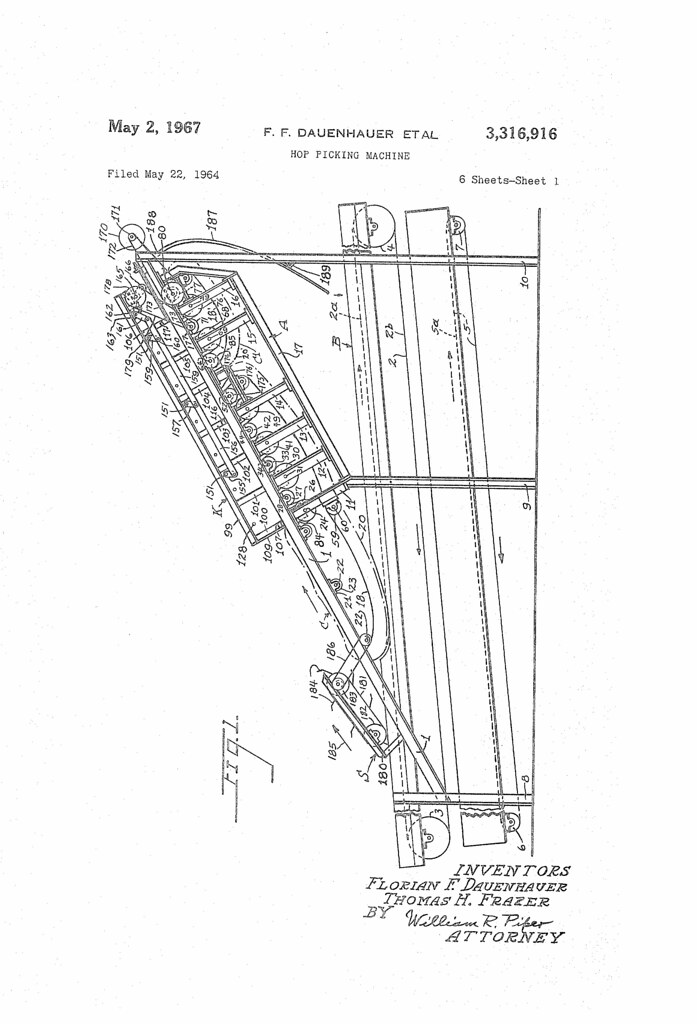
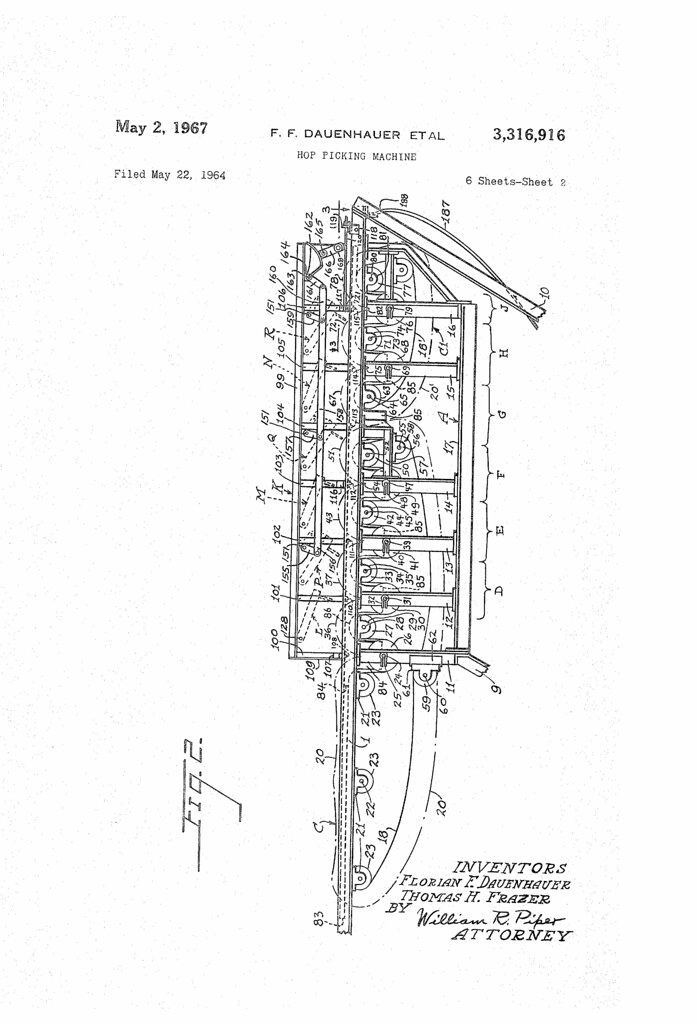
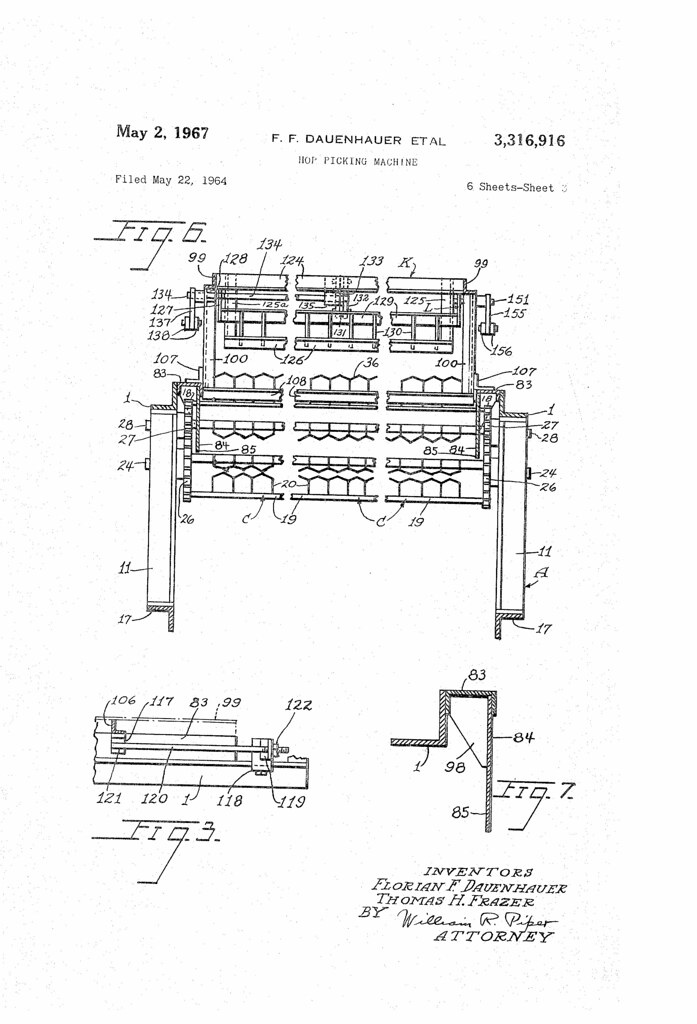
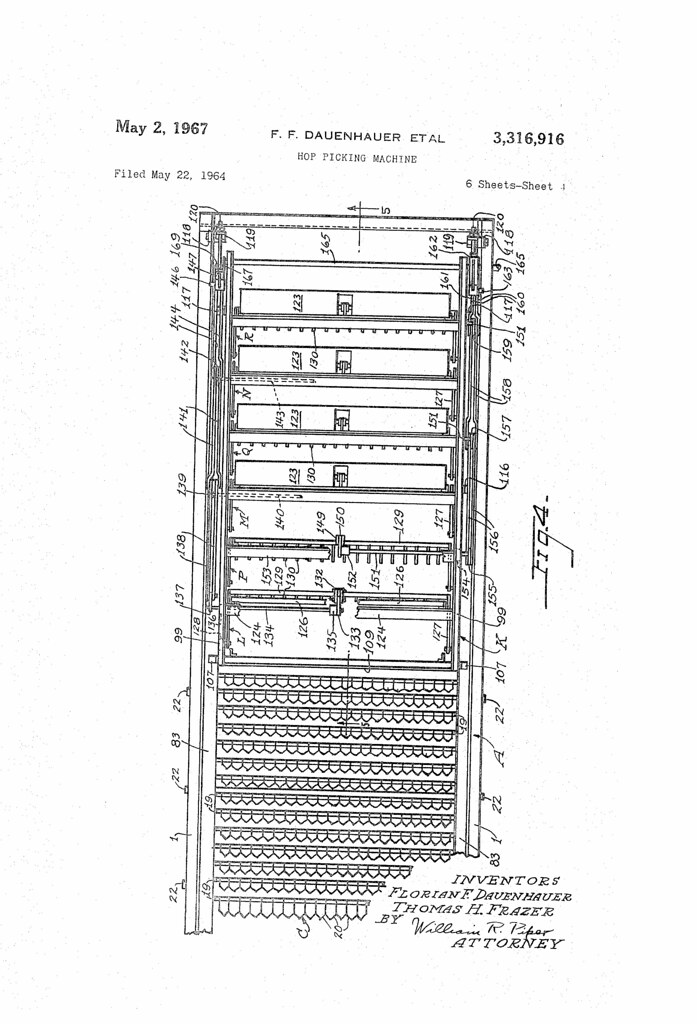
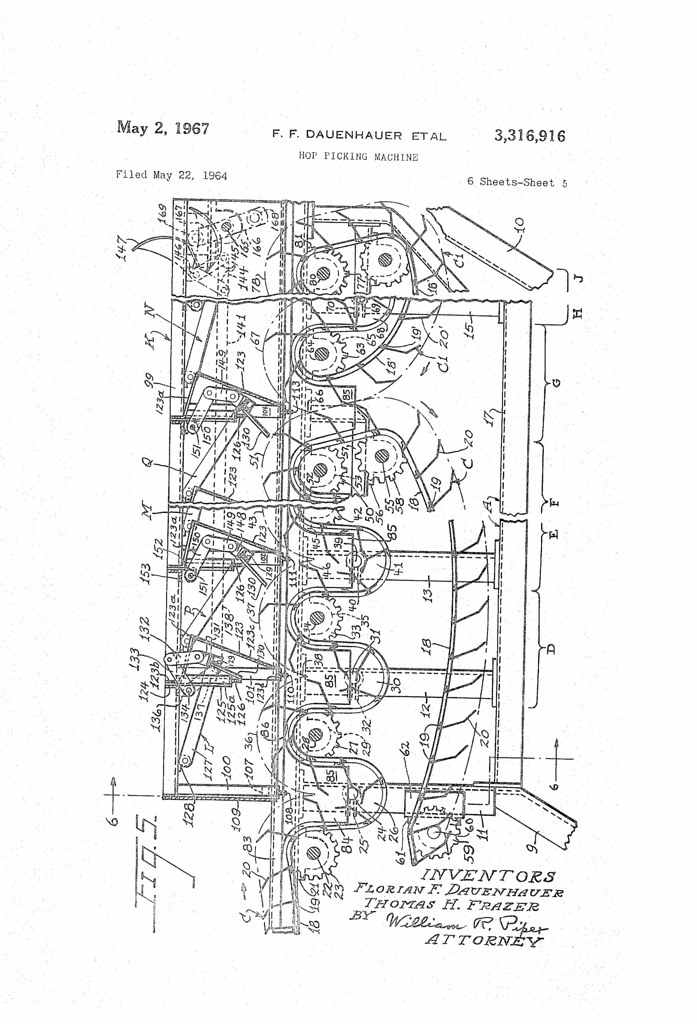
Patent No. 3316916A: Hop Picking Machine
Today in 1967, US Patent 3316916 A was issued, an invention of Florian F. Dauenhauer and Thomas H. Frazer, for their “Hop Picking Machine.” There’s no Abstract, and all they say in the description is a generic the “present invention relates to improvements in a hop picking machine, and it consists in the combination, construction and arrangement of parts as hereinafter described and claimed.” Which isn’t much for such a complicated machine, but you can get a better sense of it reading through the lengthy full description.

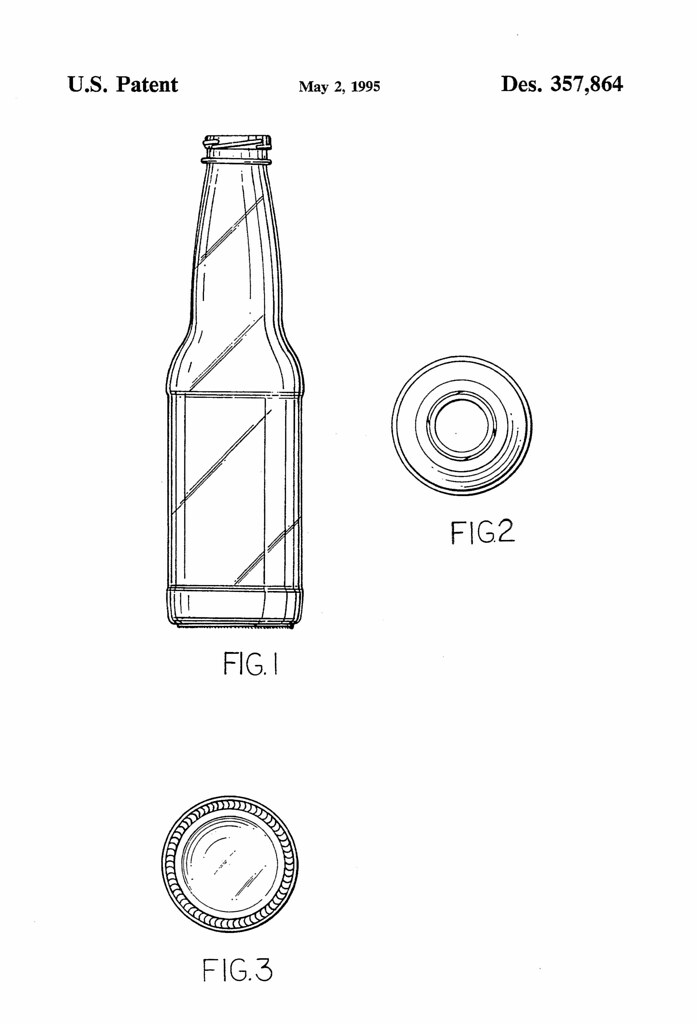
Patent No. D357864S: Beverage Bottle
Today in 1995, US Patent D357864 S was issued, an invention of Kevin R. Rusnock and Barbara E. Lee, assigned to the Coors Brewing Company, for their “Beverage Bottle.” There’s no Abstract, but all they say in the description is that it’s an “ornamental design for a beverage bottle.” Coors also refers to it as “our new design,” but I honestly can’t see what’s unique about it, at least not in the drawing they submitted with the patent application.
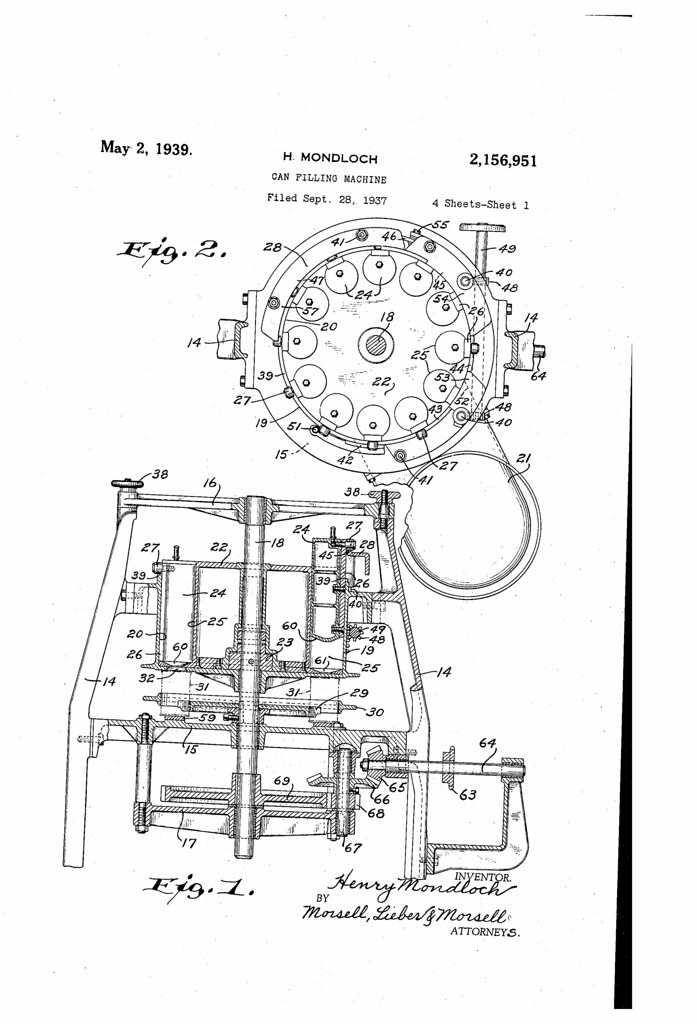
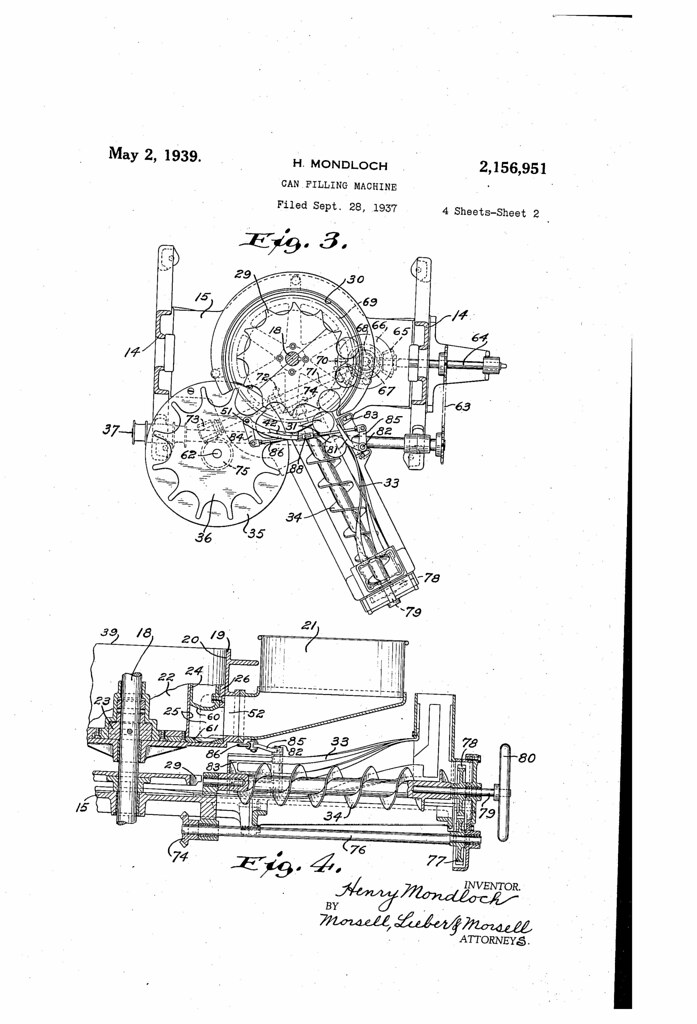
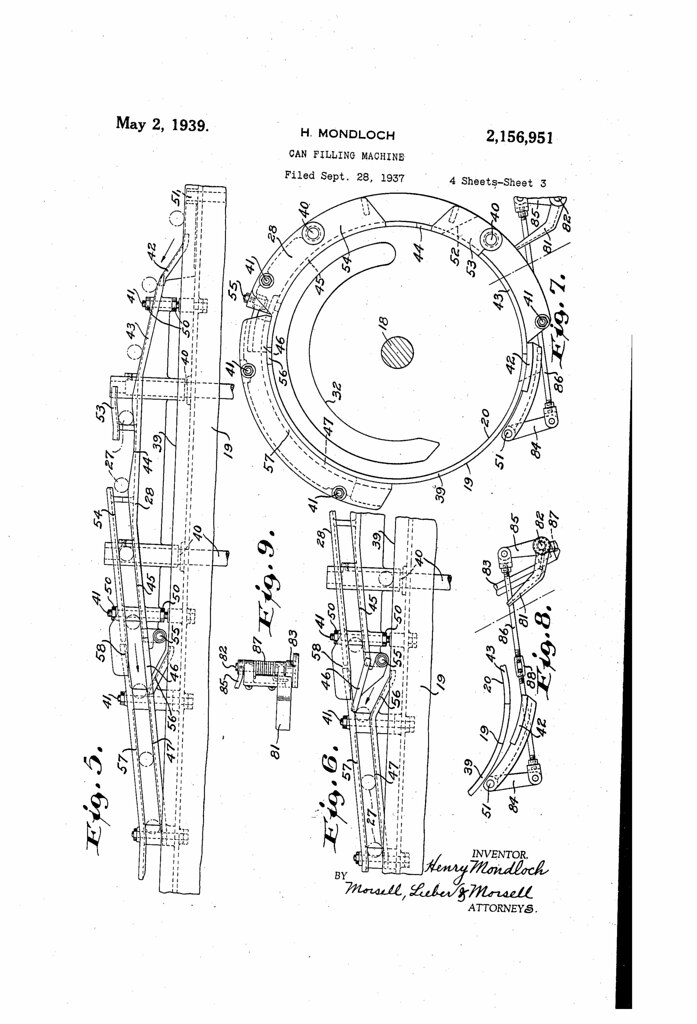
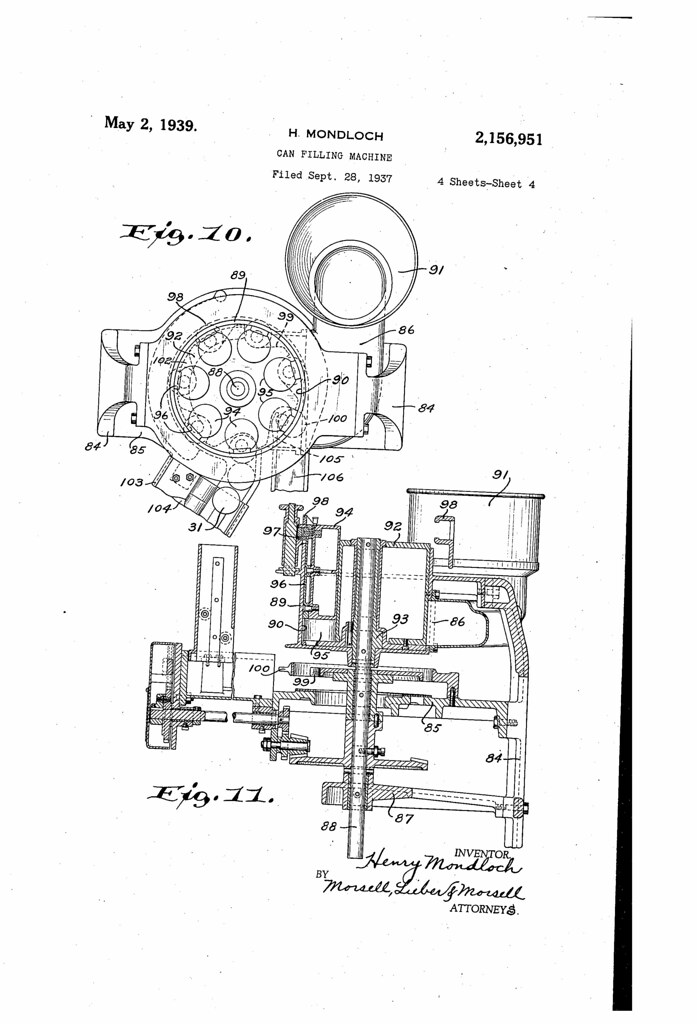
Patent No. 2156951A: Can Filling Machine
Today in 1939, US Patent 2156951 A was issued, an invention of Henry Mondloch, assigned to the Hansen Canning Machinery Corp., for his “Can Filling Machine.” There’s no Abstract, but they state in the description that the “present invention relates generally to improvements in the art of packing successive batches of commodity in receptacles, and relates more specifically to improvements in the construction and operation of so-called can filling machines of the automatic type.”
Beer In Ads #1542: It Stands Out —
Friday’s ad is for Whitbread, from 1952. The illustration features an illustration of a man pouring a pale ale, and he’s wearing a very odd expression on his face, his smile seemed forced (or just plain creepy). But what strikes me as strange is a statement in the copy that “they do all their own bottling.” Was that something uncommon enough in the 1950s that they’d use it as a selling point?

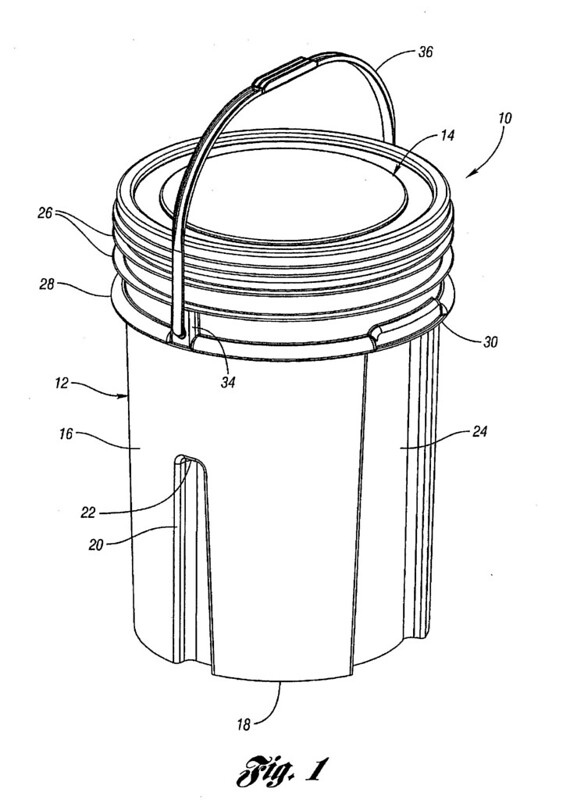
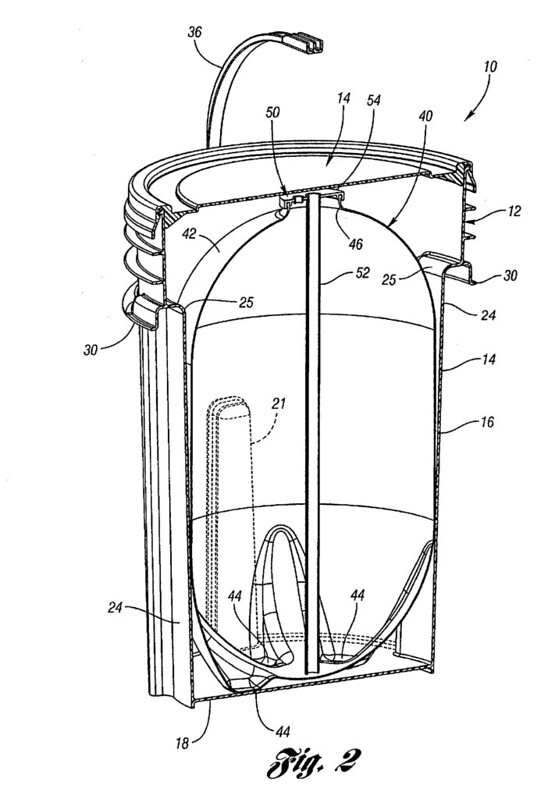
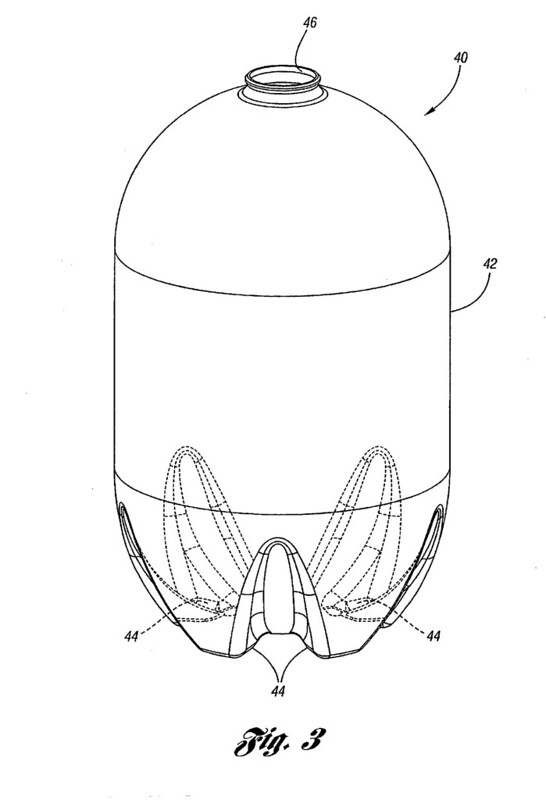
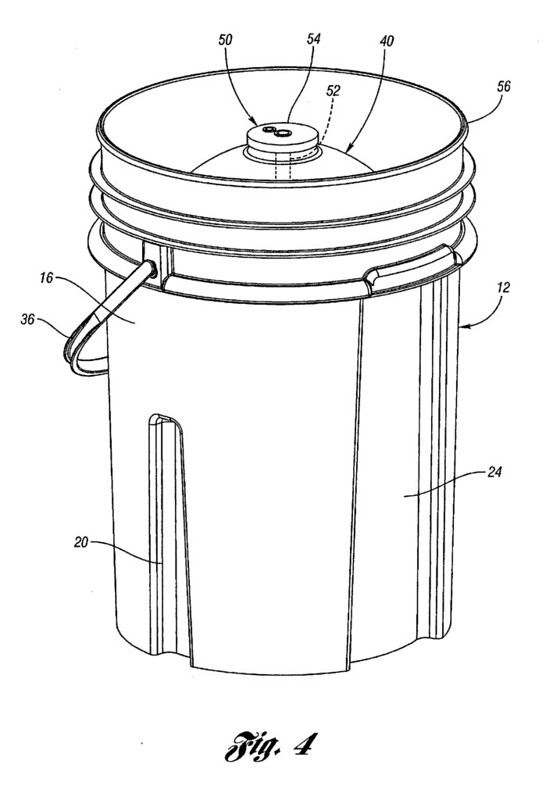
Patent No. EP2172402B1: Plastic Beer Keg
Today in 2013, US Patent EP 2172402 B1 was issued, an invention of William P. Apps, assigned to the Rehrig Pacific Company, for his “Plastic Beer Keg.” There’s no Abstract, but they state in the description that the “present invention relates generally to large multiple serving beverage containers, in particular, beer kegs.” They also list 13 claims about why this invention is unique, but the main one, of course, is that these are plastic, which is far cheaper than the stainless steel ones that are used today, and are also prone to theft. It will be interesting to see if they catch on.