Brookston Beer Bulletin

Jay R. Brooks on Beer

  • Home
  • About
  • Editorial
  • Birthdays
  • Art & Beer

Socialize

  • Dribbble
  • Email
  • Facebook
  • Flickr
  • GitHub
  • Instagram
  • LinkedIn
  • Pinterest
  • RSS
  • Twitter
  • YouTube

Powered by Genesis

Beer In Ads #5337: Bockbier Dance Circle

September 2, 2026 By Jay Brooks Leave a Comment

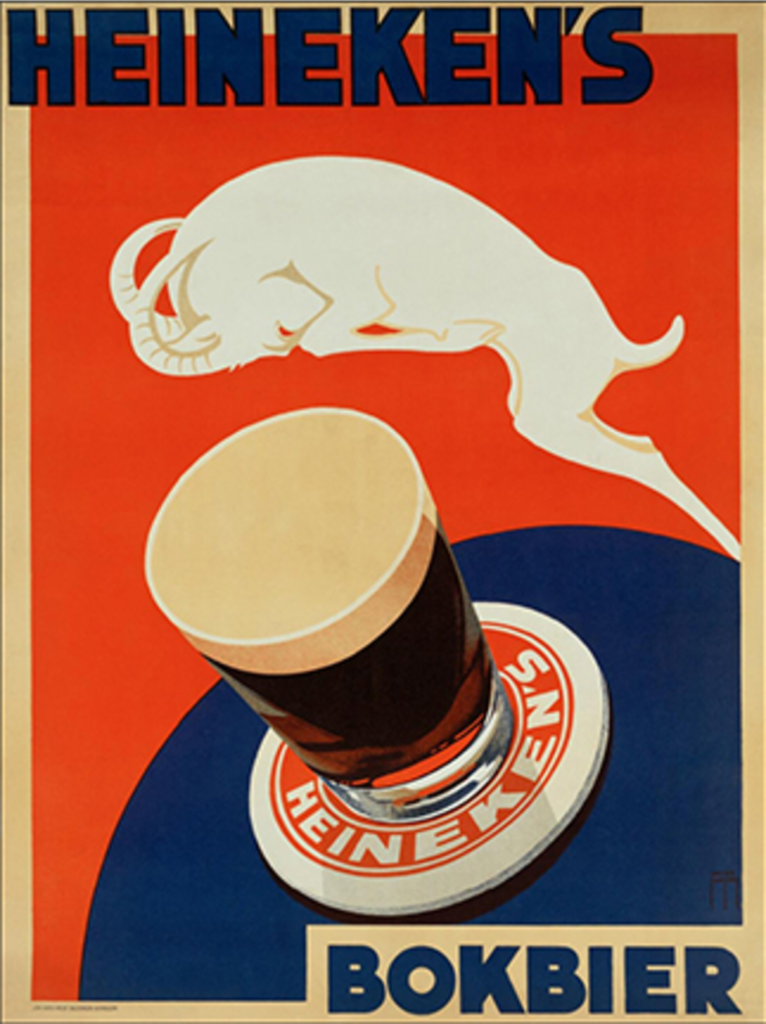
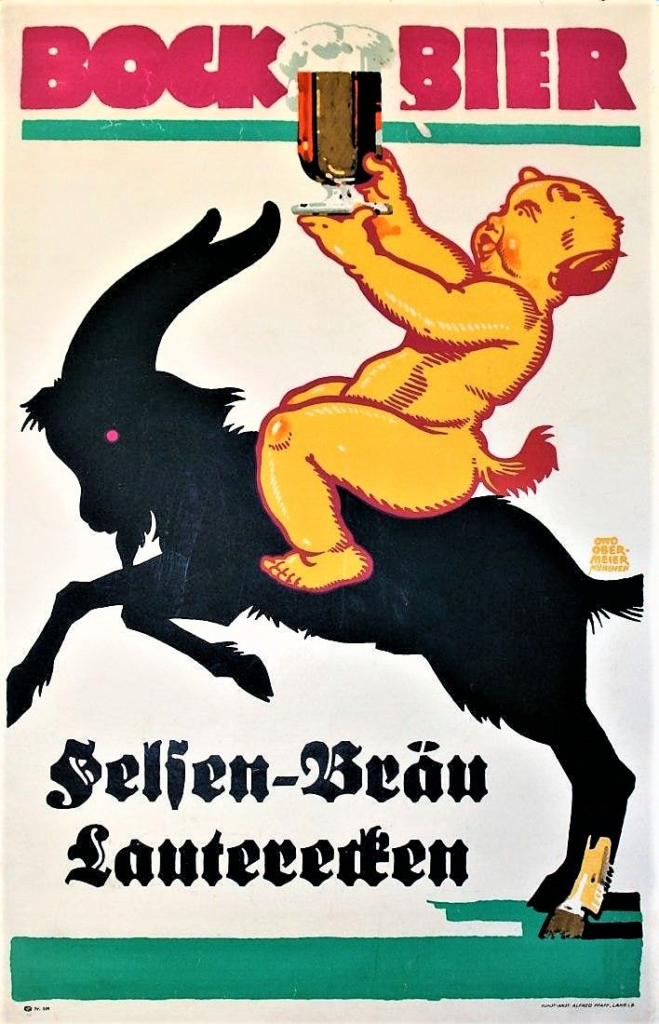
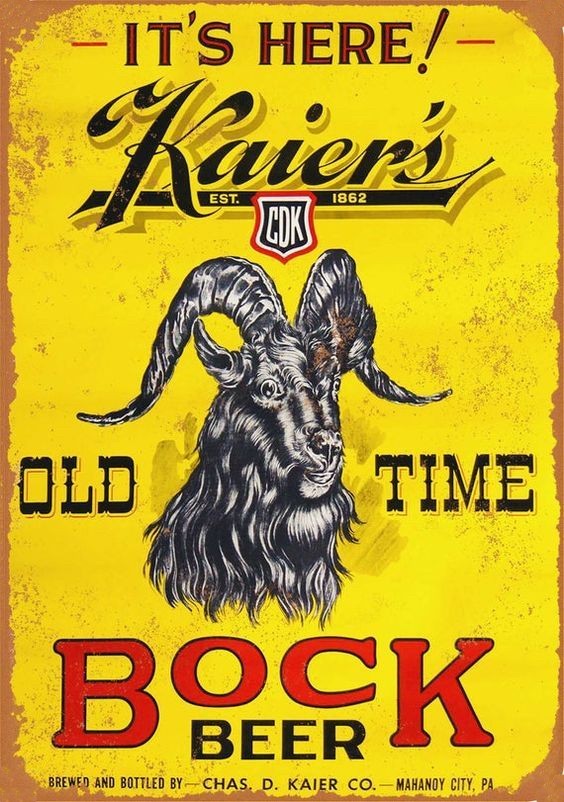
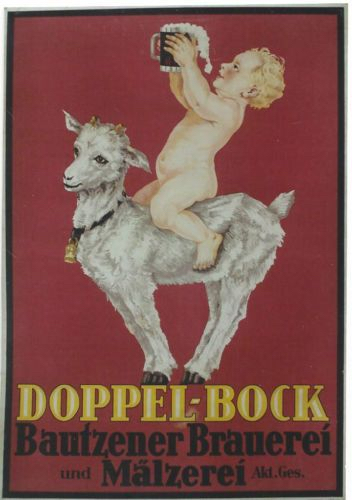
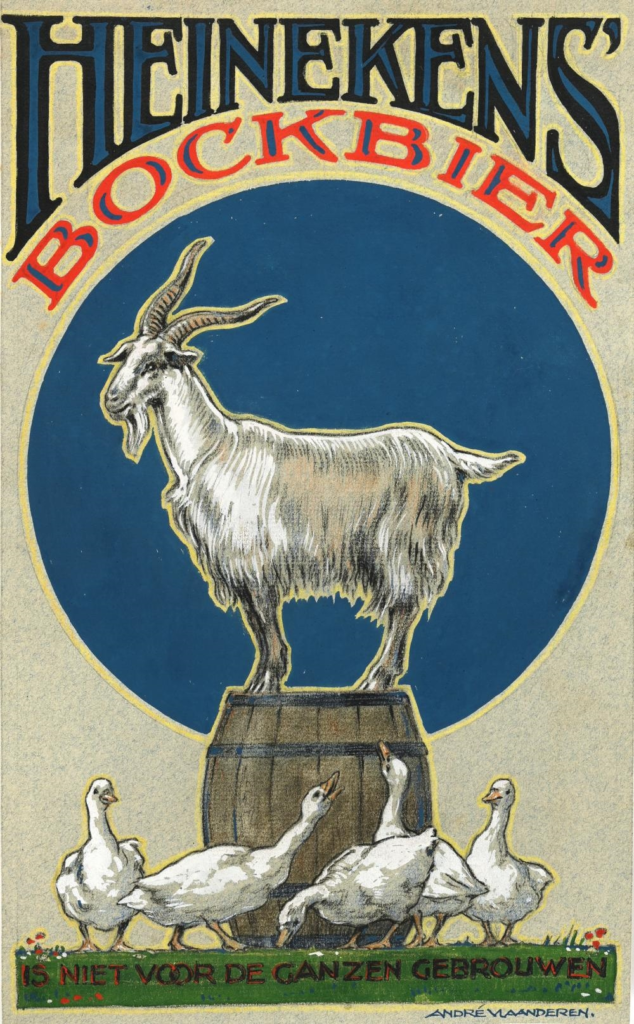
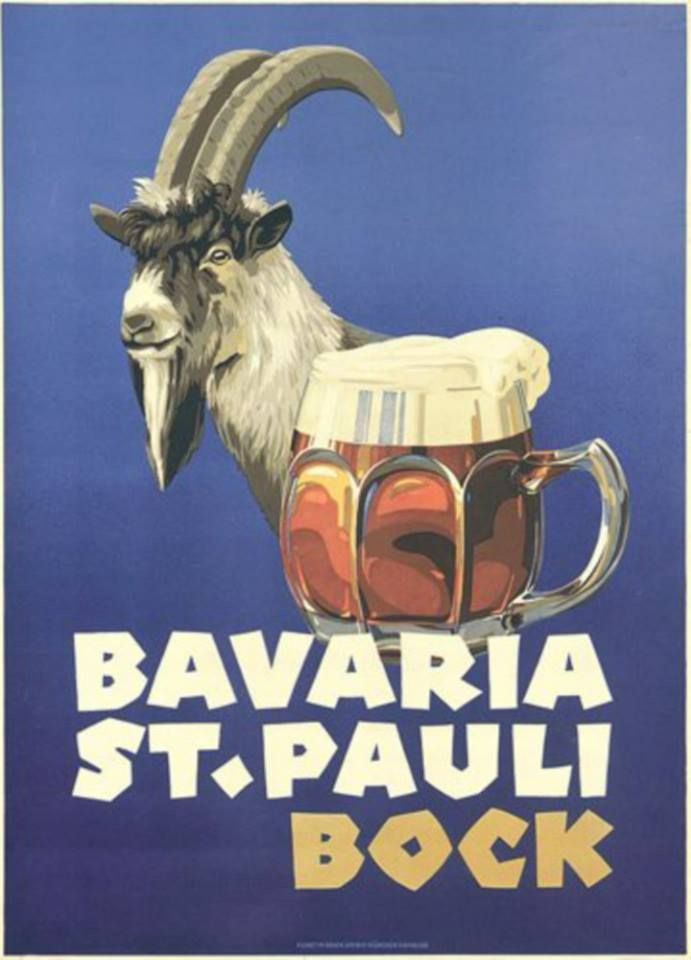
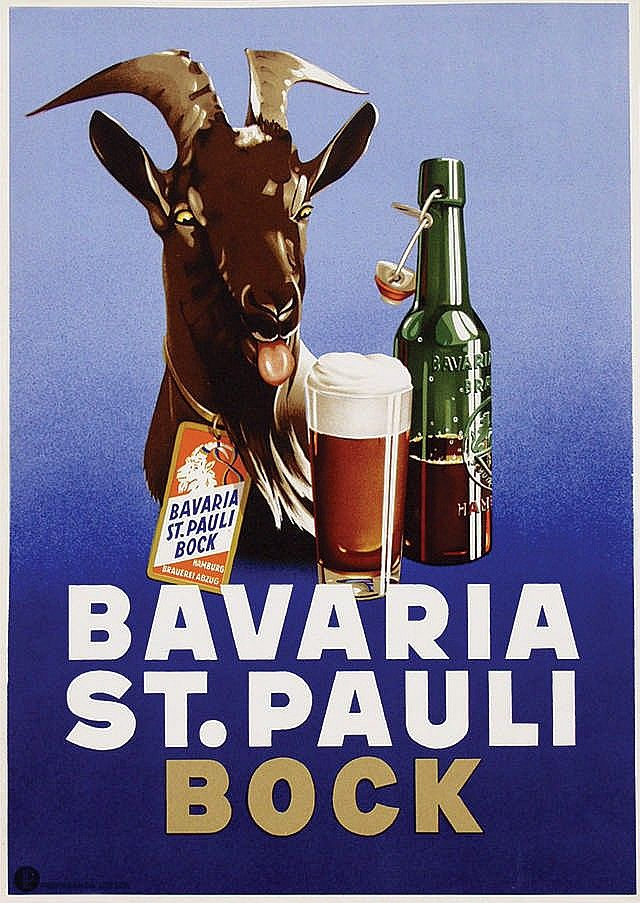
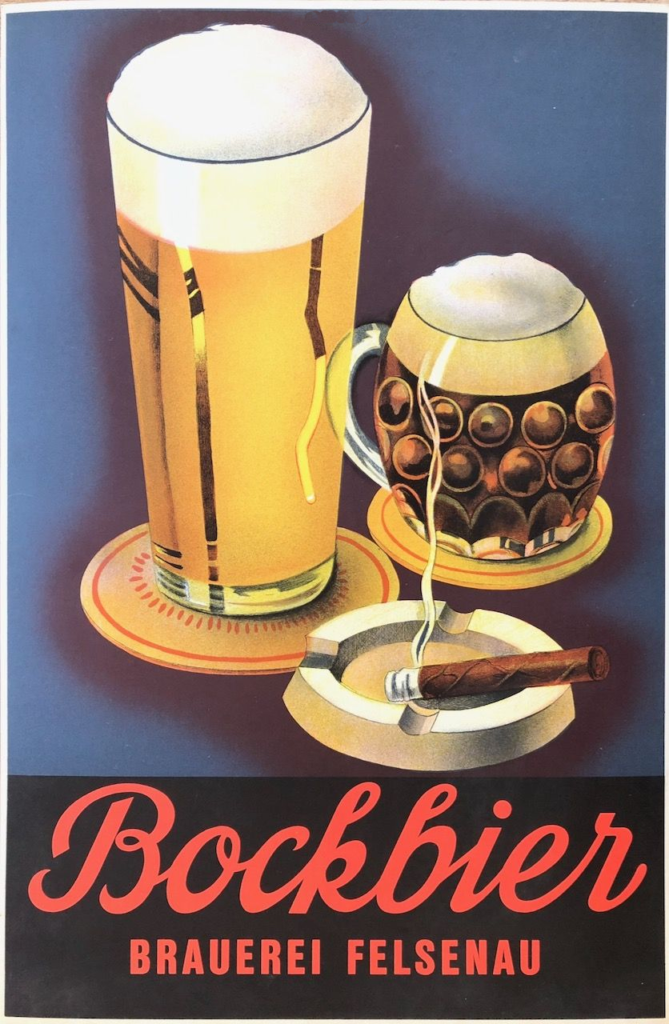
Two years ago I decided to concentrate on Bock ads for awhile. Bock, of course, may have originated in Germany, in the town of Einbeck. Because many 19th century American breweries were founded by German immigrants, they offered a bock at certain times of the year, be it Spring, Easter, Lent, Christmas, or what have you. In a sense they were some of the first seasonal beers. “The style was later adopted in Bavaria by Munich brewers in the 17th century. Due to their Bavarian accent, citizens of Munich pronounced ‘Einbeck’ as ‘ein Bock’ (a billy goat), and thus the beer became known as ‘Bock.’ A goat often appears on bottle labels.” And presumably because they were special releases, many breweries went all out promoting them with beautiful artwork on posters and other advertising.

Wednesday’s poster is for Bockbier, which was created around 1920. It was made for a brewery around
Thuringia, Germany, though I’m not certain which one. The poster was created by German artist Georg Fanner.

Filed Under: Art & Beer, Beers, Just For Fun Tagged With: Advertising, Bock, Germany, History

Beer In Ads #5336: Germania Bock Beer

September 1, 2026 By Jay Brooks Leave a Comment

Two years ago I decided to concentrate on Bock ads for awhile. Bock, of course, may have originated in Germany, in the town of Einbeck. Because many 19th century American breweries were founded by German immigrants, they offered a bock at certain times of the year, be it Spring, Easter, Lent, Christmas, or what have you. In a sense they were some of the first seasonal beers. “The style was later adopted in Bavaria by Munich brewers in the 17th century. Due to their Bavarian accent, citizens of Munich pronounced ‘Einbeck’ as ‘ein Bock’ (a billy goat), and thus the beer became known as ‘Bock.’ A goat often appears on bottle labels.” And presumably because they were special releases, many breweries went all out promoting them with beautiful artwork on posters and other advertising.

Tuesday’s poster is for Germania Bock Beer, which was created around 1800. It was made for the Germania Brauerei Max Hering in Chemnitz, Germany, which was founded in 1869. The poster is signed, but I can’t make out the artit’s name. Anybody know?

Filed Under: Art & Beer, Beers, Breweries, Just For Fun Tagged With: Advertising, Bock, Germany, History

Beer In Ads #5335: Bock Beer Rider

August 31, 2026 By Jay Brooks Leave a Comment

Two years ago I decided to concentrate on Bock ads for awhile. Bock, of course, may have originated in Germany, in the town of Einbeck. Because many 19th century American breweries were founded by German immigrants, they offered a bock at certain times of the year, be it Spring, Easter, Lent, Christmas, or what have you. In a sense they were some of the first seasonal beers. “The style was later adopted in Bavaria by Munich brewers in the 17th century. Due to their Bavarian accent, citizens of Munich pronounced ‘Einbeck’ as ‘ein Bock’ (a billy goat), and thus the beer became known as ‘Bock.’ A goat often appears on bottle labels.” And presumably because they were special releases, many breweries went all out promoting them with beautiful artwork on posters and other advertising.

Monday’s trade card is for Bock Beer generically, that was apparently created in Bavaria, Germany, sometime after 1850 but before 1900 or so. I think this would be considered a Victorian Trade Card, popular from the 1870s until around 1900. They were typically created via lithography, which gave them vibrant colors. Their popularity as far as I can tell was primarily in the United States, so I suspect that whoever claimed this was Bavarian was simply incorrect and it seems more likely it was created here. This one shows a woman riding a goat side-saddle with a glass of bock beer raised high.

Filed Under: Art & Beer, Beers, Just For Fun Tagged With: Advertising, Bock, History, New York, United States

Beer In Ads #5334: Bock Beer Tankard

August 30, 2026 By Jay Brooks Leave a Comment

Two years ago I decided to concentrate on Bock ads for awhile. Bock, of course, may have originated in Germany, in the town of Einbeck. Because many 19th century American breweries were founded by German immigrants, they offered a bock at certain times of the year, be it Spring, Easter, Lent, Christmas, or what have you. In a sense they were some of the first seasonal beers. “The style was later adopted in Bavaria by Munich brewers in the 17th century. Due to their Bavarian accent, citizens of Munich pronounced ‘Einbeck’ as ‘ein Bock’ (a billy goat), and thus the beer became known as ‘Bock.’ A goat often appears on bottle labels.” And presumably because they were special releases, many breweries went all out promoting them with beautiful artwork on posters and other advertising.

Sunday’s trade card is for Bock Beer generically, that was apparently created in Bavaria, Germany, sometime after 1850 but before 1900 or so. I think this would be considered a Victorian Trade Card, popular from the 1870s until around 1900. They were typically created via lithography, which gave them vibrant colors. Their popularity as far as I can tell was primarily in the United States, so I suspect that whoever claimed this was Bavarian was simply incorrect and it seems more likely it was created here. This one shows a goat in a circle with a tankard of bock in the foreground.

Filed Under: Art & Beer, Beers, Just For Fun Tagged With: Advertising, Bock, History, New York, United States

Beer In Ads #5333: Bock Beer Goat Love

August 29, 2026 By Jay Brooks

Two years ago I decided to concentrate on Bock ads for awhile. Bock, of course, may have originated in Germany, in the town of Einbeck. Because many 19th century American breweries were founded by German immigrants, they offered a bock at certain times of the year, be it Spring, Easter, Lent, Christmas, or what have you. In a sense they were some of the first seasonal beers. “The style was later adopted in Bavaria by Munich brewers in the 17th century. Due to their Bavarian accent, citizens of Munich pronounced ‘Einbeck’ as ‘ein Bock’ (a billy goat), and thus the beer became known as ‘Bock.’ A goat often appears on bottle labels.” And presumably because they were special releases, many breweries went all out promoting them with beautiful artwork on posters and other advertising.

Saturday’s trade card is for Bock Beer generically, that was apparently created in Bavaria, Germany, sometime after 1850 but before 1900 or so. I think this would be considered a Victorian Trade Card, popular from the 1870s until around 1900. They were typically created via lithography, which gave them vibrant colors. Their popularity as far as I can tell was primarily in the United States, so I suspect that whoever claimed this was Bavarian was simply incorrect and it seems more likely it was created here. This one seems to show a goat staring lovingly at a woman depicted on a presumably bock beer barrel.

Filed Under: Art & Beer, Beers, Just For Fun Tagged With: Advertising, Bock, History, New York, United States

Beer In Ads #5332: The Statue Of Liberty Bock

August 28, 2026 By Jay Brooks

Two years ago I decided to concentrate on Bock ads for awhile. Bock, of course, may have originated in Germany, in the town of Einbeck. Because many 19th century American breweries were founded by German immigrants, they offered a bock at certain times of the year, be it Spring, Easter, Lent, Christmas, or what have you. In a sense they were some of the first seasonal beers. “The style was later adopted in Bavaria by Munich brewers in the 17th century. Due to their Bavarian accent, citizens of Munich pronounced ‘Einbeck’ as ‘ein Bock’ (a billy goat), and thus the beer became known as ‘Bock.’ A goat often appears on bottle labels.” And presumably because they were special releases, many breweries went all out promoting them with beautiful artwork on posters and other advertising.

Friday’s trade card is for Bock Beer generically, that was apparently created in Bavaria, Germany, sometime after 1850 but before 1900 or so. I think this would be considered a Victorian Trade Card, popular from the 1870s until around 1900. They were typically created via lithography, which gave them vibrant colors. Their popularity as far as I can tell was primarily in the United States, so I suspect that whoever claimed this was Bavarian was simply incorrect and it seems more likely it was created here. This one may be the most damning one to prove they were actually American give that it features a goat as the Statue of Liberty holding up a glass of bock beer.

Filed Under: Art & Beer, Beers, Just For Fun Tagged With: Advertising, Bock, History, New York, United States

Historic Beer Birthday: Sandy Dvore

August 28, 2026 By Jay Brooks

Today is the birthday of Sandy Dvore (August 28, 1934-November 20, 2020). He was a prolific American artist, graphic designer, and title designer. This short biography from his Wikipedia page gives the highlights:

Around 1962, he met Hollywood publicist Guy McElwaine playing baseball, who represented Natalie Wood, Warren Beatty, Judy Garland and Tony Bennett and needed ads created. Through this connection, Dvore became well known for designing back cover art for Sammy Davis Jr. in Variety. Dvore then illustrated an ad for Judy Garland for Judy at Carnegie Hall which caught the attention of American theatrical agent and film producer Freddie Fields. The pair worked together for 13 years on numerous projects. Dvore would go on to illustrate hundreds of ads for stars like Frank Sinatra, Liza Minnelli, Natalie Wood, David Bowie, Mick Jagger, and Steve McQueen. His minimal but vibrant illustrated trade ads held the coveted back pages of The Hollywood Reporter and Variety for years.

Sandy Dvore is best known for his work in designing television title sequences, such as the walking partridges in The Partridge Family, and the brush-stroke logo and paintings from the long-running soap opera The Young and the Restless. His film title credits include the 1976 film Lipstick and the 1972 Blaxploitation thriller Blacula. He also designed the opening credits for selected seasons of the nighttime soap opera Knots Landing.

Dvore’s work in graphic design won him an Emmy Award in 1987 for Carol, Carl, Whoopi and Robin.

But as memorable as that work is, that’s not why I’m sharing his birthday here, as you might expect. He also worked on a more beer-related project. Robert Leo Hulseman, whose father founded the Solo Cup Company. In the 1970s, Hulseman hired Dvore to design a new plastic cup for the company. Here’s the story, from the now-defunct design blog Design-Ago:

One rainy day in early 1970’s Los Angeles…

Leo Hulesman, founder of the Solo cup company, stopped by the studio of Hollywood designer Sandy Dvore.

“I heard you’re the best commercial artist around.” Said Hulesman.

This was true. Dvore was the hottest designer in Hollywood. His work appeared everywhere from billboards to trade ads and most famously, every week in the Hollywood Reporter and Variety publications. At the time, these were the most important pieces of the Hollywood community. EVERYONE looked to these weekly magazines to see what their peers were doing.

Hulesman was looking for a design for his new venture, children’s records that would be a promotional giveaway on the Solo cup box. You see, Dora Hall, a singer who was also Mrs. Hulesman, had given up her career in Ziegfield Follies to raise their children. This was a chance for her to get back to performing again and do something her children could enjoy.

“I’m doing very well now” said Dvore. “I’ve got some major projects and I really don’t want to do small piece work. It would take up a lot of time.”

“What if I give you a retainer?” Said Hulesman.

“He was sharp”, Dvore thought.

At the time Dvore was doing big name television projects, The Partidge Family and The Waltons.

“I could send you a chunk of money…” “What kind of number are we talking?” Asked Hulseman.

“$17,500” stated Dvore.

“Why don’t we just make it a flat $25,000.” Replied Hulesman.

They shook hands and Hulesman smiled. He enjoyed the banter as he, like Dvore, was a self made man from Chicago.

“He liked that I could handle myself.” Dvore remembered. “We became friends and I enjoyed knowing him.”

Hulesman enjoyed sharing the success he had. He would pay for entire television specials for his wife Dora so she could have an opportunity perform.

When it’s time to change.

“The Solo company at the time had an old serif logo right out of a type book.” Dvore remembers.

Dvore looked at the two O’s in the SOLO logo and the idea came to him, simple as that.
He hadn’t been asked to create a new logo either. He just thought,

“as a artist, we can do better.”

Hulesman had his feet propped up on Dvore’s desk when he showed him what he had come up with.

“We should change your logo, this should be the logo for your company.” Dvore slid the concept to Hulesman.

The negative space in the SOLO, O’s replaced with cups, along with a new san-serif type.

Hulesman looked at it and replied, “send it to the company.”

And, one short phone call later, it became the logo you still see everywhere today.

Sometimes, but not often, it IS that easy.

A relationship of trust formed between Dvore and Hulesman. Which is why Dvore felt comfortable proposing new ideas.

“Why are all your cups white? You should have some colored cups.”

With this idea Dvore took the colors from his recent Partridge Family art and applied the same blue, yellow and red to the cups.

And in another short phone call to the factory, the Solo cup company started producing color cups.

“I even used the same color numbers from the Partridge Family logo.” Recalls Dvore.

And so, once again, a simple yet smart idea, a phone call, and the rest is history, the red Solo cup was born.

Whoever would have thought a cup would be so famous?

It has inspired songs, drinking games, tattoo’s, merchandise and created plenty of hazy memories.

Why red became the go-to, and a cultural icon is anyone’s guess.

“It’s become the most well known and most seen thing I have ever done.” Dvore states today.

Every day, millions of people get their morning cup of coffee and before they take a sip there it is, the Solo cup logo.

Every night, people attend a party or have a game of beer pong and there it is again, the red Solo cup.

Filed Under: Beers, Birthdays, Just For Fun, Related Pleasures Tagged With: Advertising, Glassware, History

Beer In Ads #5331: Bock Beer, Hopfen Und Malz Gott Erhalts!

August 27, 2026 By Jay Brooks

Two years ago I decided to concentrate on Bock ads for awhile. Bock, of course, may have originated in Germany, in the town of Einbeck. Because many 19th century American breweries were founded by German immigrants, they offered a bock at certain times of the year, be it Spring, Easter, Lent, Christmas, or what have you. In a sense they were some of the first seasonal beers. “The style was later adopted in Bavaria by Munich brewers in the 17th century. Due to their Bavarian accent, citizens of Munich pronounced ‘Einbeck’ as ‘ein Bock’ (a billy goat), and thus the beer became known as ‘Bock.’ A goat often appears on bottle labels.” And presumably because they were special releases, many breweries went all out promoting them with beautiful artwork on posters and other advertising.

Thursday’s trade card is for Bock Beer generically, that was apparently created in Bavaria, Germany, sometime after 1850 but before 1900 or so. I think this would be considered a Victorian Trade Card, popular from the 1870s until around 1900. They were typically created via lithography, which gave them vibrant colors. Their popularity as far as I can tell was primarily in the United States, so I suspect that whoever claimed this was Bavarian was simply incorrect and it seems more likely it was created here. This features a brewer’s star and a banner with the phrase “Hopfen und Malz Gott erhalts!” which I believe was a parody of “Bayern und Pfalz, Gott erhalt’s”, or “God save Bavaria and the Palatine”, which were two parts of the Bavaria that were separated and reunited a few times.

Filed Under: Art & Beer, Beers, Just For Fun Tagged With: Advertising, Bock, History, New York, United States

Beer In Ads #5330: Bock Beer Trade Card

August 26, 2026 By Jay Brooks

Two years ago I decided to concentrate on Bock ads for awhile. Bock, of course, may have originated in Germany, in the town of Einbeck. Because many 19th century American breweries were founded by German immigrants, they offered a bock at certain times of the year, be it Spring, Easter, Lent, Christmas, or what have you. In a sense they were some of the first seasonal beers. “The style was later adopted in Bavaria by Munich brewers in the 17th century. Due to their Bavarian accent, citizens of Munich pronounced ‘Einbeck’ as ‘ein Bock’ (a billy goat), and thus the beer became known as ‘Bock.’ A goat often appears on bottle labels.” And presumably because they were special releases, many breweries went all out promoting them with beautiful artwork on posters and other advertising.

Wednesday’s trade card is for Bock Beer generically, that was apparently created in Bavaria, Germany, sometime after 1850 but before 1900 or so. I think this would be considered a Victorian Trade Card, popular from the 1870s until around 1900. They were typically created via lithography, which gave them vibrant colors. Their popularity as far as I can tell was primarily in the United States, so I suspect that whoever claimed this was Bavarian was simply incorrect and it seems more likely it was created here.

Filed Under: Art & Beer, Beers, Just For Fun Tagged With: Advertising, Bock, Germany, History, United States

Beer In Ads #5329: Wolf-Biere Bock

August 24, 2026 By Jay Brooks

Two years ago I decided to concentrate on Bock ads for awhile. Bock, of course, may have originated in Germany, in the town of Einbeck. Because many 19th century American breweries were founded by German immigrants, they offered a bock at certain times of the year, be it Spring, Easter, Lent, Christmas, or what have you. In a sense they were some of the first seasonal beers. “The style was later adopted in Bavaria by Munich brewers in the 17th century. Due to their Bavarian accent, citizens of Munich pronounced ‘Einbeck’ as ‘ein Bock’ (a billy goat), and thus the beer became known as ‘Bock.’ A goat often appears on bottle labels.” And presumably because they were special releases, many breweries went all out promoting them with beautiful artwork on posters and other advertising.

Monday’s poster is for Wolf-Biere Bock, from the Brauerei Wolf, from Fuchsstadt, a town near Würzburg, which was founded in 1739 by Johann Wolf.  It was created by German poster artist Ludwig Hohlwein.

Filed Under: Art & Beer, Beers, Breweries, Just For Fun Tagged With: Advertising, Bock, Germany, History, Munich

« Previous Page
Next Page »

Find Something

Northern California Breweries

Please consider purchasing my latest book, California Breweries North, available from Amazon, or ask for it at your local bookstore.

Recent Comments

  • Bob Paolino on Beer Birthday: Grant Johnston
  • Gambrinus on Historic Beer Birthday: A.J. Houghton
  • Ernie Dewing on Historic Beer Birthday: Charles William Bergner 
  • Steve 'Pudgy' De Rose on Historic Beer Birthday: Jacob Schmidt
  • Jay Brooks on Beer Birthday: Bill Owens

Recent Posts

  • Historic Beer Birthday: Jan Léonardus Moortgat September 13, 2026
  • Beer Birthday: Lorenzo Dabove September 13, 2026
  • Beer Birthday: Dan Gordon September 13, 2026
  • Beer In Ads #5347: It’s Here! September 12, 2026
  • Beer Birthday: Steve Gonzalez September 12, 2026

BBB Archives

Feedback

Head Quarter
This site is hosted and maintained by H25Q.dev. Any questions or comments for the webmaster can be directed here.