Brookston Beer Bulletin

Jay R. Brooks on Beer

  • Home
  • About
  • Editorial
  • Birthdays
  • Art & Beer

Socialize

  • Dribbble
  • Email
  • Facebook
  • Flickr
  • GitHub
  • Instagram
  • LinkedIn
  • Pinterest
  • RSS
  • Twitter
  • YouTube

Powered by Genesis

Beer In Ads #3618: Budweiser And Hammer Time

January 23, 2021 By Jay Brooks

Saturday’s ad is for “Budweiser,” from 1959. This ad was made for Anheuser-Busch, and was part of their series using the tagline. “Where there’s Life … there’s Bud,” which ran from the 1950s into the 1960s, and this one features a man apparently trying to fix something electronic … with a hammer. Not necessarily the best tool for delicate electronic part repairs. Luckily, a woman behind him comes to the rescue and is pouring him a beer. The text begins: “The King’s Credentials.”

Filed Under: Art & Beer, Beers Tagged With: Advertising, Anheuser-Busch, Budweiser, History

Beer In Ads #3617: Budweiser With An LP Record

January 22, 2021 By Jay Brooks

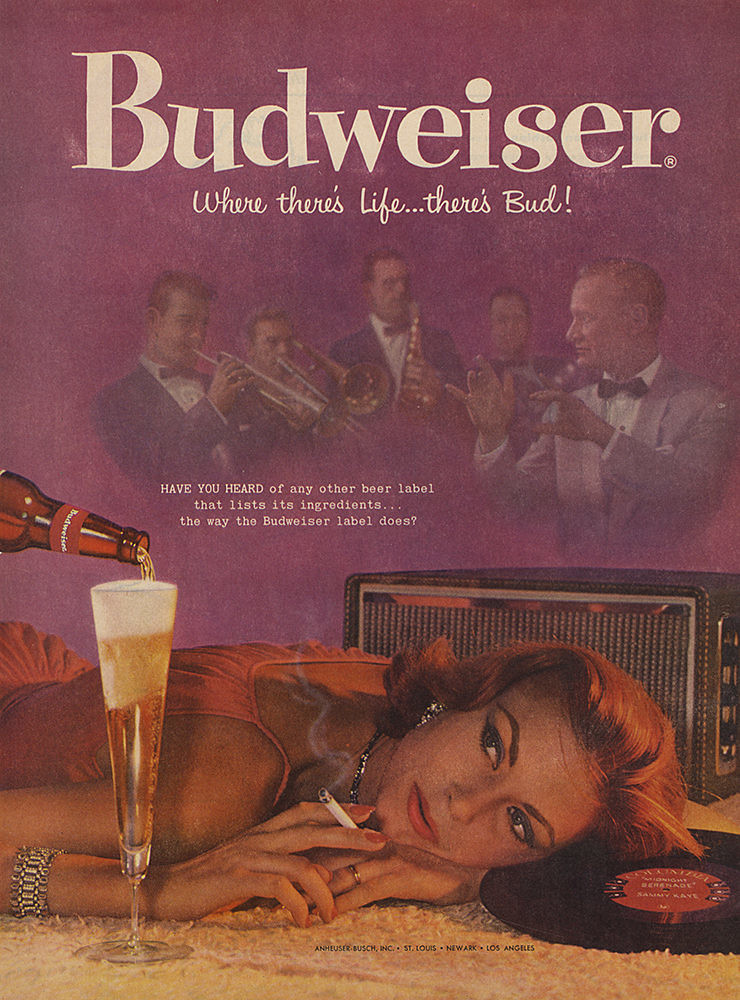
Friday’s ad is for “Budweiser,” from 1958. This ad was made for Anheuser-Busch, and was part of their series using the tagline. “Where there’s Life … there’s Bud,” which ran from the 1950s into the 1960s, and this one features a woman lying on the floor, cigarette in hand, next to a speaker with her head practically on an LP. She watches as someone is pouring her a beer. The text begins: “Have You Heard.” The album by her head, unlike yesterday’s, is from Columbia and appears to be Serenade, by Sammy Kaye. I think they made another actual album of Budweiser music, using the same model and set from this ad, too. See below for more about that.

This appears to be an album cover although there’s no information on the cover apart from the Budweiser tagline. Given the LP depicted is on Columbia Records, I presume that’s who made this one, but I haven’t been able to find any additional information so I can’t be sure. But at least she managed to get off the floor.

Filed Under: Art & Beer, Beers Tagged With: Advertising, Anheuser-Busch, Budweiser, History, Music

Beer In Ads #3616: Budweiser In Living Stereo

January 21, 2021 By Jay Brooks

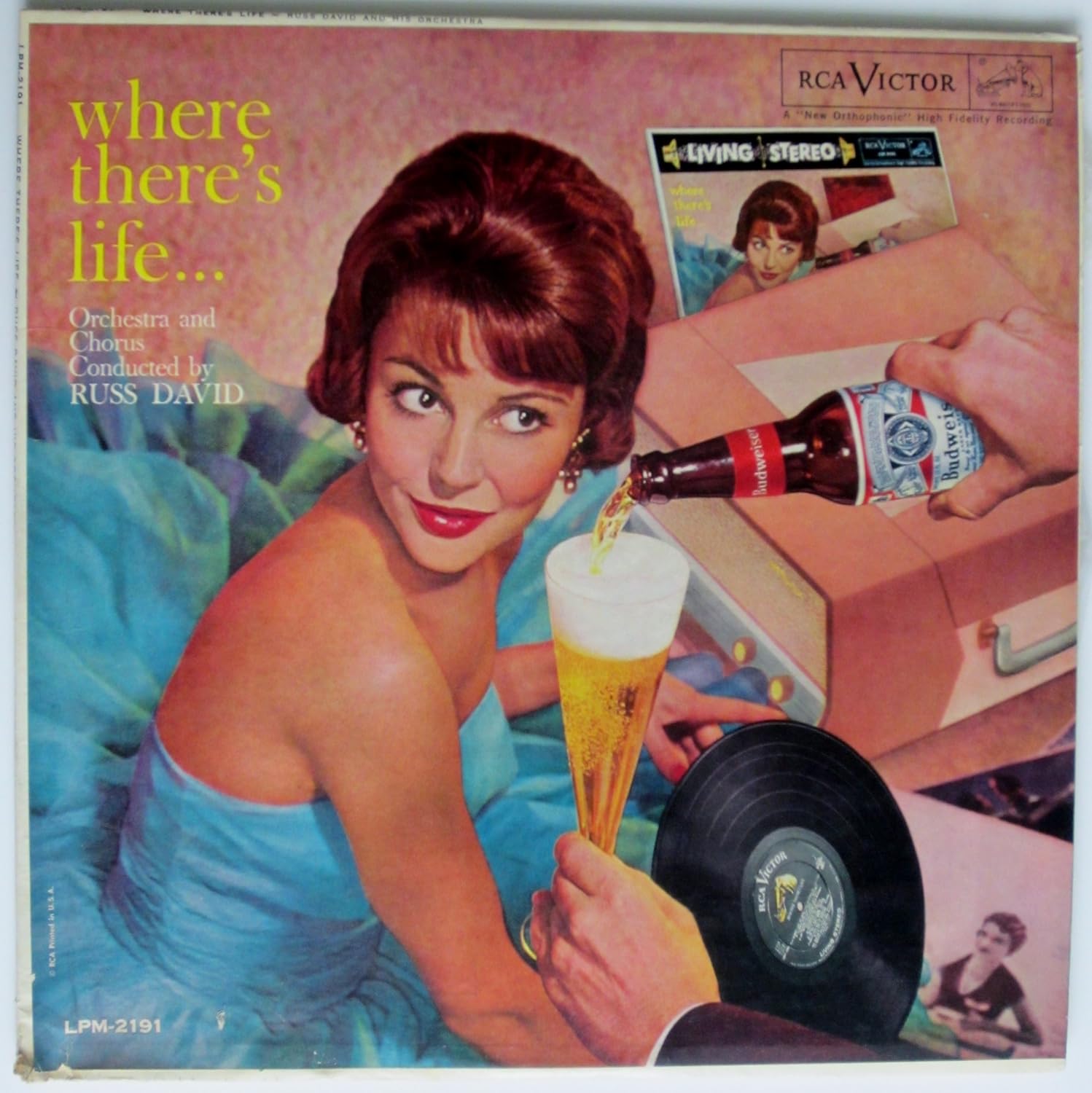
Thursday’s ad is for “Budweiser,” from 1960. This ad was made for Anheuser-Busch, and was part of their series using the tagline. “Where there’s Life … there’s Bud,” which ran from the 1950s into the 1960s, and this one features a woman holding an RCA Victor LP record while a man is pouring her a beer. The text begins: “Special Lyrics.” But look just to the right of her head and you’ll see the cover of an album featuring the same photo from the ad. How meta! But that’s because they made an actual album of Budweiser music. See below for more about that.

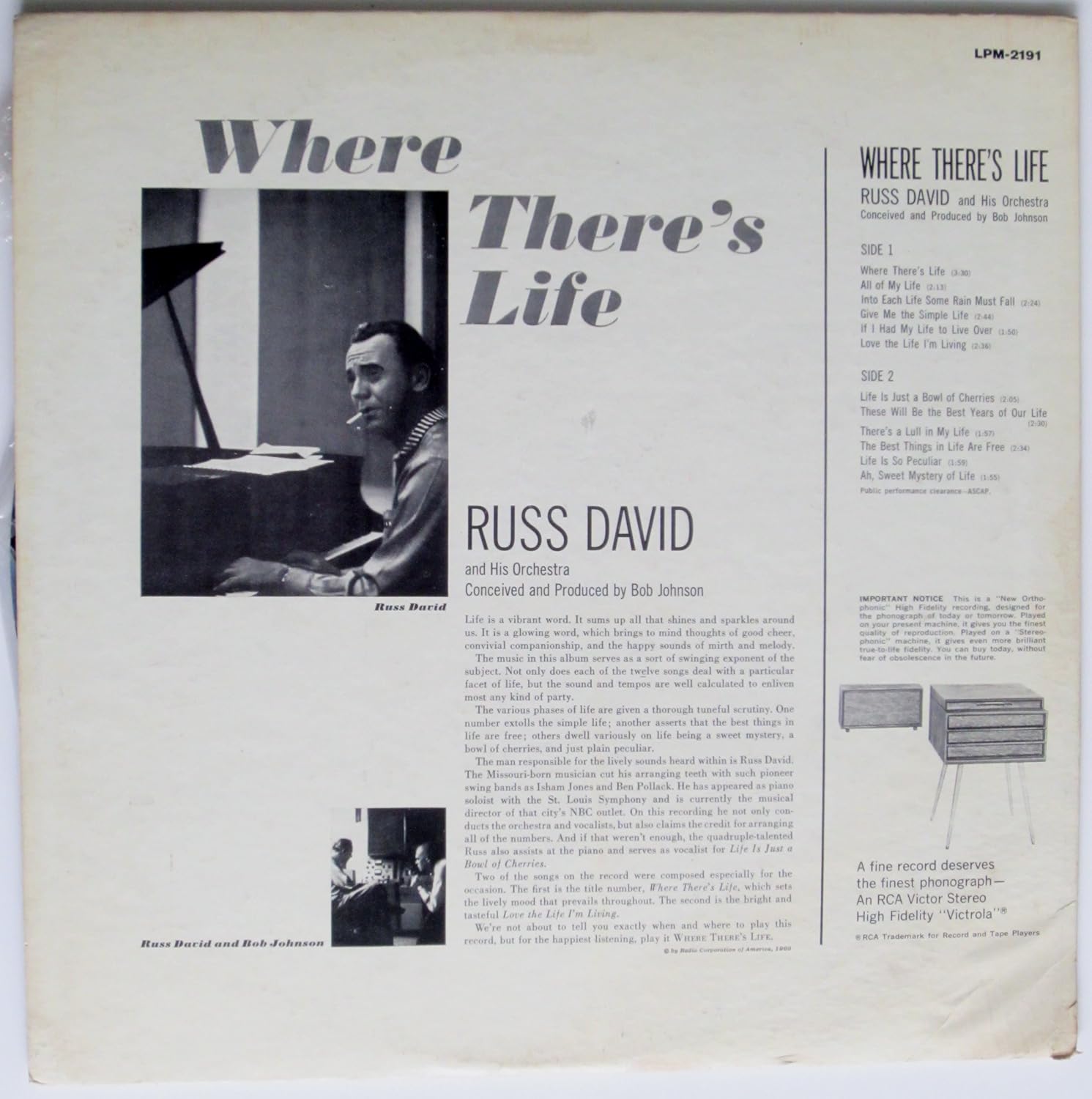
LSP-2191 Living Stereo with the Miracle Surface, RCA Victor records. It was released in 1960 in conjunction with the ad. The band was the “Orchestra and Chorus, Conducted by Russ David. He was a pianist and bandleader from St. Louis, Missouri.

On the back cover: A Sampler of the ’58 sound of Budweiser.

Here’s the track list from the LP:

  1. Where There’s Life
  2. All Of My Life
  3. Into Each Life Some Rain Must Fall
  4. Give Me The Simple Life
  5. If I Had My Life To Live Over
  6. Love The Life I’m Living
  7. Life Is Just A Bowl Of Cherries
  8. These Will Be The Best Years Of Our Life
  9. There’s A Lull In My Life
  10. The Best Things In Life Are Free
  11. Life Is So Peculiar
  12. Ah, Sweet Mystery Of Life

They also apparently produced a Mono version of the album, which you can actually buy on Amazon.

Filed Under: Art & Beer, Beers, Just For Fun Tagged With: Advertising, Anheuser-Busch, Budweiser, History, Music

Historic Beer Birthday: Ludwig Thoma

January 21, 2021 By Jay Brooks

Today is the birthday of Ludwig Thoma (January 21, 1867-August 26, 1921). If his name is not familiar to you, that’s not a surprise. He was a German author, publisher and editor, who gained popularity through his partially exaggerated description of everyday Bavarian life,” but he’s largely unknown outside of his native Germany.

One of his best-known works is Der Münchner im Himmel (or The Municher in Heaven), which in 1962 was made into a short animated cartoon directed by Walter Reiner for BR, the German equivalent of PBS. And it was based on Ludwig Thoma’s story of the same name.

Here’s a description of the story, translated by Google, so you can make sense of the cartoon since it’s in German:

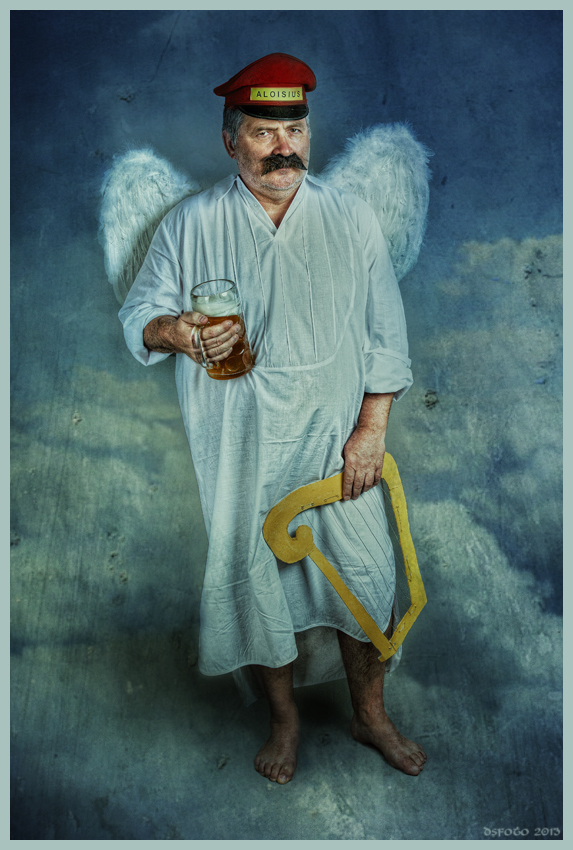
Alois Hingerl, clerk no. 172 from Munich Central Station, goes to heaven. Peter reveals to him the heavenly house rules: “Rejoice and sing Hallelujah”. The “Angel Aloisius” is not particularly impressed by this, especially since he is supposed to get “heavenly manna” instead of the Munich beer. Angry, he sits down on a cloud to rejoice and sing hallelujah. It sounds like the hair of the heavenly ones stand on end. The good Lord has an understanding and instructs Aloisius to convey the divine inspirations to the Bavarian government. He also sends it to Munich with a corresponding letter. When the “Angel Aloisius” steps back on Munich soil, and when he finally – following an old custom – ends up in the Hofbräuhaus again, he forgets the divine mandate and the Bavarian State Government with a “Maß” and another Maß …

This account of the original story is from the German Wikipedia page about Der Münchner im Himmel, translated by Google:

The short story is about Alois Hingerl, clerk number 172 at Munich Central Station . This one does a job with such a hurry that he from the blow falls taken to the ground and dies. Two angels drag him laboriously to heaven , where he is given his otherworldly name “Angel Aloisius” by Peter , a harp and a cloud on which, according to the “heavenly house rules”, he is to rejoice and sing Hosanna according to a fixed schedule . When he asked when he would finally get something to drink, Peter replied to Aloisius with the words: “You will get your manna.”

In view of the prospect of manna instead of the beer he loves, Aloisius suspects something bad, at the same time there will be fights with a heavenly red shandy angel, his hated competition on earth. Frustrated, he begins to rejoice on his cloud. When a “spiritualized angel” flying past answers his request for “am Schmaizla” (a pinch of snuff ) with an incomprehensible, lisped “Hosanna!”, His anger rises, whereupon Aloisius begins to rant and curse, which also changes in his way rejoicing is reflected. Through his scolding, cursing and loud rejoicing (“ Ha-ha-lä-lä-lu-u-uh – – Himmi Lord God – Erdäpfi – Saggerament – – lu – uuu – iah!“) God becomes aware of him. After a brief appraisal of the delinquent and consultation with Peter, he comes after the words “Aha! A Munich resident! ”To the conclusion that Aloisius is of no use for heaven. That is why he has a different task: He is supposed to convey divine advice to the Bavarian government (in the original from Thoma the Bavarian State Minister of the Interior for Church and School Affairs Anton von Wehner ); as a result, the Munich resident comes to Munich a few times a week and the dear soul has its peace.

Alois is very happy about this assignment, takes divine advice and flies away. As usual, he first goes to the Hofbräuhaus with his message , where he orders one beer after the other, then forgets his order and sits there to this day. Meanwhile, the Bavarian government (or the Bavarian Minister of Education) is still waiting for divine advice (or divine inspiration).

Below are some images of Aloisius from various sources. As far as I can tell, he remains a well-known literary figure throughout Germany.

Inside the Hofbrauhaus Oktoberfest tent.
I can’t tell if this is a photograph or painting.

Filed Under: Beers, Birthdays, Just For Fun, Related Pleasures Tagged With: Animation, Cartoons, Germany, History, Literature

Beer In Ads #3615: Budweiser With A Hair Flip

January 20, 2021 By Jay Brooks

Wednesday’s ad is for “Budweiser,” from 1958. This ad was made for Anheuser-Busch, and was part of their series using the tagline. “Where there’s Life … there’s Bud,” which ran from the 1950s into the 1960s, and this one features a woman who apparently just heard someone pouring her a beer because she appears to have turned her very quickly to see what was going on behind her. Maybe he snuck up on her? Who knows, but the text begins: “Look!”

Filed Under: Art & Beer, Beers Tagged With: Advertising, Anheuser-Busch, Budweiser, History

Beer In Ads #3614: Budweiser With Hayride

January 19, 2021 By Jay Brooks

Tuesday’s ad is for “Budweiser,” from 1959. This ad was made for Anheuser-Busch, and was part of their series using the tagline. “Where there’s Life … there’s Bud,” which ran from the 1950s into the 1960s, and this one features a couple on what appears to be a hayride. Everyone on this ad has an odd expression. The man driving the horses looks like he’s yelling something, which makes sense because the text begins: “Whoa!” The man in the couple, who looks a little a young Burt Lancaster, has a weird smirk on his face and the woman, like most of these ads, seems way too interested in watching him pour the beer, which must not be easy to do in a moving hay cart.

Filed Under: Art & Beer, Beers Tagged With: Advertising, Anheuser-Busch, Budweiser, History

Beer In Ads #3613: Budweiser With Leaves

January 18, 2021 By Jay Brooks

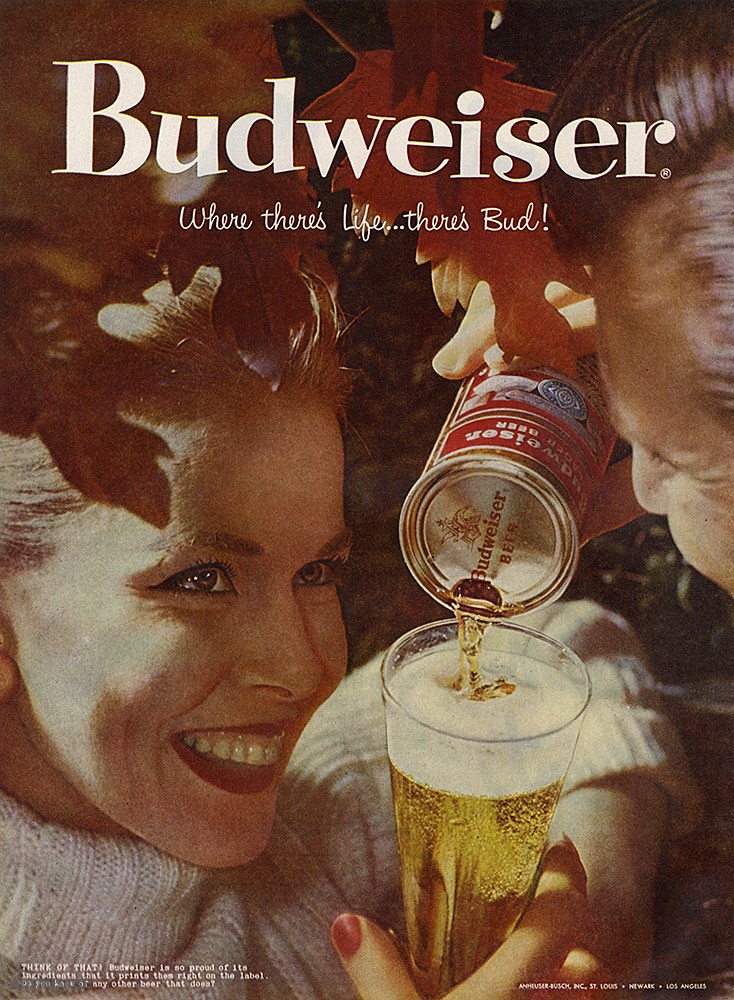
Monday’s ad is for “Budweiser,” from 1959. This ad was made for Anheuser-Busch, and was part of their series using the tagline. “Where there’s Life … there’s Bud,” which ran from the 1950s into the 1960s, and this one features a couple having a beer somewhere in an Autumn forest, or least under a tree, as the man pours her a beer from a can. I know you can pour a beer with only one hole but at the time it seemed far more common that you’d use your church key — or can opener — to create two holes, one to pour and a second just a small puncture so the beer would flow far more smoothly. Or is that just me? Anyway, the text begins: “Think Of That!”

Filed Under: Art & Beer, Beers Tagged With: Advertising, Anheuser-Busch, Budweiser, History

Beer In Ads #3612: Budweiser With Wallpaper

January 17, 2021 By Jay Brooks

Sunday’s ad is for “Budweiser,” from 1958. This ad was made for Anheuser-Busch, and was part of their series using the tagline. “Where there’s Life … there’s Bud,” which ran from the 1950s into the 1960s, and this one features a woman having some difficulty putting up some godawful ugly wallpaper with some seemingly kind soul pouring her a beer. I say seemingly, because if he really wanted to be kind he’d be helping her with the wallpaper. The text begins: “Do It Yourself.”

Filed Under: Art & Beer, Beers Tagged With: Advertising, Anheuser-Busch, Budweiser, History

The Kidnapping of Schmidt Brewery Son Edward Bremer

January 17, 2021 By Jay Brooks

Today is the anniversary of a pretty unsavory incident that was at least tangentially related to prohibition and brewing. On January 17, 1934, the Barker–Karpis gang kidnapped Edward Brewer off of the streets of St. Paul, Minnesota. At the time, he was the wealthy president of Commercial State Bank. But perhaps more importantly, he was also the son of Adolf Bremer, who owned the Schmidt Brewery, having married the daughter of Jacob Schmidt.

Kidnap victim Edward Bremer.

That’s thought to be important because the gang appeared to be targeting brewery owners because of their perceived disrespecting of criminal elements after prohibition was repealed. Many breweries that survived did so by working with bootleggers on the down low, which of course in many cases were part of criminal organizations. But when prohibition was repealed, they distanced themselves from those gangs once alcohol was no longer illegal. The previous year, for example, the Barker-Karpis gang successfully kidnapped William Hamm of Hamm’s Brewery, releasing him June 19, 1933, having been paid $100,000 in ransom.

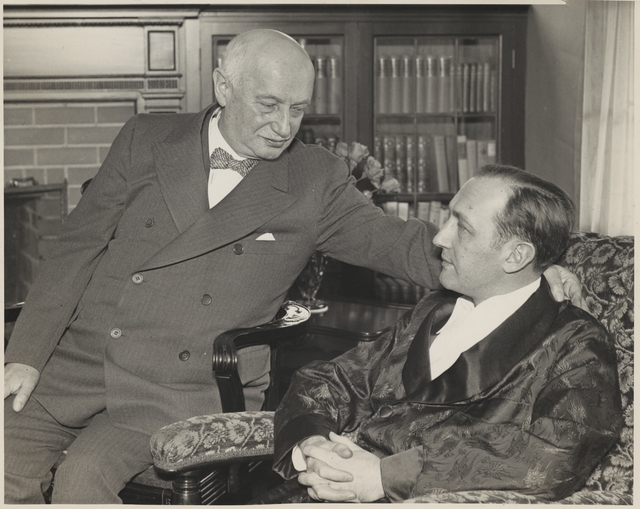
Adolf Bremer with his son Edward.

Because of that history, “it is thought that Bremer was not chosen simply because of his wealth, but also because of a personal vendetta.” They planned the kidnapping for four months. The kidnappers asked for $200,000 this time, double what they’d asked for from the Hamm Brewery family, probably emboldened by their success with that kidnapping.

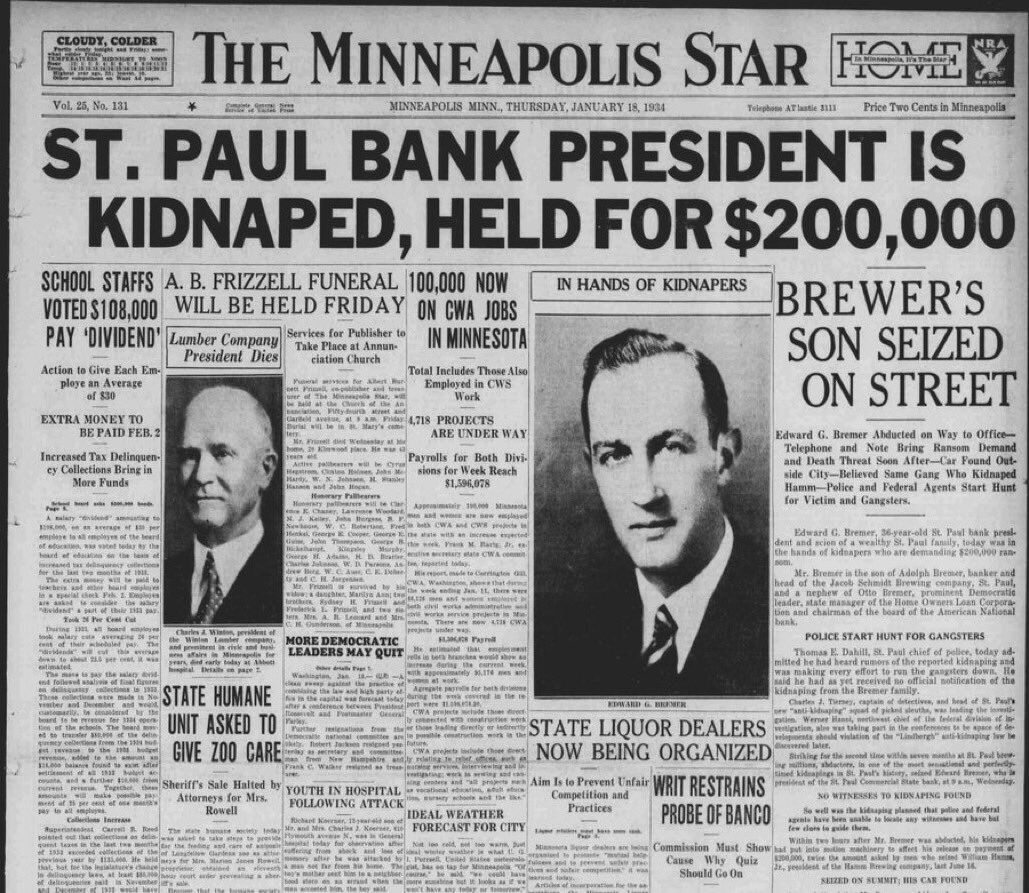
Naturally, it was front page news, appearing in both the St. Paul Dispatch and the Minneapolis Star.

According to Wikipedia’s account, here’s how it went down:

[Edward Bremer] was on his way to work, having just dropped his daughter off at school when he was approached by two men, one of whom was Arthur “Doc” Barker. Barker repeatedly punched and pistol-whipped him, forcing him into the back of Bremer’s car and placing blindfolding goggles over his eyes. After having some difficulty starting the vehicle, the kidnappers forced the bleeding Bremer to show them the starter button, then drove off, later switching to another car. The blood-stained vehicle was later recovered, leading to fears that Bremer had been killed.

Scene of the Bremer kidnapping, Lexington and Goodrich, St. Paul, MN, 1934

Bremer was held captive in Bensenville, Illinois. He was kept in a small room and was told that his family would be killed if he said anything to the police. He was also told to provide the names of people who could act as intermediaries. Messages demanding $200,000 were left with the Bremers’ trusted business associate and former chauffeur Walter Magee. Through Tom Brown, the gang learned that Magee had informed the police, despite the gang’s demand that he should keep quiet. They threatened to kill him and Bremer. Adolph Bremer, the victim’s father, refused to pay up unless the kidnappers provided proof of life. Edward was forced to write another note pleading to be returned to his wife and children. When Adolph also tried to reduce the ransom money, Fred Barker became enraged and suggested they should kill Edward. His brother Arthur and Karpis overruled him. In the end the ransom was paid by dropping off a bag full of cash, which was collected by George Zieger. Edward was driven to a deserted road by Ziegler and released on February 7, left on the empty road with a small amount of cash. He had to make his own way back home.

The New York Times even covered it.

After Bremer was returned, public outcry led to the FBI intensifying their efforts at bringing the criminals to justice. While not a household name to us today, “these kidnappings brought too much negative publicity, due to the recent Urschel and Lindbergh Kidnappings, and the fact that the father of the Bremer Jr. was a personal friend of President Roosevelt, who mentioned the kidnappings in a fireside chat. On November 27, 1934, Lester “Baby Face Nelson” Gillis, at that time the Public Enemy No. 1, was mortally wounded in a gun battle with the FBI and died later that night. The next day, Alvin Karpis was declared Public Enemy No. 1, which brought the full force of the FBI down on the Barker-Karpis Gang.”

The other well-known aspect of the criminals was the mother of some of the Barker brothers was apparently controlling the gang’s actions and was known as “Ma” Barker.

This account is from KSTP, the ABC affiliate in Minneapolis.

On Jan. 17, 1934, the Minnesota Historical Society says Edward was driving to work when he stopped at the corner of Lexington Parkway and Goodrich Avenue. The gang ended up blocking Edward’s path with one vehicle, and another vehicle pulled up behind him. The kidnappers then opened Edward’s door and pushed him to the ground when he was struggling. They forced Edward to sign ransom notes, and within two hours, Edward’s family friend, Walter W. Magee, received ransom instructions.

The instructions indicated a request of $200,000 in $5 and $10 bills. Magee was to print, “We are ready Alice,” in the Minneapolis Tribune’s personal ads. More ransom notes were delivered to people close to Edward, but people suspected him to be dead due to the amount of blood left in his car. Therefore, his father, Adolph, demanded a note in his son’s handwriting before he would pay. The next day a bank cashier received the requested note, according to Minnesota Historical Society.

The Minneapolis Tribune reported on Feb. 6, 1934, Magee had received the final instructions from the kidnappers to trade the ransom money for Edward. Magee was to transfer the ransom into a car with a Shell Oil sticker in St. Paul and then to trail a bus to Rochester. Afterward, Magee was to turn down a gravel road and drive until he saw five headlight flashes. Once he saw the flashes, he placed the money beside the road and drove off.

After 21 days of captivity, Edward Bremer was released.

The gang members scattered across the country to escape the FBI after authorities were able to lift fingerprints from a gas can that the Barker-Karpis gang used to refuel their car between Chicago and Minneapolis. The FBI had also recorded the serial numbers on the ransom bills.

Almost a year later, on Jan. 16, 1935, Barker and his mother were killed in a shootout with FBI officers, and Karpis remained on the run until the FBI arrested him on May 1, 1936.

Karpis was sentenced to life and served 26 years in Alcatraz.

And this one is from the BBC:

After Bremer dropped his daughter off at the Summit School in St. Paul, he was ambushed and thrown in a car. He was held for 10 days, until his family paid a $200,000 ransom.

Part of this ransom money was used to bribe police who were on the take, according to Paul Maccabee, author of “John Dillinger Slept Here: A Crooks’ Tour of Crime and Corruption in St. Paul, 1920-1936.”

“Prohibition meant bribes in order to ship liquor — to cops, judges, U.S. senators,” Maccabee told MPR News’ Cathy Wurzer. “When Prohibition was repealed and liquor was legal, they switched from bootlegging to kidnapping. The same corrupt cops that had looked the other way during the bootlegging era were also involved with kidnappings and other more nefarious deeds.”

Bremer helped federal investigators find his captors. He memorized every detail about his surroundings.

“When the FBI investigated the case, he was able to identify the specific wallpaper in the home where he was kept,” Maccabee said. “That enabled the FBI to break the case and arrest the Barker-Karpis gang.”

The gang was led by two brothers, Doc and Freddy Barker, who Maccabee describes as “psychopaths,” and Alvin “Creepy” Karpis, who was one of the most infamous gangsters of the period.

Alvin Karpis going into court in St. Paul.

And this, also from Wikipedia, covers the arrests, deaths and the aftermath of the kidnapping.

The FBI had recorded the serial numbers of all the cash used to pay the ransom. They launched an intensive investigation, declaring Alvin Karpis, presumed leader of the gang, to be “Public Enemy No. 1”. Bremer, completely traumatized and worried about the safety of his wife and children, refused to cooperate with the FBI. When they threatened to reveal what they believed about his links to organized crime, he admitted what he knew about the kidnappers, and his suspicions about their connection to Sawyer.

The gang knew that they needed to launder the money, but the intensity of the FBI pressure meant that most of their criminal contacts refused to participate. Ziegler was gunned down in a drive-by killing by unknown assailants in March. Sawyer claimed that he had arranged for the money to be laundered in Cuba. The gang withdrew to Cuba, but Karpis became concerned that the money had not been laundered and that the FBI would soon find them there. They moved to Lake Weir, Florida. Doc left for Chicago, hoping to organize a new criminal project. He was soon recognized and arrested on January 8, 1935 along with minor gang member Byron Bolton. Doc wouldn’t talk, but Bolton told the FBI everything he knew in exchange for a light sentence. Eight days later, Doc’s brother Fred Barker and mother Kate “Ma” Barker were killed in a shootout with the FBI at Lake Weir. Volney Davis was also captured, and Sawyer was tracked down and captured in Mississippi.

Alvin Karpis, who was co-leader of the gang along with Fred Barker, was arrested by the FBI in May, 1936. Karpis pleaded guilty to kidnapping and Doc Barker was convicted after a trial. Both men were sent to Alcatraz. Karpis became the Rock’s longest serving inmate, eventually being paroled in 1969 after decades in prison. Barker was shot while trying to escape from Alcatraz in 1939. Sawyer received a life sentence in 1936. He was released from prison in 1955 due to ill health and died shortly after.

The kidnapping had a significant effect on campaigns against police corruption. During the investigation it became clear to FBI agents that information was being leaked to the kidnappers. Tom Brown was strongly suspected to be the source of the leaks and forced out of the team investigating the case. Brown was implicated as a conspirator in the kidnapping after an investigation by the FBI and a hearing before the city Civil Service Board. Brown was fired from the police force, but the federal government declined further prosecution. The death and arrests of all the important Barker-Karpis gang-members greatly enhanced the reputation of the FBI.

Filed Under: Breweries, Events, Just For Fun, Politics & Law Tagged With: History, Minnesota

Beer In Ads #3611: Budweiser With Puppies

January 16, 2021 By Jay Brooks

Saturday’s ad is for “Budweiser,” from 1960. This poster was made for Anheuser-Busch, and was part of their series using the tagline. “Where there’s Life … there’s Bud,” which ran from the 1950s into the 1960s, and this one features a woman and several puppies. The text begins: “Count ’em.”

Filed Under: Art & Beer, Beers Tagged With: Advertising, Anheuser-Busch, Budweiser, History

« Previous Page
Next Page »

Find Something

Northern California Breweries

Please consider purchasing my latest book, California Breweries North, available from Amazon, or ask for it at your local bookstore.

Recent Comments

  • Bob Paolino on Beer Birthday: Grant Johnston
  • Gambrinus on Historic Beer Birthday: A.J. Houghton
  • Ernie Dewing on Historic Beer Birthday: Charles William Bergner 
  • Steve 'Pudgy' De Rose on Historic Beer Birthday: Jacob Schmidt
  • Jay Brooks on Beer Birthday: Bill Owens

Recent Posts

  • Beer In Ads #5158: For Years, New York’s Only Real Bock Beer March 11, 2026
  • Beer Birthday: Hugh Sisson March 11, 2026
  • Beer In Ads #5157: The Belle Of The Bocks Is A Blonde! March 11, 2026
  • Beer Birthday: Carsten Berthelsen March 11, 2026
  • Beer Birthday: Mark Edelson March 11, 2026

BBB Archives

Feedback

Head Quarter
This site is hosted and maintained by H25Q.dev. Any questions or comments for the webmaster can be directed here.