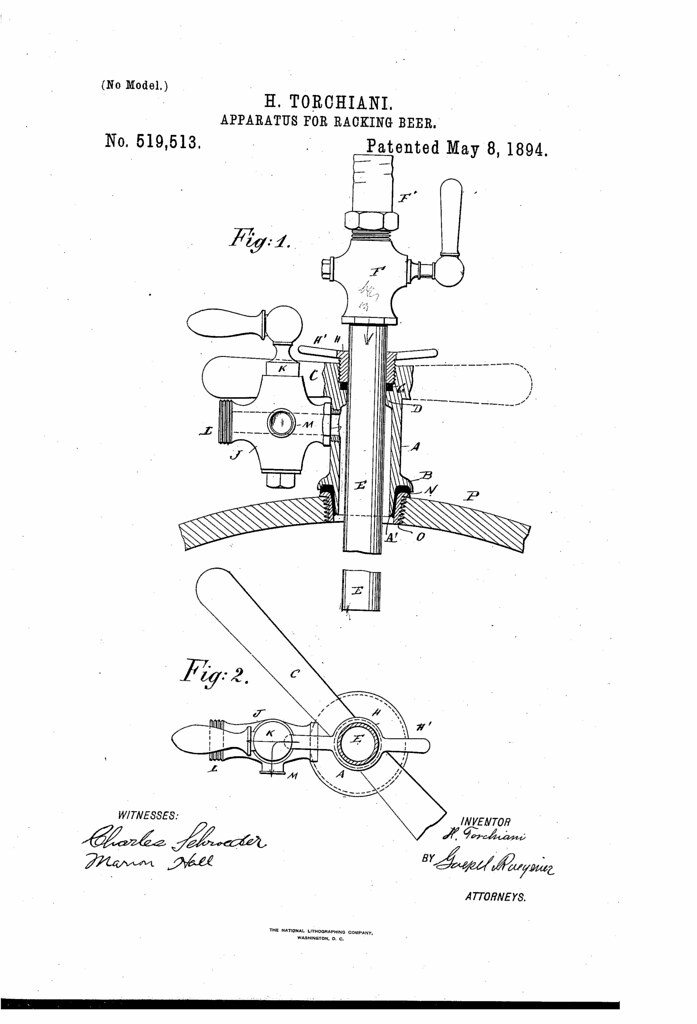
Today in 1894, US Patent 519513 A was issued, an invention of Harry Torchiani, for his “Apparatus For Racking Beer.” There’s no Abstract, but in the description it’s stated that the “invention relates to that class of. devices that are used in drawing or filling beer from casks into the barrels, half-barrels, kegs, etc.,” adding this. “The object of my invention is to provide an apparatus of this kind, which can readily be adjusted for barrels or kegs of different sizes, and which prevents the spurting of the beer from the apparatus or keg when the apparatus is withdrawn from the keg.”
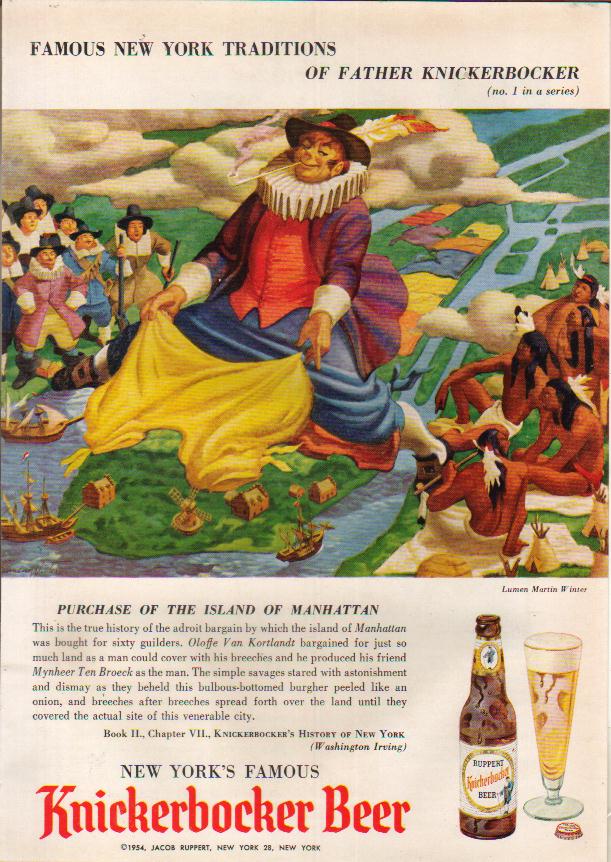
Beer In Ads #1548: Famous New York Traditions Of Father Knickerbocker

Thursday’s ad is for Knickerbocker Beer, from 1954. The beer was brewed by Jacob Ruppert. The illustration by Lumen Martin Winter shows a fanciful origin story for the Purchase of the Island of Manhattan, as told in the text. Isn’t that how the kids are wearing their pants these days? Wow, everything old really is new again.
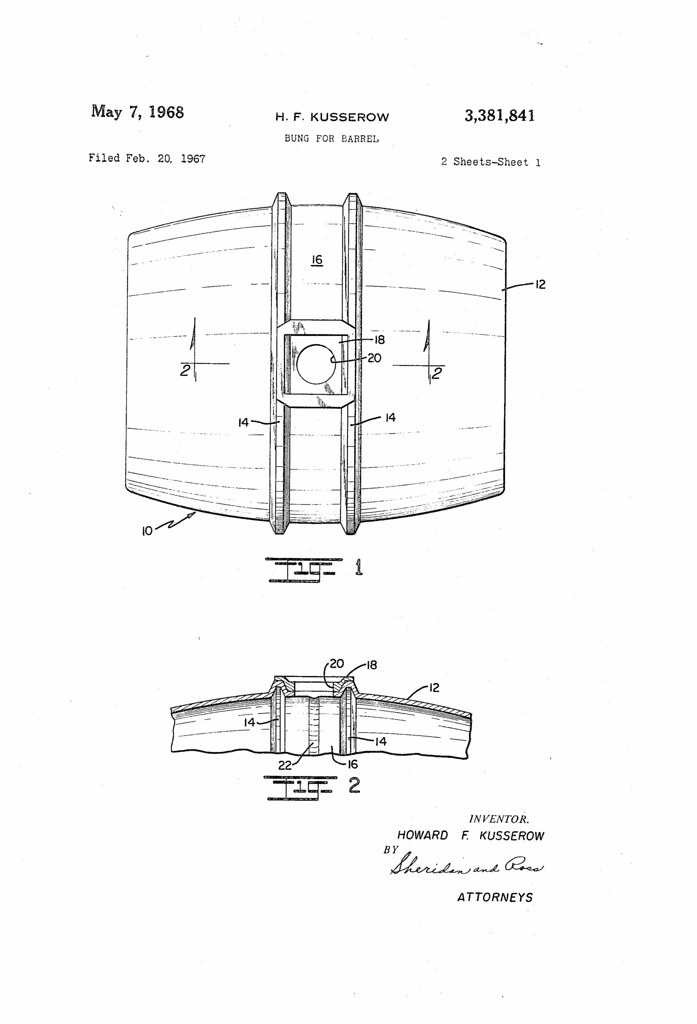
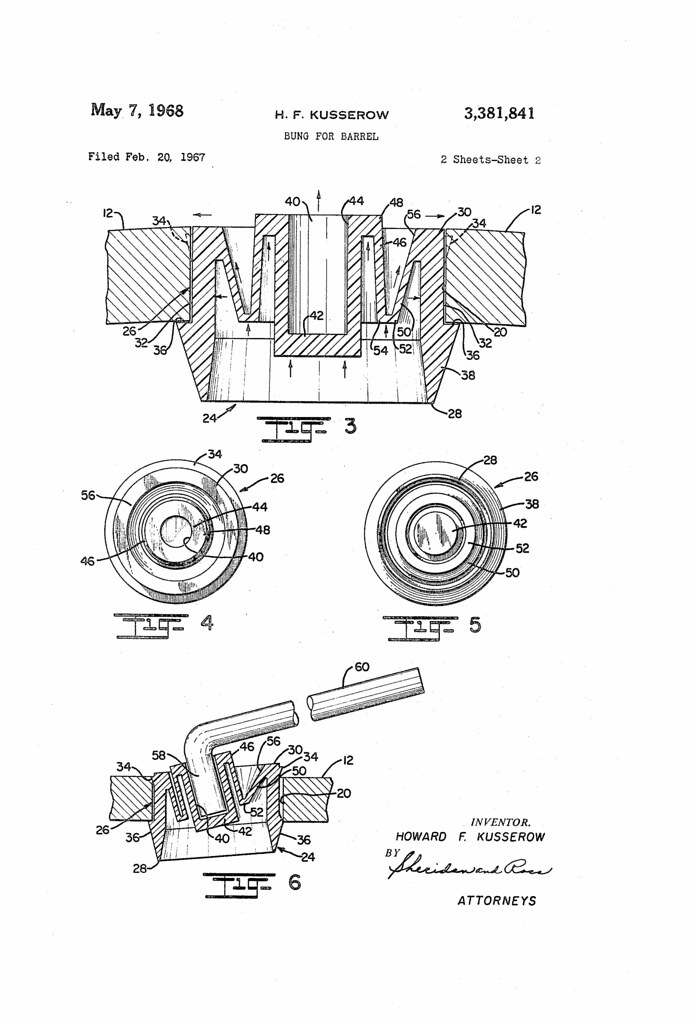
Patent No. 3381841A: Bung For Barrel
Today in 1968, US Patent 3381841 A was issued, an invention of Howard F. Kusserow, for his “Bung For Barrel.” There’s no Abstract, but in the description it’s claimed that the “invention lies in the general field of container closures. It is directed to re-usable closures which may be readily applied and removed, and more particularly to bungs for beer barrels, although it is not limited to such use.” Apparently, the new bung was to replace wooden ones with a bung made from polyethylene, a “resiliently yieldabie material.”
Beer In Ads #1547: Beer Chess
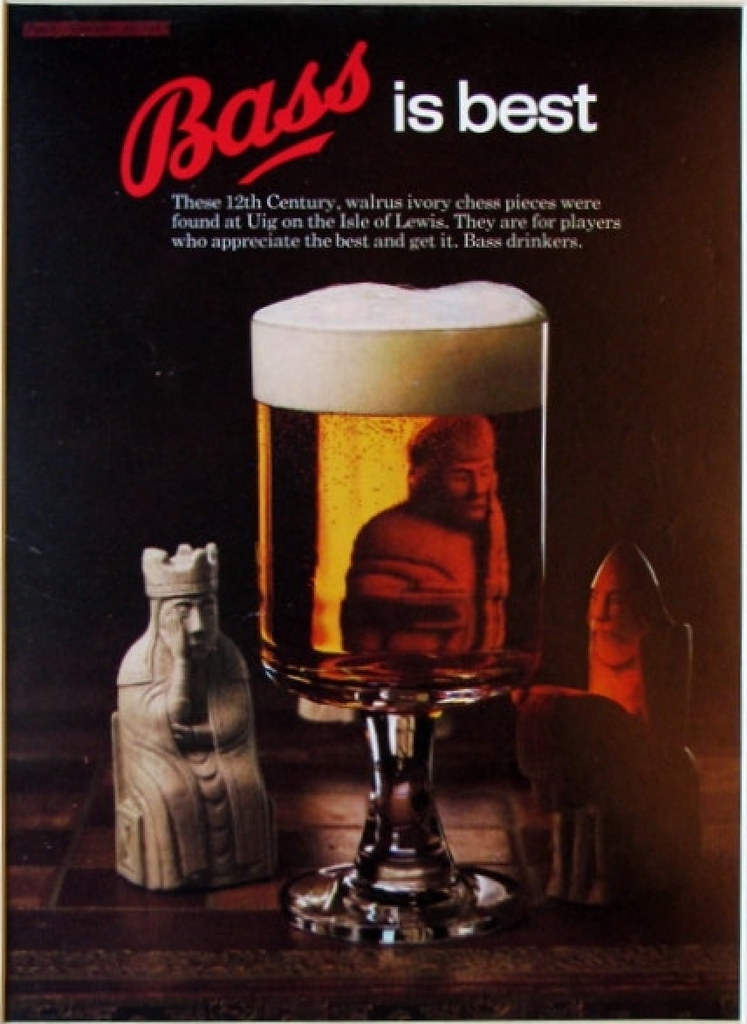
Wednesday’s ad is for Bass Ale, from 1967. Showing some antique chess pieces with a cool photograph, trying to assert that they’ll appeal to people who “appreciate the best,” suggesting those are also Bass drinkers. Hmm.
Patent No. 1302549A: Process For Brewing Beer
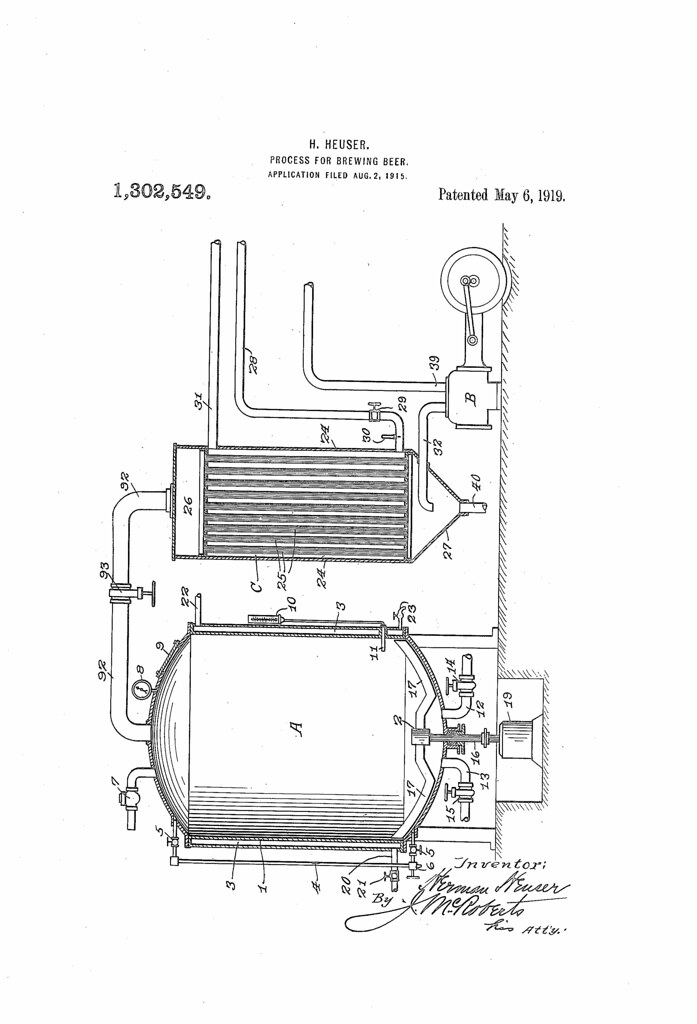
Today in 1919, US Patent 1302549 A was issued, an invention of Herman Hausen, for his “Process For Brewing Beer.” There’s no Abstract, but as Prohibition began, the invention was specifically for non-alcoholic beer to satisfy demand for at least the taste of beer once the regular kind was outlawed. Here’s a fuller explanation.
My invention relates to the manufacture of non-alcoholic beer, of beer containing less than one-half of one percent of alcohol, and of temperance beer. In the processes heretofore employed for making such beverages, the de-alcoholizing occurs by distillation of the alcohol after the liquid vis fermented or the beer brewed. These old processes involve certain disadvantages which are obviated by my invention, which, generally speaking, consists in simultaneously boiling and fermenting the beer wort in a vacuum and within the range of beer fermentation temperatures at which the activity of the yeast is not destroyed to evaporate the alcohol and preserve live yeast in In the accompanying drawing I show more or less diagrammatically and mostly in sectional view all the apparatus required to carry out my new process.
Beer In Ads #1546: Tecate’s Three Amigos
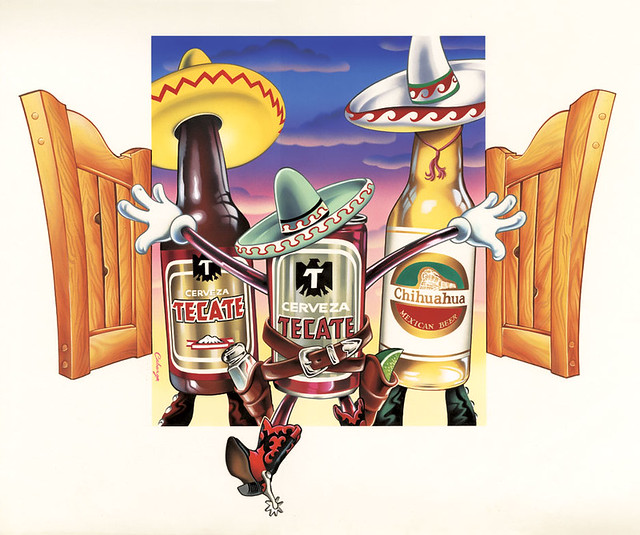
Tuesday’s ad, for Cinco de Mayo, is for Tecate beer, from 1988. The cartoon art was created by Leslie Cabarga and used by Tecate in a series of ads that summer, and was even made into a poster. Showing two Tecates, a bottle and a can, though the can is clearly the leader, along with a bottle of Chihuahua (which I recall selling at BevMo for $2.99 per six-pack), making an entrance into a wild west saloon. Notice the can has a bottle of salt and a lime in his holsters. It’s a pretty cheesy ad, but this was also the same time 7-Up was advertising using a spot with arms and legs, and California raisins were similarly animated, so maybe it was popular.
Patent No. 2039564A: Beer Dispensing Apparatus
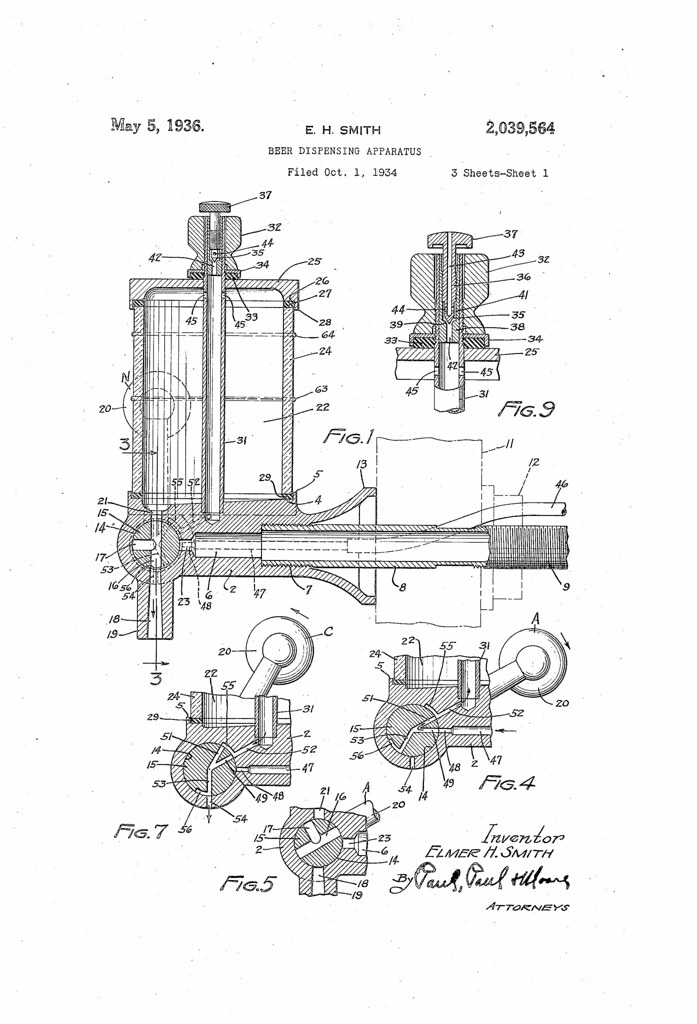
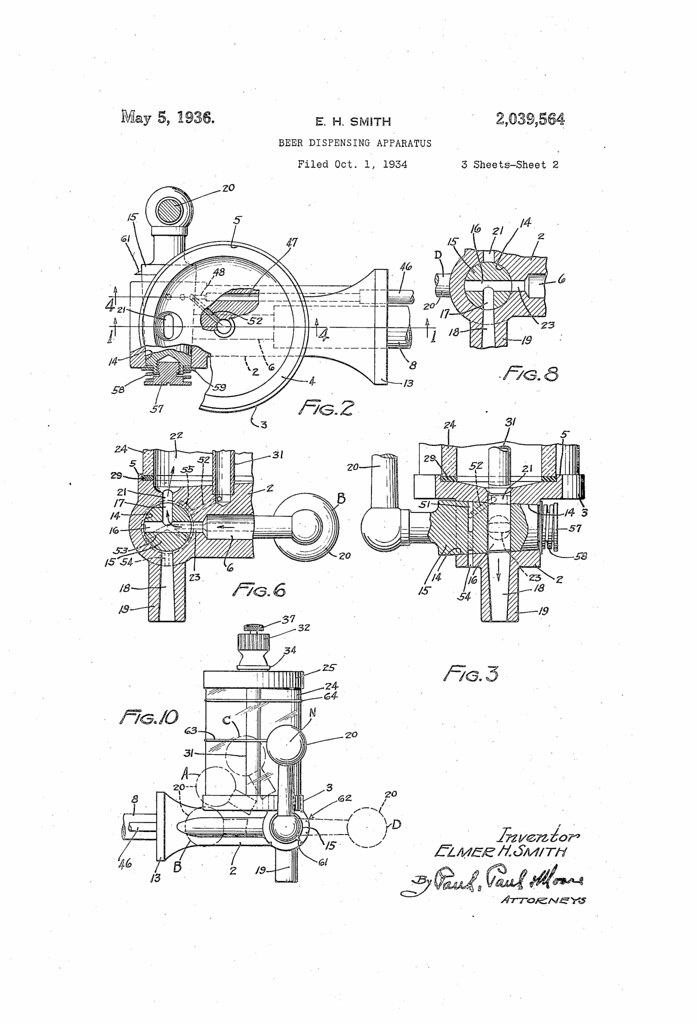
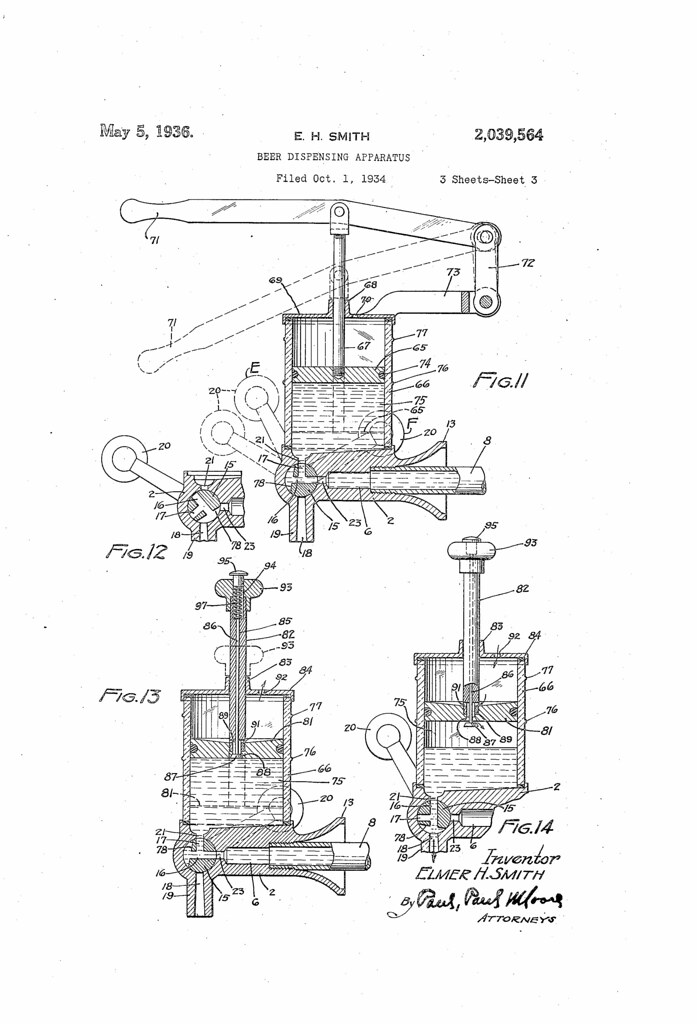
Today in 1936, US Patent 2039564 A was issued, an invention of Elmer H. Smith, for his “Beer Dispensing Apparatus.” There’s no Abstract, but in the description it states that his “invention relates to new and useful improvements in beer dispensing apparatus, and more particularly to a beer dispensing faucet having means embodied in the construction thereof, whereby the beer, regardless of the pressure on, the beer at its source, may be dispensed into, a glass or suitable container without excessive foam.”
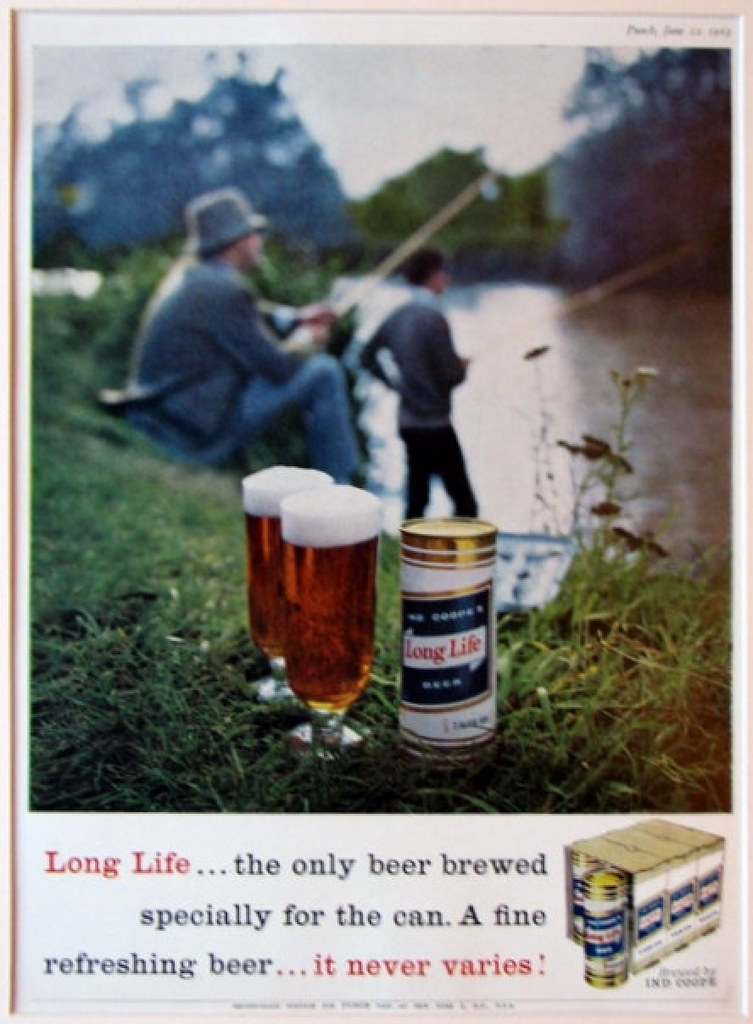
Beer In Ads #1545: The Only Beer Brewed Specially For The Can
Monday’s ad is for Long Life, from 1963. The canned beer Long Life Beer was made by Ind Coope beginning in the 1950s, making it one of the early beers in cans in the UK. They launched a series of ads claiming that the recipe was formulated specifically for the can, and as a result “it never varies!” But it certainly looks good for out-of-focus fishing.
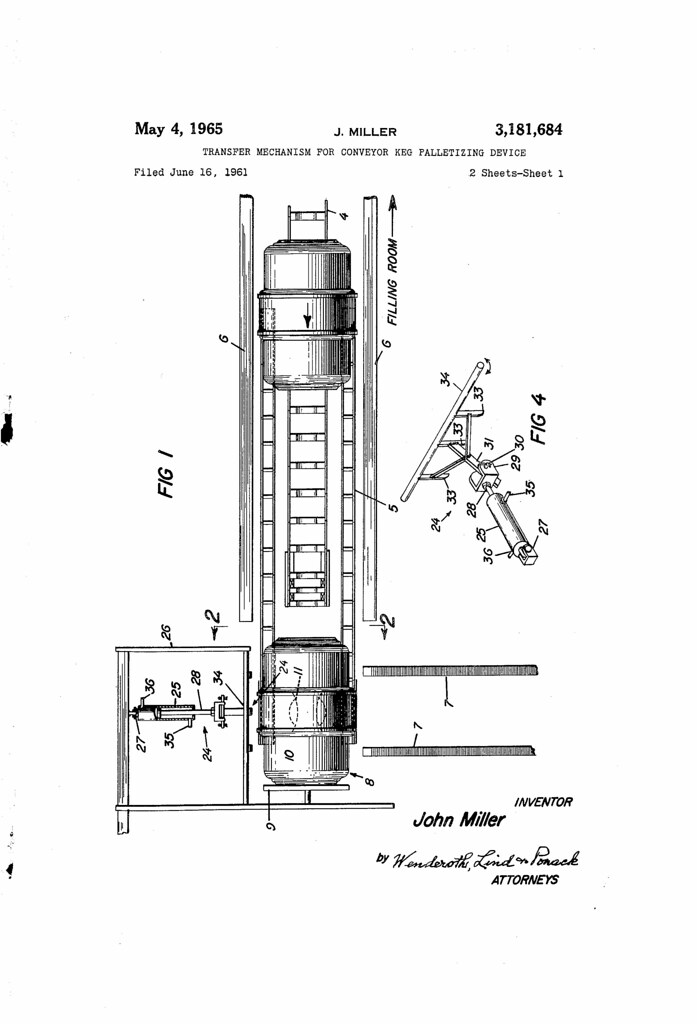
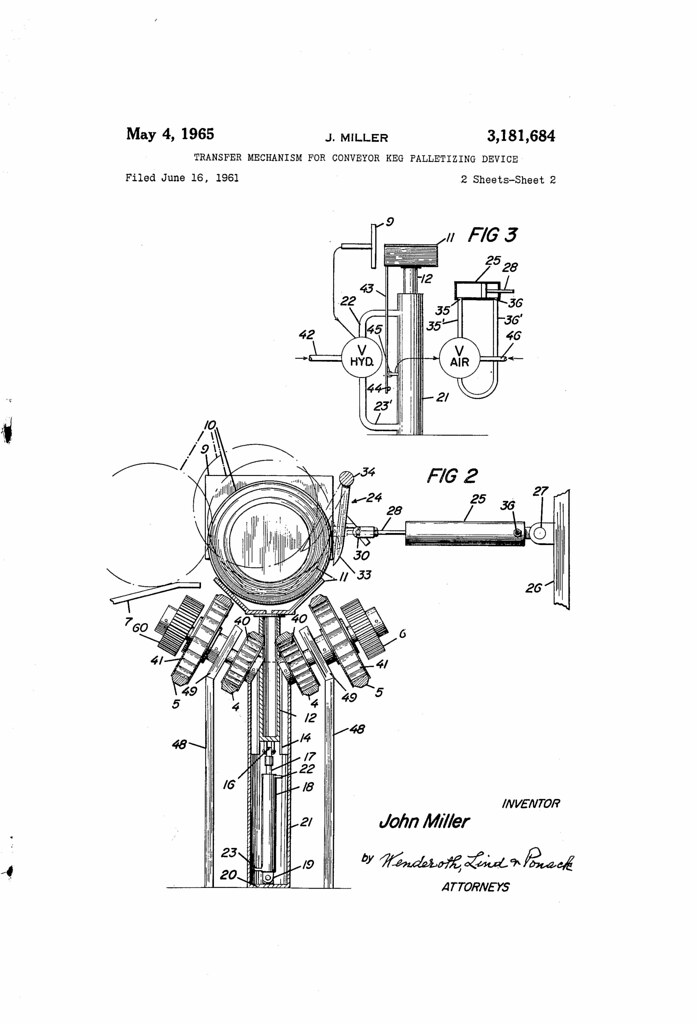
Patent No. 3181684A: Transfer Mechanism For Conveyor Keg Palletizing Device
Today in 1965, US Patent 3181684 A was issued, an invention of John Miller, assigned to Schaefer Brewing Co., for his “Transfer Mechanism For Conveyor Keg Palletizing Device.” There’s no Abstract, but in the description it states that his “invention is to provide a more efficient transfer mechanism for the barrels or kegs and particularly such a transfer mechanism which is more reliable and sure in operation in transferring the barrels or kegs from the conveyor to the skids which convey such barrels or kegs to the palletizing position.”
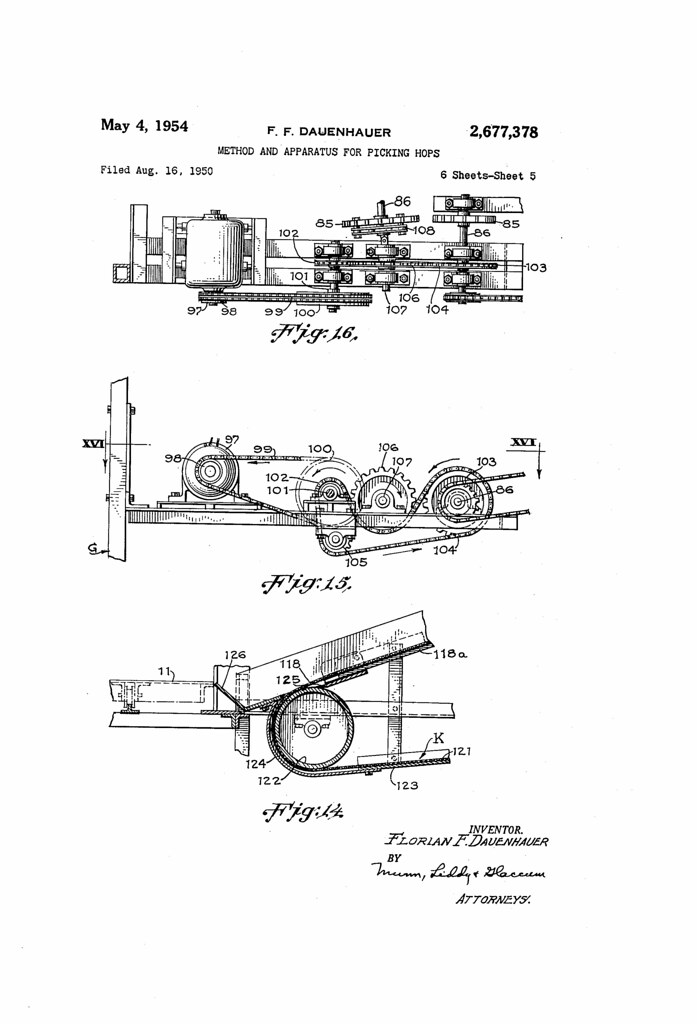
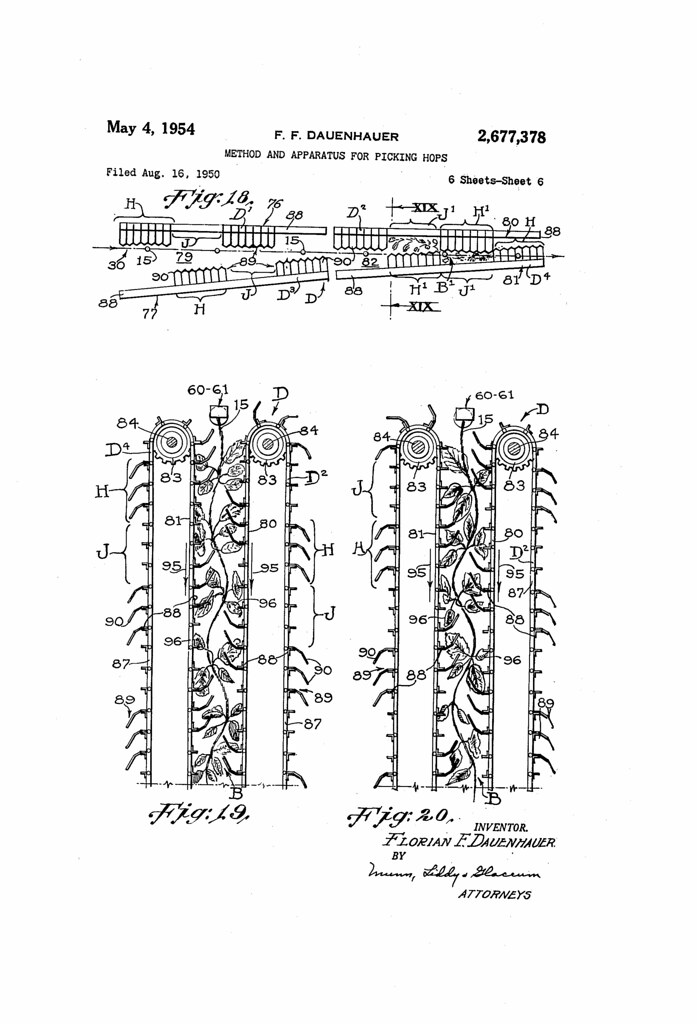
Patent No. 2677378A: Method And Apparatus For Picking Hops
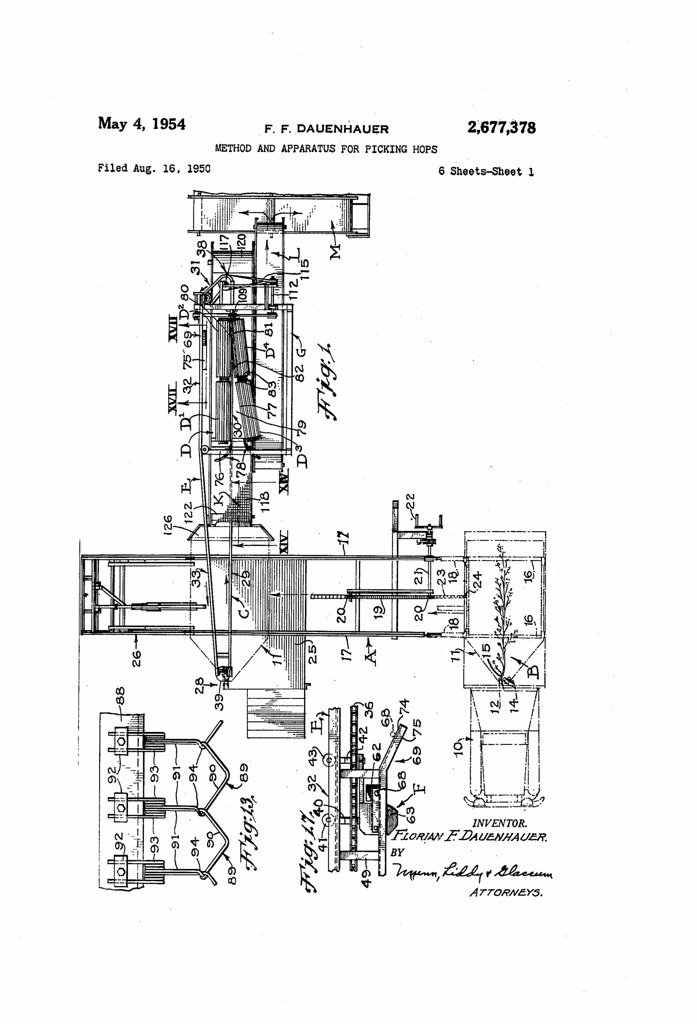
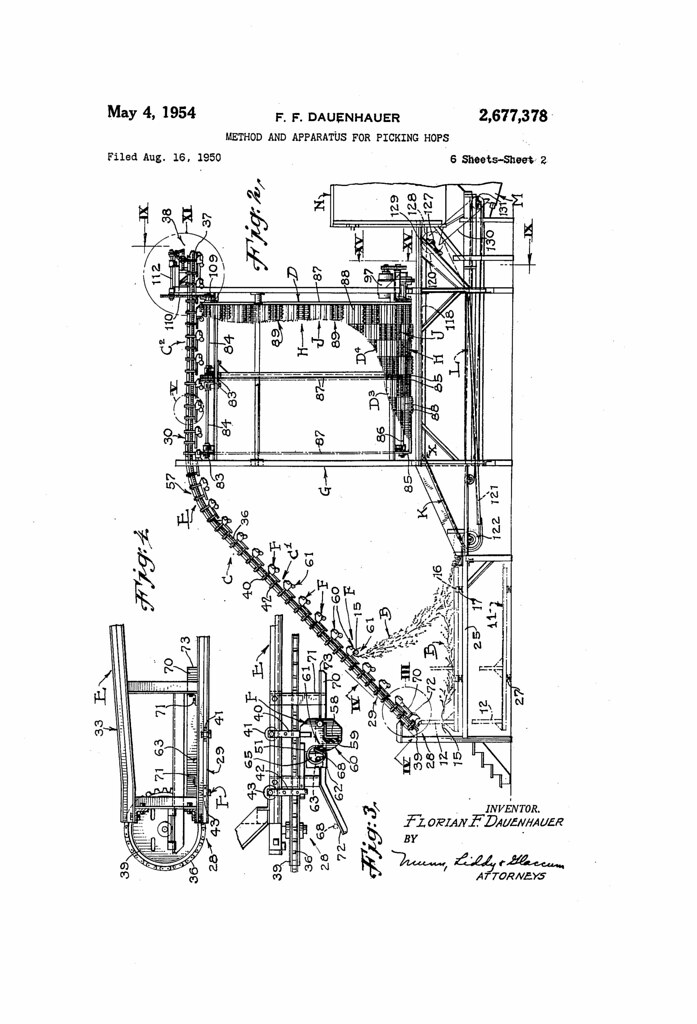
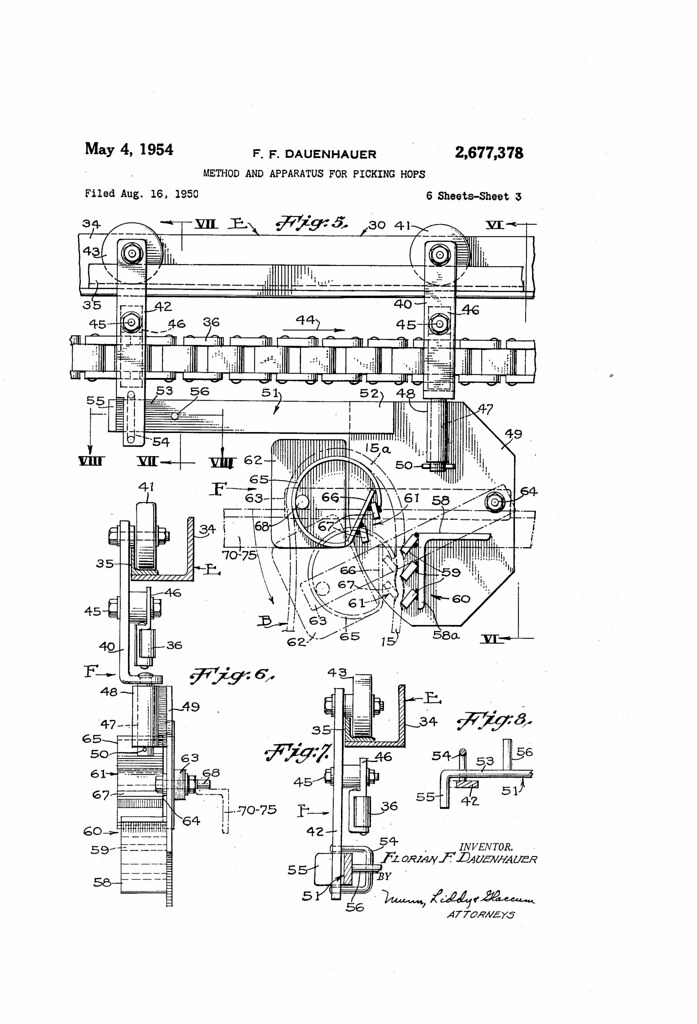
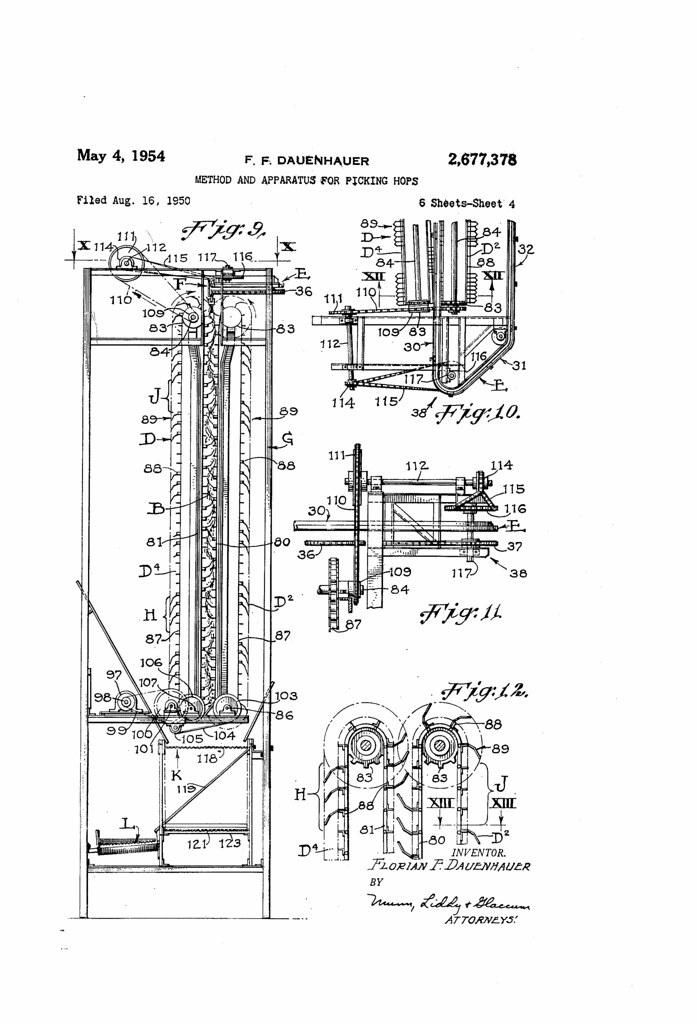
Today in 1954, US Patent 2677378 A was issued, an invention of Florian F. Dauenhauer, for his “Method and Apparatus for Picking Hops.” There’s no Abstract, but in the description it states that his “present invention relates to improvements in a method and apparatus for picking hops.”
An object of this invention is to provide an improved method of picking hops from vines, assuring a thorough removal of the hops, with out damaging the hops. More specifically stated, the vines are formed into wave-like configurations, defining alternate crests and valleys extending lengthwise of the vines.
The waves thus formed are advanced lengthwise of the vines to continually replace crests by valleys and vice versa, thereby undulating the vines in first one direction and then the other for causing pendulum-like movements and exposure of the hops by the continual weaving of the vines. The hops are removed during the undulating of the vines.
Moreover, the method employs the progressive increasing of the amplitudes of the waves as the hops are picked. Also, crests and valleys of the waves are interchanged abruptly as the picking of the hops continue, and the branches of the vines are spread out laterally to expose hops and preclude the vines from matting.