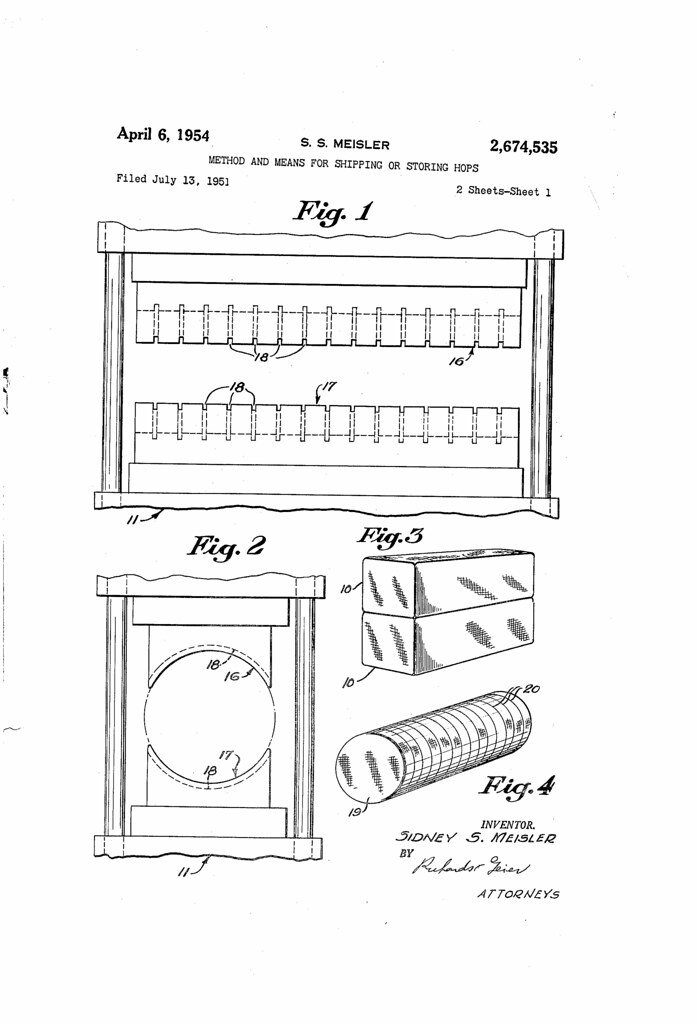
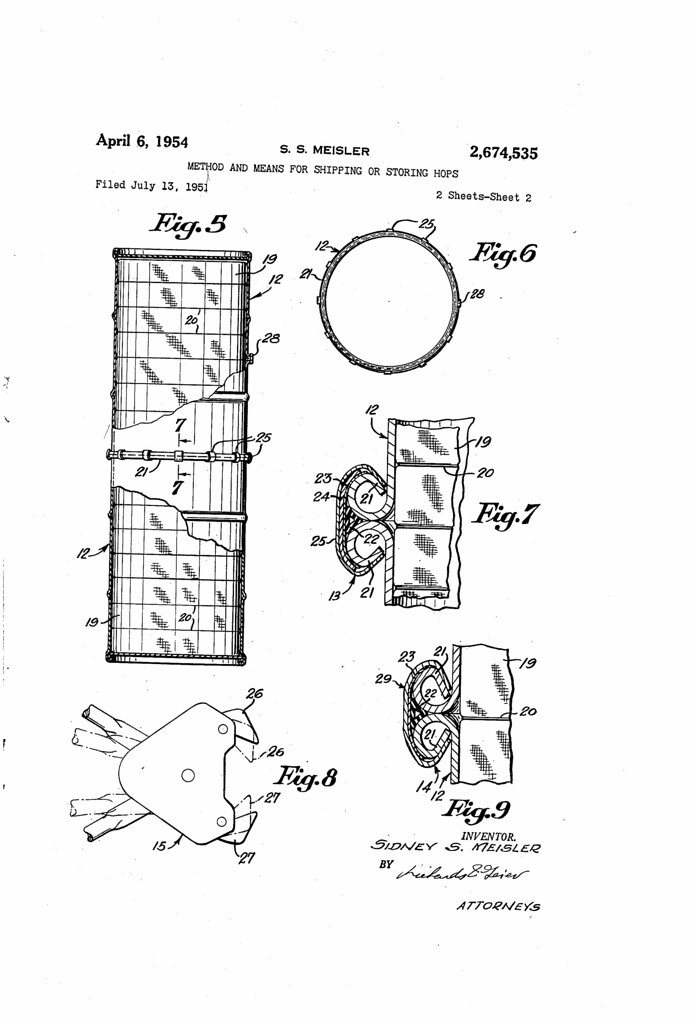
Today in 1954, US Patent 2674535 A was issued, an invention of Sidney S. Meisler, for his “Method and Means For Shipping or Storing Hops.” There’s no Abstract, but here’s how it’s described. “It is an object of the instant invention to provide better packing which will be impervious to Weather, negligent handling, and poor storing in the holds of ships where other cargos may contaminate the hops with odors, moisture, acids, etc., the hops being easily damaged. Another object is to conserve material in the shipment of hops.”
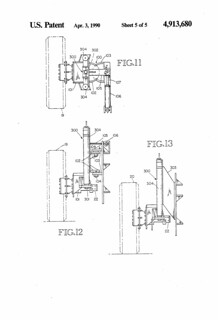
Patent No. 4913680A: Low-Trellis Mobile Hop Picker
Today in 1990, US Patent 4913680 A was issued, an invention of Donald A. Desmarais, for his “Low-Trellis Mobile Hop Picker.” Here’s the Abstract:
A mobile hop picking machine is provided with independently elevatable wheels. The picker straddles a trellis to position opposing picking cats on either side of the vines. Front and rear banks of picking hooks move upwardly to pick the hops. A bank of resilient raking tines comb the vines upwardly between the picking banks. The picking cats are pivoted about their front edges and are supported for transverse movement on their rear edges. Cylinders urge the rear of the cats toward the vines. A contact member connected to the cat moves the cat transversely, to avoid cat contact with poles, against a biased mounting provided for the hydraulic cylinder. Longitudinal conveyors transport the hops rearwardly and upwardly. A squeeze conveyor floats on a top support over the elevating end of the longitudinal conveyors. An alternate arrangement intersperses the raking tines and picking hooks.



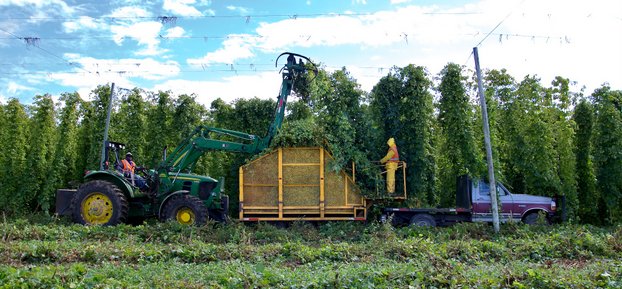
Crosby Hop Farms

With the Craft Brewers Conference in Portland just a couple of weeks away, I’ve been receiving numerous e-mails from vendors who will be at the trade show. It happens every year. Some are of no interest whatsoever, while others are fun to see. For example, this morning one came in from Crosby Hop Farms, an Oregon hop grower. They’re doing an open house Wednesday night at the farm, which could be fun. But the e-mail included a link to a video they created about their company. No matter how many times I visit a hop farm, it’s always a spectacular sight.
This is the next best thing to being there. I think I may have to go to this one. You can also see more about the farm at Craft Brewing Business with these two stories: Hip hops: Craft beer’s impact on a growing industry and A Hop Farmer’s Diary: 30 days in the life of Oregon’s Crosby Hop Farm.
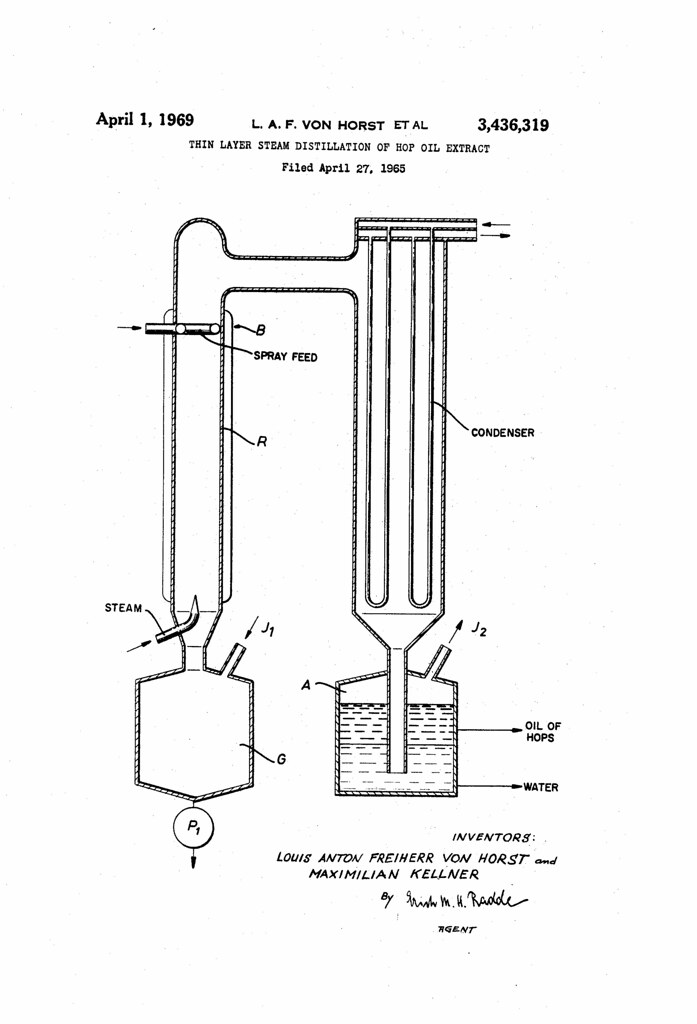
Patent No. 3436319A: Thin Layer Steam Distillation Of Hop Oil Extract
Today in 1969, US Patent 3436319 A was issued, an invention of Louis Anton Freiherr Von Horst and Maximilian Kellner, for their “Thin Layer Steam Distillation of Hop Oil Extract.” There’s no Abstract, but it’s described as relating “to a process of producing essential oil of hop preparations, and more particularly to a continuous process of producing such oil of hop, and to products obtained thereby,” with something approximating an abstract:
Improved process of recovering oil of hop from a solvent extract of hops by steam distillation in a novel manner, namely by passing the hop extract downwardly in a thin layer along an externally heated surface counter currently to the upwardly flowing steam in an oxygen-free atmosphere. This process has the advantage of completely recovering the oil of hop from the steam distillate and simultaneously producing a residual hop extract containing other components of said extract in substantially unaltered form. If the temperature of the starting solvent extract of hops is between about 80 C. and about 135 C., partial isomerization of the humulones to the isohumulones which are important brewing additives, takes place.
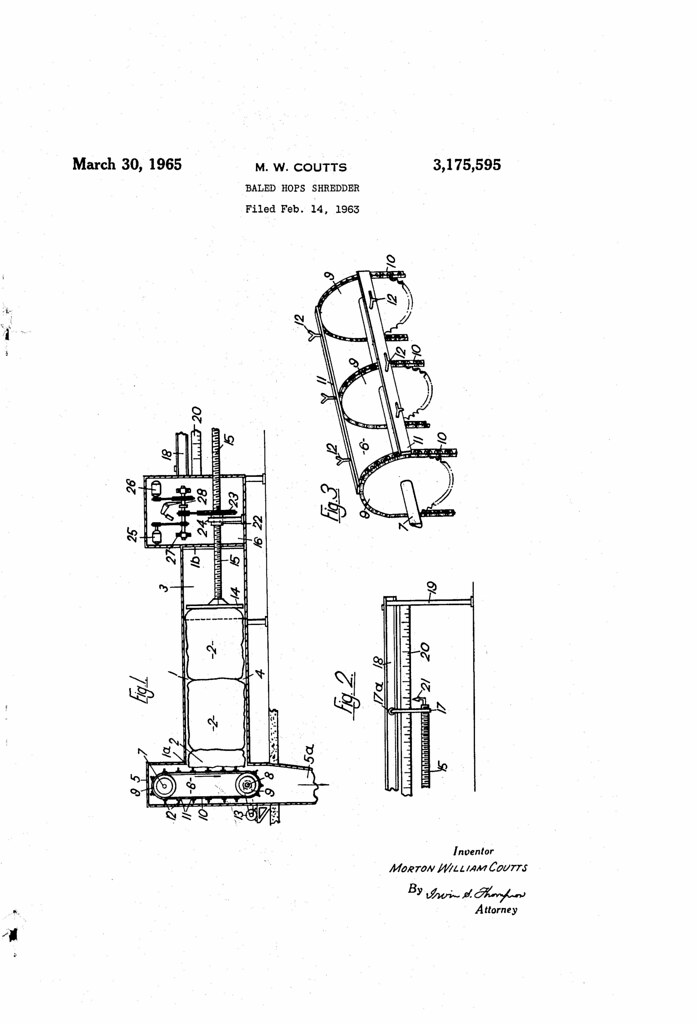
Patent No. 3175595A: Baled Hops Shredder
Today in 1965, US Patent 3175595 A was issued, an invention of Morton William Coutts, assigned to Dominion Breweries Ltd., for his “Baled Hops Shredder.” There’s no Abstract, but the description states that the “invention relates to the breaking up and the measuring of compressed baled hops and the like, and has for its objects the provision of an apparatus for achieving this quickly and easily and also in measured quantities and at predetermined speeds and intervals of time, directly from the bales.”
Save The Bees, Save The Beer

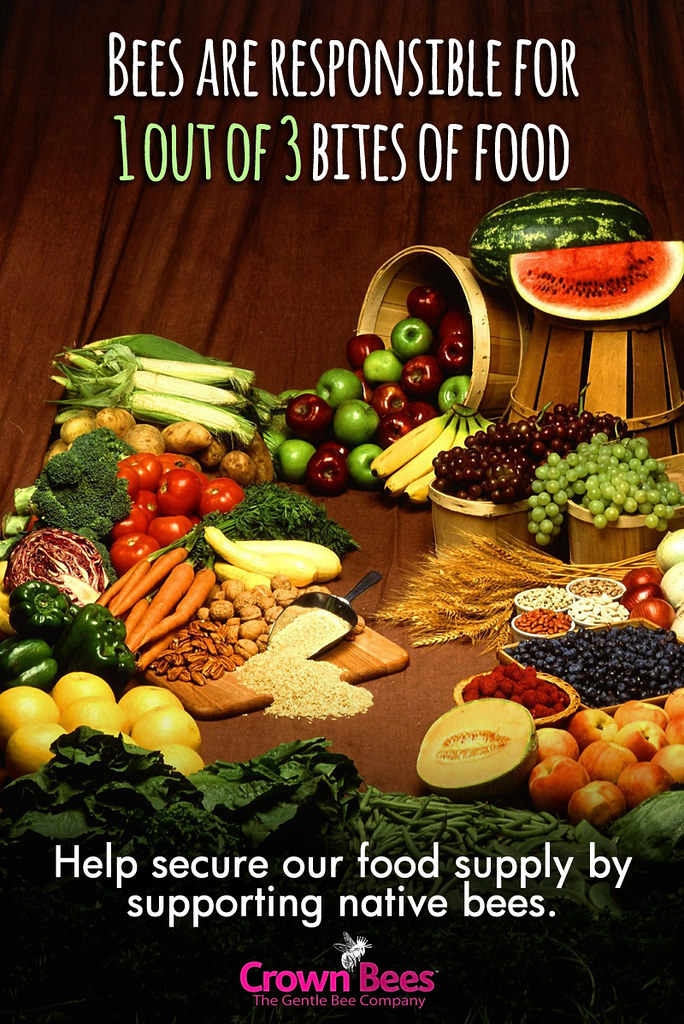
Beer, of course, is an agricultural product, two of its main ingredients are very dependent on a good harvest. Both hops and barley (and other grains such as wheat and rye) grow best when they’re planted in the right place and the conditions are present to encourage their best selves. I received an e-mail a few days ago with the intriguing message. “Bees pollinate 1/3 of our food, including the hops used to make beer. Save the bees, save the beer.”

The e-mail was about an Indiegogo campaign to create a “community open to anyone who cares about bees, the environment and food,” called BeeWithMe, which will consist of “a dynamic new website that teaches people how easy and fun it is to raise a diverse range of gentle bees.” Unless you’ve been cryogenically frozen recently, you no doubt have heard that bees are disappearing from our environment, which could have devastating consequences for our food supply and our life cycle more generally. Find out how to participate at You Can Help Save the Bees, which begins:
Imagine a world without bees. There would be no blueberries, no cherries, no pumpkins – not even beer.
Here’s the problem: Most farmers depend on a single type of bee to pollinate our food and that bee, the honey bee, has been struggling.
You can be part of the solution and protect our food supply by raising gentle, native bees in your backyard or supporting someone else who does.
Keep your favorite foods on the table by contributing today and joining the BeeWithMe network that will collaborate to raise more native bees and grow more food.
Most of the pledge levels involve getting your own bees, some to simply release in your back yard, up to everything you need to raise your own bees. There are also teacher’s packages for classrooms and levels for entire garden clubs and communities. Please bee generous. And remember, save the bees, save the beer.
Patent No. PP18602P3: Hop Plant Named ‘Bravo’
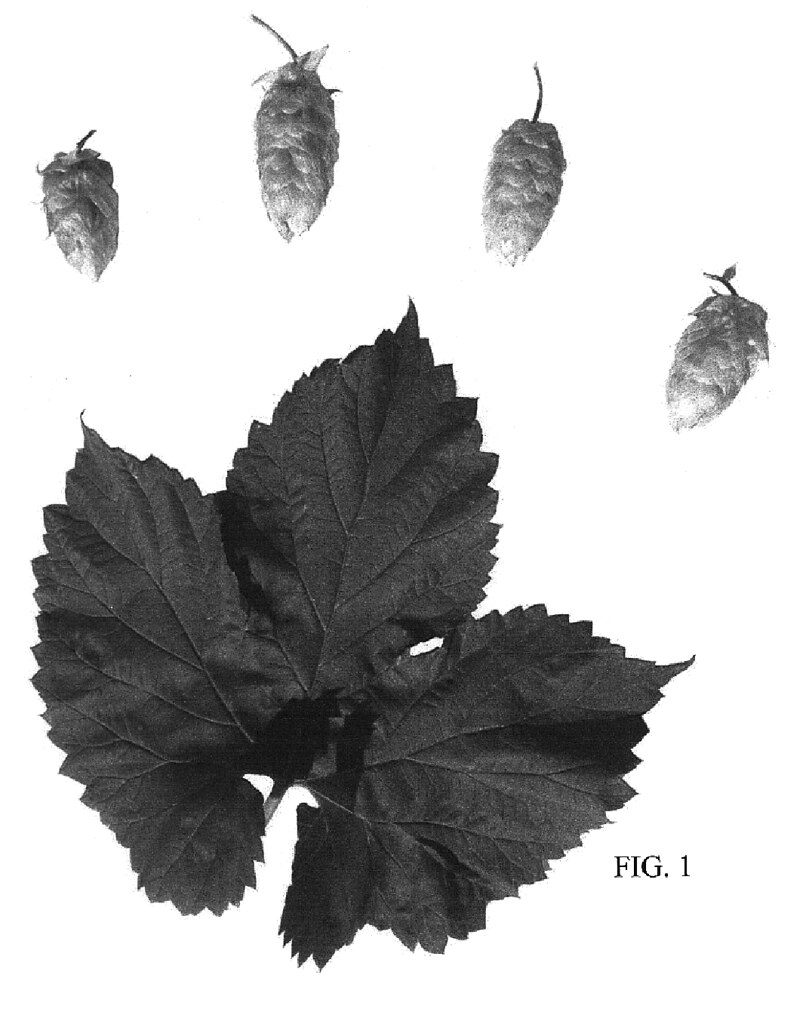
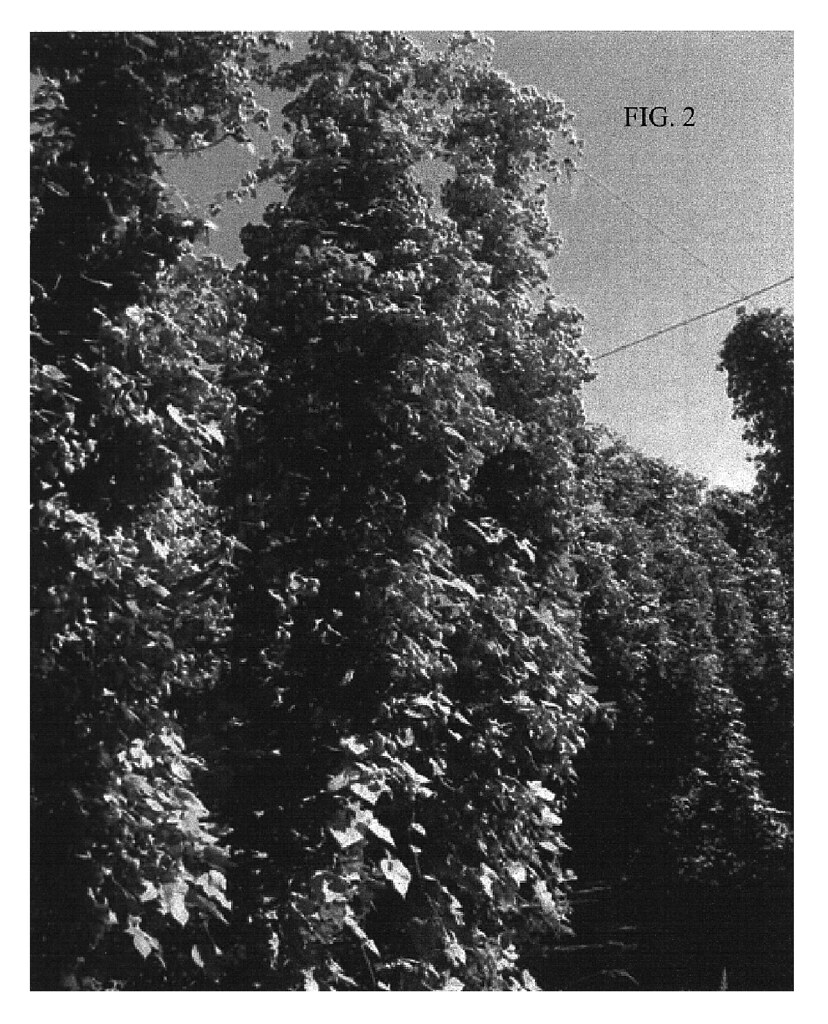
Today in 2008, US Patent PP18602 P3 was issued, an invention of Roger D. Jeske and Joe Brulotte, assigned to S.S. Steiner, Inc., for their “Hop Plant Named ‘Bravo.'” Here’s the Abstract:
A new and distinct variety of hop, Humulus lupulus L., named “01046” is characterized by its exceptional cone yield, high percentage of alpha acids, and resistance to hop powdery mildew strains found in Washington. The new variety was cultivated as a result of a cross in 2000 at Golden Gate Roza Hop Ranches in Prosser, Wash., United States and has been asexually reproduced in Prosser, Wash., United States.
Patent No. PP15663P2: Hop Plant Named ‘YCR Accession No. 4’
Today in 2005, US Patent PP15663 P2 was issued, an invention of Charles E. Zimmermann, assigned to Select Botanicals Group, L.L.C., for his “Hop Plant Named ‘YCR Accession No. 4.'” Here’s the Abstract:
A new hop plant (Humulus lupulus) is disclosed. The new variety is used for its aromatic properties. The new variety is moderately tolerant to powdery mildew, and produces a medium size moderately compact cone with good pickability and storageability. The cones mature relatively late, and produce an exceptional yield of approximately 2200 to 3000 pounds per acre (2466 to 3363 kg/ha).


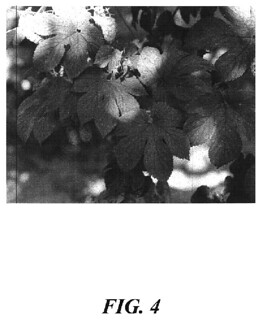

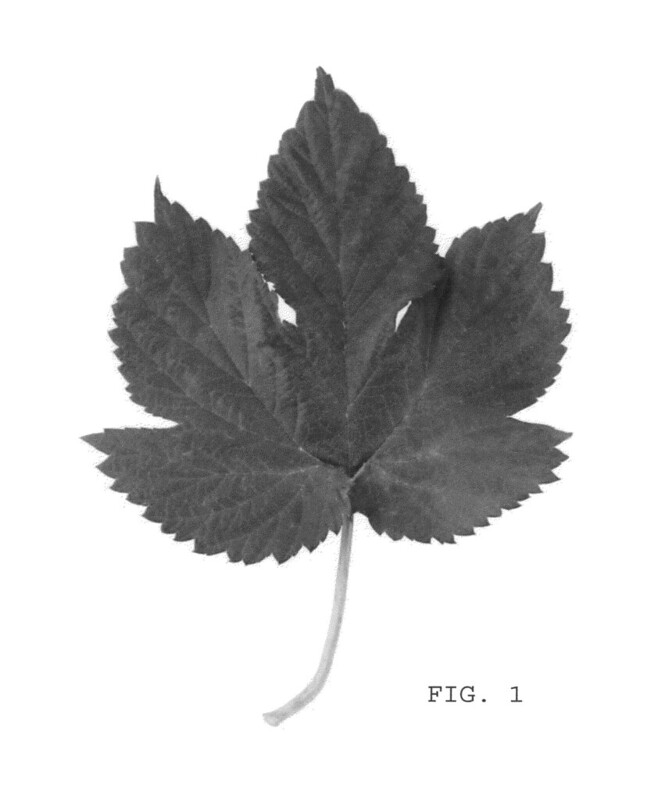
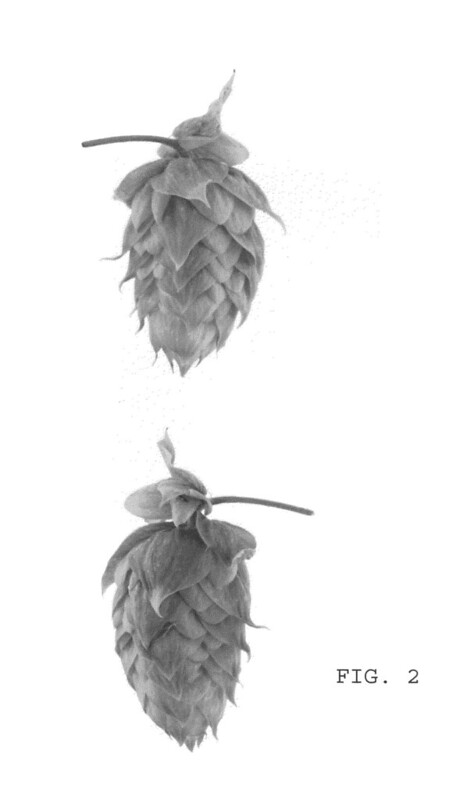
Patent No. PP24299P2: Hop Plant Named ‘Calypso’
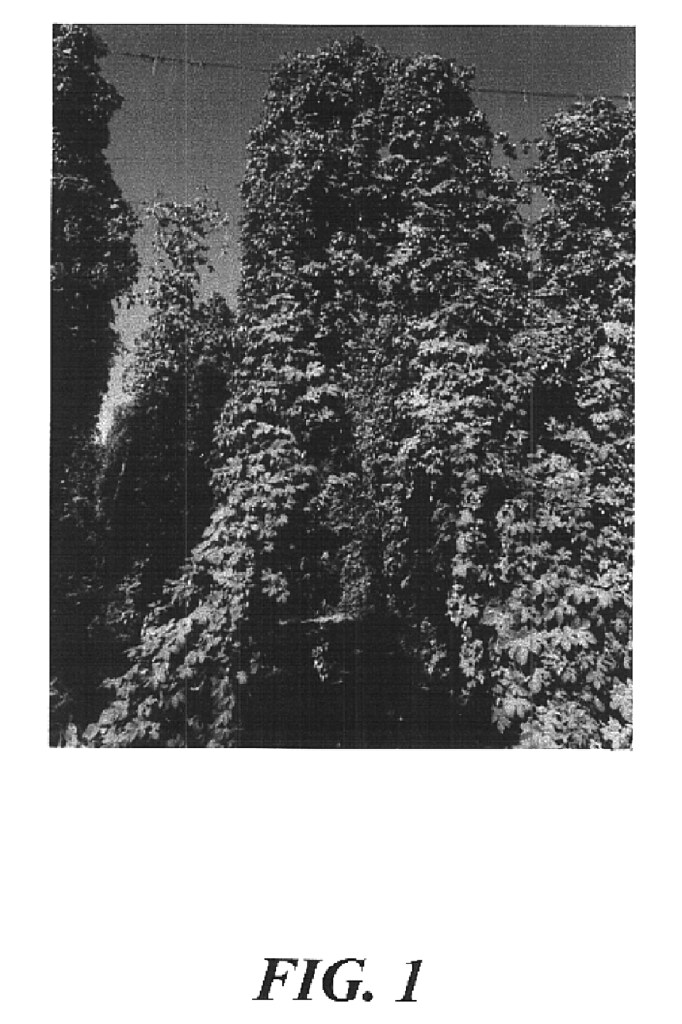
Today in 2014, just one year ago, US Patent PP24299 P2 was issued, an invention of Roger D. Jeske and Paul D. Matthews, assigned to S.S. Steiner, Inc., for their “Hop Plant Named ‘Calypso.’” Here’s the Abstract:
A new and distinct aroma variety of hop, Humulus lupulus L., named ‘CALYPSO’ is characterized by its large yield, unique aroma and resistance to hop powdery mildew.

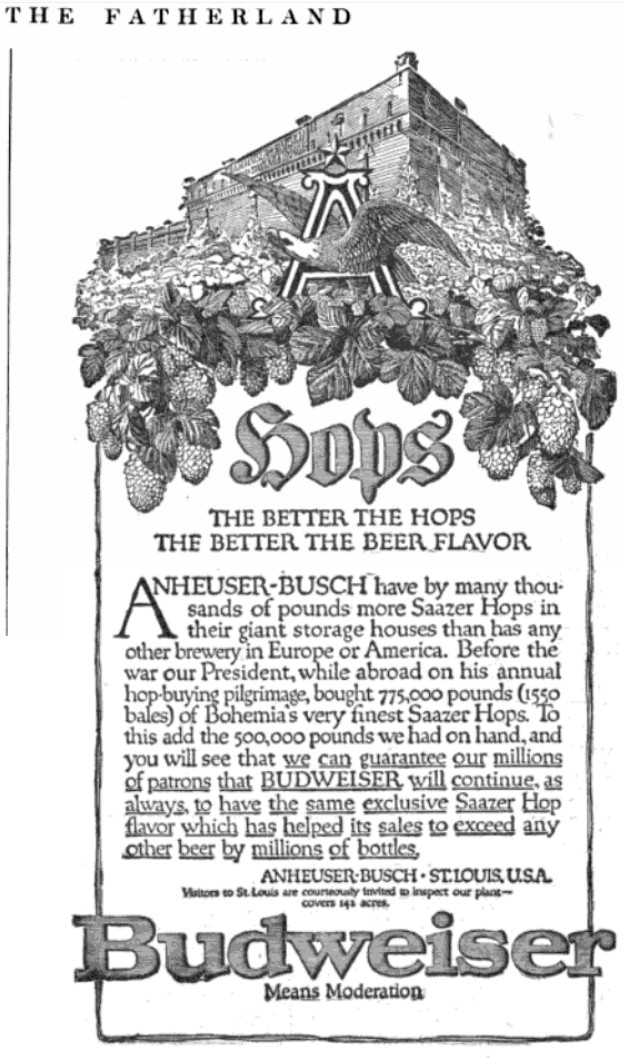
Beer In Ads #1485: The Better The Hops The Better The Beer Flavor

Thursday’s ad is for another one for Budweiser, also from 1916. It seems like this is part of a series from the same year. This one has the great headline “The Better the Hops the Better the Beer Flavor.” Like yesterday’s ad, the parting shot is “Budweiser Means Moderation,” which was part of a strategy to convince people that beer should be spared that the brewing industry adopted far too late to stop the 18th Amendment from being ratified, establishing prohibition in 1920. Needless to say, it was too little, too late, but it’s a cool ad.