Brookston Beer Bulletin

Jay R. Brooks on Beer

  • Home
  • About
  • Editorial
  • Birthdays
  • Art & Beer

Socialize

  • Dribbble
  • Email
  • Facebook
  • Flickr
  • GitHub
  • Instagram
  • LinkedIn
  • Pinterest
  • RSS
  • Twitter
  • YouTube

Powered by Genesis

Wisconsin Legislature Attacks Craft Brewers

June 3, 2011 By Jay Brooks

wisconsin
With craft beer being the only segment of the brewing industry showing strong growth, you’d think that state governments trying to fix our current economic woes would be doing everything they can to help one of the few bright spots in American business. But never underestimate the power of lobbying by interests with more money than the craft brewers, namely beer distributors and Milwaukee-based powerhouse Miller Brewing, operating in the U.S. as MillerCoors, but also part of the international conglomerate SABMiller. (And thanks to a number of people who sent me different links to this emerging story.)

Right now in Wisconsin, there’s a battle brewing and it looks like the state’s many craft brewers will be hit the hardest by a proposed new wholesale bill that was recently approved by the state Legislature’s Joint Finance Committee. The bill is backed and supported by the Wisconsin Beer Distributors Association, the Tavern League of Wisconsin, the Wisconsin Grocers Association, the Wisconsin Petroleum Marketers & Convenience Stores Association, the Wisconsin Wine & Spirits Institute and MillerCoors. In other words, all the big players, with money, who do most of their business with the big, corporate beer companies.

They claim that the new bill is designed “to stop St. Louis-based Budweiser and Bud Light brewer Anheuser-Busch from buying wholesale distributors in Wisconsin.” And that might be understandable and even believable, except for one little detail. Not only was the Wisconsin Brewers Guild (which represents over 35 independent, small craft brewers) not consulted on the bill, several of the provisions of the bill actively harm the small brewers, and those same provisions have nothing whatsoever to do with Anheuser-Busch InBev in the least. Obviously, someone is lying.

Here’s how several local news outlets in Wisconsin are reporting on the story. First, here’s the Isthmus Daily Page:

Current state law severely restricts the options brewers have to distribute their beer. Only breweries that produce less than 50,000 barrels of beer per year are allowed to sell their beer directly to retailers. All others must contract with wholesalers for distribution.

Worried that perhaps microbrewers were operating in too free a market, legislative Republicans have proposed even more restrictions on the beer distribution business. The legislation that passed JFC gets rid of any exemptions that allow some microbreweries to distribute their own beer, as well as forbids breweries from selling beer on their own property, either as a bar or a retailer.

And what would Walker-era legislation be if it didn’t offer more power to state government? The legislation also takes the power of licensing of wholesalers away from municipalities and puts them under the control of the state Department of Revenue.

But what will most likely happen in reality is that small brewers will have a much harder time bringing their beer to market. Whether the bill actually targets small brewers, or it’s an unintended consequence, is unclear but I can’t help but think that legislators — elected officials, after all — have a duty to look out for all of their constituencies, and should understand how their actions effect everyone. I know that’s overly idealistic, but that’s how it’s supposed to work and I’ll always continue to hope for at least that much. The fact that the big players all had a say but the small brewers did not speaks volumes about how this is working in reality, and it’s a pretty ugly picture, if not of outright corruption, then at least of unseemly favoritism.

Here’s what Sprecher Brewing president Jeff Hamilton had to say about the bill, as quoted in The Milwaukee Business Journal:

“This is limiting our business model,” said Hamilton, who also serves as president of the Wisconsin Brewers Guild. “The current system is working just fine.”

MillerCoors and the state’s distributors “went out on their own” in promoting and developing the legislation, Hamilton said.

“We didn’t have a say and it is devastating to our business,” he said.

Hamilton believes the target of the legislation isn’t Anheuser-Busch but rather craft brewers that have been rapidly growing as major brewers have struggled.

“It’s hedging against future competition,” he said.

Consolidation among the state’s distributors has made it more challenging for smaller brewers to sell their products, given the number of brands distributors carry, Hamilton said. The legislation also would thwart plans by some craft brewers to start their own distributorship.

A spokesman for MillerCoors, Nehl Horton, even acknowledges it would limit craft brewers’ options, but insists that it wasn’t their intention. To which I can only say, so what? They had to have known how this would affect craft brewers, but MillerCoors obviously didn’t care. Why should they? But the fourteen Wisconsin legislators, they should have cared about how this would effect viable Wisconsin businesses.

Obnoxiously, Horton added that “the fundamental issue is whether small craft brewers want to be brewers or want to be brewers, wholesalers and retailers.” Given the way small brewers have been treated by distributors and retailers over the years, as they struggled against some pretty big, entrenched institutions to change how people thought about beer, that’s an awfully insulting thing to say. Craft brewers have had to find creative ways to gain access to market out of necessity, including doing their own selling and distributing, precisely because of all the roadblocks put in their way by distributors, retailers and big brewers, the very people who are trying once more to harm their business with this new legislation. So to hear MillerCoors suggest that small brewers should behave more like them, after making it impossible for them to do so for decades, is a pretty offensive thing to say.

And now even the bars and restaurants, many of whom undoubtedly serve craft beer, are also out to get the brewers, too, as the new bill also takes away their ability to sell their own beer, even on their own property. As the Daily Page notes:

But why forbid brewers from operating pubs and restaurants — at least one on their property? It seems a rather blatant attempt to appease the Tavern League, which supported the legislation, and hopes that brewpubs don’t threaten their businesses.

Again, Wisconsin legislators had to know what they were doing, but did it anyway. June 15th, the provisions of the new wholesaler bill comes up for a full vote. Hopefully, an action alert from Support Your Local Brewery will be forthcoming.

And finally, here’s a television report from Channel 9 WAOW, in central Wisconsin:

Filed Under: Breweries, Editorial, News, Politics & Law Tagged With: Beer Distributors, Law, Video, Wisconsin

Boycott Under Way On Beer Stocked By Alabama A-B Distributors

April 25, 2011 By Jay Brooks

alabama
Free the Hops, the organization in Alabama that successfully won the fight over hard opposition to allow beer over 6% abv in the state, is calling for a boycott of both Anheuser-Busch products along with those beers distributed by A-B Houses in Alabama. The boycott is a result of A-B distributor lobbyists “blocking the Legislature’s passing [of] the Brewery Modernization Act,” which Free the Hops helped pass “in the Alabama Senate earlier this month.” The Birmingham News has a full account of the story in an article entitled Free the Hops calls for boycott of beers stocked by Anheuser-Busch distributors in Alabama. Free the Hops also has a boycott statement on their website along with a list of the distributors involved. Essentially the law would simply allow brewpubs to no longer be subject to antiquated laws, such as having to be located in “a historic building” or be located in “a county that had a brewery prior to 1918.” Ridiculous stuff. It would be hard to argue that the law as it stands makes any sense or is a fair under any definition. But apparently the A-B beer distributors in Alabama see it as competition that cannot be allowed, despite the fact that in most of the other 49 states, brewpubs and beer distributors happily co-exist with one another.

I was originally in favor of the boycott, as it seems like there isn’t much choice insofar as what the Bud houses are doing. But as several people have pointed out, it will also harm a great number of craft brewery’s business in the state as well. Free the Hops obviously recognizes that fact and their concern is buying craft beer from one of the A-B distributors is still “channeling profits to wholesalers.” So in a way, it’s a bit like chemotherapy. Honestly, I’m conflicted. As Lew Bryson said in an exchange we had on Facebook. “This is odd territory for most beer drinkers: asking them to boycott a DISTRIBUTOR rather than a brand is confusing enough, but asking them to boycott craft beers to help craft beer…? Not going to work. If I were in Alabama, I would directly encourage people not to support a boycott of any craft brands for this reason. This is not the way to do it.” So I think we all agree that boycotting the ABI products is the way to go, but as for the craft brands … that seems like a much trickier, thornier issue. I can see both sides of the argument, and am left unsatisfied by either one. In the end, I think it’s going to be up to everyone’s individual conscience on what to boycott.

Filed Under: Beers, Breweries, Editorial, Events, News, Politics & Law Tagged With: Alabama, Anheuser-Busch, Beer Distributors, Law

Old Enough To Fight, Old Enough For Beer

April 13, 2011 By Jay Brooks

under-21
You probably already saw that Alaska Republican state representative Bob Lynn, a Vietnam vet from Anchorage, is proposing changing his state’s law to allow active duty servicemen to drink as well as die for their country. Seems reasonable enough, but it puts at risk millions of dollars in federal highway funding, because the national minimum drinking age statute mandates that in order to receive federal highway money, a state has to keep its minimum drinking age at 21. The federal law, strong-armed into existence by MADD in the 1980s, effectively bullied states into towing the neo-prohibitionist line. The minimum age is supposed to be a state decision, but no state could afford to leave money on the table so reason and common sense never had a chance, not when the decision was between money and screwing over the rights of young adults who probably weren’t going to vote anyway.

As recently as yesterday, MADD was still crowing that they’re responsible for reducing drunk driving deaths despite the fact that every unbiased economist believe the two are essentially unrelated. The truth is that drunk driving was already in decline in the 1980s, as evidenced by the fact that all age groups saw declines, not just 18-21 year olds.

The Wall Street Journal today has an interesting op-ed piece by Glenn Harlan Reynolds, a law professor at the University of Tennessee, entitled Old Enough To Fight, Old Enough To Drink.

He starts with the obvious argument that an adult who can fight to defend our country (and potentially die in that effort) should at the very least have all the rights and privileges of adulthood. But as a nation we are virtually unique in the world at denying our soldiers between the ages of 18-20 the right to drink alcohol. When I was in the military, we had a soda machine in our day room filled with cans of beer (I think they cost 50 cents) and we were allowed to drink at the bar on base, both at the base I was stationed at in Virginia and then later at my permanent duty station in New York City. Not one person at either location ever abused that privilege. A few got drunk from time to time, but never in a way that affected their responsibilities and their duty.

Which is why I’m so surprised by the military reaction. According to an NPR report, state military commanders have stated they believe it “would encourage unhealthy behavior.” I’m starting to think the military just can’t stand change of any kind, and will complain about any and every proposed change. I recall quite vividly that when I was in the Army, they made a big deal out of us working for civilians, that they were in charge and it was our duty to serve and follow orders. Yet every time some change is proposed to the military, the higher military ranks ignore their own rule and whine to high heaven. But their job is the same as the lowliest private: to shut up and follow orders.

Other complaints include that “[t]he law could set a precedent, said Rep. Alan Austerman, R-Kodiak, where any young person whose profession puts them at risk of losing their life, such as police or firefighters, could be allowed to drink.” Yes, and it’s a valid argument. Adulthood should include all the rights and privileges, not all but one. I don’t really understand how these people can look someone in the face and say, ‘sure you can risk your life, but you’re still not quite an adult yet, we still can’t trust you with alcohol.’ That’s deeply disturbing.

Other protestations include that it “could further increase drunken driving arrests of young soldiers who would drive back from off-base bars” and “[a]lcohol is involved in a third of misconduct incidents on Alaska’s military installation, three generals said in a letter to Rep. Dan Saddler, co-chairman of the House Special Committee on Military & Veterans’ Affairs.” But those are both absurd defenses. Soldiers would still be subject to the same laws as before, and suggesting that they might start breaking the law shows very little faith in them, doesn’t it? Essentially, I think it comes back to our unhealthy perception of alcohol, that people can’t be trusted with it, and therefore it has to be heavily regulated.

My own experience is that as a soldier at 18, my peers who either got jobs or went to college stayed more immature than the people I served with in the military, despite being the same age. As a result, for a while I was in favor of mandatory one-year conscription after high school because the discipline I believe was good for me and I could see how it might have benefited others, too. A few other nations do this, and I haven’t heard any arguments against it. I doubt that’s changed much, so it seems doubly troubling to me that the military is so set against this that they’d accuse their own men and women of being unable to handle alcohol, while expecting them to handle guns, grenades and other weapons. And doesn’t the statement that alcohol is already involved on military bases suggest that it’s the same problem that’s on college campuses, that having it be illegal is what’s causing the problems because it drives it underground?

One of the most telling statements in Reynold’s article is the following:

Research by economist Jeffrey A. Miron and lawyer Elina Tetelbaum indicates that a drinking age of 21 doesn’t save lives but does promote binge drinking and contempt for the law.

Safety is the excuse, but what is really going on here is something more like prohibition. A nation that cares about freedom—and that has already learned that prohibition was a failure—should know better. As Atlantic Monthly columnist Megan McArdle writes, “A drinking age of 21 is an embarrassment to a supposedly liberty-loving nation. If you are old enough to enlist, and old enough to vote, you are old enough to swill cheap beer in the company of your peers.”

And I love his political analysis at the end:

Democrats traditionally do well with the youth vote, and one reason is that they have been successful in portraying Republicans as fuddy-duddies who want to hold young people down. This may be unfair—college speech codes and the like don’t tend to come from Republicans—but the evidence suggests that it works. What’s more, the first few elections people vote in tend to set a long-term pattern. A move to repeal the federal drinking-age mandate might help Republicans turn this around.

Republicans are supposed to be against mandates aimed at the states, so this would demonstrate consistency. Second, it’s a pro-freedom move that younger voters—not yet confronted with the impact of, say, the capital-gains tax—can appreciate on a personal level. Third, it puts the Democrats in the position of having either to support the end of a federal mandate—something they tend to reflexively oppose—or to look like a bunch of old fuddy-duddies themselves.

Principle and politics. If the Republicans in Congress don’t pick up on this issue, we’re going to have to wonder what they’ve been drinking.

My guess is propagandist kool-aid. And while I believe that every eighteen-year old should be allowed to consume and purchase alcohol, it seems monumentally wrong that at the very least our brave young men and women who volunteered to serve and defend our peculiar way of life can’t drink a beer.

UPDATE: Shortly after posting this, I received an interesting press release from the Competitive Enterprise Institute, an organization in Washington DC that appears to lean toward the right or possibly Libertarian.

From the press release:

In most European countries the drinking age is far lower than 21. Some, like Italy, for example, have no drinking age at all. Yet, the rates of alcoholism and teenage problem drinking are far greater in the United States. The likely reason for the disparity is the way in which American teens are introduced to alcohol versus their European counterparts. While French or Italian children learn to think of alcohol as part of a meal, such as a glass of wine at dinner, American teens learn to drink in the unmonitored environment of a basement or the backwoods with their friends. A 2009 study by the National Institute on Drug Abuse, National Institute of Health, and U.S. Department of Health and Human Services concluded that 72 percent of graduating high school seniors already consumed alcohol.

Statement by Michelle Minton, CEI’s Director of Insurance Studies:

The current age limit has created a culture of hidden drinking and disrespect for the law. Regardless of whether a person is in the military or simply an adult civilian, he or she ought to be treated as such. If society believes you are responsible enough to go to war, get married, vote, or sign a contract, then you are responsible enough to buy a bottle of beer and toast to living in a country that respects and protects individual rights. It is long past time the law caught up with that reality.

Filed Under: Beers, Editorial, News, Politics & Law Tagged With: Alaska, Law, Prohibitionists

Craft Beer Bridging Senate Partisan Divide

March 10, 2011 By Jay Brooks

politics-balloons
I think I’ve mentioned before that my wife is a political news junkie. She just sent me this link from one of the most popular political websites, Politico, entitled Craft beer bridges partisan divide in Senate. It’s nice to see beer getting some mainstream attention.

The Politico article is all about the introduction Wednesday of BEER, “Brewer’s Employment and Excise Relief Act,” which would cut taxes for microbreweries and on the production of smaller quantities of beer barrels, among other things. It was introduced in the Senate by Republican Mike Crapo (Idaho) and Democratic Senator John Kerry (Massachusetts).

Although Senator Kerry misstates that the “craft beer revolution started right here in Massachusetts,” I think we can forgive him for that one, having obviously been talking with Jim Koch for many months about this bill.

Here’s Crapo’s Press Release about the introduction of the BEER Act:

Small Brewery Tax Bill Would Create Jobs, Open Markets

Wednesday, March 9, 2011

Washington, D.C. — Senators Mike Crapo (R-Idaho) and John Kerry (D-Massachusetts) today introduced legislation to reduce the beer excise tax for America’s small brewers. The Brewer’s Employment and Excise Relief (BEER) Act will help create jobs at more than 1,600 small breweries nationwide, which collectively employ nearly 100,000 people. Idaho and Massachusetts are home to dozens of small breweries.

“Like any private business, craft brewing is all about supply and demand,” said Crapo. “In touring Idaho last year, I met with many craft brewers who are seeking to expand their business because they are seeing increased demand for their product. In addition, this legislation will expand the ready markets for our barley, wheat and hops producers in Idaho. I remain optimistic this bill will pass this year to create new jobs and new markets.”

“The craft beer revolution started right here in Massachusetts and they’ve been going toe to toe with multi-national beer companies ever since,” said Kerry. “This bill will help ensure that these small businesses keep people on the payroll and create jobs even during tight economic times.”

Because of differences in economies of scale, small brewers have higher costs for production, raw materials, packaging and market entry than larger, well-established multi-national competitors. The BEER Act also helps states that produce barley, hops and other ingredients used by these small brewers. In addition to Senators Crapo and Kerry, the legislation is co-sponsored by a bipartisan coalition of 16 additional Senators.

Currently, a small brewer that produces less than two million barrels of beer per year is eligible to pay $7.00 per barrel on the first 60,000 barrels produced each year. This legislation will reduce this rate to $3.50 per barrel, giving our nation’s smallest brewers approximately $19.9 million per year to expand and generate jobs. This change helps approximately 1,525 breweries nationwide.

Currently, once production exceeds 60,000 barrels, a small brewer must pay the same $18 per barrel excise tax rate that the largest brewer pays while producing more than 100 million barrels. This legislation will lower the tax rate to $16 per barrel on beer production above 60,000 barrels, up to two million barrels, providing small brewers with an additional $27.1 million per year that can be used to support significant long-term investments and create jobs by growing their businesses on a regional or national scale.

The small brewer tax rate was established in 1976 and has never been updated. This legislation would update the ceiling defining small breweries by increasing it from two million barrels to six million barrels. Raising the ceiling to six million barrels more accurately reflects the intent of the original differentiation between large and small brewers in the U.S.

Filed Under: Breweries, News, Politics & Law Tagged With: D.C., Law, Press Release, Taxes

Wisconsin Historian Compares Current State Politics To Prohibition

March 6, 2011 By Jay Brooks

wisconsin
Here’s an interesting op-ed piece by Wisconsin historian John Gurda entitled Smashing ‘Demon Government’ in which he examines the many parallels between the current political climate in his state and the temperance movement that led to Prohibition. Thanks to Wisconsin Bulletin reader Jason H. for sending me the link. Subtitled “Walker’s small-government zeal resembles that of the prohibitionists,” here’s a few choice excerpts below:

MJS prohibition

In its moral fervor, its contempt for compromise, its demographic base and even its strategies, today’s new right is the philosophical first cousin of prohibitionism.

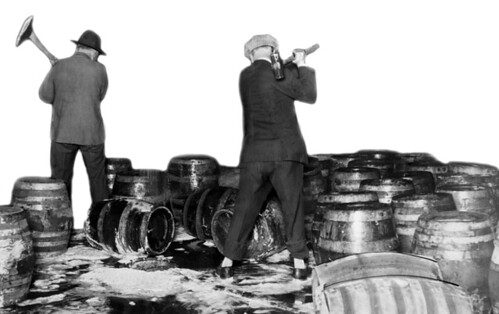
Consider a few of the parallels. The prohibitionists went after “Demon Rum,” while the tea party attacks Demon Government. The Anti-Saloon League preached that barrooms were destroying America’s moral fiber, while the new right declares that onerous taxation and excessive regulation are doing precisely the same thing. Carrie Nation smashed whiskey barrels, while today’s conservatives want to smash the welfare state. Addiction to spending, they might argue, is ultimately as destructive as addiction to alcohol.

Like the temperance movement of the last century, the tea party draws heavy support from Protestant evangelicals such as Walker himself, and their political playbook is a throwback as well. The prohibitionists were media-savvy opportunists, taking advantage of every opening to advance their cause.

When the United States entered World War I, they wasted no time demonizing beer as “Kaiser brew” and even accused Milwaukee’s producers of spreading “German propaganda.” When food shortages loomed during the conflict, the dry lobby convinced Congress to divert America’s grain supply from breweries and distilleries to less objectionable industries. The result was “wartime prohibition,” a supposedly temporary measure that went into effect in 1919 and soon gave way to the 18th Amendment. The national drought would last for 14 years.

It’s worth noting that America wasn’t alone in using the conflict of World War I to push anti-alcohol agendas. Like-minded measures in several countries led to similar alcohol prohibitions, many of which lasted far longer than ours, such as Australia, Canada, Finland, Hungry, Iceland, New Zealand, Norway and Russia. In each of those nations, temperance groups took advantage of wartime circumstances to push their plans on the rest of the populace in their respective places.

In much the same way that prohibitionists turned World War I to their advantage, the current crop of conservatives is making political hay from another temporary phenomenon: the global economic recession. The need for fiscal austerity has rarely been more obvious, but it’s being used as a pretext for advancing the new right’s legislative agenda.

We’re seeing that happen in most, if not every state, with anti-alcohol groups turning our nation’s economic adversity into an opportunity to raise taxes on beer, already the most heavily taxed consumer good (along with tobacco). The Marin Institute has even created propaganda showing the “worst” ten states, with “worst” meaning the states with the lowest taxes on beer, completely out of context and with no understanding whatsoever of why each individual’s states excise taxes are set where they are. Shortly after Governor Walker created Wisconsin’s deficit by giving tax cuts to the wealthy, Michele Simon of the Marin Institute tweeted that beer should make up the difference. “Dear Gov. Walker: Wisconsin has not raised its beer tax since 1969. At .06/gallon, among lowest in nation. Just one of many ideas.” If that’s not what Gurda was talking about, I don’t know what is. That’s using a grave political situation to further an unrelated agenda.

Walker began with a demand that public employees pay more for their pensions and health insurance – a necessary step to which they have agreed – and then proposed to strip them of their collective bargaining rights. That’s an epic non sequitur that makes sense only when you invoke tea party logic: If taxes are bad, then the people we pay with tax dollars must be brought to heel, even if it means freezing a new teacher at first-year wages until retirement.

But the new right’s agenda goes far beyond public employee unions. With solid majorities in the state Legislature, Walker first declared a budget emergency and then cut taxes by $140 million, which is equivalent to taking blood from a patient with severe anemia. In last week’s budget message, he pronounced the patient so sick that amputations are necessary. Walker’s juggernaut of tax cuts and service cuts, combined with his no-bid privatization plans, trends in one direction and one direction only: dismantling government one line item at a time, regardless of the consequences.

It is here, finally, that prohibitionism and tea party conservatism find common ground: Both are ideologies. They represent fixed, blinkered views of the world that focus on single issues and dismiss all other positions as either incomplete or simply wrong-headed. Get rid of alcohol, the prohibitionists promised, and the U.S. would become a nation of the righteous and a beacon of prosperity to the world. Just cut government to a minimum, the new right contends, and you will usher in a brave new era of freedom and opportunity.

And that’s how I see all of the neo-prohibitionist and anti-alcohol groups, as “ideologies.” All of the anti-alcohol groups that I’m aware of do everything in their power to punish alcohol companies because of their perceived sins and because they want to tell you and me how to live our lives. They do so without thinking through the consequences and overall use an “ends justify the means approach,” especially in the way they frame and distort their propaganda. Simply put, I believe that they think they know better than everybody else, there’s a certain smugness in their position; in its unwavering certainty, their righteousness that borders on religious fervor.

They’re convinced that there’s no free will, people are incapable of ignoring advertising, or knowing their limits when drinking. And while there are a few tragic figures who may fit that description, they’re the tiny minority that such groups are fixated on to make their case. The vast majority who drink alcohol do so responsibly and in moderation. Most people take personal responsibility for their actions, as they should. But personal responsibility rarely, if ever, figures into alcohol abuse if you listen only to anti-alcohol rhetoric and propaganda. It’s always the fault of the alcohol itself, and usually beer because it plays better to the people with money who fund such organizations (they drink wine after all). An op-ed piece in the UK Telegraph by Brendan O’Neil recently shed a light on the class issue in anti-alcohol efforts. If they’re not going after the children, then they’re preying on the weak-minded with the most effective advertising the world has ever wrought. Earlier this year, the hue and cry was because there were 3.5 minutes of beer commercial during the nearly four hours of the Super Bowl and — gasp — the little kiddies might see it.

But anti-alcohol rhetoric single-mindedly focuses on only the negative. I’ve never heard any of them say one word that was positive about any alcohol company. Even when Anheuser-Busch packaged cans of water and sent then to earthquake-ravaged Haiti, one anti-alcohol group criticized them for the deed, because they put their logo on the cans and sent out a press release (oh, the horror). Let no good deed go unpunished, indeed. That alone should convince us they’re idealogues.

I suspect they might say the same of me, but I understand and acknowledge that there are some people who should not drink. That such people can and do cause problems for themselves and often the people around them. I don’t write about it very much because I don’t have to; there’s plenty of lopsided anti-alcohol rhetoric already. I’m just trying to balance the conversation, though more often than not I feel like the lone voice in the wilderness.

But back to Wisconsin. My wife is a political news junkie, and she informs me that a careful reading of the facts reveals that Scott Walker’s entire political career has been in service to a single ideology: union busting. He apparently promised that was not his agenda throughout his campaign for governor, and the media swallowed that wholesale with few examining or reporting the discrepancy between what he said while campaigning and his entire career leading up to that point. In that, there’s yet another parallel between the new prohibitionists and the new political conservatives. Most mainstream news media also take the side of the well-funded anti-alcohol groups and parrot their propaganda without questioning it or providing any meaningful views from the other side of this debate.

As to Gurda’s comparisons, I think he’s right about anti-alcohol groups’ unwillingness to compromise and being self-righteous with “blinkered views of the world that focus on single issues and dismiss all other positions as either incomplete or simply wrong-headed.” That’s certainly been my experience. So as if there wasn’t enough reasons to support the protesters in Wisconsin, if this political test case is successful, not only will we see more unions busted in other states, but I suspect anti-alcohol groups are also closely watching this to see how they might use the same bullying tactics in furtherance of their own agenda. And that may be the scariest prospect of all. As usual, I’m with the Green Bay Packers on this one.

Filed Under: Beers, Editorial, News, Politics & Law Tagged With: History, Law, Prohibitionists, Wisconsin

When Common Sense Gives Way To Business Sense

March 3, 2011 By Jay Brooks

abita
First Anchor Brewing trademarked Steam Beer, but did so at a time when absolutely nobody else in the world made anything even remotely similar, so it was entirely understandable. As the years rolled on, and many brewers have been forced to call the same or similar type of beer a “California Common,” I can’t help but think it’s an idea whose time has passed. I know it’s too valuable, but personally I’d like to see them relinquish their hold over the name and allow the rest of the world to call it by its proper name.

Then Full Sailing Brewing came out with their genius stubbie bottles that they called Session Lager and Session Black. And that might have been the end of it, but as I understand it, they also trademarked “session beer” and related marks. No one objected, of course, because there’s nobody to object. “Session beer” was, and in my mind remains, a generic term so there really was no one to file an Amicus curiae or otherwise oppose the trademark. What I don’t understand is how an already established generic term can be appropriated for private business use. When a trade name becomes so common — remember Scotch tape? — that it becomes the generic word for it then it loses its status as a protected trademark, in effect a product of too much success. Other examples of generic words that used to be trade names include aspirin, escalator, heroin, kerosene, laundromat, linoleum, pilates, thermos, videotape and zipper, to name just a few. But session started out as a generic, loosely defined term. I love Full Sail, but hate the notion that they “own” the term “session beer.”

That brings us up to yesterday, when Abita Brewing of Louisiana sent a cease and desist letter to a local charity, claiming that they own the trademark on the term “pub crawl,” and have since 1999. According to the Baton Rogue Business Report:

An attorney representing the Abita Brewing Company has sent a cease-and-desist letter to a charity organizer, ordering him not to use the term “pub crawl” to refer to his events. Todd Owers III, an attorney with the New Orleans firm of Carver Darden, says Abita owns the Louisiana state trademark for “pub crawl” and that for Manu Kamat to use the term in referring to his events in downtown Baton Rouge is a clear infringement on the brewery’s rights. Kamat says he started organizing monthly bar tours across downtown Baton Rouge in December to benefit the New Orleans Council for Community and Justice. Participants pay a few dollars, which entitles them to drink specials at participating bars for the night. Kamat says he finds Abita’s actions “a little bully-ish.” David Blossman, president of Abita, says the brewery is trying to protect its rights. “We’re trying to work these things out amicably,” he says. Kamat says he got the letter from Owers on Feb. 18, the night of his most recent event. In the letter, Owers attached documents that show Abita filed an application to use the trade name “pub crawl” with the Secretary of State in July 1999 and renewed it for another 10 years in July 2009. Kamat says he’s seen the term “pub crawl” all across the U.S. and Europe and that Abita’s action is like trying to trademark the term “happy hour.” But Blossman says that Abita made the term “pub crawl” known across Louisiana and that the term is now synonymous with the brewery. Kamat says he’s a “huge fan” of Abita and is looking for ways to continue to have his events without further upsetting the popular local brewery. He’s dubbed the next event, set for March 25, a “bar golf.” But he won’t comply with one request from Abita—to transfer control of the domain name pubcrawlbr.com to the brewery.

Now I don’t live in Louisiana, but I still have to question the statement that “Abita made the term ‘pub crawl’ known across Louisiana and that the term is now synonymous with the brewery.” I’ve heard, and used, the term everywhere I’ve traveled, both here and abroad and I think you’d be hard pressed to convince me that it’s not a near universal term in the English-speaking world. I certainly have no such association between Abita and pub crawls. In 1999, when they apparently were granted a state trademark, again there would have been no one to oppose them or speak on behalf of such a generic term. My bet is nobody even realized they “owned” the term “pub crawl.” And while I know full well that trademark holders have an affirmative duty to vigorously defend their marks, I can’t see how this won’t be a dead loser in the goodwill department or for that matter what advantage there is to actually owning the trademark on a term most people already believe is generic in the first place.

UPDATE: In a swift and smart move, Abita president David Blossman today posted a note to their Facebook page reversing their position. Here’s an excerpt:

In the 1990s big corporate breweries began trying to mimic craft beers and take over the types of events smaller breweries like us had created. To protect the Pub Crawl for our fans we trademarked the name of the event in Louisiana only. Our intent was to prevent any confusion and to stop the big breweries from copying our success. Over the years, we’ve sent out letters asking others not to use the name Pub Crawl unless it is an Abita sponsored event.

We’ve heard from you today on this trademark issue and we agree. Your respect is far more important to us than two little words.

This morning we reached out to the New Orleans Council for Community and Justice and let them know we’ve changed our mind and our position on the trademark issue. We have offered and they have accepted our support of their next event, scheduled for March 25. Abita is proud of our history of charitable giving to our community through our fundraising brews and our commitment to non-profit organizations.

That’s a classy move, in my opinion. Few businesses can admit they’re wrong or at least admit an error in judgment. They appear to have listened to their customers and understood that their loyalty and respect was more important than being in the “right” legally.

Filed Under: Breweries, Editorial, News, Politics & Law Tagged With: Business, Law, Louisiana

When Zero Tolerance Makes Zero Sense

February 1, 2011 By Jay Brooks

cheerleader
There was a little item in the Brickbats section of Reason magazine for February about a high school cheerleader in Ohio who was suspended for two games. Why, you may ask? Because school officials found a photo of her on Facebook holding a beer at a family wedding. According to her own Mother, she wasn’t drinking it, just holding it. No matter, her school insists that even holding a bottle of beer violates their no-alcohol policy.

Where to begin? All by itself, it’s a rather absurd and silly incident, but what it represents is, I believe, much larger. It’s a little sad that school officials, with all the budget cuts schools are facing, even have time and the inclination to troll Facebook looking for school policy violations. But if it was at a family wedding, not a kegger, and her Mom was okay with whatever was going on (holding it for another adult?) and assures us nothing sinister was occurring, frankly that should have been the end of it. It should matter that it wasn’t even on school property, at a private, family event but believe it or not courts have actually ruled that schools can regulate a student’s behavior outside of school, which as a parent I find both frightening and infuriating. That’s not their job, it’s my job. Period. Education is their job.

But that’s the sort of nonsense zero tolerance causes. It ignores circumstances and common sense, creating results that have little to do with the spirit of the policy. It punishes the innocent indiscriminately, which could even lead to issues with authority for the students on the receiving end of such unjust treatment. Is that really the lesson we want to teach our children? Follow the letter of the law no matter how ridiculous or suffer the consequences. Don’t think for yourself or interpret, just obediently do what you’re told. No exceptions.

In theory, such a policy would mean I can’t ask my son to help carry groceries if one of the bags contain alcohol. (Or for my brethren in less fortunate states, where even beer in grocery stores is too dangerous and not permitted, how about carrying the beer from the state store or beer distributor.) Is that rational? Does it serve some higher purpose of education? Or does it further the demonization of alcohol and our already irrational fear of it? And what does it say about who controls our own children, when a school can override a parent’s choice of discipline. Parents have the ultimate responsibility for their child’s upbringing and welfare, but the school has the final say?

But there’s obviously nothing rational about alcohol in our society, as this incident so clearly reveals. Whenever it’s about beer, you can be sure decades of one-sided propaganda will create absurdist zero tolerance laws and policies that makes sense only to Franz Kafka.

Filed Under: Beers, Editorial, News, Politics & Law Tagged With: Law, Prohibitionists

BA Revises Craft Brewery Definition

January 3, 2011 By Jay Brooks

ba
Surprising no one who’s been paying attention, the Brewers Association today announced the revision of the definition of what it means to be a craft brewery, at least as far as the trade organization is concerned. In order to advocate for any specific group, it’s useful to know who is eligible to be a member. In 1976, Congress arbitrarily chose 2 million barrels for a tax differential and ever since the part of the definition that denoted a “small” brewery has been one making less than 2 million barrels annually.

From the BA press release:

In the BA’s craft brewer definition, the term “small” now refers to any independent brewery that produces up to 6 million barrels of traditional beer. The previous definition capped production at 2 million barrels.

The association cited several reasons for the change, including the recognition that “small” is a descriptive term relative to the overall size of the industry.

“Thirty-four years have passed since the original small brewers tax differential defined small brewers as producing less than 2 million barrels,” said Nick Matt, chair of the Brewers Association board of directors and chairman and CEO of F.X. Matt Brewing Company. “A lot has changed since 1976. The largest brewer in the U.S. has grown from 45 million barrels to 300 million barrels of global beer production.”

Matt added, “The craft brewer definition and bylaws now more accurately reflect and align with our government affairs efforts.” On the legislative front in 2010, the Brewers Association supported H.R. 4278/S. 3339, which sought to update the cap on an excise tax differential for small brewers to 6 million barrels per year in production for their first 2 million barrels.

Retaining Market Share for Craft Brewers

The industry’s largest craft brewer, The Boston Beer Company, is poised to become the first craft brewer to surpass 2 million barrels of traditional beer within the next few years. Loss of The Boston Beer Company’s production in craft brewing industry statistics would inaccurately reflect on the craft brewing industry’s market share.

In addition to Boston Beer, the current growth trajectory of other sizable BA member breweries places them on a course approaching the 2 million barrel threshold in the coming years.

“With this change to the craft brewer definition and BA bylaws, statistics will continue to accurately reflect the 30-year growth of market share for craft brewed beer,” said Matt. “Brewers Association statistics on craft brewers will continue to keep pace with the growth of the industry.”

Craft brewed beer market share is now approximately five percent of the U.S. beer industry, and growing. The BA has a stated mission of helping America’s craft brewers achieve more than five percent market share by 2013.

Matt added, “Rather than removing members due to their success, the craft brewing industry should be celebrating our growth.”

Filed Under: Breweries, Editorial, News, Politics & Law Tagged With: Business, Law, Taxes

The United States of Abstinence

December 13, 2010 By Jay Brooks

no-yes
There was yet another interesting piece in his month’s Playboy, an essay toward the back by Jessica Warner, the author of a recent book, All or Nothing: A Short History of Abstinence in America. Her essay, The United States of Abstinence: How Saying No Became A Distinctly American Practice, is definitely worth seeking out, but here’s the salient bits.

She begins by outlining the history of the idea of abstinence itself.

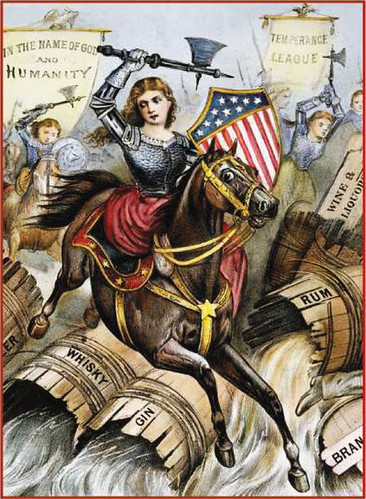
In no place other than America has the idea of abstinence — whether from food, drink, drugs or sex — taken root so deeply. Your federal tax dollars are currently being used to tell kids to put off sex until they enter into a “biblical marriage relationship.” The 1980s gave us Nancy Reagan and her antidrug mantra “Just say no.” A century earlier, Anthony Comstock crusaded to outlaw smut, penny dreadfuls and contraceptives, while Frances Willard led America’s women in a fight against demon rum. There have been so many crusades it is easy to forget that at one time, in the 17th and 18th centuries, abstinence meant only one thing to Americans: no sex until marriage. The idea that people should abstain from all other vices first appeared in the 1830s. What began as a campaign against distilled spirits suddenly morphed into a campaign against all forms of alcohol and then against all other “stimulants” — tea and coffee, pickles and spices, meats and apple pie, fancy clothes and double entendres, narcotics and soft mattresses, and, last but not least, sex with oneself.

She then quickly outlines the early influences of religions, and how different Christian denominations reacted differently to temperance sentiments based on their own interpretations of scripture, and specifically a peculiar idea, or doctrine, known by different names, such as “Christian perfection, sanctification, the second blessing or holiness.” That notion was essentially the “touchstone for abstinence in America.”

That idea leads adherents “to believe [people] can overcome sin in its entirety” and so “Christian perfection and abstinence are mutually reinforcing concepts of extreme behavior.” These manifest themselves into “a declaration of all-out war on sin.”

temperance-rider

Not every denomination feels as strongly, but the stronger that commitment, “the more likely it encourages abstinence.” And in places like Great Britain, for those same reasons the idea of abstinence never caught on in the same way. There, church leaders like John Wesley — of the Methodists — believed their “religion does not lie in doing what God has not enjoined or abstaining from what he hath not forbidden.”

Among modern evangelicals, the Pentecostals have the strongest commitment to Christian perfection and the highest rate of teetotalism, reaching 70 percent. In contrast, Baptist churches vary in their commitment to perfection, and their overall rate of teetotalism, under 55 percent, is correspondingly lower.

And the Baptists, who over the last few years have had their leaders come out very publicly against alcohol, are not all in agreement at any rate.

When the Southern Baptist Convention recently attempted to reaffirm its “total opposition to the manufacturing, advertising, distributing and consuming of alcoholic beverages,” its younger members objected, complaining that the resolution needlessly “draws a line in the sand.” For the modern evangelical, abstinence effectively means one thing only: saying no to sex outside marriage. There is a certain irony in all this, for in drawing the line at the sins of the sexual revolution, modern evangelicals have, quite despite themselves, returned to the status quo ante, that is, to the looser moral code of America before the great evangelical revivals of the 1800s. The interesting question is whether the list of taboos will continue to shrink and, if so, what will be the next thing to go.

To me, that’s a fascinating question as anti-alcohol groups appear to be gaining influence, especially politically, while younger generations seem generally less interested in their rhetoric. I’ll be very interested to read the entire book, All or Nothing: A Short History of Abstinence in America, which I ordered right after I finished the article.

Filed Under: Beers, Editorial, Politics & Law, Related Pleasures Tagged With: History, Law, Prohibitionists

Gilbert Arizona Declares Family & Beer Incompatible

December 5, 2010 By Jay Brooks

arizona
Thanks to Rob Fullmer (a.k.a. olllllo) at Beer PHXation for letting me know about this weirdness. Arizona recently relaxed its 2005 law regarding the sampling of beer, wine and spirits in grocery stores. But one town mayor, John Lewis of Gilbert, Arizona, isn’t happy that someone might be able to have an ounce or two of alcohol, especially if he happens to be in the vicinity of that tasting with his children.

According to the Arizona Republic, he thinks having his kids see people even sipping alcohol will have untold consequences and will undo his careful parenting to, presumably, keep his children from ever seeing demon alcohol anywhere throughout their lives. Here’s how the Gilbert mayor put it:

Lewis recently called on local grocers to “withstand the temptation” to offer free taste-testing of beer, wine and spirits at their stores. He said his family frequently shopped at Sam’s Club, for example, and he would not want his children to be in an atmosphere where alcohol could be sipped.

“For the image and preservation of what has been building Gilbert as a family-centered community, I hope we would not approve the sampling privileges in a family environment,” Lewis said.

I love Fullmer’s response in Beer PHXation:

Apparently Lewis, a grown man, finds the task of teaching his children about the responsible and legal enjoyment of alcohol (or the abstention of it for that matter) in the mere presence of adults tasting 1 or 2 ounces — while still maintaining a code of conduct suitable for the likes of a Sam’s Club — capable of erasing years worth of parental upbringing.

Having a family environment and an educational and informative environment for alcohol use are not mutually exclusive, in fact, the family environment IS the proper environment.

Precisely. What exactly is the problem with seeing adults having a simple taste of alcohol in a responsible, legal environment? This is the sort of modeling behavior we should want our kids to see. Lewis is so far off the deep end that he’s not just upset that his kids might actually see people drinking, he’s even bothered by “an atmosphere where alcohol could be sipped.” [my emphasis.] That means just the thought of there being a place where alcohol “could be sipped,” that there’s a possibility it might happen, is enough to worry him. That he could walk past even an empty roped off area, children in tow, is just too much for him to bear.

Not to get too personal, but according to his bio, he’s been married for 29 years, has 8 kids and 4 grandchildren. The likelihood that he even has impressionable little kids to actually walk through the grocery store with seems somewhat unlikely. So what he’s doing is just political grandstanding.

But his suggestion that somehow sampling alcohol is incompatible with family I find most offensive. I have a family. Countless brewers and beer lovers have families and see no contradiction with the two. That’s because there is no contradiction. Adults can enjoy a drink responsibly without damaging their family. People have being doing so for time immemorial. Why is is that some people believe that there is only one way to parent … their way?

When the bill passed the state legislature, only one representative voted against it, republican Andy Biggs, whose district includes — you guessed it — Gilbert. For him, it was all about the doughnuts, to wit:

“I go in with my kids to go get doughnuts at the Safeway,” Biggs said. “It’s one thing to walk through the liquor department to go to the bakery, but it’s something else when you’ve got people there serving alcoholic beverages.”

Seriously, it’s about his freedom to buy doughnuts without seeing alcohol? What exactly is wrong with these people? Why is it “something else,” whatever that even means, if there is beer sampling? I feel confident he could take another route to reach the bakery. But failing that, if it’s such a big deal couldn’t he just buy his doughnuts somewhere else? Nothing against Safeway, but they’re not exactly the gold standard for pastry.

It just feels like, based on their nonsensical comments, that this is personal for both politicians. And they’re using their positions to force their own issues with alcohol on the rest of the people they represent, in a way that feels out of touch with the average person’s opinion. Obviously, it’s hard to know how any community feels about so complex an issue as alcohol, but I feel confident in saying that a majority of people there do at least drink it.

The original impetus for the bill was to give local alcohol manufacturers a chance to compete locally by allowing Arizona beer and wines to be sampled. As you might expect, Todd Bostock, president of the Arizona Wine Growers Association, believes that “most families wouldn’t be offended by in-store sampling because they already consume alcohol at the dinner table in front of their children. The more kids are exposed to responsible drinking, it won’t be a foreign thing to them,” Bostock said. “It’s not taboo.”

It certainly shouldn’t be, and based on the 54-1 vote it would appear most people agree.

Filed Under: Beers, Editorial, Politics & Law Tagged With: Arizona, Law, Prohibitionists

« Previous Page
Next Page »

Find Something

Northern California Breweries

Please consider purchasing my latest book, California Breweries North, available from Amazon, or ask for it at your local bookstore.

Recent Comments

  • Bob Paolino on Beer Birthday: Grant Johnston
  • Gambrinus on Historic Beer Birthday: A.J. Houghton
  • Ernie Dewing on Historic Beer Birthday: Charles William Bergner 
  • Steve 'Pudgy' De Rose on Historic Beer Birthday: Jacob Schmidt
  • Jay Brooks on Beer Birthday: Bill Owens

Recent Posts

  • Beer In Ads #5186: Today’s The Day! March 26, 2026
  • Historic Beer Birthday: Bill Brand March 26, 2026
  • Historic Beer Bornday: Fraggle March 26, 2026
  • Beer In Ads #5185: Too Good To Last March 25, 2026
  • Beer In Ads #5184: It’s Here! March 25, 2026

BBB Archives

Feedback

Head Quarter
This site is hosted and maintained by H25Q.dev. Any questions or comments for the webmaster can be directed here.