Brookston Beer Bulletin

Jay R. Brooks on Beer

  • Home
  • About
  • Editorial
  • Birthdays
  • Art & Beer

Socialize

  • Dribbble
  • Email
  • Facebook
  • Flickr
  • GitHub
  • Instagram
  • LinkedIn
  • Pinterest
  • RSS
  • Twitter
  • YouTube

Powered by Genesis

Historic Beer Birthday: Herman Lackman

September 15, 2025 By Jay Brooks

lackman
Today is the birthday of Herman Lackman (September 15, 1826-June 30, 1890). He was born in Germany, but came to the U.S. as a young man, settling in Cincinnati, Ohio. He founded what would become the Herman Lackman Brewing Co. with a business partner, J.H. Sandmann, and the brewery continued until 1919, when prohibition closed it for good.

Apparently a fansite, Light Over Glass has a lot of information about the brewery, including some biographical information about Lackman:

HERMAN LACKMAN, brewer, a native of Thedinghausen, near Bremen, in Germany, was born Sept. 15, 1826. After he received the usual elementary education, he helped his father (a farmer by trade) work in the fields, until the age of twenty. Without the hope of advancement at home, he moved to America in 1847, and, while learning the language of the country, he stopped in Baltimore, Md. Where he got a job as a farm laborer. In 1849 he came to the West, and settled in Cincinnati. Just two days after his arrival, he found employment in a sawmill where he earned seventy-five cents to a dollar the day. He remained there for eighteen months, until September 1850, and then got a different job paying a monthly salary of thirty-five dollars working for Brauer Schaller & ship, where he spent five years driving a lumber wagon and later a beer wagon.

This certainly was a modest start, but Mr. Lackman managed horses well, possessing a powerful frame and being capable of great labor, and there was something in the man above his calling, and what it was became apparent in 1855, when, by investment of his earnings he became in a small way a brewer himself. Knowing no gateway to success except the one inscribed “hard work,” he applied himself diligently to business, rapidly increased his sales, and through sound methods, straightforward conduct and the ability to organize and carry on a large enterprise, he gained a fortune.

In 1855, Herman Lackman and J.H. Sandmann leased the brewery of Louis Schneider on Agusta Street. Lackman had worked for Foss-Schneider. In 1860 the operation was moved to the property located at Sixth and Stone Streets because they needed more room. Their new property had a beer celler that could hold about 500 barrels. With their expansion they were able to increase the brewery’s output from 2000 barrels in 1855 to approximately 6000 barrels in 1865.

In 1868 Lackman bought out Sandmann’s shares in the company and renamed it, The Herman Lackman, and in 1890, The Herman Lackman Brewing Company. J. H. Sandmann, having retired from the business in 1868, died in 1872, with the respect of all who knew him. Herman Lackman conducted the business alone, and, as said, became the real founder of the present company. Herman Lackman believed in “beer as an agent of good”. He held, however, that to accomplish this good it must be pure-made of the pure malt of barley and hops alone. His principles became known and became part of his beer making.

LackmanPlant

In the new building all modern methods of brewing are perfected. The company does its own milling. Its malt is made from the cream of the barley market. No steam arises from the brew kettle. The great engines move without noise or smoke. The vast ice machines are silently at work. Everything is as neat as the parlor of a painstaking house-wife, from floor to ceiling. Stone floors are clean and ceilings shine. Brasses are burnished and steel glitters.

With a model mill-house, brew-house, engine and boiler-house, whose cap-stone was laid three years after the founder’s death [see biographical sketch], and just that long after he had superintended the building of the foundations. In this building, except one small house, there is not an inch of wood. Stone, iron, steel and brass are its components. It is fireproof, and enduring, like the memory of the good man who planned it, whose four sons would carry out his designs.

One of them, Edward H. Lackman, has since followed his father to his long rest. He was the youngest son, an athlete and an enthusiast, like his brothers, in physical sports, but died early—not, however, before he had contributed his portion of loving labor to the enterprise with which the family name is identified.

Herman Lackman was prominent in city affairs, and served with honor in the school board, as president of the German Orphan’s Asylum, as president of the Third German Reformed Church, as trustee of the Bodmann’s Widows’ Home, director of the Sun Mutual Insurance Company, major in the militia, and president of the Cincinnati Brewers’ Association—which position his son Albert now so worthily fills. Open-hearted and charitable, thoroughly believing that his life work was one of real practical temperance reform. Mr. Lackman died in Cincinnati, June 30, 1890. His death, just as he was beginning extensive improvements to his business, was a public bereavement. He left four sons to take up his work where he left it off.

lackman-blotter

Also, Peared Creation has a short history of the brewery:

Herman Lackman was a native of Thedinghausen, Germany. At age 21 Herman saw no hope of progress in his country so he came to United States. From working in a railroad in Maryland to driving a lumber wagon and working in saw mills, Lackman did it all. It was in 1860 that Herman met up with another German immigrant, John H. Sandmann and together they established Herman-Lackman Brewery at Sixth and Stone Streets in Cincinnati.

After 8 years of doing business together, Lackman bought out Sandmann and took over majority stake in the brewery. At this point it was renamed the Herman Lackman, United States Brewery. In 1890, Lackman incorporates his business as Herman Lackman Brewing Co. In 1919, Lackman, like many brewers, found himself without a business due to the Volstead Act that ushered in the era of prohibition.

In 1933, after the repeal of Prohibition, the facility came to life again but it was bought by Hudepohl Brewing Co. and established as their second plant.

And Cincinnati Brewing History has yet another account:

“Herman Lackman and J. H, Sandmann leased the City Brewery of Louis Schneider in 1855. They paid $50 a month for the brewery on Augusta Street. They invested $1600 to buy horses and wagons. Sandmann was the brewer and Lackman delivered the beer. In 1858 because they needed more room, the partners bought property at Sixth and Stone Streets for $13,000. By 1860 they were able to move their new quarters there. Their new plant had a beer cellar that could hold 5000 barrels. They had increased the brewery’s output from 2,000 barrels in 1855 to about 6,000 barrels in 1865.

Having established a successful business, Lackman felt confident enough to return to Germany for an extended visit. When he came back to Cincinnati in 1868, after almost three years, he bought Sandmann’s share in the company and renamed it the Herman Lackman Brewing Company. He paid his former partner $80,000 in this transaction.

By 1870 the brewery produced 10,000 barrels of beer, a year later the plant was expanded. The beer cellars had a total capacity of 12,000 barrels. Lackman had a 98 foot well dug and the water was pumped by a windmill or by a steam engine in calm weather. The brewery advertised that the well yielded water that was free from all mineral deposits and crystal clear. In 1880 the brewery produced 30,000 barrels of beer. Eventually 5 wells were dug.

In 1890 with $600,000 capital stock the business was incorporated. The brewery produced 45,000 barrels the same year. The plant now included a mill house, brewery building, and an engine and boiler house. All were constructed of brick, iron, and stone to prevent fires. A statue of Gambrinus, the ‘god’ of beer stoop atop the brewery.

Herman Lackman died in 1893. His sons took over the corporation then. Albert Lackman became president. Interestingly, he did not drink beer because it did not agree with him. Henry F. Lackman served as vice-president. Brother Edward H. Lackman was also a company officer. They expanded the brewery and production reached 60,000 barrels a year in 1894. Only barley was used in making the beer, no rice or corn.

When the brewery closed in 1919, Albert was president and treasurer; Henry, vice-president; and Herman W. Lackman, another brother, was secretary. They brewed and bottled Golden Age, a pale beer, Old Honesty, and Old Lager beers.” Cincinnati Breweries, Robert J. Wimberg (1997)

Filed Under: Birthdays, Just For Fun Tagged With: History, Ohio

Historic Beer Birthday: George F. Klotter Jr.

August 25, 2025 By Jay Brooks

bellevue-ohio
Today is the birthday of George F. Klotter Jr. (August 25, 1835-1900?) His father, along with partner Johann G. Sohn, established the Hamilton Brewery in Cincinnati, Ohio in 1846. Klotter Sr. left that brewery, while Sohn continued alone, and Klotter started another brewery, the George Klotter Brewery in 1866 The following year George Jr., and his brother Louis, joined the brewery, and it was renamed the George Klotter and Sons Brewery, which it remained until 1888.

Bellevue-postcard

It 1888, it was renamed the Bellevue Brewery until finally closing in 1919.

Filed Under: Birthdays Tagged With: History, Ohio

Beer In Ads #5039: Bockbierfest

July 30, 2025 By Jay Brooks

Last year I decided to concentrate on Bock ads. Bock, of course, may have originated in Germany, in the town of Einbeck. Because many 19th century American breweries were founded by German immigrants, they offered a bock at certain times of the year, be it Spring, Easter, Lent, Christmas, or what have you. In a sense they were some of the first seasonal beers. “The style was later adopted in Bavaria by Munich brewers in the 17th century. Due to their Bavarian accent, citizens of Munich pronounced ‘Einbeck’ as ‘ein Bock’ (a billy goat), and thus the beer became known as ‘Bock.’ A goat often appears on bottle labels.” And presumably because they were special releases, many breweries went all out promoting them with beautiful artwork on posters and other advertising.

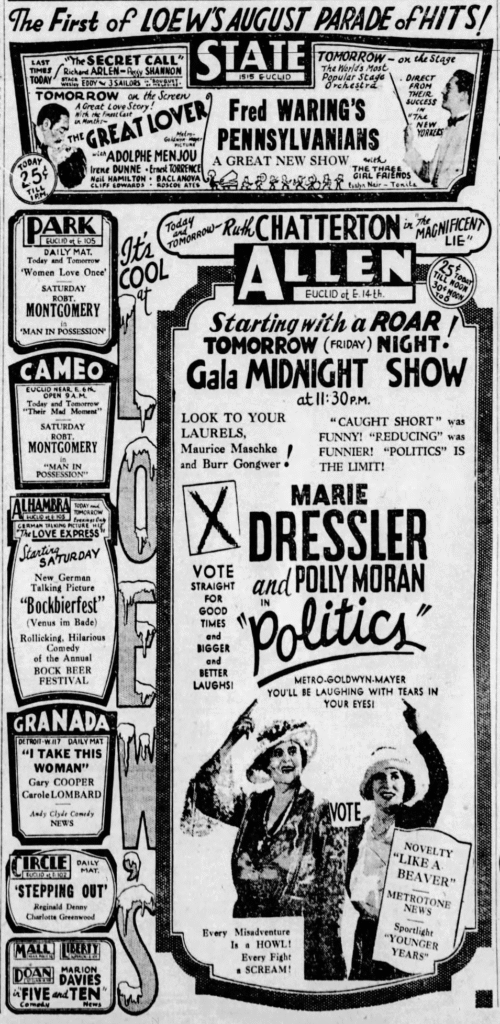
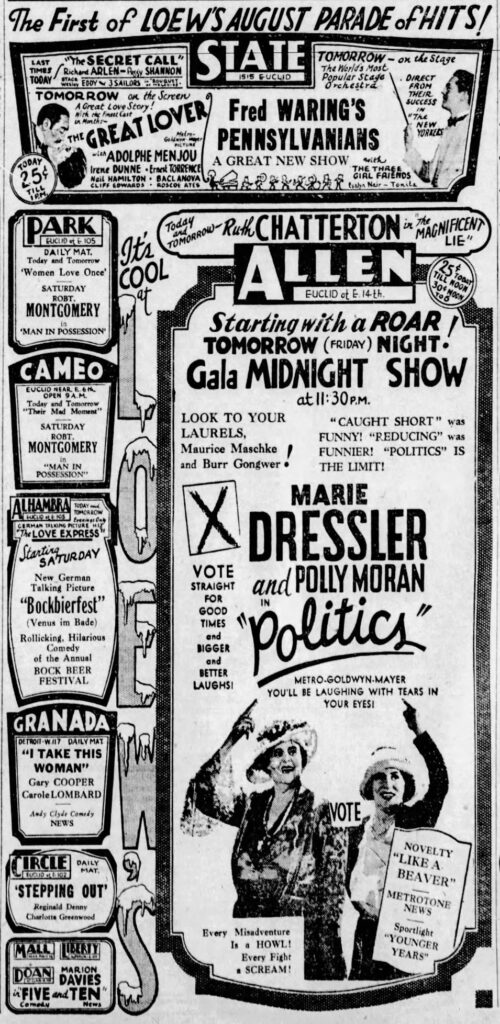
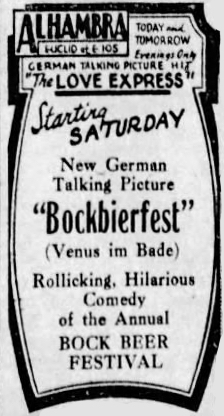
Wednesday’s ad is not for an actual beer, but instead is something Bock related. As we move increasingly past the typical bock beer season, the number of unique ads are becoming harder to find, and today only this odd little gem stood out. This ad is for films being shown in Cleveland, Ohio, and presumably the various theaters have a single owner since the one ad has listings for eight different theaters in different locations. The ad was published on July 30, 1931 in The Plain Dealer, of Cleveland, Ohio. The one that stood out was the Alhambra Theatre, which was located at 10403 Euclid Ave. This ad ran on a Thursday and was promoting a new film imported from Germany entitled “Bockbierfest,” released the previous year in Europe. Bockbierfest was about to debut in three days, on Saturday. The ad refers to the novie as a “Rollicking, Hilarious Comedy of the annual Bock Beer Festival.”

Here’s a close up of the listing from the Alhambra:

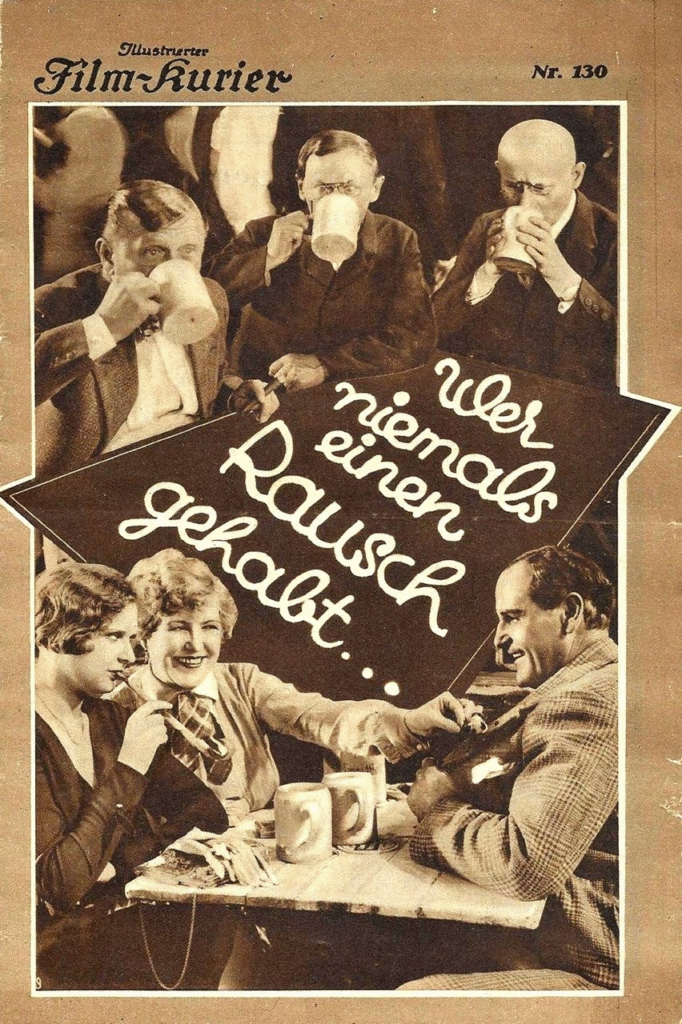
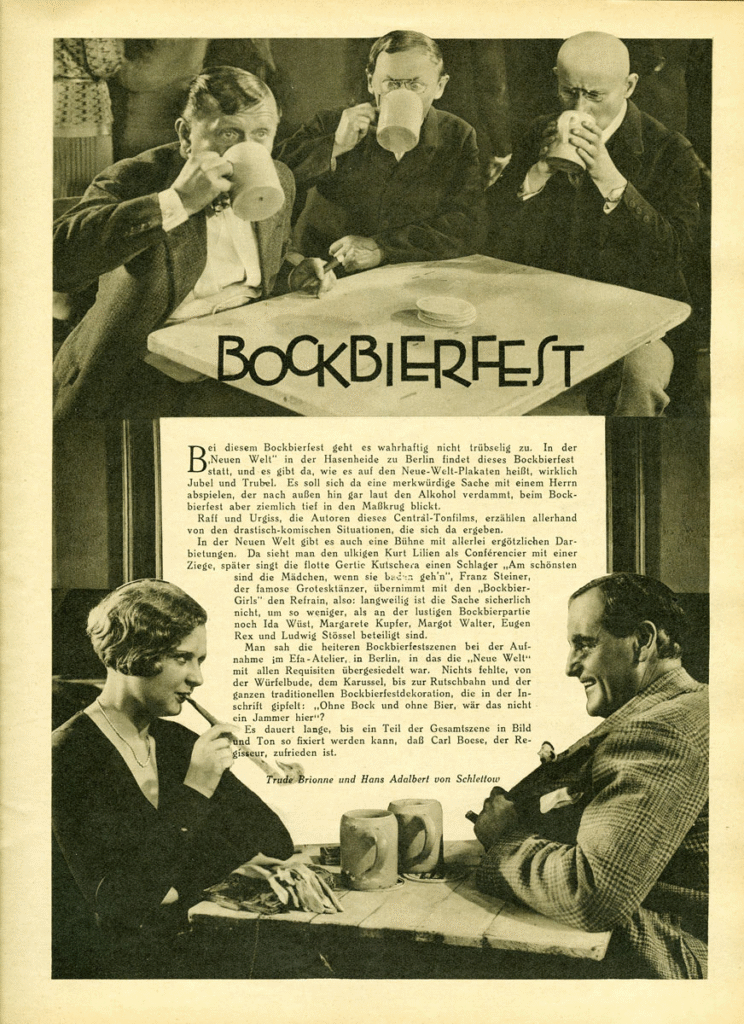
Bockbierfest was not a film I’d ever heard of before, so I did a little googling to see what I could find. Several websites give the following synopsis:

Underwear manufacturer Livius Heintze is a vehement anti-alcoholic and thus is very much against the marriage of his daughter Hedwig to the brewery owner Raumert. Heintze’s second, illegitimate daughter Emmi also wants to give her father a heart attack by marrying the hops merchant Seidl.

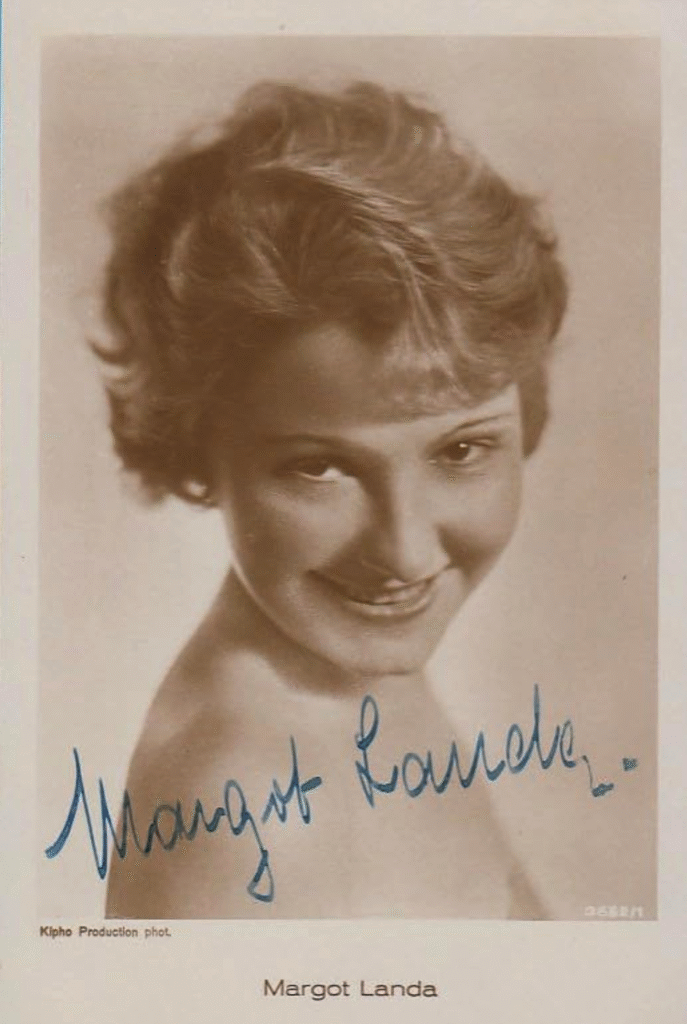
From what I can gather it was only shown in German and the only copy I could find for sale online had no subtitles or dubbing available. It starred Carl Boese, Ludwig Stössel, Margarete Kupfer and Margot Landa, none of whom I was familar with.

The website SIMKL also gives some information about the film:

Bock Beer Fest (1930) – A German Comedy Classic

Released in 1930, Bock Beer Fest is a German comedy film directed by Carl Boese. This early talkie is a light-hearted, entertaining movie that showcases the director’s skill in blending humor and wit.

The film follows the story of a group of friends who try to outdo each other in a series of comedic misadventures. With its witty dialogue and physical comedy, Bock Beer Fest is a hilarious portrayal of friendships and the chaos that ensues when they get together.

What makes this film stand out is its historical significance. As one of the earliest German talkies, Bock Beer Fest showcases the early days of sound in cinema. The film’s direction and cinematography are noteworthy, highlighting Boese’s expertise in capturing the essence of the era.

Interesting Facts:

  • Bock Beer Fest was one of the first German films to use synchronized sound, making it a milestone in the country’s cinematic history.
  • The film’s title, “Bockbierfest,” refers to a traditional German beer festival, which is a central theme throughout the movie.

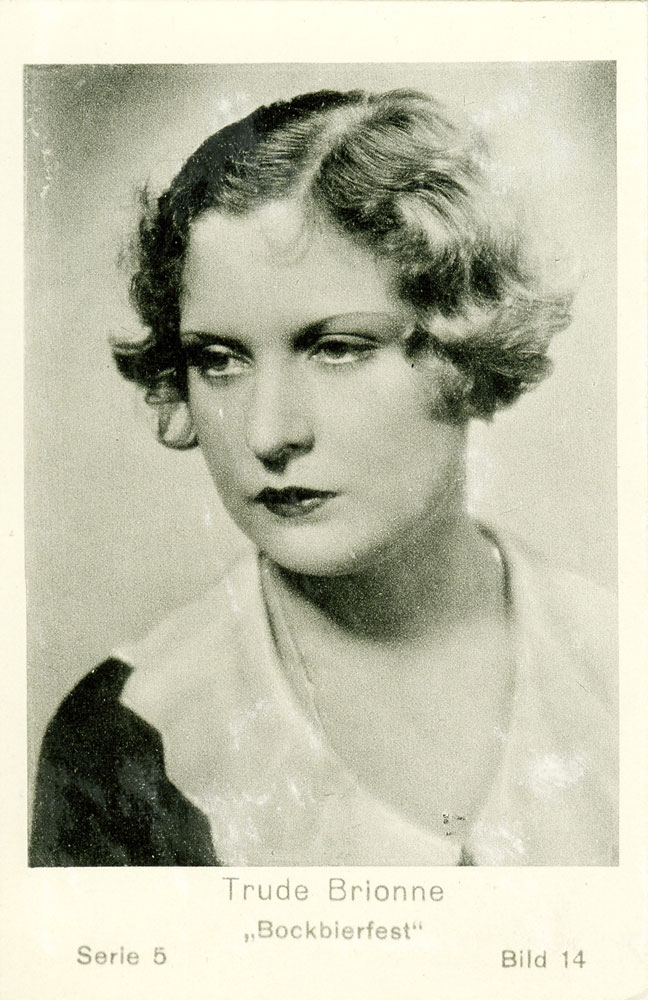
Trude Brionne played “Emmi – ihre Tochter”
And Margot Landa starred as “Hedwig – beider Tochter”

You can also watch it in German, in two parts, on YouTube. Here are links for Part 1 and Part 2.

Filed Under: Art & Beer, Beers, Just For Fun, Related Pleasures Tagged With: Advertising, Bock, Film, Germany, History, Movies, Ohio

Beer In Ads #5012: It’s A Sign Of Spring

June 30, 2025 By Jay Brooks

Last year I decided to concentrate on Bock ads. Bock, of course, may have originated in Germany, in the town of Einbeck. Because many 19th century American breweries were founded by German immigrants, they offered a bock at certain times of the year, be it Spring, Easter, Lent, Christmas, or what have you. In a sense they were some of the first seasonal beers. “The style was later adopted in Bavaria by Munich brewers in the 17th century. Due to their Bavarian accent, citizens of Munich pronounced ‘Einbeck’ as ‘ein Bock’ (a billy goat), and thus the beer became known as ‘Bock.’ A goat often appears on bottle labels.” And presumably because they were special releases, many breweries went all out promoting them with beautiful artwork on posters and other advertising.

Monday’s ad is for Lisner Bock Beer, which was published on June 30, 1915. This one was for the Simon Linser Brewing Co. of Zanesville, Ohio, which was originally founded in 1846. This ad ran in the Times Recorder, also of Zanesville, Ohio.

Filed Under: Art & Beer, Beers, Breweries, Just For Fun Tagged With: Advertising, Bock, History, Ohio

Beer In Ads #4999: Moerlein Bock Beer

June 15, 2025 By Jay Brooks

Last year I decided to concentrate on Bock ads. Bock, of course, may have originated in Germany, in the town of Einbeck. Because many 19th century American breweries were founded by German immigrants, they offered a bock at certain times of the year, be it Spring, Easter, Lent, Christmas, or what have you. In a sense they were some of the first seasonal beers. “The style was later adopted in Bavaria by Munich brewers in the 17th century. Due to their Bavarian accent, citizens of Munich pronounced ‘Einbeck’ as ‘ein Bock’ (a billy goat), and thus the beer became known as ‘Bock.’ A goat often appears on bottle labels.” And presumably because they were special releases, many breweries went all out promoting them with beautiful artwork on posters and other advertising.

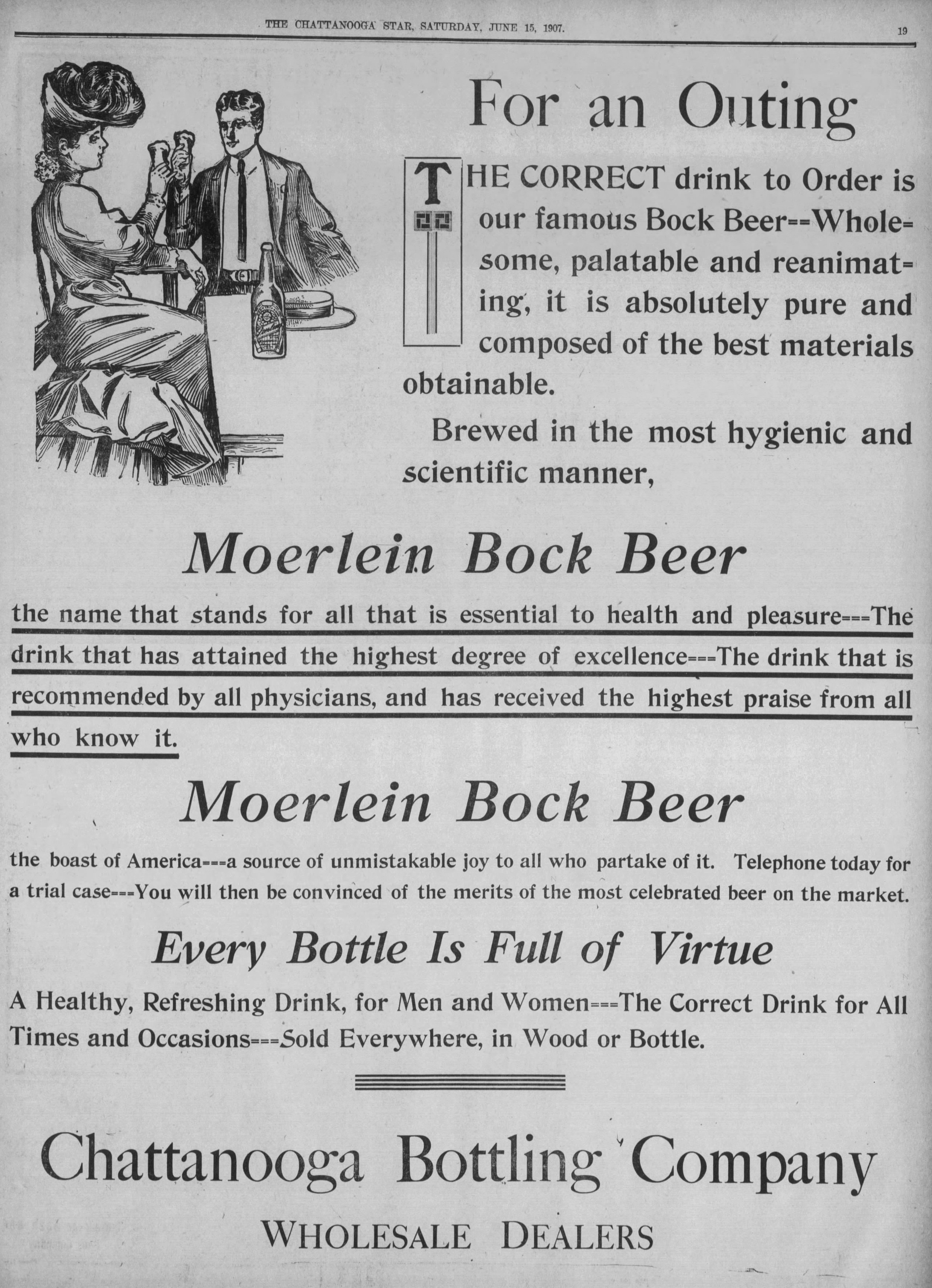
Sunday’s ad is for Christian Moerlein’s Bock Beer. The ad was published on June 15, 1907. This one was for the Christian Moerlein Brewing Co., which was located in Cincinnati, Ohio and was originally founded in 1853. This ad ran in The Chattanooga Star, also of Chattanooga, Tennessee.

Filed Under: Art & Beer, Beers, Breweries, Just For Fun Tagged With: Advertising, Bock, History, Ohio, Tennessee

Beer In Ads #4983: Refresh Yourself With Delicious Bock Beer

May 28, 2025 By Jay Brooks

Last year I decided to concentrate on Bock ads. Bock, of course, may have originated in Germany, in the town of Einbeck. Because many 19th century American breweries were founded by German immigrants, they offered a bock at certain times of the year, be it Spring, Easter, Lent, Christmas, or what have you. In a sense they were some of the first seasonal beers. “The style was later adopted in Bavaria by Munich brewers in the 17th century. Due to their Bavarian accent, citizens of Munich pronounced ‘Einbeck’ as ‘ein Bock’ (a billy goat), and thus the beer became known as ‘Bock.’ A goat often appears on bottle labels.” And presumably because they were special releases, many breweries went all out promoting them with beautiful artwork on posters and other advertising.

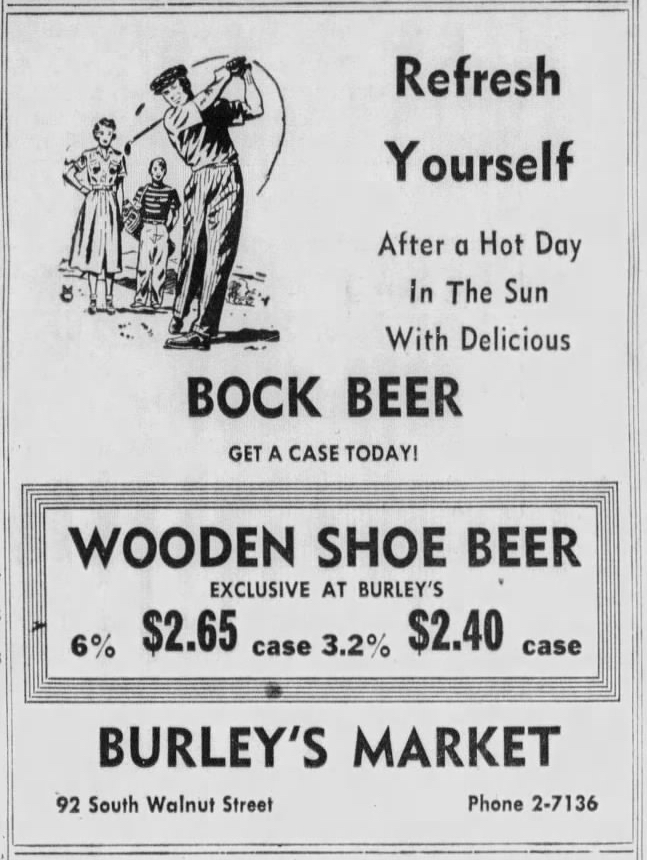
Wednesday’s ad is for Wooden Shoe Beer. The ad was published on May 28, 1953. This one was for the Wooden Shoe Brewing Co. of Minster, Ohio, which was originally founded in 1869 by Franz Lange, though it became known by the Wood Shoe name after 1939 until it closed in 1954. This ad ran in the Chillicothe Gazette, of Chillocothe, Ohio. I don’t think of bock as beer that goes well with athletics, so the text for this ad is a little odd: “Refresh Yourself After a Hot Day In The Sun With Delicious Bock Beer.” Um, no thanks. I also love how he brought his family along while he plays golf. The son, presumably, is carrying his clubs, but the wife? Is she just watching him play? Oh, 1950s, you were a weird time.

Filed Under: Art & Beer, Beers, Breweries, Just For Fun Tagged With: Advertising, Bock, History, Ohio

Beer In Ads #4981: Christian Moerlein’s Bock Beer

May 26, 2025 By Jay Brooks

Last year I decided to concentrate on Bock ads. Bock, of course, may have originated in Germany, in the town of Einbeck. Because many 19th century American breweries were founded by German immigrants, they offered a bock at certain times of the year, be it Spring, Easter, Lent, Christmas, or what have you. In a sense they were some of the first seasonal beers. “The style was later adopted in Bavaria by Munich brewers in the 17th century. Due to their Bavarian accent, citizens of Munich pronounced ‘Einbeck’ as ‘ein Bock’ (a billy goat), and thus the beer became known as ‘Bock.’ A goat often appears on bottle labels.” And presumably because they were special releases, many breweries went all out promoting them with beautiful artwork on posters and other advertising.

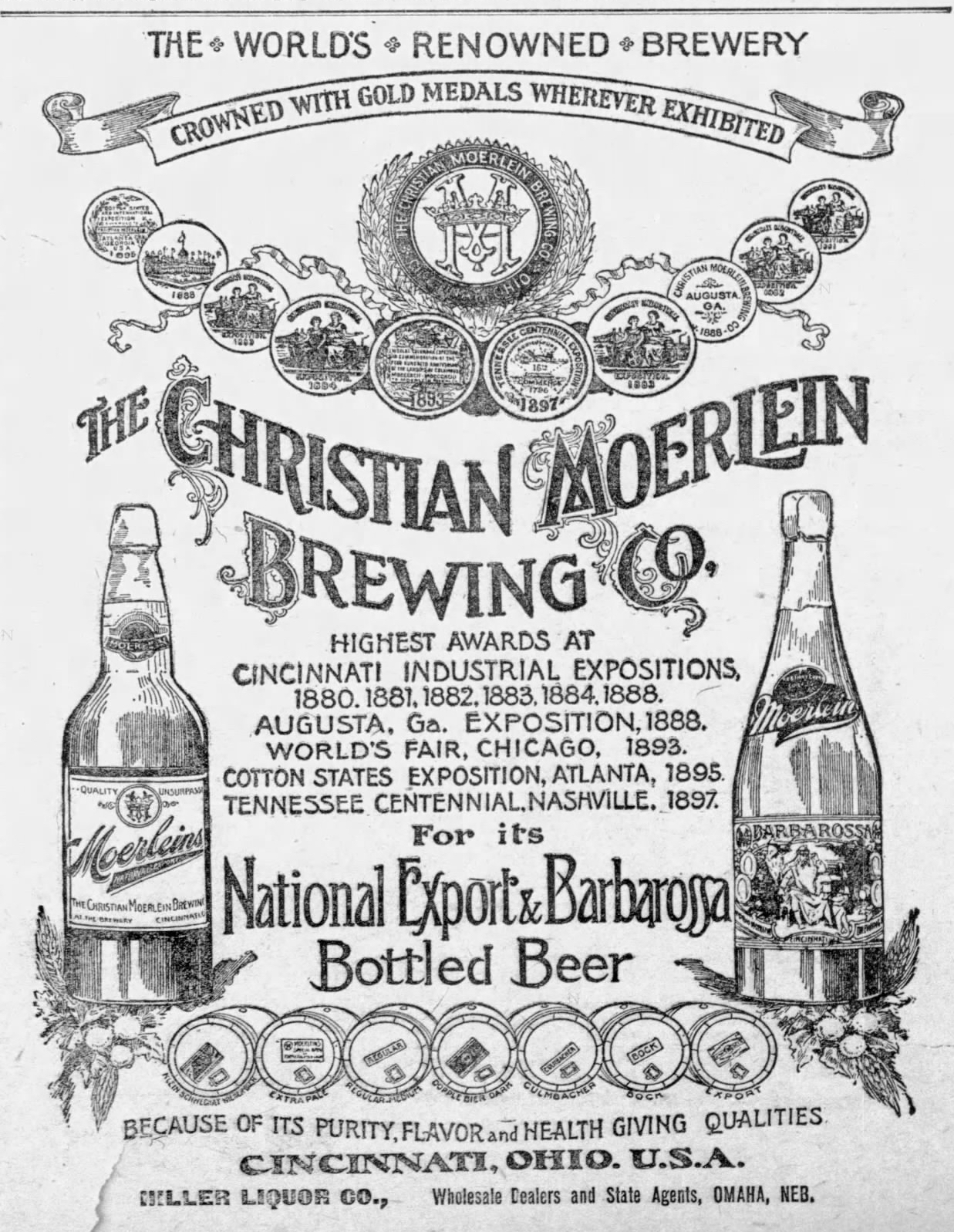
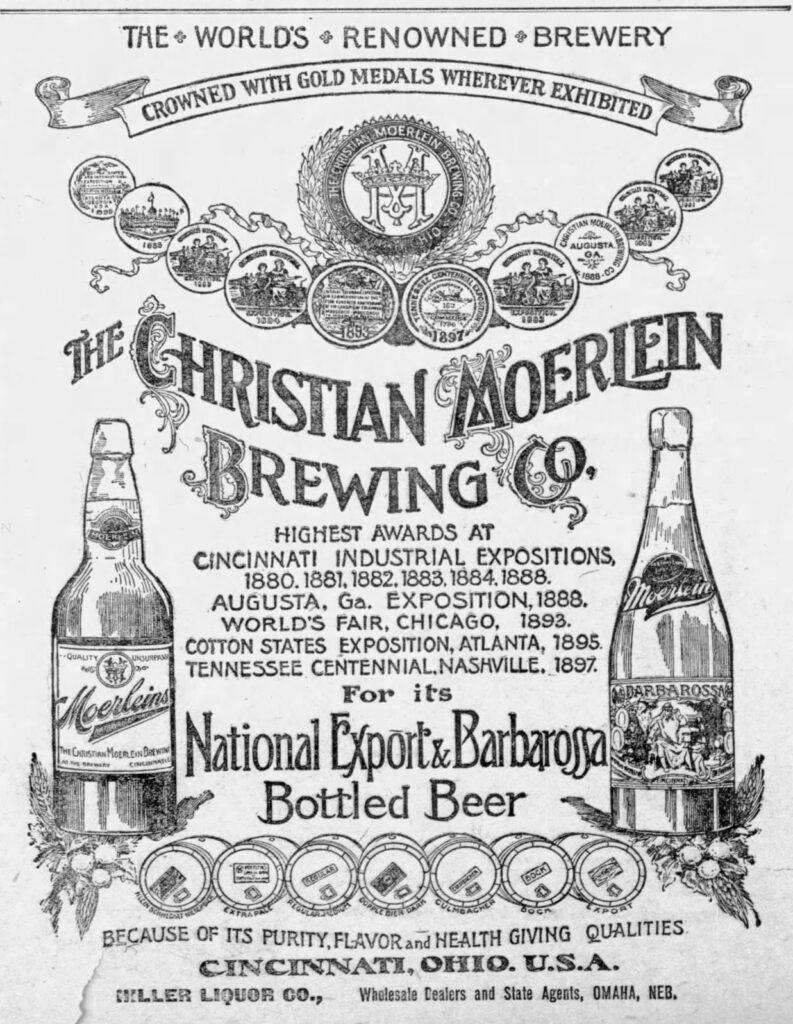
Monday’s ad is for Christian Moerlein’s Bock Beer. The ad was published on May 26, 1903. This one was for Christian Moerlein Brewing Co. of Cincinnati, Ohio, which was originally founded in 1853. This ad ran in the Omaha World Herald, of Omaha, Nebraska. The ad is promoting all of their beers, and it’s hard to see, but on the seven wooden barrels along the bottom there’s a different style on each one, with the second from the right listing their “Bock.”

Filed Under: Art & Beer, Beers, Breweries, Just For Fun Tagged With: Advertising, Bock, History, Nebraska, Ohio

Beer In Ads #4976: Brucks Bock Beer

May 21, 2025 By Jay Brooks

Last year I decided to concentrate on Bock ads. Bock, of course, may have originated in Germany, in the town of Einbeck. Because many 19th century American breweries were founded by German immigrants, they offered a bock at certain times of the year, be it Spring, Easter, Lent, Christmas, or what have you. In a sense they were some of the first seasonal beers. “The style was later adopted in Bavaria by Munich brewers in the 17th century. Due to their Bavarian accent, citizens of Munich pronounced ‘Einbeck’ as ‘ein Bock’ (a billy goat), and thus the beer became known as ‘Bock.’ A goat often appears on bottle labels.” And presumably because they were special releases, many breweries went all out promoting them with beautiful artwork on posters and other advertising.

Wednesday’s ad is for Brucks Bock Beer. The ad was published on May 21, 1937. This one was for the Bruckmann Brewing Co. of Cincinnati, Ohio, which was originally founded in 1856 by brothers Johann and Frederick Bruckmann as the Cumminsville Brewery. After Prohibition they bought out the Ohio Union Brewing Co.and operated it as a second brewing facility until 1949, and both were renamed the Bruckmann Co. after 1919. This ad ran in the Advocate Messenger of Danville, Kentucky.

Filed Under: Art & Beer, Beers, Breweries, Just For Fun Tagged With: Advertising, Bock, History, Kentucky, Ohio

Beer In Ads #4975: Sold Out … So What Am I Going To Do Now?

May 20, 2025 By Jay Brooks

Last year I decided to concentrate on Bock ads. Bock, of course, may have originated in Germany, in the town of Einbeck. Because many 19th century American breweries were founded by German immigrants, they offered a bock at certain times of the year, be it Spring, Easter, Lent, Christmas, or what have you. In a sense they were some of the first seasonal beers. “The style was later adopted in Bavaria by Munich brewers in the 17th century. Due to their Bavarian accent, citizens of Munich pronounced ‘Einbeck’ as ‘ein Bock’ (a billy goat), and thus the beer became known as ‘Bock.’ A goat often appears on bottle labels.” And presumably because they were special releases, many breweries went all out promoting them with beautiful artwork on posters and other advertising.

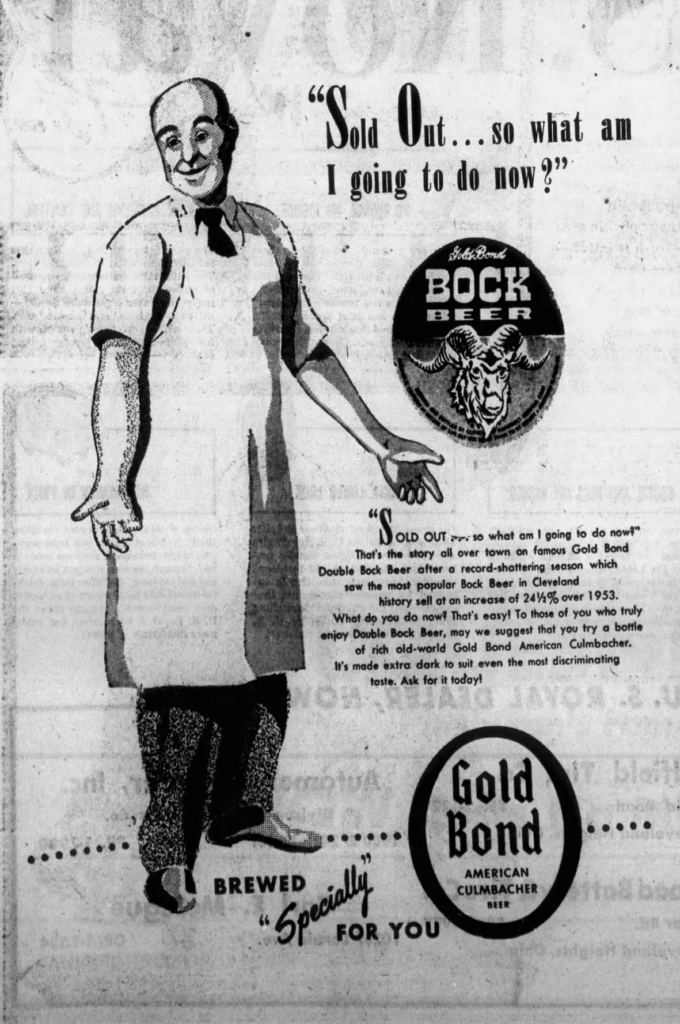
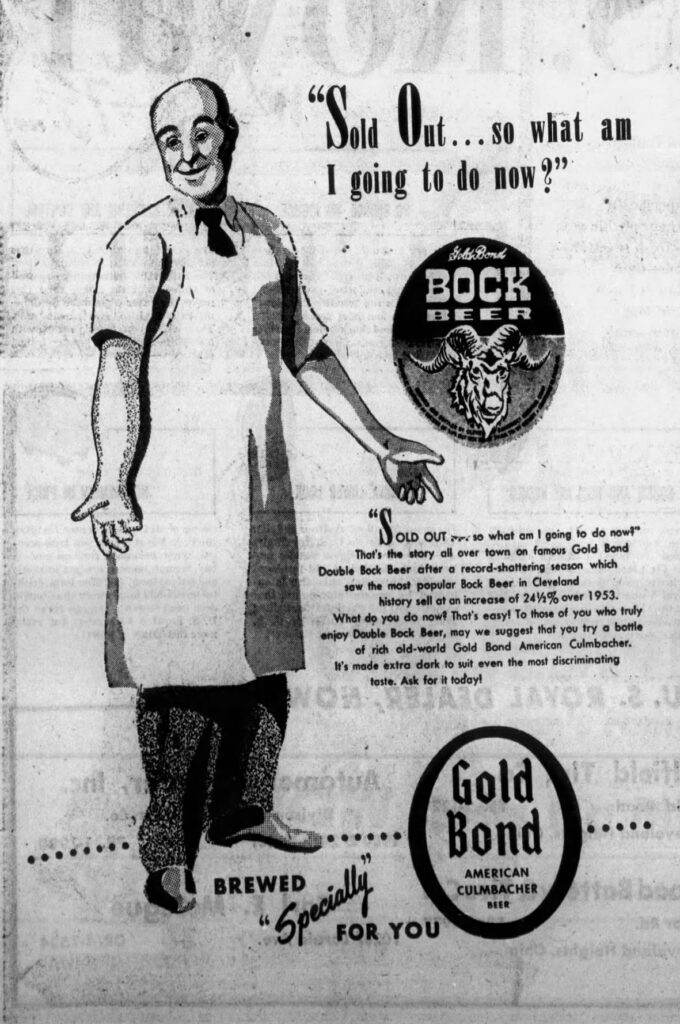
Tuesday’s ad is for Gold Bond Bock Beer. The ad was published on May 20, 1954. This one was for the Cleveland-Sandusky Brewing Corp. of Cleveland, Ohio, which was originally founded in 1904 as the Fishel Brewing Co. This ad ran in the Cleveland Press, also of Cleveland, Ohio.

Filed Under: Art & Beer, Beers, Breweries, Just For Fun Tagged With: Advertising, Bock, History, Ohio

Beer In Ads #4957: I Boom Mansfield Bock Beer

May 2, 2025 By Jay Brooks

Last year I decided to concentrate on Bock ads. Bock, of course, may have originated in Germany, in the town of Einbeck. Because many 19th century American breweries were founded by German immigrants, they offered a bock at certain times of the year, be it Spring, Easter, Lent, Christmas, or what have you. In a sense they were some of the first seasonal beers. “The style was later adopted in Bavaria by Munich brewers in the 17th century. Due to their Bavarian accent, citizens of Munich pronounced ‘Einbeck’ as ‘ein Bock’ (a billy goat), and thus the beer became known as ‘Bock.’ A goat often appears on bottle labels.” And presumably because they were special releases, many breweries went all out promoting them with beautiful artwork on posters and other advertising.

Friday’s ad is for Renner & Weber Bock Beer and was published May 2, 1912. The brewery was the Renner & Weber Brewing Co. of Mansfield, Ohio, which was originally founded in 1855. This ad ran in The News Journal, also of Mansfield, Ohio. I’m still not entirely sure about what the text means above the photo of the brewery, which reads: “I Am Glad to See This Building in Mansfield. I Boom Mansfield by Drinking Mansfield Beer.”

Filed Under: Art & Beer, Beers, Breweries, Just For Fun Tagged With: Advertising, Bock, History, Ohio

« Previous Page
Next Page »

Find Something

Northern California Breweries

Please consider purchasing my latest book, California Breweries North, available from Amazon, or ask for it at your local bookstore.

Recent Comments

  • Bob Paolino on Beer Birthday: Grant Johnston
  • Gambrinus on Historic Beer Birthday: A.J. Houghton
  • Ernie Dewing on Historic Beer Birthday: Charles William Bergner 
  • Steve 'Pudgy' De Rose on Historic Beer Birthday: Jacob Schmidt
  • Jay Brooks on Beer Birthday: Bill Owens

Recent Posts

  • Historic Beer Birthday: George W.C. Oland August 23, 2026
  • Historic Beer Birthday: Carl Funke August 22, 2026
  • Historic Beer Birthday: Benedict Sigg August 22, 2026
  • Beer In Ads #5327: Bock Bier, A Oldbairisch Dirndl Un a luschdiger Bua August 21, 2026
  • Historic Beer Birthday: Christian Diehl August 21, 2026

BBB Archives

Feedback

Head Quarter
This site is hosted and maintained by H25Q.dev. Any questions or comments for the webmaster can be directed here.