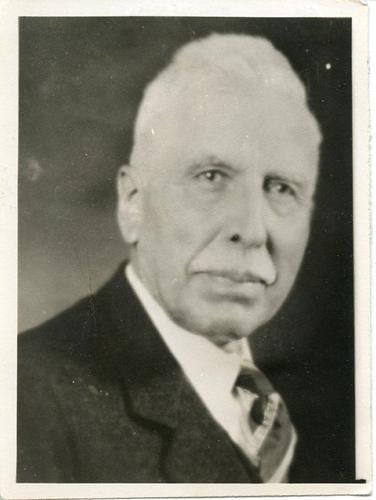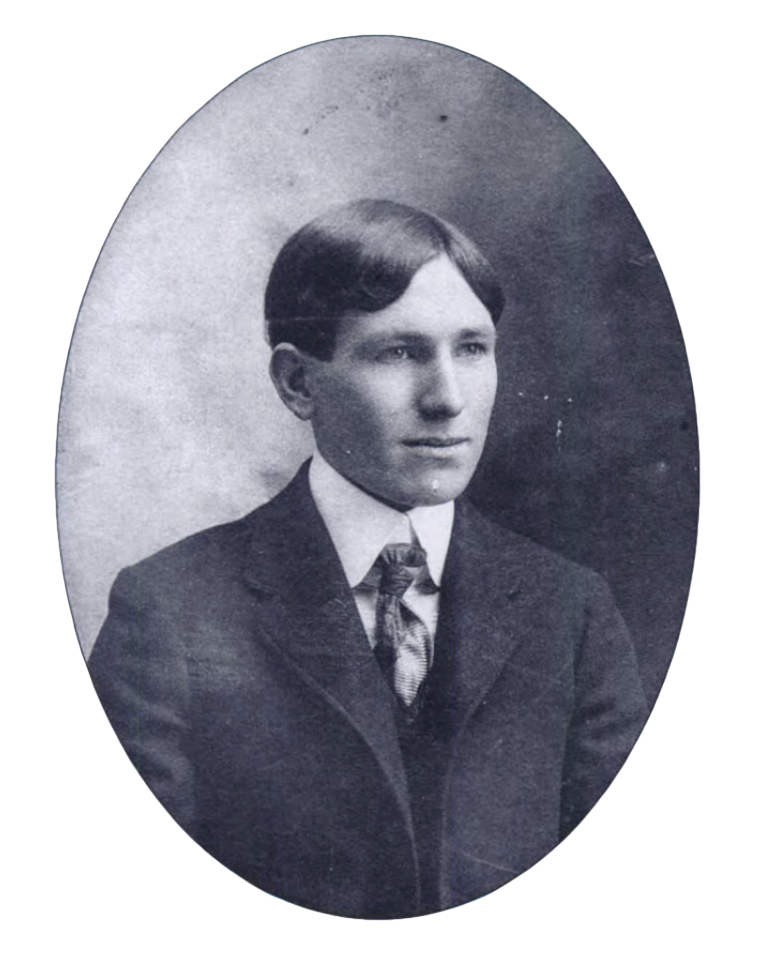
Today is the birthday of Louis F. Neuweiler (April 28, 1848-1929). He was born in Württemberg, Germany, and his family was in the brewing business. He came to the U.S., first to Philadelphia, where he worked at local breweries there and also met his wife. In 1891, he moved to Allentown, where he formed a partnership with Benedict Nuding, who had started the Germania Brewery there in 1875 or 78 (sources differ). When they started their partnership, the brewery name was changed to the Nuding Brewing Co, but after Neuweiler bought out Nuding in 1900, it became the Louis F. Neuweiler & Son Brewery, which it remained until finally closing for good in 1968.
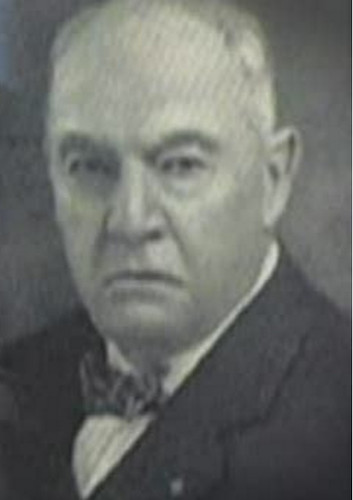
Here’s a short biography from Find-a-Grave:
Born into a family of brewers, he immigrated to America and settled for a time in the Philadelphia area. While in Philadelphia he met his wife Sophia. They had 16 children. They relocated to Allentown, PA in 1891. He formed a brewing partnership with longtime brewer Benedict Nuding but bought him out in 1900. In 1906 his son Charles joined the brewery and the business became known as L.F. Neuweiler & Son. The “new” Neuweiler Brewery was opened on April 28, 1913 at the corner of Front and Gordon Streets in Allentown. His son Louis joined the family business and the company became known as Louis F. Neuweiler & Sons. Their slogan was “Nix Besser” meaning “none better”. After Louis died in 1929 the business was run by Charles Neuweiler. Neuweiler beers were regional best sellers until they went out of business in 1968.
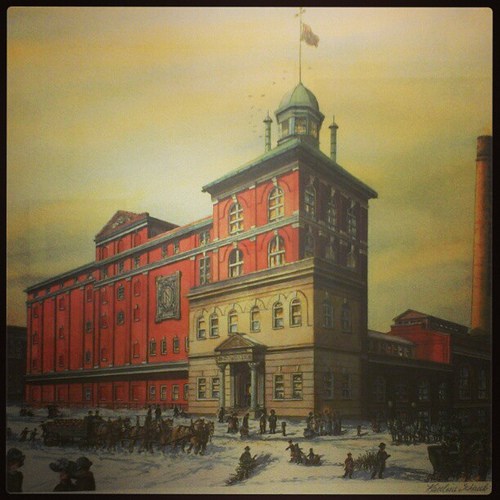
This story of the brewery is from a local Allentown newspaper, The Morning Call, from 2004:
Louis Neuweiler came to Allentown in 1891. Beermaking then was more than 100 years old in the Valley, its roots going back to the Moravian brewers in Bethlehem. Neuweiler hooked up with longtime brewer Benedict Nuding, whose business was at Seventh and Union streets. In 1900, Neuweiler bought out Nuding. In 1906, he took his oldest son, Charles, into the business that became L.F. Neuweiler & Son.
The Seventh Street location was too small for expansion, so in 1911 the Neuweilers purchased 4.5 acres at Front and Gordon streets and hired Philadelphia architects Peukert and Wunder to build the brewery. It got its water from an underground lake 900 feet below. Neuweiler ordered his own generators for electric power and had separate wells drilled.
Neuweiler opened at this location on April 28, 1913. That day, son Louis P. entered the business and its name became Louis F. Neuweiler & Sons, a name it would retain until 1965. (Louis P. Neuweiler later left the family business and became a local banking executive at Merchants National Bank.)
Neuweiler’s truly was a family operation. Charles Neuweiler sometimes drove the horse-drawn wagon to Bethlehem loaded with barrels. The women in the family kept the books.
Neuweiler’s also was something of an absolute monarchy. Generous to his family, Louis F. Neuweiler had a temper and little patience with those he regarded as lesser mortals. He once ripped the telephone out of the wall in frustration and told the operator she could go to hell when she couldn’t understand the phone number he was asking for.
Louis F. died in 1929. It was during Prohibition and Neuweiler’s was brewing only near beer with 3.2 percent alcohol and making mixers under the names Purity and Frontenac Pale. In the early 1930s, Charles Neuweiler turned down an offer to buy the brewery for $500,000 from gangster/bootlegger Arthur Flegenheimer, aka Dutch Schultz. According to son Theodore Neuweiler, his father said, “We have always made honest beer,” and ordered Schultz off the property.
At first, the post-Prohibition years were good for Neuweiler’s. Its slogan “nix besser,” none better, was shared across the community. But by the early 1960s it found itself trapped between the growing market share of the beer giants of the Midwest and the growing preference for its lighter product.
On May 31, 1968, Neuweiler’s closed its doors for the last time, $800,000 in debt.
Over the years, some of the equipment was sold. One of the stainless steel brewing tanks ended up at the Milford Park campmeeting grounds in Old Zionsville to be used for water storage.
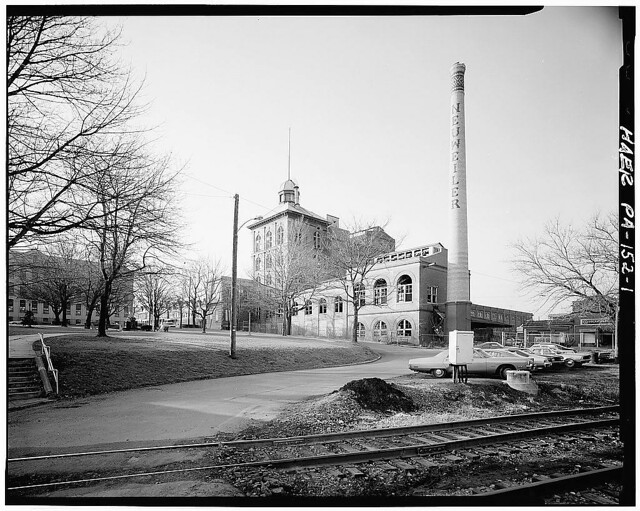
This is a translation of his German Wikipedia page:
Neuweiler was born as the son of a family of beer brewers. He emigrated to the United States and began to work as a brewer in Philadelphia . Within a few years he obtained the title of a Braumeister. In 1891 he met the businessman and hotelier Benedict Nuding, who had founded the Germania Brewery in Allentown in 1878.
Neuweiler became Nuding’s business partner. Together, they managed the brewery with success – until 1900 they already reached an annual output of 20,000 barrels . When Nuding retired in the same year, Neuweiler took over his shares and moved his sons into the company’s business during the following years. In 1925 the name Louis F. Neuweiler’s Sons, valid until the brewery was closed, was chosen for the brewery.
The brewery continued to be successful. In 1913 Neuweiler had a new, larger brewery complex built. The new brewery employed forty employees and reached an annual output of 50,000 barrels. A subterranean lake under the property was opened and a separate power plant was built – the brewery was thus independent of the electricity and water supply through the city.
During the period of prohibition, the Neuweiler brewery produced alcohol-reduced light beer and lemonade. At the height of its success, the Neuweiler brewery produced about 400,000 barrels a year and had 15 beer brands in its assortment. On May 31, 1968, she was closed.
Neuweiler died in 1929, his sons took over the management of the company. He is buried at the Fairview Cemetery in Allentown.
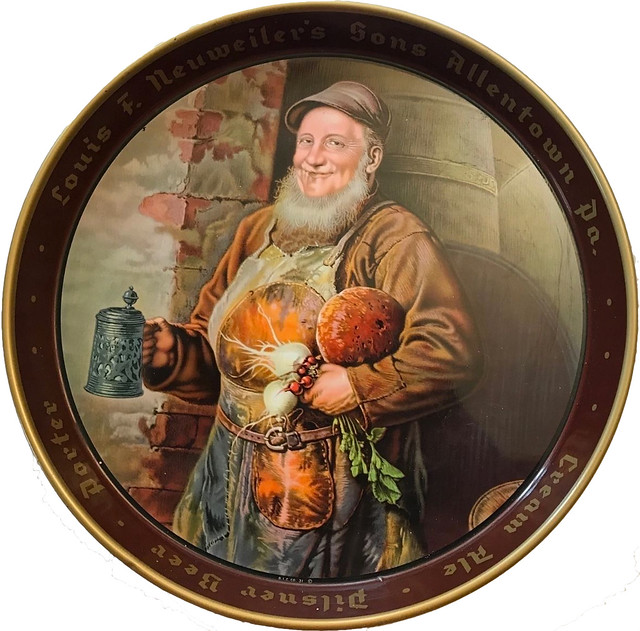
And this history of the brewery is from the English Wikipedia page:
Neuweiler Brewery was founded by Louis Neuwiler, who bought out longtime local brewer Benedict Nuding in 1900. Nuding’s operation was limited by its location, and in 1911 Neuweiler and his son, Charles, eager to expand, hired Philadelphia architects Peukert and Wunder to build a new complex some distance away, at Front and Gordon streets.
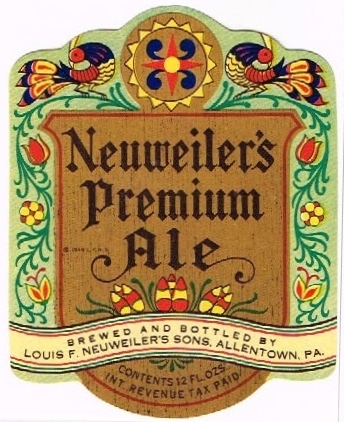
The brewery, featuring its own generators for electric power, opened in 1913. By 1932, the brewery buildings and the warehouse building were joined as one structure, and the former machine warehouse became an independent electric plant with an ammonia tank and ice machine. A pump warehouse had been added onto the northwest corner of the former stock warehouse, and a two-story bottling plant with a basement was located to the north of the other buildings. Neuweiler produced several brands of beer: Light Lager, Cream Ale, Stock Ale, Premium Ale, Bock (seasonal), Half & Half, Porter, Stout and Hochberg. Most were available in the 12 oz. “Steinies” or Export bottles, quarts, cans or kegs. When in full operation, Neuweiler’s was one of Allentown’s largest employers.
By 1950, the bottling plant was extended to the corner of North Front Street and Liberty Street, the stock warehouse was extended toward North Front Street, and a tile ash hopper was located behind the boiler house.
Brewery operations ceased in 1968 due to competition from national breweries. However, the Neuweiler recipes and brand names were purchased by the Ortlieb Brewery of Philadelphia, who also purchased the Fuhrmann and Schmidt (Shamokin) breweries in 1966. After the brewery’s closure, the F&S Brewery produced several of the Neuweiler beers (Porter, Light Lager and Cream Ale) from around 1970 until closing in 1975. After F&S closed, the Ortlieb brewery continued Neuweiler Cream Ale at the Philadelphia plant until the late 1970s.
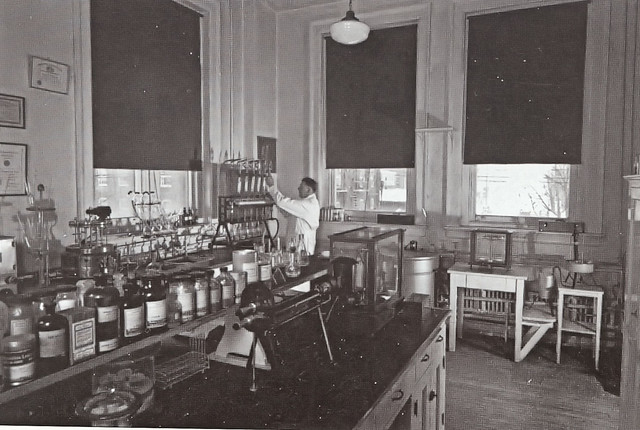
“This photo from 1915 shows the laboratory at the Neuweiler Brewery that created the various brews made and sold by the company.”
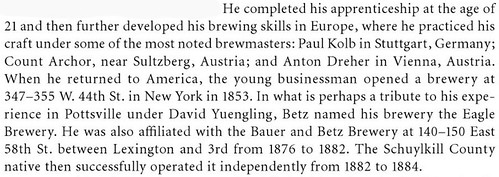
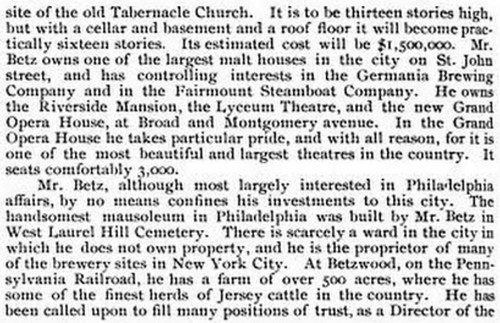
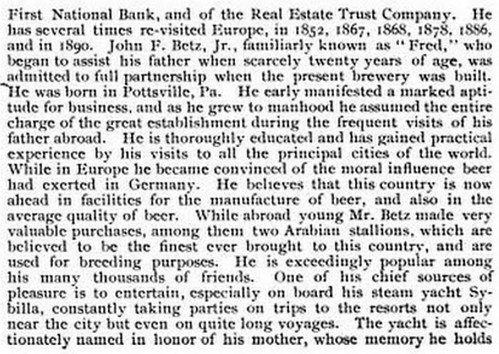
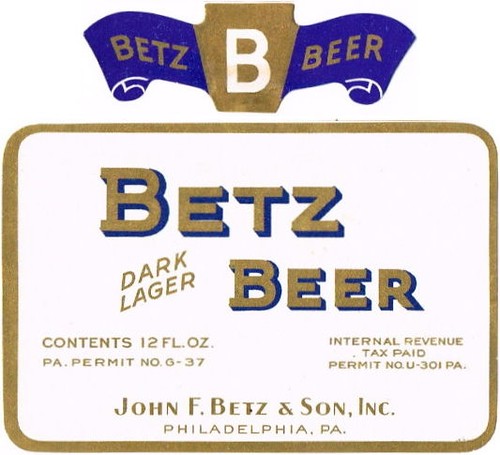
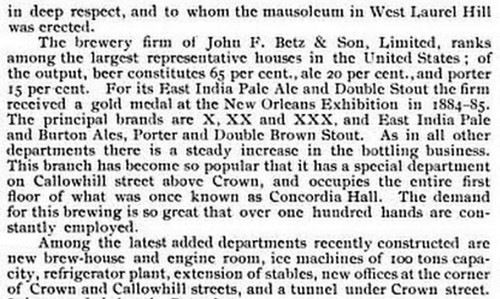
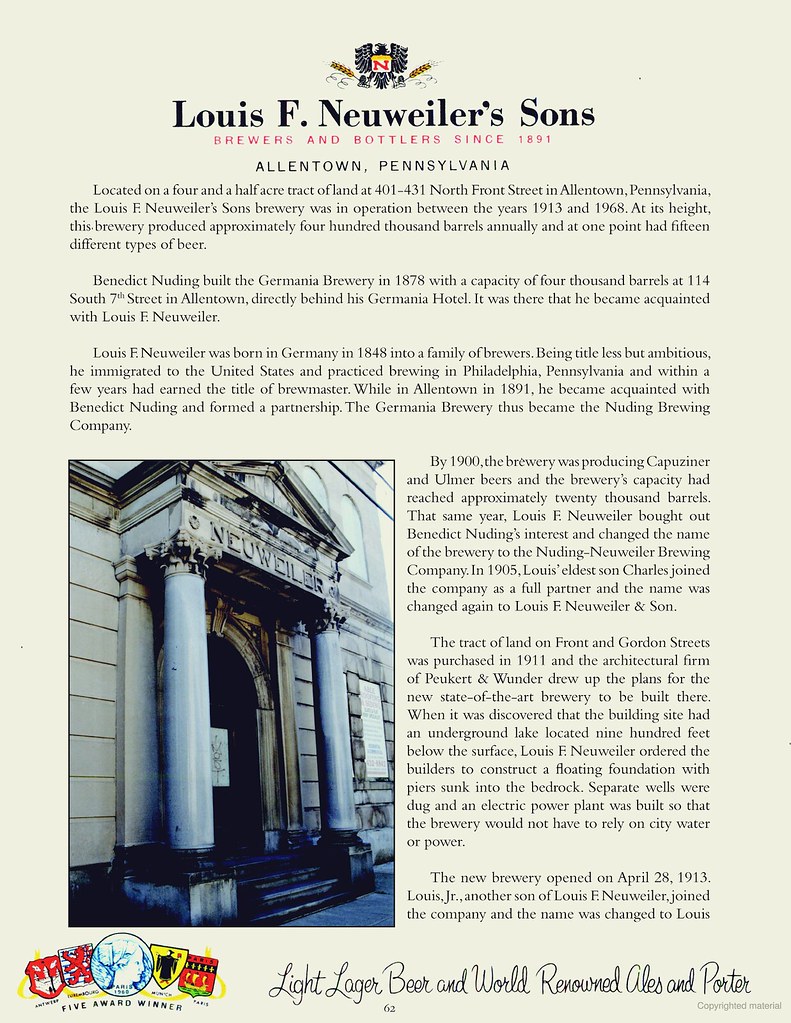
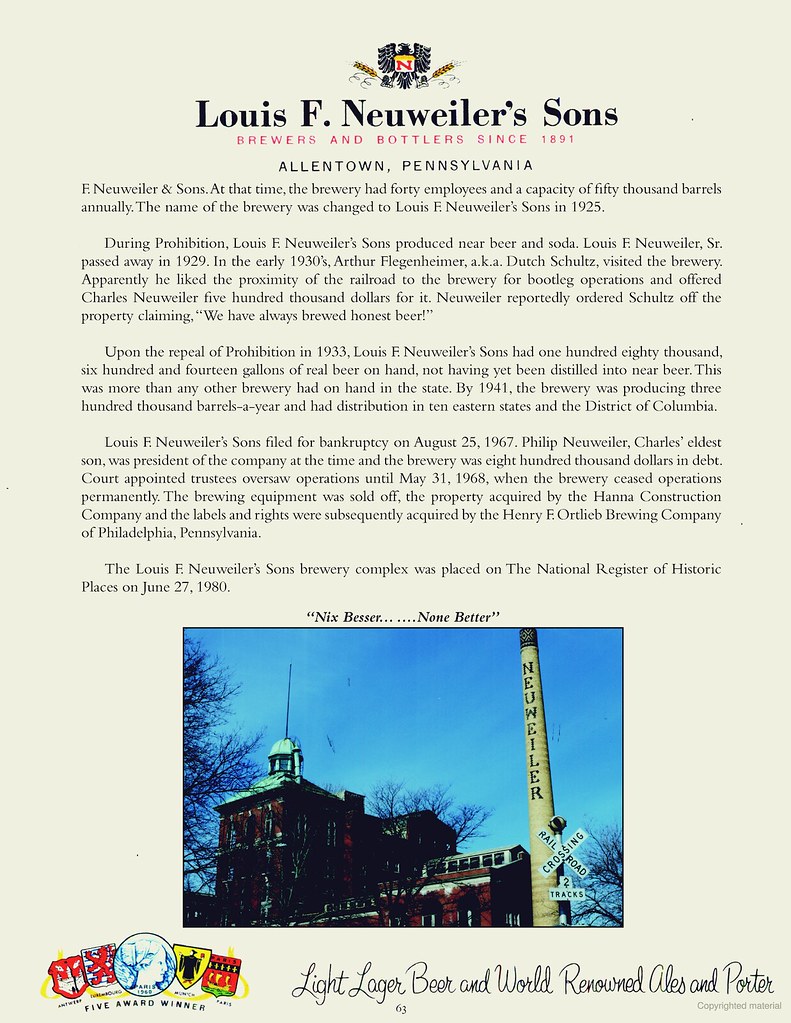
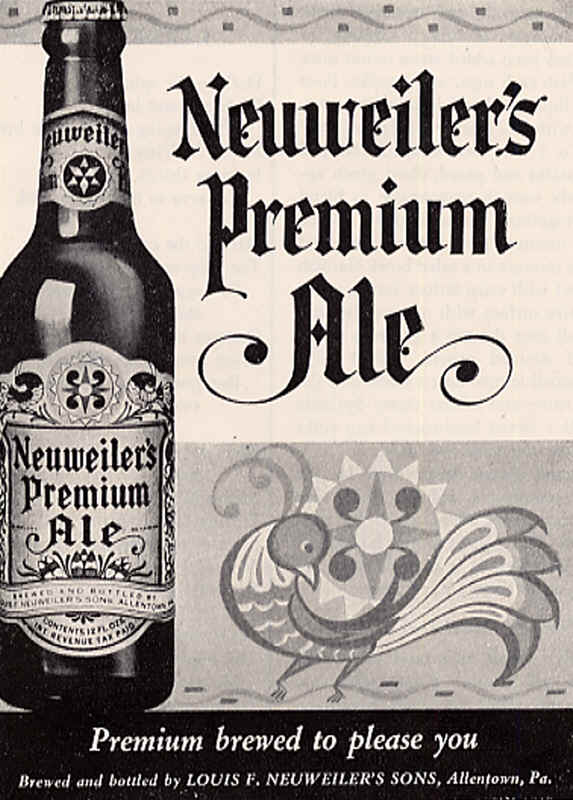
These pages are from “American Breweries of the Past,” by David G. Moyer:
And this lively history is from a local Allentown television station:
Arthur Flegenheimer, aka “Dutch Schultz,” is not remembered as one of your major league 1930s gangster headline-grabbers like Al Capone or Jack “Legs” Diamond. But such a view badly underestimates the man and his ruthlessness. And when he strode into the offices of Louis F. Neuweiler and Sons Brewery on Front Street in Allentown in 1932 he must have seemed formidable enough.
Cutting to the chase, the dapper dressing “Dutch” had some words for brewery owner Charles Neuweiler, son of the brewery’s founder and then the company’s president. He wanted to buy out the Neuweiler family operation which, since the start of Prohibition in 1920, had been reduced to turning out ice cream, “near beer” and carbonated soda water. He was offering $500,000 in cold cash.
Schultz may have thought he had made Neuweiler an offer he couldn’t refuse. It’s not known if the Dutchman’s “boys” were hanging around with itchy trigger fingers on their “gats” during the conversation.
But according to Charles’s son, Theodore Neuweiler, who recounted this tale to the press in the 1950s, his father was not biting. “We have always made honest beer,” he recalled his father saying before ordering Schultz off his property. And apparently the gangster went quietly.
Shortly thereafter FDR would be elected, Prohibition banished, and happy days here again. And “Dutch” would die in 1935 on a hospital operating room table in Newark, New Jersey, following a hit by rival gangsters.Today Neuweiler’s, which closed in 1968 and was left in a state that could only be called abandonment, is once more in the local news. Plans about its possible future as apartments, lofts or shops as part of the Neighborhood Improvement Zone- aka “the NIZ”- have caused much speculation. Could Neuweiler’s — at least the building if not the brewery — come back to life?
All of this activity would have undoubtedly impressed old Louis F. Neuweiler, the brewery’s founder, although he might be disappointed that nobody is talking about making beer there. As a native of Wurttemberg, Germany he knew what beer was to all good Germans of his time and place- a thick hardy brew that was both food and drink and had been as long as there had been Germans.
For a time, Neuweiler worked in a Philadelphia brewery and rose within the ranks of the company. In 1891 he came to Allentown and teamed up with longtime local brewer Benedict Nuding. A Civil War veteran and several years Louis Neuweiler’s senior, Nuding’s brewery was located at 7th St. near Union.
Beer making had been going on in the Lehigh Valley probably since the first German settlers arrived. Commercial operations in Allentown are usually traced to the Eagle Brewery that opened at Lehigh and Union Streets in the 1850s. By the start of the 20th century there would be a number of breweries dotting the Lehigh Valley in Allentown, Bethlehem and Easton.
By 1900 Nuding was ready to retire and Neuweiler brought him out. But even then Neuweiler had bigger ambitions. He had just admitted his son Charles into the business and began to look around for a space that was much larger than the site on 7th Street and also closer to a railroad line that would make shipment easier.
What the new brewery also needed was a supply of pure water.
Neuweiler found all that he was hoping for- even a lake of pure water 900 feet underground- on a 4.5 acre site at the corner of Front and Gordon Streets. To build the brewery he hired Peukert & Wunder, Philadelphia architects with a national reputation for brewery design.
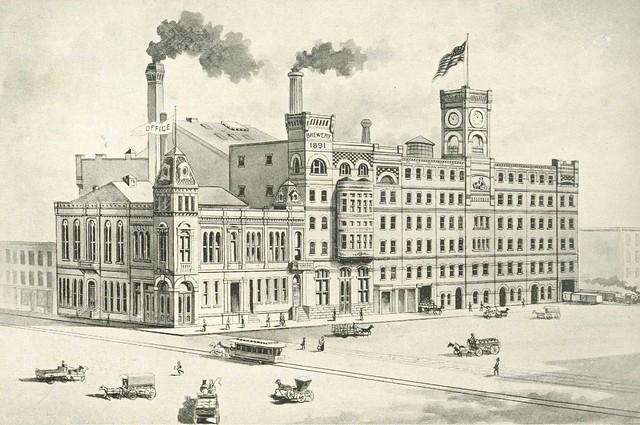
Work began on Neuweiler’s in 1911. It was completed two years later and opened for production on April 28, 1913. The Lehigh Valley had seen many brewery openings before but Neuweiler’s was something special. With its red brick tower that could be seen for many miles it dominated the horizon along the banks of the Lehigh River. In an extra architectural flourish a huge N, similar to those on a Paris bridge that honored Napoleon, framed and mounted in a colossal cartouche, was placed on the side of the building. The era didn’t nickname brewers “beer barons” for nothing.
Despite its size Neuweiler’s was a family business. Charles had been required to learn the business from the ground up, including driving a wagon load of beer barrels when called on to do so. Even the female members of the family played a role by keeping the brewery’s books.
Neuweiler’s was not a democracy. Patriarch Louis F., while a generous father to his family, expected obedience from them, even as adults. Although there is nothing on the record this may explain why one of his sons, Louis P., left the family business and got into local banking.
One of the longtime family stories that was recorded dealt with a confrontation between Louis F. and a telephone operator. When she could not understand the number Neuweiler was asking for he became so enraged he suggested there was a warm place she should go and ripped the phone’s cord out of the wall. His sons, fearing local reaction and gossip, told their father he had to call her back and apologize. According to the surviving sources the exchange went something like this:
Neuweiler: “Is this the woman who I told to go to hell?”
Operator: (timidly) “Yes”
Neuweiler: “Well you don’t have to go now!”Louis F. died in 1929 and with the end of Prohibition in 1933 Neuweiler’s flourished. But the rise of national brewers and the post World War II preference for lighter beers doomed Neuweiler’s and other local ethnic brewers. But, who knows. Thanks to the NIZ the big N may rise again.