Brookston Beer Bulletin

Jay R. Brooks on Beer

  • Home
  • About
  • Editorial
  • Birthdays
  • Art & Beer

Socialize

  • Dribbble
  • Email
  • Facebook
  • Flickr
  • GitHub
  • Instagram
  • LinkedIn
  • Pinterest
  • RSS
  • Twitter
  • YouTube

Powered by Genesis

Patent No. 5667832A: Method And Device For Foam Generation By Dispersion Of Bubbles

September 16, 2016 By Jay Brooks

patent-logo
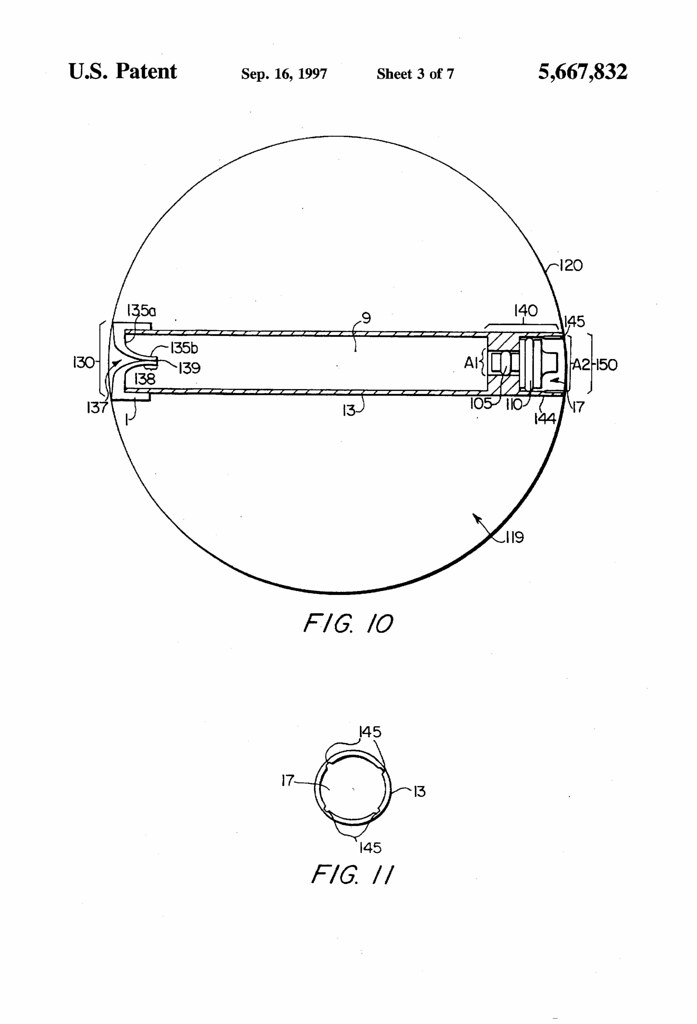
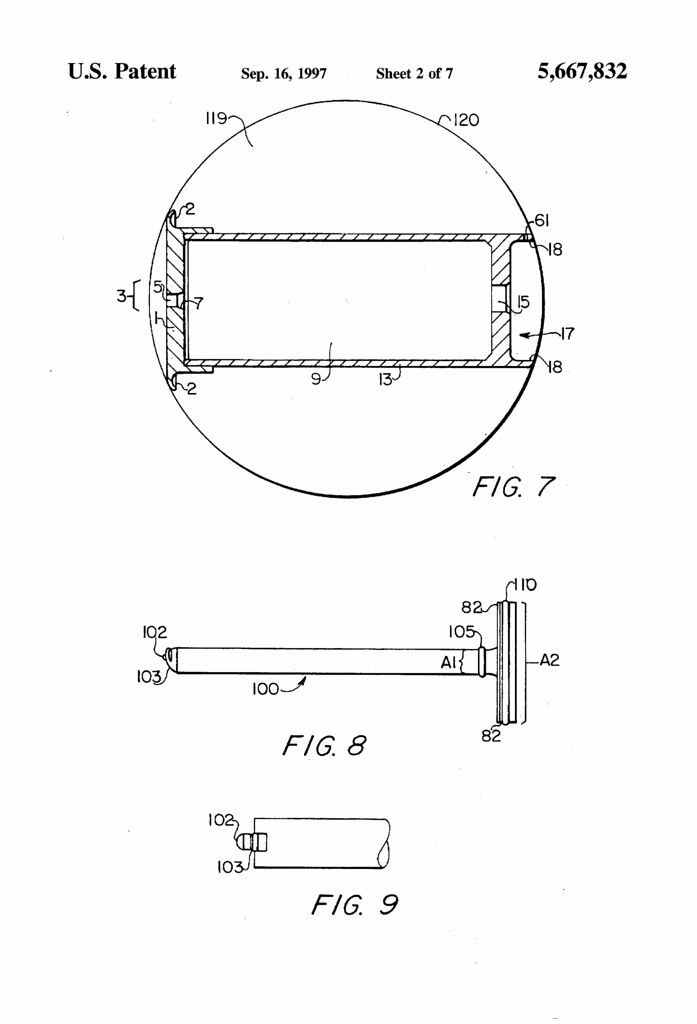
Today in 1997, US Patent 5667832 A was issued, an invention of Keith Tromans, assigned to Scottish And Newcastle Plc, for his “Method and Device for Foam Generation by Dispersion of Bubbles.” Here’s the Abstract:

A method and apparatus for the generation of a foaming dispersion of bubbles in a carbonated beverage or other gas-containing liquid packaged in a can (120) or other sealed container. An initially liquid-free device (9) having an internal chamber with an inlet/outlet valve (130/150) assembly is placed in the can, which is then filled with the beverage. The can is sealed and pasteurized, which raises the internal pressure in the can to force some of the gasified beverage into the device through the inlet valve. The outlet valve holds the quantity of beverage in the internal chamber until the can is opened, whereupon the depressurization of the can opens the outlet valve to discharge the internal chamber through an orifice to initiate seed bubbles which form a head on the beverage. The method and apparatus are particularly applicable to producing a head on fermented alcoholic beverages to simulate draught beverages.

US5667832-2
US5667832-3
US5667832-4

Filed Under: Beers, Breweries, Just For Fun, Politics & Law, Related Pleasures Tagged With: History, Law, Patent, Science of Brewing

Patent No. 4612196A: Preparation Of Low Alcohol Beverages By Reverse Osmosis

September 16, 2016 By Jay Brooks

patent-logo
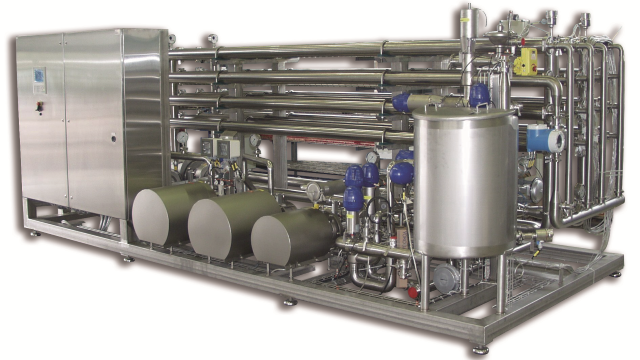
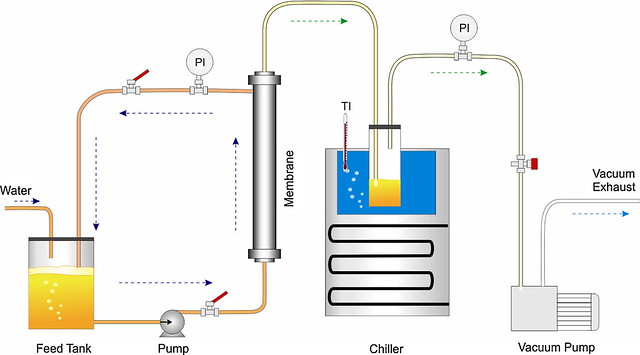
Today in 1986, US Patent 4612196 A was issued, an invention of Henry Goldstein, Charles L. Cronan, and Etzer Chicoye, assigned to the Miller Brewing Company, for their “Preparation of Low Alcohol Beverages by Reverse Osmosis.” Here’s the Abstract:

A traditional flavored fermented alcoholic beverage of low alcohol content is prepared by reverse osmosis with a thin layer composite membrane which has a support layer of polysulfone, a barrier layer of polymer prepared from a polyamine and a polyacyl, and a fiber backing. The membrane has a molecular weight cut-off of less than about 100 for organics and rejects the volatile components which contribute to flavor and aroma and permits about 25 to about 30% alcohol in the beverage to pass.

beer-deal
Microsoft Word - Manuscript_-_R1.docx

Filed Under: Beers, Breweries, Just For Fun, Politics & Law, Related Pleasures Tagged With: Brewing Equipment, History, Law, Patent, Science of Brewing

Patent No. 436498A: Apparatus For Brewing

September 16, 2016 By Jay Brooks

patent-logo
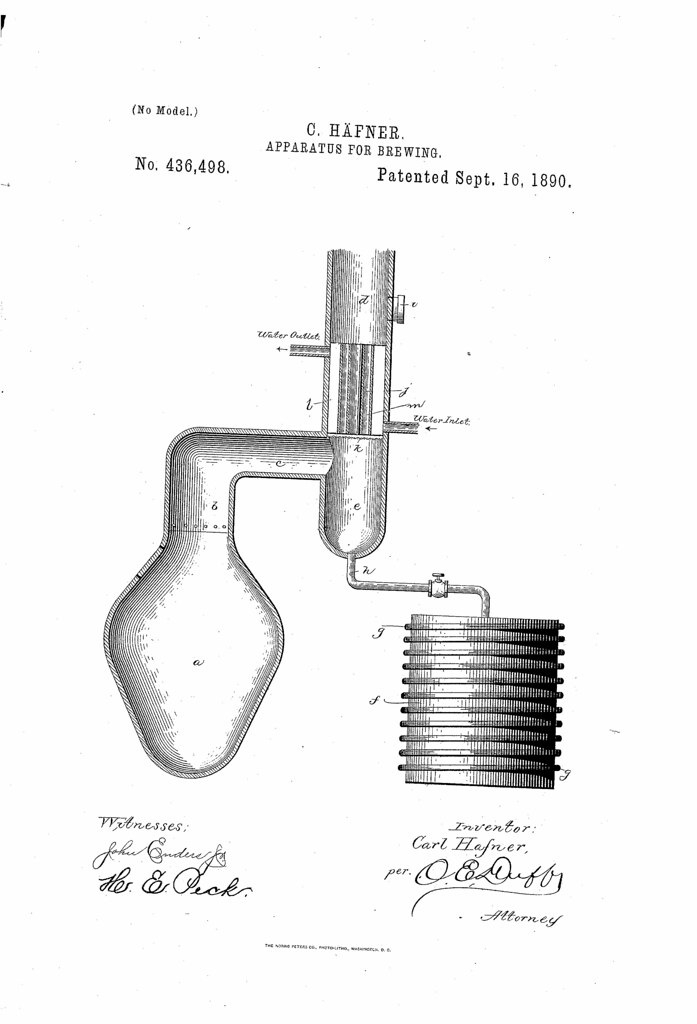
Today in 1890, US Patent 436498 A was issued, an invention of Carl Hafner, for his “Apparatus For Brewing.” There’s no Abstract, although in the description it includes these claims:

My invention relates to an improved apparatus for use in the process of making beer.

In the usual process of boiling beer or wort with hops the essential oils, aroma, and volatile oils escape and are wasted or are condensed and passed back into the brew-kettle during the boiling process; but as the essential oils, aroma, etc., vaporize and escape when the hot liquid remains at a temperature of about Reaumur, and as it is necessary after boiling the wort with the hops a certain time to allow the boiling liquid to cool oft in the open air, it will thus be seen that these volatile matters will still escape.

The object of my invention is to provide an improved apparatus for use in the process of manufacturing beer, whereby the essential oils, volatile matters, etc., are saved and afterward added to the beer, and whereby a great saving is made in hops. These objects are accomplished by and my invention consists in certain novel features of construction and combinations of parts, more fully described hereinafter, and particularly pointed out in the claim.

US436498-0

Filed Under: Beers, Breweries, Just For Fun, Politics & Law, Related Pleasures Tagged With: Brewing Equipment, History, Law, Patent, Science of Brewing

Patent No. 349178A: Cooling Air And Apparatus Therefor

September 14, 2016 By Jay Brooks

patent-logo
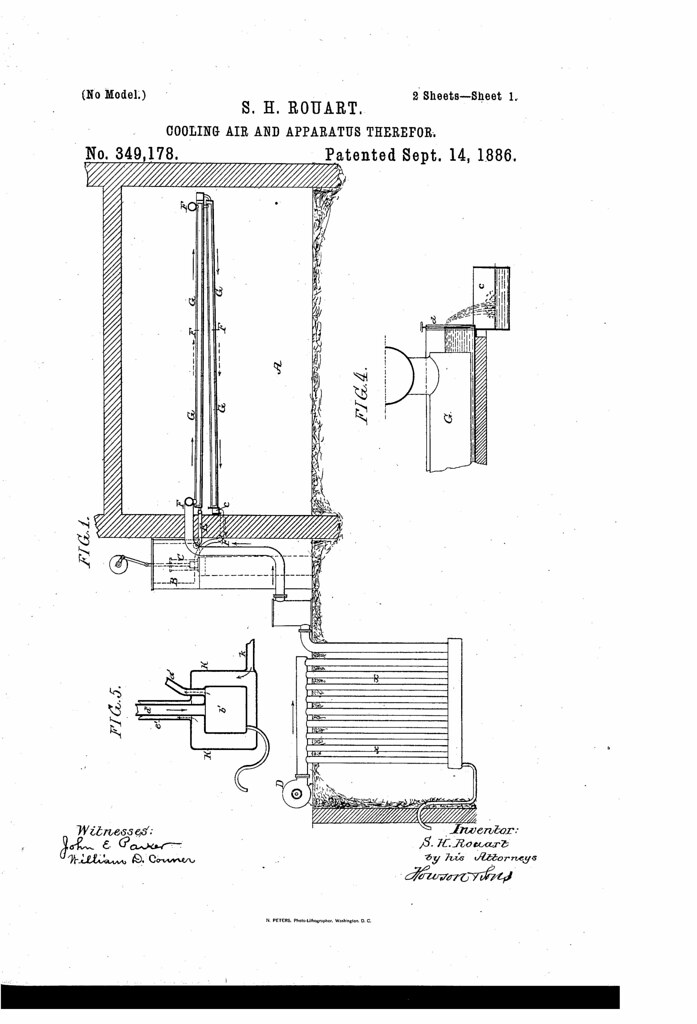
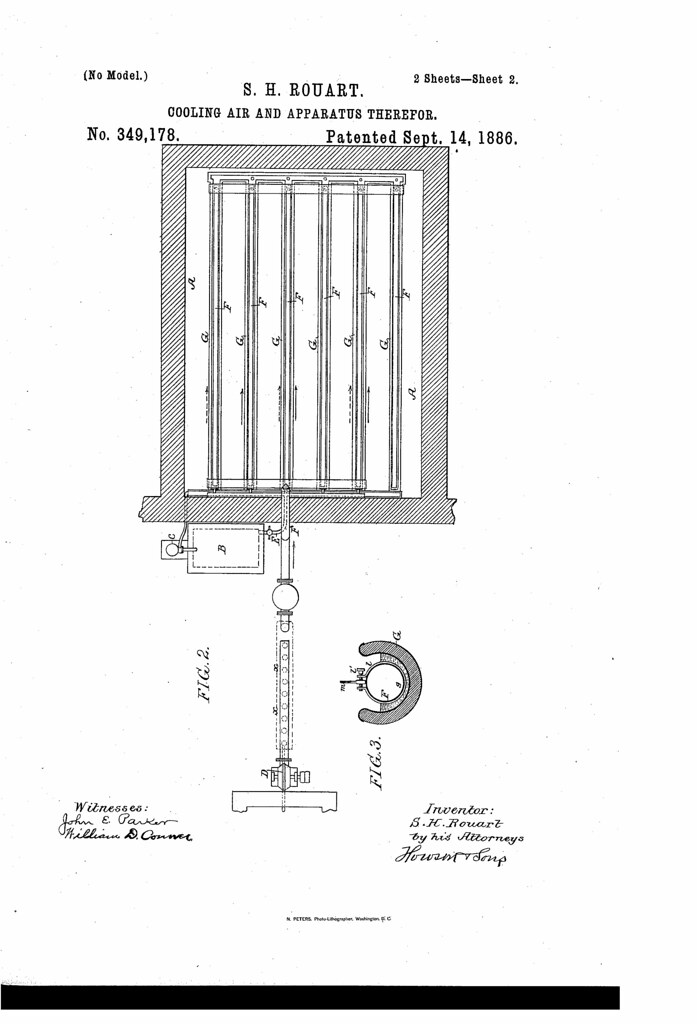
Today in 1892, US Patent 349178 A was issued, an invention of Stanislas Rouart, for his “Cooling Air and Apparatus Therefor.” There’s no Abstract, although in the description it includes these claims:

The main object of my invention is to effectively cool the air of rooms or spaces in which it is necessary or desirable to maintain a free circulation of air as, for instance, in cellars for storing or treating beer, etc.

US349178-0
US349178-1

Filed Under: Beers, Breweries, Just For Fun, Politics & Law, Related Pleasures Tagged With: Brewing Equipment, History, Law, Patent, Science of Brewing

Patent No. EP0070570B1: Yeast Strain For Use In Brewing

September 13, 2016 By Jay Brooks

patent-logo
Today in 1989, US Patent EP 0070570 B1 was issued, an invention of George Stewart Graham, Edmund Goring Thomas and Russell Ingeborg, assigned to the Labatt Brewing Company, for their “Yeast Strain For Use in Brewing.” There’s no Abstract, although in the description it includes these claims:

This invention relates to a novel yeast strain suitable for use in the brewing of beer and to a method of preparing the same.

In the brewing of beer, i.e. ale and lager, ale yeast strains (Saccharomyces cerevisiae) are traditionally top-cropping strains and lager yeast strains (Saccharomyces uvarum (carlsbergensis)) are bottom-cropping strains. That is, when the attenuation of the wort, which may be broadly defined as the conversion of fermentable substrate to alcohol, has attained a certain level, the discrete yeast cells of most ale strains adhere or aggregate to an extent that, adsorbed to bubbles of carbon dioxide, they will rise to the surface under quiescent conditions (e.g. when the medium is not agitated) where they are “cropped” by being skimmed off. In the case of lager strains, the aggregated cells are not adsorbed to bubbles of carbon dioxide and settle out of suspension to the bottom of the vessel where they are “cropped” by various standard methods.

One of the limitations of the known ale yeast strains is that they do not function satisfactorily in worts having plato values (°P) higher than about 14.5°P and values of only about 9°P to 12°P are usually required. The plato value (°P) is defined as the weight of dissolved solids, expressed as a percentage, in water at 15.6°C. Generally, the higher the plato value at which a yeast strain will function, the greater is the conversion of fermentable substrate to alcohol for a given volume of wort. Consequently, the resultant fermentation product would be one of higher than usually desired final alcohol content and would generally be diluted before packaging. Since the dilution to obtain a standard, commercially acceptable product would occur at the end of the brewing process, the overall throughput of such a brewing system would be substantially increased over a conventional system. Furthermore, beers produced from such high plato worts generally exhibit improved colloidal haze and flavour stability.

In view of the economic advantages possible in fermenting worts of higher plato values, there has been a substantial amount of research carried out in the hope of obtaining a yeast strain which will function at such higher plato values in the range of about 16°P to 18°P, i.e. a yeast strain which will remain in the body of the wort until substantial or total conversion of the fermentable sugars to alcohol atthe higher Plato values has occurred. As an alternative, attempts have been made to maintain known yeast strains in the body of the wort by mechanical means, such as continuous stirring, in the hope thatthe yeast would continue to function if maintained in contact with the wort. However, this has proved to be inefficient and in many cases more expensive because of the extra energy required to operate such mechanical means. Furthermore, many such attempts have been frustrated by difficulties of product flavour match with present commercially acceptable standards.

The inventors of this invention have now discovered a yeast strain which is an ale yeast (species Saccharomyces cerevisiae) that not only functions at high plato values, e.g. up to about 18°P, but also flocculates to the bottom of the fermenting vessel when conversion or attenuation has been substantially completed (the latter feature, as noted above, is usually characteristic of a lager strain rather than an ale strain).

The present novel organism was found to be a component of a mixture of ale yeasts maintained by the assignee. The organism was isolated and biologically pure cultures thereof were produced by techniques considered standard by those skilled in the art and can be obtained upon request from the permanent collection of the National Collection of Yeast Cultures (termed “NCYC” herein), Food Research Institute, Norwich, Norfolk, England. The accession number of the organism in this repository is NCYC No. 962.

Thus, according to one aspect of the present invention there is provided a brewing process wherein a malt wort is prepared; fermented with brewers’ yeast; and, following completion of the fermentation, finished to the desired alcoholic brewery beverage; the improvement comprising fermenting said wort having a Plato value of about 14.5 or greater with a strain of the species Saccharomyces cerevisiae brewers’ yeast having the NCYC No. 962.

In another aspect the invention provides a brewing process for producing ale, wherein a hopped, 30% corn grit adjunct wort is prepared having a Plato value of from about 16°P to 18°P; fermented at a temperature of about 21°C for about 3 to 5 days with a species of Saccharomyces cerevisiae brewers’ yeast; and, following completion of the fermentation, finished to the desired ale; the improvement comprising fermenting said wort with a strain of the species Saccharomyces cerevisiae brewers’ yeast having the NCYC No. 962.

In a further aspect the invention provides a biologically pure culture of a brewers’ yeast strain of the species Saccharomyces cerevisiae having the NCYC No. 962, said strain having the ability to ferment high Plato value worts of 14.5 or greater and the ability of flocculate to the bottom of the fermentation vessel when attenuation is substantially complete.

In a further aspect of the invention provides a method of manufacturing a novel brewers’ yeast strain, wherein a yeast strain is propagated in an oxygenated nutrient medium, the improvement comprising propagating a biologically pure culture of a yeast strain of the species Saccharomyces cerevisiae having the NCYC No. 962.

The advantage of the yeast strain of the present invention (referred to herein as strain 962 for the sake of convenience) is that it has both bottom-cropping characteristics as well as the ability to ferment high specific gravity worts. The bottom-cropping characteristic is advantageous because of increased utilization in the brewing industry of large conical-based vessels for fermenting the wort, and bottom-cropping is especially facile in such vessels. Thus strain 962 is particularly well adapted for use with continuous brewing techniques as well as batch-wise brewing.

The fact that strain 962 can ferment worts having high plato values is economically advantageous in that use of such worts allows dilution with water at a much later stage in the processing, generally prior to packaging. By reducing the amount of water required in the majority of process stages, increasing production demands can be met without the expansion of existing brewing, fermenting and storage facilities and the overall throughput of an existing brewery system can be substantially increased by the use of strain 962. Consequently, the brewing process can be carried out at a reduced overall cost, including a reduced energy cost.

Thus, while a number of bottom-cropping ale strains are known, the dual characteristics of bottom-cropping and the ability to ferment which gravity worts makes strain 962 of the present invention especially useful in the brewing of ale.

0070570-imgf0001

Filed Under: Beers, Breweries, Just For Fun, Politics & Law, Related Pleasures Tagged With: History, Law, Patent, Science of Brewing, Yeast

Patent No. WO2007102850A1: Gluten-Free Beer And Method For Making The Same

September 13, 2016 By Jay Brooks

patent-logo
Today in 2007, US Patent WO 2007102850 A1 was issued, an invention of Russell J. Klisch, assigned to the Lakefront Brewery, for his “Gluten-Free Beer and Method For Making the Same.” Lakefront Brewery developed this patented for their beer New Grist. Here’s the Abstract:

A gluten-free beer derived from fermentable sugars obtained from an enzymatic reaction with gluten-free cereals and grains, and a method of making a gluten-free beer that includes dissolving enzyme-produced fermentable sugars derived from gluten-free cereals and grains in water to produce an aqueous solution, adding a yeast nutrient, a protein coagulant and hops to the aqueous solution to form an aqueous brew, and fermenting the aqueous brew by the addition of yeast to produce a gluten-free beer.

new-grist-logo-and-bottles

Filed Under: Beers, Breweries, Just For Fun, Politics & Law, Related Pleasures Tagged With: Gluten-Free, History, Law, Patent, Science of Brewing

Patent No. 3834296A: Continuous Production Of Beer Wort From Dried Malt

September 10, 2016 By Jay Brooks

patent-logo
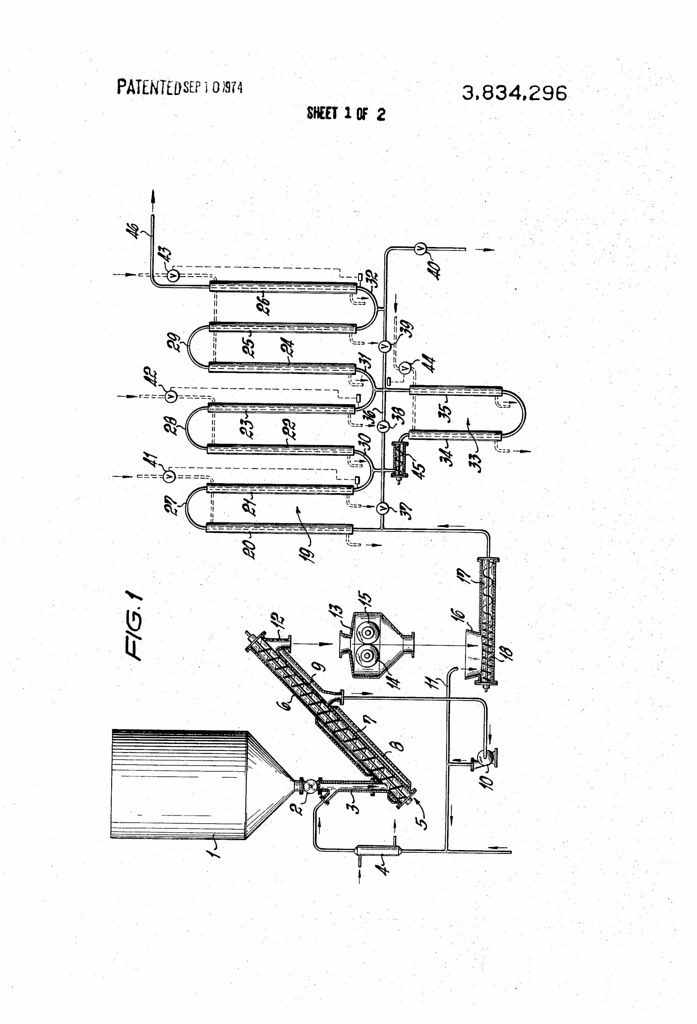
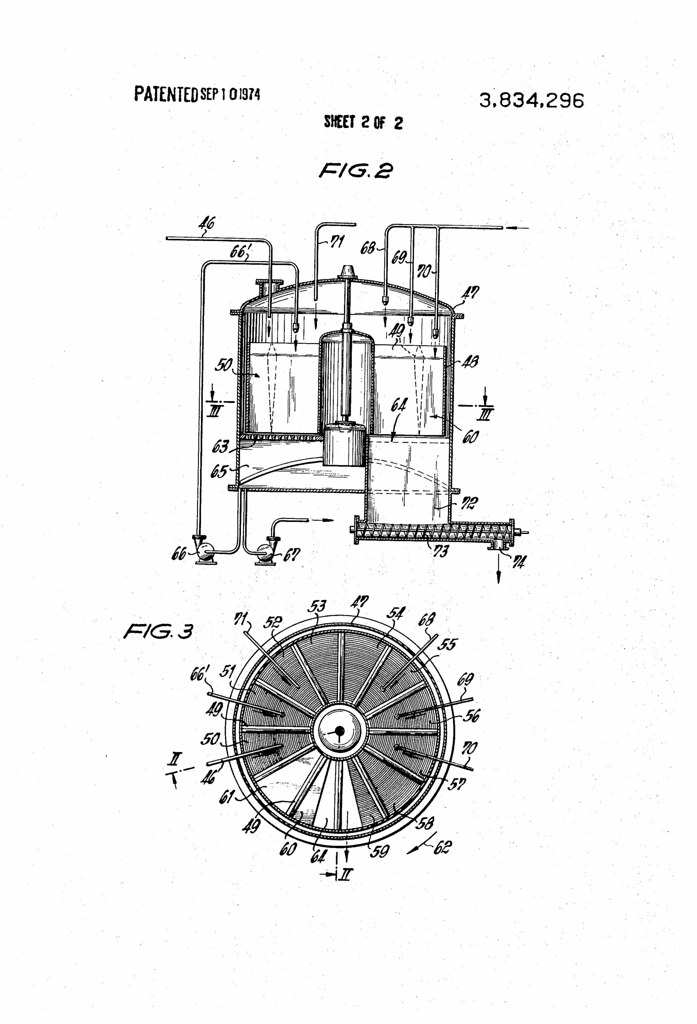
Today in 1889, US Patent 3834296 A was issued, an invention of Uwe Jess and Wolfgang Kehs, for their “Continuous Production of Beer Wort From Dried Malt.” Here’s the Abstract:

An apparatus for continuously making beer wort from dried malt has a malt soaking unit and a malt crusher which is adapted to receive the soaked malt from the unit and has at least two smooth-surface cooperating rolls and drive means for driving them at differential velocities. A conduit system has a plurality of upright heatable conduit sections and serves for heating a mash which is produced after the malt has been treated in the crusher, and a clarifying unit is provided for clarifying the mash having been heated previously.

US3834296-1
US3834296-2

Filed Under: Beers, Breweries, Just For Fun, Politics & Law, Related Pleasures Tagged With: History, Law, Patent, Science of Brewing, Wort

Patent No. 708942A: Apparatus For Racking Off Beer

September 9, 2016 By Jay Brooks

patent-logo
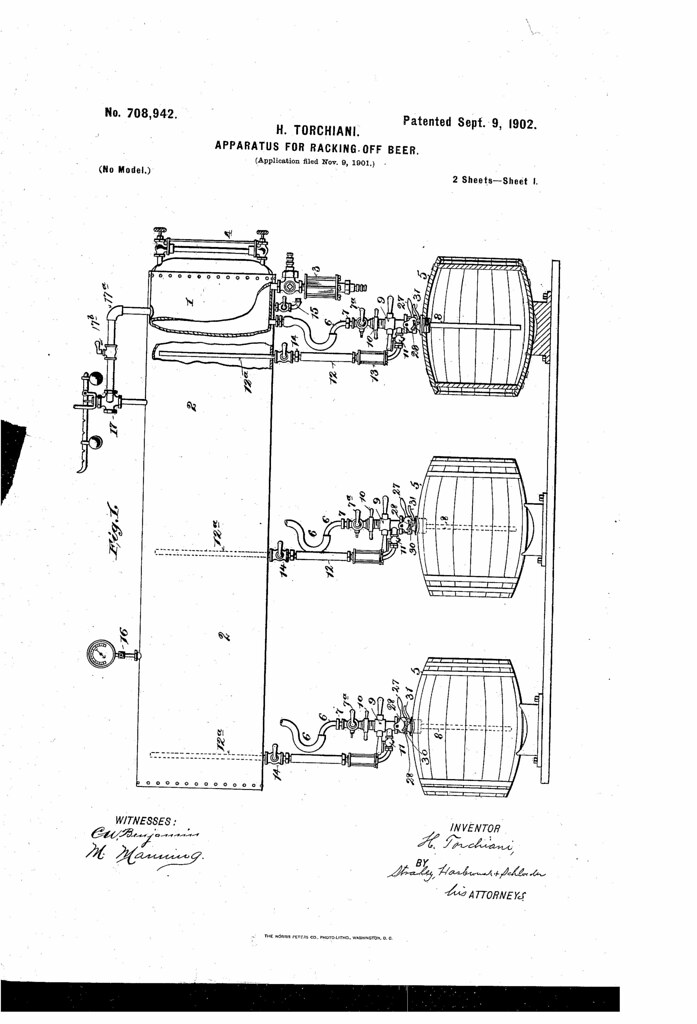
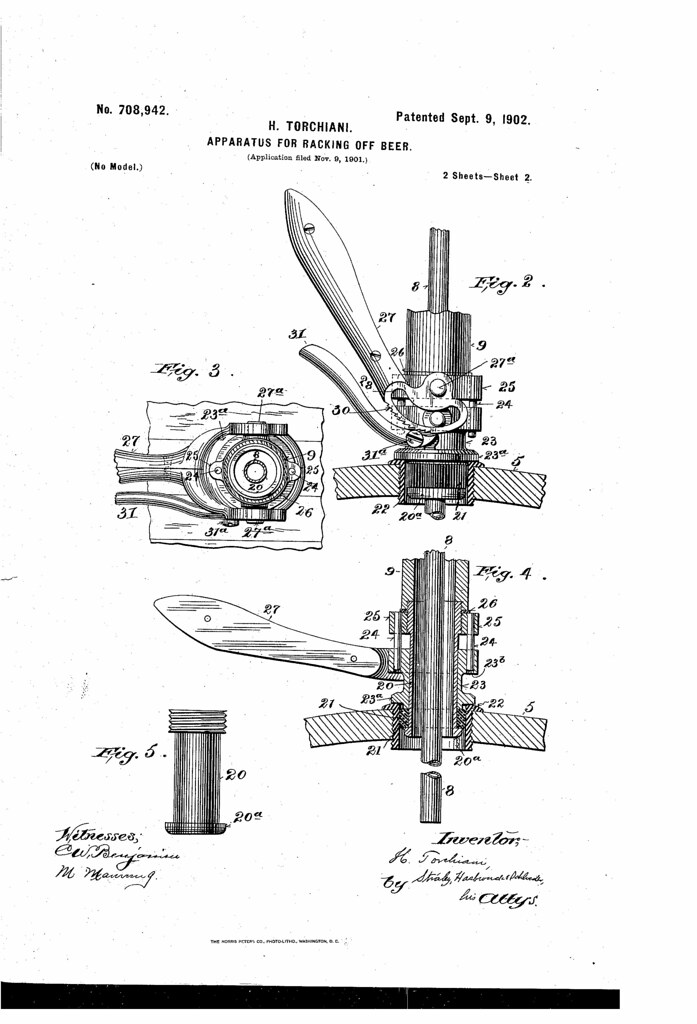
Today in 1902, US Patent 708942 A was issued, an invention of Harry Torchiani, for his “Apparatus For Racking Off Beer.” There’s no Abstract, although in the description it includes these claims:

My invention relates to apparatus for filling barrels, kegs, or the like with fermented liquids, such as beer; and one of the objects of the invention is to collect the foam that arises in a barrel or keg being charged and prevent it from passing into another barrel or keg that is being charged; and another object of the invention is to provide improved means for firmly connecting the racking-off faucet with a barrel or keg and for readily disconnecting it therefrom; and to these ends my invention comprises the novel details of improvement that Will be more fully hereinafter set forth, and then pointed out in the claims.

US708942-0
US708942-1

Filed Under: Beers, Breweries, Just For Fun, Politics & Law, Related Pleasures Tagged With: Brewing Equipment, History, Law, Patent, Science of Brewing

Patent No. DE2808712A1: Plant To Manufacture Beer Wort By Hydrating Crushed Malt

September 6, 2016 By Jay Brooks

patent-logo
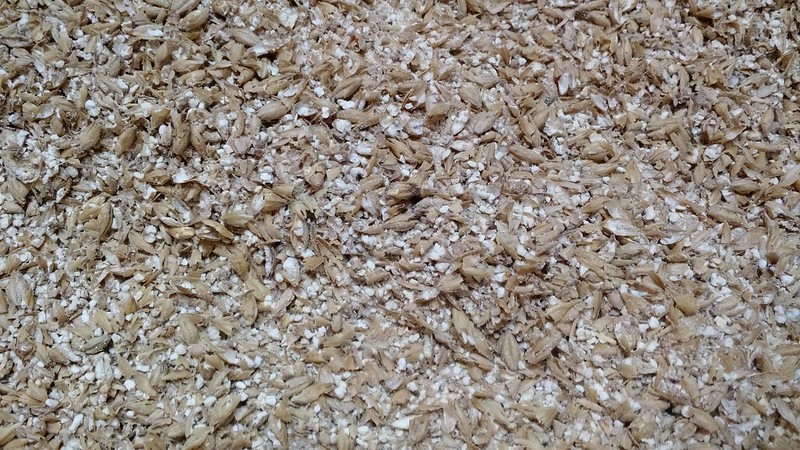
Today in 1979, US Patent DE 2808712 A1 was issued, an invention of Simon Redl, assigned to Anton Steinecker Maschinenfabrik, for his “Plant to Manufacture Beer Wort by Hydrating Crushed Malt — Introduces Water as Unbroken Film to Avoid Aeration of Product.” Here’s the Abstract:

The installation comprises a pressure roll mill for wet crushing brewers malt into a wort mixing chamber where a hydrator introduces additional water and an agitator mixes the milled malt and water. The hydrator is designed to introduce water in the form of a continuous, film which runs down a guiding surface extending into the wort mix. The guiding surface pref. extends alongside or beneath and for the full axial length of the mill rolls. The guiding surface is a side wall of the casing which forms the chamber containing the mill rolls and the agitator. Both walls are pref. employed as guiding surfaces. Water is pref. run on to the guiding surface from an adjustable width slot at the bottom of a supply pocket. The guiding surface pref. form one edge of the slot which has a width of 0.5-5.0., (1.5-3.0) mm. The hydrator offers faster and more homogeneous mixing in of water than single exit water inspectors. Undesirable aeration of the wort is held to an absolute minimum which was not possible with spray injectors.

crushed-barley-malt

Filed Under: Beers, Breweries, Just For Fun, Politics & Law, Related Pleasures Tagged With: Brewing Equipment, History, Law, Patent, Science of Brewing

Patent No. 969224A: Beer Filter

September 6, 2016 By Jay Brooks

patent-logo
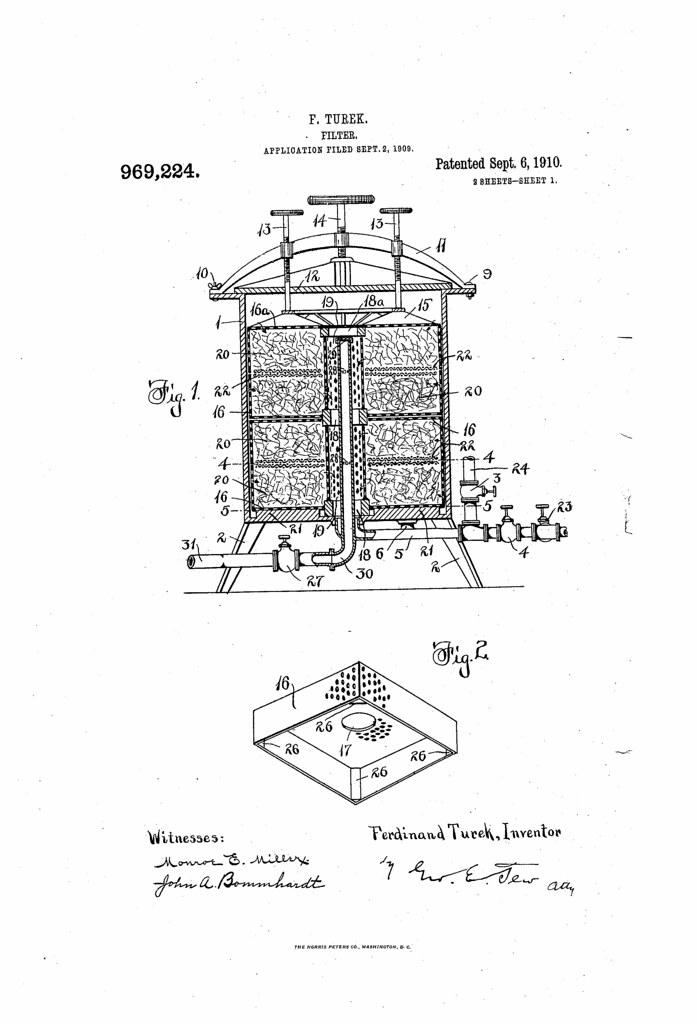
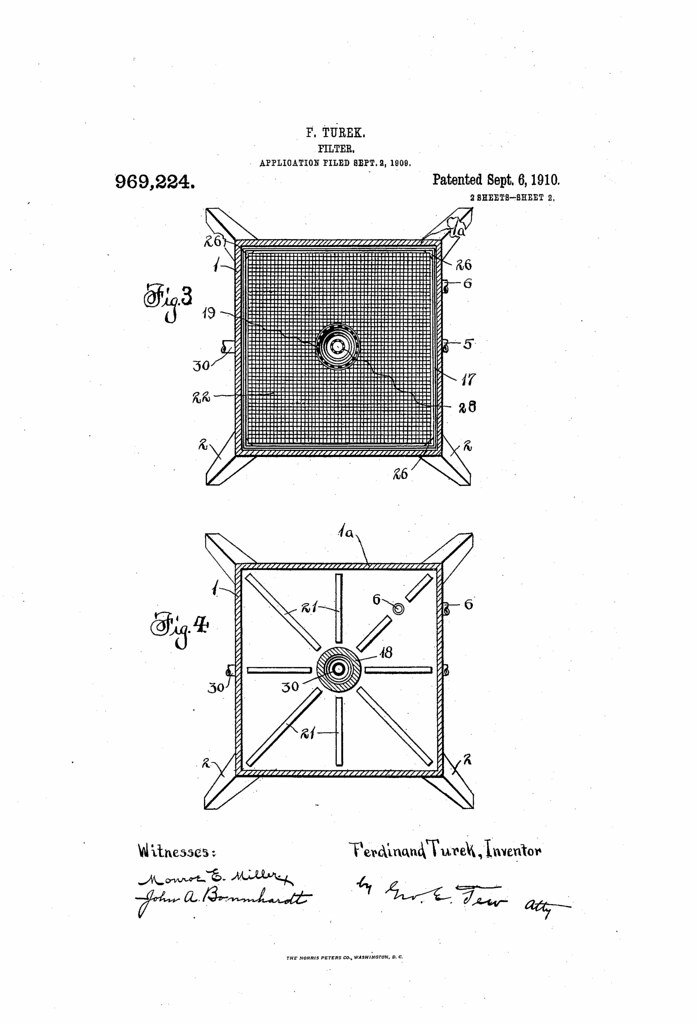
Today in 1910, US Patent 969224 A was issued, an invention of Ferdinand Turek, for his beer “Filter.” There’s no Abstract, although in the description it includes these claims:

This invention relates to filters and has for its object to provide an improved filter construction.

US969224-0
US969224-1

Filed Under: Beers, Breweries, Just For Fun, Politics & Law, Related Pleasures Tagged With: Brewing Equipment, History, Law, Patent, Science of Brewing

« Previous Page
Next Page »

Find Something

Northern California Breweries

Please consider purchasing my latest book, California Breweries North, available from Amazon, or ask for it at your local bookstore.

Recent Comments

  • Ernie Dewing on Historic Beer Birthday: Charles William Bergner 
  • Steve 'Pudgy' De Rose on Historic Beer Birthday: Jacob Schmidt
  • Jay Brooks on Beer Birthday: Bill Owens
  • Steve 'Pudgy' De Rose on Beer Birthday: Charles Finkel
  • Steve 'Pudgy' De Rose on Beer Birthday: Bill Owens

Recent Posts

  • Beer In Ads #5185: It’s Bock Time January 28, 2026
  • Historic Cider Birthday: H.P. Bulmer January 28, 2026
  • Beer Birthday: Shane McNamara January 28, 2026
  • Historic Beer Birthday: John Goetz January 28, 2026
  • Beer Birthday: Jean-Marie Rock January 28, 2026

BBB Archives

Feedback

Head Quarter
This site is hosted and maintained by H25Q.dev. Any questions or comments for the webmaster can be directed here.