Brookston Beer Bulletin

Jay R. Brooks on Beer

  • Home
  • About
  • Editorial
  • Birthdays
  • Art & Beer

Socialize

  • Dribbble
  • Email
  • Facebook
  • Flickr
  • GitHub
  • Instagram
  • LinkedIn
  • Pinterest
  • RSS
  • Twitter
  • YouTube

Powered by Genesis

Beer In Ads #5142: First Taste Of Spring Sunshine Bock Beer

March 3, 2026 By Jay Brooks Leave a Comment

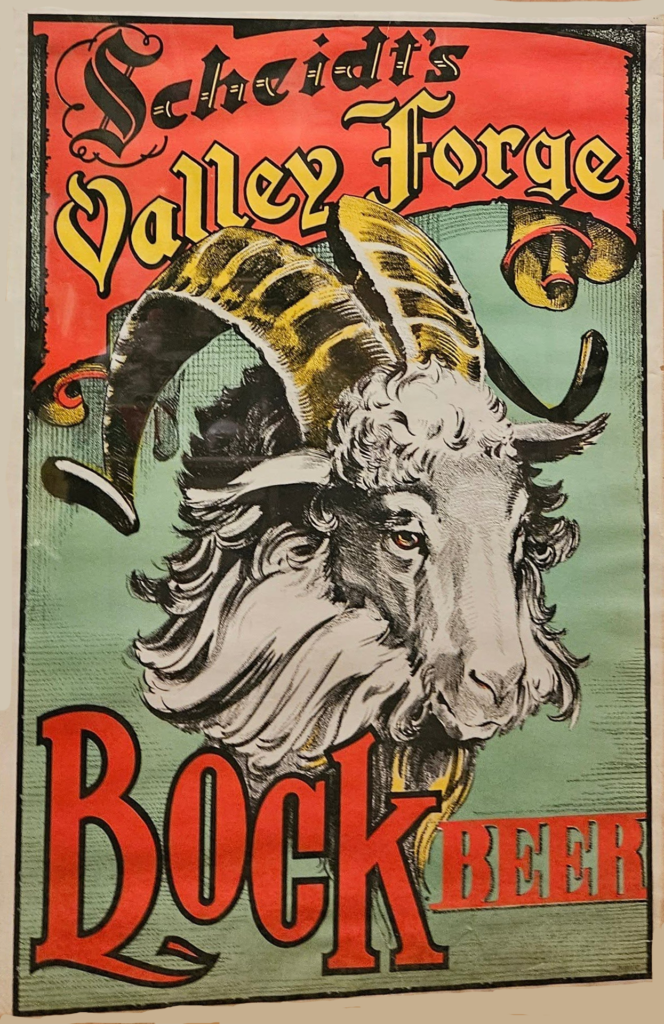
Two years ago I decided to concentrate on Bock ads for awhile. Bock, of course, may have originated in Germany, in the town of Einbeck. Because many 19th century American breweries were founded by German immigrants, they offered a bock at certain times of the year, be it Spring, Easter, Lent, Christmas, or what have you. In a sense they were some of the first seasonal beers. “The style was later adopted in Bavaria by Munich brewers in the 17th century. Due to their Bavarian accent, citizens of Munich pronounced ‘Einbeck’ as ‘ein Bock’ (a billy goat), and thus the beer became known as ‘Bock.’ A goat often appears on bottle labels.” And presumably because they were special releases, many breweries went all out promoting them with beautiful artwork on posters and other advertising. With Spring approaching, there are so many great examples that I’m going to post two a day for a few months.

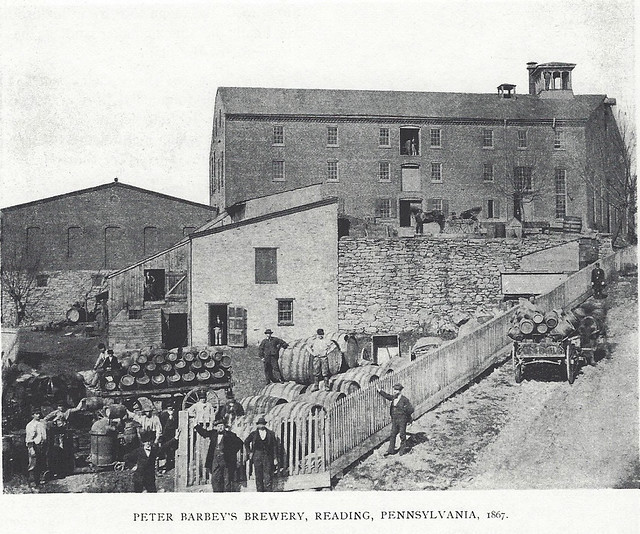
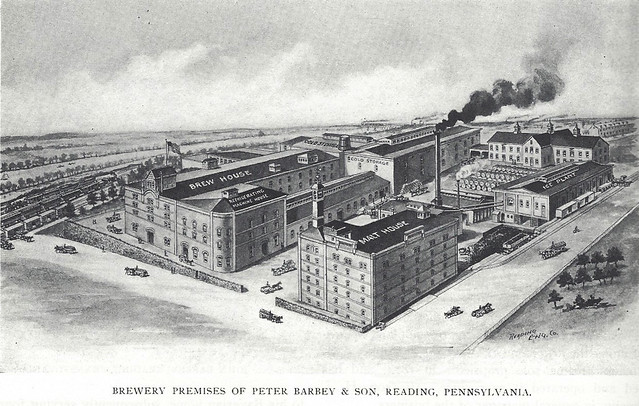
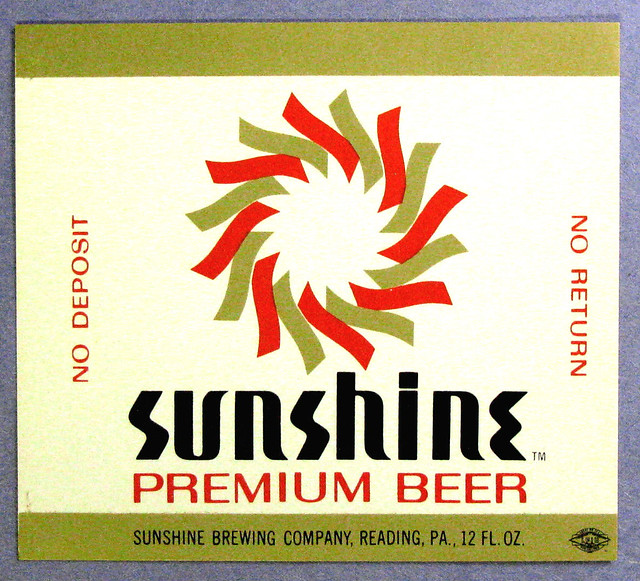
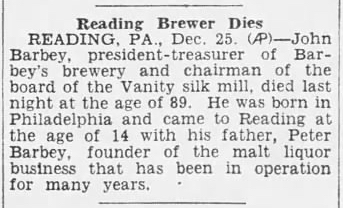
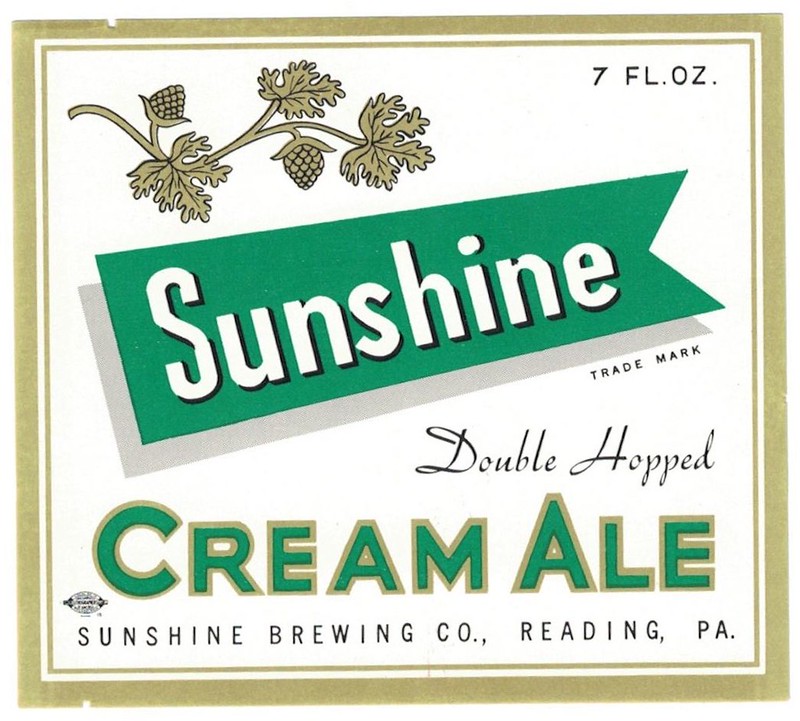
Tuesday’s second ad is for Sunshine Bock Beer, which was published on March 3, 1937. This ad was for the Sunshine Brewing Co. of Reading, Pennsylvania, near my hometown growing up, which was originally founded in 1859 by Peter Barbey. This ad ran in The Shamokin News Dispatch of Shamokin, Pennsylvania.

Filed Under: Art & Beer, Beers, Breweries, Just For Fun Tagged With: Advertising, Bock, History, Pennsylvania

Beer In Ads #5141: Out Today Sunshine Genuine Bock Beer

March 3, 2026 By Jay Brooks Leave a Comment

Two years ago I decided to concentrate on Bock ads for awhile. Bock, of course, may have originated in Germany, in the town of Einbeck. Because many 19th century American breweries were founded by German immigrants, they offered a bock at certain times of the year, be it Spring, Easter, Lent, Christmas, or what have you. In a sense they were some of the first seasonal beers. “The style was later adopted in Bavaria by Munich brewers in the 17th century. Due to their Bavarian accent, citizens of Munich pronounced ‘Einbeck’ as ‘ein Bock’ (a billy goat), and thus the beer became known as ‘Bock.’ A goat often appears on bottle labels.” And presumably because they were special releases, many breweries went all out promoting them with beautiful artwork on posters and other advertising. With Spring approaching, there are so many great examples that I’m going to post two a day for a few months.

Tuesday’s first ad is for Sunshine Genuine Bock Beer, which was published on March 3, 1939. This ad was for the Sunshine Brewing Co. of Reading, Pennsylvania, near my hometown growing up, which was originally founded in 1859 by Peter Barbey. This ad ran in The Intelligencer Journal of Lancaster, Pennsylvania.

Filed Under: Art & Beer, Beers, Breweries, Just For Fun Tagged With: Advertising, Bock, History, Pennsylvania

Historic Birthday: David G. Yuengling

March 2, 2026 By Jay Brooks Leave a Comment

Today is the birthday of David G. Yuengling (March 2, 1808-September 27, 1877) who founded the Eagle Brewing Co. in 1829, and today it’s “America’s oldest brewery.” The name was changed in 1873 to D. G. Yuengling and Son when David’s son Frederick joined the company. He was born in Aldingen in what today is Germany — but then was the Kingdom of Württemberg. He was born David Gottlob Jüngling, but anglicized his name after emigrating the United States in 1828.

Yuengling-DG

100 Years of Brewing has a short summary of D.G. and the brewery’s early years.

Immigrant Entrepreneurship, under German-American Business Biographies, has a lengthy one of David Gottlob Yuengling.

David Gottlob Jüngling was born in the village of Aldingen (today part of the town of Remseck in the German federal state of Baden-Württemberg) into a family that is listed as operating Aldingen’s first brewery by 1816. A passport application from 1862 describes the 56-year old David Gottlob as having blue eyes and black hair and standing five feet six inches (168 cm) tall. His father, Friedrich Jüngling, operated Aldingen’s brewery in the Neues Schloss (“New Palace”), a baroque manor of which he owned one quarter, including the brewery and livestock pens. Prior to starting the brewery in Aldingen, Friedrich Jüngling’s profession is listed as butcher, and he served on the town council. Both positions reflected a degree of wealth and social status within the community. Although Friedrich Jüngling was born in nearby Erdmannhausen, his wife Anna Maria Jüngling (née Wildermuth) was born in Aldingen. D.G. Yuengling had three brothers and four sisters, one of whom, Christiane, also immigrated to Pennsylvania. D.G. Yuengling may have apprenticed in his father’s brewery during his youth, or he may have acquired skills as a brewer through an apprenticeship at another brewery in the region. However, his older brother, Jakob, inherited their father’s brewery and reportedly continued operating it until his death in 1878. With Jakob in charge of the Jüngling family brewery, and economic opportunities in the 1820s somewhat limited, particularly in Württemberg, D. G. Yuengling chose to immigrate to Pennsylvania in 1829 via Rotterdam. Yuengling landed in Baltimore and quickly moved on to the towns of Lancaster and Reading in Pennsylvania, both of which were at the time heavily populated by German immigrants and Pennsylvania Germans whose demand for beer was already served by local entrepreneurs. Yuengling likely sought a location with fewer brewers and a steady demand for fresh, locally produced beer.

The boomtown of Pottsville, deep in the anthracite coal belt of Eastern Pennsylvania, offered one such location. The town had been named for John Potts, who founded it after purchasing the first anthracite furnace along the Schuylkill River in 1806. The furnace had been in use since 1795. The demand for hard coal in Philadelphia and the surrounding region led to skyrocketing prices for anthracite coal land, with one parcel selling for $33,000 more than it had been purchased for five years earlier, and another increasing by $15,000 within months. Yuengling arrived in this rapidly-changing community in 1829 and set up a brewery shortly thereafter.
D.G. Yuengling (front and center) with the brewery employees in 1873.

Upon his arrival in the United States, David Gottlieb Yuengling carried with him his skills as a brewer, as well as possibly some startup money (Startkapital). In 1829, when Yuengling established the Eagle Brewery in Pottsville, the town was experiencing a building boom related to land speculation and increasing anthracite coal production. The daytime population, including mine workers, had jumped to over 3,700. In 1832, some twenty-five taverns prospered in Pottsville and, along with numerous inns and hotel, served the drinking needs of the growing population. By comparison, in 1825, “Pottsville [had] contained only fifteen houses, three taverns, three stores, a printer’s shop, a post office, and the shops of a few craftsmen.”

In addition to its increasing population, Pottsville formed an important node in an expanding regional transportation network. Trails, roads, and turnpikes linked it with other nearby communities including Schuylkill Haven, which lay along the Schuylkill River. The Schuylkill flowed in a southwesterly direction and met the Delaware River at Philadelphia. It offered an early means of waterborne transportation between interior Pennsylvania and the port of Philadelphia. The discovery of coal in Schuylkill County in 1790 spurred the construction of the Schuylkill Canal and subsequently the founding of the influential Philadelphia & Reading Railroad. Both of these enterprises transported anthracite coal from Pottsville and the surrounding coal fields to Philadelphia and later New York City and improved access to materials produced outside the region. While these new transportation facilities played little to no role in beer distribution at the time due to the highly localized nature of unpasteurized beer consumption, they brought about an increase in demand for labor in the region and supported local business activities, which provided fertile ground for Yuengling’s new brewery venture.

Yuengling’s 1829 Eagle Brewery was located on Centre Street near the Schuylkill County Courthouse, which during the economic depression of the 1870s became known for the trial of striking coal miners who were decried as Molly Maguires and executed for murder. During the brewery’s early years of operation, Yuengling likely produced beer almost exclusively for the local market. Yuengling started brewing on a small scale, perhaps due to limited financial resources and access to credit, or possibly because he did not want to risk overextending himself. The brewery’s production totals reflect the precarious nature of his small business. Furthermore, he likely performed most, if not all, of the brewing and distribution process himself. His beer would have been made in open kettles and vats and the production process would have been physically arduous. Brewing involved boiling a mash of grain and water to convert complex starches into simple sugars. Boiled grains would then be sparged (i.e. rinsed) with hot water in order to extract all the sugars from the grain. The resulting sweet and sticky wort would be boiled with hops and then cooled so that yeast could be added to ferment the sugars and produce alcohol. Depending on the type of beer produced, primary fermentation could take one or more weeks. In all, the demanding process required heating water, lifting heavy supplies, pumping hot liquids between vats, and transporting barrels of finished beer via hand truck or horse cart to nearby taverns and inns.
yuengling-poster

After a fire destroyed the original brewery in 1832, Yuengling quickly rebuilt his enterprise at its present location on Mahantongo Street. His new Eagle Brewery was situated in a location that took advantage of both natural geography and manmade features. The site at the intersection of Fifth and Mahantongo Streets lay near a freshwater spring that provided water for the community of Pottsville. The new brewery made use of this water for all brewing operations. Yuengling contracted with local laborers, possibly coal miners, to build tunnels into a mountain behind the new facility. The tunnels extended underneath the brewery and kept finished beer cool, though not cold enough to prevent spoilage without the addition of ice. When Yuengling began brewing lager, the tunnels provided an ideal area for lagering the beer during cooler months. The site’s location near the local road and canal system facilitated shipment of brewing supplies to the brewery. Malt deliveries arrived from Philadelphia by horse and cart, as well as via canal boats, and Yuengling obtained ice shipments in a similar manner. By 1842, the company was receiving malt shipments by railroad, and it began distributing its beer the same way as the rail network improved during the 1850s and 1860s. These transportation facilities also enabled beer to be transported to nearby communities, many of which contained large numbers of German immigrants among their beer-drinking populations.

In 1841, thirty-three-year-old David Yuengling married seventeen-year-old Elizabeth, daughter of John George and Rosine Elizabeth Betz from nearby Schuylkill Haven. Census records hint that John G. Betz, like his son-in-law, may have been a brewer by trade and the family may also have operated an inn in Schuylkill Haven. Also like Yuengling, the Betz family had emigrated from the Kingdom of Württemberg. Elizabeth had been born in Stuttgart, fewer than ten miles from David Yuengling’s family home in Aldingen, on September 26, 1823. Perhaps the two families had known each other in the Old World. By 1850, federal census records show that David and his then twenty-seven-year-old wife Elizabeth had five children: Elizabeth (age 6), David (age 8), Mary (age 5), Teresia (age 4), and Frederick (age 2). Eventually, the couple had a total of three sons and seven daughters.

David Yuengling dealt with numerous challenges during the early decades that his business was in operation. He faced competition from fellow brewers in Pottsville. At least three other breweries operated in the city in 1830. The Orchard Brewery opened around 1831 and brewed beer in Pottsville and later nearby Port Carbon until the late 1870s. Likewise, the Rettig Brewery opened at the end of the Civil War and survived until the Prohibition era. Numerous other breweries opened, brewed beer briefly, and then folded due to fires and financial difficulties. Yuengling also faced a threat from prohibitionist forces in Pennsylvania. Following the passage of prohibition legislation in Maine in 1851, “dry” advocates secured the passage of a law in Pennsylvania banning Sunday sales of alcohol in 1852. Two years later, a full ban went before state voters and was narrowly defeated, in large part due to heavy turnout by beer-drinking voters, including substantial numbers of German immigrants.

As David Yuengling’s three sons came of age in the 1850s and 1860s, he introduced them to the craft of brewing and put them to work in the brewery. His oldest son David Jr. apprenticed under his father and later served as a foreman for his uncle, John Frederick Betz, at Betz’s brewery in New York City. He also visited the German lands and studied the brewing craft in Munich, Stuttgart, and Klein-Schwechat, a town near Vienna in the Austrian Empire. Middle son Frederick obtained a college education and studied business at the Eastman Business School in Poughkeepsie. He later studied brewing in the German lands and Austria, as well as at the Berger and Engel Brewing Company in Philadelphia, and eventually went to work in his father’s brewery. Less is known about the education of William Yuengling, who died at the age of thirty-six in 1898.

After the Civil War, David Jr. decided to strike out on his own and established a new brewing enterprise in Richmond, Virginia, in 1866. Startup capital for the new Betz, Yuengling & Beyer Brewery (later James River Brewery, D.G. Yuengling and Company) came from the Yuengling family and John Betz, David Jr.’s uncle, as well as another brewer, Louis Beyer. This small expansion project was presumably planned with input from the elder Yuengling and is typical of a careful venture into secondary markets. The Richmond brewery remained under David Jr.’s oversight until it was sold in 1878.

As the senior David Yuengling neared his mid-60s, he chose to make middle-son Frederick a minority partner in the business. The legal foundation for the future of the family firm was solidified when the brewery became D.G. Yuengling and Son in 1873. That year also marked a high point in the number of breweries in the United States with over 4,000 in operation. Following the 1873 financial panic, however, the industry began to consolidate as the resulting business depression put numerous local and regional breweries out of business and ambitious and well-capitalized breweries such as Anheuser-Busch began to make inroads in regional markets outside the Midwest by taking advantage of railroad transportation and new technologies for keeping beer fresh such as pasteurization and refrigeration, both of which required significant capital investments. Consequently, the number of breweries fell by over a thousand by the mid-1870s and continued a precipitous decline through the beginning of the twentieth century, when about 1,500 remained in operation.

Unlike a few of the wealthy, American “beer barons” of the late nineteenth century, Yuengling did not retire to his native Germany, not even part time. His was a privately-held, midsize business (Mittelstand), and conditions may not have allowed him to retire abroad. He may simply have decided against withdrawing too much capital from his life’s work, or perhaps he also felt a strong sense of allegiance to his community. David Gottlieb Yuengling passed away after falling on the stairs of his home after a day of working in his brewery’s office on 29 September 1877, at the age of 70. Hundreds of Pottsville residents and brewery workers gathered to pay their final respects. The responsibility for continuing the Yuengling brewery legacy rested with D.G. Yuengling’s sons, because women typically did not own and lead businesses enterprises. Nevertheless, the founder’s widow, Elizabeth, who lived until 1894, inherited his shares in the firm and Frederick acted as minority owner.

Yuengling-1855
The brewery in 1855.

Throughout his life in the United States, David G. Yuengling was an active member of the Pottsville community. He was the first president of the Pottsville Gas Company and later a director of the Pottsville Water Company. Yuengling also supported the German Lutheran Church in Pottsville and contributed $10,000 for the construction of the church building, and served as a vestryman (council member). His posts with the gas and water companies illustrate Yuengling’s concern with encouraging progress in Pottsville, as well as securing the supply of resources necessary for his brewing business. Unlike the Forty-Eighters, German immigrants who had escaped reactionary monarchies in Europe and who tended to vote Republican, Yuengling was a Democrat. Whereas the Democratic Party had embraced the nativist and anti-immigrant cause by 1848, the Republican Party and its rising star Abraham Lincoln had been founded by anti-slavery Whigs and Free Soilers. Yuengling, however, had immigrated to America twenty years prior, during the era of Jacksonian democracy with President Andrew Jackson, a Democrat, at the helm in the White House. Jackson’s message had been one of economic opportunity and democracy for the common, white man, as well as the preservation of the Union. At the same time, though he was a Democrat, David Yuengling also belonged to two secret societies, the Masons and the German Order of the Harugari (Der Deutsche Orden der Harugari), a mutual aid society founded in response to nativist actions against German immigrants. Like his father, Frederick Yuengling also served the community of Pottsville as president of the Pottsville Gas Company, as well as a “director of the Safe Deposit Bank and of the Pottsville Water Company.”

In addition to his engagement in the Pottsville community, which served the development of the town as well as his own business interests, David Yuengling committed time, skills, and experience to establish and further the brewing careers of a number of fellow German immigrants. His brother-in-law, John F. Betz, himself the son of a brewer, served an apprenticeship in the Yuengling brewery before participating in a grand brewing tour in Europe and establishing a brewery in New York City and later Philadelphia. Betz went on to build a brewing empire in the City of Brotherly Love and later, as previously noted, helped bail out David Yuengling Jr.’s failing brewery in New York City in the late 1890s. Henry C. Clausen Sr. was a second prominent brewer who started as a Yuengling apprentice. Clausen and John Betz co-owned a brewery in New York City and the former founded the H. Clausen and Son Brewery in the 1870s, which was for a time one of the largest breweries by production total in the nation. His son, Henry C. Clausen Jr., later founded and served as president of the U.S. Brewers’ Association.

As an immigrant entrepreneur, David Yuengling Sr. drew on his background in the Old Country while embracing new opportunities available in the U.S. His participation in the local Lutheran community and his membership in the German Order of the Harugari attest to his desire to sustain elements of his German ethnic heritage even after living in the United States for many years. His craft training in the German lands provided him with the technical skills necessary to produce quality beer in a new environment. He began brewing English-style beers, both because they were popular with the local drinking public in Pennsylvania and also because his training in the 1820s would have involved brewing ales. He proved open to new innovations in brewing, however, and began working with lager beer as the style became popular both in Central Europe and in the United States in the middle of the nineteenth century. Today, D.G. Yuengling & Son’s flagship beer harkens back to the lager beers brewed by David Yuengling during the Civil War era.

There are also a couple of books on the Yuengling family and brewery. There’s Yuengling: A History of America’s Oldest Brewery and D.G. Yuengling & Son, Inc., part of the Images of America series. And there’s also a Yuengling Fan website with quite a lot of information.

Filed Under: Beers, Birthdays, Breweries, Just For Fun Tagged With: History, Pennsylvania

Historic Beer Birthday: John Welde

March 2, 2026 By Jay Brooks Leave a Comment

Today is the birthday of John Welde (March 2, 1839-August 2, 1901). He was born in Baden, Germany and came to Philadelphia in 1856, when he was seventeen. In 1884, he founded a brewery in Philadelphia, and the following year a business parter, John Thomas, joined the business, and they called it Welde & Thomas, later adding “Brewing Company” to the name. In 1904, it was consolidated with several other breweries into the Consumers Brewers Co., which remained in business until closed by prohibition in 1920. The brewery reopened after repeal in 1933 as the Trainer Brewing Co., but only lasted one year.

Here’s a biography of Welde from the Friends of Mount Moriah Cemetary:

In 1884, John Welde, a German immigrant, established a brewery in Philadelphia on the corner of Broad and Christian Streets. A year later, he formed a partnership with John Thomas, a Philadelphia native, who had been a partner in another brewery. Together they created Welde and Thomas, a brewing firm that was later reorganized into the Welde and Thomas Brewing Company. They moved to a new location and modernized the facility with innovative equipment, growing the brewing capacity of the plant to 50,000 barrels per year. In March 1897, Welde and Thomas, along with five other breweries were consolidated under the title of the Consumer’s Brewing Company. The combined breweries were able to produce approximately 300,000 barrels a year.

John Welde was married and had at least one son, Frederick, both of whom predeceased him. John died in Philadelphia in 1901 and is buried at Mount Moriah Cemetery.

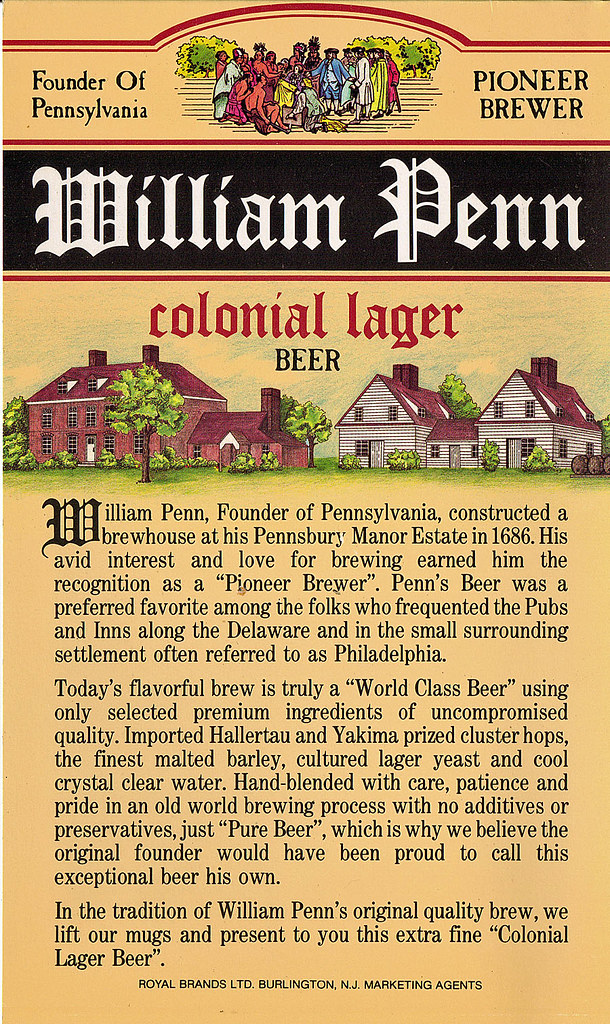
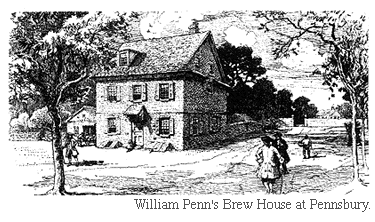
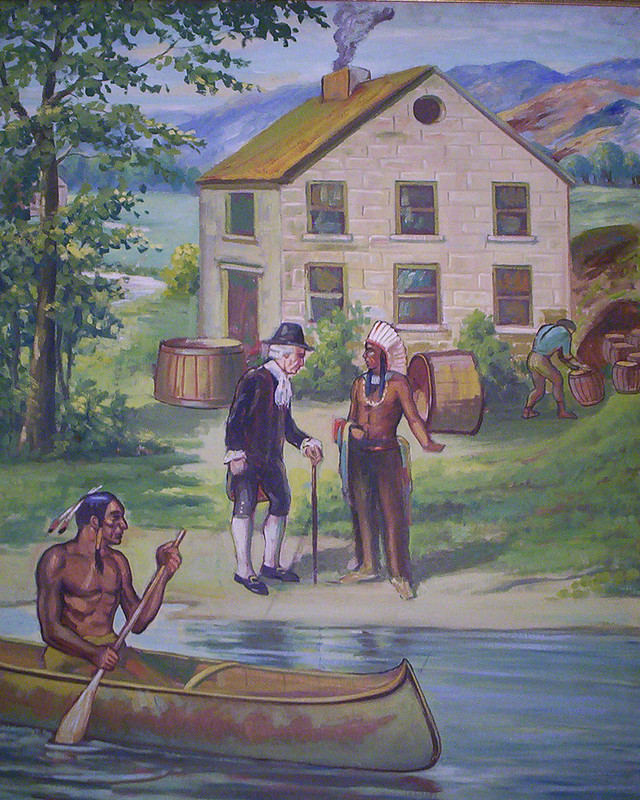
Beer and brewing have held an important place in Pennsylvania and Philadelphia history. The first brewery in the City was erected in 1683. William Penn constructed a brew house on his Pennsbury Manor estate in Bucks County. In the 18th century, the drink of preference in most taverns was beer or ale. By 1793, Philadelphia was producing more beer than all the other seaports in the country. The first steam engine was installed in Francis Perot’s brewery in 1819. This was the height of technology and the first time an engine was used to produce beer. Lager beer was first introduced in 1840 by Philadelphia brewer John Wagner. At the Centennial Exhibition held in Philadelphia in 1876, the United States Brewers’ Association constructed the Brewers’ Building to showcase all aspects of brewing. At one time, there were more than 100 breweries operating in Philadelphia and its surrounding areas.

This biography was printed in the “The Columbian Exposition and World’s Fair Illustrated,” from 1893:

This description is from an Advertising Print for Welde and Thomas Brewing Co., created around 1895, and now in the collection of the Smithsonian’s National Museum of American History.

This colorful framed print, an ad for the Welde and Thomas Brewing Company, of Philadelphia, also commemorates the 1895 America’s Cup race between the American yacht Defender and the British Valkyrie III. Imagery of the yacht race dominates the print and the American vessel, the ultimate victor in the match, holds primacy of place. Defender’s full sails provide a dramatic canvas for the names of two of the company’s products: Penn and Sanitas Beers. These brands, along with Quaker, were among those brewed by Welde and Thomas.

Three detailed insets border the print. One shows “Penn’s Brewery of 1682” in Pennsbury, Buck’s County; another shows the Welde and Thomas buildings at Juniper and Fitzwater Streets in Philadelphia; and the third is an image of William Penn holding a bottle of beer. The ad deftly aligns Welde and Thomas beer to icons of American success: the very founding of Philadelphia and its early embrace of brewing as well as an American yacht’s triumphant defense of the America’s Cup.

German immigrant John Welde established a brewery in Philadelphia in 1884, forming a partnership with Philadelphia businessman John Thomas the following year. In 1886, they moved to the Juniper and Fitzwater Streets location and invested in new equipment, increasing their capacity dramatically. In 1897, Welde and Thomas consolidated operations with five other breweries, organizing under the name Consumer’s Brewing Company. Thomas died in 1899 and Welde in 1901.

welde-and-thomas-poster

Here is an obituary of Welde from the Philadelphia Times on August 3, 1901:

Perhaps more interesting, after his death it was revealed that in his will he left explicit instructions to turn his funeral into a beer bash, setting aside funds for a band to play and for kegs of his beer to be given to local organizations he had been involved with along wih free beer for anyone who attended his funeral and walked with the casket to the gravesite.

Filed Under: Birthdays, Just For Fun Tagged With: History, Pennsylvania, Philadelphia

Historic Beer Birthday: Charles Weyand

March 1, 2026 By Jay Brooks Leave a Comment

Today is the birthday of Charles Weyand (March 1, 1869-April 28, 1905). He was born in upstate New York, and was the son of Christian Weyand, who co-founded what would become the Christian Weyand Brewing Co. in Buffalo, New York. There’s not too much information about Charles, I suspect because he died fairly young and worked as the secretary and treasurer for his family’s business. His brother, John Weyand, became the president of the brewery after his father died, and it remained in business until closed by prohibition in 1920.

This is his obituary, from the Buffalo News, April 28, 1905:

This biography of Weyand is from “Our County and its people, A descriptive work on Erie County, New York,” edited by Truman C. White, 1898:

Weyand, Charles M., Buffalo, secretary and treasurer of the Christian Weyand Brewing Company, is a son of Christian and Magdelen (Meyer) Weyand, and was born in Buffalo, March 1, 1869. In order to thoroughly equip himself for the business of life he intended to pursue, after passing through the Canisius College he entered the Bryant & Stratton Business College, where he obtained a thorough business education. He immediately entered business with his father and in 1890, when the concern was made a stock company, he was elected secretary and treasurer, which responsible position he now holds. He was married in October, 1891, to Bohumila Louise Andele of Buffalo, and they have one daughter. Mr. Weyand is a member of the Buffalo Orpheus and the St. Louis Dramatic Circle.

Filed Under: Birthdays, Breweries Tagged With: Advertising, History, Pennsylvania

Beer In Ads #5137: Bock Is Back… Look For It March 1st

February 28, 2026 By Jay Brooks Leave a Comment

Two years ago I decided to concentrate on Bock ads for awhile. Bock, of course, may have originated in Germany, in the town of Einbeck. Because many 19th century American breweries were founded by German immigrants, they offered a bock at certain times of the year, be it Spring, Easter, Lent, Christmas, or what have you. In a sense they were some of the first seasonal beers. “The style was later adopted in Bavaria by Munich brewers in the 17th century. Due to their Bavarian accent, citizens of Munich pronounced ‘Einbeck’ as ‘ein Bock’ (a billy goat), and thus the beer became known as ‘Bock.’ A goat often appears on bottle labels.” And presumably because they were special releases, many breweries went all out promoting them with beautiful artwork on posters and other advertising. With Spring approaching, there are so many great examples that I’m going to post two a day for a few months.

Saturday’s second ad is for not for a specific Bock Beer, but for every Bock made by the member breweries of the Western Pennsylvania Brewers’ Association. The ad was published on February 28, 1951. This one was for the Western Pennsylvania Brewers’ Association which was founded in 1902 by at least a dozen different breweries. This ad ran in The Pittsburgh Press, of Pittsburgh, Pennsylvania.

Filed Under: Art & Beer, Beers, Breweries, Just For Fun Tagged With: Advertising, Bock, History, Pennsylvania

Beer In Ads #5134: Lord Bushkill On Bushkill Bock

February 27, 2026 By Jay Brooks Leave a Comment

Two years ago I decided to concentrate on Bock ads for awhile. Bock, of course, may have originated in Germany, in the town of Einbeck. Because many 19th century American breweries were founded by German immigrants, they offered a bock at certain times of the year, be it Spring, Easter, Lent, Christmas, or what have you. In a sense they were some of the first seasonal beers. “The style was later adopted in Bavaria by Munich brewers in the 17th century. Due to their Bavarian accent, citizens of Munich pronounced ‘Einbeck’ as ‘ein Bock’ (a billy goat), and thus the beer became known as ‘Bock.’ A goat often appears on bottle labels.” And presumably because they were special releases, many breweries went all out promoting them with beautiful artwork on posters and other advertising. With Spring approaching, there are so many great examples that I’m going to post two a day for a few months.

Friday’s first ad is for Bushkill Bock Beer, which was published on February 27, 1936. This one was for Bushkill Products Co. of Easton, Pennsylvania and was founded in 1848 or 1849 by Xavier Veile. They’re advertising in Florida as “Bushkill Beer and Ale: Fine Old Pennsylvania Brew.” This ad ran in The Miami Herald, of Miami, Florida. It’s essentially a cartoon for their Bock beer, signed by “Tyler.”

Filed Under: Art & Beer, Beers, Breweries, Just For Fun Tagged With: Advertising, Bock, Cartoons, Comics, Florida, History, Pennsylvania

Historic Beer Birthday: John Emmerling

February 22, 2026 By Jay Brooks 2 Comments

empire-brewery
Today is the birthday of John Emmerling (February 21, 1851-May 24, 1912). He was born in Philadelphia, but moved to Johnston in Western Pennsylvania, where he founded the Empire Brewery in 1878. It was concurrently also known as the Emmerling Brewing Co. the entire time it was in business, until it was closed by Prohibition in 1920.

emmerling-portrait
Here’s a biography of Emmerling, written in 1896 from the Biographical and Portrait Cyclopedia of Cambria County:

JOHN EMMERLING, proprietor of the Empire Brewery, of Johnstown, Pennsylvania, was born in Philadelphia, this State, February 22, 1851. His education was acquired in the public schools of his native city, upon the completion of which he learned the business of brewing. Subsequently, he traveled extensively, visiting many of the more important cities of the West, and finally, located in Pittsburg, where he married. In 1878 he came to Johnstown, and immediately embarked in the brewing business on his own account. Starting in the humble building now known as the Eintracht Hall, the brewery of John Emmerling prospered so well that in one year it was moved to the larger building now occupied by the bottling house of William Thomas. Six years more saw the business grow until it became necessary to build and remove to the large and commodious brick structure which occupies nearly half a square, fronting on Horner street. The plant is two hundred by one hundred and eighty feet, three stories high, and has an annual output of eight thousand barrels, and contains all the latest improved machinery known to the brewer’s art, including engines, two ten-ton refrigerators, seven pumps for various purposes, and bottling apparatus. A visit to the vault in which the beer is stored, gives to the uninitiated a genuine surprise. Following the guide, one wanders in and out among the huge hogsheads, some of which contain forty, and others as high as eighty barrels of the amber fluid, surrounded on all sides by pipes covered to the depth of several times their own thickness with white frost, produced by the intense cold of the ammonia and brine which they contain, one can but express astonishment at the wonderful advance made since the time when nature alone supplied the cooling substance. So large is the local demand for the beer brewed at this establishment, that very little is shipped out of the city. Two wagons are kept going constantly, and two others are used when the demand requires. The present force consists of fourteen men, to which several others are added when increased business makes demand. On September 26, 1872, Mr. Emmerling married Miss Phil. Houch, a daughter of Earnest Houch, a prominent citizen of Pittsburg, and to them have been born ten children. Mr. Emmerling was one of the organizers of the board of trade, in which he takes an active interest.

john-emmerling-picture

And this is his obituary from the Western Brewer, June 1912

emmerling-obit-1-
emmerling-obit-2-

emmerling-drives
John Emmerling at the wheel of a 1908 Maxwell that he drove round-trip between Pittsburgh and Philadelphia in a race with a $20,000 prize at stake (around $532,258 today’s money). Emmerling (who owned Emmerling Brewery) came out on top.

This is John Emmerling’s brewery, also known as the Empire Brewery in Johnston, Pennsylvania, which also served as the family’s residence.

emmerling-brewery

Emmerlings-export

Filed Under: Birthdays, Breweries, Just For Fun Tagged With: History, Pennsylvania

Beer In Ads #5212: Once Again … It Is The Professor’s Please To Present Bartel’s Bock Beer

February 20, 2026 By Jay Brooks Leave a Comment

Two years ago I decided to concentrate on Bock ads for awhile. Bock, of course, may have originated in Germany, in the town of Einbeck. Because many 19th century American breweries were founded by German immigrants, they offered a bock at certain times of the year, be it Spring, Easter, Lent, Christmas, or what have you. In a sense they were some of the first seasonal beers. “The style was later adopted in Bavaria by Munich brewers in the 17th century. Due to their Bavarian accent, citizens of Munich pronounced ‘Einbeck’ as ‘ein Bock’ (a billy goat), and thus the beer became known as ‘Bock.’ A goat often appears on bottle labels.” And presumably because they were special releases, many breweries went all out promoting them with beautiful artwork on posters and other advertising. With Spring approaching, there are so many great examples that I’m going to post two a day for a few months.

Friday’s first ad is for Bartels Bock Beer, which was published on February 20, 1942. This ad was for the Bartels Brewing Co. of Edwardsville, Pennsylvania, which was originally founded in 1898. This ad ran in The Wilkes-Barre Times Leader Evening News of Wilkes-Barre, Pennsylvania.

Filed Under: Art & Beer, Beers, Breweries, Just For Fun Tagged With: Advertising, Bock, History, Pennsylvania

Beer In Ads #5211: It’s Here Again … Bock Beer At Its Best!

February 19, 2026 By Jay Brooks Leave a Comment

Two years ago I decided to concentrate on Bock ads for awhile. Bock, of course, may have originated in Germany, in the town of Einbeck. Because many 19th century American breweries were founded by German immigrants, they offered a bock at certain times of the year, be it Spring, Easter, Lent, Christmas, or what have you. In a sense they were some of the first seasonal beers. “The style was later adopted in Bavaria by Munich brewers in the 17th century. Due to their Bavarian accent, citizens of Munich pronounced ‘Einbeck’ as ‘ein Bock’ (a billy goat), and thus the beer became known as ‘Bock.’ A goat often appears on bottle labels.” And presumably because they were special releases, many breweries went all out promoting them with beautiful artwork on posters and other advertising. With Spring approaching, there are so many great examples that I’m going to post two a day for a few months.

Thursday’s second ad is for Ortlieb Bock Beer, which was published on February 19, 1959. This ad was for the Henry F. Ortlieb Brewing Co. of Philadelphia, Pennsylvania, which was originally founded in 1859 by Louis Schweitzer. Henry Ortlieb appears to have acquired the brewery around 1893. This ad ran in The Philadelphia Inquirer, also of Philadelphia, Pennsylvania. There’s some great ad copy here, including “It’s the he-man brew — that the gals love too!” and it’s “The Wet beer.”

Filed Under: Art & Beer, Beers, Breweries, Just For Fun Tagged With: Advertising, Bock, History, Pennsylvania, Philadelphia

Next Page »

Find Something

Northern California Breweries

Please consider purchasing my latest book, California Breweries North, available from Amazon, or ask for it at your local bookstore.

Recent Comments

  • Bob Paolino on Beer Birthday: Grant Johnston
  • Gambrinus on Historic Beer Birthday: A.J. Houghton
  • Ernie Dewing on Historic Beer Birthday: Charles William Bergner 
  • Steve 'Pudgy' De Rose on Historic Beer Birthday: Jacob Schmidt
  • Jay Brooks on Beer Birthday: Bill Owens

Recent Posts

  • Beer Birthday: Lucy Corne-Duthie March 4, 2026
  • Beer In Ads #5143: The Bockiest Bock Beer In Town March 4, 2026
  • Beer Birthday: Tonya Cornett March 4, 2026
  • Beer Birthday: Emily Sauter March 4, 2026
  • Beer In Ads #5142: First Taste Of Spring Sunshine Bock Beer March 3, 2026

BBB Archives

Feedback

Head Quarter
This site is hosted and maintained by H25Q.dev. Any questions or comments for the webmaster can be directed here.