Brookston Beer Bulletin

Jay R. Brooks on Beer

  • Home
  • About
  • Editorial
  • Birthdays
  • Art & Beer

Socialize

  • Dribbble
  • Email
  • Facebook
  • Flickr
  • GitHub
  • Instagram
  • LinkedIn
  • Pinterest
  • RSS
  • Twitter
  • YouTube

Powered by Genesis

Historic Beer Birthday: Charles Duff

April 7, 2025 By Jay Brooks

ireland

Today is the birthday of Charles Duff (April 7, 1894–October 15, 1966). He was primarily known as “an Irish author of books on language learning,” although his most famous book was “A Handbook of Hanging,” which also covered “electrocution, decapitations, gassings, innocent men executed and botched executions.” He was an interesting, eclectic person, to say the least, and a couple of years ago Gary Gillman did a nice job summarizing his quirky life in a post entitled “Charles Duff on the Circa-1950s Irish Pub.”

charles-duff
Charles Duff.

But he also wrote a few travel guides, including one called “Ireland and the Irish,” published in 1952. In it, he starts with Irish history and its folklore, in fact spending nearly 100 pages of the 282-page book, before actually suggesting what the reader should see in Ireland.

ireland-and-the-irish

Duff also had a lot to say about beer in Ireland at the time, and it’s fascinating to see his views over 75 years later. Gillman also analyzes his writing historically and reprints some of his great writing, and you should read that, too, but I’m also sharing my favorite passages from Duff regarding the beer.

Duff-ireland-1

In discussing Dublin, Duff attempts to provide an image of the typical modern Dublin pub, and describes a place I’d certainly like to visit.

The atmosphere is cocktailish, the seats are most comfortable, the carpets soft. I did not find the drinks or service any less efficient, nor, I must say in fairness, any more efficient than in the old days when, before Dublin was really awake in the morning, a kindly and sympathetic barman diagnosed your hangover and might prescribe, as he did for me on one occasion, a seidlitz powder, telling me not to drink anything alcoholic before noon, when he recommended a dozen oysters and a bottle or two of stout “to settle the inside and get back the feelings of a Christian.” Today the atmosphere is convivial and friendly, and you will get a good drink there. But when you go out into the street you will not have the feelings we had after a session there. I think the main difference is that in the old days the drinkers in ‘Davy Byrne’s’ had a higher opinion of one another than they have now. And in the old days you sat on any sort of old chair with a pint in front of you on a very plain table and knew that there was no other pub quite like this. It is almost ill- mannered to make the comparison, and perhaps unfair to the present house which, after all, is not responsible for the age in which we live.

Another interesting insight about Dublin, is that you should read some Joyce before your visit.

 It is not a bad preparation for a visit to Dublin to read James Joyce’s Dubliners, Portrait of the Artist as a Young Man, and Ulysses—in that order if you have not already read Joyce. On your second visit, or perhaps on some later occasion, you can have a try at Finnegan’s Wake, which a Dublin friend assures me is best read by moonlight as you lean over one of the Liffey bridges, and preferably while in that state of imaginative gestation to which a reasonable consumption of the wine of the country—Guinness’s Stout—is conducive. But you will not need any of this preparation to tell you that Dubliners are not always easy people to understand, and experience of Ireland can lead you to the conclusion that it is more difficult to grasp and analyse the mentality of the Dubliner than of any other kind or class of native. For one thing, Dubliners are a more mixed breed than you will find anywhere in Ireland, because Dublin has been a cosmopoli- tan community longer than any other in Ireland. This ‘town of the ford of the hurdles’ had its original Picts, Celtic Irish, its Norsemen, its Normans and then its English as the principal elements in its ethnic constitution. It has also had a generous sprinkling of the adventurous; and of the adven- turers, military, political and commercial, who invariably find their way to promising territories. In Dublin you will find surnames which come direct or are derived from those of almost every country and race in Europe; one cannot say this of any other Irish city or town.

Duff’s other travel guide was called “England and the English,” in which he followed a similar format as his Irish guidebook. This one was published a few years later, in 1955. Gillman also analyzes Duff’s English writing, too, in a two-part post entitled Charles Duff Eulogises the English Pub – Part I, which primarily provides context and background to the 1950s climate in which Duff was writing. But in Part II he tackles Duff’s take on the Eglish pub.

england-and-the-english

But I’m more interested in just sharing his stories. Like his previous work, it is filled with interesting anecdotes about like in England, with this one from an experience in World War II involving beer and cider being particularly funny.

By way of final warning, I can tell of an episode I am not likely to forget. There was a shortage of beer in the last years of the Second World War when I was staying at the cottage in Devon. That did not greatly worry local people; they drank their local cider. But very often the American troops stationed in the neighbourhood suffered distress from the lack of alcohol and (I suspect, somewhat to their disgust) were driven back on cider, which they contemptuously regarded as a soft drink 1 Friendly patrons of the pub advised them to ‘take it easy’ until they got used to it. But those hearties just laughed, possibly regarding the civilian adviser as needlessly timid; and they just went ahead. At about the third mug the fun began then the cider started to have effect. Another mug or two and the balloon went up. The usual effects of strong alcohol were felt : in this case of an alcoholic beverage to which those strong, healthy men were quite unaccustomed. We all felt sorry for them, and for their poor heads next day. And as, one by one they rolled off, the locals smiled and called for another mug saying: “Don’t it just show ‘ee !”

My friend would often reminisce and philosophize about cider, telling me that farm-workers used to have little barrels (he later showed me his; it held about a pint and a half) which they took with them to their work, but that the young genera- tion know nothing of this. He thought that modern cider is better and purer than that of his youth. He had known of men who drank themselves to death on cider, but insisted that this is rare; because, he said, cider is one of those rare drinks which carries its own safety-point and, when that point has been reached depending on the drinker’s capacity and head there is no inclination to drink any more. “How very con- venient!” the conservative drinker will say. The illustrious may comment: “How awful! ” There it is.

Duff discusses pubs more generally when covering the “prosperous market-town of Bishop’s Stortford (about thirty miles from London) is on the River Stort, which forms the boundary with Essex.”

It was precisely this easy-going atmosphere which I liked about Bishop’s Stortford. With it goes a great variety of friendly pubs Herts is a good county for beer some of which confront the traveller unexpectedly, and inside are found to be just the sort of typical little country pubs one reads about. You can find a pub almost anywhere in the town. There are the major houses such as the ‘George* and the ‘Chequers’, but I felt attracted by old names such as:

  • The Feathers
  • The Falcon
  • The Anchor
  • The Swan
  • The Grapes
  • The Reindeer
  • The Boar’s Head
  • The Half Moon
  • The Rising Sun
  • The Castle The Royal Oak
  • The Bull
  • The Fox
  • The Bricklayers’ Arms

most of them with their colourful, interesting signs. The names I have listed do not exhaust the possibilities of Bishop’s Stortford, and merely represent what I recall easily. The little ‘Bricklayers’ Arms’ on the road to Hadham had just received a fresh coat of paint the last time I was there. I thought it looked a very beautiful little pub from outside. Inside I was not disappointed: the beer was delicious, and Mrs. Morgan, the landlady, a great personality whom I am not likely to forget.

I should like to dwell on these pubs, some of which are very old, because of their importance as an institution of considerable import in the social fabric of this country. Hertfordshire, and, indeed, all of this eastern area, can provide examples of more than ordinary interest. At St. Albans there is the ‘Fighting Cocks’, which is said to be the oldest inhabited licensed house in England. Thomas Burke mentions A.D. 795 as the date of its foundation. “The traveller by car who takes the Great North Road the historic highway linking London with Edinburgh will come upon many pub signs which will inevitably attract his attention and often make him stop for a closer scrutiny. A little conversation with landlords and know- ledgeable local people will quickly show that the English public-house (as we usually call it now), with which one may include the terms ‘inn’ and ‘tavern’, embraces a vast social his- tory that can be traced back to Saxon times. For over one thou- sand years the house which provides food and drink for the traveller and wayfarer, and a centre or dub for local people, has been a part of English life. If I have not mentioned the subject until now, it is not because other areas of England are less rich in public-houses than this eastern part, but merely that it falls in more conveniently at this stage. What I say about the pubs here can be paralleled for most parts of England and, as it is, I can deal with it only in the most summary way. Take, for example, the ‘Letchworth Hair at Letchworth, formerly a manor-house and, some may say, too much of an hotel to be considered as a ‘typical’ pub. It is mentioned in Domesday Book. And the ‘Sun’ at Hitchin, which was used by the Parliamentarians during the Civil War (1642-1648), and, in 1745, was the place in which North Hertfordshire men enrolled for the Resistence Movement that was to face the advancing army of the Pretender. Some of these old buildings are architecturally and artistically extremely interesting, externally or internally, and sometimes in both senses. As we move northwards, a slight detour takes us to Buckden and Huntingdon, both in Huntingdonshire. The first town has the ‘Lion’ with a lounge beautifully adorned by some magnificent oak beams; the second town has the ‘George’, with its long frontage and a lovely row of fifteen windows. Stilton, where one of the world’s great cheeses is made, has the ‘Bell’ dating back to the spacious days when men travelled on horseback, more often than not in companies in order to be able to cope with the activities of such gentry as Dick Turpin. Lincolnshire has some noteworthy houses: the ‘George’ at Stamford where, in 1746, William Duke of Cumberland put up after his victory over Bonnie Prince Charlie at Culloden; and the curiously named ‘Ram Jam Inn’, a haunt of Dick Turpin and his men. At Grantham there is another ‘George’, visited by Charles Dickens in 1838 and about which he wrote to his wife, “. . . the most comfortable inn I ever put up in”. In Grantham there is also the ancient ‘Angel and Royal’ with seven hundred years of history behind it and originally a favourite house of the Knights Templars. Kings held their courts there; the present building dates from about the middle of the i4th century. These few dips will indicate the scope of the subject, but I think I have said sufficient to show the reader that the English pub is a very old, very strong institution and in every way worthy of his attention. I have never yet entered a pub, however humble, from which I did not emerge refreshed in mind and body, and I think that a good argument could be put up in favour of the pub as the most characteristic institution of the people of England: of the men, that is, for it is only in comparatively recent years that women are frequenting licensed premises with the approval of the younger generation of men, of course, but often with the strong disapproval of old regulars. To these it is unbecoming to the spirit and atmosphere of their club that lively and frivolous girls the more attractive they are, the worse it is ! often in slacks or even shorts, should lower the serious tone of the establishment with their disconcerting jazzing, crooning and giggling. This little survival of Puritanism is quickly passing and in many places no longer exists. It will soon be gone. The pub will survive by adapting itself to the social environment: as it always has done in the past.

He also stresses that one should never discuss politics or religion in a pub, good advice now as then.

Again it comes back to the desire for political stability, for if there is one thing that the English have learnt by bitter experience, it is that nothing can cause greater disturbances than religion, especially when used for a political end. A man’s religion is his own affair. Hence, in conversation it is never even discussed! The unwritten law of the English pub is: No religion.

Duff-hanging
Still his most famous work.

Filed Under: Birthdays, Just For Fun, Related Pleasures Tagged With: England, Ireland, Language, Pubs, Writing

A Vade Mecum For Malt-Worms

June 20, 2019 By Jay Brooks

malt-worm

Ned Ward was “a satirical writer and publican in the late 17th and early 18th century, based in London.” He is believed to have been born some time in 1667, but died June 20, 1731. “His most famous work is The London Spy. Published in 18 monthly installments starting in November 1698, it was described by its author as a ‘complete survey’ of the London scene. It was first published in book form in 1703.”

Ned_Ward_by_Michael_Vandergucht

But he also wrote a work entitled “A Vade Mecum For Malt-Worms,” published 1715. The book has a long subtitle, part of which is “A Guide to Good Fellows. Being a Description of the Manners and Customs of the most Eminent Publick Houses, in and about the Cities of London and Westminster.” The Dedication is priceless:

Malt-Worms-03
Malt-Worms-04

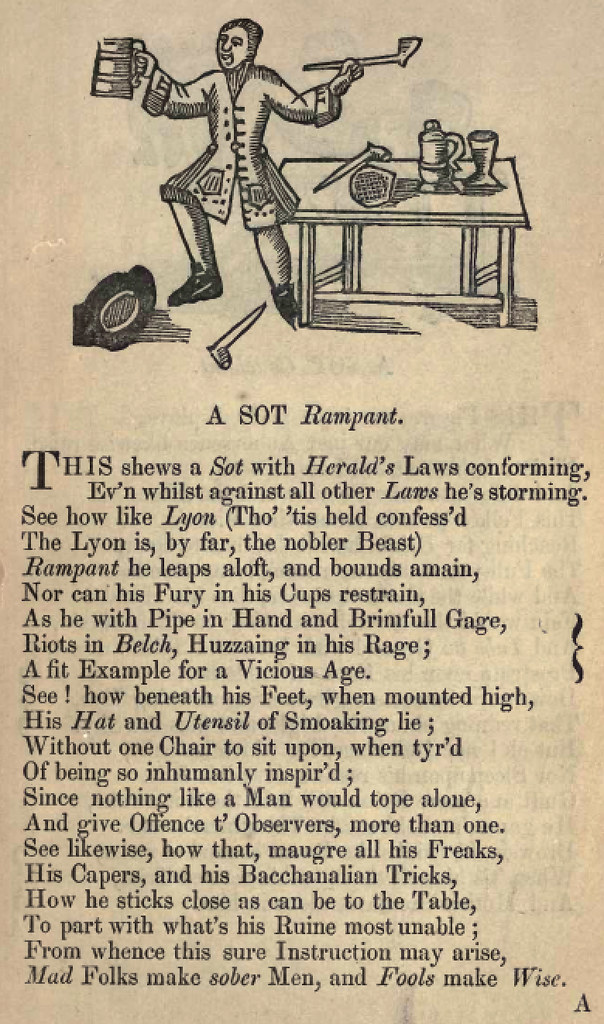
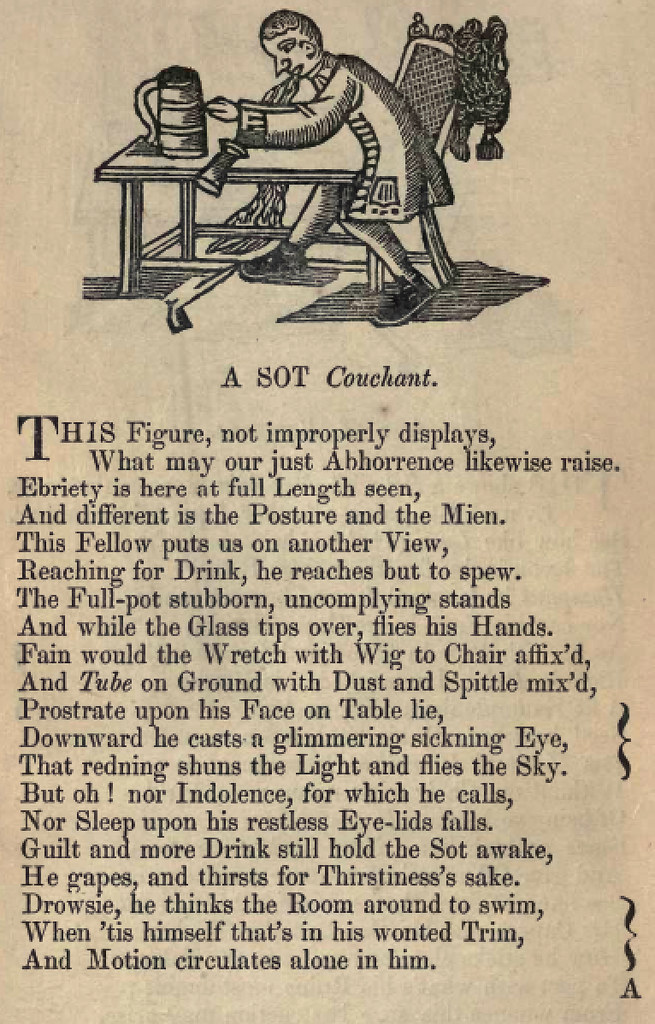
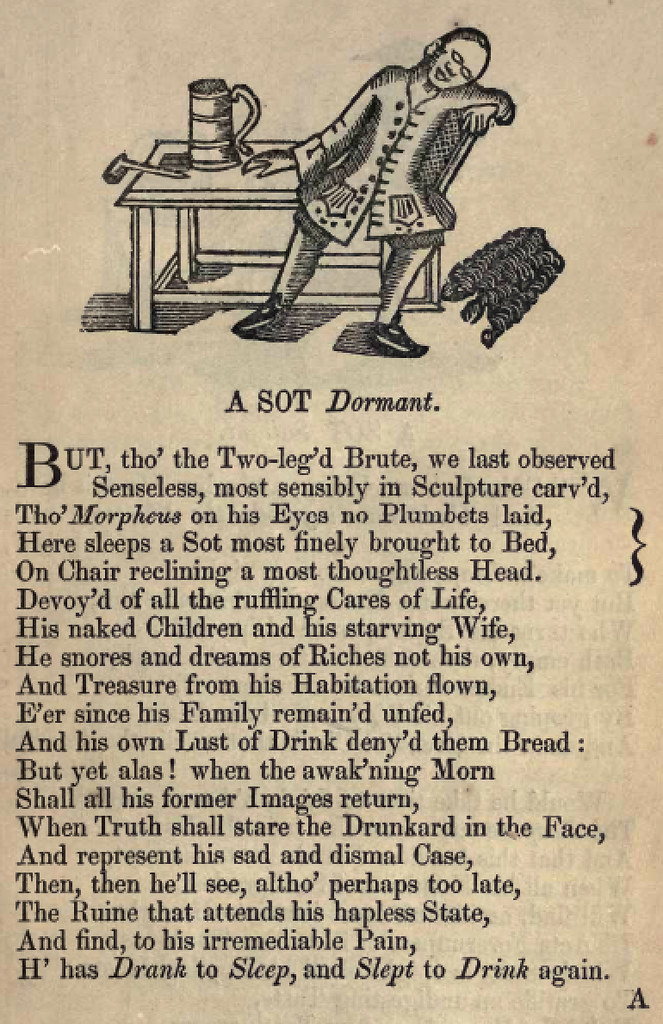
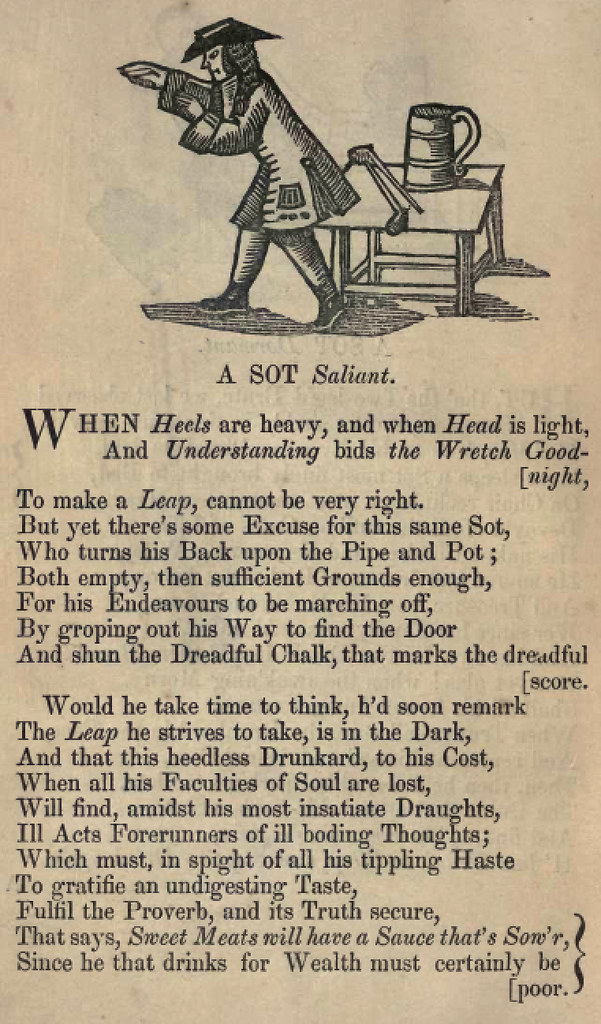
The first part of the book includes these descriptions of different kinds of drinkers, or sot:

Malt-Worms-05
Malt-Worms-06
Malt-Worms-07
Malt-Worms-08

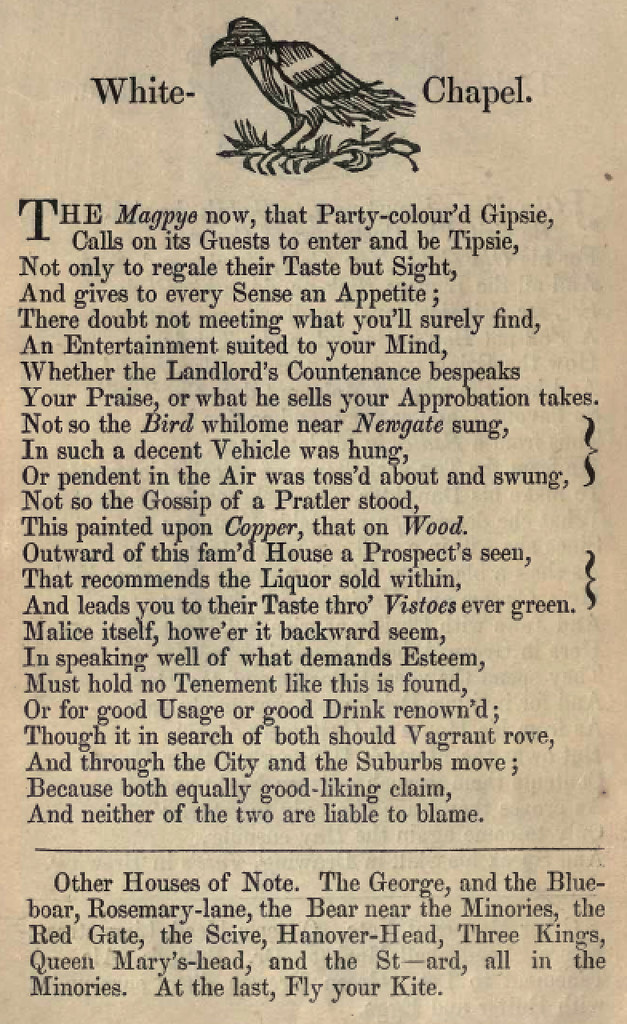
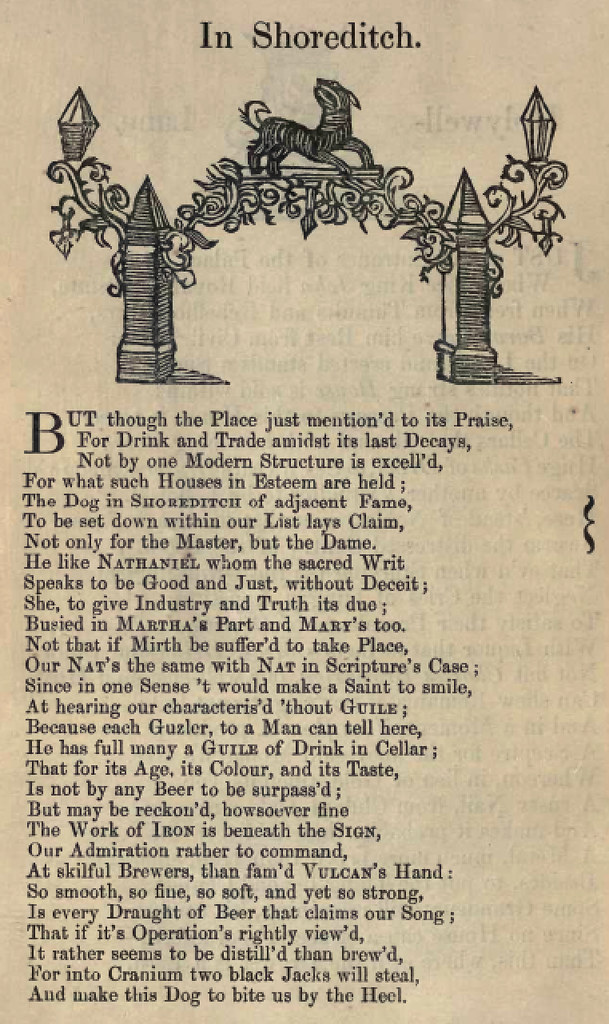
But the majority of the book, in two parts, is taken up by what are essentially reviews or descriptions of London taverns, with colorful portraits of the patrons one might find at each one. Essentially, it’s an early Good Beer Guide to London. The whole book is in the public domain, so you can download it or take a look at it online at the Internet Archive. Here are a couple of representative examples.

Malt-Worms-14
Malt-Worms-18

Filed Under: Just For Fun, Related Pleasures Tagged With: England, Great Britain, History, London, Pubs

Beer In Ads #2477: Cafe Royal In Edinburgh

December 1, 2017 By Jay Brooks


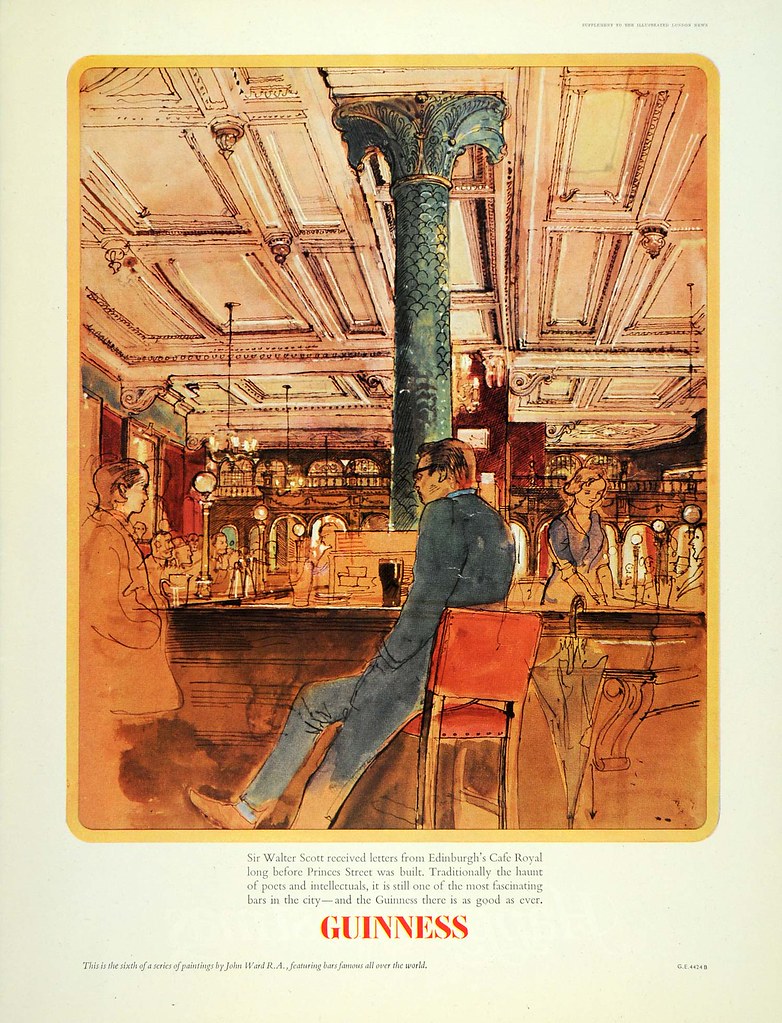
Friday’s ad is for Guinness, from 1967. While the best known Guinness ads were undoubtedly the ones created by John Gilroy, Guinness had other creative ads throughout the same period and afterward, too, which are often overlooked. In the late-1960s, Guinness hired well-known English portrait artist, landscape painter and illustrator John Stanton Ward to do a series of paintings of famous pubs and bars around the world. In this ad, No. 6 in the series, the painting is of the Cafe Royal, on Princes Street in Edinburgh, Scotland.

Ward-Guinness-1968-cafe-royal-6

Filed Under: Art & Beer, Beers Tagged With: Advertising, Bars, Guinness, History, Pubs

Beer In Ads #2476: Long Hall Bar In Dublin

November 30, 2017 By Jay Brooks


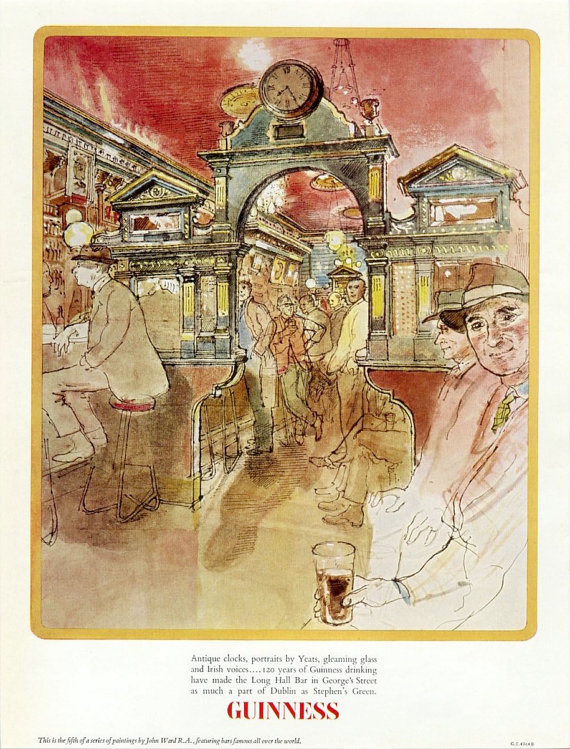
Thursday’s ad is for Guinness, from 1967. While the best known Guinness ads were undoubtedly the ones created by John Gilroy, Guinness had other creative ads throughout the same period and afterward, too, which are often overlooked. In the late-1960s, Guinness hired well-known English portrait artist, landscape painter and illustrator John Stanton Ward to do a series of paintings of famous pubs and bars around the world. In this ad, No. 5 in the series, the painting is of the Long Hall Bar, on George’s Street in Dublin, Ireland.

Ward-Guinness-1967-long-hall-bar-5

Filed Under: Art & Beer, Beers Tagged With: Advertising, Bars, Guinness, History, Pubs

Beer In Ads #2475: Downey’s Steak House In New York

November 29, 2017 By Jay Brooks


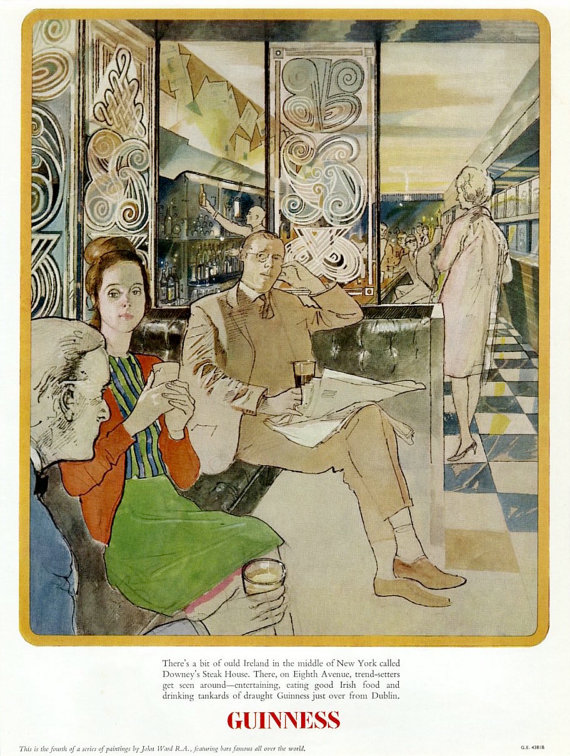
Wednesday’s ad is for Guinness, from 1968. While the best known Guinness ads were undoubtedly the ones created by John Gilroy, Guinness had other creative ads throughout the same period and afterward, too, which are often overlooked. In the late-1960s, Guinness hired well-known English portrait artist, landscape painter and illustrator John Stanton Ward to do a series of paintings of famous pubs and bars around the world. In this ad, No. 4 in the series, the painting is of Downey’s Steak House, on Eighth Avenue in New York City, New York.

Ward-Guinness-1968-downeys-steak-house-4-a

Filed Under: Art & Beer, Beers Tagged With: Advertising, Bars, Guinness, History, Pubs

Beer In Ads #2474: The Marble Bar In Sydney

November 28, 2017 By Jay Brooks


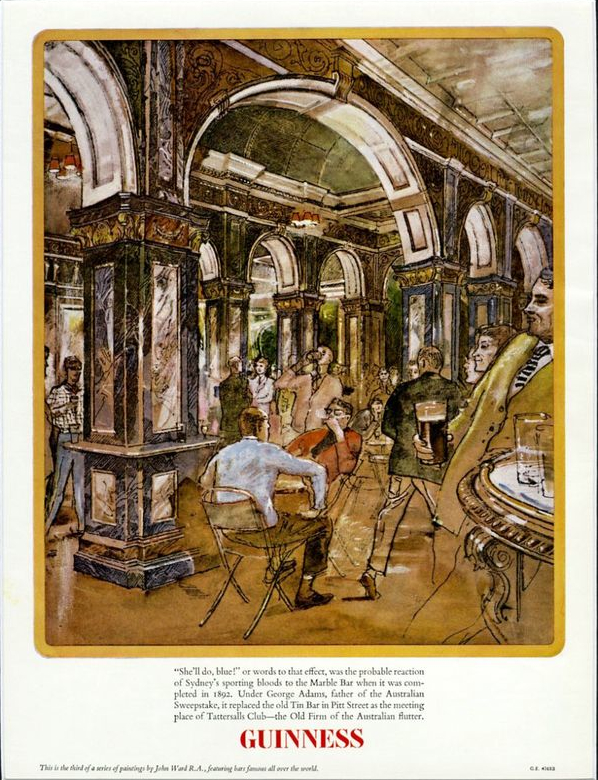
Tuesday’s ad is for Guinness, from 1968. While the best known Guinness ads were undoubtedly the ones created by John Gilroy, Guinness had other creative ads throughout the same period and afterward, too, which are often overlooked. In the late-1960s, Guinness hired well-known English portrait artist, landscape painter and illustrator John Stanton Ward to do a series of paintings of famous pubs and bars around the world. In this ad, No. 3 in the series, the painting is of The Marble Bar in Sydney, Australia.

Ward-Guinness-1968-marble-bar-3a

Filed Under: Art & Beer, Beers Tagged With: Advertising, Bars, Guinness, History, Pubs

Beer In Ads #2472: The Salisbury in London

November 26, 2017 By Jay Brooks


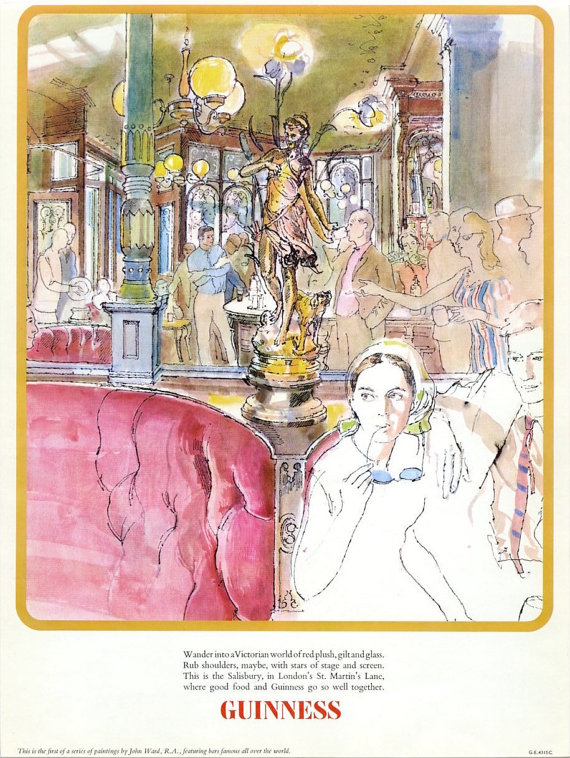
Sunday’s ad is for Guinness, from 1966. While the best known Guinness ads were undoubtedly the ones created by John Gilroy, Guinness had other creative ads throughout the same period and afterward, too, which are often overlooked. In the late-1960s, Guinness hired well-known English portrait artist, landscape painter and illustrator John Stanton Ward to do a series of paintings of famous pubs and bars around the world. In this ad, No. 1 in the series, the painting is of The Salisbury on St. Martin’s Lane in London.

Ward-Guinness-1966-salisbury-1

Filed Under: Art & Beer, Beers Tagged With: Advertising, Bars, Guinness, History, Pubs

The Mug-House Riots

July 23, 2017 By Jay Brooks

beer-mug
Today, just over three-hundred years ago — July 23, 1716 — a little-known historical event took place in London, known as the Mug-House Riots, between Jacobite and Hanoverian partisans.

One of my favorite old books on dates, entitled “Chamber’s Book of Days,” which was published in England, in 1869, has an account of the Mug-Houe Riots:

On the 23rd of July 1716, a tavern in Salisbury Court, Fleet Street, was assailed by a great mob, evidently animated by a deadly purpose. The house was defended, and bloodshed took place before quiet was restored. This affair was a result of the recent change of dynasty. The tavern was one of a set in which the friends of the newly acceded Hanover family assembled, to express their sentiments and organise their measures. The mob was a Jacobite mob, to which such houses were a ground of offence. But we must trace the affair more in detail.

mug_house

Amongst the various clubs which existed in London at the commencement of the eighteenth century, there was not one in greater favour than the Mug-house Club, which met in a great hall in Long Acre, every Wednesday and Saturday, during the winter. The house had got its name from the simple circumstance, that each member drank his ale (the only liquor used) out of a separate mug. There was a president, who is described in 1722 as a grave old gentleman in his own gray hairs, now full ninety years of age.’ A harper sat occasionally playing at the bottom of the room. From time to time, a member would give a song. Healths were drunk, and jokes transmitted along the table. Miscellaneous as the company was—and it included barristers as well as trades-people—great harmony prevailed. In the early days of this fraternity there was no room for politics, or anything that could sour conversation.

By and by, the death of Anne brought on the Hanover succession. The Tories had then so much the better of the other party, that they gained the mob on all public occasions to their side. It became necessary for King George’s friends to do something in counteraction of this tendency. No better expedient occurred to them, than the establishing of mug-houses, like that of Long Acre, throughout the metropolis, wherein the friends of the Protestant succession might rally against the partizans of a popish pretender. First, they had one in St. John’s Lane, chiefly under the patronage of a Mr. Blenman, a member of the Middle Temple, who took for his motto, ‘Pro rege et loge;’ then arose the Roebuck mug-house in Cheapside, the haunt of a fraternity of young men who had been organised for political action before the end of the late reign. According to a pamphlet on the subject, dated in 1717,

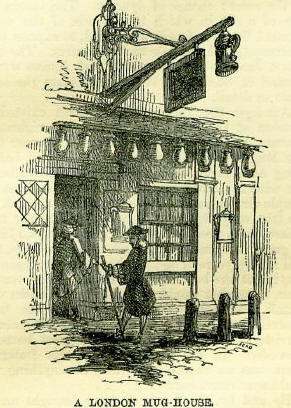
‘The next mug-houses opened in the city were at Mrs. Read’s coffee-house in Salisbury Court, in Fleet Street, and at the Harp in Tower Street, and another at the Roebuck in Whitechapel. About the same time, several other mug-houses were erected in the suburbs, for the reception and entertainment of the like loyal societies; viz., one at the Ship, in Tavistock Street, Covent Garden, which is mostly frequented by loyal officers of the army; another at the Black Horse, in Queen Street, near Lincoln’s-Inn-Fields, set up and carried on by gentlemen, servants to that noble patron of loyalty, to whom this vindication of it is inscribed [the Duke of Newcastle]; a third was set up at the Nag’s Head, in James’s Street, Covent Garden; a fourth at the Fleece, in Burleigh Street, near Exeter Exchange; a fifth at the Hand and Tench, near the Seven Dials; several in Spittlefields, by the French refugees; one in Southwark Park; and another in the Artillery Ground.’ Another of the rather celebrated mud houses was the Magpie, without Newgate, which still exists in the Magpie and Stump, in the Old Bailey. At all of these houses it was customary in the forenoon to exhibit the whole of the mugs belonging to the establishment in a range over the door—the best sign and attraction for the loyal that could have been adopted, for the White Horse of Hanover itself was not more emblematic of the new dynasty than was—the Mug.

It was the especial age of clubs, and the frequenters of these mug-houses formed themselves into societies, or clubs, known generally as the Mug-house Clubs, and severally by some distinctive name or other, and each club had its president to rule its meetings and keep order. The president was treated with great ceremony and respect: he was conducted to his chair every evening at about seven o’clock, or between that and eight, by members carrying candles before and behind him, and accompanied with music. Having taken a seat, he appointed a vice-president, and drank the health of the company assembled, a compliment which the company returned. The evening was then passed in drinking successively loyal and other healths, and in singing songs. Soon after ten, they broke up, the president naming his successor for the next evening, and, before he left the chair, a collection was made for the musicians.

These clubs played a very active part in the violent political struggles of the time. The Jacobites had laboured with much zeal to secure the alliance of the street-mob, and they had used it with great effect, in connection with Dr. Sacheverell, in over-throwing Queen Anne’s Whig government, and paving the way for the return of the exiled family. Disappointment at the accession of George I rendered the party of the Pretender more unscrupulous, the mob was excited to go to greater lengths, and the streets of London were occupied by an infuriated rabble, and presented nightly a scene of riot such as can hardly be imagined in our quiet times. It was under these circumstances that the mug-house clubs volunteered, in a very disorderly manner, to be the champions of order, and with this purpose it became a part of their evening’s entertainment to march into the street and fight the Jacobite mob. This practice commenced in the autumn of 1715, when the club called the Loyal Society, which met at the Roebuck, in Cheapside, distinguished itself by its hostility to Jacobitism. On one occasion, at the period of which we are now speaking, the members of this society, or the Mug-house Club of the Roebuck, had burned the Pretender in effigy. Their first conflict with the mob recorded in the newspapers occurred on the 31st of October 1715.

It was the birthday of the Prince of Wales, and was celebrated by illuminations and bonfires. There were a few Jacobite alehouses, chiefly situated on Holborn Hill [Sacheverell’s parish], and in Ludgate Street; and it was probably the frequenters of the Jacobite public-house in the latter locality who stirred up the mob on this occasion to raise a riot on Ludgate Hill, put out the bonfire there, and break the windows which were illuminated. The Loyal Society men, receiving intelligence of what was going on, hurried to the spot, and, in the words of the newspaper report, ‘soundly thrashed and dispersed’ the rioters. The 4th of November was the anniversary of the birth of King William III, and the Jacobite mob made a large bonfire in the Old Jury, to burn an effigy of that monarch; but the mug-house men came upon them again, gave them ‘due chastisement with oaken plants,’ demolished their bonfire, and carried King William in triumph to the Roebuck. Next day was the commemoration of gunpowder treason, and the loyal mob had its pageant.

A long procession was formed, having in front a figure of the infant Pretender, accompanied by two men bearing each a warmin pan, in allusion to the story about his birth, and followed by effigies, in gross caricature, of the pope, the Pretender, the Duke of Ormond, Lord Bolingbroke, and the Earl of Marr, with halters round their necks, and all of which were to be burned in a large bonfire made in Cheapside. The procession, starting from the Roebuck, went through Newgate Street, and up Holborn Hill, where they compelled the bells of St. Andrew’s Church, of which Sacheverell was incumbent, to ring; thence through Lincoln’s-Inn-Fields and Covent Garden to the gate of St. James’s palace; returning by way of Pall-Mall and the Strand, and through St. Paul’s Churchyard. They had met with no interruption on their way, but on their return to Cheapside, they found that, during their absence, that quarter had been invaded by the Jacobite mob, who had carried away all the materials which had been collected for the bonfire. Thus the various anniversaries became, by such demonstrations, the occasions for the greatest turbulence; and these riots became more alarming, in consequence of the efforts which were made to increase the force of the Jacobite mob.

On the 17th of November, of the year just mentioned, the Loyal Society met at the Roebuck, to celebrate the anniversary of the accession of Queen Elizabeth; and, while busy with their mugs, they received information that the Jacobites, or, as they commonly called them, the Jacks, were assembled in great force in St. Martin’s-le-Grand, and preparing to burn the effigies of King William and King George, along with the Duke of Marlborough. They were so near, in fact, that their party-shouts of High Church, Ormond, and King James, must have been audible at the Roebuck, which stood opposite Bow Church. The ‘Jacks’ were starting on. their procession, when they were overtaken in Newgate Street by the mug-house men from the Roebuck, and a desperate encounter took place, in which the Jacobites were defeated, and many of them were seriously injured. Meanwhile the Roebuck itself had been the scene of a much more serious tumult. During the absence of the great mass of the members of the club, another body of Jacobites, much more numerous than those engaged in Newgate Street, suddenly assembled and attacked the Roebuck mug-house, broke its windows and those of the adjoining houses, and with terrible threats, attempted to force the door. One of the few members of the Loyal Society who remained at home, discharged a gun upon those of the assailants who were attacking the door, and killed one of their leaders. This, and the approach of the lord mayor and city officers, caused the mob to disperse; but the Roebuck was exposed to continued attacks during several following nights, after which the mobs remained tolerably quiet through the winter.

With the month of February 1716, these riots began to be renewed with greater violence than over, and large preparations were made for an active mob-campaign in the spring. The mug – houses were refitted, and re-opened with ceremonious entertainments, and new songs were composed to encourage and animate the clubs. Collections of these mug-house songs were printed in little volumes, of which copies are still preserved, though they now come under the class of rare books. The Jacobite mob was again heard gathering in the streets by its well-known signal of the beating of marrow-bones and cleavers, and both sides were well furnished with staves of oak, their usual arms, for the combat, although other weapons, and missiles of various descriptions, were in common use. One of the mum house songs gives the following account of the way in which these riots were carried on:

Since the Tories could not fight,
And their master took his flight,
They labour to keep up their faction;
With a bough and a stick,
And a stone and a brick,
They equip their roaring crew for action.

Thus in battle-array,
At the close of the day,
After wisely debating their plot,
Upon windows and stall
They courageously fall,
And boast a great victory they’ve got.

But, alas! silly boys!
For all the mighty noise
Of their “High Church and Ormond for ever!”
A brave Whig, with one hand,
At George’s command,
Can make their mightiest hero to quiver.’

One of the great anniversaries of the Whigs was the 8th of March, the day of the death of King William; and with this the more serious mug-house riots of the year 1716 appear to have commenced. A large Jacobite mob assembled to their old watch-word, and marched along Cheapside to attack the Roebuck; but they were soon driven away by a small party of the Loyal Society, who met there. The latter then marched in procession through Newgate Street, paid their respects to the Magpie as they passed, and went through the Old Bailey to Ludgate Hill. On their return, they found that the Jacobite mob had collected in great force in their rear, and a much more serious engagement took place in Newgate Street, in which the ‘Jacks’ were again beaten, and many persons sustained serious personal injury. Another great tumult, or rather series of tumults, occurred on the evening of the 23rd of April, the anniversary of the birth of Queen Anne, during which there were great battles both in Cheapside and at the end of Giltspur Street, in the immediate neighbourhood of the two celebrated snug-houses, the Roebuck and the Magpie, which shows that the Jacobites had now become enterprising. Other great tumults took place on the 29th of May, the anniversary of the Restoration, and on the 10th of June, the Pretender’s birthday.

From this time the Roebuck is rarely mentioned, and the attacks of the mob appear to have been directed against other houses. On the 12th of July, the mug-house in Southwark, and, on the 20th, that in Salisbury Court (Read’s Coffee-house), were fiercely assailed, but successfully defended. The latter was attacked by a much more numerous mob on the evening of the 23rd of July, and after a resistance which lasted all night, the assailants forced their way in, and kept the Loyal Society imprisoned in the upper rooms of the house while they gutted the lower part, drank as much ale out of the cellar as they could, and let the rest run out. Read, in desperation, had shot their ringleader with a blunderbuss, in revenge for which they left the coffeehouse-keeper for dead; and they were at last with difficulty dispersed by the arrival of the military. The inquest on the dead man found a verdict of wilful murder against Read; but, when put upon his trial, he was acquitted, while several of the rioters, who had been taken, were hanged. This result appears to have damped the courage of the rioters, and to have alarmed all parties, and we hear no more of the mug-house riots. Their incompatibility with the preservation of public order was very generally felt, and they became the subject of great complaints. A few months later, a pamphlet appeared, under the title of Down with the Mug, or Reasons for Suppressing the Mug-houses, by an author who only gave his name as Sir H. M.; but who seems to have shown so much of what was thought to be Jacobite spirit, that it provoked a reply, entitled The Mug Vindicated.

But the mug-houses, left to themselves, soon became very harmless.

mug_house_riots

Filed Under: Events, Just For Fun, Politics & Law, Related Pleasures Tagged With: England, Great Britain, History, Pubs

Beer Words: Alebush

July 14, 2017 By Jay Brooks

beer-word
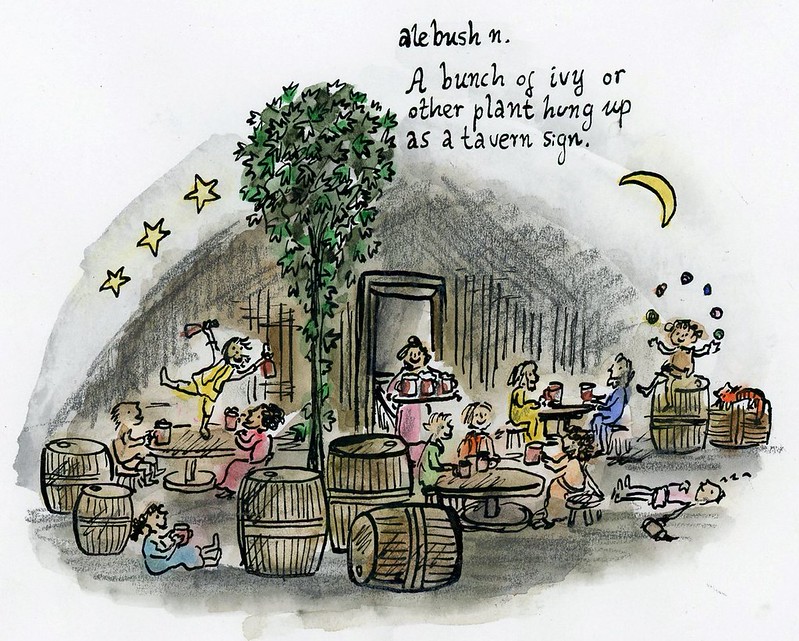
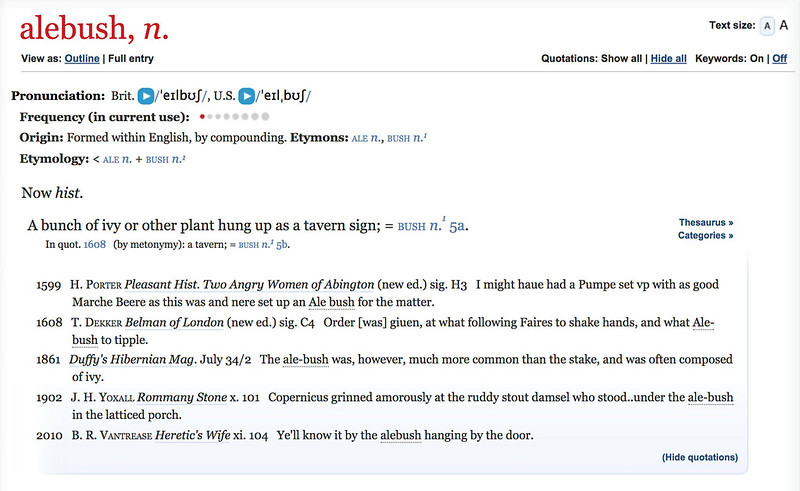
This morning, the O.E.D. tweeted as their “Word of the Day,” the all but obselete word “alebush,” which they define as a “n. A bunch of ivy or other plant hung up as a tavern sign.”

ale-bush
Illustration by Imogen Foxell.

Here’s the full entry from the O.E.D., revised in 2012:

OED-alebush

I would certainly like to see more bars, and especially beer gardens, using bushes and trees to mark their spaces.

Filed Under: Just For Fun, Related Pleasures Tagged With: Pubs, Words

The 10 Tavern Commandments

July 7, 2017 By Jay Brooks

pub-sign
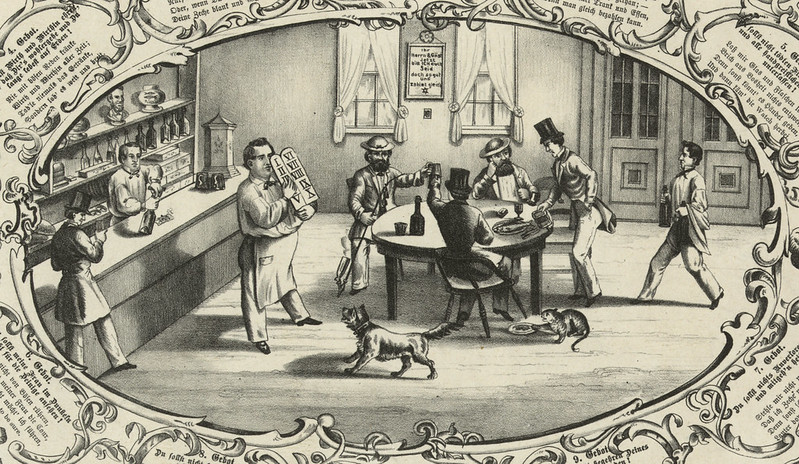
This is a fascinating piece of history. It’s a lithograph from 1873 entitled “The 10 tavern commandments, as every landlord should show them to his guests” and it’s also printed in a second language, German, and called “Die 10 Wirthshaus-Gebote, wie sie jeder Wirth seinen Gästen auf’s fleissigste vorhalten soll.” The lithographer was Theodore Kahlmann, and it was published by C. Brothers in New York.

10-Tavern-Commandments

It’s a little hard to read them without blowing up the image, so here are the English language version of The 10 Tavern Commandments, though I confess not all of them make complete sense.

  1. Thou shallst have no host but me!
    Of all good hosts consider me the very best,
    In my Inn alone be pleased, frequent not the rest.
  2. Thou shallst not use in vain the name thy host!
    Call not on me in vain,
    But for drinks, whereby I gain,
    Or, when you wish to pay,
    Then call on me you may.
  3. Thou shallst not chain the Tiger, for he is most ferocious!
    Leave not they pocket book at home,
    For ’tis bad when borrowing you come,
    You will relish better, what you drink and eat,
    When you promptly pay as ’tis need.
  4. Thou shallst honor thine host and hostess, that thou mayest prosper and live long on earth!
    Often in foul speech or name
    Never thy host or his dame,
    To find fault with the drink would become you ill,
    But you should praise it when and wherever you will.
  5. Thou shallst not slay bottles and glasses but shallots refrain from all such touching exercise!
    The life of bottles and glasses thou must not take,
    For ’tis mean these things in wrathful mood to break,
    Moreover you’ll get in trouble, if you raise hell,
    For then the Peelers come and take you to a prison cell.
  6. Thou shallst in night’s dark hours not mistake my wife for thine!
    Let the evil spirit never prompt thee,
    To bow in courtship to my wife thy knee,
    For then I’d throw thee out of a window or of door,
    And if t’were from the fourth or yet a higher floor.
  7. Thou shallst not find and take with thee what n’er was lost!
    My chalk thou must not take,
    I need it thy bill to make,
    Or else I’ll get; for thy punishment
    Such as will chalk down double, each and every cent.
  8. Thou shallst not bear false witness to thine host!
    Tell me always when I ask; in truthfulness
    What thou owes for drinks, rather more than less,
    Give never a false statement,
    For honesty is thy best ornament.
  9. Thou shallst not covet what is loss to thy host!
    Ask not that I should give
    Large pieces and full measures,
    For ’tis by my profit that I live,
    Dear customers remember his leisure.
  10. Thou shallst not covet to carress my cook and water girls!
    ’Tis best they desires to curb and bridle,
    For it makes the girls stupid and idle
    When love is talked behind the kitchen door,
    And then it might grow on thee and become a bore.

In the illustration in the center, the tavern owner (presumably) is holding up two tables with the 10 Commandments on them as his guests and staff appear to be ignoring him, just as you’d expect when someone is trying to law down the law.

10-Tavern-Commandments-center

Filed Under: Just For Fun, Politics & Law, Related Pleasures Tagged With: Bars, History, Humor, Pubs

« Previous Page
Next Page »

Find Something

Northern California Breweries

Please consider purchasing my latest book, California Breweries North, available from Amazon, or ask for it at your local bookstore.

Recent Comments

  • Bob Paolino on Beer Birthday: Grant Johnston
  • Gambrinus on Historic Beer Birthday: A.J. Houghton
  • Ernie Dewing on Historic Beer Birthday: Charles William Bergner 
  • Steve 'Pudgy' De Rose on Historic Beer Birthday: Jacob Schmidt
  • Jay Brooks on Beer Birthday: Bill Owens

Recent Posts

  • Beer In Ads #5190: Heurich Bock Beer Satisfies A Long Thirst! March 28, 2026
  • Historic Beer Birthday: August Anheuser Busch, Jr. a.k.a. Gussie Busch March 28, 2026
  • Historic Beer Birthday: Frederick Pabst March 28, 2026
  • Beer In Ads #5189: —Here’s To Spring! March 27, 2026
  • Historic Beer Birthday: Ebenezer Beadleston  March 27, 2026

BBB Archives

Feedback

Head Quarter
This site is hosted and maintained by H25Q.dev. Any questions or comments for the webmaster can be directed here.