Brookston Beer Bulletin

Jay R. Brooks on Beer

  • Home
  • About
  • Editorial
  • Birthdays
  • Art & Beer

Socialize

  • Dribbble
  • Email
  • Facebook
  • Flickr
  • GitHub
  • Instagram
  • LinkedIn
  • Pinterest
  • RSS
  • Twitter
  • YouTube

Powered by Genesis

Beer In Ads #5166: Hey! It’s Bock Beer Day To-Morrow!

March 16, 2026 By Jay Brooks

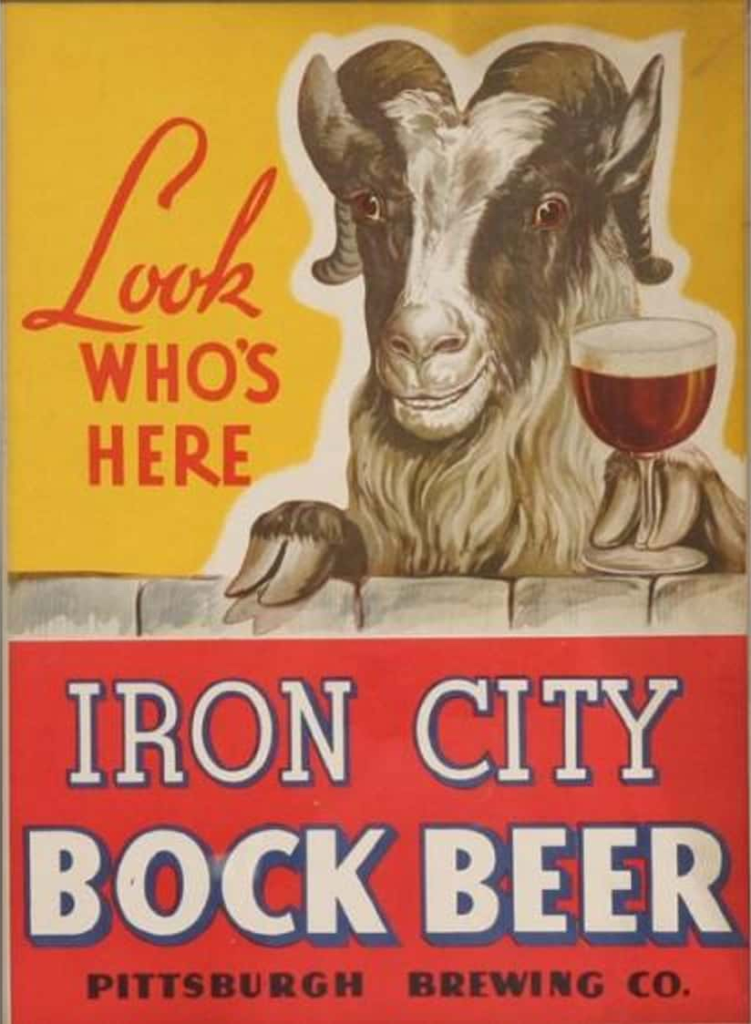
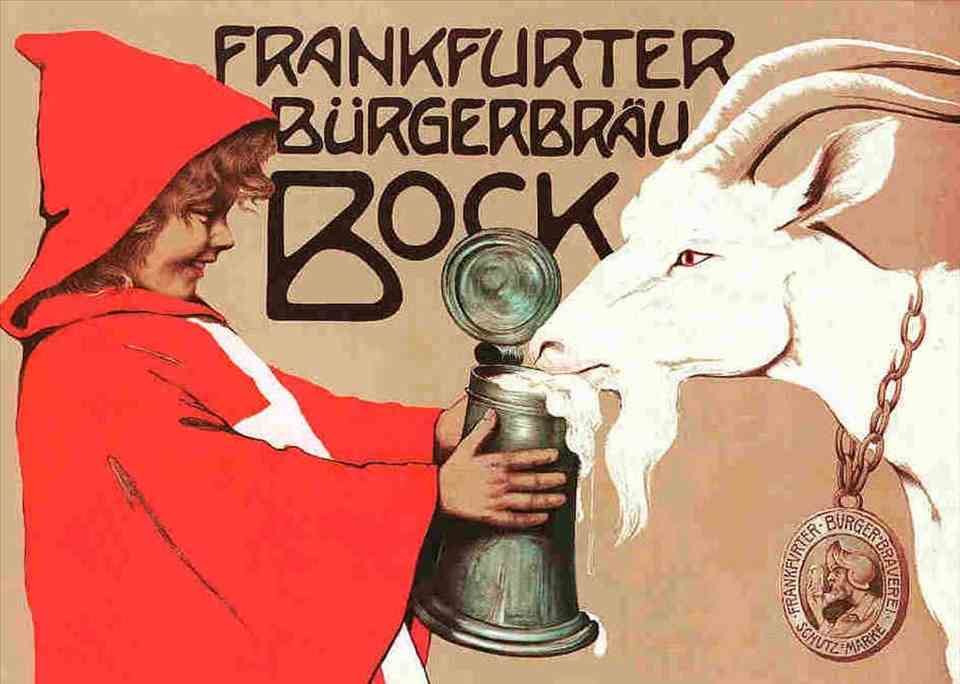
Two years ago I decided to concentrate on Bock ads for awhile. Bock, of course, may have originated in Germany, in the town of Einbeck. Because many 19th century American breweries were founded by German immigrants, they offered a bock at certain times of the year, be it Spring, Easter, Lent, Christmas, or what have you. In a sense they were some of the first seasonal beers. “The style was later adopted in Bavaria by Munich brewers in the 17th century. Due to their Bavarian accent, citizens of Munich pronounced ‘Einbeck’ as ‘ein Bock’ (a billy goat), and thus the beer became known as ‘Bock.’ A goat often appears on bottle labels.” And presumably because they were special releases, many breweries went all out promoting them with beautiful artwork on posters and other advertising. With Spring approaching, there are so many great examples that I’m going to post two a day for a few months.
Monday’s first ad is for Nick Thomas Bock Beer, which was published on March 16, 1936. This ad was for the Miami Valley Brewing Co. of Dayton, Ohio, which was originally founded in 1866 by John Wager. This ad ran in The Dayton Daily News, also of Dayton, Ohio.

Filed Under: Art & Beer, Beers, Breweries, Just For Fun Tagged With: Advertising, Bock, History, Ohio

Beer In Ads #5165: It’s Wise To Ask For Milwaukee’s Choicest Bock Beer

March 15, 2026 By Jay Brooks

Two years ago I decided to concentrate on Bock ads for awhile. Bock, of course, may have originated in Germany, in the town of Einbeck. Because many 19th century American breweries were founded by German immigrants, they offered a bock at certain times of the year, be it Spring, Easter, Lent, Christmas, or what have you. In a sense they were some of the first seasonal beers. “The style was later adopted in Bavaria by Munich brewers in the 17th century. Due to their Bavarian accent, citizens of Munich pronounced ‘Einbeck’ as ‘ein Bock’ (a billy goat), and thus the beer became known as ‘Bock.’ A goat often appears on bottle labels.” And presumably because they were special releases, many breweries went all out promoting them with beautiful artwork on posters and other advertising. With Spring approaching, there are so many great examples that I’m going to post two a day for a few months.

Sunday’s second ad is for Braumeister Bock Beer, which was published on March 15, 1950. This ad was for the Independent Milwaukee Brewery of Milwaukee, Wisconsin, which was originally founded in 1901 by Henry N. Bills, William Gutknecht, Charles Evers, Emil Czarnecki, and William Jung. This ad ran in The Monroe Evening News, of Monroe, Michigan. I love that they put the goat in glasses and a graduation mortarboard so he’s look “smart.”

Filed Under: Art & Beer, Beers, Breweries, Just For Fun Tagged With: Advertising, Bock, History, Michigan, Wisconsin

Historic Beer Birthday: Robert Meinrad Juerze

March 15, 2026 By Jay Brooks

Today is the birthday of Robert Meinrad Juerze (March 15, 1847-?). In 1889, he was named president of the Gerke Brewing Co., in Cincinnati, Ohio. Unfortunately, that’s it for the information I could find about Juerze. No bio, no photos, just a line in an old trade magazine that included his birthdate.

The Eagle Brewery in Cincinnati, Ohio, which was known by various names names, such as the Schaller & Schiff Brewery and later the Schaller-Gerke Brewery and finally the Gerke Brewing Co. Here’s a timeline from the Queen City Chapter’s page, entitled Cincinnati Brewing History-Preprohibition 1811-1919.

Gerke-bc

The first brewery on this corner was the Eagle Brewery from 1854 to 1866, owned by Joseph Schaller and Johann Schiff. In 1866, Schiff left the company and John Gerke joined in. The name was changed to Schaller & Gerke, Eagle Brewery and they continued together until 1882. The Schallers left the business then to purchase the Main Street Brewery and after the death of his father John, George Gerke continued the business at Canal and Plum Streets.

gerkebrewery_1

Founded in 1854 as the Eagle Brewery closer to the Ohio River, Joseph Schaller and John Gerke built a new brewery at the bend of the Miami and Erie Canal in 1866. Beer was brewed there until 1910.

gerkebrewery_4

The brewery equipment was sold at auction October 15, 1913.

Filed Under: Birthdays, Breweries, Just For Fun Tagged With: History, Ohio

Beer In Ads #5164: There Is No Argument To It … Camden Bock Beer Is Genuine Old-Time Bock

March 15, 2026 By Jay Brooks

Two years ago I decided to concentrate on Bock ads for awhile. Bock, of course, may have originated in Germany, in the town of Einbeck. Because many 19th century American breweries were founded by German immigrants, they offered a bock at certain times of the year, be it Spring, Easter, Lent, Christmas, or what have you. In a sense they were some of the first seasonal beers. “The style was later adopted in Bavaria by Munich brewers in the 17th century. Due to their Bavarian accent, citizens of Munich pronounced ‘Einbeck’ as ‘ein Bock’ (a billy goat), and thus the beer became known as ‘Bock.’ A goat often appears on bottle labels.” And presumably because they were special releases, many breweries went all out promoting them with beautiful artwork on posters and other advertising. With Spring approaching, there are so many great examples that I’m going to post two a day for a few months.

Sunday’s first ad is for Camden Bock Beer, which was published on March 15, 1938. This ad was for the Camden County Beverage Co. of Camden, New Jersey, which was originally founded in 1904. This ad ran in The Courier Post, of South Jersey, New Jersey.

Filed Under: Art & Beer, Beers, Breweries, Just For Fun Tagged With: Advertising, Bock, History, New Jersey

Beer In Ads #5164: Spring’s Almost Here … And Everyone Feels Like A Millions Bocks

March 14, 2026 By Jay Brooks

Two years ago I decided to concentrate on Bock ads for awhile. Bock, of course, may have originated in Germany, in the town of Einbeck. Because many 19th century American breweries were founded by German immigrants, they offered a bock at certain times of the year, be it Spring, Easter, Lent, Christmas, or what have you. In a sense they were some of the first seasonal beers. “The style was later adopted in Bavaria by Munich brewers in the 17th century. Due to their Bavarian accent, citizens of Munich pronounced ‘Einbeck’ as ‘ein Bock’ (a billy goat), and thus the beer became known as ‘Bock.’ A goat often appears on bottle labels.” And presumably because they were special releases, many breweries went all out promoting them with beautiful artwork on posters and other advertising. With Spring approaching, there are so many great examples that I’m going to post two a day for a few months.

Saturday’s second ad is for National Bohemian Bock Beer, which was published on March 14, 1955. This ad was for the National Brewing Co., of Baltimore, Maryland, which was originally founded in 1885, and they also operated breweries in Detroit, Michigan and Orland, Florida. This ad ran in The Evening Star, of Washington, D.C.

Filed Under: Art & Beer, Beers, Breweries, Just For Fun Tagged With: Advertising, Bock, D.C., History, Maryland, Washinton D.C.

Beer In Ads #5163: It’s Here Genuine New Jersey Bock Beer

March 14, 2026 By Jay Brooks

Two years ago I decided to concentrate on Bock ads for awhile. Bock, of course, may have originated in Germany, in the town of Einbeck. Because many 19th century American breweries were founded by German immigrants, they offered a bock at certain times of the year, be it Spring, Easter, Lent, Christmas, or what have you. In a sense they were some of the first seasonal beers. “The style was later adopted in Bavaria by Munich brewers in the 17th century. Due to their Bavarian accent, citizens of Munich pronounced ‘Einbeck’ as ‘ein Bock’ (a billy goat), and thus the beer became known as ‘Bock.’ A goat often appears on bottle labels.” And presumably because they were special releases, many breweries went all out promoting them with beautiful artwork on posters and other advertising. With Spring approaching, there are so many great examples that I’m going to post two a day for a few months.

Saturday’s first ad is for various New Jersey Bock Beers, which was published on March 14, 1938. This ad was for not one brewery, but for eleven different brewery members of the New Jersey Brewers’ Association. This ad ran in The Press of Atlantic City, also of Atlantic City, New Jersey.

Filed Under: Art & Beer, Beers, Breweries, Just For Fun Tagged With: Advertising, Bock, History, New Jersey

Beer In Ads #5162: Bock Beer Time Is Here gain March 13-18

March 13, 2026 By Jay Brooks

Two years ago I decided to concentrate on Bock ads for awhile. Bock, of course, may have originated in Germany, in the town of Einbeck. Because many 19th century American breweries were founded by German immigrants, they offered a bock at certain times of the year, be it Spring, Easter, Lent, Christmas, or what have you. In a sense they were some of the first seasonal beers. “The style was later adopted in Bavaria by Munich brewers in the 17th century. Due to their Bavarian accent, citizens of Munich pronounced ‘Einbeck’ as ‘ein Bock’ (a billy goat), and thus the beer became known as ‘Bock.’ A goat often appears on bottle labels.” And presumably because they were special releases, many breweries went all out promoting them with beautiful artwork on posters and other advertising. With Spring approaching, there are so many great examples that I’m going to post two a day for a few months.

Friday’s second ad is for Genesee Bock Beer, which was published on March 13, 1950. This ad was for Genesee Brewing Co. of Rochester, New York, which was originally founded in 1878. This ad ran in The Post Standard, of Syracuse, New York.

Filed Under: Art & Beer, Beers, Breweries, Just For Fun Tagged With: Advertising, Bock, History, New York

Historic Beer Birthday: John Taylor

March 13, 2026 By Jay Brooks

john-taylor
Today is the birthday of John Taylor (March 13, 1790-September 13, 1863). He was born in England, but came to American with his family when he was just three years old, settling eventually in Albany, New York. He initially went into the candle-making business with his father, but in 1822 switched to brewing and opened the Lancelot Fiddler Brewery, renaming the John Taylor Brewery a few years later, and adding “and Sons” around 1844, before closing for good in 1905.

Albany chronicles, a history of the city arranged chronologically.

Here’s a short biography from the History of the county of Albany, N. Y., published in 1886:

John Taylor, Mayor 1848-49, was born in Durham, England, March 1790 and died in Albany September 31, 1863. He migrated to Brooklyn with his father when a mere infant, and to Albany in 1793. He engaged in the business of a tallow-chandler with his father when he was seventeen years old, and before he was twenty-three he had been burned out four times. Then his fortunes changed. He began to make money about 1813 as an army contractor. In 1822 he became a brewer, and from this business realized an ample fortune. He had branches in Boston and New York later, conducted by his sons. He gave freely of his wealth to the poor, and to all objects that promised to benefit the city. He became a great reader, and accumulated a larger larger and more valuable than any in the city in his time. He gained great popularity and wealth at the same time by a steady course of industry, enterprise, integrity, philanthropy and virtue. Taylor’s Brewery is still occupied [1886] at 133 Broadway.

taylor-imperial-xx-ales

And this portion of What Was Albany Ale? from the Albany Ale Project, by Alan McLeod and Craig Gravina, discussed John Taylor and his brewery:

Albany’s 150 years of Dutch family breweries established the city as a well-known brewing center. At this time, the first advertisements for “Albany Ale” began to appear as a euphemistic term for the best beer—of any kind—brewed in Albany. The completion of the Erie Canal in 1825 and an Albany brewer named John Taylor would soon change that perception.

John Taylor & Sons’ Taylor opened his first brewery in the early 1820s and second larger one in 1831. A savvy businessman, Taylor saw the opportunity to exploit New York’s new water highway. Albany’s access to the Hudson River and position at the terminus of the Erie Canal afforded it a monopoly on the distribution of beer. Raw materials for beer making could be brought east to Albany via the Canal, and Taylor, in-turn could export his beer south, down the Hudson River to the port of New York. From there the beer could shipped anywhere in the world. By the 1850s Taylor had built the largest brewery in the country in Albany, capable of producing 200,000 barrels of beer a year. Taylor began advertising a double X ale, which would become his flagship beer, that he dubbed “Imperial Albany XX Ale.” As the demand for this double X strength ale grew, so did the number of breweries in the city—seventeen by the mid-1860s—almost all of them producing some kind of XX strength Albany Ale. No longer was Albany Ale a euphemism; it had become a specific thing.

And Craig, for Session 56, wrote Thanks to John Taylor – the Original American Big Boy, which goes into more detail.

taylors-ale

taylors-ipa

Filed Under: Birthdays, Breweries Tagged With: England, History, New York

Beer In Ads #5161: Aged … Ready … And Rarin’ To Go!

March 13, 2026 By Jay Brooks

Two years ago I decided to concentrate on Bock ads for awhile. Bock, of course, may have originated in Germany, in the town of Einbeck. Because many 19th century American breweries were founded by German immigrants, they offered a bock at certain times of the year, be it Spring, Easter, Lent, Christmas, or what have you. In a sense they were some of the first seasonal beers. “The style was later adopted in Bavaria by Munich brewers in the 17th century. Due to their Bavarian accent, citizens of Munich pronounced ‘Einbeck’ as ‘ein Bock’ (a billy goat), and thus the beer became known as ‘Bock.’ A goat often appears on bottle labels.” And presumably because they were special releases, many breweries went all out promoting them with beautiful artwork on posters and other advertising. With Spring approaching, there are so many great examples that I’m going to post two a day for a few months.

Friday’s First ad is for Acme Bock Beer, which was published on March 13, 1950. This ad was for the Globe Brewing Co., of Baltimore, Maryland, which was originally founded in 1748 by John Leonard Barnitz and Elias Daniel Barnitz, though the Globe name doesn’t appear until around 1899. This ad ran in The Salisbury Times, of Salisbury, Maryland.

Filed Under: Art & Beer, Beers, Breweries, Just For Fun Tagged With: Advertising, Bock, History, Maryland

Historic Beer Birthday: Conrad George Oland

March 13, 2026 By Jay Brooks

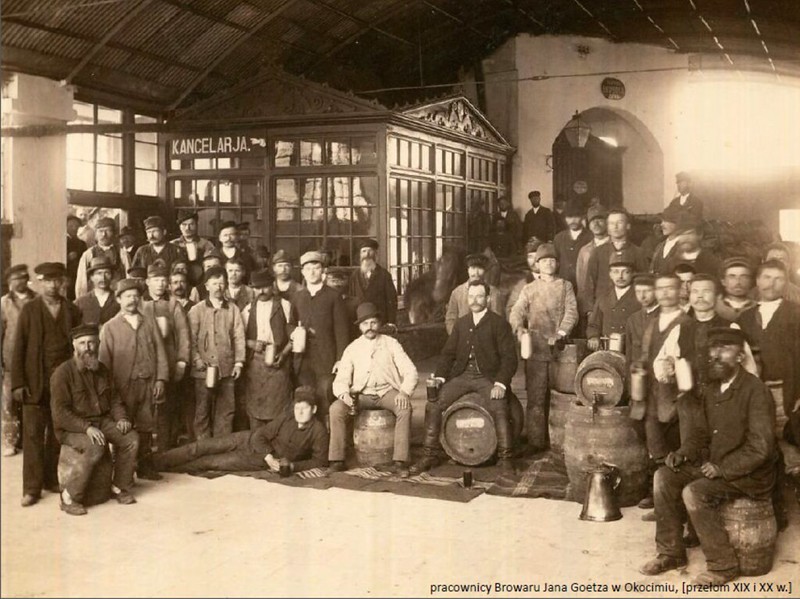
Today is the birthday of Conrad George Oland (March 13, 1851-December 12, 1917). He was born in Trowbridge, Wiltshire, England, and was the son of Susannah Oland, who founded what today is Moosehead Breweries. It was known by several names before 1947, such as S. Oland & Sons Brewery, the Turtle Grove Brewery, and the Army & Navy Brewery. His mother trained both him and his younger brother to brew beer, but after her death it was his younger brother that took over the brewery. In 1917, their brewery was near the famous Halifax Explosion, and windows were shattered and walls collapsed, and Conrad died from shock during the explosion, along with six additional employees.

Turtle Grove Brewery workers in 1890.

And this account of his parents Susannah and John is from the Canadian Encyclopedia:

The Turtle Grove Brewery in Halifax after the explosion where Conrad George Oland died.

By 1867, the Oland family had moved to Dartmouth. Struggling financially, Susannah supplemented what little money John earned by making beer in the shed at the back of their Dartmouth property, using an old family recipe. Her October brown ale proved to be so popular with the local inhabitants that a family friend, Captain Francis Walter DeWinton (1835–1901), suggested brewing on a larger scale. DeWinton, along with two other investors, provided the funds to start a commercial brewery. Because they began the business in the Turtle Grove area of Dartmouth — a Mi’kmaq community — the brewery was named Turtle Grove Brewery.The company was incorporated on 1 October 1867. On paper, John Oland was manager of the business, but in reality, Susannah oversaw virtually every aspect of its day-to-day operations. By many accounts, she supervised the brewing process, which was undertaken with the help of her three sons.

The new commercial brewery was situated on a 12.5-acre plot with 300 feet of frontage on Halifax Harbour. Halifax was ideal for a budding brewer because of the pronounced military and naval presence. Beer had long been part of the life in the armed forces. During the War of the Spanish Succession (1701–1714), the Duke of Marlborough, commander of the British forces, proclaimed: “No soldier can fight unless he is properly fed on beef and beer.” British authorities accepted Marlborough’s statement as gospel, and in the years that followed, British soldiers were given enough “beer money” to purchase five pints of beer a day. This, along with the fact that the overwhelming majority of the civilian population in Dartmouth and Halifax could trace its ancestry to the beer-drinking cultures of England, Scotland, and Ireland, gave an immediate incentive to anyone like Susannah Oland looking to capitalize on their knowledge of the art of brewing.

Taking advantage of DeWinton’s connections (he was military secretary to the Marquess of Lorne, the governor general of Canada), the brewery quickly grew to be the third-largest business operating in Dartmouth. Tragedy struck in October 1870, however, when John died in a riding accident. To make matters worse, DeWinton was transferred to Gibraltar and the other two partners sold their interests to a manager, George Fraser, who had formerly been employed at a competing brewery. Undaunted, Susannah Oland and her sons continued working at the brewery, which had been renamed the Army and Navy Brewery in honor of its principal patrons.

In 1877, after receiving an inheritance from a relative in England, Susannah Oland bought out Fraser and dissolved the partnership. She began operating the brewery under the name S. Oland, Sons and Company and trained her sons to be brewmasters. She worked at the brewery for the remainder of her life

George W. Oland and his sons in the 1890s.
This image has an empty alt attribute; its file name is 2830113670_75cb2d47a0.jpg

Filed Under: Birthdays, Breweries, Just For Fun Tagged With: Canada

« Previous Page
Next Page »

Find Something

Northern California Breweries

Please consider purchasing my latest book, California Breweries North, available from Amazon, or ask for it at your local bookstore.

Recent Comments

  • Bob Paolino on Beer Birthday: Grant Johnston
  • Gambrinus on Historic Beer Birthday: A.J. Houghton
  • Ernie Dewing on Historic Beer Birthday: Charles William Bergner 
  • Steve 'Pudgy' De Rose on Historic Beer Birthday: Jacob Schmidt
  • Jay Brooks on Beer Birthday: Bill Owens

Recent Posts

  • Historic Beer Birthday: Bert Grant May 17, 2026
  • Beer Birthday: Gary Spedding May 16, 2026
  • Historic Beer Birthday: Maria Best May 16, 2026
  • Historic Beer Birthday: John Schneider May 16, 2026
  • Beer Birthday: Roger Lind May 16, 2026

BBB Archives

Feedback

Head Quarter
This site is hosted and maintained by H25Q.dev. Any questions or comments for the webmaster can be directed here.