Brookston Beer Bulletin

Jay R. Brooks on Beer

  • Home
  • About
  • Editorial
  • Birthdays
  • Art & Beer

Socialize

  • Dribbble
  • Email
  • Facebook
  • Flickr
  • GitHub
  • Instagram
  • LinkedIn
  • Pinterest
  • RSS
  • Twitter
  • YouTube

Powered by Genesis

Historic Beer Birthday: FX Matt

March 25, 2026 By Jay Brooks

Today is the birthday of Francis Xavier ‘FX’ Matt (March 25, 1859-June 27, 1958). He was born in Igelschlatt, Landkreis Waldshut, Baden-Württemberg, Germany. When he was 19, in 1878, his parents, Theodore and Johanna Matt, emigrated to the U.S., settling in Utica, New York. Before moving to America, Matt learned brewing at the Badische Staatsbrauerei Rothaus in Baden-Württemberg. Once in the Utica, he worked at the Charles Bierbauer Brewery, which was founded in 1853, as both a lead salesman and brewmaster for several years, before reorganizing the business as The West End Brewing Co. in 1888. It remained under that name until 1981, when it was renamed FX Matt Brewing though continued to trade under the West End Brewing name. After prohibition, the brand name “Utica Club” was developed and after 1980, the Saranac brand was launched.

Here’s some early history, from Grokipedia:

Founding and Early Operations

Francis Xavier Matt, a German immigrant born in 1859, honed his brewing expertise at the Duke of Baden Brewery in Germany’s Black Forest region before arriving in the United States in 1878 at the age of 19. He initially worked as a salesman at the Charles Bierbauer Brewery in Utica, New York, where his skills quickly elevated him to brewmaster and lead salesman.

In 1888, Matt purchased and reorganized the struggling Charles Bierbauer Brewery, transforming it into the West End Brewing Company and establishing it as a family-owned operation in Utica’s growing brewery district. The new entity focused primarily on producing high-quality lager beers, reflecting Matt’s European training and the era’s demand for crisp, bottom-fermented styles popular among German-American communities. Distribution remained local, serving taverns and markets in the Mohawk Valley and surrounding areas of upstate New York to build a loyal customer base.

The brewery’s initial facility was located at 830 Varick Street in Utica, a site that had hosted brewing operations since the mid-19th century. In its first year, the West End Brewing Company produced 4,000 barrels of beer with a staff of just 12 employees, demonstrating efficient small-scale operations rooted in Matt’s hands-on management. By the early 20th century, prior to 1920, the operation had expanded significantly, employing up to 400 workers and solidifying its position as one of Utica’s 12 active breweries amid the city’s industrial boom.

Here’s more from Grokipedia:

Prohibition Era Survival

When the 18th Amendment ushered in Prohibition from 1920 to 1933, the West End Brewing Company, under the leadership of the Matt family, faced severe economic pressures as the U.S. brewing industry collapsed, with many Utica-area competitors shuttering their operations entirely. To endure, the brewery pivoted to non-alcoholic production, manufacturing soft drinks and malt tonics under the newly introduced Utica Club label, which became a lifeline for the business. This shift allowed the company to sustain its facilities and a core workforce amid widespread industry layoffs and closures, preserving the infrastructure necessary for future beer production.

The Utica Club non-alcoholic lineup during Prohibition included carbonated soft drinks such as root beer, ginger beer, and cream sodas, alongside non-alcoholic near-beer and malt tonics—products that cleverly skirted legal restrictions while meeting consumer demand for familiar flavors. These items not only generated revenue during the dry era but also built brand recognition that would later transfer to beer upon repeal. By advising customers against fermenting the malt tonics at home, the brewery navigated regulatory scrutiny while maintaining ethical operations.

Prohibition’s end on December 5, 1933, via the 21st Amendment, marked a swift recovery for the brewery, which became the first in New York—and the nation—to secure a federal license to resume beer production just one day later. At 12:05 a.m. on December 6, Utica Club Pilsner was poured as the inaugural legal beer post-repeal, following a celebratory parade from the brewery to the Hotel Utica. This rapid licensing, attributed to the company’s preparedness and preserved facilities, enabled an immediate resumption of brewing under the Matt family banner, solidifying its regional prominence despite lingering economic hardships from the Great Depression.

And this is from Matt’s final years with the brewery.

Post-War Growth

Following World War II, the F.X. Matt Brewing Company saw renewed growth under the leadership of second-generation owner Walter J. Matt, who assumed control in 1951 and focused on modernizing marketing efforts to capitalize on postwar demand for beer. By 1958, the introduction of the iconic Schultz & Dooley advertising campaign, featuring animated beer steins voiced by comedian Jonathan Winters, dramatically increased sales by more than 50%, reflecting broader industry expansion as consumer preferences shifted toward packaged beers. This period also marked the brewery’s adaptation to bottling innovations in the 1950s, enabling wider distribution of flagship brands like Utica Club beyond draft sales in local taverns.

Matt with family in Miami Beach, Florida in 1934.

Here’s an obituary of Matt from the Daily Sentinel of Rome, New York:

And this obituary is from the Syracuse Herald Journal:

Filed Under: Beers

Beer In Ads #5183: Mt. Whitney Bock Beer Is The Tops …

March 24, 2026 By Jay Brooks

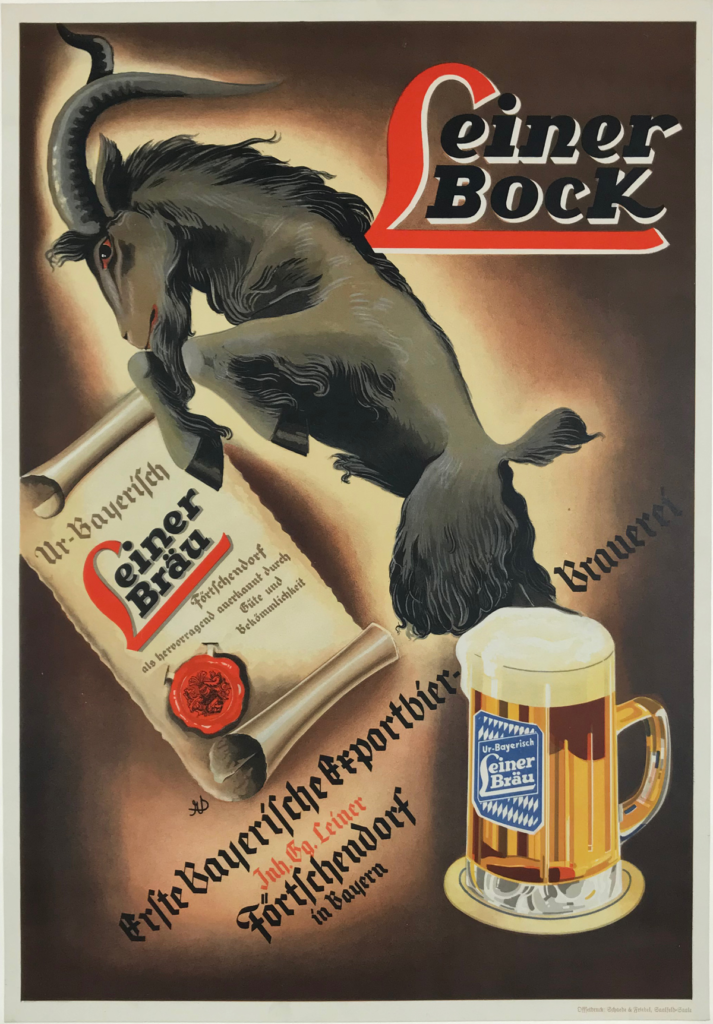
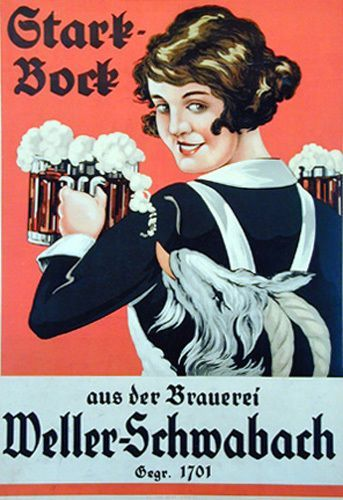
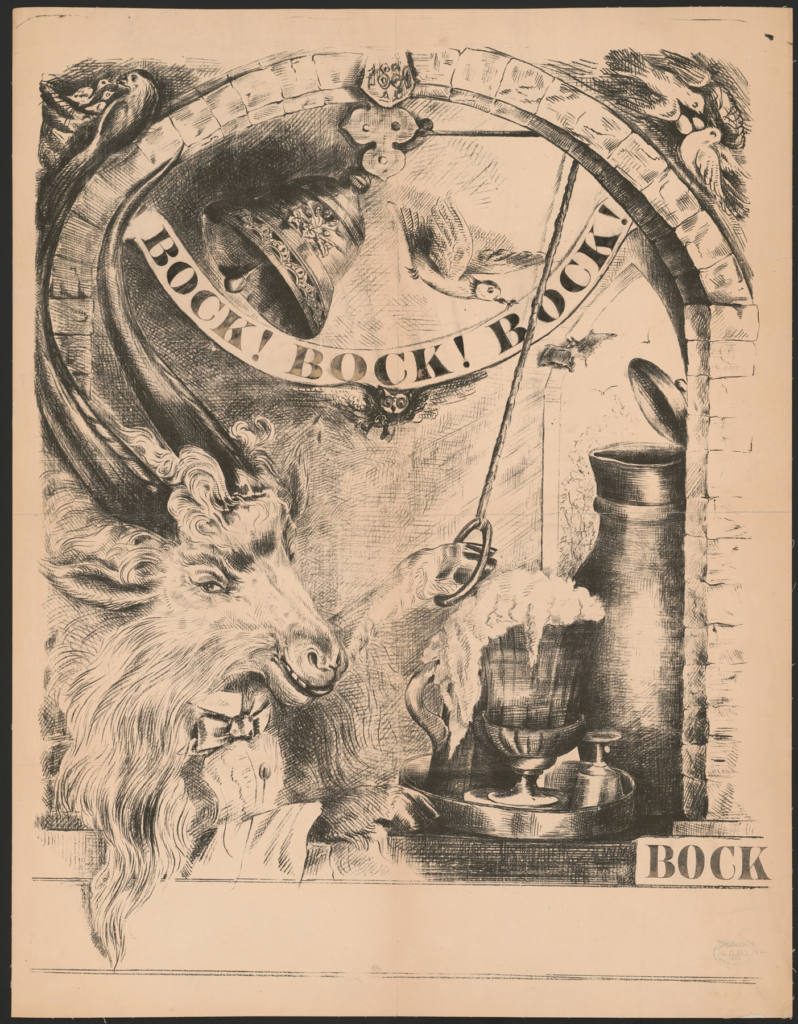
Two years ago I decided to concentrate on Bock ads for awhile. Bock, of course, may have originated in Germany, in the town of Einbeck. Because many 19th century American breweries were founded by German immigrants, they offered a bock at certain times of the year, be it Spring, Easter, Lent, Christmas, or what have you. In a sense they were some of the first seasonal beers. “The style was later adopted in Bavaria by Munich brewers in the 17th century. Due to their Bavarian accent, citizens of Munich pronounced ‘Einbeck’ as ‘ein Bock’ (a billy goat), and thus the beer became known as ‘Bock.’ A goat often appears on bottle labels.” And presumably because they were special releases, many breweries went all out promoting them with beautiful artwork on posters and other advertising. With Spring approaching, there are so many great examples that I’m going to post two a day for a few months.

Tuesday’s second ad is for Mt. Whitney Bock Beer, which was published on March 24, 1936. This one is for the Fresno Brewing Co., of Fresno, California, which was originally founded in 1900 by Ernst Eiler and his son. This ad ran in The Fresno Bee, also of Fresno, California.

Filed Under: Art & Beer, Beers, Breweries, Just For Fun Tagged With: Advertising, Bock, California, History, Northern California

Beer In Ads #5182: Spring’s Herald, Pfeiffer’s Bock Beer

March 24, 2026 By Jay Brooks

Two years ago I decided to concentrate on Bock ads for awhile. Bock, of course, may have originated in Germany, in the town of Einbeck. Because many 19th century American breweries were founded by German immigrants, they offered a bock at certain times of the year, be it Spring, Easter, Lent, Christmas, or what have you. In a sense they were some of the first seasonal beers. “The style was later adopted in Bavaria by Munich brewers in the 17th century. Due to their Bavarian accent, citizens of Munich pronounced ‘Einbeck’ as ‘ein Bock’ (a billy goat), and thus the beer became known as ‘Bock.’ A goat often appears on bottle labels.” And presumably because they were special releases, many breweries went all out promoting them with beautiful artwork on posters and other advertising. With Spring approaching, there are so many great examples that I’m going to post two a day for a few months.

Tuesday’s first ad is for Pfeiffer’s Bock Beer, which was published on March 24, 1915. This one is from the C. Pfeiffer Brewing Co., of Detroit, Michigan, which was originally founded in 1899 by Conrad Pfeiffer. This ad ran in The Detroit Free Press, also of Detroit, Michigan.

Filed Under: Art & Beer, Beers, Breweries, Just For Fun Tagged With: Advertising, Bock, History, Michigan

Beer In Ads #5181: “Handy” Guide To Better Bock

March 23, 2026 By Jay Brooks

Two years ago I decided to concentrate on Bock ads for awhile. Bock, of course, may have originated in Germany, in the town of Einbeck. Because many 19th century American breweries were founded by German immigrants, they offered a bock at certain times of the year, be it Spring, Easter, Lent, Christmas, or what have you. In a sense they were some of the first seasonal beers. “The style was later adopted in Bavaria by Munich brewers in the 17th century. Due to their Bavarian accent, citizens of Munich pronounced ‘Einbeck’ as ‘ein Bock’ (a billy goat), and thus the beer became known as ‘Bock.’ A goat often appears on bottle labels.” And presumably because they were special releases, many breweries went all out promoting them with beautiful artwork on posters and other advertising. With Spring approaching, there are so many great examples that I’m going to post two a day for a few months.

Monday’s second ad is for Ballantine’s Bock Beer, which was published on March 23, 1939. This one is from the P. Ballantine & Sons Brewing Co., of Newark, New Jersey, which was originally founded in 1840.  This ad ran in The Press of Atlantic City, of Atlantic City, New Jersey.

Filed Under: Art & Beer, Beers, Breweries, Just For Fun Tagged With: Advertising, Bock, History, New Jersey

Beer In Ads #5180: Bring Back My Gam Bock To Me

March 23, 2026 By Jay Brooks

Two years ago I decided to concentrate on Bock ads for awhile. Bock, of course, may have originated in Germany, in the town of Einbeck. Because many 19th century American breweries were founded by German immigrants, they offered a bock at certain times of the year, be it Spring, Easter, Lent, Christmas, or what have you. In a sense they were some of the first seasonal beers. “The style was later adopted in Bavaria by Munich brewers in the 17th century. Due to their Bavarian accent, citizens of Munich pronounced ‘Einbeck’ as ‘ein Bock’ (a billy goat), and thus the beer became known as ‘Bock.’ A goat often appears on bottle labels.” And presumably because they were special releases, many breweries went all out promoting them with beautiful artwork on posters and other advertising. With Spring approaching, there are so many great examples that I’m going to post two a day for a few months.

Monday’s first ad is for Gambrinus Bock Beer, which was published on March 23, 1951. This one was for the August Wagner Breweries, Inc., of Columbus and Chillicothe, Ohio and was founded in 1906 as the Gambrinus Brewing & Bottling Co. This ad ran in The Springfield News-Sun, of Springfield, Ohio.

Filed Under: Art & Beer, Beers, Breweries, Just For Fun Tagged With: Advertising, Bock, History, Ohio

Historic Beer Birthday: Lydia Killen Nighman

March 23, 2026 By Jay Brooks

Today is the birthday of Lydia Killen Nightman (March 23, 1797-July 16, 1880). She was born in York, Pennsylvania, but moved to Canton, Ohio, after marrying George Nighman, who was also born in York. After resettling in Ohio, in 1823 her husband founded the George Nighman Brewery in Canton, which was located on the bank of Nimishillen Creek. He ran it for ten years, but died unexpectedly in 1833. Presumambly, she’d been paying attention to her husband’s business, because she stepped in and took over the brewing and ran the business until 1850, renaming it the Lydia Nighman Brewery. That year, her son, Thaddeus Nighman turned 19, and was old enough to take over the brewery. He renamed it that year the Thaddeus C. Nighman Brewery, running it for fifteen years before selling it, presumably, to Kasper Balser.

There’s very little information I could find about her, but given that she was a successful female brewer and brewery owner in the 19th century, it felt like she needed to be remembered. There’s not much more added by her short obituary, from the Stark County Democrat, published on July 16, 1880:

She also appears to have married again, in 1868 (when she was 71), to an Oscar F. Bunnett. She passed away on July 16, 1880, at 83 years of age.

According to Find-a-Grave, this is her headstone in the West Lawn Cemetary in Canton, Ohio, though I can’t read a work on it so I’ll have to take their word for it.

And for no good reason, here’s a photograph of downtown Canton from the 1880s:

Filed Under: Beers

Beer In Ads #5179: Back Again! Pittsburgh Brewing Co’s Bock Beer

March 22, 2026 By Jay Brooks

Two years ago I decided to concentrate on Bock ads for awhile. Bock, of course, may have originated in Germany, in the town of Einbeck. Because many 19th century American breweries were founded by German immigrants, they offered a bock at certain times of the year, be it Spring, Easter, Lent, Christmas, or what have you. In a sense they were some of the first seasonal beers. “The style was later adopted in Bavaria by Munich brewers in the 17th century. Due to their Bavarian accent, citizens of Munich pronounced ‘Einbeck’ as ‘ein Bock’ (a billy goat), and thus the beer became known as ‘Bock.’ A goat often appears on bottle labels.” And presumably because they were special releases, many breweries went all out promoting them with beautiful artwork on posters and other advertising. With Spring approaching, there are so many great examples that I’m going to post two a day for a few months.

Sunday’s second ad is for Pittsburgh Brewing Co’s Bock Beer, which was published on March 22, 1917. This one was for the Pittsburgh Brewing Co., of Pittsburgh, Pennsylvania and was founded by Edward Frauenheim in 1861. This ad ran in The Pittsburgh Press, also of Pittsburgh, Pennsylvania.

Filed Under: Art & Beer, Beers, Breweries, Just For Fun Tagged With: Advertising, Bock, History, Pennsylvania

Beer In Ads #5178: Wow! The Public Is Really Getting A Boot Out Of Gold Bond Double Bock Beer

March 22, 2026 By Jay Brooks

Two years ago I decided to concentrate on Bock ads for awhile. Bock, of course, may have originated in Germany, in the town of Einbeck. Because many 19th century American breweries were founded by German immigrants, they offered a bock at certain times of the year, be it Spring, Easter, Lent, Christmas, or what have you. In a sense they were some of the first seasonal beers. “The style was later adopted in Bavaria by Munich brewers in the 17th century. Due to their Bavarian accent, citizens of Munich pronounced ‘Einbeck’ as ‘ein Bock’ (a billy goat), and thus the beer became known as ‘Bock.’ A goat often appears on bottle labels.” And presumably because they were special releases, many breweries went all out promoting them with beautiful artwork on posters and other advertising. With Spring approaching, there are so many great examples that I’m going to post two a day for a few months.

Sunday’s first ad is for Gold Bond Double Bock Beer, which was published on March 22, 1950. This one was for Cleveland & Sandusky Brewing Co., of Cleveland, Ohio, and was founded in 1852 by C. W. Schmidt and Robert Hoffmann. This ad ran in the Cleveland Press, of Cleveland, Ohio.

Filed Under: Art & Beer, Beers, Breweries, Just For Fun Tagged With: Advertising, Bock, History, Ohio

Beer In Ads #5177: The Fable Of Bock Beer!

March 21, 2026 By Jay Brooks

Two years ago I decided to concentrate on Bock ads for awhile. Bock, of course, may have originated in Germany, in the town of Einbeck. Because many 19th century American breweries were founded by German immigrants, they offered a bock at certain times of the year, be it Spring, Easter, Lent, Christmas, or what have you. In a sense they were some of the first seasonal beers. “The style was later adopted in Bavaria by Munich brewers in the 17th century. Due to their Bavarian accent, citizens of Munich pronounced ‘Einbeck’ as ‘ein Bock’ (a billy goat), and thus the beer became known as ‘Bock.’ A goat often appears on bottle labels.” And presumably because they were special releases, many breweries went all out promoting them with beautiful artwork on posters and other advertising. With Spring approaching, there are so many great examples that I’m going to post two a day for a few months.

Saturday’s second ad is for multiple Canadian Bock Beers, which was published on March 21, 1929 in Vancouver, Canada, where there was no national prohibition at that time. This ad was for the Government Liquor Stores of British Columbia. This ad ran in the Vernon News, of Vancouver, British Columbia.

Filed Under: Art & Beer, Beers, Breweries, Just For Fun Tagged With: Advertising, Bock, Canada, History, Vancouver

Beer In Ads #5176: I’m “Bock” Again

March 21, 2026 By Jay Brooks

Two years ago I decided to concentrate on Bock ads for awhile. Bock, of course, may have originated in Germany, in the town of Einbeck. Because many 19th century American breweries were founded by German immigrants, they offered a bock at certain times of the year, be it Spring, Easter, Lent, Christmas, or what have you. In a sense they were some of the first seasonal beers. “The style was later adopted in Bavaria by Munich brewers in the 17th century. Due to their Bavarian accent, citizens of Munich pronounced ‘Einbeck’ as ‘ein Bock’ (a billy goat), and thus the beer became known as ‘Bock.’ A goat often appears on bottle labels.” And presumably because they were special releases, many breweries went all out promoting them with beautiful artwork on posters and other advertising. With Spring approaching, there are so many great examples that I’m going to post two a day for a few months.

Saturday’s first ad is for Old Style Bock Beer, which was published on March 21, 1941. This one was for G. Heileman Brewing Co., of La Crosse, Wisconsin, and was founded in 1858, and they also had a branch in Winona. This ad ran in the Winona Daily News, of Winona, Wisconsin.

Filed Under: Art & Beer, Beers, Breweries, Just For Fun Tagged With: Advertising, Bock, History, Minnesota

« Previous Page
Next Page »

Find Something

Northern California Breweries

Please consider purchasing my latest book, California Breweries North, available from Amazon, or ask for it at your local bookstore.

Recent Comments

  • Bob Paolino on Beer Birthday: Grant Johnston
  • Gambrinus on Historic Beer Birthday: A.J. Houghton
  • Ernie Dewing on Historic Beer Birthday: Charles William Bergner 
  • Steve 'Pudgy' De Rose on Historic Beer Birthday: Jacob Schmidt
  • Jay Brooks on Beer Birthday: Bill Owens

Recent Posts

  • Beer In Ads #5226: Broadway Brewing Bock Beer April 18, 2026
  • Beer Birthday: Alan McLeod April 18, 2026
  • Beer In Ads #5225: Fabled Ambrosia Of The Ancients April 17, 2026
  • Historic Beer Birthday: William O. Poth April 17, 2026
  • Beer In Ads #5224: Harvard Bock Beer April 16, 2026

BBB Archives

Feedback

Head Quarter
This site is hosted and maintained by H25Q.dev. Any questions or comments for the webmaster can be directed here.