Brookston Beer Bulletin

Jay R. Brooks on Beer

  • Home
  • About
  • Editorial
  • Birthdays
  • Art & Beer

Socialize

  • Dribbble
  • Email
  • Facebook
  • Flickr
  • GitHub
  • Instagram
  • LinkedIn
  • Pinterest
  • RSS
  • Twitter
  • YouTube

Powered by Genesis

Tactical Penguin Goes Nuclear

November 30, 2009 By Jay Brooks

brew-dog
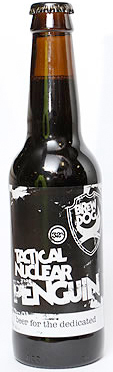
Unless you’ve been ducking and covering under a rock, you no doubt saw that, while we were sitting down to eat turkey on Thursday, Scotland’s BrewDog released Tactical Nuclear Penguin, which they’re touting as the new champion “world’s strongest beer.” Weighing in at a robust 32% a.b.v., it bested the current American contender, Samuel Adams Utopias, by a whopping 5%. As is typical of the self-styled punks of beer, the release was amid controversy. Predictably, anti-alcohol groups in the UK wasted no time denouncing the beer’s strength as irresponsible, a laughable claim given Scotland’s whisky industry. Jack Law, head of Scotland’s own Alcohol Focus Scotland, said “it is child-like attention-seeking by a company that should be more responsible. The fact that they have achieved a new world record is not admirable. It is a product with a lot of alcohol in it – that’s all. To dress it up as anything else is cynical. It’s as strong as whisky, so you have to ask whether this is actually a beer or a spirit – it’s clearly a spirit.” So obviously the Scots have no shortage of ignorant blowhards in their neo-prohibitionist organizations, too. The fact that there are only 500 bottles and each one sells for £30 (almost $50) and is only a 330 ml (roughly 11.2 oz.) would suggest this is not cause for widespread panic, as it’s hardly going to be selling out of the local Tesco anytime soon.

Perhaps more surprising, one of BrewDog’s bitterest critics of late has been Roger Protz, the grand old man of CAMRA and British beer writing generally. I usually have great respect for Roger and all he’s done for beer, but he seems to have lost his mooring on this one and drifted out into the waters off insaneland. In today’s BrewDog Go Bonkers , he calls the BrewDog lads all sorts of unflattering names and accuses them of all manner of impropriety, even incorrectly accusing the new beer of not actually being a beer — it clearly is — and gets the barest details of its manufacture wrong, despite the fact that BrewDog’s website includes a video explaining how they created Tactical Nuclear Penguin.

He even throws his hat into the ring with the likes of Jack Law, head of Alcohol Focus Scotland, which I find almost unforgivable, especially given Law’s churlish quote about BrewDog’s “childlike attention-seeking.” Um, gentlemen, what exactly do you think marketing is? The very point is to get attention. You can disagree with the way a company goes about the marketing of their products, but calling it “childlike” or suggesting that it’s seeking attention is like saying the goal of advertising is to sell things. Duh. Paging Captain Obvious.
tnp-1
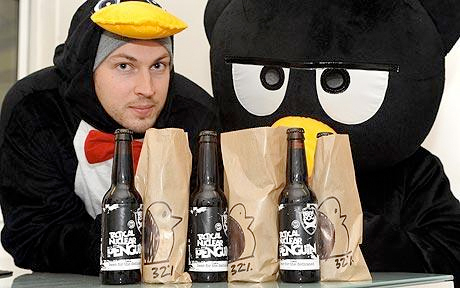
James Watt in his penguin suit, with his newest beer.

Just two weeks earlier, in Enough Is Enough, Protz was again telling BrewDog’s James Watt and Martin Dickie it was time they “grew up and stopped behaving like a couple of precocious teenagers standing on a street corner with back-to-front baseball caps screaming for attention.” Wow. Watts referred to Protz, when he retweeted this, as “Grandpa Protz” and I think he may be onto it. I can’t imagine telling a brewer to grow up in print. That takes more cheek than I possess. They’re all adults, conducting their business the way they want to. But apparently taking their cue more from American sensationalist brewers than the often stodgy traditions of UK beer really ruffled Protz’s feathers. I know Roger to have strong opinions and to be a great champion of English brewing traditions, but these two anti-BrewDog posts seem more like personal attacks, as if they’ve offended him directly. As much as I hate to say it, he comes across as out of touch, a sentiment apparently shared by a great number of people who left comments to his posts. There were an enormous number pointing out the flaws in his reasoning and calling him on being set in his ways and unable to appreciate anything outside classic English beer’s range. Read the comments, they’re as illuminating as Protz himself, and are in many cases highly entertaining on their own.
tnp-2
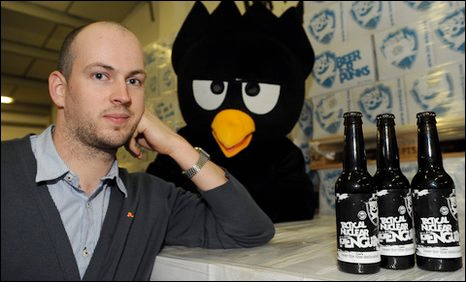
James Watt out of his penguin suit, with bottles of Tactical Nuclear Penguin.

From the press release:

This beer is about pushing the boundaries, it is about taking innovation in beer to a whole new level. It is about achieving something which has never before been done and putting Scotland firmly on the map for progressive, craft beers.

This beer is bold, irreverent and uncompromising. A beer with a soul and a purpose. A statement of intent. A modern day rebellion for the craft beer proletariat in our struggle to over throw the faceless bourgeoisie oppression of corporate, soulless beer.’

The Antarctic name inducing schizophrenia of this uber-imperial stout originates from the amount of time it spent exposed to extreme cold. This beer began life as a 10% imperial stout 18 months ago. The beer was aged for 8 months in an Isle of Arran whisky cask and 8 months in an Islay cask making it our first double cask aged beer. After an intense 16 month, the final stages took a ground breaking approach by storing the beer at -20 degrees for three weeks to get it to 32%.

For the big chill the beer was put into containers and transported to the cold store of a local ice cream factory where it endured 21 days at penguin temperatures. Alcohol freezes at a lower temperature than water. As the beer got colder BrewDog Chief Engineer, Steven Sutherland decanted the beer periodically, only ice was left in the container, creating more intensity of flavours and a stronger concentration of alcohol for the next phase of freezing. The process was repeated until it reached 32%.

Pete Brown, by contrast, has a far more measured reaction to BrewDog’s new beer. We agreed on what was the best part of the press release.

Beer has a terrible reputation in Britain, it’s ignorant to assume that a beer can’t be enjoyed responsibly like a nice dram or a glass of fine wine. A beer like Tactical Nuclear Penguin should be enjoyed in spirit sized measures. It pairs fantastically with vanilla bean white chocolate it really brings out the complexity of the beer and complements the powerful, smoky and cocoa flavours.

Pete takes the right approach IMHO, wanting to focus on the beer itself, which he describes as “an Imperial Stout that has been matured in wooden casks for eighteen months. It has then been frozen to minus twenty degrees at the local ice cream factory in Fraserburgh. By freezing the beer to concentrate it this way, they get the alcoholic strength.” Hard to say what it might taste like, but Pete speculates it will have “very rich, smooth, mellow and complex flavour.” Also, like him, I’m certainly keen to find out. I recently attended a Utopias beer dinner, my third tasting of this year’s version, which is 27%, tantalizingly close to Penguin’s 32%. It’s a wonderful beer, but its release was not accompanied by the frenzy of this beer. Likewise, other very strong beers like Schorschbräu (at 31%), Hair of the Dog Dave (at 29%), as far as I know, did not cause any beer writers to scold them for their efforts. So what’s the difference?

As to the question of whether or not it’s beer, Pete continues:

I once attended a breakfast hosted by Jim Koch, founder of Samuel Adams, father of the awesome Utopias. I asked him a similar question — is this still beer? — and was inspired by his answer. He said something along the lines of beer has been around for thousands of years. Over that time it has evolved continually, and the pace of evolution has picked up considerably in the last couple of centuries. “How arrogant would we have to be to say that in this time, our time, we’ve done everything with beer that can be done? That we’ve perfected beer?” he asked me.

This is why when I love Brew Dog, I really do love them. It’s easy — and not always inaccurate — to accuse them of arrogance. But not when they do something like this. It’s far more arrogant to say ‘we can’t possibly improve on our beer’ than it is to never stop trying to do precisely that. In my marketing role, I often hear brewers talk about something like a slightly different bottle size and refer to it as ‘innovation’. Brew Dog are genuine innovators on a global stage, redefining what beer can actually be.

I guess I just don’t understand the bombastic reaction the release of this beer produced and the way in which it and the brewer’s intentions have been misinterpreted. Why wouldn’t any beer lover want to try it? After all, it really should be about the beer.
brewdog-penguin

Filed Under: Beers, Editorial, News, Politics & Law Tagged With: England, Scotland, UK

Beck’s Sale Called Off

November 28, 2009 By Jay Brooks

becks-white
Reuters is reporting that the impending sale of Beck’s by Anheuser-Busch InBev has been scuttled, by ABIB. According to the weekly German magazine WirtschaftsWoche, the 1.7 billion Euro ($2.54 billion) contract was ready to be sign by purchaser U.S. buyout firm Bain Capital when ABIB walked away from the deal. WirtschaftsWoche is speculating that the earlier “sale of 13 eastern European breweries for 2.2 billion euros in October eased Anheuser-Busch InBev’s debt burden enough for the brewing giant to call off the Beck’s deal.” That’s all that’s known so far, but I’m, sure we’ll learn more on Monday.

Filed Under: Breweries, News Tagged With: Anheuser-Busch InBev, Business, Germany

A Clockwork Orange Approach To Alcoholism

November 25, 2009 By Jay Brooks

clockwork-orange
This is a strange one, and I’m not entirely sure what to make of it, though my natural skeptical tendencies run toward worry. As reported in the USA Today last week in an article entitled Kudzu Compound Could Help Alcoholics Quit Drinking, “[a]n ingredient derived from the [Kudzu] vine noted for gobbling up native Southeast landscapes could help treat alcoholism.

kudzu

Essentially the plant Kudzu, a vine that’s a native of Japan, later introduced in the U.S. and growing wild throughout the southeast, has been found to have a substance contained in it, daidzin, which researchers believe may help in the treatment of alcoholism. The article is based on a study published in the November issue of Alcoholism: Clinical and Experimental Research under the title Suppression of Heavy Drinking and Alcohol Seeking by a Selective ALDH-2 Inhibitor.

But here’s the odd bit, at least for me. The Daidzin found in Kudzu (and which the scientists now believe they can synthesize) makes “drinking alcohol an unpleasant experience.” Isn’t that how they treated the violent kids in Anthony Burgess’ novel A Clockwork Orange? In the novel (and film by Stanley Kubrick) the protagonist undergoes “a form of aversion therapy, in which Alex is given a drug that induces extreme nausea while being forced to watch graphically violent films for two weeks.”

Apparently using Kudzu in this manner is an ancient Chinese folk remedy, thousands of years old. To learn more about it, check out The Amazing Story of Kudzu. The addiction community seems interested. “The results seem promising, says Raye Litten, co-leader of the medications development team at the National Institute for Alcohol Abuse and Alcoholism. ”

But I can’t help thinking that’s still not the right way to treat addiction. I suppose if it’s reserved for the very extreme cases or is done voluntarily, but still I worry. Remember when fluoride was added to the drinking water? Sure, dentists are convinced it helps prevent cavities, but not everyone is so sure, and even today there are people who don’t believe it. (Doc, this would be a good place for you to chime in.) My mother — a nurse — and countless other parents complained and protested when they added it to the school water fountains in the mid-to-late 1960s. What’s to stop certain groups from trying to add this to the water to stop all people from drinking alcohol? Sure I sound paranoid, but it sure would make a good action/adventure flick, don’t you think?

Filed Under: Editorial, News, Politics & Law Tagged With: Alcoholism, Prohibitionists

Vermont Consolidation: Long Trail Buying Otter Creek/Wolaver’s

November 25, 2009 By Jay Brooks

long-trail
In case you missed it, yesterday my friend and colleague Andy Crouch dropped the bombshell that Long Trail Brewing of Bridgewater Corners, Vermont was in the early stages of purchasing Otter Creek / Wolaver’s Brewing, also located in Vermont. Not that I doubted him, but I was able to confirm the news through a well-placed anonymous source. Apparently it’s too soon for an official announcement and the story leaked (not by Andy, I should stress) so I was unable to get any additional details. I tried to reach owner Morgan Wolaver, but so far I haven’t heard back from him. I’ll update the story when I can. For now, you can read the full story at Andy’s Beer Scribe.

Filed Under: Breweries, News Tagged With: New England, Organic, Vermont

The BA’s Newest Brewster

November 24, 2009 By Jay Brooks

ba
If you’ve spent any time in the brewing world or homebrewing, you know doubt know Erin Fay Glass, who’s the Membership Coordinator / Brewery Detective for the Brewers Association, while her husband, Gary Glass, is director of the American Homebrewers Association. On Thursday, they had their first child, a daughter. I spoke to Erin a few days before, and she just sent me the information below. Mother and child are doing great. Here’s what Erin had to say:

Been unplugged way more than usual. Maya Ryleigh is doing really well – certainly keeping us busy. We are totally, utterly smitten with this little gal. I see what people mean by a parent’s love. It’s like she’s been here all along.

Particulars:

Original Gravity: 6 pounds, 14 ounces
IBUs: 19.5 in.
Style: Girl
Release Date: November 19, 2008
Label: Maya Ryleigh Glass

Maya_Ryleigh
Maya Ryleigh

Maya_Ryleigh-2
Maya with her parents, Gary and Erin.

Filed Under: Just For Fun, News Tagged With: Announcements, Colorado

Whither Goes News, Who Pays?

November 22, 2009 By Jay Brooks

newspaper
This is another one of my rambling rants that’s not really beer-related, or at least not beer-centric. If heavy media discussions are not your bag, feel free to stop here and just ignore this one. Beer topics will resume in a few moments. This topic does effect beer insofar as it effects everything in the world, the galaxy and the universe. I’ve long argued that as newspapers die their slow death, that people’s unwillingness to continue to support them and other “paid” media, will have a chilling effect on how the news is shaped, who shapes it, and ultimately how transparent and unbiased it is. I spoke a little bit about this during my time on The Brewing Network this past Sunday, and regular readers may recognize the topic, as well. I’ve been arguing that we have to be willing to pay for our news or we won’t have any news left, or at least not the diversity that’s essential to a free society. Now I realize the fourth estate is hardly free from bias as it stands now, but just wait until there’s only a couple of wire services left. We’re already going in that direction as smaller and regional newspapers lay off staff, create only their local news and rely on the wire services for state, national and world news. For almost any big story, especially overseas, the origin of the coverage is now from only a handful of sources, like the AP, Reuters or UPI.

In fact, there’s only two major U.S. news agencies (The Associated Press and United Press International) and maybe another five worldwide, all located in Europe. The other ones you’ve likely heard of include BBC News, Bloomberg, CNN and the PR Newswire. There’s many more smaller ones in addition, and Wikipedia list nearly fifty in total, which they consider “major”. The Mondo Times World Media Directory lists 34, and doesn’t appear to include the press release clearing houses. But there’s far less than there used to be, and the number is dropping all the time.

Once upon a time, most major papers, and at least the media groups, had “bureaus” all over the world with dedicated staff and reporters that were constantly monitoring local affairs and were ready at any time should a big story develop. Content varied widely and vigorous competition made each media outlet dig deeper and search for the fresh angle. Before that, most major cities had more than one newspaper competing for readership. That, too, made the news richer and fairer overall.

As much as I’d love that time to return, it’s just wishful thinking and the present is what it is. The internet, combined with other factors, have forever altered the way we consume information, and especially news. I’ve long thought that part of the reason for the media decline is because so much news is available free on the internet. As a result, people get their news from other sources than traditional media. The problem with that is, if people aren’t willing to continue paying for their news, then who’s going to collect it and report on it? Yes, blogging has taken up some of the slack in limited ways with amateur reporters finding unique voices and most media outlets now even have blogs as a part of the web presence.

But as cool as “citizen journalism” is, it can never completely replace traditional media, because somebody has to gather the original stories. The majority of blogs still rely on traditional media for source news. For example, I learn about a lot of the news in the beer world from a variety of sources. I get press releases from breweries and other beer-related companies. Friends in the industry let me know what they’re up to and send me samples. But I still have to rely on traditional media for some beer news, financial stuff, for example. Worldwide news, big brewery news, things like that are the type of things I have to rely upon other sources for. Like many bloggers, I strive to not just regurgitate the news, but analyze it, look deeper into its meaning or otherwise put my own stamp or spin on it. But if that source news isn’t there to comment on, all is lost. This is especially true for stories that aren’t clear cut or for which one side of it has an interest in being spun in a way that’s favorable to them. That’s already happening with dwindling media diversity where overworked newspapers don’t have the time or resources to tell the other side of a story or include contrary opinions so they instead rely heavily on press releases, which are notoriously one-sided. [I should disclose that I make a portion of my living writing for a traditional newspaper.]

I know plenty of people who work for different newspapers, and a lot of them are worried about their futures, personally, professionally and in a more general sense of what will happen when all the papers are no more. Yes, you can make the argument that all people resist change and history is littered with such examples. But I keep coming back to the point that if there are no more media (or more likely just a very few big) outlets paying reporters to gather the stories, then we’ll be relying on an ever decreasing number of sources for all news, which I can’t help but believe will make it easier to manipulate that news and spin it whichever way someone wants. Or at the very least, water it down more than it already is. And that’s what will happen if we don’t continue to support traditional media by paying for it.

My fears, I thought, were somewhat borne out by a recent poll reported in the New York Times. The article, entitled About Half in U.S. Would Pay for Online News, Study Finds, which concludes that “Americans, it turns out, are less willing than people in many other Western countries to pay for their online news.”

Among regular Internet users in the United States, 48 percent said in the survey, conducted in October, that they would pay to read news online, including on mobile devices. That result tied with Britain for the lowest figure among nine countries where Boston Consulting commissioned surveys. In several Western European countries, more than 60 percent said they would pay.

When asked how much they would pay, Americans averaged just $3 a month, tied with Australia for the lowest figure — and less than half the $7 average for Italians. The other countries included in the study were Germany, France, Spain, Norway and Finland.

“Consumer willingness and intent to pay is related to the availability of a rich amount of free content,” said John Rose, a senior partner and head of the group’s global media practice. “There is more, better, richer free in the United States than anywhere else.”

The question is of crucial interest to the American newspaper industry, which is weighing whether and how to put toll gates on its Web sites, to make up for plummeting print advertising.

Sounds bad, right? But here’s the thing, which in a weird way I think proves my point, at least to some extent. The Times article was based on a recent poll by the Boston Consulting Group. The title of their press release about that poll was News for Sale: Charges for Online News Are Set to Become the Norm as Most Consumers Say They Are Willing to Pay, According to The Boston Consulting Group, the title alone suggesting a different story than the one reported by the New York Times.

From the press release:

New research released today shows that consumers are willing to spend small monthly sums to receive news on their personal computers and mobile devices. In a survey of 5,000 individuals conducted in nine countries, BCG found that the average monthly amount that consumers would be prepared to pay ranges from $3 in the United States and Australia to $7 in Italy.

John Rose, a BCG senior partner based in New York who leads the firm’s global media sector, said, “The good news is that, contrary to conventional wisdom, consumers are willing to pay for meaningful content. The bad news is that they are not willing to pay much. But cumulatively, these payments could help offset one to three years of anticipated declines in advertising revenue.”

It has the same details as the Times, but the spin is completely the opposite. While the Times focuses on how little Americans are willing to pay, the BCG report emphasized the fact that their poll revealed people are willing to pay for news online, concluding that their “findings will benefit newspapers with unique voice and reporting and with strong subscriber bases[; i]n particular, national and local newspapers.” The only other story about this poll I could find was by Media Daily News, and they also spun it as bad news with the headline People Won’t Pay Much For Online Content. Is it possible they’re both taking a self-serving approach trying to persuade their readers that they should be willing to pay more? It seems to me if enough people are willing to pay a little bit, then it should work. Shouldn’t the better approach be to persuade people to pay something rather than berate them for not being willing to pay more?

So here’s a story that’s reasonably important, as what changes are occurring to our news effects every single one of us and the only two news outlets that cover it get it wrong, or at least recast it in a way that seems obviously more beneficial to them. One surprising tidbit that came out of the study is that the one group that appears to be willing to pay more are avid newspaper readers. Doesn’t that suggest that newspapers might be able to successfully move to a more online model? But instead of finding the news encouraging, America’s newspaper of record chastises the people most willing to pay for online content — their readers — for not being willing to pay enough. Strange times indeed.

But online or off, I continue to believe that we have to support traditional media or at least another model that achieves the same goal of having professional journalists as the primary source for news gathering. I absolutely love online media, and especially blogging, but I can’t see how it could supplant boots on the ground, so to speak. As a result, I subscribe to my local newspaper and also to online subscription websites like Salon. I’d encourage you to do the same. I don’t really believe news will disappear, of course. There will always be a demand for it, but the consolidation like we’ve seen in other industries (which I believe is always bad) is taking place. And the diversity that used to be readily available in news is most definitely in decline, even with the explosion of the internet. Information has undoubtedly increased online, but I’m not sure unique news online has kept pace. If we don’t support newspapers, all we’ll be left with is the USA Today. I shudder to think. I now return you to our regularly scheduled beer news.

Filed Under: Editorial, News, Related Pleasures Tagged With: Mainstream Coverage

Iron City Auctioning Off Brewery Equipment

November 21, 2009 By Jay Brooks

iron-city
Originally, Iron City Brewing (f.k.a. Pittsburgh Brewing) claimed they were only closing the canning line, but it appears the whole kit and kaboodle is leaving Pittsburgh for the greener pastures of Latrobe. That’s another big loss of a historic brewery, one that’s been around since 1861. The Pittsburgh City Paper has a long, interesting article on what’s going on, entitled Bitter Beer: The Loss of Iron City Has Left A Bad Aftertaste. Needless to say, it doesn’t look good.

Filed Under: Breweries, News Tagged With: History, Pennsylvania

Want A Healthier Heart? Drink More Beer!

November 19, 2009 By Jay Brooks

health
This has got to drive the anti-alcohol lobby nuts, and especially their medical co-conspirators who continue to insist that a binge drinker is simply someone who drinks five or more drinks in one session. The UK newspaper, The Independent, had an interesting article today, provocatively titled “Drink half a dozen beers every day and have a healthier heart: Teetotallers more likely to have heart attack than drinkers, study shows.”

According to the article, “Drinking a bottle of wine a day, or half a dozen beers, cuts the risk of heart disease by more than half in men, it has been shown.” That’s based on a study just published in the medical journal Health entitled Alcohol intake and the Risk of coronary heart disease in the Spanish EPIC cohort study.

In the Abstract:

Background
The association between alcohol consumption and Coronary Heart Disease (CHD) has been broadly studied. Most studies conclude that moderate alcohol intake reduces the risk of CHD. There are many discussions on whether the association is causal or biased. The objective is to analyse the association between alcohol intake and risk of CHD in the Spanish cohort of the European Prospective Investigation into Cancer (EPIC).

Methods
Participants from the EPIC Spanish cohort were included (15,630 men and 25,808 women). The median follow up period was 10 years. Ethanol intake was calculated using a validated dietary history questionnaire. Participants with a definite CHD event were considered cases. A Cox regression model was performed adjusted for relevant covariables and stratified by age. Separate models were carried out for men and women.

Results
Crude incidence rate of CHD was 300.6/100,000 person-years for men and 47.9/100, 000 person-years for women. Moderate, high and very high consumption was associated with a reduce risk of CHD in men: HR 0.86 (95% CI= 0.54-1.38) for former drinkers, 0.64 (95% CI= 0.4-1.0) for low, 0.47 (95% CI= 0.31-0.73) for moderate, 0.45 (95% CI= 0.29-0.69) for high and 0.49 (95% CI= 0.28-0.86) for very high consumers. In women a negative association was found with p values above 0.05 in all categories.

Conclusions
In men aged 29-69 years, alcohol intake was associated with a more than 30% lower CHD incidence. Our study is based on a large prospective cohort study and is free of the abstainer error.

The Independent distills it in clearer language:

In one of the largest studies of the link between alcohol and heart disease, researchers have found that the protective effects of a daily tipple are not limited to those who drink moderately but also extend to those who consume at what are conventionally considered to be dangerously high levels.

The research was conducted among 15,000 men and 26,000 women aged from 29 to 69 who were followed for 10 years.

The results showed that those who drank a little — a glass of wine or a bottle of beer every other day — had a 35 per cent lower risk of a heart attack than those who never drank. Moderate drinkers, consuming up to a couple of glasses of wine a day or a couple of pints of ordinary bitter, had a 54 per cent lower risk.

The surprise was that heavy drinkers consuming up to a bottle of wine or six pints of ordinary bitter had a similar 50 per cent reduction in risk of a heart attack to moderate drinkers. Those drinking at even higher levels were still half as likely to suffer a heart attack as the teetotallers.

Larraitz Arriola, who led the study, said alcohol caused 1.8 million deaths a year around the world and 55,000 deaths among young people under 30 in Europe alone. “The first thing to say about our research is that alcohol is very harmful. If you drink heavily, you should drink moderately. The more you drink, the worse off you will be.” The researchers only looked at the effect of alcohol on the heart and confirmed what 30 years of studies have shown — that it is protective. The effect was independent of the form in which the alcohol was taken, as beer, wine or spirits. However, people who only drank wine had slightly less protection.

Not surprisingly, British “scientists” are calling the results “flawed,” most likely because it flies in the face of their politically-motivated advice and the ridiculous (and recently revealed to be completely arbitrary) “units of alcohol” that set the nation’s alcohol policy for over twenty years. In a BBC article, they’re still treating the guidelines as if they mean something, which is almost funny.

In May of 2006, Danish study that also found healthy heart benefits for alcohol drinkers, though in that study they concluded that drinking levels above moderate would not increase benefits. This new Spanish study appears to conclude otherwise. In every article I’ve seen on this study, everyone is scrambling to make sure to tell people not to go out and start drinking more, due to other risks from heavy drinking. I’d say anyone that suddenly started binging based on this study probably deserves whatever ill effects they experience. But seriously, do health professionals really believe people are that stupid? I’m sure there are a few stupid enough (P.T. Barnum had it right) but it’s more likely they were already unhealthy drinkers just looking for an excuse.

What I take away from this is simply that the arbitrary and self-serving definitions of binge drinking are not only wrong, but very, very wrong. I attend beer dinners all the time, drinking an average of four, five or six different beers (and sometimes more) over several hours, paired with several courses. These dinners cost $50, $75, $100 (and sometimes more). They are attended by people who can afford that, people with good jobs, professionals, people with families, upstanding members of their communities. Yet in the U.S., the CDC claims if you have “five or more drinks in a row,” you’re an unhealthy binge drinker, endangering your own life, and possibly those around you. That makes every one of the people at all the beer dinners I attend, binge drinkers, and, to some in the anti-alcohol movement, automatic alcoholics, too. Could any standard be farther from reality?

Despite all the warnings of binge drinking, it appears by defining it in a way that’s so far removed from ordinary experience, that it actually makes it completely meaningless. Certainly there are people who drink too much and put their health at risk. But lumping them together with those who occasionally drink “five or more drinks in a row” safely and without sinking into alcoholism, the problems of the people who really need help never get addressed. All it does is give the AnAl’s more ammunition to scare people with, and few media outlets ever call them on it. After all, it has the stamp of a government agency. But we all know it’s not accurate by any stretch of the imagination to call the average beer dinner attendee a binge drinker. At least now we know their heart will get a boost. In the end, I think the best advice is “everything in moderation … including moderation.”

Filed Under: Beers, Editorial, News, Politics & Law Tagged With: Health & Beer

Breweries Have 5th-Most Satisfied Customers

November 18, 2009 By Jay Brooks

acsi
According to a new survey, released yesterday by the American Consumer Satisfaction Index (and tweeted my way by Anat Baron — thanks!), Breweries ranked 5th in overall satisfaction by consumers among industries polled by the group. Here are the first five with their score in parentheses (out of 100):

  1. Personal Care & Cleaning Products (85)
  2. Soft Drinks (85)
  3. Full Service Restaurants (84)
  4. Automobiles & Light Vehicles (84)
  5. Breweries (84)

For breweries, this is the highest marks they’ve received since this poll began, and represents a 1.2% increase over last year.

As reported by Brand Week, comfort foods like candy and beer continued to do well.

Beer manufacturers reached their highest level to date with a score of 84 (out of a 100-point scale) to mark a 1.2 percent change from 2008 rankings. Top companies included Anheuser-Busch InBev (85) and SABMiller (83), which grew 3.7 percent and 1.2 percent respectively from last year. Molson Coors Brewing (81) dipped by 2.4 percent, while “all others” maintained their rank at 83.

The ACSI had their own take on beer in their analysis:

Beer: A Comfort Drink?

Beer drinker satisfaction has soared to an all-time high in ACSI. It too seems to follow the pattern of chocolate and sweets, but perhaps a bit less pronounced. The industry improved 1.2% to an ACSI score of 84, led by a 4% climb for Anheuser-Busch to a score of 85. Just a year after it was acquired by the Belgian-Brazilian conglomerate InBev, Anheuser-Busch matched its biggest ever single-year gain to reach its highest level ever. InBev has made a number of changes in business strategy—it sold the ten theme parks owned by Anheuser-Busch to reduce debt and focus on core business, cut over 1,000 employees, and overhauled management. The company has seen increased sales of lower-priced brands such as Natural Light and Busch and of newer products such as Bud Light Lime and Golden Wheat varieties.

Results for Miller and Coors brands, which market under a joint operating agreement, were mixed. Miller improved slightly, up 1% to 83, while Coors dropped 2% to 81, falling to the bottom of the industry. The Coors brand portfolio is composed of a greater proportion of high-end entities and more high-priced brands compared with Anheuser-Busch. In the midst of an economic downturn, customers typically look more to value for money. Coors drinkers report a sharp decline in value for money.

The ACSI also noted a pattern during economic downturns:

“The same thing happened in 2001 in the midst of the previous recession and also in 2004 when concern over the Iraq war and rising fuel prices appeared to be reflected in higher satisfaction with comfort foods,” said Professor Claes Fornell, founder of the ACSI and author of The Satisfied Customer, in a statement.

Newspapers and Cable/Satellite TV tied for last, though Airlines were a close second-to-last.

Filed Under: Breweries, Editorial, Just For Fun, News Tagged With: Mainstream Coverage, Statistics

Update On FDA Caffeine/Alcohol Ultimatum

November 16, 2009 By Jay Brooks

caffeine
As reported last Friday, the FDA announced that they’d sent letters to almost 30 manufacturers of alcohol drinks that also contain caffeine. The FDA gave these companies 30 days to essentially prove that they’re safe. On the beer side, some of the breweries that received letters include Ithaca Beer Co. (Ithaca Eleven Malt Beverage with Coffee), New Century Brewing (Moonshot) and Thomas Creek Brewery (Mobius Lager). Here’s the full list.

My friend and colleague, Harry Schuhmacher, who writes Beer Business Daily, has some interesting insights into this move by the FDA. Beer Business Daily reports daily on the beer business. If you don’t subscribe to it, you should, especially if you’re a brewery owner or work for one on the business side.

Here’s his take on a few relevant portions of the FDA letter.

FDA: “FDA has not made a determination regarding the GRAS status [GRAS stands for ‘generally regarded as safe’] of the use of caffeine in alcoholic beverages.”

BBD: True, although the FDA has determined that caffeine, even in doses much higher than what are in the alcohol beverages in question, isn’t unsafe. The fact is that caffeine and alcohol have been mixed safely for hundreds of years. But does that mean that the manufacturer should do it for us? Read on.

FDA: “Nor are we aware of a basis for concluding that your use of caffeine in these beverages is prior sanctioned.”

BBD: This doesn’t make sense to us at first blush. The TTB, the federal agency charged by the FAA Act with regulating alcoholic beverages, has certainly “sanctioned” these products by their approval of their formulas, their labels, and even vetted their marketing practices. The TTB has guidelines about adding caffeine to alcohol beverages — ironically based on FDA guidelines on caffeine — and all of the products on the market fall within these guidelines. In fact, these beverages are at caffeine levels well below what the FDA deems as unsafe. So while these beverages haven’t received prior sanction from the FDA, they have received a sort of de facto “sanction” from the TTB, which is just as much a part of the United States government as the FDA.

The crux here I suppose is in the idea of caffeine + alcohol. The FDA operates under the Federal Food, Drug, and Cosmetic Act, while the TTB operates under the Federal Alcohol Administration Act. FDA governs food and non-alc beverages (and caffeine in such), while the TTB governs beverage alcohol. Methinks there is a land grab going on here, and the TTB isn’t too pleased about it, we hear. The FDA says it has jurisdiction because the Federal Food, Drug and Cosmetics Act gives it authority over “articles used for food or drink” and “thus includes alcoholic beverages,” says the FDA. This is probably news to the TTB.

The FDA has guidelines for caffeine in non-alc beverages, and the TTB has guidelines for alcohol in general. So the TTB naturally put the FDA caffeine guidelines with their alcohol guidelines, looked at the products in question, and deemed them safe. But the FDA is now reaching out beyond its historical bounds by placing the onus on the bev-alc manufacturers to prove that putting alcohol and caffeine together in one beverage is safe. More on that below.

He’s been inundated with questions and earlier today gave his thoughts to the most popular ones. With his permission, here are several of the questions and his answers to them:

WHAT’S THE DEAL? The FDA, under pressure from several state Attorneys General (who we hasten to add could make these drinks illegal in their respective states tomorrow either through legislation, regulatory ruling, and/or by AG fiat, but would rather make the feds do the heavy lifting) is formally tackling the issue of caffeine intentionally added to alcohol beverages. It says it has providence when a food or beverage intentionally adds a substance to it that is “unsafe” unless its use has been approved by the FDA, is generally recognized as safe (as caffeine is), or is “subject to a prior sanction.” If the additive is “unapproved” then it is subject to “seizure” if deemed unsafe. The FDA has not “issued a food additive regulation to approve the use of caffeine in alcoholic beverages, and FDA is not aware of a basis to conclude that this use of caffeine is GRAS or subject to a prior sanction by FDA. By law, any person can make a GRAS determination but that determination must meet the GRAS criteria for safety and general recognition.” In other words, call in your best lawyers, because this is going to be a legal war of words just as much as it is a scientific one.

Historically, the FDA has listed caffeine as generally safe in cola-type beverages in lower doses, but there are no “regulations that permit the addition of caffeine, at any level, in alcoholic beverages.” That doesn’t mean it’s unsafe, it just means there aren’t any regulations. But as we mentioned above, the TTB has guidelines, based on the fact that the FDA hasn’t deemed caffeine as unsafe even in larger doses. Can you say turf war? In fact, the FDA and the TTB have a “Memorandum of Understanding” between them outlining what actions each should take under certain circumstances when there is overlap in their jurisdiction. We quote from it: “When FDA learns or is advised that an alcoholic beverage is or may be adulterated, FDA will contact ATF [Ed. Note: that’s the old name for the TTB].” The memorandum unhappily doesn’t mention what happens when a seemingly safe substance like caffeine has found to be “adulterating” alcoholic drinks. One would think the action would be the same as for other alleged adulterations: FDA should contact the TTB, make them aware of it, and let them take care of it. Instead they called a press conference. Politics are involved as usual, and we’ll get to that.

The FDA says it is “unaware of the basis upon which manufacturers may have concluded that the use of caffeine in alcoholic beverages is” generally recognized as safe. But I know of one basis: the fact that the TTB says it was okay. The two agencies must not read each other’s websites. I hear the Internets are slow this time of year in DC. But still, the FDA says that in order for caffeine AND alcohol together to be classified as “Generally Regarded as Safe”, even if they’re safe apart, it must past two tests: 1. Publicly available science must show that caffeine in alcohol is safe, and 2. there is a “consensus among qualified experts regarding the safety of caffeine for this use.” In other words, what the FDA is trying to do is come up with a new substance it can regulate, a substance that is the combination of both caffeine and alcohol. We can call it CafAlc. And CalfAlc, the FDA says, needs to be classified under FDA rules as GRAS or sanctioned. Here’s my beef with this reasoning: If CalfAlc comes under FDA jurisdiction, does that mean that plain old “Alc” isn’t too far behind? Slippery slopes and victory by inches, my friends.

[Ed. Note: This isn’t the first time the FDA has reached into the alcohol beverage business. Because of the strict legal wording of the what the TTB has authority over, gluten free beers like A-B’s Redbridge and Saki fall under FDA authority, because of how they’re made. Technically, it’s legal for gluten free beers to have slotting fees, as a result].

This is extremely unusual. The last time the FDA formally asked a manufacturer to prove their substance is GRAF was back in 2001, when it asked the manufacturers of Echinacea to prove it was GRAS or prior sanctioned for use in conventional foods. So this is a bid deal.

WHAT ABOUT KAHLUA AND CUBA LIBRES? This was a common cry from distributors. Consumers and manufacturers have been mixing alcohol with caffeine for many years. “This FDA action is not directed at products that are flavored with coffee,” says the FDA. So Kahlua isn’t illegal ….. yet. Also, for the time being, the bartender that serves you a Jack and Coke is also safe from arrest, as the FDA is “focusing its attention on products in which caffeine has been intentionally added to alcoholic beverages by the manufacturers. Other products containing added caffeine may be subject to agency review if the available scientific data and information indicate that added caffeine may pose a safety concern, or is being unlawfully used, under the conditions of its use in other products.” So stay tuned. Cuba libres may be next.

HOW HARD IS IT TO GET GRAS STATUS? The FDA says that there must be “technical evidence of safety and a basis to conclude that this evidence is generally known and accepted by qualified experts.” That includes establishing that the beverage’s “intended use” be safe and that it’s not harmful under “probable consumption” and the “cumulative effect of the ingredient in the diet.”

This is kind of bizarre, because as we’ve said, caffeine hasn’t been deemed unsafe. But there’s a reason that alcohol is regulated by a different agency, because by its very nature it is a different type of product — it can be intoxicating — and as such the guidelines of “safe” are a different animal. Here’s my point: If there was no such thing as alcohol on earth, and an alien suddenly landed in Des Moines and introduced the miracle of vodka to us, I doubt the FDA would approve it as GRAS. But the fact remains that alcohol has been on earth for thousands of years, and the voters won’t be denied it. The government once tried to “take away its GRAS status” in 1919, but that didn’t work out so well. We’ll let the lawyers grapple with that. We are in unchartered territory, and while we’re not talking about alcohol alone, but rather CafAlc, the consequences of going down this legal road could still be significant to the industry at large. If CafAlc is deemed unsafe by our protectors at the FDA, and yet caffeine is considered safe, then where does that leave Alc?

WHAT’S THE TIME FRAME? While the FDA gives the producers of these beverages 30 short Winter days to prove they are safe, it gives itself an indeterminate amount of Summer days to respond. “The timeframe is difficult to predict and it will depend on the amount and quality of data and information that the FDA receives from manufacturers and that are otherwise available to the agency and upon the complexity of scientific issues that may be encountered in the course of its review,” writes the FDA. “The FDA’s decision regarding the regulatory status of caffeine added to various alcoholic beverages will be a high priority for the agency; however, a decision regarding the use of caffeine in alcoholic beverages could take some time.”

BIG BREWERS’ HAND IN THIS? A few readers have suggested that A-B and MillerCoors probably have a hand in these latest developments, as it would kill a growing competitive threat while also fitting their crowns with bright white halos (and the added “benefit” of putting the NBWA on its heels). Perhaps, but there are several competing factors in that equation. You can imagine that their marketing people aren’t unhappy about what’s happened, as these indie manufacturers were operating under the radar and taking share and shelf space from castrated Sparks and Tilt. And at the same time I don’t think their government affairs people, who trump almost everything at both those companies, like having any malt-based products out there that cast a bad light on the industry at large — it puts a tax and regulation target on everybody’s back. Still, I also don’t think they’re particularly happy about the FDA getting into the alcohol business. I happen to know that they haven’t been in contact with the FDA about it, in fact. But they do seem to favor federal regulation over state-based regulation. So take all that for what it’s worth.

OUR TAKE. So what’s likely to happen? That’s anybody’s guess, as you can never predict what government agencies will do. But that won’t stop us from conjecturing. The larger producers will likely fold like lawn chairs on Labor Day. Constellation already killed their caffeinated alcohol drink, even though it’s still listed in the FDA’s hit list. I expect Diageo will kill Smirnoff Raw Tea in about sixty seconds if they haven’t already (one source says they already discontinued Raw Tea), as they also want that white halo that A-B and MC have. We note Boston Beer’s Twisted Tea didn’t get a love letter from the FDA.

The smaller producers like Four Loko and Joose, who have everything to lose, have already lawyered up, we hear. One thing that jumps out at us is that 30 days is a ridiculously short time frame for the FDA to expect anybody to prepare a defense. They’ll get extensions on that, you can almost be sure. And you have to think they may have a pretty decent case. There’s no evidence we’ve seen that caffeine and alcohol are dangerous to your health per se, or any more dangerous than either one apart. People have been quaffing rum and Cokes for years. The evidence will be vetted, and in the end, if indeed caffeine and alcohol aren’t any worse for you than drinking coffee and vodka separately, or together to your health, then the FDA will ultimately be satisfied and can report back to the AGs that they did their job.

But I think this is important: The FDA cites a letter provided by the AGs of a group of university scientists showing evidence that alcohol and caffeine may keep people up longer into the night, so there’s more of a chance of them consuming more and getting into dangerous mischief. But one would think this is beyond the scope of the FDA. They’re food regulators, not behavior police. Also, the fact that these products are high in alcohol and taste sweet, and so could be construed to appeal to young people, would also seem to be out of the FDA’s wheelhouse. But I’m no Perry Mason.

THE COLD HARD TRUTH. Having said all that, the fact remains that the Big Boys in our industry — brewers and distillers alike — in the alcohol industry don’t want these drinks to exist. Neither do the control states, neither do the license state regulators, neither do the AGs, neither do parents, neither do some chain retailers, and neither do the fun bunchers [Note: “fun bunchers” is Harry’s term for neo-prohibitionists —J]. These products have been painted with a tar brush — nobody wants to touch them. Even if Joose and Four Loko have great legal representation, there are a lot of big forces against them, including the beer, wine, and spirits industry at large in which they operate. While they may have a legal case against the FDA, this tide is a strong one to swim against.

Worst case scenario for these producers: Caffeine and taurine and other stimulants are deemed to be dangerous in conjunction with alcohol, so Joose and Four Loko and their ilk will have to reformulate without stimulants, but with other vitamins or whatever, and ultimately they get placed on the same playing field as Sparks and Tilt, and we move on down the road. Book it.

Filed Under: Beers, News, Politics & Law Tagged With: FDA, Prohibitionists

« Previous Page
Next Page »

Find Something

Northern California Breweries

Please consider purchasing my latest book, California Breweries North, available from Amazon, or ask for it at your local bookstore.

Recent Comments

  • Bob Paolino on Beer Birthday: Grant Johnston
  • Gambrinus on Historic Beer Birthday: A.J. Houghton
  • Ernie Dewing on Historic Beer Birthday: Charles William Bergner 
  • Steve 'Pudgy' De Rose on Historic Beer Birthday: Jacob Schmidt
  • Jay Brooks on Beer Birthday: Bill Owens

Recent Posts

  • Beer In Ads #5137: Bock Is Back… Look For It March 1st February 28, 2026
  • Historic Beer Birthday: John Holme Ballantine February 28, 2026
  • American Craft Beer Hall of Fame: 2nd Year Inductees February 28, 2026
  • Beer Birthday: Jeff Bell February 28, 2026
  • Beer In Ads #5136: American Bock Beer Is Being Served Today! February 28, 2026

BBB Archives

Feedback

Head Quarter
This site is hosted and maintained by H25Q.dev. Any questions or comments for the webmaster can be directed here.