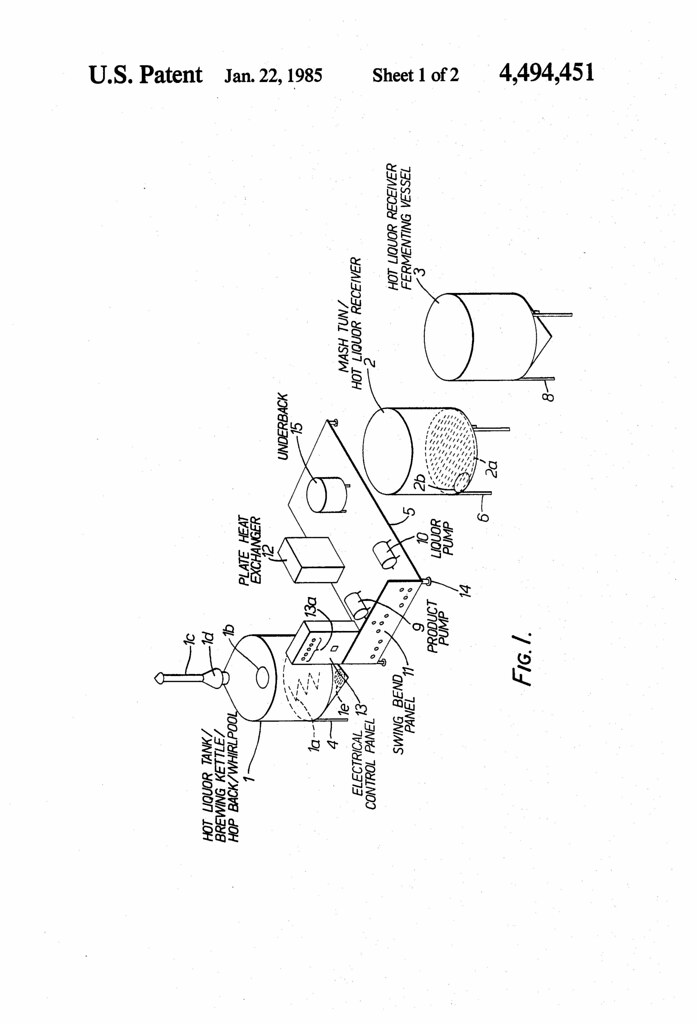
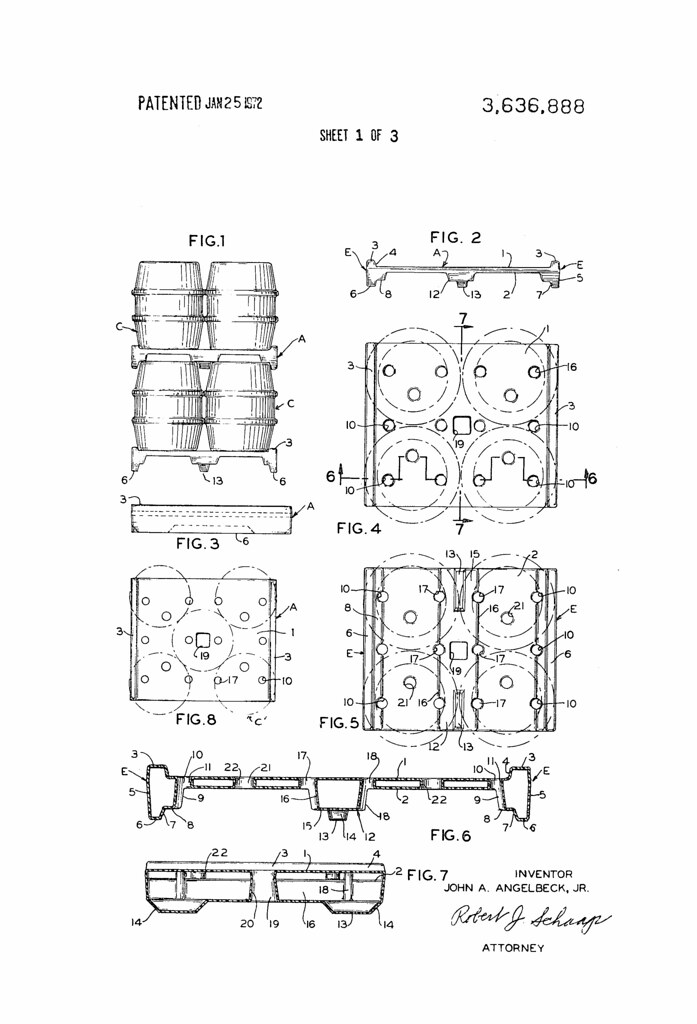
Today in 1972, US Patent 172687 A was issued, an invention of John A. Angelbeck Jr., assigned to Pack Rite Packaging & Crating, for his “Pallet.” There’s no Abstract, but it’s described as a “pallet used for the storage and transporting of containers such as beer kegs and the like.” It’s essentially a plastic pallet, and while I’ve seen a few of them, I don’t think they’ve replaced the wooden pallet the way the inventor hoped.

Patent No. 172687A: Improvement In Beer-Coolers
Today in 1876, US Patent 172687 A was issued, an invention of Louis Baeppler, for his “Improvement in Beer-Coolers.” There’s no Abstract, but the description includes this:
My invention relates to an apparatus which maybe readily applied to a keg or barrel of any description, so as to cool the beer after it leaves the barrel.
The invention consists of an ice-chamber, provided with an opening at the bottom for the insertion of a cock to be attached to the lower end of the cooling-coil, and an opentopped slot at the top for the insertion and removal of the upper end of the coil, and a cover for closing said chamber, as hereinafter described and shown.

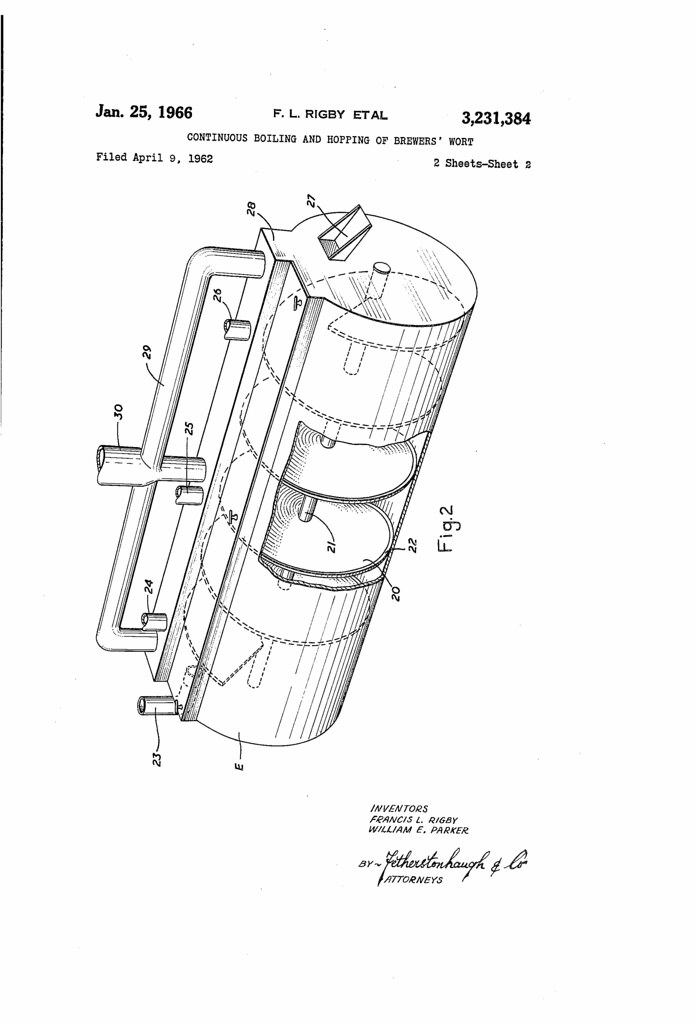
Patent No. 3231384A: Continuous Boiling And Hopping Of Brewers’ Wort
Today in 1966, US Patent 3231384 A was issued, an invention of William Ernest Parker and Francis Lloyd Rigby, assigned to Canadian Breweries Ltd., for their “Continuous Boiling and Hopping of Brewers’ Wort.” There’s no Abstract, but partway down in the description is this:
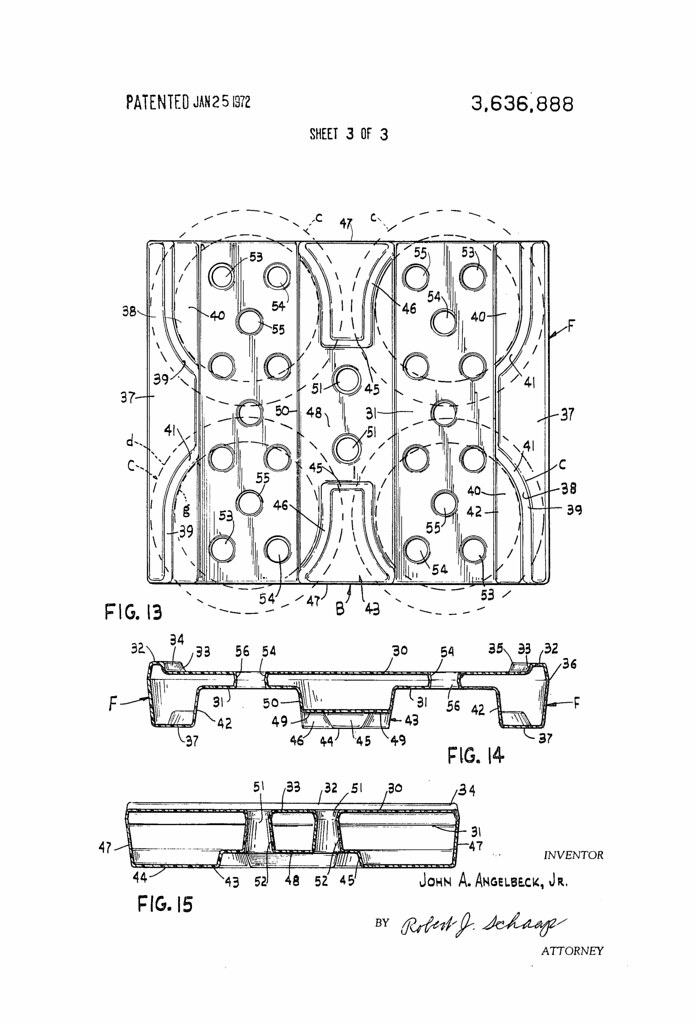
The method of the present invention generally comprises forming a continuously flowing stream of hot brewers wort, causing said stream to flow in a substantially horizontal path, continuously introducing a predetermined mass of hops to said stream, heating said flowing wort, venting said stream of undesirable volatiles above said path of flow and controlling the time flow ratio of said wort and hops as to hop said wort to desired degree, and finally continuously discharging spent and hopped wort from said stream. This may be carried out with the wort and hops flowing counter-current to one another, discharging spent hops at one end of the path and hopped wort at the other. Alternatively, it may be carried out in a co-current flow.
The method may be carried out in particularly simple apparatus which may take the form, for counter-current flow, of a substantially horizontally disposed tubular vessel with provision for introducing wort towards one end thereof and hops in the other end thereof and which includes a perforated auger moving the hops in countercurrent flow to the continuously flowing wort as to cause spent hops to discharge at one end of the apparatus and hopped wort at the other, and which is a preferred type of apparatus proposed although such counter-current flow might be achieved by apparatus of other design. For cocurrent flow, the wort is introduced at one end while the hops are introduced adjacent that end and/or selectively along the length of the vessel.
Patent No. 1070116A1: Beer Flavor Concentrate
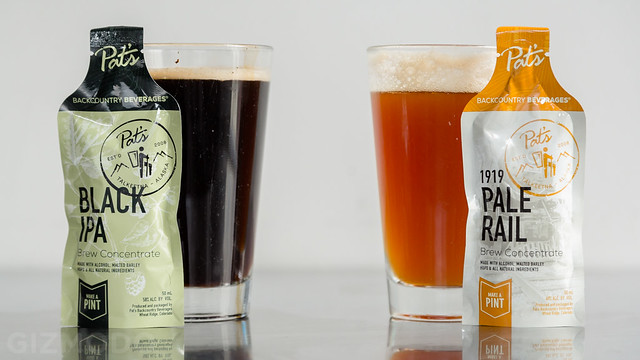
Today in 2001, US Patent 1070116 A1 was issued, an invention of Matthew L. Tripp, assigned to the Green Bay Beer Company, for his “Beer Flavor Concentrate.” Here’s the short Abstract. “A beer flavor concentrate and a method for making and using the beer flavor concentrate to produce a final beer product through the addition of carbonated water and alcohol.”

While I’m not sure if this was ever marketed as, or as part of, a product, more recently concentrated beer has become available on the market. For example, Pat’s Backcountry Beverages was made primarily for camping. Over the last couple of years, both Popular Science and Gizmodo have been taken a look at how it works and if the reconstituted beer is any good.
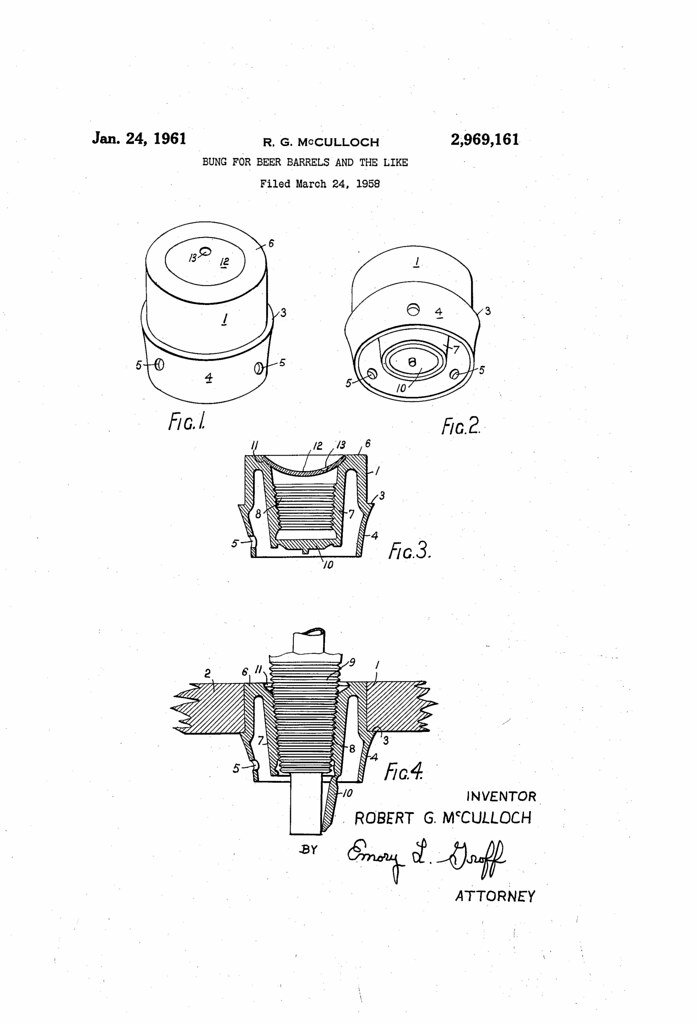
Patent No. 2969161A: Bung For Beer Barrels
Today in 1961, US Patent 2969161 A was issued, an invention of Robert Givens Mcculloch, for his “Bung for Beer Barrels and the Like.” There’s no Abstract, but the application describes it an “invention has been devised to provide a bung (generally called a shive) for beer barrels and like containers for liquids which will enable a tap fitting or pipe to be connected to the barrel without spilling the contents of the barrel during the connecting operation.”
Patent No. 2452476A1: Mediating The Effects Of Alcohol Consumption By Orally Administering Active Dry Yeast
Today in 2003, US Patent 3712820 A was issued, an invention of Joe Owades, for his “Mediating the Effects of Alcohol Consumption by Orally Administering Active Dry Yeast.” Here’s the short Abstract. “A process for lowering blood alcohol levels in humans after they imbibe alcoholic beverages by administering active dry yeast before or concomitantly with the imbibing of the beverages.”
This is most likely the origin of the hangover prevention that Jim Koch, from the Boston Beer Co., has popularized over the years, but especially after Esquire magazine ran an article about it last April, How to Drink All Night Without Getting Drunk.
The story got picked up by NPR, Serious Eats and even Snopes took a look at it.
But I’d actually heard Jim tell the story a couple of times at various events, most recently at a beer dinner last year at the Jamaica Plain brewery in Boston celebrating the 30th anniversary of Samuel Adams.
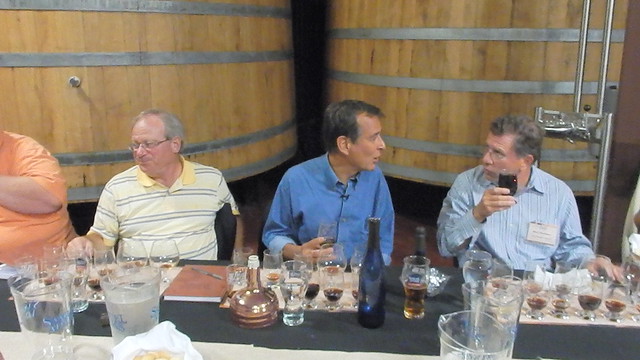
In telling the story, Jim did, of course, mention that the idea came from Joe Owades, who had worked as a consultant with the Boston Beer Co. since the very beginning, and off and on thereafter. But I don’t think I’d realized before now that Joe had actually patented the idea.
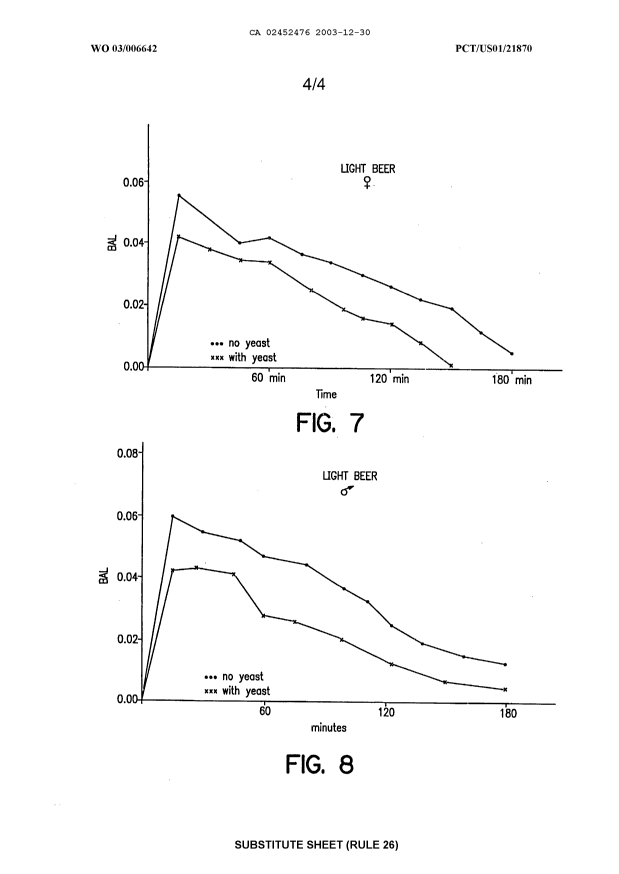
The claim in the patent application describes it in a nutshell. “A method of mediating the effect of alcohol consumption by a person which comprises orally administering active dry yeast containing alcohol dehydrogenase to said person prior to or simultaneously with consumption of an alcohol-containing beverage, whereby to oxidize a portion of the alcohol while still in the stomach of said person.” His own testing of the method, shown in the figures below, found that “blood alcohol level-min. was reduced by 38% by the yeast.”

Patent No. 3712820A: Process For Making A Brewers’ Wort Beer
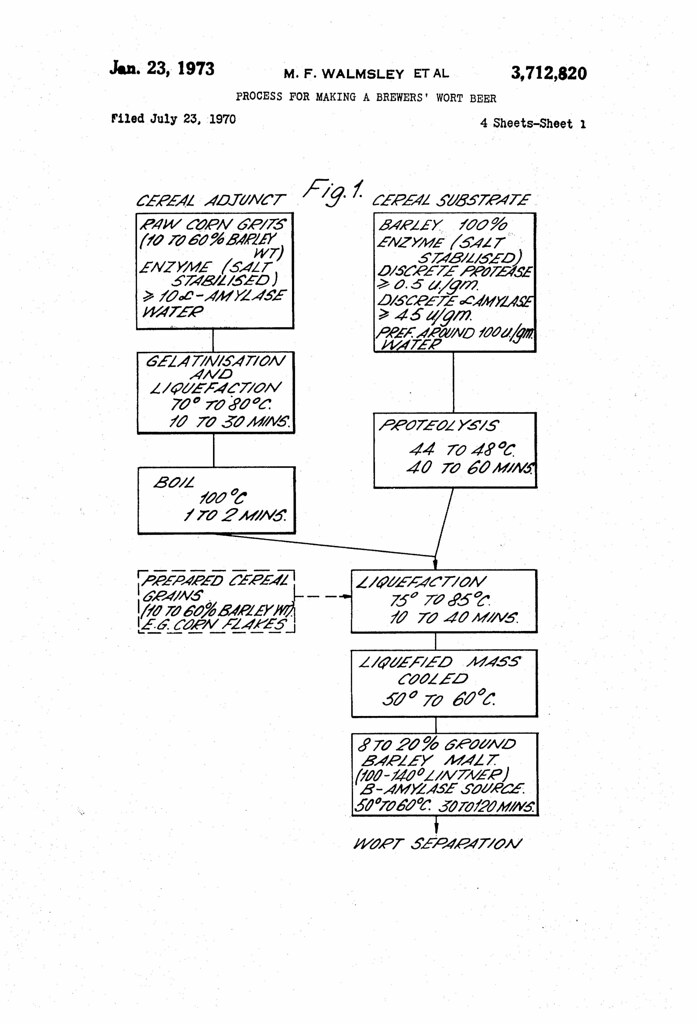
Today in 1973, US Patent 3712820 A was issued, an invention of Martin F. Walmsley and John Valentine Cross, and assigned to John Labatt Ltd., for their “Process for Making a Brewers’ Wort Beer.” There’s no Abstract, but in the description they explain that the “invention provides a process for producing a brewers wort in which an aqueous slurry of a raw starch containing material, preferably a cereal grain such as barley, is heated to 40 55 C. at which temperature it is subjected to the action of a discrete proteolytic enzyme and, optionally, a discrete ot-amylase enzyme, then heated to 65-90 C. at which temperature it is subjected to the action of a discrete a-amylase enzyme to solubilise the starch, after which it is cooled to 40-65 C. at which temperature it is subjected to the action of a discrete amylase enzyme or source thereof to produce fermentable sugars.”

Anheuser-Busch InBev To Buy Elysian


Anheuser-Busch InBev and Elysian Brewing of Seattle, Washington announced today that they had reached agreement for ABI to buy the small Elysian brewpub chain.
From the press release:
“For two decades, we’ve welcomed guests into our brewpubs and served them creative and impeccably crafted beers,” said Joe Bisacca, Elysian CEO and co-founder, who will continue with Elysian along with his partners, Dick Cantwell and David Buhler. “After a lot of hard work, we’ve grown from one Seattle brewpub to four pub locations and a production brewery. With the support of Anheuser-Busch, we will build on past successes and share our beers with more beer lovers moving forward.”
Dick Cantwell, Elysian co-founder and Head Brewer added, “Throughout our journey we’ve been focused on brewing a portfolio of both classic and groundbreaking beers and supporting innovation and camaraderie in the beer industry through collaboration and experimentation. By joining with Anheuser-Busch we’ll be able to take the next steps to bring that energy and commitment to a larger audience.”
Elysian sold more than 50,000 barrels of beer in 2014, with Immortal IPA accounting for more than a quarter of the company’s total volume.
“Elysian’s story includes everything we look for in a partner,” said Andy Goeler, CEO, Craft, Anheuser-Busch. “The team has spent their careers brewing distinctive beers in the thriving West Coast beer community and building unique venues that celebrate beer. As the fastest growing brewer in Washington, their recipe is working. Elysian’s brands are an important addition to our high-end beer portfolio, and we look forward to working together.”
In addition to the Seattle Airport Way brewery, the acquisition includes the company’s four Seattle brewpubs, Elysian Capitol Hill, Elysian Tangletown, Elysian Fields and Elysian BAR.
Anheuser-Busch’s purchase of Elysian is expected to close by the end of the first quarter of 2015. Terms of the agreement were not disclosed.
Not sure what to make of the news yet, all I know is what’s in the press release. So far, there’s been no statement from anyone at Elysian, though I suspect we’ll learn more throughout the day.
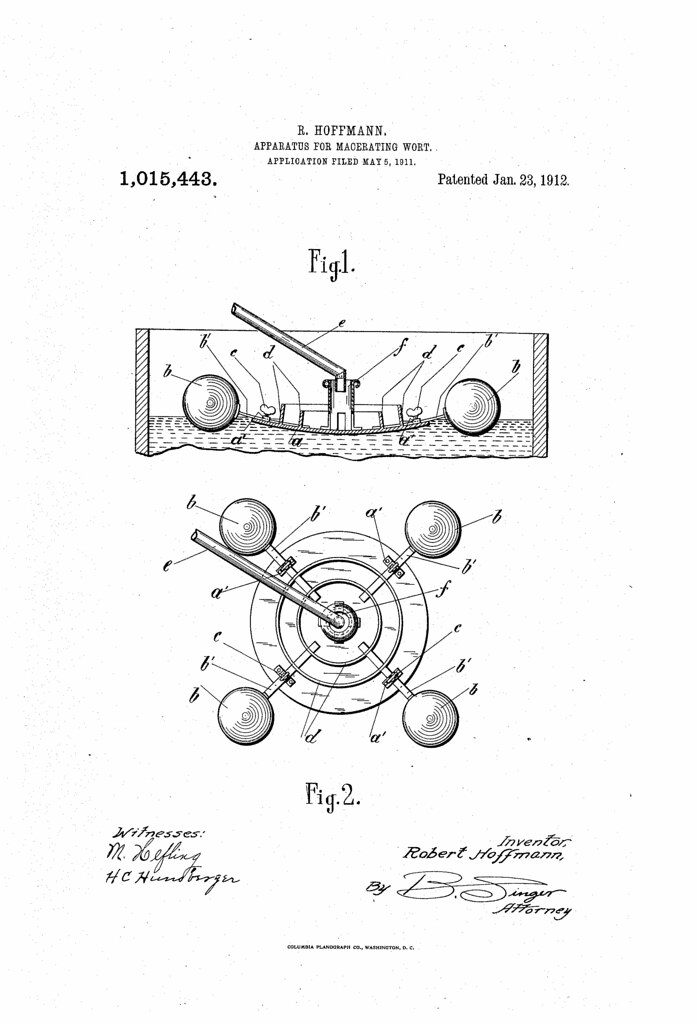
Patent No. 1015443A: Apparatus For Macerating Wort
Today in 1912, US Patent 1015443 A was issued, an invention of Robert Hoffmann, for his “Apparatus for Macerating Wort.” There’s no Abstract, but in the description he explains the problem and his solution:
In macerating they wort in making beer the sparging water has hitherto been poured on to the wort by means of a rotary sprayer spraying over or sparging the wort. As the sparging water falls from a certain height on to the surface of the wort it is not only impossible to avoid unintentionally mixing the wort with the sparging water,’but the latter is also undesirably cooled. Both disadvantages thus involve a loss of yield from the grain and thus mean an incomplete’ working.
Now as compared with the ordinary apparatus for maceration this invention consists in the sparging water not being, allowed to fall from a height on to the surface of the wort but being introduced in layers on to the surface of the wort, so that the grain during maceration is slowly compressed by the sparging water and does not mix therewith.
This improved apparatus consists in other’ words in the sparging water being allowed to flow on to the wort in a continuous stream without first having to fall through the air — on to the surface of the wort.
Patent No. 4494451A: Brewing Apparatus
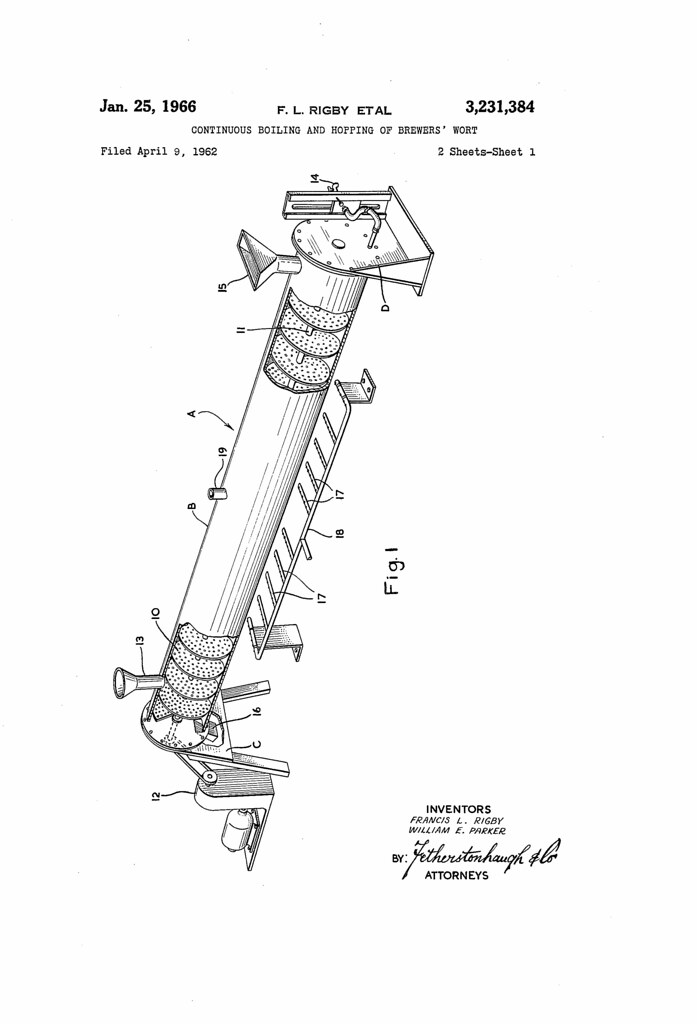
Today in 1985, US Patent 4494451 A was issued, an invention of John F. Hickey, for his “Brewing Apparatus.” Here’s the Abstract:
Brewing apparatus which comprises a first vessel including heating means, a second vessel including strainer means, a third vessel, and a valve means and pump arrangement by means of which the three vessels can be coupled as necessary for fluid transfer purposes so that the first vessel can be used firstly as a hot liquor tank to produce hot liquor which is transferred to the third vessel which serves firstly as a hot liquor container, from which in use the hot liquor is transferred to the second vessel wherein it is mashed with malt to produce a wort and which serves firstly as a mash tun, from which the wort is transferred to the first vessel therein to be heated with hops whereby the first vessel serves secondly as a brewing kettle from which the resultant brew is transferred to the third vessel which serves secondly as a fermenting vessel.