Brookston Beer Bulletin

Jay R. Brooks on Beer

  • Home
  • About
  • Editorial
  • Birthdays
  • Art & Beer

Socialize

  • Dribbble
  • Email
  • Facebook
  • Flickr
  • GitHub
  • Instagram
  • LinkedIn
  • Pinterest
  • RSS
  • Twitter
  • YouTube

Powered by Genesis

Moonshot Grounded

June 25, 2011 By Jay Brooks

moonshot
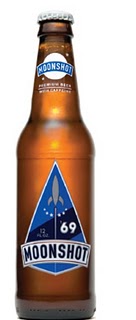
Ever since the FDA absurdly went after drinks that combine alcohol and caffeine, the future of New Century Brewing’s Moonshot Beer was uncertain. Founded by Rhonda Kallman in 2001, after she left the Boston Beer Co., New Century Brewing created a craft light beer, Edison Light, along with the caffeinated Moonshot, which debuted in 2004. Kallman was at Samuel Adams at the very beginning and helped to get their business off the ground and saw it through its first 16+ years before turning to something more personal.
moonshot
Unfortunately, last year the FDA bowed to the pressure of neo-prohibitionist groups, who persuaded several state attorneys general to petition the FDA to make alcoholic beverages that include caffeine illegal based almost entirely on anecdotal evidence and despite the fact that people have been combining the two on their own for decades, if not centuries. While Moonshot was essentially not one of the products that anti-alcohol groups most objected to, the way in which it was produced pulled her into the list of brands made illegal by the FDA’s misguided ruling.

Thanks to the FDA, at least in part, the Patriot Ledger in Massachusetts is reporting that “Kallman is shutting down New Century Brewing for good this month.” Kallman was also recently featured in Anat Baron’s documentary film Beer Wars to much controversy. Many craft beer purists felt she should not have been part of the film because of the novelty nature of Moonshot, so I suspect many will not mourn the passing of her company or Moonshot itself. And that’s a shame to my mind, in a world in which beer is under near constant attack, I always felt we should have been more charitable to one of our own, even if we didn’t always agree with the choices Kallman made or even like the beer itself. I’ve always been of the opinion there’s plenty of good beers to talk about without running down those we don’t care for, and that the market will ultimately decide which beers succeed and which ones fail. We certainly should have opposed the FDA more strongly than we did as an industry, at least in my opinion. But c’est la vie, it’s water under the dam at this point. So I’ll just wish Rhonda a fond farewell and the best of luck on her next endeavor.

royce-12
Rhonda Kallman with Todd Alström at the Blue Palms Brewhouse in L.A., the evening of the premiere of Beer Wars.


Filed Under: Breweries, News, Politics & Law Tagged With: Business, Government, Massachusetts

Beware The Bogeyman Of Beer, He’s After Your Kids

June 24, 2011 By Jay Brooks

monster-beer
In a particularly ugly display of shameless greed and naked propaganda, the Marin Institute is using summer scare tactics to fuel their fund-raising efforts. Essentially their reasoning goes as follows. The summer advertising for sweet, malt-based beverages that come in colorful packages — like Four Loko, Jooce, Sparks, Blast, etc. — is “targeting” your children and must be stopped. Because underage kids like things that are sweet and colorful, therefore it’s “shameless youth exploitation.” Send us your money today.

But their basic premise, that alcohol companies are “targeting” underage kids, is as absurd as it is insulting. No alcohol company wants to break the law, it’s simply not good for business. They make the beer. They advertise the beer. Someone else, in the majority of cases, sells the beer to the consumer. As long as manufacturers are not responsible for selling their wares, they can’t really be held accountable for who manages to get a hold of them. Is it a problem? In some instances … maybe, but making your product attractive or using color is not a crime.

The fact is, the drinks that have the Marin Institute up in arms probably do appeal more to younger people, young “adults” from 21-29, ballpark. But they’re allowed to drink them. The fact that someone who’s 20 also finds an ad for one of them attractive and likes bright colors, and maybe even wants to break the law and drink one, does not mean that the alcohol company intended that to happen. It’s a by-product of human nature. People want what they can’t have, kids especially so. I have to wonder how these people who incessantly complain managed to reach adulthood with such blatant ignorance of how it felt to be a kid? Did they simply forget their own childhood, or did they have it surgically removed? How did people who claim to be so committed to protecting children lose the ability to empathize with them and understand what it means to be a teenager? Isn’t a good parent considered one who can connect with their kids and relate to what they’re going through, the pressures and challenges? Yet these anti-alcohol arguments seem blissfully ignorant of how teenagers are struggling with becoming adults and are constantly trying adult behaviors that in many cases they’re not ready for yet. That’s one of the defining features of being a teenager, yet somehow it’s always the alcohol company’s fault. Instead of all this brouhaha, wouldn’t it just be easier to talk to your kids, instead of wasting all your energy creating a bogey monster?

R-rated movies advertise on TV, billboards, buses, etc. Kids see hundreds of movie ads a year for movies they aren’t allowed to go to a theater and watch. Are the film companies “targeting” kids just because some youth might like an ad for one of the movies, too? I don’t want my kids drinking soda pop, which I consider very unhealthy for them, but I’m not about to picket for the removal of soft drink ads from places where my kids might see them. I just talk to my kids, tell them why I don’t like soda and why I think they shouldn’t drink it.

Marin Institute top gun Bruce Lee Livingston’s only support in the two e-mail and Twitter missives he’s sent out over the last two days is this. “My preteen kids even know these brands.” Well, how scientific. My preteens, ages 9 and 6, have no idea about any of those brands. I asked each of them if they’d ever heard the names of the brands, listed them one by one. They’ve never heard of any of them. Not one. They had no idea what I was talking about, and I’m in the beer business. They see beer in the house constantly. To them it’s no big deal. They know it’s not for them, just Daddy’s work. Are my kids special? Well, of course I like to think so, but no; they’re just average kids. I’ve taken no extraordinary steps to shield them from the world. And yet for them the “danger” of these drinks is what I think it must be for most kids … a tempest in a teapot.

And that, I think, is the insulting part. I’m a father. Many brewers I know are parents. So are the distributors, the salespeople, the marketers, the retailers, the check-out clerks at the grocery store. We’re all parents, too. We love our kids no less than than anti-alcohol fanatics. Yet I feel like I should start growing horns any minute the way they paint the alcohol industry. They make it sound like we hate kids, just want to get them drunk so we can make a buck. It’s downright insulting. It pisses me off but good.

In the end, it’s just another way to scare people into donating money. Fear is a great motivator. Facts just get in the way. Here’s one of the tweets from the Marin Institute, tweeted yesterday:

Did you know that your kids were being targeted by Big Alcohol this summer? Help us to stop them now! http://t.co/1Jt5mKI

The link, naturally, takes you not to any facts backing up that outrageous claim, but to a page where you can donate money to them. The donation page has the following headline. “You can protect our kids and communities from Big Alcohol’s harmful practices.” How, one has to wonder, they’re planning on battling this imagined scourge is never detailed, but that’s not important. What’s important is “your support and helping in the struggle to keep Big Alcohol responsible for our children’s health and safety.” When exactly alcohol companies became responsible for my kids’ “health and safety,” or why they should be, is yet another of life’s great mysteries. Better you should send money to the Marin Institute than bother taking responsibility for your kids and your own parenting.

The clear inference in their message is that alcohol companies don’t care about your kids. They only want your money. What I find deeply obnoxious, and not a little disingenuous, about that is that it is exactly what the Marin Institute’s summer scare campaign is all about: money. This campaign is exclusively about fleecing the faithful and lining their coffers. And what better way to raise money than to invoke that most dangerous of beasts, the bogeyman of beer! Be afraid, be very afraid.

monster-beer
Beware the Bogeyman of Beer! This summer he’s coming to get you, your kids … and your little dog, too.

Filed Under: Breweries, Editorial, Politics & Law Tagged With: Prohibitionists, Propaganda

U.S. Senate Establishes Small Brewers Caucus

June 20, 2011 By Jay Brooks

us-senate-3
The Brewers Association (BA) announced today that the United States Senate established a Senate Small Brewers Caucus. The new Caucus was founded by Senators Max Baucus (D-Mont.) and Mike Crapo (R-Idaho).

From the press release:

In a Dear Colleague letter, Senators Baucus and Crapo noted, “In recent years, the more than 1,700 craft brewers all across America have met growing consumer demand for their products by brewing flavorful and innovative beers which they encourage Americans to enjoy in a responsible manner. These small and independent brewers…generate more than $3 billion in wages and benefits, and pay more than $2.3 billion in business, personal and consumption taxes.”

Mirroring the House Small Brewers Caucus, formed in 2007, the Senate Small Brewers Caucus provides a forum for members of the Senate and their staffs to discuss the issues important to small brewers while exploring what lawmakers can do to strengthen the growth and role of these small businesses in local economies across the country.

The caucus will also provide opportunities for Senators and staff to learn about the science and art of brewing beer, and the unique cultural and economic contributions made by small brewers to their communities.

Currently, the 1,700+ small American breweries account for about five percent of all the beer enjoyed in the United States and 50 percent of brewery jobs—-totaling some 100,000 good-paying part- and full-time positions across the country.

According to Senator Crapo, “[t]his caucus will provide Senators with a better understanding of all aspects of small brewing and the positive impact it has on their communities.”

Filed Under: Breweries, News, Politics & Law Tagged With: D.C., Law

The Politics Of Never Being Satisfied

June 3, 2011 By Jay Brooks

Marin-I
The anti-alcohol Marin Institute had a little item in one of their e-mail missives a few days ago, reporting on the news that Anheuser-Busch InBev announced that they would be lowering the alcohol content of their Tilt from 12% a.b.v. to 8%. You’d think that the anti-alcohol groups that have been whining about these drinks to high heaven would be at least be a little pleased that the beer company has bowed to their pressure. You would, however, be wrong. That’s because the fanatical nature of the politics they’re peddling can never, ever be satisfied until there is no more alcohol to be sold, despite their insistence that they’re not neo-prohibitionists. Nothing any alcohol company ever does will be viewed as anything but wrong, no matter how well-meaning. My favorite example is still when A-B canned water and sent it to earthquake-ravaged Haiti. The Marin Institute even complained about that because Bud had the temerity to put their logo on the cans and send out a press release. Of course, they complained about that in their own press release, but when they do it it’s apparently for a higher purpose.

The subtitle of the Marin Institute’s article was “Color Us Unimpressed,” and that’s them in a nutshell, as far as I can see. Nothing that any alcohol company does will ever impress them, short of voluntarily giving up and shutting down their business. Apparently that’s what being a “watchdog” means. The way they operate, “watchdog” has come to mean complain about absolutely everything the companies you’re watching do, no matter what it might be. Personally, I can’t remember a kind word the Marin Institute, or any other similar group, has ever said about a company that makes an alcoholic beverage. You’d think a self-avowed “observer” would be able to separate the good from the bad, but when by definition anything an alcohol company does is bad then I guess there’s nothing left to praise.

So I don’t understand why we even bother trying to appease them. It never works. It never, ever will work. Can we please stop playing into their hands by trying to be reasonable when such a strategy can never work? The anti-alcohol groups represent a minority of the population. The majority is like you and me, and enjoys a drink now and again and manages to do so responsibly, in moderation and while maintaining a job and a place in society. There are people who can’t handle drinking, but let’s stop those extreme examples from being the only ones cited. Let’s start pushing more positive stories. There are children who get their hands on alcohol, but it’s no different than when we were all underage, and most of us didn’t turn out too badly as a result. Reasonable steps should be taken to keep kids away from anything that society deems unsuitable for them, but when we get fanatical about it — as is most definitely the case with alcohol — all we do is ruin society for everybody, the adults included. It’s madness.

The whole rationale for the fanatical dislike of high alcohol malt-based beverages is that they’re, as the Marin Institute puts it; “sweet, fruit-flavored kid-friendly swill.” Well so what? People under 21 are still not allowed to buy them. If they manage to do so, that’s an entirely different problem. The fact that young adults ages, say 21 to 29, also like and want to buy “sweet, fruit-flavored kid-friendly swill, in a single-serving container with bright colors and design” should make no difference whatsoever. If it were anything but alcohol, people would recognize how absurd this argument is. The idea that a company can’t make a product that appeals to people who wish to buy it under the theory that it also might appeal to people who aren’t allowed to buy it is utterly absurd.

Soda pop, candy and fast food, all of which are arguably just as bad for kids, market their wares in just such a fashion and few people think twice. Many schools even offer some or all of those foods and drinks at their school, some even accepting legal kick-backs just to keep those products available on school grounds. But that’s okay because it’s not alcohol.

The irony is, I don’t like Tilt, or Joose, or any of the other alcopops, but what I dislike even more is when anti-alcohol crusaders use them as an excuse to assault common sense and to foment fear about all of the dangers that such things set loose upon the world. It’s especially troubling when they use that old tried and true “it’s for the kids” canard. It’s just bullshit. More people need to say so. Today, it’s alcopops. Tomorrow it’s beer with caffeine. The next day it’s everything else they don’t like. And you can bet on one thing. They’ll never, ever be satisfied.

Tilt-Red-logo

Filed Under: Editorial, Politics & Law Tagged With: Prohibitionists

Wisconsin Legislature Attacks Craft Brewers

June 3, 2011 By Jay Brooks

wisconsin
With craft beer being the only segment of the brewing industry showing strong growth, you’d think that state governments trying to fix our current economic woes would be doing everything they can to help one of the few bright spots in American business. But never underestimate the power of lobbying by interests with more money than the craft brewers, namely beer distributors and Milwaukee-based powerhouse Miller Brewing, operating in the U.S. as MillerCoors, but also part of the international conglomerate SABMiller. (And thanks to a number of people who sent me different links to this emerging story.)

Right now in Wisconsin, there’s a battle brewing and it looks like the state’s many craft brewers will be hit the hardest by a proposed new wholesale bill that was recently approved by the state Legislature’s Joint Finance Committee. The bill is backed and supported by the Wisconsin Beer Distributors Association, the Tavern League of Wisconsin, the Wisconsin Grocers Association, the Wisconsin Petroleum Marketers & Convenience Stores Association, the Wisconsin Wine & Spirits Institute and MillerCoors. In other words, all the big players, with money, who do most of their business with the big, corporate beer companies.

They claim that the new bill is designed “to stop St. Louis-based Budweiser and Bud Light brewer Anheuser-Busch from buying wholesale distributors in Wisconsin.” And that might be understandable and even believable, except for one little detail. Not only was the Wisconsin Brewers Guild (which represents over 35 independent, small craft brewers) not consulted on the bill, several of the provisions of the bill actively harm the small brewers, and those same provisions have nothing whatsoever to do with Anheuser-Busch InBev in the least. Obviously, someone is lying.

Here’s how several local news outlets in Wisconsin are reporting on the story. First, here’s the Isthmus Daily Page:

Current state law severely restricts the options brewers have to distribute their beer. Only breweries that produce less than 50,000 barrels of beer per year are allowed to sell their beer directly to retailers. All others must contract with wholesalers for distribution.

Worried that perhaps microbrewers were operating in too free a market, legislative Republicans have proposed even more restrictions on the beer distribution business. The legislation that passed JFC gets rid of any exemptions that allow some microbreweries to distribute their own beer, as well as forbids breweries from selling beer on their own property, either as a bar or a retailer.

And what would Walker-era legislation be if it didn’t offer more power to state government? The legislation also takes the power of licensing of wholesalers away from municipalities and puts them under the control of the state Department of Revenue.

But what will most likely happen in reality is that small brewers will have a much harder time bringing their beer to market. Whether the bill actually targets small brewers, or it’s an unintended consequence, is unclear but I can’t help but think that legislators — elected officials, after all — have a duty to look out for all of their constituencies, and should understand how their actions effect everyone. I know that’s overly idealistic, but that’s how it’s supposed to work and I’ll always continue to hope for at least that much. The fact that the big players all had a say but the small brewers did not speaks volumes about how this is working in reality, and it’s a pretty ugly picture, if not of outright corruption, then at least of unseemly favoritism.

Here’s what Sprecher Brewing president Jeff Hamilton had to say about the bill, as quoted in The Milwaukee Business Journal:

“This is limiting our business model,” said Hamilton, who also serves as president of the Wisconsin Brewers Guild. “The current system is working just fine.”

MillerCoors and the state’s distributors “went out on their own” in promoting and developing the legislation, Hamilton said.

“We didn’t have a say and it is devastating to our business,” he said.

Hamilton believes the target of the legislation isn’t Anheuser-Busch but rather craft brewers that have been rapidly growing as major brewers have struggled.

“It’s hedging against future competition,” he said.

Consolidation among the state’s distributors has made it more challenging for smaller brewers to sell their products, given the number of brands distributors carry, Hamilton said. The legislation also would thwart plans by some craft brewers to start their own distributorship.

A spokesman for MillerCoors, Nehl Horton, even acknowledges it would limit craft brewers’ options, but insists that it wasn’t their intention. To which I can only say, so what? They had to have known how this would affect craft brewers, but MillerCoors obviously didn’t care. Why should they? But the fourteen Wisconsin legislators, they should have cared about how this would effect viable Wisconsin businesses.

Obnoxiously, Horton added that “the fundamental issue is whether small craft brewers want to be brewers or want to be brewers, wholesalers and retailers.” Given the way small brewers have been treated by distributors and retailers over the years, as they struggled against some pretty big, entrenched institutions to change how people thought about beer, that’s an awfully insulting thing to say. Craft brewers have had to find creative ways to gain access to market out of necessity, including doing their own selling and distributing, precisely because of all the roadblocks put in their way by distributors, retailers and big brewers, the very people who are trying once more to harm their business with this new legislation. So to hear MillerCoors suggest that small brewers should behave more like them, after making it impossible for them to do so for decades, is a pretty offensive thing to say.

And now even the bars and restaurants, many of whom undoubtedly serve craft beer, are also out to get the brewers, too, as the new bill also takes away their ability to sell their own beer, even on their own property. As the Daily Page notes:

But why forbid brewers from operating pubs and restaurants — at least one on their property? It seems a rather blatant attempt to appease the Tavern League, which supported the legislation, and hopes that brewpubs don’t threaten their businesses.

Again, Wisconsin legislators had to know what they were doing, but did it anyway. June 15th, the provisions of the new wholesaler bill comes up for a full vote. Hopefully, an action alert from Support Your Local Brewery will be forthcoming.

And finally, here’s a television report from Channel 9 WAOW, in central Wisconsin:

Filed Under: Breweries, Editorial, News, Politics & Law Tagged With: Beer Distributors, Law, Video, Wisconsin

Beer Missing From MyPlate

June 3, 2011 By Jay Brooks

food-pyramid
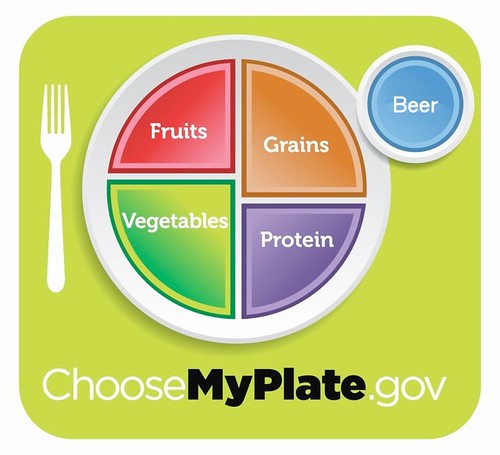
Yesterday the USDA scrapped their old food pyramid in favor of a new nutritional chart. The new one is called MyPlate, and as you’d expect it’s shaped like a plate. It’s also a bit simpler than previous efforts, divided into just four groups: proteins, grains, fruit and vegetables. And just off the plate is a fifth food group: “dairy,” looking very much like a cup of milk.

MyPlate

But where’s the beer? I say that only half in jest, as I realize that culturally there’s simply no way that alcohol would ever show up on our food pyramid. That’s despite the fact that for adults (let’s remember the food pyramid is for everybody) who regularly drink in moderation the odds are that they’ll live longer than folks who abstain or drink to excess. Yes, that means moderate beer drinkers are healthier, so it doesn’t seem like it’s too much of a stretch to think it could, or should, be included. Unfortunately, most Americans just can’t bring themselves to admit the obvious, that beer might actually be good for us. That’s especially true in a climate where a majority of adults do in fact drink responsibly while a very vocal minority of anti-alcohol fanatics do everything they can to undermine and distort those very facts.

MyPlate-beer

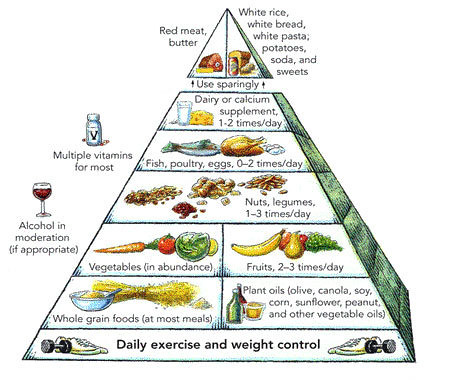
Not surprisingly, there are other countries whose food pyramids do include alcohol. In the French pyramid, they recommend two glasses of wine for a woman, and three for a man, every day. The Greek pyramid also suggests “wine in moderation.” In fact, eighteen EU nations give at least some type of advice about alcohol in moderation. Likewise, the Latin American food pyramid also recommends “alcohol in moderation.”

And in fact, many food pyramids with names like the “new food pyramid,” the “healthy food pyramid,” and the “Harvard food pyramid” do include the moderate alcohol drinking as part of their recommendations for a healthy lifestyle. But as long as the neo-prohibitionists are the only ones shouting about their peculiar disdain for alcohol, and the alcohol industry continues to play exclusively defense, nothing about this debate is likely to change anytime soon. It’s enough to drive me to drink.

harvard-food-pyramid
The Harvard Food Pyramid

Filed Under: Editorial, Food & Beer, Just For Fun, News, Politics & Law Tagged With: Food, Nutrition, Science

Reading The Beer Meter

May 26, 2011 By Jay Brooks

meter-dials
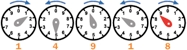
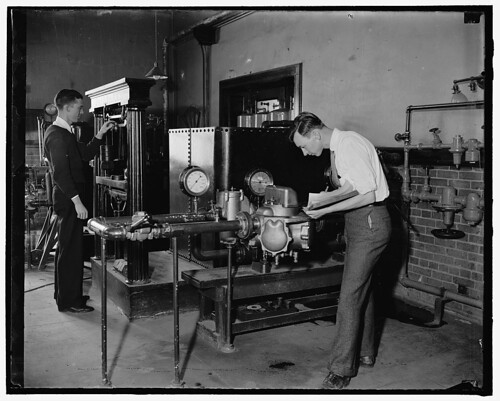
I was watching a documentary today about the Library of Congress and they talked about how the library is digitizing their collection, so I took a look at the website and discovered this little gem from 1937. Post-prohibition, apparently our government experimented with different methods for ensuring that breweries paid the correct amount of taxes. The “beer meter” was one such device they came up with, shown below.

beer-meter

The caption below is cut off in the original in the library’s collection, which is why it ends mid-sentence.

And now a beer meter. Washington, D.C., May 1. To aid Uncle Same in collecting the tax on the millions of barrels of beer brewed in this country every year, the National Bureau of Standards has designed a master beer meter for use of the alcohol unit of the Bureau of Internal Revenue, U.S. Treasury. Government inspectors employ this master meter in checking the accuracy of the brewery beer meter to determine the volume of beer brewed. In the photograph the large tank receives the liquid [after passing] thru the meter where it is weighed to get [the] true volume. Carl F. Stoneburner is reading ….

Filed Under: Beers, Breweries, Just For Fun, Politics & Law Tagged With: Government, History, Taxes

Good News: Beer Doesn’t Kill Brain Cells

May 25, 2011 By Jay Brooks

brain-2
You’ve probably heard this old saw your whole life, same as me, that “beer kills brain cells.” According to an item in this month’s Maxim, it turns out it just isn’t true. While alcohol can damage “neurons in the cerebellum that are responsible for motor control and memory, which helps create the impaired feeling we call … drunkenness,” the good news is that they will recover, and that “alcohol definitely won’t ‘kill’ them.” Although the supporting evidence is not given, the short snippet does say it’s supported by “numerous studies.” Whew, that’s a relief.

nurse-beer

Filed Under: Just For Fun, News, Politics & Law Tagged With: Science

Beer Production Infographic

May 24, 2011 By Jay Brooks

graphchart
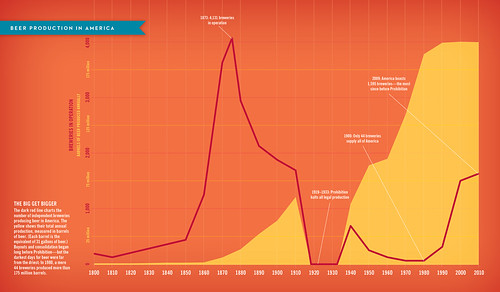
A recent book on beer and homebrewing, entitled Beer Craft appears to include the clever use of graphics, and in particular infographics, the best of which which are able to convey a great deal of information in a economical amount of space. Written by William Bostwick and Jessi Rymill, one of their charts was chosen by Fast Company’s Co.Design as the Infographic of the Day a few days ago. The infographic shows the number of breweries in America, along with total beer production, from 1800-2010.

BeerCraft_Production-2010

At the beginning (of the timeline, at least) there were only around 200 breweries. Rum, and other spirits, were king, and the U.S. boasted 14,000 distilleries. The advent of pilsner in 1842, along with a wave of German and European immigration, helped along by the industrial revolution, saw the number of breweries steadily increase until around 1850, when all hell broke loose. At that point, the rise of breweries in America can only be described as meteoric. When the dust settled two decades later, the number of breweries peaked in 1873 at 4,131. Consolidation, and other facts, cut the number in half by 1900 and another score of years later the number was zero, thanks to the anti-alcohol zealots who pushed through Prohibition in 1919.

Even once Prohibition ended thirteen years later, the brewing scene never recovered to anything approaching its glory days of the late 19th century. Both the business world and the world in general had changed considerably — especially after World War II — and anti-alcohol factions never admitted defeat, but merely changed tactics and continued to attack alcohol using different strategies that continue right through to the present day.

The low point is around 1980, when a mere 44 breweries made a staggering amount of beer, most of it tasting exactly the same. Since that time, total production of beer has risen only slightly, but more promisingly, the number of breweries has exploded with the microbrewery revolution that began in 1976 (and which had its origins in 1965 San Francisco). Today, we’re at nearly 1,800 breweries, the largest number since the turn of the last century. And according to the Brewers Association’s crack brewery detective, Erin Fay Glass, there are roughly 600 new breweries in various stages of their start-up phases. At the rate things are going, we should hit 2,000 breweries in America pretty soon, and quite possibly before the end of next year. Yea, beer!

Filed Under: Breweries, Just For Fun, Politics & Law Tagged With: Beer Books, Statistics

Graduation & Prom Drinking

May 4, 2011 By Jay Brooks

graduation
Apparently prom season and graduation time is coming up, because the scary statistics that always accompany this time of year are also starting to appear. Now before the angry comments start filling my queue, I’m not encouraging drinking at either, and especially not drinking and driving, no matter what the occasion. There are, however, some curious features about this time of the year about how we still try to scare our kids into staying sober for prom and graduation that bear scrutiny.

The first missive of Spring comes from Join Together, with the requisite scary headline School Nurse: It’s Not OK to Give Teens Alcohol for Prom and Graduation. Apparently, we’re more likely to listen up if it’s coming from the school nurse. And while I recognize that in many states it’s actually illegal to give your own underage kids alcohol, I’m pretty sure that these days it’s almost always illegal to give alcohol to kids who are not your own. But that’s all year round, and I have to believe that most adults who engage in purchasing or furnishing alcohol to their kids or their kids’ friends at this time of the year, do so with the full knowledge that what they’re doing is not acceptable in today’s social climate, not to mention its illegality.

But here’s the thing, the news report by the school nurse is based on another study, by an insurance company no less, and that headline is Study Shows 90 Percent of Teens Admit Stronger Likelihood of Drinking and Driving on Prom Night, Yet Less Than One-Third See Dangers. According to Liberty Mutual’s study, in “a national survey of more than 2,500 eleventh and twelfth graders, 90 percent of teens believe their counterparts are more likely to drink and drive on prom night and 79 percent believe the same is true for graduation night. Yet, that belief does not translate to concern, as only 29 percent and 25 percent of teens say that driving on prom night and graduation night, respectively, comes with a high degree of danger.” They claim that’s “new research,” as if we didn’t know teenagers believe themselves immortal and are likelier to take risks than the more mature segment of the population. It’s one of the features of being a teenager. But okay, it’s not bad advice to remind teens about the difference between perceived risks and reality, but it’s just so heavy-handed, so black and white. They’ve been using the same scare tactics since I was going to prom over thirty years ago. Here’s the latest version:

[T]here were 380 teen alcohol-related traffic deaths during prom and graduation season (April, May and June) in 2007, according to the National Highway Traffic Safety Administration. And the Insurance Institute for Highway Safety reports 1,009 total teen fatalities (alcohol and non-alcohol-related) in motor vehicle crashes during those same months in 2008.

Alarmingly, parents may be unwitting enablers of teen drinking and driving: more than one in three teens (36 percent) say their parents have allowed them to attend parties where it is known that alcohol will be served, and 14 percent say their parents have, in fact, hosted such teen gatherings.

But it just strikes me as the razor blade in the apple. Every Halloween, that story gets trotted out to scare kids into being responsible about accepting candy from strangers during the holiday that’s designed for just that. As a kid, I remember being nervous about that the first year, but after hearing it over and over again, and never once seeing any real proof of a razor in an apple, any meaningful fear tended to dissipate. I can’t be the only adult who remembers that as a child there was a great sense that adults were constantly lying to us about the dangers of the world, among many other things less threatening.

But let’s look at those scary statistics. According to the U.S. Census Bureau in 2008, there were 21,469,780 prom-age teenagers in America. So that means 0.0017% died in “alcohol-related traffic” accidents and 0.0046% in “alcohol and non-alcohol-related” traffic accidents. Now as a parent, I agree that even one needless death is too many, and I’d be inconsolable if it happened to one of my children. But the point is that the danger is relatively low compared to other dangers every person in the world faces every day. That seems so obvious to me I’m not even going to go looking for those, because any rational person should recognize that.

Yet here we are again chastising parents for trying to do something about it that’s not just the knee jerk “just say no” total-abstinence policy that we’re so fond of here in the U.S. Our response is simply disproportionate to the true danger, and I can’t help but believe the reason is because it’s — gasp — alcohol and we’ve lost the ability to be rational about it.

The fact that according to the scary news reports, this is still claimed to be a huge problem nearly 30 years after MADD supposedly set everybody straight and awareness of the issue of drunk driving is at an all-time high, should convince anyone that there is nothing we can do to stop people, even underage kids, from drinking. Prohibition didn’t work. More awareness didn’t work. The “just say no” campaign didn’t work. Kids are still drinking now, as they did nearly 35 years ago when I graduated from high school.

Back in those dark ages, it was quite common for parents to be at high school parties where alcohol was being served, at least where I grew up in suburban Pennsylvania. And most of the other parents in the community were not only aware of it but supported it. I have to laugh when the modern reports refer to such situations as making the parents “unwitting enablers” when there was not one driving fatality from the dozens and dozens of such events I attended in my youth. Parents took keys, and wouldn’t let anyone drive home if they were unable to. It made things safer, despite this weird notion today that the opposite is true.

young-frankenstein-movie

I recall one of the several graduation parties I went to as an 18-year old, the parents had a few kegs and even entertainment for us. The girl’s father was a movie projectionist and had a movie theater set up in their basement, and he was showing Young Frankenstein, which was only a few years old at that time (and this was in the days before videotape). It was great fun. I walked home that evening, retrieving my car the next morning. No harm, no foul. No one at that party got into any trouble. Imagine that?

Just lucky? Maybe, but I don’t think so. It was most certainly a different time, but that doesn’t mean the parents in my youth didn’t care about their children every bit as much as today’s parents. It feels quite insulting to read today’s adults, who were raised no doubt by loving parents, imply otherwise. You read these press releases, studies and propaganda and start to get the impression that any parent who gives their kid a drink is a monster. These same reports seem to see parents giving alcohol to kids in only one way, as completely irresponsible. But as with the other recent study I wrote about last week, there’s no suggestion that education could be part of it, or that parents might be better judges of how to raise their own children. Or that a party with alcohol that’s supervised could be preferable to kids drinking completely unsupervised, underground. Yet how could it not?

Yes, there’s no doubt our job as parents involves keeping our children safe, during prom season, graduation and every other time of the year, throughout their entire lives, really. But when it comes to alcohol, I’m quite tired of how the anti-alcohol abstinence policy seeps its way into every nook and cranny, particularly when it’s so ineffective. It doesn’t work on college campuses, where all it does is drive underage drinking underground, where it’s unsupervised and as a result far more dangerous. There’s no reason to believe it works any better at the high school level, either. High school kids often struggle with where they fit in society. They’re not really children anymore, yet they’re not quite adults, either. They often want to become adults faster than their parents and society will allow. It’s only natural. They see adults celebrate all manner of occasions — holidays, births, deaths, birthdays, achievements, good news, etc. — with alcohol. For them, the prom and graduation are reasons to celebrate. They want to be adults, they want to act like adults. So they want a drink, too. But many, if not most, are not ready to handle the personal responsibility that comes with drinking alcohol. In part, that’s because no one has taught them anything about how to accomplish that, and in fact even teaching them about alcohol is forbidden in many places and jurisdictions.

So when we instead keep creating policies that keep that status quo, in fact make it harder for parents to be in a position to supervise or educate their own kids about alcohol, I can’t help but wonder what’s really going on. It has to be more about control or ideology or something, because it’s not what’s best for the kids, despite being framed that way. It’s that old “it’s for the kids” canard that’s become so popular in anti-alcohol propaganda. But this goes even a bit further, as it tells parents not only to talk to their kids, not buy them alcohol and don’t let them drive after drinking — all good advice — but also that they shouldn’t do what they feel is best if it deviates from the party line (or perhaps “no party line”). It presumes all adult supervision is bad, and then tries to back up that claim with nonsense. It creates a black and white ideological world where only abstinence is approved. But it doesn’t matter how many more flawed studies or well-meaning advice from school nurses is doled out, “just say no” just doesn’t work. Could we please stop pretending it does, ignoring other approaches that might have a better chance at being effective? Why don’t we try “just say know” for a change. After all, school is supposed to be about learning, about preparing kids to become independent adults, productive members of society. Why not let that include a little alcohol education, too. That might go a long way toward keeping our youth safe on prom night and graduation, too.

Filed Under: Beers, Editorial, Events, Politics & Law Tagged With: Prohibitionists, Statistics

« Previous Page
Next Page »

Find Something

Northern California Breweries

Please consider purchasing my latest book, California Breweries North, available from Amazon, or ask for it at your local bookstore.

Recent Comments

  • Bob Paolino on Beer Birthday: Grant Johnston
  • Gambrinus on Historic Beer Birthday: A.J. Houghton
  • Ernie Dewing on Historic Beer Birthday: Charles William Bergner 
  • Steve 'Pudgy' De Rose on Historic Beer Birthday: Jacob Schmidt
  • Jay Brooks on Beer Birthday: Bill Owens

Recent Posts

  • Beer In Ads #5222: O’Keefe’s Bock Beer April 15, 2026
  • Historic Beer Birthday: George Schmitt April 14, 2026
  • Beer In Ads #5221: Bowler Brothers’ Bock April 14, 2026
  • Historic Beer Birthday: George W. Bashford April 14, 2026
  • Beer In Ads #5220: Hello People! I Am The Centlivre Bock Beer Goat April 13, 2026

BBB Archives

Feedback

Head Quarter
This site is hosted and maintained by H25Q.dev. Any questions or comments for the webmaster can be directed here.