Brookston Beer Bulletin

Jay R. Brooks on Beer

  • Home
  • About
  • Editorial
  • Birthdays
  • Art & Beer

Socialize

  • Dribbble
  • Email
  • Facebook
  • Flickr
  • GitHub
  • Instagram
  • LinkedIn
  • Pinterest
  • RSS
  • Twitter
  • YouTube

Powered by Genesis

Original AA Bible More Religious

October 2, 2010 By Jay Brooks

bible
I’ve been somewhat suspicious of Alcoholics Anonymous for many years. I grew up with an alcoholic stepfather, and had some experience with AA when I was younger, which you can read about in an earlier post. One of my big issues has been the idea of powerlessness and giving yourself over to a “higher power.” Though AA has been careful to use the non-denominational “higher power,” it always felt like a thinly veiled religious god, and more specifically one of the monotheistic sky-gods (of Christianity, Islam and Judaism).

But the idea that you can’t rely on yourself, your own will, has always troubled me. I know it seems to work for a lot of people, but it never felt like a cure, just a lifelong band-aid over a wound that never heals because the wound itself is never even treated. And I know I’m not the only one. There are treatment centers in Japan whose patients are able to drink in moderation without immediately becoming “alcoholics” after one sip. And a controversial book last year by Harvard psychology professor Gene M. Heyman, Addiction: A Disorder of Choice, punched further holes in AA’s insistence of powerlessness in alcoholics.

Why that matters, I think, is for this reason. As Science-Based Medicine reminds us, that makes AA a faith-based treatment, not a scientifically sound method of treating anyone. They write: “Alcoholics Anonymous is the most widely used treatment for alcoholism. It is mandated by the courts, accepted by mainstream medicine, and required by insurance companies. AA is generally assumed to be the most effective treatment for alcoholism, or at least “an” effective treatment. That assumption is wrong.”

And there are plenty of other critics out there, such as Sober Without Gods, Stinkin’ Thinkin’ and this particularly interesting essay, I Was An AA Nazi, at When they tell you to ‘Keep Coming Back’, run for your life!!! Escape from Alcoholics Anonymous. And there’s at least two Yahoo groups, Escaping the Cult of AA and 12-Step Free. And that, I assume, just skims the surface. Reading some of those, AA comes off more like a cult than anything else. As many of its critics also point out, many former alcoholics replace their addiction to booze with an addition to AA or religion more generally. I realize many people will argue that the latter is safer and healthier than the former, but isn’t obvious that trading one addiction for another is no cure and does nothing to address any underlying causes?

Now, more evidence is coming to light that even the “higher power” dodge in AA wasn’t always there. As a recent article in the Washington Post reported, founder Bill Wilson’s original manuscript from before 1939, which is being published for the first time, shows that the original document was nakedly Christian in its tone. But before it was published, Wilson had a number of people help him edit his manuscript, and how to characterize religion in it became a hotly debated topic. Eventually all references to a specific god were generalized and changed so they could be essentially anything. That was a calculated decision.

According to the Post, “AA historians [whatever that means] and treatment experts say” claim the edits were made to “adopt a more inclusive tone was enormously important in making the deeply spiritual text accessible to the non-religious and non-Christian.” Frankly, that sounds like apologetics. The changes were largely semantical, the tone of the program remained deeply religious, only the names were changed so it could be claimed it was not. That allowed it to be spread farther and wider than if it had remained true to its roots, and I’m even willing to believe that in 1939 their heart was in the right place. The idea of religious freedom has been in our Constitution almost since the beginning, but we’ve been a mostly-Christian nation for the majority of our history. It’s really only been in recent decades that the promise of the First Amendment is beginning to be addressed and enforced.

But in 1939, they decided not to address the role of religion in treating addiction, instead opting to essentially try to hide its “spirituality” or at least tried to couch it in non-denominational platitudes.

But the crossed-out phrases and scribbles make clear that the words easily could have read differently. And the edits embody a debate that continues today: How should the role of spirituality and religion be handled in addiction treatment?

They also take readers back to an era when churches and society generally stigmatized alcohol addicts as immoral rather than ill. The AA movement’s reframing of addiction as having a physical component (the “doctor’s opinion” that opens the book calls it “a kind of allergy”) was revolutionary, experts say.

Maybe, but today AA’s Big Book (a.k.a. its “Bible”) has changed little since those initial edits. It’s remained almost exactly the same, only a few of the stories have been updated. But the world has not stayed the same as it was in 1939. People’s approach to religion has changed dramatically. We’re a more diverse nation spiritually than we were then, I’d wager, and more tolerant (I continue to hope) of other points of view. I’m sure AA seemed revolutionary at the time, 70+ years ago, but remaining the same while the world changed around it has turned it into an antiquated cult. Not to mention, much more has been learned about addiction, much of contradicting AA’s original premises and methods. And while some claim AA has incorporated these newer insights into the program, it seems to me it’s remained largely unchanged at its core. Certainly its bible has remained the same, as religious as the day it started.
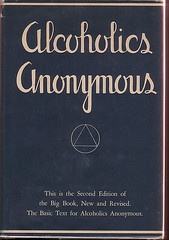
aa-2nd-ed

The 4th edition of AA’s Big Book, which is the most current, is available online.

Filed Under: News, Politics & Law Tagged With: Health & Beer, Prohibitionists, Science

A Short History of Malt Liquor

September 26, 2010 By Jay Brooks

schlitz-malt-liquor
California freelance journalist Andrew Rosenblum has an interesting short history of malt liquor marketing on Accidental Blogger entitled What Was Malt Liquor?

Filed Under: Beers, Breweries, Politics & Law Tagged With: Advertising, History, Marketing

A New Justification For More Beer Taxes

September 26, 2010 By Jay Brooks

rwjf
Ugh, here we go again. Three researchers at the University of Florida, led by epidemiologist Alexander C. Wagenaar, have just released a new study which they claim shows that raising alcohol taxes — in fact doubling them — will reduce consumption and cure society’s problems.

The study, Effects of Alcohol Tax and Price Policies on Morbidity and Mortality: A Systematic Review, is to be published in the November issue of the American Journal of Public Health, but was released online last week, as is common for academic journals.

As I don’t have the resources to buy a subscription to every related academic journal, I have to make do with the abstract and what other news outlets write about it. Here’s the abstract:

Objectives. We systematically reviewed the effects of alcohol taxes and prices on alcohol-related morbidity and mortality to assess their public health impact.

Methods. We searched 12 databases, along with articles’ reference lists, for studies providing estimates of the relationship between alcohol taxes and prices and measures of risky behavior or morbidity and mortality, then coded for effect sizes and numerous population and study characteristics. We combined independent estimates in random-effects models to obtain aggregate effect estimates.

Results. We identified 50 articles, containing 340 estimates. Meta-estimates were r=–0.347 for alcohol-related disease and injury outcomes, –0.022 for violence, –0.048 for suicide, –0.112 for traffic crash outcomes, –0.055 for sexually transmitted diseases, –0.022 for other drug use, and –0.014 for crime and other misbehavior measures. All except suicide were statistically significant.

Conclusions. Public policies affecting the price of alcoholic beverages have significant effects on alcohol-related disease and injury rates. Our results suggest that doubling the alcohol tax would reduce alcohol-related mortality by an average of 35%, traffic crash deaths by 11%, sexually transmitted disease by 6%, violence by 2%, and crime by 1.4%.

Those are some pretty specific promises and some pretty specific recommendations, something most academic papers assiduously avoid. To me that’s a red flag about the intentions of this study.

Science Daily covered the study in an article today (thanks to Richard S. for sending me the link) entitled Increasing Taxes on Alcoholic Beverages Reduces Disease, Injury, Crime and Death Rates, Study Finds. Obviously, I’m as predisposed to question such a study as the average anti-alcohol wingnut is to swallow it unquestioningly. And I confess something doesn’t smell right with it. My alky sense is tingling.

Having not seen the full article, I’m left wondering exactly what the “50 published research papers containing 340 estimates” means. What is being “estimated?” It reads like it’s the supposed harm that’s being estimated, because I can’t for the life of me understand how you could ever say there’s definitive causation for such a complex relationship as the price of something to “other misbehaviors,” or indeed any of the laundry list of issues the researchers believe are caused by people drinking alcohol. In my experience at looking at these studies, any event in which there was alcohol present is usually sufficient to consider the incident alcohol-related, but that’s nowhere near the same as having been caused by the alcohol. And so these statistics tend to be inflated and, consequently, misused.

But the key insight into the study came in the very last paragraph of Science Daily’s coverage of the study, where they reveal that the funding for the study came from the notorious Robert Wood Johnson Foundation (RWJF), the godfather of neo-prohibitionist groups. The RWJF funds many other neo-prohibitionist groups, and also sets the national agenda in the anti-alcohol community. That they funded this, and other similar studies, suggests that the answer preceded the study, that is it was designed to support their agenda, its conclusions a fait accompli.

To me this also explains professor Wagenaar’s statement. “Results are surprisingly consistent.” Of course, they would be if you’re looking for a correlation. The same team did a similar study in 2007, Raising Alcohol Taxes Reduces Deaths, Study Finds where they examined alcohol-related deaths in Alaska after beer taxes were raised in the state. That study was also funded by the RWJF. Predictably they found the correlation they were looking for, but this is playing with statistics for incredibly complex relationships. Their simple conclusions seem absurd. They ignore any underlying causes for alcohol abuse or suicide or anything else, for that matter. As almost every study like this I’ve ever seen, “alcohol-related” is a thinly veiled attempt to paint any alcohol use, however responsible or moderate, as dangerous and life-threatening. Beer is not a syringe of heroin, despite these same groups’ attempts to portray it that way.

Mark my words, we’re going to see this study used by groups all over the country in renewed efforts to raise beer taxes in state after state. But the only thing I remember happening when the federal excise tax on beer was doubled in 1990 was a loss of jobs and long term economic harm visited on the brewing industry. I don’t recall seeing any victory parties by the anti-alcohol groups once that doubling cured all the problems they previously ascribed to alcohol. They went right on complaining about all the supposed damage caused by the industry. That’s a real world example of what they want to do having none of the outcomes this new study claims would occur under the exact same conditions.

Filed Under: Beers, Editorial, News, Politics & Law Tagged With: Prohibitionists, Science, Statistics

Next Up For San Francisco’s Alcohol Tax? The Voters

September 23, 2010 By Jay Brooks

vote
Politicians are used to getting their way, and so are powerful non-profits, so they tend not to look at defeat as losing, but as an opportunity to try to win a different way. Certainly they’d never openly admit they’re wrong or have lost. If one strategy doesn’t work, they try another. The will of the people or common sense rarely matters, what matters is winning.

And so the new alcohol tax for the city of San Francisco, as proposed by supervisor John Avalos, was vetoed by mayor Gavin Newsom. But that’s hardly the end of it. I’m sure that Avalos and his backing organization, the Marin Institute, are still trying to strong-arm the three supervisors who voted against the new tax in the hopes of an override, but in the meantime, they’re also looking at others ways to realize their agenda. The determination of the minority who claim the moral high ground will not be stopped so easily. Their dream of punishing the majority of lawful, responsible drinkers for the excesses of the few will not go gently into that long goodnight. Likewise, their dream of punishing the big alcohol companies with a scheme that will barely register on their radar while at the same time causing real harm to the local economy, to local restaurant and bar owners and employees, and to hundreds of small family-owned breweries, wineries and distilleries will also not stop, but will instead just veer off in a different direction.

Just hours after Newsom’s swift veto of the alcohol tax, “supervisor John Avalos says the measure might be taken to voters to override Mayor Gavin Newsom’s veto.”

Unfortunately, every news outlet keeps repeating the lie that the tax would only add “a few cents per standard serving of beer, wine or hard liquor.” Don’t any of these news outlets fact check? As the business community has tried to explain — and any person with a functioning brain should understand — the initial tax (like all costs of doing business) will be marked up along the supply chain from wholesaler to retailer to consumer. Seriously, how hard is that to comprehend? This won’t be a “nickel a drink,” more like a buck a drink. Okay, maybe not that much for most, but if I have to keep hearing it’s only a nickel, I think I’m within my rights to engage in a little hyperbole, too. At least I’m up front about it. I feel like if I turn around, I’ll see Upton Sinclair shaking his head behind me. As he observed, “It is difficult to get a man to understand something when his job depends on not understanding it.” And so it goes.

And what also doesn’t get talked about — but should — is that alcohol is already the most taxed consumer product on planet America, with the possible exception of tobacco. But tobacco, you may recall, has no health benefits whereas the moderate consumption of alcohol has plenty, not least of which is that you’ll most likely live longer if you drink a little instead of abstain.

Every state and community is having trouble paying for the services its citizens feel entitled to, and that’s undoubtedly a real problem. I personally believe politics has led us down this path, but regardless I don’t believe politics can save us from it, either. Everybody wants the services, but curiously no one is willing to pay for them. No one wants their taxes to go up, even though that’s probably the fairest way to get us out of this mess. Instead, politicians keep trying to find a solution that doesn’t seem like a tax, in most cases just so they can continue to say they’re against more taxes, for no grander purpose than they want to keep their jobs. So when the Marin Institute whispered in the ear of John Avalos, “psst, have I got a ‘fee’ for you,” … he listened.

And in the end, that’s why I’m so vehemently opposed to this type of tax. It’s dishonest at its core. It argues from a false premise. I don’t really care how much the tax is, it’s patently unfair at any amount. It takes the all too familiar position that drinking alcohol is somehow a sin and therefore people should have to pay to enjoy it. Bullshit. I don’t believe that and neither should you. The concept of sin is a religious “belief” and last time I checked the Constitution guaranteed that I can believe otherwise and that in any event religion, where the idea of sin flourishes, should have nothing to do with the governing of alcohol policy or any other damn law.

What we have is decades of demonization working its way into a discussion it should have no part in. It’s utter nonsense to suggest that alcohol “made” people abuse it and further that the people who make it and sell it share that blame, too. When we start taxing ammunition and gun companies for the crimes people commit using their products then come talk to me about charge for harm. When we start taxing soda companies, high fructose corn syrup makers, fast food chains and red meat companies for the obesity epidemic and the burden it places on our healthcare system then come talk to me about charge for harm. When we start taxing the oil companies and car manufacturers for the loss of the ozone layer and other natural disasters from their dismantling of mass transit and people driving too much then come talk to me about charge for harm. Virtually every human activity does some harm to someone or something. Trying to calculate all of them and figure out who owes what is a fool’s errand. And that’s why we don’t, except when it comes to alcohol. Alcohol has been a convenient scapegoat for well over a century now, and there’s no end in sight for the ills of society it can be blamed for.

My biggest fear if this does go to a vote, is that the mis-information and propaganda out there has created a populace that believes one thing when another is closer to the truth. One of the most potent takeaways from the quasi-debate that KQED aired a few weeks ago, was how frighteningly uninformed many people are about this issue. So many have let emotions, inflated statistics and one-sided reporting inform them on this issue that I think a lot of people will happily pull that “yes” lever, blissfully ignorant of how unfair it is and how their emotions have been manipulated by propaganda and fear. And that’s a direct result, I think, of our local media just uncritically parroting propaganda in favor of the tax and all but ignoring any meaningful opposition.

But long term it’s also because we allow the debate to start from the premise that alcohol is bad in and of itself. It’s not. All the evidence you need to disprove that is your own behavior and those of almost everyone around you, easily able to responsibly drink moderate amounts of alcohol. You’re the majority. You’re the norm. You’re doing something good; good for you and for society. Drink up. Enjoy yourself. Don’t let fear and propaganda win the day.

Filed Under: Editorial, News, Politics & Law Tagged With: California, Law, San Francisco

Media Reaction To SF Mayor’s Veto Of Alcohol Tax

September 22, 2010 By Jay Brooks

san-francisco
As I reported yesterday, San Francisco mayor Gavin Newsom kept his promise to veto the proposed ordinance that seeks to add an additional tax on alcohol sold in the city.

Here’s mayor Newsom’s veto letter that he sent to city supervisors:

This letter communicates my veto of the ordinance pending in File Number 100865, finally passed by the Board of Supervisors today, September 21, 2010. This ordinance proposes an Alcohol Mitigation Fee to be imposed on alcoholic beverage wholesalers and others who sell or distribute alcoholic beverages in San Francisco.

I cannot support this unnecessary and harmful new fee that will hurt our City’s economy and cost us jobs at a time when we most need them.

In this economy, I fundamentally believe that we need to be encouraging local businesses – large and small – to continue to work and operate in our neighborhoods, to continue to provide jobs and security to the residents of San Francisco, and to continue to support our City’s economy in its recovery. It is in these times of struggle that we need to stimulate our local economy – not pursue policies that will stifle growth and put our county at a competitive disadvantage with every other county in California.

In addition, while we have faced significant budget deficits for the last three years, we consistently have supported the provision of critical health care services to our residents most in need – at a much higher rate than surrounding counties. And, we will continue to do so. Therefore, I do not accept the premise that, but for this fee, we will be slashing our health care programs.

I also strongly believe that we are in questionable legal territory due to state preemption issues, and that passing this ordinance would risk millions of dollars in attorney’s fees that we can ill afford. I prefer to hold those battles for creative policy areas where we believe we are in strong legal standing.

I remain committed to working with the Board of Supervisors and City departments to continue to identify impactful programs to help chronic inebriates in San Francisco. However, I do not believe that an alcohol impact fee is the best approach in achieving that policy goal. Our best hope for continued strong financial standing of this City and support for public health services is to help our local economy grow and thrive.

The media reaction has been swift and voluminous. At least twenty media outlets throughout the state have weighed in since yesterday afternoon. Here’s what the San Francisco Chronicle, by John Coté, had to say:

Newsom contends the fee would hurt jobs and is illegal, treading on the state’s authority to regulate alcohol.

“You don’t help the city’s general fund by spending hundreds of thousands of dollars on a lawsuit we’re going to lose,” Newsom said.

Other opponents, such as the San Francisco , argue the fee is really a tax and thus needs voter approval. The city attorney issued a confidential opinion to supervisors that warned of potentially significant legal risks associated with the legislation on both fronts. Liquor industry representatives vowed to sue if the legislation were enacted.

And I love this gem. “Avalos said there was simply ‘no evidence’ that consumers would face inflated costs.” Puh-leeze. His insistence that there would be no mark-up on the tax from wholesaler to retailer to consumer is completely naive and disingenuous. Everyone in the business community is telling him the tax will be marked up, but that’s not “evidence.” Does he think they’re all lying just because they don’t like the tax? Has he never worked in any business capacity? That’s what businesses do, they mark up their costs and pass them along to consumers. Not doing so is how you go out of business.

Filed Under: News, Politics & Law Tagged With: California, Government, Law, Mainstream Coverage, San Francisco

Mayor Newsom Vetoes SF Alcohol Tax

September 21, 2010 By Jay Brooks

san-francisco
Last week, the San Francisco Board of Supervisors passed, 7-3, the proposed alcohol tax sponsored by John Avalos, urged on by the Marin Institute, who gave him the idea in the first place. Today, as promised, mayor Gavin Newsom vetoed the ordinance.

According to a press release from the California Alliance for Hospitality Jobs, “San Francisco small business owners and employees in the hospitality industry breathed a sigh of relief after learning that Mayor Gavin Newsom followed through on his promise to veto Supervisor John Avalos’ job-killing alcohol ‘mitigation fee.'” I wish I could be so optimistic. This is not over yet. There will be a major push now by the Marin Institute, and other proponents of the tax, to twist the arms of the three San Francisco supervisors who voted against. It originally looked like Avalos would send the ordinance back to committee as he’d promised the local business community. But he apparently changed his mind and instead sent it for a vote anyway, fueling speculation that he’d been promised that the votes needed for a veto override would be found, and indeed just before it went to a vote the Marin Institute issued an action alert to persuade the three supervisors and the mayor to change their vote, asking their members to contact them for that purpose.

I would suggest that citizens opposed to the alcohol tax do likewise, asking the same supervisors and the mayor to stand firm and not be persuaded by propaganda and misinformation. So contact Carmen Chu, Bevan Dufty and Sean Eisbernd along with mayor Gavin Newsom and ask them to continue their opposition to the alcohol tax proposed by Avalos. And while you’re at it, tell the others supervisors, especially if they’re in your district to not vote for the override. I think it’s reasonable that they should hear from both sides of the argument, not just the one side that the majority of the local media has portrayed, doing a disservice to the democratic process. I assume there’s a time limit for veto overrides, but I’m not sure what the time limit is; anybody know? However long it is, the next few weeks will certainly be interesting.

The San Francisco Chronicle is now on record saying Gavin Newsom must veto S.F. alcohol tax and the Examiner appears doubtful, too. Fingers crossed. If this doesn’t stop now, you can bet we’ll see it in countless communities throughout the state.

Filed Under: Editorial, News, Politics & Law Tagged With: California, Prohibitionists, San Francisco

California Distributors Against Prop 19

September 20, 2010 By Jay Brooks

marijuana
The trade group representing California beer distributors, the California Beer & Beverage Distributors (CBBD) has reportedly donated $10,000 to the No on Proposition 19 campaign.

California’s Prop 19 is about the control and taxation of marijuana, not legalization per se, but it’s still seen as a step in the right direction by many beer lovers. The 420 Times has part of the story. Because of the CBBD’s donation and opposition to Prop 19, I’ve seen a number of sharp denunciations from many beer enthusiasts, criticizing both breweries who appear on the CBBD’s website and by extension the California Small Brewers Association.

Since I work with the CSBA, I wanted to set the record straight. The CSBA does not take a stand on non-industry related issues and has no stated position on Prop 19. The CSBA is strictly a grass roots organization and does not contribute PAC money to any initiative or make campaign contributions to any candidates.

The CBBD is made up strictly of beer distributors in California. They are independent beverage distributors and are not directly associated with craft brewers. Of course, most, if not all, of the CBBD distributors do business with craft breweries throughout the state. But the CBBD does not represent in any way the political interests of the craft brewing community or individual breweries.

I’ve written about this before, but the interests of distributors and breweries do not always align, and this is yet another example. Presumably, distributors feel that making marijuana commercially available represents competition for the products they sell, and that’s why they oppose it. Most craft breweries, I suspect, do not feel similarly threatened by Prop 19, but regardless of any brewery’s individual stance on it, the CBBD does not speak for them or the CSBA.

Filed Under: Breweries, Editorial, Politics & Law, Related Pleasures Tagged With: California

SF Alcohol Tax Passes In Initial Vote

September 14, 2010 By Jay Brooks

san-francisco
To no one’s surprise, the proposed ordinance to impose a new tax on alcohol sold in San Francisco passed today in a city supervisors’ meeting. The next step (before last week’s postponed meeting) was that it would be voted on a second time at another board meeting on September 14, so now I presume any second vote will be at a later meeting.

It will then go to mayor Gavin Newsom, who has ten days to either sign or veto it. The mayor is on the record saying he’ll veto it, at which point it will be sent back to the Board of Supervisors who can override Newsom’s veto with eight votes. That would most likely be in early to mid-October.

As an aside, I’ve noticed every news report lately, even NPR, that mentions Newsom’s intention to veto the ordinance also brings up the fact that he used to be in the alcohol business, as if that means he’s incapable of deciding anything impartially. It’s more likely he understands the arguments of the small brewers, vintners, distillers, bar owners, retailers, etc. who oppose it. But it’s sure nice to see that unbiased reporting by our local media, way to not take sides.

During the hearing supervisor Chris Daly called those who disagreed with the proposed ordinance “whiners” … excuse, me “f___ing whiners.” Very classy. You can see the stream in the Marin Institute’s twitter feed of the meeting. NOTE: I initially said it was the Marin Institute who was tweeting that, not realizing it was Daly who said it. I apologize for the mistake.

Filed Under: Editorial, News, Politics & Law Tagged With: California, Prohibitionists, San Francisco

Intended Unintended Consequences

September 10, 2010 By Jay Brooks

keg-wooden
An alert Bulletin reader (thanks Sean O.) sent me a link to an article in the Bohemian alternative weekly, Liquor’s the Kicker: How a Tax Aimed at Alcopops is Harming Craft Brewers by Alistair Bland.

It’s the same story I told briefly in an earlier post, but in much greater detail. It’s about how the Marin Institute, and other anti-alcohol groups, went after Alcopops to get them re-classified as “distilled spirits” even though there’s no actual spirits in them and they’re the same strength as the average beer. The idea of getting them taxed at a higher rate was, according to Michele Simon, research and policy director of the Marin Institute, so manufacturers would be forced to “raise their retail prices and make them less appealing—or accessible, anyway—to children.” Of course, making them more expensive for adults is of no importance and neither was the fact that her claim that they’re “pretending to be beer” was hogwash. Nobody ever called them beer. Most retail chains, including when I worked at BevMo, created a new class of drinks to categorize them. We called them “Malt-Based Beverages” because that’s exactly what they were. Beverages that started like beer, brewed with malt, and then a flavor essence was added toward the end of the process to give them their specific individual flavor. The end product was the same a.b.v. as most beer, and so they were taxed accordingly. The difference is a lot. Beer is 20 cents per gallon while spirits are $3.30.

But the law failed utterly to do what was its stated purpose. “[B]rewers explain[ed] during public hearings that the new language would drag them under purview of the distilled spirit tax, [and] reps of the giant alcopop companies warned the board that they would alter their drink formulas and thereby dodge the tax if approved, according to California Small Brewers Association executive director Tom McCormick, who both gave and listened to testimony at a public meeting in Sacramento prior to the law’s passage.”

And that’s exactly what the Alcopop manufacturers did. “Records available on the Board of Equalization’s website show that 27 flavors of Mike’s Hard Lemonade, 16 flavors of Smirnoff flavored beverages and seven flavors of Bacardi alcopops are now made without distilled spirits.”

What did happen, was craft brewers who make barrel-aged beers now account for nearly all of the taxes collected due to this new law. “According to the Board of Equalization, $93,378.10 has come from taxation as distilled spirits of drinks that previously were taxed as beer, and brewers of bourbon- and brandy-barrel-aged beers have paid almost all of it.”

According to Tom McCormick, who runs the California Small Brewers Association, and who witnessed the new law from start to finish:

The entire process of enacting the distilled spirit tax—from its beginnings as a sincere petition from the Marin Institute to its current state of malfunction—has made a mockery of state policy making.

“It didn’t do anything to fix the [alcopop] problem,” he says. “It only ensnared craft brewers, and it has wasted taxpayer dollars in the process.”

The Marin Institute’s reaction? “‘In hindsight, someone obviously should have figured out better language to isolate these alcopops and leave beer out of it,’ [the Marin Institute’s] Simon says.”

The thing is hindsight was never needed. This was not a case of the consequences of this legislation being unknown or unintended. They were known to all relevant parties. There was ample opportunity to improve on the language of the bill at numerous stages of the process from the bill’s introduction to its being signed into law. But nothing ever was changed. Everybody knew what would happen and that’s exactly what’s come to pass. There were no surprises. That’s what happens when unintended consequences are really intended ones.

Filed Under: Beers, Breweries, Editorial, Politics & Law Tagged With: Prohibitionists

The Politics Of Deception

September 10, 2010 By Jay Brooks

grocery-cart
I was going to stay away from commenting on a new bill in California, AB 1060, really I was. Something about it bothered me from the start, the problem it seeks to fix never seemed credible, but it seemed inevitable that it would pass anyway. It was actually introduced in February of 2009 and has been winding its way through the state legislature ever since. It was recently passed and is on its way to the Governator’s office for signature or veto.

What AB 1060 does it make it illegal for stores, primarily grocery stores, to sell alcohol using the new self-serve checkout machines that are popping up all over the place. The argument is that underage kids can get around the roadblocks in the system set up to keep underage people from being able to — gasp — purchase alcohol. The bill also tackles the made-up problems of intoxicating people buying booze and theft, though it’s not the theft of the alcohol that worries the state, but the theft of the tax revenue lost in the theft.

The bill was spun so that it’s all about “Alcohol & Teen Drinking Prevention,” as is made clear by the Yes on AB 1060 website. They write:

AB 1060 only requires that customers walk over a few feet to a checkout line with a cashier who can check ID. It’s not too much to ask to protect our youth and our communities.

It is only a matter of time that our youth will exploit a vulnerable system to purchase alcohol without showing ID. We must take action to stop it now.

As they state, “[i]t’s not too much to ask to protect our youth and our communities.” And no, perhaps it’s not, but it is just one more way in which the roughly 80% of the population who is above 21 is inconvenienced yet again in our out-of-proportion drive to “protect” the young’uns. And that’s why I initially just let it go, because I’d sound like even more of a jackass than I usually do if I got worked up about not being able to more quickly check out of the grocery store every time I wanted to buy beer.

One funny thing I can’t help but note is how our nation’s youth is portrayed as being at once naive and in great need of being protected and, of course, not be able to responsibly drink alcohol but yet at the same time they say it’s “only a matter of time [before] our youth will exploit a vulnerable system to purchase alcohol without showing ID.” Wow, we must have a pretty savvy and well-organized generation of kids who can take down the best computer minds who created — you have to admit — the pretty amazing self-checkout machine.

Anyway, what’s changed my mind is that MADD, Join Together and the Marin Institute are all supporting the bill and urging Governor Terminator to sign it into law.

Except, as an aside, I have to mention that the Marin Institute is supposedly a “watchdog.” What are they doing weighing in on this? Their “mission” is “to protect the public from the impact of the alcohol industry’s negative practices.” This has absolutely nothing to do with the alcohol industry, this is about grocery stores and youth access to alcohol (supposedly, anyway). Making it harder for everyone to buy alcohol draped in the protective mantle of “it’s for the kids” is the domain of the neo-prohibitionists, something they assure me they’re not.

But when you look deeper, you find that this bill may not really be about the kids at all, and instead may be about money and unions. The support of the neo-prohibitionists was either a calculated ploy on the part of the bill’s sponsors or a very happy accident. State Senator Tom Harmon, from the 35th District (Orange County coastline) has a very different story to tell. Last month, he wrote AB 1060 is a Solution in Search of a Problem, which is below here in its entirety. It made no difference, of course, in the final vote, because a good story, especially one that’s about protecting the kiddies, beats the truth every time.

When something looks too good to be true, a smart person starts wondering what’s behind it. In the case of Assembly Bill 1060, you don’t have to look very far. Presented as a feel-good law to protect kids, this bill is really about protecting union jobs.

AB 1060 purports to solve a number of “problems.” Minors sneaking alcohol through self-service checkouts, drunken shoppers buying more booze, and the state missing out on its share of sales taxes because self-check out technology facilitates stealing. None of these arguments makes much sense.

The bill theorizes that kids could buy alcohol beverages at self-serve check aisles. In fact, there is already a lock-out mechanism at such stands preventing anyone from buying alcohol without a clerk present to sign off on their age. Next?

Protecting inebriated shoppers from themselves is a real howler. Anybody who’s ever used one of those self-serve check-out stands knows it’s difficult enough for a sober person.

Finally, the bill’s author worries that the state will lose sales tax money if more booze is boosted. Is this about money or about protecting customers? If this were a problem, would stores — who have more to lose than the state if their merchandise is stolen — have instituted self check-out in the first place? Obviously not.

AB 1060 would deny a liquor license to any store “using a point-of-sale system with limited or no assistance from an employee of the licensee.” Read that again. It means a store that sells alcohol beverages could not have any self-serve check stands.

The bill’s true target is Fresh and Easy, a new supermarket chain that features all-self-service check stands. Fresh and Easy supermarkets are designed to provide affordable food choices by holding down costs through automation and energy efficiency. They’re finding a niche in low-income, underserved neighborhoods. Their workers are non-union.

AB 1060 mandates greater employee supervision of self-service check stands, increasingly used in major supermarkets. And it would limit supermarkets’ low-cost, self-service technology.

Instead of helping constituents find accessible, affordable food, this bill by Assemblyman Hector De La Torre will raise food prices for all shoppers in order to protect supermarket unions. It has nothing to do with protecting youngsters, drunks or taxpayers.

But none of that matters to the neo-prohibitionists. They care about restricting access to alcohol for everybody.

Filed Under: Beers, Editorial, News, Politics & Law Tagged With: California, Law, Prohibitionists

« Previous Page
Next Page »

Find Something

Northern California Breweries

Please consider purchasing my latest book, California Breweries North, available from Amazon, or ask for it at your local bookstore.

Recent Comments

  • Bob Paolino on Beer Birthday: Grant Johnston
  • Gambrinus on Historic Beer Birthday: A.J. Houghton
  • Ernie Dewing on Historic Beer Birthday: Charles William Bergner 
  • Steve 'Pudgy' De Rose on Historic Beer Birthday: Jacob Schmidt
  • Jay Brooks on Beer Birthday: Bill Owens

Recent Posts

  • Beer In Ads #5222: O’Keefe’s Bock Beer April 15, 2026
  • Historic Beer Birthday: George Schmitt April 14, 2026
  • Beer In Ads #5221: Bowler Brothers’ Bock April 14, 2026
  • Historic Beer Birthday: George W. Bashford April 14, 2026
  • Beer In Ads #5220: Hello People! I Am The Centlivre Bock Beer Goat April 13, 2026

BBB Archives

Feedback

Head Quarter
This site is hosted and maintained by H25Q.dev. Any questions or comments for the webmaster can be directed here.