Brookston Beer Bulletin

Jay R. Brooks on Beer

  • Home
  • About
  • Editorial
  • Birthdays
  • Art & Beer

Socialize

  • Dribbble
  • Email
  • Facebook
  • Flickr
  • GitHub
  • Instagram
  • LinkedIn
  • Pinterest
  • RSS
  • Twitter
  • YouTube

Powered by Genesis

Not Drinking Leads To Depression

October 6, 2009 By Jay Brooks

pink-elephant
It will be interesting to see how the neo-prohibitionists spin this one. An article in Time magazine, entitled Why Nondrinkers May Be More Depressed, by John Cloud, details the findings of a recent study that suggests “those who never drink are at significantly higher risk for not only depression but also anxiety disorders, compared with those who consume alcohol regularly.”

That study, Anxiety and Depression Among Abstainers and Low-Level Alcohol Consumers, was published in the journal Addiction. According to the press release from the journal:

Abstaining from alcohol consumption is associated with an increased risk of depression according to a new study published in Addiction journal.

It has long been recognised that excessive alcohol consumption can lead to poor physical and mental health. However, there has been mounting evidence that low levels of alcohol consumption may also be associated with poor mental health possibly due to abstainers having other health problems or being reformed heavy drinkers.

The study utilized data from the Nord-Trøndelag Health Study (HUNT Study) based in Norway. This provided information on the drinking habits and mental health of over 38,000 individuals. Using this data the authors were able to show that those individuals who reported drinking no alcohol over a two week period were more likely than moderate drinkers to report symptoms of depression. Those individuals who additionally labeled themselves as “abstainers” were at the highest risk of depression. Other factors, such as age, physical health problems and number of close friends could explain some, but not all of this increased risk. The authors also had access to reported levels of alcohol consumption 11 years prior to the main survey. This showed that fourteen percent of current abstainers had previously been heavy drinkers, but this did not explain all of the increased risk of depression amongst abstainers.

The authors conclude that in societies where some use of alcohol is the norm, abstinence may be associated with being socially marginalized or particular personality traits that may also be associated with mental illness.

Though the authors of the study stop short of encouraging abstainers to start drinking, the Time magazine concludes with what any rational person reading this might think, which is “just say yes.”

The most powerful explanation seems to be that abstainers have fewer close friends than drinkers, even though they tend to participate more often in organized social activities. Abstainers seem to have a harder time making strong friendship bonds, perhaps because they don’t have alcohol to lubricate their social interactions. After all, it’s easier to reveal your worst fears and greatest hopes to a potential friend after a Negroni or two.

So does this mean we should all have a cocktail? Maybe, but Skogen says he doesn’t believe his study should encourage abstainers to become drinkers. Rather, he says doctors might want to investigate why abstaining patients don’t drink and explain that in societies where alcohol use is common, not drinking may lead them to feel left out. Sometimes, you should just say yes.

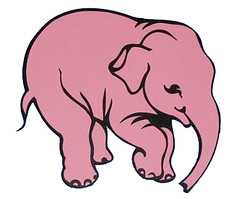
In addition to this study concerning mental health, several studies over the past decade or more have also concluded that the moderate consumption of alcohol leads to better physical health than for people who abstain from it. Better physical health and now better mental health, all from simply having a drink or two regularly. To me, that’s the pink elephant in the room.
pink-elephant

The anti-alcohol groups seem so hell bent on their all or nothing approach, seeing any alcohol as bad and no alcohol as all good, when the reality is hardly that simple. As these studies suggest, the common ground should be a more reasonable approach that leads to more drinking in moderation, removing the conditions that lead to over-consumption through education, strengthening infrastructure for public transportation so people can go out for a drink without fear, and recognizing that drinking alcohol does have many positive attributes when consumed responsibly. I realize that seems like a Herculean task at this moment in time, but that’s the only way I can see moving past the entrenched positions of both sides.

Obviously, I’m on one side of the aisle and I honestly believe that no one involved with the alcohol industry thinks that over-consumption or any extremes in drinking are a good thing. Both camps seem to agree on that. But the people against alcohol seem incapable of giving up any ground to concede that for most people moderate drinking may not be the evil they believe or that it doesn’t necessarily have to lead to greater problems. That very unwillingness, I believe, is actually exacerbating the problems that some people do experience with drinking too heavily because their focus is on the wrong problem and paints all drinkers will the same broad brush. As science continues to confirm that alcohol has been, and still is, a part of a healthy lifestyle, that position will become harder and harder to defend.

Remember the definition of an abstainer by Ambrose Bierce, in his Devil’s Dictionary:

Abstainer: n. a weak person who yields to the temptation of denying himself a pleasure.

Filed Under: Editorial, News, Politics & Law Tagged With: Mainstream Coverage, Prohibitionists, Statistics

Palestine’s Only Brewery

October 5, 2009 By Jay Brooks

palestine
Palestine’s only brewery, Taybeh Brewery is located in the West Bank town of Ramallah, about 20 miles from Jerusalem. It was started by Nadim Khoury, who became a homebrewer when he lived for a time in Boston, Mass. The British newspaper the Guardian just published an interesting article, Brewed in the West Bank, Drunk in Japan, about Taybeh Brewery and their recent trials and tribulations.

Taybeh

Being a great cynic and skeptic, it’s nice to see a story of hope — er, hops — in the Middle East. Who knows, maybe a homebrewer can bring a resolution to the Israeli/Palestinian stalemate. Peace in our time? Khoury’s comments from the end of the Guardian article are so optimistic it’s hard not to believe beer capable of anything.

“People don’t believe that we have a product like Taybeh beer brewed in Palestine,” he says. “On the news they see only violence, bombing and uprisings. Now we are trying to change this and to show the world we can live in peace with our neighbours. We are human beings. We have a right to enjoy life. Enough is enough with the fighting.”

Amen, brother. Make beer, not war.

Filed Under: Breweries, Politics & Law Tagged With: Middle East

If Beer Is The Kettle, CASA Is The Pot

October 2, 2009 By Jay Brooks

casa
The National Center on Addiction and Substance Abuse (CASA) at Columbia University, is nothing so grandly academic as its name suggests, but one of a growing number of anti-alcohol groups infecting America with its agenda. Today, its Chairman and Founder Joseph A. Califano, Jr., accused the Brewers Association and the Beer Institute of Chutzpah (which he misspelled “chutzpa”) and two specific members of the House of Representatives of hypocrisy. Talk about the pot calling the kettle black!

On his Chairman’s Corner blog today, he rails against the BEER Act, which Congress introduced back in mid-February. H.R. 836, or as its more commonly known, the Brewers Excise and Economic Relief Act of 2009, seeks to roll back the federal excise tax on beer that was doubled in 1991. The bill also would provide additional tax relief for small brewers. Most people, especially those who oppose alcohol, make the assumption that excise taxes are proper to punish the sin of drinking.

He gives his “First Annual Chutzpa (sic) Award” to the Brewers Association and the Beer Institute for H.R. 836, claiming they’re arrogant and he even has the balls to suggest them of bribery! First of all, he’s seriously delusional if he thinks small brewers have piles of cash for lobbyists.

The fact that a trade organization might work for favorable treatment by Congress for its industry or for a reform of the laws that regulate them, appears to be a novel concept to Califano. Isn’t that what every trade organization does? Did I miss a meeting? It’s okay for every other lobby, but not beer? And we’re arrogant for being happy when something goes our way?

He’s upset because for some reason he believes that the alcohol industry is responsible for the minority of people who abuse it. And, as usual, he throws around the nonsensical statistics of how much societal costs alcohol is apparently on the hook for, even though that’s not true of virtually any other industry.

As I’ve noted in Sin Tax Tyrannies, U.S. Senate Told To Raise Beer Taxes, Stupid Is As Stupid Does, The Lie That Won’t Go Away, and who knows how many others at this point, the notion of taxing only alcohol and tobacco should be deeply disturbing to any rational human being. Those two products are the only ones in our country that have excise taxes imposed on them, taxes no other companies have to pay.

People like Califano and his ilk see no apparent contradiction in tobacco and alcohol having to pay for their presumed sins but every other product that’s bad for us in quantity doesn’t have to. Soda companies don’t pay for the medical costs of the obesity epidemic. Meat companies don’t pay for higher heart risks from the over consumption of beef. Too much of almost anything can be bad for you, but we don’t say there shouldn’t be prescription drugs on the off chance that some people might abuse them.

Califano goes on to give his so-called “First Annual Hypocrisy Award” to the sponsors of H.R. 836, calling them hypocrites because for reasons passing understanding he seems to believe that being pro-alcohol and also for health care reform is contradictory. It appears to come back to the idea that alcohol has to pay for any health consequences that someone who drinks might encounter, yet no other industry has to do likewise. The Patriot Act specifically gave an exemption to pharmaceutical companies for any harm caused by them, but beer better pay its bill, by gum.

To me, that’s a far more hypocritical position to take, especially when his arguments are laced with the usual faulty statistics and, naturally, the “it’s for the children” gambit that has become de rigueur for anti-alcohol groups to invoke. Cutting the beer tax, Califano insists will mean more underage drinking, despite the fact that underage drinking is still illegal. The fact that people under 21 still manage to buy alcohol is somehow the beer industry’s fault; not law enforcement, not retail, not the ridiculousness of the law itself. But raising the tax (and thus the price) so it’s too expensive for kids punishes every adult who can legally buy alcohol, too. That’s not a problem if you want another prohibition, of course, but for the rest of society that seems patently unfair and even cruel.

Most intelligent legislators I should think are more concerned about getting our economy on firmer footing — something that H.R. 836 easily accomplishes — than following the misguided advice of the lunatic fringe that CASA represents. If I had my own made-up award for hypocrisy, Califano, CASA, and the rest of the Neo-Prohibitionist groups, would certainly be worthy recipients.

Filed Under: Editorial, Politics & Law Tagged With: Prohibitionists, Statistics

Beer Raped Your Daughter and Gave Her Gonorrhea … Again

October 1, 2009 By Jay Brooks

reason
Thanks to Anat Baron for tweeting this my way, but it seems that the storm clouds are once again gathering over ridiculous propaganda aimed at beer. Luckily, Reason Magazine — a periodical I’ve written for — is on the case in a piece entitled Beer Raped Your Daughter and Gave Her Gonorrhea. Again.

It concerns a Washington Post editorial where two doctors argue out of — one hopes — a sense of fealty to their Hippocratic oath that more expensive beer means lower consumption, less problems, less issues, less greenhouse gas emissions, less poverty, less .. well, you get the idea — the world will be a magically better place if only there were more taxes on beer. Of course, we’ve been down this argumentative road before and their statistics, like others before them, don’t add up. They never do, but that doesn’t stop them for spouting off and making this shit up, because they seem to be taking the approach of a lie repeated often enough becomes a fact over time. As a member of The Angry Arm of the Alcohol Lobby, I say bullshit.

Here’s their nut job argument in a nutshell:

One way to reduce the harmful effects of heavy drinking is to make drinking more expensive: the more a drink costs, the less people drink. This is true of young people, pregnant women and even heavy drinkers. Research indicates that a 10 percent increase in current alcohol excise taxes — that is a penny for a beer — would result in less drinking, especially among underage drinkers, reducing rape, robbery, domestic violence and liver disease. A tax increase of 3 cents per beer would cut youth gonorrhea by 9 percent.

So more expensive beer means less rape, less STDs, less domestic violence and all manner of other horrors. Because that’s the way it’s worked as cigarette prices have kept going up, right? Here’s how Reason looked at this argument:

I’m going to pull out that last line one more time in case you, like me, sometime skim over blockquotes too quickly:

A tax increase of 3 cents per beer would cut youth gonorrhea by 9 percent.

Look at the lovely young lady at right [an old Budweiser print ad of a couple fishing]. If only a three cent tax on that Budweiser could have saved her from the heartbreak of VD.

Messrs. (Drs.?) Sederer and Goplerud have taken the fine art of vaguely claiming that “studies show…” to a new level. Obviously, the argument here is that lots of beer makes people more likely to rape, pillage, etc. and that pricier beer means less consumption. A quick Google reveals that they’re pulling from 2000 study that looked at beer taxes and gonorrhea rates in various states. Reason, of course, tore this study a new one back when first made the rounds. Key passage:

[David Murray of the Statistical Assessment Service, a non-profit think tank in D.C.] does yeoman’s work pointing out the junk reasoning at the root of so much junk science. This one was a high, hanging curve for Murray, who said the CDC’s thinking was on the level of “the sun goes down because we turn on the street lights.”

The really interesting thing is that the CDC, in effect, agrees with that criticism. It buries its assent, however, in an editorial note that says the findings “do not prove a causal relation between higher taxes and declining STD [sexually transmitted disease] rates.”

To get a sense of how bad their math is, just look at their assertion that a 10% increase means only one penny more in excise taxes. That would mean that the taxes now would be 10 cents for that to be true. Are they? Not even close. There’s a federal excise tax on beer, and then a state one, too, and the amount varies widely from state to state, making that line ridiculous on its face.

And they trot out this old saw:

It has been 18 years since federal taxes on alcohol have changed. If all spirit taxes had increased at the consumer price index and been taxed like liquor, federal taxes on a shot of spirits would have increased by 10 cents, a beer by 21 cents, and a glass of wine by 24 cents. Making that adjustment now would raise $101 billion over 10 years, without state tax increases. Equalizing the tax among beer, wine and spirits, without inflation, would raise $60 billion over 10 years.

Don’t you believe it. I’ve examined this argument thoroughly before in Here We Go Again: Beer & Taxes and Why Alcohol Doesn’t Get A Pass, among others, and it’s nothing but vicious propaganda. And propaganda made even worse by virtue of it coming from medical doctors, who people tend to believe have their best interests at heart. They don’t, of course, doctors have their own interests at heart, like everyone else. Just look at how they attacked the idea of health care reform, beginning all the way back in 1948 when a P.R. firm hired by the AMA actually coined the term “socialized medicine” to scare people into making sure we wouldn’t have universal health care in this country. That’s how much they care about you and me.

If you track these things, like I tend to, you’ll notice that the attacks on alcohol have been getting more frequent, more virulent and more mainstream. You don’t think that could have anything to do with pharmaceutical ads proliferating while alcohol ads are highly regulated and restricted? Nah, must be a coincidence. Now where does your daughter hang out? I want to buy her a beer.

Filed Under: Editorial, News, Politics & Law Tagged With: Mainstream Coverage, Prohibitionists, Statistics

Time and Money and Beer

September 20, 2009 By Jay Brooks

Clock
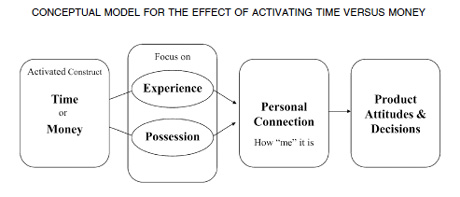
Forbes had an interesting article Friday entitled Time Vs. Money: Which Rules Buying Decisions?. The article is based on a recent academic paper published in the Journal of Consumer Research by Cassie Mogilner, a professor of marketing at Wharton, and Jennifer Aaker, a professor of marketing at Stanford University’s Graduate School of Business. That paper, entitled The Time vs. Money Effect: Shifting Product Attitudes and Decisions through Personal Connection [pdf], examines people’s associations with both time and money and how they relate to decisions about what products to buy. It’s a fairly common element in advertising. According to the study, “a content analysis of ads in four magazines targeting a wide range of consumers (Money, New Yorker, Cosmopolitan, and Rolling Stone) revealed that, out of 300 advertisements, nearly half of the ads (48%) integrated the concepts of time and/or money into their messages.”

time-money-model

Irrespective of whether feelings of personal connection stem from experiences gained using the product or from the mere possession of the product, we hypothesize that increasing one’s feelings that the product is “me” will lead to more favorable product attitudes and increased choice. Indeed, decades of research in psychology have given credence to the assumption that individuals are motivated to (and do) view themselves favorably. Consequently, people tend to have positive automatic associations with respect to themselves—which can influence their feelings about almost anything that is associated with them. For example, people like the letters that appear in their own names more than those that do not, and they are nicer to strangers who share their birthday than they are to other strangers.

One example the authors use is about beer (which is how I came to notice it). From the Forbes article:

“One thing that was surprising,” [Mogilner] says, “was to see how consumers’ attitudes and behaviors toward products and brands can be shifted by something as subtle and as pervasive as mere mentions of time or money. “The concept of time, for example, evokes a personal connection with a product in terms of the experience the consumer gains while using it, she says. To illustrate her point, [she] cites a well-known phrase in beer marketing—”It’s Miller Time.” The ads are still remembered by many consumers from the 1980s because consumers associated the beer with the routine, end-of-day transition from work to leisure.

As for the different emotions that money and social status-related campaigns can conjure, Mogilner points to advertisements for Stella Artois, a premium beer from Belgium. One of the product’s ads shows a man struggling to earn money—whether by chasing pigs, hauling sticks or herding goats—so he can buy his grandmother a pair of beautiful, expensive red shoes. But, alas, just as he’s about to present her with the gift, he spies a pint of Stella and makes a shoes-for-beer trade with the waitress. The commercial is funny, but it also captures the company’s “Perfection has its price” tagline, Mogilner says.

Both Miller and Stella are trying to sell beer. But using the concept of either time or money invites consumers to connect with a product—in this case, beer—in different ways. Of the two, the researchers found that a “Miller Time” connection typically leads to more favorable consumer attitudes and purchasing decisions because people tend to identify more closely with products they have experienced. “If you can dial up one’s thinking about time spent experiencing the product relative to thinking about the money spent to own the product, then you tend to get … beneficial effects,” Mogilner says.

But the “Perfection has its price” crowd is also important, Mogilner adds, even though there are fewer examples of consumers connecting to a product primarily because of its acquisition price. “There are cases where thinking about money can actually be a good thing for particular types of consumers, and particular types of products.”

time-or-money

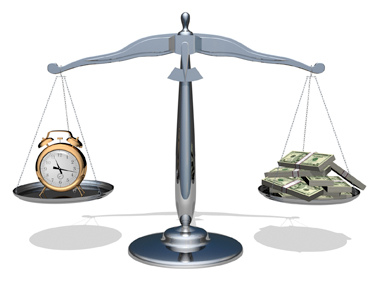
This is not the first time the psychology surrounding time and money has been studied. Not surprisingly, it adds to the chorus that time beats money in the rochambeau of life. As the article explains, “[r]esearchers have found that because time is less fungible—or less easily replaced—than money, losing time tends to be a more painful event for people, particularly when they think about how they are not able to make up for it. Another difference is that people feel less accountable for how they spend their time because it can be more difficult to measure than monetary outlays. These two characteristics—fungibility and ambiguity—are important differentiators in how consumers think about time and money.”

From prior research, they posit that it “seems highly likely that people will also like products more that are more closely connected to the self than products that are not. Evidence from consumer research offers support for this prediction, showing that consumers report more favorable attitudes toward products that reflect their personal identities.” But then they take their hypothesis in a different direction for conventional wisdom, arguing ” that when these feelings of personal connection stem from experiences gained using the product, activating time (vs. money) should lead to more favorable product attitudes and decisions. In contrast, when feelings of personal connection stem more from product possession,” this does not occur, or least not as strongly.

To me, that’s the important revelation in this new study; that a third consideration is equally important: “the extent to which each concept is linked to consumers’ personal experiences, identity and emotions.” To advertisers, they specifically “propose that activating the construct of time while consumers evaluate a product will lead them to focus on their experiences using the product, which generally will heighten their personal connection to that product—their feeling that the product reflects the self.” So between time and money, the clear winner according to the results of their work is time. “By simply directing people’s attention to time, rather than money, you can actually make people make happier decisions.” But the true insight, I think, is linking that to the experience.

Many of us who write about beer, myself included, have waxed philosophically, even poetically, about how drinking beer is a community affair, that it’s best as a shared experience. Indeed, countless ads for beer are set in social situations and in fact I can’t think of one that features solitary drinking — not counting George Thorogood. Although I often drink alone for professional reasons, in most instances it’s considered a societal taboo, carrying very negative associations. While I don’t think it’s necessarily indicative of “problem” drinking or anything so sinister, it’s certainly not desirable.

So while I think their study is applicable universally, it seems more relatable to beer than many other products, because I think drinking beer is such an experiential beverage. I imagine I’m not alone in having all my best drinking memories ones with friends. It’s probably not a stretch to say that’s universal, too. So the idea that time and the emotional experience of spending it with friends seems almost obvious, but it’s still interesting that it’s borne out by this, and other, studies. For me personally, it may not be Miller Time, but it is “beer time.” Who wants to join me?

If you have the time (yes, pun intended) and inclination, the five studies they conducted (and the whole paper) is worth reading. It’s a little dry and steeped in academic jargon, but interesting nonetheless. (It’s also only 15 pages, and three of those are references.)

Filed Under: Editorial, Politics & Law Tagged With: Advertising, Marketing, Statistics

Stuff & The Materials Economy

August 31, 2009 By Jay Brooks

stuff
This is only related to beer insofar as beer, like every consumer good, is a part of the materials economy. I originally found out about this when Greg Koch of Stone Brewing tweeted it a couple of days ago, and I only had a chance to watch the video, The Story of Stuff, on Sunday. It’s about 20 minutes long but quite worthwhile and interesting if you like that sort of thing. It’s a great overview of the materials economy, it’s history, design and and why it’s doomed to fail. So what is The Story of Stuff? Here’s how the website describes it:

From its extraction through sale, use and disposal, all the stuff in our lives affects communities at home and abroad, yet most of this is hidden from view. The Story of Stuff is a 20-minute, fast-paced, fact-filled look at the underside of our production and consumption patterns. The Story of Stuff exposes the connections between a huge number of environmental and social issues, and calls us together to create a more sustainable and just world. It’ll teach you something, it’ll make you laugh, and it just may change the way you look at all the stuff in your life forever.

Again, it’s not directly about beer, only indirectly, but it it is quite illuminating.

stuff-story

Filed Under: Politics & Law, Related Pleasures Tagged With: Economics

Fan Can Critics Show True Colors

August 26, 2009 By Jay Brooks

bud-fan-can
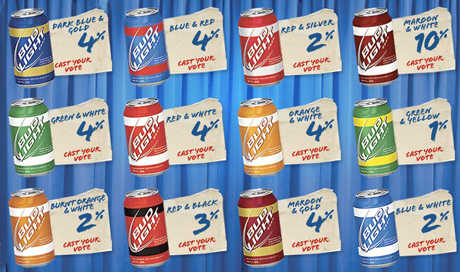
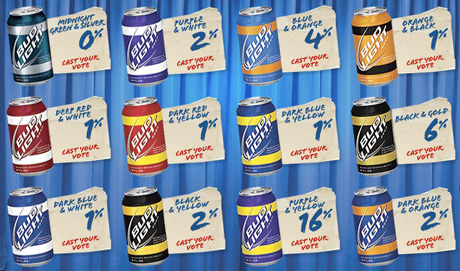
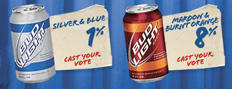
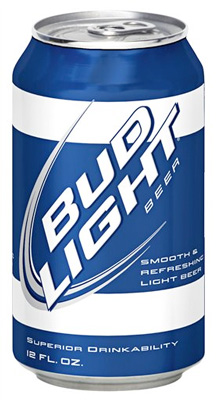
Just when I thought it was impossible for neo-prohibitionists to be any more idiotic, along comes the fan can controversy to prove me wrong once again. If you missed this one, I’ll recap. Anheuser-Busch created twenty-six different versions of its Bud Light can, each with the school colors of popular universities and colleges. There’s no school names, logos or mascots, just the colors. Here are some examples (you can see them all at Tailgate Approved, a Bud Light website).

fan-cans-1

Seems like good marketing to me. Commemorative beer cans are almost as old as beer cans themselves and are one of the most popular collectible items of breweriana. It’s not like these “institutions of higher learning” haven’t been prostituting themselves for decades, licensing literally everything to students, alumni and fans. Many care more for their sports programs then the actual edumacation they’re supposed to be providing students. But, as usual, otherwise reasonable people show their true colors as complete boobs who lose their sense of proportion and logic. Just add alcohol. It would almost be fun to watch if it wasn’t so terribly sad, pathetic and damaging to the enlightened, evolved and reasonable society I wish more people would be striving to create.

The hue and cry this time comes from “concerned people” afraid that a two-color beer can will encourage and promote underage drinking. According to Slashfood:

The cans are being marketed to match the colors of towns with college football teams, a move that has some school administrators up in arms, according to the Wall Street Journal. For example, purple-and-gold cans are being sold near the campus of Louisiana State University in Baton Rouge, La.

The University of Michigan has threatened to sue to make certain “maize and blue” cans are not sold anywhere in the Great Lakes state. At least 25 schools have asked Anheuser-Busch to stop selling the cans near their campuses, the paper said. The company said it would comply with any formal request by a university.

The Wall Street Journal reported that “[m]any college administrators contend that the promotions near college campuses will contribute to underage and binge drinking and give the impression that the colleges are endorsing the brew.” Huh? How exactly does that work? The laws concerning underage drinking aren’t altered in any way by changing the color of the cans, are they? It’s still against the law, isn’t it? This is what drives me insane about these “controversies.” They have no root in logic or common sense. People just fly off the handle without even thinking. I’m sure there are at least a few colleges whose colors are red and white. Is the demand for Coca-Cola greater there because people can be seen drinking a soda with their school colors on it?

The Journal article continues. “Samuel L. Stanley, president of New York’s Stony Brook University and a medical doctor, also objected. In a letter to Anheuser-Busch, he called the campaign ‘categorically unacceptable.'” He then goes on to list some statistics about alcohol-related deaths, which are entirely irrelevant to this issue. Changing the color on a can of beer does not automatically change the nature of the minimum drinking age or how many beers a person might consume in a sitting. Perhaps he’s tacitly admitting that he can’t stop underage drinking on his campus and thinks that this will make it even harder for him to enforce the current laws. Perhaps he should consider supporting lowering the drinking age as suggested by former college dean John McCardell and his Choose Responsibility organization and sign on to the Amethyst Initiative. That might make some headway in reducing drinking problems on his campus, because just banning certain color cans isn’t going to have any effect whatsoever.

fan-cans-2

My favorite so far is the ridiculous University of Michigan response, who “threatened legal action for alleged trademark infringement, demanding that Anheuser-Busch not sell the ‘maize and blue’ cans in the ‘entire state.'” Sadder still though is the fact that colors can actually be trademarked. Think UPS brown. That’s trademarked, though of course it’s the specific hue, not any brown. And last year, in a federal court case in Louisiana, Board of Supervisors of the Louisiana State Univ. et al. v. Smack Apparel Co., et al., C.A. No.: 04-1593, E.D. La., the judge ruled that Louisiana State University, Ohio State University, Oklahoma University, and the University of Southern California did indeed enjoy legal protections for their color schemes.

According to the IP Blawg,

In considering whether the unregistered color schemes were entitled to protection under Section 43(a) of the Lanham Act, the court looked for the requisite secondary meeting needed for a color to be protected, and found that it was present. The four universities had used their color combinations for more than 100 years, marketing hundreds of items with these color schemes, and garnering millions of dollars of retail sales from merchandise bearing these color schemes. The court then found that likelihood of confusion was established under the Fifth Circuit’s precedent where the marks had been in use for decades and were “extremely strong,” the color schemes were virtually identical, and Smack’s shirts were sold in retail outlets alongside plaintiffs’ shirts, and promoted in the same advertising media

The IP Blawg ends by wondering allowed whether or not the court made the right decision. I’d have to say this is almost as ridiculous as patenting seeds. I think what’s really at stake, both here and in the current issue, is that schools aren’t getting any licensing money. By simply using colors that are close to those of the respective schools, they don’t have to pay any licensing fees to the schools, and that’s probably what’s really pissed them off. Because most colleges aren’t exactly shy about hawking all sorts of crap with the school colors, logo and mascot on them. Walking through any university bookstore should convince anyone of that. The higher moral ground they’re flinging around about this is more about not sharing a piece of the pie, I’d wager.

fan-cans-3

Perhaps this might be a good time to have a debate on just how ridiculous is blind loyalty that’s reinforced throughout our lives. We wonder why people are so quick to go to war when our entire society is divided up into a million divisions that pretend to compete against one another. It starts with the street you live on, then your neighborhood, your school, your sports team, your college, your company and finally your country. You’re expected to show “support” for all of them, and usually in an unquestioning way that’s deeply damaging to reason or logic. It makes it much easier for things to never change and makes maintaining a status quo that’s unfair to a majority much easier. Did you ever notice that critical thinking is not taught in school? That’s not an accident. Critical thinking would lead to kids asking all sorts of uncomfortable questions and — gasp — thinking for themselves.

People obviously believe that when shown a can of beer in a person’s school colors, they’ll be unable to do anything but buy them and drink them. This idea of blind loyalty will all but force them to in order to be supportive. Frankly, I can’t even remember what my college’s school colors were. But even if I could, it’s such an obviously specious argument, that I’m amazed anyone could be taking it seriously.

bud-fan-can

But they know that a company as large as Anheuser-Busch InBev can’t risk appearing to do anything that might be even seen as possibly, maybe encouraging people to buy their products, especially those who are not allowed to buy them. So what exactly are companies supposed to do? Apparently, they all have to come up with packaging and marketing that appeals only to adults and specifically does not appeal to anyone under 21. Exactly what would that look like? Beats the hell out of me. I know cartoons are usually one of things that bother these chuckleheads, as if only kids enjoy them. I’m 50, for fuck’s sake, and I still love cartoons as much as I did when I was a non-person who could only die for his country but not drink in it.

My point is it’s impossible to separate kids from society and create two worlds, one with kids and one without. Yet that’s exactly the only thing that would seem to satisfy the people who make these nonsensical complaints. If they really think all it takes to increase underage drinking and binge drinking is change the colors of beer cans, we have more severe problems than underage drinking. I can’t help but think that placing as much emphasis on entertainment and sports, especially college sports, as we do has to be at least part of the reason that so many are so thick as to swallow such arguments. And worse so, for the pinheads that come up with them. These are people who work in universities and so, one presumes, have a college degree. Never was it more obvious that graduating from college can’t make anyone smarter, only more educated. I’ve cited these before, but here is where we’re at, according to the Jenkins Group:

  • 1/3 of high school graduates never read another book for the rest of their lives.
  • 42 percent of college graduates never read another book after college.
  • 80 percent of U.S. families did not buy or read a book last year.
  • 70 percent of U.S. adults have not been in a bookstore in the last five years.

Personally, I’m more worried about that (and not just because I’m a writer) than what color the beer cans are. I know I’ve mentioned this book before, (sigh — sorry about repeating myself) but Morris Berman’s brilliant The Twilight of American Culture suggests that we’re currently heading into another dark ages and that under such circumstances, few people even realize it. I’d offer that worrying about what color the beer cans are and believing that some harm will come to society as a result is yet another sign that Berman is correct. Surely there are more pressing problem’s we’re facing.

Filed Under: Breweries, Editorial, News, Politics & Law Tagged With: Prohibitionists

The Angry Arm Of Alcohol

August 9, 2009 By Jay Brooks

angry-arm
I was outside the news bubble all last week, happily ignorant of most of the goings on stateside. I left just after the infamous Beer Summit, a relatively non-event that was blown completely out of proportion but which allowed the news media to avoid talking about more important issues for a while. The San Jose Mercury News even asked me to weigh in on the beer choices. And I was certainly not the only one, as the Brewers Association had a summary of links about it. Consensus seemed to be that we were all glad beer was in the public spotlight, we just wished it had been better beer. Of course, not everyone was happy about beer getting a moment in the sun, and the usual chuckleheads started complaining even before it took place. But afterward, it got even worse.

The head of the Delaware chapter of the notorious neo-prohibitionist group Mothers Against Drunk Driving, Nancy Raynor, said she “hopes those images don’t send the wrong message to the millions of young people who saw the president drinking on TV” during a radio interview on WDEL Radio 1150 AM. I’m not exactly sure how an adult being shown doing something that’s perfectly legal sends the “wrong message,” whatever that even means, but logic is not apparently her strong suit. She also said that “it’s a well-known fact that young people tend to mimic the actions that they see be adult (sic).” I’d think she might then be more concerned about images on TV of people shooting each other with guns. That would be a greater threat than drinking if indeed young people are mimicking what they see on television.

And that might have been the end of it except that the American Beverage Institute (ABI), a trade organization representing primarily restaurants serving alcohol, issued a press statement taking MADD to task for what Raynor said during her interview.

“MADD is no longer an organization that opposes drunk driving, but an anti-alcohol group that has been hijacked by the modern day temperance movement,” said Sarah Longwell, ABI Managing Director. “That someone in a position of leadership at MADD would criticize President Obama for simply drinking beer, illustrates the neoprohibitionist mentality that now dominates the group.”

Last week, President Obama met with the men involved in the Cambridge police incident in an attempt to diffuse the situation. Obama, Vice President Joe Biden, Harvard professor Henry Louis Gates, and Cambridge police Sergeant James Crowley enjoyed cold beers while working out their differences. But in an interview this weekend, the President of the Delaware chapter of MADD, Nancy Raynor, expressed concern that the event could send the wrong message to young people who saw the president drinking on TV.

“MADD’s position on the ‘Beer Summit’ should remind Americans that the group once dedicated to preventing drunk driving has transitioned into leading the anti-alcohol movement,” said Longwell. “MADD has even been denounced by its founder Candy Lightner as ‘very neo-prohibitionist.’”

“MADD should return to its original mission of stopping drunk driving,” said Longwell. “The more time and resources the group spends pushing an anti-alcohol agenda, the more irrelevant it becomes.”

I’d say that the ABI statement is accurate from my experience watching how MADD operates and what they do, say and support. But MADD at the national level chimed in to defend both their position and the organization’s Delaware chapter head. Frank Harris, a spokesman with MADD’s national office in Washington, D.C. (though some accounts label him a “state policy specialist”), “emphasizes that his organization has no problem with safe alcohol consumption” and “is not against responsible drinking of alcohol for those over 21 years of age.” If that were true, of course, there would be no reason for Raynor to have been “concerned” about the Beer Summit sending “the wrong message.” She’s the head of an entire state, after all. She wouldn’t have attained that position without drinking the Kool-Aid. Everything that followed her statements was just damage control. And one of the most common tactics used to is to simply discredit your opponent. Harris attempted to do just that in hilarious fashion, by claiming that the ABI represents “the angry arm of the alcohol lobby.”

After I stopped laughing, it got me to thinking. The real question shouldn’t be that some people are angry, but that why aren’t more people angry? Why shouldn’t we be angry? For many years now, the anti-alcohol neo-prohibitionist groups have set the agenda. The media and politicians more often than not fall into lockstep in letting their side of the story be told, and very rarely give any meaningful time to any contrary position. That’s primarily because neo-prohibitionists pretend to own the moral high ground, forcing everyone into a defensive position. But there’s nothing remotely moral or immoral about alcohol. It just is. Like any other consumable food, it cannot be good or bad, just delicious or unappetizing. Despite our dysfunctional history of puritanical posturing, it can only be a sin to drink if you believe it’s a sin to drink. Not even different religions agree on this point. Not even different denominations of Christian religions can agree on whether or not drinking is a sin. That it’s wrong to decide for everyone through legislation what is essentially just personal preference should be obvious. That it didn’t work here, or anywhere else Prohibition was tried, should be a potent reminder that what they want is already a failed idea. Yet still they persist.

But as much as they wish it were otherwise, alcohol is legal is the United States, and the majority of people who drink do so responsibly and without the societal burdens or problems that are ascribed to alcohol by these groups. So something perfectly legal, used correctly by most people, is under constant attack by a minority who distort facts, prey on fear and will use almost any tactic to stop people from enjoying it. And people aren’t angry? Why not?!? I firmly believe we have every right to be angry — and not just the ABI — but everyone who drinks responsibly, isn’t a burden on society, and whose life didn’t turn into a bad country song the moment alcohol touched their lips should be angry that there are people who just won’t let them be. This is an issue that should have been settled over 75 years ago, but anti-alcohol groups not only won’t just admit defeat but have been fighting just as relentlessly as ever. They’re like that Japanese soldier on the deserted island who didn’t get the word that World War II was over, except that neo-prohibitionists are actually making headway and many people listen to these cranks because of the way they frame their arguments and because people are afraid to stand up to them, especially politicians.

So when they accuse the ABI of being the angry arm of the alcohol lobby, I say we embrace that idea and be angry. I am. I’m angry. Why aren’t you?

hurra-bier

My wife had the wonderful idea that we should make t-shirts, and she’s rarely, excuse me, never wrong. Anyone out there with some artistic skills want to create a logo for the “Angry Arm of Alcohol?” I’m picturing simply an outstretched horizontal arm holding a full pint glass or other beer glass. Perhaps with “The Angry Arm of Alcohol” tattooed on the forearm.

Filed Under: Beers, Editorial, News, Politics & Law Tagged With: Prohibitionists

North Korea’s First Beer Commercial

July 11, 2009 By Jay Brooks

korea_north
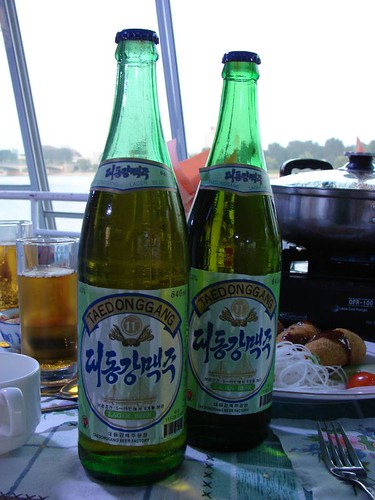
Taedonggang is a brand of beer from North Korea. It’s brewed by the state-owned Taedonggang Brewing Company based in Pyongyang, and is named for the nearby Taedong River. The North Koreans bought an English brewery, Usher’s Brewery in Trowbridge (part of Wiltshire), in 2002 and shipped it back to Asia. They produce 4 brands of beer, of which Taedonggang Beer is the flagship.

In a somewhat surprising move for a fiercely communist country, the state-owned Korean Central Television aired their first ever commercial, and it was a beer ad for Taedonggang beer.

A BBC article describes the ad:

Young women in traditional Korean dress are shown serving trays of beer to men in Western suits.

Billed as the “Pride of Pyongyang”, the advert promises drinkers that the beer will help ease stress.

“It represents the new look of Pyongyang,” the two-and-a-half minute advert says. “It will be a familiar part of our lives.”

I don’t know Korean, but according to a CBS report, “the commercial said the beer relieves stress and improves health and longevity” and went on to assure “viewers of the beer’s quality and nutritional value, saying it was made of rice and contained protein and vitamin B2.”

To see the strange, at times surreal, commercial, click on the image below.


Taedonggang beer, originally uploaded by Rikke Søvsø Nielsen.

Filed Under: Beers, News, Politics & Law Tagged With: Advertising, North Korea, Video

Cartoon Propaganda

June 14, 2009 By Jay Brooks

tiny-toons
Back in the early 1990s, Warner Brothers ran a new cartoon series called Tiny Toon Adventures, and it was presented by Stephen Spielberg. Instead of the iconic Warner Brothers cartoon characters, they featured their nephews, Buster Bunny, Plucky Duck and Hampton J. Pig, among many others.

There were 98 episodes done over three seasons from 1990-92, with the animation done by seven different studios. Some were of middling humor, though the animation quality was often less than stellar. Few, if any, ever came close to the earlier Warner Brothers cartoons prior to 1964.

Episode #68 from the 2nd season was animated by AKOM in South Korea (famous for animating The Simpsons) and was called Elephant Issues. It aired only once in the U.S. (on September 18, 1991) and was thereafter banned. I’m not entirely sure why, though the last of three segments is a horrible piece of anti-alcohol propaganda called “One Beer.” At the YouTube page where it was posted, RayOfHope612 gave only the following information:

This is a banned cartoon from the banned episode, Elephant Issues. It’s about the dangers of alcohol. This cartoon was only shown once in America, when it first aired, afterwards, it was never shown again on TV in America in later channels like Nickelodeon and the Cartoon Network.

But watch it for yourself and see if you can spot the propaganda.

Their descent into madness is swift indeed, taking no more than the first slug of beer to turn them into complete degenerates. And curiously, throughout the entire episode that “one beer” lasts all three of them, meaning 4 oz. per person was all it took to get them drunk and keep them that way. So drunk, in fact, that they steal a police car, drive off a cliff and actually die. How subtle. What a great message for kids. And so honest, too. This should keep the wee ones off the sauce. Reefer Madness redone for the toddler set, ’cause they’re the age group at risk. WTF?!? Anybody have a theological take on why after committing so many “sins” they still got their wings and went up to heaven?

Filed Under: Editorial, Politics & Law Tagged With: Video

« Previous Page
Next Page »

Find Something

Northern California Breweries

Please consider purchasing my latest book, California Breweries North, available from Amazon, or ask for it at your local bookstore.

Recent Comments

  • Bob Paolino on Beer Birthday: Grant Johnston
  • Gambrinus on Historic Beer Birthday: A.J. Houghton
  • Ernie Dewing on Historic Beer Birthday: Charles William Bergner 
  • Steve 'Pudgy' De Rose on Historic Beer Birthday: Jacob Schmidt
  • Jay Brooks on Beer Birthday: Bill Owens

Recent Posts

  • Beer In Ads #5225: Fabled Ambrosia Of The Ancients April 17, 2026
  • Historic Beer Birthday: William O. Poth April 17, 2026
  • Beer In Ads #5224: Harvard Bock Beer April 16, 2026
  • Historic Beer Birthday: William H. Biner April 16, 2026
  • Historic Beer Birthday: Alan Eames April 16, 2026

BBB Archives

Feedback

Head Quarter
This site is hosted and maintained by H25Q.dev. Any questions or comments for the webmaster can be directed here.