Brookston Beer Bulletin

Jay R. Brooks on Beer

  • Home
  • About
  • Editorial
  • Birthdays
  • Art & Beer

Socialize

  • Dribbble
  • Email
  • Facebook
  • Flickr
  • GitHub
  • Instagram
  • LinkedIn
  • Pinterest
  • RSS
  • Twitter
  • YouTube

Powered by Genesis

Beer Excise Taxes By State

June 1, 2009 By Jay Brooks

tax
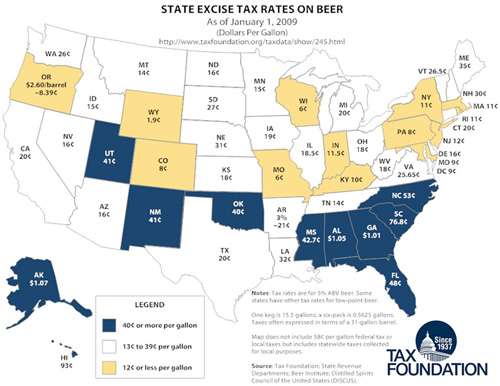
I found this nice map of the 50 states with the individual beer excise tax brewers in each state has to pay in addition to the federal excise taxes at Charlie Papazian’s blog, too. It’s originally from Don’t Tax Our Beer, a website maintained by the Tax Foundation.

The map provides an interesting snapshot of all the states. It’s worth noting that all the southern states have high excise taxes on beer, where the idea of drinking being sinful is, I think, more prevalent.
excise-taxes-2009

Filed Under: Beers, Politics & Law, Related Pleasures Tagged With: Taxes, United States

Montana’s Victory & More

June 1, 2009 By Jay Brooks

montana
There’s a nice round-up on Charlie Papazian’s blog about some current state legislation around the country, for example some good news out of Montana, similar to Alabama’s news two weeks ago:

Montana just passed a law which will allow beer to be up to 14% alcohol by volume (before it was max at 7% by weight, about 8.75 % by volume), effective in October. That new limit is conditional.The beer must be built 75% from malted cereal grains, if above 8.75% by volume. If over the 8.75% and less than 75% from malted cereal grains, the beer must be sold in liquor stores.

That’s followed by a summary of pending issues at various states and some interesting tax information, too.


Filed Under: Beers, News, Politics & Law Tagged With: Montana

Tipping The Sacred Cows Of Addiction

May 29, 2009 By Jay Brooks

aa
I have nothing against Alcoholic Anonymous per se. I know that it’s been helpful for thousands, perhaps millions of people since 1935. There are currently estimated to be just under 2 million members in a little more than 114,000 groups around the world, with the majority being in the U.S. and Canada.

I grew up with an alcoholic stepfather who was also psychotic and prone to violence, and many, if not most, of his circle of friends were similarly afflicted. When I was in my early 20s, I even went to a couple of meetings for “Adult Children of Alcoholics,” though I don’t recall if they were affiliated with Al-Anon or Adult Children of Alcoholics (a.k.a. Adult Children Anonymous). Not to disparage those groups, but it wasn’t for me. I was an unfocused, troubled youth, trying to find my way in the world alone. But it didn’t take me long to figure out that I wasn’t that untypical or that it had as much to do with losing my mother to breast cancer at 21 than anything else, not to mention my own personality quirks.

But I’ve never been comfortable with their tacit suggestion that it’s the only way. For A.A. to work, one has to admit being “powerless” when in fact many people are powerful enough to overcome their addiction. I remember seeing a documentary several years ago that contrasted AA with a philosophy common in Japan for working with people with addictive behaviors. To the Japanese way of thinking, a person wasn’t “cured” until they could enjoy the occasional drink without lapsing back into their over-indulging ways. That always seemed more correct to me. The AA way of simply avoiding alcohol never seemed like a cure but a way of circumventing the problem without actually addressing it or the underlying causes.

On their website, under the heading “is AA for you?,” it states. “We who are in A.A. came because we finally gave up trying to control our drinking. We still hated to admit that we could never drink safely” and the general pamphlet about A.A. goes on to say that members “cannot control alcohol. [They] have learned that [they] must live without it if [they] are to avoid disaster for [them]selves and those close to [them].” Their stated purpose “is to stay sober and help other alcoholics to achieve sobriety.” But, of course,” staying sober for many is a lifelong struggle. For many they believe it’s the only way they can function. But what if it wasn’t the only way, as so many A.A. members insist? Wouldn’t that be something they would embrace? Well, no, apparently not. It appears that the only way being powerless works is to believe it, then the rest can fall into place. So it’s my experience that challenges to the A.A. ethos are fierce and vigorous, because they believe it will undo the base upon which its foundation stands. If they’re not powerless, then it becomes a house of cards.

So with that in mind, the Toronto Star published an article last week entitled Addiction: Could It Be a Big Lie? The article is examining a new book by Harvard professor Gene M. Heyman, a psychologist. His new book carries the incendiary title Addiction: A Disorder of Choice and “argues that addiction isn’t really an illness, infuriating the medical establishment.”

According to the article, it’s not the first to do so, but is one of several published in the first decade of the 21st century to challenge the conventional wisdom, which the article calls an “overwhelming scientific consensus that addiction is an involuntary disease.” The Star goes on to give voice to people who disagree, who use the opportunity to insult both the author and Harvard itself for even allowing a dissenting opinion into the world.

Heyman’s goal is nothing short of persuading “us that we have been persistently deceived by so-called addiction experts who do not understand addiction.” The book is complex and the publisher describes it like this:

In a book sure to inspire controversy, Gene Heyman argues that conventional wisdom about addiction—that it is a disease, a compulsion beyond conscious control—is wrong.

Drawing on psychiatric epidemiology, addicts’ autobiographies, treatment studies, and advances in behavioral economics, Heyman makes a powerful case that addiction is voluntary. He shows that drug use, like all choices, is influenced by preferences and goals. But just as there are successful dieters, there are successful ex-addicts. In fact, addiction is the psychiatric disorder with the highest rate of recovery. But what ends an addiction?

At the heart of Heyman’s analysis is a startling view of choice and motivation that applies to all choices, not just the choice to use drugs. The conditions that promote quitting a drug addiction include new information, cultural values, and, of course, the costs and benefits of further drug use. Most of us avoid becoming drug dependent, not because we are especially rational, but because we loathe the idea of being an addict.

Heyman’s analysis of well-established but frequently ignored research leads to unexpected insights into how we make choices—from obesity to McMansionization—all rooted in our deep-seated tendency to consume too much of whatever we like best. As wealth increases and technology advances, the dilemma posed by addictive drugs spreads to new products. However, this remarkable and radical book points to a solution. If drug addicts typically beat addiction, then non-addicts can learn to control their natural tendency to take too much.

But as the Toronto Star points out, it’s “fundamentally based, however, on that last, simple point: Addicts quit. Clinical experts believe addiction cannot be permanently conquered, Heyman writes, because they tend to study only addicts who have entered treatment programs. People who never enter treatment – more than three-quarters of all addicts, according to most estimates – relapse far less frequently than those who do, since people in treatment more frequently have additional medical and psychiatric problems.”

Star reporter Daniel Dale continues:

People who have stronger incentives to remain clean, such as a good job, are more likely to make better lifestyle choices, Heyman writes. This is not contentious. But he also argues that the inability to resist potentially harmful situations is a product of others’ opinions, fear of punishment, and “values”; it is a product of a cost-benefit analysis.

He does not dispute that drug use alters the brain. He does not dispute that some people have genes that make them more susceptible to addiction. He disputes that the person who is predisposed to addiction and the person whose brain has been altered are not able to ponder the consequences of their actions. In other words, he disputes that biological factors make addicts’ decisions compulsive.

I find such discussions fascinating because of my own experiences along with what I’ve seen and read about addiction. In my stepfather’s case, his family enabled him by pretending his aberrant behavior didn’t exist and dismissed or excused his violence as something my mother and I either deserved or exaggerated. My mother was also a party to the dysfunction and was clearly co-dependent, but that’s a story for another day. The point is, you’d be hard-pressed to find a more dysfunctional individual who seemingly could not control himself. And yet every summer we’d take a one-week car vacation and over the course of my childhood we drove (from Pennsylvania) as far north as Canada, as far south as the Florida Keys, and as far West as Indiana. A few weeks before we’d load up the car, my stepfather would inexplicably just stop drinking and work harder than I’d ever seen him (for most of the time, he was a mechanic, and owned his own repair shop) to save up money for our vacation. There was no fanfare, no detox time, he’d simply be drunk one day and decide the next it was time to earn the vacation money. It was usually two weeks and sometimes longer if my folks had planned a more extensive trip. So every year, for between two and four weeks, my stepfather seemingly just flipped a switch inside himself and became sober. There were no side-effects I ever saw, no temptations I ever witnessed, it just seemed as natural as the sun coming up each morning. This odd, almost contradictory behavior, I realized (unfortunately, not until I was older), seemed to seriously fly in the face of what conventional wisdom had to say about alcoholism, that my stepfather had no control over himself or his actions. And his example wasn’t the only one I saw, just the one I knew best.

But when Join Together posted this story, most of the comments were predictably dismissive and downright abusive or insulting. Some took a “how dare he” position as if a contrary opinion constituted a personal attack. They seem to think his opinion was just shot from the hip or has no foundation whatsoever and therefore he had no right to state it, even when none had actually read it. I haven’t read it either, of course, but I’m willing to give it a chance whereas the addiction crowd doesn’t seem capable of that, and I suspect it’s that house of cards idea that it could all come crashing down. But that’s what happens when you build with straw or sticks, an idea comes along and huffs and puffs.

The history of science is filled with examples of individuals who theorized beyond the scope of the conventional wisdom of the day and were insulted, disgraced, ruined or worse before later being vindicated. Obviously, I can’t say with any certainty that Heyman’s ideas will stand up to further scrutiny and testing, but history suggests we should at least listen to him and explore his ideas further, and not so quickly dismiss them out of hand, as appears to be what’s happening. The only news organizations to even cover the book’s publication are from Canada. A Google News search came up with not one American article, which in and of itself I think is telling.

The other Canadian piece is an interview in Maclean’s, essentially Canada’s weekly Time magazine and Newsweek rolled into one. It’s a very interesting and enlightening read. Heyman, I’m not surprised to learn, comes across as very even-handed and practical, even saying kind things about A.A.’s effectiveness, despite the addiction crowd’s apparent attack on him.

To the question about how on earth “the idea that addiction is a disease governed by uncontrollable compulsion [took] root?” Heyman replies.

The first people to call addiction a disease were members of the 17th-century clergy. They were looking at alcoholism and they didn’t describe it as sin or as crime. I have a theory as to why they thought this—and why we think it even today. It’s this problem we have with the idea that individuals can voluntarily do themselves harm. It just doesn’t make sense to us. Why wouldn’t you stop? In the medical world, in economics, in psychology and in the clergy, they really have no category for this, no way of explaining behaviour that is self-destructive and also voluntary. The two categories available to them are “sick” or “bad.”

And that does seem to conform to how I see addiction and alcoholism portrayed, yet I have witnessed so many people who have been able to simply quit of their own volition that on reflection it seems almost obvious that it can’t be a disease. It would be like deciding to cure your cancer and then just doing so by simply making such a decision. It would be like saying “that cancer was ruining my life so I just decided to quit having it.” If one person did that, it would be a miracle. But if thousands, perhaps millions of people can effectively just quit doing something considered to be a disease, wouldn’t you have to reevaluate or reconsider that very notion?

And on the other side of the coin, I see lots of people who get drunk and use being drunk as an excuse to do things and get away with doing things that wouldn’t be tolerated from a sober person. To me, that’s the really bad side of viewing alcoholism as a disease. It allows people to not be responsible for their actions when they can persuade others that it was the alcohol that “made them act that way.” Sure it was. I’ve known — and still know — plenty of bad drunks who still play that game. Many people let them get away with it, and I contend it’s because they accept the idea that they can’t help themselves when they’re drunk, that they’re somehow not responsible for their actions. Bullshit, I say. People should be held accountable for their actions, whether sober, falling down drunk or somewhere in between. So I imagine a lot of people who’ve been getting away with acting badly and blaming alcohol will be quite unhappy with Heyman’s assertions, after all it undermines their ability to be jerks and get away with it. But I also believe such people are ruining it for the rest of us, who don’t turn into assholes when we drink too much. I get more talkative and eventually more sleepy. I get friendlier and am probably better company as I’m less reserved in person than usual. But that’s about it, I retain my ability to judge right from wrong, to know what’s acceptable behavior and what’s not. I don’t harass people or get in their face. I’m usually acutely aware of my own level of intoxication. Most importantly, I don’t think I’m unique in that. The majority of people I drink with regularly are similarly self-aware and don’t become a drunken Mr. Hyde to their sober Dr. Jekyll.

So who’s right? Obviously, it’s a complicated question and one not easily decided. But like most things, it’s worth at least discussing the possibility that alcoholism is not a disease, even if it makes some people uncomfortable and may undermine conventional wisdom. We can only evolve in our intellectual understanding of the world if we remain open to new ideas. Some of us can discuss such ideas over a beer, others not so much, at least as long as we cling to the idea they just can’t help themselves.

Filed Under: Editorial, Politics & Law Tagged With: Anti-Alcohol, Science

A Post-Bud World

April 13, 2009 By Jay Brooks

a-b
Came across this interesting tidbit at Stan’s Appellation Brewing, which he found at the St. Louis Business Journal. It’s an interesting little story about where many of the ex-Bud employees — the ones in positions of power — ended up or what their fate appears to be. It’s called Life After Anheuser-Busch.

The gist of the story is that many talented businesspeople have left A-B in the five months since InBev bought A-B. As Stan points out, in the first two months of this year, “[r]oughly 2,400 salaried employees, or about 40 percent of its St. Louis workforce, took early retirement buyouts or [received] pink slips.”

Doug Muhleman, who was the VP of Brewing Operations and Technology, is growing grapes and making wine on 20 acres in, of all places, Healdsburg, in Sonoma County, just up the road. For several years he’s been growing merlot and zinfandel grapes but he and his wife, Juli, have decided to make a go of their Muhleman Family Vineyards. I’d met Muhleman a couple of times, and he always struck me as a very good guy. At first, Sonoma didn’t make sense, but he went to UC Davis, so that’s the Northern California connection.

Another former star, Bob Lachky, who was the VP of Global Industry and Creative Development, is “Best known as the guy behind Anheuser-Busch’s Budweiser frogs, football-playing Clydesdales, “Louie the Lizard,” “Wassup?!” and “Real Men of Genius” advertising campaigns. Now 55, he plans to stay put in St. Louis where he is considering an investment in an online start-up and exploring the launch of his own content development firm.”

Catch up on what seven more former A-B execs are up to now, too. I’m glad so many landed on their feet — seriously — and maybe it’s my bleeding little liberal heart, but I’d like to hear that the more colorfully collared have fared as well. Unfortunately, not only is that probably not the case, but that’s not something the business press seems to care that much about. It’s just not their audience.

 
The article also had this great illustration that sums up the story perfectly, done by a Michael Behrens.

eagle-flies

Filed Under: Breweries, News, Politics & Law Tagged With: Anheuser-Busch, Anheuser-Busch InBev

Session #22: 75 Years Demonizing Alcohol

December 5, 2008 By Jay Brooks

demon
This is our 22nd Session a.k.a. Beer Blogging Friday and today’s topic is quite relevant for the day, as this is the 75th anniversary of the repeal of the 21st Amendment to the U.S. Constitution ending thirteen years of our national prohibition. Our host today, naturally, is the 21st Amendment Blog, written by Shaun O’Sullivan and Nico Freccia, co-founders of the 21st Amendment Brewery & Restaurant in San Francisco, California. Here’s how they put their approach to this month’s topic:

In 1920, there were thousands of breweries across America making unique, hand-crafted beer. The passage of Prohibition wiped out this great culture. On December 5, 1933, the states ratified the 21st Amendment, repealing the 18th Amendment, thus ending 13 years of Prohibition in America. At the 21st Amendment Brewery, the repeal of Prohibition means we can celebrate the right to brew beer, the freedom to be innovative, and the obligation to have fun.

What does the repeal of Prohibition mean to you? How will you celebrate your right to drink beer?

session_logo_all_text_200

I confess I’ve been struggling mightily for something to write about Prohibition, as I feel like I’ve written about it so much lately that there’s really not much left to say. But then my friend and colleague, historian and author Maureen Ogle sent me a link to an Op-Ed piece she did for U.S. News & World Report. Her unique and fresh take on the ramifications of Prohibition’s end was a revelation for me. It was like getting in the bathtub of cheap hooch with Archimedes himself. It was a real “Eureka,” “a-ha moment” and “epiphany” all rolled into one. The wheels started turning. Maybe there’s another way to look at this.

Most of us have taken it as a given that the repeal of Prohibition was a victory for the pro-alcohol majority and a denunciation of the anti-alcohol sentiments that had brought it about. But maybe not. Despite its obvious failures on many fronts, it was the depression that really hastened its end. The economy needed a shot in the arm, and legalizing alcohol created jobs, tax revenue and good will. In the end, it was money, not morals that brought down Prohibition.

For just one example of how bad Prohibition was, check out Prohibition and the Rise of Crime, a blog post by J. Michael Jones, a retired police chief.

That’s not to say I won’t be celebrating today. I will. I’ll be in downtown San Francisco later marching in a Repeal Day parade. I’ll be enjoying some legal beer and toasting how good the American beer scene is today. And I won’t be alone, of course. There are numerous celebrations throughout the country today. But I wonder if we’re celebrating the right things? Or celebrating the right way?

The NBWA (National Beer Wholesalers Association) released a press release today extolling the virtues of the three-tier distribution, a system created out of whole cloth as a way to return alcohol to the public arena after passage of the 21st Amendment.

“This anniversary is a great time to recognize the success of the past 75 years of effective, state-based alcohol regulation since the ratification of the 21st Amendment,” said NBWA President Craig Purser. “A ‘one size fits all’ approach to alcohol regulation during Prohibition was a failure. The 21st Amendment allows individual states to regulate alcohol as their citizens see fit.”

Their celebration is understandable, of course, since after Prohibition an entirely new segment of the beer industry was created — The Distributor. But while understandable, it’s hard not to view their celebration as little too self-serving. They’re not really celebrating alcohol being legally available again so much as their own success in creating a new business model. This new system created a lot of wealth for a number of people and organizations. I’m not saying they haven’t worked hard for it or that they don’t deserve to celebrate their success, but it just feels a little too much like self-congratulatory patting themselves on back. To be fair the Distilled Spirits Council of the United States had a similar press release.

Many other mainstream writing about today’s anniversary is likewise self-congratulatory. Many gave very standard accounts, such as the Illinois Telegraph, the San Francisco Chronicle (which also has some interesting local info and photos), USA Today and even the UK’s Independent. There’s nothing whatsoever wrong with any of these or the countless other similar articles that will be published around the world today.

alcohol-squares

In the Independent, author Rupert Cornwell reflects on the fact that in America “the mindset that produced Prohibition lives on. The cocktail, it is said, is enjoying a new golden age. But a third of American adults don’t drink at all, and the country ranks only 40th in the international league table of alcohol consumption. Indeed, since the late 1970s, consumption per head in the US has been falling steadily.”

The great “war on alcohol” between 1920 and 1933 may have ended in resounding defeat. But an American belief that human vices can be eradicated, and human nature perfected, persists, visible in the continuing, scarcely less futile “war on drugs” declared by Richard Nixon in 1971 and, who knows, maybe in George Bush’s “war on terror” as well. But don’t let such somber thoughts spoil the party tonight.

He’s not the only one to notice the comparison between Prohibition and our current drug policy, such as Stop the Drug War. Even the Wall Street Journal has an article today entitled Let’s End Drug Prohibition. Are we finally starting to realize as a culture that regulating is better than outlawing? Sadly, probably not. The neo-prohibitionists are still running amuck.

But as Maureen Ogle points out in yet another Repeal Day article, this one in the Philadelphia Inquirer, it’s really our Constitution that was saved by ending Prohibition. As she details, Prohibition led to corruption, conspiracy and contempt for the law by not just citizens, but which also — and I just can’t put it better than Ogle — “oozed into and out of every level of government, from Washington to the smallest municipality.” And that’s not just hindsight, a report in 1931 by federal commission that had studied Prohibition for two years, concluded that it was an abject failure and as “the more flagrantly authorities disregarded citizens’ rights, the more cynical Americans became. Young adults in particular — the very people who would become “leaders in the next generation” — demonstrated overt ‘hostility to or contempt for the law.'”

As the Patriot Act (not to mention our current lame duck administration) similarly disregards the Constitution and the rights of American citizens, and we appear to be heading into another protracted recession (if not an actual depression), the conditions seem eerily similar to those of seventy-five plus years ago. As they worried then, what might a continuing disrespect for the Constitution lead to? I’m worried. Aren’t you? Don’t get me wrong, I’m thrilled that “change” may be on the horizon, but I can’t help but continue to be apprehensive that our swing to the right and the threats to democracy that that entailed will so easily be undone by good intentions. Movement Conservatism may be in a weakened state right now, but it’s hardly on life support.

And speaking of beer and elections, did you know that in seven states, it’s still illegal to sell or serve alcohol on Election Day? Weird, huh? In Alaska, Kentucky, Indiana, Massachusetts, South Carolina, Utah and West Virginia alcohol and voting apparently still don’t mix. According to TriState, these [s]o-called “Blue Laws” date back to the 1930s and make it illegal to sell alcohol on certain important religious or political days. Blue laws were meant to protect the integrity of the voting process in a time when many saloons also served as polling places. In the past 70 years, most states have either relaxed their Election Day bans or repealed them altogether.”

demon-beer

But finally, back to Maureen Ogle’s devastating insight into what the end of Prohibition has wrought. Though she finds the term clumsy, I like it. She asserts that repeal “institutionalized the demonization of alcohol.” For some, that may be hard to swallow (yes, intended) but for me it made perfect sense and made me look at the issue from a different perspective.

To summarize what Ogle means by that, here’s her introductory paragraph:

Prohibition ended on Dec. 5, 1933, not with a bang but with the thud of thousands of pages of new city, state, and federal laws that dictated when, where, and how Americans could make, buy, sell, and drink alcohol. Ratification of the 21st Amendment, repealing Prohibition, was neither a green light to drink nor a victory over the “dry” crusade that had produced Prohibition. Seventy-five years later, we’re still captives of that crusade.

Indeed, the 21st Amendment heralded the age of regulating alcohol like never before. It created new rules and regulations, label approval procedures, licensing requirement, all manner of new taxes and previously unheard of restrictions on all aspects of how alcoholic beverages could be made, sold, marketed, packaged and even consumed. At every step from grain to glass, there was the watchful eye of the government to tell everybody what role they were to play and within what parameters the game would take place.

I can only imagine that people were so happy to have alcohol back that it was scarcely even noticed by the ordinary public. I’m sure the breweries were keenly aware, but they were undoubtedly thrilled to be back in business under any conditions and more likely figured being regulated in business was far better than not being in business at all.

Before Prohibition, there were around 1,500 breweries, but less than half reopened afterward. And for a variety of reasons, the number of breweries continued to decline sharply. By the year I was born, 1959, there were only about 200 left. At least one of the reasons that the re-opened breweries struggled was the maze of new federal and state regulations imposed on how alcohol companies operated their businesses.

After Prohibition, the original message of the temperance movement was not only alive and well, but became internalized and institutionalized — essentially set in stone — by the very laws created to regulate it. That message is still with us today. Simply put, it is this:

Alcohol is evil. No one can be trusted with it.

demons-three

That message permeates all discussions of alcohol policy and any “issues” about alcohol. That message has been communicated by the laws passed seventy-five years ago and generations of new adults have soaked up that message almost completely. That’s it’s thoroughly untrue goes not only unchallenged but the notion isn’t even considered as a topic for discussion, so embedded is it in our collective psyche. Every aspect of how we treat alcohol has this false message looking over our shoulder, refusing to go away.

Alcohol is not inherently evil, we just treat it as if it were. People can be trusted with it, and in fact most people who drink alcohol are responsible adults, we just treat them like children in our over-paternalistic society. And we do this because we’ve assumed the temperance propaganda message to be true and we’ve created alcohol laws under that same mistaken assumption.

Ogle sums up:

It’s a vicious, and lethal, cycle: As long as we remain addicted to demonization, we avoid serious discussion about those values. The longer we avoid that conversation, the longer we pass on the booze-is-bad message to our kids, who grow up to pass the message on to their kids. And as long as we teach children to fear rather than respect alcohol, we’ll interrupt the silence with periodic spasms of hand-wringing and finger-pointing about campus drinking, binge drinking, underage drinking, and the like. But here’s the truth: The “alcohol problem” is of our own creation. We’ve got the drinking culture we deserve.

I agree with everything Maureen says with the possible exception of that last sentence. I’m not entirely persuaded that we “deserve” the drinking culture we have today. If our present “drinking culture” had been arrived at by an ongoing open, fair and honest public debate about alcohol, then I’d wholeheartedly agree that we got what we deserve. But I believe that what we’re stuck with today is the result of subterfuge, conspiracy, propaganda and out and out lies by people and organizations with a Carrie Nation-style axe to grind.

I prefer an image of prohibitionists having slunk away to lick their wounds in defeat but the truth is they’ve never really gone away. They’ve never stopped trying to keep their message alive. That they’ve been so successful while at the same time convincing us they’d lost is deviously clever. They’re like the tortured, evil protagonist in every horror movie who refuses to die, no matter how many times he’s shot, sliced or garroted. They always come back, don’t they? To me, that’s the unfortunate message of this 75th anniversary. It’s certainly worth celebrating 75 years of beer in America. But it’s perhaps more important to recognize that the battle didn’t end December 5, 1933. It merely changed the terms of engagement from above ground prohibition to underground demonization. Happy Repeal Day everybody. Drink up.

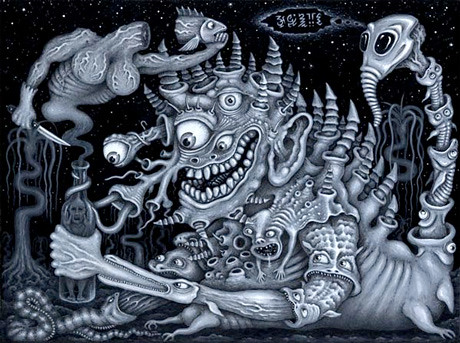
demon-alcohol

The Demon Alcohol, by Robert Steven Connett.

This is a nicely imagined vision of how we view alcohol today, in a Hieronymus Bosch sort of way.

For a lot more great information about Prohibition, check out Prohibition Repeal.
celebrate-repeal

Filed Under: Beers, Editorial, Politics & Law, The Session Tagged With: Law, Prohibitionists

Beer in the Time of Recession

November 24, 2008 By Jay Brooks

money
Conventional wisdom is that during an economic downturn, recession or — let’s just say it out loud — depression, that certain businesses are not as challenged, usually ones that provide things that are either absolute necessities (food comes to mind) or make products people have decided for one reason or another that they’re reluctant to give up. Beer is traditionally one of these businesses that is generally thought to be recession-proof because people turn to it as a salve or an inexpensive way to relax, spend time with friends and loved ones and have a good time.

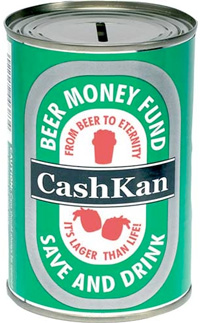
cashkan

Craft beer, though more expensive than the mass-produced beer churned out by the big two, can still be characterized as an “affordable luxury.” Even the more expensive single bottles are cheaper than high-end wine or spirits yet I’d argue that they’re just as much of a special treat. Even when strapped for cash, everyone — me included — wants to splurge on themselves, even if only once in a while. It’s sad, but those are the moments we live for. Our economic system is so rigged to favor those at the top of the pyramid that almost everybody else is struggling most of the time. As the rich have gotten richer over the past few decades, real wages of a majority of Americans have fallen precipitously — thank you, Neocons — and the young in their twenties, thirties and even forties are among the first generations to be worse off then their parents.

Just consider that when I was a kid, most people I knew were in families where only one of their parents worked, usually their fathers. That my own mother worked — she was a nurse — was somewhat unusual in my neighborhood, which was by no means affluent. It was just a normal middle-class suburb, and a lower middle-class one at that. I can’t think of a single other person on my block where both parents worked full-time. There were one or two wives who worked part-time a few hours a week at local charities, but that was about it.

In 1960, when I was one, only 25% of married couples with children had both parents employed. By 1976, when I was junior in high school, only 33% of married couples with children had both parents employed, and only 31% of all women with babies younger than a year old worked. Today, how many families can boast that only one parent works outside the home? As of 2007 (according to the Bureau of Labor Statistics) the number of families in which both parents work is 62.2%, nearly double the number from the mid-1970s and far more than the 1960s. While I realize that some economists think that’s a choice that women make and that it’s not indicative of anything sinister, I also think they’re full of it. If it currently takes two salaries — each one of which takes 69 hours per week to earn what 40 hours got you just a few decades ago — to keep up with the Joneses, then something is seriously wrong with our society and the way we look at things. It’s not that I think that we should return to the 1950s — I really don’t, trust me on this one — but two salaries should mean twice as much prosperity as it did when only one spouse worked, but it clearly doesn’t.

Ever since the housing bubble exploded — surprising no one who was paying attention — things have been snowballing down prosperity mountain and all our proposed fixes merely trickle. From the housing market, the credit market and Wall Street took a nose dive, with several high-profile financial institutions finally revealing they’ve been out in the business world without any clothes on for quite some time. It’s only now that anyone appeared to notice. Our government, of course, threw money at the problem (as they always do) but only at the banks and financial institutions. Small businesses were allowed to fail, homeowners continue to lose their homes and personal bankruptcies continue to climb. Next, the big three American automakers jetted down to DC to beg for billions while corporation after corporation announced massive layoffs. The unemployment figures for October were just released, and at 6.5% it was the highest since 1990. Even the normally sunny Time Magazine has to admit that things look worse than in previous downturns and many economists think we’re in for hard times.

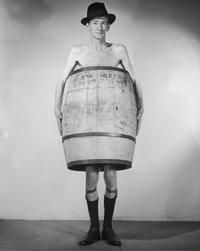
barrel-hat

So if they’re right, are we in for another depression? And what exactly is the difference between a recession and a depression? There’s a not terribly funny joke among economists that a recession is when your neighbor loses their job and a depression is when you lose yours. But the truth is there is no hard and fast rule about the difference between the two. The media tends to define a recession as two or more consecutive quarters where there’s a decline in the Gross Domestic Product (GDP). By and large, economists don’t like that definition because it ignores many other variables, such as the unemployment rate or consumer confidence. Also, by pinning it to a quarterly figure, it makes it more difficult to determine the exact beginning or end and a short recession may go undetected altogether.

What I find frustrating about this lack of precision in defining our economic condition — no small thing considering how much it effects all of us — is that because of that imprecision it’s almost impossible to say anything with certainty except in hindsight. How that manifests itself is that every talking head claiming some sort of divine financial insight always errs on the side of caution, saying things look great, don’t worry, everything will be fine and other mostly bullshit sunny predictions. They do this for at least two reasons, one benign, the other not so much. First, they try to be reassuring because they’re afraid that people might panic and things that might look only a little bad would turn really bad simply as a result of their telling the truth. So they lie, though in this case it’s somewhat understandable why. Secondly, most of the people who we rely on for financial expertise have a stake in the game and stand to lose personally if things go south, so their advice tends to be very self-serving, like telling everyone not to sell while they’re privately unloading everything they own. This is also why in my opinion the system is rigged and it’s only the people on the outside that lose, the wealthy insiders almost always get to keep their money no matter how much they screw up. Senator Christopher Dodd, chair of the Banking Committee, recently fumed in a PBS interview about how many banks have taken the $300 billion you and I ponied up to “bail out” the credit markets and are hoarding it, buying up healthy companies and paying egregiously high bonuses to themselves — essentially everything but trying to jumpstart the economy by loosening up the availability of credit.

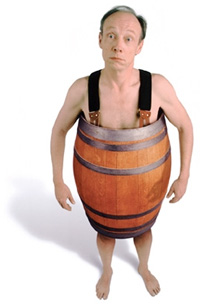
barrel-man

What’s this got to do with beer, apart from driving us all to drink more of it? Well, that’s really the question. Will this economic downturn, if it keeps spiraling downward like the cynic in me believes it will, also effect beer, even though it’s been largely recession-proof in the recent past? If the situation continues to worsen and we enter a full-fledged depression, will that change the game? During the great depression, beer was essentially out of the equation — at least legally — though it did help bring us out of it when FDR urged the repeal of Prohibition to boost morale and stimulate the economy. As the 75th anniversary of its repeal is less than three weeks away, it’s worth noting that it was economics that got us into prohibition and economics that got us out again. See, for example, page 438 if the Encyclopedia of Public Choice in Google Books. There’s also a nice overview of this in Reason magazine, from July 2007, entitled the Politics of Prohibition.

Prior to the creation in 1913 of the national income tax, about a third of Uncle Sam’s annual revenue came from liquor taxes. (The bulk of Uncle Sam’s revenues came from customs duties.) Not so after 1913. Especially after the income tax surprised politicians during World War I with its incredible ability to rake in tax revenue, the importance of liquor taxation fell precipitously.

By 1920, the income tax supplied two-thirds of Uncle Sam’s revenues and nine times more revenue than was then supplied by liquor taxes and customs duties combined. In research that I did with University of Michigan law professor Adam Pritchard, we found that bulging income-tax revenues made it possible for Congress finally to give in to the decades-old movement for alcohol prohibition.

Before the income tax, Congress effectively ignored such calls because to prohibit alcohol sales then would have hit Congress hard in the place it guards most zealously: its purse. But once a new and much more intoxicating source of revenue was discovered, the cost to politicians of pandering to the puritans and other anti-liquor lobbies dramatically fell.

Prohibition was launched.

But then a little thing called the Great Depression came along and lots and lots of people lost their jobs, meaning that the amount of income tax the federal government could collect also fell, initially about 15%. Three years into the Great Depression, income tax revenue dropped another 37% to 46% below pre-depression revenues and by 1933 they were 60% lower.

And so Congress (with the urging of anti-prohibitionists) was able to float the 21st Amendment successfully because they needed the money that alcohol taxes provided to their bottom line. One leading member of of the House of Representatives said at the time that he believed that without the economic necessity brought about the Great Depression that it would likely have taken at least another 10 years to repeal Prohibition, despite its obvious failure and unintended negative consequences.

Two things that bear watching in the present, as the weeks and months unfold, is what the economy does and what happens to the taxes on beer. Keeping in mind what’s happened in the past and especially with excise taxes, it seems to me these will be the most important factors that will affect how beer does through this recession. It may be that people do indeed keeping buying and drinking beer at the same rate, which would mean essentially that beer is indeed not affected at all by the economy (and it’s possibly even enhanced by a dip, such as if consumers forgo more expensive pleasures and instead choose beer when they “treat” themselves).

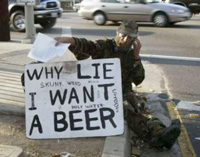
why-lie

Or it could come to pass that the macro beers’ sales remain flat and craft beer sales begin to slow because people have less money and the price has gone up, due to a rise in energy costs and raw ingredients. It’s not happened yet, but there are signs that such a scenario may be on the horizon.

If the tax assault on the alcohol industry is successful in California, it will almost certainly spread to at least 38 other states. That will raise the price of beer across the board, further depressing the beer economy, if the not the whole shebang. It seems a little bit odd to me that politicians are entertaining budget fixes that essentially target specific industries that are already experiencing difficulties. What good does it do to extract another pound of flesh if the body then dies and you can’t get anything from it anymore? Not only are other segments of the economy not having higher taxes levied on them, but they’re actually being given money to insure that they don’t go out of business and more jobs aren’t lost. Not so with the alcohol industry. At a time when any sustainable industry should be seen as a positive in our very fragile economy, politicians (with neo-prohibitionists whispering in their ear) are doing just that; trying to make it more difficult for the alcohol industry to function. To say that seems short-sighted is an understatement.

The beer industry alone (again not including wine and spirits) supports over 1.7 million jobs and pumps around $189 billion into our economy, generating $25 billion in business and personal taxes and another $11.5 billion in consumption taxes. If history is any guide, that should mean politicians should respect our contribution.

And while less tangible and quantifiable, the contributions small breweries make is not just economic, but they are also good citizens of their communities, giving charitably back into them, spending much of their money locally (where possible) and running their businesses in a green, sustainable fashion. Harm them, and you harm the communities that support them, too.

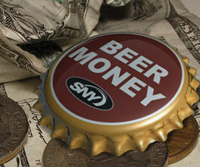
beer-money-crown

Our economy today is arguably more complicated than before and during the Great Depression, so it’s obviously very hard to predict what might happen in the future. After the last depression, many social nets were put in place in an effort to prevent such a widespread economic situation from ever occurring again and to protect citizens from feeling its effects as acutely. FDR’s New Deal included programs to both help people out of their condition and also to keep it from happening again. There was opposition from conservative fronts while it was going on, but the problems were too great to ignore. In fact, the backlash of the New Deal is probably the neo-conservative movement of today, which has done so much to harm to our society lately.

For an excellent account of the politics of it, read Nobel prize-winning economist Paul Krugman’s The Conscious of a Liberal. In it he discusses conservative opposition to the New Deal programs and how many of them have been effectively chipped away at or removed completely by neo-cons — what he calls “movement conservatism” — beginning in the late 1970s, though the seeds were being sewn as far back as the 1950s.

I vividly recall growing up that all of my grandparents — and people of their same generation — were still very much effected by their experiences during the Great Depression. The notions of frugality, saving and near miserliness that meant survival back then continued to be factors they considered in making decisions some fifty years later. I had two dotty great aunts (sisters of my maternal grandmother) that always embarrassed me whenever we’d go out for a meal. One would steal as many sugar packets and other condiments as she could fit in her purse unseen and the other would carefully take as many as had been unused by our group. In other words, if there were five for lunch and one used a sugar packet in their coffee, she would take four sugar packets believing she was entitled to them since they went unused by the lunch party. That these otherwise normal, and by all accounts pretty well-off, people were so frugal to the point of being cheap was not anomalous to my family. I saw this behavior all the time. Ask me the next time you see me about the orange juice in my wife’s grandmother’s refrigerator when we visited her during our honeymoon. The difficulties of the Great Depression left a deep impression on an entire generation.

Is the beer industry’s glass half full or half empty? I admit that the prospect of another protracted depression is something that keeps me up at night. That so many of the protections that were intended to protect the economy and its citizens have been weakened or are gone altogether is a further source of concern. So is the fact that we may already be in one but not know it because we can’t define it and talking heads don’t want us to panic doesn’t help, either. Even if I don’t accept Morris Berman’s assertion (though I do — sigh) that we’ve entered a new Dark Ages (in his mesmerizingly depressing Twilight of American Culture) it’s hard to ignore that as a bully and the lone remaining Superpower that most nations view us less charitably than they did eight years ago. I’d like to believe our new President will be able to reverse our course, but I’m not sure the ship of state can be turned in time to miss the iceberg (that’s what happens to your metaphors when you have a 7-year old obsessed by the Titanic). While I’m cautiously “hopeful,” I’m also enough of a realist to know that he won’t be ale to walk into the oval office January 20 and make everything all better.

half-full

The Republicans will undoubtedly fight tooth and nail every step of the way and the Democrats in Congress continue to show what pussies they really are (as evidenced by their abject failure to remove Touché Turtle … er, Joe Lieberman, from his committee chair or the Democratic Caucus). So in my mind that’s a lot to overcome and very little in the way of seeing how to do it. That’s for the economy at large. What about the micro-economy that is beer? On the one hand, the industry’s been recession-proof for quite some time. But the game appears to be changing, possibly worsening, so that may not hold true if the economy continues to fall like a snowball rolling down a hill. Politicians should respect beers’ contribution to the economy in terms of jobs, tax revenue and just generating cash, but there are also neo-prohibitionist agendas that are seizing this moment in history as an opportunity to kick us while we’re down. These interests are pressing hard to raise the state excise tax and state by state promote other damaging legislation. Now is not the time to be apathetic or ignorant of how their efforts might effect all of us. Now more than ever, we have to be as vigilant as they are unceasing in their attacks. I don’t know what Beer in the Time of Recession will be like, but it’s probably going to be a bumpy ride. Strap in. Grab a beer. Pay attention. And perhaps most importantly, continue to support your local brewery as long as you can.

Filed Under: Beers, Editorial, Politics & Law Tagged With: Economics

Abe Lincoln on Beer & Politics

October 28, 2008 By Jay Brooks

lincoln-logo
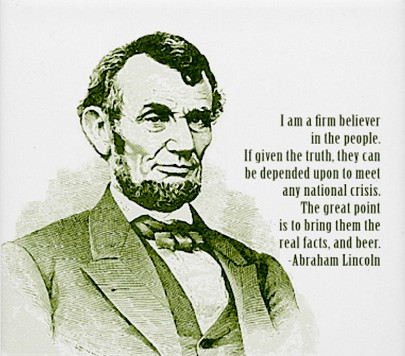
With a week to go before the U.S. Presidential election November 4, I thought I’d share one of my favorite quotes by our 16th President: Abraham Lincoln.

“I am a firm believer in the people. If given the truth, they can be depended upon to meet any national crisis. The great point is to bring them the real facts, and beer.”

          — Abraham Lincoln

Unless I hear otherwise from Bob Skilnik, I’m going to assume this is a quote that Honest Abe actually either uttered or wrote down on the back of an envelope. Though Lincoln is now generally reputed to have been a teetotaler, in his time some accounts do contradict that and say that on occasion he did drink in moderation. “Reliable testimony indicates that Lincoln was a light user of beverage alcohol.”

He was certainly pragmatic enough to understand beer’s importance to the economy, especially when during his first term he turned to the beer industry, among others, to help finance the Civil War. In Brewing Battles, by Amy Mittleman, she details how in July of 1861, the US Congress (or a least what was left of it in the north) levied the first income tax on the remaining states in order to raise money to fight the war with the southern states. By the end of the year, Congress realized it wasn’t enough and they needed a way to raise more funds for the war. In a special session in December 1861, Congress reviewed a request by the Secretary of the Treasury, Salmon P. Chase, to raise the percentage of income tax slightly and levy excise taxes on a number of goods, including beer, distilled spirits, cotton, tobacco, carriages (the automobiles of the day), yachts, pool tables and even playing cards, to name a few. The amendments passed, and Lincoln signed them into law July 1, 1862. They took effect September 1. Several weeks later, the first trade organization of brewers, the United States Brewers Association (USBA), was founded in New York. They held their first national convention in 1863 and elected Frederick Lauer as their first president. Lauer owned a brewery in Reading, Pennsylvania, my home town, and I remember the statue of him in City Park as a child. It was the first statue erected in Reading. But I digress.

lincoln-quote

Excise taxes are a “type of tax charged on goods produced within the country (as opposed to customs duties, charged on goods from outside the country).” The excise taxes were intended to be “temporary” but it was the beginning of temperance sentiments in the nation, and many people objected to alcohol on moral grounds. In the decade following the war, most were rescinded, but the taxes on alcohol and tobacco were the only two to remain in force, and in fact are still in effect today.

The only reason these excise taxes remained after the Civil War was primarily on moral grounds, coming from prohibitionist organizations. And I think that’s still relevant in 2008 because today’s neo-prohibitionists are also trying to use a moral sledgehammer to raise taxes on alcohol in an effort to put beer companies out of business and/or bring about another national prohibition. In state legislatures in many states, neo-prohibitionist groups are trying a variety of tactics to further their agenda. Usually it’s couched in propaganda that pretends they’re concerned for the children, or people’s health or some other hollow claim that hides their true aims.

I still find the argument strange that there should be higher taxes on products some people find morally objectionable. I find soda morally objectionable because it’s so unhealthy that it’s contributing to a nation of obese kids (and adults) — not to mention that beer in moderation is much healthier for you. But I wouldn’t argue pop should have an excise tax. The very concept of a so-called “sin” tax seems antithetical to the separation of church and state. Sin is a religious concept, and should play no role whatsoever in our government. Making people pay a higher price for goods that other people don’t like seems not only a little cruel, but also contrary to freedom of religion, because those are the morals people are using to deny people getting (or making prohibitively expensive) certain goods that not everyone agrees are sins. By using one set of morals as the basis for a particular law (in this case an excise tax) it ignores other sets of morals that differ from the prevailing one. That’s how a theocracy works, and we’re not one yet, despite recent efforts to make religion a central issue in government.

What would Abe Lincoln have thought about all this? Well, first I think he’d be horrified that for the most part the “truth” he felt the people needed to “meet any national crisis” is not much a part of our mainstream media nor of the political process in particular. There are very few “real facts” in play. What there is, is propaganda and the manipulation of quasi-factual information distorted to suit an agenda. All that’s left, really, is the beer.

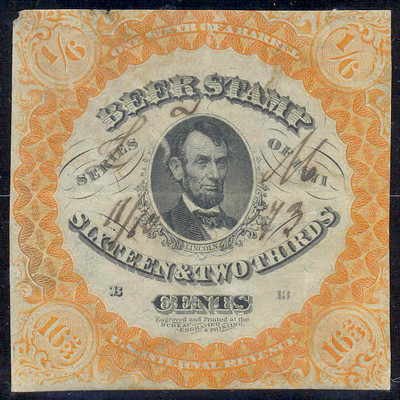
lincoln-beer-stamp

This beer stamp for 16 2/3 cents, to pay the tax on a 1/6 barrel of beer, depicting Abraham Lincoln, is believed to be from 1871.

Filed Under: Beers, Editorial, Politics & Law Tagged With: Prohibitionists, Taxes

Agreement Reached For InBev Takeover Of Anheuser-Busch

July 13, 2008 By Jay Brooks

Well, folks, it’s all over. The deed is done, indeed. The deal for InBev to acquire Anheuser-Busch has been agreed upon in principle, for nearly $50 billion. It’s not really over, of course, because it still has to wind its way through the federal approval process. But for all intents and purposes, it’s probably just a matter of time now that the two parties have reached an accord.

The Wall Street Journal, Reuters, and the Financial Times are all now reporting that the parties have agreed to a deal. The new entity’s board will contain two A-B people, most likely including August A. Busch IV. Sadly, they decided to ignore my suggestion of calling the new company InBusch and went instead with the relatively boring and far too long name, Anheuser-Busch InBev.


Filed Under: Editorial, Politics & Law Tagged With: Business, Ingredients, International, Malt, National

Beer For Easter

March 23, 2008 By Jay Brooks

easter
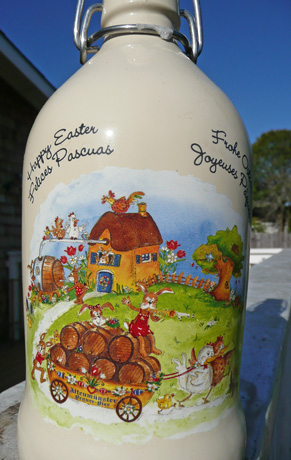
On St. Patrick’s Day a few years ago I wrote about how many American holidays have been ruined by by overzealous marketing campaigns by the big alcohol companies, suggesting that there were very few not tainted. Well, Easter is one of those that has few beer associations. Less than a couple dozen breweries, most from Europe, make a special beer for Easter.

sailer-jubelfest

Given our track record for trying to ban labels for Christmas beers because they might also appeal to kids, it’s hardly surprising that so few of these beers make it to our shores. I’m frankly somewhat surprised this old bottle of Jubelfest from the now defunckt Privatbrauerei Franz Joseph Sailer in Germany I pulled off of my shelf managed to get label approval. Those are cartoons of bunnies on the label for chrissakes, children might pick one of these up and — gasp — look at it.

kingtaste08-08

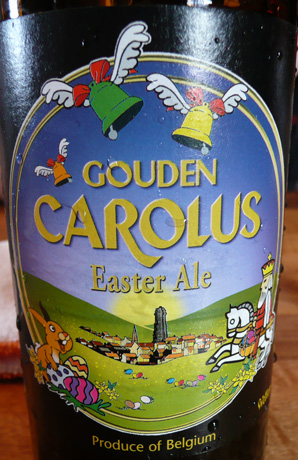
Goudon Carolus Easter Ale, a Belgian beer that I sampled at the annual Keene Tasting in Seattlefive years ago. This one, so far as I know, has not been imported to the U.S. (at least not with this label), and I suspect if they even tried it would make the average neo-prohibitionist’s head spin. You can at least buy the beer in Ontario, but because of the asinine regulation that “graphics that might be appealing to children” are forbidden, with a censorship sticker covering the bunny in the lower left-hand corner. You can read all about it by Greg Clow from Toronto’s beer, beats & bites post entitled LCBO: Let’s Censor Bunnies, OK? . I guess there’s some consolation in knowing we’re not the only idiots when it comes to these things.

Filed Under: Beers, Editorial, Just For Fun, Politics & Law Tagged With: Holidays

Losing Their Share of Mind

February 9, 2008 By Jay Brooks

trkanim
Anheuser-Busch’s “100% share of mind” program is legendary. It started ten years ago, when A-B began offering incentives to their distributors so they’d care only about A-B products. Though I assume they never said so — wink, wink — they encouraged distributors to drop non-A-B brands and concentrate on only the important brands. And at that time, such was A-B’s market strength that many distributors did in fact tow the line. But lately as domestic sales have been static or slipping, distributors are adding non-Bud brands to their portfolios to stay at the same level of profitability. The Associated Press had an article last week about this recent phenomenon called Beer Distributors Want More Than One Best Bud.

As the article points out:

For consumers, it means greater choice at their local bars and liquor stores. Wall Street analysts say the movement signals a weakening of the St. Louis brewer’s clout in the marketplace, as small-batch “craft” beers and imports, as well as wine and spirits, wrest market share from mass-market brews like Budweiser.

Many of the 560 nationwide A-B distributors realized that as craft beer is increasingly in demand, that their competitors were having the last laugh, because they were free to pick up whatever brands they wanted and believed they could be successful selling.

While IRI general manager Bump Williams described the program as a “great business model,” not everybody was convinced that it was fair. The DOJ launched an investigation into anti-trust violations, but later abandoned it. Naturally, A-B continues to push the program with such statements as “[w]e want their efforts and focus aligned with ours.” Well, who wouldn’t? But that isn’t how the world works nor is it how it should work. It’s schemes like this one that gave A-B its reputation as a bully. And it appears that they still have that mindset. Again, from the AP article.

Still, Anheuser wasn’t happy with the way it learned of the Tennessee distributors’ decision. “We found out later (in their decision-making process) than we would have liked,” says Mr. Peacock. “When we don’t get early communication, it rubs us wrong.”

Now why would one business be rubbed the wrong way if another, supposedly separate and independent company, didn’t consult with them before making a business decision? The best illustration of this mindset comes from more than a decade ago, with the former head of A-B, August Busch III, sitting around a conference table at their Hawaiian distributor petulantly throwing bottles of craft beer against the wall, smashing them to bits, to show his displeasure with a separate business having the unmitigated gall to sell something he can’t profit from. It’s that arrogance, borne of being the market leader for such a long time, that leads a company to believe that whatever is in their best interest is in everyone else’s best interests, too.

But as the market changes, that’s becoming less and less tenable. Distributors are realizing that to remain successful, they have to stock brands that their customers want, regardless of who makes them. That only makes good business sense. Some industry analysts, like my friend Harry Schuhmacher who runs Beer Business Daily, are surprised that it has taken so long for this to begin happening. As he puts it. “It really hasn’t been a widespread national jailbreak.” But that’s the hold that A-B has traditionally had over its distributors. Now that it’s finally beginning to erode, it will be interesting to see what percentage share of mind Bud is left with.

Filed Under: Breweries, Editorial, News, Politics & Law Tagged With: Anheuser-Busch, Beer Distributors, Big Brewers, Business

« Previous Page
Next Page »

Find Something

Northern California Breweries

Please consider purchasing my latest book, California Breweries North, available from Amazon, or ask for it at your local bookstore.

Recent Comments

  • Bob Paolino on Beer Birthday: Grant Johnston
  • Gambrinus on Historic Beer Birthday: A.J. Houghton
  • Ernie Dewing on Historic Beer Birthday: Charles William Bergner 
  • Steve 'Pudgy' De Rose on Historic Beer Birthday: Jacob Schmidt
  • Jay Brooks on Beer Birthday: Bill Owens

Recent Posts

  • Beer In Ads #5225: Fabled Ambrosia Of The Ancients April 17, 2026
  • Historic Beer Birthday: William O. Poth April 17, 2026
  • Beer In Ads #5224: Harvard Bock Beer April 16, 2026
  • Historic Beer Birthday: William H. Biner April 16, 2026
  • Historic Beer Birthday: Alan Eames April 16, 2026

BBB Archives

Feedback

Head Quarter
This site is hosted and maintained by H25Q.dev. Any questions or comments for the webmaster can be directed here.