Brookston Beer Bulletin

Jay R. Brooks on Beer

  • Home
  • About
  • Editorial
  • Birthdays
  • Art & Beer

Socialize

  • Dribbble
  • Email
  • Facebook
  • Flickr
  • GitHub
  • Instagram
  • LinkedIn
  • Pinterest
  • RSS
  • Twitter
  • YouTube

Powered by Genesis

Session #48: Bottle, Can, Keg or Cask?

February 4, 2011 By Jay Brooks

beer-bottle-brown beer-can-beer keg cask-firkin
Our 48th Session is hosted by Simon Johnson of the Reluctant Scooper. He’s chosen as his topic the age-old question about which package is best: “Cask, Keg, Can, Bottle?.”

The method of beer dispense often raises the hackles of even the most seasoned beer drinker. Some evangilise about living, breathing cask as being the one true way. Others heartily support the pressurised keg. The humble tinny has its fans. Lovers of bottled beer, either conditioned or pasturised, can be equally voiciferous.

Perhaps you think that one method magnifiies a beer’s impact. Perhaps you won’t try a beer if it’s dispensed in a way you don’t agree with. Perhaps you’ve tried one beer that’s been dispensed every which way.

The question is simple but your answer may not be: Cask, Keg, Can, Bottle: Does dispense matter
session_logo_all_text_200

I’m not necessarily a champion of any one beer delivery system over the rest. It seems to me that each contributes something to the final product, the beer. And while I applaud CAMRA’s efforts, especially early on, they seem to be stuck in the past these days continuing to promote the idea that cask beer is the only beer, whereas many forward-thinking British brewers are making great beer that’s kegged and bottled. I personally feel they should embrace any beer that tastes good and lose their preoccupation with one delivery system. (I have been a member of CAMRA, but my membership is currently lapsed.) I should also say that’s only how CAMRA seems to me from 5,000 miles away, it’s just my perception. I could be totally off base on that.

keg-wooden That being said, I must confess a weakness for cask beer, and generally order a beer on cask or in a firkin if a bar offers one. But that has more to do with wanting to encourage every bar, or at least all the good ones, to keep at least some cask or firkin beer on their menu. That, and cask beer in the U.S. is still uncommon enough that I still get excited when I discover that a new place has some. I suspect if I lived in England where it is far more common, that my choices might be different. Certainly whenever I visit the UK I rarely order beer that’s not on cask, unless it’s something special that’s not available on cask, as is increasingly the case from small artisanal British and Scottish brewers.

I really do love cask beer, especially when comparing the same beer on cask and on keg or bottled. While many people complain about cask beer seeming flat, I think the lack of carbonation allows you to taste more of the flavors of the beer that are often masked by the CO2 in non-cask beer.

keg Which brings us to kegs, which for many, many beers work just fine, as far as I’m confirmed. Certainly nitrogen kegs have a smooth taste as a generality and many regular CO2 kegs have that bubbly carbonation that for some beers works quite well, many lager styles for example seem to me to be improved by the carbonation, which give them a cleanliness of sorts — scrubbing bubbles is how I often think of them.

beer-bottle-brown Bottles, of course, allow us to be able to drink many more beers from around the country and the world because they make it possible for the beer to travel farther and last longer. Of course, clear bottles and green bottles pervert those advantages with new problems, but brown seems to do a pretty good job. I once read that red bottles would actually offer the most UV light protection, but apparently they’re prohibitively expensive for some reason (or perhaps it’s just a matter of little or no demand?). I’ve actually only seen one red bottle, which was a specialty beer I picked up at the Trumer Brauerei in Salzburg, Austria. I’ve also seen white and blue bottles, too, but have no idea how they compare.

Then, of course, there’s bottle-conditioned beers, with live yeast in them that continue to ferment in the bottle. For me, they’re the preferred bottle for many, if not, most styles of beer. Interestingly, the Sierra Nevada Pale Ale in bottles — which is bottle-conditioned — uses a slightly different recipe for their kegged pale ale, and have been experimenting with essentially a keg-conditioned version that they’re hoping will more closely approximate the bottled version.

growler-2 Of course, the question also leaves out the hybrid package: growlers. Growlers are essentially a hand-bottled keg or cask beer that you can take home with you, but you have only a day or two in which to drink it. So it’s not exactly the best of both worlds, but it is a great way to try a draft-only beer in another setting.

beer-can-beer Cans are the wild card, I think. For so long, they were dismissed as a package. Back in the early days, brewers and other beer folk (myself included) hailed the brown beer bottle as the package for craft beer. So convincing was the argument at the time that I think it’s actually slowed the acceptance of craft beer in cans. Because the issues of beer in cans — specifically metal turbidity, which is metal leeching into the beer — have been largely solved. And beyond that, cans have many advantages over bottles. I’ve been involved in several side-by-side tastings of canned vs. kegged beer and the consensus in every case has been that no discernible difference can be detected. Is anyone yet doing a can-conditioned beer?

In the end, yes, I think the package does matter, but not to the point where I’d ever pass on a beer on that basis alone. Ultimately, it’s what the beer tastes like that’s most important. The package may determine that to some extent, and some do a better job with certain beers, but enough certainly seem suited to their primary package for it not to matter. As long as it ends up in my glass, I’m going to drink it, and I’ll probably enjoy it, too.

Filed Under: Beers, Editorial, The Session Tagged With: Bottles, Cans, Cask, Kegs

Next Session Opens A Can, Bottle, Cask Or Keg

January 18, 2011 By Jay Brooks

session-the
Our 48th Session will be hosted by Simon Johnson of the Reluctant Scooper. His topic is “Cask, Keg, Can, Bottle?,” or as he describes the question:

The method of beer dispense often raises the hackles of even the most seasoned beer drinker. Some evangilise about living, breathing cask as being the one true way. Others heartily support the pressurised keg. The humble tinny has its fans. Lovers of bottled beer, either conditioned or pasturised, can be equally voiciferous.

Perhaps you think that one method magnifiies a beer’s impact. Perhaps you won’t try a beer if it’s dispensed in a way you don’t agree with. Perhaps you’ve tried one beer that’s been dispensed every which way.

The question is simple but your answer may not be: Cask, Keg, Can, Bottle: Does dispense matter?

So tap a keg, pull a pint, pop a cap or open a can of whoop-ass on the next Session on Friday, February 4.

Filed Under: Beers, The Session Tagged With: Announcements, Bottles, Cans, Kegs, Packaging

Next Session Gets Things Cooking

December 21, 2010 By Jay Brooks

session-the
Our 47th Session will be hosted by David Jensen of Beer 47. His topic is “Cooking With Beer,” or as he describes it:

We all know beer is great for drinking but what about using it as an ingredient in cooking? Wine is used as an ingredient for numerous dishes and recipes yet beer seems to be under utilized in cooking. However, with the rise in popularity of craft beer and advocacy from the likes of The Homebrew Chef, I think this trend is slowly changing. For the month of January, Beer 47 will be hosting The Session #47 and encouraging beer bloggers from all over the internet to discuss Cooking with Beer.

Despite my claim that beer is under-utilized there are definitely some uses of beer in cuisine such as beer-can-chicken, beer bread, beer brats, and beer battered deep-fried foods. What else have you made or tasted made with beer?

Since the topic of Cooking with Beer is broad, I invite you to share any experience that you have had with beer as an ingredient in food or for cooking. I only ask that you be sure to include other dishes besides (or in addition to) dessert, the reason being that we have already discussed Beer Desserts for The Session #30. You don’t need to exclude dessert, just please do not limit your discussion to dessert only. If you need some more inspiration for this topic, here are some more ideas:

  • Find a recipe that includes beer as an ingredient, share the recipe, cook it, and tell us the results.
  • Talk about a meal prepared by somebody else (by a friend or at a restaurant) that used beer as an ingredient.
  • What is the best dish you’ve had made with beer? The worst?What are some of the challenges in cooking with beer whether it be a savory or a sweet dish?
  • What does beer add to a dish?

So get cooking and whip something up for the next Session on Friday, January 7.

Filed Under: Food & Beer, The Session Tagged With: Announcements

Session #46: An Unexpected Discovery

December 3, 2010 By Jay Brooks

treasure-chest
Our 46th Session is hosted by Mike R. Lynch of Burgers and Brews. For his topic, he chose “An Unexpected Discovery: Finding Great Beer in the Last Place You’d Look,” or as he describes it:

I recently drove out to Colorado for a concert, and realized this was a perfect opportunity to stop at as many “beer destinations” as I could. I researched, plotted routes, looked at maps, and generally planned the entire trip around beer. What I was surprised to find was that despite all the amazing stops I planned, one of the best beer experiences of the trip was completely accidental. I found great beer in the last place I thought to look for it.

Has this happened to you? Maybe you stumbled upon a no-name brewpub somewhere and found the perfect pale ale. Maybe, buried in the back of your local beer store, you found a dusty bottle of rare barleywine. Perhaps a friend turned you on to a beer that changed your mind about a brewery or a style. Write about a beer experience that took you by surprise.

session_logo_all_text_200

Recently I was asked to write a profile of Michael Jackson for one of the newer beer magazines and that got to me thinking about Michael and his legacy. I first met him at GABF the first time I went to it, in 1992. The book I’d written with a friend of mine, “The Bars of Santa Clara County: A Beer Drinker’s Guide to Silicon Valley,” had just been published, and I treated myself with a trip to Colorado for the festival. That was the beginning of a treasured friendship that lasted many years. But I actually “discovered” — and rather unexpectedly I might add — Jackson’s writing many years before that, when I was living, or rather stationed, in New York City in the late 1970s.

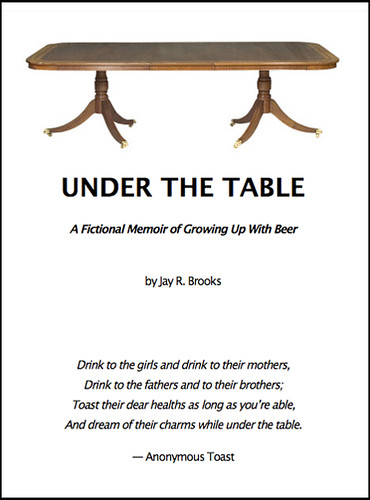
A few years ago, for NaNoWriMo I wrote a semi-fictional memoir of growing up with beer, Under the Table, the rough draft of which is still online.

under-the-table

In chapter 23 (of 24 — it was a case of chapters) entitled Jazz in the Dark, I reminisced about my time playing with an Army band in New York, and how it was during that time that I discovered beer that was different (at least to the kind I’d grown up drinking) while going to jazz clubs in Manhattan. Trying to learn more about these and the other new-found beers we were drinking, I also discovered Michael Jackson’s book, the World Guide to Beer during this same time period.

Here’s an excerpt from Jazz in the Dark:

We went to the big venues, of course, like the Village Vanguard, Sweet Basil, the Knitting Factory, the 55 Bar but smaller ones, too, all over the East Village and the lower east side. And one thing you could count on in those days was that they carried Bass Ale and Guinness. It seems odd to think of both of those beers as new, but they were to me. Both were very different from my usual choices and I loved the way they tasted. Many of the jazz clubs did not have much in the way of food but often had trays of cheese, bread and fruit (usually sliced apples) which went with both Bass and Guinness quite well. It became our standard jazz club diet.

—

But while music was the reason I was there, it was the discovery of all this new beer that really made the experience sing. With Bass and Guinness, both beers had fuller flavors and tasted so different from what I was used to that it made me wonder what else was out there that I also didn’t know about.

About that same time, we discovered a bar in the East Village, Brewsky’s Beer Bar. It was a little hole-in-the-wall on 7th Avenue, but it had, for its day, a great selection of imported beers. I think the owner was Ukranian, or something like that, and there were a lot of beers from central and eastern Europe. There were dozens of similar-tasting lagers and pilsners with enchanting labels I couldn’t read. But it was the darker beers that really stood out, simply because they were so different from what I’d grown up drinking. For example, I recall Dortmunder Union vividly as a beer with distinct flavors unlike any other I’d ever tried.

I liked most of what I tried, though at the time I was drawn to the English ales, I think because they tasted so much different to me than what I was used to drinking. I was certainly hooked. I already had a somewhat obsessive love affair going with beer, but to find out that it was so much richer and more varied than I’d realized was something of an epiphany.

I longed to know more about what I was tasting, but there was scant little information available. Happily, that changed one day at the end of another long month. In the military, we were paid twice a month. I set aside about $100, a sizable portion of my paycheck in those days, for what I referred to as spiritual growth, usually books and music. With the Army’s hurry up and wait protocols, we usually arrived at our gigs hours in advance, so there was a lot of down time. I read like a fiend in those days, finishing books every couple of days.

During one of these post-payday trips to a bookstore, I happened upon Michael Jackson’s World Guide to Beer, which had been published the year before. I almost didn’t pick it up, because the garish gold and green cover had a large Miller ad in the center. But then I spied the red triangle from Bass and flipped through it. Needless to say, I bought it on the spot. Finally, I had some context to what I’d been drinking and was able to organize my head around the various tastes I’d been trying so chaotically.

Looking back, it seems odd that there was so little available information on beer and, compared with today, how truly ignorant I was. And it wasn’t just me. Practically everybody I knew had little or no idea about beer. The regional and national breweries at the time made no effort to educate consumers. Jack MacAuliffe founded New Albion Brewery in California two years before this, but it might as well have been located on the Moon for all the impact it had for me in New York. We had no concept of beer styles. I hadn’t the foggiest notion of where beer color came from, or why so many of the new beers I was trying tasted different whereas most of the beers I knew locally tasted so much the same. I was only vaguely aware that ales and lagers were fundamentally different, but didn’t really understand why.

So Jackson’s book was a great big wallop, a slap in the face, but the good kind. The welcome kind where afterward you say, “thanks, I needed that.” It opened up a whole new world for me, even though it would be several years and a cross-country move before the ideas that took root that year began to flower. But that was the beginning: the first awkward sips that set me on my way. And I have jazz to thank for it.

Coincidentally enough, Michael Jackson was also a jazz lover and years later it was a favorite topic of conversation whenever I saw him.

In the intervening 30+ years since those first unexpected beer experiences when I lived in New York, the journey I started then has led me to one unexpected discovery after another. To the question Mike poses in the Session topic, “has this happened to you?,” I can only say it’s been happening nonstop for over thirty years. It’s that very quality that keeps life fresh year after year as a beer lover. Because I’m not much of a ticker, I have no idea how many different beers I’ve tried over those years, but I imagine it’s a fairly big number. Whatever the amount, it’s certainly been satisfying.

It’s to the point now that I rarely despair, because I usually end up finding good beer in the last place I’d look, and almost every time. Hopefully, that’s a sign of the times but whatever the reason, because I still remember when good beer was a rarity, I treat each discovery as the treasure that it is. Expect the unexpected, that’s my motto.

treasurechest

Filed Under: Beers, Just For Fun, The Session Tagged With: History, Literature, New York

Next Session For The Accidental Tourist

November 22, 2010 By Jay Brooks

session-the
Our 46th Session will be hosted by Mike R. Lynch of Burgers and Brews. His topic is “An Unexpected Discovery: Finding Great Beer in the Last Place You’d Look,” or as he describes it:

I recently drove out to Colorado for a concert, and realized this was a perfect opportunity to stop at as many “beer destinations” as I could. I researched, plotted routes, looked at maps, and generally planned the entire trip around beer. What I was surprised to find was that despite all the amazing stops I planned, one of the best beer experiences of the trip was completely accidental. I found great beer in the last place I thought to look for it.

Has this happened to you? Maybe you stumbled upon a no-name brewpub somewhere and found the perfect pale ale. Maybe, buried in the back of your local beer store, you found a dusty bottle of rare barleywine. Perhaps a friend turned you on to a beer that changed your mind about a brewery or a style. Write about a beer experience that took you by surprise.

So see if you can get off your armchair and make your own unexpected discovery for the next Session on Friday, December 3.

Filed Under: Breweries, The Session Tagged With: Announcements, Travel

Next Session To Clear Up Wheat Beers

October 4, 2010 By Jay Brooks

session-the
Our 45th Session will be hosted by Bruce Tichnor, who runs the Canadian BeerTaster.ca. He’s taking us back to our roots, to spend a cloudy afternoon with wheat beers, or has he describes it:

We wanted to get back closer to the roots of the Session and pick a topic which was simple and yet gives a wide range of interpretations so we chose, simply (or perhaps not so simply), Wheat Beers.
Feel free to take this topic in any direction you like, specific reviews, historical information, or any other twist you’d like to use. Wheat beers are a pretty wide topic and actually cover German style Weizen, Heffe Weizen, etc. along with Belgian style Witbier and even Flavoured Wheat beers.

There are very few guidelines here, just have some fun drinking Wheat Beers in the fall instead of the summer.

So see if you can clear up the cloudy subject of wheat beers with your own post for the next Session, on Friday, November 5.

Filed Under: Beers, Just For Fun, News, The Session Tagged With: Announcements, Canada

Session #44: Frankenstein’s Beers

October 1, 2010 By Jay Brooks

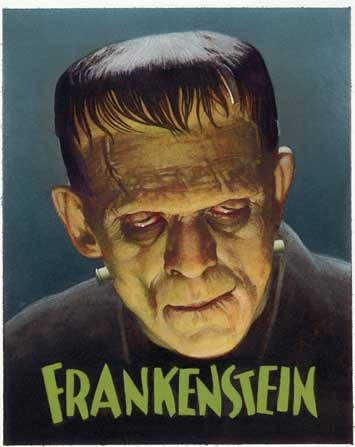
frankenstein-march
Our 44th Session is an appropriately scary one, with Halloween at the end of the month. The Session is hosted by Ashley Routson a.k.a. The Beer Wench. She’s chosen “Frankenstein Beers” as her topic, which Ashley likens to Frankenstein’s monster, a creation that was “constructed of human parts and various other inanimate objects,” defying nature’s laws and ultimately “unlike anything the world had ever seen before.” She continues.

Many craft brewers are like Frankenstein. They have become mad scientists obsessed with defying the laws of brewing and creating beers that transcend style guidelines. These “Frankenstein Beers” challenge the way people perceive beer. They are freaks of nature — big, bold and intense. The ingredients resemble those of a beer and the brewing process might appear to be normal, but some aspects of the entire experience are experimental, unorthodox and insane.

An altercation with these beers produces confusion in the eye of the taster … is it a beer, or a monster?

“I do know that for the sympathy of one living being, I would make peace with all. I have love in me the likes of which you can scarcely imagine and rage the likes of which you would not believe. If I cannot satisfy the one, I will indulge the other.” — The Monster.

Your mission, should you choose to accept it, is to write a blog post on “Frankenstein Beers.” There are no rules about how to write about this topic — feel free to highlight a Frankenstein brewer, brewery, beer tasting notes … or just your opinions on the concept.

session_logo_all_text_200

To me, it’s not the beers that have become like Frankenstein, but the brewers themselves. In the same way that many people often mistake Dr. Frankenstein’s monster for Frankenstein himself, his creation actually had no name and was always referred to euphemistically in the original novel. Although once, in a letter, author Mary Shelley referred to Frankenstein’s monster as “Adam.” Perhaps that means Alan Sprints’ Hair of the Dog Adambier is the original Frankenstein beer?

A Modern Prometheus. Prometheus was the Titan who stole fire from Zeus and gave it to mankind. “Zeus then punished him for his crime by having him bound to a rock while a great eagle ate his liver every day only to have it grow back to be eaten again the next day.” Modern brewers also damage our livers each day, but luckily it’s still intact when we wake up with only a hangover the next day.

But Frankenstein is also considered an allegory for the dangers of messing with nature and the idea that science can be bad, a common theme at the dawn of the industrial revolution. But Frankenstein’s monster only became so monstrous because his creator couldn’t bear the thought of being his father and banished him. The monster reacted badly to being abandoned along with people not being able to see the good inside of him, his ugly exterior was all they could see. That’s what caused him to become violent and seek revenge on Dr. Frankenstein. His creation could have been quite positive had it not been for the way he was treated. And so Frankenstein is considered a cautionary tale, though it really didn’t have to turn out that way. And it’s for that reason that I consider the notion of Frankenstein beers as a very positive development in the world of brewing.

In the last thirty years of craft beer, brewers as confident and skilled as Dr. Frankenstein eschewed traditional styles either by building on them or simply ignoring them to create their own monster beers. But they loved them and nurtured them, and never abandoned them. And I think that’s why we love them, too. No pitchforks necessary. The American craft beer scene, and more recently the world beer scene, has become a landscape filled with Frankenstein-like beers, unique and unusual and beloved. Unlike Mary Shelley’s Frankenstein, today’s monster beers are quite wonderful and prove the science of brewing in a post-industrial age doesn’t pervert nature but raises it to an art form. To me, the best of today’s beers can be described as a balance between art and science. Some breweries are overly scientific and create bland, tasteless beers that are very well-crafted. Others are artistic leaning endeavors that are ambitious and creative but are often inconsistent and/or technically flawed. But the best hit that Goldilocks sweet spot that balances the two.

They also don’t follow traditional styles, preferring their own path. And the best of those new ideas are copied — the sincerest form of flattery — creating new kinds of beer and driving many Brits and others who hate the explosion of new beer categories absolutely bonkers. But at the Great British Beer Festival, the American export booth is one of the most popular spots at Earl’s Court. People may complain about the new monster beers, or at least the American predisposition to categorize them, but they’ll line up to drink them all the same.

It may be Halloween month, but when it comes to beer, Frankenstein is alive and well throughout the entire year. I just think of him as a friendlier monster, more like the 60s cartoon Frankenstein Jr.

frankenstein-jr

Filed Under: Beers, Editorial, The Session Tagged With: brewers, Science of Brewing

Next Session Scares Up Frankenstein Beers

September 7, 2010 By Jay Brooks

session-the
Our 44th Session will be hosted by Ashley Routson a.k.a. The Beer Wench. In honor of Halloween month, she’s chosen “Frankenstein Beers” as her topic, which Ashley likens to Frankenstein’s monster, a creation that was “constructed of human parts and various other inanimate objects,” defying nature’s laws and ultimately “unlike anything the world had ever seen before.” She continues.

Many craft brewers are like Frankenstein. They have become mad scientists obsessed with defying the laws of brewing and creating beers that transcend style guidelines. These “Frankenstein Beers” challenge the way people perceive beer. They are freaks of nature — big, bold and intense. The ingredients resemble those of a beer and the brewing process might appear to be normal, but some aspects of the entire experience are experimental, unorthodox and insane.

An altercation with these beers produces confusion in the eye of the taster … is it a beer, or a monster?

“I do know that for the sympathy of one living being, I would make peace with all. I have love in me the likes of which you can scarcely imagine and rage the likes of which you would not believe. If I cannot satisfy the one, I will indulge the other.” — The Monster.

Your mission, should you choose to accept it, is to write a blog post on “Frankenstein Beers.” There are no rules about how to write about this topic — feel free to highlight a Frankenstien brewer, brewery, beer tasting notes … or just your opinions on the concept.

So don’t be afraid, pull out the surgical tools and make a trip to the cemetery (or bar) for parts — just don’t grab the jar marked — “abnormal” — for your own post for the next Session, on Friday, October 1.

Filed Under: Beers, The Session Tagged With: Announcements, Holidays

Session #43: The New Kids

September 3, 2010 By Jay Brooks

grand-opening-ribbon
Our 43rd Session is all about the new. Hosted by Carla Companion, better know as The Beer Babe, she’s tackling The New Kids, by which she means the many, many new breweries that have started up in the last couple of years.

Here’s how she explains it:

Picture yourself starting school, on a cool, crisp September day. Only, you’re not as excited as you usually are because you’re starting at a new school. No one knows who you are, groups of friends are already established, and you have nightmares about getting lost in the hallways trying to find your next class. How will you ever fit in?…

In some ways, there may be a beer-world parallel to this experience: new craft breweries joining an established beer community, or even tougher, breaking into a non-craft beer town.
….

With the astounding growth of the number of craft breweries this year, chances are there’s a new one in development, or has just started out in your area. My challenge to you is to seek out a new brewery and think about ways in which they could be welcomed into the existing beer community. How does their beer compare to the craft beer scene in your area? Are they doing anything in a new/exciting way? What advice, as a beer consumer, would you give to these new breweries?

Take this opportunity to say hello to the new neighbors in your area. Maybe its a nanobrewery that came to a festival for the first time that you vowed to “check out” later. Maybe it’s a new local beer on a shelf on the corner store that you hadn’t seen before. Dig deeper and tell us a story about the “new kids on the block.” I look forward to welcoming them to the neighborhood!

session_logo_all_text_200

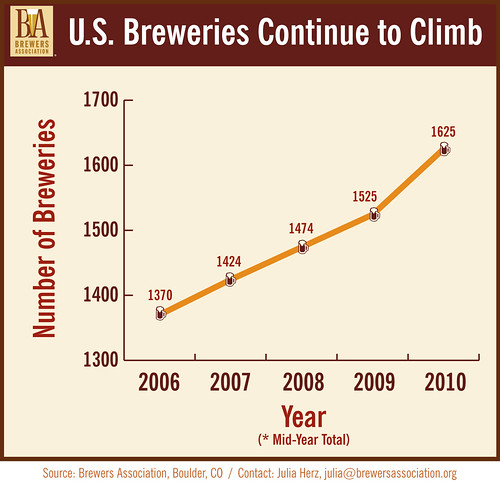
She’s certainly right about the sheer number of new breweries. It defies logic, the economy and conventional wisdom about both. At every measure, at a time when most businesses are flat at best, the number of craft breweries continues to rise. In the past four years, over 250 new breweries have opened. How awesome is that? According to the BA’s wonderful brewery detective Erin Glass, roughly one new brewery is now opening every day, with more on the way. Last year, 110 new breweries opened, but in just the first six months of 2010, 155 have opened. According to a July report by the BA, Director Paul Gatza speculated that there could conceivably be 250 new brewery openings by the time the apple drops on Times Square signaling the end of this year.

And according to Gatza, “[i]t isn’t just an increasing number of nanobreweries, either. [Though frankly, I love the trend of Nano- and Pico-breweries.] We are seeing strong growth in the traditional brewery openings—you know, a business plan for a microbrewery or brewpub that gets out of the planning phase and into operation.”

And last year, Erin was tracking about 260 brewery project at various stages of development. Today the number she’s following is 389. Could we hit 2,000 breweries in America in the next few years? It sure seems possible, even inevitable. Imagine what might happen if (or when, trying to sound hopeful) the economy turns around.

Mid Year Graph

Fourteen years ago, in 1996, it felt like we’d hit a wall. After a number of years of remarkable growth, more breweries began to close than were opening. The numbers looked bleak. The Craft Brewers Conference was a far more somber — dare I say sober — affair than it had been in earlier in that decade. But then things began to turn around. Slow but steady growth began in the late 1990s and has not only continued from that time, but even picked up speed.

Given the increases in market share by craft breweries, in both volume but especially dollars — and now a sharp increase in brewery openings over the last few years — it seems clear we’re in the midst of a new wave of craft beer. Like the the first wave, craft is again the subject of media attention, is increasingly taken seriously by the business world and is being targeted more vigorously by the big beer companies.

It certainly feels like this may be our time. Twenty years ago, microbreweries were mostly alone in promoting the idea of artisanal products. Today there’s artisanal cheese, bread, coffee, charcuterie, beef, chicken, pastries, ice cream and on and on, not to mention organic farming, with its produce and fruit. The world has caught on and caught up. More and more people just get it now, and increasingly each year’s newly minted 21-year olds that add to the percentage of craft beer drinkers in greater numbers. It will be interesting to see how the next few decades play out as time squeezes out the older mainstream beer drinkers in favor of younger generations who came of age in a world where craft beer was already established.

open-neon

And those same generations are and will also responsible for a whole new group of brewers and brewery owners, too, as we’re starting to see right now. Large or small or really small, what a fun time to be drinking craft beer.

Filed Under: Breweries, The Session Tagged With: Business

Next Session: New Kids On The Bock

August 24, 2010 By Jay Brooks

session-the
Our next Session is fast approaching, ten days away to be exact. This month’s host will be Carla Companion, better know as The Beer Babe. Her topic is The New Kids, by which she means the many, many new breweries that have started up in the last couple of years.

Here’s how she explains it:

Picture yourself starting school, on a cool, crisp September day. Only, you’re not as excited as you usually are because you’re starting at a new school. No one knows who you are, groups of friends are already established, and you have nightmares about getting lost in the hallways trying to find your next class. How will you ever fit in?…

In some ways, there may be a beer-world parallel to this experience: new craft breweries joining an established beer community, or even tougher, breaking into a non-craft beer town.
….

With the astounding growth of the number of craft breweries this year, chances are there’s a new one in development, or has just started out in your area. My challenge to you is to seek out a new brewery and think about ways in which they could be welcomed into the existing beer community. How does their beer compare to the craft beer scene in your area? Are they doing anything in a new/exciting way? What advice, as a beer consumer, would you give to these new breweries?

Take this opportunity to say hello to the new neighbors in your area. Maybe its a nanobrewery that came to a festival for the first time that you vowed to “check out” later. Maybe it’s a new local beer on a shelf on the corner store that you hadn’t seen before. Dig deeper and tell us a story about the “new kids on the block.” I look forward to welcoming them to the neighborhood!

Join the welcome wagon on Friday, September 3, and tell us about your favorite new brewery.

Filed Under: Breweries, The Session Tagged With: Announcements

« Previous Page
Next Page »

Find Something

Northern California Breweries

Please consider purchasing my latest book, California Breweries North, available from Amazon, or ask for it at your local bookstore.

Recent Comments

  • Bob Paolino on Beer Birthday: Grant Johnston
  • Gambrinus on Historic Beer Birthday: A.J. Houghton
  • Ernie Dewing on Historic Beer Birthday: Charles William Bergner 
  • Steve 'Pudgy' De Rose on Historic Beer Birthday: Jacob Schmidt
  • Jay Brooks on Beer Birthday: Bill Owens

Recent Posts

  • Beer In Ads #5148: Ach Himmel Mr. Goat March 6, 2026
  • Historic Beer Birthday: Conrad Windisch March 6, 2026
  • Historic Beer Birthday: Samuel Wainwright March 6, 2026
  • Beer In Ads #5147: Frankenmuth Is Michigan’s Largest Selling Bock March 6, 2026
  • Historic Beer Birthday: John Bird Fuller March 6, 2026

BBB Archives

Feedback

Head Quarter
This site is hosted and maintained by H25Q.dev. Any questions or comments for the webmaster can be directed here.