
Monday’s ad is from 1959 and is for Budweiser. The slogan is “Where There’s Life … there’s Bud.” It’s a fairly standard ad but I love the expression on the guy. He looks absolutely mesmerized, like he’s being shown a magic trick.
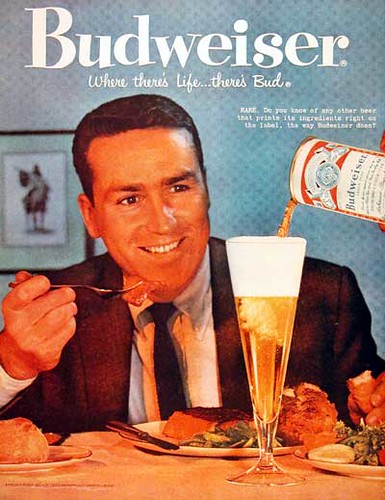

Monday’s ad is from 1959 and is for Budweiser. The slogan is “Where There’s Life … there’s Bud.” It’s a fairly standard ad but I love the expression on the guy. He looks absolutely mesmerized, like he’s being shown a magic trick.

I haven’t seen much yet from the joint hearing by the Senate Law Committee and House Liquor Control Committee looking into the PLCB that took place April 13, but Jack Curtin posted something from the Scranton Times-Tribune entitled PLCB Bad for Business.

Today’s work of art is something of a find. I wrote about it when I highlighted another work by the same artist early in my Beer In Art series. In fact, it was the sixth work back in 2008, Charles Spencelayh’s Good Health. After sharing his biography from Wikipedia, I also discovered the following.
Supposedly, he may have done a painting commissioned by the Bass Brewery for them to use in advertising entitled The Steward, depicting a steward opening a bottle of Bass. But so far I’ve been unable to find anything more about it or see what it looks like.
Happily, Diane Hadley, a pub owner in the UK, wrote me to tell me she had one of either 6 or 10 copies Bass gave out hanging in her pub. It was given to her by a Bass representative “some 22 years ago.” And more importantly, she was kind enough to take a few photos of it and send them my way, so I can share it with the world. So here is The Steward, by Charles Spencelayh. Thanks Diane.
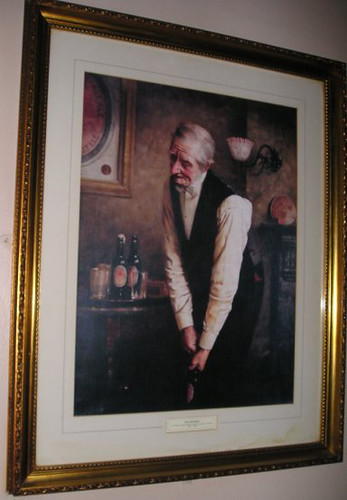
The bottom of the print includes the following text:
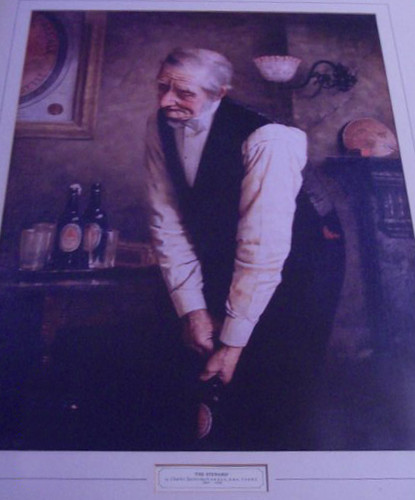
‘THE STEWARD’
by Charles Spencelayh H.R.B.S.A., R.M.S., V.P.B.W.S.
The subject of this finely executed work is thought to have been the Steward at the old Bass Club in High Street, Burton upon Trent. Spencelayh, however, kept very poor records of his work which he frequently did not sign or date. He is known to have produced a number of other outstanding paintings of well known commercial products in his early life.
Here’s a closer view.
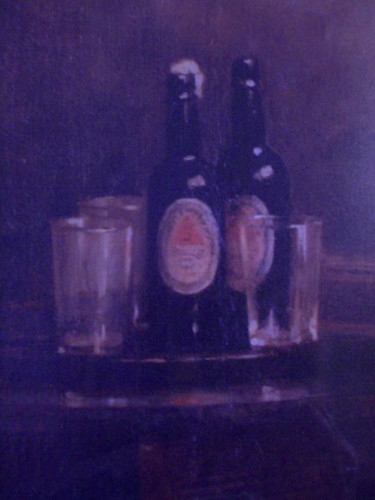
And here’s a close-up of the Bass Ale bottles sitting on a tray.
Five of his paintings are at the Tate in London and a few more are shown at the online Art Renewal Center and Bridgeman has quite a few. There are also some links at the ArtCyclopedia.

While clear beer is not exactly new, it has never proved economically successful despite polling that seems to suggest people would drink it. In the real world, once faced with a purchasing decision, people don’t buy beer that doesn’t look like beer. Thank goodness. The first clear malt beverage I recall trying was Zima, when it debuted in 1993, also from Coors. Though it wasn’t a beer per se, it was malt based and somewhat similar. It eventually got lumped into the Alcopop category, though it was not originally marketed that way, but simply as an alternative to beer. The first true clear beer, also from 1993, was Miller Clear.
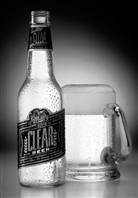
Happily, it failed in test marketing and was halted in October of that year. I’m sure this ad, by Don Austin Creative, had nothing to do with its lack of success.
Here’s what Michael Jackson wrote about Miller’s Clear Beer, back in 1994:
Clear Beer was never available in the UK, but I encountered it in the United States, where it was presented in marketingspeak as “in the finest tradition of the Miller Brewing Company, full-flavored but without heaviness”.
This curious product was a lager the colour of 7-Up, which formed little head and tasted like a sweetened seltzer with the faintest touch of oily, medicinal happiness in the finish. It looked like a soft drink, but contained 4.6 per cent alcohol by volume, a level found in many “premium” lagers on both sides of the Atlantic.
Miller has a history of trying to remove the character from beer. It popularised Lite Beer, memorably described as “wet air” by the native American writer William Least-Heat Moon; and it marketed a so-called Genuine Draft in a can long before Irish and British brewers developed their rather better approximation.
But as George Santayana wrote in Reason in Common Sense. “Those who cannot learn from history are doomed to repeat it.” Seventeen years later, apparently nobody at MolsonCoors or MillerCoors is a student of history. MolsonCoors’ UK division, who launched the BitterSweet Partnership to reach female beer drinkers and increase their numbers, has announced they’ll be introducing a clear beer to the UK market. The full story can be found in Marketing Magazine and the UK’s Metro.
To me, the BitterSweet Partnership is ridiculous (as is the similar Dea Latis). First of all, none of the female beer writers or brewers I know are involved in the organization, it’s strictly about marketing. The whole “team” is made of female Coors UK employees, and they’re all from HR, sales, finance, etc. I’m sure they’re lovely people but they’re hardly experts on beer. The notion of finding female-friendly beer seems wrong on so many levels. Beer is beer. Trying to make one that’s strictly for women is absurd. Remember Virginia Slims — cigarettes for women? It also reminds me of something Lionel Trains did back in the mid-20th century. They made pink trains with pastel-colored cars aimed specifically at girls. Guess what, it flopped because the girls wanted real trains like the ones their brothers had, not some watered down girly trains some marketing pinhead thought would appeal to them.
So far, the beer has no name — and they’ll be a naming contest to come up with one. That should be good for a laugh. Then it won’t be available on draft, bottles only, because in polling 30,000 women, a majority were convinced that bottles “offer better protection against having them spiked in bars and pubs.” WTF? Since when did that become a major problem? And if it has, I’d think there were more pressing concerns like stopping an entire nation of men from poisoning the opposite sex. Additional research shows that the women polled think beer is “too calorific and a ‘man’s drink.'” Please tell me we’ve moved beyond such stereotypes? Apparently not. Who are these people? No woman I know thinks like that.
In a related bit of nonsense, the BitterSweet Partnership also has research showing “that 31% of women thought beer glassware is ‘ugly and manly.'” Seriously? Again, these must be some of the strangest women on the planet, and lots of less kind epithets spring to mind. Who thinks “I’d love to drink that tasty beverage, if only it came in a glass I liked better?” Let’s ignore centuries of trial and error to get to the right glassware — flutes for champagne, snifters for brandy, a weissbier vase for wheat beers — and bow to a minority of women whose sense of fashion dictates what they drink. WTF? Let’s not try to educate them why they’re complete morons. Even though 69% think that beer glassware is fine the way it is, they’ve instead opted to design “four new glasses to serve beer in to bring a bit more style into the drinking experience,” whatever that means. You can see the four designs that were voted on here. Below is the “winner.”
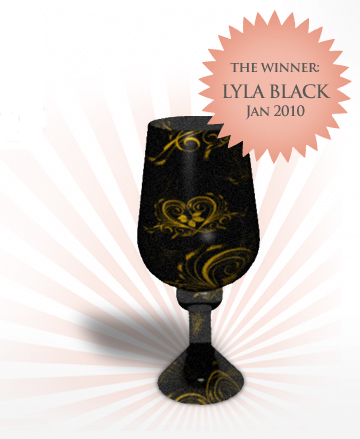
First of all, you can’t even see the beer you’d be drinking in the glass, whether it’s clear or not. What a terrible idea that is. But that’s what misinformation and ignorance will get you. How stylish. What unmitigated bullshit.
While I can’t pretend to speak for women or give the woman’s perspective on this, happily, both Julie from Brusin’ Ales and Ashley at the Beer Wench have ranted beautifully about it and are as angry and offended by it as I would have expected. Their screeds mirror what I’d think would be the response from any self-respecting female fan of craft beer.

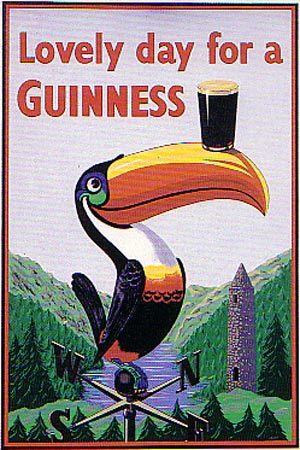
Our fourteenth Guinness poster by John Gilroy is yet another variation on the iconic toucan on a weathervane, the difference here is he’s high above a country setting on a bright Spring day in the mountains above a lake where, as the tagline suggests, it’s a “Lovely day for a Guinness.”

Earlier this month, AC Golden Brewing — a wholly-owned subsidiary of MillerCoors — announced their newest project, Colorado Native. AC Golden is essentially just the Coors pilot brewery located inside Coors’ massive brewery complex in Golden, Colorado. Pretending they’re a small, separate, independent company may work on paper, for legal purposes, but I’d like to believe that most people can see through the deception.
The idea behind Colorado Native, while arguably laudable, seems too calculated to be sincere, especially when it’s being done by a global multinational company. Designed to appeal to locavores, it’s “brewed in Colorado with virtually all Colorado ingredients, more than any other beer.” More than any other beer? Do they mean more than any other beer in Colorado? Or any other beer, regardless of where it’s from? If the latter, I believe they may be forgetting Sierra Nevada’s Estate Ale.
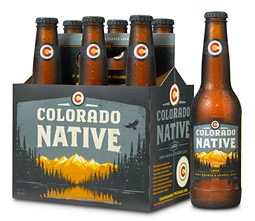
The beer itself is an amber lager, which should at least please Michael Lewis, who at this year’s CBC famously dissed any craft beer that’s not a lager. Still, it’s hard to get worked up about a beer, no matter how well-intentioned, that’s made in the heart of one of the largest single breweries in the world. To me that sends a mixed message at best. The beer may taste fine, and probably does, but it’s not be marketed on taste, it’s being used instead to sell an idea. And that’s where I think it’s doomed to fail. No matter how native Colorado Native is, it still can’t separate itself from the unnaturally large parent company that’s about as un-local as a business can be.
The other odd bit about Colorado Native is that it’s also being promoted using social media, as detailed in Advertising Age. They have a Facebook page and will be using SnapTag technology on its packaging, something other “small” companies like Unilever, Ford and Crayola are also using to reach and data mine customers. In the AdAge piece, here’s how they characterize breweries using social media.
Brewers have typically been slow to move into mobile and social-media channels because of concerns that age verification presents too big a hurdle for consumers to be willing to jump over — Anheuser-Busch InBev’s Michelob is perhaps the only major-brewery owned brand on Twitter, for instance — but that isn’t stopping MillerCoors here.
Huh, how did they miss the literally hundreds of small breweries on Twitter and Facebook, so many it’s a damn phenomenon. Over the past two years, the Craft Brewers Conference has held two panel discussions about the use of social media by breweries, one of which I sat on the panel. And their comment about age verification continues to stick in my craw. Where the hell does it say only adults can TALK or READ about alcohol? Drink, yes, I disagree with that but understand it. That people under 21 aren’t allowed to read about beer on websites is something that makes no earthly sense.
But back to Colorado Native. Using tools that only very large companies can afford doesn’t make them seem particularly small or local, which as far as I can tell is the image they’re trying to project. In the Denver Business Journal, SnapTag’s chief marketing officer Jane McPherson was quoted. “Rather than just looking at the bottle, they [consumers] can have a much fuller brand experience.” I know marketing is important, but really? A “fuller brand experience?” I have no doubt that the brewers tried to create the best-tasting beer they could, but this whole “project” seems more about the image and marketing than the beer. It’s more about trying to fit an identified niche than just creating a beer they like and trying to see if people like it and will buy it, too. It just feels too calculated. And that’s why, to me, it may be a native beer, but it still seems entirely unnatural.
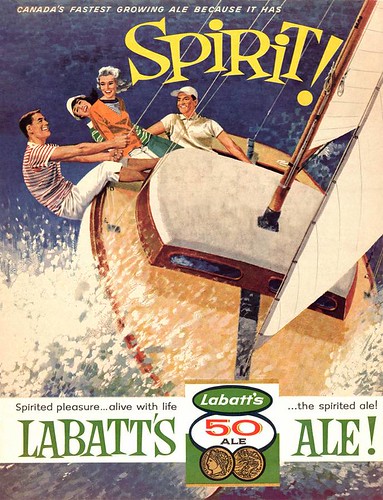
Friday’s ad is for a Canadian beer from Labatt’s. Labatt’s 50 Ale debuted in 1950 “to commemorate 50 years of partnership” and until 1979 was their best-selling beer. According to Labatt’s website:
John and Hugh Labatt, grandsons of founder John K. Labatt, launched Labatt 50 in 1950 to commemorate 50 years of partnership. The first light-tasting ale introduced in Canada, Labatt 50 was Canada’s best-selling beer until 1979 when, with the increasing popularity of lagers, it was surpassed by Labatt Blue. Labatt 50 is fermented using a special ale yeast, in use at Labatt since 1933. Specially-selected North American hops and a good balance of dryness, complemented by a fruity taste, provide Labatt 50 with all the distinguishing features of a true ale.
According to the ad copy, it was “Canada’s fastest growing ale because it has Spirit!” I’m not even sure what that means. The artwork looks typical of North American beer ads from the 1950s and so I suspect the ad is from that decade.
Thursday’s ads are for Budějovický Budvar — one of two original Budweisers — known in the U.S. as Czechvar for reasons I’m sure you understand. The town of České Budějovice or Budweis inspired Anheuser-Busch to name their beer Budweiser, which essentially means beer from Budweis. It was today in 1895 that Budějovický Budvar was founded, which is why I decided to highlight one of their ad campaigns today.
In 2004, Budvar launched an ad campaign called the Ten Commandments, in which ten ads detailed what they considered good brewing practices, in part to distance themselves from larger European lager breweries that had made ingredient and process decisions that saved money but deviated from traditional brewing. The ads are meant to look intentionally old from the look of the paper, the text and the artwork. Each illustration shows the brewing practice and a possible punishment for breaking it. While I couldn’t find a full translation of them, I guessed as best I could.
Below is Commandment #2: Use Only Whole Hops.
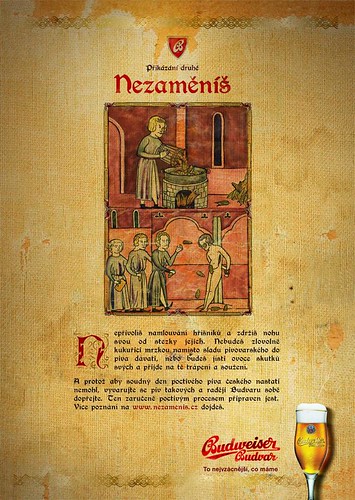
You can see the rest of the Commandments below is a slideshow of Budvar’s Ten Beer Commandments. This Flickr gallery is best viewed in full screen. To view it that way, after clicking on the arrow in the center to start the slideshow, click on the button on the bottom right with the four arrows pointing outward on it, to see the photos in glorious full screen. Once in full screen slideshow mode, click on “Show Info” to identify each photo.

This is my fourth annual annotated list of the Top 50 so you can see who moved up and down, who was new to the list and who dropped off. So here is this year’s list again annotated with how they changed compared to last year.
Two breweries are new to the list this year, Lost Coast and Stevens Point (who’ve transitioned to primarily all-malt brewing), while two dropped off the list; Cold Springs Brewery (fka Gluek Brewing) and Mac and Jack’s Brewery.
If you want to see the previous annotated lists for comparison, here is 2008, 2007 and 2006.
The Brewers Association has also just announced the top 50 breweries in the U.S. based on sales, by volume, for 2009. This includes all breweries, regardless of size or other parameters. Here is the new list:
Here is this year’s press release.
Also, the Annotated List is now up.