Brookston Beer Bulletin

Jay R. Brooks on Beer

  • Home
  • About
  • Editorial
  • Birthdays
  • Art & Beer

Socialize

  • Dribbble
  • Email
  • Facebook
  • Flickr
  • GitHub
  • Instagram
  • LinkedIn
  • Pinterest
  • RSS
  • Twitter
  • YouTube

Powered by Genesis

Beer In Ads #4903: Heute Bockbier

March 8, 2025 By Jay Brooks

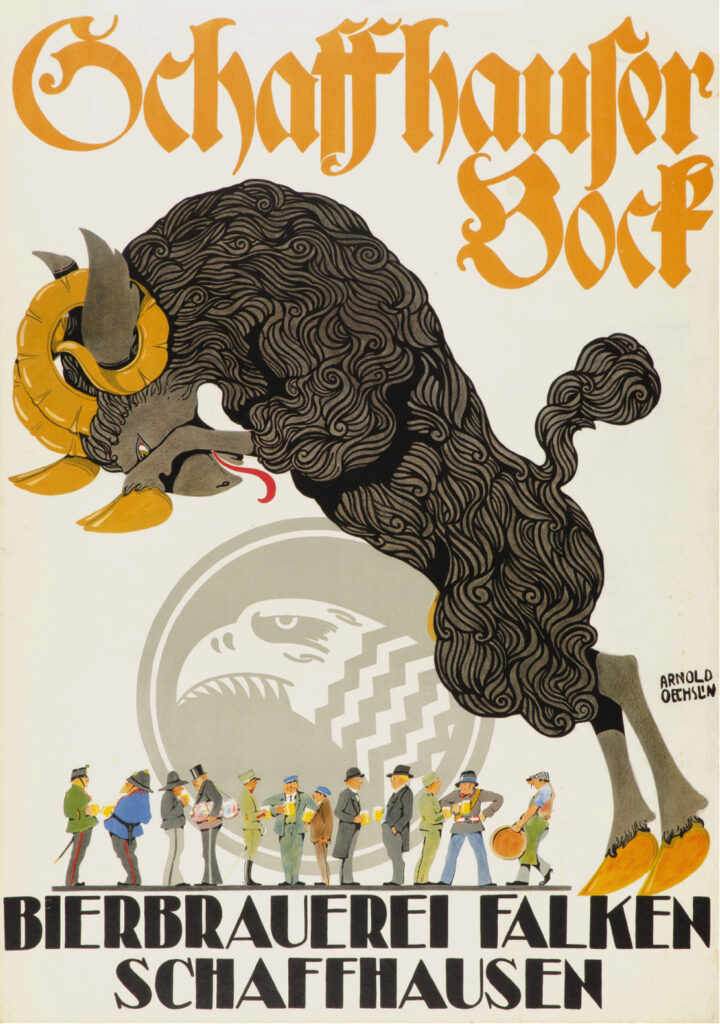
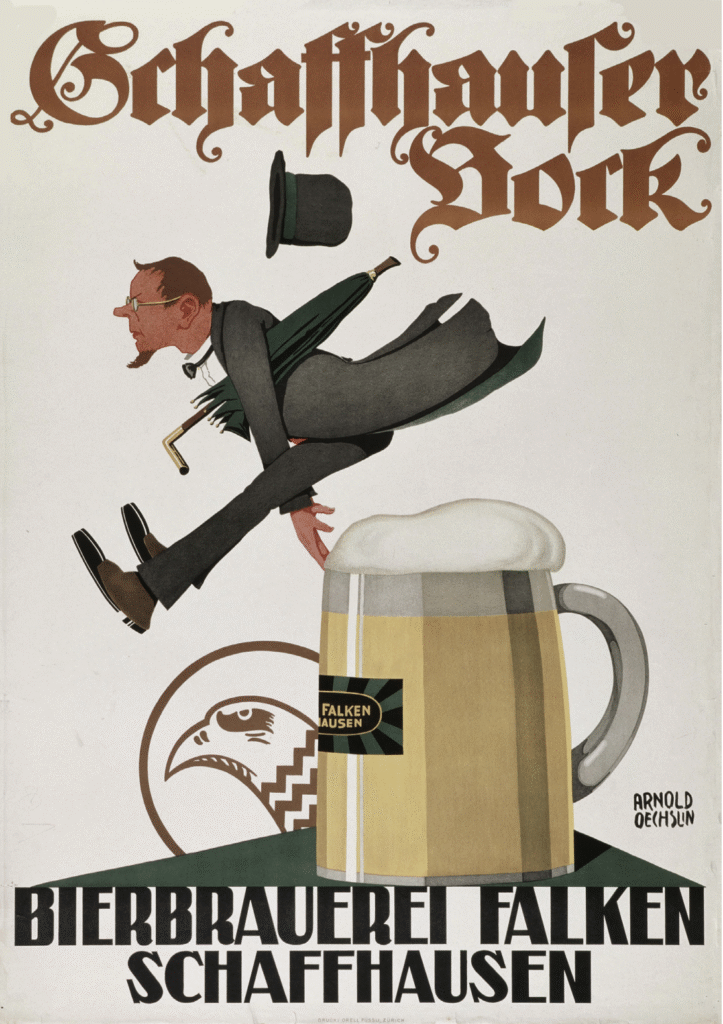
Last year I decided to concentrate on Bock ads. Bock, of course, originated in Germany, in the town of Einbeck. Because many 19th century American breweries were founded by German immigrants, they offered a bock at certain times of the year, be it Spring, Easter, Lent, Christmas, or what have you. In a sense they were some of the first seasonal beers. “The style was later adopted in Bavaria by Munich brewers in the 17th century. Due to their Bavarian accent, citizens of Munich pronounced ‘Einbeck’ as ‘ein Bock’ (a billy goat), and thus the beer became known as ‘Bock.’ A goat often appears on bottle labels.” And presumably because they were special releases, many breweries went all out promoting them with beautiful artwork on posters and other advertising.

Saturday’s ad for Bock Beer depicts a brewer standing on the top of a wooden barrel with an even larger one behind him. He’s holding up a mug of beer triumphantly, surrounded by hops., with the text “§ 11,” whatever that means. The “§” symbol, as I’ve used it, stands for “section” and is typically used in the law and legislation, so I’m not sure what the context is in this case. The lithograph was created in 1880.  The lithographer appears to be “Druck u.Verlag v.C.Burckardt’s Nachf. R.Ackermann,” located in Weissenburg, Germany.

Filed Under: Art & Beer, Beers, Just For Fun Tagged With: Advertising, Bock, Germany, History

Beer In Ads #4902: Have One With Me Bock

March 7, 2025 By Jay Brooks

Last year I decided to concentrate on Bock ads. Bock, of course, originated in Germany, in the town of Einbeck. Because many 19th century American breweries were founded by German immigrants, they offered a bock at certain times of the year, be it Spring, Easter, Lent, Christmas, or what have you. In a sense they were some of the first seasonal beers. “The style was later adopted in Bavaria by Munich brewers in the 17th century. Due to their Bavarian accent, citizens of Munich pronounced ‘Einbeck’ as ‘ein Bock’ (a billy goat), and thus the beer became known as ‘Bock.’ A goat often appears on bottle labels.” And presumably because they were special releases, many breweries went all out promoting them with beautiful artwork on posters and other advertising.

Friday’s ad for Bock Beer depicts a woman sitting on a wall, with a stein in one hand and a glass of beer raised up in the other. A goat is at her feet. The Library of Congress indicates that this poster is considered number 179 and is titled “Have One With Me,” but there’s nothing on the poster itself to indicate this is the case. The chromolithograph was created in 1893.  The lithographer was H. Schile & Co. of 18 Division St. in New York City. Henry Jerome Schile was born in Germany, and emigrated to the U.S. in 1851, settling in Manhattan, which is where he opened his own print company.

Filed Under: Art & Beer, Beers, Just For Fun Tagged With: Advertising, Bock, History, New York

Beer In Ads #4901: Bock In A Pink Dress

March 6, 2025 By Jay Brooks

Last year I decided to concentrate on Bock ads. Bock, of course, originated in Germany, in the town of Einbeck. Because many 19th century American breweries were founded by German immigrants, they offered a bock at certain times of the year, be it Spring, Easter, Lent, Christmas, or what have you. In a sense they were some of the first seasonal beers. “The style was later adopted in Bavaria by Munich brewers in the 17th century. Due to their Bavarian accent, citizens of Munich pronounced ‘Einbeck’ as ‘ein Bock’ (a billy goat), and thus the beer became known as ‘Bock.’ A goat often appears on bottle labels.” And presumably because they were special releases, many breweries went all out promoting them with beautiful artwork on posters and other advertising.

Thursday’s ad for Bock Beer is from 1898, though not much is known about it. The chromolithograph may have been created in either Germany or the United States. It’s hard to imagine what it might have been used for since it depicts a fancy dressed woman in a pink dress being served two glasses of beer. There’s a goat in the background and a wooden barrel in the foreground, with a number of gems scattered about seemingly for no reason.

Filed Under: Art & Beer, Beers, Just For Fun Tagged With: Advertising, Bock, History

Beer In Ads #4900: Braumeister Genuine Bock Beer

March 5, 2025 By Jay Brooks

Last year I decided to concentrate on Bock ads. Bock, of course, originated in Germany, in the town of Einbeck. Because many 19th century American breweries were founded by German immigrants, they offered a bock at certain times of the year, be it Spring, Easter, Lent, Christmas, or what have you. In a sense they were some of the first seasonal beers. “The style was later adopted in Bavaria by Munich brewers in the 17th century. Due to their Bavarian accent, citizens of Munich pronounced ‘Einbeck’ as ‘ein Bock’ (a billy goat), and thus the beer became known as ‘Bock.’ A goat often appears on bottle labels.” And presumably because they were special releases, many breweries went all out promoting them with beautiful artwork on posters and other advertising.

Wednesday’s ad is is for Braumeister Genuine Bock, and is from March 5, 1956. The brewery was the Independent Milwaukee Brewery of Milwaukee, Wisconsin, which was founded in 1901 by five partners: Henry N. Bills, William Gutknecht, Charles Evers, Emil Czarnecki, and William Jung. It’s flagship brand was Braumeister. The survived Prohibition and lasted until 1962, when the G. Heileman Brewing Co. of nearby Lacrosse bought the brewery and closed it down the following year. But in 1954, they claimed to have the only “Genuine” bock beer in Milwaukee.

Filed Under: Art & Beer, Beers, Breweries, Just For Fun Tagged With: Advertising, Bock, History, Milwaukee, Wisconsin

Beer In Ads #4899: Narragansett Bock Beer

March 4, 2025 By Jay Brooks

Last year I decided to concentrate on Bock ads. Bock, of course, originated in Germany, in the town of Einbeck. Because many 19th century American breweries were founded by German immigrants, they offered a bock at certain times of the year, be it Spring, Easter, Lent, Christmas, or what have you. In a sense they were some of the first seasonal beers. “The style was later adopted in Bavaria by Munich brewers in the 17th century. Due to their Bavarian accent, citizens of Munich pronounced ‘Einbeck’ as ‘ein Bock’ (a billy goat), and thus the beer became known as ‘Bock.’ A goat often appears on bottle labels.” And presumably because they were special releases, many breweries went all out promoting them with beautiful artwork on posters and other advertising.

Tuesday’s ad is is for Narragansett Bock Beer, and is from 1942. The brewery was the Narragansett Brewing Co. of Providence, Rhode Island, which was founded in 1890. Monday was the birthday of Theodore Geisel, better known as Dr. Seuss. Before he started writing popular children’s books, he worked for a number of years doing illustrations and art for various company advertising campaigns, including for a couple of beer companies, like this one for Narragansett.

Filed Under: Art & Beer, Beers, Breweries, Just For Fun Tagged With: Advertising, Bock, History, Rhode Island

Beer In Ads #4898: Schaefer Beyond Bock Beer

March 3, 2025 By Jay Brooks

Last year I decided to concentrate on Bock ads. Bock, of course, originated in Germany, in the town of Einbeck. Because many 19th century American breweries were founded by German immigrants, they offered a bock at certain times of the year, be it Spring, Easter, Lent, Christmas, or what have you. In a sense they were some of the first seasonal beers. “The style was later adopted in Bavaria by Munich brewers in the 17th century. Due to their Bavarian accent, citizens of Munich pronounced ‘Einbeck’ as ‘ein Bock’ (a billy goat), and thus the beer became known as ‘Bock.’ A goat often appears on bottle labels.” And presumably because they were special releases, many breweries went all out promoting them with beautiful artwork on posters and other advertising.

Monday’s ad is is for Schaefer Bock Beer, and is not from 1940, but is undoubtedly is a fake someone made over the last few decades based on the Dr. Seuss’ book, “On Beyond Zebra!,” which was published in 1955. But keeping in the spirit of Theodor Geisel‘s birthday yesterday, I thought why not. It’s pretty well done.vThe brewery was the F. & M. Schaefer Brewing Co. originally of New York, New York, which was founded in 1842. Today is the birthday of Theodore Geisel, better known as Dr. Seuss. Before he started writing popular children’s books, he worked for a number of years doing illustrations and art for various company advertising campaigns, including for a couple of beer companies, like the one I shared yesterday for Schaefer.

Filed Under: Art & Beer, Beers, Breweries, Just For Fun Tagged With: Advertising, Bock, History, New York

Beer In Ads #4897: Schaefer Bock Beer

March 2, 2025 By Jay Brooks

Last year I decided to concentrate on Bock ads. Bock, of course, originated in Germany, in the town of Einbeck. Because many 19th century American breweries were founded by German immigrants, they offered a bock at certain times of the year, be it Spring, Easter, Lent, Christmas, or what have you. In a sense they were some of the first seasonal beers. “The style was later adopted in Bavaria by Munich brewers in the 17th century. Due to their Bavarian accent, citizens of Munich pronounced ‘Einbeck’ as ‘ein Bock’ (a billy goat), and thus the beer became known as ‘Bock.’ A goat often appears on bottle labels.” And presumably because they were special releases, many breweries went all out promoting them with beautiful artwork on posters and other advertising.

Sunday’s ad is is for Schaefer Bock Beer, and is from 1940. The brewery was the F. & M. Schaefer Brewing Co. originally of New York, New York, which was founded in 1842. Today is the birthday of Theodore Geisel, better known as Dr. Seuss. Before he started writing popular children’s books, he worked for a number of years doing illustrations and art for various company advertising campaigns, including for a couple of beer companies, like this one for Schaefer.

Filed Under: Art & Beer, Beers, Breweries, Just For Fun Tagged With: Advertising, Bock, History, New York

Beer In Ads #4896: Centlivre Bock

March 1, 2025 By Jay Brooks

Last year I decided to concentrate on Bock ads. Bock, of course, originated in Germany, in the town of Einbeck. Because many 19th century American breweries were founded by German immigrants, they offered a bock at certain times of the year, be it Spring, Easter, Lent, Christmas, or what have you. In a sense they were some of the first seasonal beers. “The style was later adopted in Bavaria by Munich brewers in the 17th century. Due to their Bavarian accent, citizens of Munich pronounced ‘Einbeck’ as ‘ein Bock’ (a billy goat), and thus the beer became known as ‘Bock.’ A goat often appears on bottle labels.” And presumably because they were special releases, many breweries went all out promoting them with beautiful artwork on posters and other advertising.

Saturday’s ad is is for Centlivre Bock, and is from March 1, 1940. The brewery was the C.L. Centlivre Brewing Co. of Fort Wayne, Indiana, which was founded in 1862 by Charles l. Centlivre. It went through several name changes until 1970, when it closed, however it was recently relaunched by the Centlivre family as Centlivre Beer. It’s a busy ad with a lot going on, but they definitely leaned into being a limited run. “Only 12,000 cases!”

Filed Under: Art & Beer, Beers, Breweries, Just For Fun Tagged With: Advertising, Bock, History, Indiana

Beer In Ads #4895: Pschorr-Braü Mai Bock

February 28, 2025 By Jay Brooks

Last year I decided to concentrate on Bock ads. Bock, of course, originated in Germany, in the town of Einbeck. Because many 19th century American breweries were founded by German immigrants, they offered a bock at certain times of the year, be it Spring, Easter, Lent, Christmas, or what have you. In a sense they were some of the first seasonal beers. “The style was later adopted in Bavaria by Munich brewers in the 17th century. Due to their Bavarian accent, citizens of Munich pronounced ‘Einbeck’ as ‘ein Bock’ (a billy goat), and thus the beer became known as ‘Bock.’ A goat often appears on bottle labels.” And presumably because they were special releases, many breweries went all out promoting them with beautiful artwork on posters and other advertising.

Friday’s ad is is for Pschorr-Braü Mai Bock, and is from 1913. At that time, it was the Pschorr-Bräu, but after a merger in 1972 with the Hacker Brewery it became known as the Hacker-Pschorr Brewery. This poster was created by Carl Moos, a well-known German-Swiss graphic artist, who was best known for his travel and skiing posters.

Filed Under: Art & Beer, Beers, Breweries, Just For Fun Tagged With: Advertising, Bock, Germany, History, Switzerland

Session #144: Home Beer, Sweet, Home Beer

February 28, 2025 By Jay Brooks

For our 144th Session, hosted by Boak & Bailey, they’ve chosen as their topic by posing the seemingly simple question, [w]hat’s the best beer you can drink at home right now? They also set some guidelines and suggestions about how to proceed:

Not necessarily right now. You can go to the shops if you like. But you shouldn’t have to get on a train or a flight. Or travel back in time. If you like, you can choose a top 3, or top 5, or top 10. What makes it a good beer to drink at home? Is it brewed to be packaged? Does it pair well with your home cooking? Does it pair well with drinking in your pyjamas? If you don’t think there’s any such thing as a good beer to drink at home, that’s fine, too – talk about that! Whatever your response to the prompt might be is absolutely grand. It’s just a starting point, or trigger – not a set of rules to a game of which we are the umpires.

Okay, so that’s the mission. Let me go to the ‘frig.

I’m at the point in my life when I don’t go out to bars, or even breweries, unless I’m working or traveling. We do have four refrigerators, three in the garage, and one in the kitchen, not to mention a beer cellar under the house. So we generally are well-stocked with choices. I get a fair amount of samples, though it’s been declining here of late, so many of what’s out being chilled are the extra samples. If I get a four-pack or six-pack of samples, I’ll try one of the cans or bottles, and put the rest into rotation in the garage. Some sit around too long, sad to say — I’m only one man, after all — though there are a few beers I like to always keep on hand, though in general it’s more that I like to have a few varied types of beers around, and a specific one of them is less important. So for example, I like to have a pilsner around, and I’m thrilled if I have some Trumer Pils, though I’m just as happy with Russian River STS Pils, Moonlight Reality Czech or Firestone Walker Pivo Pils. All four are relatively easy to find near me, but there are plenty of others I would reach for in a pinch. What’s more important is I want that delicate base malt character, signature subtle hop bitterness and the crisp expression of the yeast that makes a pilsner a pilsner.

Decision, decisions….

This approach plays into something that’s been bugging about the direction of beer over the last decade or so, coinciding with the meteoric rise of hazy IPAs. While not my favorite “innovation” of the modern era, I can, and often do, enjoy a good one from time to time. But what I think we lost when they became the be-all, end-all of craft beer was the diversity which was kind of the point. I think I actually whined … excuse me, opined … about this last month. The reason that the “microbrewery revolution” happened at all was in response to people noticing that almost all American beer was the same, and not that great to boot. Different flavors a.k.a. diversity was the point. So when several decades later the market shrinks to being mostly IPAs, us old-timers cried foul, not that anybody listened (nor should they, to be fair).

But back to the problem at hand. The best beer(s) I can drink at home right now are a group of a few types of beers that I like to keep on hand so I can pick what to drink based on my mood, the weather, what I’m eating, if I’m drinking alone or entertaining, or even what I’m doing. It doesn’t always work perfectly, but it’s good to have goals. More often than not, I can find something at least close to what I want … what I really, really want.

I just made this up today, for no better reason than it was a way to organize my thoughts in a less chaotic way than it exists inside my brain. I took the colors of the rainbow and roughly applied them to seven kinds of beer that I like to keep stocked in my house at any given time so I have a wide variety of choices when it comes time to pick which beer to drink. It’s hardly perfect, but just the process of throwing it together was oddly satisfying and more fun than I would have anticipated. It might even be useful. Who knows?

Strong Beers: I always like to keep something good for sipping around, like a Belgian tripels or barleywine. I’m a bit over Imperial Stouts right now, especially ones aged in Bourbon or other barrels. They more often than not taste like what was in the barrel and lose their beerishness. I also have several bottles (not sure that’s the right word) of Utopias, which is nice for that purpose.

Amber or Light Lagers: By this, I mean Pilsners, Helles and other lighter-bodied lagers. Even Amber Lagers or Vienna Lager fits here, as would Märzen.

Yeasty or Yeast-Forward Beers: Belgian beers are what I had in mind here, although Bavarian hefeweizen would fit this, too. But I generally like to have bottles of Orval or Duvel around, or something along those lines.

Gueuze or other Sour or Wild Fermentation Beers: I almost always have some Cantillon, 3 Fonteinen or Boon, or all three in the cellar. And Russian River being a local brewery to me makes it relatively easy to keep a few of their Belgian-inspired sour ales in stock.

Black or Brown Dark Beers: Moonlight’s Death and Taxes, Brian’s San Francisco-style black lager is almost always in my refrigerator. It’s one of my go-to beers. But I also like to keep a nice Porter or stout, especially oatmeal stout around. I wish there were more packaged brown ale in my neck of the woods, but lately they’ve been hard to come by.

IPAs and Hop-Forward Beers: I know I give the proliferation of IPAs a hard time, but that doesn’t mean I don’t sometimes want a true, bitter IPA, especially thee West Coast variety. It felt like WCIPA was on the ropes for a miniute, but they do seem to be making a comeback here in California, at least.

Veiss or Weiss or Rye Beers: Yeah, I know, this is the weakest one color-wise, but oh, well. There are definitely times when a smooth wheat beer is exactly what I want. I’m especially fond of dunkelweizens, but those are as rare as hen’s teeth. And I threw rye in here just because I have a particular soft spot for any beer brewed with rye.

So that’s my approach to drinking at home, which these days is my preferred spot. While I could arbitrarily pick just one, I feel like there’s simply too many good beers around to ever limit oneself to one beer. That’s what got us into this mess in the first place. I think it’s better to have a new favorite beer every time I open the refrigerator depending on the caprices of my whims. I suppose it’s like answering the question “what’s your favorite beer” by replying “the one in my hand.”

Filed Under: Beers, Just For Fun, The Session Tagged With: fresh, local

« Previous Page
Next Page »

Find Something

Northern California Breweries

Please consider purchasing my latest book, California Breweries North, available from Amazon, or ask for it at your local bookstore.

Recent Comments

  • Bob Paolino on Beer Birthday: Grant Johnston
  • Gambrinus on Historic Beer Birthday: A.J. Houghton
  • Ernie Dewing on Historic Beer Birthday: Charles William Bergner 
  • Steve 'Pudgy' De Rose on Historic Beer Birthday: Jacob Schmidt
  • Jay Brooks on Beer Birthday: Bill Owens

Recent Posts

  • Beer In Ads #5228: All Together For Newark April 21, 2026
  • Beer Birthday: Steve Parkes April 21, 2026
  • Beer In Ads #5227: It’s Here! Bock Beer By Bosch April 20, 2026
  • Beer Birthday: Drew Beechum April 20, 2026
  • Beer Birthday: Des De Moor April 20, 2026

BBB Archives

Feedback

Head Quarter
This site is hosted and maintained by H25Q.dev. Any questions or comments for the webmaster can be directed here.