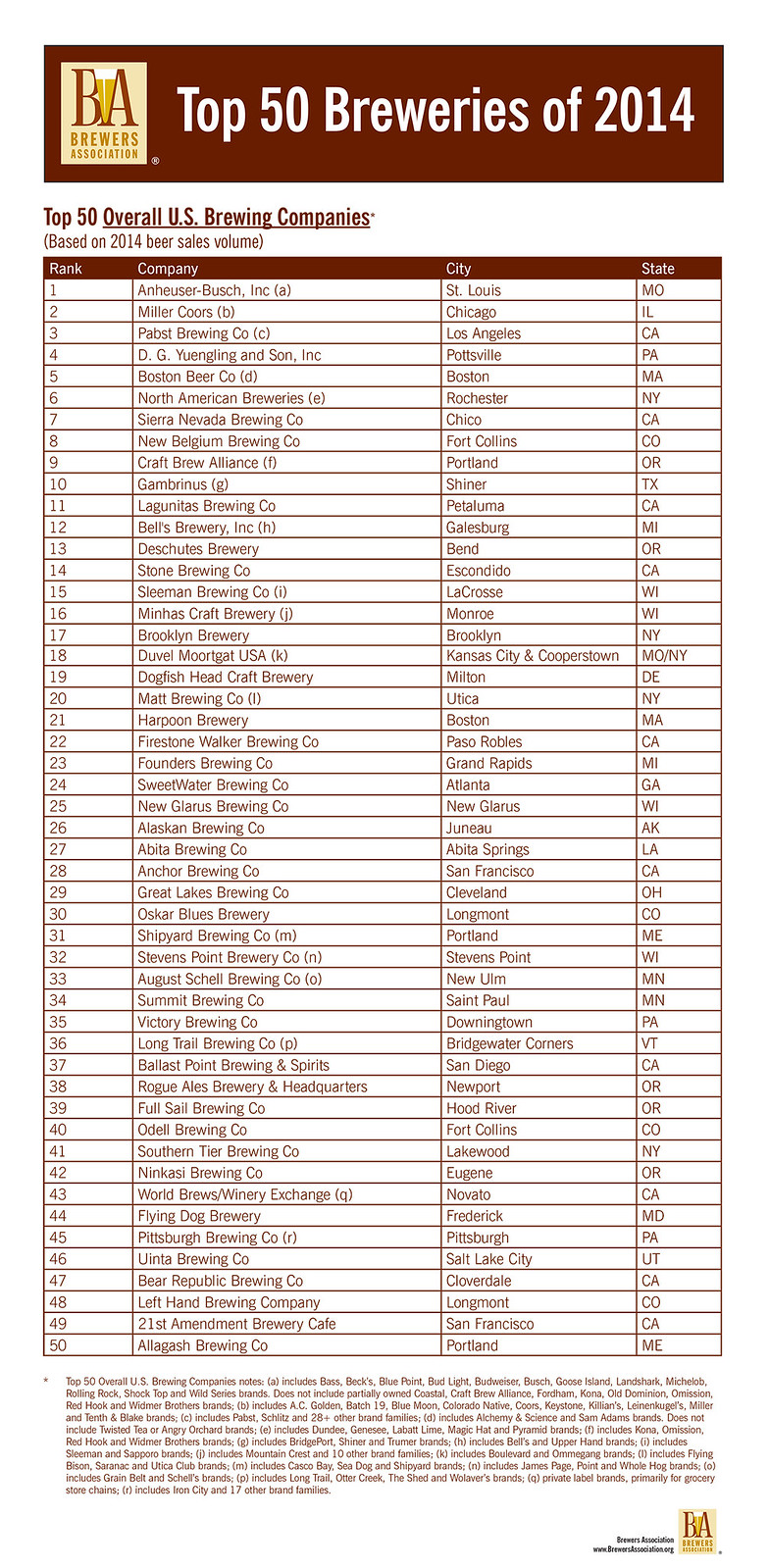
The Brewers Association has also just announced the top 50 breweries in the U.S. based on sales, by volume, for 2014. This includes all breweries, regardless of size or other parameters. Here is the new list:
Here is this year’s press release.

The Brewers Association has also just announced the top 50 breweries in the U.S. based on sales, by volume, for 2014. This includes all breweries, regardless of size or other parameters. Here is the new list:
Here is this year’s press release.

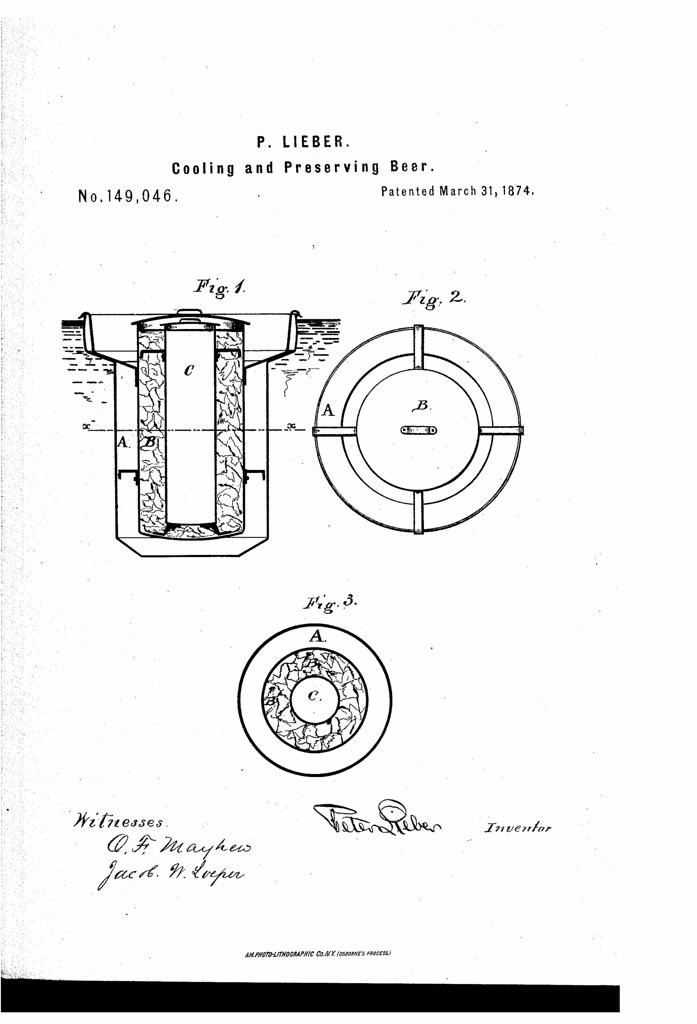
Today in 1874, US Patent 149046 A was issued, an invention of Peter Libber, for his “Improvement In Cooling And Preserving Beer.” There’s no Abstract, but this introduction sums it up:
This invention relates to device for cooling and preserving beer and ale and similar substances in the process of manufacture, and which is required to be kept at such a temperature as to prevent its becoming sour in the process of fermentation preparatory to being barreled; and it consists in the construction and arrangement of the cooling float or swimmer employed to regulate the temperature of the beer in the fermenting tubs, as will hereinafter be more fully explained.

Monday’s ad is yet another one for Budweiser, this one from the 1960. It’s another ad from their “Where there’s life” series, this one is called “The Story.” A couple lying on a rug, the man in a suit, while the woman’s in a lovely yellow ensemble. Cigarette dangling from his mouth, he’s pouring another of those bottomless beers. The glass is full, but you see that the bottle he’s pouring from is still at least half full. Let’s just hope he doesn’t drop any ash in the beer.

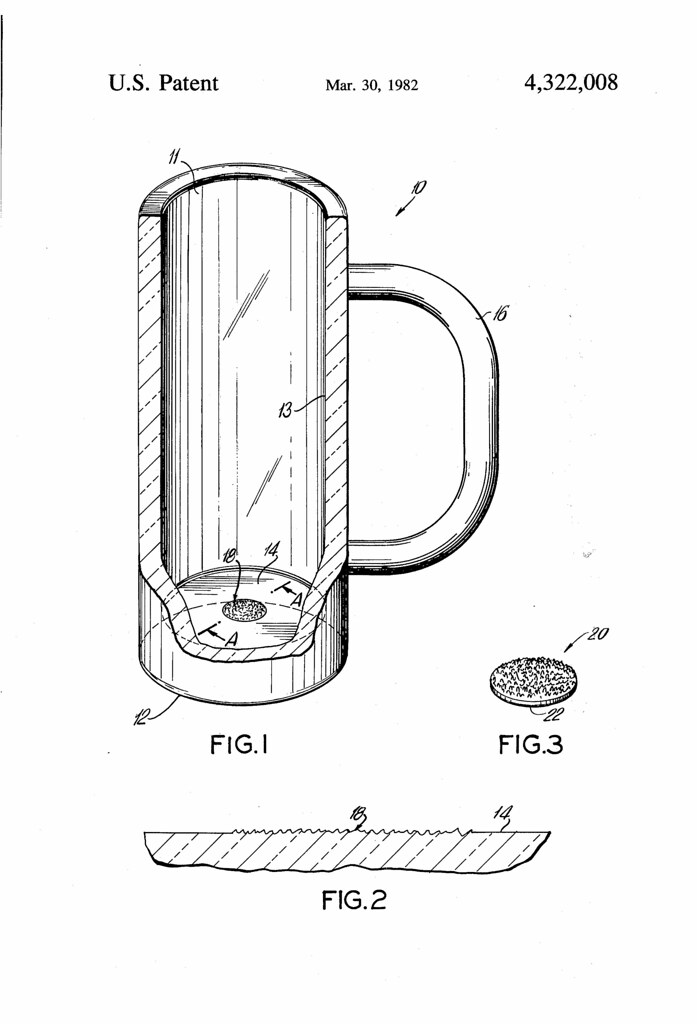
Today in 1982, US Patent 4322008 A was issued, an invention of Ira Schneider, for his “Drinking Container,” or mug. Here’s the Abstract:
The present invention relates to a drinking container for increasing the number of and ostensibly decreasing the size of bubbles in a drinking liquid having dissolved gases contained therein. The container is provided with a roughened region on its normally smooth interior surface. The roughened region is preferably located at the bottom of the container and may be produced by grinding, sand blasting, acid etching, and the like. It is a feature of the disclosure that the roughened region may be formed of a separate element mechanically locked to the container.
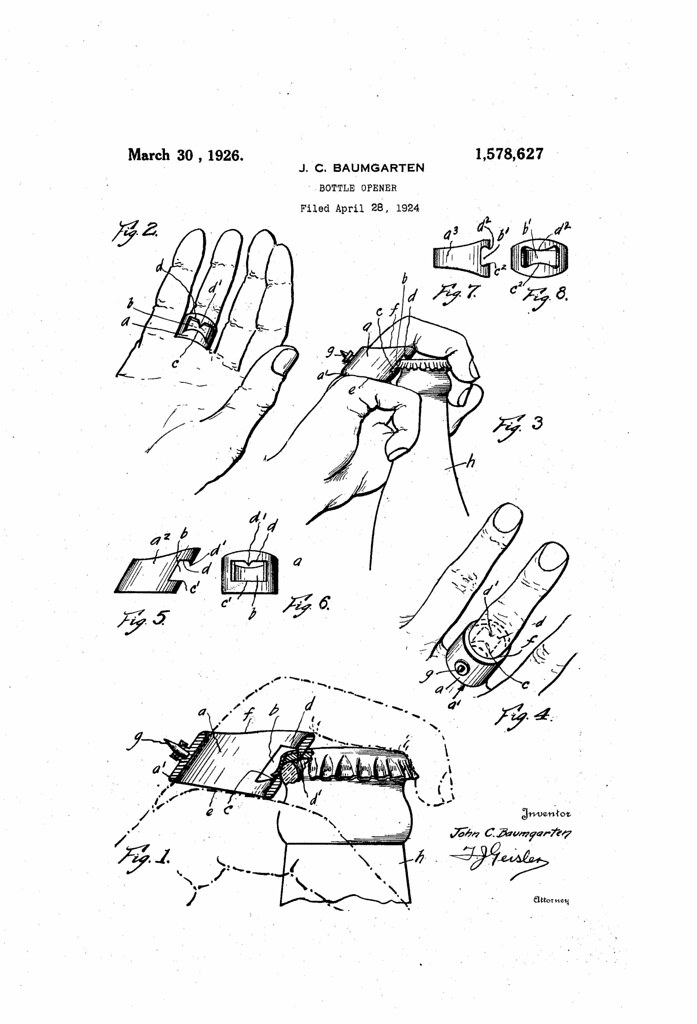
Today in 1926, US Patent 1578627 A was issued, an invention of John C. Baumgarten, for his “Bottle Opener.” There’s no Abstract, but the description states that the “invention relates to bottle capping implements.” It’s essentially a ring with bottle opener. I always thought those were a pretty recent invention, but this is from 1926. Here’s how it’s explained:
Since bottles containing soda water, and the like, are generally closed by crimped on caps a special implement must be used for removing these caps. There are two types of these implements generally used. One of these is a device which is applied by hand. Since this device is readily laid down in one place, when required in another, it is not always handy during the rush of customers. The other type is a device located at some station to which the bottle must be taken, and hence unless several of this type of device be installed it would necessitate considerable running back and forth.
So the object of my invention is to provide a simple, inexpensive implement to pry off said caps, and its construct such implement in the form of a ring which may be carried about for instant use. A further object of my invention is so to construct my implement so that it will not impose undue strain on; or tend to bruise the finger in removing said caps.
So he’s proposing that all bartenders where one his opener rings while working, making it part of the uniform of a barkeep.
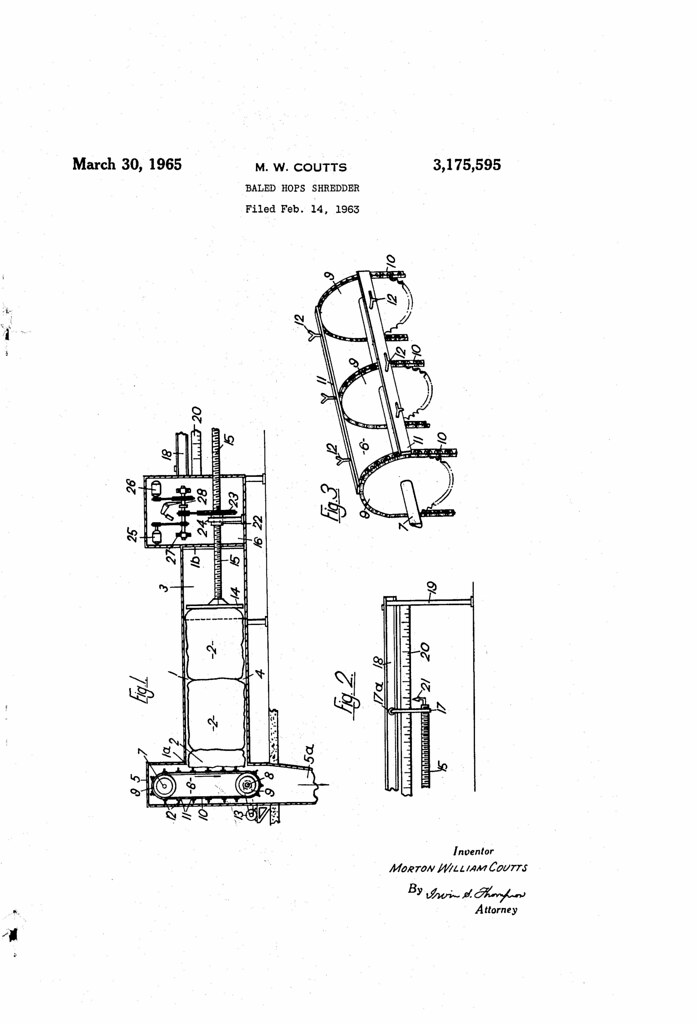
Today in 1965, US Patent 3175595 A was issued, an invention of Morton William Coutts, assigned to Dominion Breweries Ltd., for his “Baled Hops Shredder.” There’s no Abstract, but the description states that the “invention relates to the breaking up and the measuring of compressed baled hops and the like, and has for its objects the provision of an apparatus for achieving this quickly and easily and also in measured quantities and at predetermined speeds and intervals of time, directly from the bales.”
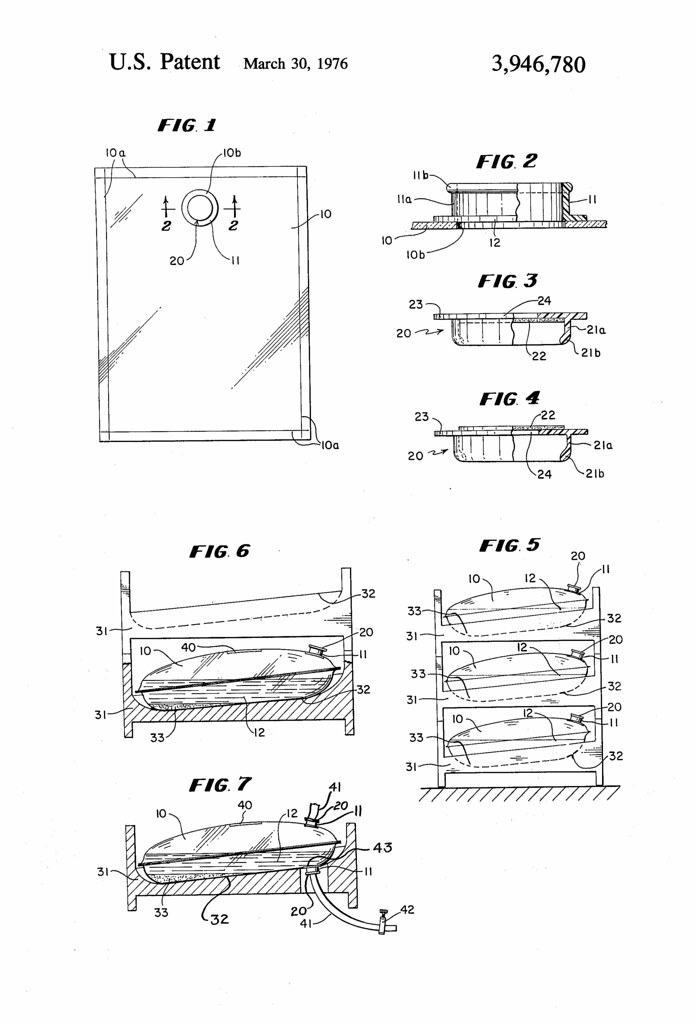
Today in 1976, US Patent 3946780 A was issued, an invention of John C. Sellers, for his “Fermentation Container.” Here’s the Abstract:
A flexible fermentation container which has, in place of the common air lock, a diaphragm having a Gurley porosity of 2 to 120 seconds. The diaphragm material, such as spun bonded polyethylene, allows fermentation gases to pass out of the container, but does not allow bacteria or other contaminants to enter.
Sunday’s ad is still another one for Budweiser, this one from, I think, the late 1950s. It’s another ad from their “Where there’s life” series, this one is called “Relax.” A man who’s made some questionable fashion choices relaxes while an unseen feminine hand pours him a glass of beer, which — as is usual for these ads — is about to overflow as the glass is full and the bottle’s nowhere near empty.

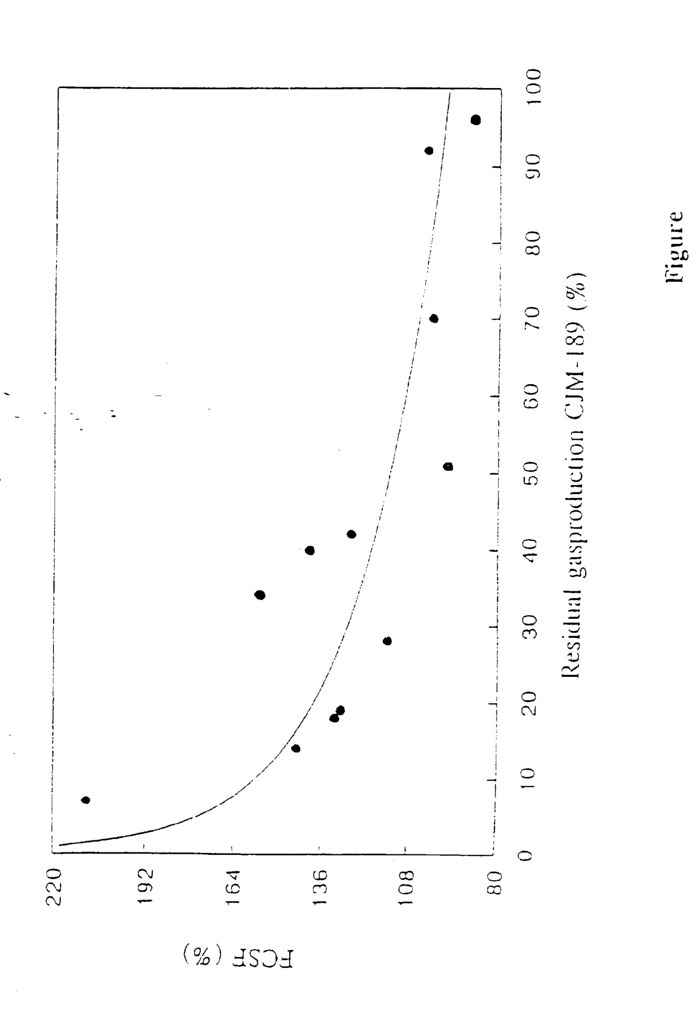
Today in 1995, US Patent EP 0645094 A1 was issued, an invention of Rooijen Rutger Jan Van, Peter Johannes Schoppink, and Ronald Baankreis, for their “Improvement of Gas and Alcohol Production by Yeast.” Here’s the Abstract:
Introduction of futile cycles in the glycolytic pathway of yeast strains enables enhanced gas production and ethanol production under stress conditions, e.g. in a sugar-rich dough having a sugar content of higher than 3% weight percentage based on flour, e.g. 20%, or at high ethanol concentration in an industrial ethanol production process.

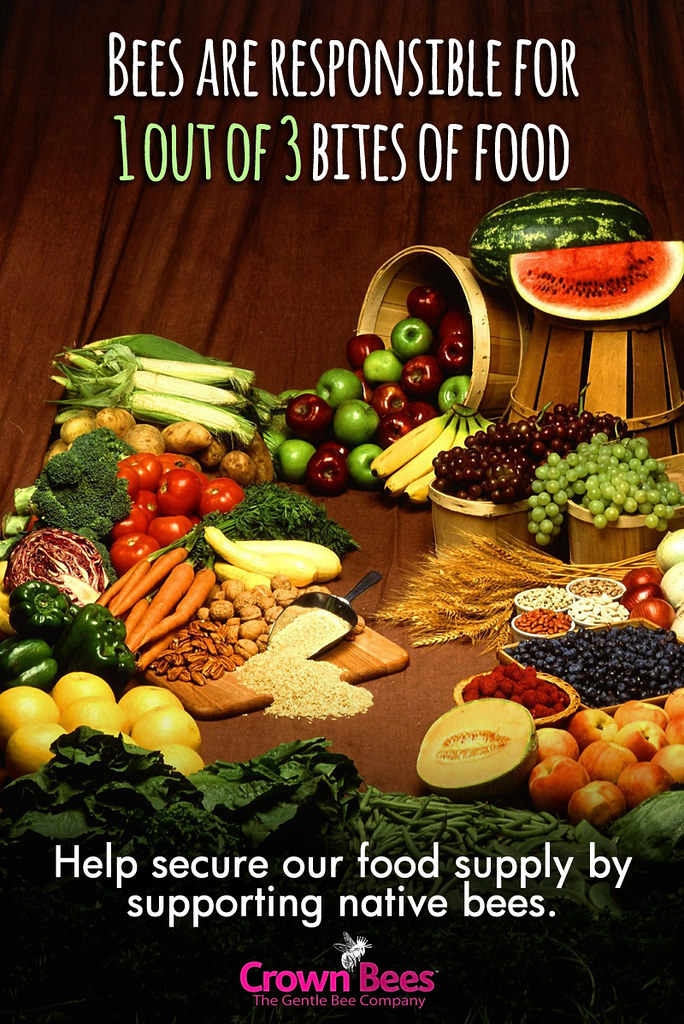
Beer, of course, is an agricultural product, two of its main ingredients are very dependent on a good harvest. Both hops and barley (and other grains such as wheat and rye) grow best when they’re planted in the right place and the conditions are present to encourage their best selves. I received an e-mail a few days ago with the intriguing message. “Bees pollinate 1/3 of our food, including the hops used to make beer. Save the bees, save the beer.”

The e-mail was about an Indiegogo campaign to create a “community open to anyone who cares about bees, the environment and food,” called BeeWithMe, which will consist of “a dynamic new website that teaches people how easy and fun it is to raise a diverse range of gentle bees.” Unless you’ve been cryogenically frozen recently, you no doubt have heard that bees are disappearing from our environment, which could have devastating consequences for our food supply and our life cycle more generally. Find out how to participate at You Can Help Save the Bees, which begins:
Imagine a world without bees. There would be no blueberries, no cherries, no pumpkins – not even beer.
Here’s the problem: Most farmers depend on a single type of bee to pollinate our food and that bee, the honey bee, has been struggling.
You can be part of the solution and protect our food supply by raising gentle, native bees in your backyard or supporting someone else who does.
Keep your favorite foods on the table by contributing today and joining the BeeWithMe network that will collaborate to raise more native bees and grow more food.
Most of the pledge levels involve getting your own bees, some to simply release in your back yard, up to everything you need to raise your own bees. There are also teacher’s packages for classrooms and levels for entire garden clubs and communities. Please bee generous. And remember, save the bees, save the beer.