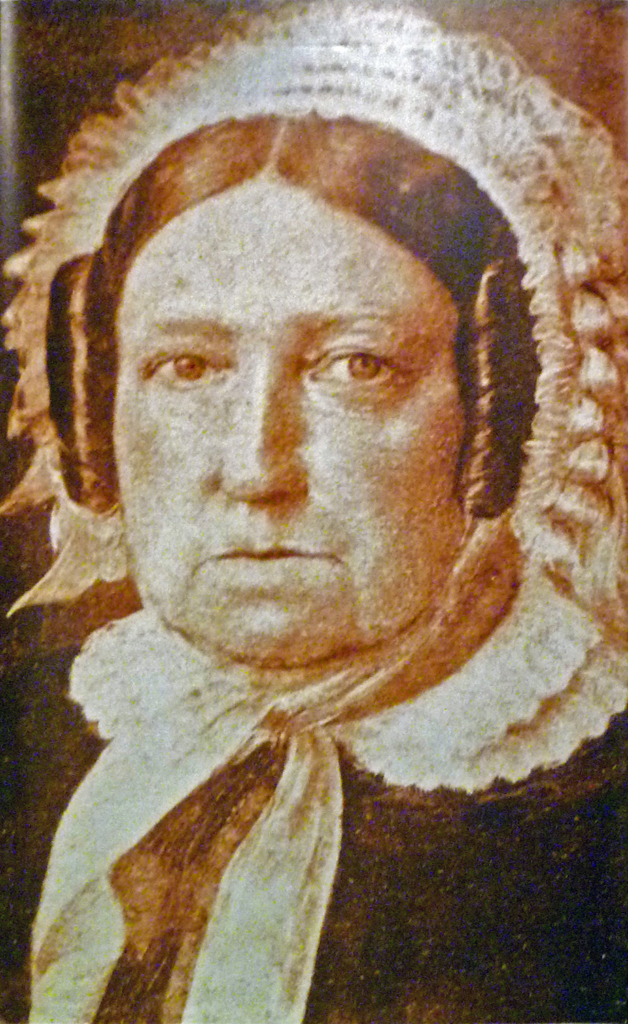
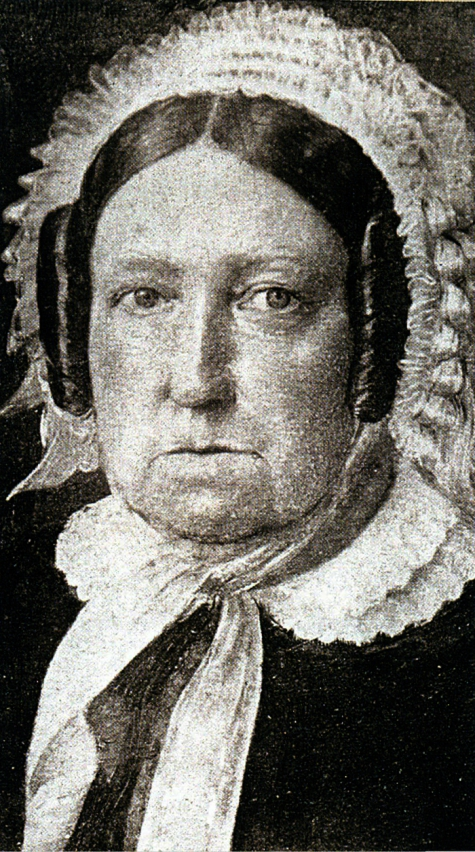
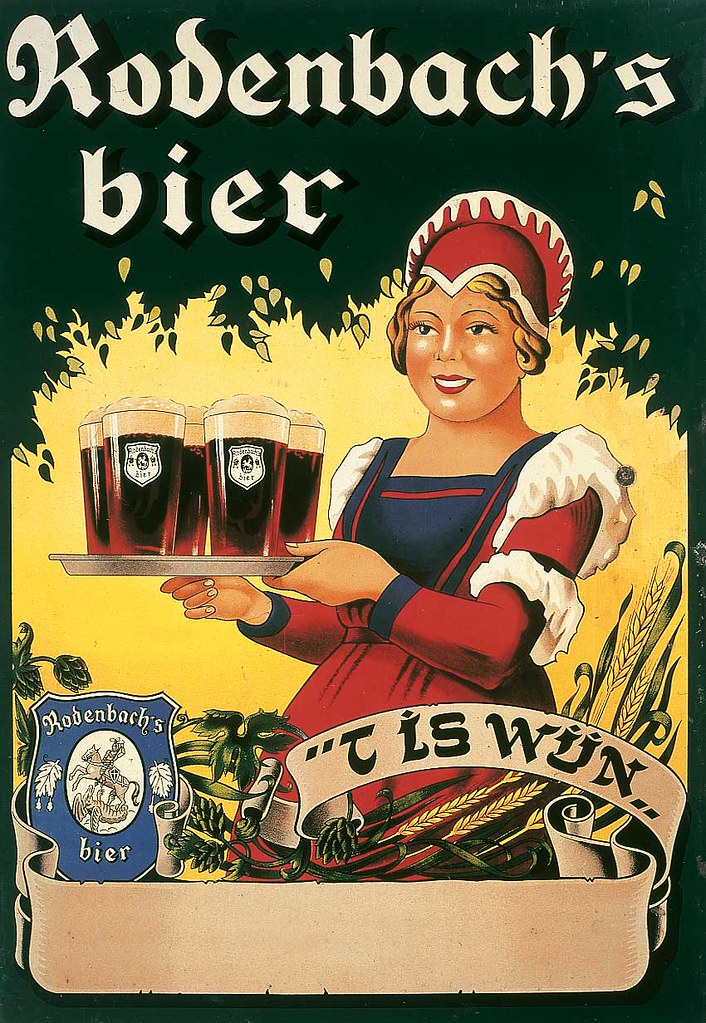
Today is the birthday of Regina Wauters (March 1, 1795-January 24, 1874). She was married to Pedro Rodenbach and the two of them bought out other family members to become sole owners of what would become known as Brouwerij Rodenbach in Rosalre, Belgium.
Born in Mechelen, Regina Wauters was the daughter of a rich local brewer. She married Pedro Rodenbach in 1818 and moved to Roeselare in West Flanders, Belgium, where his family had a distillery.
In 1821 Pedro took along with his brothers and sister a brewery. The brothers agreed to a partnership for fifteen years. At the end of this period, Pedro and Regina bought the brewery from the others and Regina ran the business while Pedro served in the military during the Belgian revolution.
Rodenbach bought the distillery from his family in 1835. He died in Brussels in 1848. His family sold the distillery to Regina Wauters, Her distillery remained for a long time the only significant distillery in Roeselare. Regina extended it immediately after she bought it. Later she asked her eldest son, Raymond, to work in the distillery. Raymond Rodenbach would continue to run the distillery until c.1895. The distillery was later sold to Honoré Talpe who transformed it into a chicory factory.
Regina invested her money not only in the distillery of the Rodenbachs but also in their brewery. In 1836 the family Rodenbach sold the brewery in Roeselare with numerous other properties. Pedro Rodenbach would buy most of it with the money of Regina. Pedro had to sign legal documents to recognize her as sole proprietor of the brewery and any other property that he had bought from his family.
Regina immediately began to expand the brewery. Although she succeeded in building one of the largest distilleries in the region, she would fail to create the largest brewery in the city. She suffered from the fierce competition with Anna Gesquiere, who also ran a brewery in Roeselare.
In 1860 her son Edward Rodenbach came to work in the brewery and it was during his directorship that the brewery expanded outside Roeselare. In 1864 Regina sold him, at the age of 69, her brewery, her house and workshops, along with eleven bars she had bought. Regina Wauters would retire to live on her private means until her death in 1874.
And this is her entry from her Dutch Wikipedia page, translated by Google Translate:
Regina Wauters was a rich brewer’s daughter from Mechelen. She married Pedro Rodenbach in 1818 and moved to Roeselare. The family had a distillery in the Spanjestraat. In 1820, Pedro and his brothers and sisters took over a brewery in the street. In 1835 the family Rodenbach decided to sell the distillery that was still managed in community to Pedro. Pedro Rodenbach was also a soldier and since the Belgian revolutionhe could hardly be seen in Roeselare. He would die in Brussels in 1848. The family then sold the distillery to Regina Wauters, who acted by her husband’s proxy. However, it was Regina who provided the necessary money. She had the necessary documents drawn up, her husband acknowledging that she was the sole owner of the distillery and all other real estate. The distillery would for a long time be the only noteworthy distillery in Roeselare. She employed a lot of people. Regina would expand it immediately after the sale. Later she involved her eldest son, Raymond, in the case. Raymond Rodenbach would continue to run the distillery until about 1895. The distillery was later sold to Honoré Talpe who made it a chicory factory.
Regina Wauters did not only invest her money in the family distillery of the Rodenbachs. In 1836 the Rodenbach family, mainly represented by Alexander Rodenbach , sold her brewery in the Spanjestraat with many other properties. Pedro Rodenbach would buy the majority of that. However, he did this again with Regina’s money. Pedro also had to acknowledge once again in deeds that the brewery and all other properties he had bought from the family were now her property.
Regina Wauters immediately started the expansion of the brewery. She might have one of the largest distilleries in the region; she would not succeed in creating the largest brewery in the city. Before that she had too much competition from Anna Gesquiere, the widow Cauwe, who had a brewery on the Polenplein. There was a strong competition between the two ladies in the 1830s and 1840s. In this way they both strove to introduce the steam engine in Roeselare as soon as possible. Regina Wauters was known for the vigorous management of both her affairs. Her policy was particularly forward-looking. But she was also hardened in the small parts of the business world. For example, she was repeatedly suspected of circumventing the city tax on alcohol. She also had a lock placed on the Mandelbeek without a license,
Since 1848 she moved her sons Emiel and Florent to the brewery, but remained so in the background that they quickly noticed it. In 1860 her second son Eduard Rodenbach entered the brewery. He used to be a lineman manufacturer, but he was certain of being insecure during a flax crisis and decided to concentrate successfully on the beer industry. In 1864 Regina Wauters, now 69, her brewery, home and workshops, together with the eleven cafes she had bought, would sell to her son. From then on, Regina Wauters would retire until her death in 1874.
In 2004 a street in a Roeselaar industrial zone was named after her, the Regina Wautersweg.
And this is the history currently on the brewery website:
The Rodenbachs moved from Andernach am Rhein to Roeselare in West Flanders. The Rodenbach line boasted numerous military men, poets, writers, brewers and entrepreneurs, as well as pragmatic revolutionaries and politicians.
Pedro Rodenbach took part in Napoleon’s Russian campaign and was instrumental in the Belgian revolution in 1830, which led to an independent Belgium. Three Rodenbachs were members of the constitutional congress when Belgium was founded. Constantijn Rodenbach was the author of the “Brabançonne”, the Belgian national anthem.
In 1836, Pedro Rodenbach, together with his entrepreneurial wife Regina Wauters, founded the brewery. However, it is Eugène Rodenbach whom RODENBACH has to thank for its unique quality and masterful character. Not only did he study the vinification of beer, but also optimised the maturation process in oak casks, or “foeders” (maturation casks). The world-renowned cask halls with their 294 oak casks, some of which are 150 years old, are protected as part of the industrial heritage of the Flemish Community.
Today is the birthday of August Meiresonne (February 24, 1842-1913). He was born in Belgium and according to his Dutch Wikipedia page. “Initially, together with his sisters Ida and Pauline, he ran a brewery in Bellem beginning in 1866. In 1871 (in what was then Damstraat and today is now Brouwerijstraat) in Landegem, he took over the existing brewery from the Francies De Paepe and Marie-Thérèse Speeckaert family.”
August Meiresonne called his company De Hoprank and the family brewed beer there until 1918. It was a modern brewery for that time that already worked with electricity. He even supplied electricity to the municipality and the church of Landegem was already equipped with electric lighting for this. The energy came by means of two gas engines and a steam engine.
In October 1918 the brewery and the house were razed to the ground by the Germans. After the First World War, his son Aimé Meiresonne started the new Meiresonne Brewery in Ghent.
August Meiresonne with his family around 1890.
And this is from the Meiresonne Brewery Wikipedia page:
[Meiresonne] started the brewery “De Hoprank” there together with his wife Marie David, with whom he had 10 children. They had a modern business for the time. He became alderman in Landegem and mayor and son Aimé (1888 – 1966) took over the management of the company in 1913 . However, the company was destroyed by the retreating Germans in 1918 , which gave rise to a new start in Ghent. There Aimé Meiresonne took over Brasserij Prosper from Ostend-De Marteleire on the Koepoortkaai.
The brewery in Landegem before 1914.
In 1935 the name “Hoprank” was changed to “Meiresonne,” which in Ghent was irreverently called Meire-zeke. This drink probably couldn’t have been very bad, because until the 1960s there was a thriving company with more than 500 employees; in Ghent one could not miss the name, by the way. Aimé was in charge, Sister Céline was his right-hand man and brother Alfred was the brewmaster.
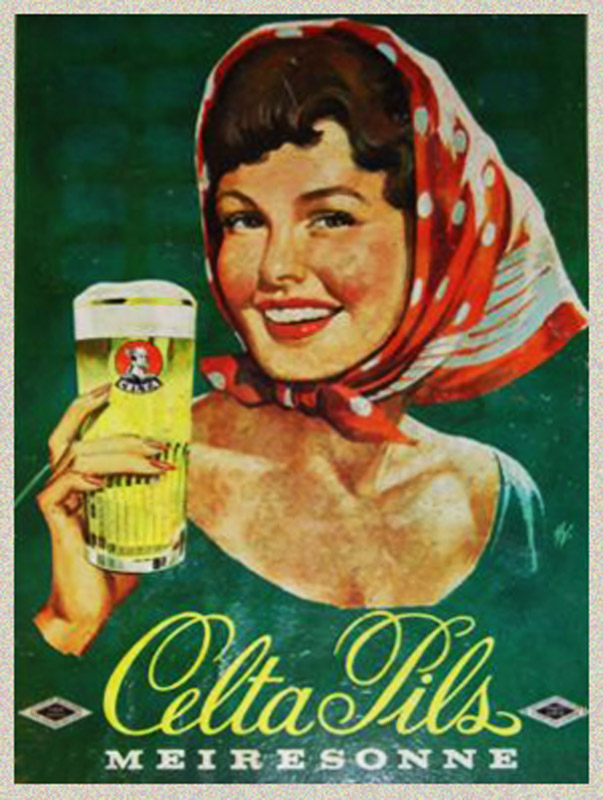
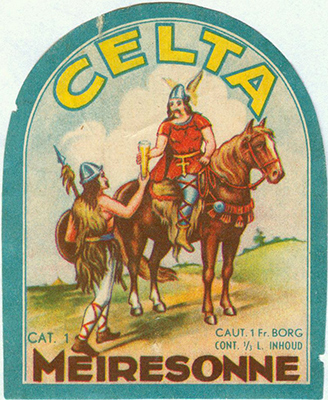
Brand names: The most famous drink was Celta Pils, alongside Fort Op, Family’s (presumably table beer), Pigall’s Stout, Koekoek, Munich, Export, Stolz, Ganda, Goliath and Pater Fredo’s. In 1964 the brewery was taken over by Brouwerij Artois and like many companies merged into Interbrew and InBev. In 1985 the buildings were demolished and apartment buildings were erected on the site, completely erasing the past.
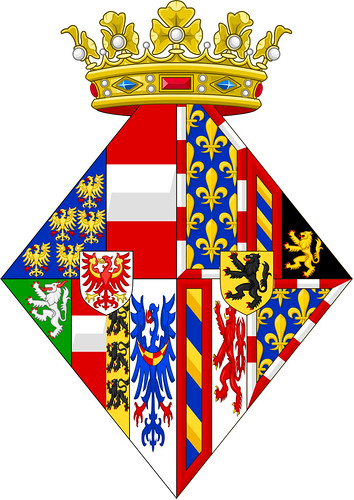
Today is the birthday of Mary of Burgundy (February 13, 1457-March 27, 1482), She was also known as the “Duchess of Burgundy, [and] reigned over the Low Countries from 1477 until her death. As the only child of Charles the Bold and his wife Isabella of Bourbon, she was the heiress to the vast, and vastly wealthy, Burgundian domains in France and the Low Countries upon her father’s death in the Battle of Nancy on January 5, 1477.”
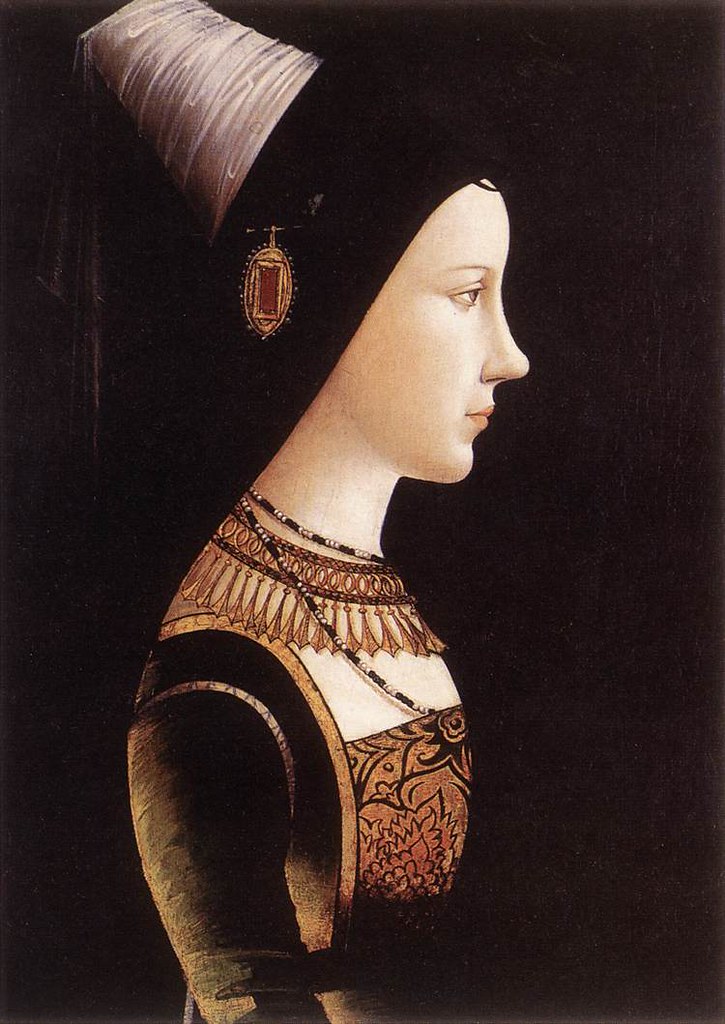
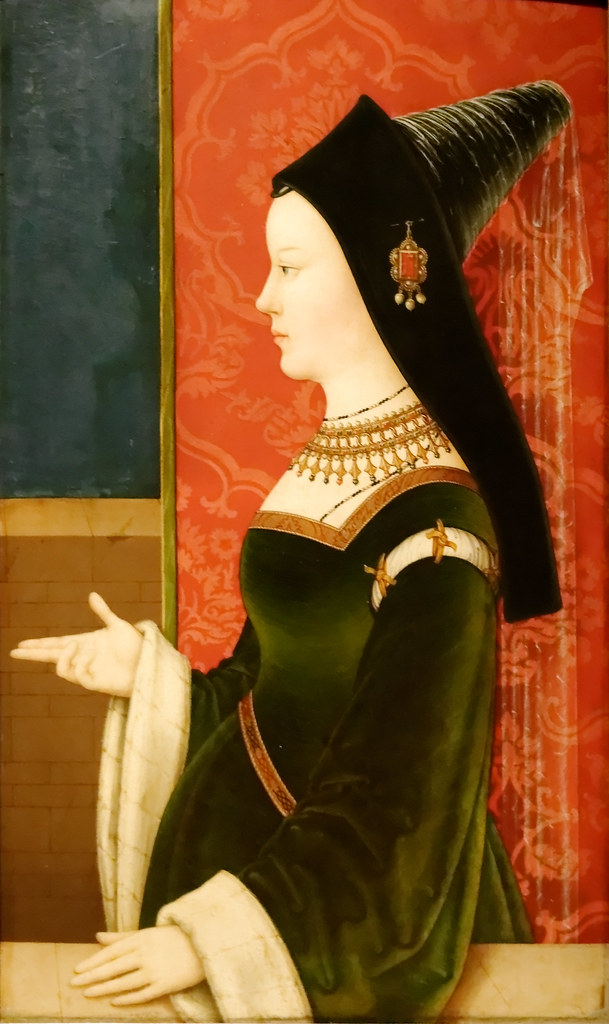
Portrait of Mary of Burgundy, painted in 1490 by Austrian artist, Michael Pacher.
Here’s more about Mary, most of it from her Wikipedia page:
Mary of Burgundy was born in Brussels, at the ducal castle of Coudenberg, to Charles the Bold, Count of Charolais, and his wife, Isabella of Bourbon. Her birth, according to the court chronicler, Georges Chastellain, was attended by a clap of thunder ringing from the otherwise clear twilight sky. Her godfather was Louis, Dauphin of France, in exile in Burgundy at that time; he named her for his mother, Marie of Anjou. Reactions to the child were mixed: the baby’s grandfather, Duke Philip the Good, was unimpressed, and “chose not to attend the [Baptism] as it was only for a girl;” the grandmother, Isabella of Portugal, was simply delighted at the birth of a granddaughter.
Philip the Good died in 1467, making his son Duke of Burgundy and his 10-year-old granddaughter heiress presumptive. As the only child of Charles the Bold, Mary was heiress presumptive to a vast and wealthy domain, made up of the Duchy of Burgundy, the Free County of Burgundy, and the majority of the Low Countries, and her hand was eagerly sought by a number of princes. The first proposal was received by her father when she was only five years old, to marry the future King Ferdinand II of Aragon. Later the younger brother of Louis XI, Charles, Duke of Berry, made an approach, to the intense annoyance of his brother the King, who attempted to prevent the necessary papal dispensation for consanguinity.
As soon as Louis produced a male heir who survived infancy, the future King Charles VIII of France, Louis wanted his son to be the one to marry Mary, despite his son being thirteen years younger than Mary. Nicholas I, Duke of Lorraine, was a few years older than Mary, and his duchy lay alongside Burgundian territory, but his plan to combine his territory with hers was ended by his death in battle in 1473.
Mary ascended upon her father’s death in the Battle of Nancy on 5 January 1477. King Louis XI of France seized the opportunity afforded by his rival’s defeat and death to attempt to take possession of the Duchy of Burgundy proper, and also of Franche-Comté, Picardy and Artois.
A portrait believed to have been painted by Niklas Reiser.
The King was anxious that Mary should marry his son Charles and thus secure the inheritance of the Low Countries for his heirs, by force of arms if necessary. Burgundy, fearing the French military power, sent an embassy to France to negotiate a marriage between Mary and six-year-old Charles VIII, but returned home without a betrothal, finding the French king’s demands of cession of territories to the French crown unacceptable.
On February 10, 1477 at Ghent on the occasion of her formal recognition, known as the Joyous Entry, as Charles’ heir, she was compelled to sign a charter of rights, called the Great Privilege. Under this agreement, the provinces and towns of Flanders, Brabant, Hainaut, and Holland recovered all the local and communal rights which had been abolished by the decrees of the dukes of Burgundy in their efforts to create a centralized state on the French model out of their separate holdings in the Low Countries. In particular, the Parliament of Mechelen (established formally by Charles the Bold in 1470) was abolished and replaced with the pre-existing authority of the Parliament of Paris, which was considered an amenable counterweight to the encroaching, if informal, centralization undertaken by both Charles the Bold and Philip the Good. The Duchess also had to undertake not to declare war, make peace, or raise taxes without the consent of the States, and to employ only native residents in official posts.
Such was the hatred of the people for the old regime that two of her father’s influential councilors, the Chancellor Hugonet and the Sire d’Humbercourt, having been discovered in correspondence with the King of France, were executed at Ghent despite the tears and entreaties of the Duchess.
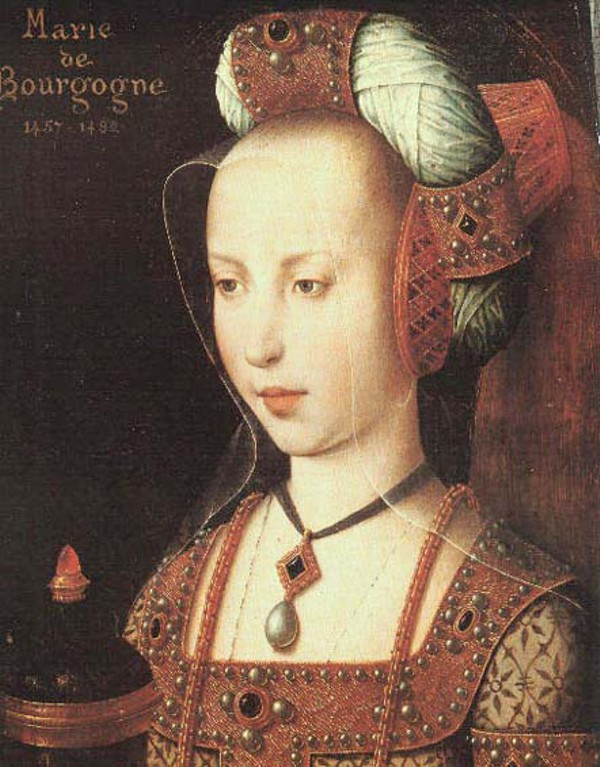
Another, later portrait by an unknown Flemish artist.
Mary now made her choice among the many suitors for her hand, selecting Archduke Maximilian of Austria, who became her co-ruler. The marriage took place at Ghent on the evening of 16 August 1477.[5] The event initiated two centuries of contention between France and the Habsburgs (later of Spain, then of Austria) for their possession, which climaxed in the War of the Spanish Succession, 1701–1714.
In the Netherlands, affairs now went more smoothly, the French aggression was temporarily checked, and internal peace was in large measure restored.
Five years later, the 25-year-old Duchess died due to a fall from her horse on March 27, 1482 near Wijnendale Castle. She loved riding, and was falconing with Maximilian when her horse tripped, threw her, and then landed on top of her, breaking her back. She died several days later, having made a detailed will. She is buried in the Church of Our Lady in Bruges.
Louis was swift to re-engage, and forced Maximilian to agree to the Treaty of Arras (1482) by which Franche-Comté and Artois passed for a time to French rule, only to be regained by the Treaty of Senlis (1493), which established peace in the Low Countries. Mary’s marriage to the House of Habsburg would prove to be a disaster for France, for the Burgundian inheritance would later bring it into conflict with Spain and the Empire.
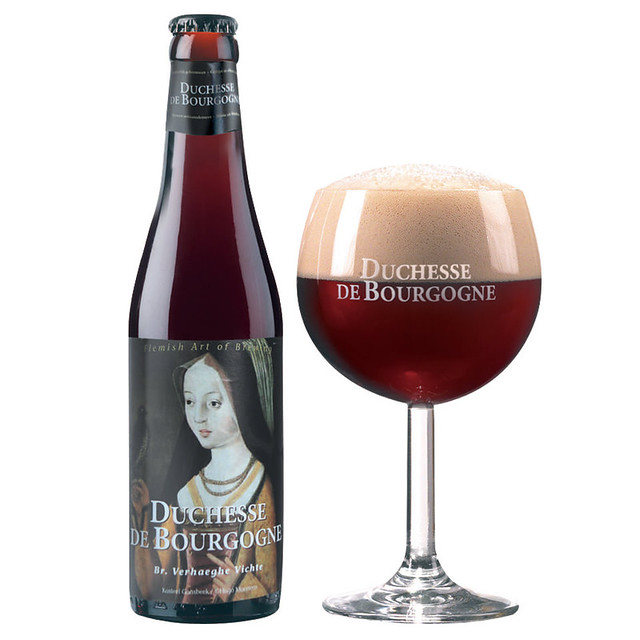
But, of course, she was also the inspiration for a Belgian beer, brewed by the Brouwerij Verhaeghe, located in Vichte, which is a ancient castle and farm in West Flanders. The beer is called Duchesse de Bourgogne, and it’s a personal favorite of mine. I know some people think it’s uneven, or not a classic Flanders Red Ale, but I love it.
I also wrote about Duchesse de Bourgogne a few years ago, and at the time I did my own short overview of her life.
Beer aside, the history of the Duchesse is fascinating. Her anglicized name was Mary of Burgundy, though she was born in Brussels on February 13, 1457, the only child of Charles the Bold, Duke of Burgundy, and his wife Isabella of Bourbon. Needless to say she was quite a catch, especially after her father died in battle (at the siege of Nancy, not a particularly awful sounding name) in 1477, when she was nineteen. Louis XI of France tried to take Burgundy and the Low Countries for himself but was frustrated when Mary signed the “Great Privilege,” by which she gave Flanders, Brabant, Hainaut, and all of Holland autonomous rule (leaving for herself the remainder of the Low Countries, Artois, Luxembourg, and Franche-Comté). She then married Archduke Maximilian of Austria, who was later the Holy Roman Emperor Maximilian I, and part of the Hapsburg Austrian dynasty. This sparked a long-standing dispute over the Low Countries between France and the Hapsburg family.
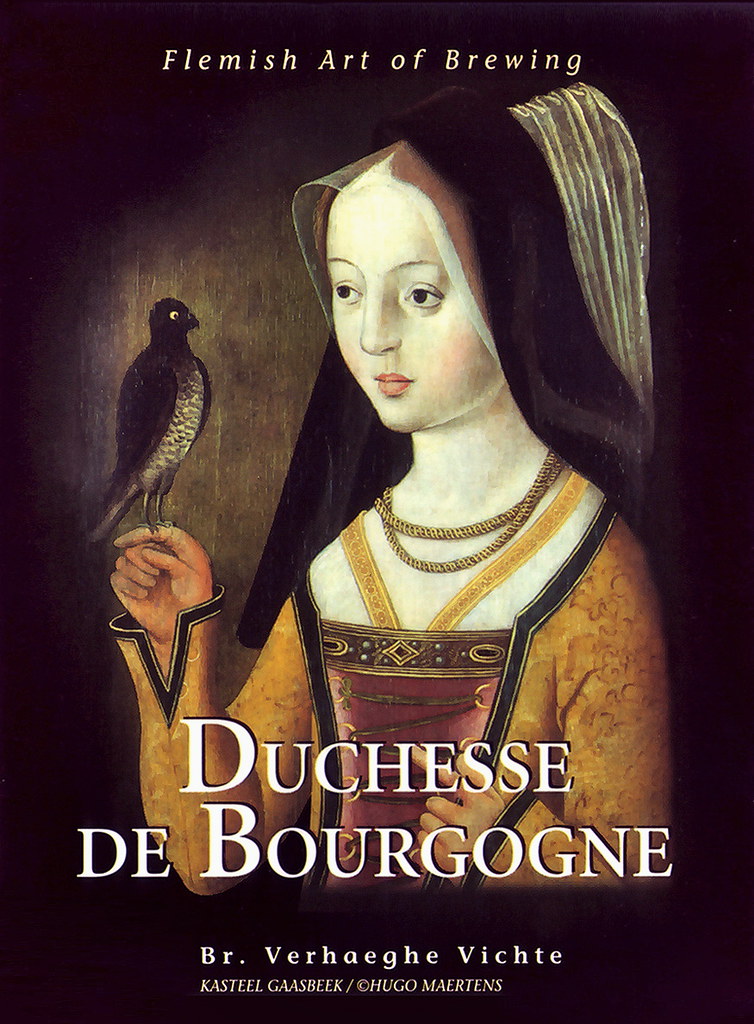
One of Mary’s favorite hobbies was falconing, which was popular among royals in the day. Falconry is basically training and hunting using a falcon. While engaged in this pursuit, in 1482, Mary’s horse tripped, tossing her onto the ground where the horse then landed on top of her, breaking her back. A few days later she died. Mary was only 25. The beer label’s portrait pays homage to her love of falconry and her ultimate death because of it.
Her young son Philip became heir after her death, though Maximilian was in charge until he reached adulthood. King Louis forced Maximilian to sign the Treaty of Arras the same year, and it gave Franche Comté and Artois to France. But Philip was a virtual prisoner until 1485, and then it took Max another eight years to take back control of their lands in the Low Countries. The Treaty of Senlis, in 1493, finally established peace in the area, but Burgundy and Picardy remained French.
So during her short life, Mary had such great impact on European politics that they can be felt even now in the present. So it’s quite appropriate that she have so wonderful a beer that bears her name and her portrait. It’s a fitting legacy.
The Duchesse de Bourgogne from Brouwerij Verhaeghe is the traditional Flemish red ale. This refreshing ale is matured in oak casks; smooth with a rich texture and interplay of passion fruit, and chocolate, and a long, dry and acidic finish. After the first and secondary fermentation, the beer goes for maturation into the oak barrels for 18 months. The final product is a blend of younger 8 months old beer with 18 months old beer. The average age of the Duchesse de Bourgogne before being bottled is 12 months.
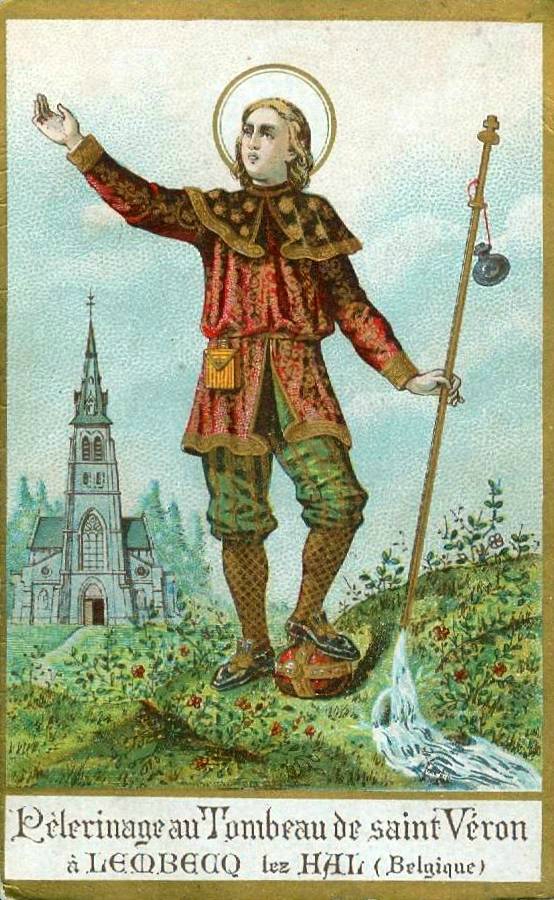
Today is the feast day of St. Veronus. He is the patron saint of Lambeek & Belgian brewers. He was also known as Veronus van Lembeek, and he was a professor or a farmhand (accounts differ) who lived in Belgium in the 9th century.
This short account of his life is from his Dutch Wikipedia page, translated by Google:
The life of Veronus is known from a hagiography written by Olbert van Gembloers around 1015-1020.
According to legend, Veronus was a great-grandson of Charlemagne. He left the parental home at the age of 15, because he did not want to get married, and ended up in Lembeek. Here he settled and served as a servant on a farmyard.
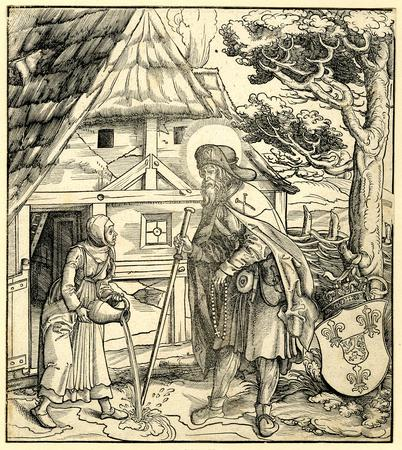
Once when he hammered a stick into the ground, water immediately bubbled from the ground. He told his twin sister, Saint Verona, where he would be buried after his death. A fallen tree would show her the way. After his death it happened as he had foreseen.
Woodcut of Veronus dressed as a pilgrim and holding a staff standing outside a farmhouse, where a woman is pouring liquid from a churn, from c.1516-8.
And this account is from Heiligen, a German website devoted to saints, also translated by Google.
Veronus was of fairly high descent. He is said to have been a cousin of Charles the Bald († 877). He left his parental home because he did not agree with the plans of his parents who liked to see him married and with an appropriate party. He himself walked around desiring to devote himself entirely to the service of God, and thus not to marry. On his departure, he informed his sister Verona (9th century; feast day, August 29) that in due time a sign would indicate the time and place of his death: a storm would arise and the trees would blow over and fall in towards the place where he is said to have died. After some wanderings, he ended up on a court farm in Lembeek. There he hired himself out as a farmhand. He lived a life of simplicity and service.
Legend tells how he drilled a well when he once planted his stick in the ground near the church. After all, according to the chronicles, he died “loved by God and by men.”
Indeed, his death was accompanied by the signs he had announced to his sister at the time. So she left in the indicated direction and ended up in Brabant. The horses stopped in Berchem. There she was told that she had to continue to Lembeek. She found her brother’s grave in the local church. The moment she entered the body emitted a wonderful scent. The tomb was opened and the dead was found completely intact. Over the centuries, the memory of Veronus faded. He is said to have appeared to a priest on the spot to remind him of his memory. The priest began to work for the restoration of the worship of Veronus, and the latter expressed his agreement by delighting many pilgrims with answers to prayers and other miracles.
Modern Usages
There’s a St. Veronus Cafe and Tap Room located in Peterborough, Ontario, Canada. They bill themselves as a Belgian restaurant and beer bar.
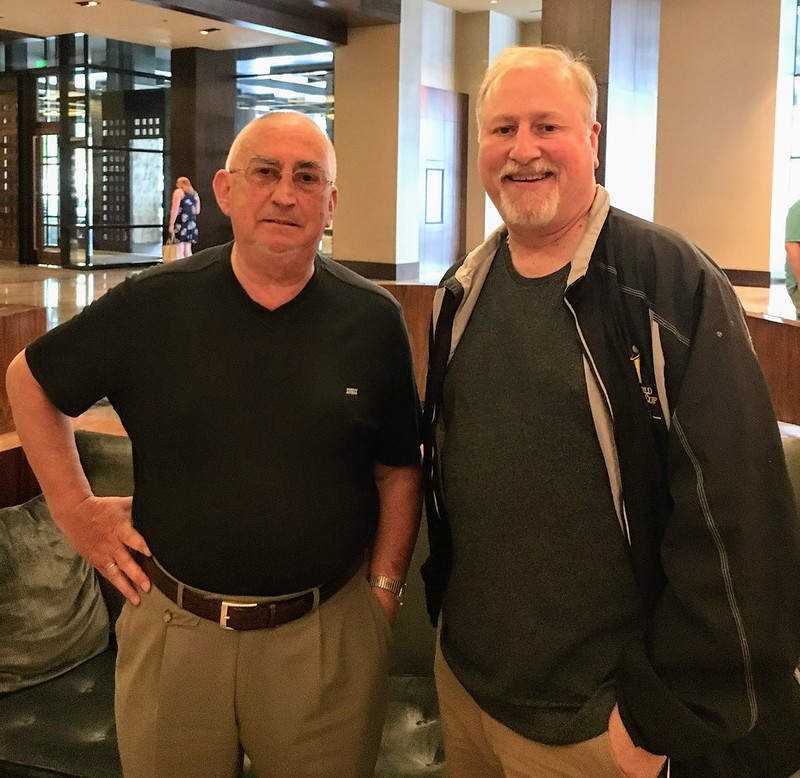
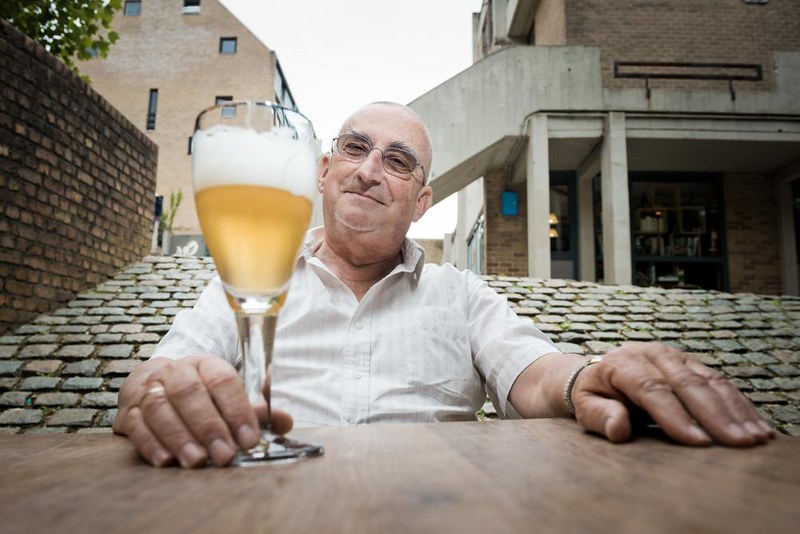
Today is the 78th birthday of Jean-Marie Rock, former brewmaster of Orval. While I’d visited the brewery a couple of times, I had the pleasure of judging Belgian beers with Jean-Marie at the World Beer Cup when it was in Nashville, which was an amazing experience. He first brewed for Palm and later for Lamot in Mechelen, brewing lagers, before joining Orval in 1972. He retired about sieven years ago, and is doing some consulting, plus working on another brewery in Belgium, Monsieur Rock. Join me in wishing Jean-Marie a very happy birthday.
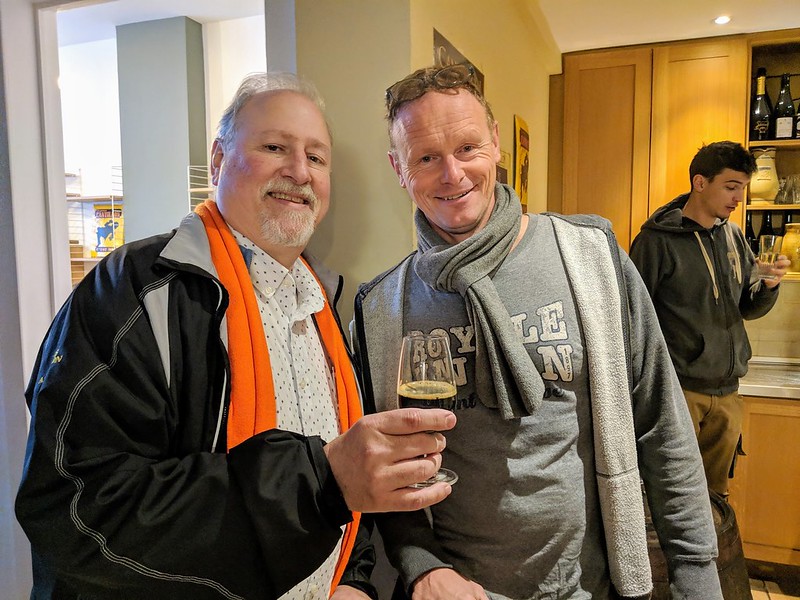
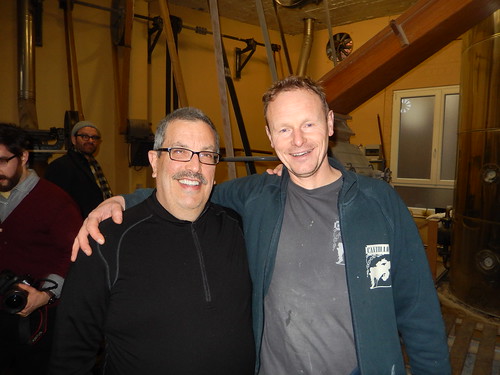
Today is the 58th birthday of Jean Van Roy, who took over the Cantillon Brewery in Brussels from his father several years ago, though he’d been working there all of his life. Considered a working brewery museum, they make some amazing lambics, and the tour is one everyone should take at least once in their life. Down an unassuming alley in Brussels, and not one you’d feel safe meandering along at night, Cantillon has been located there since 1900, when it was founded. I’ve met Jean a number of times, and he always strikes me as a man with beer in his blood, and a passion for what he’s doing, which makes him a kindred spirit as far as I’m concerned. Join me in wishing Jean a very happy birthday.
Jean and me at Cantillon two years ago during a quick stop in November.
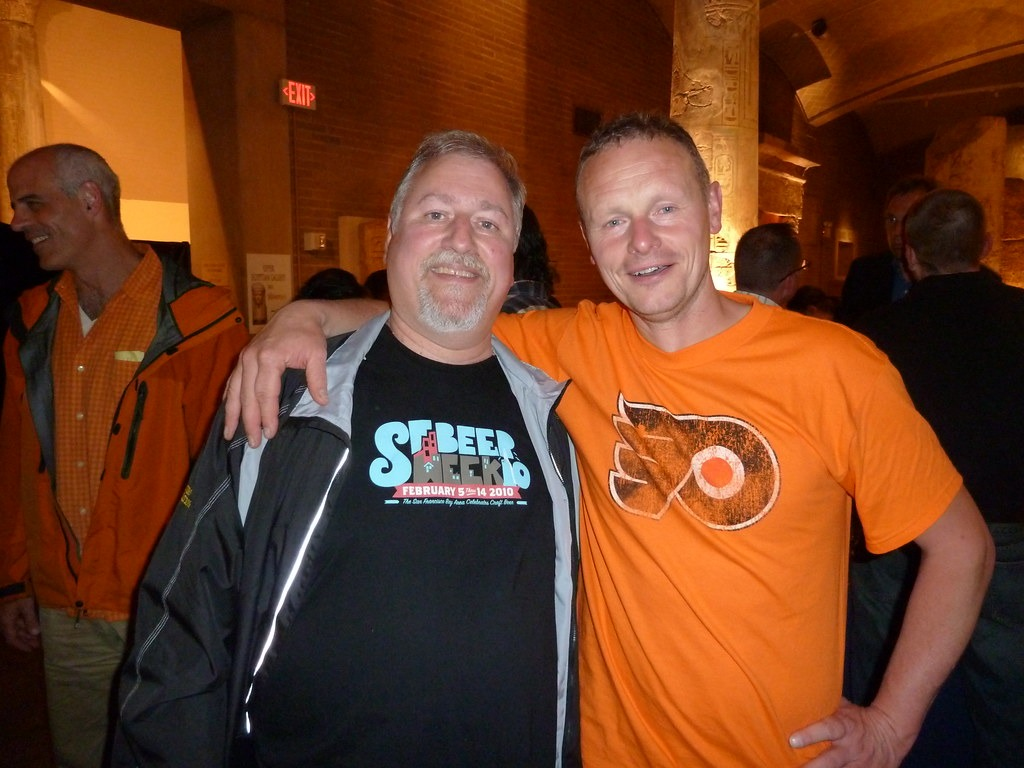
Me and Jean at the Great Lambic Summit at the University of Pennsylvania Museum of Archeology & Anthropology on June 9 during Philly Beer Week in 2010.
Tom Peters, Frank Boon, Jean, Fergie Carey and Armand Debelder at a Lambic Beer Dinner held at Monk’s Cafe in Philadelphia a few years ago.
Jean (on right), Yvan De Baets (center, who was then planning to open Brasserie De La Senne) and I believe Bernard (on left, also from De La Senne) at Deep Ellum in Boston during CBC in 2009.
Tom Peters and Jean at Cantillon during a visit there in February a few years ago.
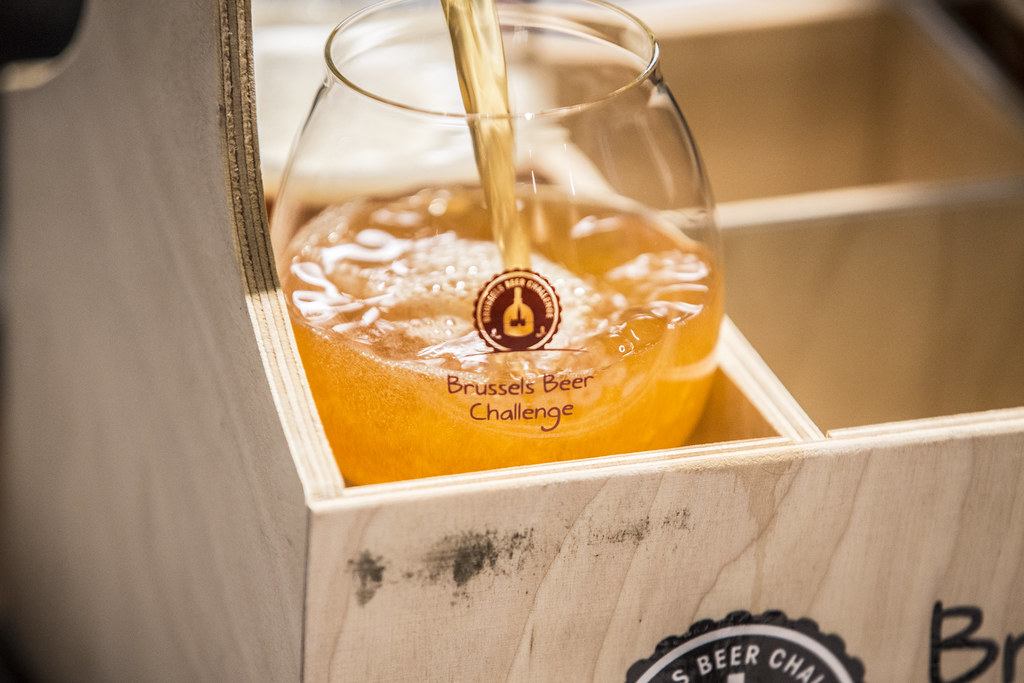
Yesterday, the winners of the 12th annual Brussels Beer Challenge were announced in Ghent, Belgium. Exactly 1,811 beers from 37 countries were judged in 8 broad styles (Pale Ale, Dark Ale, Red Ale, Pils, Stout/Porter, White, Flavoured Beers, and Specialty Beers) and then further subdivided into 91 smaller categories (lambic, abbey, chocolate beers, etc.). This year, we were judging in Turnhout, a small town around 55 miles northeast of Brussels with an amazing Playing Card Museum. We judged the beers over three days in Congratulations to all the winners!
Belgium won the most medals, with the Netherlands coming in second, and the United States in third. Here are the top twelve medal winners, by country.
Medals Won by Country:
Belgium = 81
Italy = 37
Netherlands = 34
United States = 32
China = 21
Germany = 17
Brazil = 16
France = 11
TIE: Japan = 5 / Spain = 5
Czech Republic = 4
TIE: Malta = 3 / Sweden = 3
TIE: Norway = 2 / Poland = 2 / Ukraine = 2
The 2023 Brussels Beer Challenge Winners
Category 1 — Dark Ale: Abbey / Trappist Style Dubbel
Gold: Steenbrugge Dubbel Bruin (Belgium) Brewed by Swinkels Family Brewers
Silver Bière de Garde Brune (Netherlands) Brewed by Brouwerij Duits & Lauret
Bronze: Gouverneur Dubbel (Netherlands) Brewed by Lindeboom Bierbrouwerij
Category 2 — Dark Ale: Brown Ale
Gold: Kompel Ondergronds (Belgium) Owned by Brouwerij Kompel
Gold: La Gervoise Brune (France) Brewed by Brasserie Etienne
Category 3 — Dark Ale: Dark/Black IPA
Gold: Zwarte Magie (Netherlands) Brewed by Bierbrouwerij Wentersch
Silver: Blauwst’rig (Netherlands) Owned by IV:uur Bierbrouwerij
Bronze: Regeneration (Italy) Brewed by Astesana SRL Società Agricola
Category 4 — Dark Ale: Oud Bruin (Flanders Brown Ale)
Gold: Enigma 23 (United States) Brewed by New Glarus Brewing Company
Category 5 — Dark Ale: Strong Dark Ale
Gold: Haeseveld Belgian Strong Dark (Belgium) Brewed by Brouwerij Haeseveld
Silver: Leplan Quad Bbi (Belgium) Owned by LePlan-Vermeersch
Silver: Martha Brown Eyes (Belgium) Brewed by Belgian Brew Factory
Bronze: 30th Anniversary (United States) Brewed by New Glarus Brewing Company
Bronze: Straffe Hendrik Quadrupel (Belgium) Brewed by Brouwerij De Halve Maan
Category 6 — Flavoured Beer: Chocolate
Gold: Midnight Hike (United States) Brewed by River North Brewery
Silver: Flipped Milk Stout (China) Brewed by Trueman Brewing Co.
Bronze: No award.
Category 16 — Flavoured Beer: Strong Red Fruit Beer
Gold: Red by Petrus (Belgium) Brewed by Brouwerij De Brabandere
Silver: Nachtraaf Wild Cherry (Belgium) Owned by De Nachtraafbrouwers
Bronze: No award.
Category 17 — Flavoured Beer: Wood/Barrel Aged
Gold: Balcones Edition 2023 Barley Wine (Netherlands) Brewed by Brouwerij de Molen
Gold: BA Collab 2023: Red Quadrupel x Brouwerij Eleven (Netherlands) Brewed by vandeStreek Bier
Silver: Rusty Nail 2022 (United States) Brewed by Fremont Brewing Company
Bronze: Fourchette Grand Cru (Belgium) Brewed by Brouwerij Van Steenberge
Category 18 — Lager: American-Style Pilsner
Gold: Pizzapils (Italy) Brewed by IPC srl
Silver: No award. Bronze: No award.
Category 19 — Lager: Bohemian-Style Pilsner
Gold: Bernard Bohemian Lager 4.5 (Czech Republic) Brewed by Rodinný Pivovar Bernard A.S. Silver: Primátor Antonín (Czech Republic) Brewed by Primátor A.S. Bronze: Bakalar Premium Lager (Czech Republic) Brewed by Tradicní Pivovar v Rakovníku, A.S.
Category 20 — Lager: Cold IPA
Gold: Cold Shower (Italy) Brewed by Bizantina SRL
Silver: No award.
Bronze: No award.
Judging took place in a beautiful space, a former church.
Today is also the feast day of St. Amand (c. 584 CE–679 CE). He was known for his hospitality, and is the patron saint of all who produce beer: brewers, innkeepers and bartenders and was also known as Amandus, Amandus of Elnon and Amantius. He was a bishop of Tongeren-Maastricht and one of the great Christian missionaries of Flanders. He is venerated as a saint, particularly in France and Belgium. He was born in Poitou, France, and died in the monastery at Elnone-en-Pevele (modern Saint-Amand-les-Eaux), France.
This account of his life is by T.J. Campbell from the Catholic Encyclopedia:
One of the great apostles of Flanders; born near Nantes, in France, about the end of the sixth century. He was, apparently, of noble extraction. When a youth of twenty, he fled from his home and became a monk near Tours, resisting all the efforts of his family to withdraw him from his mode of life. Following what he regarded as divine inspiration, he betook himself to Bourges, where under the direction of Saint Austregisile, the bishop of the city, he remained in solitude for fifteen years, living in a cell and subsisting on bread and water. After a pilgrimage to Rome, he was consecrated in France as a missionary bishop at the age of thirty-three. At the request of Clotaire II, he began first to evangelize the inhabitants of Ghent, who were then degraded idolaters, and afterwards extended his work throughout all Flanders, suffering persecution, and undergoing great hardship but achieving nothing, until the miracle of restoring the life of a criminal who had been hanged, changed the feelings of the people to reverence and affection and brought many converts to the faith. Monasteries at Ghent and Mt. Blandin were erected. They were the first monuments to the Faith in Belgium. Returning to France, in 630, he incurred the enmity of King Dagobert, who he had endeavoured to recall from a sinful life, and was expelled from the kingdom. Dagobert afterwards entreated him to return, asked pardon for the wrong done, and requested him to be tutor of the heir of the throne. The danger of living at court prompted the Saint to refuse the honour. His next apostolate was among of the Slavs of the Danube, but it met with no success, and we find him then in Rome, reporting to the pope what results had been achieved.
While returning to France he is said to have calmed a storm at sea. He was made Bishop of Maastricht about the year 649, but unable the repress the disorders of the place, he appealed to the Pope, Martin I, for instructions. The reply traced his plan of action with regard to fractious clerics, and also contained information about the Monothelite heresy, which was then desolating the East. Amandus was also commissioned to convoke councils in Neustria and Austrasia in order to have the decrees which had been passed at Rome read to the bishops of Gaul, who in turn commissioned him to bear the acts of their councils to the Sovereign Pontiff. He availed himself of this occasion to obtain his release from the bishopric of Maastricht, and to resume his work as a missionary. It was at this time that he entered into relations with the family of Pepin of Landen, and helped Saint Gertrude and Saint Itta to establish their famous monastery of Nivelles. Thirty years before he had gone into the Basque country to preach, but had met with little success. He was now requested by the inhabitants to return, and although seventy years old, he undertook the work of evangelizing them and appears to have banished idolatry from the land. Returning again to his country, he founded several monasteries, on one occasion at the risk of his life. Belgium especially boasts many of his foundations. Dagobert made great concessions to him for his various establishments. He died in his monastery of Elnon, at the age of ninety. His feast is kept 6 February.
And this history is from Catholic Online:
This great missionary was born in lower Poitou about the year 584. At the age of twenty, he retired to a small monastery in the island of Yeu, near that of Re. He had not been there more than a year when his father discovered him and tried to persuade him to return home. When he threatened to disinherit him, the saint cheerfully replied, “Christ is my only inheritance.” Amand afterward went to Tours, where he was ordained, and then to Bourges, where he lived fifteen years under the direction of St. Austregisilus, the bishop, in a cell near the cathedral. After a pilgrimage to Rome, he returned to France and was consecrated bishop in 629 without any fixed See, receiving a general commission to teach the Faith to the heathens. He preached the gospel in Flanders and northern France, with a brief excursion to the Slavs in Carinthia and perhaps, to Gascony. He reproved King Dagobert I for his crimes and accordingly, was banished. But Dagobert soon recalled him, and asked him to baptize his newborn son Sigebert, afterwards to become a king and a saint. The people about Ghent were so ferociously hostile that no preacher dared venture among them. This moved Amand to attempt that mission, in the course of which he was sometimes beaten and thrown into the river. He persevered, however, and in the end people came in crowds droves to be baptized.
As well as being a great missionary, St. Amand was a father of monasticism in ancient Belgium, and a score of monasteries claimed him as founder. He found houses at Elnone (Saint-Amand-les-Eaux), near Tournai, which became his headquarters, St. Peters on Mont-Blendin at Ghent, but probably not St. Bavo’s there as well; Nivells, for nuns, with Blessed Ida and St. Gertrude, Barisis-au-Bois, and probably three more. It is said, though possibly apocryphal, that in 646 he was chosen bishop of Maestricht, but that three years later, he resigned that See to St. Remaclus and returned to the missions which he had always had most at heart. He continued his labors among the heathens until a great age, when, broken with infirmities, he retired to Elnone. There he governed as Abbot for four years, spending his time in preparing for the death which came to him at last soon after 676. That St. Amand was one of the most imposing figures of the Merovingian epoch, is disputed by no serious historian; he was not unknown in England, and the pre-Reformation chapel of the Eyston family at east Hendred in Birkshire is dedicated in his honor.
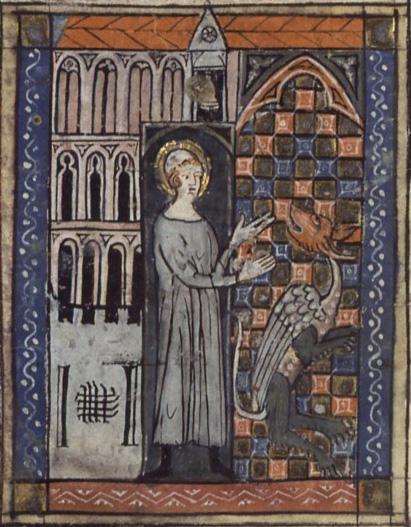
St. Amandus and the serpent, from a 14th-century manuscript.
He has quite a few patronages, including the Boy Scouts, bar staff,barkeepers, bartenders, brewers, grocers, hop growers, hotel keepers, innkeepers, merchants, pharmacists, druggists, vinegar makers, vine growers, vintners, wine-makers, and wine merchants; plus he’s against diseases of cattle, against fever, against paralysis, against rheumatism, against seizures, against skin diseases, against vision problems; and of the places: Flanders, Belgium; Maastricht, Netherlands; Salzburg, Austria; Utrecht, Netherlands; and Wingene, Belgium.
Leaded glass window (detail) of St. Amand in the Catholic parish church of Saint-Vincent-de-Paul in Clichy, France.
Modern Usage
There are several examples of beers named for St. Amand and at least one beer importer.
St. Amand French Country Ale from Brasserie Castelain, though it’s no longer on their website so maybe they discontinued it.
Today is the feast day of St. Columbanus of Ghent (543 CE–February 15, 959 CE), not to be confused with Columbanus from three centuries earlier. He was a patron saint of Belgium, Ghent, and brewers. He was probably born in Ireland but moved with his followers to Ghent, Belgium, to escape raiding parties. There isn’t a great deal of information about him, and he’s not much remembered outside Belgium. He’s buried in the cathedral of Ghent, which at the time was known as the church of St. Bavo. His name is in the litany to be recited in Belgium during public emergencies.
Saint Columbanus was probably an Irish abbot who led his community to Belgium following the constant raids of the Norsemen. On February 2, 957, Columbanus became a hermit in the cemetery near the church of Saint-Bavo at Ghent, where he acquired a wide reputation for holiness. He is buried in the cathedral and is one of the patrons of Belgium.
February 2 is the commemoration of a tenth-century Irish recluse at Ghent in Belgium. It seems, to judge from the footnotes to Canon O’Hanlon’s entry for Saint Columban, that he has been confused with his more famous namesake, Saint Columban (Columbanus) of Bobbio. It also seems that the saint is commemorated on the day of his enclosure as a hermit, February 2 in the the year 957, rather than on the day of his death, February 15. Canon O’Hanlon relies on the efforts of the seventeenth-century hagiologist, Father John Colgan, to uncover what was known about the Belgian Saint Columban.
Yesterday, the winners of the 9th annual Brussels Beer Challenge were announced. Exactly 1,546 beers from 36 countries were judged in 8 broad styles (Pale Ale, Dark Ale, Red Ale, Pils, Stout/Porter, White, Flavoured Beers, and Specialty Beers) and then further subdivided into 80 smaller categories (lambic, abbey, chocolate beers, etc.). In a normal year, I would have been there for the judging, but with Covid restrictions, the EU was not permitting Americans to fly to Europe. I had hoped to post this yesterday, but it took me this long to go through and reformat the winners into a list. Congratulations to all the winners!
Belgium won the most medals, with the United States coming in second. Here are the top medal winners, by country.
Medals Won by Country:
Belgium = 79
United States = 31
Italy = 30
Netherlands = 23
Brazil = 16
France = 13
Canada = 10
TIE: China = 9 / Germany = 9
Ireland = 6
TIE: South Korea = 3 / Taiwan = 3
The 2020 Brussels Beer Challenge Winners
Category 1 — Dark Ale: Abbey / Trappist Style Dubbel
Gold: Viven Classic Bruin (Belgium)Owned by Brouwerij Viven
Silver: Ter Dolen Donker (Belgium)Brewed by Brouwerij Ter Dolen
Bronze: Deduction (United States)Brewed by Taxman Brewing Company
Bronze: Duits & Lauret Biere de Garde Brune(Netherlands)Brewed by Brouwerij Duits & Lauret
Category 2 — Dark Ale: Brown Ale
Gold: Dark Coffee Break (Brazil)Brewed by Wäls Ambev
Silver: Joup (Belgium)Brewed by Brasserie Grain d’Orge
Bronze: Rur’ale Brune (France)Brewed by Brasserie Robiche
Category 3 — Dark Ale: Dark/Black IPA
Gold: Black Bucket (Ireland)Brewed by Kinnegar Brewing
Silver: Colorado Black Indica (Brazil)Brewed by Cervejaria Colorado
Bronze: Obaa Three (Belgium)Owned by Obaa Sprl
Category 4 — Dark Ale: Oud Bruin (Flanders Brown Ale)
Gold: No award.
Silver: Queue de Charrue vieille brune (Belgium)Brewed by Brasserie Vanuxeem
Bronze: Liefmans Goudenband (Belgium)Brewed by Duvel Moortgat
Category 5 — Dark Ale: Strong Dark Ale
Gold: Qualified (United States)Brewed by Taxman Brewing Company
Silver: De Poes Bruin (Belgium)Brewed by Brouwerij De Poes BVBA
Silver: St.Bernardus Abt 12 (Belgium)Brewed by St.Bernardus Brouwerij
Bronze: Gladium Symphony (Italy)Brewed by Birrificio Artigianale della Presila diVerrino Anselmo & C. Sas
Category 6 — Flavoured Beer: Chocolate
Gold: Endless Love (South Korea) Brewed by Artmonster Brewery
Silver: Peanut Butter Hazelnut Caramel Chocolate CakeStout (United States)Brewed by Hoppin’ Frog Brewing Co
Bronze: Bodebrown – Iron Maiden Trooper Brasil IPA(Brazil)Brewed by Cervejaria Bodebrown Ltda
Category 7 — Flavoured Beer: Coffee
Gold: Dadgum Coffee IPA (United States)Brewed by Rahr & Sons Brewing Co.
Silver: Goodieson Coffee Stout (Australia)Brewed by Goodieson Brewery
Bronze: Kaffee (Canada)Brewed by Microbrasserie La Souche
Bronze: Panda Nero (Ireland)Brewed by Brú Brewery
Category 8 — Flavoured Beer: Field Beer
Gold: No Award
Silver: Colorado Double Brown Coconut (Brazil)Brewed by Cervejaria Colorado
Bronze: La Diablesse (Belgium)Brewed by Brasserie du Renard
Gold: Bush de Nuits(Belgium) Brewed by Brasserie Dubuisson
Gold: Peak Triple Rum Barrel Aged(Belgium) Brewed by Belgium Peak Beer S.A
Silver: La Curita Imperial (United States) Brewed by Veza Sur Brewing Company
Bronze: Grande Réserve Fermentée en Barriques – Edition Armagnac (Belgium) Brewed by Bières de Chimay
Category 18 — Lager: American-Style Pilsner
Gold: No award.
Silver: Dama Pilsen(Brazil) Brewed by Renato Bazzo Bronze: Firestone Lager(United States) Brewed by Firestone Walker
Category 19 — Lager: Bohemian-Style Pilsner
Gold: Pils(Italy) Brewed by Qubeer Silver: Mama’s Little Yella Pils (United States) Brewed by Oskar Blues Brewery Bronze: Kingpin Pils(Poland) Owned by Browar Kingpin Sp. z.o.o.
Gold: Ter Dolen Blond(Belgium) Brewed by Brouwerij Ter Dolen
Silver: Lamme Goedzak(Belgium) Brewed by Scheldebrouwerij BVBA
Bronze: Herkenrode Cister(Belgium) Brewed by Brouwerij Cornelissen
Bronze: Malheur 8(Belgium) Brewed by Brouwerij Malheur
Category 32 — Pale&Amber Ale: Amber
Gold: La Bonne Aventure (Canada) Brewed by Microbrasserie Pit Caribou
Silver: La Rousse du Mont Blanc(France) Brewed by Brasserie du Mont Blanc
Bronze: Donna di Cuori(Italy) Brewed by Ibeer
Category 33 — Pale&Amber Ale: American IPA (Higher Than 6.5 ABV)
Gold: Born and Raised(United States) Brewed by No-Li Brewhouse
Gold: California West Coast IPA(Italy) Brewed by Mastri Birrai Umbri Società Agricola
Silver: Revision IPA(United States) Brewed by Revision Brewing Company
Bronze: Missile(United States) Brewed by Champion Brewing Company
Category 34 — Pale&Amber Ale: American IPA (Less Than 6.5 ABV)
Gold: Bird of Prey(Netherlands) Brewed by Uiltje Brewing Company
Silver: So Hoppy!(Belgium) Brewed by Dum’s Brew
Bronze: Jopen Hop Zij Met Ons(Netherlands) Brewed by Jopen BV
Bronze: La Conquereor(Canada) Brewed by Microbrasserie Pit Caribou
Category 35 — Pale&Amber Ale: American Pale Ale
Gold: Dikke Lul 3 Bier(Netherlands) Brewed by Uiltje Brewing
Silver: Aero(Italy) Brewed by Birrificio della Granda
Silver: Day Job Pale Ale(United States) Brewed by Three Weavers Brewing, Co.
Bronze: Tiny Gangsta(China) Owned by Crafters Brewing Co.
Category 36 — Pale&Amber Ale: Belgian Style IPA
Gold: No award.
Silver: Lumunus(Netherlands) Brewed by Stadsbrouwerij 013 Bronze: Jack’s Precious IPA(Belgium) Brewed by Brouwerij The Musketeers Bronze: Viven Master IPA(Belgium) Owned by Brouwerij Viven
Category 37 — Pale&Amber Ale: Best Bitter
Gold: Roger Bitter(Italy) Brewed by Birra 100Venti
Silver: La Galipette(Belgium) Brewed by Brasserie Le Fou du Roi – E.L.T sprl
Bronze: Aubel Pure(Belgium) Brewed by Brasserie Grain d’Orge
Category 38 — Pale&Amber Ale: Bières De Garde Ambrée
Gold: No award.
Silver: Gare de Roubaix(Italy) Brewed by Birrificio Mezzavia Bronze: PAPITOU(Belgium) Owned by MV²O – LPDLT BV. Bronze: St Idesbald Rousse(Belgium) Brewed by Brouwerij L. Huyghe
Category 39 — Pale&Amber Ale: Bitter
Gold: Doom Bar(United Kingdom) Owned by Sharps Brewery
Silver: Bertinchamps Légère(Belgium) Brewed by Brasserie de Bertinchamps
Bronze: Santé Maris Otter(Belgium) Owned by Sante Beer
Category 40 — Pale&Amber Ale: Double Saison
Gold: Moinette Blonde(Belgium) Brewed by Brasserie Dupont
Silver: Tank 7(United States) Brewed by Boulevard Brewing Company
Bronze: Saison Dupont Dry Hop(Belgium) Brewed by Brasserie Dupont
(Photo by Bart Van der Perre)
Category 41 — Pale&Amber Ale: English IPA
Gold: SUPER 8 IPA(Belgium) Brewed by Brouwerij Haacht
Silver: NONNE IPA(France) Brewed by Les Brasseurs Savoyards
Bronze: Ninkasi French IPA (France) Brewed by Ninkasi Fabriques
Category 42 — Pale&Amber Ale: Golden Ale
Gold: No award.
Silver: Wilderen Goud (Belgium) Brewed by Brouwerij & Distilleerderij Wilderen Bronze: St-Feuillien Five (Belgium) Brewed by Brasserie St-Feuillien Bronze: Troubadour Blond (Belgium) Brewed by Brouwerij The Musketeers
Category 43 — Pale&Amber Ale: Imperial IPA
Gold: Thumper(Ireland) Brewed by Kinnegar Brewing
Silver: Azz(Italy) Brewed by Birra Gaia SrL
Bronze: Jopen Heavy Cross(Netherlands) Brewed by Jopen BV
Category 44 — Pale&Amber Ale: Kölsch
Gold: La Blonde du Pêcheur(Canada) Brewed by Microbrasserie Pit Caribou
Silver: No award.
Bronze: No award.
Category 45 — Pale&Amber Ale: Light Bitter Blond/Golden Ale
Gold: Ename Pater(Belgium) Brewed by Brouwerij Roman
Silver: Fientje(Belgium) Owned by Huisbrouwerij Fienneke- Ellen Winters
Bronze: 8 File(Italy) Brewed by La Collina Trattoria & Birrificio Artigianale
Bronze: Super Sanglier(Belgium) Brewed by Brasserie Minne
Category 46 — Pale&Amber Ale: Modern Saison
Gold: Funky Brett(Belgium) Brewed by Brasserie Lefebvre
Silver: Blue Butterfly(United States) Brewed by Deschutes Brewery
Bronze: 28 Saison(Belgium) Brewed by Brasserie 28
Category 47 — Pale&Amber Ale: New England IPA
Gold: Loup des Saules(Canada) Brewed by Microbrasserie La Souche
Silver: Disco Ninja(United States) Brewed by Revision Brewing
Bronze: Juice Punch V10(Netherlands) Brewed by Brouwerij Frontaal
Bronze: Master Gao Birdland(China) Brewed by Master Gao Brewing Co. of Nanjing
Category 48 — Pale&Amber Ale: Pacific IPA
Gold: Crikey IPA(United States) Brewed by Reuben’s Brews
Silver: The Pupil(United States) Brewed by Societe Brewing Company
Bronze: No award.
Category 49 — Pale&Amber Ale: Session IPA
Gold: Jackie Dunn(Canada) Brewed by Microbrasserie La Souche
Silver: La Cristal IPA(France) Brewed by Brasserie du Mont Blanc
Bronze: Canaia(Italy) Brewed by Birrificio Bradipongo S.r.l.
Bronze: Perroquet IPA (Canada) Brewed by Microbrasserie Le Trou du diable
Category 50 — Pale&Amber Ale: Strong Amber
Gold: No award.
Silver: Pauwel Kwak(Belgium) Brewed by n.v. Brouwerij Bosteels Brasserie s.a. Bronze: Millican Extra(Italy) Brewed by Birrificio Mezzopasso
Category 51 — Pale&Amber Ale: Strong Blonde
Gold: Hapkin(Belgium) Brewed by Brouwerij Alken-Maes
Silver: Duvel Tripel Hop Citra (Belgium) Brewed by Duvel Moortgat
Bronze: Bon Secours Blonde(Belgium) Brewed by Brasserie Caulier
Category 52 — Pale&Amber Ale: Strong/Extra Special Bitter
Gold: Gatsby (Italy) Brewed by Birrificio La Villana – Centoundici srl
Silver: Royal Bitter(Italy) Brewed by Birrificio Legnone
Bronze: El Dorado(Italy) Brewed by Ibeer
Category 53 — Pale&Amber Ale: Traditional Saison
Gold: Saison Dupont Bio(Belgium) Brewed by Brasserie Dupont
Silver: Saison Dupont(Belgium) Brewed by Brasserie Dupont
Bronze: Biolégère(Belgium) Brewed by Brasserie Dupont
Category 54 — Red Ale: American Red Ale
Gold: No award.
Silver: No award.
Bronze: Apache(Italy) Brewed by Birra 100Venti Bronze: Scarlet Pimpernel(Ireland) Brewed by Killarney Brewing Company
Category 55 — Red Ale: Irish Red Ale
Gold: No award.
Silver: Brú Red Ale(Ireland) Brewed by Brú Brewery
Bronze: No award.
Category 56 — Red Ale: Oud Rood (Flanders Red Ale)
Gold: No award. Silver: Tsai’s Flanders Red Ale (Taiwan) Brewed by Tsai’s Actual Brewing Co., Ltd.
Bronze: No award.
Category 57 — Speciality Beer: Alcohol-Free
Gold: Ramon(Belgium) Brewed by Brouwerij Roman
Silver: Amstel 0.0(Netherlands) Brewed by Heineken
Bronze: Affligem 0.0%(Belgium) Brewed by Brouwerij Alken-Maes
Category 58 — Speciality Beer: Barley Wine
Gold: Barley Wine Brune 2017(France) Brewed by Cap d’Ona
Silver: Base Bohemia Reserva(Brazil) Brewed by Cervejaria Bohemia
Bronze: Troost Barleywine(Netherlands) Brewed by Brouwerij Troost
Category 59 — Speciality Beer: Brut Beer
Gold: No award.
Silver: Kessbier Belgian Mango Brut(Brazil) Brewed by Kessbier Cervejaria Bronze: Asparagus (Netherlands) Owned by Brouwerij Hommeles
Category 60 — Speciality Beer: Gluten Free
Gold: Brunehaut Triple(Belgium) Brewed by Brasserie de Brunehaut
Silver: Biosfera(Italy) Brewed by Il Mastio ssa
Bronze: Blonde Bio Sans Gluten(France) Brewed by Cap d’Ona
Bronze: Grisette Blonde Bio gluten free(Belgium) Brewed by Brasserie St-Feuillien
Category 61 — Speciality Beer: Low-Alcohol
Gold: BIIR – Lots off cry(o)hops almost no alcohol(Belgium) Owned by Biir Noble Brew Trading
Silver: Bakalár nealko za studena Chmelený (Czech Republic) Brewed by Tradicní Pivovar v Rakovníku, a.s.
Bronze: Maisel & Friends Alkoholfrei(Germany) Brewed by Brauerei Gebr. Maisel
Category 62 — Speciality Beer: Old Style Gueuze-Lambic
Gold: Oude Geuze Oud Beersel(Belgium) Brewed by Oud Beersel BVBA
Silver: Oude Geuze Vandervelden(Belgium) Brewed by Oud Beersel BVBA
Silver: Oude Gueuze Cuvée René(Belgium) Brewed by Lindemans Brewery
Bronze: Feral One(United States) Brewed by Firestone Walker
Category 63 — Speciality Beer: Other Sour Ale
Gold: Kriek Whiskey BA(Belgium) Brewed by Hof ten Dormaal
Silver: Praia do Meio(Brazil) Owned by Cervejaria Cozalinda
Bronze: Flower Power(Belgium) Brewed by Brouwerij Angerik
Bronze: Summer Sour(United States) Brewed by New Glarus Brewing
Bronze: Ketterer Ur-Weisse hell(Germany) Brewed by Familienbrauerei M. Ketterer GmbH & Co. KG
Category 79 — Wheat: White IPA/Hoppy Weizen
Gold: Blitz(Netherlands) Owned by Brouwerij Bliksem
Silver: No award. Bronze: Daobrew CDC Chengmsterdam White IPA(China) Brewed by Chengdu Fengshou Craft Beer Company, Ltd Bronze: Pearl of the Orient(China) Brewed by 18 Brewery
Category 80 — Wheat: Witbier
Gold: Hoegaarden White(Belgium) Brewed by Hoegaarden AB-Inbev
Silver: Blanche de Namur(Belgium) Brewed by Brasserie du Bocq
Bronze: Affligem Belgisch Wit(Belgium) Brewed by Brouwerij Alken-Maes
Bronze: La Blanche du Mont Blanc(France) Brewed by Brasserie du Mont Blanc
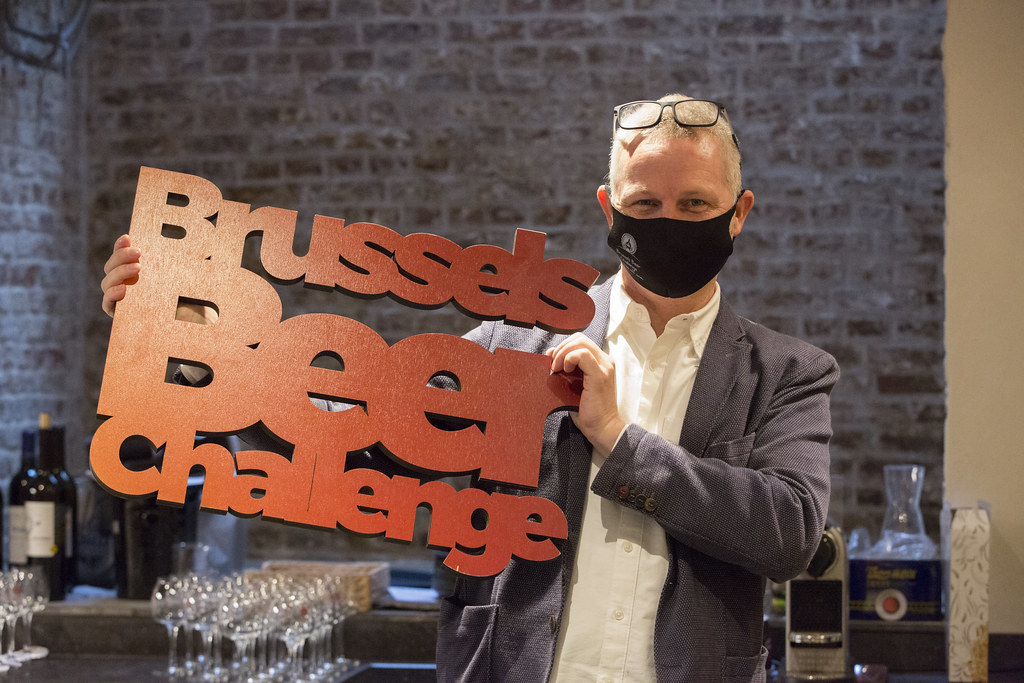
Tasting Director Luc De Raedemaeker (photo by Bart Van der Perre)