Brookston Beer Bulletin

Jay R. Brooks on Beer

  • Home
  • About
  • Editorial
  • Birthdays
  • Art & Beer

Socialize

  • Dribbble
  • Email
  • Facebook
  • Flickr
  • GitHub
  • Instagram
  • LinkedIn
  • Pinterest
  • RSS
  • Twitter
  • YouTube

Powered by Genesis

Media Reaction To SF Mayor’s Veto Of Alcohol Tax

September 22, 2010 By Jay Brooks

san-francisco
As I reported yesterday, San Francisco mayor Gavin Newsom kept his promise to veto the proposed ordinance that seeks to add an additional tax on alcohol sold in the city.

Here’s mayor Newsom’s veto letter that he sent to city supervisors:

This letter communicates my veto of the ordinance pending in File Number 100865, finally passed by the Board of Supervisors today, September 21, 2010. This ordinance proposes an Alcohol Mitigation Fee to be imposed on alcoholic beverage wholesalers and others who sell or distribute alcoholic beverages in San Francisco.

I cannot support this unnecessary and harmful new fee that will hurt our City’s economy and cost us jobs at a time when we most need them.

In this economy, I fundamentally believe that we need to be encouraging local businesses – large and small – to continue to work and operate in our neighborhoods, to continue to provide jobs and security to the residents of San Francisco, and to continue to support our City’s economy in its recovery. It is in these times of struggle that we need to stimulate our local economy – not pursue policies that will stifle growth and put our county at a competitive disadvantage with every other county in California.

In addition, while we have faced significant budget deficits for the last three years, we consistently have supported the provision of critical health care services to our residents most in need – at a much higher rate than surrounding counties. And, we will continue to do so. Therefore, I do not accept the premise that, but for this fee, we will be slashing our health care programs.

I also strongly believe that we are in questionable legal territory due to state preemption issues, and that passing this ordinance would risk millions of dollars in attorney’s fees that we can ill afford. I prefer to hold those battles for creative policy areas where we believe we are in strong legal standing.

I remain committed to working with the Board of Supervisors and City departments to continue to identify impactful programs to help chronic inebriates in San Francisco. However, I do not believe that an alcohol impact fee is the best approach in achieving that policy goal. Our best hope for continued strong financial standing of this City and support for public health services is to help our local economy grow and thrive.

The media reaction has been swift and voluminous. At least twenty media outlets throughout the state have weighed in since yesterday afternoon. Here’s what the San Francisco Chronicle, by John Coté, had to say:

Newsom contends the fee would hurt jobs and is illegal, treading on the state’s authority to regulate alcohol.

“You don’t help the city’s general fund by spending hundreds of thousands of dollars on a lawsuit we’re going to lose,” Newsom said.

Other opponents, such as the San Francisco , argue the fee is really a tax and thus needs voter approval. The city attorney issued a confidential opinion to supervisors that warned of potentially significant legal risks associated with the legislation on both fronts. Liquor industry representatives vowed to sue if the legislation were enacted.

And I love this gem. “Avalos said there was simply ‘no evidence’ that consumers would face inflated costs.” Puh-leeze. His insistence that there would be no mark-up on the tax from wholesaler to retailer to consumer is completely naive and disingenuous. Everyone in the business community is telling him the tax will be marked up, but that’s not “evidence.” Does he think they’re all lying just because they don’t like the tax? Has he never worked in any business capacity? That’s what businesses do, they mark up their costs and pass them along to consumers. Not doing so is how you go out of business.

Filed Under: News, Politics & Law Tagged With: California, Government, Law, Mainstream Coverage, San Francisco

The Politics Of Deception

September 10, 2010 By Jay Brooks

grocery-cart
I was going to stay away from commenting on a new bill in California, AB 1060, really I was. Something about it bothered me from the start, the problem it seeks to fix never seemed credible, but it seemed inevitable that it would pass anyway. It was actually introduced in February of 2009 and has been winding its way through the state legislature ever since. It was recently passed and is on its way to the Governator’s office for signature or veto.

What AB 1060 does it make it illegal for stores, primarily grocery stores, to sell alcohol using the new self-serve checkout machines that are popping up all over the place. The argument is that underage kids can get around the roadblocks in the system set up to keep underage people from being able to — gasp — purchase alcohol. The bill also tackles the made-up problems of intoxicating people buying booze and theft, though it’s not the theft of the alcohol that worries the state, but the theft of the tax revenue lost in the theft.

The bill was spun so that it’s all about “Alcohol & Teen Drinking Prevention,” as is made clear by the Yes on AB 1060 website. They write:

AB 1060 only requires that customers walk over a few feet to a checkout line with a cashier who can check ID. It’s not too much to ask to protect our youth and our communities.

It is only a matter of time that our youth will exploit a vulnerable system to purchase alcohol without showing ID. We must take action to stop it now.

As they state, “[i]t’s not too much to ask to protect our youth and our communities.” And no, perhaps it’s not, but it is just one more way in which the roughly 80% of the population who is above 21 is inconvenienced yet again in our out-of-proportion drive to “protect” the young’uns. And that’s why I initially just let it go, because I’d sound like even more of a jackass than I usually do if I got worked up about not being able to more quickly check out of the grocery store every time I wanted to buy beer.

One funny thing I can’t help but note is how our nation’s youth is portrayed as being at once naive and in great need of being protected and, of course, not be able to responsibly drink alcohol but yet at the same time they say it’s “only a matter of time [before] our youth will exploit a vulnerable system to purchase alcohol without showing ID.” Wow, we must have a pretty savvy and well-organized generation of kids who can take down the best computer minds who created — you have to admit — the pretty amazing self-checkout machine.

Anyway, what’s changed my mind is that MADD, Join Together and the Marin Institute are all supporting the bill and urging Governor Terminator to sign it into law.

Except, as an aside, I have to mention that the Marin Institute is supposedly a “watchdog.” What are they doing weighing in on this? Their “mission” is “to protect the public from the impact of the alcohol industry’s negative practices.” This has absolutely nothing to do with the alcohol industry, this is about grocery stores and youth access to alcohol (supposedly, anyway). Making it harder for everyone to buy alcohol draped in the protective mantle of “it’s for the kids” is the domain of the neo-prohibitionists, something they assure me they’re not.

But when you look deeper, you find that this bill may not really be about the kids at all, and instead may be about money and unions. The support of the neo-prohibitionists was either a calculated ploy on the part of the bill’s sponsors or a very happy accident. State Senator Tom Harmon, from the 35th District (Orange County coastline) has a very different story to tell. Last month, he wrote AB 1060 is a Solution in Search of a Problem, which is below here in its entirety. It made no difference, of course, in the final vote, because a good story, especially one that’s about protecting the kiddies, beats the truth every time.

When something looks too good to be true, a smart person starts wondering what’s behind it. In the case of Assembly Bill 1060, you don’t have to look very far. Presented as a feel-good law to protect kids, this bill is really about protecting union jobs.

AB 1060 purports to solve a number of “problems.” Minors sneaking alcohol through self-service checkouts, drunken shoppers buying more booze, and the state missing out on its share of sales taxes because self-check out technology facilitates stealing. None of these arguments makes much sense.

The bill theorizes that kids could buy alcohol beverages at self-serve check aisles. In fact, there is already a lock-out mechanism at such stands preventing anyone from buying alcohol without a clerk present to sign off on their age. Next?

Protecting inebriated shoppers from themselves is a real howler. Anybody who’s ever used one of those self-serve check-out stands knows it’s difficult enough for a sober person.

Finally, the bill’s author worries that the state will lose sales tax money if more booze is boosted. Is this about money or about protecting customers? If this were a problem, would stores — who have more to lose than the state if their merchandise is stolen — have instituted self check-out in the first place? Obviously not.

AB 1060 would deny a liquor license to any store “using a point-of-sale system with limited or no assistance from an employee of the licensee.” Read that again. It means a store that sells alcohol beverages could not have any self-serve check stands.

The bill’s true target is Fresh and Easy, a new supermarket chain that features all-self-service check stands. Fresh and Easy supermarkets are designed to provide affordable food choices by holding down costs through automation and energy efficiency. They’re finding a niche in low-income, underserved neighborhoods. Their workers are non-union.

AB 1060 mandates greater employee supervision of self-service check stands, increasingly used in major supermarkets. And it would limit supermarkets’ low-cost, self-service technology.

Instead of helping constituents find accessible, affordable food, this bill by Assemblyman Hector De La Torre will raise food prices for all shoppers in order to protect supermarket unions. It has nothing to do with protecting youngsters, drunks or taxpayers.

But none of that matters to the neo-prohibitionists. They care about restricting access to alcohol for everybody.

Filed Under: Beers, Editorial, News, Politics & Law Tagged With: California, Law, Prohibitionists

Alcohol Fees Vs. Taxes: The Sinclair Decision

June 25, 2010 By Jay Brooks

sinclair
Warning: This post is primarily about arcane legal distinctions and standards that will (or should) be applied to what’s going on in San Francisco. If that’s not your pint of plain, you may want to ignore this post. Yesterday I dipped my toe in the mash tun that is the city of San Francisco’s proposed “Alcohol Mitigation Fee Ordinance” (AMFO). The reason they’re characterizing it as a “fee” instead of a “tax” has to do with politics. A fee doesn’t require a two-thirds vote like a tax, just a simple majority.

Another odd detail that’s missing is a requirement for this type of fee is that a Nexus Study be done, and the proposed ordinance does indeed make reference to it on Page 3, where they claim it’s on file with the Clerk of the Board of Supervisors but leave a blank space for the file number. The reason it’s left blank is because there is no completed Nexus Study, as required. The proponents of the ordinance claim it will be completed in a week, but then why didn’t they wait until it was done before introducing the fee ordinance? If that’s a requirement, it seems they’ve jumped the gun, and this will give opponents less time to review the Nexus Study, which doesn’t seem at all fair.

There’s also no mention in the language exactly how they will collect from companies who do business in San Francisco but have no offices in the city, and thus are outside the city’s jurisdiction?

The earlier draft version of the AMFO included the language “ethanol ounce.” While nobody was sure how that was being designed, it’s now moot because the final document changed the language at the 11h hour to “ounce of alcohol” which is still rather vague and subject to a variety of interpretations as to how it will be applied. If I had to guess, I’d say that it’s possible that the strong spirits lobby got that change made since it would impact them the most by reducing their proportional taxes while beer would get hit the hardest. Curiously, all of the news reports I’ve seen, such as the one from KTVU Channel 2, a typical example, continues to use the phrase “ounce of ethanol” suggesting the mainstream media is working off of earlier versions or not looking at the source document at all. In either event, it’s not exactly stellar reporting and gives the public who reads that the wrong impression of what the AMFO will actually be doing.

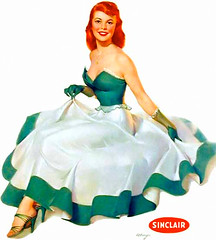
sinclair-pinup

But the biggest hurdle is one that’s been in place since 1997, when the California Supreme Court decided the case of Sinclair Paint Co. v. State Board of Equalization, et al. In that seminal case, the state tried to impose a fee on paint companies for potential harm caused by lead paint. Here’s a summary, from the Pillsbury Tax Page: “The Supreme Court held that case law clearly indicates that the police power is broad enough to include mandatory remedial measures to mitigate the past, present, or future adverse impact of the fee payer’s operations, at least where, as here, the measure requires a causal connection or nexus between the product and its adverse effects.” [my emphasis.] What that means is that a “fee” of this type in order to be constitutional and not need a two-thirds majority like any other tax (in other words to keep its “fee status”) it must be proven to have a direct link to the harm being caused by the product being taxed … uh, excuse me, having a fee imposed on it.

In their conclusion, Pillsbury characterizes these fees as camouflaged taxes.

The potential impact of Sinclair is tremendous since it is completely dependent upon the Legislature’s propensity to camouflage taxes as fees. Virtually every industry can be found to place some type of burden on society and now the Court has only limited the Legislature’s ability to impose fees on those industries within the bounds of its inventiveness. It is difficult, if not impossible, to reconcile Sinclair with the state of the law existing prior thereto.

And for the past thirteen years that’s been the standard and remains the controlling case. That means that the AMFO has to “prove” a direct link from the alcohol and the harm they claim is placing such an onerous burden on city resources. In the first two pages of the AMFO, they cite several studies they believe show such a link. But they’re wrong. For every study cited, I could produce ten that says the opposite, including studies that show that the moderate consumption of alcohol makes a person healthier than abstaining. To me, that suggests that trying to keep people from drinking is reckless endangerment or at least is putting the health of every adult who drinks moderately and responsibly at risk. And some of the studies mentioned aren’t even cited, meaning there’s no way to even confirm they say what the AMFO says they do. To say that their “proof” is shoddy is an understatement.

But, as usual, that doesn’t stop Bruce Lee Livingston, executive director of Marin Institute, from trotting out his favorite bullshit line, modified for the specific occasion. “It’s time for Big Alcohol, including wholesalers, to pay its fair share. A local alcohol charge for harm fee is long overdue.” I’m so tired of having to address this each and every time they give voice to this lie. As I’ve said many, many times, no other product save tobacco pays more taxes than alcohol already. To say that there’s some “fair” amount that alcohol companies should be paying is utter nonsense. There’s no amount high enough that would actually satisfy the Marin Institute, all they want to do in reality is put all alcohol companies out of business, the economy and a majority of people’s wishes be damned.

Filed Under: Beers, Editorial, Politics & Law Tagged With: Law, Prohibitionists

Facebook A Tool For Big Brother?

January 24, 2010 By Jay Brooks

facebook
In trying to catch up with everything going on in the world, here’s one that fell through the cracks. Drew Beechum, of the Maltose Falcons homebrew club fame sent me this over the holidays and it’s still relevant. It appears law enforcement is monitoring social media like Facebook to catch crooks … well, not crooks, exactly, but underage drinkers. And not just monitoring Facebook, but according to the LaCrosse Tribune, police actually created fake Facebook profiles then tried to friend underage kids (with or without probable cause, it doesn’t say) to look for mentions and photos of underage drinking. They’ve even made arrests. Beechum wades into the questions raised by this practice in a post titled We’ve Always Been At War With Eastasia. There are a lot of privacy issues raised by this, I think, and it bears watching IMHO.

Filed Under: Editorial, Politics & Law Tagged With: Law, Strange But True

Session #22: 75 Years Demonizing Alcohol

December 5, 2008 By Jay Brooks

demon
This is our 22nd Session a.k.a. Beer Blogging Friday and today’s topic is quite relevant for the day, as this is the 75th anniversary of the repeal of the 21st Amendment to the U.S. Constitution ending thirteen years of our national prohibition. Our host today, naturally, is the 21st Amendment Blog, written by Shaun O’Sullivan and Nico Freccia, co-founders of the 21st Amendment Brewery & Restaurant in San Francisco, California. Here’s how they put their approach to this month’s topic:

In 1920, there were thousands of breweries across America making unique, hand-crafted beer. The passage of Prohibition wiped out this great culture. On December 5, 1933, the states ratified the 21st Amendment, repealing the 18th Amendment, thus ending 13 years of Prohibition in America. At the 21st Amendment Brewery, the repeal of Prohibition means we can celebrate the right to brew beer, the freedom to be innovative, and the obligation to have fun.

What does the repeal of Prohibition mean to you? How will you celebrate your right to drink beer?

session_logo_all_text_200

I confess I’ve been struggling mightily for something to write about Prohibition, as I feel like I’ve written about it so much lately that there’s really not much left to say. But then my friend and colleague, historian and author Maureen Ogle sent me a link to an Op-Ed piece she did for U.S. News & World Report. Her unique and fresh take on the ramifications of Prohibition’s end was a revelation for me. It was like getting in the bathtub of cheap hooch with Archimedes himself. It was a real “Eureka,” “a-ha moment” and “epiphany” all rolled into one. The wheels started turning. Maybe there’s another way to look at this.

Most of us have taken it as a given that the repeal of Prohibition was a victory for the pro-alcohol majority and a denunciation of the anti-alcohol sentiments that had brought it about. But maybe not. Despite its obvious failures on many fronts, it was the depression that really hastened its end. The economy needed a shot in the arm, and legalizing alcohol created jobs, tax revenue and good will. In the end, it was money, not morals that brought down Prohibition.

For just one example of how bad Prohibition was, check out Prohibition and the Rise of Crime, a blog post by J. Michael Jones, a retired police chief.

That’s not to say I won’t be celebrating today. I will. I’ll be in downtown San Francisco later marching in a Repeal Day parade. I’ll be enjoying some legal beer and toasting how good the American beer scene is today. And I won’t be alone, of course. There are numerous celebrations throughout the country today. But I wonder if we’re celebrating the right things? Or celebrating the right way?

The NBWA (National Beer Wholesalers Association) released a press release today extolling the virtues of the three-tier distribution, a system created out of whole cloth as a way to return alcohol to the public arena after passage of the 21st Amendment.

“This anniversary is a great time to recognize the success of the past 75 years of effective, state-based alcohol regulation since the ratification of the 21st Amendment,” said NBWA President Craig Purser. “A ‘one size fits all’ approach to alcohol regulation during Prohibition was a failure. The 21st Amendment allows individual states to regulate alcohol as their citizens see fit.”

Their celebration is understandable, of course, since after Prohibition an entirely new segment of the beer industry was created — The Distributor. But while understandable, it’s hard not to view their celebration as little too self-serving. They’re not really celebrating alcohol being legally available again so much as their own success in creating a new business model. This new system created a lot of wealth for a number of people and organizations. I’m not saying they haven’t worked hard for it or that they don’t deserve to celebrate their success, but it just feels a little too much like self-congratulatory patting themselves on back. To be fair the Distilled Spirits Council of the United States had a similar press release.

Many other mainstream writing about today’s anniversary is likewise self-congratulatory. Many gave very standard accounts, such as the Illinois Telegraph, the San Francisco Chronicle (which also has some interesting local info and photos), USA Today and even the UK’s Independent. There’s nothing whatsoever wrong with any of these or the countless other similar articles that will be published around the world today.

alcohol-squares

In the Independent, author Rupert Cornwell reflects on the fact that in America “the mindset that produced Prohibition lives on. The cocktail, it is said, is enjoying a new golden age. But a third of American adults don’t drink at all, and the country ranks only 40th in the international league table of alcohol consumption. Indeed, since the late 1970s, consumption per head in the US has been falling steadily.”

The great “war on alcohol” between 1920 and 1933 may have ended in resounding defeat. But an American belief that human vices can be eradicated, and human nature perfected, persists, visible in the continuing, scarcely less futile “war on drugs” declared by Richard Nixon in 1971 and, who knows, maybe in George Bush’s “war on terror” as well. But don’t let such somber thoughts spoil the party tonight.

He’s not the only one to notice the comparison between Prohibition and our current drug policy, such as Stop the Drug War. Even the Wall Street Journal has an article today entitled Let’s End Drug Prohibition. Are we finally starting to realize as a culture that regulating is better than outlawing? Sadly, probably not. The neo-prohibitionists are still running amuck.

But as Maureen Ogle points out in yet another Repeal Day article, this one in the Philadelphia Inquirer, it’s really our Constitution that was saved by ending Prohibition. As she details, Prohibition led to corruption, conspiracy and contempt for the law by not just citizens, but which also — and I just can’t put it better than Ogle — “oozed into and out of every level of government, from Washington to the smallest municipality.” And that’s not just hindsight, a report in 1931 by federal commission that had studied Prohibition for two years, concluded that it was an abject failure and as “the more flagrantly authorities disregarded citizens’ rights, the more cynical Americans became. Young adults in particular — the very people who would become “leaders in the next generation” — demonstrated overt ‘hostility to or contempt for the law.'”

As the Patriot Act (not to mention our current lame duck administration) similarly disregards the Constitution and the rights of American citizens, and we appear to be heading into another protracted recession (if not an actual depression), the conditions seem eerily similar to those of seventy-five plus years ago. As they worried then, what might a continuing disrespect for the Constitution lead to? I’m worried. Aren’t you? Don’t get me wrong, I’m thrilled that “change” may be on the horizon, but I can’t help but continue to be apprehensive that our swing to the right and the threats to democracy that that entailed will so easily be undone by good intentions. Movement Conservatism may be in a weakened state right now, but it’s hardly on life support.

And speaking of beer and elections, did you know that in seven states, it’s still illegal to sell or serve alcohol on Election Day? Weird, huh? In Alaska, Kentucky, Indiana, Massachusetts, South Carolina, Utah and West Virginia alcohol and voting apparently still don’t mix. According to TriState, these [s]o-called “Blue Laws” date back to the 1930s and make it illegal to sell alcohol on certain important religious or political days. Blue laws were meant to protect the integrity of the voting process in a time when many saloons also served as polling places. In the past 70 years, most states have either relaxed their Election Day bans or repealed them altogether.”

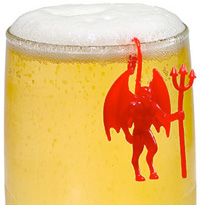
demon-beer

But finally, back to Maureen Ogle’s devastating insight into what the end of Prohibition has wrought. Though she finds the term clumsy, I like it. She asserts that repeal “institutionalized the demonization of alcohol.” For some, that may be hard to swallow (yes, intended) but for me it made perfect sense and made me look at the issue from a different perspective.

To summarize what Ogle means by that, here’s her introductory paragraph:

Prohibition ended on Dec. 5, 1933, not with a bang but with the thud of thousands of pages of new city, state, and federal laws that dictated when, where, and how Americans could make, buy, sell, and drink alcohol. Ratification of the 21st Amendment, repealing Prohibition, was neither a green light to drink nor a victory over the “dry” crusade that had produced Prohibition. Seventy-five years later, we’re still captives of that crusade.

Indeed, the 21st Amendment heralded the age of regulating alcohol like never before. It created new rules and regulations, label approval procedures, licensing requirement, all manner of new taxes and previously unheard of restrictions on all aspects of how alcoholic beverages could be made, sold, marketed, packaged and even consumed. At every step from grain to glass, there was the watchful eye of the government to tell everybody what role they were to play and within what parameters the game would take place.

I can only imagine that people were so happy to have alcohol back that it was scarcely even noticed by the ordinary public. I’m sure the breweries were keenly aware, but they were undoubtedly thrilled to be back in business under any conditions and more likely figured being regulated in business was far better than not being in business at all.

Before Prohibition, there were around 1,500 breweries, but less than half reopened afterward. And for a variety of reasons, the number of breweries continued to decline sharply. By the year I was born, 1959, there were only about 200 left. At least one of the reasons that the re-opened breweries struggled was the maze of new federal and state regulations imposed on how alcohol companies operated their businesses.

After Prohibition, the original message of the temperance movement was not only alive and well, but became internalized and institutionalized — essentially set in stone — by the very laws created to regulate it. That message is still with us today. Simply put, it is this:

Alcohol is evil. No one can be trusted with it.

demons-three

That message permeates all discussions of alcohol policy and any “issues” about alcohol. That message has been communicated by the laws passed seventy-five years ago and generations of new adults have soaked up that message almost completely. That’s it’s thoroughly untrue goes not only unchallenged but the notion isn’t even considered as a topic for discussion, so embedded is it in our collective psyche. Every aspect of how we treat alcohol has this false message looking over our shoulder, refusing to go away.

Alcohol is not inherently evil, we just treat it as if it were. People can be trusted with it, and in fact most people who drink alcohol are responsible adults, we just treat them like children in our over-paternalistic society. And we do this because we’ve assumed the temperance propaganda message to be true and we’ve created alcohol laws under that same mistaken assumption.

Ogle sums up:

It’s a vicious, and lethal, cycle: As long as we remain addicted to demonization, we avoid serious discussion about those values. The longer we avoid that conversation, the longer we pass on the booze-is-bad message to our kids, who grow up to pass the message on to their kids. And as long as we teach children to fear rather than respect alcohol, we’ll interrupt the silence with periodic spasms of hand-wringing and finger-pointing about campus drinking, binge drinking, underage drinking, and the like. But here’s the truth: The “alcohol problem” is of our own creation. We’ve got the drinking culture we deserve.

I agree with everything Maureen says with the possible exception of that last sentence. I’m not entirely persuaded that we “deserve” the drinking culture we have today. If our present “drinking culture” had been arrived at by an ongoing open, fair and honest public debate about alcohol, then I’d wholeheartedly agree that we got what we deserve. But I believe that what we’re stuck with today is the result of subterfuge, conspiracy, propaganda and out and out lies by people and organizations with a Carrie Nation-style axe to grind.

I prefer an image of prohibitionists having slunk away to lick their wounds in defeat but the truth is they’ve never really gone away. They’ve never stopped trying to keep their message alive. That they’ve been so successful while at the same time convincing us they’d lost is deviously clever. They’re like the tortured, evil protagonist in every horror movie who refuses to die, no matter how many times he’s shot, sliced or garroted. They always come back, don’t they? To me, that’s the unfortunate message of this 75th anniversary. It’s certainly worth celebrating 75 years of beer in America. But it’s perhaps more important to recognize that the battle didn’t end December 5, 1933. It merely changed the terms of engagement from above ground prohibition to underground demonization. Happy Repeal Day everybody. Drink up.

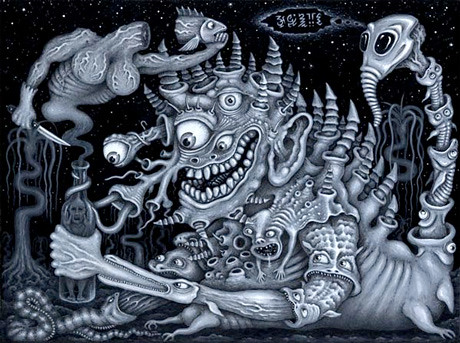
demon-alcohol

The Demon Alcohol, by Robert Steven Connett.

This is a nicely imagined vision of how we view alcohol today, in a Hieronymus Bosch sort of way.

For a lot more great information about Prohibition, check out Prohibition Repeal.
celebrate-repeal

Filed Under: Beers, Editorial, Politics & Law, The Session Tagged With: Law, Prohibitionists

Cognitive Branding

January 29, 2008 By Jay Brooks

This is slightly off topic — it’s more about advertising — but since Anheuser-Busch’s Super Bowl ads are singled out, and also because it’s quite interesting, I thought I’d pass it along just the same. An article in yesterday’s Advertising Age by a Lisa Haverty, titled Don’t Flush Your Ad Down the Super Bowl: Unless Your Spot Has Fundamental Cognitive Elements, No One Will Recall Your Brand, begins with this ominous warning. “If you’re not Bud, don’t bother.” Ouch, if I were spending $2.7 million on an ad promoting the Bulletin during the Super Bowl I wouldn’t be very happy to read that. But apparently unless I’m careful to incorporate “some very fundamental cognitive elements” in my ad, people will end up remembering it as another Bud ad. The Cognitive Science Conference — doesn’t that have fun time written all over it? — held last August in Tennessee (and sponsored by the Cognitive Science Society) revealed in a study that “[a]ds with poor ‘cognitive scores’ were misattributed by consumers, and beer ads were attributed to the huge Super Bowl presence that is Budweiser.” There are ways to avoid this from happening. As Haverty suggests, you have to follow the basic principles of cognitive science to make people remember who you are, or in the jargon, reliable brand recall.

Here’s an interesting example:

Take, for example, the concept of “working memory.” Information has to go through working memory to get into long-term memory, where brand awareness and loyalty reside. One of the principles of cognitive science is that a person can hold and process only about seven items in working memory at any given moment. This actually varies from about five to nine in the general population. If your ad has so much information that it exceeds working-memory capacity, you’ll lose control over what consumers are able to remember. Cog-sci lesson: Respect working memory.

There are a few other examples, read them if you find this sort of thing as fascinating as I do. What I really take away from all this, apart from the simple fact that one must be careful in how to spend $2.7 million, is something I always suspected about any large company’s approach to blitzkrieg advertising. By year after year being the biggest advertiser during the Super Bowl, A-B has set themselves up in a very enviable position. Any other beer or related commercial runs the risk of having their own ad remembered by consumers as being for the competition. Talk about a gamble. They’ve effectively made it almost impossible for any other beer company to reach their audience during one of the most-watched television events of the year. In essence, they now own the event, ad-wise. The cynic in me thinks that if they paid for it, they should reap the rewards, but my idealistic side hates that any big company with vastly more resources than all of his competition can just use a bludgeon to maintain his market position. But that’s what’s happening in virtually any industry you can name. Once upon a time, hundreds and thousands of small local and regional businesses competed more or less on a level playing field, at least more fair than today’s environment. Go anywhere in America today, and the number of national chain stores and other businesses dominating and squashing local competitors is astonishingly near completion. And that’s not good on so many levels. As the science of advertising gets better and better, we’ve truly been manipulated into thinking what’s good for GM is good for America. If that idea is allowed to run its course there will be two or three brands, at most, for literally every type of good you can name, and even at that each will be remarkably similar to one another. Only the cognitive branding, advertising and marketing will be able to identify any difference, and they’ll do so by the most dishonest of methods possible. Geez, I need a beer.

As an aside, there’s a very funny critique of this AdAge article by AdHurl, which as far as I can tell is by a thirty-year veteran of the ad game, George Parker. He calls out Haverty for her overuse of the word “cognitive” throughout her piece. It’s snarky and hilarious. A kindred soul.


Filed Under: News Tagged With: Business, Law, Press Release, Washington

Backlash Brewing?

January 25, 2008 By Jay Brooks

There was an interesting item in yesterday’s USA Today called Frustration Over Liquor Laws Brewing. The story details just a few of the battles around the country to update their state’s antiquated alcohol laws, which in many cases haven’t been updated since Prohibition’s repeal in 1933. I’m sure the neo-prohibitionists will be fighting these tooth and nail, employing their usual bag of dirty tricks, but perhaps it’s finally time to stop playing defense and pick up the ball. In Mississippi, for example, it’s still illegal to sell beer in excess of 6% abv. The argument against raising it, predictably, is, according to William Perkins of the Mississippi Baptist Convention Board, that an “intellectual argument ignores the ill effects of alcohol.” Well, I’d sure hate for logic or intelligence to interfere with his world view, but you can buy wine and liquor in Mississippi already and, unless it’s some weird watered-down varieties, those are all well above 6% so please tell me how that makes any sense whatsoever? Not to mention there are plenty of positive health claims that can be made not only about beer, but the moderate use of alcohol in general. If Perkins’ thinking shows nothing else, it’s illustrative that logic plays no role at all in the anti-alcohol league’s canon. By any means necessary seems to be the only rule. So perhaps it’s time to mount an offensive. After all, a good defensive very well may be a strong offense.


Filed Under: Editorial, Politics & Law Tagged With: History, Law, National, Prohibitionists

Baptists Live in Parallel Universe

January 15, 2008 By Jay Brooks

The only explanation I can come up with for this is that Baptists must live in some kind of parallel universe. According to today’s Baptist Press, Baptists in Texas, and presumably everywhere else, are mobilizing their forces to protest a grave new threat to their youth. What horror could possibly be the cause of this dire situation that threatens not only their very way of life, but the very lives of their children? Apparently the theme park in Arlington, near Dallas/Fort Worth, Six Flags Over Texas, has applied for — gasp — a liquor license in order to sell beer at certain locations in the park.

Now I don’t want to make light of someone else’s cherished beliefs, but listen to what the Baptist Press is reporting:

“Do we really want to send our youth groups — our church youth groups — to places where alcohol is served?” local Christian leader Linda Rosebury asked in an interview with KCBI-FM, the radio station of Criswell College in Dallas.

Do you mean the world? Because the last time I checked alcohol could pretty much be found anywhere you look. Have they heretofore been living in some Utopian fantasyland where there is no alcohol, like Iran? Can they really be saying anywhere that alcohol might be found is a dangerous place? Yes, apparently.

The sale of beer, Rosebury said, threatens the park’s image as a safe place for families.

So the real world, where beer is sold each and every day, is unsafe? If so, why are those families still there? Do people really walk around, see some heathen drinking a beer, and decide that it’s no longer a safe place? I’m pretty sure that you could live right next door to someone who drinks and still feel perfectly safe. In fact, my own next-door neighbor no longer drinks, and I believe he doesn’t feel that I’m a threat by virtue of my proximity to him in any way, shape or form.

You can even get a beer at Disneyland, and if they can pull it off and maintain their annoyingly hypocritical squeaky clean image, why not Six Flags? Perhaps Disneyland is not part of the Baptist parallel world?

I realize I’m probably being insensitive, but I can’t help myself. I find this sort of nonsense so patently ridiculous that I can’t really take it seriously. If you don’t want your child to even “see” a beer, don’t let him go to Six Flags, make him a shut-in. Shield him from every imagined horror you perceive out there in the world. I’m sure he’ll turn into a terrific young man or woman, with no problems whatsoever. I would personally never abuse my own kids in that way, but I’m not about to tell you how to raise your children.

As of January 8, the Texas Alcoholic Beverage Commission (TABC) has gotten 600 phonecalls and twelve letters of protest regarding Six Flags ability to sell beer to adults. On February 17, state officials will decide whether or not to hold a public hearing on their application and the Baptist Church is trying to get enough of its members to complain so that they’ll have the hearing.

Some of the current complainers are urging the TABC to “conduct an alcohol impact study to determine the threat to public safety.” Isn’t beer sold enough other places in the universe, including many other theme parks, that we can figure out with reasonable certainty what the impact would be? It would be zero, of course.

The people from Six Flags, naturally, have “pledged that such sales would be handled responsibly and would safeguard guest safety,” just like every other public place that serves such legal beverages as beer. In their own defense, Six Flags also offered the following.

Noting the park’s pledge to offer quality guest services, John Bement, Six Flags in-park services senior vice president, told the Southern Baptist TEXAN, “For quite some time, many of our guests have requested beer as an option while dining or visiting the park. In fact, several of the parks in the Six Flags system already provide such amenities and have done so successfully and responsibly for many years.”

How utterly reasonable. I’m sure that will mollify the faithful. Hardly, an attorney from the Southern Baptists of Texas Convention spells out exactly how to lodge a protest, and even offers some helpful legal arguments that one can use in their complaint.

Heaven forbid anyone with a different view of the world might want to go to Six Flags. Apparently this is their world, the rest of us just drink in it.


Filed Under: Editorial, News Tagged With: Law, Prohibitionists, Southern States

Punishing Drinkers With Taxes

January 15, 2008 By Jay Brooks

The Marin Institute, one of the more blunt and churlish of the anti-alcohol organizations, is mounting an offensive to raise alcohol taxes an incredible “25 cents per drink” in California. Their vision — my nightmare — is to bring about “communities free of the alcohol industry’s negative influence and an alcohol industry that does not harm the public’s health.” But as they naturally see any influence as negative and everything that the alcohol industry does as harmful, what they really want is nothing short of an another Prohibition.

Throughout their rhetoric (and even the sources they’re relying upon) is a call for “fairness” and for alcohol to pay its “fair share,” whatever that really means. But the carrot they’re holding out is that by doing so it would help to alleviate California’s budget deficit that’s been plaguing us for several years now. But I fail to see how raising the taxes of people who drink is in any way fair. Effectively what they’re suggesting is that because our state managed to get itself in a fix, budget-wise, people who drink should be called upon to foot the bill. They just want to punish those of us who choose to drink, and yet they call it fair? The first definition (of 26) for the word “fair” is “free from bias, dishonesty, or injustice.” There’s clearly bias, it’s dishonest in my opinion to claim it’s because of our state’s tax problems, and it hardly seems just to have drinkers pay a disproportionate share to get us out of our budget hole. So it’s really the very opposite of fair.

This is the same nonsense that’s going on with Indian gaming right now, with several state proposals on November’s ballot. We committed genocide against Native Americans and broke every single treaty we ever made. So when Indian gaming successfully exploited one of the few advantages left to them, we still can’t seem to let them be. This is the second time California politicians have tried to get (or more accurately extort) a bigger piece of their gambling revenues, and the exponents of these propositions try to sell them in the same way as the Marin Institute is doing with beer taxes, by twisting the idea of “fairness.”

Of course, the real reason they can say with a straight face that it’s fair to ask drinkers to pay more taxes than teetotalers is this odd notion that, in the words of David Leonhardt, “taxes serve a purpose beyond merely raising general government revenue. Taxes on a given activity are also supposed to pay the costs that activity imposes on society.” I’m not necessarily against this idea entirely, but I don’t understand when it became an unquestionable fait accompli and why people are so quick to believe it. Why is this only ever said of things that some people don’t like? The costs on society for our general obesity and unhealthiness has not brought about taxes on fast food, sugar or high fructose corn syrup. Hummers, SUVs and other similar gas-guzzling vehicles not only are not taxed at a higher rate but actually receive federal and state tax breaks and incentives and have lower standards of fuel efficiency than regular cars. With their poor MPG they do great harm to our society yet are actively subsidized and encouraged by our government over cars that get more miles per gallon and are kinder to the planet. Check out this Slate article for more on this. I’m not saying that’s as it should be, simply that this idea that all products must contain within their profit structure some tax scheme that balances the price with their damage to society caused by them is wholly fallacious.

But even if it wasn’t such a weak argument, we don’t charge a higher percentage of a person’s tax burden for the fire department if they live in a tinderbox house vs. an inflammable brick home. Instead we average the cost to society out and charge everyone the same amount since everyone gets the same potential benefit. That’s a fair arrangement in every sense of the word. It’s good for the whole town, not just for you, if your house does not burn down. So there’s really no reason why we can’t apply that same logic to the whole of society. I realize that will be unpopular with folks who don’t think it’s fair that while they choose to abstain, they may have to pay for problems supposedly caused my decision to drink. But if it’s legal for everyone who pays taxes (except, those 18-20 years old — hey, another reason they should be allowed) to drink then I don’t see why it’s so troubling that we all share the costs of society equally. You may think it’s unfair because you feel you’re not causing the (hypothetical) problem. Well I think you’re being selfish by only wanting to pay for services that that either benefit you or were caused by you. In a sense, it’s like after building your inflammable brick house you refuse to pay to support the fire department any longer under the theory that your house is in order.

Maybe it’s just me, but I don’t want to live in a world where everyone is so selfish that they don’t want to help other people. Look at this another way. The vast majority of drinkers do so in moderation and never are any burden to society whatsoever. But a tiny percentage of drinkers do cause problems for themselves and others. There are at least two ways we can shape policy to deal with problem drinkers. We can treat the causes of the problems and make tougher laws to deal with them, and only them. Or we can make it harder on everybody’s ability to drink, thus punishing everybody for the sins of the few. It’s not too difficult to figure out which approach the neo-prohibitionists have chosen. Even if only one in every ten-thousand persons who drink may exact a cost on society they would prefer to punish the other 9,999, too.

Another one of the contentions is that the last time California raised taxes on alcohol was 1992. That increase was apparently one cent on a glass of wine and two pennies for a bottle or can of beer and one shot of hard liquor. So clearly a 25-cent increase seems reasonable?!? Maybe sixteen years is too long without an increase, I’m not going to argue that point. But even if the tax had been raised another penny every year, the tax would still only be 16 cents higher today, so please tell me how 25 cents is a fair suggestion? Or are they just shooting for the moon in the hopes of a negotiation that ends up compromising higher as a result?

And if it’s tax fairness they’re after, taxes of corporations have fallen much more dramatically over the past several decades. They haven’t just stagnated and gone down merely by adjusting for inflation, but have actively been lowered. At the same time, personal taxes on the poor and middle-class have gone up while tax cuts for the rich keep increasing. So if the Marin Institute really cares about California’s budget crisis, I think a more prudent approach might be trying to raise corporate taxes across the board and removing unfair tax cuts and loopholes for the wealthiest among us. It wasn’t alcohol that got us into this mess, so why make it foot the bill.

One of the main sources that the Marin Institute cites for their proposal is Let’s Raise a Glass to Fairness, a polemic about why the author, David Leonhardt, believes federal alcohol taxes should be raised. Some of the supposed alcohol-related costs to society he cites are the following:

  1. child abuse
  2. drunken-driving checkpoints
  3. economic loss caused by death and injury
  4. hospital bills for alcohol-related accidents

So let’s look at those claims.

1. Child Abuse: This one’s a head-scratcher for me. Sure it sounds bad, but what does it really mean? I was terrorized as a child by an alcoholic, psychotic step-father but even as a kid I knew it wasn’t the alcohol that caused him to be that way. There were myriad things in his life that made my step-father such a mess, and alcohol was the least of them. At its worst it was merely a convenient catalyst. If alcohol had been removed from the situation, something else would have filled the void. I can’t see how alcohol causes child abuse any more than cake is directly responsible for obesity.

2. Drunken-Driving Checkpoints: If these are such a burden to our nation’s purse strings, then by all means stop them. They’re already an invasion of civil liberties because they randomly presume guilt of everyone behind the wheel of a vehicle. But saying these are a cost of alcohol seems weird to me. The fact is that police forces choose to do them, they aren’t mandatory, and they’re more often done because of politics or pressure from local neo-prohibitionist groups. So they aren’t caused by alcohol, they’re caused by people against alcohol. There are plenty of legitimate ways for the police to do their job in keeping potentially dangerous drivers off the road that don’t involve these checkpoints.

3. Economic Loss Caused by Death and Injury: Now I certainly don’t want to downplay or make light of anyone’s loss or injury, but the alcohol didn’t cause either. The idiot person who drank too much or otherwise couldn’t control himself is responsible for a death or injury that resulted from his actions. And he should be punished to the full extent of the law. But don’t punish me or my right to drink moderately because some yahoo couldn’t act responsibly.

4. Hospital Bills for Alcohol-related Accidents: This is the same as the last one, it’s economic harm inflicted by a person and we should be blaming the individual person. People scoff at the Twinkie defense, saying it’s ridiculous that too much sugar might cause a person to commit a crime, but here Leonhardt is saying effectively the same thing.

He also throws around a lot of statistics about how many people die each year in “alcohol-related car accidents” along with “other accidents, assaults or illnesses in which alcohol plays a major role.” But as we learn time and time again, the way “alcohol-related” is defined is usually pretty deceptive. Many such studies have considered an accident “alcohol-related” if one of the passengers had earlier been drinking so it’s pretty hard to take such stats very seriously. Do people die from causes related to alcohol? I’m sure they do. But the number one cause of death: living. What I mean by that is every single thing we do every single moment has some risk associated with it. It’s a fool’s errand to dissect every thing we humans do and determine which ones to tax more heavily.

Leonhardt likens his strategy to the same argument for higher tobacco taxes, saying for alcohol the impetus “is even stronger” with this gem. “Tobacco kills many more people than alcohol, but it mainly kills those who use the product.” Did I miss a meeting? Isn’t one of the strongest reasons for all the recent tobacco bans that second-hand smoke is far more dangerous to people around smokers than previously believed?

He then goes on to say. “Many alcohol victims are simply driving on the wrong road at the wrong time.” And that may be true, and it is certainly tragic, but why then is it fair that I should pay more for my beer because of other drunk drivers, especially if I and millions of other responsible drinkers don’t place anyone else at risk. If the argument for fairness is that all alcohol drinkers should pay more for their beer because of the costs that alcohol exacts on society, how then does that same logic explain why this burden is so unfairly placed on all drinkers and not just the problem drinkers? Isn’t that just a teensy-weensy bit hypocritical?

Leonhardt later admits, or at least accepts, that there are plenty of responsible drinkers around and even quotes Jeff Becker, President of the Beer Institute. “Most people — the vast majority of consumers — don’t impose any additional costs on anyone.” But in the end he concludes that since he can’t figure out a way to “tax only those people who were going to drive drunk in the future” then it’s somehow fairer to just tax everybody who drinks. Yeah, that makes sense. No wonder the Marin Institute loves this guy.

But another flaw in this theory is that raising taxes on alcohol will raise an additional $3 billion in tax revenue to help with California’s $14 billion current deficit. One of the major prongs of the Marin Institutes’s plan is that by raising the price of beer, drinking will be curtailed once again. If people are drinking less, then how will that result in more tax revenues? If this proposal was really about solving California’s budget crisis, wouldn’t it make more sense to raise alcohol taxes and then actively encourage drinking to help raise more money to apply to the deficit? But this never really was about taxes or California’s budget crisis. It was always about keeping people from drinking or at least making it harder for them to do so. But not enough people were apparently getting their message and were — gasp — still enjoying a drink now and again. So instead they dressed this proposal up as a panacea for our state’s budget crisis hoping that people might respond more favorably to that gambit. Don’t you believe it.

Look, we have the highest federal budget deficit in history and many states, including my own, have similarly terrible fiscal situations that they’re facing. But no matter how much junk science you throw at this problem, alcohol did not cause our current situation. As a result, trying to raise more taxes by arguing that it would be fairer for the nation’s alcohol drinkers to help pick up the tab is just ludicrous. Perhaps taxes should be higher across the board to get us out of this deficit and that might include alcohol taxes, too. But politicians don’t like to raise taxes generally because people tend to vote out of office any politician who tries to do so, no matter how vital they might be in paying for our infrastructure and making our society work for everyone. So we keep electing fiscal conservatives who slash and burn social programs. And then we wonder why there’s no unemployment available when we get laid off so that the factory we used to work for can relocate overseas and chain ten-year old girls to a sewing machine to slave away for twelve-hour days, seven days-a-week for peanuts just so we can be spared the injustice of paying a few cents more for some crap we don’t really need at Wal-Mart. Let’s not change that situation, let’s blame alcohol instead. Raise a glass to fairness, indeed. I’ll buy the first round.


Filed Under: Editorial, Politics & Law Tagged With: Business, California, Law, Press Release, Prohibitionists, Statistics

Beer Without Borders?

January 10, 2008 By Jay Brooks

There was an interesting little piece in Canada’s McGill Daily today, about their alcohol laws. I knew about them to some degree and was at least aware that beer from one province couldn’t necessarily be sold in another without a high tariff. Essentially it’s the same as if you couldn’t sell beer from Oregon in California without a ridiculously high tax that made, for example, Deschutes Black Butte Porter as expensive as Westmalle or Chimay. Naturally, it was done this way to protect local and regional businesses from outside competition but it seems weird that Canada would feel that way about their own provinces. But perhaps we just take the interstate commerce laws we have here for granted. Are the majority of other countries set up with porous state borders or are they protectionist? I’ve never really looked at that, does anybody know? I’ll be interested to hear what my Canadian friends think about this. Stephen? Alan? Greg? Anyone else?


Filed Under: Uncategorized Tagged With: Business, Canada, Law

« Previous Page
Next Page »

Find Something

Northern California Breweries

Please consider purchasing my latest book, California Breweries North, available from Amazon, or ask for it at your local bookstore.

Recent Comments

  • Bob Paolino on Beer Birthday: Grant Johnston
  • Gambrinus on Historic Beer Birthday: A.J. Houghton
  • Ernie Dewing on Historic Beer Birthday: Charles William Bergner 
  • Steve 'Pudgy' De Rose on Historic Beer Birthday: Jacob Schmidt
  • Jay Brooks on Beer Birthday: Bill Owens

Recent Posts

  • Historic Beer Birthday: Conrad Windisch March 26, 2026
  • Beer Birthday: Rudi Ghequire March 26, 2026
  • Beer In Ads #5186: Today’s The Day! March 26, 2026
  • Historic Beer Birthday: Bill Brand March 26, 2026
  • Historic Beer Bornday: Fraggle March 26, 2026

BBB Archives

Feedback

Head Quarter
This site is hosted and maintained by H25Q.dev. Any questions or comments for the webmaster can be directed here.