Brookston Beer Bulletin

Jay R. Brooks on Beer

  • Home
  • About
  • Editorial
  • Birthdays
  • Art & Beer

Socialize

  • Dribbble
  • Email
  • Facebook
  • Flickr
  • GitHub
  • Instagram
  • LinkedIn
  • Pinterest
  • RSS
  • Twitter
  • YouTube

Powered by Genesis

Poisoning People During Prohibition: A Disturbing Parable

March 19, 2010 By Jay Brooks

poison
This may well be the most disturbing story about our Nation’s Prohibition ever told, and one that’s certainly been kept fairly secret. While doing research on her book, The Poisoner’s Handbook, author Deborah Blum discovered that anti-alcohol factions of the U.S. government became so fanatical that they poisoned illegal alcohol either directly or indirectly, possibly killing, or more correctly murdering, as many as 10,000 U.S. citizens! Let that sink in. The whole sordid tale can be found on Slate, entitled The Chemist’s War: The little-told story of how the U.S. government poisoned alcohol during Prohibition with deadly consequences. I’d encourage you to read the entire article, but here are the nuts and bolts.

The government added chemical substances to alcohol used for other purposes, like paint thinner, and unscrupulous bootlegger’s were stealing industrial alcohol and then converting it to something that could be consumed. So the government, knowing full well that it would end up being drunk by people, started spiking it with chemicals that were very, very harmful, ones that the bootlegger’s chemists couldn’t deal with and the result was thousands of deaths. Why would our government do that? Here, Blum cites the frustration of lawmakers to stop people drinking along with prohibitionists who were surprised by our “country’s defiant response to the new laws [which] shocked those who sincerely (and naively) believed that the amendment would usher in a new era of upright behavior.”

During Prohibition, however, an official sense of higher purpose kept the poisoning program in place. As the Chicago Tribune editorialized in 1927: “Normally, no American government would engage in such business. … It is only in the curious fanaticism of Prohibition that any means, however barbarous, are considered justified.” Others, however, accused lawmakers opposed to the poisoning plan of being in cahoots with criminals and argued that bootleggers and their law-breaking alcoholic customers deserved no sympathy. “Must Uncle Sam guarantee safety first for souses?” asked Nebraska’s Omaha Bee.

Only a handful of people in fact spoke out against this practice. One was Charles Norris, chief medical examiner for New York City, who referred to the program as “our national experiment in extermination.”

“The government knows it is not stopping drinking by putting poison in alcohol,” New York City medical examiner Charles Norris said at a hastily organized press conference. “[Y]et it continues its poisoning processes, heedless of the fact that people determined to drink are daily absorbing that poison. Knowing this to be true, the United States government must be charged with the moral responsibility for the deaths that poisoned liquor causes, although it cannot be held legally responsible.”

Frankly, I don’t see why they couldn’t be held legally responsible since they were in effect knowingly poisoning people, especially after the first deaths occurred. That they didn’t stop it then says quite a lot about how determined they were. It often appears to me that modern day prohibitionists take an ends-justify-the-means approach to further their agenda and will employ just about any tactic, despite its consequences or ethical disconnect. It would appear that’s nothing new after all. The fact that more people don’t know about this dark chapter of our history of prohibition makes it easier for today’s anti-alcohol supporters to continue their quest for another national alcohol ban. Let’s hope we can all learn from this mistake of history and aren’t doomed to repeat it.

Filed Under: Editorial, Politics & Law Tagged With: History, Prohibitionists

Philly’s Beer Police State

March 8, 2010 By Jay Brooks

v-mask
If this doesn’t make you shudder, you’ve got eisbock running through your veins. It appears the Volstead Act is alive and well in the Commonwealth of Pennsylvania. According to an account of Pennsylvania’s Beer Storm Troopers entitled Troopers Raid Popular Bars for Unlicensed Beers, by Don Russell, with Bob Warner, earlier today in the Philadelphia Daily News. What happened was three Philadelphia bars were raided simultaneously, Swat team-style, looking to confiscate — gasp — unlicensed beer brands. The police raid netted a few hundred bottles of beer, much of it lawfully registered. The cops simply couldn’t find many of the beers on their list because the names didn’t match exactly. For example, they took bottles of Duvel because the bottle reads “Duvel Belgian Golden Ale” but the PLCB (Pennsylvania Liquor Control Board) has it listed as “Duvel Beer.”

Perhaps more unsettling is the raids were prompted by “a citizen complaint,” but authorities are refusing to reveal the complainant. Whatever happened to the right to face one’s accuser as guaranteed by the 6th Amendment? [As Andy Crouch, lawyer by day, points out, the 6th Amendment pertains to criminal proceedings, which this was not.] That aside, what possible motive might someone have? Jealous competitor? Rabid neo-prohibitionist? Annoyed neighbor? I’m perplexed.

From the article:

“No actual investigating was done,” [bar owner Leigh] Maida said in an e-mail to the Daily News. “The police sent a shoddily typed list to the PLCB, some drone fed it into the machine verbatim and returned what came back, without . . . even trying to offer us the benefit of the doubt by double-checking on some of the so-called unregistered beers.”

“My main beef with this whole convoluted situation is that the PLCB is the sole regulator of a set of products that they do not even know the names of,” she said.

The State Police has given the bar owners until this evening to prove the beer was licensed, in effect making them prove their innocence. So in this case they’re presumed guilty unless they can show otherwise. Am I missing something? Isn’t that supposed to be the other way around? Either way, the confiscated beer will be held for 6-8 months. Given that it’s unlikely it will be stored cool, most of it will likely be ruined in that time, anyway.

No matter how you slice this, it sure seems like we’ve stepped into some alternate universe where McCathyism is going strong, only its target is no longer Communism, but beer.

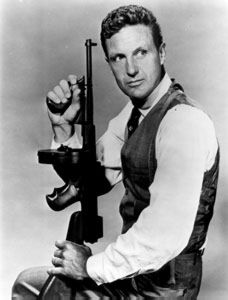
untouchables

UPDATE: Jack Curtin has some more information on this incident in the form of an e-mail from bar owner Leigh Maida with additional details.

UPDATE #2: Lew Bryson has some great stuff about the incident on his No PLCB Blog.

Filed Under: Beers, News, Politics & Law Tagged With: Government, Pennsylvania, Prohibitionists, State Agencies

Anti-Alcohol Ads Driving People To Drink … More

March 2, 2010 By Jay Brooks

target-alcohol
I’ve long held the belief that anti-alcohol ads that attempt to stop people from drinking by trying to make them feel guilty are ineffective. Pointing out the harm that such people may cause to themselves or others never seemed like the right way to encourage responsible behavior. Many, if not most, people who abuse alcohol, or any other substance, usually do so for some underlying reason. Attacking the result and not the cause always seemed like the wrong approach, like blaming the gun instead of the person who pulled the trigger. It turns out my intuition may have been correct after all.

A study soon to be published in the April edition of the Journal of Marketing Research appears to confirm that. The article, Emotional Compatibility and the Effectiveness of Antidrinking Messages: A Defensive Processing Perspective on Shame and Guilt by Nidhi Agrawal and Adam Duhachek, is based on research conducted at the University of Indiana. Their research revealed that not only do such guilt-ridden ads not work, but they actually exacerbate the problem, making it worse.

According to IU researcher Duhachek:

“The public health and marketing communities expend considerable effort and capital on these campaigns but have long suspected they were less effective than hoped,” said Adam Duhachek, a marketing professor and co-author of the study. “But the situation is worse than wasted money or effort. These ads ultimately may do more harm than good because they have the potential to spur more of the behavior they’re trying to prevent.”

That’s right folks, the neo-prohibitionist groups that have been trying to guilt people into not drinking have actually been making people drink more, perhaps causing more harm than if they’d just shut up and let people live their lives.

Here’s more about the study from a recent press release from the Indiana University Newsroom:

Duhachek’s research specifically explores anti-drinking ads that link to the many possible adverse results of alcohol abuse, such as blackouts and car accidents, while eliciting feelings of shame and guilt. Findings show such messages are too difficult to process among viewers already experiencing these emotions — for example, those who already have alcohol-related transgressions.

To cope, they adopt a defensive mindset that allows them to underestimate their susceptibility to the consequences highlighted in the ads; that is, that the consequences happen only to “other people.” The result is they engage in greater amounts of irresponsible drinking, according to respondents.

“Advertisements are capable of bringing forth feelings so unpleasant that we’re compelled to eliminate them by whatever means possible,” said Duhachek. “This motivation is sufficiently strong to convince us we’re immune to certain risks.”

So essentially, the ads trigger a defense mechanism that causes people “to believe that bad things related to drinking can only happen to others and can actually increase irresponsible drinking.”

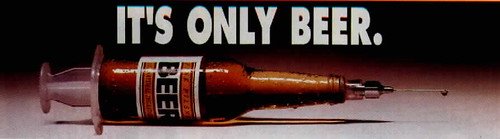
Onlybeer
An anti-alcohol group’s PSA equating beer with heroin. It was never funny, and I always found it offensive, but it turns out it may have even driven people to drink more. You can also see more of the ads the researchers used for their study at the Media Awareness Network.

Even though the study won’t be published until next month, you can read an advance pdf of it at the Advance Articles page of the Journal (it’s the sixth one from the top). The study is 32-pages long, with another 10 pages of bibliography and other supporting data.

While the study stops short of suggesting that such ads have over time made teens and other target demographics drink more, they do caution that future ads seeking to curb dangerous behaviors employing “guilt and shame appeals should be used cautiously.” Essentially, they politely suggest that the anti-alcohol community think about what they’re doing and the consequences of ad campaigns that do not include a well-planned media strategy. What I wonder is whether or not the groups responsible for such ads will feel any guilt themselves for driving people to drink more.

UPDATE: Advertising Age had another story about this study, but from the perspective of the journal article’s other author, Nidhi Agrawal, from the Northwestern University’s Kellogg School of Management.

Filed Under: Editorial, News, Politics & Law Tagged With: Advertising, Prohibitionists, Statistics

Olympics & Beer

February 26, 2010 By Jay Brooks

olympics
I may have some of the facts here wrong or may simply be missing something, but over the last week of paying some passing attention to the 2010 Winter Olympics in Vancouver — especially Curling — an odd picture has emerged concerning beer and America at the Olympics. A few nights on the Stephen Colbert Report, Colbert visited several nation’s International Houses, places for the athletes, visitors and sponsors from individual countries to go and relax with their fellow citizens and watch the competitions they don’t have tickets to, as well. Usually, they show off part of their culture — or the sponsor’s products — and they’re also places to celebrate. For example, at the Swiss House they had fondue, the Irish House featured folk music and the Russian House had foosball hockey. After visiting several houses, Colbert ends the segment back at the Irish House, saying it was because USA House didn’t have a bar.

That’s right, even after doubling the size of USA’s hospitality and having two separate houses (one in Vancouver and one in Whistler) there was no bar for American athletes or sponsors. Now, I don’t know for certain that we’re the only international house without a bar, but it certainly wouldn’t surprise me. We’ve done our level best to separate alcohol and move it into this otherworld that’s separate from the regular world that everyone lives in. So besides the fact that every other country can handle having alcohol be a part of their celebrations, at USA Central it’s believed that sports and alcohol can’t mix. You see it in college sports. You see it in the drive to eliminate drinking at professional sporting events. It’s always motivated by the fact that because some people can’t handle themselves, so then the logic is everyone should be prohibited from enjoying themselves. I’m sure other countries have their share of people trying to ruin it for everyone else — but somehow they’ve managed to make it the problem of those individual people and not the majority who can just get on with it. I, too, cringe whenever I see a bad drunk but not because I fear for that person, but because I know that neo-prohibitionists will look at that person and extrapolate his problem to include everyone who drinks. And so one result is the American Olympic Committee concludes it’s too risky for there to be a bar in our international house, despite the fact that craft beer is something America should be justly proud of.

Filed Under: Beers, Editorial, Politics & Law Tagged With: International, National, Prohibitionists, Sports

Sticker Shocking

January 29, 2010 By Jay Brooks

under-21
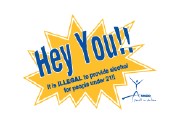
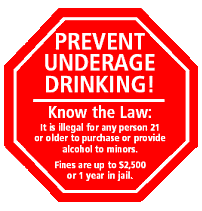
It appears MADD is up to their old tricks and actually this has probably been going on for some time albeit somewhat under the radar. In 1996, MADD created a youth organization of indoctrinated kids to do their dirty work for them called Youth In Action. One of their many “projects” is called Sticker Shock, which is described on their website:

YIA teams meet with local retailers that sell alcohol and ask permission to place warning stickers on the packaging of alcohol products (primarily beer). The stickers are very visible and warn of the consequences of purchasing alcohol for people under the age of 21. This project is designed to remind adults that they can be arrested for purchasing alcohol for minors.

Thanks for the “reminder” kids, but surely you could do something more constructive with your time. Maybe it’s the old curmudgeon in me, but it’s times like these when I miss the old days when children were to be seen and not heard. Do we really need these Stepford teens to lecture adults on the law?

This practice has apparently heated up in Massachusetts, with the state chapter there conducting raids of stores that sell alcohol to sticker the beer there.
madd-sticker-ma
Happily, Todd and Jason Alstrom, from Beer Advocate, take them to task in a recent column in Boston’s Dig entitled Fascist Youth Vandalize Liquor Stores. It almost reads like a headline from The Onion, except that it’s true. After detailing MADD’s Hitler youth in action, they strike the right note of indignation, certainly the same one I had.

Shocked? No, we’re pissed off! This is wrong on so many levels! First, while we agree that selling alcohol to minors is not cool, these sticker shock campaigns are outright acts of vandalism. Who cares if the storeowner gave permission? Who cares if these neo-prohibitionists are accompanied by an adult? Who cares if the adult’s a cop? Their little stunt is still illegal: Brewers must get approval from federal agencies for all packaging, including labels. Not only do these stickers alter the packaging, but sloppy placement could cover crucial information that, by law, must be visible to consumers.

And what about that cop? C’mon, with a cop backing these kids up, it’s no wonder that storeowners are consenting. And why “primarily beer”? Show us stats proving that kids are more likely to be hitting up adults for beer than for spirits. And why sticker all the beer in stock? Why not restrict it to the brands most popular with teen drunks? And why do we, the adult consumers, need to be “reminded” that purchasing beer for minors is illegal in the first place? Who said we forgot? Who decided this crap should be shoved in our faces? The YIA site says: “YIA teams look for community solutions instead of focusing their attention on their peers” — but isn’t that exactly where the primary focus should be?

This is not “reminding,” it’s intimidation, pure and simple.

madd-sticker-nm

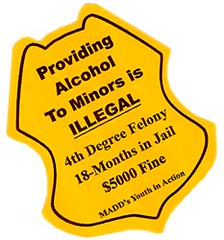
The stickers read “Providing Alcohol to Minors is ILLEGAL. 4th Degree Felony. 18 Months in Jail. $5000 Fine. MADD’s Youth in Action.” All true, but why stop there. Why not sticker cans of soda with warnings that they can cause obesity. Coke and Pepsi would never sit still for that. In the UK several years ago McDonald’s sued a couple of activists literally for years because they had the audacity to criticize their food in what became known as the McLibel trial. But criticizing alcohol is perfectly acceptable because law enforcement and especially politicians are afraid to be reasonable thanks to the very vocal and active temperance minority, bowing to almost their every demand.

madd-sticker-va

Jason and Todd conclude with an excellent suggestion.

So we’re challenging all true beer lovers to refuse to buy any product that has been vandalized by YIA, and to tell shop owners you’ll be boycotting their establishments until they get their beer from under MADD’s thumb — literally.

Amen to that. Don’t buy if you see the sticker. We have to start standing up to these bullies. I know in some cases the retailers had little choice in reality, but if they know there are consequences for acquiescence, ones that hit their bottom line, then they’ll begin to do the right thing, which is tell these gang of youths to go “remind” somebody else. That the police give these stunts the imprimatur of legality is quite frankly Orwellian and more than a little frightening.

Filed Under: Editorial, Politics & Law Tagged With: Massachusetts, National, Prohibitionists

Let No Good Deed Go Unpunished

January 27, 2010 By Jay Brooks

haiti
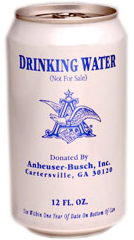
This is one of the many reasons I loathe the neo-prohibitionist groups. Perhaps you saw the press release from Anheuser-Busch, detailing how they, along with many others, are trying to do what they can to help the people of Haiti, who were devastated by the recent earthquake that hit their country. They sent cans of water, hastily filled at one of their breweries, as they’ve done during other similar emergencies (I recall they did the same for New Orleans after hurricane Katrina). They’ve had plenty of negative publicity lately — some even from me — so I wouldn’t think anyone would begrudge them trying to win back some positive vibes for what really amounts to doing the right thing. That’s really what we hope any of us would do under the circumstances.

bud-water

Except that you’d be wrong assume that no one would begrudge them. Those jolly folks at the Marin Institute wasted no time in admonishing Anheuser-Busch InBev, not for sending the water, but for using branded cans and for issuing a press release. In their own press release issued today, Help for Haiti Should Not be Branded, they claim that “most of these generous people are not putting out press releases about their good deeds.” I don’t know if that’s true and frankly, if those same people aren’t putting out press releases, then how can the Marin Institute claim to know about them or that they constitute a majority of the donations to Haiti’s disaster relief? How can they total up the anonymous donations that are, by definition, anonymous?

But they’re not done with their scolding. Next, they say most people making donations (of goods, one presumes) “are [not] branding their donated goods with their personal monikers” and asking the leading question “why does the beer behemoth need to brand the cans of this much-needed water with its corporate logo?” Well, I can think of one very good reason. Who would drink blank cans or cans just labeled “water.” I’d want to know where the water came from, who canned it to know if it was safe, etc. That just seems to be common sense. It would be counter-productive to can water with no information about its whereabouts or origins so people could judge its safety. I don’t want to go too far here, but a logo works better when not everyone speaks the same language, too. That way, even if people can’t read the can, they may recognize the logo and feel safer opening it as a result (though they may be disappointed it isn’t beer).

But the Marin Institute then concludes by saying ABIB’s efforts are “more than a tad distasteful,” calling their simple press release “bragging,” and suggesting that doing so “really does diminish your brand.” Wow. I thought there were no new depths that they could sink to in attacking alcohol, but boy, oh boy, was I ever wrong. So here we have a beer company who switches gears and spends their own money to create and donate much-needed water to Haiti. They have the apparent temerity to tell others what they’ve done, perhaps in part to inspire others to do likewise, and they also had the apparent gall to let the people they’re helping know who the water came from. Um, excuse me, but what exactly is the problem here? They helped. They did something. What exactly did the Marin Institute do to help the people of Haiti, apart from discouraging others from doing likewise, lest they also incur your misguided wrath. Or are you better than ABIB simply because whatever donations the Marin Institute gave were among the anonymous kind, you know, the better kinds of donations.

Do you honestly think the people Haiti give a rat’s ass where the donations came from? As long as they get enough to eat and drink so they can, you know, live, what possible difference could it make to anyone. Unless of course, you’re looking for absolutely any excuse to demonize your enemies and further your agenda. You criticize ABIB for issuing a press release, but that’s exactly what you did, too, using the opportunity to galvanize your supporters. But when you do it, it’s for a good cause, right? When ABIB does it, they’re shameless. This is seriously one of the ugliest and vilest demonstrations of how off the reservation the neo-prohibitionist groups are. Criticizing a good deed because it wasn’t done in the manner you’d prefer, or more correctly, by someone you already don’t like. You ought to be ashamed of yourself and your behavior. As they say, let no good deed go unpunished.

Filed Under: Breweries, Editorial Tagged With: Haiti, Prohibitionists, Water

Drinking All Over The Map

January 27, 2010 By Jay Brooks

world-map
If you’re a regular Bulletin reader, you know I believe that the drinking age in the U.S. is too high, that the age a person can vote and fight and/or die for one’s country should also be the age he or she can drink, as well. I lived through this ridiculous hypocritical double-standard when I was in the military thirty years ago, and I still hold a grudge. It was absurd then, and it’s absurd now.

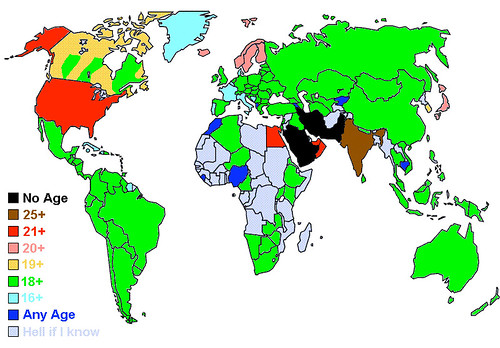
I think most of us believe that America is a progressive country where freedom is something we take for granted, that it’s the lynchpin of our society with free speech, free assembly, freedom of religion, and on and on. But not when it comes to our puritanical view of alcohol, there we are nearly the most backward country in the world. When you take out the handful of countries that allow no alcohol consumption — which are all in the Middle East — only India has a drinking age higher than ours, and even that’s not nationwide, but on a state by state basis. I could talk about this ’till I’m blue in the face, but nothing shows this inequity better than a visual representation of drinking ages by country. Happily, Drinking Map went to the trouble of creating a world map showing the drinking age by country, where known. To see it larger, click through the image, then click on “all sizes.”

drinking-age-map

As you can see, the vast majority of the world is at a sensible 18, with only a few other nations (all in the Middle East, too) that are 21 like us. Japan and most of Scandinavia set the age at 20 and South Korea along with parts of Canada are at 19.

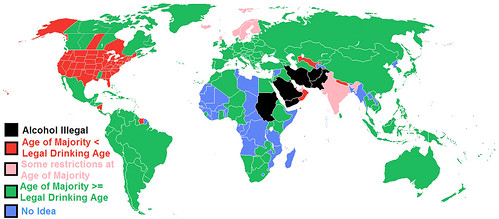
But perhaps more interesting is the map below, also by the folks at Drinking Map, called Where “Adults” Can’t Drink. This map shows the relationship between a country’s age of majority (when a person is considered an “adult”) and the age at which they are permitted to drink alcohol. Notice that for a majority of nations (in green) that age is the same, as I believe it should be. A few more (in pink), like India and most of Scandinavia, allow some drinking but with certain restrictions. Then we, along with parts of Canada and a handful of other nations (in red), stand out as having a drinking age that’s higher than the age of majority. To see it larger, click through the image, then click on “all sizes.”

age-of-majority-map

Would it not be perhaps a reasonable compromise to allow 18-year olds to drink beer, or wine and beer, but not spirits until they’re 21? Anyway, just some food for thought.

Filed Under: Editorial, Just For Fun, Politics & Law Tagged With: International, Prohibitionists, Statistics

Sober Statistics

January 24, 2010 By Jay Brooks

no-drinking-pint
Here’s an interesting list. Usually, we hear about the top drinking cities, but this is the top ten (or bottom ten, depending on your perspective) cities for NOT drinking, that is the cities and towns that don’t drink very much. I found the list in a U.S. News & World Report article but the data comes from the CDC (and is for communities of 10,000 or more people). The first four are pretty clear, but then it’s a four-way tie for fifth followed by a two-way tie.

  1. Provo-Orem, UT (99.4)
  2. Idaho Falls, ID (97.9)
  3. Hickory, NC (97.8)
  4. Ogden, UT (97.5)
  5. Brownsville, TX (97.2)
  6. Fayetteville, NC (97.2)
  7. Raleigh, NC (97.2)
  8. Wichita, KS (97.2)
  9. Cheyenne, WY (97.0)
  10. Farmington, NM (97.0)

Not many surprises from what you might guess, except that when you look deeper at the statistics, something odd emerges, at least to me. Those parenthetical numbers represent the percentage of people surveyed who said they don’t drink “more than two drinks per day” (if adult males) or “more than one drink per day” (if adult females). Otherwise — get this — they’re considered “heavy drinkers.” That’s right, have more than two drinks on the same day ever and you’re a heavy drinker. It’s hard to imagine a more useless way to define this, unless you’re trying to inflate the numbers and make it appear that problem drinking is more of a … well. problem, than it actually is. Defining heavy drinkers as “adult men having more than two drinks per day and adult women having more than one drink per day” undoubtedly accomplishes that, especially when you consider that the CDC defines binge drinkings as five or more drinks during one session (4 if you’re female). This is how to create a problem that doesn’t exist. (Note: I don’t mean that there aren’t problem drinkers, I only question that it’s as epidemic as these statistics suggest.) The way it is now, drink one or two beers a day, you’re fine. But have a third and you’re a “heavy drinker.” Have two more for a total of five and you’re — gasp — a “binge drinker.” Really?

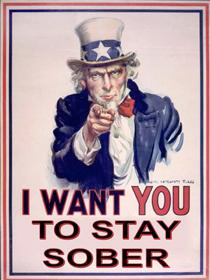
stay-sober

Using the same data from the CDC survey, the top 10 heaviest drinking cities are:

  1. Reno, NV
  2. Palm Bay-Melbourne, FL
  3. Boulder, CO
  4. Austin, TX
  5. Charleston, SC
  6. McAllen, TX
  7. Naples-Marco Island, FL
  8. Riverside, CA
  9. Cape Coral, FL
  10. Barnstable Town, MA

That’s a strange list, too, and not what I would have predicted. Three in Florida and six total from the southern states. You just have to wonder how truthfully people answer a question like this when it’s posed.

Filed Under: Beers, Just For Fun Tagged With: Prohibitionists, Statistics

Stuff & Nonsense, Part 10

January 19, 2010 By Jay Brooks

Last week, you probably recall I was following Pete Brown’s brilliant refutation of his national health service’s attack on alcohol, beginning with, Stuff & Nonsense: The UK Health Select Committee Report On Alcohol. The first nine parts of Pete’s rebuke were posted last week and today part ten, the last one, was also posted.

In part 10, Pete tackles an issue that isn’t entirely relevant in the U.S., because as far as I know there aren’t any states that allow it. The issue is Binge drinking has been made much worse by 24 hour licensing. Despite that, it’s a still a great read an interesting peek into the window of manipulation that’s taking place at the hands of the UK Parliament. This, sadly, is similar to our shores where neo-prohibitionists have worked their way — and their agenda — into politics at all levels. The rest of us, understandably were busy just trying to enjoy our lives, and so missed seeing what was going on until it was nearly too late.

Part of the problem here, at least in comparison to the UK, is we don’t have the same tradition of pub culture. When we separated from mother England, our two drinking cultures diverged dramatically. England’s stayed something that was part of their culture, something to be proud of, that had national associations. Ours fractured into taverns, pubs, dive bars, biker bars, fern bars, niteclubs, pool halls, chain bars, etc. And from the beginning of the temperance movements, all those were demonized and continue to be demonized. It’s a rare bar in the U.S. that can call itself a family place. And that’s at least part of the reason why so many can’t see alcohol as part of society, but something to be feared and separated, especially from — gasp — the little children.

That’s also why it was great seeing Pete’s addendum to his series, Answering the Neo-Prohibitionists — A Series Disclaimer. In it, Pete relates some personal stories of how alcohol abuse has affected him. It sounds like he didn’t want to recall such painful memories, but felt he had to do so, so that people criticizing him understood where he was coming from and that he did understand that alcohol can be destructive. I get that, too; the criticism for talking about neo-prohibitionists too much. But for whatever reason, I don’t mind talking about my own history with alcohol abuse. I grew up with an abusive, alcoholic, violent, clinically psychotic stepfather. He surrounded himself with other alcoholics and I all but grew up in bars around eastern Pennsylvania.

I’ve even written about it before, both here and as a semi-fictional memoir I did for NaNoWriMo a few years ago. The rough draft I wrote extemporaneously is still online, actually. It’s called Under the Table and hasn’t been edited since 2006, so expect lots of typos, run-on sentences and all manner of grammar horrors, assuming you’ve got a lots of spare hours to kill and have any desire to crawl inside my head (don’t say you haven’t been warned).

But the reason for bringing this up now is that even as a child I understood something the average neo-prohibitionist can’t seem to wrap his or her head around. And that’s the fact that my stepfather was — and indeed most alcoholics are — that way for reasons that have nothing to do with the booze itself. Attacking the product and its manufacturers and consumer’s access to them does absolutely nothing to stop people from drinking. If anything, it exacerbates those problems. Witness American Prohibition. Did it stop people from drinking? No. Did it increase crime? Yes. Did it work? Not even a little, yet there are people for whom that lesson counts for nothing and want to give it another go.

Here’s Pete’s take:

Firstly, because having witnessed it close up, I know that when people step up to fight alcohol abuse, they go for the wrong targets. People don’t drink harmfully because alcohol is there, or because it’s cheap, or because it’s advertised. Restricting the availability of alcohol won’t help alcoholics. These people live for alcohol – it’s the only thing they care about. Make it expensive and they’ll go without food, sell their house, Christ, they’d sell their fucking kids for a drink. Prohibit it altogether and they’ll drink meths, or nail varnish remover, or after shave.

Alcoholics drink not because it’s there, or cheap, or tastes nice, but because they have deeper trauma and/or unhappiness in their lives. Even if you were studying this at GCSE level, if you look at it scientifically, if availability/pricing/advertising of booze caused problem drinking, then everyone exposed to it would be more likely to problem drink. But most people in theUK are drinking less. A minority are drinking to harmful levels. And as far as I can tell, no one is studying that minority in detail and asking what it is about them that makes them different from the majority.

It’s easy to blame the availability of booze. And it is shameful that problem drinkers are not being researched in a way that can highlight what it is that’s different about them that makes them more likely to problem drink.

People drink to excess because they are unhappy, because they feel empty inside, because they are lonely, because they are stressed, because they have shit jobs being bullied in call centres and alcoholic oblivion is the only escape they can see. Why is no one helping them? Because it’s a bit more complicated than just blaming drink, that’s why.

Secondly, I’m doing this because for the vast majority of people, drink is an innocent pleasure with minimal health risks beyond a few extra pounds or the odd hangover. My father died of smoking-related lung cancer when he was 58 and I was 27. I’ve read the science, and I know that there is a direct linear relationship between smoking and ill health – every single cigarette you smoke causes you damage. Drink is not the same. There are healthy levels of alcohol consumption.

My close quarters witnessing of the destruction alcoholism can cause makes me more keenly aware of the benefits of moderate consumption, and the stark difference between the two. So it makes me very angry indeed when someone who doesn’t know what they’re talking about tars all habitual drinkers with the same brush. And even angrier when newspapers distort the facts even further for nothing more than a sensationalist story.

Thirdly – quite simply, because it needs doing. A quick review of press stories about alcohol over the last week alone will show you how drinking is being demonised and made socially unacceptable. It’s based on lies and distortions. The figures say the problem is not getting any worse – if anything, the situation is improving. No one in the media seems to want to report this truth. No one questions press releases from avowedly anti-drink organisations. My blog posts might seem excessive if you’ve been staying tuned over the last week or so, but they amount to a fart in the face of a hurricane compared to the anti-drink propaganda that’s out there every single day.

In summary then – I know the ill effects of alcohol abuse as well as anyone, and care about them as much as anyone. I’ll never deny that there’s a problem, and am not seeking to do so on this blog.

But if that problem is going to be dealt with effectively, it has to be understood properly. I think the neopros are acting against the interests of the majority of drinkers. But worse, because they are approaching the problem over-simplistically, wilfully distorting the evidence, and confusing personal beliefs with real health issues, I don’t think their antics will do anything to help the people who really need helping. And that is just shameful.

That’s why I’m doing this.

Amen, brother.

To sum up, if this is new to you, start with Pete Brown’s Health Select Committee Report on Alcohol. Part One (of 10) was published Sunday, Alcohol consumption in the UK is increasing. On Monday, parts two, 25% of the UK population is drinking at hazardous or harmful levels, and three, Binge drinking is increasing, were published. Tuesday saw part four: Alcohol is becoming cheaper/more affordable, and yesterday part five, Alcohol related hospital admissions — and the cost of alcohol to the NHS — are soaring, was published online. Overnight and today, part six, Alcohol abuse costs the country £55bn a year, part seven, The best way to reduce the harmful effects of alcohol is to reduce overall consumption, part eight, Alcohol advertising and promotion must be tightly regulated because it encourages underage drinking, and part nine, Pubs are a problem, went up. And finally, part ten, Binge drinking has been made much worse by 24 hour licensing.

Filed Under: Editorial, Politics & Law Tagged With: Prohibitionists, Statistics, UK

Stuff & Nonsense, Parts 6 Through 9

January 14, 2010 By Jay Brooks

By now, even the casual Bulletin reader has likely noticed that I’ve been following Pete Brown’s brilliant refutation of his national health service’s attack on alcohol, beginning with, Stuff & Nonsense: The UK Health Select Committee Report On Alcohol. The first five parts of Pete’s rebuke have been published over the past few days, and overnight and this morning, west coast time, parts six through nine were posted.

In part 6, Pete tackles the assertion that Alcohol abuse costs the country £55bn a year
Today’s rebuke. In the U.S., this is claim made with alarming regularity, charging alcohol for all manner of sins, and ignoring personal responsibility, common sense and even logic. If there’s a whiff of alcohol anywhere in the vicinity, then by gum the whole thing is alky’s fault. Last year, the Marin Institute did their own study claiming in California alone alcohol costs $38 billion each year. It’s as self-serving a document you’ll ever read. In the UK report, they claim alcohol costs Britain either £20 or £55 billion pounds (which is 32.5 billion dollars or 89.5 billion dollars). This should give you some idea about who whacked our anti-alcohol folks are. The are just over 61 million people in the UK, but almost 37 million in California, yet they assert that, using the UK’s lower figure, alcohol costs more than the entire nation of Great Britain, with roughly half the number of people. It’s just so easy to lie with statistics, and, more profoundly sad, even easier to get the government and the media to swallow those lies without questioning them. But in any event, take a look at Pete’s analysis.

In part 7, the government trots out yet another old favorite, the wolf in sheep’s clothing that is the best way to reduce the harmful effects of alcohol is to reduce overall consumption. All we need to do to get rid of some people doing something we don’t like is make it illegal for everybody. Problem solved. Except that alcohol has been around since before the dawn of civilization and maybe 99.9% (full disclosure, I made that number up but the idea is that the vast majority) of people enjoy the occasional without ruining their lives, their loved ones, their careers, or even their livers. And numerous medical studies confirm a wide range of health benefits, not least of which is the fact that people who drink alcohol in moderation tend to outlive those who never touch the stuff.

In the case of the UK report, they claim to be advising just toward reducing consumption, but to where? To what level? It’s already be shown beyond doubt that the recommended levels that the UK advises were made up wholesale, pulled out of thin air. Just the notion that recommended safe amounts are the same for any two men or women is patently absurd, yet that’s the standard. The other problem I see with arguing for less overall consumption is that it’s a slippery slope. Today’s reduction is tomorrow’s outright ban. If less is more, then none must be best of all, right?

Part eight brings up to the most pernicious argument of all, and the one that always sticks in my craw. “It’s for the children,” they cry. “Doesn’t anybody think of the children.” What the UK says, is Alcohol advertising and promotion must be tightly regulated because it encourages underage drinking. While the report says the opposite, the truth is drinking is declining in the UK, and I suspect that’s true here, too. But it’s Pete’ summary that is most telling, showing the chain of absurdity.

The HSC says drinking among children is increasing. But recent official figures suggest it is falling.

The HSC simply asserts that advertising encourages young people to drink. But there is no evidence of a causal link, despite people looking very hard to try to find one.

So they imply that there is a link between awareness of alcohol brands and propensity to drink underage, because they can prove awareness. But there’s no evidence of this either.

So after having spent a long time discussing the content of alcohol ads, they then say it’s not the content, but the quantity of it that has an effect. There’s no evidence of this either.

So in the end, they disregard testimony from advertising professionals, and simply choose to believe the testimony of people who want alcohol advertising to be banned, say it is damaging to children, but can produce no evidence to back up their assertion.

Which brings us to part 9, Pubs are a problem. If alcohol is a problem, then the places where people drink it must also be dens of inequity, mustn’t they?

To sum up, if this is new to you, start with Pete Brown’s Health Select Committee Report on Alcohol. Part One (of 10) was published Sunday, Alcohol consumption in the UK is increasing. On Monday, parts two, 25% of the UK population is drinking at hazardous or harmful levels, and three, Binge drinking is increasing, were published. Tuesday saw part four: Alcohol is becoming cheaper/more affordable, and yesterday part five, Alcohol related hospital admissions — and the cost of alcohol to the NHS — are soaring, was published online. Overnight and today, part six, Alcohol abuse costs the country £55bn a year, part seven, The best way to reduce the harmful effects of alcohol is to reduce overall consumption, part eight, Alcohol advertising and promotion must be tightly regulated because it encourages underage drinking, and part nine, Pubs are a problem, went up. Once again, stay tuned. There’s one more part to go.

Filed Under: Editorial, Politics & Law Tagged With: Health & Beer, Prohibitionists, Statistics, UK

« Previous Page
Next Page »

Find Something

Northern California Breweries

Please consider purchasing my latest book, California Breweries North, available from Amazon, or ask for it at your local bookstore.

Recent Comments

  • Ernie Dewing on Historic Beer Birthday: Charles William Bergner 
  • Steve 'Pudgy' De Rose on Historic Beer Birthday: Jacob Schmidt
  • Jay Brooks on Beer Birthday: Bill Owens
  • Steve 'Pudgy' De Rose on Beer Birthday: Charles Finkel
  • Steve 'Pudgy' De Rose on Beer Birthday: Bill Owens

Recent Posts

  • Historic Beer Birthday: Joseph Bosch February 11, 2026
  • Historic Beer Birthday: Charles Engel February 11, 2026
  • Historic Beer Birthday: Daniel Jung February 11, 2026
  • Beer In Ads #5198: Back Again! Wiedemann’s Genuine Bock Beer February 10, 2026
  • Historic Beer Birthday: Jacob Hammel February 10, 2026

BBB Archives

Feedback

Head Quarter
This site is hosted and maintained by H25Q.dev. Any questions or comments for the webmaster can be directed here.