
Tuesday’s ad is an early one for Whitbread Pale Ale. The 1936 ad is all shadows and light, with the shadowed man wearing some sort of riding hat, or is he Sherlock Holmes?
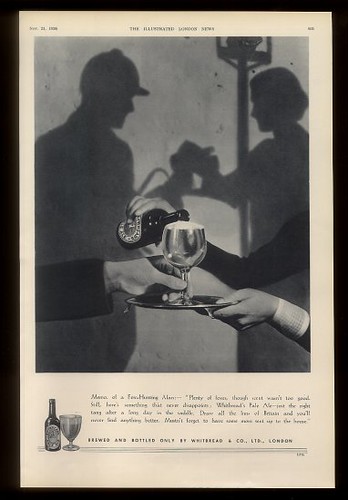

Tuesday’s ad is an early one for Whitbread Pale Ale. The 1936 ad is all shadows and light, with the shadowed man wearing some sort of riding hat, or is he Sherlock Holmes?
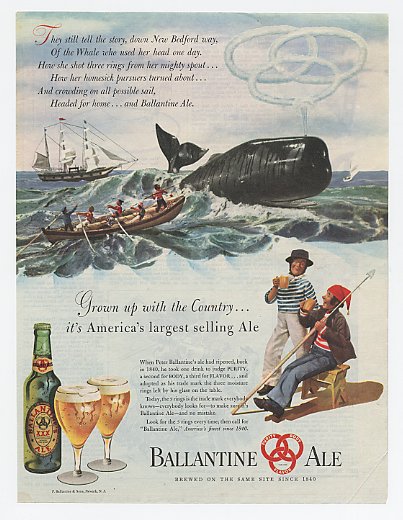
Monday’s ad is for Ballantine Ale from 1947. The whale may not be white, but it sure seems to play on the story of Moby Dick. Ballantine did a series of diorama ads that featured different stories, some from literature and some from history. I don’t know how many they did, I’ve collected at least a dozen of them, but I’d love to know more definitively what subjects they covered.

Last week’s artworks were all paintings of wheat fields by Vincent Van Gogh for the most recent Session on wheat beers. Since wheat fields were a favorite subject for Van Gogh — throughout his life he painted at least 40 artworks that included a wheat field — I couldn’t help but feature several more again this week.
Wheat field, painted in 1889.

Green Wheat Field, also painted in 1889.

Wheat Field with Reaper, from 1888.
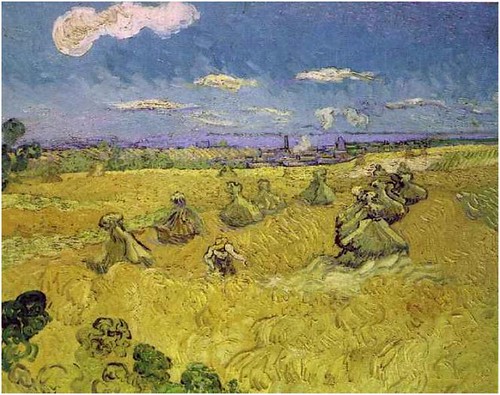
Sheaves of What in a Field, from 1885.

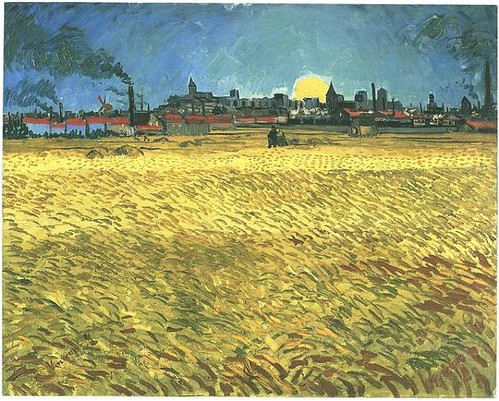
Sunset Wheat Fields Near Arles, from 1888.
Wheat Field Behind Saint Paul Hospital with a Reaper, from 1889.

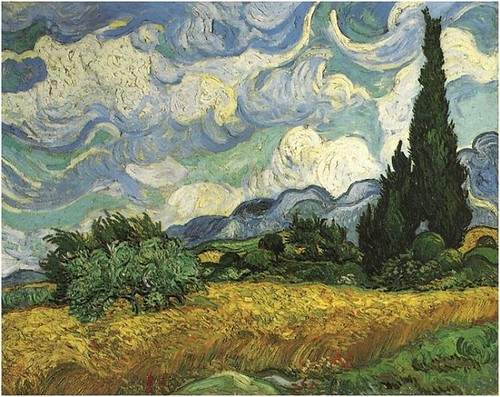
Wheat Field with Cypresses at the Haute Galline Near Eygalieres, from 1889.
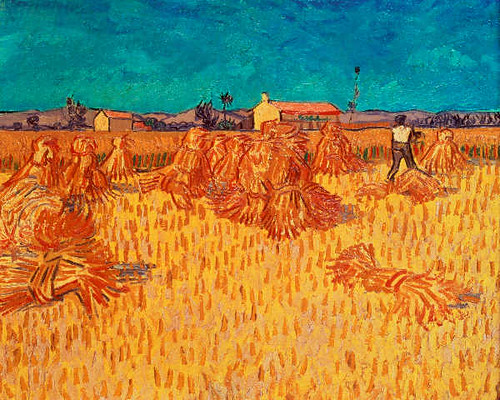
Sunset Wheat Field with Sheafs, from 1888.
For more about Vincent Van Gogh, Wikipedia is a good place to start, though there’s even more at the Vincent Van Gogh Gallery, which has a complete list of his works. There are also tons of links at the ArtCyclopedia and another biography at the Web Museum.

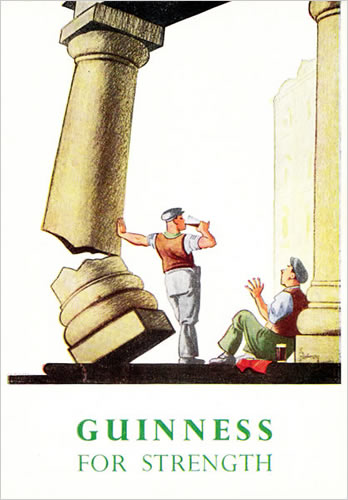
Our 43rd Guinness poster depicts a man leaning against an ancient Greek column and accidentally knocking it down, just because he’s recently enjoyed a pint of Guinness. That’s, as the slogan suggests, “Guinness for Strength.”
And here’s another version of the ad with a lot more text than usually seen in Guinness advertising at that time.

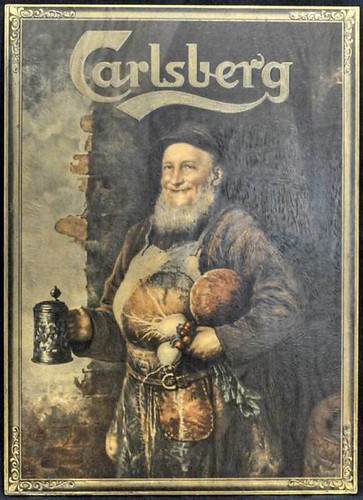
Friday’s ad is for Carlsberg from 1925. It features an odd painting of a man with a beer stein holding some vegetable like turnips. I don’t know if Carlsberg adapted a known work of art for this advertisement or if it was commissioned for it.
Thursday’s ad is for Schlitz Famo, from around 1918. Famo was their non-alcohol beer during Prohibition, or as they referred to it, “a pure non-intoxicating beverage.” I’m not sure what the tie-in was with the man in uniform, though it was during World War I, and since today is Veteran’s Day — originally Armistice Day for that war’s end.
Most of the beer companies scrambled to come up with a N/A brand in the years just before Prohibition as they finally started to see the writing on the wall. For an interesting overview of the names they came up with, check out Prohibition and Near-Beer Names.
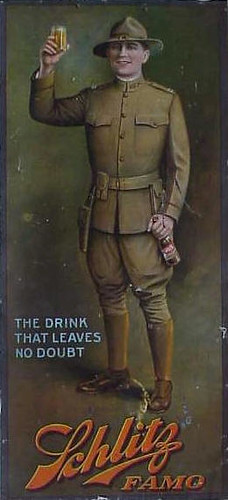
During the early part of Prohibition, brewers at the time were emphasizing cleanliness by saying that “Schlitz Famo goes through a pulp filter–then through a sterilized pipe line to glass-lined tanks in a cool cellar for aging. A sterilized line carries it to automatic filling machines containing sterilized bottles, thence to Pasteurization” They further stressed the nutritional values of their products. The company boasted that Schlitz Famo is more than a drink. It is a food. Every time you take a glass of Schlitz Famo you are taking something to eat. Every compound essential to the human body is present in Schlitz Famo–protein, carbohydrates, mineral matter and water–the only factor absent being fats, and they are formed in the body from the carbohydrates. These elements repair and build up broken-down tissues and impart to the body heat and muscular energy. That’s why we say Schlitz Famo is a worth-while cereal beverage. It is non-intoxicating. It is healthful, refreshing and satisfying. It has the wonderful hop aroma.
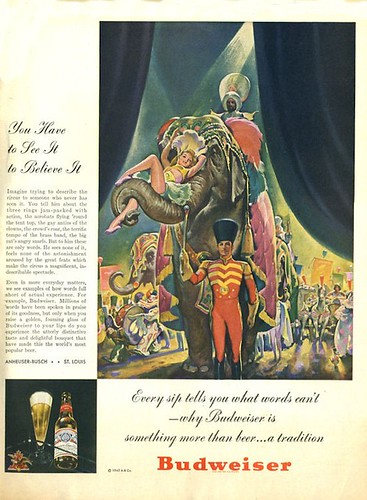
Wednesday’s ad is for Budweiser from 1948. It depicts a very colorful, surreal circus scene with the slogan “You Have To See It To Believe It.”
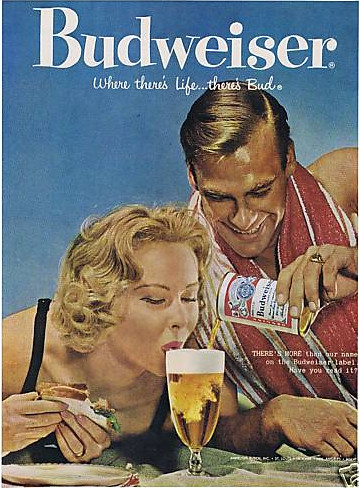
Tuesday’s ad is for Budweiser from 1958. It’s from the “Where There’s Life … There’s Bud” series and features a couple at the beach. The man is pouring beer from a can to overflowing — tilt the glass, dude! — while the woman tries to sip it up before it spills over the side, while holding a partially-eaten sandwich. Is it just me, or is there something vaguely odd about the ad?
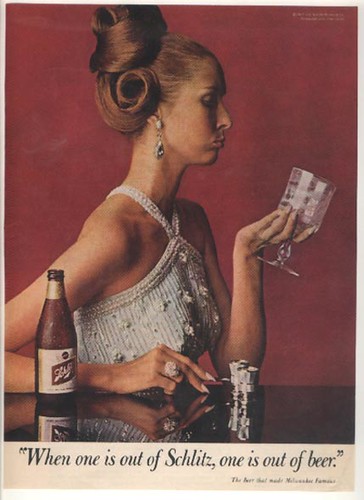
Monday’s ad is for Schlitz, from — I’m guessing — the swinging, sophisticated sixties with a play on their famous slogan “when you’re out of Schlitz you’re out of beer” being rendered more proper, as “When One Is Out Of Schlitz, One Is Out Of Beer.”
Today’s artworks are all by one of the world’s most well-known artists, Vincent Van Gogh. Given last Friday’s Session topic — wheat beers — I thought it would be fun to look at some paintings of what fields. Wheat fields were a favorite subject for Van Gogh and throughout his life he painted at least 40 artworks that included a wheat field.
One of his most famous wheat field paintings was Wheatfield with Crows, painted toward the end of Van Gogh’s life, in 1890, the same year he passed away. It was also the subject of an episode of Simon Schama’s Power of Art, a wonderful documentary series on art that I heartily recommend. In addition, it was used in a surreal sequence of a lesser know film by Akira Kurosawa called Dreams. The original is in the Van Gogh Museum in Amsterdam.
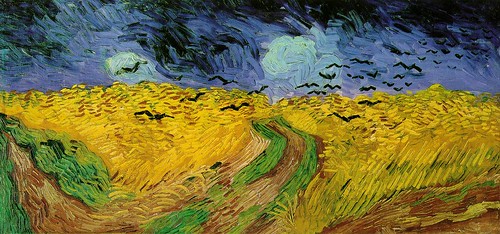
Here’s what the Van Gogh Museum has to say about the painting:
Wheatfield with Crows is one of Van Gogh’s most famous paintings and probably the one most subject to speculation. It was executed in July 1890, in the last weeks of Van Gogh’s life. Many have claimed it was his last work, seeing the dramatic, cloudy sky filled with crows and the cut-off path as obvious portents of his coming end. However, since no letters are known from the period immediately preceding his death, we can only guess what his final work might really have been. Some scholars believe it was the Tree-roots, but we have no proof that this was the case.
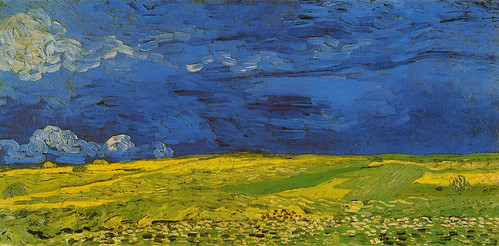
Another one painted around the same time was Wheat Field Under Clouded Sky, also painted in 1890.
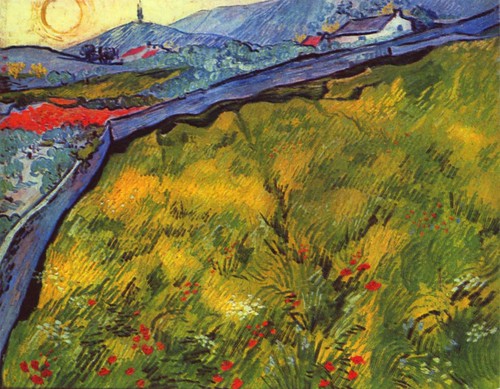
Can Gogh also executed a series of paintings called “The Wheat Field” series. All of the paintings “depict the view Van Gogh had from the window of his bedroom on the top floor of the asylum” at Saint-Rémy-de-Provence from June 1889 to May 1890. Here’s one from that series, Wheat Field, Sunrise, painted in 1890.
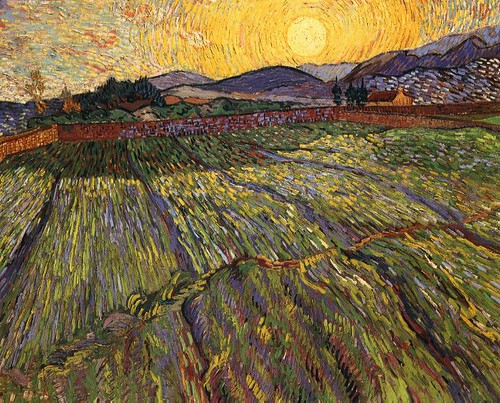
And here’s another one, Wheat Field with Rising Sun, from 1889.
For more about Vincent Van Gogh, Wikipedia is a good place to start, though there’s even more at the Vincent Van Gogh Gallery, which has a complete list of his works. There are also tons of links at the ArtCyclopedia and another biography at the Web Museum.