Brookston Beer Bulletin

Jay R. Brooks on Beer

  • Home
  • About
  • Editorial
  • Birthdays
  • Art & Beer

Socialize

  • Dribbble
  • Email
  • Facebook
  • Flickr
  • GitHub
  • Instagram
  • LinkedIn
  • Pinterest
  • RSS
  • Twitter
  • YouTube

Powered by Genesis

Historic Beer Birthday: John Barnitz

November 24, 2025 By Jay Brooks

globe-md
Today is the birthday of John Leonard Barnitz (November 24, 1677-November 19, 1749). He was born in Falkenstein, Upper Palatinate, Bavaria, Germany. Although the exact date is uncertain, Barnitz moved his family to York, Pennsylvania in or before 1733. He established two breweries in Pennsylvania (in York and Hanover) and then, along with his son Elias Daniel Barnitz, founded the first brewery in Baltimore, Maryland, in 1748. When John Leonard dies a year later, his son continued the brewery, but changed the name from the John Leonard Barnitz & Elias Daniel Barnitz Brewery to the Elias Daniel Barnitz Brewery. In 1780, he appears to have sold it and the brewery proceeded to go through no less than twenty name changes, and multiple ownership changes, and by 1888 was known as the Globe Brewery, the name that it continued under until 1963, when it closed for good.

Globe-1905

This biography of Barnitz is from “The Barnitz Family,” by Robert M. Torrence, published in 1961:

John Leonard Barnitz is assumed to have been born in Falkenstein, Germany, November 24, 1677 (tombstone), because his son, John George Charles (Carl) Barnitz, stated in his own will that he was born there in 1722, so his father must have been there too. He died in York, Pa., November 19, 1749 and was buried in the Christ Lutheran Churchyard on South George Street. His remains must have been moved twice to make room for two new churches, during which his stone was broken and his J.L. letters were lost. Someone, attempting to make it right, just cut on it N.N .—no name. [The first Lutheran Church in York was built of logs in 1744 and was small. In 1760-61, this was replaced by a new church, forty feet by sixty-five, which lasted until 1812. The present Christ Lutheran Church was finished in 1814. They were all on the same location.] The date of his arrival is not of record in the Pennsylvania Archives or in any other standard publication consulted by the compiler. Evidently, he was well provided with ample funds and a knowledge of brewing, a business in which he was conspicuously successful, and he was correspondingly generous in sharing it with the Lutheran churches wherever he went. His first brewery was in York, the second in Hanover, Pa., and the third in Baltimore, Md., where he and his son, Elias Daniel Barnitz, bought Lot No. 27 from Charles Carroll of Annapolis, Md. Since his first wife
was not mentioned in his will, it is assumed that she died in Germany. His second wife was the widow of Frederick Gelwick (sic), who had a son by her first marriage, John Frederick Gelwick, born in 1733; married Maria Dorothea Uler; became York County Treasurer in 1756, succeeding Colonel Robert McPherson.
He was the first individual to be baptized in the Evangelical Lutheran Church on-the-Conowago “when Lenhart Barnitz and Frederick Gel wicks (sic) were the first Elders.”

wehr-hobelman-gottlieb-globe
This view of the brewry is from the 1880s, when it was known as the Wehr-Hobelmann-Gottlieb Brewing & Malting Co.

And this account is from “Zion Church and Baltimore’s First Brewer,” by Dr. Eric W. Gritsch:

Zion Church can claim the first brewer of Baltimore Town, Elias Daniel Barnitz, as a founding member our congregation. Along with his father John, they established their brewery in 1748. John was born in Falkenstein in the Palatinate of Germany on November 24, 1677, arriving in America in 1732 at the age of 55. In Germany he had been an apprentice brewer. Elias Daniel was also born in Falkenstein, on October 24, 1715. After residing in York County, Pennsylvania, John arrived in Baltimore Town in 1748 at the age of 71. He and his son found the Baltimore settlement surrounded by a stockade fence, erected in 1746. Lost to history is the purpose of the stockade, but it was said to provide protection from hostile Native Americans west of the town. A more plausible reason for the fence was to keep wandering hogs and other livestock from wandering into the town. The fence was eventually dismantled and used for kindling after several cold winters.

The Barnitz brewery was gratefully welcomed by Baltimore’s early inhabitants, about 30 families in all. The brewery was viewed as both a source of liquid refreshment and impetus to attract other businesses to the nascent settlement, then just 22 years old. The original brewery was located at the southwest corner of Baltimore and Hanover Streets, today the entrance to Hopkins Plaza and cater-corner to the Lord Baltimore Hotel. This was one of the original lots of Baltimore Town, purchased from Charles Carroll, Sr. He was father of Charles Carroll of Carrollton, a signer of the Declaration of Independence.

To place this brewery in historical context, George II was King of England and Sovereign Lord of the Province of Maryland. Samuel Ogle was Governor of Maryland, and George Washington was just a lad of sixteen. Tobacco was used as currency.

Unfortunately, the elder Barnitz died on November 19, 1749, surviving his brewery but for one year. The brewery was then passed on to Elias Daniel. Although no description of Baltimore Town’s first brewery exists, it was assumed to be diminutive in size and small in output, one or two stories in construction and employing no more than three workers. Equipment was likely crude, consisting of copper cookers, fermenting tubs and racking for casks and kegs. The entire brewing process was done by manual labor. The water supply was drawn from a well. The “ageing” period was likely a short one as there was no cooling cellar to lager the beer. Records indicate beer was produced at this location until about 1815, with the building itself lasting over 100 years, until 1853.

And this is from German Marylanders:

The first Brewery (Southeast Corner Conway and Hanover Streets) was erected in 1748 by Barnitz (Leonard and Samuel) Brothers. John Leonard Barnitz was a native of Falkenstien, Germany, where he learned his craft. The building was situated on the Northeast Corner of Hanover and Conway Streets (later identified as 327 S. Hanover Street-some references also used the S.W. corner of Baltimore and Hanover Sts.). Upon John Leonard’s death, his son Elias Daniel took over. The founders named it “Washington Brewery,” but only brewed Ale, Porter and Brown Stout. It was in the same location as the magnificent Malthouse of Messrs. Wehr, Hobelmann & Gottlieb. (see profile). It was taken over in 1820 by Peter Gloninger and he operated it for 7 years and sold it to Samuel Lucas. While under the control of Lucas, it became the second largest brewery. Lucas died in 1856. It was then sold to Francis Dandelet (a Frenchman who died in 1878). The name was changed to the Baltimore Brewery. In 1876 it was changed again when John Butterfield with his son-in-law, Frederick Gottlieb, operated the brewery.

Globe Brewery stayed open during prohibition which gave it an ‘edge’ when prohibition ended. They made ‘near beer’ called Arrow Special during prohibition. At midnight on April 7, 1933, they served ‘real beer’ at the Rennert Hotel. Globe also survived both trusts, of which they belonged to both the Maryland Brewing Company and the Gottlieb, Bauernschmidt, Straus Co.

In 1963, they stopped brewing in Baltimore and moved their beer making to their Cumberland operations, the Cumberland Brewing Company and in 1965 the building was razed to make room for a parking lot.

ArrowBeer1914

Filed Under: Birthdays, Just For Fun Tagged With: Germany, History
Historic Beer Birthday: Frederick Miller

November 24, 2025 By Jay Brooks

miller-old
Today is the birthday of Frederick Edward John Miller (November 24, 1824-May 11, 1888). He was originally born as Friedrich Eduard Johannes Müller in Württemberg, Germany. He learned the brewing business in Germany at Sigmaringen, and moved the U.S. to found the Miller Brewing Company by buying the Plank Road Brewery in 1855, when he was 31. For a time it was known as the Fred Miller Brewing Co., but later dropped Fred’s name to become the Miller Brewing Co.

Frederick-miller
Here’s a short biography of Miller:
Born in Germany in 1824, Frederick Miller learned the art of brewing from his uncle in France. After working through the ranks of his uncle’s brewery, Miller leased the royal Hohenzollern brewery at Sigmaringen, Germany, and brewed beer under a royal license until political unrest caused him to emigrate to the United States in 1854. Miller arrived in Milwaukee in 1855 and purchased the Plank-Road Brewery, located several miles west of the city. Miller led the company for thirty-five years, pursuing a policy of aggressive expansion and modernization. After his death in 1888, Miller’s sons took over management of the company.

c.-1870-Plank-Road-Brewery
The Plank Road Brewery around 1870.

Here’s his obituary, from the Archdiocese of Milwaukee Catholic Cemeteries:
Miller, Fredrick Edward John, November 24, 1824 – June 11,1888, Began Miller Brewing Company in Milwaukee, WI, the second largest brewer in the United States. Fredrick Miller came from a family composed of German politicians, scholars and business owners. He began to learn the craft of brewing beer in Germany. At the age of 14, Miller was sent to France for seven years to study Latin, French and English. While residing in Europe, he visited his uncle in Nancy, France. His uncle was a brewer and Fredrick Miller decided to continue to learn the business of brewing.
Fredrick Miller came to Milwaukee, Wisconsin in 1855. He brought his passion for beer and business expertise with him. With $8,000 in gold from Germany, Miller opened the Plank Road Brewery, a brewery originally started by Fredrick Charles Best that was abandoned in 1854.

Fredrick Miller was married to Josephine Miller on June 7, 1853, before they immigrated to America. Josephine and Fredrick Miller had six children together. Most of the children died during infancy. In April 1860, Josephine died. She left Fredrick with 2-year-old daughter, Louisa. When Louisa was 16, she too died of tuberculosis.

Miller was remarried in 1860 to Lisette Gross and they had several children who also died during infancy and five who survived: Ernst, Emil, Fred, Clara and Elise.

When Fredrick Miller brewed his first barrel of beer in America, he spoke passionately about “Quality, Uncompromising and Unchanging.” It was his slogan, mission and vision for the company. His statement and vision still lives on today.

Through the Great Depression, Prohibition, and two World Wars, Miller Brewing Company has preserved and grown.

Fredrick Miller died of cancer on June 11, 1888; interment in Cavalry Cemetery, Wauwatosa, WI.

fred-miller

This account of the early Miller brewery is from Encyclopedia.com:

Between the establishment of the Miller Brewing Company in 1855 and the death of its founder in 1888, the firm’s annual productive capacity increased from 300 barrels to 80,000 barrels of beer. This impressive growth has continued to the present day: Miller now operates six breweries, five can manufacturing plants, four distributorships, a glass bottle production facility, a label and fiberboard factory, and numerous gas wells. Beginning with a staff of 25, Miller now employs about 9,500 people. The company currently produces more than 40 million barrels of beer per year and is the second largest brewery in the United States.

The founder of the Miller Brewing Company, Frederick Miller, was born in Germany in 1824. As a young man he worked in the Royal Brewing Company at Sigmaringen, Hohenzollern. In 1850, at the age of 26, he emigrated to the United States. Miller wanted to start his own brewery and regarded Milwaukee as the most promising site, probably because of the large number of beer-drinking Germans living there.

In 1855 Miller bought the Plank Road Brewery from Charles Lorenz Best and his father. These two men had been slow to modernize their operation, but Miller’s innovative techniques made him successful, indeed famous, in the brewing industry. The Bests had started a “cave-system” which provided storage for beer in a cool undisturbed place for several months after brewing. Yet these caves were small and in poor condition. Miller improved upon the Best’s system: his caves were built of brick, totaled 600 feet of tunnel, and had a capacity of 12,000 barrels. Miller used these until 1906 when, due to the company’s expansion and the availability of more modern technology, refrigerator facilities were built.

After his death, Miller’s sons Ernest, Emil, and Frederick A., along with their brother-in-law Carl, assumed control of the operation which was incorporated as the Frederick Miller Brewing Company. By 1919 production had increased to 500,000 barrels, but it was halted shortly thereafter by the enactment of Prohibition. The company managed to survive by producing cereal beverages, soft drinks, and malt-related products.

miller-brewery-1905

Finally, this account is from a brochure prepared by the Communications Department, Corporate Affairs Division, Miller Brewing Co., in the Fall of 1991:

When Frederick Miller brewed his first barrel of beer in America in 1855, he spoke empassionately about “Quality, Uncompromising and Unchanging.” It became his slogan, his vision, his mission for the company. The statement lived then as now in the dedicated commitment of employees.

Miller did more than speak his vision. He lived it. Both in the way he operated his business and in the way he handled his personal triumphs and tragedies, Miller was steadfast in his zeal for true excellence.

A glimpse into the life of Frederick Miller is presented in this brief history, which also includes some highlights of the company over the years. While this presentation is by no means comprehensive, it provides a good overview of the founder’s life and the heritage of the Miller Brewing Company.

He dressed and acted like a Frenchman, but his “confoundedly good glass of beer” won the respect of the German community of early Milwaukee. Tall and spare, Frederick Edward John Miller had a long face with a high forehead and short, Parisian beard. Born November 24, 1824, the man destined to found the Miler Brewing Company hailed from a family of German politicians, scholars and business owners and reportedly received $3,000 annually from an ancestral estate in Riedlingen, Germany.

At the age of 14, he was sent to France for seven years of study, including Latin, French and English. After his graduation, he toured France, Italy, Switzerland and Algiers. On his way back to Germany, he visited his uncle — a brewer — in Nancy, France. He decided to stay and learn the business.

MillerFrederick

Working through the various departments of his uncle’s brewery, and supplementing the experience thus gained with the fruits of observation during visits to various beer-producing cities of Germany, he leased the royal brewery (of the Hohenzollerns) at Sigmaringen, Germany,” according to the 1914 edition of the Evening Wisconsin Newspaper Reference Book. Miller brewed beer under a royal license that read, “By gracious permission of his highness.”

On June 7, 1853, he married Josephine Miller at Friedrichshafen. About a year later, their first son, Joseph Edward, was born. In 1854, with Germany in the throes of political unrest and growing restrictions, the Millers and their infant son emigrated to the United States. They brought with them $9,000 in gold — believed to be partially gifts from Miller’s mother and his wife’s dowry, but “mostly from the fruits of his own labor,” a 1955 research account indicated. An undocumented story said the money was from a royal gift, but the 1955 researcher deemed that account unlikely because of the lack of records to prove it.

After spending a year based in New York City and inspecting various parts of the country by river and lake steamer, Miller traveled up the Mississippi to Prairie du Chien and traveled overland to Milwaukee. According to another old tale, Miller slept on a sack of meal on deck while waiting for a berth to open on the riverboat.

“He found out in the morning that the place had been vacated by a man who had just died of cholera. Miller rushed to the steward, got a bottle of whiskey and swallowed it at a single tilt. He lived in fear for a week, but he didn’t get cholera,” according to a story found in the Milwaukee County Historical Society archives. The same story said that, upon arriving in Milwaukee, Miller remarked: “A town with a magnificent harbor like that has a great future in store.”

Shortly after he arrived in Milwaukee, Frederick Miller paid $8,000 for the Plank-Road Brewery — a five-year — old brewery started by Frederick Charles Best and abandoned in 1854. Miller became a brewery owner in an era when beer sold for about $5 per barrel in the Milwaukee area and for three to five cents a glass at the city’s taverns. The Plank-Road Brewery — now the Milwaukee Brewery — was several miles west of Milwaukee in the Menomonee Valley. It proved ideal for its nearness to a good water source and to raw materials grown on surrounding farms.

Another story said that, on his first day at the plant, Miller “took a brief interlude from work and killed a black bear that had poked its nose out of the bushes across the road from the brewery.”

Because the brewery site was so far from town, Miller opened a boarding house next to the brew house for his unmarried employees. The workers ate their meals in the family house, at the top of the hill overlooking the brewery. Their annual wages ranged from $480 to $1,300, plus meals and lodging.

In an 1879 letter to relatives in Germany, Miller described the meals of the employees, who began work at 4 a.m.: “Breakfast for single men (married men eat with their families) at 6 o’clock in the morning consists of coffee and bread, beef steak or some other roasted meat, potatoes, eggs and butter. Lunch at 9 o’clock consists of a meat portion, cheese, bread and pickles. The 12 o’clock midday meal consists of soup, a choice of two meats, vegetables, cake, etc. The evening meal at 6 o’clock consists of meat, salad, eggs, tea and cakes.”

The day included a rest period from noon until 1 p.m. with work concluding at 6 p.m. Miller himself arose between 3 a.m. and 4 a.m. each day during the summer to “energetically tour the brewery and write a few letters.” After a 7 a.m. breakfast of Swiss cheese with rye bread and fresh butter and a large cup of coffee with cream, Miller devoted the rest of his morning to correspondence.

He spent his afternoons attending to business outside of the office, including trips to the post office, bank, railroad office and to make purchases. He went to bed at 8 p.m. in winter and 9 p.m. in the summer.

Miller was a resourceful businessman, establishing a beautiful beer garden that attracted weekend crowds for bowling, dancing, fine lunches and old-fashioned gemuetlichkeit. “You can perceive that people in America, especially where Germans are located, also know how to live,” Miller wrote. “When one plods through the week and has dealt with all sorts of problems, one is entitled to enjoy his life on Sundays and holidays and should not complain about spending a few dollars mote or less.”

1850-miller-lite-brewers-frederick-miller

An April 24, 1857, newspaper account heralded the opening of a new beer hall by Miller on Milwaukee’s East Water Street where he dispensed “an excellent article of ‘lager’ to all thirsty visitors.”

When sales dropped during the Civil War, Miller is said to have traveled with a shipment of beer directly to St. Louis, and made deliveries himself, by horse and wagon.

In June 1884, he constructed a new brewery on two acres of land he purchased near Bismark in the Dakota Territory. Unfortunately, the state went dry the day the brewery was to open, according to one account. However, the Dakota brewery was listed among Miller’s assets when he died of cancer in 1888.

Records do not indicate the cause of Josephine’s death in April 1860, leaving Miller to care for Louisa, age 2. One family story states that Josephine died from an influenza outbreak while on a ship traveling back to Germany for a visit. Another speculated that she might have died in childbirth. At the time of her death, Milwaukee was issuing burial certificates at a rate of about 60 to 70 per week, with deaths mostly because of cholera.

Whatever the reason, Josephine’s death, and the deaths of their children, would haunt Miller throughout his life. The couple had six children, most of whom did not survive infancy, and Louisa who died of tuberculosis at the age of 16.

Miller married Lisette Gross later in 1860, and they, too, had several children who died in infancy and five who survived: Ernst, Emil, Fred, Clara and Elise.

In the 1879 letter, Miller offered a glimpse of his personal torments: “Think of me and what I had to endure – I have lost several children and a wife in the flower of their youth. I myself was at death’s door several times and still God did not foresake me. Instead I was manifestly blessed in the autumn of my life.

“Whenever I think of all of them, how they were taken away from me so quickly and unexpectedly, then I become sad and melancholy…

“In spite of all the misfortunes and fateful blows, I never lost my head. After every blow, just as a bull, I jumped back higher and higher…

“Whenever I think about it, I realize we must submit ourselves without murmur or complaint to the unexplainable wisdom of God and that such wisdom transcends human understanding.”

Miller’s children with Lisette provided the descendents who, with their spouses, later led Miller Brewing Company through the purchase of most of their stock by W.R. Grace Co. in 1966. Philip Morris Inc. purchased the company in 1969 and the rest of the family’s stock in 1970.

fred-miller-brewing-tray

Miller-High-Life-Beer-Serving-Trays-10-16-inches-Miller-Brewing-Company

Filed Under: Birthdays, Just For Fun Tagged With: Germany, History, Wisconsin

Beer Birthday: Phil Cutti

November 23, 2025 By Jay Brooks


Today is the birthday of Phil Cutti, co-founder, former president and brewmaster of Headlands Brewing in Marin County, but since 2018 was also the head brewer at Speakeasy Ales & Lagers, though he left that in 2023. Phil spent most of his adult life as an Exercise Physiologist and extreme athlete. Needing something to do to relax, he took up homebrewing, and then the homebrewing took him. In addition to doing the brewing at Speakeasy and Headlands, he’s also the president of the Bay Area Brewers Guild. More recently, he’s begun working on something called the Ripple Beer Project. Join me in wishing Phil a very happy birthday.

phil-cutti-gabf-2015
After winning bronze at GABF in 2015.

headlands2
Phil, Patrick Horn and Inna Volynskaya of Headlands Brewing, in a press photo by the brewery.

phil-cutti-sd-tornado
Phil ready for his close-up at the Toronado San Diego during San Diego Beer Week a couple of years ago.

Headlands-Crew-GABF-2013
The Headlands crew during their first trip to GABF in 2013. Photo stolen from Brian Stechschulte. Hopefully he’ll let it slide in the spirit of the holidays.

Filed Under: Birthdays, Just For Fun Tagged With: Bay Area, California

Historic Beer Birthday: Henry Flach

November 23, 2025 By Jay Brooks

flach
Today is the birthday of Henry Flach (November 23, 1835-November 13, 1896). He was born in Hessen, Germany and emigrated to American when he was 16, in May of 1852. In 1880, Flach and a partner, John Henzler, bought Morris Perot’s Brewery in Philadelphia (which had opened just two years before, in 1878), who operated it as Henzler & Flach until 1885, when they changed the name to the Eagle Brewery. In 1888, Henry bought out Henzler and brought his two sons into the business, calling it Henry Flach & Sons. When Henry Flach dies in 1986, his sons sold the business the following years and the new owners called it American Brewing Company before it closed for good in 1920 because of Prohibition.

HenryFlach-MarieHartung-05
Henry Flach and his wife, Marie Rosalie Frederica Hartung.
This is his obituary from the Public Ledger on November 14, 1896:

Henry Flach, a well-known brewer of this city, died yesterday at his residence, 1500 N. 52nd St. Mr. Flach had been complaining of illness for a year past and three months ago underwent an operation, from the effects of which he, for a while, appeared to have nearly recovered.

Mr, Flach was born in Neuenhien, Hessen, Germany, November 23, 1835. He came to this country in 1851 and since resided in Philadelphia. In 1860, he opened a saloon, and in 1873 entered into a partnership and bought the brewery of Leimbach and Mohr, 32nd and Master Sts., the business being conducted under the name of Henzler and Flach until the death of Mr. Henzler in 1885. A year later Mr. Flach took his sons into partnership, the firms name being changed to Flach and Sons. He is survived by a widow, three sons and four daughters.

Mr. Flach was a Mason and was a member of the William B, Schneider Lodge, No. 419; Oriental Chapter, No 183; St. Johns Commandery No. 4; and among other organizations to which he belonged are the 34th Ward Republican Club, Philadelphia Lodge, No. 30 D. O. H.; Belmont Lodge, No.19, K of P; Philadelphia Rifle Club, the Bavarian Society, the Gambrinus Society and the Lager Beer Brewery Association.”

Henry is buried at the Northwood Cemetery in Phila., located off Broad St. a short distance from Temple University. His burial plot is shared with Philip Spaeter, who, according to Edna Godshall, was Henry’s best friend and the reason Henry named his last son Philip. Philip Spaeter worked as a cooper and made kegs for the brewers. Philip named his son, Philip Henry in honor of Henry Flach.

In a letter to Richard Flach, Muriel Flach Eldridge, granddaughter of Henry, writes that there were 33 carriages in Henry’s funeral procession.

henry-flach-a-mason
This is Flach’s biography from Find-a-Grave:

Henry was born on Nov 23, 1835 in house #5 in Neuenhain, a small village located southwest of Kassel in northern Hesse. He was baptized in the protestant church on 1 Jan 1836 and was confirmed in 1849. His godfather was Henrich Ehl who was a teacher in Bischhausen.

His father Johannes was an innkeeper, musician, brewer, farmer, and member of the village council. Johannes died at age 44 in 1847 on Henry’s 12th birthday. Henry’s grandfather was Conrad Flach, a blacksmith from the village of Zimmersrode which is about two miles west of Neuenhain. Conrad had died 15 years before Henry’s birth. Conrad was the son of Nicholaus Flach.

On May 6, 1852, at the age of 16, Henry Flach arrived at the port of Philadelphia, Pa. He came from Bremen, Germany aboard the ship Louise Marie. The passenger list had his name spelled (Heinrich Floch) and his occupation was listed as a farmer. Henry became a citizen on September 28, 1860 and his home in Germany was listed as the “Elector of Hesse-Cassel” and his occupation in the 1860 census says he was a woodturner.He married Rosalie Hartung, who arrived in USA from Saxony, Germany in 1855.

In the Phila. census of 1860, Henry is listed as Henry (HOGG) living in the 1st ward of Phila.on June 11, 1860. His occupation is listed as a wood turner. He hailed from Hesse Cassel and wife Rosalie shows as being from Saxony. Daughter Anna (age 5) shows born in Pa. Son Henry was age 3 and also born in Pa. Son George was 1 and reported born in Delaware.

1861 At the onset of the Civil War, President Lincoln called for 72,000 soldiers to serve for 3 months. Henry joined the 1st Delaware infantry in Wilmington, DE and served his 3-month term at which time he went back to civilian life in Philadelphia. Henry’s younger brother George enlisted in Sep 1861 and was wounded at the battle of Sharpsburg aka Antietam

  • In 1863, Henry Flach was living at 422 Morris St. in Philadelphia. His occupation is “Lager beer”
  • In 1864 and 1865 Henry had a tavern at 1514 S. 4th St. in Phila.
  • In 1866, Henry and brother George are listed at 433 Enterprise St as machinists.
  • In 1867, Henry has a saloon at 1206 S. 4th St.
  • In 1868 and 1869, Henry is listed in Gopsills Directory as having a “saloon” at 1206 4th St.

In Nov. 1869 Henry petitioned for membership into the William B Schneider lodge as a mason and on Dec 21, 1869 Henry was initiated. On Dec 21 he was a 1st degree. On Jan. 2, 1870 he was a 2nd degree. He became a Master on Feb. 15, 1870 and passed to the Chair Dec. 12, 1871.

flach-eagle-brewery
Eagle Brewery.
HenryFlach-EagleBrewery-sepia
Henry (center) with his two sons.
And this short obituary is from the American Brewers Review from 1897:

henry-flach-obit
Lu-Lu-Special-Brewing--Labels-Henry-Flach
flach-ad

Filed Under: Birthdays, Breweries, Just For Fun Tagged With: Germany, History, Pennsylvania, Philadelphia

Beer Birthday: Brett Joyce

November 22, 2025 By Jay Brooks

rogue
Today is the 53rd birthday of Brett Joyce, who a few years ago stepped down as President of Rogue. Joyce grew up in the brewery, which his father Jack Joyce founded when Brett was sixteen. Having gone off to college and made a name for himself working with Adidas, building their international golf shoe business from the ground up, he returned to work for the brewery a number of years ago, and had been Rogue’s president since 2006. I’ve gotten to know Brett much better since his return, beginning with when I interviewed him a number of years ago for a Beer Advocate magazine article profiling him. But more recently, he’s retired from the brewery, and even more recently the brewery abruptly closed. Join me in wishing Brett a very happy birthday.

Brett at the Full Sail Smoker during OBF, after a quick interview I did with him for Beer Advocate magazine.
At Dave & Jen’s wedding during GABF a few years ago: Vinnie, Dave, Jennifer, Natalie, minister Brett Joyce and me.

Brett, me and Brian Dunn, from Great Divide, at SAVOR a few years ago in Washington, DC.

Me, Brett and Rogue’s maltster at their floor malting facility in Portland several years back.

Filed Under: Birthdays, Just For Fun Tagged With: Oregon

Beer Birthday: John Palmer

November 22, 2025 By Jay Brooks

palmer
Today is the 62nd birthday of John Palmer, a metallurgist by day, homebrewer the rest of the time. John is the author of several books, including the seminal “How to Brew,” “Brewing Classic Styles,” with Jamil Zainasheff and “Water: The Comprehensive Guide for Brewers,” with Colin Kaminski. He also recently started consulting, with Palmer Brewing Solutions. Join me in wishing John a very happy birthday.

John and me at GABF judging in 2023.
palmer-and-jamil
Jamil Zainasheff and John signing books at NHC 2011.
Matt-and-John
Matt Brynildson and John.
palmer-holl
Three John’s. John Knox of HopSafari, John Palmer, and John Holl at GABF in 2013.

Filed Under: Birthdays, Just For Fun Tagged With: California, Homebrewing

Historic Beer Birthday: Edward Younger

November 21, 2025 By Jay Brooks

george-younger
Today is the birthday of Edward Younger (November 21, 1906-June 25, 1997). He was the great-great-great-great-grandson of George Younger, who founded the George Younger and Son brewery.

Edward Younger
This account is from his Wikipedia page:

Lord Younger of Leckie came from a Scottish family which had been making money from brewing since the 18th century, and which entered the aristocracy in the early years of the 20th century. His great-great-great-great-grandfather, George Younger (baptised 1722), was the founder of the family’s brewing business, George Younger and Son. This George Younger’s great-great-grandson, also named George Younger (1851-;1929), entered politics, and was created Viscount Younger of Leckie in 1923. This peerage has passed in an unbroken line from father to son ever since.

younger-sweetheart-stout-1961

youngers-pony-brand-1930

George-Younger-pale-ale

Filed Under: Birthdays, Just For Fun Tagged With: Great Britain, History, Scotland

Beer Birthday: Joris P. Pattyn 

November 21, 2025 By Jay Brooks

Today is the 68th birthday of Joris P. Pattyn, Belgian beer writer, blogger and judge who’s based in Antwerp. He’s also the co-author of 100 Belgian Beers to Try Before You Die! and LambicLand / LambikLand. I’m not sure when exactly I met Joris, but it was undoubtedly online first, before I started seeing him during judging of the Brussels Beer Challenge more recently, although it’s also possible we crossed paths at GABF. At any rate, he’s a fun person to share a beer with. Join me in wishing Joris a very happy birthday.

Joris and me in Belgium in 2023.
Waiting for the train back to Brussels earlier this month.
Joris and my good friend Matt Van Wyk when he was still with Flossmoor Station.
[Purloined from the interwebs from 2009.]
Joris’ official BBC photo from this year.

Filed Under: Birthdays, Just For Fun Tagged With: Belgium, Writing

Historic Beer Birthday: Wilhelm Riedlin

November 20, 2025 By Jay Brooks

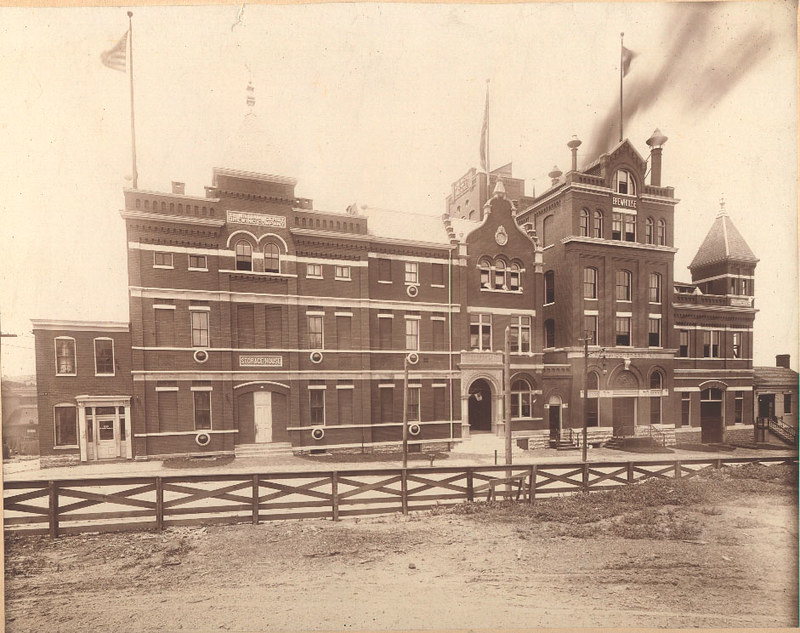
bavarian-kentucky
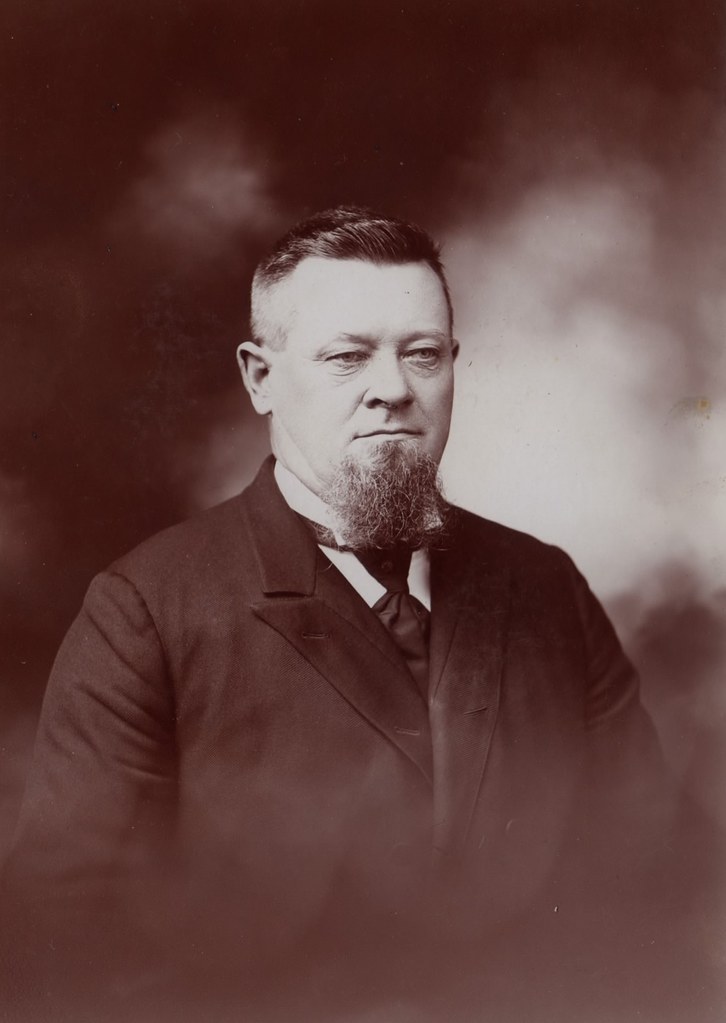
Today is the birthday of Wilhelm Ferdinand Riedlin (November 20, 1850-February 19, 1919). He was born in either Vögisheim or Mulheim, Baden, Germany, and emigrated to the United States in June of 1870. He bought into the Bavarian Brewing Co. of Covington, Kentucky in 1882, and eventually became the sole owner. Riedlin died as prohibition began, but the brewery reopened after repeal, although not until 1935, by one of Riedlin’s son-in-laws and the family retained ownership until 1959, when they sold the business to International Breweries Inc., who finally closed the brewery for good in 1966.

William-Riedlin
This short account of his life is from Find-a-Grave:

He was a very active resident of Covington, KY.

-In his early career, he was a blacksmith, a trade he brought to the US, having learned from his father.
-In 1877, he opened a grocery store, and shortly after established Tivoli Hall Saloon and Beer Garden
-He was the President and owner of the Bavarian Brewing Company by 1882. During prohibition, the Brewing Company manufactured ice and soft drinks.
-He was an active member of the City Legislature and the Covington Elks.
-The director of the Gernan National Bank and Covington Sawmill
-A member and the President of the German Pioneer Society and the Covington Turner Society
-The treasurer of the Baden Benevolent Society
-The President of the Covington Coal Company
-A major stockholder in the Ludlow Lagoon Amusement Park

In 1877, he married Matilda Emma Hoffman. The two made their home at 917 Main Street, Covington KY. Current day, this is now his historic residence, being occupied by a funeral home, the Covington Chapel.

William and Emma had nine children: Carl, Charles, Emma, William Jr, Anna Maria, Edward, Walter F, Lucia and A.K.

bavarian-brewery-employees

And this history of the brewery is from “The Encyclopedia of Northern Kentucky,” edited by Paul A. Tenkotte, James C. Claypool:

bavarian-brewing-ky-01
bavarian-brewing-ky-02
bavarian-brewing-offices-1911

The Wikipedia page for the Bavarian Brewing Co. mentions Riedlin, of course, and his contributions to the success of the business, eventually becoming sole owner.

After the brewery was established as DeGlow & Co., new ownership interests within just a couple of years resulted in several changes to its name beginning in 1868, including DeGlow, Best & Renner. However, in 1873, it was established as the Bavarian Brewery Co. Over the next several years the brewery operated under this name, but ownership interests varied. John Meyer obtained controlling interest and the brewery operated under his name for a short time, starting in 1879. Then in 1882, a German immigrant named William Riedlin, who established a saloon and beer hall called Tivoli Hall in the Over The Rhine area of Cincinnati, entered into partnership with John Meyer. It operated as the Meyer-Riedlin Brewery before Riedlin purchased a controlling interest in the brewery from Meyer, incorporated the business under its former name and became president in 1889.

A number of changes were made to the facility during Riedlin’s tenure including the brewery’s first bottling plant built in 1892. Key bottling innovations including the crown bottle cap and pasteurization increased the shelf life of beer, enabling it to be distributed to a much wider area. Besides Bavarian Beer, the company also offered Riedlin Select Beer. By 1914 the annual beer production was 216,000 barrels, increasing from only 7,341 barrels in 1870, and it became the largest brewery in the state.

Operations expanded from the original location on Pike street to include several structures on the property between Pike Street and 12th Street. The main structure, which essentially remains today, was a four story 175 by 125 foot edifice that opened in January, 1906, serving as both the stock and wash houses. An ice house that manufactured 200,000 pounds of ice daily, and that included a couple of ponds, was adjacent to the brewery. The total land area comprised six and one-half-acres. Ice was used in the lager fermentation process before refrigeration became available and it was also sold to the public.

Beer production was abruptly halted shortly before the introduction of Prohibition in 1918. To prevent a complete closure of the brewery, arrangements were made to bottle non-alcoholic beverages under the name The William Riedlin Beverage Company. However, William Riedlin died in early 1919, several months before Prohibition was officially passed by Congress. His son, William Riedlin, Jr., died within a couple months after his father aged 37. He had previously been a Vice President of the brewery and briefly in charge of the Beverage Company. Shortly after the deaths of the father and son the brewery property was closed – for some fifteen years.

bavarian-postcard-bottling

The Kenton County Public Library also has a history of the Bavarian Brewery, and Riedlin’s involvement is discussed.

Bavarian Brewery can be traced back to the year 1866 when Julius Deglow and Charles L. Best began operating a small brewery on Pike Street in Lewisburg. In 1869, the brewery officially became known as Bavarian. William Riedlin and John Meyer were the next owners of the brewery. They purchased Bavarian in 1882. Seven years later, Riedlin became the sole owner. Anton Ruh was hired as the brew master.

Under William Reidlin’s ownership, Bavarian Brewer expanded rapidly. The first bottling plant at Bavarian was built in 1892 and was replaced in 1903. This two-story structure was modern in every detail and measured 46’ x 188’. At this same time a new stable was constructed to house the many horses needed to pull delivery wagons. A new four-story warehouse followed in 1905. By 1914, Bavarian Brewery was the largest such enterprise in the Commonwealth of Kentucky. The brewery occupied a 6 ½ ace site on Pike Street and was producing 216,000 barrels of beer each year.

Bavarian continued to prosper until the era of Prohibition. In 1919 production at the plant shifted from beer to soft drinks. In 1925, the icehouse was sold to Joseph and Ferdinand Ruh who incorporated as the Kenton Ice Company. Bavarian re-opened in 1935. Over three thousand guests attended the grand opening. The officers at this time were: Murray L. Vorhees, Fred C. Faller, and Leslie S. Deglow. Three years later, William Riedlin’s four grandsons purchased the business for $55,000. Sales rose throughout the 1930s.

Bavarians-Beer--Labels-Bavarian-Brewing-Company-
Bavarians-Old-Style-Beer-Coasters-Over-4-Inches-Bavarian-Brewing-Company

Filed Under: Birthdays, Breweries, Just For Fun Tagged With: Germany, History, Kentucky

Beer Birthday: Karl Ockert

November 20, 2025 By Jay Brooks

bridgeport deschutes
Today is the 66th birthday of Karl Ockert, who most recently was the Director of Brewery Operations at Deschutes Brewing. But Karl spent many years as the BridgePort Brewing Co. in Portland, Oregon, nearly thirty years, from 1983 to late 2010. That’s when I first met Karl, who was responsible for one of the first IPAs in the modern era, BridgePort IPA. For the last few years he was the Technical Director of the MBAA and also did some brewery consulting, before joining Deschutes a few years ago. More recently, he’s doing brewing consulting. Join me wishing Karl a very happy birthday.

Karl when he was with the MBAA.
Debuting Stumptown Tart.
karl-ockert-bridgeport-opening
“Co-founders Dick and Nancy Ponzi, pose with BridgePort’s first brewmaster, Karl Ockert, at the brewery’s grand opening in 1984 when it was known by its original name “Columbia River Brewery.” At the time, patrons could taste beer at the brewery, but not legally purchase it onsite. The Ponzis, along with other local brewers, successfully lobbied on behalf of the Brewpub Bill, which made it possible for local brewers to sell their products directly to the public.” [From the Multnomah County Library.]

bridgeport-crew-1986
“BridgePort’s crew in 1986 included Karl Ockert (at left), the brewery’s first brewmaster, and Ron Gansberg (center), who later became brewmaster at Cascade Brewing. Ockert was just 23 years old and a recent graduate of the brewing program at the University of California at Davis when Richard and Nancy Ponzi hired him.” [From the Multnomah County Library.]

karl-ockert-bridgeport
“Karl Ockert, BridgePort’s original brewmaster, is seen in the center of this photograph from 1985 when BridgePort was still known as Columbia River Brewery. Flanking him are other figures from Portland’s craft brewery vanguard. From left, Steve Harrison, Sierra Nevada Brewing Co.; Fred Eckhardt, beer columnist; Fred Bowman, Portland Brewing Co.; Paul Shipman, Independent Brewing Co.; Karl Ockert, Columbia River Brewery; Tom Baune, Hart Brewing Co.; Jim Temple, General Brewing Co.; Mike McMenamin, McMenamins; and Kurt Widmer, Widmer Brewing Co.” [From the Multnomah County Library.]

Filed Under: Birthdays, Just For Fun Tagged With: Oregon

« Previous Page
Next Page »

Find Something

Northern California Breweries

Please consider purchasing my latest book, California Breweries North, available from Amazon, or ask for it at your local bookstore.

Recent Comments

  • Bob Paolino on Beer Birthday: Grant Johnston
  • Gambrinus on Historic Beer Birthday: A.J. Houghton
  • Ernie Dewing on Historic Beer Birthday: Charles William Bergner 
  • Steve 'Pudgy' De Rose on Historic Beer Birthday: Jacob Schmidt
  • Jay Brooks on Beer Birthday: Bill Owens

Recent Posts

  • Beer In Ads #5251: Gesundheit Beer May 14, 2026
  • Beer Birthday: Brian Stechschulte May 14, 2026
  • Beer Birthday: Dan Carey May 14, 2026
  • Beer Birthday: John Martin May 14, 2026
  • Beer In Ads #5250: Pacific Bock Beer May 13, 2026

BBB Archives

Feedback

Head Quarter
This site is hosted and maintained by H25Q.dev. Any questions or comments for the webmaster can be directed here.