Brookston Beer Bulletin

Jay R. Brooks on Beer

  • Home
  • About
  • Editorial
  • Birthdays
  • Art & Beer

Socialize

  • Dribbble
  • Email
  • Facebook
  • Flickr
  • GitHub
  • Instagram
  • LinkedIn
  • Pinterest
  • RSS
  • Twitter
  • YouTube

Powered by Genesis

Historic Beer Birthday: Armin Louis Neubert

August 2, 2025 By Jay Brooks

minneapolis black-hills salinas
Today is the birthday of Armin Louis Neubert (August 2, 1864-July 3, 1946). He was born in Wolkenstein, Saxony, Germany. His father died when he was five, and he grew up with an uncle, who allowed him to train as a brewer while attending school. After a stint in the German-Saxon Army, he moved with his uncle to the United States. After helping his uncle set up his American business, he moved from city to city working for prominent breweries for several years before finally settling in Minnesota, spending twenty years as the head brewer of the Minneapolis Brewing Co., though his official title was “Production Superintendent.” The year after he took the job, he introduced the popular “Grain Belt Beer.”
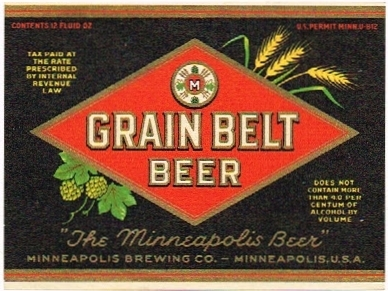
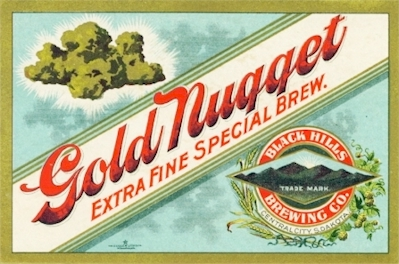
In 1900, the Minneapolis Brewing Co. bought the Black Hills Brewing Co. in Central City, South Dakota. A new brewery was built, designed by Armin Neubert and he was also named vice-president when the business was reorganized.
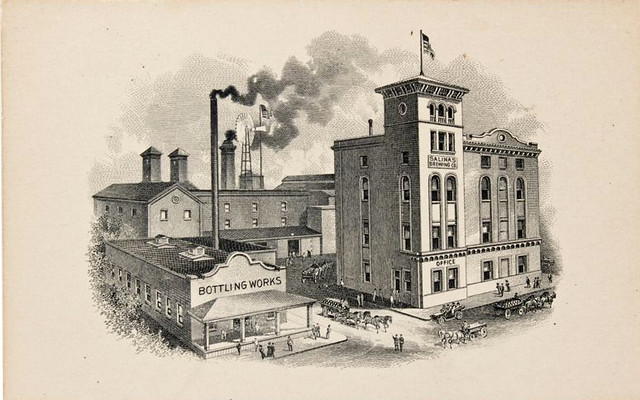
salinas-brewing-tan

When Neubert retired from the Minneapolis Brewing Co. in 1914, he moved his family to Central City, which he’d become fond of during his numerous visits there over the years, and continued to work at Black Hills. Unfortunately, the brewery closed at the beginning of 1917 when the state voted to start prohibition two years before the national prohibition, though it stayed in business by switching to soft drinks and near-beer. But it was a pain in the ass, and Armin apparently was disheartened by what had happened to the industry he loved and the brewery was closed in 1927, and sold the next year. “After that, he moved to a ranch he’d bought near Great Falls, Montana and became a wheat farmer. But after a few years he turned the ranch over to his son and retired to Santa Cruz,” California.

Apparently, a new Black Hills Brewing Co. is in the works, though it gives the original founding date as 1878.
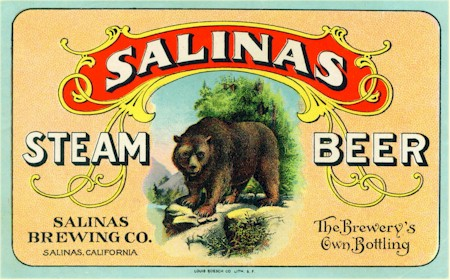
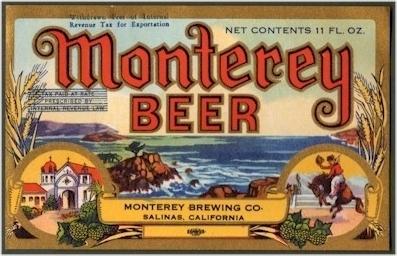
But after prohibition ended in 1933, Neubert was lured back into the brewery industry and was asked to get involved in reopening the old Salinas Brewery, in California.

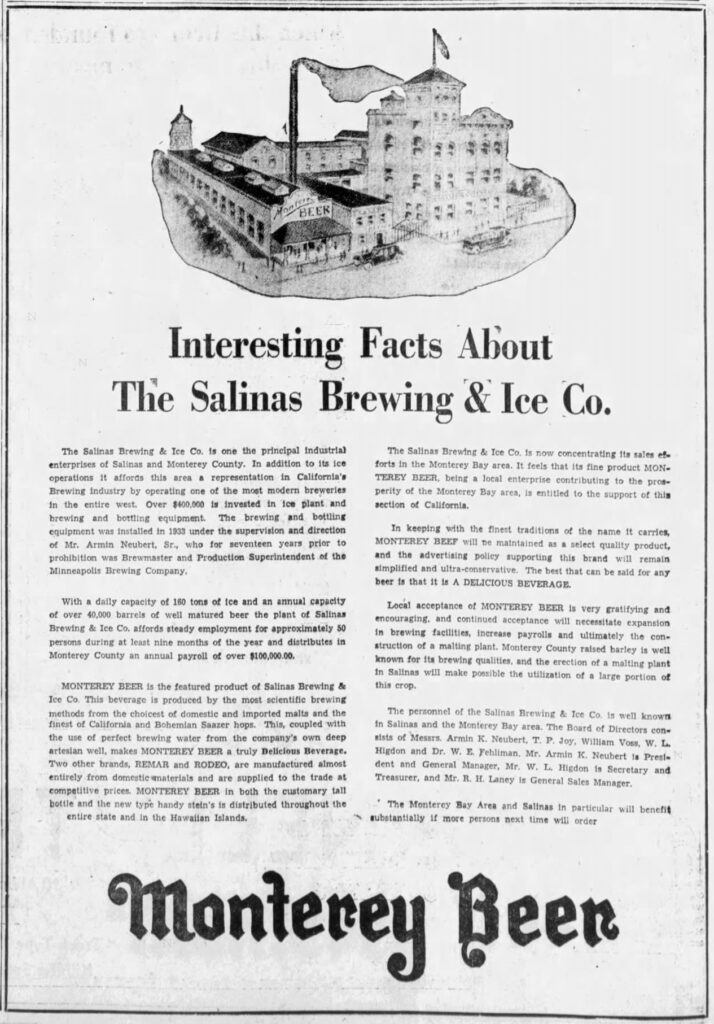
Armin was to receive equity in the new company as payment for his engineering work, and his son, Armin K., who had an engineering degree, was included in the deal. The Salinas Brewing & Ice Company was opened and soon gaining recognition for its excellent “Monterey Beer.” Armin, Sr. was brewmaster, and Armin, Jr. was the treasurer of the firm.
Eventually, Neubert ended up owning the Salinas Brewery outright, with his son, who’d been involved since the beginning, as president.

Then in February of 1937, Rettenmayer met with an untimely death, followed in November by the death of a prime stockholder and director of the company, Dr. Wm. Fehliman. This resulted in the restructuring of the company in 1938, and the Neubert family gaining sole control. The company’s name was changed to the Monterey Brewing Co., with Armin, Jr., president.

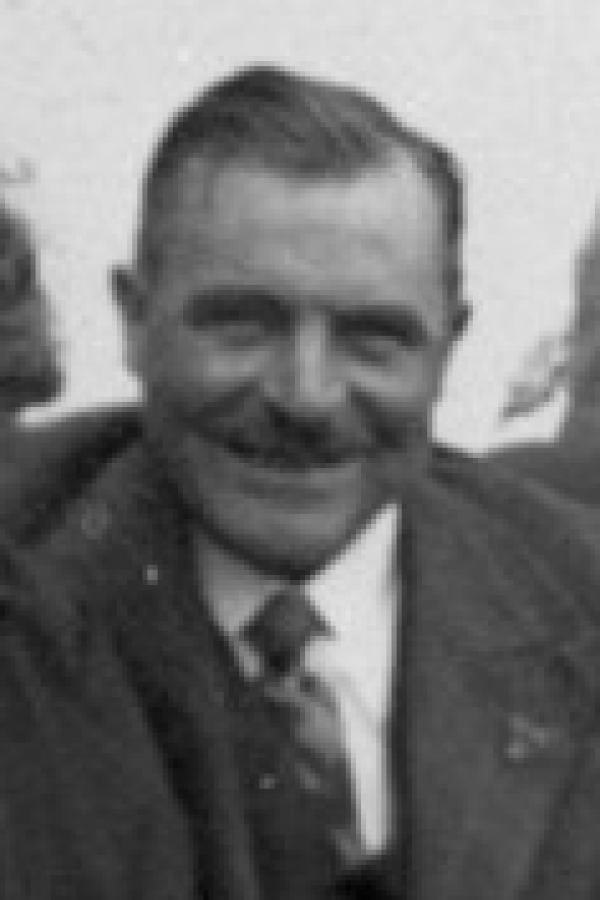
There’s surprisingly very little information about Neubert, and no pictures I could find, and almost everything here is from the website Brewery Gems. They also have a much fuller biography of Armin Neubert.

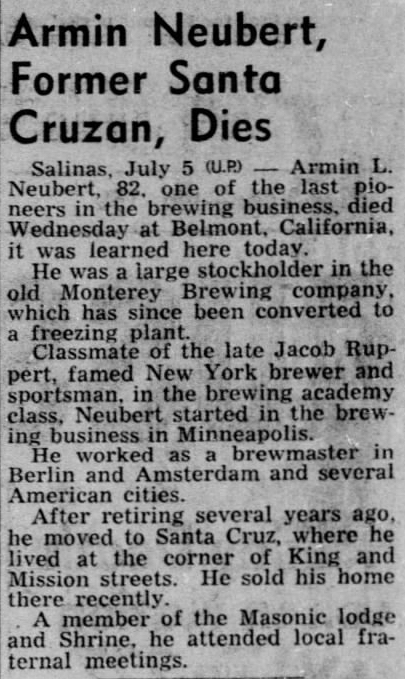
Here’s a short obituary from the Santa Cruz Sentinnel in 1946:
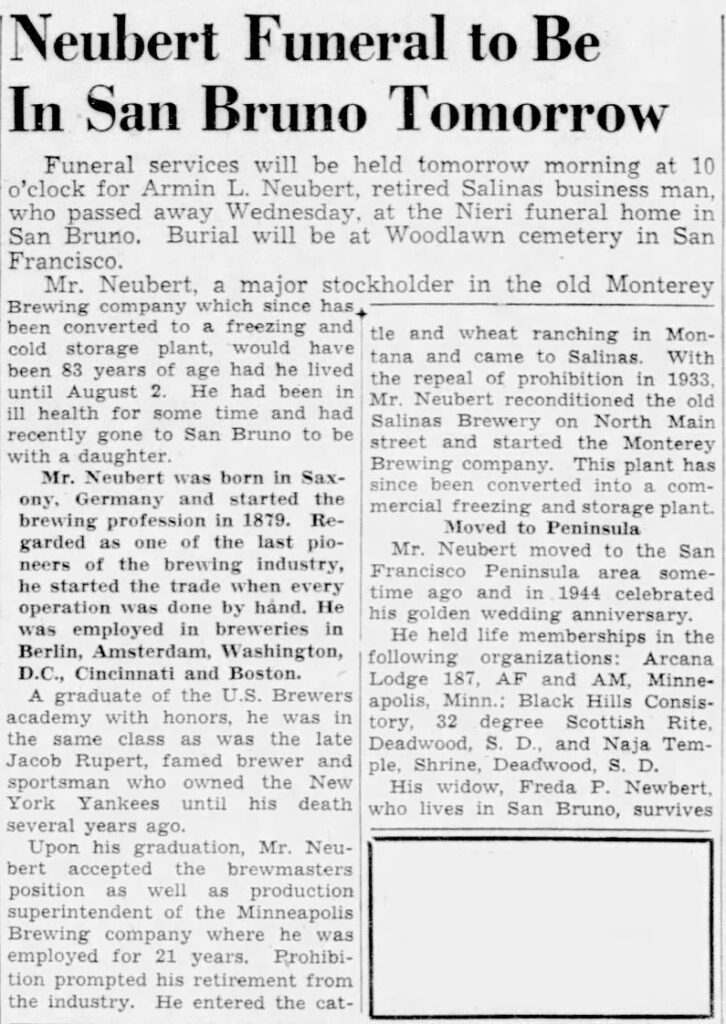
And here’s a report on Neubert’s funeral:
Filed Under: Birthdays, Breweries, Just For Fun Tagged With: California, Germany, History, Minnesota, South Dakota
Historic Beer Birthday: Albert Moortgat

August 2, 2025 By Jay Brooks

Today is the birthday of Albertus Carolus “Albert” Moortgat (August 2, 1890-September 14, 1983). He was the youngest son of Jan Léonardus Moortgat, who founded the brewery which became known as Duvel Moortgat. Albert took over the brewery around 1914 and in 1917 created their iconic beer, Duvel, although they didn’t call it that until 1923.

This is his entry from Dutch Wikipedia, which I altered somewhat so it reads more naturally.

Albert’s father first left the management of the brewery to his brother Joseph (1875-1914), but after his early death he left the management to Albert. The first Duvel was brewed in 1917, but it was not until 1923 that the beer was marketed under that name. Albert went to Scotland to learn how to make this beer and initially called it “Victory Ale.”

In 1921 Moortgat became mayor of Breendonk. Moortgat remained mayor until he was arrested in September 1944, during the Allied liberation of Belgium, and accused of collaboration with the German occupier. He was sentenced to four years in March 1946, but he was released at the end of August 1947.

In 1917 Albert Moortgat married Virginie Plaskie (1891-1977), a daughter of a brewer from Ramsdonk. They had 12 children.

This account of the early history of the brewery is from the company’s website:

It all began when Jan-Léonard Moortgat and his wife founded the Moortgat brewery farm in 1871. Around the turn of the century, Moortgat was one of the over 3,000 breweries operating in Belgium.

Jan-Leonard experimented by trial and error, and his top-fermented beers were soon greatly appreciated in the brewery’s home town of Puurs and far beyond. Before long, the Brussels bourgeoisie was also won over by his beers.

Business was booming and Jan-Leonard’s two sons, Albert and Victor, joined the company. There was a clear division of labour: Albert became the brewer, Victor was responsible for delivering the beer to Brussels by horse and dray.

Albert and the Moortgat family c. 1895. Albert is in the front row on the left.

The First World War brought Belgium into contact with England and especially with English ales, which were quite popular at the time.

Inspired by the success of English ales, Albert decided to create a special beer based on the English model.

To create this type of ale, Albert wanted to work with only the best ingredients.

He travelled to the UK to get the specific strain of yeast he wanted and initially met with considerable resistance from the local brewers. It was only after a veritable odyssey across England that he was finally able to get his hands on a precious sample from a Scottish brewery. Our yeast is still cultured from the very same strain to this day!

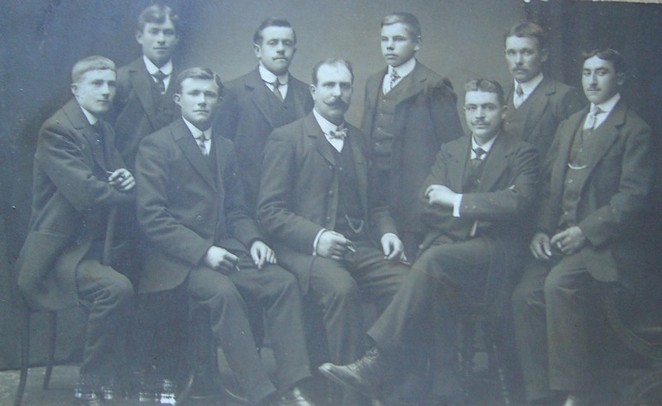
The staff of the Moortgat brewery in the 1920s. Neatly dressed. Albert Moortgat is the second from the right in the first row.

The two brothers continued to search and experiment until they had perfected the recipe.

To commemorate the end of the First World War, the new beer was initially dubbed ‘Victory Ale’.

Today, of course, it’s known as “Duvel.”

Filed Under: Birthdays, Breweries, Just For Fun Tagged With: Belgium, History

Historic Beer Birthday: Henry Hess

August 1, 2025 By Jay Brooks

henry-hess
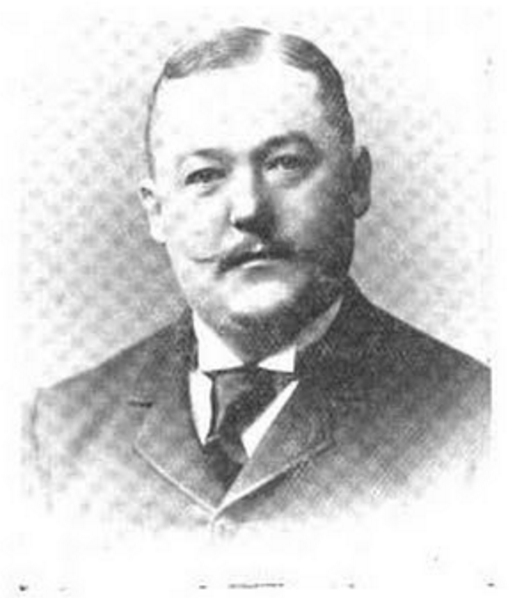
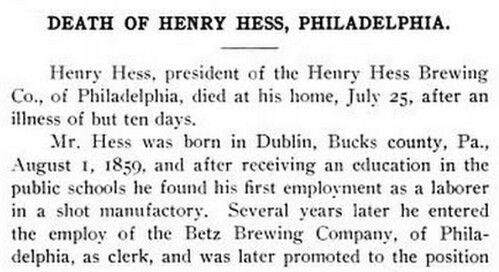
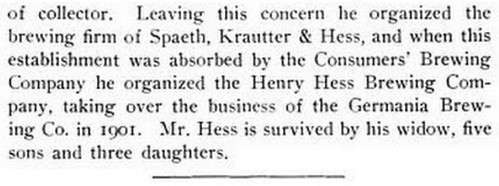
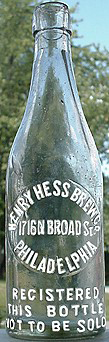
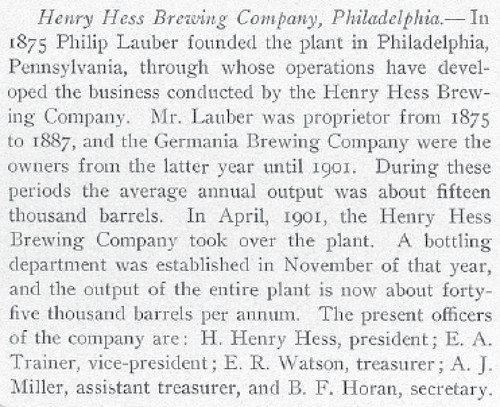
Today is the birthday of Henry Hess (August 1, 1859-July 25, 1909). Hess was born in Bucks County, Pennsylvania and in 1901 bought the Germania Brewing Co. in Philadelphia, which has originally been founded in 1875 by Philip J. Laubner, and it was known then as the Philip J. Laubner Brewery. Hess renamed the Henry Hess Brewing Co. and remained opened until it closed in 1911, presumably due to his death two years before. He appears to have been involved in another location that was also called the Henry Hess Brewing Co. from 1909-1912. Before 1909, it was known as the Consumer’s Brewing Co. and afterwards was known as the Premier Brewing Co., which closed in 1920 due to prohibition. In 1933, it re-opened as Trainer Brewing and in 1937 became known as the Otto Erlanger Brewing Co. until 1951, when it closed for good.

henry-hess

Here is an obituary of Hess from the “Brewers Journal, Volume 34 for the Year 1909:”

henry-hess-obit-1
henry-hess-obit-2

hess-bottle-01

And this is about his brewery from the book “1000 Years of Brewing:”

henry-hess-100yrs

Filed Under: Birthdays, Breweries, Just For Fun Tagged With: History, Pennsylvania, Philadelphia

Historic Beer Birthday: Robbin Bain

August 1, 2025 By Jay Brooks

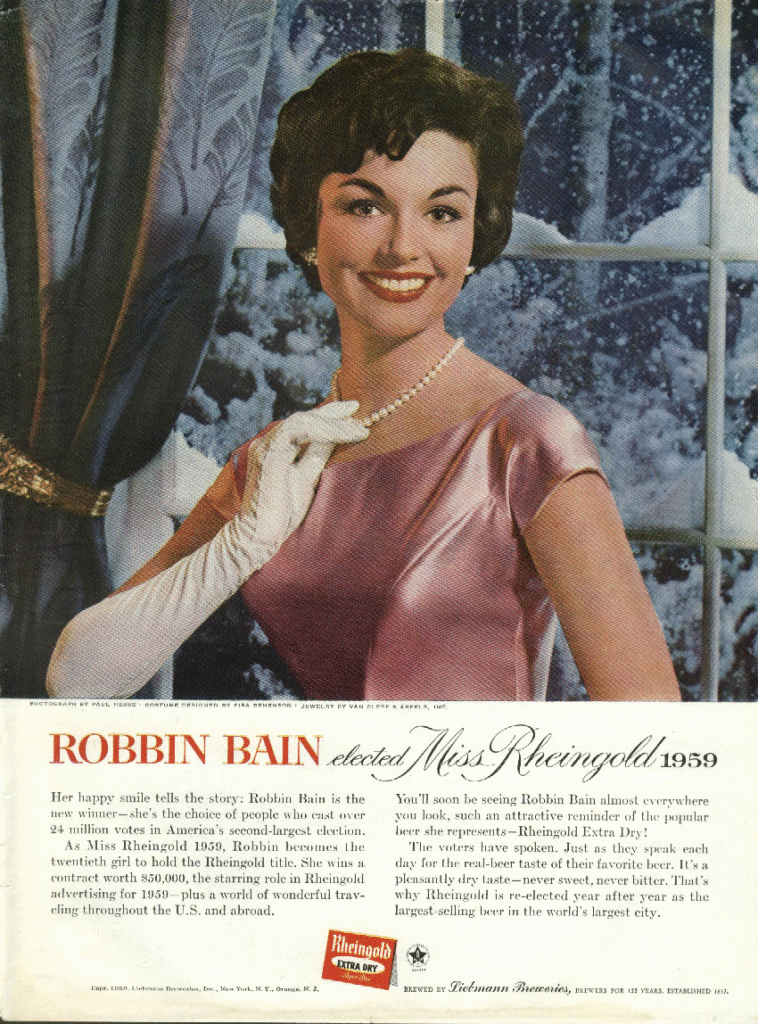
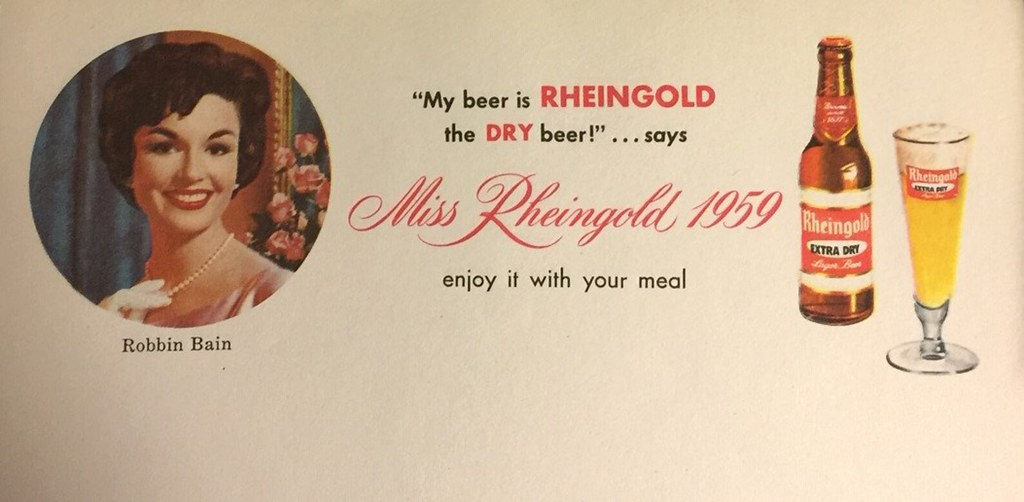
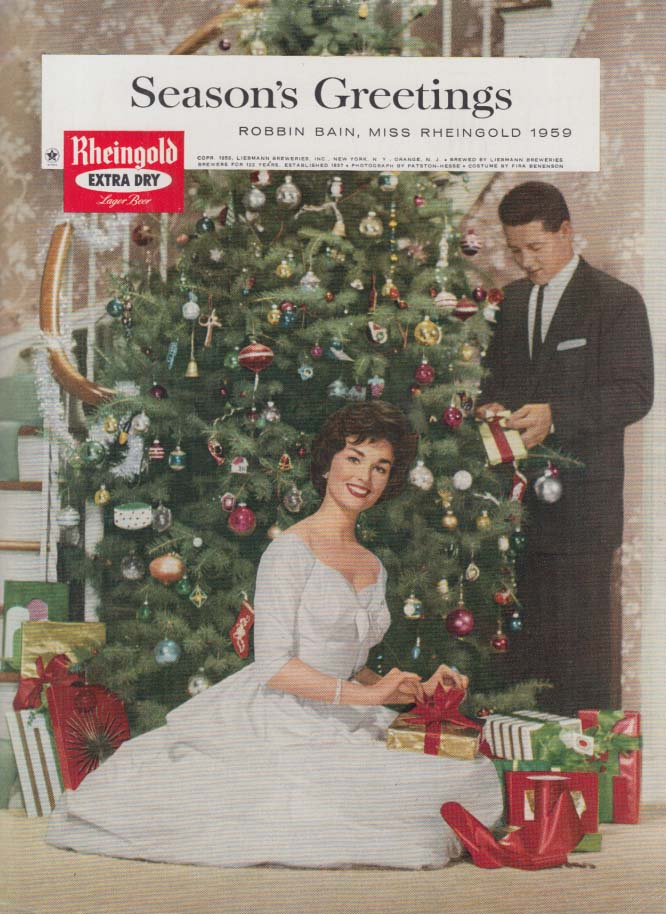
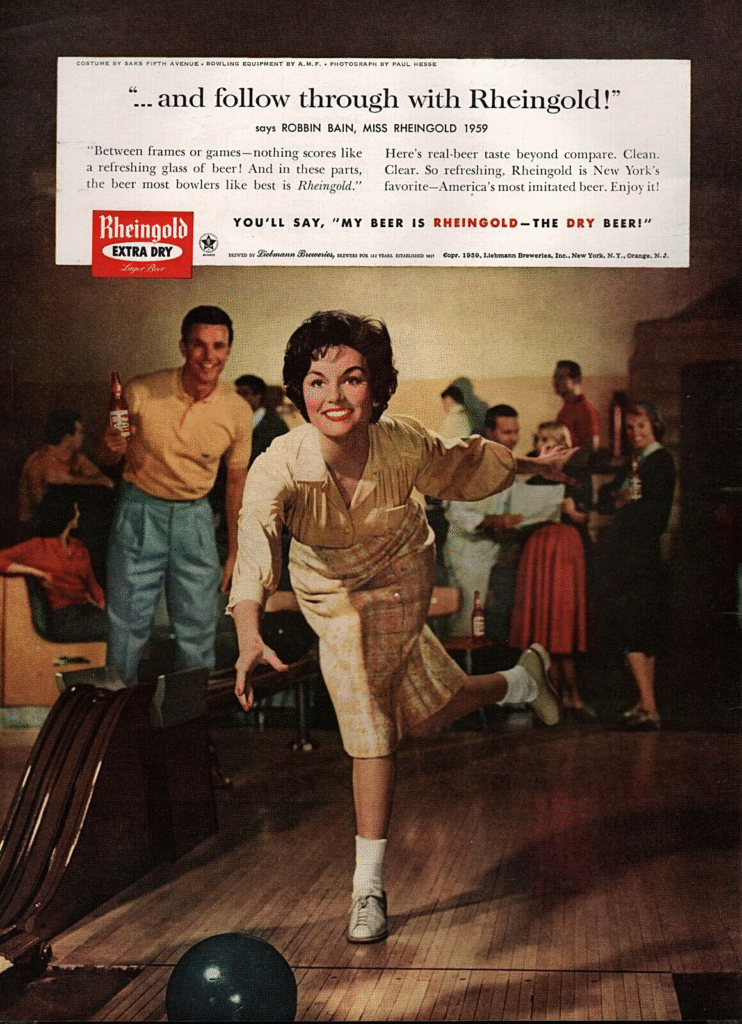
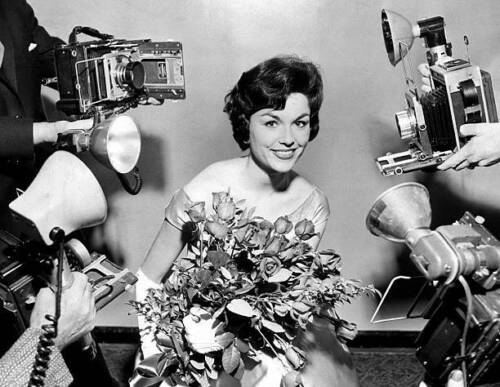
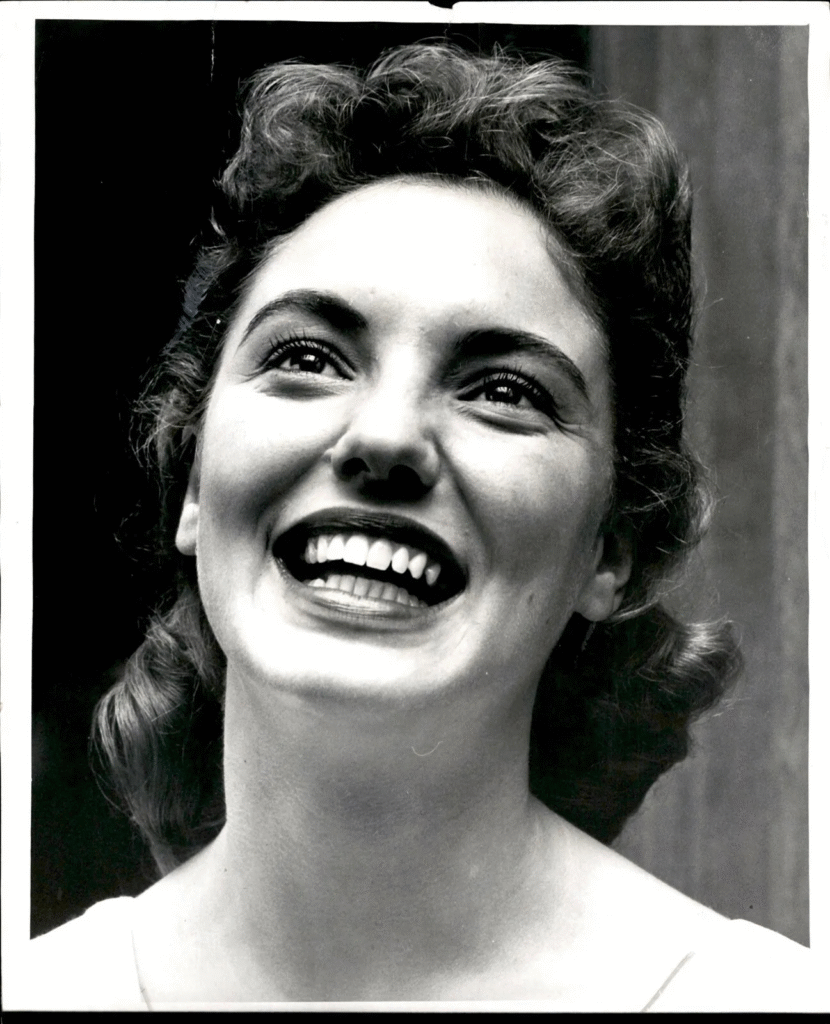
Today is the birthday of Robbin Bain (August 1, 1938-October 23, 2023). Bain was elected Miss Rheingold 1959, the 20th model chosen. She was born Barbara Jane Bain in Flushing, Queens, in New York City, though her family later moved to Bronxville in Westchester County. She appears to have been married three time, first to Arno Schefler in 1962, then to Alexander Gaudier, and finally to Edward V. Mele, whom she remained married to until his death in 2003. He started a manufacturing company that became the largest maker of jewel boxes in the world.

This is from her obituary in the New York Times:

Pursuing a career as a model, Barbara appeared in ads for Helena Rubinstein and Revlon. She was also one of four women, called “Portrettes,” who introduced Jackie Gleason on his television variety show, “The Jackie Gleason Show,” in 1956 and 1957. The next year, she graduated with an associate degree from Bradford Junior College (which later became Bradford College) in Haverhill, Mass., where she studied psychology, art and theater.

She changed her first name to Robbin early in her career, to avoid confusion with the actress Barbara Bain.

Ms. Bain was famous enough in 1961 to be a panelist on “To Tell the Truth,” a game show whose object was to figure out which of three people claiming to be the same person was the real one. In one episode she was so good at it — singling out the true “inventor of cocktails” from a three-man lineup — that another panelist, Betty White, playfully said, “I think Robbin’s disgusting.” In response, Ms. Bain lightly punched Ms. White on the shoulder.

The top of a notepad given to customers of Rheingold beer in 1959.

Her obituary continues:

Ms. Bain joined NBC as the “Today Girl” in late August 1961, working alongside the host John Chancellor and the news anchor Frank Blair. It was a stereotypical female role that had previously been filled by the actresses Estelle Parsons, Lee Meriwether and Florence Henderson.

Robert Bendick, the “Today” show’s producer at the time, outlined the role in 1959, telling The Associated Press: “A girl is essential to the show. You need a woman’s face to brighten up things. And you also need a woman for some types of features — fashions, beauty and talking to certain guests.”

But Ms. Bain said she loved it. “I was the only woman with the exception of the makeup woman on the set,” she said during a reunion of “Today Girls” on “Today” in 2012. And, Ms. McLanahan noted: “The role did transition to co-host. She always felt that she was groundbreaking in that sense.”

Ms. Bain left “Today” after only two months; the press speculated that she didn’t like the hours, but in fact she was pregnant with her first daughter, Dina.

“I ruined her career,” her daughter, now known as Dina Nemeth, joked in a phone interview.

Ms. Bain later became an interior designer.

And this is from the Palm Beach Daily News:

Robbin Mele Gaudieri (formerly Robbin Bain) died peacefully in her home on October 21, 2023, surrounded by her husband and two daughters.

Robbin grew up in Bronxville, NY with her parents Margaret Davison Bain and James Emms Bain. After graduating from Bronxville High School her remarkable beauty led her into the limelight. She won Miss Surf Maid USA at the age of 12 and was elected Miss Rheingold in 1959. This prestigious and highly anticipated contest drew 24 million votes across the nation.

Robbin pursued her education at Bradford Junior College where she studied psychology, art, and theatre. Her captivating presence made her a beloved television personality, notably as one of the Today Show’s inaugural female broadcasters, co-hosting alongside John Chancellor and Hugh Downs. She also frequently appeared as a panelist on “What’s My Line” and “To Tell the

Truth” game shows. Represented by the William Morris Agency, Robbin became an iconic image for Revlon, Playtex, and Helena Rubenstein. Throughout her life, she passionately pursued art and design, earning numerous awards for her paintings. She also served as President of the Central New York Arts Council in Utica, New York for many years. Her charitable commitments extended to a role as a Board Member of The Madison Square Boys and Girls Club.

Robbin’s life encompassed two previous marriages. Her first was to Arno Schefler with whom she had two daughters. Later, she enjoyed a 30-year marriage with Edward V. Mele until his passing in 2003.

She was devoted to her family who adored her tremendously. She is survived by her loving and devoted husband of 19 years, Alexander V.J. Gaudieri of Palm Beach; her daughters Dina Schefler Nemeth and Lara Schefler Mclanahan; sons-in-law Robert Raymond Nemeth and William Duer McLanahan; six grandchildren: Nicholas Bain Nemeth, Georgia Bain McLanahan, James Duer McLanahan, Annabelle Clare Nemeth, Brooke Denning McLanahan, and James

Edward Nemeth; and her stepson Alexandre Barclay Everson Gaudieri.

Robbin was a member of the Shinnecock Hills Golf Club, The Meadow Club of Southampton, and The Lost Tree Club at the time of her passing.

To many, Robbin had an illuminating presence whenever she entered a room, but to her family, her true beauty radiated from within through her unconditional love, devotion, warmth, and affection. Fondly referred to as “Gummy” by her family, she embraced this endearing nickname over time.

Filed Under: Art & Beer, Beers, Breweries, Just For Fun Tagged With: History, Rheingold

Historic Beer Birthday: Frederick Gettelman Jr.

August 1, 2025 By Jay Brooks

gettelman
Today is the birthday of Frederick W. Gettelman Jr. (August 1, 1915-November 30, 1998). He was born in Wauwatosa, Wisconsin, the grandson of Adam Gettelman, who founded the A. Gettelman Brewing Co. in Milwaukee, Wisconsin. Junior worked at the brewery with his father, but after Senior passed away, the brewery was sold to the neighboring Miller Brewing Company in 1961.

Fred Jr.

The Gettelman plant and brand continued on with Frederick Gettelman, Jr., along with his brother brothers Tom, as plant managers until Miller formally merged the two operations in 1971.

fritz-gettelman-2
fritz-gettelman-2-text
I think Frederick Gettelman Jr. is in this photo, possibly on the right, but I’m not 100% sure.

And this is from “A Century of Brewing, 1854-1954: The A. Gettelman Brewing Company,” a company brochure from 1954:

The A. Gettelman Brewing Company first began to show signs of the new post-prohibition prosperity in 1937 with construction of an addition to the old bottle-house. An 80 x 110 foot structure, the building was twice the size of the building it annexed. Cream-colored bricks salvaged from the old Gettelman mansion atop the hill overlooking the brewery went into the construction of its walls and the bottling equipment it housed was modernity itself. In fact, Fritz Gettelman had had a hand in the improvement of the bottle washer installed in the new bottle house. It was he who had dreamed up and perfected the idea of cleaning the bottles with high pressure steam and water. So efficient was the equipment in the ultra modern bottle shop that Gettelman was able to show figures proving that breakage on bottles of all makes and ages ran only .442 percent of total bottles handled.

In addition to the modern machinery on the ground floor the bottle shop boasted a battery of glass-lined storage tanks in the basement, an innovation which Fritz Gettelman had also helped engineer. During development of the revolutionary tanks, he had spent long hours at the A. 0. Smith plant subjecting experimental models to every conceivable torture to prove his idea that molten glass will stick to steel. How he did this in the face of skeptical college “enchineers” — as he called them — is another story, but the success he encountered is borne out by the fact that few progressive breweries today are without the big beer holders with the glazed walls.

All this while the affairs of the brewery had been directed from the office building which lies between State street and the brewery proper. By 1948, however, it was becoming increasingly apparent that the expanding brewery would need corresponding office facilities. It was decided, therefore, that an old malt-house which had, for the last several years, served as a place for miscellaneous storage be made over into an office building. Part of the building had originally been the first Gettelman homestead, antedating even the mansion on the hill. From what had once been its living room emerged the present office reception room whose walls are panelled with the cypress of the old wooden beer storage tanks. From the rest of the building the architect’s skill and a lot of hard work wrought the present Gettelman offices. Fritz Gettelman went along with, and indeed inaugurated, most of the brewery’s advances, but he turned a deaf ear to any suggestion that he move his office to the newly renovated building. Moreover, he insisted that the second story room in which he had been born and from which had come many of his ideas on the humble brown butcher paper be left inviolate — and so it has been, to this day.

Modernization of brewery and office facilities was approved by everyone connected with the business, but no one sanctioned them more heartily than the two Gettelman brothers, Fred, Jr., and Tom, sons of the energetic and imaginative Fritz. Actively entering the management affairs of the brewery in 1939 and 1941, respectively, the two younger Gettelmans not only welcomed the changes but were, in large measure, responsible for their execution. Interest of the brothers in increased production and administrative efficiency was not an overnight affair. The lives of both of them had revolved around the brewery almost since they had taken their first steps and they had a working knowledge of every facet of the business long before they emerged from brewers’ school as master brewers.

Gettelman-Brewery-1054
The brewery in 1954, on its 100th anniversary.

Filed Under: Birthdays, Breweries, Just For Fun Tagged With: History, Wisconsin

Beer In Ads #5040: Frank Fehr’s Bock Beer

July 31, 2025 By Jay Brooks

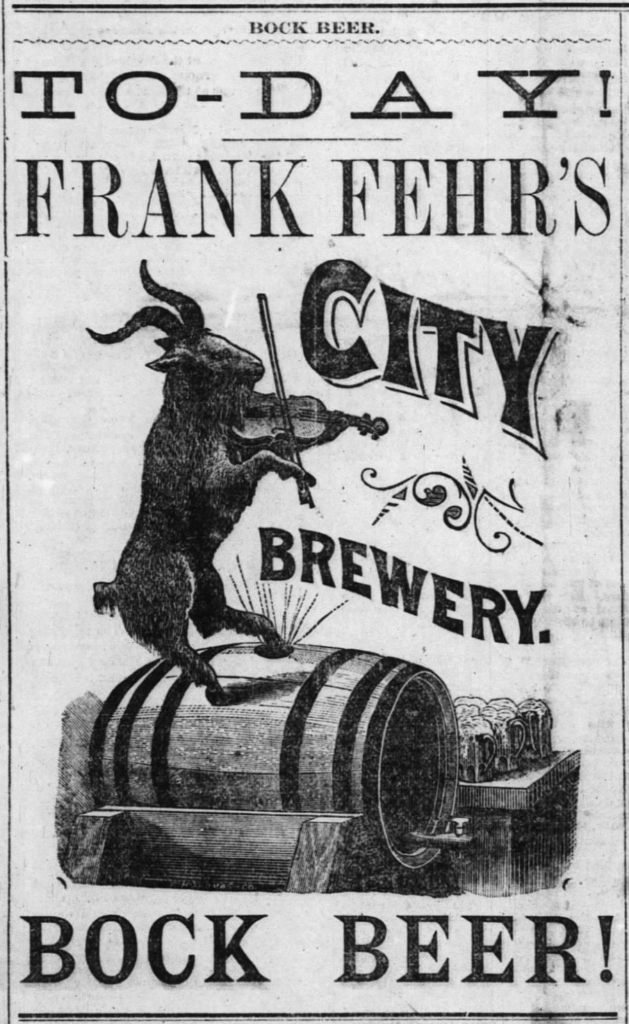
Last year I decided to concentrate on Bock ads. Bock, of course, may have originated in Germany, in the town of Einbeck. Because many 19th century American breweries were founded by German immigrants, they offered a bock at certain times of the year, be it Spring, Easter, Lent, Christmas, or what have you. In a sense they were some of the first seasonal beers. “The style was later adopted in Bavaria by Munich brewers in the 17th century. Due to their Bavarian accent, citizens of Munich pronounced ‘Einbeck’ as ‘ein Bock’ (a billy goat), and thus the beer became known as ‘Bock.’ A goat often appears on bottle labels.” And presumably because they were special releases, many breweries went all out promoting them with beautiful artwork on posters and other advertising.

Thursday’s ad is for Frank Fehr’s Bock Beer, which was published in 1884. This one was for the Frank Fehr City Brewery of Louisville, Kentucky, which was originally founded in 1849 as the William Tell Brewery. Frank Fehr appears to have joined the brewery in 1872 and after 1876 it became known as the Frank Fehr City Brewery. This ad ran in The Courier Journal, also of Louisville, Kentucky.

Filed Under: Art & Beer, Beers, Breweries, Just For Fun Tagged With: Advertising, Bock, History, Kentucky

Beer In Ads #5038: Goetz Bock Now For Your Enjoyment

July 29, 2025 By Jay Brooks

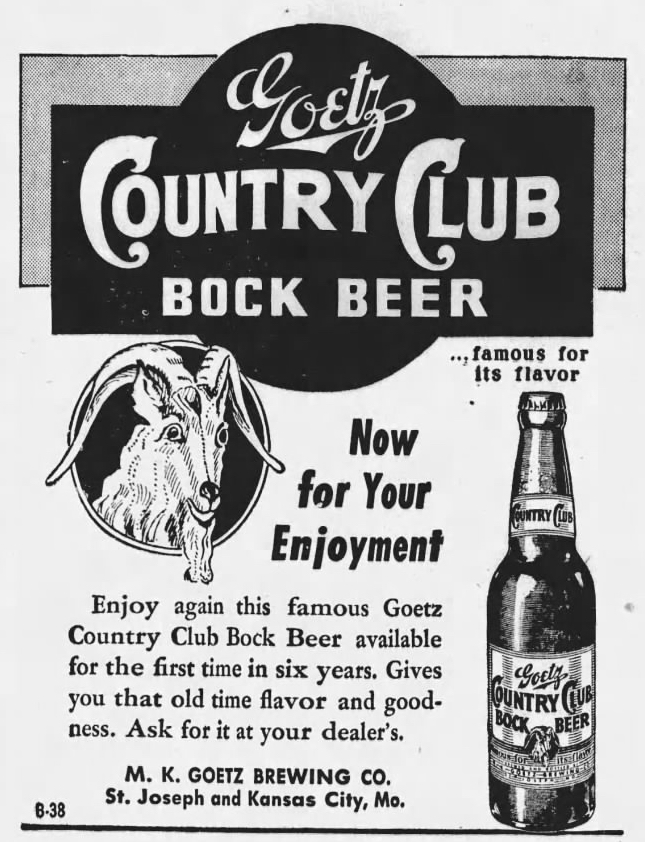
Last year I decided to concentrate on Bock ads. Bock, of course, may have originated in Germany, in the town of Einbeck. Because many 19th century American breweries were founded by German immigrants, they offered a bock at certain times of the year, be it Spring, Easter, Lent, Christmas, or what have you. In a sense they were some of the first seasonal beers. “The style was later adopted in Bavaria by Munich brewers in the 17th century. Due to their Bavarian accent, citizens of Munich pronounced ‘Einbeck’ as ‘ein Bock’ (a billy goat), and thus the beer became known as ‘Bock.’ A goat often appears on bottle labels.” And presumably because they were special releases, many breweries went all out promoting them with beautiful artwork on posters and other advertising.

Tuesday’s ad is for Goetz Country Club Bock Beer, which was published on July 29, 1948. This one was for the M.K. Goetz Brewing Co. of Saint Joseph, Missouri (and they also had a brewery in Kansas City), which was originally founded in 1859. This ad ran in The Mound City News Independent, of Mound City, Missouri, serving Holt County.

Filed Under: Art & Beer, Beers, Breweries, Just For Fun Tagged With: Advertising, Bock, History, Missouri

Beer In Ads #5037: Oster-Bock On A Barrel

July 28, 2025 By Jay Brooks

Last year I decided to concentrate on Bock ads. Bock, of course, may have originated in Germany, in the town of Einbeck. Because many 19th century American breweries were founded by German immigrants, they offered a bock at certain times of the year, be it Spring, Easter, Lent, Christmas, or what have you. In a sense they were some of the first seasonal beers. “The style was later adopted in Bavaria by Munich brewers in the 17th century. Due to their Bavarian accent, citizens of Munich pronounced ‘Einbeck’ as ‘ein Bock’ (a billy goat), and thus the beer became known as ‘Bock.’ A goat often appears on bottle labels.” And presumably because they were special releases, many breweries went all out promoting them with beautiful artwork on posters and other advertising.

Monday’s poster is for Falken Schaffhauser’s Oster-Bock, and was published in 1929. This one was made for the Bierbrauerei Falken Schaffhausen, or Falcon Brewery, of Schaffhausen, Switzerland. The brewery was founded in 1799, and is still in business today, and is “considered the only independent brewery in the Schaffhausen region,” and is Switzerland’s 5th largest brewery. This one is for their Schaffhauser Oster-Bock (Easter Bock) and shows a man balancing on a wooden beer barrel while holding a mug full of beer and a pipe in his mouth. It was created by Swiss artist Arnold Oechslin.

Filed Under: Art & Beer, Beers, Breweries, Just For Fun Tagged With: Advertising, Bock, History, Switzerland

Historic Beer Birthday: Sharon Vaughn

July 28, 2025 By Jay Brooks

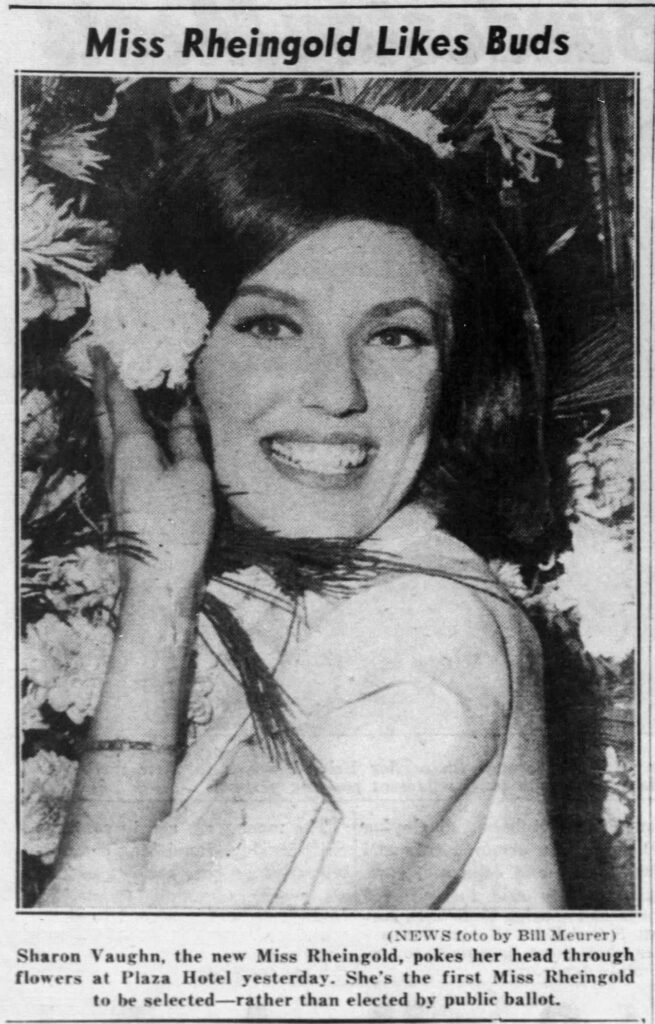
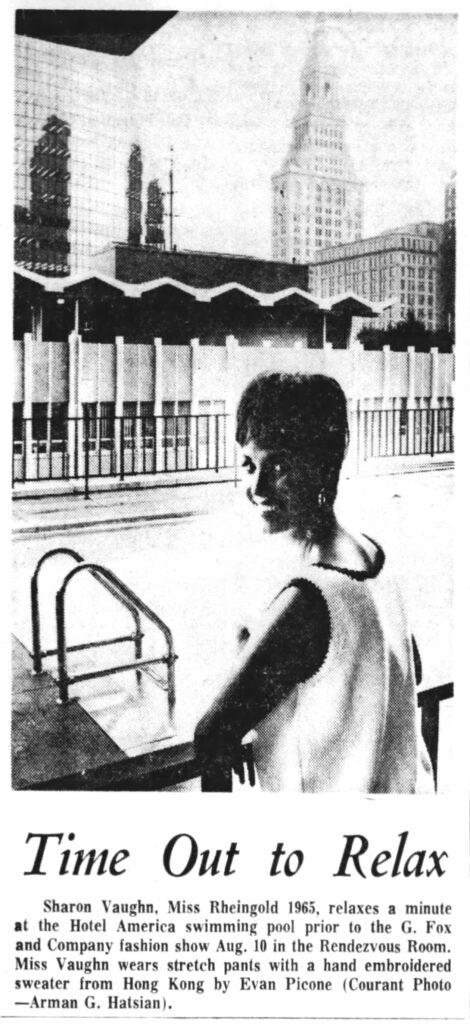
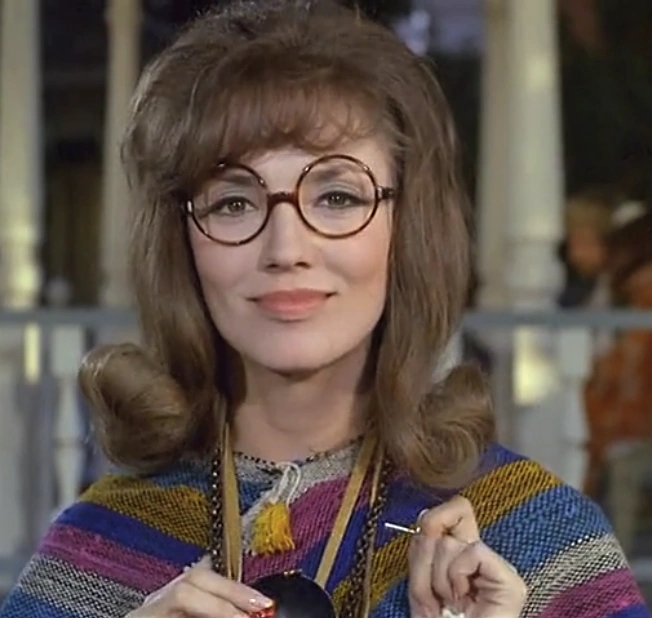
Today is the birthday of Sharon Vaughn (July 28, 1938-December 2023). Her claim to beer fame was being named as Miss Rheingold for 1965, the last Miss Rheingold in the golden era. She was also chosen by the new owners of the brewery rather than through a public vote, which hadn’t been the case since the second year of the contest in 1941. Unfortunately, the new owners didn’t really know what to do with her and she appeared in no ads her year, but instead only made public appearances at events and had fluff pieces written about those appearances. As a result, there’s far less breweriana of her than almost any other Miss Rheingold, which is a shame. She didn’t even appear in print until March of 1965, unlike previous ones who typically were announced the previous September or October.

She was born in Missouri, but moved to Washington state when she was five, and graduated from the University of Washington as a music major. While in college, she became Miss Washington and represented the state at the Miss America Pageant, where she was second runner-up. After college, she moved to New York City and attended Julliard. She began getting small parts in Broadway musicals, but also sang in nightclubs and appeared in television commercials. In 1965, she took a year off to become Miss Rheingold. Afterwards, she was cast in Funny Girl, and also appeared in the film a few years later. While in L.A. for filming she met talent agent Byron Lapin, whom she married. She also did some television, appearing on Bewitched and Get Smart. The couple later moved to St. Louis when he took over his family’s business. She passed away in December of 2023.

In 1968, Vaughn played a villain known as “Wanda” in an episode of “Get Smart” called “The Groovy Guru.“
Headshot when she competed in the Miss America pageant as Miss Washington.
Getting her evening gown ready for the Miss America pageant.

Filed Under: Beers, Birthdays, Breweries, Just For Fun Tagged With: Advertising, History, New York, Rheingold

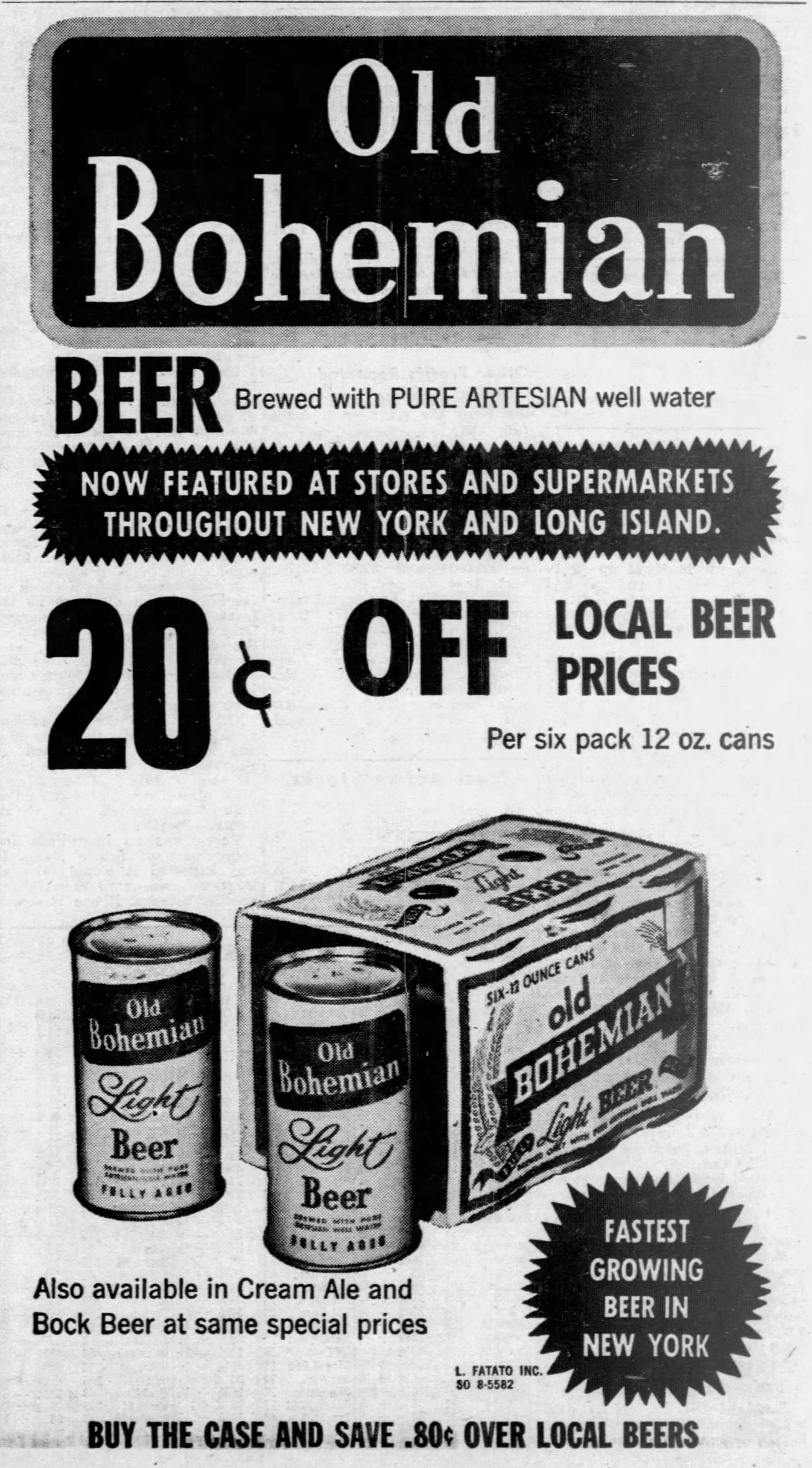
Beer In Ads #5036: Old Bohemian Bock Beer

July 27, 2025 By Jay Brooks

Last year I decided to concentrate on Bock ads. Bock, of course, may have originated in Germany, in the town of Einbeck. Because many 19th century American breweries were founded by German immigrants, they offered a bock at certain times of the year, be it Spring, Easter, Lent, Christmas, or what have you. In a sense they were some of the first seasonal beers. “The style was later adopted in Bavaria by Munich brewers in the 17th century. Due to their Bavarian accent, citizens of Munich pronounced ‘Einbeck’ as ‘ein Bock’ (a billy goat), and thus the beer became known as ‘Bock.’ A goat often appears on bottle labels.” And presumably because they were special releases, many breweries went all out promoting them with beautiful artwork on posters and other advertising.

Sunday’s ad is for Old Bohemian Bock Beer, which was published on July 27, 1962. To be fair, it’s primarily advertising their Light Beer, but also mention they have Cream Ale and Bock beer, too. It’s also an interesting advertising strategy, the anti-local but cheaper gambit. This one was for the Eastern Brewing Corp. of Hammonton, New Jersey, which was originally founded out of Prohibition in 1933. This ad ran in the Daily News, of New York, New York.

Filed Under: Art & Beer, Beers, Breweries, Just For Fun Tagged With: Advertising, Bock, History, New Jersey, New York

« Previous Page
Next Page »

Find Something

Northern California Breweries

Please consider purchasing my latest book, California Breweries North, available from Amazon, or ask for it at your local bookstore.

Recent Comments

  • Bob Paolino on Beer Birthday: Grant Johnston
  • Gambrinus on Historic Beer Birthday: A.J. Houghton
  • Ernie Dewing on Historic Beer Birthday: Charles William Bergner 
  • Steve 'Pudgy' De Rose on Historic Beer Birthday: Jacob Schmidt
  • Jay Brooks on Beer Birthday: Bill Owens

Recent Posts

  • Beer Birthday: Alexandra Nowell March 18, 2026
  • Beer In Ads #5169: The Best Of The Bocks March 17, 2026
  • Beer In Ads #5168: Hey! It’s Bock Beer Day To-Day! March 17, 2026
  • Beer In Ads #5167: Acme Bock Is Back Tomorrow! March 16, 2026
  • Historic Beer Birthday: John Land March 16, 2026

BBB Archives

Feedback

Head Quarter
This site is hosted and maintained by H25Q.dev. Any questions or comments for the webmaster can be directed here.