Brookston Beer Bulletin

Jay R. Brooks on Beer

  • Home
  • About
  • Editorial
  • Birthdays
  • Art & Beer

Socialize

  • Dribbble
  • Email
  • Facebook
  • Flickr
  • GitHub
  • Instagram
  • LinkedIn
  • Pinterest
  • RSS
  • Twitter
  • YouTube

Powered by Genesis

Beer In Ads #5105: The 2 To 1 Favorite Of 60 Official Beer Tasters

October 18, 2025 By Jay Brooks

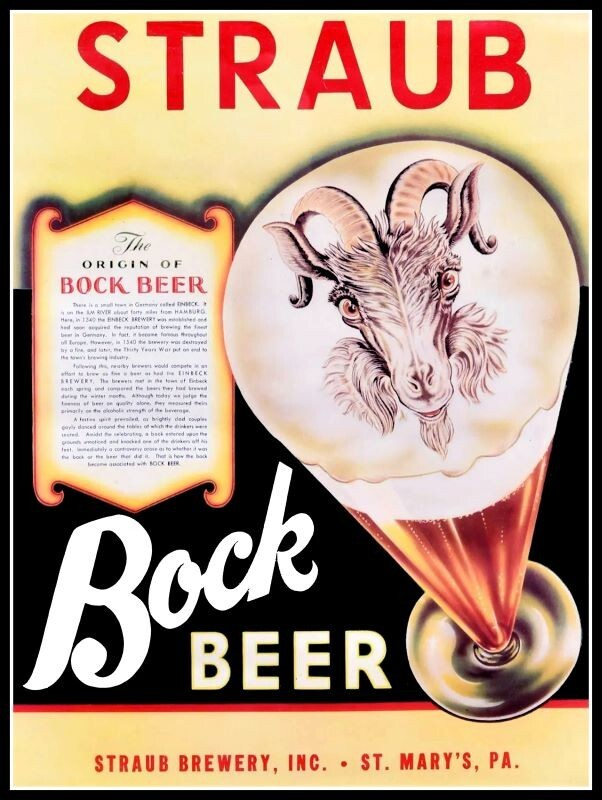
Last year I decided to concentrate on Bock ads for awhile. Bock, of course, may have originated in Germany, in the town of Einbeck. Because many 19th century American breweries were founded by German immigrants, they offered a bock at certain times of the year, be it Spring, Easter, Lent, Christmas, or what have you. In a sense they were some of the first seasonal beers. “The style was later adopted in Bavaria by Munich brewers in the 17th century. Due to their Bavarian accent, citizens of Munich pronounced ‘Einbeck’ as ‘ein Bock’ (a billy goat), and thus the beer became known as ‘Bock.’ A goat often appears on bottle labels.” And presumably because they were special releases, many breweries went all out promoting them with beautiful artwork on posters and other advertising.
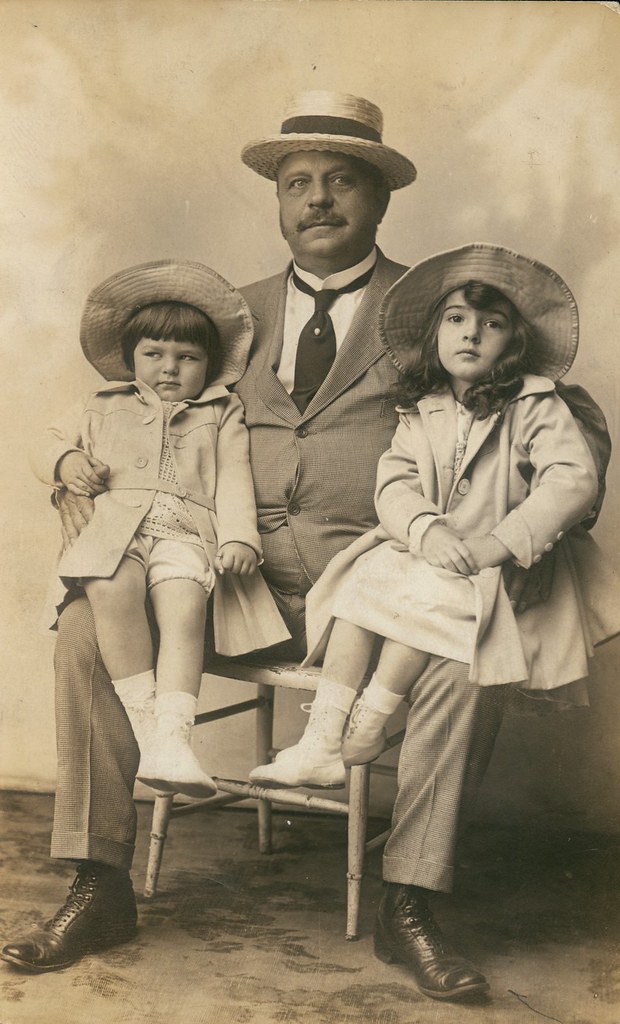
Saturday’s ad is for Hornung’s White Bock Beer, which was published on October 18, 1934. This one was for the Jacob Hornung Brewing Co. of Philadelphia, Pennsylvania, which was originally founded in 1885. Not to take away their competition wins, but boy have they been milking their two awards for years. This ad ran in The Philadelphia Inquirer, also from Philadelphia, Pennsylvania.

Filed Under: Art & Beer, Beers, Breweries, Just For Fun Tagged With: Advertising, Bock, History, Pennsylvania, Philadelphia

Beer In Ads #5104: Sprenger’s Bock Is Back!

October 17, 2025 By Jay Brooks

Last year I decided to concentrate on Bock ads for awhile. Bock, of course, may have originated in Germany, in the town of Einbeck. Because many 19th century American breweries were founded by German immigrants, they offered a bock at certain times of the year, be it Spring, Easter, Lent, Christmas, or what have you. In a sense they were some of the first seasonal beers. “The style was later adopted in Bavaria by Munich brewers in the 17th century. Due to their Bavarian accent, citizens of Munich pronounced ‘Einbeck’ as ‘ein Bock’ (a billy goat), and thus the beer became known as ‘Bock.’ A goat often appears on bottle labels.” And presumably because they were special releases, many breweries went all out promoting them with beautiful artwork on posters and other advertising.

Friday’s ad is for the Sprenger Bock Beer, which was published in 1940. This one was for the Sprenger Brewing Co. of Lancaster, Pennsylvania, which was originally founded in 1850. This ad ran in The Daily Intelligencer Journal, also from Lancaster, Pennsylvania.

Filed Under: Art & Beer, Beers, Breweries, Just For Fun Tagged With: Advertising, Bock, History, Pennsylvania

Beer In Ads #5103: Sprenger Bock Beer

October 17, 2025 By Jay Brooks

Last year I decided to concentrate on Bock ads. Bock, of course, may have originated in Germany, in the town of Einbeck. Because many 19th century American breweries were founded by German immigrants, they offered a bock at certain times of the year, be it Spring, Easter, Lent, Christmas, or what have you. In a sense they were some of the first seasonal beers. “The style was later adopted in Bavaria by Munich brewers in the 17th century. Due to their Bavarian accent, citizens of Munich pronounced ‘Einbeck’ as ‘ein Bock’ (a billy goat), and thus the beer became known as ‘Bock.’ A goat often appears on bottle labels.” And presumably because they were special releases, many breweries went all out promoting them with beautiful artwork on posters and other advertising.

Thursday’s ad is for the Sprenger Bock Beer, which was published in 1950. This one was for the Sprenger Brewing Co. of Lancaster, Pennsylvania, which was originally founded in 1850. This ad ran in The Daily Intelligencer Journal, also from Lancaster, Pennsylvania.

Filed Under: Birthdays, Breweries, Just For Fun Tagged With: Advertising, Bock, History, Pennsylvania

Historic Beer Birthday: Adeline Erisman Sprenger

October 16, 2025 By Jay Brooks

Today is the birthday of Adeline Erisman Sprenger (October 16, 1833-June 5, 1892). She was an early female brewery owner and her story is more interesting than most. Born in Lancaster, Pennsylvania, she married a brewer, John Abraham Sprenger, in 1852, when she was 19. He apparently bought into the Philip Frank Brewery, also in Lancaster, which had been founded in 1850. This was likely around 1873, when the name of the brewery changed to the J. A. Sprenger Action Brewery. She seemed to take an interest in her husband’s business, which would prove useful later. John was not, it would seem, a good businessman, and the brewery filed for bankruptcy. So she divorced her husband, and rescued the brewery by buying it for pennies on the dollar out of bankruptcy when the assets were auctioned off. She then successfully ran the business, calling it the Mrs. Adeline Sprenger Excelsior Brewery until she died in 1892. Afterwards, her ex-husband took over the brewery once again, and seemed to do a better job this time. The Sprenger Brewery remained in business until 1951.

Here’s her obituary, which curiously doesn’t mention her involvement in the brewery:

But after her death, I found this blurb about court proceedings from the News Journal, a month after her death, where her brewery license is transferred back to her husband or ex-husband John Abraham.

After prohibition, the brewery became known for its “Famous Red Rose Ale.”

Filed Under: Birthdays, Breweries, Just For Fun Tagged With: History, Pennsylvania

Historic Beer Birthday: Santiago Graf

October 16, 2025 By Jay Brooks

compania-cervecera-toluca-y-mexico

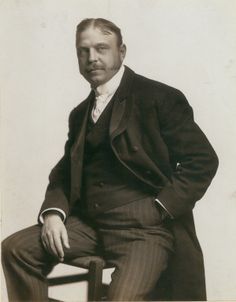
Today is the birthday of Santiago Graf (October 16, 1845-August 31, 1904). He was born in Zurich, Switzerland, but emigrated to Mexico in the 1870s. He founded Mexico’s first modern lager brewery, Compania Cervecera Toluca y Mexico, which is “the state capital of the State of Mexico as well as the seat of the Municipality of Toluca.” He also pioneered the ‘Graf’ style of Vienna lager, one of the two styles of Vienna lager today and still popular in Mexico and the southwest United States.” Victoria is a 4% abv Vienna lager first brewed in 1865. His brewery continued on after his death, and was acquired by Grupo Modelo in 1935.

Santiago-Graf-100yrs

This is his entry from Wikipedia:

In 1875 Graf purchased the original Compania Cervecera Toluca y Mexico, a small producer of cerveza sencilla, a form of light ale, from fellow Swiss Ausgustin Marendazand and began brewing a popular amber ale which is often cited as the first commercially successful beer brewed in the southwest. The problems with temperature control during wort production and fermentation in Mexico’s hot climate forced him to continue brewing ale until the opening of an international railroad link with the United States enabled him to import the first large ice producing absorption machines from Germany in 1882. With better equipment and the ability to cool wort and fermenter’s properly, Graf was the first to successfully brew lager in Mexico. In 1890, Graf formed a stock company and erected the first large, modern lager brewery in Mexico.

Graf brewed various types of light colored ambers but seemed uninterested in pale beers like the popular Pilsener style. Disappointed with the quality of malt and hops available locally, he imported all his hops from Europe and most of his malt from the United States. In addition, he set up his own malting facilities in Mexico, using barley imported from the United States. Graf was able to increase the acidity of his mash by increasing the percentage of dark malts in his recipes thereby counteracting the high alkalinity of brewing water available in Mexico, with the alkalinity simultaneously mellowing the acidic flavors of the dark malts in the final product. The result was a popular, mellow, darker style of Vienna lager. The popularity of the Toluca y Mexico beers was such that Graf frequently had difficulty filling orders and was forced to seek outside investors to rapidly increase production.

Current popular brands of Graf style Viennas include major brands such as Negra Modelo, Nocha Buena, and Dos Equis Amber.

Graf died on August 31, 1904 from endocarditis vegetations as a complication of an ongoing infection and is buried in Toluca, Mexico

Santiago-Graf-photo

This short biography is from the American Brewers Review:

Santiago-Graf-obit
compania-cervecera-Toluca-y-mexico-100yrs

This account of Graf’s brewery is from “100 Years of Brewing,” published in 1903:

Graf-100yrs-1a
Toluca-postcard
Graf-100yrs-1b
Graf-100yrs-1c
Rey-gambrinus-victoria-de-toluca
Graf-100yrs-1d
Graf-100yrs-1e
compania-cervecera-Toluca-y-mexico-1920
Graf-100yrs-2a
Graf-100yrs-2b
Toluca-Brewery-1896
Compania Cervecera Toluca y Mexico around 1896.

And this account of Graf’s beer was published in an earlier version of “100 Years of Brewing,” from 1901:

Toluca-1st-lager
anuncio-de-la-compania-cervecera-Toluca-y-mexico-El-Mundo-Ilustrado-1-de

And finally, here is a video about the history of the brewery.

Filed Under: Birthdays, Breweries, Just For Fun Tagged With: History, lager, Mexico, Switzerland

Beer In Ads #5101: Ottakringer Mai-Bock Licht

October 13, 2025 By Jay Brooks

Last year I decided to concentrate on Bock ads. Bock, of course, may have originated in Germany, in the town of Einbeck. Because many 19th century American breweries were founded by German immigrants, they offered a bock at certain times of the year, be it Spring, Easter, Lent, Christmas, or what have you. In a sense they were some of the first seasonal beers. “The style was later adopted in Bavaria by Munich brewers in the 17th century. Due to their Bavarian accent, citizens of Munich pronounced ‘Einbeck’ as ‘ein Bock’ (a billy goat), and thus the beer became known as ‘Bock.’ A goat often appears on bottle labels.” And presumably because they were special releases, many breweries went all out promoting them with beautiful artwork on posters and other advertising.

Monday’s poster is for Ottakringer Mai-Bock Licht, which was created sometime in the 1940s. This one was for the Ottakringer of Vienna, Austria, which was originally founded in 1837. 

Filed Under: Art & Beer, Beers, Breweries, Just For Fun Tagged With: Advertising, Austria, Bock, History

Beer In Ads #5100: There Are Good Reasons Why Hornung’s White Bock Beer Was Awarded First Prize

October 12, 2025 By Jay Brooks

Last year I decided to concentrate on Bock ads. Bock, of course, may have originated in Germany, in the town of Einbeck. Because many 19th century American breweries were founded by German immigrants, they offered a bock at certain times of the year, be it Spring, Easter, Lent, Christmas, or what have you. In a sense they were some of the first seasonal beers. “The style was later adopted in Bavaria by Munich brewers in the 17th century. Due to their Bavarian accent, citizens of Munich pronounced ‘Einbeck’ as ‘ein Bock’ (a billy goat), and thus the beer became known as ‘Bock.’ A goat often appears on bottle labels.” And presumably because they were special releases, many breweries went all out promoting them with beautiful artwork on posters and other advertising.

Sunday’s ad is for Hornung’s White Bock Beer, which was published on October 12, 1934. This one was for the Jacob Hornung Brewing Co. of Philadelphia, Pennsylvania, which was originally founded in 1885. I’m amazed how much they used winning two beer competitions in their advertising for years afterwards. This ad ran in The Philadelphia Inquirer, also from Philadelphia, Pennsylvania.

Filed Under: Art & Beer, Beers, Breweries, Just For Fun Tagged With: Advertising, Bock, History, Pennsylvania

Beer Birthday: Kirby Shyer

October 11, 2025 By Jay Brooks

Today would have been the 68th birthday of Kirby Shyer, who founded the Zip City Brewing Co. in New York City, the only brewpub in Manhattan when it opened in November of 1991, since both New Amsterdam and Manhattan Brewing has closed earlier. Unfortunately, he passed away late last year. He was a pioneer in the industry, especially on the East Coast because his brewpub was in such a visible place in downtown Manhattan. Unfortunately, when the bottom fell out of craft beer in 1997, the brewery closed. I met Kirby a little later when he was working for another brewery and called on me at BevMo and we later attended a Cleveland Indians baseball game, along with Tom Dalldorf, when the Craft Brewers Conference was in Cleveland in 2002.

Kirby worked in the brewery industry for several years after Zip City closed, both for breweries and distributors, but left to work on a project outside beer and beverages. He passed away in early November of 2024.

All About Beer’s archive includes a great 2017 overview of Zip City and Shyer by Tom Acitelli entitled A Brewpub’s Collapse 20 Years Ago Sounds Familiar.

Zip-City-john-bloch-designs
The logo and merchandising materials for Zip City, created by John Bloch Designs.

This is his obituary from the New York Times:

Kirby Shyer passed away after a long illness on Friday, November 1, 2024 at Mt Sinai Hospital. He was born on October 11, 1957 in NYC, raised in Larchmont, NY and was a longtime resident of Ridgefield, CT. Kirby was a technology early-adopter, a talented amateur film-maker, an enthusiastic champion of his favored music, especially Lou Reed, and a lifelong (but disappointed) Mets fan. Kirby loved Boston Terriers, particularly his own: Indie. Kirby will be missed dearly by everyone who knew him. Kirby was good-natured, smart, creative and also the nicest guy you ever met. Throughout his life, Kirby loved every place he lived and retained close friendships from Westminster School in Simsbury, CT, from St. Lawrence University, where he was a pillar of the Phi Kappa Sigma fraternity, and stayed connected to childhood friends from St Regis and Swiss Challenge camps. In 1991, Kirby launched the startup Zip City Brewing Company, popularizing the brewpub craze across the US and leading the neighborhood revivals of Flatiron & Union Square in NYC. Zip City was notable for its brewing equipment — imported from Austria — integrated into the design of the bar. Zip City brewed rich lagers, expanding the NY beer palate, and paved the way for 10 other local brewpubs. His greatest Zip City success, however, was meeting his loving life partner and wife of 30 years, Jennifer. Kirby was responsible for masterminding the introduction of the Belgian beer Stella Artois to the American market, an effort that was so successful, he was knighted by the Belgian Brewers Guild. Being so well-known in the brewing community, he was also a brand ambassador for Manhattan Beer Distributors. Kirby was the devoted father of Griffin and Grace Shyer, dedicated husband to Jennifer Brown Shyer, and doting uncle to his nieces and nephews. He is also survived by mother Marlene Fanta Shyer, sister Alison Shyer, brother, Christopher Shyer and his partner David Ehrich, and father-in-law Robert Brown. 

A couple of years ago, Kirby was kind enough to send me this awesome Zip City T-shirt from 1995.

Filed Under: Birthdays, Breweries, Just For Fun Tagged With: Brewpubs, History, New York

Beer In Ads #5099: Kopp’s North Pacific Bock

October 10, 2025 By Jay Brooks

Last year I decided to concentrate on Bock ads. Bock, of course, may have originated in Germany, in the town of Einbeck. Because many 19th century American breweries were founded by German immigrants, they offered a bock at certain times of the year, be it Spring, Easter, Lent, Christmas, or what have you. In a sense they were some of the first seasonal beers. “The style was later adopted in Bavaria by Munich brewers in the 17th century. Due to their Bavarian accent, citizens of Munich pronounced ‘Einbeck’ as ‘ein Bock’ (a billy goat), and thus the beer became known as ‘Bock.’ A goat often appears on bottle labels.” And presumably because they were special releases, many breweries went all out promoting them with beautiful artwork on posters and other advertising.

Friday’s ad is for Kopp’s Celebrated N.P. Bock, which was published on October 10, 1898. This one was for the North Pacific Brewery of Astoria, Oregon, which was originally founded in 1884, and also used the founder’s name, John Kopp, until 1902. This ad ran in The Astoria Evening Budget, also from Astoria, Oregon.

Filed Under: Art & Beer, Beers, Breweries, Just For Fun Tagged With: Advertising, Bock, History, Oregon

Historic Beer Birthday: Patrick Perkins

October 10, 2025 By Jay Brooks

castlemaine-perkins
Today is the birthday of Patrick Perkins (October 10, 1838—May 17, 1901). He was born in Ireland, but emigrated as a child to Queensland, Australia, with his parents in 1854, when he was sixteen. “With his brother Thomas, he started breweries in Victoria and Queensland. In 1866, Patrick Perkins started the Perkins Brewery in Toowoomba. In 1872, he later extended his operations to Brisbane with the purchase of the City Brewery in 1872. In 1876, Patrick Perkins moved to Queensland in order to manage the Brisbane and Toowoomba breweries.” He was also heavily involved in local politics. After his death, “in 1928, the Perkins brewing company was bought by their rivals Castlemaine Brewery with new company being known as Castlemaine Perkins.”

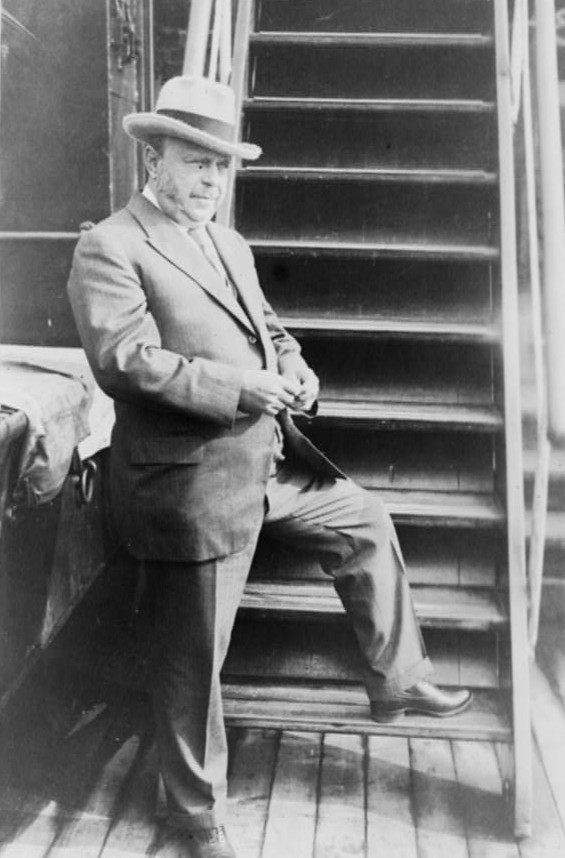
Patrick_Perkins

This is his biography from his Wikipedia page:

Patrick Perkins, nicknamed Paddy Perkins, was a brewer and politician in colonial Queensland. He was a Member of the Queensland Legislative Assembly and, later, a Member of the Queensland Legislative Council.

Patrick Perkins was born in a humble cottage on a small farm in the village of Clonoulty near Cashel, County Tipperary, Ireland. He was the second son of Thomas Perkins, a farmer, and his wife Ellen (née Gooley). He attended the local National School.

Thomas and Ellen Perkins and their eight children (including Patrick) immigrated on the Persian, departing Southampton and arrived in Melbourne, Victoria, Australia on 9 April 1854.

In 1861, he married Mary Ellen Hickey in Victoria. They had three children born in Victoria: Thomas Hector (born 1864), Edgar Colin Francis (born 1868) and Lilly Eleanor Perkins (born 1875). They had two children born in Queensland: Patrick Harold (born 1878) and Helene Cicilia (born 1880).

Patrick Perkins was a miner and storekeeper on the diggings in Victoria in districts including Ballarat, Bendigo, Woods Point and Jamieson.

With his brother Thomas, he started breweries in Victoria and Queensland. In 1866, Patrick Perkins started the Perkins Brewery in Toowoomba. In 1872, he later extended his operations to Brisbane with the purchase of the City Brewery in 1872.

In 1876, Patrick Perkins moved to Queensland in order to manage the Brisbane and Toowoomba breweries.

Perkins also had interests in property and mining, including the Mount Morgan Mine and coal mining in the West Moreton area. He was considered a shrewd and successful businessman.

On 9 April 1877, Edward Wilmot Pechey, the member of the Queensland Legislative Assembly in the seat of Aubigny, resigned. On 1 May 1877, in a by-election, Perkins was elected in Aubigny, defeating Angus Mackay (the then editor of The Queenslander) by a large majority. He was elected again in Aubigny in the 1878 election and was appointed as Minister of Lands in the First McIlwraith Ministry from 21 January 1879 to 13 November 1883.

Perkins was elected again in Aubigny in the 1883 election, However, allegations about electoral fraud (including intimidation, bribery, and ballot stuffing) in the Aubigny election started to surface, resulting in a petition to the Governor of Queensland detailing numerous kind of electoral fraud and asking to declare that the Aubigny election was void and that Patrick Perkins was guilty of bribery and corruption. On 21 February 1884, the Committee of Elections and Qualifications ruled the Aubigny election was null and void and called for a by-election. Perkins had denied any involvement in the alleged electoral fraud and the Committee of Elections and Qualifications did not disqualify him from re-contesting the seat, which provoked outrage in some quarters. However, Patrick Perkins announced he would not re-contest the seat as he would be taking a trip to England. James Campbell was elected unopposed at the resulting by-election on 4 March 1884.

At the 1888 election, Perkins was elected in the seat of Cambooya on 10 May 1888, which he held until 6 May 1893.

On 23 May 1893, Perkins was appointed to Queensland Legislative Council from 23 May 1893. Being a lifetime appointment, he served until his death on 17 May 1901.

Late in life, Perkins was in poor health and moved to Hawthorn, Melbourne. He attended the opening of the first Federal Parliament at the Royal Exhibition Building on 9 May 1901 and caught a chill which developed into bronchial pneumonia, from which he died on Friday 17 May 1901 at “Ingleborough”, Berkeley Street, Hawthorn. On Saturday 18 May 1901, his funeral was conducted at the Roman Catholic church at Glenferrie, after which he was buried in the Boroondara General Cemetery in Kew, Melbourne.

In 1928, the Perkins brewing company was bought by their rivals Castlemaine Brewery with new company being known as Castlemaine Perkins Limited.

castlemaine-perkins

The Castlemaine Perkins brewery in Brisbane (pictured above early last century) has strong links to the history of Toowoomba. Don Talbot and John Larkin outlined the story In their book Strange and Unusual Tales. Queensland’s first brewery was built in Toowoomba in 1867. By 1869, it was one of the largest breweries in the southern hemisphere. The brewery’s original and official name was the Downs Brewery, but came to be known as Perkins Brewery. Paddy Perkins was born in Tipperary, Ireland, in 1838 migrating to Australia in 1855 with his father Thomas, and brothers James and Thomas. Paddy and his family travelled the Ballarat and Bendigo goldfields. Paddy and his brother Thomas set up a merchandising store in Castlemaine, Victoria, and later held an interest in the Castlemaine Brewery in Victoria. After testing water quality in Brisbane and Ipswich, the Perkins brothers located a reliable spring in West Swamp, Toowoomba. In 1867, the brothers purchased land in Margaret St (where Grand Central is today). In December, 1869, Perkins Brewery brewed its first commercial hogshead of light ale in Queensland. At this time, the brewery was one of the largest in the Southern Hemisphere with the capacity to produce 400 hogshead (113,650 litres) of XXX (Extra Exhilarating Extract) beer per week. Paddy Perkins later purchased the City Brewery, Mary Street, Brisbane in 1872. In August, 1876, tragedy stuck the Perkins family when Thomas was killed aged 35 while riding his horse in Grandchester. Paddy continued running the breweries in Toowoomba and Brisbane which prospered and expanded up until the 1920s. Profits began to decline due to competition from the new and extremely popular XXXX Bitter Ale, a stronger beer which was bought out by Perkins’ competitor Castlemaine Brewery Brisbane. The Perkins and Co. Ltd Downs Brewery in Toowoomba and the City Brewery in Brisbane were sold to the Castlemaine Brewery in August, 1928. The company was then restructured as Castlemaine Perkins Ltd. The Downs Brewery ceased brewing in 1958 after it had operated continuously for 89 years.

Perkins_and_Company_Brewery_Toowoomba_1871
The Perkins Brewery in Toowoomba around 1871.

And this history of the Perkins Brewery is from a site focusing on the Toowoomba Region:

Queensland’s first brewery was built in Toowoomba in 1867. By 1869, it was one of the largest breweries in the southern hemisphere. The brewery’s original and official name was the Downs Brewery but came to be known as Perkins Brewery. Read about its history and how it eventually became part of Castlemaine Perkins.

Perkins BreweryPaddy Perkins was born in Tipperary, Ireland in 1838 migrating to Australia in 1855 with his father Thomas, and brothers James and Thomas. Arriving in Victoria Paddy and his family traveled the Ballarat and Bendigo goldfields.

Paddy and his brother Thomas set up a merchandising store in Castlemaine, Victoria and later held an interest in the Castlemaine Brewery in Victoria.

After testing water quality in Brisbane and Ipswich, the Perkins brothers located a reliable spring providing the quality they required in West Swamp Toowoomba. In 1867 the brothers purchased land in Margaret Street (where Grand Central is today) and contracted Mr. John Garget to construct Queensland’s first brewery.

In December 1869 Perkins Brewery brewed its first commercial hogshead of light ale in Queensland. At this time, the brewery was one of the largest in the Southern Hemisphere with the capacity to produce 400 hogshead (113,650 litres) of XXX (Extra Exhilarating Extract) beer per week.

Another product from the Perkins Brewery was Carbine Invalid Stout that was promoted for fortifying the blood and as a tonic for nursing mothers.

The Perkins brothers also founded the malting industry in Toowoomba, building a malt house in addition to their Dent Street brewery. In 1871 maltster J. G. Sims processed 14,000 bushels of barley on the floor of the Perkins’ malt house (1 bushel = 0.363 litres).

The opening of the brewery in Toowoomba saw an increase of barley growing on the Downs which led to experiments in the cultivation of hops, all of which were unsuccessful. The malting process was discontinued in the 1880s and 1890s until a duty was imposed on imported malt and processing of local barley was again encouraged.

Perkins and Co described their beer as “A good, light, drinkable and nutritious ale, having been a long-felt want in Queensland, the proprietors beg to announce that they are now prepared to supply unlimited demand with a sound and nutritious ale, such as they trust will command general favour and support.”

Paddy Perkins later purchased the City Brewery, Mary Street Brisbane in 1872.

In August 1876 tragedy stuck the Perkins family when Thomas was killed aged 35, whilst riding his horse in Grandchester. Thomas Perkins is buried at the Toowoomba & Drayton Cemetery.

Paddy continued running the breweries in Toowoomba and Brisbane which prospered and expanded up until the 1920s. Profits began to decline due to competition from the new and extremely popular XXXX Bitter Ale, a stronger beer which was bought out by Perkins’ competitor Castlemaine Brewery Brisbane. The Perkins and Co. Ltd Downs Brewery in Toowoomba and the City Brewery in Brisbane were sold to the Castlemaine Brewery in August 1928. The company was then restructured as Castlemaine Perkins Ltd.

Catlemaine_Perkins_128860

Filed Under: Birthdays, Breweries, Just For Fun Tagged With: Australia, History, Ireland

« Previous Page
Next Page »

Find Something

Northern California Breweries

Please consider purchasing my latest book, California Breweries North, available from Amazon, or ask for it at your local bookstore.

Recent Comments

  • Bob Paolino on Beer Birthday: Grant Johnston
  • Gambrinus on Historic Beer Birthday: A.J. Houghton
  • Ernie Dewing on Historic Beer Birthday: Charles William Bergner 
  • Steve 'Pudgy' De Rose on Historic Beer Birthday: Jacob Schmidt
  • Jay Brooks on Beer Birthday: Bill Owens

Recent Posts

  • Beer In Ads #5307: Heute Bock Double Goats July 31, 2026
  • Historic Beer Birthday: Rita Daigle July 31, 2026
  • Beer Birthday: Jonathan Surratt July 31, 2026
  • Beer In Ads #5306: Heute Bock! From The Tap July 30, 2026
  • Historic Beer Birthday: Leopold Nathan July 30, 2026

BBB Archives

Feedback

Head Quarter
This site is hosted and maintained by H25Q.dev. Any questions or comments for the webmaster can be directed here.