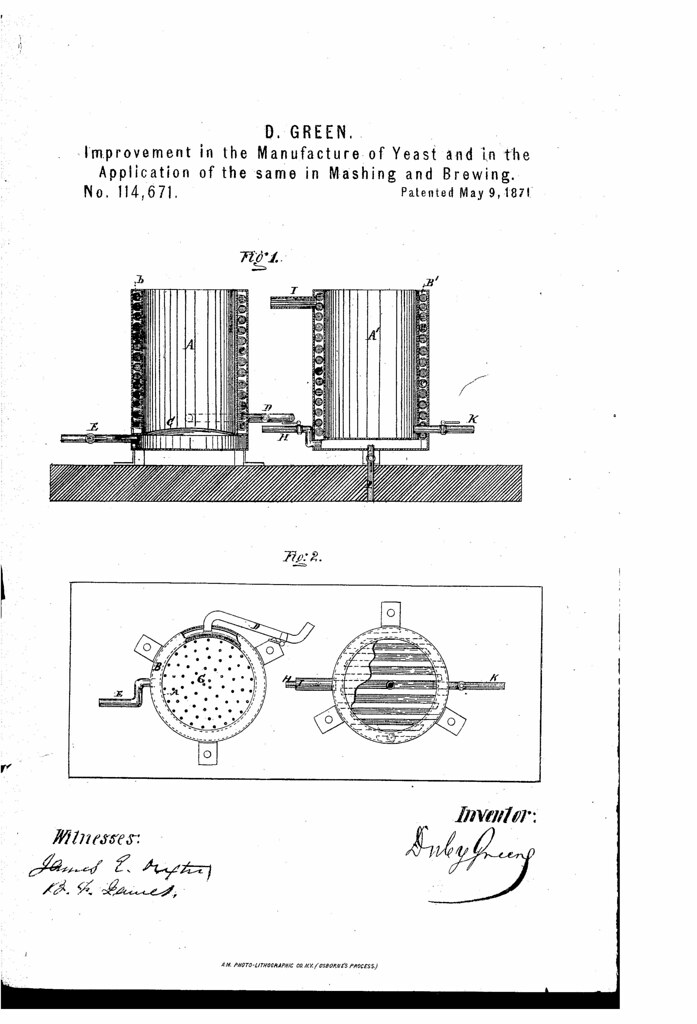
Today in 1871, US Patent 114671 A was issued, an invention of Duby Green, for his “Improvement in the Manufacture of Yeast and in the Application of the Same in Mashing and Brewing.” There’s no Abstract, and in the description there’s never really any simple overview or summation of the invention, Green just dives right it to explaining his formula and how it works. I guess he figured the crazy long title was enough.
Patent No. 3033762A: Straining Tank
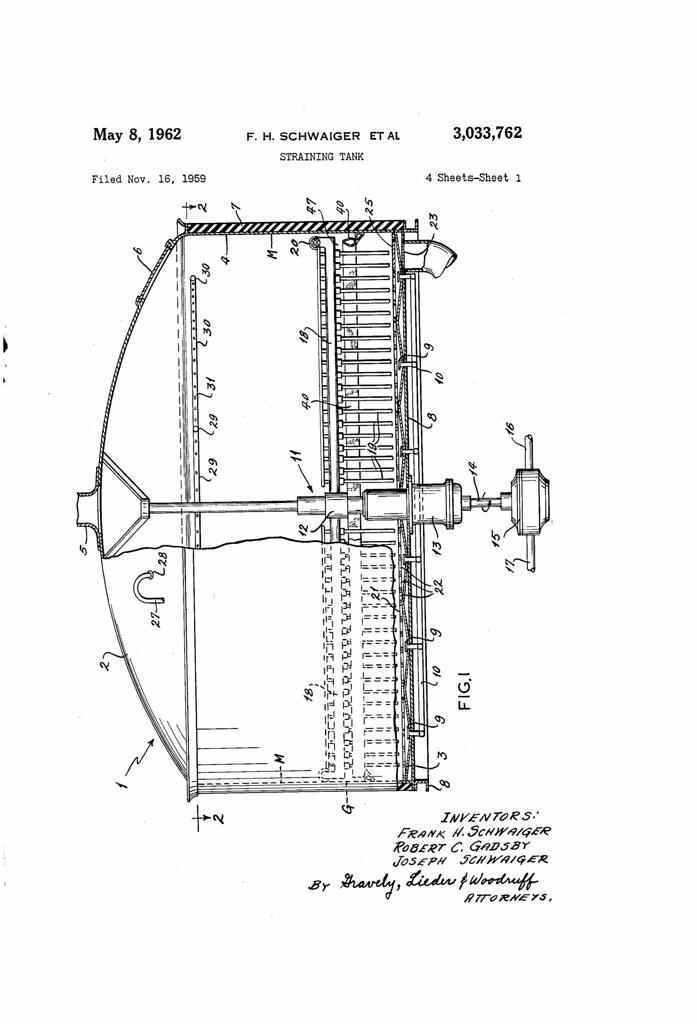
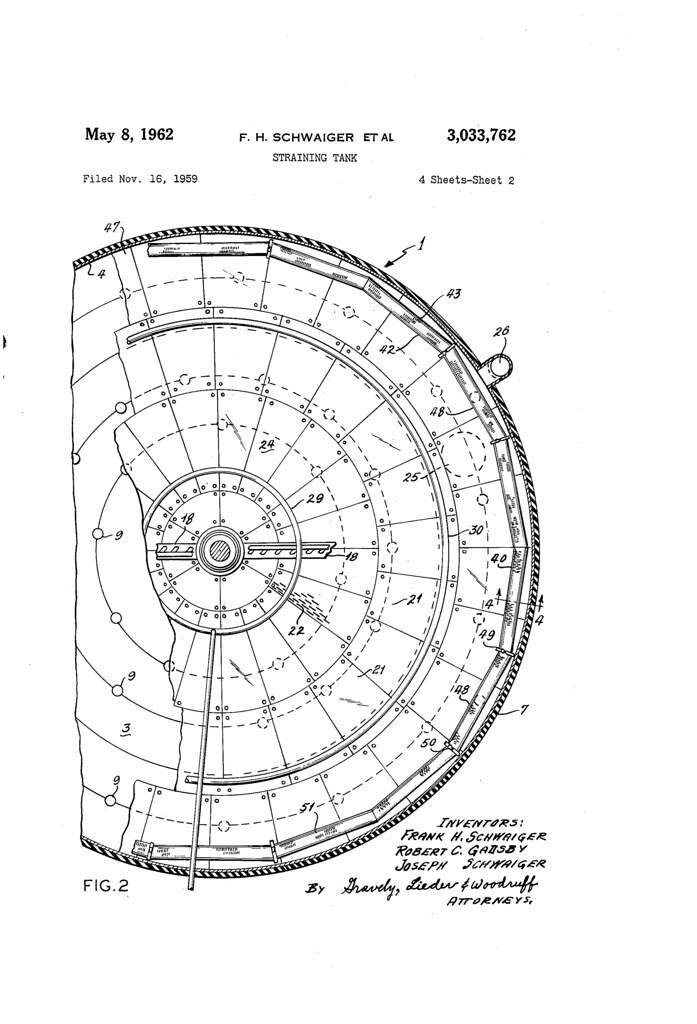
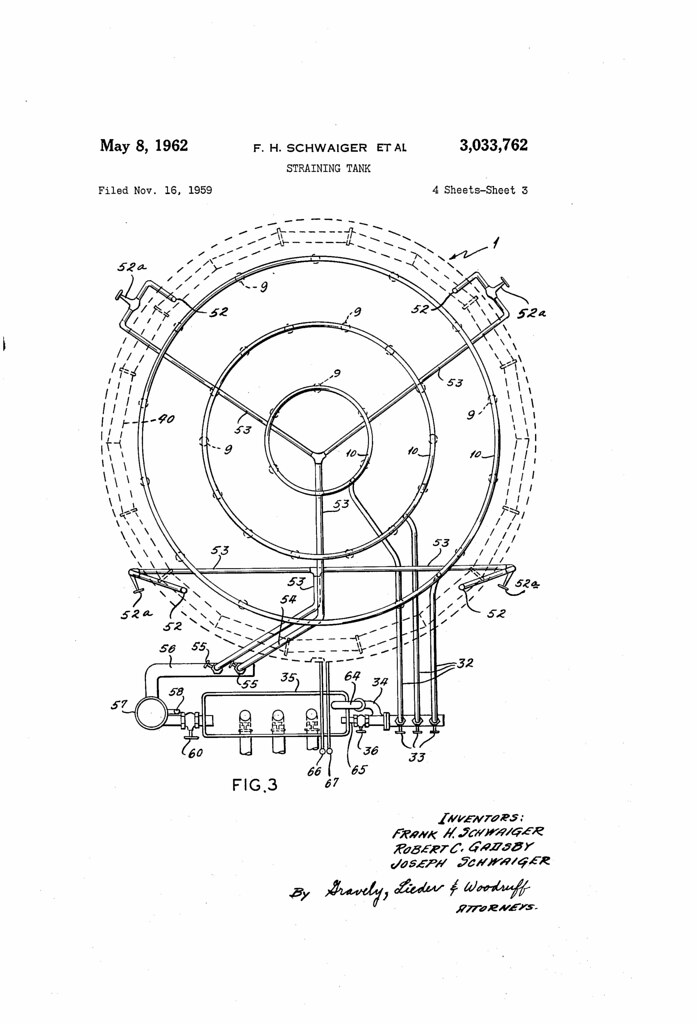
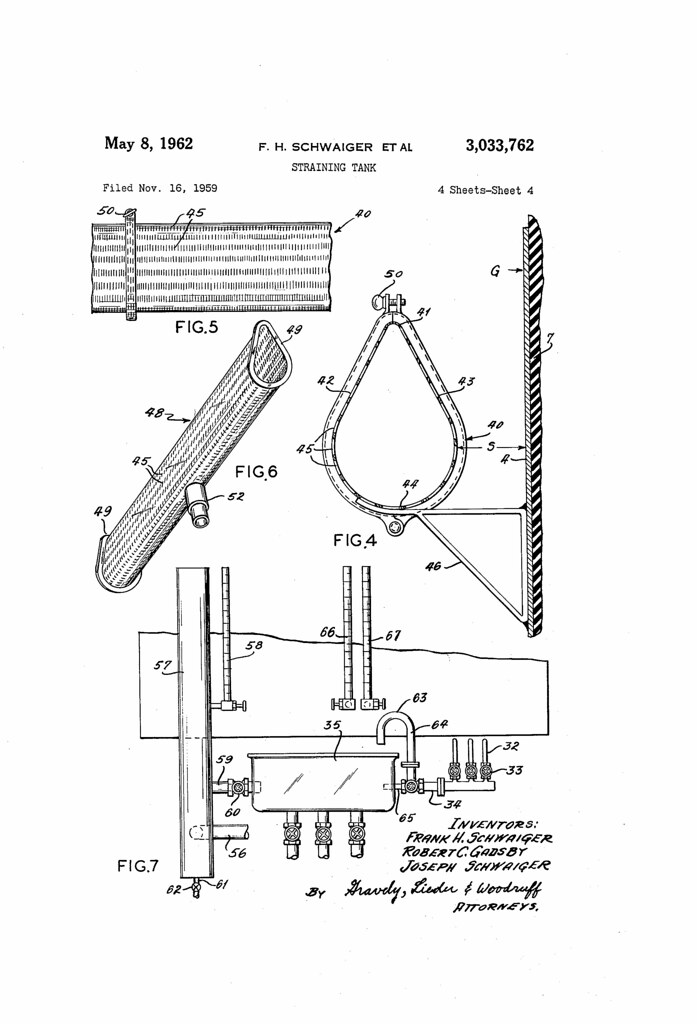
Today in 1962, US Patent 3033762 A was issued, an invention of Robert C. Gadsby, Schwaiger Joseph, and Frank H. Schwaiger, assigned to Anheuser-Busch, for their “Straining Tank.” There’s no Abstract, but in the description it’s stated that the “invention relates to an improved straining tank or grain extractor or lauter tub, and more particularly to an improvement in an existing kind of lauter tub presently in widespread use in the brewing industry to remove extract from brewers grains.” They later elaborate a bit more:
This invention relates to an improvement in existing lauter tubs having agitators therein which increases the efficiency or reduces the draw-o time to about two-thirds of the time previously required. This is important because the lautering step in the brewing process has in the past been one of the slowest and one of the bottlenecks in the production of beer. In other words, in the usual brewing operation today, the capacity of the step which uses lauter tubs or straining tanks largely determines the capacity of the brewery.
Patent No. 519513A: Apparatus For Racking Beer
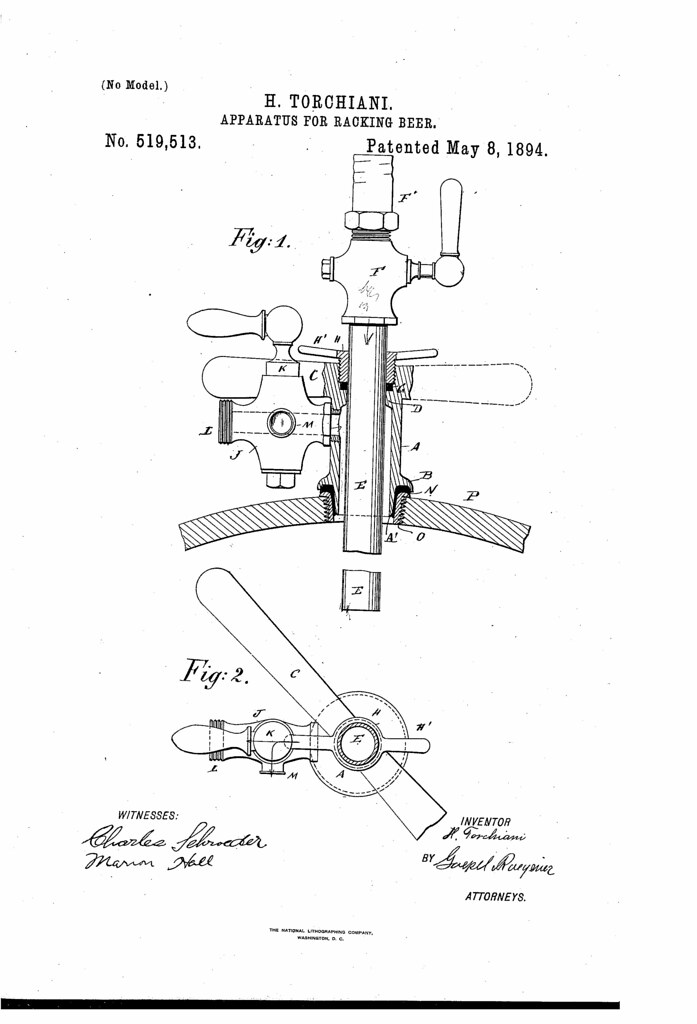
Today in 1894, US Patent 519513 A was issued, an invention of Harry Torchiani, for his “Apparatus For Racking Beer.” There’s no Abstract, but in the description it’s stated that the “invention relates to that class of. devices that are used in drawing or filling beer from casks into the barrels, half-barrels, kegs, etc.,” adding this. “The object of my invention is to provide an apparatus of this kind, which can readily be adjusted for barrels or kegs of different sizes, and which prevents the spurting of the beer from the apparatus or keg when the apparatus is withdrawn from the keg.”
Patent No. 3381841A: Bung For Barrel
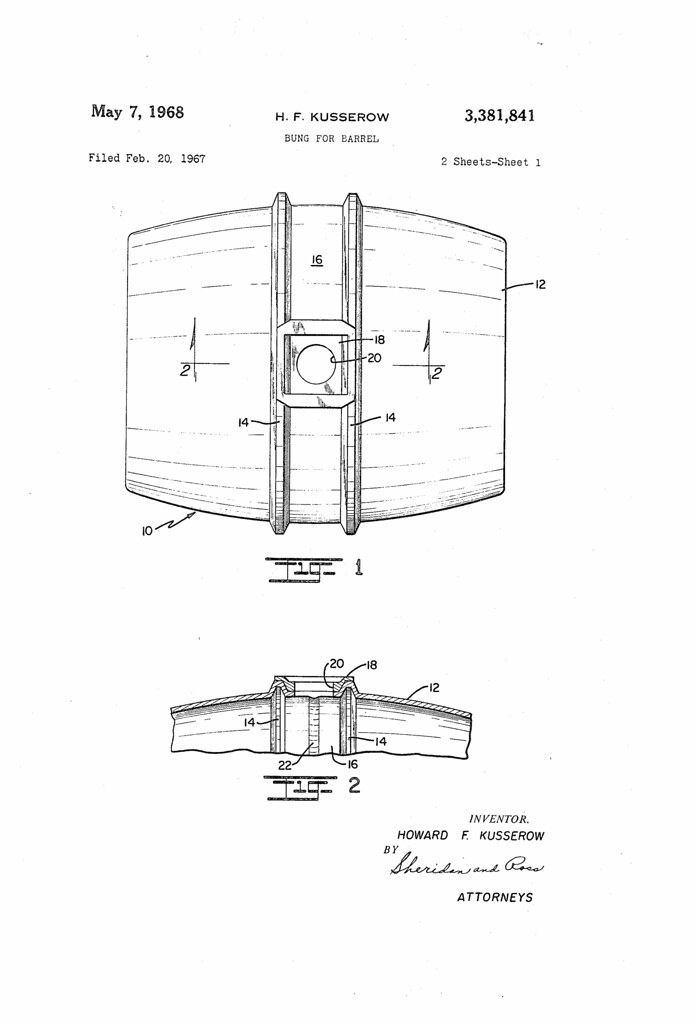
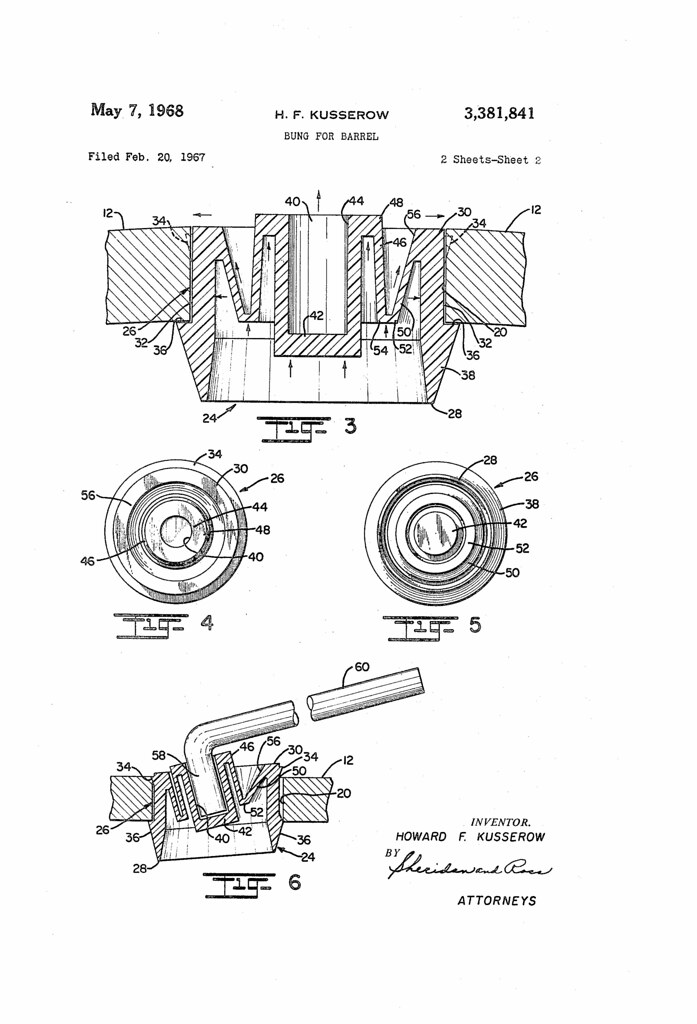
Today in 1968, US Patent 3381841 A was issued, an invention of Howard F. Kusserow, for his “Bung For Barrel.” There’s no Abstract, but in the description it’s claimed that the “invention lies in the general field of container closures. It is directed to re-usable closures which may be readily applied and removed, and more particularly to bungs for beer barrels, although it is not limited to such use.” Apparently, the new bung was to replace wooden ones with a bung made from polyethylene, a “resiliently yieldabie material.”
Patent No. 1302549A: Process For Brewing Beer
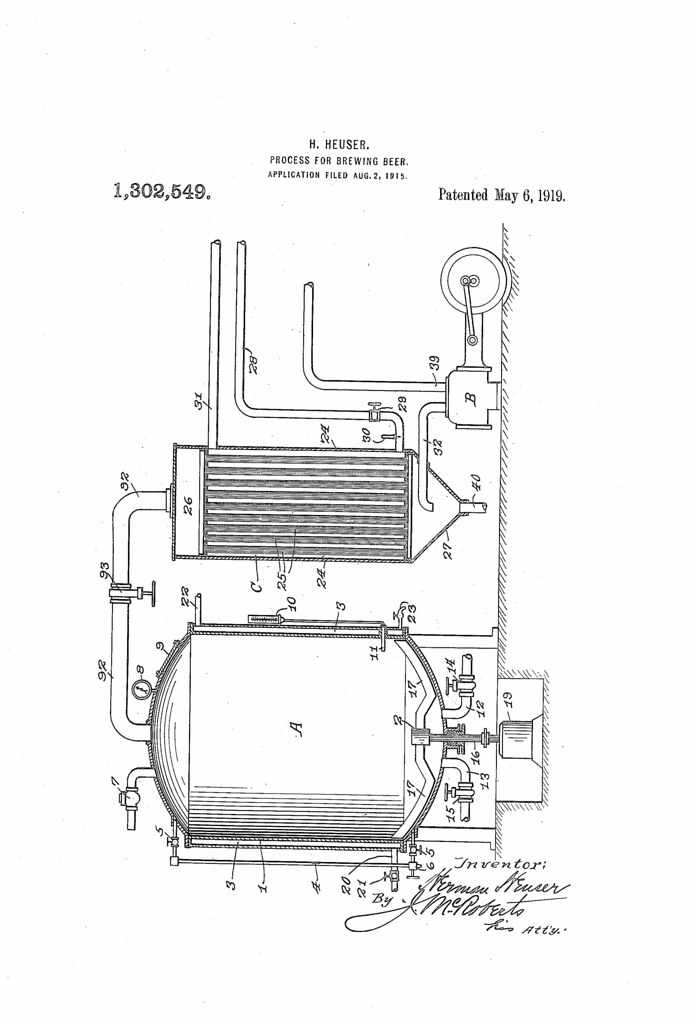
Today in 1919, US Patent 1302549 A was issued, an invention of Herman Hausen, for his “Process For Brewing Beer.” There’s no Abstract, but as Prohibition began, the invention was specifically for non-alcoholic beer to satisfy demand for at least the taste of beer once the regular kind was outlawed. Here’s a fuller explanation.
My invention relates to the manufacture of non-alcoholic beer, of beer containing less than one-half of one percent of alcohol, and of temperance beer. In the processes heretofore employed for making such beverages, the de-alcoholizing occurs by distillation of the alcohol after the liquid vis fermented or the beer brewed. These old processes involve certain disadvantages which are obviated by my invention, which, generally speaking, consists in simultaneously boiling and fermenting the beer wort in a vacuum and within the range of beer fermentation temperatures at which the activity of the yeast is not destroyed to evaporate the alcohol and preserve live yeast in In the accompanying drawing I show more or less diagrammatically and mostly in sectional view all the apparatus required to carry out my new process.
Patent No. D591850S1: Filled Beer Glass Shaped Condom
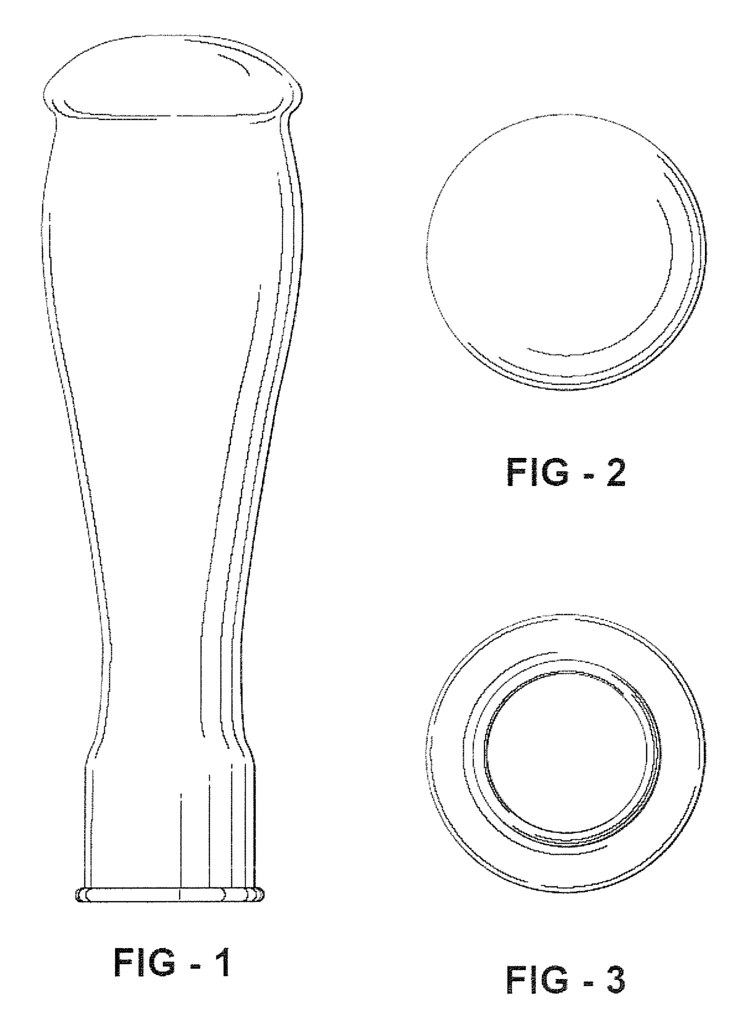
Today in 2009, US Patent D591850 S1 was issued, an invention of Brian Osterberg, for his “Filled Beer Glass Shaped Condom.” There’s no Abstract, and there’s not much to say about it, other than his invention is the “ornamental design for a filled beer glass shaped condom.” I probably should have waited until after dark to post this one. Seeing it reminded me of a passage from a book I read when I was a kid: Summer of ’42, by Herman Raucher. There’s a scene in the book where the 15-year old protagonist, Hermie, goes to the drug store to buy condoms. Looking over the packaging, in his head he’s imagining that the color of the box matches the condom itself, and thinks to himself. “Plaid, that’s enough to send a young girl screaming into the night!” I can’t imagine one that look like a full glass of beer, that just seems weird.
Patent No. 2039564A: Beer Dispensing Apparatus
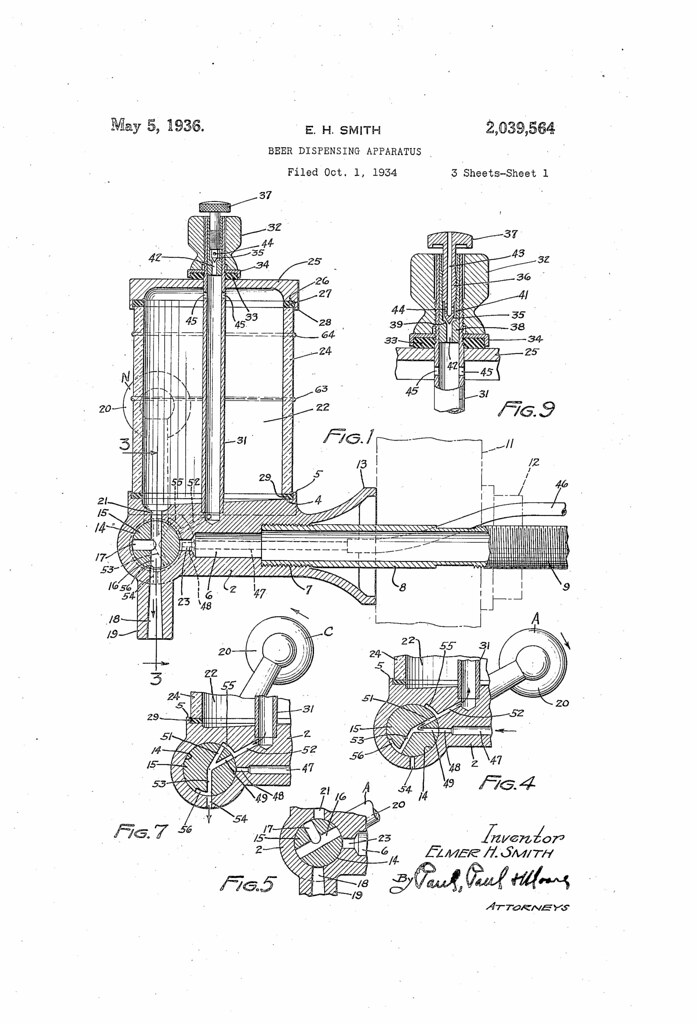
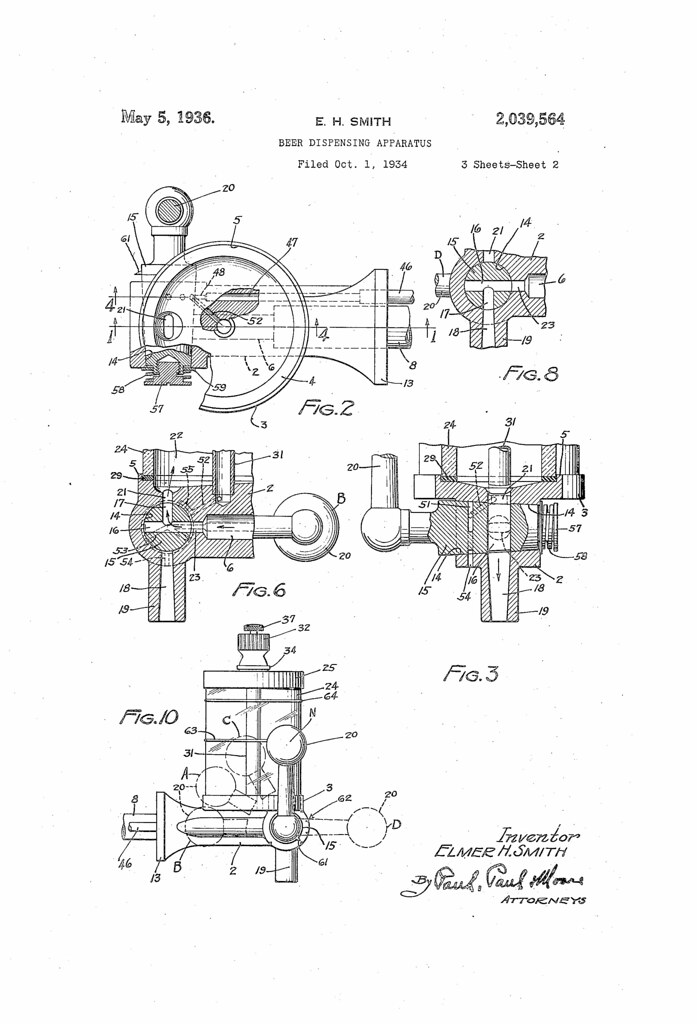
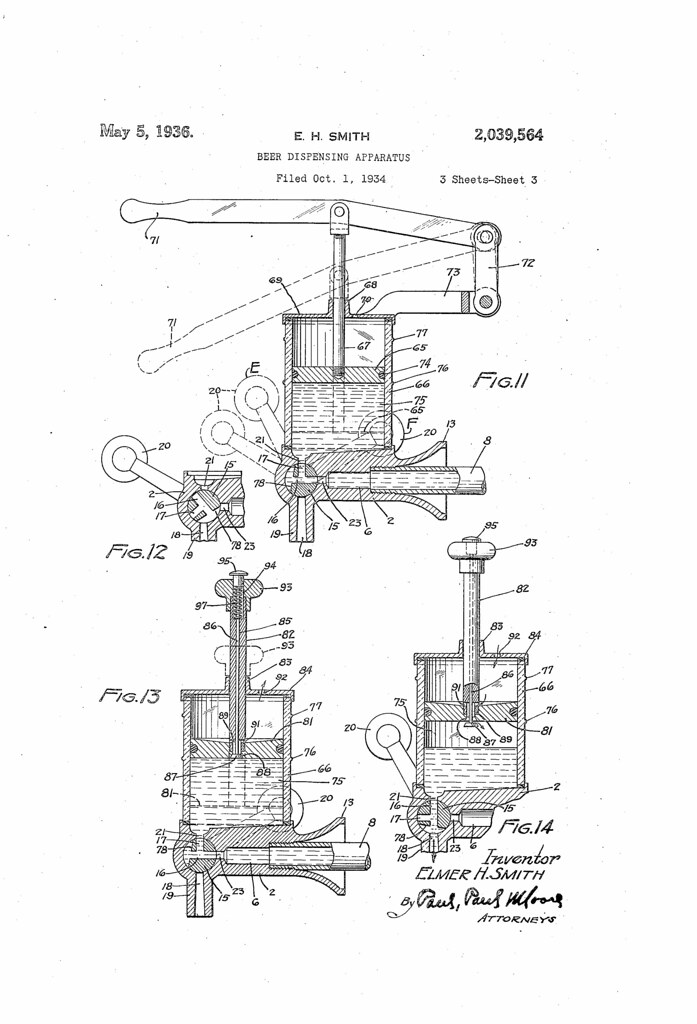
Today in 1936, US Patent 2039564 A was issued, an invention of Elmer H. Smith, for his “Beer Dispensing Apparatus.” There’s no Abstract, but in the description it states that his “invention relates to new and useful improvements in beer dispensing apparatus, and more particularly to a beer dispensing faucet having means embodied in the construction thereof, whereby the beer, regardless of the pressure on, the beer at its source, may be dispensed into, a glass or suitable container without excessive foam.”
Star Wars Downunder: The Good, The Bad & The Thirsty

For some reason I really got caught up in the hoopla of Star Wars Day today. But what about beer and Star Wars, you might ask? Believe it or not, I found something. It’s an interesting fan film made in Australia, entitled Star Wars Downunder. It’s shot in 35mm and took 10 years to make, directed and co-written by Michael Cox. And because it’s Australian, it’s also about beer. The creators describe it by asking “what would happen if you crossed Star Wars with an Australian beer commercial?” And their answer was “Star Wars Downunder: an epic tale of the good the bad and the thirsty, described as “half an hour of action, special effects and lovable Aussie larakins.” On the film’s website, they recount the plot as follows:
The film tells the story of a lone Jedi: Merve Bushwacker (David Nicoll), returning home after a long absence. His mission? To partake in a refreshing beverage, known locally as amber fluid. On his arrival, he is dismayed to discover the planet has become as dry as a dead dingo′s donger, thanks to the tyrannical rule of Darth Drongo. Drongo has hoarded all the amber fluid in his impenetrable fortress “Dunny’s Deep” for reasons unknown. Can Merve, and a motley collection of unlikely allies band together to topple Drongo’s evil regime? Will liberty and amber fluid flow freely once more?
As many reporting on the film lament, there’s no scene in which the character says: “That’s not a loightsabah! THAT’S a loightsabah!” And while that would have been hilarious, there are, however, lightsaber boomerangs, because … well, why wouldn’t there be? Here’s the trailer:
Star Wars Downunder Trailer from Michael Cox on Vimeo.

Intrigued? You’re in luck, because you can watch the entire 30-minute film on YouTube, or below.
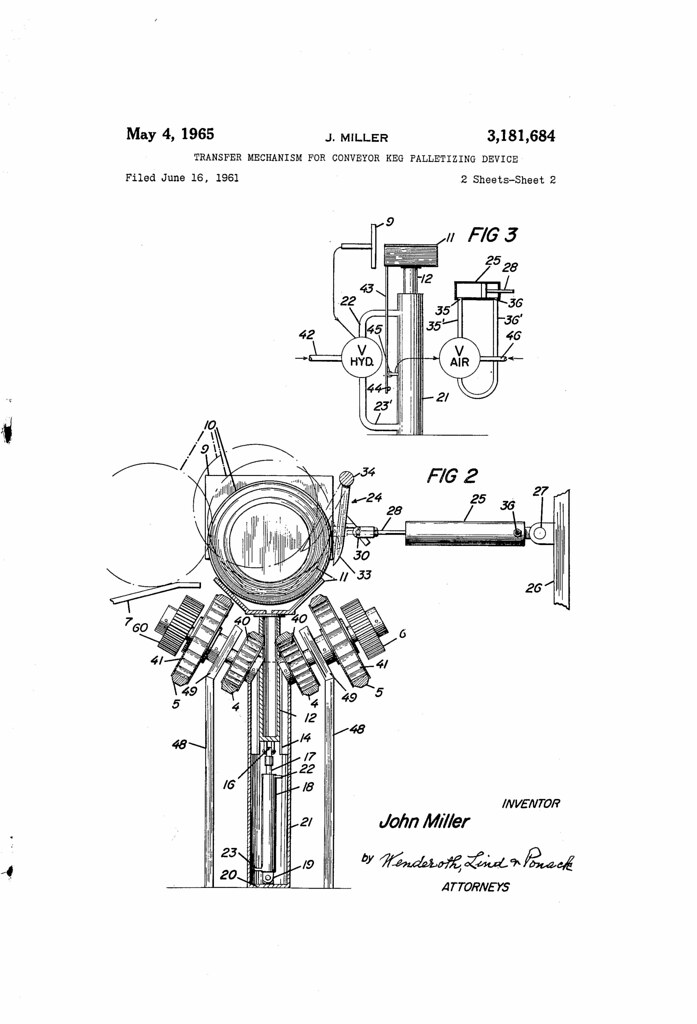
Patent No. 3181684A: Transfer Mechanism For Conveyor Keg Palletizing Device
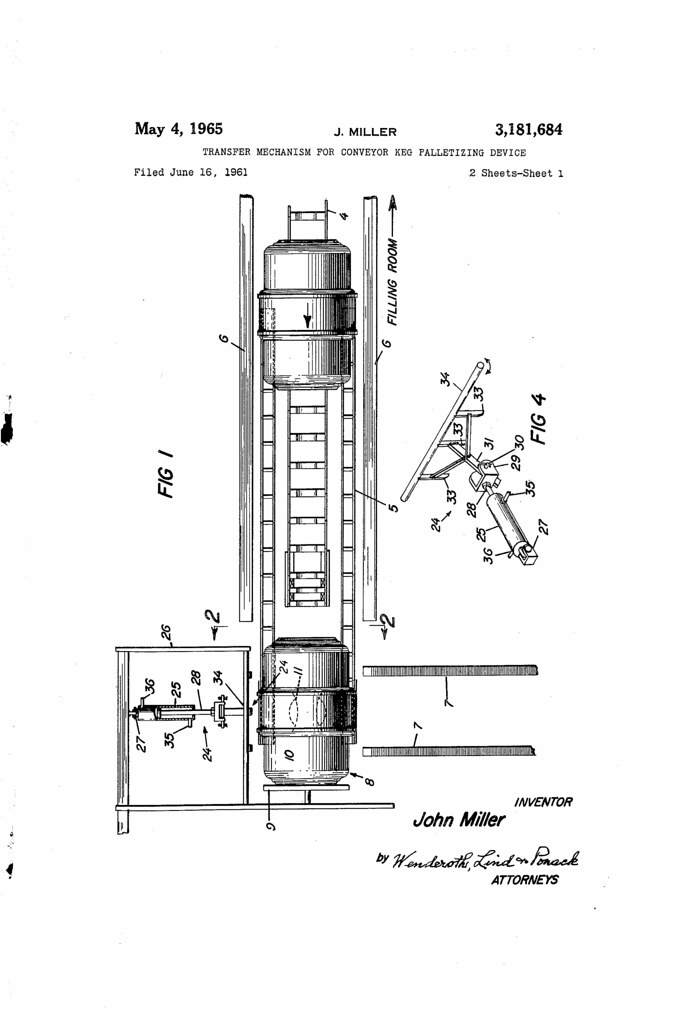
Today in 1965, US Patent 3181684 A was issued, an invention of John Miller, assigned to Schaefer Brewing Co., for his “Transfer Mechanism For Conveyor Keg Palletizing Device.” There’s no Abstract, but in the description it states that his “invention is to provide a more efficient transfer mechanism for the barrels or kegs and particularly such a transfer mechanism which is more reliable and sure in operation in transferring the barrels or kegs from the conveyor to the skids which convey such barrels or kegs to the palletizing position.”
Patent No. 2677378A: Method And Apparatus For Picking Hops
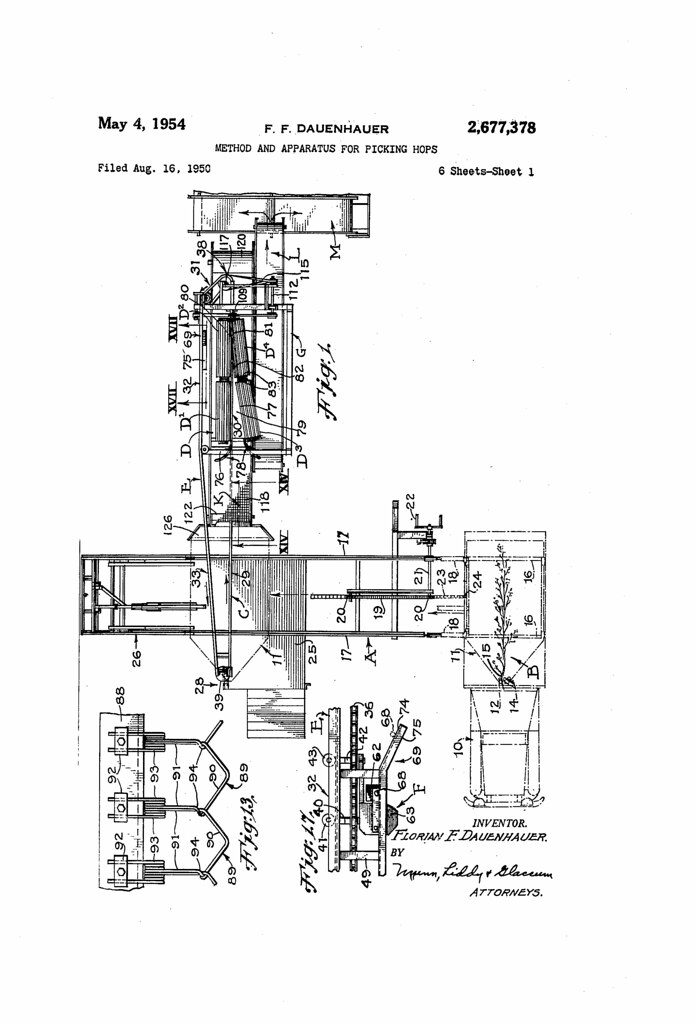
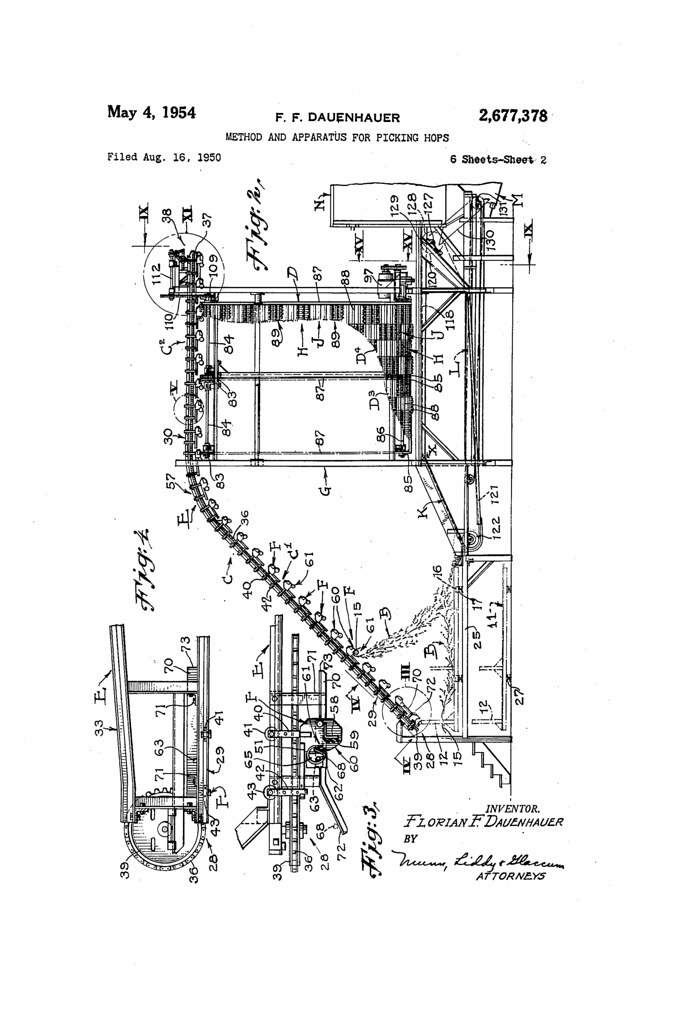
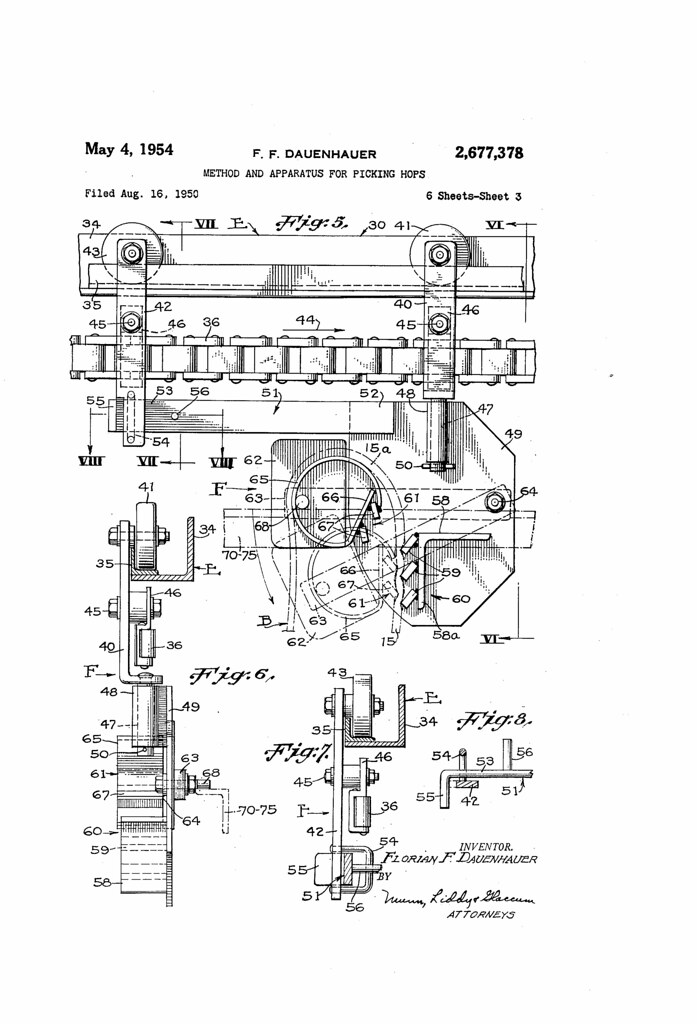
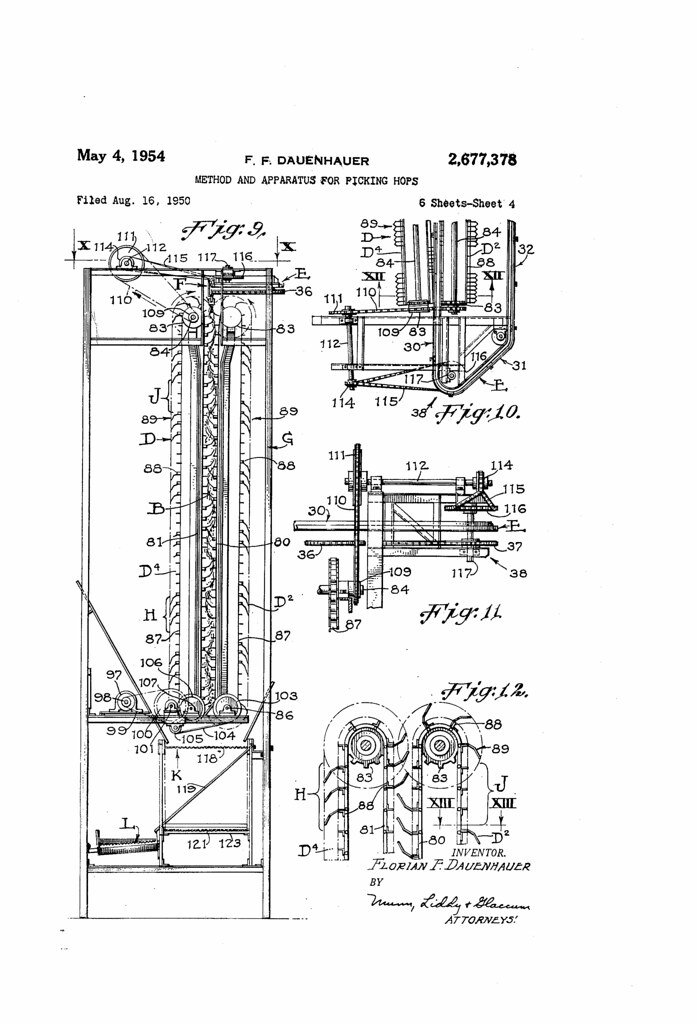
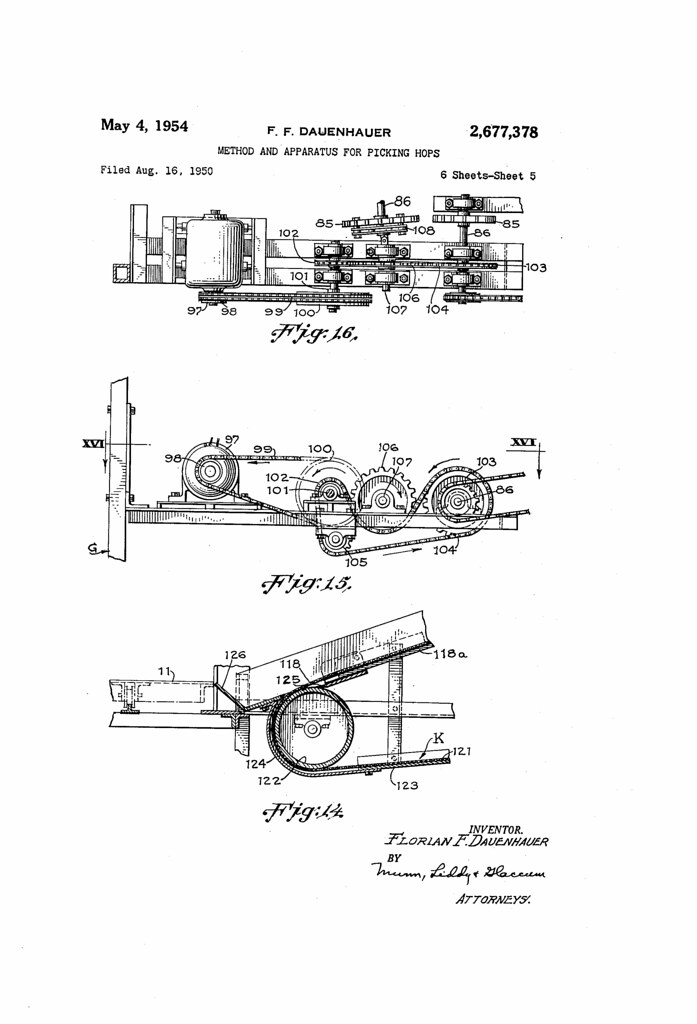
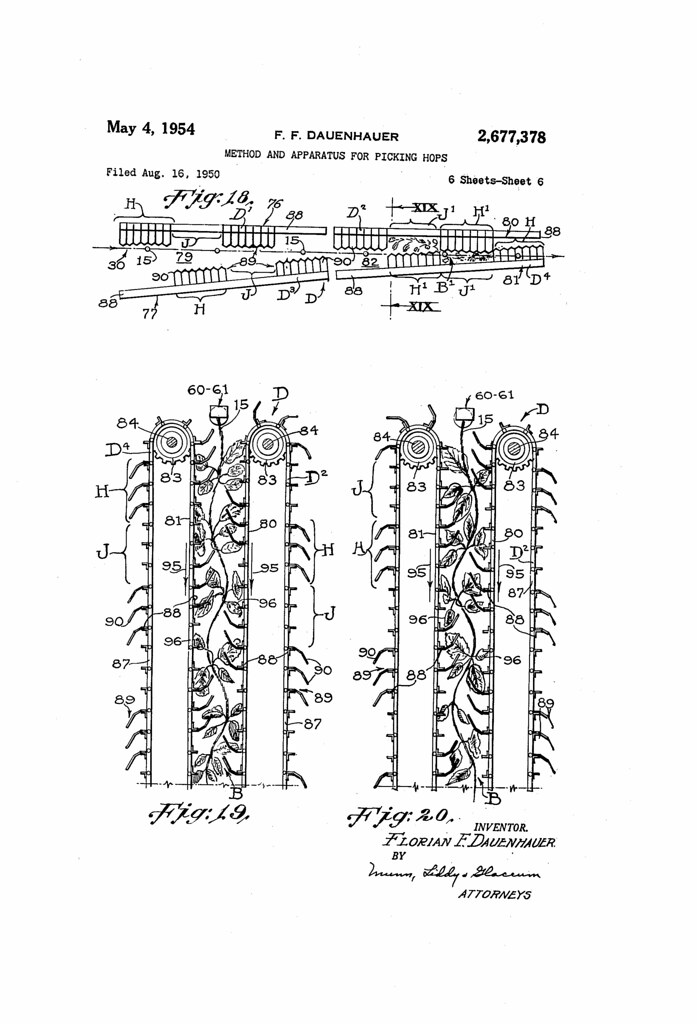
Today in 1954, US Patent 2677378 A was issued, an invention of Florian F. Dauenhauer, for his “Method and Apparatus for Picking Hops.” There’s no Abstract, but in the description it states that his “present invention relates to improvements in a method and apparatus for picking hops.”
An object of this invention is to provide an improved method of picking hops from vines, assuring a thorough removal of the hops, with out damaging the hops. More specifically stated, the vines are formed into wave-like configurations, defining alternate crests and valleys extending lengthwise of the vines.
The waves thus formed are advanced lengthwise of the vines to continually replace crests by valleys and vice versa, thereby undulating the vines in first one direction and then the other for causing pendulum-like movements and exposure of the hops by the continual weaving of the vines. The hops are removed during the undulating of the vines.
Moreover, the method employs the progressive increasing of the amplitudes of the waves as the hops are picked. Also, crests and valleys of the waves are interchanged abruptly as the picking of the hops continue, and the branches of the vines are spread out laterally to expose hops and preclude the vines from matting.