Brookston Beer Bulletin

Jay R. Brooks on Beer

  • Home
  • About
  • Editorial
  • Birthdays
  • Art & Beer

Socialize

  • Dribbble
  • Email
  • Facebook
  • Flickr
  • GitHub
  • Instagram
  • LinkedIn
  • Pinterest
  • RSS
  • Twitter
  • YouTube

Powered by Genesis

Asia Overtakes Europe In Beer Consumption

August 23, 2010 By Jay Brooks

asia
For a long while Europe has led the world in beer consumption by continent and also by nation since the EU has increased in economic prominence as a single entity. According to new data by Credit Suisse, China now leads the world in terms of beer consumption, growing at a pace of about 10% per year. The Economist has more details in All Pints East.

beer-consumption-map-2010

Filed Under: Beers, Breweries, News, Politics & Law Tagged With: Asia, Europe, Statistics

World Beer Awards 2010

August 23, 2010 By Jay Brooks

world-beer-awards-2010
I keep forgetting to write about this. Earlier this year I was asked to help judge for the World Beer Awards, which are put on by the former UK beer magazine Beers of the World, which is now published only online at Tasting Beers. They separated the beers into regions and Stan Hieronymus chaired the America’s region, along with me and Eric Warner.

We were each sent four large boxes filled with bubble-wrapped bottles or cans with a number assigned to each and the labels and even crowns obscured by labels and stickers. They were then separated into five broad categories: pale ale, dark ale, lager, stout & porter, and wheat beer. Then within each of those five, they were further subdivided by style. I don’t know how the rest of the judges did it, but I invited friends with judging experience and/or beer knowledge over to help taste them and bounce descriptors off one another and also had a volunteer steward to help keep the beers as blind as possible, but each beer’s numbered score came strictly from me.

The other two regions were Europe (chaired by Jeff Evans) and Asia (chaired by Bryan Harrell) with Roger Protz overseeing the entire process. In stage 2, the chairmen re-tasted all the regional winners and then a final round was held to determine the overall winners. It was great fun and the results are certainly interesting with a lot of beers with great reputations — and personal favorites — doing quite well. Because participation was not universal (that is, not every brewery submitted beers for judging) there are, of course, many beers not represented which may or may not have done as well or even better than the winners and I certainly hope more breweries will enter their beers next year. But within the group of what was submitted, it’s a pretty damn good list.

world-beer-awards-2010

Here are the big winners in each of the Five main categories:

  1. Pale Ale: Deschutes Red Chair NWPA
  2. Dark Ale: Unibroue 17
  3. Lager: Primator Premium
  4. Stout & Porter: Minoh Beer Imperial Stout
  5. Wheat Beer: Weihenstephaner Vitus

The rest of the winners within each style and also the regional winners can be found on the Tasting Beers website.

I didn’t know this going in, but they actually published a small book with all the winners, including a mash-up of all the tasting notes for the beers. It’s a nice small-size (3-3/4″ x 8-1/4″) paperback. In 162 full-color pages, there are features about the winning breweries and listings for all the winning beers, including at least a bottle shot for each. If you’re keen you can buy one online at Amazon UK or directly from the Tastings Beers website. Amazon US also has a listing for the book, but I believe it’s from a vendor selling copies from overseas.

worlds-best-beers-2010

Filed Under: Beers, Just For Fun, News, Reviews Tagged With: Awards, Beer Books

SABMiller May Buy Foster’s

August 22, 2010 By Jay Brooks

fosters-white
London’s Sunday Times is giving credence to the rumors and is reporting that SABMiller is seriously considering buying Carlton & United Breweries from the Foster’s Group, the makers of Foster’s, for $10.9 billion.

Earlier this year the Foster’s Group announced that next year that they would split their wine and beer divisions, and rumors began of potential buyers. Since SABMiller already owns the rights to Foster’s in the U.S. and India, speculation naturally centered on them, and now it looks likely they will make a bid for it. This would also give SABMiller Australia’s best-selling beer, Victoria Bitter, and a stronger presence throughout southeast Asia.

Filed Under: Beers, Breweries, News Tagged With: Australia, SABMiller, UK

Less Alcohol Advertising Makes No Difference

August 20, 2010 By Jay Brooks

upside-down-world
The world is turned upside down. All of the neo-prohibitionist groups have been complaining for a very long time, since 1933 in fact, that alcohol advertising has to be severely restricted. The moment the 21st Amendment passed, ending Prohibition, the temperance groups didn’t admit defeat and start minding their own business but simply changed tactics. Instead of trying to make alcohol illegal for everyone, they tried to make it harder and more expensive for the companies to do business and harder for the consumers who wanted it to find it and/or afford it.

That’s a strategy they’ve continued to push over the past 75+ years, and in fact they’ve really stepped up those efforts lately. That’s why the anti-alcohol groups are constantly trying to get taxes on alcohol raised. It’s also why they’re trying to to get more and more restrictions on how and where alcohol can be advertised. One of their most persistent claims is supposedly how harmful alcohol ads are to young people. They’ve even got their own “studies” to prove it.

A recent one by the Center on Marketing Alcohol and Youth (CAMY) begins with the premise that “there is growing evidence that youth (defined as 12-20 years olds) exposure to alcohol advertising increases the likelihood and quantity of underage drinking.” Back in 2003, because of the whining of the anti-alcohol groups, the major alcohol companies pledged to reduce their advertising in publications that also included underage readers.

So CAMY last week released the results of a study they conducted to see the Youth Exposure to Alcohol Advertising in National Magazines, 2001-2008. The study found the following:

  • From 2001 to 2008, youth exposure to alcohol advertising in magazines fell by 48 percent. Adult (age 21 and above) exposure declined by 29 percent and young adult (ages 21 to 34) dropped by 31 percent.
  • Alcohol advertising placed in publications with under 21 audiences greater than 30 percent fell to almost nothing by 2008.
  • Youth exposure in magazines with youth age 12-to-20 audience composition above 15 percent declined by 48.4 percent.

Overall, in other words, they found that there’s far less ads in publications which young people might read. Which is what they wanted, right? So you’d think they’d be happy, wouldn’t you? But here’s the thing. They continue to proselytize that young people are drinking more and more, even right in the study itself, which gives the following background. “More young people in the U.S. drink alcohol every month than smoke cigarettes or use any illegal drug. In 2008, 10.1 million young people between the ages of 12 and 20 reported drinking in the past month, and 6.6 million reported binge drinking.”

So let’s see if I have this straight. The study shows, as Health Day reports, “alcohol makers have largely met the industry’s voluntary standard (adopted in 2003) of not placing ads in magazines with 30 percent or more youth readership.” And yet underage drinking continues to soar according to these same groups. Is it just me, or does that seem contradictory? If kids seeing ads for alcohol is the huge problem they claim it is, wouldn’t you expect that if there are fewer ads directed at children, that underage drinking would decrease. But that’s not apparently what’s happened. So maybe it’s time for the neo-prohibitionists to admit these ads weren’t the big problem they claimed and their self-serving studies were as bogus as a three-dollar bill.

I shouldn’t even have to explain how ridiculous it is that a magazine should lose advertising at a time when all print publications are having a hell of time making ends meet just because what they write about appeals to both adults and people under 21. Why, for example, should Rolling Stone — with a 12-20 year-old readership of around 25% — not advertise to the 75% of its readers who are legal adults just because both adults and young people enjoy music. And who came up with the 12-20 range? I can’t imagine how a twelve-year old reacts to an alcohol ad is remotely similar to a twenty-year old. That they consider all kids in that age range as the same seriously calls into question the entire exercise. Eighteen-to-twenty year olds (who incidentally should be allowed to legally drink) might be swayed by alcohol advertising if they’re alcoholically active, but a twelve-year old? It’s absurd.

The study did show that while wine and liquor dropped across the board, beer did rise slightly to fill the void. But while this is undoubtedly an unpopular idea, I much prefer my kids might see a beer ad over something laden with high fructose corn syrup, like soda, pop or soft drinks. Beer at least is all-natural and is not loaded with chemicals like soda. And last time I checked, it was still illegal for kids to actually buy beer. So no matter how the little darlings react to the horror of seeing an advertisement for beer, it really shouldn’t matter one wit. They still can’t buy it. Before the angry comments begin, I realize that underage kids can manage to get their hands on booze, but that sill doesn’t change the fact that it’s already illegal. It’s still not a valid argument why adults shouldn’t be allowed to see a beer ad in a publication that someone under 21 might also happen to see. And guess what, it’s not working anyway. Reducing the ads themselves has not resulted in kids under 21 drinking less, in fact just the opposite if we accept the anti-alcohol faction’s own propaganda. Their own studies seem to show that reducing those ads — as they insisted was necessary — is having almost no impact on underage drinking.

Filed Under: Editorial, News, Politics & Law Tagged With: Prohibitionists, Statistics

The Extinction Of Returnable Beer Bottles

August 18, 2010 By Jay Brooks

returnable-carton
You know you’re old and curmudgeonly when you remember fondly returnable beer and soda bottles. They had a heft to them, felt heavier in your hand or carrying them to the car. That’s because they were made to last, to be used over and over again. I hadn’t really thought about it until this morning, but that was real recycling, well before the term had even been coined. But it was just practical to make things that could be re-used. It’s almost a cruel joke that as a society we’re so obsessed lately with recycling when without realizing it we were doing far more of it years ago before almost all packaging, including bottles and cans, became throwaways. If we really cared more about the environment and the world than our own selfish “convenience” then it would be easy to just return to … well, returnables.

Unfortunately, I’d say it would be almost impossible to change our collective habits at this point (yes, I’m a pessimist as well as a curmudgeon) despite the fact that many places around the world never stopped using returnable bottles. Germany is a prime example of this. All the beer bottles sold there are returnables and every brewery has huge stacks of cartons filled with bottles waiting to be cleaned and reused. Obviously, their economy hasn’t suffered and people haven’t decided to stop drinking beer because they might have to return the bottles rather than just throw them away. But I just can’t see that happening here where everything is about being fast and convenient, where it’s all about “instant” gratification. Lest you accuse me of being too self-righteous, I include myself among the lazy multitudes.

I bring this up because the Lehigh Valley [Pennsylvania] Morning Call has an interesting article about their local beer, Straub Brewery, and how Returnable beer bottles to become extinct if Straub doesn’t get back some cases. It’s not surprising that Straub is one of only two breweries who are still using returnable beer bottles — the other being Yuengling — and that both are in Pennsylvania, since the Commonwealth is the lone remaining (as far as I know) case state, meaning almost all beer is sold by the case at what are called “beer distributors.” This may have made sense in 1933, but it’s become an increasingly antiquated system as the years have rolled on.

From the article:

Straub Brewery, a 138-year-old family-owned business about 100 miles northeast of Pittsburgh, is begging customers mostly in Pennsylvania but also some in Ohio, New York and Virginia to return thousands of empty cases.

Without them, Straub says it will do as nearly every brewer has done over the years — eliminate returnable bottles from its inventory. Only one other major brewer and the nation’s oldest , D.G. Yuengling & Sons of Pottsville, still sells beer in returnable bottles. But it plans to phase out the practice by fall.

All major brewers, including Anheuser-Busch, Miller and Coors, gave up on returnable bottles years ago because their costs multiplied with national distribution. About 12 percent of all U.S. beer was sold in returnable bottles in 1981, but since 2007 the percentage has been negligible, according to the Beer Institute in Washington, D.C. In Pennsylvania, more than a quarter of all beer was sold in returnable bottles in 1981, but that was when state liquor control laws required most beers to be sold by the case through distributors which readily accepted the returns.

So hopefully their customers will heed the call and start returning their bottles so they can be used again. I know it’s a forgone conclusion that returnable bottles will die out at some point, but the nostalgic, romantic in me (a.k.a. old man) still thinks that the returnable is an idea that should be revisited, especially with the recent increased focus on being green. It would be hard to argue that reusing bottles and packaging wouldn’t ultimately be better for the environment than our current recycling efforts. But I think Dick Yuengling summed up the situation best.

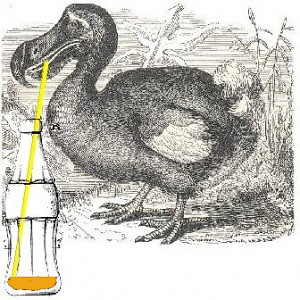
“The consumer’s been indoctrinated; we’re a throwaway society,” Yuengling said. “Everybody’s environmentally conscious, but if you put a case of returnable bottles in front of them, they say, ‘What’s that?'”

dodo

Filed Under: Beers, Editorial, News, Politics & Law Tagged With: Bottles, Packaging, Recycling

Is A-B Eyeing The Craft Brewers Alliance?

August 17, 2010 By Jay Brooks

abib craft-brewers-alliance
In a provocative article today, the business-oriented website, TheStreet.com, which describes itself as the “leading digital financial media company,” pondered whether Anheuser-Busch InBev might possibly be considering buying the Craft Brewers Alliance (CBA). The piece, by Miriam Reimer, entitled Anheuser-Busch Takeover Target: Craft Brewers Alliance?, certainly had the wags wagging on the blogosphere today.

There’s a great reminder of just how insignificant craft beer is to the business world in the opening paragraph, which refers to the CBA as that “little-known craft beer maker.” Compared to the big two, that’s understandable, but given that the brands in CBA are some of craft’s biggest players, it’s also pretty funny and humbling. But it’s good to remember that what many of us take so seriously is just a very small sliver of a much bigger pie.

At any rate, the idea of ABI buying the CBA was floated by Washington Street Investments president Bryce Peterson. Despite stating that “such speculation is premature,” he had no problem engaging in it himself. The thinking is, apparently, that ABI “might think it’s smart to buy a strong brand in the craft area and use its incredible distribution and marketing strengths to grow the acquired business.” Which sounds good on paper, but that’s exactly the reason that Anheuser-Busch earlier invested in the CBA brands individually, before their merger in 2008. When craft beer was beginning it’s latest growth trend, A-B distributors started wanting to carry some, too, and that drove A-B to partner with RedHook and Widmer to satisfy that demand. As a result, I’m not sure what buying the remaining 64.4% of CBA that ABI does not own would accomplish. The bulk of the article is given over to share prices, quarterly sales, and other business analysis. It’s interesting, up to a point, but all the numbers don’t seem to manage to answer the basic question of what advantage there would be for ABI. Plus, isn’t ABI still trying to trim the fat to pay for buying Anheuser-Busch?

The article concludes with a poll, asking readers to answer the question posed by the title: “Yes — Anheuser-Busch sees long-term potential in Craft’s growing corner of the market” or “No — Anheuser-Busch wouldn’t bother with such a small-time player.” What’s surprising is that as of this evening better than 17% thought “no.” They obviously are oblivious to A-B’s history. I’ve never seen a niche market too small for them try to own or destroy … ever. And InBev is even more ruthless than A-B was, so it’s hard to imagine them not going after craft beer in some fashion. Whether it will be by buying the CBA, at least at this point, is still an open question.

UPDATE 8.26: Author Miriam Reimer did a follow-up article to this one, Anheuser-Busch Thirsty for Craft Brewers, Poll Says, focusing on the poll at the end of it. She contacted me about the piece, and we spoke on the phone for a good half-hour, quoting me briefly in the article on page 2.

Filed Under: Breweries, Editorial, News Tagged With: Anheuser-Busch InBev, Big Brewers, Business, Mainstream Coverage

You Should Know Jack

August 17, 2010 By Jay Brooks

new-albion-banner
Jack McAuliffe may just be the most elusive figure in the short history of craft beer. He was craft before craft beer was cool. The former Navy man and engineer founded the very first modern microbrewery in Sonoma County, California in 1976 (New Albion incorporated October 8, 1976) and began production the following year using a brewery he built from spare parts. His New Albion Brewery was all alone for at least three years until Sierra Nevada Brewing joined him in 1980, essentially doubling the number of new breweries.

But New Albion was a bit ahead of its time and by 1982 was out of business. As I understand it, a disheartened McAuliffe tired of reliving his brewery’s failure, and eventually disappeared from the burgeoning beer community that his efforts inspired. For a number of years, few people knew where he was, but Maureen Ogle managed to track him down living in Las Vegas when she was working on Ambitious Brew and provides one of the fullest accounts of the New Albion Brewery beginning at Page 291. More recently, after a bad car accident landed McAuliffe in intensive care, he moved to San Antonio, Texas to live with his sister. Happily, San Antonio has taken to their adopted son, and the San Antonio Express-News had a nice story about Jack and his new collaboration with Sierra Nevada Brewing, San Antonio’s Jack McAuliffe is namesake of commemorative Sierra Nevada beer.

ken-and-jack
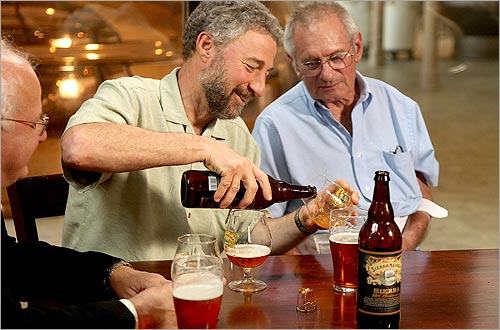
Ken Grossman pours a beer for Jack McAuliffe as (I think) Charlie Bamforth looks on.

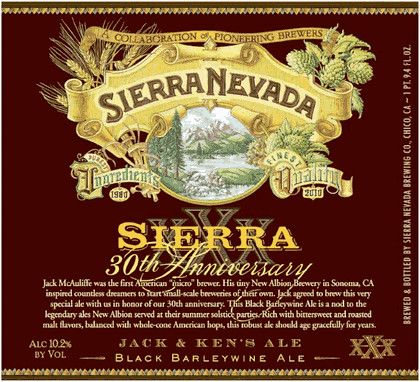
The latest collaboration beer celebrating Sierra Nevada’s 30th anniversary this year is based on a beer that Jack used to make at New Albion for another annual celebration.

In the late ’70s, New Albion brewed a special beer for annual Summer Solstice parties that didn’t particularly hew to any style, but occupied a space somewhere between a porter and a barley wine.

Using that concept and the ingredients that were available at the time, Ken and Jack’s Ale recipe was born. It contains Canadian two-row and European caramel barley and a combination of Cascade and cluster hops.

Grossman describes the beer as a “dark barleywine that is bottle fermented.” It clocks in at 10 percent ABV, which McAuliffe points out is the upper limit of what conventional yeast can survive. Like any beer, you can drink this one right away, but it will likely improve with age.

It’s certainly great to see Jack McAuliffe in the public eye again. Few people deserve to be more well-known in the beer world than him. It’s a real shame that so few people know Jack and his contribution to the modern craft beer community. We all really should know Jack. Hell, I think October 8 should be considered the birthday of modern craft beer, which in a couple of weeks will celebrate its 34th. Let’s all raise a toast to Jack, every year, on that day.

jack-kens-ale
Jack & Ken’s Ale, a black barley wine.

Filed Under: Breweries, Editorial, Just For Fun, News Tagged With: California, History, Northern California

Ali Spagnola’s Brookston Beer Painting

August 13, 2010 By Jay Brooks

art-beer
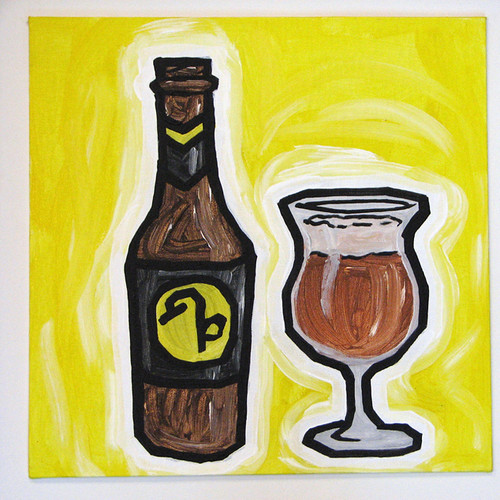
Back in early July, my featured Beer In Art piece was by Ali Spagnola. In Beer In Art #84: Ali Spagnola’s Free Beer Paintings, I detailed how she’s taking requests and doing a new one-square foot painting every day, and then sends it out to the requester, all free of charge. When I wrote about her efforts, she’d done five beer-themed paintings, and I asked for a sixth, which she’s now completed. It’s also up on her blog, Ali’s Art Adventure, under the delicious title Like Cupcakes Mixed with Unicorns, made all the more funny because I actually have a beer cupcake post waiting in the wings.

Spagnola_beer4

I can’t wait until it arrives so I can get it framed and hang it in my home office. Thanks again, Ali, and awesome job.

Filed Under: Art & Beer, Beers, Just For Fun, News

MillerCoors Launches Craft & Import Division

August 13, 2010 By Jay Brooks

tenth-blake
While MillerCoors had already announced their intention to start up a new division dedicated to its smaller brands and imports, today they announced that Tenth and Blake Brewing Co. was open for business. There’s no website yet, but there is a Facebook page.

Here’s the press release:

Tenth and Blake Beer Company Opens for Business

Earlier this summer, MillerCoors announced plans for a new company focused on craft and import beers, aimed at strengthening relationships within the beer industry and enhancing the overall segment’s volume and growth. Today, to reflect the passion, great brewing tradition and entrepreneurial spirit of its beer brands, the company announced its new moniker. Tenth and Blake Beer Company is now officially open for business.

“This is a unique and exciting period in the beer business,” said Tom Cardella, the company’s CEO and President. “With the added focus on our craft and import brands and the talent within our brewing network, Tenth and Blake Beer Company has the opportunity to make an impact and continue to help grow this segment. We’re made up of passionate brewers and merchants of the world’s finest specialty brews, and we look forward to celebrating the joy of beer with beer drinkers throughout the U.S.”

The organization wanted a name that reflects its great beer heritage from MillerCoors, while highlighting its unique and differentiated position in the industry. The 10th Street Brewery in Milwaukee brews Leinenkugel’s and various specialty beers. And Blake Street in Denver is home to the Blue Moon Brewing Company at the Sandlot. These facilities will be primary sources of many of the company’s brews, while serving as incubators of ideas and future beers.

The company’s network of brewing expertise extends beyond Denver and Milwaukee, with the Leinenkugel’s Brewery in Chippewa Falls, Wis. and the AC Golden brewery in Golden, Colo. In addition to craft brews like Blue Moon, Leinenkugel’s, and Colorado Native, Tenth and Blake Beer Company features top imports, such as Peroni Nastro Azzurro, Pilsner Urquell and Grolsch.

“Employees of Tenth and Blake Beer Company will take beer passion, education and capabilities to the next level,” Cardella said. “All team members will participate in training at one of our breweries, take part in beer merchant sessions and go through sales training to better understand and serve our customers.”

As an independent yet connected company, Tenth and Blake will own the strategic business drivers — marketing, trade marketing and an independent sales organization dedicated to the craft and imports business. The company will in-source other capabilities from MillerCoors, including legal, communications, HR, marketing services and consumer insights.

Hmm, I’m not sure what to make of that. Is it an admission that such a large, global company is too big to think small in the way one needs to for promoting and successfully selling smaller, niche brands? Or is it simply easier to parse out the tasks to two independent groups, one that has to think big picture, freeing the other to think small and more local? On the other hand, with sales of core brands flat or soft, perhaps it makes sense to give more focus to the smaller brands that actually are doing well.

Harry Schuhmacher from Beer Business Daily, reports that “Tom, in a letter to distributors obtained by BBD, writes that they have built a team of ‘brewers and merchants of the world’s finest specialty brews, celebrating the joy of beer with our customers and consumers’ to build a ‘deeper relationship’ with customers.” That sounds a little too rah-rah for my tastes, but then that was probably its intention.

Schuhmacher spoke to Tenth and Blake head honcho Tom Cardella, and he told him the following:

Tom says that their “entire team will participate in specially designed on-boarding programs that will include spending several weeks working inside our breweries and being certified in our beer merchant training. And everyone from the janitor to the CEO will go through sales training to better understand and serve our distributor and retailer customers. We will be an organization of merchants sharing our love of our great beers and creating value in the market.”

The new unit will have a “dedicated new sales organization” that will bring “focus” and they will provide a “dedicated supply chain function to ensure coordination of the fine motor skills needed to service smaller specialty brands” while still providing the services of a big corporation with regards to “legal, communications, HR, marketing services and consumer insights.”

The new unit will develop “distributor beer merchants (DBMs) in a whole lot of markets working side-by-side with you, our distributor partners.” DBMs will be “soley” dedicated to their import and craft brands with dedicated brewery “managers” who will “own and execute the craft and import portfolio for each of their respective management units, delivering wins to our general managers.”

And the Milwaukee Business Journal added:

MillerCoors’ 10th Street Brewery in Milwaukee brews Leinenkugel’s and various specialty beers, and Blake Street in Denver is home to the Blue Moon Brewing Co. at the Sandlot. The facilities will be primary sources of many of the company’s brews, while serving as incubators of ideas and future beers, the Chicago-based brewer said.

MillerCoors also operates the Jacob Leinenkugel’s Brewing Co. in Chippewa Falls and the AC Golden brewery in Golden, Colo. In addition to craft brews like Blue Moon, Leinenkugel’s and Colorado Native, Tenth and Blake Beer Company will be responsible for imports such as Peroni Nastro Azzurro, Pilsner Urquell and Grolsch.

Actually, according to the Facebook page, here’s the list of beers Tenth & Blake will be responsible for:

  • AC Golden brands (see below)
  • Aguila
  • Batch 19
  • Blue Moon
  • Colorado Native (AC Golden)
  • Cristal
  • Cusquena
  • Grolsch
  • Henry Weinhard’s
  • Herman Joseph’s (AC Golden)
  • Kasteel Cru
  • Killian’s
  • Lech
  • Leinenkugel’s
  • Peroni
  • Pilsner Urquell
  • Sandlot brands (Brewmaster’s Special, Ski Brews, Barmen, Championship Amber Ale, Right Field Red, Slugger Stout, Power Alley ESB)
  • Tyskie
  • Winterfest (AC Golden)

That should keep them busy.

tenth-and-blake

Filed Under: Breweries, Editorial, News, Politics & Law Tagged With: Big Brewers, MillerCoors, Press Release

Local Union Blasts BevMo Over Employee Treatment

August 12, 2010 By Jay Brooks

bevmo
Wow, this is certainly an interesting development. BevMo, the company where I was the beer buyer for nearly five years in the late 1990s, is coming under fire by the United Food & Commercial Workers Union, Local 5, for their treatment of employees. They were never exactly great to their employees. Like almost every big or growing American company, they squeezed a lot out of their workers, expected long hours from salaried employees. Don’t get me wrong, I liked a lot of things about the job, and met a great many good people — though a fair number are no longer there — but it was demanding in a way that was beneficial to the company, but necessarily to the well-being of the people doing all the actual work. I know that’s a fairly common scenario, but it must have grown even worse, because for a Union to step in and go after BevMo the way they are suggests a level of poor treatment above and beyond the average company.

According to the BevMo Can Afford to Do Better website set up by UFCW-5, they launched a campaign last week against BevMo “[o]n the heels of the company’s August 1 announcement eliminating full time jobs across the chain and under [the subsequent] BevMo rules resulting in the loss of health benefits for the new part time employees, the workers are fighting back.”

BevMo Can Afford to Do Better

BevMo! currently operates 104 superstores, located in California & Arizona. In March 2007, TowerBrook formally announced its acquisition of BevMo! TowerBrook is a private equity firm with $2.5 billion under management. TowerBrook pursues control-oriented private equity investments in large and middle market companies and has committed to making BevMo even more successful. According to BevMo’s CEO, Alan Johnson, sales in 2000 were around $100 million and in 2009 reached well over $500 million. Since Towerbrook’s acquisition of the company, BevMo has opened 40 new stores with plans to open 100 more over the next few years. Clearly, BevMo CAN AFFORD TO DO BETTER.

bevmo-devil

A press conference was held earlier today at Embarcadero and Clay streets in Oakland to explain the campaign to the public. The demands of the workers were laid out, as follows:

  1. Restore Full Time Positions
  2. Restore Health Benefits
  3. Initiate a Wage Increase Immediately
  4. Restore the 401(K)
  5. Union Recognition by BevMo

They’ve also set up a Facebook page about the campaign. And they’ve released a video outlining it, as well.

Hmm, I wonder if they’ll start calling for a boycott?

Filed Under: Editorial, News, Politics & Law Tagged With: Business, Retail, Video

« Previous Page
Next Page »

Find Something

Northern California Breweries

Please consider purchasing my latest book, California Breweries North, available from Amazon, or ask for it at your local bookstore.

Recent Comments

  • Bob Paolino on Beer Birthday: Grant Johnston
  • Gambrinus on Historic Beer Birthday: A.J. Houghton
  • Ernie Dewing on Historic Beer Birthday: Charles William Bergner 
  • Steve 'Pudgy' De Rose on Historic Beer Birthday: Jacob Schmidt
  • Jay Brooks on Beer Birthday: Bill Owens

Recent Posts

  • Historic Beer Birthday: Joseph Metcalfe February 28, 2026
  • Beer In Ads #5135: What Record’s Bock Beer Is February 27, 2026
  • Historic Beer Birthday: Albert Braun February 27, 2026
  • Historic Beer Birthday: John J. Schlawig February 27, 2026
  • Beer In Ads #5134: Lord Bushkill On Bushkill Bock February 27, 2026

BBB Archives

Feedback

Head Quarter
This site is hosted and maintained by H25Q.dev. Any questions or comments for the webmaster can be directed here.