Brookston Beer Bulletin

Jay R. Brooks on Beer

  • Home
  • About
  • Editorial
  • Birthdays
  • Art & Beer

Socialize

  • Dribbble
  • Email
  • Facebook
  • Flickr
  • GitHub
  • Instagram
  • LinkedIn
  • Pinterest
  • RSS
  • Twitter
  • YouTube

Powered by Genesis

Hindenburg Beer Auctioned For £10,000

November 14, 2009 By Jay Brooks

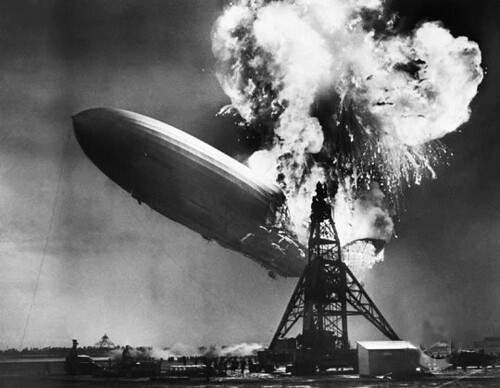
zeppelin
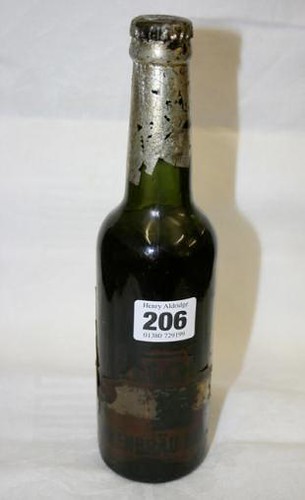
The bottle of Lowenbrau beer that survived the crash of the Hindenburg, that I wrote about on Tuesday, was auctioned earlier today, fetching the sum of £9,400, but “with buyer’s premium, the bottle will cost the purchaser £10,810,” or around $18.034. This Is Wiltshire, like most accounts, is claiming “[t]he world record price for a bottle of beer was smashed in Devizes today when a bottle of Lowebrau lager sold for over £10,000. The previous highest price for a single bottle of beer is thought to be around £2,500 and auctioneer Alan Aldridge started bidding at £3,000.” But I continue to be perplexed by the August 2007 sale of a bottle Allsopp’s Arctic Ale that sold on eBay for $503,300. No one has mentioned it at all, though it was widely reported at the time.
hindenburg-beer
The Lowenbrau bottle that sold today for £10,810.

UPDATE: Whew, finally an answer on the Allsopp eBay sale. It turns out to be a typo, according to New Life Auctions, who looked into the sale. That and a decidedly unfunny joke bid, by a person with “no intention of paying the seller.” And I always thought a winning bid was akin to a “legal contract.” Antique Week has a little more the incident. Thanks to an alert Bulletin reader named Michael for setting the record straight, once and for all.

Filed Under: Beers, News Tagged With: History

FDA Gives Alcohol/Caffeine Drinks 30 Days To Prove It’s Safe

November 13, 2009 By Jay Brooks

caffeine
The FDA announced today that they’ve sent a letter to almost 30 manufacturers of alcohol drinks that also contain caffeine. The FDA is giving these companies 30 days to essentially prove that they’re safe. The move is undoubtedly motivated by a bullying letter sent to the FDA in September by 18 state Attorneys General. That letter was itself the product of pressure brought to bear by neo-prohibitionist groups at the state and local level.

From the press release:

“The increasing popularity of consumption of caffeinated alcoholic beverages by college students and reports of potential health and safety issues necessitates that we look seriously at the scientific evidence as soon as possible,” said Dr. Joshua Sharfstein, principal deputy commissioner of food and drugs.

Of the combined use of caffeine and alcohol among U.S. college students in the few studies on this topic, the prevalence was as high as 26 percent.

Under the Federal Food, Drug, and Cosmetic Act, a substance added intentionally to food (such as caffeine in alcoholic beverages) is deemed “unsafe” and is unlawful unless its particular use has been approved by FDA regulation, the substance is subject to a prior sanction, or the substance is Generally Recognized As Safe (GRAS). FDA has not approved the use of caffeine in alcoholic beverages and thus such beverages can be lawfully marketed only if their use is subject to a prior sanction or is GRAS. For a substance to be GRAS, there must be evidence of its safety at the levels used and a basis to conclude that this evidence is generally known and accepted by qualified experts.

The FDA alerted manufacturers to the fact that the agency is considering whether caffeine can lawfully be added to alcoholic beverages. The FDA noted that it is unaware of the basis upon which manufacturers may have concluded that the use of caffeine in alcoholic beverages is GRAS or prior sanctioned. To date, the FDA has only approved caffeine as an additive for use in soft drinks in concentrations of no greater than 200 parts per million. It has not approved caffeine for use at any level in alcoholic beverages.

The FDA requested that, within 30 days, the companies produce evidence of their rationale, with supporting data and information, for concluding that the use of caffeine in their product is GRAS or prior sanctioned. FDA’s letter informed each company that if FDA determines that the use of caffeine in the firm’s alcoholic beverages is not GRAS or prior sanctioned, FDA will take appropriate action to ensure that the products are removed from the marketplace.

Notice that the press release outlines the rationale for the safety check because of “increasing popularity” by “college students” along with “reports of potential health and safety issues,” also known as anecdotes and stories people made up to scare other people. That’s about as flimsy a reason as I can imagine. They don’t seem concerned about older adults, us post-college folks which suggests to me that it’s not really about safety at all.

I think what bothers me about this is simply how obviously it’s the FDA bowing to pressure from anti-alcohol groups. Last time I checked, caffeine was legal. Alcohol is also legal if you’re the “right” age. People have been drinking alcohol and caffeine concurrently, myself included, for centuries. I’m drinking Tejava (my daily ritual) as I write this and by lunchtime I’ll be ready for a beer, followed by more caffeine this afternoon to fend off the mid-afternoon urge to nap. More recently — though even this was years ago — Red Bull and vodka became a very popular cocktail, mixing the two chemicals caffeine and alcohol. Certain people were worried then, too, but I’ve never heard of any real danger posed from that drink and the many imitations and variations it spawned. Even if they banned every alcohol and caffeine drink, people can, and probably will, go right on mixing them on their own. What’s to stop them? Actually, banning them would likely cause an increase in combination drinking, because people love a taboo.

All that would happen, really, is the harming of a few dozen alcohol companies, which I suspect is the Anti-Alcohols (or AnAl’s) game. Even in the unlikely event that they declare the pairing of the two substances a danger, it won’t, and they can’t, stop people from mixing them on their own. Even if it was made illegal, people would never stop having a few drinks followed by a cup of coffee. It’s absurd, really, like they’re trying to remake the world in the image of a Kafka novel.

Filed Under: Beers, Editorial, News, Politics & Law Tagged With: Health & Beer, Prohibitionists

Hindenbeer To Be Auctioned

November 10, 2009 By Jay Brooks

zeppelin
My son Porter, being a somewhat typical 8-year old, loves all things that have to do with destruction. But unlike most kids his age, he has a fascination with historical disasters, especially the Titanic and the Hindenburg. He has at least two dozen books about the Titanic and other sea disasters and three about Zeppelins and the Hindenburg, along with several more general aviation books that include airships. So it was with great joy that I told him today that a bottle of beer that was salvaged from the Hindenburg disaster was going to be auctioned this Saturday.

hindenburg

Apparently, on the morning of May 6, 1937, firefighter Leroy Smith fortuitously came upon six bottles of Lowenbrau beer and a silver-plated pitcher. Thinking quickly, he buried them, returning later to dig up his booty. He gave five of the bottles to colleagues and kept one, along with the pitcher, for himself. Most of the rest have been lost, though one ended up in the Spaten museum in Munich (and I saw that one a few years ago when I visited Spaten). In 1966, Smith’s niece inherited the two Hindenburg souvenirs, and will now be auctioned by Henry Aldridge and Son of London. Coincidentally, they also specialize in items from the Titanic.

According to the BBC, the burnt Lowenbrau bottle is expected to fetch around £5,000 (or $8,337). The auction catalog for the bottle has the following information:

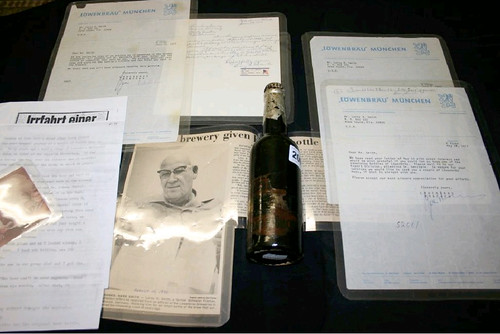
Hindenburg memorabilia: An extremely rare bottle of Lowenbrau Beer recovered from the wreck site of the Z129 Hindenburg, May 6th 1937 when it crashed at Lakehurst Naval Air Station. It was recovered by local Fire Chief Leroy Smith of the Matawan Fire Department New Jersey, along with 5 others which he handed out to each of his colleagues. The whereabouts of all of these bottles with the exception of one is unknown. He presented one to the Lowenbrau brewery in 1977 where it remains to the present day. The example being offered for auction is sealed, with some of its original label and shows evidence of heat damage. This lot is sold with a provenance package which include correspondence from the Lowenbrau brewery regarding the bottle of beer donated to their Museum, press cuttings and signed copy of a letter of provenance and an account of how Fire Chief Smith came to acquire the bottle.

hinden-auction
All of the accounts of this story, such as by the BBC, the New York Post and ABC News each claim this will be the highest price paid for a bottle of beer, but in August of 2007, a bottle Allsopp’s Arctic Ale that sold on eBay for $503,300.

hinden-beer
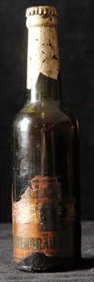
Here’s a better view of the Lowenbrau bottle.

Filed Under: Beers, Just For Fun, News Tagged With: Germany, History, New Jersey

White House Logs Reveal Neo-Prohibitionist Visits

October 31, 2009 By Jay Brooks

white-house
In response to several requests under the Freedom of Information Act, the White House late Friday released a partial list of visitors during roughly the first six-months of Obama’s administration. You can view the entire list at Whitehouse.gov. The Wall Street Journal and MSNBC are both reporting on the politics and law behind the requests, while most media outlets are just focusing on the celebrities. According to MSNBC, the White House rejected their request that all the names of visitors be released. “Like the Bush administration before it, Obama is arguing that any release is voluntary, not required by law, despite two federal court rulings to the contrary.” I don’t know the law on this point, so I won’t argue who’s right one way or the other. Not surprisingly, the administration is spinning it that they’re providing “transparency like you’ve never seen before.”

So why is this important at all to the world of beer? Given that one of the neo-prohibitionist movements most persistent claims is that the beer lobby has undue influence over politics in Washington, one name fairly jumped off the page of the Wall Street Journal report, a name which is confirmed by the official White House list. From January 20 to July 31, the president of the Robert Wood Johnson Foundation, Risa Lavizzo-Mourey, visited the White House seven times (that’s over once a month) and met personally with President Obama twice. The Journal disingenuously characterizes Lavizzo-Mourey as “a thinker in health policy,” when his organization’s true aims have been revealed as something very different. See, for example, the Center For Consumer Freedom’s report Behind the Neo-Prohibition Campaign, which details the true agenda of the RWJF. But perhaps more troubling, is their and other neo-prohibitionist’s persistent claims that the beer lobby has bought favorable treatment disproportionate to other industries. For a recent example, the Marin Institute’s facetious report entitled Big Beer Duopoly made this claim less than two weeks ago.

But let’s look at the facts, at least with regard to the White House. For all their lobbyist spending, not one beer industry representative visited the White House over a six-month period, while during the same time the most pernicious neo-prohibitionist group, the Robert Wood Johnson Foundation, had monthly visits to the White House, including two meetings with POTUS. Of course, it’s possible that beer lobbyists did visit the White House and their names are among those not released by the Obama administration. But since most of the list does include other business leaders and given the White House’s current anti-lobbyist policy, that seems less likely. And let’s not forget that President Obama appointed the former head of MADD, Charles Hurley, to lead the National Highway Traffic Safety Administration.

The obvious conclusion is that what this reveals is the propaganda behind the neo-prohibitionst claims regarding the beer lobby. As is typical, once again they’ve been shown to not be truthful. While claiming undue political influence on the part of the beer industry, the truth is that neo-prohibitionists have the ear of the President. Considering today is Halloween, that may be the scariest news of all.

Filed Under: Editorial, News, Politics & Law Tagged With: Prohibitionists

Cathedral Hill Closes

October 30, 2009 By Jay Brooks

beer-chef
Today was the last day that the Cathedral Hill Hotel on Van Ness in San Francisco was open. All guests must check out by noon tomorrow. The hotel will then be closed until it’s knocked down to make way for a new hospital.

The Beer Chef, Bruce Paton, held his last beer dinner there last Friday, October 23. It featured the beers of Portland, Maine’s Allagash and owner Rob Tod. Over 120 people were on hand for the dinner, the second-largest turnout for one of the beer dinners at the hotel.

Below is a slideshow of the Allagash beer dinner last Friday. This Flickr gallery is best viewed in full screen. To view it that way, after clicking on the arrow in the center to start the slideshow, click on the button on the bottom right with the four arrows pointing outward on it, to see the photos in glorious full screen. Once in full screen slideshow mode, click on “Show Info” to identify each photo.

As for Bruce Paton, I got the following note from him today.

I will be continuing to do Beer and Food projects until I find another position. If you have questions, require some Beer and Food expertise or know someone who is seeking a Chef please feel free to contact me at bruce@beer-chef.com.

I know for sure that his annual beer and chocolate dinner is still being planned for early February during SF Beer Week and will most likely take place Friday, February 12, so keep an eye out on his website for more details.

Filed Under: Food & Beer, News Tagged With: California, Northern California, Photo Gallery, San Francisco

Sacramento Brewing Closes

October 21, 2009 By Jay Brooks

sac-brew-2
If you haven’t heard the word yet, Sacramento Brewing has closed its doors for good, as of Monday, October 19. It seems the economic downturn claimed another fine brewery.

In an effort to accentuate the positive, SacBrew brewmaster Peter Hoey was in the process of launching his own new brewery, Odonata Beer Co., along with Rick Sellers from Pacific Brew News. They also have a blog up if you want to follow their progress.

I’m very sorry to see yet another good brewery go out of business but encouraged that Peter and Rick will soldier on. Rick also has a bit more about the Sacramento Brewery closing, if you’re interested in learning more.

Filed Under: Breweries, News Tagged With: California, Northern California, Sacramento

Craft Beer Pioneer Greg Noonan Passes Away

October 12, 2009 By Jay Brooks

vermont-pub
Greg Noonan, the craft beer pioneer who founded the Vermont Pub & Brewery in 1988 passed away October 11. He died in his sleep Sunday night. He was only 58 years old. His brewery was one of the first on the east coast, New England and, naturally, Burlington, Vermont. He’s not as well known for his contributions to the industry as he probably should be.

There’s a nice obituary by Guillermo Woolfolk, who’s the Birmingham Craft Beer Examiner.

He will be missed. Raise a toast to his memory.

vermont-pub

Filed Under: Breweries, News Tagged With: Eastern States, New England, Vermont

New Study Reveals RWJF Behind Neo-Prohibitionist Movement

October 9, 2009 By Jay Brooks

rwjf
Dan Mindus at the Center for Consumer Freedom recently published a report entitled Behind the Neo-Prohibition Campaign detailing just how deep the tentacles of the Robert Wood Johnson Foundation (RWJF) go in funding neo-prohibitionist groups and campaigns. As someone who pays attention to the interconnectedness of the neo-prohibitionst organizations, I was still floored by what Mindus uncovered. I often take some flack for crying conspiracy concerning these organizations but I feel a certain vindication at just how big a role RWJF actually plays in leading the charge against alcohol.

Here’s an excerpt from the report:

America’s anti-alcohol movement is composed of dozens of overlapping community groups, research institutions, and advocacy organizations, but they are brought together and given direction by one entity: the Robert Wood Johnson Foundation (RWJF). Based in Princeton, New Jersey, the RWJF has spent more than $265 million between 1997 and 2002 to tax, vilify, and restrict access to alcoholic beverages. Nearly every study disparaging alcohol in the mass media, every legislative push to limit marketing or increase taxes, and every supposedly “grassroots” anti-alcohol movement was conceived and coordinated at the RWJF’s headquarters. Thanks to this one foundation, the U.S. anti-alcohol movement speaks with one voice.

For the RWJF, it is an article of faith that diminishing per capita consumption across the board can contain the social consequences of alcohol abuse. Therefore, it has engaged in a long-term war to reduce overall drinking by all Americans. The RWJF relentlessly audits its own programs, checking to see if each dollar spent is having the maximum impact on reducing per capita consumption. Over the past 10 years, this blueprint has been refined. Increased taxes, omnipresent roadblocks, and a near total elimination of alcohol marketing are just a few of the tactics the RWJF now employs in its so-called “environmental” approach.

The environmental approach seeks to shift blame from the alcohol abuser to society in general (and to alcohol providers in particular). So the RWJF has turned providers into public enemy number one, burdening them with restrictions and taxes to make their business as difficult and complex as possible. The environmental approach’s message to typical consumers, meanwhile, is that drinking is abnormal and unacceptable. The RWJF seeks to marginalize drinking by driving it underground, away from mainstream culture and public places.

The RWJF funds programs that focus on every conceivable target, at every level from local community groups to state and federal legislation. Every demographic group is targeted: women, children, the middle class, business managers, Hispanics, Blacks, Whites, Native Americans. Every legal means is used: taxation, regulation, litigation. Every PR tactic: grassroots advocacy, paid advertising, press warfare. Every conceivable location: college campuses, sporting events, restaurants, cultural activities, inner cities, residential neighborhoods, and even bars.

The RWJF scored a major victory in 2000 with a federal .08 BAC mandate, and can claim credit for restrictions on alcohol in localities all over the country. But its $265 million has accomplished much more: it has put in place all the elements required for more sweeping change. This includes a vast network of local community organizations, centers for technical support, a compliant press, and a growing body of academic literature critical of even moderate alcohol consumption. The next highly publicized study or angry local movement may now reach the “tipping point” where the RWJF-funded anti-alcohol agenda snowballs into the kind of orchestrated frenzy the tobacco industry knows well.

You can read the entire report in a pdf, and if you care about keeping alcohol legal in the U.S., I’d highly encourage you to do so. The report, Behind the Neo-Prohibition Campaign, is only 28 pages and includes a list of the organizations and people to watch out for.

Here’s another excerpt, listing the main points in the RWJF’s plan of attack:

The Anti-Alcohol Movement’s Game Plan

The RWJF-funded anti-alcohol movement seeks to convince the public of the following propositions:

  • The social consequences of alcohol consumption are immense, and require drastic action.
  • The vast majority of Americans either abuse alcohol or don’t drink it. The former shouldn’t have access to alcohol, and the latter won’t care if you take it away.
  • Responsible drinking is an oxymoron.
  • Drinking is not normal, it is not acceptable, and it should be isolated from mainstream culture.
  • Adult drinking encourages kids to engage in reckless behavior.
  • The alcohol industry “targets” children, abusers, and minorities with “deceptive” advertising.
  • Alcohol advertising leads inexorably to abuse.
  • Convenient, inexpensive alcohol leads inevitably to its abuse.
  • There is no such thing as responsible drinking and driving.

The more the public hears these messages, the more they will tolerate the legislation and regulation of the “environmental approach.” Billboards have been taken down, hours of service have been slashed, roadblocks have been thrown up, legal BAC levels have come down, taxes have been raised, ads in restaurants have been eliminated. It’s only the beginning.

Be afraid. Be very afraid. These folks are committed fanatics. They cannot be reasoned with. They will not bow to logic. They cannot be appeased. They have no qualms about bending the truth or outright fabrication. They will do absolutely anything to advance their misguided cause. They hate me and you, too, if you think drinking beer is okay.

Filed Under: Editorial, News, Politics & Law Tagged With: Prohibitionists

InBev To Sell Busch Theme Parks

October 7, 2009 By Jay Brooks

busch-gardens
Anheuser-Busch InBev announced today that they’re selling their ten theme parks to the Blackstone Group for $2.7 billion, including $2.3 billion in cash. Essentially Blackstone will get ABI’s “wholly owned subsidiary, Busch Entertainment Corporation (BEC), the second largest entertainment park operator in the United States with approximately 25 million annual visitors. BEC operates 10 entertainment parks throughout the United States including three SeaWorld parks in Orlando, Florida, San Antonio, Texas, and San Diego, California, two Busch Gardens parks in Tampa, Florida and Williamsburg, Virginia, and other family entertainment attractions in Orlando, Florida, Tampa, Florida, Williamsburg, Virginia, and Langhorne, Pennsylvania.”

Blackstone is a private equity firm that currently owns Universal Studios Orlando and Madame Tussauds wax museums, so this is a business model they’re already familiar with. Obviously, this will help InBev pay down the $52 billion they paid for Anheuser-Busch last year and that’s the underlying reason for the sale.

Filed Under: News, Related Pleasures Tagged With: Anheuser-Busch InBev, Business

Not Drinking Leads To Depression

October 6, 2009 By Jay Brooks

pink-elephant
It will be interesting to see how the neo-prohibitionists spin this one. An article in Time magazine, entitled Why Nondrinkers May Be More Depressed, by John Cloud, details the findings of a recent study that suggests “those who never drink are at significantly higher risk for not only depression but also anxiety disorders, compared with those who consume alcohol regularly.”

That study, Anxiety and Depression Among Abstainers and Low-Level Alcohol Consumers, was published in the journal Addiction. According to the press release from the journal:

Abstaining from alcohol consumption is associated with an increased risk of depression according to a new study published in Addiction journal.

It has long been recognised that excessive alcohol consumption can lead to poor physical and mental health. However, there has been mounting evidence that low levels of alcohol consumption may also be associated with poor mental health possibly due to abstainers having other health problems or being reformed heavy drinkers.

The study utilized data from the Nord-Trøndelag Health Study (HUNT Study) based in Norway. This provided information on the drinking habits and mental health of over 38,000 individuals. Using this data the authors were able to show that those individuals who reported drinking no alcohol over a two week period were more likely than moderate drinkers to report symptoms of depression. Those individuals who additionally labeled themselves as “abstainers” were at the highest risk of depression. Other factors, such as age, physical health problems and number of close friends could explain some, but not all of this increased risk. The authors also had access to reported levels of alcohol consumption 11 years prior to the main survey. This showed that fourteen percent of current abstainers had previously been heavy drinkers, but this did not explain all of the increased risk of depression amongst abstainers.

The authors conclude that in societies where some use of alcohol is the norm, abstinence may be associated with being socially marginalized or particular personality traits that may also be associated with mental illness.

Though the authors of the study stop short of encouraging abstainers to start drinking, the Time magazine concludes with what any rational person reading this might think, which is “just say yes.”

The most powerful explanation seems to be that abstainers have fewer close friends than drinkers, even though they tend to participate more often in organized social activities. Abstainers seem to have a harder time making strong friendship bonds, perhaps because they don’t have alcohol to lubricate their social interactions. After all, it’s easier to reveal your worst fears and greatest hopes to a potential friend after a Negroni or two.

So does this mean we should all have a cocktail? Maybe, but Skogen says he doesn’t believe his study should encourage abstainers to become drinkers. Rather, he says doctors might want to investigate why abstaining patients don’t drink and explain that in societies where alcohol use is common, not drinking may lead them to feel left out. Sometimes, you should just say yes.

In addition to this study concerning mental health, several studies over the past decade or more have also concluded that the moderate consumption of alcohol leads to better physical health than for people who abstain from it. Better physical health and now better mental health, all from simply having a drink or two regularly. To me, that’s the pink elephant in the room.

pink-elephant

The anti-alcohol groups seem so hell bent on their all or nothing approach, seeing any alcohol as bad and no alcohol as all good, when the reality is hardly that simple. As these studies suggest, the common ground should be a more reasonable approach that leads to more drinking in moderation, removing the conditions that lead to over-consumption through education, strengthening infrastructure for public transportation so people can go out for a drink without fear, and recognizing that drinking alcohol does have many positive attributes when consumed responsibly. I realize that seems like a Herculean task at this moment in time, but that’s the only way I can see moving past the entrenched positions of both sides.

Obviously, I’m on one side of the aisle and I honestly believe that no one involved with the alcohol industry thinks that over-consumption or any extremes in drinking are a good thing. Both camps seem to agree on that. But the people against alcohol seem incapable of giving up any ground to concede that for most people moderate drinking may not be the evil they believe or that it doesn’t necessarily have to lead to greater problems. That very unwillingness, I believe, is actually exacerbating the problems that some people do experience with drinking too heavily because their focus is on the wrong problem and paints all drinkers will the same broad brush. As science continues to confirm that alcohol has been, and still is, a part of a healthy lifestyle, that position will become harder and harder to defend.

Remember the definition of an abstainer by Ambrose Bierce, in his Devil’s Dictionary:

Abstainer: n. a weak person who yields to the temptation of denying himself a pleasure.

Filed Under: Editorial, News, Politics & Law Tagged With: Mainstream Coverage, Prohibitionists, Statistics

« Previous Page
Next Page »

Find Something

Northern California Breweries

Please consider purchasing my latest book, California Breweries North, available from Amazon, or ask for it at your local bookstore.

Recent Comments

  • Bob Paolino on Beer Birthday: Grant Johnston
  • Gambrinus on Historic Beer Birthday: A.J. Houghton
  • Ernie Dewing on Historic Beer Birthday: Charles William Bergner 
  • Steve 'Pudgy' De Rose on Historic Beer Birthday: Jacob Schmidt
  • Jay Brooks on Beer Birthday: Bill Owens

Recent Posts

  • Beer In Ads #5137: Bock Is Back… Look For It March 1st February 28, 2026
  • Historic Beer Birthday: John Holme Ballantine February 28, 2026
  • American Craft Beer Hall of Fame: 2nd Year Inductees February 28, 2026
  • Beer Birthday: Jeff Bell February 28, 2026
  • Beer In Ads #5136: American Bock Beer Is Being Served Today! February 28, 2026

BBB Archives

Feedback

Head Quarter
This site is hosted and maintained by H25Q.dev. Any questions or comments for the webmaster can be directed here.