Brookston Beer Bulletin

Jay R. Brooks on Beer

  • Home
  • About
  • Editorial
  • Birthdays
  • Art & Beer

Socialize

  • Dribbble
  • Email
  • Facebook
  • Flickr
  • GitHub
  • Instagram
  • LinkedIn
  • Pinterest
  • RSS
  • Twitter
  • YouTube

Powered by Genesis

Not Just Age and Taxes

April 26, 2007 By Jay Brooks

Science Daily asks “When Are Minimum Legal Drinking-age And Beer-tax Policies The Most Effective?” in reporting on a new study about to be published in the May issue of “Alcoholism: Clinical & Experimental Research.” The study, “The Joint Impact of Minimum Legal Drinking Age and Beer Taxes on US Youth Traffic Fatalities, 1975-2001,” was funded by the National Institute on Alcohol Abuse and Alcoholism, a government agency and branch of the N.I.H. Their mission statement is to “provide leadership in the national effort to reduce alcohol-related problems.”

The study looked at the two most common ways in which government has tried to reduce alcohol-related societal problems: through the minimum drinking age and raising taxes on beer (notice how wine and spirits get yet another pass?). Most significant is the finding that “[w]hen it is illegal for youth to buy and consume beer — as it is now in all 50 US states — higher beer taxes are less effective.” Hear that Oregon legislators (and every other state official trying to extort money from small brewers)?

“Our findings suggest that some of the varying results across past research may simply indicate that a given public policy may not have the same effectiveness in all places and times,” said William R. Ponicki, one of the study’s authors. What that doublespeak means is essentially that for any given policy decision, many other factors determine whether the policy will work as intended or not. It’s not just a simple matter that raising the drinking age will cure underage drinking or that making beer more expensive will either. And that’s just looking at two very broad factors. Imagine all the others at work but not examined, such as peer pressure, alcohol’s perception in our culture, accessibility, and on and on.

What that suggests to me is that MADD and the other neo-prohibitionists were and are misguided in pushing for a higher minimum drinking age, tougher access for legal adults, higher taxes for alcoholic beverages and all the other harebrained ideas on their agenda without having any real notion of how they’ll effect society or even if they have a chance of working. There’s absolutely no reason that legal adults should have to pay more for legal products or have a harder time legally buying them, especially when such measures have not been shown to be effective in reducing any perceived problems. Frankly, I’m sick and tired of being in their petri dish of experimental legislation to mold society to their wishes. It’s my world, too. And yours, as well. We should try to remember that, I think, when fanatics try to remake it for their own benefit and worldview.


Filed Under: Editorial, News Tagged With: Business, National, Prohibitionists, Statistics

Trouble Brewing in Ohio

April 23, 2007 By Jay Brooks

There’s a new budget bill before the Ohio state legislature that was intended to allow self-distribution of wine to retailers along with mail order wine. That’s all well and good, but somebody snuck into the amendment a provision “barring brew pubs from selling takeout bottles and sealed jugs of beer.” The author of the budget amendment, House Finance Chairman Matt Dolan (Republican), claims to have no idea how or who put in the anti-brewpub language.

The Wholesale Beer & Wine Association is reluctantly supporting the measure (they’re opposed to the direct sale of wine), but only if the brewpub language is deleted.

It was first noticed and reported on April 20, and by the next day several trade groups were in talks with lawmakers. On Saturday, the Cleveland Plain Dealer was editorializing how bad it would be for the state’s small brewers and had elicited a promise from the bill’s sponsor, Matt Dolan, “keep the brew pub provision out of the bill.”

Curiously, some early reporting highlighted the benefit to the wine business while ignoring the potentially mortal blow being dealt to brewpubs and the beer community. Luckily, most are now reporting about the problems that will be created by the newly inserted language, such as an AP report entitled “Wine-sales amendment called flawed.” It appears likely now that the anti-beer language will be removed, but if you’re in Ohio, I’d recommend contacing your representative and urging him or her to make sure that it does get taken out. We can’t be too careful about these things. As this episode so aptly illustrates, neo-prohibitionists will stoop low to damage the beer industry if they think they can get away with it

When the dust settles on this, I’d really like to see them investigate who it was that was so hostile to beer and tried to effectively kill Ohio’s brewpub business. We should all know what or who we’re up against in the fight against neo-prohibitionists, but it’s even worse when they don’t show their face and work clandestinely under cover of darkness.

Filed Under: Editorial, News, Politics & Law Tagged With: Business, Law, Midwest

If There’s a Will …

April 21, 2007 By Jay Brooks

The San Francisco Chronicle reprinted one of George Will’s editorials, “Licensed to Drink,” from the Washington Post. In it, he critiques Choose Responsibility, the new advocacy organization founded by John M. McCardell Jr., the former Dean of of Middlebury College in Vermont. Having watched young people at his college, he decided that the drinking age of 21 was making the problem worse rather than helping it, which was the goal of raising it. I don’t often agree with George Will and in my opinion he’s sometimes a right wing nutjob, albeit more articulate than most, but he has some thoughtful ideas expressed in this piece, and surprisingly he isn’t against it. Given that he was a speech writer for Ronald Reagan, who gave in to MADD and came up with “Just Say No,” that was a something of a surprise to say the least. But this is a debate that’s not going away, and it’s interesting to hear about from so unlikely a source.

Filed Under: Editorial, News Tagged With: Business, Law, National

So It Goes: Kurt Vonnegut’s Beer Heritage

April 13, 2007 By Jay Brooks

vonnegut
Sad news indeed was the passing of Kurt Vonnegut yesterday. Besides being one of America’s finest minds and literary talents, he was a favorite author of mine since I first read Breakfast of Champions at around age 14 or 15. Over the next few years I read Slaughterhouse Five, Cat’s Cradle, Player Piano and Welcome to the Monkey House, along with most of his other early books. Till the end his mind remained as agile as ever, evidenced by his searing appearance on Jon Stewart last year.

kurt-vonnegut

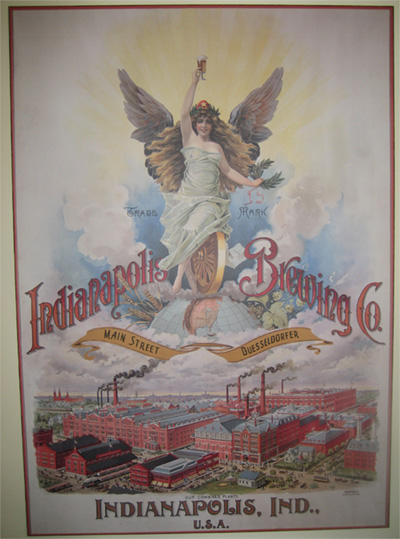
Paul Gatza, Director of the Brewers Association, reminded me of a story I’d almost forgotten about Vonnegut’s family and their association with beer. His grandfather, Albert Lieber, was heavily involved in the brewing industry in Indianapolis, Indiana. Albert’s father, Vonnegut’s great-grandfather, was Peter Lieber and he owned P. Lieber & Co (a.k.a. City Brewery) which later joined with two other Indianapolis breweries to form the Indianapolis Brewing Company in 1887. And in 1904 they won the grand prize gold at the St. Louis World’s Fair. Apparently one of Vonnegut’s short story collections also recounts this story, possibly “Palm Sunday.”

There’s a nice history of this at Indiana Beer, so let’s pick up the story with their account.

Kurt Vonnegut’s grandfather was Albert Lieber. The recipe for a dark lager beer that Peter Lieber devised was brewed by Wynkoop Brewing, Denver, in 1996 to celebrate the new library there. It was called Kurt’s Mile-High Malt. A “secret ingredient” of the brew was coffee.

I also recall someone telling me the father of Wynkoop’s founder — and current mayor of Denver — John Hickenlooper was a friend of Vonnegut and that he, too, is mentioned in one the novels, but I can’t for the life of remember if I ever knew which one.

One of the more personal tributes I’ve read was by Denver Post staff columnist and sports writer Woody Paige, a self-avowed fan, and entitled “My muse, more or less.” In it, he tells an undoubtedly more accurate tale of how Kurt’s Mile High Malt came to be.

Vonnegut came to Denver in 1996 to show two dozen of his sketches at a gallery and to introduce a new short story he had written for the label of a beer bottle. As he might say, most of what I’m telling you is true, except the parts I’m making up.

The owner of a LoDo microbrewery had the grand idea of producing specialty beers with famous authors writing stories for the labels. The brewpub owner, a disheveled sort, worked up the courage to ask Vonnegut to contribute, and he agreed, under the condition that the beer’s recipe be the same as his grandfather’s, brewed commercially in Indianapolis before Prohibition.

It turned out that the brewpub owner’s father lived down the hall from Vonnegut, and was his fraternity brother, when they attended Cornell. (Vonnegut later attended Tennessee, which is my school, and you’re thinking I’m making all of this up.)

The secret ingredient in the beer – called “Kurt’s Mile-High Malt” – was coffee. Vonnegut’s story on the label was entitled “Merlin,” about a golden knight with an automatic weapon.

Vonnegut documented his Denver visit in his last biographical novel, “Timequake,” and told of meeting his friend’s son — the brewpub owner.

The barkeep’s name: John Hickenlooper.

“Ting-a-ling,” as Vonnegut would write.

Hickenlooper knew of my idolization of Vonnegut and invited me and my daughter to spend time(quake) with Vonnegut. My daughter sat on a bus bench with him and talked about colleges, and I later had a beer with him.

Does anybody have a copy of the story or the label? I’d love to include it here if anyone does have it. Thanks. We’ve lost one of this country’s literary treasures, IMHO. Let’s all raise a glass to his memory with Vonnegut’s own words.

Still and all, why bother? Here’s my answer. Many people need desperately to receive this message: I feel and think much as you do, care about many of the things you care about, although most people do not care about them. You are not alone.

So it goes. (from Slaughterhouse Five, 1959)

UPDATE: Craig Hartinger from Merchant Du Vin sent me this photo of a reproduction poster of the Indianapolis Brewing Co. from around the same time as they won the gold medal in 1904. There’s also one of these hanging in the Celebrator’s offices, too. Thanks, Craig.

indy_brewing_poster

Filed Under: Beers, Breweries, Editorial, Just For Fun, News, Related Pleasures Tagged With: History, Profiles

Is The Tipping Point In Sight?

April 12, 2007 By Jay Brooks

There was an excellent article in today’s Dallas Morning News entitled “What beer geeks know,” that details a number of the finer points of enjoying better beer, such as the importance of the glassware, how to pour it, the head, temperature, etc. It’s a really nice overview of several concepts that generally only a beer geek would get right or even care that much about, so it’s especially promising to see them spelled out in so useful a manner.

Feargal McKinney of The Old Monk in Dallas.
(photo by Evans Caglage, Dallas Morning News)

I’ll be in Dallas in two weeks, visiting some friends the week after the Craft Brewers Conference. It’s actually not a bad place for beer, but it’s also not on my top ten list. But the fact that an article this good shows up there is a very good sign indeed. You’d never see something like it in my local paper, the San Francisco Chronicle, because their management is very hostile to craft beer, preferring California wines to ales and lagers. But by and large, it seems the tide is indeed beginning to turn. The mainstream media is definitely paying greater attention to craft beer again, and if these sales trends continue it will be harder and harder for the segment to be ignored.

Then there was also the excellent news yesterday that craft beer was up in grocery store sales an astonishing 17.8% for 2006. As Stan Hieronymus so elegantly put it, it’s like there’s “no news here.” As he points out, we’ve been reporting strong sales growth for craft beer now for six straight years, hardly making it newsworthy anymore. I think at this point we can safely identify it as a trend. Having sat through years of depressing, despondent conferences where all the bad news seemed a shared failure and any glimmer of hope was disproportionately shouted out just to keep everybody positive and give us something to hold on to during those darker times, it’s such a relief to see everyone so giddy as the good news just keeps getting better.

So it occurs to me that we may be witnessing Malcolm Gladwell’s “Tipping Point” at work. It’s been several years since I read it, but Gladwell has a nice summary on his own website, gladwell.com. My own memory about what I took away from the book is that things that were formerly quite small or underground suddenly hit the big time when they reach a certain point in society’s collective conscious. Nobody’s sure exactly where that point is for any specific thing, movement, idea, meme, etc. but once it reaches that peak, it “tips over” and what once moved relatively slowly suddenly moves like wildfire, and I believe Gladwell gives the example of how a virus moves through the body. With craft beer, those of involved with it often forget that our passion is shared by only a tiny fraction of the world’s population. But lately it feels more and more like we’re slowly crawling up to the top of the roller coaster. With every new year of growth, increasing attention, and positive mention in the media you can almost hear that steady click, click, click as the car nears the crest of the ride. Are we there yet? I don’t know, but I’m certainly ready to stop being such a curmudgeon and just enjoy the ride.


UPDATE: I also stumbled upon this piece, “Understanding beer can make it better,” on a Virginia television station. It’s not as thorough or in-depth as the Dallas article — it is TV after all — but it’s very positive and seeks to educate its audience, which seems yet another good development.

Filed Under: Editorial, News Tagged With: Mainstream Coverage

Dos Equis New Ad Campaign Not Very Interesting

April 11, 2007 By Jay Brooks

dos-equis
Since 2004, Dos Equis and all of the Cervecería Cuauhtémoc Moctezuma brands, which also include Bohemia, Carta Blanca, Sol and Tecate, have been marketed in the U.S. by Heinken USA through an agreement they signed with FEMSA, a multi-billion dollar beverage company in Latin America.

dos-equis-tv
CLICK HERE TO VIEW A COMPILATION OF THE ADS

The latest ad campaign Heineken is just launching and the plan is to position Dos Equis as a premium product through a nationwide push using spots called the “Most Interesting Man in the World” and with the tagline, “stay thirsty, my friends,” whatever that means. The advertising agency that created the ads is Euro RSCG, which is apparently the fifth largest global ad agency in the world and headquartered in New York City. If you click on the ad to the left, it will open a new window at AdWeek where you can watch the first commercial. This first one is something of an introduction, setting the tone for four more that will begin airing next week. Here’s how AdWeek describes the commercial.

It opens on a bearded, tuxedo-clad gentleman bench-pressing two comely nurses. A narrator intones oddly intriguing descriptions of the man, e.g., “His blood smells like cologne,” as the character continues to do implausible things, like freeing a bear from a trap.

Ultimately, we see a more mature MIM, with a touch of gray in his hair, seated at a table surrounded by beautiful women. He says, “I don’t always drink beer, but when I do, I prefer Dos Equis.” The spot ends with the tagline, “Stay thirsty, my friends.”

There will also be radio spots, print ads in Stuff magazine and the MIM is featured on the Dos Equis website along with a separate website, staythirstymyfriends.com. You can also see all four commercials at that website.

Now the ad is well-produced and are not without some humor, but they don’t seem very different from almost any other beer ad created by a big name ad agency. What did strike me as odd and a little interesting was the following about just how Euro RSCG sees the ad campaign.

From the AdWeek story:

For Euro RSCG, the spot is a conscious attempt to elevate the often-lowbrow imagery associated with beer ads. “The stain of the Swedish bikini teams still lingers. Those kinds of ads are targeted at beer-drinking morons,” said Jeff Kling, ecd at Euro RSCG in New York. “We saw this as an opportunity to talk to people a little differently. It portrays a different kind of drinker.”

Raise your hand if you know what’s wrong with that. The “Most Interesting Man in the World” (MIM) is not low-brow? It can be distinguished from the Swedish Bikini Team? This is not aimed at morons? It displays a different kind of drinker? So let’s look at those statements.

  1. Not Low-Brow: The MIM is Ricardo Montalban without the Corinthian leather and sporting a beard. He’s classy with a capital “K.” This is every cliche of sophistication and in my opinion lacks any authentic portrayal of it whatsoever. It looks like what a drunken frat boy might consider high-brow.”
  2. No Lingering Babes: Uh, exactly what do you call the two Asian nurses in tight white uniforms in the beginning or the two babes in low-cut black cocktail dresses at the end? They may not be wearing bikinis, but they’re cut from the same cloth.
  3. Not Aimed at Morons: Because arm wrestling is the way intelligent people settle their political differences or spend an evening of fun. Worse than that, at the website you can “test your skills” by arm-wrestling a “deceased head of state.” They get bonus points for not realizing that Winston Churchill was not a head of state, but Prime Minister. The Queen is head of state in Great Britain. Another non-moronic game you can play at the website is a “Test of your resilience and fortitude” that involves holding down the spacebar on your keyboard as long as you can or want to. Now that’s sophistication.
  4. A Different Kind of Drinker: Freeing bears from traps and fishing for Marlin. Frankly I’d be worried about liability for all those different drinkers who had themselves a 12-pack and then actually tried to free a bear. I don’t see how this is in any way a departure from the same inanity that’s graced our TV sets for decades.

The ads aren’t really any worse than any other bad beer ads, but what I find troubling is how the ad agency speaks about them. Is it just me, or do their statements seems completely divorced from reality? Because if they were really setting out to show beer in a different light instead of how it’s been portrayed for a very long time, I think they utterly and completely failed in that regard. I for one, plan to not stay thirsty. Perhaps a nice beer with do the trick.

Filed Under: Editorial, News Tagged With: Business, International, National, Promotions

Coors’ Ice Cold Obsession

April 9, 2007 By Jay Brooks

All of the big beer companies and many of the bigger imported ones have at one time or another emphasized “ice cold” as the ideal temperature to enjoy their products. It’s no secret that the closer to freezing you serve your beer, the less of it you can actually taste. So they’re quite right to market their products this way, as for me the less I can taste of them the more I enjoy them. All three of the big U.S. players have used this tactic at one time or another, and then there was the fad for “Ice Beer” a number of years ago. Some imports, like Guinness and Foster’s, have even gone so far as to re-brand line extensions like Guinness Extra Cold and Foster’s Extra Cold, as if changing the temperature makes it a different style. In London, I have seen both Guinness and the Extra Cold version side-by-side in the same pub. It may be a great way to monopolize two taps, but in every other was it’s a travesty.

Many servers still cock their head to one side in the manner of a dog just shown a card trick when I ask them to re-pour my beer into a beer glass that hasn’t been frosted in the freezer. I find this especially troubling when I didn’t ask for a frosted glass or wasn’t informed — or more properly warned — it came in one. A waitress once told me they didn’t have any non-frosted glasses in which to serve me my Chimay. I can only imagine she’d never heard of hot water to warm up the glass. But it’s very, very bad for the beer to be frozen in that manner so I’ve never really understood why so many clueless bars even do it. I’ve written about this before here, to wit:

Now generally when beer dips below freezing ingredients begin to break down, primarily the proteins which come out of solution. This causes them to separate and form small flakes that swim around in the beer and make it cloudy. Of course, because of the alcohol beer freezes at a point that’s already slightly below freezing, the exact point depending on the percentage of alcohol. Alcohol itself freezes at -173° F.

This is also the reason frosted, frozen glasses stored in the freezer are such a terrible idea. They also chemically alter the beer and change its taste. The reason you generally don’t notice it is simply because drinking any liquid at that temperature also numbs many of your taste buds. Several volatile components in the beer aren’t released in your mouth and disappear undetected down your throat. The beer’s flavor profile is considerably narrowed and some tastes disappear completely. Cold beer also effects the beer’s balance because hop character survives better than malt or fruity esters. This is the reason bland lagers, which are generally less well-hopped, do better at cold temperatures and explains why ales are generally served at warmer temperatures. A good rule of thumb is the colder the beer, the less of it you can actually taste.

So it’s a bit confusing why so many of the larger beer companies that make their products on such massive scales also tend to be the ones that promote the idea that colder is better, until you remember that they’re pretty savvy marketeers. And if you want the largest possible market share, it’s a lot easier to change peoples’ tastes than actually go to the trouble of educating them about why beer tastes the way it does and that the bitterness is actually a good thing. But if you take steps to insure your product is indistinguishable for your competitor, then you can simply market the brand instead of the beer. The science of advertising and marketing knows far more about branding and how to make people loyal to a particular brand than how to teach a wide range of people something as arcane as beer styles and why beers taste differently. Make them a commodity through marketing and you reduce a lot of your costs because you only have one or two products in many different packages.

But Coors approach to coldness is positively obsessive and for several years it seems all of their big marketing pushes have been geared toward ice cold beer. I believe they’re the only big brewer who ships their beer in refrigerated trucks to wholesalers and distributors, but that may only be anecdotal. Some of their current slogans even include “Taste the Cold” and “Rocky Mountain Cold Refreshment.” The fact that cold doesn’t actually have a particular taste is, apparently, irrelevant. I once had a journalism class in college where we had to read a essay on McDonald’s marketing practices, and there was a part of it that’s always stuck with me. The author visited the plant in New England where all of Mickey D’s Fillet-O-Fish patties are made. After seeing the whole operation from start to finish, he’s handed a cooked one to sample. As he bites into, his tour guide remarks. “Tastes crispy, doesn’t it?” The essayist then thinks to himself that he doesn’t know how to tell his host that “crispy” is not a flavor.

And the same is true for cold, especially in beer where if cold has any taste, it’s the absence of any flavor. But the images and messages we’re inundated with by marketeers are replete with such non-sequitors of logic, and most of us don’t even bat an eye or think about them very much. But it is as effective as it is insidious. The reason we take a shower, wash our hair and make the effort to insure our underarms are odor-free is entirely the work of marketing early in the last century in an effort to sell more soap, shampoo and deodorant. Prior to that time, Americans bathed far less often. Believe me, I’m not arguing we should return to a less hygienic time, my point is only that we take for granted now what once had to be suggested to us was a problem none of us knew we had through marketing and advertising. A particularly pervasive modern example is how big pharma creates a drug you didn’t need and then invents a disease you didn’t know you had that their new drug can magically treat. So instead of creating a drug to cure a disease that already exists, they create a disease and then sell you on the drug that treats it, rather than cures it. There’s far less money in cures than in lifelong treatments. Whoever heard of ADHD before there was Ritalin, or Erectile Dysfunction before Viagra.

Now recently Coors appears to turning all of its R&D money into finding high-tech solutions to keep their beer as cold as possible. The first of these was last year’s “Stay Cold Glassware,” which used a double-paned design to keep the beer away from your warm hands thus keeping beer colder longer. Here’s how Coors sold it to the public. “Beer pulled at 35 degrees and served in a room temperature glass will warm to 45 degrees when held for 20 minutes. The Stay Cold Glassware only allows a mere three degree increase in temperature in 20 minutes, thus keeping the beer colder and more refreshing longer.” Then there was this frightening sounding “ice-ready” package innovation, from a Coors press release:

Back by popular demand in retail stores nationwide is the Coors Light Plastic Bottle Cooler Box, the industry’s first ice-ready bottle package that can go just about anywhere. Introduced last summer, the innovative design was recognized by Convenience Store News Magazine as the Best New Packaging Innovation in 2005. Essentially a single use portable cooler, consumers need only add ice to the box to enjoy cold beer anytime. The Plastic Bottle Cooler Box includes 18 break-proof 16-ounce plastic bottles, allowing consumers to take beer where glass isn’t allowed.

In England, where Molson-Coors also owns Bass, to combat the Extra Cold versions of Guinness and others, they spent over $18 million dollars developing the technology for Coors Sub-Zero, a device that chills beer down below freezing, to -2.5° C (27.5° F). It seems little more than a gimmick on display at bars throughout England. When it first came out, my friend and fellow beer writer Stephen Beaumont tried it in Canada and came to the same conclusion in a feature he called “Hey Molson-Coors, What Do You Have Against Taste?”

Then there was more money spent developing “Cold Wrap” labels that are designed to absorb the heat from your hand rather than warm the beer to a temperature where you might be able to actually taste it. These debuted on bottles last year. On cans, they spray painted the epoxy linings blue — over the gentle protests of the can manufacturers — and called it “frost brew lining.” Both schemes seem to me a perfect illustration that technology is not always a good thing.

Now AdAge is reporting the next step in Coors cold marketing is “Coors Light Super Cold Draft,” a new “glacier tap” mechanism (pictured above) that delivers beer at 6-10° colder than ordinary taps. In the article, a Coors PR flack is actually quoted as saying they own cold, whatever that means.

“We can own [cold] because of our heritage and our brewing process,” said Sara Mirelez, brand director for the Coors Light and Coors brands.

Hilarious. I think I’ll claim to own sarcasm because of my heritage of using it and my writing process. Okay, people, nobody else better use sarcasm without checking with me first, because I f$@&ing own sarcasm.

But really, there’s a low-tech solution I think Coors is overlooking. I could save them literally millions of dollars per annum if they’d just take my simple suggestion. Ready? Here goes nothing. Hey Coors, how about taking all that R&D money and use it to spend incrementally more on your ingredients to make an all-malt beer and maybe create a pilsner that still tastes good when it’s a little warmer? Then you wouldn’t need all the cold temperature gadgets, saving untold buckets full of money every year that would more than offset the margin loss from using more expensive ingredients. Now that will get me a chilly reception.
 

UPDATE 4.10: Coors has even set up a separate website for Super Cold Draft.

Filed Under: Editorial Tagged With: Brewing Equipment, Business, Science of Brewing, Western States

Brew Years Eve

April 7, 2007 By Jay Brooks

At 12:01 a.m., 74 years ago, beer became legal for the first time in thirteen years. Though it would be eight more months until Prohibition officially ended (on December 5), President Franklin D. Roosevelt kept his first campaign promise by encouraging Congress to modify the Volstead Act and they passed the Cullen-Harrison bill, which FDR signed it into law on March 23. The bill allowed the sale and manufacture of low-alcohol beer (3.2% alcohol by weight/4.0% by volume), along with light wines, too. For brewers, it represented a return to brewing and those that had remained opening making non-alcoholic products quickly retooled. Those that had been shuttered for over a decade had a harder time re-opening, but some did manage it. Ultimately Prohibition did irreparable harm the industry as a whole and less than half of America’s breweries did not survive.

And we’re still waiting for an apology from all the temperance nutcases who thought making alcohol illegal would turn society into a utopia. If anything, it made things much, much worse. Virtually every societal ill temperance nutjobs believed prohibition would fix were only made worse. Instead of a more civil, crime-free world, crime actually increased significantly, not least of which directly is directly attributable to bootlegging and bathtub gin. An entire new enforcement agency was created to deal with all the new criminalized behavior by the Volstead Act, made famous by Elliot Ness and his “Untouchables.” And that was in part because corruption became rampant especially among law enforcement and local officials who took bribes and looked the other way while speakeasies operated with homemade and illegal booze. This corruption in turn made the average citizen’s respect for the law evaporate.

All those people who used to work at breweries, wineries, distilleries along with their salesmen, advertisers, marketers, distributors, delivery men, and on and one were suddenly out of a job, causing much economic harm. It’s no mere coincidence that our worst economic depression took place during this same period of time. In every sense this experiment was ignoble and failed to achieve any of its goals.

Originally, and for many years after, brewers referred to April 7 as “New Beer’s Eve” Although the fortunes of many breweries and the industry as a whole ebbed and flowed, overall the number of breweries continued to plummet until the early 1980s, when the microbrewery revolution began to reverse that trend.

The Brewers Association, a trade organization for small and regional breweries, is reviving the holiday under the name “Brew Years Eve” and encouraging their members to host celebrations all over the country. Their website lists hundreds of events by state

From their press release:

While the full repeal of Prohibition came on December 5, 1933, a modification of the Volstead Act legalized beer with 3.2 percent alcohol by weight (4.0 percent by volume) starting on April 7 of that year. In fact, one of the first public delivery of beer went to the White House to honor Franklin Delano Roosevelt who had won the presidency in part because he favored repeal. From April 7 on, the country’s brewers were back in business and Americans enjoyed legal beer for eight months before wine and spirits were once again legitimate.

Today, brewers bring Americans a lot more than just beer. Since the 1970s, the ranks of brewers have grown to include more than 1400 small, traditional and independent craft beer makers. Each contributes jobs and a variety of local and federal taxes to the economy.

To learn more about the history of Prohibition, here are some interesting links:

  • Alcohol Prohibition Was A Failure, Policy Analysis from the Cato Institute
  • Alcohol, Temperance & Prohibition, from Brown University
  • April 7 is NOT the 74th Anniversary of the End of National Prohibition, by Bob Skilnik, with an excerpt from his wonderful book Beer & Food.
  • Prohibition: A Lesson in the Futility (and Danger) of Prohibiting, from the book Ain’t Nobody’s Business If You Do
  • Schaffer Library of Drug Policy History of Alcohol Prohibition
  • Temperance & Prohibition History, from Ohio State
  • Thinkquest’s Prohibition — The “Noble Experiment”
  • Wikipedia

Filed Under: Editorial, Events, News Tagged With: Business, History, Other Events, Prohibitionists

Session #2: Dubbel Your Pleasure

April 6, 2007 By Jay Brooks

For our second session of Beer Blogging Friday I went a little farther from home and chose an old favorite, Westmalle Dubbel. Dubbel, of course, doesn’t mean the beer is double anything, but merely that it’s stronger than the single and not as strong as the tripel. It’s all relative, meaning the strength of dubbels can vary widely. Nor should the dubbel be based on the single but is more often its own and very separate style, as opposed to an Imperial or Double IPA (which is at least based on an IPA).

Westmalle undoubtedly made the first modern dubbel shortly after World War Two, and based it on a heavier beer they began making in 1926, which itself was based on a darker beer pioneered around 1856. So there’s quite a bit of history in every sip, though I don’t know if the brewer originally had a limp or not. I make that comment in reference to a Publican article by British beer writer Ben McFarland where he essentially excoriates amateur beer snobs, going so far as to call them “condescending clowns” and other rather insulting word portraits of his vision of the classic beer snob. One of these was the beer snobs “patronising dismissal of any beer that isn’t brewed by a 16th century monk with a limp.” In a later rebuttal of sorts on Rate Beer, McFarland indicated he intended the piece to be a “light-hearted article” but also that he was trying to make the point that “beer snobs are damaging beer’s appeal by taking it too seriously.” I frankly thought his article was in fact damaging to beer enthusiasts and enthusiasm, and said so. Though I more often very much enjoy McFarland’s writing style — his piece in the new issue of the Celebrator, for example, is priceless — this one seemed more vindictive and spiteful than it did tongue-in-cheek or funny.

But Westmalle Dubbel is without question, if not a beer snob’s beer, certainly a beer for the enthusiast or aficionado rather than McFarland’s “everyday chap.” That’s too bad, really, as it should be more of an everyday beer. The monks assuredly don’t view it as anything too special, just another beer in the mix, though perhaps reserved for a particular day, Good Friday for example. But compared with so much of what passes for beer, it really is quite extraordinary.

Some form of this beer was indeed more than likely brewed in the 16th century by a Trappist monk — though the limp remains purely speculative. It was revived again during the 19th century’s industrial revolution when many Abbey breweries began to modernize and then revived yet again in its present form some sixty years ago.

Happily, I’ve got the right glass for this beer and it’s finally warmed up enough to open it. It’s quiet in my office, and I can hear the bubbles crackle as I pour it down the center to release the CO2. The tan head recedes after a couple of minutes, revealing a deep mahogany color. I grandiosely swirl the glass to enhance the aroma and inhale ostentatiously (note: in case you missed it, this last bit is sarcasm, it was a regular swirl and I used my everyday nose). The nose is sweet and malty with some underlying fruitiness — raisins? — with a hint of characteristic nuttiness. The first sip is a jolt of sweetness with a raisiny, prune-like character. In subsequent tastes, the beer dances on my tongue with a pleasant effervescence. The malt character continues to change with time and chocolate notes become more common, as do tiny hints of banana and some kind of berry or fig that I can’t quite put my finger on. The finish is clean and dry.

Westmalle’s Tripel deservedly gets a lot of attention, in the manner of a favorite son or daughter. But the dubbel is no Jan Brady, and has plenty of secret and not-so-secret admirers, of which I am unabashedly one. I’m sure I’m not the only person who will write about this beer today, as it is one of the truly great dubbels around.

But back to this question of beer snobs and how taking themselves too seriously might be “damaging beer’s appeal.” Westmalle’s Dubbel is, I think, a perfect example of a beer worthy to be taken seriously. Should that fact be off-putting to the novice or uninitiated? Must I tone down my enthusiasm for this beer so as not to scare off “potential drinkers?” Frankly, if anyone won’t try a Westmalle Dubbel because I waxed too lyrically about it or used “absurd verbal acrobatics” to describe it, then that person wasn’t ready yet anyway. I want to bring people over to the cause of better beer at least as much as McFarland does, possibly even more so, but I don’t think discouraging or disparaging a beer geek who’s stepped over the line into snobbery is a very helpful or effective tactic.

Like it or not, the people McFarland so disdains are the very people who can and will carry the message of good beer in their own personal missions. Will they always carry out their missionary work in a way we’d like, in the way we might do it, or even in a way that brings honor to the cause? Probably not, and at least not all the time.

But maybe, just maybe, those of us in the public eye as brewers or beer writers didn’t always know as much as we do today. Perhaps we once were empty vessels waiting to be filled, too. As I learned about better beer and began homebrewing, I tried to talk to anyone and everyone I knew about how good this stuff was, especially compared to the popular bile of the day. Did I make mistakes, overstep myself beyond what I really knew or make a fool of myself. Why yes, yes, I did. Was I a beer snob? Yes, from time to time I was insufferably so. Thank goodness nobody gave me the advice to just “shut up and drink it.” Because over time I learned more and more and made a fool of myself less and less. And I have personally introduced better beer to scores of people, who are today telling two friends, who in turn will tell two more, and so on and so on, dubbeling our pleasure at every turn.

Filed Under: Editorial, Reviews, The Session Tagged With: Belgium, Europe

Greene King Visits the Clue Farm

April 5, 2007 By Jay Brooks

The Publican is reporting that Greene King is going to subject its decision to remove the locally brewed Harvey’s Best Bitter from the Lewes Arms to an “internal review” where most expect that decision to be reversed. Though no timetable has been set, Harveys will once more be sold at the pub most likely within the next few weeks.

From the Publican article:

Adam Collett, marketing director for Greene King’s managed pubs, acknowledged his company had “underestimated the strength of feeling which led to many locals boycotting what was once a great British pub. As a result, it has lost some of its character and greatness.”

Although he defended Greene King’s right to remove the beer from the pub “and, where we choose, not to sell rival beers”, he admitted the group “did not fully appreciate its special position in Lewes as the former ‘Brewery Tap’, or take into account its history and traditions”.

Sure they did, just a simple misunderstanding. They’ve been completely belligerent and intractable throughout this episode, to say now that they just didn’t “fully appreciate” how locals felt about their local beer is more spin control. They knew exactly what they were dealing with from almost the beginning, but they believed they could outlast the boycott and they also didn’t count on the publicity the story generated. The PR backlash was so bad that it probably led to former marketing director Mark Angela leaving over his handling of what became a “public relations nightmare” and the restructuring of the managed pubs division. Collett, who replaced him, was undoubtedly tasked with fixing the Lewes problem. Naturally, Greene King denies this scenario. It was just a coincidence is what they’ll probably say. I guess Angela just wanted to spend more time with his family, that’s a common reason given by exiting executives.

Notice that even within the conciliatory reversal of position, Greene King retains the bullying language that they will do whatever they want and “where [they] choose, [will] not [to] sell rival beers.” To me that signals a company desperately wanting to fix its negative public image but without changing its corporate culture in any meaningful way. They may have bought a clue in this particular instance, but it probably won’t help them if they face similar opposition at another location.

I’m certainly happy for the people of Lewes who fought for their local heritage. Getting a big company to see reason and be a better corporate citizen is no easy feat. It’s proof once more that sufficiently motivated groups of organized people can successfully challenge institutions, and that makes the world a slightly less depressing place. Congratulations to the Friends of the Lewes Arms. Next time I’m across the pond, I’d like to stop in the Lewes Arms and have myself a pint of Harveys.

Filed Under: Editorial, News Tagged With: Business, Europe, Great Britain

« Previous Page
Next Page »

Find Something

Northern California Breweries

Please consider purchasing my latest book, California Breweries North, available from Amazon, or ask for it at your local bookstore.

Recent Comments

  • Bob Paolino on Beer Birthday: Grant Johnston
  • Gambrinus on Historic Beer Birthday: A.J. Houghton
  • Ernie Dewing on Historic Beer Birthday: Charles William Bergner 
  • Steve 'Pudgy' De Rose on Historic Beer Birthday: Jacob Schmidt
  • Jay Brooks on Beer Birthday: Bill Owens

Recent Posts

  • Beer Birthday: Dave Alexander May 8, 2026
  • Historic Beer Birthday: Emil Christian Hansen May 8, 2026
  • Beer In Ads #5244: Southern Brewing Bock Beer May 7, 2026
  • Historic Beer Birthday: Anton Dreher May 7, 2026
  • Beer In Ads #5243: Union Brewery Bock Beer! May 6, 2026

BBB Archives

Feedback

Head Quarter
This site is hosted and maintained by H25Q.dev. Any questions or comments for the webmaster can be directed here.