Brookston Beer Bulletin

Jay R. Brooks on Beer

  • Home
  • About
  • Editorial
  • Birthdays
  • Art & Beer

Socialize

  • Dribbble
  • Email
  • Facebook
  • Flickr
  • GitHub
  • Instagram
  • LinkedIn
  • Pinterest
  • RSS
  • Twitter
  • YouTube

Powered by Genesis

How Much Does The Government Make From Alcohol?

October 8, 2013 By Jay Brooks

tax
Today’s infographic shows How Much Does The Government Make From Alcohol? It was created by Inuit, the makers of Turbo Tax. It “illustrates how much money individuals are being taxed to consume alcohol, and subsequently how much the Federal and State governments are generating in tax revenue. There is also a breakdown of how different types of alcohols are taxed in the various states, as well as international comparisons — to put thing in perspective.”

how-much-money
Click here to see the infographic full size.

Filed Under: Breweries, Just For Fun, Politics & Law Tagged With: Government, Infographics, Statistics, Taxes

The Idea Of Alcohol As A “Sin”

October 7, 2013 By Jay Brooks

sin
Ah, language. It’s often so important how issues are framed and the words used to promote agendas and positions. One of the basic anti-alcohol tactics is in the very idea of taxes on alcohol, and other so-called “vices.” The very notion of them is that they’re acceptable precisely because they’re “sin taxes.” That doing those things, despite being legal for adults, is a “sin.” You’d think in the 21st century such out-dated, parochial ideas would no longer exist. Apparently you’d be wrong.

Today, Alcohol Justice tweeted the news that “Big Alcohol lobbyists kill state tax increases by re-framing issue from sin to hospitality.” The tweet links to a Pew Charities blog post entitled Liquor Lobby Fights Off Tax Increases On Alcohol.

In the Stateline article, reporter Elaine S. Povich frames the story that alcohol’s a sin, saying. “Another ‘sin’ tax — on alcohol — has largely escaped change in recent years thanks to a strong liquor lobby which reframed the liquor tariff conversation from ‘sin’ to ‘hospitality.'” One might think that author Elaine S. Povich, who in addition to years as a reporter is also “an adjunct professor of journalism at Maryland,” would know better than to refer to drinking as a “sin,” but I guess old habits die hard, and such is the nature of successful propaganda that many people continue to believe that drinking is a sin.

sintaxes

A “sin,” in case you missed that day in Sunday school, or might not be terribly religious, is defined as the “act of violating God’s will.” That’s from Wikipedia, which makes it clear that it’s a religious construct, although not every religion sees sin the same way, and a few don’t even recognize it. Plenty of other sources make the connection to religion obvious. Merriam-Webster defines as “an offense against religious or moral law,” while Dictionary.com defines it as a “transgression of divine law.” But regardless of your own faith, in the United States, the right to free worship is one of our most cherished tenets. It’s right in the First Amendment, arguably the most important one, where it states “Congress shall make no law respecting an establishment of religion, or prohibiting the free exercise thereof.”

But even beyond that, our government recognizes the ‘Separation of church and state,’ “a phrase used by Thomas Jefferson and others expressing an understanding of the intent and function of the Establishment Clause and Free Exercise Clause of the First Amendment to the Constitution of the United States. The phrase, and its underlying meaning, has since been repeatedly confirmed by the Supreme Court of the United States.” Essentially, it means we live in a secular, non-denominational society in which one religion should not dictate its views to the rest of us. My own faith is irrelevant here, what’s important is that as long as not everyone thinks drinking is a “sin,” and as long as it is permitted by law, then it cannot be considered a sin. Not in our society, at least. If you believe it’s a sin, feel free to abstain. But you can’t tax it for that same belief, especially when I don’t share that belief, nor do many millions of other people. The fact that she even can write that seems remarkable in this day and age.

I’m far less surprised to see Alcohol Justice gleefully refer to alcohol taxes as “sin taxes,” that fits with their anachronistic platform. For them, it is still Salem in 1693, and they’re on a witch hunt to eradicate the “sin” of drinking alcohol. That it’s not, and can’t be, a sin doesn’t even enter into the conversation.

Filed Under: Editorial, Politics & Law Tagged With: Anti-Alcohol, Prohibitionists

The Dishonesty Of The Prohibitionist Fundamentalists

October 4, 2013 By Jay Brooks

target-alcohol
Having been involved at some level professionally in the beer industry for over twenty years, I’ve been growing increasingly weary of the anti-alcohol organizations incessantly nipping at the heels of the brewing community. In my lifetime, they’ve grown increasingly dishonest in their rhetoric and their strategies to punish or rid the country of alcohol. For years, I’ve been referring to them as neo-prohibitionists, to separate them from the first wave of temperance advocates that resulted in the failed experiment that was prohibition. No more. The way I see it, they’ve become as inflexible and divisive as they were before 1919, so they’re just prohibitionists from now on. And the increasing polarization of their arguments, no longer admitting any positives for alcohol, a position that’s only been happening in recent years, seems eerily similar to the way the temperance movement of the 19th century migrated from fairly liberal to incredibly all-encompassing, so that by the end they wanted to ban everything, not just all alcohol, but also coffee, sugar, salt and many other things they didn’t like. Today’s prohibitionists seem every bit as fundamentalist as their earlier incarnations, reacting to the modern world in much the same way, becoming increasingly unable to compromise, or even see the other side’s point of view. Many seem like wild-eyed fanatics, with no sense of proportion or concern for anything beyond furthering their agenda.

What got my ire up yet again was a tweet yesterday from Alcohol Justice, the self-proclaimed sheriff of another prohibition, claiming that “Doubling alcohol tax would reduce alcohol-related mortality 35%, sexually transmitted disease 6%, crime 1.4%.” The tweet also included a link to one of their propaganda screeds, While Beer Taxes Slide, Industry Profits & Public Health Suffers. It was originally written in June, but it’s a fairly common tactic to retweet the same propaganda with different headlines or scary statistics. That article was responding to a June 11 post on CNN Money’s blog, Every state imposes a tax on beer, but the amount each state charges varies widely. That’s not exactly news, since the reason for this has to do with the alcohol laws being made by each state after prohibition ended. What would be more surprising if all the states’ alcohol laws were the same. But each time this is discussed, they make it sound like some states are cheating somebody, like there’s something wrong with the amount, especially if it’s lower than they’d like, though to be fair they’re all too low, from their point of view. But for every state, there’s a reason why they are whatever amount they are that’s evolved from 1933 to the present. It didn’t just happen, there’s context, which the prohibitionist routinely ignore.

But right in the very first sentence of While Beer Taxes Slide, Industry Profits & Public Health Suffers, Alcohol Justice states something that’s not true when they write that “Tennessee, which currently levies the highest rate [of excise tax on beer] (at $0.06 a beer, not exactly breaking anyone’s bank).” Tennessee’s tax is $0.66 on a six-pack, which is 11-cents a beer, not six. So whether you think that’s too low or too high, right out of the gate they’re being dishonest.

beer-taxes-bw
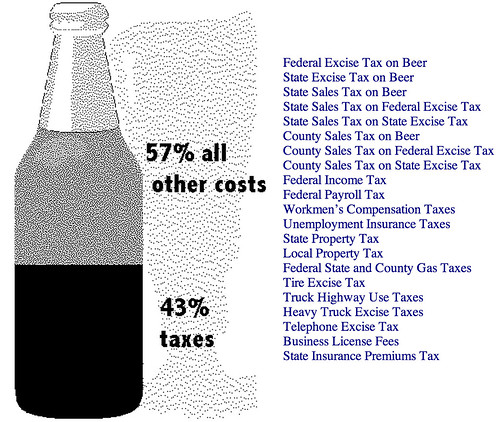
Of course, taxes in beer are already quite a large percentage of the total cost, and because few other consumer goods include an excise tax, they’re one of the most heavily taxed items you can buy.

They then launch into their tired argument that those excise taxes simply aren’t covering the supposed “harm” that they insist alcohol is causing. It’s an incredibly spurious argument, but they keep on making it anyway. They cite a $94 billion annual amount for this “harm,” which comes from a 2006 study, Economic costs of excessive alcohol consumption in the U.S.. In that study they cite, the cause of all the strife is caused by “Excessive alcohol consumption,” not the regular, moderate consumption that most people, maybe 95% of people engage in. But even assuming that their figure for the “economic costs of excessive drinking” were even close to accurate (which they’re not) they should not be used as a basis to punish all adult drinkers.

In just one example, the $161.4 billion (72.2% of $223.5 billion) they ascribe to “lost wages” does not balance any lost productivity with people hired to replace those who miss work, either temporarily or as a permanent replacement. Sure it sucks for the person who lost their job, but the work goes on, and somebody will do it, making a positive contribution to the economy that’s utterly ignored by that statistic, making it completely dishonest, especially considering they claim it’s nearly three-quarters of the harm done by alcohol. I wrote more about this specific study a couple of years ago, in Societal Costs vs. Personal Costs For Alcohol, if you want to dig deeper into its inaccuracies.

This same sort of nonsense popped up again in England, which I detailed recently in Making Up Harms. In that instance, an organization there claimed that £21 billion of harm was caused by alcohol. My colleague, Pete Brown, responded appropriately, telling them that “overstating problem creates moral panic and media sensationalism that helps no one.” A European health organization took a look at that number months before and concluded that “social cost of drinking totals little better than nonsense.” That wisdom comes from an article by Finnish researcher Klaus Mäkelä, published in Nordic Studies on Alcohol and Drugs, which concludes:

This analysis argues that estimates of the cost imposed on society by drinking are often grossly inflated because (among other things) they assume that hazardous drinking must be irrational consumption, that crime benefits no one, that drinking has no social, psychological or indirect business benefits, and that productivity losses are not counter-balanced by benefits elsewhere and by non-alcohol impaired workers taking over the jobs of the impaired. These assumptions are, it is contended, based on value judgements sometimes not made explicit, and lend the results of calculations based on those values a spurious appearance of objectivity and precision.

And that study also concludes that “[e]ven the most sophisticated cost-of-alcohol calculations include entries based on misleading assumptions or logical mistakes.”

Next, Alcohol Justice goes back on the attack. “The alcohol industry’s go-to trope — that beer taxes are regressive and harm the middle class — is simply false.” Talk about a straw man. That’s not even the “trope,” we’re losing our middle class at an alarming rate. Higher taxes, any higher taxes on consumer goods, really, are regressive because they more greatly effect the poor. And did it occur to no one that they drink less than the more affluent precisely because they have less disposable income? Way to throw salt in the wound. But beyond that, their “evidence” is that “one-third of Americans don’t even drink alcohol,” based on a Gallup poll. So let me see if I have this straight. Some people don’t buy beer, so therefore more taxes are not regressive. Okay, got it. They do correctly say that “those who drink the most will pay the most in alcohol taxes,” but given that the majority of those people will undoubtedly do so responsibly and not cost society one thin dime, then how is this a reasonable argument for raising taxes?

beer-can-money

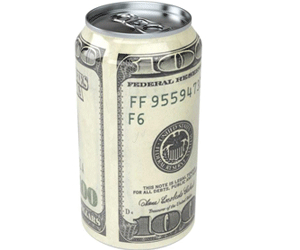
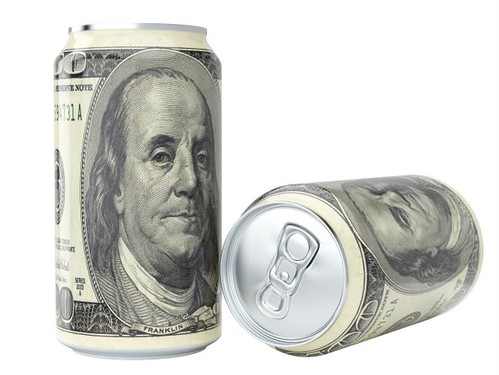
They based their overall argument on the idea that rising excise taxes on alcohol will “save lives,” based on yet another study, Effects of alcohol tax and price policies on morbidity and mortality: a systematic review, conducted at the University of Florida. It was really a meta-study, looking at other similar studies. They identified “162 papers [that] have been published that evaluate the effects of alcohol tax and price levels on alcohol sales, drinking, and a range of alcohol-related morbidity and mortality outcomes,” but they used only 112 of those to draw their conclusions. Why fifty of these studies were ignored, I can only guess.

But what they did was simply search a series of databases looking for the following words: “(tax OR taxes OR taxation OR cost OR cost* OR price OR prices) AND (alcohol* OR drinking OR liquor OR drunk* OR beer OR wine OR spirits OR malt beverage*)” Any articles they found containing those terms were identified and classified. I don’t doubt the scientific rigors of the methodology, but I question many of the assumptions underlying them. There are undoubtedly plenty of studies looking for a correlation for taxing and consumption, most done I’d warrant to justify themselves or an agenda. So that’s what you’ll find in the literature. Are there many (or any?) studies done looking for an opposite conclusion, looking for instances of higher taxes having a different outcome? Essentially, this is just a circle jerk. You have a self-fulfilling prophecy of studies trying to prove causation being used to create another study showing that higher taxes reduce so-called alcohol “harms,” but with no dissent or opposing views it’s just a circle of agendas reinforcing themselves in a closed loop.

In their conclusions, they suggest that “[i]n most developed countries, alcohol is second only to tobacco as a consumer product that causes death (approximately 85 000 alcohol-related deaths per year in the United States alone)” but their evidence for that is Actual causes of death in the United States, 2000, which lists alcohol third, after tobacco and poor diet and physical inactivity. And even at number three, alcohol is less than a quarter of deaths attributed to poor diet and physical inactivity and only 10.6% of the top two. So even assuming their calculations are correct (they’re most likely not) it’s still far less than that of other health issues people face. But even though they don’t explicitly say it’s number two in the U.S., that’s the clear message of that statement, which certainly suggests a willingness to mislead or mis-state information. But the kicker is in the acknowledgements, which thanks the Robert Wood Johnson Foundation (RWJF) for their support and funding of the study. The RWJF is the mother of all prohibitionist groups, and they in turn fund many of the other anti-alcohol groups in the country, as well as many of the studies these groups use to peddle their agenda. See what I mean? Circle jerk.

But more generally the idea that they can show a direct cause and effect of crime, health care costs and other factors in a straight line from alcohol to a burden on society that would not exist without the booze is laughably simple and almost naive.

The media seems to fall for these studies, presumably because they’re published in “scientific journals” and because the prohibitionist groups putting out press releases about them claim the moral high ground. They also frame themselves in terms of protecting people, or children, or society from the scourge of big business, or big alcohol, or whatever bogeyman label they can come up with. What I find so reprehensible about that is how hypocritical that is. They usually claim that the alcohol companies are just out to make money, while by contrast they’re just trying to protect people. But when they use deceit and falsehoods in their efforts to “protect” how can they continue to cling to that moral high ground? Even if they believe in what they’re doing or saying (a doubtful premise), lying for a good cause is still just lying. Can the ends really justify the means under such circumstances?

Follow their rhetoric for long enough, and it starts to seem like they really believe that the beer companies would do anything to make a buck, as if there really aren’t people behind these companies. I know many wonderful people who work in the beer world, for both small and large companies. The vast majority have families, pay their taxes and work hard, and share many of the same values as prohibitionists. Yet these fundamentalists seem to believe that these companies really don’t care about their customers, that they don’t care about drunk drivers or alcoholics. It just pisses me off. Do they really think a beer distributor sales rep. is more concerned with their job than whether their child is hurt in a car accident with a drunk driver. They always accuse the beer companies of not really doing enough to encourage responsible drinking. But whatever they do, it’s never enough to the fundamentalists. It’s simple, really. Fanaticism is never satiated. You can’t appease it.

Is alcohol perfect? Can everyone use it responsibly? Of course not. Most beer drinkers would be the first to admit that. But unlike the prohibitionist fundamentalists, we’re willing, and able, to concede that it’s not for everyone. Not everyone can handle the enjoyment that beer can bring. We’re willing to work on fixing any problems that some have with alcohol, not just because it’s the right thing to do, but also because we don’t like problem drinkers either. I hate a bad drunk as much as the average MADD member, but I don’t think we should throw the baby out with the bathtub gin. But prohibitionists use every story where an individual acted stupidly and recklessly to suggest that it’s the inevitable, and only, result of drinking. They literally ignore the absolute majority of responsible drinkers, as if they don’t even exist.

That’s because these groups, in my opinion, really don’t care about health policy or public policy. They care about pushing an agenda. That agenda is punishing the alcohol industry and making it as hard as possible for them to do business. Since prohibition ended, the work of the prohibitionists has continued unabated, in an effort to severely limit their ability to advertise, to limit the scope of who can buy alcohol, and where, at what times, even in what neighborhoods. Anything they can do to cripple or harm alcohol is something they’ll try.

If they really cared about stopping drunk driving, they’d lobby Congress to invest in more mass transit infrastructure so people didn’t have to drive and help fund the research and development efforts to create cars that drive themselves, which would eradicate drunk driving at a stroke. If they really believed these corporations were evil, they’d work on reforming corporations. Because much of what they accuse big alcohol of is trying to make a buck by any means. But corporate charters demand that profit be their prime directive. Doing otherwise would be against their charters. People running corporations have a duty to their shareholders to maximize profits. It’s their jobs. I don’t like the way many big corporations operate, and I think corporate reform is likely the only way to change their behavior, but I’ve never once heard that argument from a prohibitionist group wanting alcohol companies to act differently.

beer-cans-money

You may recall that earlier this year, prohibitionist groups revealed themselves as having no less a profit motive than most corporations. In The Neo-Prohibitionist Agenda: Punishment Or Profit, we discovered their true motives, that these “self-proclaimed ‘public health advocates’ only want to raise taxes on alcohol for two reasons: either to enrich themselves and profit from the alcohol companies their groups target or to punish every single person who dares to enjoy a pint of beer or glass of wine.” And in terms of being non-profit charities, many aren’t even good examples of that, to wit: MADD Charity Rating Downgraded To “D.”

Toward the end of the Alcohol Justice propaganda screed, they finally get to the numbers from their tweet. “Alcohol taxes are the single most effective policy to reduce alcohol-related harm. Raising taxes significantly reduces consumption, particularly among underage youth. Doubling the alcohol tax would reduce alcohol-related mortality by 35%; traffic crash deaths by 11%; sexually transmitted disease by 6%; and crime by 1.4%.” Those numbers are the spurious conclusions drawn from the meta-study examining studies looking for support for raising taxes. But that first declarative statement, “Alcohol taxes are the single most effective policy to reduce alcohol-related harm,” really stands out. Oh, to be so sure about anything. I want to live in that idyllic world. Unfortunately, I live in the real world, where everything is complicated, hopelessly interconnected and where few things are as simple as prohibitionists would have us believe. Late last year, I wrote that Higher Alcohol Taxes Reduce Tax Revenue, in which government studies from abroad showed the polar opposite of what AJ claims is the “the single most effective policy to reduce alcohol-related harm,” showing in fact that “affordability has a negligible and statistically insignificant negative effect on recorded alcohol consumption.” Similarly, in 2010, a European Study Shows Raising Beer Taxes A Bad Idea.

At the very end, talking about one state’s recent decision to reduce their excise tax on beer, they say this. “Meanwhile, as consumption rises, so will alcohol-related harm and its associated costs in the state.” Um, consumption of alcohol around the world has been dropping, and even in the U.S. it peaked in the early 1980s, and has been slowly, but steadily, falling ever since.

I really feel like I’m tilting at windmills, although the prohibitionists seem like the bat-shit crazy Don Quixote who sees dragons and damsels in distress everywhere he looks. They keep making the same arguments, ones that are riddled with holes, seemingly oblivious — though more likely maliciously deceitful — to how most people actually enjoy their alcohol or how the overwhelming majority of breweries are small family-owned businesses with deep roots in their local communities.

But perhaps the biggest charade in all of this is how one-sided their arguments have become. Admitting not one positive effect for alcohol, their list of harms is so widely unbalanced that it’s utterly meaningless. A couple of years ago, I started a post (but never finished it) about a then-still-Marin Institute report in which they abruptly shifted their focus from “we’re not neo-prohibitionists” to saying this. “Alcohol consumption, even at moderate levels, is responsible for a wide range of health problems, from heart disease, to various forms of cancer, to sexually-transmitted diseases.” That’s ignoring a lot of science, and that’s the moment, for me, when they veered straight into the fast lane of prohibitionist fundamentalism. Because you’d have to be a fairly committed prohibition fundamentalist to ignore the numerous studies that show a positive total mortality rate for drinkers, that is people who drink moderately tend to live longer than those who abstain, and even heavy drinkers usually outlive teetotalers. Then there’s the countless smaller studies showing small advantages from drinking beer that keep people from getting certain diseases or otherwise positively effecting their overall health. Anyone paying attention would have to notice that in recent years, now that people are shedding their prejudices and looking at alcohol with a less jaundiced eye, that they’re finding all kinds of solid evidence and support that alcohol is not entirely the demon it was once thought to be.

That’s not even counting the calming effect of a drink after work or a beer with dinner, a reward for getting through the day, and one which so improves one’s mental state. Plus there’s the many other ways that beer enhances our lives. Several years ago, I recall something Lew Bryson wrote, Why We Drink, in response to a comment an anonymous person left on his blog who was seemingly (though more likely he was not) confused as to why anyone would ever want to drink alcohol. In his response, Lew detailed many of the intangible reasons that people enjoy beer in their lives. You no doubt know what those are.

That none of these tangible and intangible positive attributes to moderate and responsible drinking are taken into account when these so-called studies seek to put a price tag on harms they claim are caused by alcohol (and importantly, not by the people drinking, but the alcohol itself bearing responsibility), I believe, speaks volumes about what’s really going on with prohibitionist fundamentalism. Because as far as I can tell, the only way their arguments can continue to be even made, is if they continue to utterly ignore anything and everything that contradicts them. So they essentially simply discount and dismiss whatever doesn’t fit their view of the world, where everything is still black and white, and alcohol is responsible for everything wrong with modern society.

But we live in a technicolor world, with vibrant hues and shades of both meaning and experience. And for most of us, beer is a welcome part of that world, in which it enhances our lives and makes us enjoy ourselves just a little bit more. Is that something worthwhile that should be protected, celebrated and enjoyed? Yes, yes it is. Drink a toast tonight with your friends and family to the fact that you still have the right to drink a toast tonight with your friends and family. If the prohibitionist fundamentalists have their way, we may not be able to enjoy that experience. Stand up to their dishonesty and their hypocrisy. Say it with me. “I am a beer drinker.”

Filed Under: Beers, Editorial, Politics & Law Tagged With: Anti-Alcohol, Prohibitionists, Statistics, United States

Walmart’s New Beer Focus

October 2, 2013 By Jay Brooks

walmart
You probably saw the news over the past year that Walmart was going to be focusing to a greater degree on the sale of beer in their stores. Advertising Age had an interest glimpse into their plans, entitled How Walmart Plans to Double Beer Sales In Three Years . At the recent NBWA annual convention in Las vegas last week, Walmart’s Chief Merchandising and Marketing Officer, Duncan MacNaughton, said he was “pleased but not satisfied” with their progress so far, adding that he feels Walmart is “still ‘under-shared’ in beer sales compared with competitors.”

Walmart-Tank-2
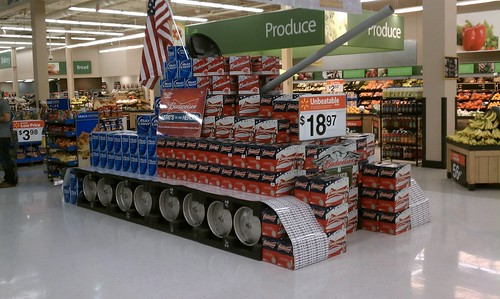
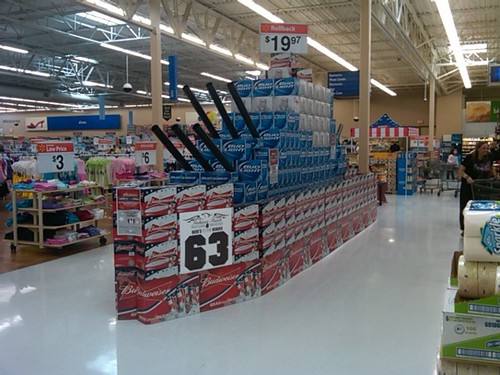
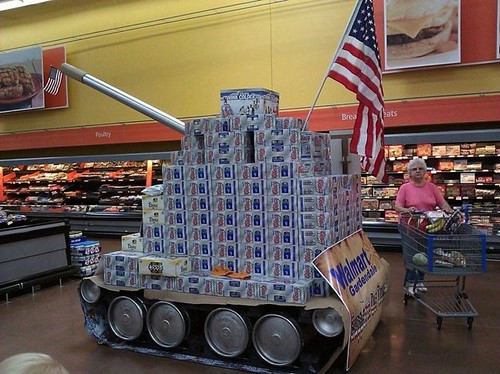
Does this Walmart beer display give some indication of their strategy to sell beer?

Apparently there’s currently an uneasy relationship with Walmart and beer wholesalers, which should surprise no one. Walmart is so big they’re used to getting their way and dictating whatever they want — some might say bullying — even if what they’re asking for is unreasonable or even not entirely on the same terms as everybody else enjoys.

Because they use “just-in-time” ordering systems, “their backrooms have no storage,” David Black, CEO of Northeast Sales Distributing, said in an interview. His company’s territory includes some 50 Walmarts in portions of Georgia and North Carolina. “They refuse the order or they make you sit there for three hours while they take something else.”

That’s something most, if not all, of the big chains do, of course, but Walmart has supposedly raised it to a fine art. Walmart also told the assembled beer distributors that they’re not considering a private label beer, which from their point of view is good news.

Walmart-Battleship
A battleship of Walmart beer sales.

Curiously, MacNaughton also said this. “We don’t want cute displays. We want ‘shoppable’ displays: item and price and can I get a case off the top. Sometimes we kid ourselves with pretty. Pretty is fun, but I want sales.”

walmart-tank
A tank of Walmart beer.

A couple of months ago, Bloomberg covered this in Wal-Mart Stacking Beer in Aisles to Double Alcohol Sales, detailing more of their overall plans. For example, only about 3,700 of their nearly 11,000 stores currently stock beer, which is roughly one-third. In the short term they’ll be increasing that to around 5,000 stores (45%) and hope to eventually sell beer in as many as 6,600 locations, or 60% of their stores.

The Bloomberg report also included a video in which one of the talking heads mentions that while beer sales are relatively flat overall, it’s craft beer that’s selling well. Apparently they’ve also hired more buyers who will be focusing on more local beers, and “craft is playing into that in a big way,” apparently. But as the video later points out, the biggest customers by far are still the big players, and although the Boston Beer Co. is there, it’s dollar amount is far less than ABI, MolsconCoors or Heineken. Samuel Adams sells less than 4% of the beer that Budweiser does and 3.4% of the other three combined. So while they speculate that craft is the key to increasing sales, it doesn’t seem like that’s what they’re actually doing, though to be fair images of Walmart shelves do show a bit more diversity. I confess I don’t really shop our local Walmart, so I may have to check out the beer section from time to time to see if they really are changing their approach.

Filed Under: Beers, Editorial, Politics & Law Tagged With: Beer Stores, Business, Video

How Millennials Are Changing Everything About Beer

October 2, 2013 By Jay Brooks

millennials
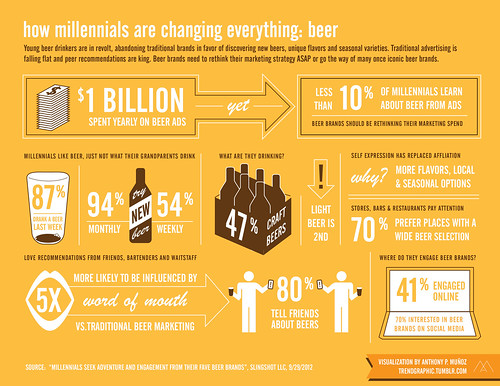
Today’s infographic takes a look at How Millennials Are Changing Everything, at least with regard to beer. Part of a series of trend infographics by Trendgraphic, this one examines what their refer to as “young beer drinkers…in revolt.”

how-millennials-are-changing-everything
Click here to see the infographic full size.
Filed Under: Beers, Just For Fun, Politics & Law Tagged With: Infographics, Statistics

Nature vs. Nurture As A Cause of Alcoholism

October 1, 2013 By Jay Brooks

dna-2
Since I’ve been featuring a new infographic on the Bulletin every day this year, I’ve started getting a number of e-mails from people and companies trying to promote their own sites using infographics, offering them up as potential ones for me to use. I got one today created by Clarity Way, a recovery center in Hanover, Pennsylvania. In reality, this one is a video that uses graphics similar to those found in infographics to tell its story. Perhaps I’m being overly strict, but I think an “infographic” should be a static image, or at a minimum interactive, but starting with a graphic, with info. It’s right there in the name. Still, there’s some interesting info here, though since they’re trying to sell rehab, I think they’ve inflated some of the data. For example, they claim “7 million children live in a household where at least one parent is dependent on or has abused alcohol.” [emphasis added.] Dependent is one thing, but given the modern definition of binge drinking, almost anyone could be said to have “abused alcohol” at least once in their life. Frankly, none of the statistics seem that terrible to me. There’s an equal chance that alcoholism comes from heredity or from your environment, but only 8.3% of people “suffer from alcohol abuse or dependence.” That wording is also odd. You can certainly suffer from alcohol dependence, but how can you be said to suffer from abuse? Have five drinks in a row, and you’ve abused alcohol, according to most health agencies and neo-prohibitionist groups. Remove those people who have ever “abused” alcohol once, or even occasionally but are not dependent on it, and that number, I suspect, would drop precipitously.

Filed Under: Beers, Editorial, Just For Fun, Politics & Law, Related Pleasures Tagged With: Infographics, Statistics, Video

Making Up Harms

September 19, 2013 By Jay Brooks

uk
On Tuesday, the UK alcohol industry-funded group Drinkaware, stated that they would initiate a review in support of the government’s much-maligned alcohol strategy and is apparently “interested in the factors that drive ‘binge’ drinking.” In an Morning Advertiser article, Drinkaware director of marketing and communications, Anne Foster, claims that “Binge drinking and its negative consequences blight communities, families, businesses and public services. Each year, £21 billion is spent cleaning up after late-night revellers and those who have drunk to excess.” Of course, she never states where that figure comes from or how it was arrived upon, and much like Alcohol Justice’s funny math when they were trying to persuade the City of San Francisco to raise the city tax on alcohol, it was just a scary, made-up number with no basis in science or fact.

Pete Brown took to Twitter and called them out for that, saying first that “you [Drinkaware] have falsely stated all £21bn is caused by binge drinking when it’s ALL the costs of alcohol. (Or would be if it were true.)” Drinkaware responded by hoping “everyone can agree alcohol harm and binge should be reduced which is what our call for evidence tries to tackle.” Watching from the sidelines, that was a “spit take” for me, because it sidestepped the issue of falsely exaggerating the so-called “harm,” and to my mind even trying to quantify the harm at all is something of a red flag.

James Nicholls, Research Manager of Alcohol Research UK, chimed in on the Twitter conversation, adding; “the [£21bn] estimate is based on all social costs inc treatment, absenteeism etc. so includes dependency, home drinking +.” Which is the same sort of list that’s always trotted out. It’s misleading at best, and in my opinion deceitful at its worst to suggest that alcohol causes what they claim. Society is far too complex to say that “x” and “y” are directly related and that “a” causes “b.” The world’s just not that orderly and its unproductive to even think along those lines. We don’t think that way for anything else, with this notion of “alcohol harm” being pretty much the lone exception. We don’t, for example, talk about the harms caused by people eating red meat, and the additional burdens they place on the healthcare system by giving themselves diseases and conditions because they can’t control their meat intake.

Pete responds, appropriately, with the fact that “overstating problem creates moral panic and media sensationalism that helps no one. That £21bn fig really is risible.” That, I believe, is the major problem with these exercises; they’re dishonest at their core. Whoever is floating a supposed amount of “harm” wants it to be as large as possible so that it gets noticed and makes people think the problem is so big it must be acted on immediately, and without reflection. The same thing happened in San Francisco when a completely biased Nexus Study was conducted by the City to support imposing a separate, and additional, local alcohol tax.

Last year, another UK colleague, Phil Mellows, argued about this problem, as well, in his well-reasoned The science and politics of costing alcohol harm, where he also addressed that fictional £21 billion that Drinkaware used, when it was used by another group to further their agenda. At that time, another group, DrugScope, concluded what I’ve argued for years, that “social cost of drinking totals little better than nonsense.” Give Phil’s the politics of drinking a read. But I particularly love that nonsense quote, which is based on an article by Finnish researcher Klaus Mäkelä, published in Nordic Studies on Alcohol and Drugs. That article, Cost-of-alcohol studies as a research programme, can be summarized as follows:

This analysis argues that estimates of the cost imposed on society by drinking are often grossly inflated because (among other things) they assume that hazardous drinking must be irrational consumption, that crime benefits no one, that drinking has no social, psychological or indirect business benefits, and that productivity losses are not counter-balanced by benefits elsewhere and by non-alcohol impaired workers taking over the jobs of the impaired. These assumptions are, it is contended, based on value judgements sometimes not made explicit, and lend the results of calculations based on those values a spurious appearance of objectivity and precision.

And then there’s this conclusion. “Even the most sophisticated cost-of-alcohol calculations include entries based on misleading assumptions or logical mistakes.” Amen to that, now if only so many of these groups and mis-guided government agencies would stop making up these numbers and instead debate public policy honestly.

Filed Under: Editorial, Politics & Law Tagged With: Anti-Alcohol, International, Law, UK

Bud Blamed In Absurd E.R. Visit Study

August 16, 2013 By Jay Brooks

medicine
That the neo-prohibitionists are rife with propaganda is well documented, but this one may take the cake. A new study at John Hopkins, conducted by David Jernigan, appears to show that Budweiser is the most popular drink “most commonly linked to emergency room visits.” Apparently “Budweiser has 9.1 percent of the national beer market, and represents approximately 15 percent of the E.R. ‘market.'” After Bud, it was “Steel Reserve Malt Liquor, Colt 45 malt liquor, Bud Ice (another malt liquor), Bud Light, and a discount-priced vodka called Barton’s.” Another malt liquor brand, “King Cobra, account[s] for only 2.4 percent of the U.S. beer market, but accounted for 46 percent of the beer consumed by E.R. patients.” The conclusion, as reported by NBC News, was that “[o]verall, malt liquor and lower alcohol beer dominated consumption but vodka, gin, brandy and cognac were overrepresented, too.”

But despite all the attention and scary statistics and headlines — Alcohol Justice gleefully tweeted the headline Budweiser to Blame for Most Alcohol-Related ER Visits — the study itself is absurd. The story Sherrif A.J. retweeted was from Science World Report, and despite the headline, the story doesn’t back up the sensationalist tone of it at all. The “study,” if we can even call it that, consisted of giving a survey to 105 people at one inner city Baltimore E.R., in a predominately African-American neighborhood.

The study was done by David Jernigan, who in addition to being an associate professor in the Department of Health, Behavior and Society at the Johns Hopkins Bloomberg School of Public Health, is more importantly the director of the Center on Alcohol Marketing and Youth (CAMY), a notoriously anti-alcohol organization. That affiliation is not disclosed in any of the reports on this particular “study.”

Curiously, he does admit that both the Federal Trade Commission and the National Institute on Drug Abuse both told him personally that “this kind of research cannot be done.” Did he listen? Nope, he went right ahead and jumped to all sorts of conclusions, even though there’s no clear cut causality here whatsoever. And look how they conducted the study, and persuaded people to participate:

By using a drop down menu on a small notebook computer, the survey takers managed to obtain information from patients, and to include about 400 brands, in less than five minutes. At first, Jernigan, said, many patients refused to talk. But then the survey takers, with the permission of the emergency room staff, donned white coats. After that, patients talked freely.

See what they did? They put on white lab coats, so they looked like they worked there or were E.R. doctors, and tricked people into answering. Nice.

But the news was reported that, in fact, the conclusions were sound, especially in the headlines, which is only what a majority of people will see. The problems with the study, its limitations and lack of causality is buried toward the end, well after most people stop reading. The fact that it was done by essentially a neo-prohibitionist organization is never mentioned at all. And that certainly didn’t stop Johns Hopkins from issuing a press release. The study itself was published in the journal Substance Use & Misuse, under the title Alcohol Brand Use and Injury in the Emergency Department: A Pilot Study. But none of that stopped anybody from spreading the news about how Bud, and the other brands, are directly responsible for people visiting the E.R. It couldn’t be any other reason, right?

Filed Under: Beers, News, Politics & Law Tagged With: Anti-Alcohol, Prohibitionists, Statistics

Are Americans Turning Away From Beer?

August 6, 2013 By Jay Brooks

gallup-poll
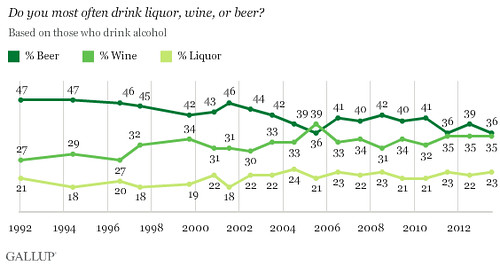
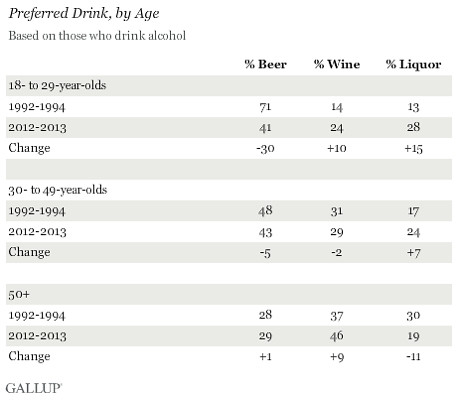
Well I can’t say that seems to be the case from my personal experience, but a new Gallup Poll is being spun that way, especially in an Atlantic article, Why Are American Drinkers Turning Against Beer? This particular Gallop Poll is done each year — since at least 1939 — and what you have to remember is that it’s a popularity poll, not necessarily a scientific one. The poll itself is conducted in a proper manner, but it’s asking people to “say what they drink” or “what they prefer.” And that’s far different from what the actual sales indicate. The last time I wrote about this was in 2010, when that year the Latest Gallup Poll Reveals Drinking At 25-Year High With Beer #1.

Gallop-2013-01

This year, the big story is “per capita consumption of beer down 20 percent,” as is overall production of beer. But as they continue to lump all beer together, when clearly patterns of drinking beer are changing, by keeping the poll simple they miss some of what’s really going on.

As my “beer brother” Lew Bryson commented. “Craft beer has been on a tear since 2002; latest figures have it up 15% annually (volume, 17% on $ sales). Volume sales of the majors are down, and trending downward steadily. Wine and spirits are picking up some of that, but craft is picking up a good share. It’s also worth noting that this IS a ‘what do you like’ poll, not ‘how much do you drink’ sales numbers. Beer still wins that by a sizable margin, both on volume and $ sales.” True indeed, when I wrote about this in 2010, beer outsold beer 4 to 1, showing just how skewed the difference is between what people say they like to drink, and what they actually drink.

One curious thing I wonder about these polls, and other alcohol data generally, is why alcohol is always divided up into these three tidy boxes? And where in these categories, if anywhere, is captured the sales, preferences or what-have-you for cider, alcopops, sake and other beverages that don’t seem to fit neatly into one of the big three. Are they ignored, or lumped into one of the three? It’s seems a fairly relevant question, since cider’s on a big upswing and alcopops have had their ups and downs, but certainly have to be part of the equation, especially when it comes to the all-important 18-29 demographic. But not even the full report gives any additional clues.

Gallop-2013-02

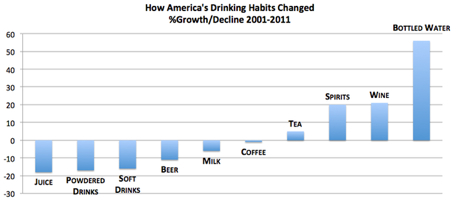
Another item that makes me question Gallup’s polling is the huge gains of bottled water. To me that has more to do with availability than anything else. It’s getting harder and harder to even find a water fountain these days, because business has figured out that people will pay for it when that have no choice.

Gallop-2013-03

Another explanation that didn’t ring true was that “American drinkers are more health-conscious today” and that’s led to people choosing other beverages, but even the author admits that this “does not adequately explain why Americans would turn against light beer,” as if that really is a healthy alternative. As I’ve said endlessly, low-calorie diet beer is hardly any healthier than non-light beers so that argument doesn’t hold any water … or even any watered-down beer.

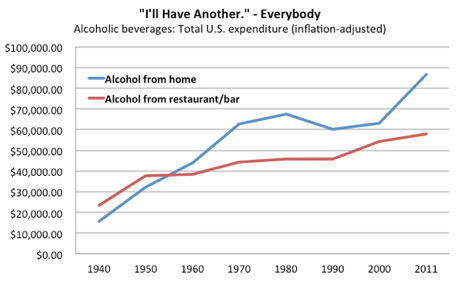
Happily, the day after this story ran on the Atlantic’s website, the same author posted The Death of Beer Has Been Greatly Exaggerated, in which Derek Thompson shows that, despite the Gallop Poll, “total U.S. spending on all alcoholic beverages — both at home and at restaurants and bars — is up 27 percent since 1980 and even more since the mid-century.”

Gallop-2013-04

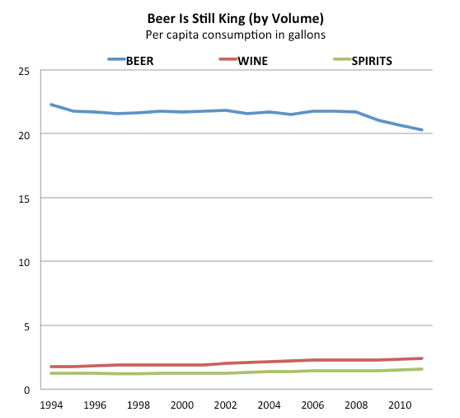
And as I mentioned earlier, beer currently still outsells wine by a significant margin, and his data also indicates that “beer volume still outsells wine volume by 8.5” times! So it’s pretty hard to swallow once more that beer is on the ropes.

Gallop-2013-05

Thompson sums up his two days worth of articles:

The total amount of beer consumed by Americans is in structural decline, and there are more wine-drinkers than there used to be. But beer is still the most popular boozy beverage in America and overall sales are holding up, thanks in part to the emergence of craft beers.

Did we really need another Gallop Poll or Atlantic business writer to tell us that?

Filed Under: Beers, Editorial, News, Politics & Law Tagged With: Mainstream Coverage, Poll, Statistics, United States

Wheatland Hop Riot Legacy

August 3, 2013 By Jay Brooks

high-water
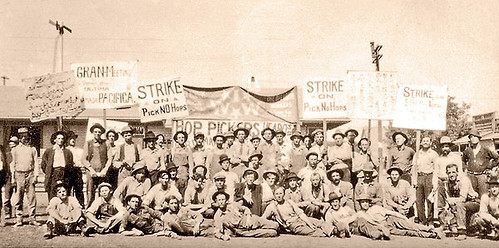
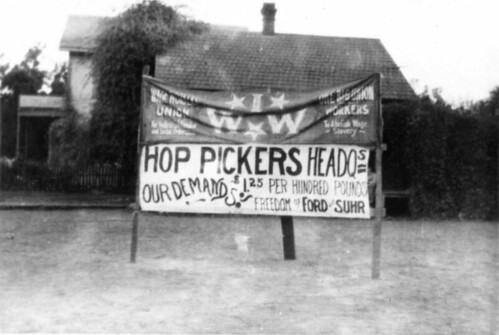
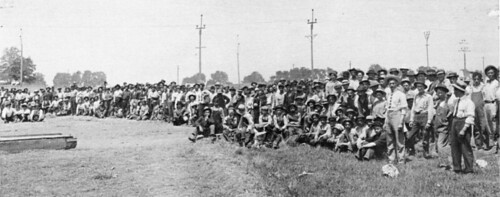
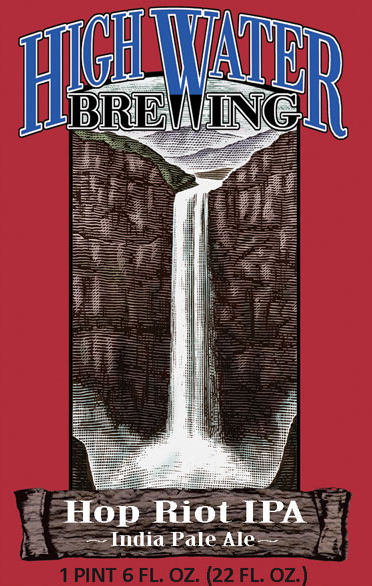
Today marks the 100th anniversary of the Wheatland Hop Riot, a seminal event in labor relations, the second major labor dispute in U.S. history, and the first event to shine a light on the plight of agricultural workers and their conditions. It was for this event that High Water Brewing named their Hop Riot IPA, as its name pays homage to the legacy of hops in California, which before prohibition was the largest hop-growing state in the U.S.

wheatland-hop-riots-04

Here’s one account on the riot, this one from True West:

In the region northeast of Sacramento, field temperatures had hit the 120s—tough working conditions for the migrants harvesting hops, the green plant (related to hemp) used in brewing beer.

The work was hard, and the season short (by the end of August, the migrants would be moving on). The Durst Ranch, the largest agricultural employer in California, needed about 1,500 workers; nearly double showed up. Most workers made less than $1.50 a day—big pay in a time of national recession.

Conditions were hellish. Workers had to buy water (contaminated by acetic acid) for five cents, plus food and other supplies from a price-gouging company store. Dysentery was rampant, with less than a dozen toilets available for workers. Garbage and refuse cluttered the area. (In all fairness, the situation at the Durst Ranch was not unusual for California operations that hired migrants.)

Richard “Blackie” Ford, a former organizer for the radical Industrial Workers of the World, decided to mobilize the Durst Ranch workers to get higher pay and better conditions. He presented a list of demands to Durst on August 3. The rancher agreed to all of them—regular ice-water breaks (at no charge), more toilets and so forth. But he wouldn’t boost the pay.

Ford said that wasn’t good enough; some accounts state Durst responded by slapping Ford in the mouth. The labor man then went to a nearby platform to harangue the workers. Durst went into town to get the authorities.

The rancher returned with a couple carloads of men, including Yuba County Sheriff George Voss, Deputy Eugene Reardon and District Attorney Ed Manwell. They arrived shortly after five p.m., and Ford had the crowd worked up.

Just what happened next depends on which side you believe. The authorities and Durst claimed that some workers had attacked them. Ford and the migrants said the lawmen had opened fire on them. Either way, a melee ensued.

When it was done, Manwell, Reardon and two workers were dead. Sheriff Voss was severely injured, as were an untold number of folks on both sides. Ford was on the run, and most of the workers had scattered to the four winds. The day became known as “Bloody Sunday.”

Ford and organizer Herman Suhr were arrested. Neither participated in the attacks, but officials accused them of inciting the violence and charged them with murder.

The trial took place in January 1914 in nearby Marysville. Most locals (including jury members) weren’t sympathetic to the union or the migrants. Both defendants were found guilty of second-degree murder and given life sentences. The proceedings received international press coverage.

After the incident, the Durst Ranch gave in to all the demands, including the higher pay. The hop crop was brought in without any further trouble.

Ford was pardoned in 1924, and Suhr paroled two years later.

wheatland-hop-riots-05

Another account, suggests that Durst was hardly blameless, and at least shared responsibility by the way he tricked and treated his workers, a not uncommon occurrence at that time.

An important and highly-publicized event in California labor history, it was the second major labor dispute in the United States supposedly initiated by the Industrial Workers of the World. The bloody clash, which occurred at the Durst Ranch in Wheatland, California, was the climax of growing tensions brought about by the difficult conditions farm laborers at the ranch endured. The riot resulted in four deaths and many injuries. It focused public opinion for the first time on the plight of California’s agricultural laborers, and resulted in new state legislation to regulate labor camp conditions. A new State Commission on Immigration and Housing was created to help improve working conditions. The Wheatland Hop Riot was also the first major farm labor confrontation in California and a harbinger of decades of attempts to organize or control agricultural labor.

Durst advertised for 3000 hop pickers and other seasonal agricultural workers, though he only needed half that number — in order to drive wages down. Of a $1.50/ day wage, $0.78 – $1.00 was withheld from the workers’ pay. If a worker didn’t stay till the end of the season, Durst kept that withheld money. Durst then had the workers harassed, cheated, and abused to try to make them leave before the end of the season. The strikers demanded water twice a day, separate bathrooms for men and women, and higher pay. During a speech by Richard “Blackie” Ford, the Yuba County sheriff and a group of over 100 vigilantes fired into the crowd of workers, causing the riot. Two workers, a deputy, and the district attorney were killed. The National Guard was ordered into the area and 100 workers arrested.

wheatland-hop-riots-01

In addition, libcom.org has an account of the hop riot and the Sacramento Bee has their version to commemorate the 100th anniversary this year that was posted a few days ago. You can also read more about the Wheatland Hop Riot at Wikipedia, too.

David A. Kulczyk also wrote an interesting, more labor-friendly, account, published in 2007, entitled “Hops of Wrath, 1913’s bloody Wheatland Hop Riot eventually led to better conditions for workers. Too bad it was only temporary” and LaborNet has the Legacy of Wheatland.

wheatland-hop-riots-02

So tonight, drink a toast to the men and women of the Wheatland Hop Rio, and make it a High Water Hop Riot IPA.

high-water-hop-riot

Filed Under: Politics & Law Tagged With: California, History, Hops

« Previous Page
Next Page »

Find Something

Northern California Breweries

Please consider purchasing my latest book, California Breweries North, available from Amazon, or ask for it at your local bookstore.

Recent Comments

  • Bob Paolino on Beer Birthday: Grant Johnston
  • Gambrinus on Historic Beer Birthday: A.J. Houghton
  • Ernie Dewing on Historic Beer Birthday: Charles William Bergner 
  • Steve 'Pudgy' De Rose on Historic Beer Birthday: Jacob Schmidt
  • Jay Brooks on Beer Birthday: Bill Owens

Recent Posts

  • Beer In Ads #5215: Another Load Of “Milwaukee’s Choicest” April 10, 2026
  • Beer Birthday: Alexandre Bazzo April 10, 2026
  • Beer In Ads #5214: Poth’s Bock Beer April 10, 2026
  • Historic Beer Birthday: Rudolf Brand April 10, 2026
  • Beer In Ads #5213: Bock Beer Cascade Quality April 9, 2026

BBB Archives

Feedback

Head Quarter
This site is hosted and maintained by H25Q.dev. Any questions or comments for the webmaster can be directed here.