Brookston Beer Bulletin

Jay R. Brooks on Beer

  • Home
  • About
  • Editorial
  • Birthdays
  • Art & Beer

Socialize

  • Dribbble
  • Email
  • Facebook
  • Flickr
  • GitHub
  • Instagram
  • LinkedIn
  • Pinterest
  • RSS
  • Twitter
  • YouTube

Powered by Genesis

Patent No. 4148873A: Method For Treating The Skin With Extracts Of Hops

April 10, 2016 By Jay Brooks

patent-logo
Today in 1979, US Patent 4148873 A was issued, an invention of Joseph L. Owades, assigned to S. S. Steiner, Inc., for his “Method For Treating the Skin with Extracts of Hops.” Here’s the Abstract:

There is provided a new method of treating human skin to protect said skin from erythema-producing sunlight radiation while promoting tanning thereof, the method comprising using an active sunscreening ingredient, an ultraviolet radiation absorbing extract of hops.

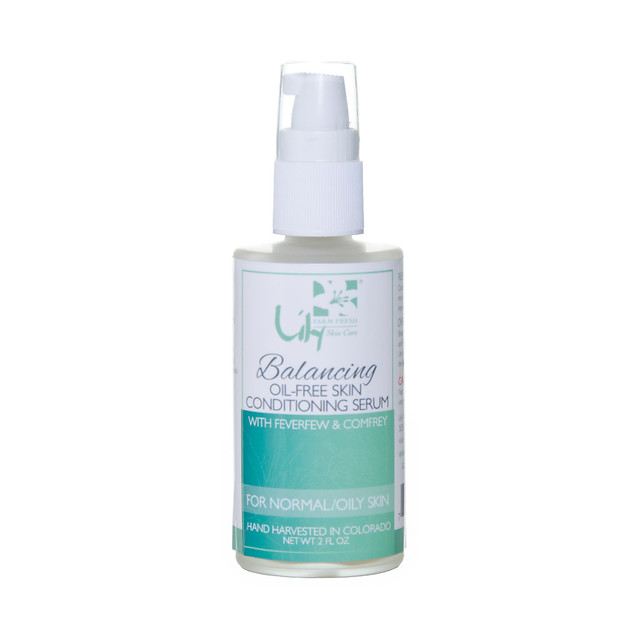
This seems similar to another patent Owades was granted in 1981, Patent No. 1112183A1: Humulus Lupulus (Hops) Extract As Sunscreen Agent. That patent appears to have expired in 1998, and I’m not sure if his sunscreen was ever available commercially. This one’s more of a skin treatment, and I did find one that claims to use hop extracts, Balancing Oil Free Skin Conditioning Serum. While it doesn’t say so on the product’s main page, on another one, Benefits of Hops in Natural Skin Care, in which they state that “Lily Farm Fresh Skin Care utilizes the benefits of hops in Balancing Oil Free Skin Conditioning Serum. This multi-tasking product is for people who both do not want oil in a moisturizer and people and who are struggling with blemishes and wrinkles. They need a cure for both with one product. Balancing Oil Free Skin Conditioning Serum conditions and firms the skin while also healing and moisturizing.” So maybe that’s it, hard to say.
Organic-Balancing-Oil-Free-Skin-Conditioning-Serum

Filed Under: Beers, Just For Fun, Politics & Law, Related Pleasures Tagged With: Health & Beer, History, Law, Patent

Patent No. 5505018A: Decorative Beer Dispenser For Killing Slugs

April 9, 2016 By Jay Brooks

patent-logo
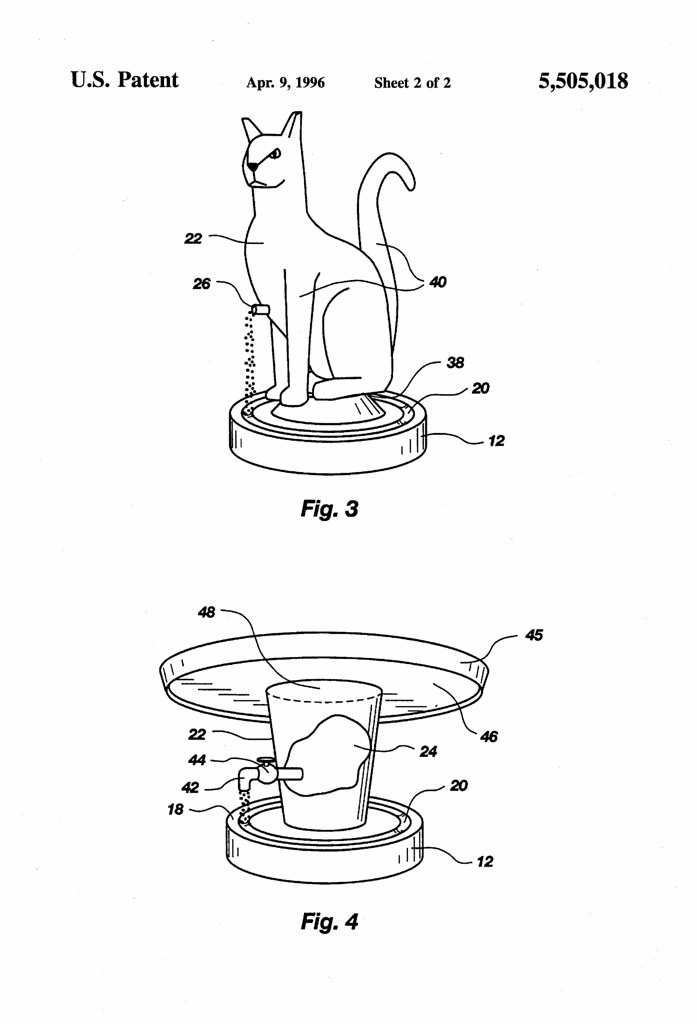
Today in 1996, US Patent 5505018 A was issued, an invention of G. R. Parker, for his “Decorative Beer Dispenser For Killing Slugs.” Here’s the Abstract:

A decorative beer dispenser with a weighted base and storage vessel constructed of a single piece of blow molded beer impervious material in a decorative shape defining a base compartment, and a reservoir compartment; said base having a top defining a shallow drip reservoir filled with beer to attract snails, slugs, and the like to ingest beer and be killed; and said reservoir compartment structured to store and continuously deliver beer into the drip reservoir.

US5505018-1
US5505018-2

Filed Under: Beers, Just For Fun, Politics & Law, Related Pleasures Tagged With: History, Law, Patent

Patent No. 2196709A: Brew Draft Equipment

April 9, 2016 By Jay Brooks

patent-logo
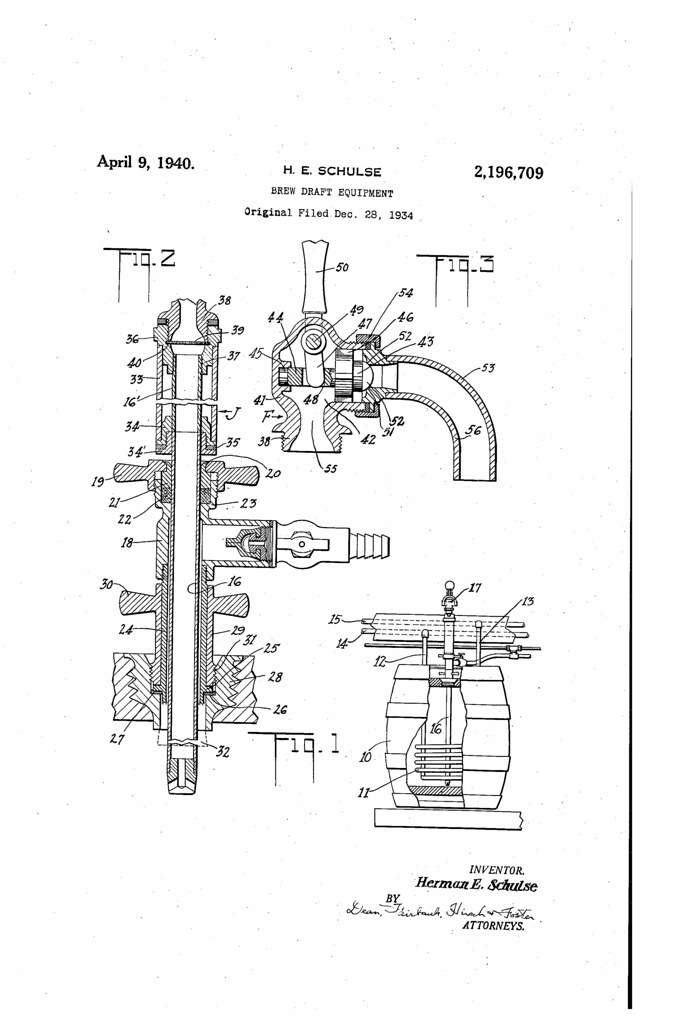
Today in 1940, US Patent 2196709 A was issued, an invention of Herman E. Schulse, for his “Brew Draft Equipment.” There’s no Abstract, although in the description it includes this summary:

My present invention relates to draft equipment of the type used in brew dispensing and a desirable faucet construction.

US2196709-0

Filed Under: Beers, Just For Fun, Politics & Law, Related Pleasures Tagged With: History, Kegs, Law, Patent

Patent No. 2237879A: Display Stand For Beer Bottles

April 8, 2016 By Jay Brooks

patent-logo
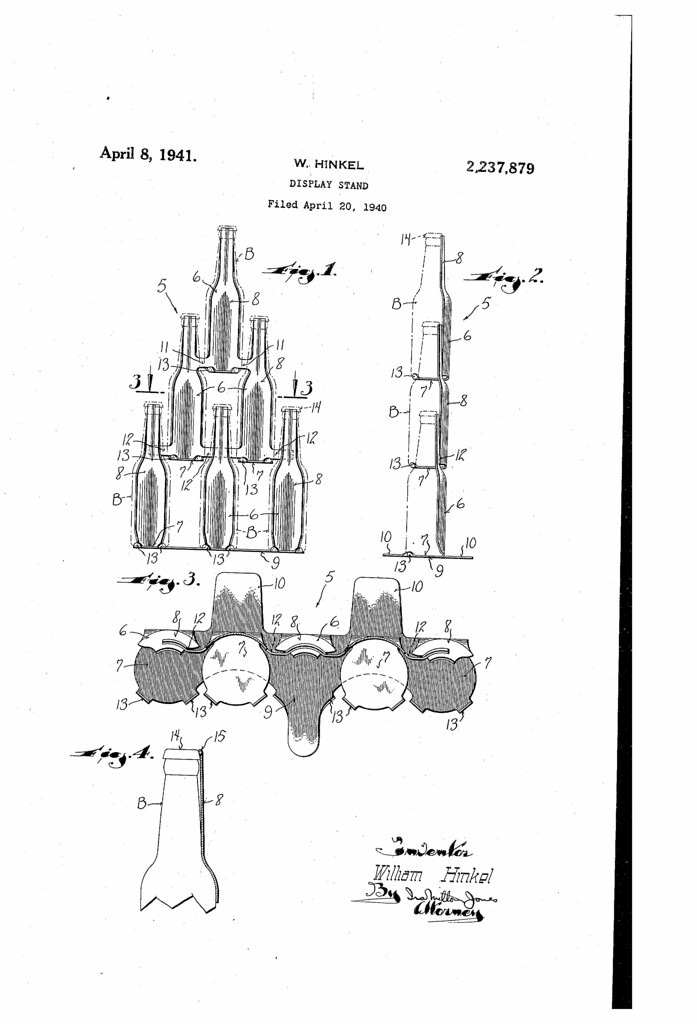
Today in 1941, US Patent 2237879 A was issued, an invention of William Hinkel, assigned to the Schlitz Brewing Co., for his “Display Stand” for beer bottles. There’s no Abstract, although in the description it includes this summary:

This invention relates to `advertising displays and refers particularly to a display stand for use in displaying bottled goods like beer and other beverages.

In advertising displays of this type, empty bottles must be used; but empty bottles lack the appeal of full bottles. It is, therefore, an object of this invention to provide a display stand so constructed that it imparts the illusion of a full bottle when the display is viewed in the normal manner.

Another object of this invention is to provide a display stand so constructed as to support a plurality of bottles in a novel pyramid fashion.

Another object of this invention resides in the provision of means for securing the bottles in place on the stand so that they cannot be removed or shifted from their proper positions with respect to that portion of the stand which serves to create the illusion of fullness for the bottles.

US2237879-0

Filed Under: Beers, Just For Fun, Politics & Law, Related Pleasures Tagged With: Advertising, History, Law, Packaging, Patent

Patent No. CA2133272A1: Preparation Of Beer, Probably Samuel Adams Triple Bock

April 7, 2016 By Jay Brooks

patent-logo
Today in 1995, CA 2133272 A1 was issued, an invention of Charles J. Koch, though the “Applicant” is listed as Charles J. Koch, Boston Beer Company Limited Partnership D/B/A Boston Beer Company (The), A Massachusetts Partnership; General Partner, Boston Brewing Company, Inc., for his “Preparation Of Beer.” Here’s the Abstract:

High alcohol beer having a full, round flavor is prepared by employing as the yeast a wine or champagne yeast, and a sweetened wort.

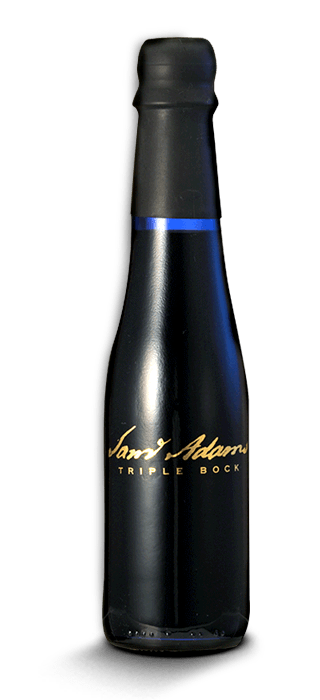
While I can’t be sure, I think this is essentially for Samuel Adams’ Triple Bock, which was first released in 1994. While the patent wasn’t granted until 1995, it was filed in the fall of 1994, but the “priority date” listed is October 6, 1993. The “inventor” listed is Charles J. Koch, who was Jim Koch’s father, although under “applicant” the Boston Beer Co. is also listed. In addition, I recall Jim explaining that it was in fact Champagne yeast that was used to create the beer. So it certainly seems likely that they patented the process used to make that unique beer. I still have a few bottles of it in my cellar though the last couple I opened tasted a lot like soy sauce. To be fair, the bottles that were opened during an anniversary dinner that I was lucky enough to attend in Boston Beer Co.’s barrel room a few years ago were tasting quite good. Although the OCR errors make it difficult reading, it’s still interesting to see the thought process and how they went about it laid out. I may have to open another bottle soon.

bottledetaillargetriplebock

Filed Under: Beers, Food & Beer, Politics & Law, Related Pleasures Tagged With: History, Law, Patent, Science of Brewing, Yeast

Call It Session Beer Day

April 7, 2016 By Jay Brooks

national-session-beer-days
If you’re on the internet, Twitter or Facebook today, you’ll no doubt have noticed that people are saying it’s National Beer Day. And it is, but only in the sense that somebody decided to call it that, and lots of people agreed to it, as well. Which is exactly how every holiday got started. But the day should, I think, make sense. April 7 was chosen because it was the day that beer was first available after prohibition ended. Or at least that’s what a lot people believed, and continue to believe. Some even still call April 7 “Repeal Day.” But, of course, it wasn’t. When Franklin D. Roosevelt took office as our 32nd president on March 4, 1933, he quickly got to work on one of his campaign promises: to end prohibition.

He wrote to Congress on March 13, 1933:

I recommend to the Congress the passage of legislation for the immediate modification of the Volstead Act, in order to legalize the manufacture and sale of beer and other beverages of such alcoholic content as is permissible under the Constitution; and to provide through such manufacture and sale, by substantial taxes, a proper and much-needed revenue for the Government. I deem action at this time to be of the highest importance.

The very next day, Representative Thomas H. Cullen introduced the proposed legislation in the House of Representatives. Senator Pat Harrison did likewise in the Senate. It easily passed both houses, and was sent to committee on March 20. The re-worked combined document was approved by the Senate later the same day, while the House approved it the following day.

On March 22, FDR signed the Cullen-Harrison Act, which amended the Volstead Act and specifically “27 U.S.C.: Intoxicating Liquors,” creating § 64a et seq., allowing for the manufacture and sale of low-alcohol beer, which they defined as 3.2% alcohol by weight (which by the more common standard today, is beer that’s 4% by volume or abv – technically 4.05%). When he signed the legislation, FDR is reported to have quipped. “I think this would be a good time for a beer.”

FDR signing the Cullen-Harrison Act.

According to the act, each state then was free to pass it’s own similar legislation and allow 3.2 beer to once again be available. Twenty-one of the states, including California, along with the District of Columbia, took the federal government up on the offer, and passed their own laws to allow low-alcohol beer. The new law took effect on April 7, 1933.

faurbach-april-1933
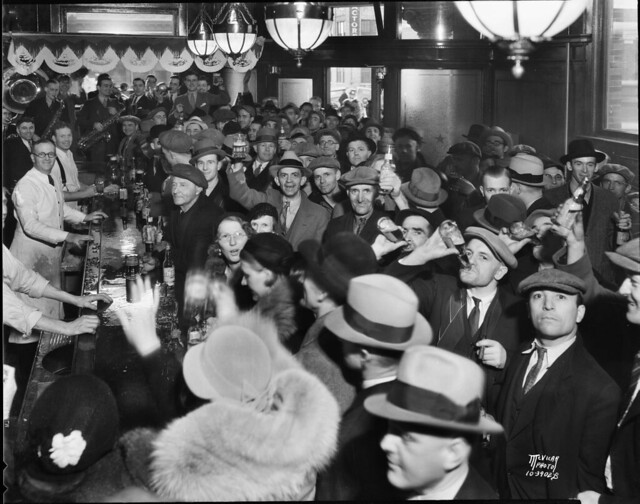
A raucous crowd celebrating the return of 3.2 beer at the Fauerbach Brewery tavern in WIsconsin on April 7, 1933. They even had a small band playing in a corner of the bar.

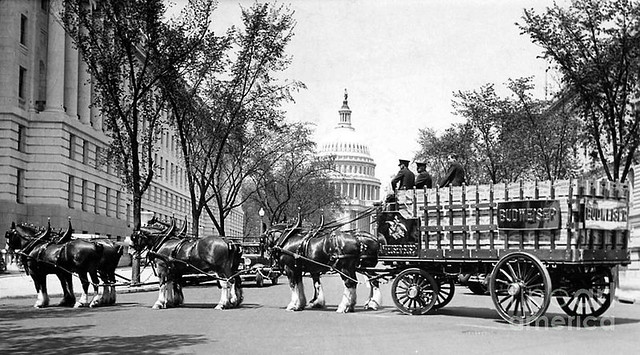
So people in those states were pretty thrilled about being able to legally drink beer again for the first time in thirteen years, longer in some states, even if it was only weaker beer. Celebrations were held around the country. Since most breweries knew once FDR took office that beer would likely be back, they started brewing at least by March 22, when the law was signed, so that beer could be ready for early April. This was also the beginning of one of the most well-known marketing strategies, when Anheuser-Busch president Gussie Busch sent a team of clydesdale horses pulling a beer wagon first to present beer to New York governor Al Smith and then down Pennsylvania Avenue in Washington, D.C. to deliver beer to present Roosevelt.

beer-for-the-president

In the run-up to April 7, people in those twenty-one states started getting pretty excited and started calling the impending day names like “Beer is Back Day” and “Brew Year’s Day” or “New Beer’s Day.” What they didn’t call it was “National Beer Day.” That day would have to wait until December 5, 1933, when Utah ratified the 21st Amendment, the 36th state to do so, and making it the law of the land. The 21st Amendment repealed prohibition and made it possible for beer and wine of all strengths, along with spirits, to be legal again in all 48 states, whereas in April only 21 states legalized some beer, but only if they were low in alcohol. In fact, it wasn’t until 2009 that a man in Richmond, Virginia, who, at the urging of a friend, conceived of calling April 7 National Beer Day.

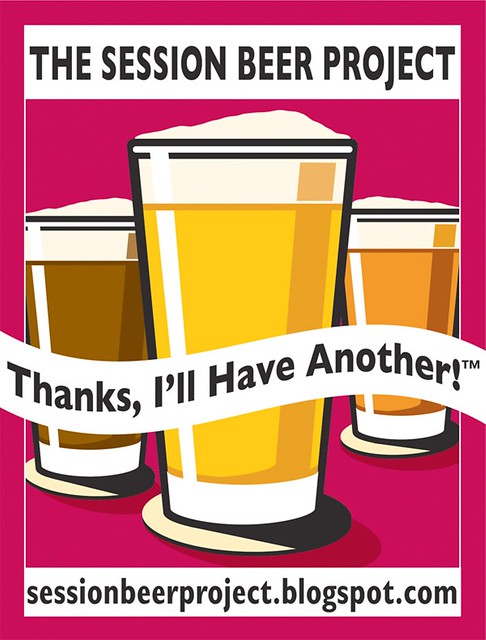
I’m certainly in favor of celebrating beer. I do so pretty much every day in my house. As regular readers know, I keep track of beer holidays, birthdays and historical dates, too. It’s a hobby of mine. You can follow along on the Brookston Almanac. But I think that if we’re going to celebrate a “National Beer Day” that December 5 makes a lot more sense since that’s when beer became legal again nationally in every state in America in 1933, or at least had the potential to do so. More recently, Lew Bryson, launched April 7th as “Session Beer Day” as a part of his Session Beer Project, which is designed to shine a light on and celebrate low-alcohol, but full-flavored beer. And that, to me, makes more sense because it was beer that was 4% abv or lower that became legal today, which is essentially our modern definition of a “session beer.”

sessionbeer

Here’s what I wrote about session beers in 2010, and I think it still holds true today.

While “extreme beers” are the current darlings of the craft beer scene, another kind of beer is waiting in the wings for its shot at the spotlight: Session Beers. They’ve been here all along, but they often don’t get the attention they deserve. If extreme beers are the big bullies of the beer world, loud and brash with huge flavors, showing great depth and complexity, and usually high alcohol, session beers are their polar opposite.

Session beers are, by contrast, light-bodied, with delicate flavors and are often very refreshing. What’s not to like? They’re actually harder to make than extreme beers, because it’s also easier to hide flaws in a big beer. A session beer is a beer that’s naked by comparison. Any defect is immediately obvious.

One of my favorite quotes about making these kinds of beers is by Gordon Biersch brewer Tom Dargen, who once said. “Making [a session] beer is like going to the beach in a thong. You better have all your parts in place or it’s going to be ugly.”

Defining a session beer

So what exactly is a “session beer?” Defining them is actually trickier than is sounds. They’re not exactly a beer style or even a collection of styles, more like an idea. The basic notion is that a “session beer” is one that you can drink during an entire “session” of drinking and still be relatively lucid and hold up your end of the conversation.

Their most obvious characteristic is that they’re lower in alcohol than many mainstream beers, which are usually around 5.5% a.b.v. — alcohol by volume. While there’s no official definition, most people tend to believe that beers under 5% can be considered session beers, and at least a few set the bar even lower.

Bryson defines them as being 4.5% or below and also includes in his definition that they must be flavorful, balanced and reasonably priced. His simplest way of describing them is “low-alcohol, but not low-taste.”

They’re the ideal for beer for an evening at the pub, spending the night with friends, having a few drinks and talking about the day’s events. That’s one of the reasons most British beers that you’ll find at an average pub in England can be considered session beers, at least the cask or real ales. English ales are usually around 4.5% or less but remain surprisingly full-flavored.

Session beers are also similar to so-called “lawnmower beers,” except that they tend to be more flavorful. Lawnmower beers are most often mass-produced light lagers with very little actual flavor or hop character. The kind of beer you want to quench your thirst after mowing the lawn in the hot sun. Session beers are similarly light-bodied, but should stand apart by having delicate, but very obvious hop, malt, and/or other flavor characteristics.

My friend Martyn Cornell, who’s a British beer writer and historian, gave one of the best statements I’ve ever seen about how session beers are not just about being low-alcohol, but are “a combination of restraint, satisfaction, and ‘moreishness.’ Just like the ideal companions on a good evening down the pub, a good session beer will not dominate the occasion and demand attention; at the same time its contribution, while never obtrusive, will be welcome, satisfying, and pleasurable.”

There are plenty of beers that fit that definition being made by craft brewers in America and by small and large breweries abroad, too. Many area breweries and brewpubs have one or two that can be considered a session beer. Check the alcohol level and then give them a taste to make sure they’re as flavorful as you like.

While many are also light in color, golden to amber, they don’t have to be. One of the most surprising session beers is Guinness, because many people believe that dark beers are heavier beers. But that’s just not the case, as Guinness Draught is only 4% a.b.v.

A beery backlash

I should point out that I love many extreme beers and in no way think session beers should replace them, or otherwise diminish their popularity. Extreme beers include some of the best, most experimental, most forward-looking beers ever conceived and brewed. They’ve helped redefine what beer is and what it can be. It’s helped bring foodies into the fold by its ability to be paired with an endless variety of foods, standing up to many dishes that wine cannot. I certainly won’t stop being excited by all the wonderful big beers being made.

But more is not always, well … more. Sometimes less is. Sometimes you just want something that has subtlety, delicate flavors and lets you enjoy your time with friends and family. And that’s why session beers are such a great choice.

Session beers are simply a great concept, and one that promotes both responsible drinking and conviviality, while at the same time not sacrificing taste. I can certainly drink to that.

Essentially every day is National Beer Day, but today should really be Session Beer Day.

session-beer-day

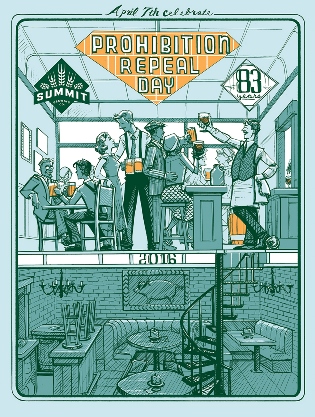
UPDATE 4.8: To underscore my point that many people still incorrectly believe that prohibition was repealed on April 7, witness Summit Brewing’s new poster for 2016, whose title reads “April 7 Celebrate Prohibition Repeal Day.” C’mon guys, I know your heart is in the right place, but this isn’t helping.

summit-repeal-day-2016

Filed Under: Beers, Editorial, Just For Fun, News, Politics & Law, Related Pleasures Tagged With: History, Holidays, Session Beers

Patent No. 5735425A: Reusable Beer Keg Plug

April 7, 2016 By Jay Brooks

patent-logo
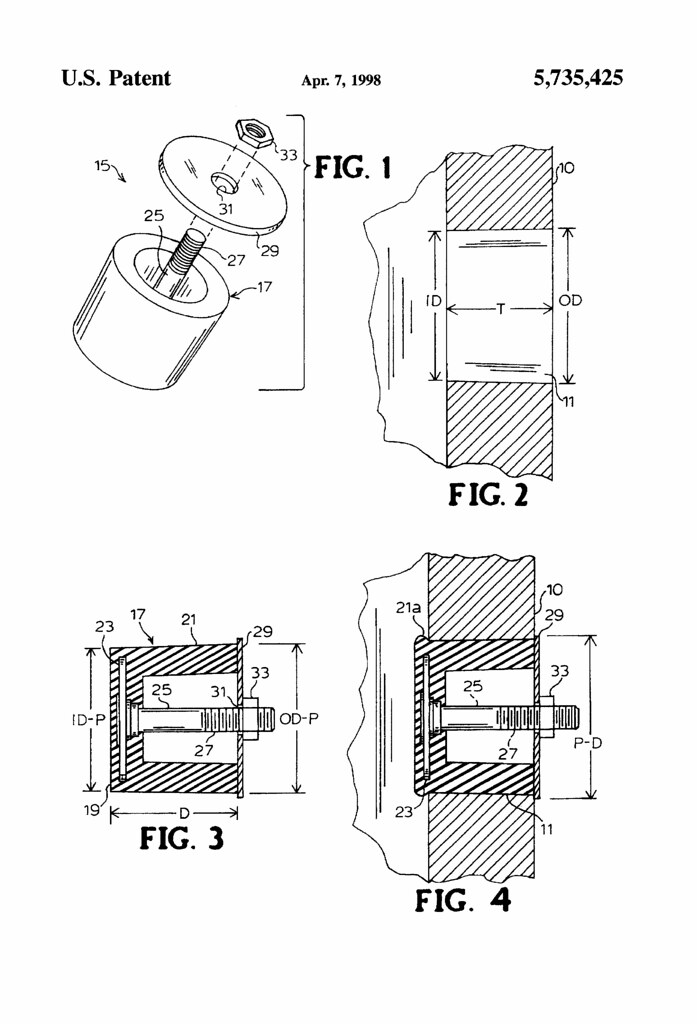
Today in 1998, US Patent 5735425 A was issued, an invention of Leigh P. Beadle, for his “Reusable Beer Keg Plug.” Here’s the Abstract:

An improved reusable beer keg plug replaces the conventional wooden bung and is formed of an elastomeric material as a tapered, expandable plug suited to being snugly fitted within a conventional beer keg sidewall tapered hole and thereafter expanded by an adjustable tightening device forming part of the plug.

US5735425-1

Filed Under: Beers, Just For Fun, Politics & Law, Related Pleasures Tagged With: History, Kegs, Law, Patent

Portland’s Early Bars

April 6, 2016 By Jay Brooks

portland
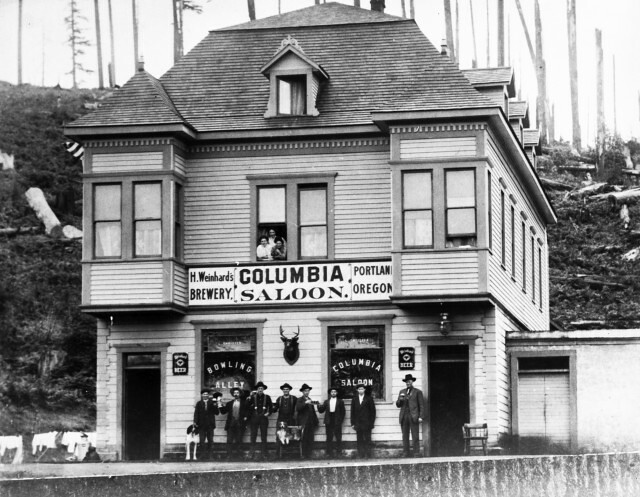
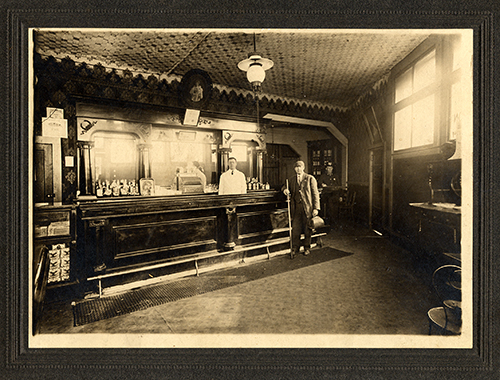
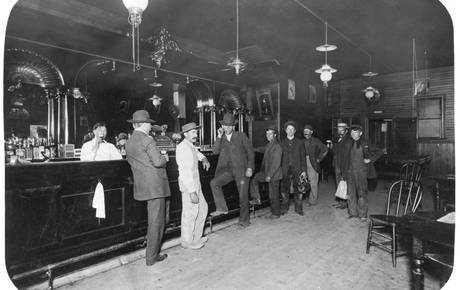
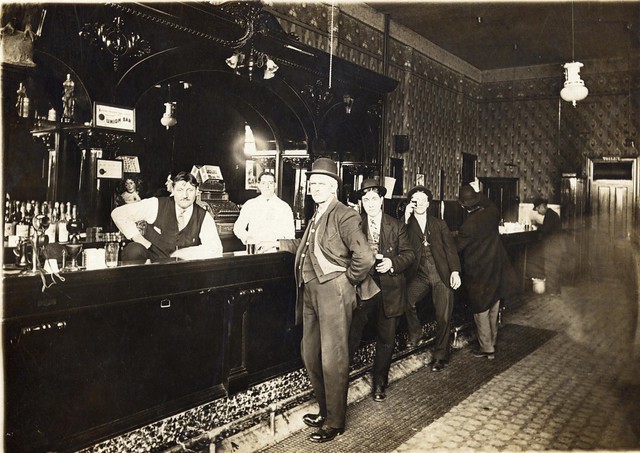
The city of Portland, Oregon was founded in 1845, incorporated on February 8, 1851, and the charter creating the city became effective April 6, 1851. In my regular searches, I’ve turned up a number of photos of early saloons, bars and taverns in Portland and it seemed like today was as good a day as any to share them.

Columbia_Saloon
This is the Columbia Saloon, which served Henry Weinhard beer and had a bowling alley inside.

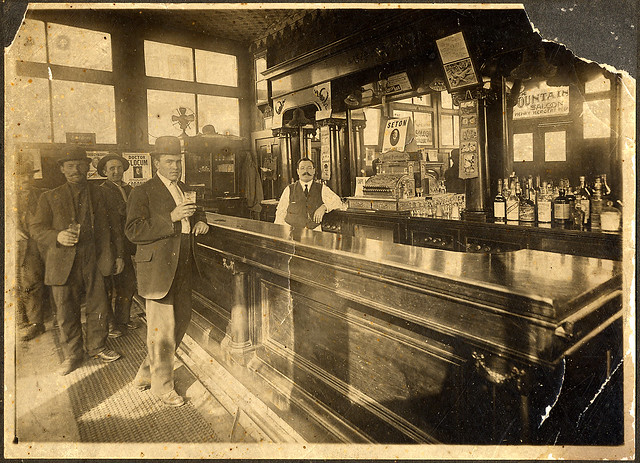
Portland-fountain_saloon
The Fountain Saloon, also known as Hergert’s Saloon, was located E Union and Russell. Henry Elias Hergert Sr. (1876-1937) is shown behind the bar.

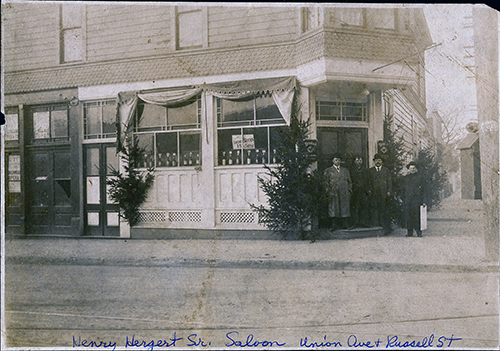
hergerts
The exterior of Hergert’s Saloon.

hergerts-inside
Another view inside Hergert’s Saloon.

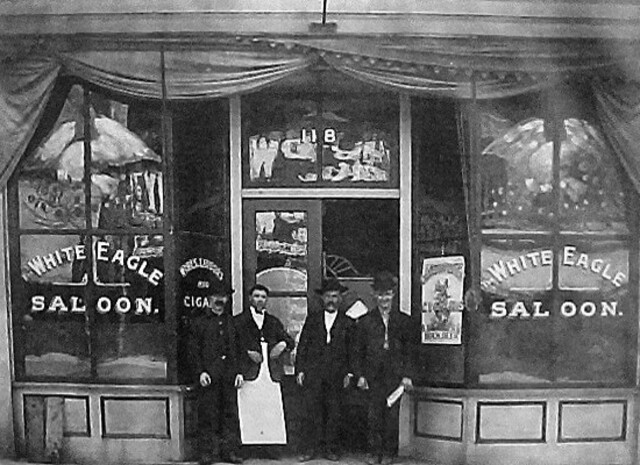
white-eagle-saloon
The White Eagle Saloon, built in 1905. According to one source, it “was at once an opium den, bordello and wild watering hole, a trifecta that resulted in so many ugly bar fights that the place eventually earned the nickname ‘Bucket of Blood,'” and is considered haunted. “One spirit is blamed for most of the mischief: The ghost of Sam Warrick, an early White Eagle cook and bartender who spent his last days living above the bar. A ghost with a prankster side, he’s been known to toss large containers of mustard across the kitchen with great force, startling the cook who’s taken over his old post.”

white-eagle-inside
Inside the White Eagle, which is now operated by McMenamins.

Ericksons-Saloon
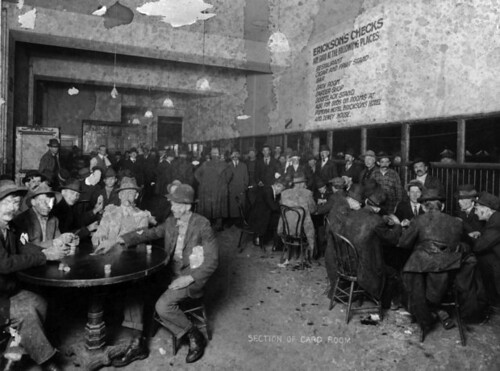
Erickson’s Saloon, built in the 1880s. Here’s a history of the place.

Erickson's-card-room
Erickson’s card room.

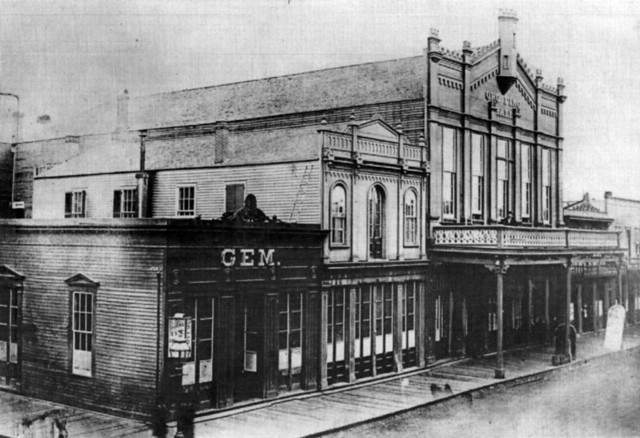
orofino-saloon-hall-ohs-a
The Gem Saloon and Oro Fino Saloon and Theater, located on First Street between Oak and Stark, in 1876.

And finally, below is the Oregon Experience Documentary “Beervana,” about how beer culture has evolved in Portland. Happy Birthday Portland.

Filed Under: Beers, Just For Fun, Politics & Law, Related Pleasures Tagged With: Bars, History, Portland

Patent No. EP0262762A1: Valve For Beer Keg

April 6, 2016 By Jay Brooks

patent-logo
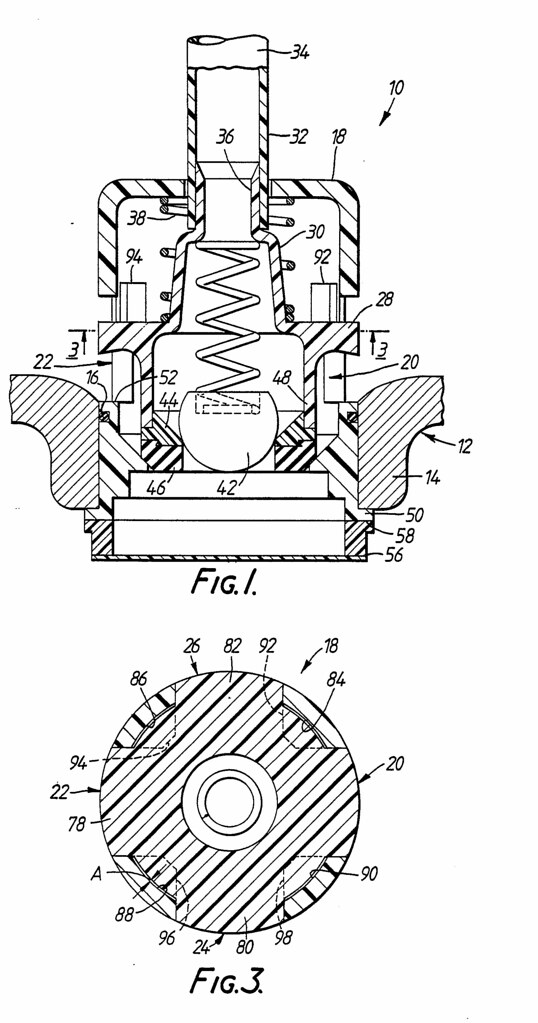
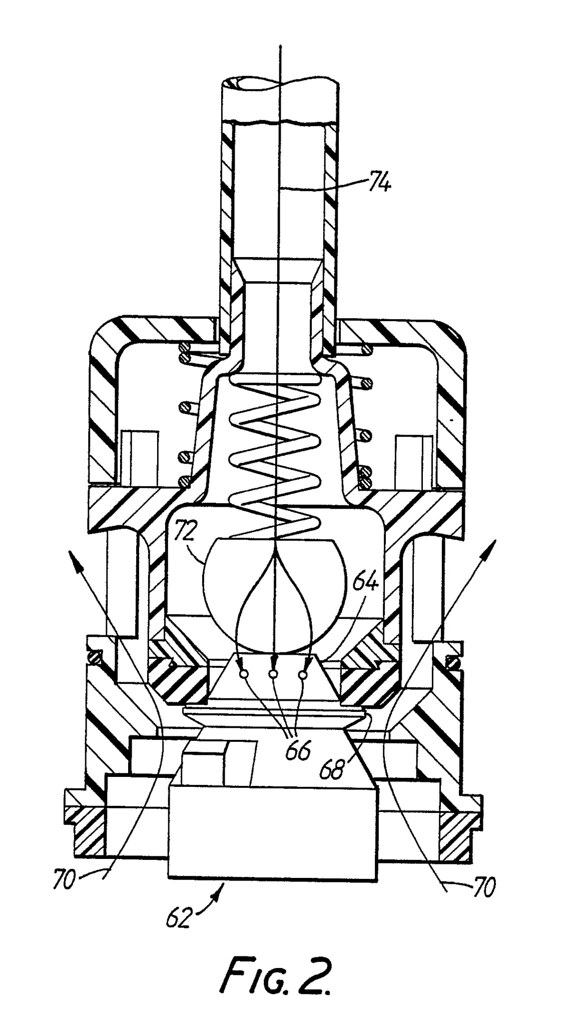
Today in 1988, US Patent EP 0262762 A1 was issued, an invention of James N. Dewes, James P. Hagan, and Jeffrey W. Gunn, for their “Valve For Beer Keg.” Here’s the Abstract:

A valve (10) for use with a beverage container is fully compatible with, and enhances the utility of, conventional automatic filling equipment. The valve is preferably of formed of plastic components and is therefore can form an economical throw-away unit in combination with a plastic keg. A cylindrical outer cage (18) includes a plurality of lengthwise apertures (20,22,24,26,). A transversely-oriented deflector plate is fixed to an inner cage (30) that is movable with respect to the outer cage. springs (38) urge the inner and outer chambers of the valve to closed positions. The valve is arranged so that both chambers are opened by the insertion of the filling head of a conventional automatic racking machine. The plate deflects a pressurized beverage input, lessening agitation and turbulence, whereby only minimal, if any, foam or head is generated during the filling process.

0262762-imgf0001

0262762-imgf0002

Filed Under: Beers, Just For Fun, Politics & Law, Related Pleasures Tagged With: History, Kegs, Law, Patent

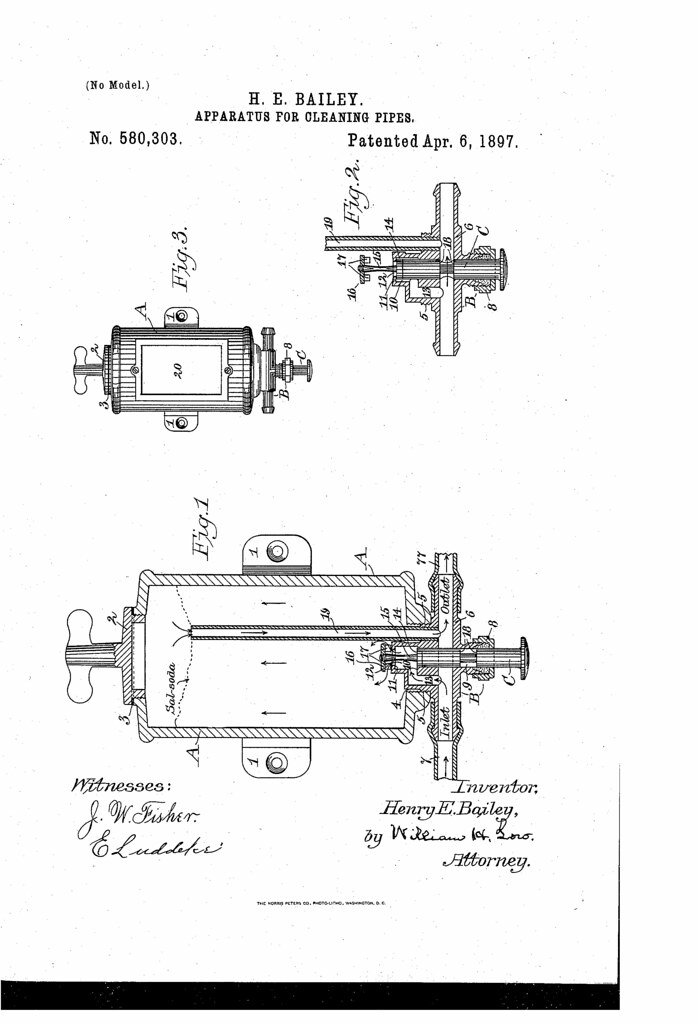
Patent No. 580303A: Apparatus For Cleaning Pipes

April 6, 2016 By Jay Brooks

patent-logo
Today in 1897, US Patent 580303 A was issued, an invention of Henry E. Bailey, for his “Apparatus For Cleaning Pipes.” There’s no Abstract, although in the description it includes this summary:

In using beer and other malted liquors there is found a tendency to the formation of slime and other offensive matter that is deposited therein by the liquid from which it emanates. This deposition will soon produce a cloudy appearance and objectionable taste in the liquid that flows through the pipe.

The object of my invention is to provide an apparatus that will chemically dissolve the slime and other depositions in the pipe and then, by a flow of clear water which passes through the apparatus,thoroughly cleanse the pipe of all improper matter and restore it to a condition of purity and cleanliness.

US580303-0

Filed Under: Beers, Just For Fun, Politics & Law, Related Pleasures Tagged With: Bars, History, Kegs, Law, Patent, Pubs

« Previous Page
Next Page »

Find Something

Northern California Breweries

Please consider purchasing my latest book, California Breweries North, available from Amazon, or ask for it at your local bookstore.

Recent Comments

  • Bob Paolino on Beer Birthday: Grant Johnston
  • Gambrinus on Historic Beer Birthday: A.J. Houghton
  • Ernie Dewing on Historic Beer Birthday: Charles William Bergner 
  • Steve 'Pudgy' De Rose on Historic Beer Birthday: Jacob Schmidt
  • Jay Brooks on Beer Birthday: Bill Owens

Recent Posts

  • Beer In Ads #5187: Ballantine’s Bock Is Here — With Horns! March 26, 2026
  • Historic Beer Birthday: Augustus Hoeveler March 26, 2026
  • Historic Beer Birthday: Bill Siebel March 26, 2026
  • Historic Beer Birthday: Conrad Windisch March 26, 2026
  • Beer Birthday: Rudi Ghequire March 26, 2026

BBB Archives

Feedback

Head Quarter
This site is hosted and maintained by H25Q.dev. Any questions or comments for the webmaster can be directed here.