Brookston Beer Bulletin

Jay R. Brooks on Beer

  • Home
  • About
  • Editorial
  • Birthdays
  • Art & Beer

Socialize

  • Dribbble
  • Email
  • Facebook
  • Flickr
  • GitHub
  • Instagram
  • LinkedIn
  • Pinterest
  • RSS
  • Twitter
  • YouTube

Powered by Genesis

Patent No. 2623672A: Beer Jetter

December 30, 2015 By Jay Brooks

patent-logo
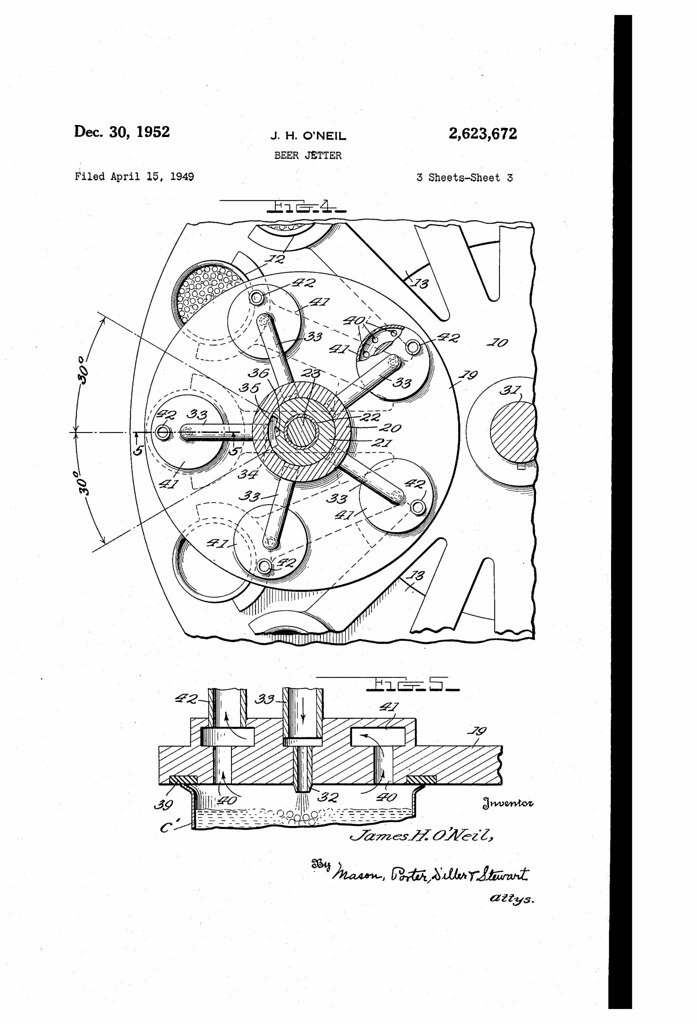
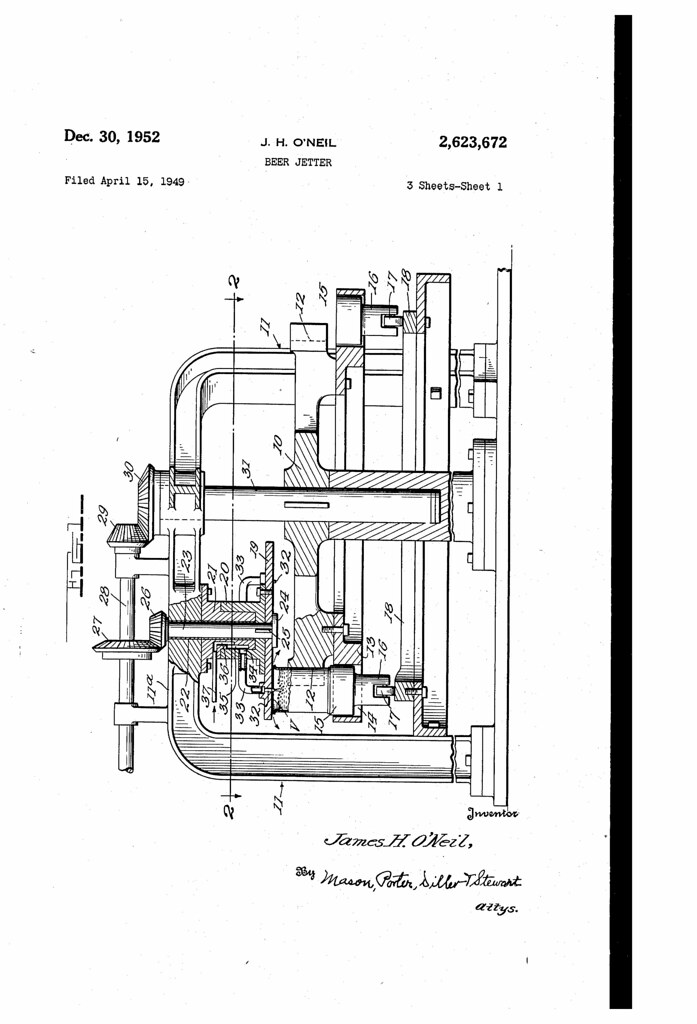
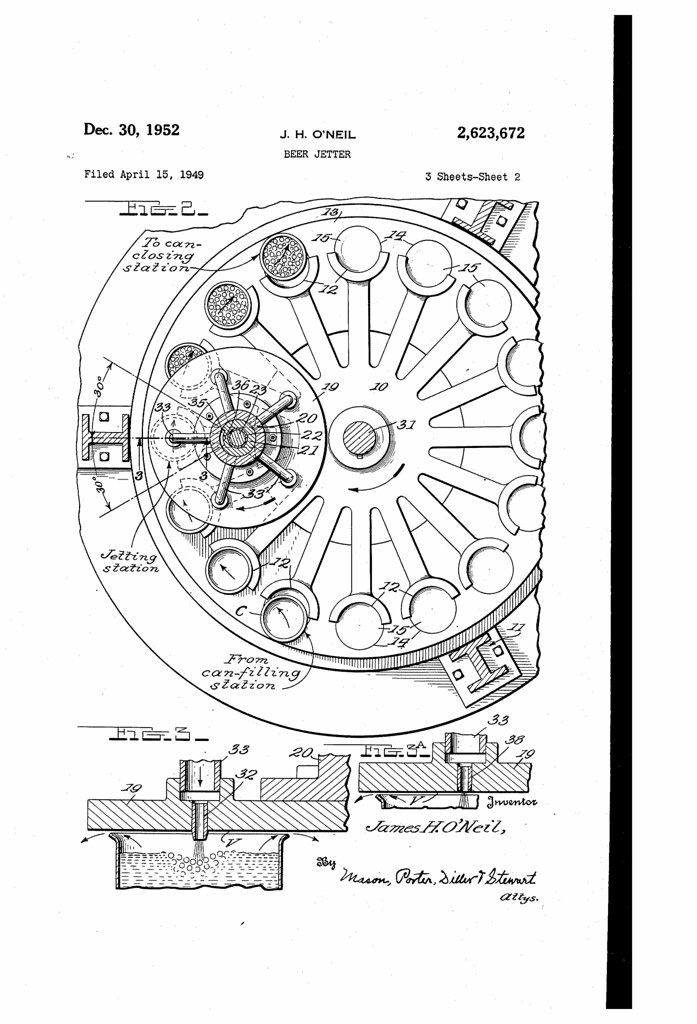
Today in 1952, US Patent 2623672 A was issued, an invention of James H O’Neil, assigned to the Continental Can Co., for his “Beer Jetter.” There’s no Abstract, although in the description it includes this summary:

The invention relates to new and useful improvements in a method of packaging beer in containers and more particularly in open top cans. The elimination of air from the head space of the container before sealing is recognized as desirable. Many expedients have been proposed and utilized for this purpose, including the directing of a jet of inert gas into the beer beneath the surface thereof through a nozzle submerged in the beer in an open top can for causing foam to ll the head space and force the air therefrom. The wide open mouth of the open top can presents difficulties when attempts are made to direct a jet of inert gas into the beer from a point above the surface of the beer, because the jetted stream entrains surrounding air which is driven into the beer along with the inert gas causing an excessive amount of air to be entrapped in the beer and foam. Also, the velocity of the jet must be controlled to avoid blowing the foam from the surface of the beer thereby causing excessive foaming and Waste of beer.

An object of the invention is to provide a method of directing inert gas into an open top can partially filled with a gas containing beverage which includes the step of first covering the mouth of the can so as to provide a closed head space with a vent opening leading to the atmosphere and then directing a jet of inert gas through the closed head space at a point above the surface of the beer at a velocity sufficient to cause the gas to penetrate the surface of the beer for causing the beer to foam and iill the head space with foam.
US2623672-0
US2623672-1
US2623672-2

Filed Under: Beers, Breweries, Just For Fun, Politics & Law, Related Pleasures Tagged With: Brewing Equipment, Cans, History, Law, Packaging, Patent

Patent No. 717493A: Wort-Cooler

December 30, 2015 By Jay Brooks

patent-logo
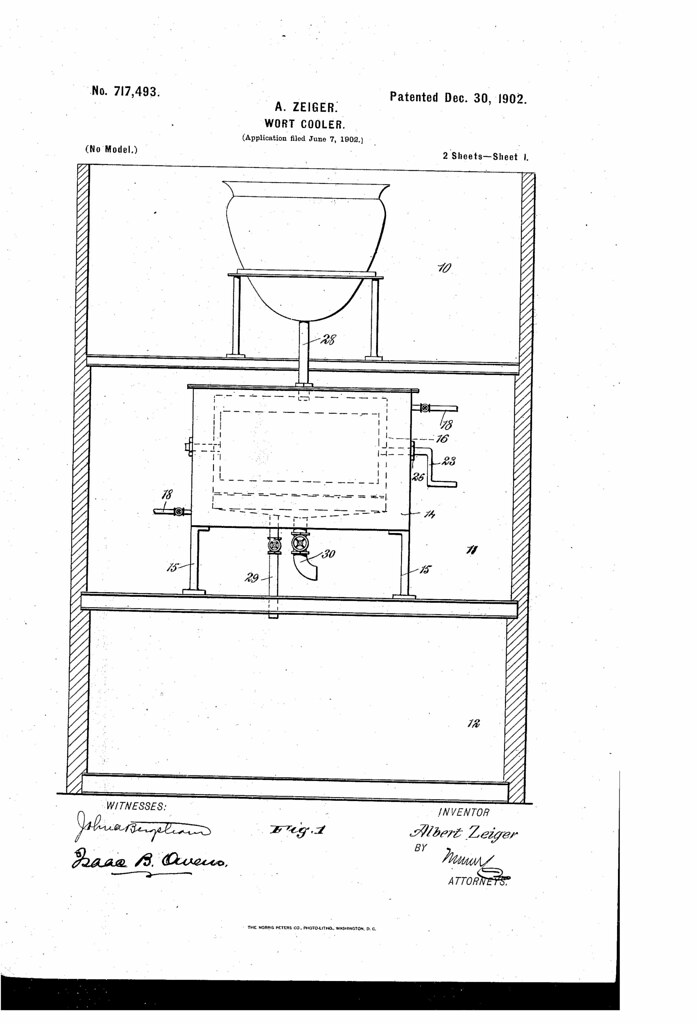
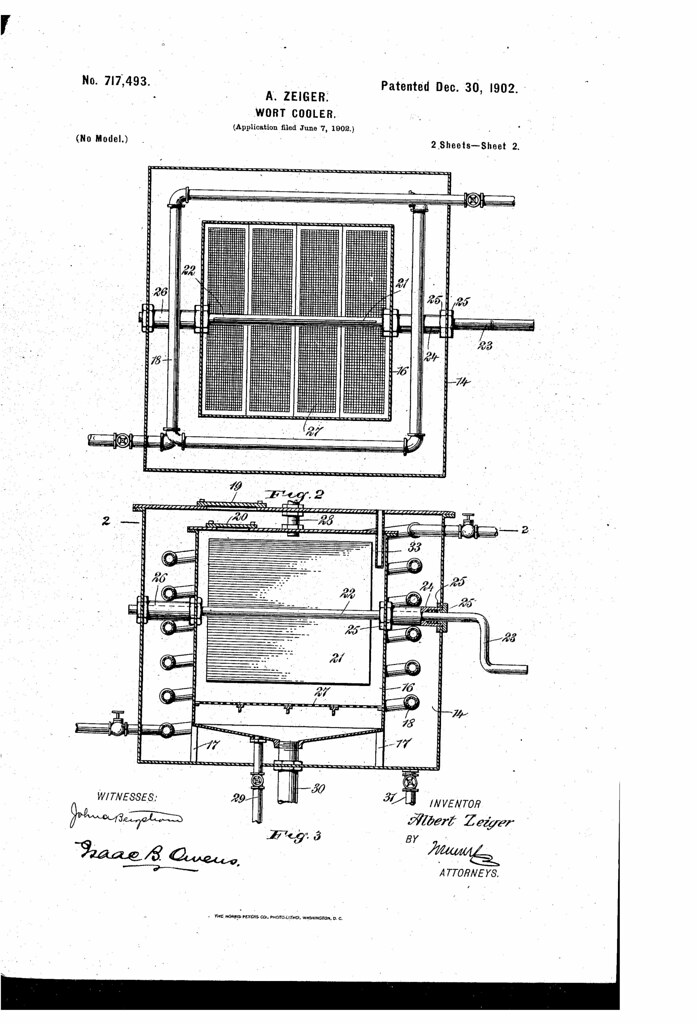
Today in 1902, US Patent 717493 A was issued, an invention of Albert Zeiger, for his “Wort-Cooler.” There’s no Abstract, although in the description it includes this summary:

This invention relates to an apparatus for cooling wort as it comes from the kettles in the brewery; and it embodies certain novel features of construction and arrangement of parts which enables it to be used not only as a wort-cooler, but as a strainer to remove the hops from the wort, thus permitting the wort to be run directly from the cooler into the fermenting-room and dispensing with the necessity of the hopper-jack, which has heretofore been used.

US717493-0
US717493-1

Filed Under: Beers, Breweries, Just For Fun, Politics & Law, Related Pleasures Tagged With: Brewing Equipment, History, Law, Patent, Science of Brewing, Wort

Patent No. 3550818A: Keg Tapping Device

December 29, 2015 By Jay Brooks

patent-logo
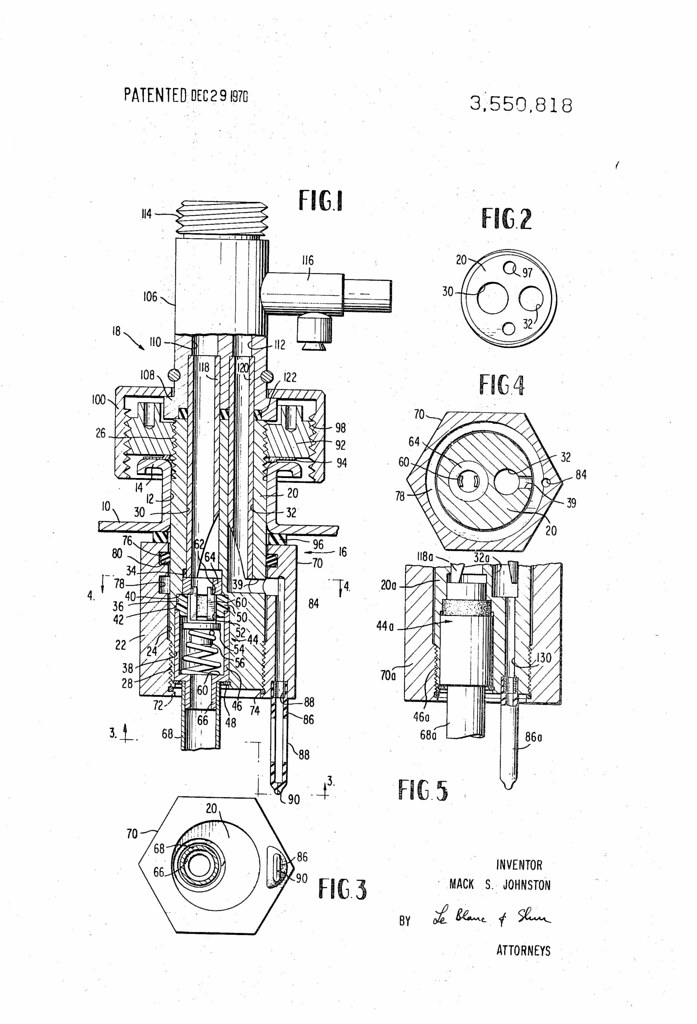
Today in 1970, US Patent 3550818 A was issued, an invention of Mack S. Johnston, for his “Keg Tapping Device.” Here’s the Abstract:

Disclosed is a keg adapter having a siphon body receivable through the opening of a keg and a retainer nut within the keg. The siphon body has liquid and gas passages extending longitudinally of the keg adapter terminating at their upper ends in a pair of bores disposed eccentrically of the axis of the opening. The gas passage terminates intermediate the ends of the siphon body in a lateral opening. The retainer nut has a central opening for receiving the lower portion of the siphon body and an annular recess for communication with the lateral siphon body opening, the recess communicating through a bore in the nut into the keg. A coupler unit having a pair of depending probes is engageable with the keg adapter with the probes being receivable in the bore holes in the siphon body. A liquid valve is disposed in the liquid passage and the lower end of the liquid probe engages an axially moveable member engageable with the valve to open the latter, permitting egress of liquid from the keg through the keg adapter and coupler unit. A flexible envelope having a slit is provided on the lower end of the retainer nut in communication with the bore therethrough to permit ingress of gas through the coupler unit and keg adapter into the keg. The body of the keg adapter is hexagonal as to be receivable within the head of a wrench.

US3550818-1

Filed Under: Beers, Just For Fun, Politics & Law, Related Pleasures Tagged With: History, Kegs, Law, Patent

Patent No. 466310A: Wort And Yeast Aerator For Beer Vats

December 29, 2015 By Jay Brooks

patent-logo
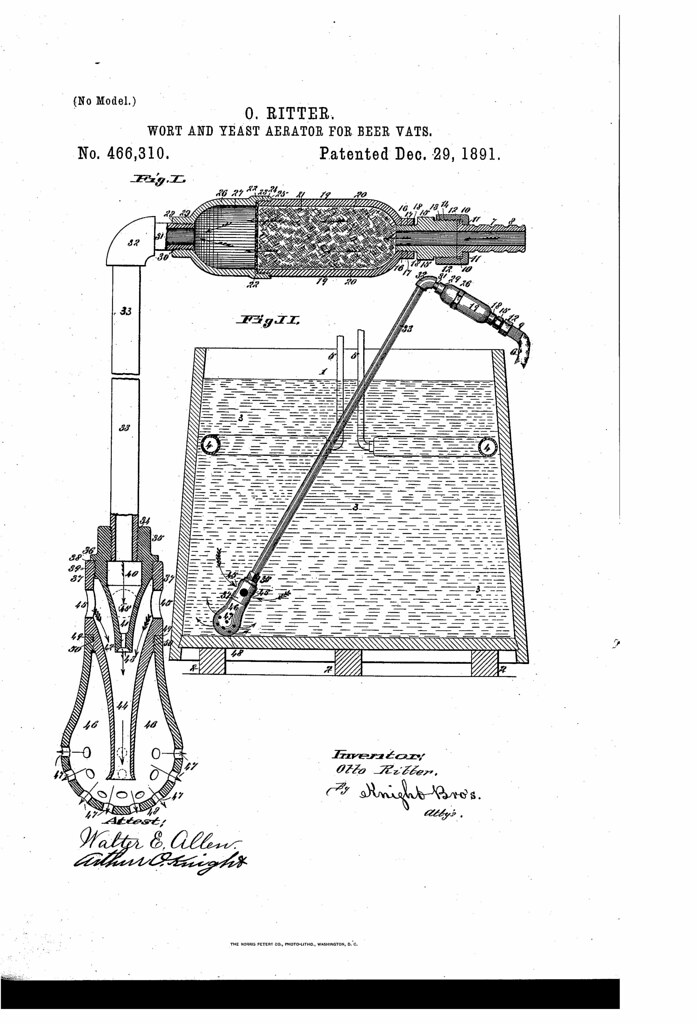
Today in 1891, US Patent 466310 A was issued, an invention of Otto Hitter, for his “Wort and Yeast Aerator For Beer Vats.” There’s no Abstract, although in the description it includes this summary:

I have invented a-certain new and useful Improvement in Wort and Yeast Aerators for Beer Vats, of which the following is a full, clear, and exact description, reference being had to the accompanying drawings, forming part of this specification.

This apparatus is constructed and arranged consists in features of novelty hereinafter fully described, and pointed out in the claims. Figure I isa detail view of the aerator and shows the coupling for the air-hose, the air filter, the bulb-casing of which later forms a handle or hold for the operator, by which he directs the instrument. It also shows the inception filtered air-chamber, the supply air tube, and the compound aerating-bulb; and Fig. II is a vertical section of a brewers fermenting vat and shows the yeast and wort aerator in active operation therein.

US466310-0

Filed Under: Beers, Breweries, Just For Fun, Politics & Law, Related Pleasures Tagged With: Brewing Equipment, History, Law, Patent, Science of Brewing, Wort

Patent No. D152196S: Design For A Combination Key Holder & Bottle Opener

December 28, 2015 By Jay Brooks

patent-logo
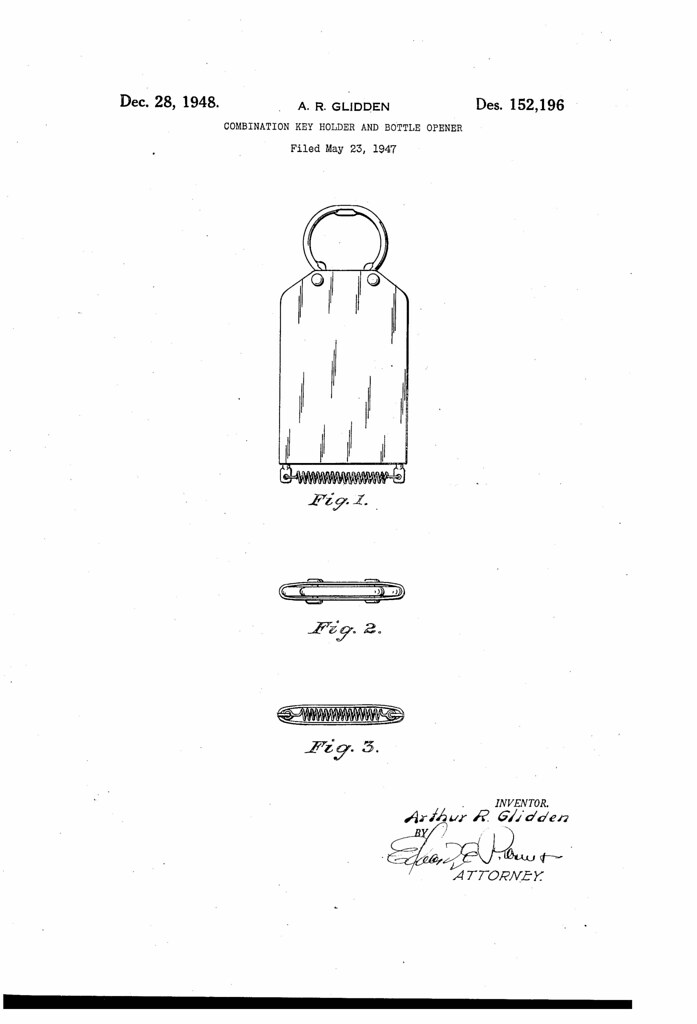
Today in 1948, US Patent D152196 S was issued, an invention of Arthur R. Glidden, for his “Design For a Combination Key Holder and Bottle Opener.” There’s no Abstract, although in the description it includes this summary:

I have invented a new, original, and ornamental Design for a Combination Key Holder and Bottle Opener, of which the following is a specification, reference being had to the accompanying drawing, forming a part thereof.

USD152196-0

Filed Under: Beers, Just For Fun, Politics & Law, Related Pleasures Tagged With: Bottles, History, Law, Packaging, Patent

Patent No. 3225510A: Article Cartoning Machine

December 28, 2015 By Jay Brooks

patent-logo
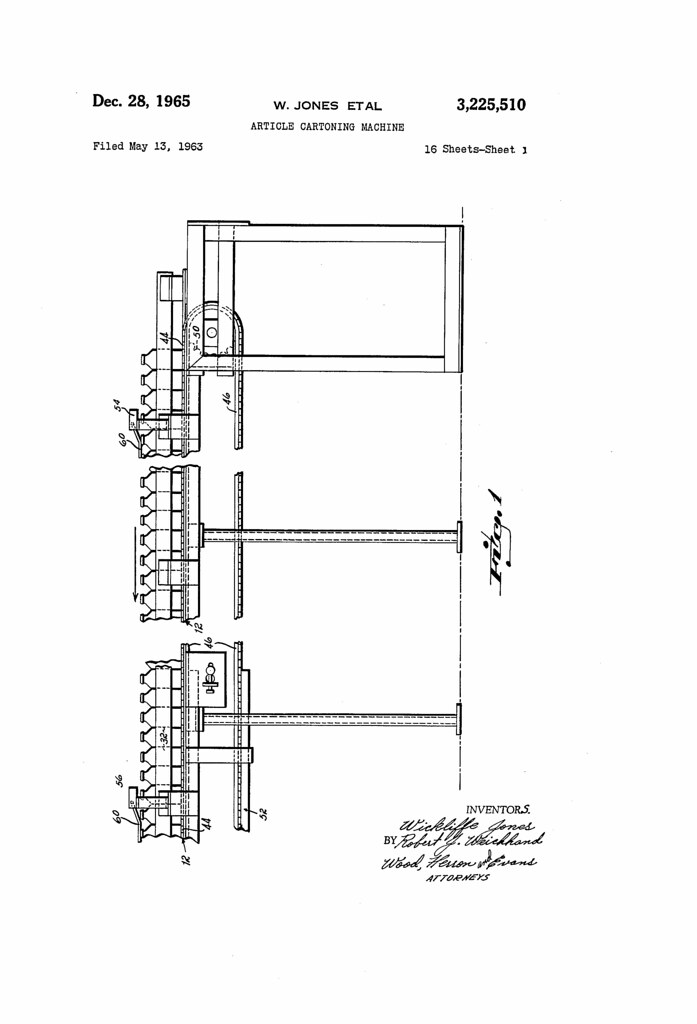
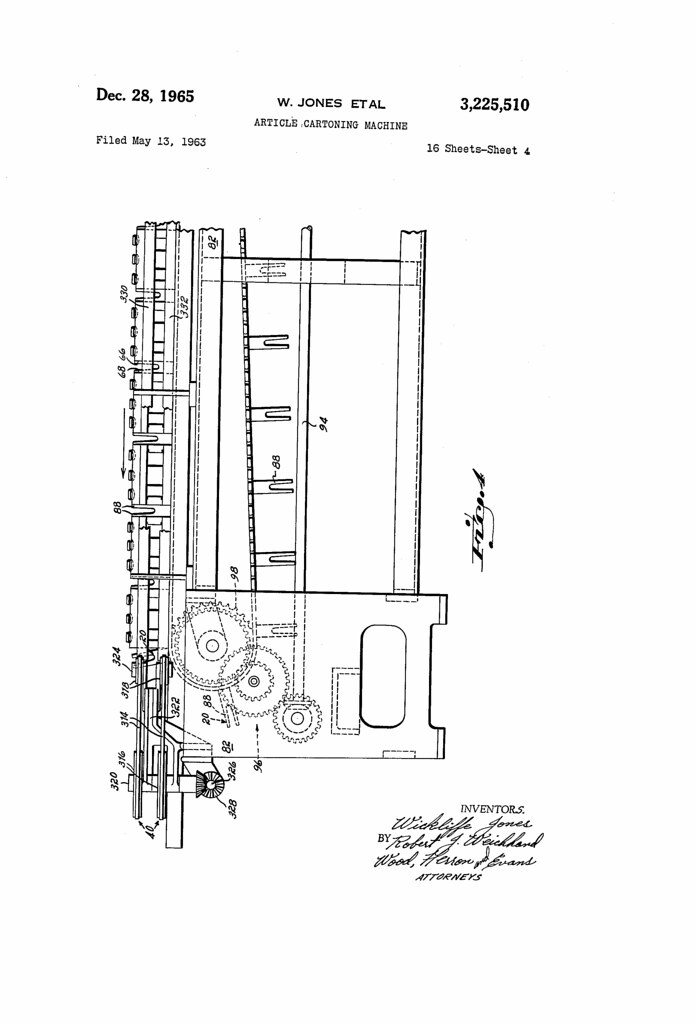
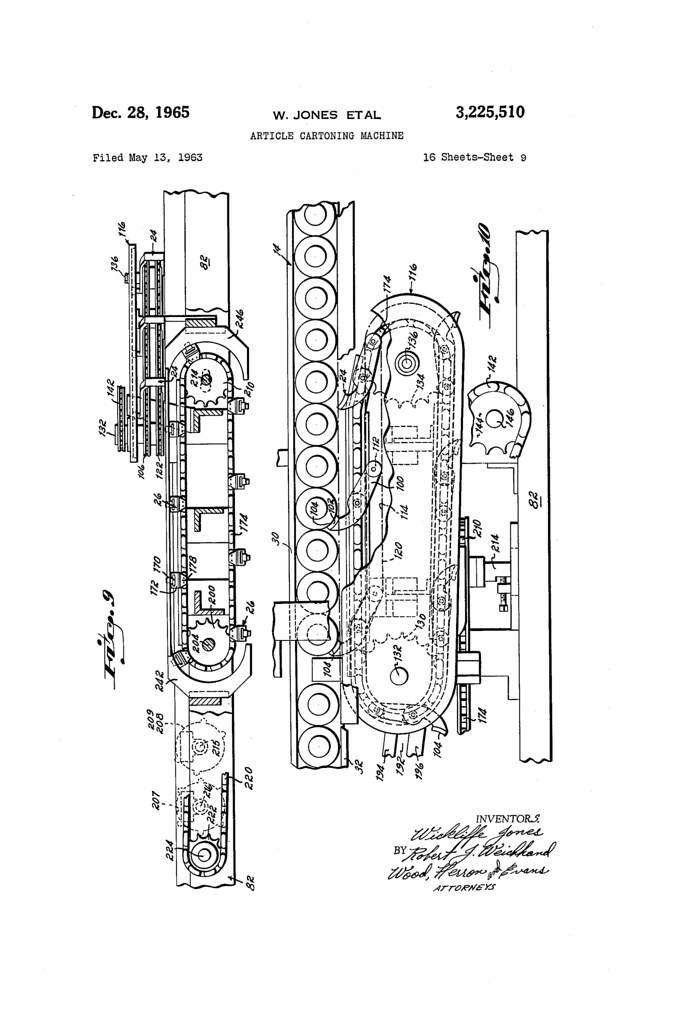
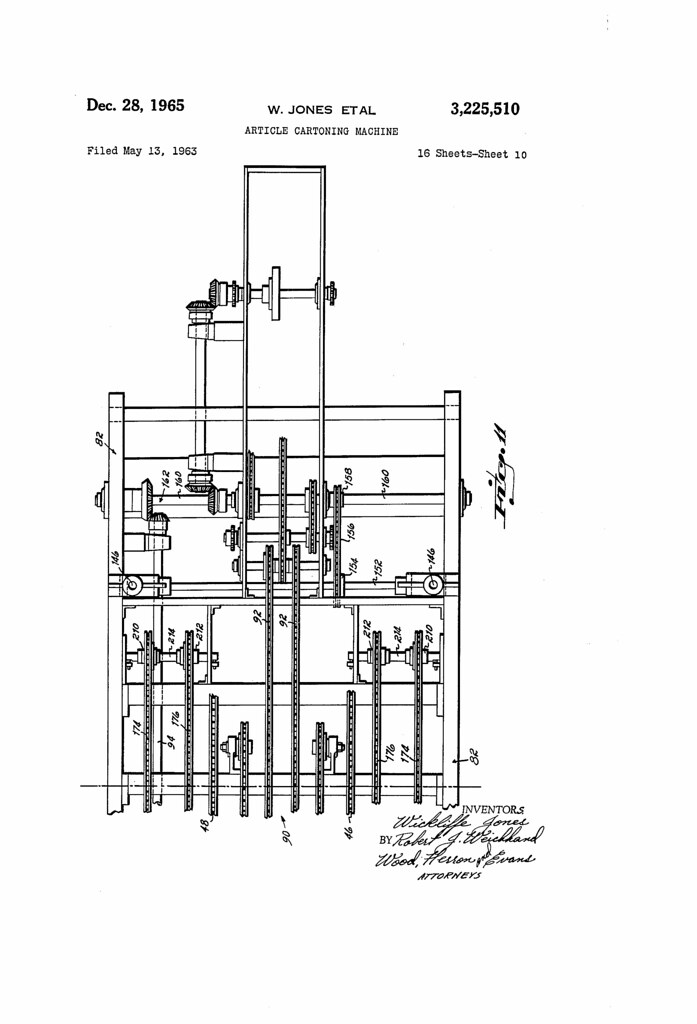
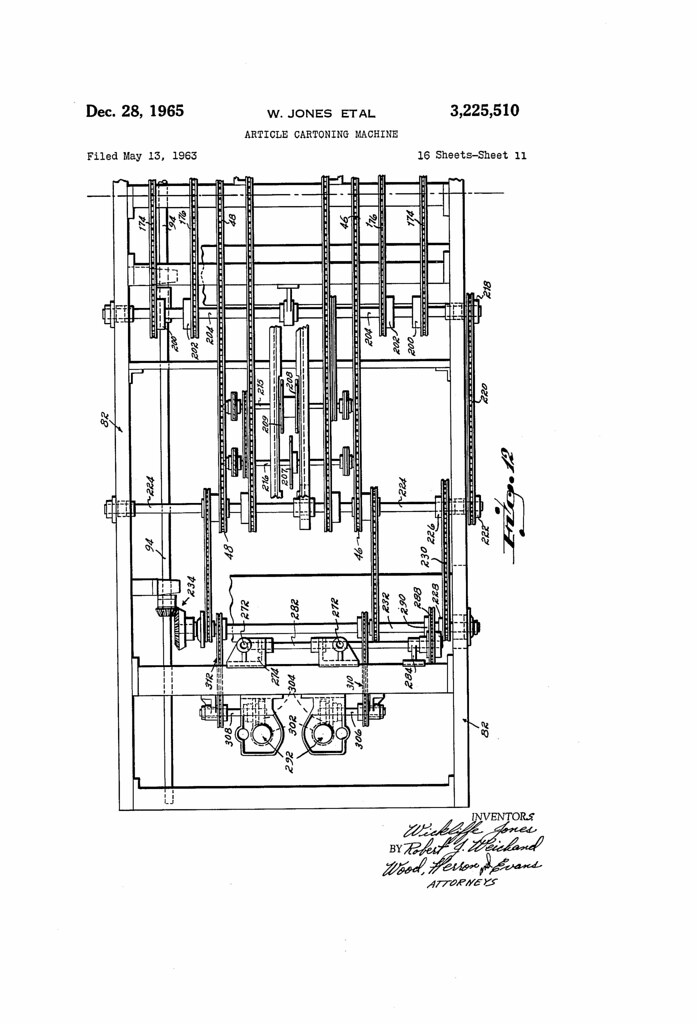
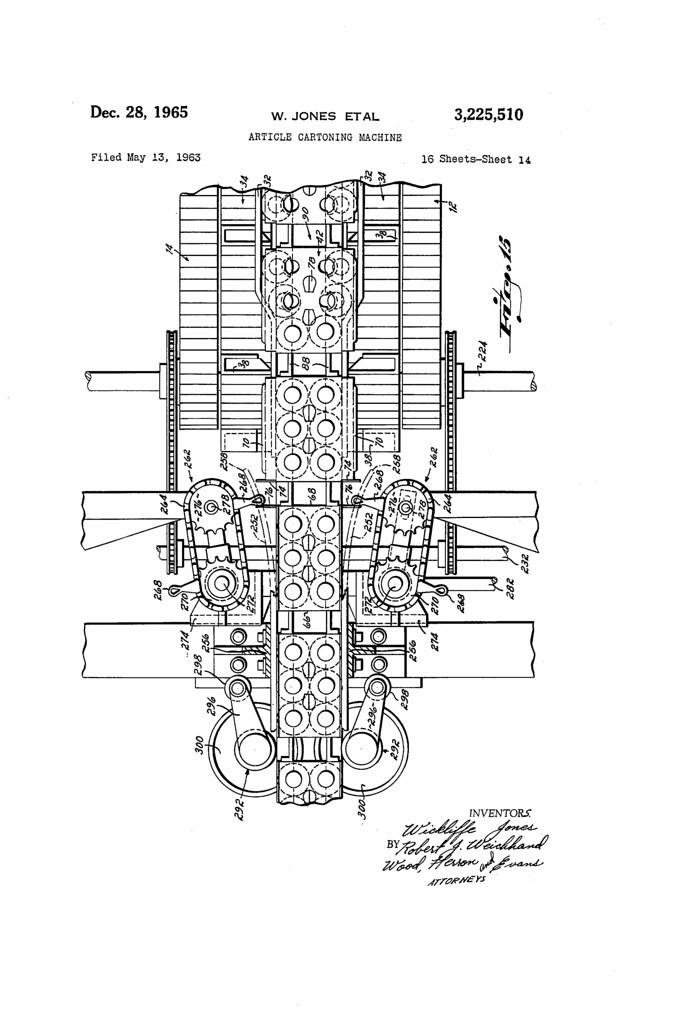
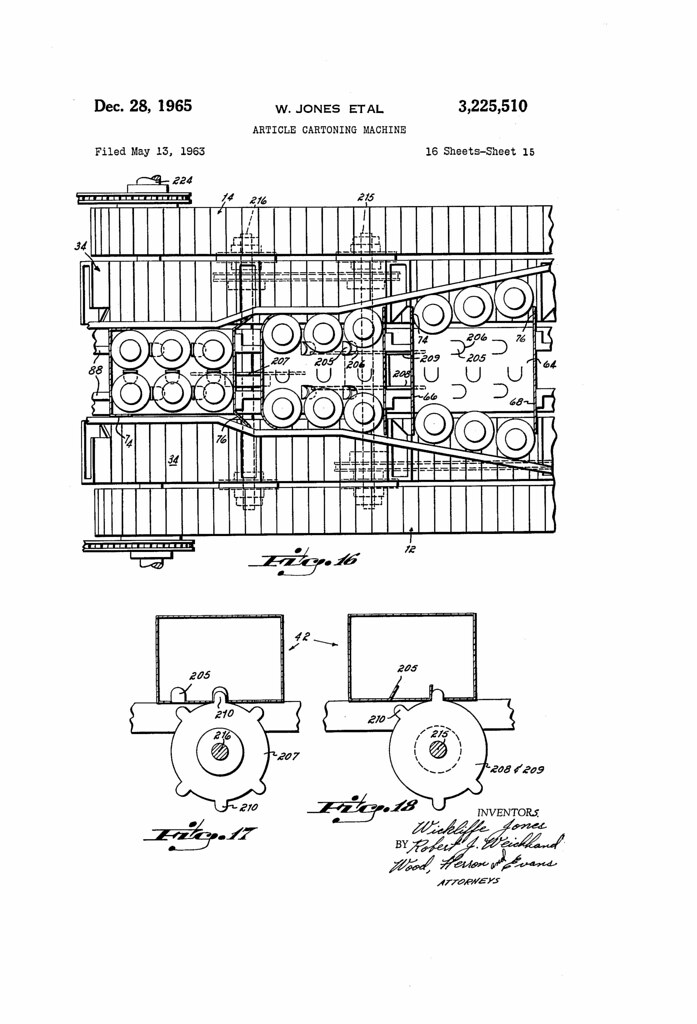
Today in 1965, US Patent 3225510 A was issued, an invention of Robert J. Weichhand and Wickliffe Jones, for their “Article Cartoning Machine.” There’s no Abstract, although in the description it includes this summary:

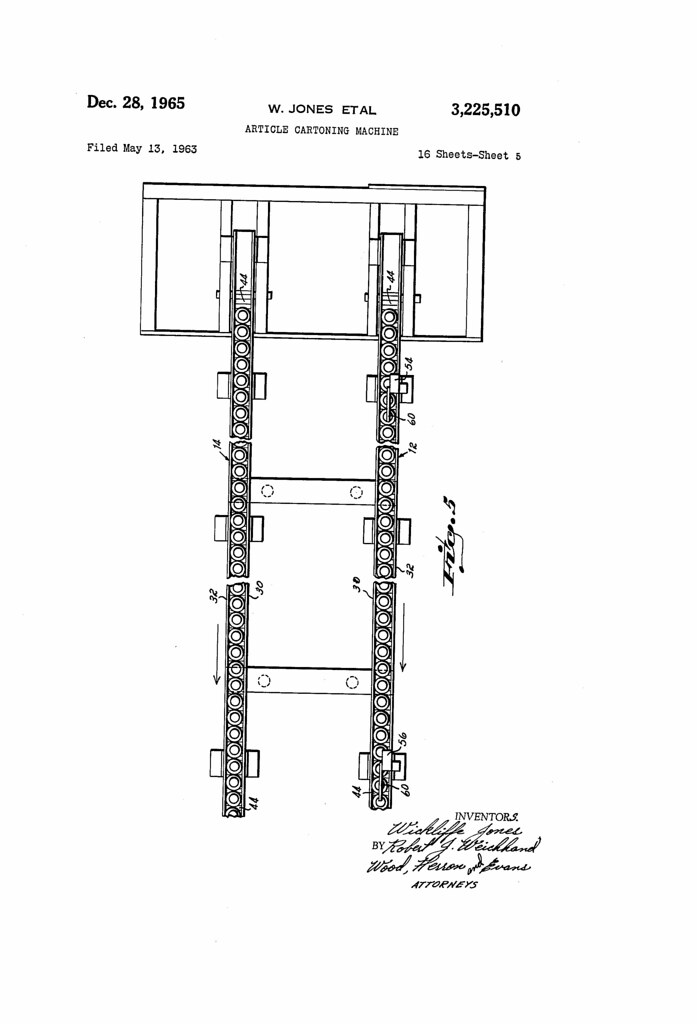
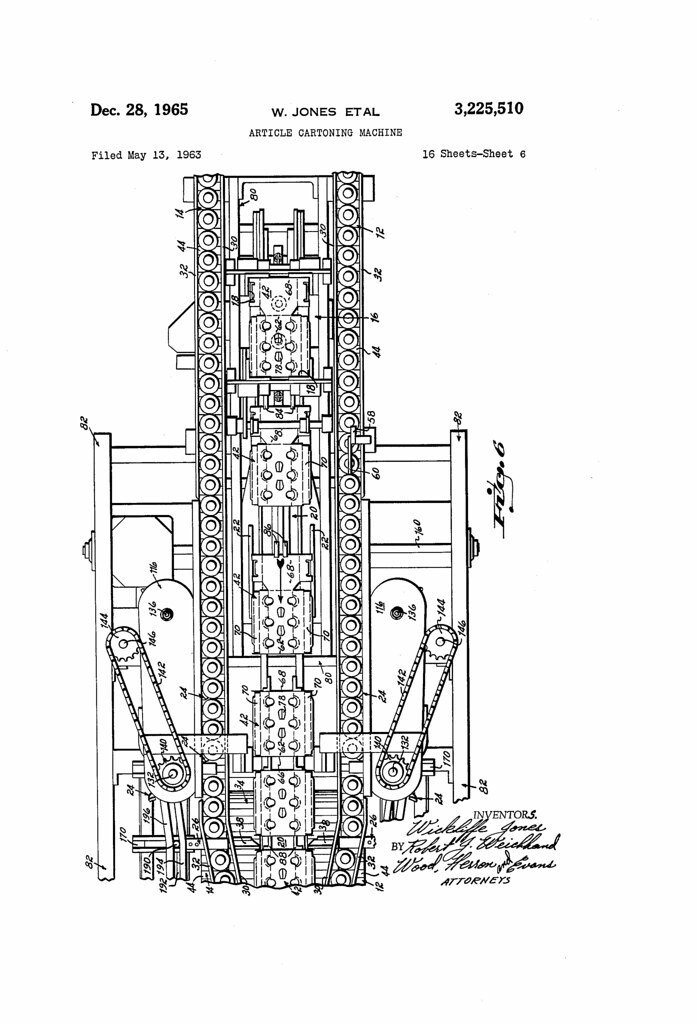
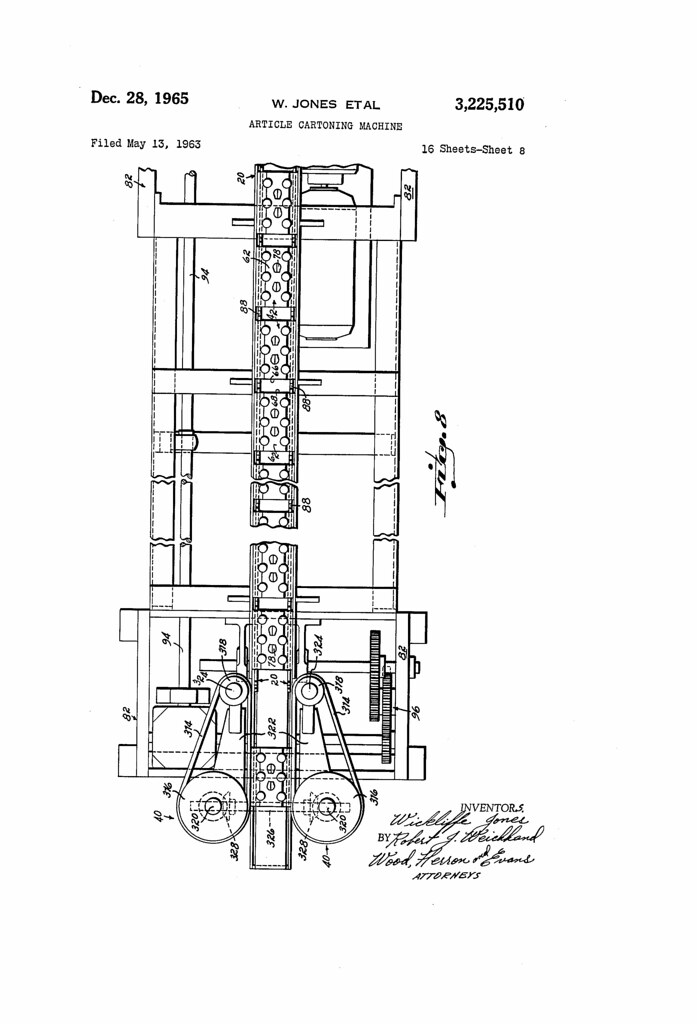
This invention relates to article packaging and more particularly to a machine for packing beer bottles in conventional six-pack or eight-pack cartons.

More specifically, the machine of this invention is intended for packaging beer bottles in cartons which are formed of paperboard material and which are furnished in a fiat collapsed condition. The collapsed cartons are loaded in stacked formation into a magazine, which includes mechanism for withdrawing the collapsed cartons individually from the lower portion of the magazine subsequently to be erected and loaded. In order to obtain the high loading rate, as indicated above, the bottles, which are fed in a continuous stream, are segregated into groups and the groups advanced into the erected carton from opposite ends. After being loaded with the bottles, liquid adhesive is applied to the flaps of the cartons, then the flaps are folded to a closed position and sealed before the loaded cartons are discharged from the machine.

To perfect a cartoning machine which will handle 600 to 1,200 or more bottles per minute and package them in an automatic manner, the bottles must flow in a substantially straight line continuous movement without any stopping or starting. At the rate of movement of this machine, the inertia of stopping the bottle and starting it again or of jerky acceleration and deceleration would break the bottle or at least scar and tear the paper label. It has thus been an object of this invention to provide a bottle cartoning machine which utilizes smooth acceleration and deceleration substantially straight line continuous flow of the bottles to be packaged and which eliminates abrupt impact reciprocating or oscillating elements which might break the bottle or at least scar the labels upon the bottles. It should be understood that while this machine has been described with reference to packaging bottles, it is equally adaptable to packaging other articles. Of course a machine operable to handle fragile glass is capable of handling metal containers such as beer cans.

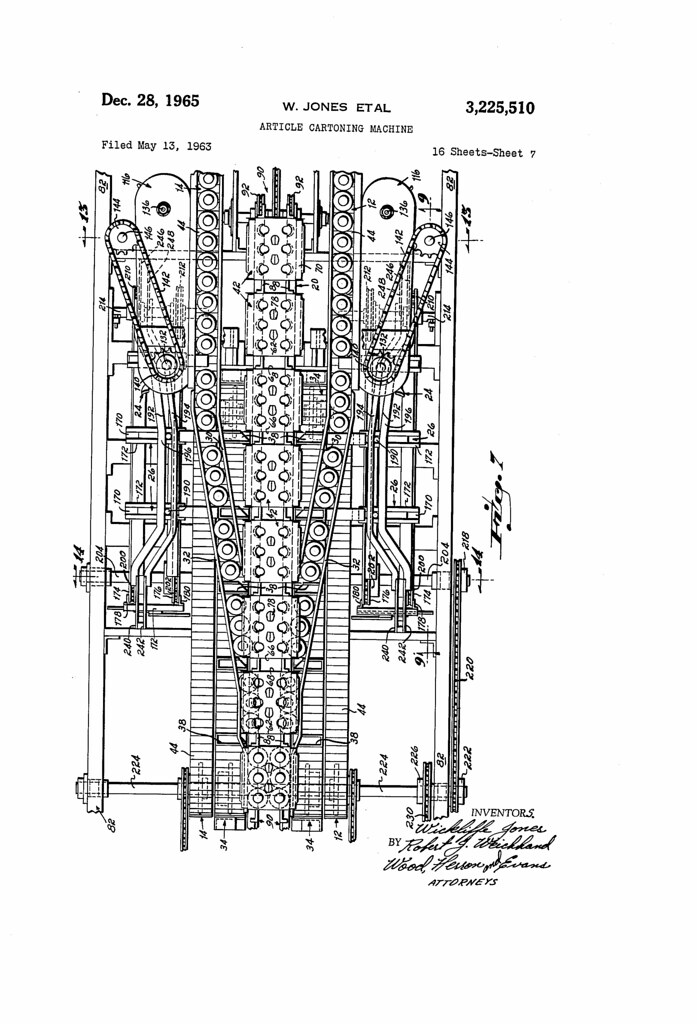
The machine includes a series of continuous motion conveyor systems for advancing and erecting cartons after they have been withdrawn individually from the magazine. Thus, the first conveyor apparatus receives the carton blank as it is withdrawn from the bottom of the magazine and includes means for handling the flaps which project outwardly from the opposite open ends of the advancing blank. A first stage conveyor apparatus advances the blank toward a main carton transport conveyor and concurrently partially erects the carton. The partially erected carton is then transferred to a main carton conveyor and during transfer is completely erected by con- Patented Dec. 28, 1965 ice tinuously advancing spacer lugs on the main carton transport conveyor. These lugs coact with the first stage conveyor apparatus to completely erect the carton. The spacer lugs of the main carton conveyor confine the carton firmly in its erected condition and advance it toward the bottle loading zone with the several carton flaps extending outwardly to an open position to avoid any interference of the bottles as they are advanced into the open end of the erected carton.

As the erected carton advances to the loading zone, six cans (or eight cans in the case of an eight-pack) are fed laterally from a pair of parallel bottle conveyors into the opposite ends of the carton by stationary converging guide rails. The bottles are segregated into groups of three each (or four in the case of an eight-pack) and fed into the carton. The segregating mechanism consists of restraining fingers which enter in front of every third bottle. These restraining fingers move at a slower rate than the bottle conveyors so that the restraining fingers slow the movement of the bottles. The down stream finger then releases a group of three which move away from the finger or move downstream at a rate determined by the bottle conveyor which is moving faster than the restrained bottles. As soon as the group of three bottles have moved downstream so as to establish a gap between the restrained bottles and the unrestrained ones, spacer fingers enter the gap so as to maintain the spacing between the now grouped bottles. Guide rails then force the group of bottles across a continuously moving bucket conveyor which maintains the spacing of the groups and into the open sides of the cartons. After the bottles are loaded into the carton, liquid adhesive is supplied to the flaps and the flaps are folded to a closed position and sealed as the carton advances toward the discharge end of the machine.

A further objective of the invention has been to provide an improved segregating mechanism for forming articles into groups while advancing the articles toward a packaging zone where the segregated groups are fed transversely into the open end of an advancing carton.

US3225510-0
US3225510-1
US3225510-2
US3225510-3
US3225510-4
US3225510-5
US3225510-6
US3225510-7
US3225510-8
US3225510-9
US3225510-10
US3225510-11
US3225510-12
US3225510-13
US3225510-14

Filed Under: Beers, Breweries, Just For Fun, Politics & Law, Related Pleasures Tagged With: Bottles, Brewing Equipment, History, Law, Packaging, Patent, Science of Brewing

Patent No. 2492327A: Beer Pouring Device

December 27, 2015 By Jay Brooks

patent-logo
Today in 1949, US Patent 2492327 A was issued, an invention of Butler Sheldon Jr., for his “Beer Pouring Device.” There’s no Abstract, although in the description it includes this summary:

This invention relates to improvements in a beer pouring device. Broadly, it is an object of my invention to provide a beer pouring device which may be applied to the neck of the standard bottles when the beer is sold.

More specifically, it is an object of my invention to provide a device which has a series of screens at the pouring end thereof, so that when the device is applied to the neck of the bottle and the beer poured through it, a finer head is obtained on the beer which is more like a head obtained from draft beer.

A further object of my invention is to provide an inexpensive device which can be applied to standard bottle necks, which enhances the taste of the beer after it is poured through said device.

A further object of my invention is to provide a device which reduces the size of the gas bubbles after the beer is poured through it in order to give a more creamy quality to the beer.

US2492327-0

Filed Under: Beers, Just For Fun, Politics & Law, Related Pleasures Tagged With: History, Kegs, Law, Patent

Patent No. 2728344A: Hop Vine Cutter And Picker

December 27, 2015 By Jay Brooks

patent-logo
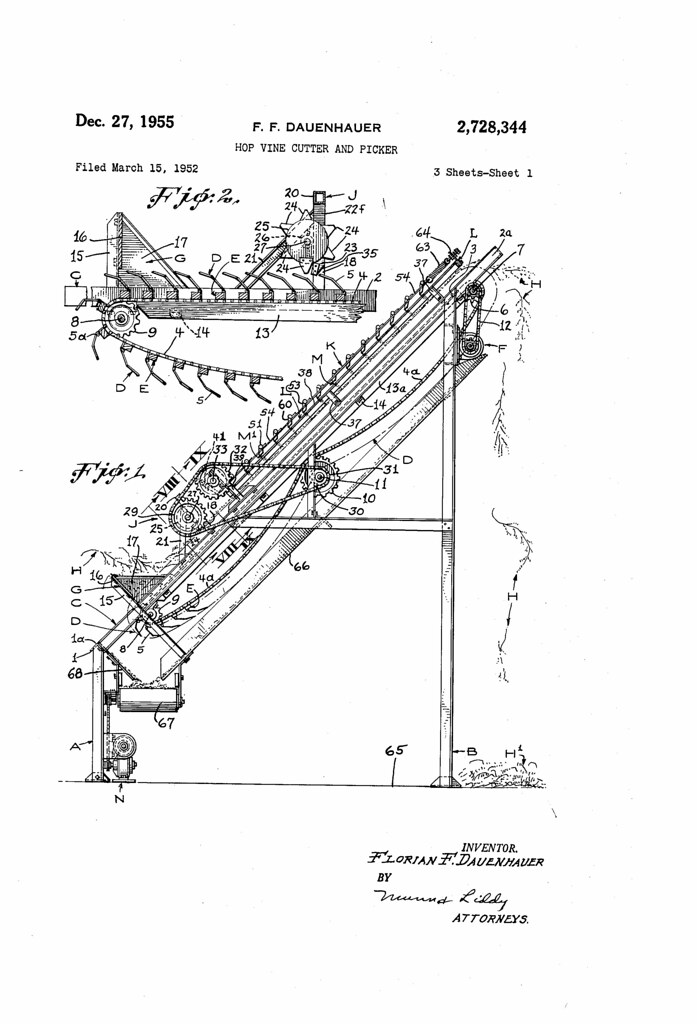
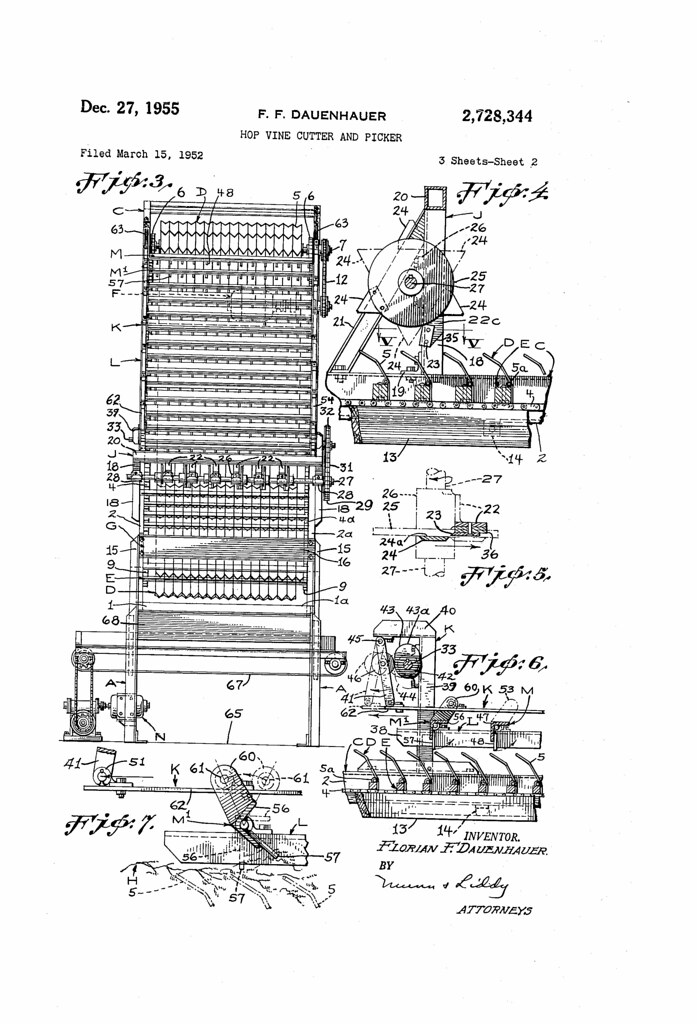
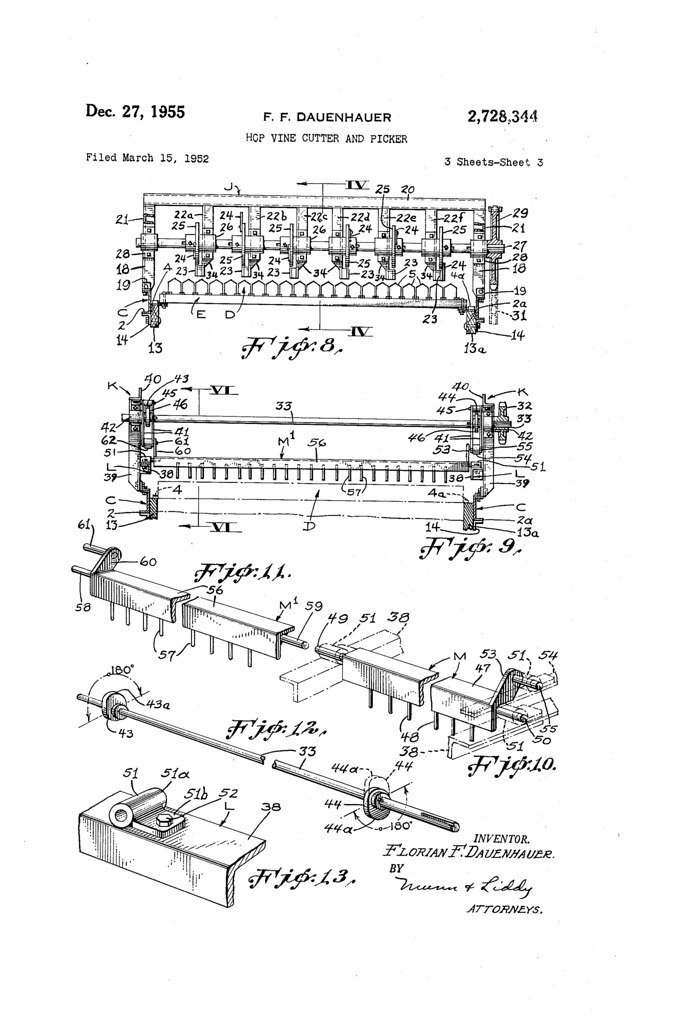
Today in 1955, US Patent 2728344 A was issued, an invention of Florian F. Dauenhauer, for his “Hop Vine Cutter and Picker.” There’s no Abstract, although in the description it includes this summary:

An object of my invention is to provide a hop picking machine which differs from the invention shown in my co-pending application on an apparatus for picking hops from hop branches and clusters and for separating leaves and stems therefrom, filed August 16, 1950, Ser. No. 179,724 (now Patent No. 2,681,066, dated June 15, 1954). In the co–pending case I disclose a branch picker for removing hops from hop branches and hop clusters. The hop branch picker severs the hops from any vine portion or hop clusters. A liXed breaker fork cooperating with a rotary feeder fork acts on the vines to spread them over the combined picker and endless conveyor. A branch or arm picker then acts upon the vines and intermittently stops or retards the movement of the vines along the conveyor. During the temporary holding of the vines, the picking fingers on the conveyor, act to strip the hops from the vines and from the hop clusters.

In the present invention a vine cutter takes the place of the liXed breaker fork and rotary feeder fork shown in the co-pending case and the cutter tends to spread the hop vines more uniformly over a combined conveyor and hop picker as well as reduce the lengths of the vines by cutting them and thus permit the more ready handling of them during the removal of hops therefrom. The branch or arm picker disclosed in the co-pending case is also altered in its structure and operation so that the combined endless conveyor and hop picker can have its upper reach movable in a flat plane through this portion of the machine rather than be caused to move at right angles to the plane at a plurality of spaced points, these points being arranged at a like number of stations where the hop vines are temporarily arrested in their movement through the machine.

The present invention makes use of a plurality of vine holding combs and these are positioned above a portion of the upper reach of the endless conveyor and are arranged in two groups. Every other comb is connected to a common comb swinging means and constitutes one group while the remaining alternate combs are connected to a second common comb swinging means and constitute the other group. The combs when in normal position, extend at right angles to the plane of the conveyor portion over which they are positioned and the tines of the combs will hold the vines from movement and permit the hop picking fingers on the conveyor to remove hops from the vines during this holding period.

US2728344-0
US2728344-1
US2728344-2

Filed Under: Beers, Just For Fun, Politics & Law, Related Pleasures Tagged With: History, Law, Patent

Patent No. 1013057A: Keg-Rinsing Machine

December 26, 2015 By Jay Brooks

patent-logo
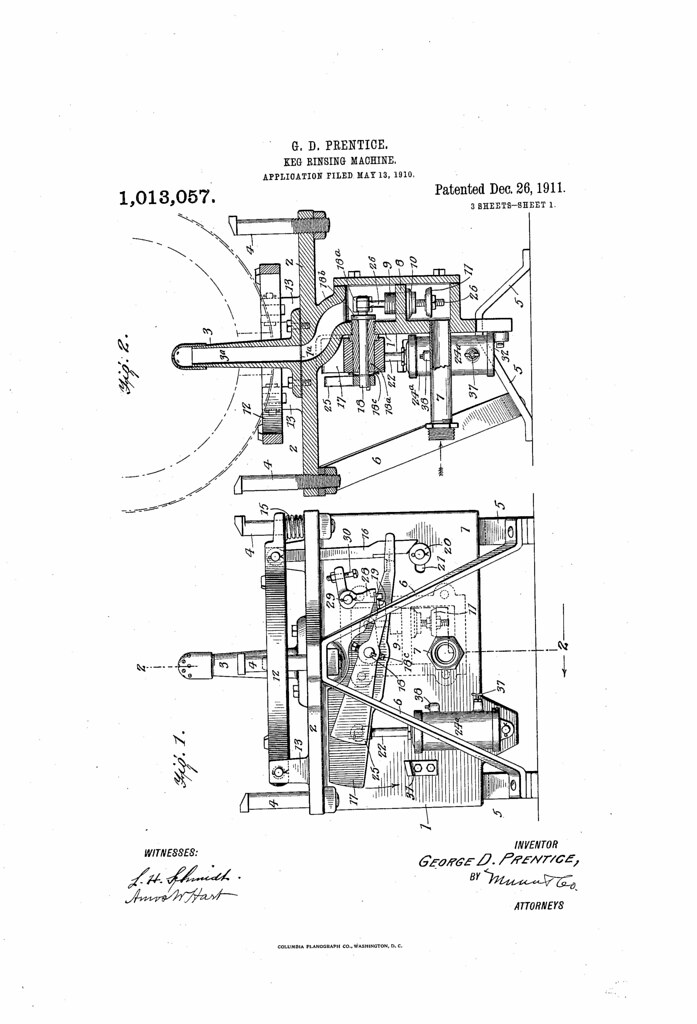
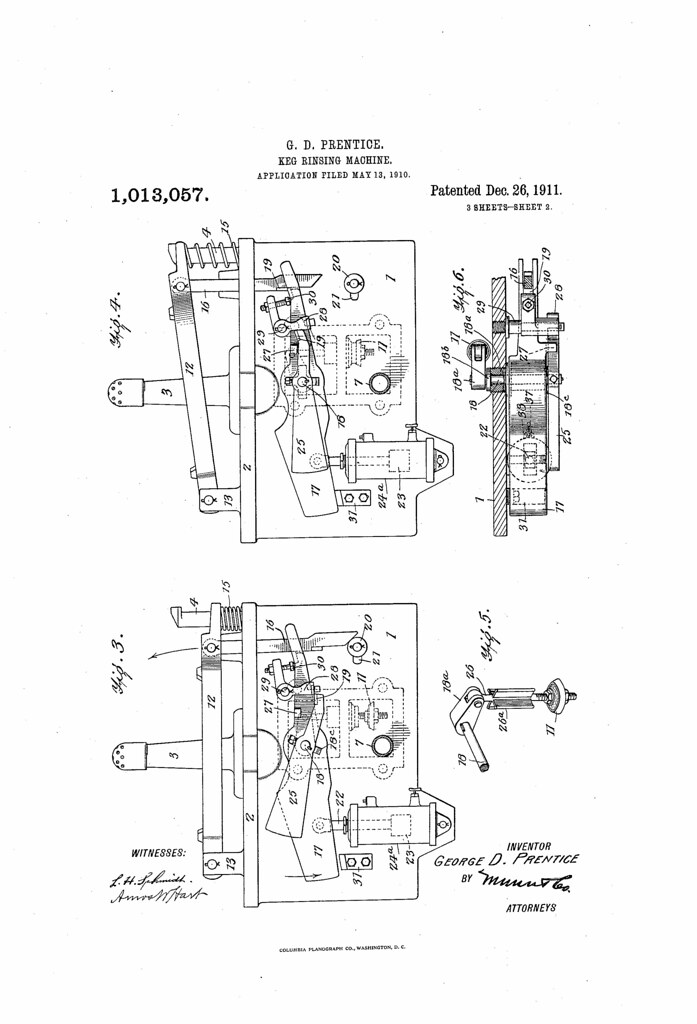
Today in 1911, US Patent 1013057 A was issued, an invention of George Denison Prentice, for his “Keg-Rinsing Machine.” There’s no Abstract, although in the description it includes this summary:

My invention is a machine for rinsing or washing out casks, kegs, or other receptacles, the same being caused to operate automatically by the weight of a cask or keg placed in due position on the ,machine, and requiring no attention or manipulation. Water is discharged into a cask or keg when placed on a depressible support and over a perforated nozzle. When the keg-support is depressed it opens a water-discharge valve and raises a weighted piston in a cylinder or dash-pot, and the time required for descent .of the piston to its original position determines the time of discharge of water into the keg. I thus provide for automatic discharge of water into a keg for rinsing the same and for automatic regulation of the time during which said discharge shall continue.

US1013057-0
US1013057-1
US1013057-2

Filed Under: Beers, Breweries, Just For Fun, Politics & Law, Related Pleasures Tagged With: Brewing Equipment, History, Kegs, Law, Patent

Patent No. 531314A: Process Of And Apparatus For Preparing Beer

December 25, 2015 By Jay Brooks

patent-logo
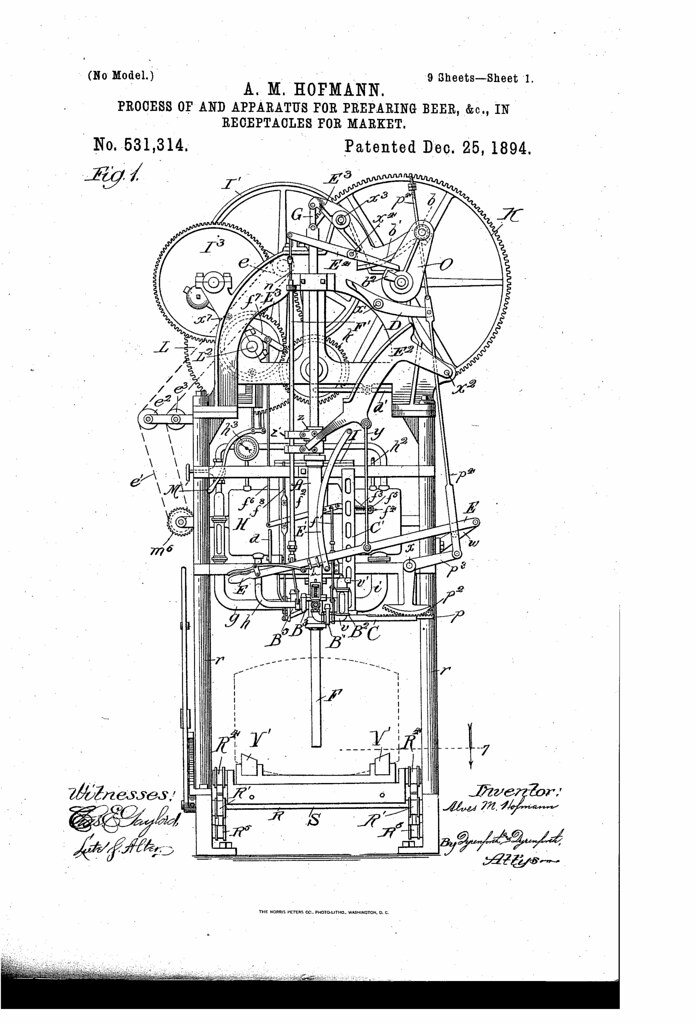
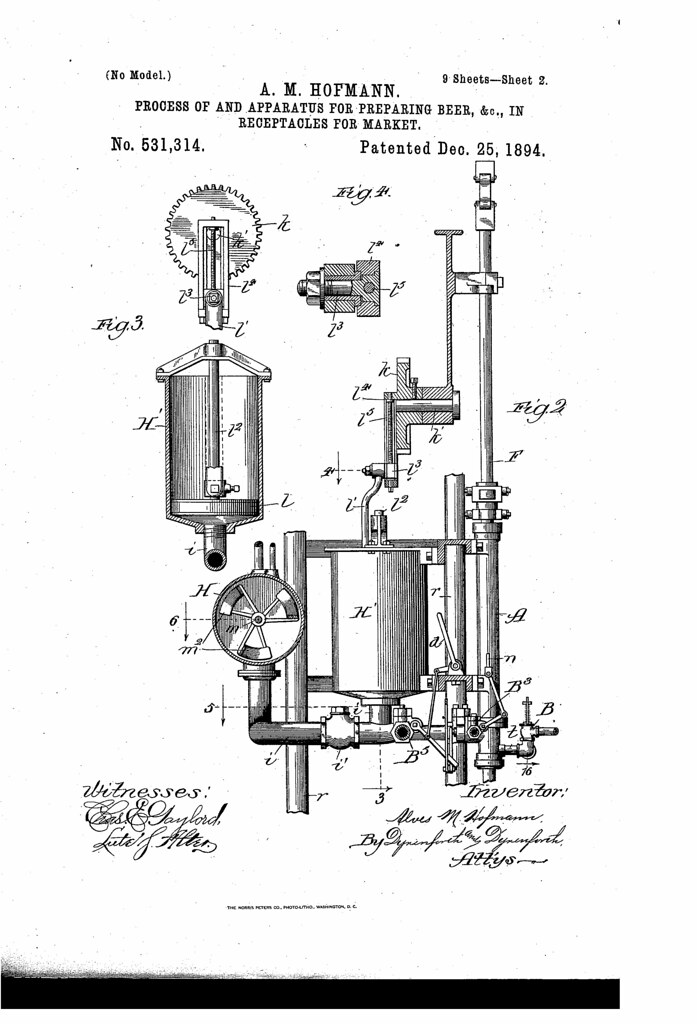
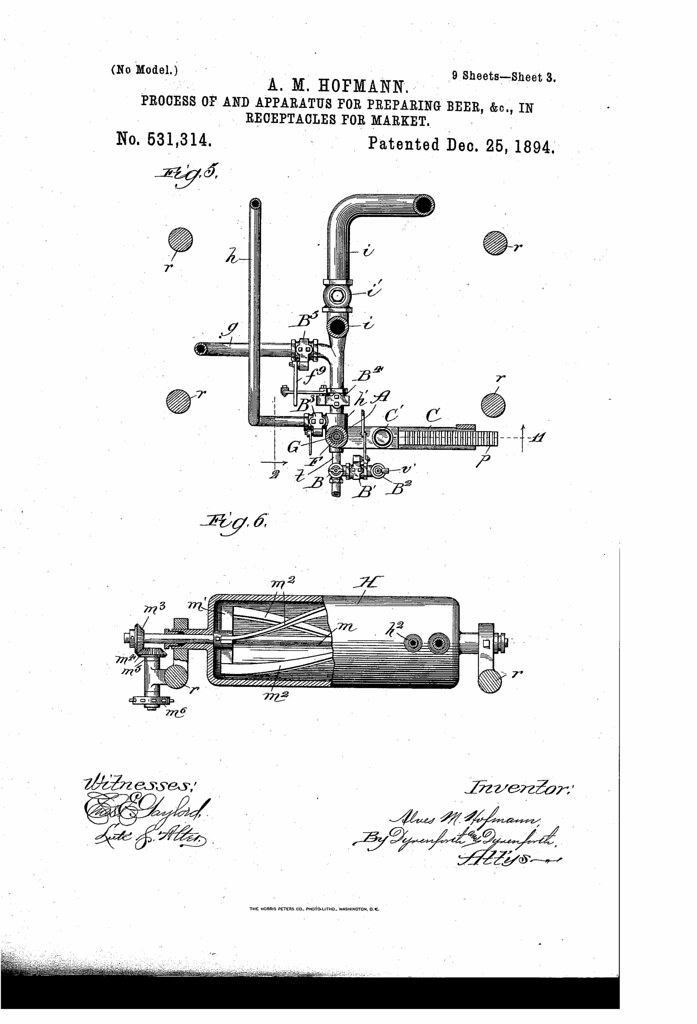
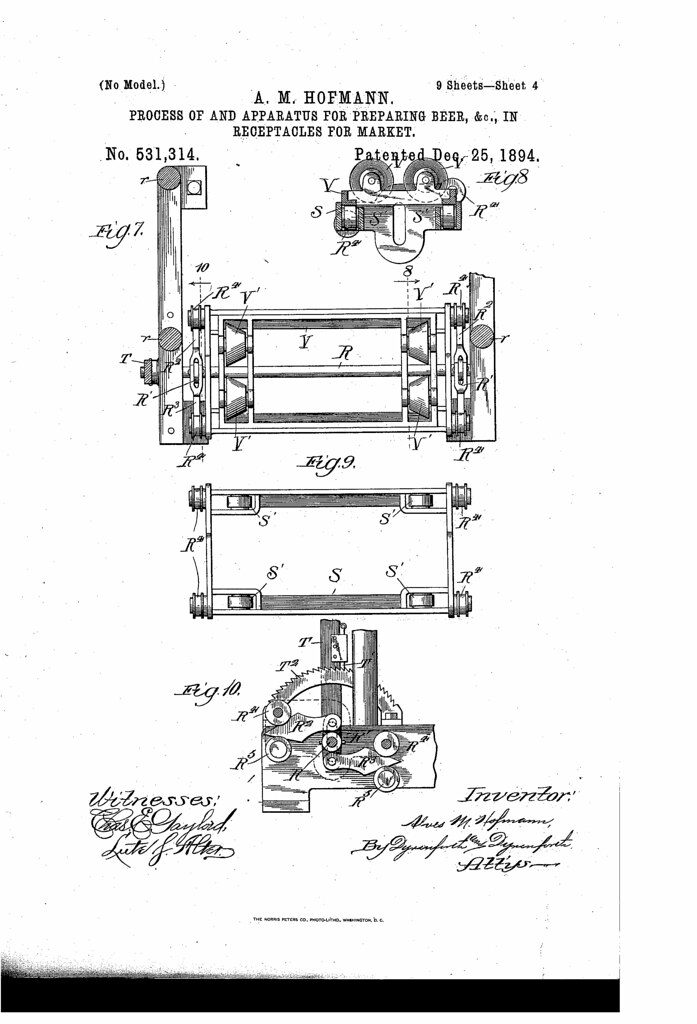
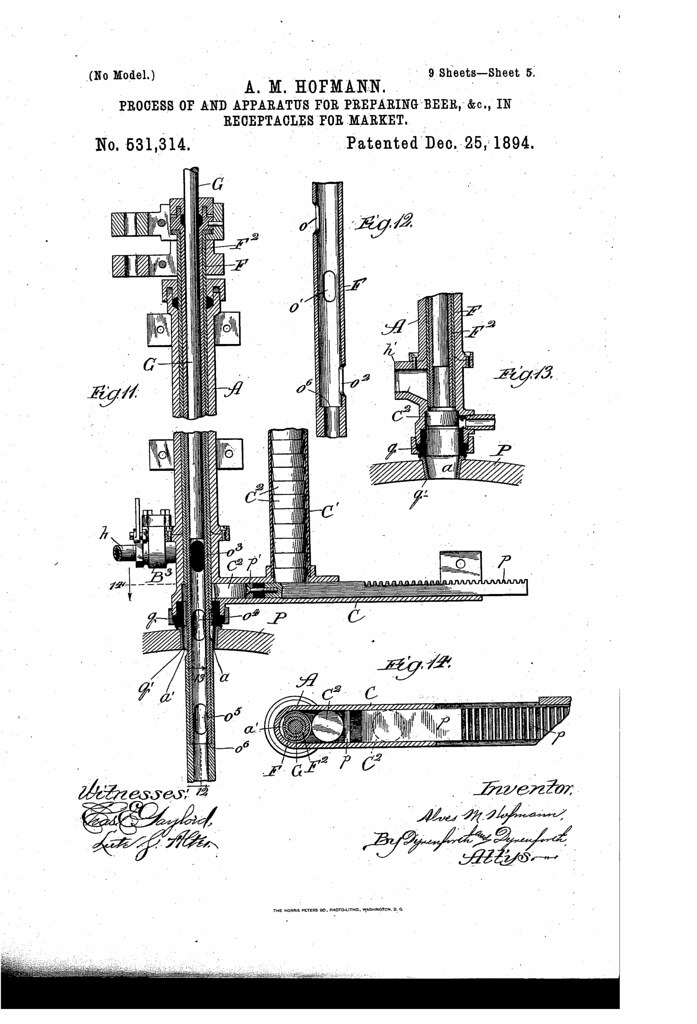
Today in 1894, US Patent 531314 A was issued, an invention of A.M. Hofmann, for his “Process of and Apparatus for Preparing Beer.” There’s no Abstract, although in the description it includes this summary:

It may be stated at the outset that I have primarily designed my improvement for the particular application to beer in barrels or kegs orin bottles, and I therefore, and for the sake of convenience, hereinafter confine the description of my invention in its application to racking, carbonating and bunging beer, though it is also applicable to, and I desire to be understood as intending it for, any and all liquids or beverages requiring similar treatment to prepare them in receptacles for the market.

A known manner of carbonating a beverage to prepare it for the market is to introduce into the holder containing it a liquid (preferably of the same kind) in small quantity proportionately to the quantity contained in the holder, but so highly charged with the gas, for which -,it affords a vehicle and a mixing or incorporating medium, as to supply the contents of the receptacle,and thoroughly impregnate them, with a charge of gas adequate for all requirements in the beverage.

I find that where the carbonating procedure referred to is employed on beer, the diffusion of the gas through the beer in the receptacle, however thoroughly it may be produced, is not lasting where the receptacle is not completely, or at least approximately, filled with the beer to be charged, which it rarely is; since the space left on filled affords, as it were, a pocket, in which the gas tends to accumulate, and whence it quickly escapes on opening or venting the receptacle, leaving the beer, when poured or drawn for consumption, insufficiently carbonated. Incomplete filling of the receptacles is, perhaps, as likely of occurrence where the receptacles are glass bottles as where they are barrels or kegs, notwithstanding that the transparent nature of the former renders the matter of completely filling them readily accomplishable.

My process consists in withdrawing from a .receptacle after filling it with beer (taken by preference directly from the cask) a suitably small proportion of its contents, and replacing the quantity thus withdrawn with an equal, or approximately equal, quantity of liquid highly charged with gas, thereby, practically, withdrawing the desired quantity from the receptacle, then charging it excessively with gas, and returning to the receptacle the same liquid, charged, that was withdrawn from it. Thus, after a receptacle has been completely filled, or substantially so, with the beer to be carbonated, (and complete filling of a barrel or keg is a matter as simple as filling a bottle) by withdrawing ascertain quantity to make room or the charge, and replacing it with an equal or substantially equal quantity of the supercharged carbonating liquid, the desirably full condition of the receptacles is attained.

US531314-0
US531314-1
US531314-2
US531314-3
US531314-4
US531314-7

Filed Under: Beers, Breweries, Just For Fun, Politics & Law, Related Pleasures Tagged With: Brewing Equipment, History, Law, Patent, Science of Brewing

« Previous Page
Next Page »

Find Something

Northern California Breweries

Please consider purchasing my latest book, California Breweries North, available from Amazon, or ask for it at your local bookstore.

Recent Comments

  • Bob Paolino on Beer Birthday: Grant Johnston
  • Gambrinus on Historic Beer Birthday: A.J. Houghton
  • Ernie Dewing on Historic Beer Birthday: Charles William Bergner 
  • Steve 'Pudgy' De Rose on Historic Beer Birthday: Jacob Schmidt
  • Jay Brooks on Beer Birthday: Bill Owens

Recent Posts

  • Historic Beer Birthday: George Muehlebach April 24, 2026
  • Historic Beer Birthday: Max Hassel April 24, 2026
  • Beer Birthday: Jeremy Cowan April 24, 2026
  • Beer In Ads #5228: To Clarify The “Bock Beer Date” Question April 23, 2026
  • Historic Beer Birthday: Anton Schwartz April 23, 2026

BBB Archives

Feedback

Head Quarter
This site is hosted and maintained by H25Q.dev. Any questions or comments for the webmaster can be directed here.