Brookston Beer Bulletin

Jay R. Brooks on Beer

  • Home
  • About
  • Editorial
  • Birthdays
  • Art & Beer

Socialize

  • Dribbble
  • Email
  • Facebook
  • Flickr
  • GitHub
  • Instagram
  • LinkedIn
  • Pinterest
  • RSS
  • Twitter
  • YouTube

Powered by Genesis

Beer In Art #106: Charles Rennie Mackintosh’s The Wassail

December 12, 2010 By Jay Brooks

art-beer
This week’s work of art is the holiday-themed “The Wassail,” by Charles Rennie Mackintosh, the Scottish watercolourist and architect, designer and sculptor. He was best known as “a designer in the Arts and Crafts movement and also the main exponent of Art Nouveau in the United Kingdom” and he had “considerable influence on European design.” Born in 1868, The Wassail was painted in 1900.
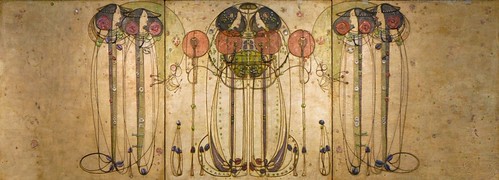
The Wassail by Charles Rennie Mackintosh

The original painting is in Glasgow’s Kelvingrove Art Gallery and Museum. Below is a detail of the center panel or section of the painting.
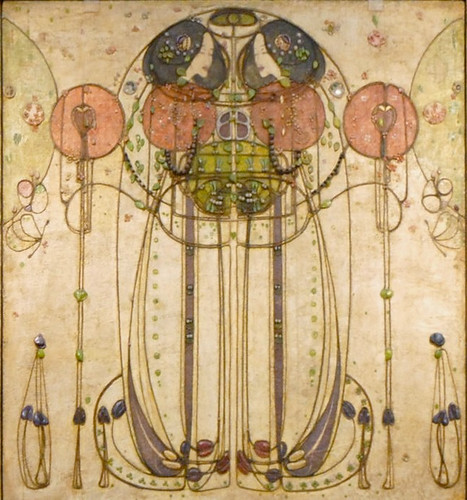
Charles_Mackintosh-wassail_detail

Wassailing is, of course, a traditional English and European custom that took place around the holidays, sometime around Christmas and in other traditions into mid-January. To read more about it, there are interesting accounts at the Hymns and Carols of Christmas, About.com, Time Travel Britain and White Dragon.

There’s also the drink Wassail, which I wrote about a couple of years ago after the release of Full Sail’s Wassail at Here We Go a-WASSAIL-ing

To learn more about Mackintosh, Wikipedia is a good place to start or the biography at his “official” website, Charles Rennie Mackintosh. There’s also a small Wikigallery with two dozen works and a good list of links at ArtCyclopedia.


Filed Under: Art & Beer, Beers Tagged With: Christmas, Holidays, Scotland

Eliminating Drunk Driving 100%

December 12, 2010 By Jay Brooks

car-transformer
So I was reading through the new issue of Playboy magazine that came last week when I came upon an article entitled 15 Innovations That Will Change the World. Some pretty impressive ideas, but the one that stood out for me was “Robocars,” cars that drive themselves using sophisticated sensors, omni-directional video-cameras, radar detectors and advanced GPS systems.

robocars

But what really surprised me was this. “[A]dvocates say robocars will be ferrying many of us hither and yon by 2020. Most major car companies have an autonomous car division, crafting future driverless cars right now.” Holy crap, we’re only a decade away from robocars! Even with them most likely being too pricey initially for most people, give them another ten years after introduction for the price to come down, and that means a majority of us will be able to afford them. That would mean in just twenty years it’s conceivable few people will be doing their own driving anymore.

That could mean the end of drunk driving, mobile phone distractions and all manner of driver error accidents. It’s somewhat surprising given how much potential there is for robocars to virtually eliminate DUIs that the anti-alcohol groups have been completely silent about them. Instead, MADD is pushing the ridiculous ignition lock technology. Why aren’t they supporting robocars? Why aren’t they and the other non-profits supposedly committed to curbing drunk driving and keeping the roads safer funding research into the technology to make robocars a reality even sooner?

That’s not a rhetorical question, I really want to know why they’re not doing more to support robocar technology. Could it be so cynical a reason as it would make them irrelevant and make it almost impossible for them to raise money? If I’ve learned anything about non-profits lately it’s that they’ve become permanent institutions whose paid employees are actually no longer incentivized to carry out their organization’s mission to its conclusion because doing so would put themselves out of work in the process. When was the last time a disease or societal problem was actually solved and/or eradicated? Polio? Small Pox? Yet there are so many more non-profits compared to thirty plus years ago, when I was a kid. But the only thing they seem effective at is creating scary statistics and propaganda to make whatever the issue is as dire as possible and raising money.

But back to the Robocars, meet Junior:

junior-1
Junior, a self-driving prototype, created using a mostly stock 2006 Volkswagen Passat, which is the same car I drive, though mine’s a few years older and doesn’t include an autopilot, sad to say.

VW is financing the creation of both Junior and his brother Stanley at Stanford’s Volkswagen Automotive Innovation Lab, and the car company is funding VAIL, too. The research center was dedicated last year.

junior-2
Inside the back of Junior.

junior-3
Inside the back seat of Junior.

And below is a video of one of Junior’s test drives.

Frankly, I can’t wait until the day I can stop driving and leave it to the computers. I’ll be able to drink more without having to worry at all, especially about the draconian laws associated with drinking and driving. They should be a thing of the past, though I imagine one or two groups will fight this new technology tooth and nail. Police and local governments will most likely hate this, because it will remove one of their biggest revenue streams. I’m willing to bet they’ll question the “safety” of the robot drivers and try to block their implementation as long as humanly possible.

But apart from that, this seems like it would be the proverbial win-win for everybody else. Brewers along with bars and restaurants that serve it would likely see a dramatic rise in business without the chilling effect of our current laws and lack of viable mass transit alternatives. In theory they could even save money by no longer having to spend marketing dollars on those “drive responsibly” campaigns.

MADD and the other anti-alcohol organizations should be in favor of it because it would literally eliminate drunk driving for everyone who purchases one of the Robocars. Unfortunately, I believe that some of the anti-alcohol folks, and especially MADD, are not really interested in stopping drunk driving, but instead have shifted their focus to eliminating alcohol altogether. Of course, that will also stop drunk driving, too, but at the expense of destroying so much more: the economy, people’s livelihoods, the health advantages of moderate drinking, quality of life and simply enjoying a drink.

But watching the actions and policy decisions of these groups for as long as I have, I honestly think they’d prefer that result to one which would actually eliminate needless deaths while keeping the alcohol industry intact and even benefiting its business. None that I’m aware of have ever done anything to encourage or support alternate modes of transportation such as building mass transit infrastructure as a way of keeping people who’ve been drinking off the roads. Between that and their silence on Robocars it makes it hard not to at least question their true motives. With the very real possibility that drunk driving could be eliminated 100% in just twenty years (or less) it seems reasonable to expect that supporting that technology would at least be part of their policy and/or strategy. That they don’t, I think, speaks volumes. Show me the Robocars!

Filed Under: Beers, Breweries, Editorial, Politics & Law Tagged With: Prohibitionists, Science

Guinness Ad #46: Christmas Stocking

December 11, 2010 By Jay Brooks

guinness-toucan
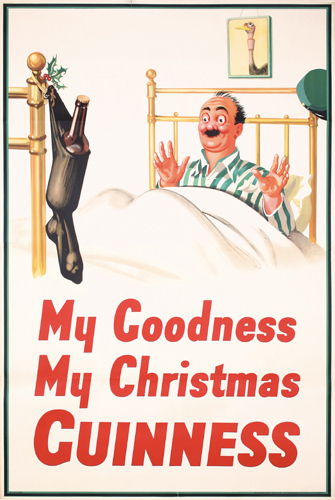
Our 46th Guinness poster by John Gilroy features our intrepid zookeeper waking up Christmas morning to find a bottle of Guinness in his stocking, hung on his bedpost. The slogan is again “My Goodness, My Christmas Guinness.” Hoppy Christmas.

guinness-xmas-stocking

Filed Under: Art & Beer, Beers Tagged With: Advertising, Christmas, Guinness, History, Holidays

Make A Pipe Dream Come True: Invest In Pipeworks Brewery

December 11, 2010 By Jay Brooks

pipeworks
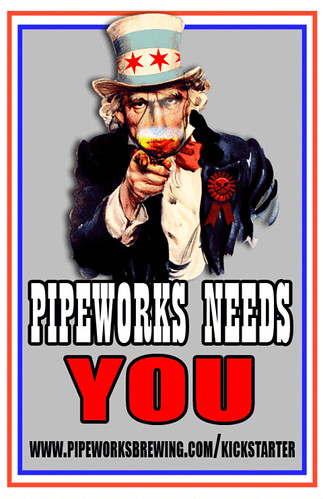
Looking for a unique gift for yourself or a loved one? Why not invest in a brewery? Seem like a pipe dream? Well, then the Pipeworks Brewery may be for you. Two self-avowed beer geeks living in Chicago, Beejay Oslon and Gerrit Lewis, are trying to raise enough money to make their dream of starting a small brewery a reality. They’re using Kickstarter to raise the $30,000 they need to fund their little brewery. So far, they’ve raised just over $17,000 with 20 days to go. That means they need to find another $13,000 before the end of the month.

Kickstarter is great. I’ve contributed to help fund projects before using it and it’s a great tool for microbusinesses and microfinancing. It’s a fun way to help people out, even strangers, if you like their idea. I’d encourage you to check out all the cool projects trying to get off the ground there. There are projects in Art, Comedy, Comics, Dance, Design, Fashion, Film & Video, Food, Games, Journalism, Music, Photography, Technology, Theater, and Writing & Publishing. For each project, the people lay out their idea and provide different levels of investment for you to pledge, and usually each level of participation gets you something related to their idea as a thank you. There’s a set time within which they have to reach the amount of money they need. If they don’t reach their goal, you don’t pay a dime, but if they do then your pledge kicks in and then (and only then) your account is charged. It feels very satisfying to help someone realize their dream, or at least kick start it. Not only are you helping fund an idea you believe it using alternative financing but you’re also building community at the same time.

pipeworks-sam

For the Pipeworks Brewery project, you can pledge as little as $5 or as much as $10,000. There are a dozen different levels available you can choose from to help them get started. You can read their story at the Kickstarter website, where they also post regular updates. But here’s the short version:

Pipeworks began as…

the dream of a couple of beer geeks right here in Chicago. Beejay Oslon and Gerrit Lewis started their adventures in fermentation within the plastic buckets and stovetop kettles of the home brewer. The two met while working at West Lakeview Liquors, a mom and pop liquor boutique on the north side boasting one of the best beer selections in the world. It wasn’t long before they began dreaming up plans for their own craft brewery.

In January of 2009, after some persistence, the Pipeworks boys landed an apprenticeship in Belgium with Ratebeer.com’s 2008 Brewer of the Year, Urbain Coutteau of De Struise Brouwers. Living and working alongside Urbain, the Pipeworks crew honed their skills,learning the traditions of Belgian brewing while mastering some innovative new techniques. To document these brewing adventures the boys started the popular Buckets to Barrels Blog hosted on De Struise’s site.

Pipeworks is…

— Beejay Oslon, a native of Chicago who began home-brewing while attending art school. Beejay serves as the head brewer, with over five years of experience in both brewing and craft beer retail. Through his experiences as a fine artist and graphic designer, he also serves as the creative director for Pipeworks.

— Gerrit Lewis, a transplant from the brewery-rich Colorado, armed with a sharp palate and lust for everything beer.He spends his time (and lots of his money) visiting at least one area beer store a day, seeking out the newest craft beer releases. Gerrit attended Loyola University Chicago Business School and considers himself a savvy and aggressive fresh-faced marketer.

And below is funny video that should get you fired up about their project.

To learn more about Pipeworks Brewing Co., you can visit their website, their blog or their Facebook page.
pipe-brew-drink

Filed Under: Breweries, Just For Fun, News Tagged With: Business, Chicago, Illinois, Video

Beer In Ads #262: Pilsner Urquell For The Holidays

December 10, 2010 By Jay Brooks

ad-billboard
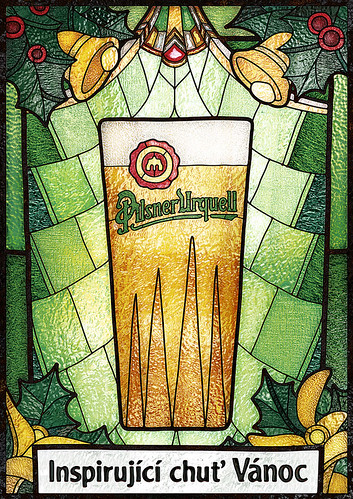
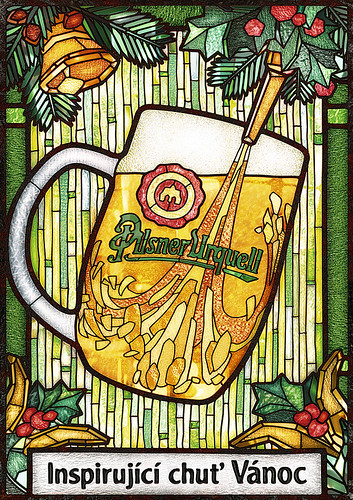
Friday’s holiday ads are for Pilsner Urquell, in honor of it being National Lager Day. And one of the best is without a doubt is the original pilsner, Pilsner Urquell. I don’t believe the ads are more than a few years old, but I love the faux stained glass look of them. Who wouldn’t love those in their beer room, with the light streaming through into your own private church of beer?

pils-ur-1

The first two words mean “Inspiring taste” in Czech, but I don’t know what the third word means. Anybody know?

pils-ur-2

I think the iconic bottle ad is my favorite, but they’re all pretty cool.

pils-ur-3

Filed Under: Art & Beer, Beers Tagged With: Advertising, Christmas, Czech Republic, Holidays

Brickskeller Sale Update, Will Remain A Bar

December 10, 2010 By Jay Brooks

brickskeller
While the fate of the Brickskeller pub in Washington, D.C. has been mostly rumor, today local FM radio station WTOP 103.5 revealed the names of the new buyers and some of their plans for the iconic building at 22nd Street NW. According to WTOP News:

Megan Merrifield and her husband are buying The Brickskeller, a haven for beer lovers on 22nd Street in Northwest.

When Merrifield takes over the property later this month, they will be changing the name to “Rock Creek” — and that’s about it. “We are buying the Brickskeller with the intention to keep the regulars that are going there, going there. We will offer them their favorite beers,” Merrifield says. “The bar may get some new hardwood floors and a facelift for the bathrooms.”

The report adds that December 23 is the expected closing date and that the new owners hope to re-open just a few days later, possibly as soon as the 26th. The Merrifields also own several area hotels, such as the Windsor Inn, Embassy Inn and the District Hotel.

dave-alexander-2007
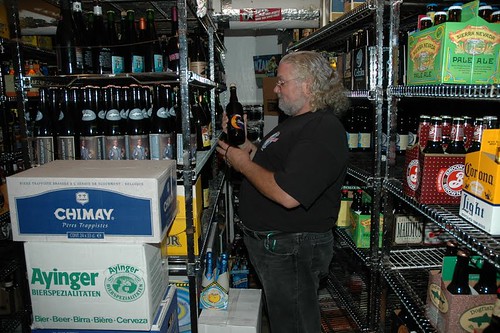
Dave Alexander examined one of the bottles in the Brickskeller’s large cold storage area as the Washington, D.C. beer landmark, with more than 1300 selections on its beer menu, turned fifty years old in 2007. (PHOTO BY GREGG WIGGINS)

Filed Under: News Tagged With: Business, D.C., Pubs

Please Help JB Shireman

December 10, 2010 By Jay Brooks

help
My friend and colleague Harry Schuhmacher of the Beer Business Daily wrote yesterday about his feelings for the beer industry:

This industry has been very good to me. I love this industry as if it were a treasured relative: I love it’s idiosyncrasies, I love the product itself, but most of all I love the people. I’ve made so many friendships in this business that I value deeply. This industry, I believe, has the best people of any industry on earth.

And I must agree. That’s how I feel as well. The beer world is a tight knit community, as close to a family as an industry could get. I spent several hours last night reminded of that fact at Anchor Brewery’s annual Christmas party seeing old friends, drinking some great beer and eating some terrific food. We’re there for each other and help out whenever we can. I love that about beer, how it brings people together. I bring this up because there’s a new opportunity for us to help one of our own, someone who really needs our assistance.

Perhaps many of you know JB Shireman, or perhaps you’ve only heard his name, perhaps not. Shireman worked for many years at New Belgium Brewing, and he was a big part of their rapid expansion, traveling extensively to build their distribution networks as they added state after state. Last year, he left New Belgium in order to spend more time raising his son, became a consultant for craft brewers, and also opened a bar, the Bar Double S in Laporte, Colorado.

bar-double-ss

Unfortunately, I learned the following from Harry, who learned it from Bump Williams, a well-known beer business expert with IRI Symphony.

Doctors have discovered a large tumor in JB’s brain. The good news is that the tumor is benign. The bad news is that it will take a very long, complex, and expensive surgery to remove the tumor. JB has only told a close circle of compadres about his situation, and of course he has not asked for any help.

Bump also told Harry about his idea for a fundraiser to help out JB Shireman, and especially the medical costs he and his family are facing. Beer Business Daily posted a letter from Bump Williams, which I reprinted in part below:

I need your help in trying to raise $10,000.00 between December 10th and January 10th (2011) for JB Shireman, a dear friend of the Beer business who has to undergo brain surgery in early January. The surgery is going keep him out of work for a longer period of time than any of us wants, and I’d like to ask for your help in getting him up, on his feet and back to work just as soon as humanly possible. The good news is that the surgeons performing JB’s operation are the best in the business and they all agree that the prognosis is very good for him.

You all know JB and all the work he has done while at New Belgium promoting Beer in general, Craft Beer in particular, Wholesaler training, helping the Retailer understand the dynamics of the Craft consumer and his new work in being Craft-Centric thinkers. We can’t afford to have him out of commission for too long! I expect JB to be laid up and unable to tend to the job he loves most — BEER — for about 8 weeks after his surgery; and that’s a long time for someone like him to be out of commission. You all know JB as well as I do, and you understand the need to get him back up and into the work environment before he goes stir-crazy just laying around in bed recovering and getting his strength back!

I’m asking everyone across this wonderful business who knows JB or who has worked with him for a small contribution to help defray a lot of the medical and recovery costs he is going to inherit after his surgery. I’d also like for you to include JB in your thoughts and prayers for a speedy recovery as he goes through this anxious time. He is a good friend of all ours; he’s a friend of the industry and a great father, too. If the tables were turned around and he knew that one of his friends needed help, he’d be the first person in line to lend a hand.

From December 10, 2010 (JB’s birthday) through January 10, 2011 (post surgery), our goal is to collect $10,000.00 to help JB defray his medical and recuperation costs.

Here is what you need to do if you are able to help:

  1. Please send this note to as many people as you can who might know JB, and let them know of JB’s situation and our fundraiser for him.
  2. Send me a donation to the address below (made out to Mr. John Shireman) before January 10, 2011 and I will deposit it into a separate savings account.
  3. After JB’s surgery, I will have the bank write a cashier’s check made out to JB and then hand-deliver it to him at his home in LaPorte, CO along with a card that bears the name of everyone who was able to make a donation.

Thanks for your consideration, I really appreciate it.

BUMP Williams
900 Beaver Dam Road
Stratford, CT 06614

I can’t begin to tell you how much I appreciate your kindness and help; and you all know JB well enough to know what it will mean to him. Be well, always,

BUMP

I would encourage anyone who knows JB or just wants to help out a worthy cause, to donate and help Bump reach his goal of raising $10,000 by January 10. Let’s help out a friend in need. It just feels like the right thing to do, especially during the holidays when I can think of no better way to celebrate than helping out our fellow man, make that our fellow “beer” man.

Please spread the word.

Filed Under: Editorial, News Tagged With: Charity, Colorado

Beer In Ads #261: Schlitz, Holidays Call For The Finer Things

December 9, 2010 By Jay Brooks

ad-billboard
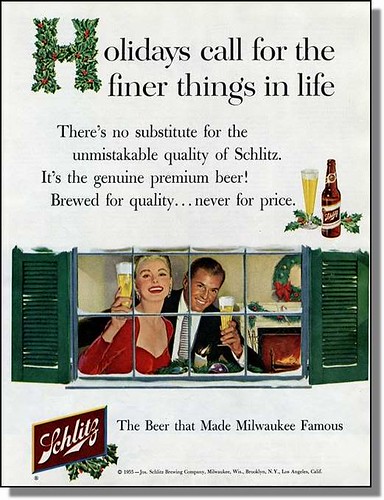
Thursday’s holiday ad is for Schlitz, from 1955. The slogan is “Holidays call for the finer things in life,” and since I’m in my way to a fancy party tonight, this ad made the most sense. Too true.

Schlitz-1955-xmas

Filed Under: Art & Beer, Beers Tagged With: Advertising, Christmas, History, Holidays, Schlitz

WSJ Reviews “Dethroning The King”

December 9, 2010 By Jay Brooks

a-b
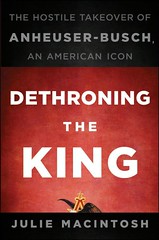
I got a review copy of the new book, Dethroning the King, which is all about the hostile takeover of Anheuser-Busch by InBev, a few weeks ago but haven’t had a chance to read it yet. It looks fascinating and I’m looking forward to devouring it as soon as I can. For now, I’ll have to make do with the Wall Street Journal review of the book, which only makes me want to read it more. Anybody else read it yet? Thoughts?

dethroning-king

Filed Under: Breweries, Related Pleasures Tagged With: Anheuser-Busch, Anheuser-Busch InBev, Beer Books, Big Brewers, Business, Mainstream Coverage

Nubian Antibiotic Beer

December 9, 2010 By Jay Brooks

nubians
For reasons passing understanding, apart from anti-alcohol propaganda, beer is forbidden from advertising its many recognized health benefits. For people against alcohol, saying beer is good for you, or at least isn’t bad for you (in moderation), is apparently the same as saying “drink up.” And for goodness sake, we’d never want to tell people to do something that might be good for their health, especially if a small minority can’t handle the truth … er, the beer.

But despite our peculiar inability to be reasonable regarding alcohol, beer and health have been inextricably linked since the beginning of civilization when drinking beer was safer than the water. But there may have been at least one more medicinal use of beer, at least in the variety brewed by ancient Nubians, “an ethnic group originally from northern Sudan, and southern Egypt now inhabiting East Africa and some parts of Northeast Africa.” And for a time, they even ruled over ancient Egypt, beginning in the 25th Dynasty.

Conventional wisdom has it that the use of antibiotics is a modern invention, thought to be no more than eighty years old, but archeologists have found in the bones of ancient Nubian skeletons traces of tetracycline, “a broad-spectrum polyketide antibiotic produced by the Streptomyces genus of Actinobacteria, indicated for use against many bacterial infections.” This suggests that the use of antibiotics may be 2,000 years older than previously thought.

From Discovery News’ coverage:

Some of the first people to use antibiotics, according to the research, may have lived along the shores of the Nile in Sudanese Nubia, which spans the border of modern Egypt and Sudan.

“Given the amount of tetracycline there, they had to know what they were doing,” said co-author George Armelagos, a biological anthropologist at Emory University in Atlanta. “They may not have known what tetracycline was, but they certainly knew something was making them feel better.”

Armelagos was part of a group of anthropologists that excavated the mummies in 1963. His original goal was to study osteoporosis in the Nubians, who lived between about 350 and 550 A.D. But while looking through a microscope at samples of the ancient bone under ultraviolet light, he saw what looked like tetracycline — an antibiotic that was not officially patented in modern times until 1950.

And Physorg.com adds this, from Emory anthropologist George Armelagos and medicinal chemist Mark Nelson of Paratek Pharmaceuticals:

“We tend to associate drugs that cure diseases with modern medicine,” Armelagos says. “But it’s becoming increasingly clear that this prehistoric population was using empirical evidence to develop therapeutic agents. I have no doubt that they knew what they were doing.”

Armelagos is a bioarcheologist and an expert on prehistoric diets. In 1980, he discovered what appeared to be traces of tetracycline in human bones from Nubia dated between A.D. 350 and 550. The ancient Nubian kingdom was located in present-day Sudan, south of ancient Egypt.

Armelagos and his fellow researchers later tied the source of the antibiotic to the Nubian beer. The grain used to make the fermented gruel contained the soil bacteria streptomyces, which produces tetracycline. A key question was whether only occasional batches of the ancient beer contained tetracycline, which would indicate accidental contamination with the bacteria.

Their results were published in the September issue of the American Journal of Physical Anthropology Here’s the abstract:

Histological evidence of tetracycline use has been reported in an ancient X-Group population (350–550 CE) from Sudanese Nubia (Bassett et al., 1980). When bone samples were examined by fluorescent microscopy under UV light at 490 Å yellow–green fluorophore deposition bands, similar to those produced by tetracycline, were observed, suggesting significant exposure of the population to the antibiotic. These reports were met skeptically with claims that the fluorescence was the result of postmortem taphonomic infiltration of bacteria and fungi. Herein, we report the acid extraction and mass spectroscopic characterization of the antibiotic tetracycline from these samples. The bone samples were demineralized in anhydrous hydrogen fluoride which dissolved the bone-complexed tetracycline, followed by isolation by solid phase extraction on reverse-phase media. Chemical characterization by high pressure liquid chromatography mass-spectroscopic procedures showed that the retention times and mass spectra of the bone extract were identical to tetracycline when treated similarly. These results indicate that a natural product tetracycline was detectable within the sampled bone and was converted to the acid-stable form, anhydrotetracycline, with a mass + H of 427.1 amu. Our findings show that the bone sampled is labeled by the antibiotic tetracycline, and that the NAX population ingested and were exposed to tetracycline-containing materials in their dietary regime.

As they discovered, the most likely source of their “dietary regime” that included the antibiotic was Nubian beer. Back in 2000, Armelagos figured out it was most likely the beer, and he published his findings in the magazine Natural History, in an articled entitled Take Two Beers and Call Me in 1,600 Years.

But back to Discovery News:

His team’s first report about the finding, bolstered by even more evidence and published in Science in 1980, was met with lots of skepticism. For the new study, he got help dissolving bone samples and extracting tetracycline from them, clearly showing that the antibiotic was deposited into and embedded within the bone, not a result of contamination from the environment.

The analyses also showed that ancient Nubians were consuming large doses of tetracycline — more than is commonly prescribed today as a daily dose for controlling infections from bad acne. The team, including chemist Mark Nelson of Paratek Pharmaceuticals, reported their results in the American Journal of Physical Anthropology.

They were also able to trace the antibiotic to its source: Grain that was contaminated with a type of mold-like bacteria called Streptomyces. Common in soil, Strep bacteria produce tetracycline antibiotics to kill off other, competing bacteria.

Grains that are stored underground can easily become moldy with Streptomyces contamination, though these bacteria would only produce small amounts of tetracycline on their own when left to sit or baked into bread. Only when people fermented the grain would tetracycline production explode. Nubians both ate the fermented grains as gruel and used it to make beer.

The scientists are working now to figure out exactly how much tetracycline Nubians were getting, but it appears that doses were high that consumption was consistent, and that drinking started early. Analyses of the bones showed that babies got some tetracycline through their mother’s milk.

Then, between ages two and six, there was a big spike in antibiotics deposited in the bone, Armelagos said, suggesting that fermented grains were used as a weaning food.

Today, most beer is pasteurized to kill Strep and other bacteria, so there should be no antibiotics in the ale you order at a bar, said Dennis Vangerven, an anthropologist at the University of Colorado, Boulder.

But Armelagos has challenged his students to home-brew beer like the Nubians did, including the addition of Strep bacteria. The resulting brew contains tetracycline, tastes sour but drinkable, and gives off a greenish hue.

Maybe that could be used for St. Patrick’s Day? As for the antibiotics, they’re not even the only medicinal uses of beer in ancient in times, according to Armelagos:

The first of the modern day tetracyclines was discovered in 1948. It was given the name auereomycin, after the Latin word “aerous,” which means containing gold. “Streptomyces produce a golden colony of bacteria, and if it was floating on a batch of beer, it must have look pretty impressive to ancient people who revered gold,” Nelson theorizes.

The ancient Egyptians and Jordanians used beer to treat gum disease and other ailments, Armelagos says, adding that the complex art of fermenting antibiotics was probably widespread in ancient times, and handed down through generations.

Pretty fascinating stuff. It’s too bad you can’t get antibiotics today by the case … or keg.

egyptian-beer-party

Filed Under: Beers, News Tagged With: Archeology, Health & Beer, History, Middle East, Science

« Previous Page
Next Page »

Find Something

Northern California Breweries

Please consider purchasing my latest book, California Breweries North, available from Amazon, or ask for it at your local bookstore.

Recent Comments

  • Bob Paolino on Beer Birthday: Grant Johnston
  • Gambrinus on Historic Beer Birthday: A.J. Houghton
  • Ernie Dewing on Historic Beer Birthday: Charles William Bergner 
  • Steve 'Pudgy' De Rose on Historic Beer Birthday: Jacob Schmidt
  • Jay Brooks on Beer Birthday: Bill Owens

Recent Posts

  • Beer In Ads #5225: Fabled Ambrosia Of The Ancients April 17, 2026
  • Historic Beer Birthday: William O. Poth April 17, 2026
  • Beer In Ads #5224: Harvard Bock Beer April 16, 2026
  • Historic Beer Birthday: William H. Biner April 16, 2026
  • Historic Beer Birthday: Alan Eames April 16, 2026

BBB Archives

Feedback

Head Quarter
This site is hosted and maintained by H25Q.dev. Any questions or comments for the webmaster can be directed here.