5.12
Raley Field, 400 Ballpark Drive, West Sacramento , California
916.376.4700 [ information ] [ online tickets ]

5.12
Raley Field, 400 Ballpark Drive, West Sacramento , California
916.376.4700 [ information ] [ online tickets ]
I wasn’t even aware there was a competition among liquids, but apparently it’s pretty fierce. This year for the first time bottled water beat out milk, according to Beverage Digest, and was roughly equal to beer for the year 2006.
According to an article in the Atlanta Journal-Constitution, “If the trend continues, Americans could be drinking more bottled water than tap water within a few years.”
“Tap water is in trouble,” quipped John Sicher, publisher of industry newsletter Beverage Digest.
Beverage Digest’s figures showed average per capita consumption of bottled water grew from 11 to 21 gallons between 1996 and 2006. Consumption of milk dropped from 22.7 to 19.5 gallons over the 10-year span, while beer consumption was steady at 21.8. Soft drink consumption dropped from 52 to 50.9 gallons, according to the figures.
No word on whether the water in beer is added to the water figures.
Today is the one-year anniversary of Pizza Port taking over Stone’s old brewery in San Marcos and re-making themselves into both Port Brewing and the Lost Abbey. They’ll be hosting what will surely be a great party to celebrate today at the brewery (see details below). Congratulations to Tomme Arthur and the gang at Port Brewing.
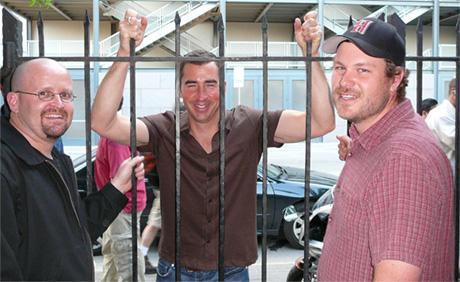
Port Brewing’s Tomme Arthur (at left) with Adam Avery (behind bars) and Eric Rose, at this year’s Craft Brewers Conference in Austin, Texas.
From the press release:
Fans of great beer will have an opportunity to enjoy Cinco de Mayo Belgian style at Port Brewing Company’s First Anniversary Celebration, Saturday, May 5 at the brewery’s facility in San Marcos, California. The $15 admission will entitle attendees to sample Port’s award-winning line up of house beers, as well as become the first to taste a number of special releases and limited editions from the brewery’s ground-breaking Lost Abbey Belgian-style ales. Additionally, partygoers will have the opportunity to purchase Lost Abbey’s new seasonal issue, Ten Commandments dark farmhouse ale, and the highly anticipated Cuvee de Tomme, a barrel-aged specialty of Port’s brewmaster, Tomme Arthur.
“As the brewery’s first anniversary, we want this one to be something special,” Arthur said. “So we’re not only making it the premier of our anniversary ale, Ten Commandments, but we’re also treating our guests to some special beers that I made and kept hidden in the barrel room just for this occasion.”
Since Port Brewing’s founding, Arthur has established the company’s Lost Abbey label as one of handful of American breweries committed to pushing the boundaries of the centuries-old Belgian Ale style of beer. Nearly 40 percent of the facility is dedicated to racks of French Oak, Brandy and Bourbon barrels in which the Lost Abbey’s signature beers are aged for as long as 18 months prior to release.
The Port Brewing First Anniversary Celebration runs from noon to 9 PM on Saturday, May 5th at Port Brewing Company’s facility located at 155 Mata Way, Suite 104, San Marcos (the old Stone Brewing facility). Admission of $15 entitles visitors to 8 beer tastings and unlimited access to a taco bar prepared by Port’s in-house chef, Vincent Marsaglia.
5.5
Boonville Beer Festival (11th annual)
Mendocino County Fairgrounds, Hwy 128, Boonville, California
sponsored by:
Anderson Valley Brewing Co., 17700 Hwy 253, Boonville, California
707.895.2337 [ festival website ]

I was thrilled to discover that Dave McLean from San Francisco’s Magnolia Pub & Brewery not only had a mild, but had one on cask available at the pub. He put it on Monday so I was hoping it would still be there when I arrived Thursday afternoon.
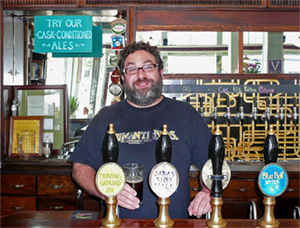
Happily, when I arrived I found both McLean and his mild, Sara’s Ruby Mild, at the hand pumps. The inspiration for Magnolia’s mild came from a trip Dave took to England several years ago. He found himself at the Beacon Hotel in the West Midlands town of Dudley. The hotel also included a brewery, at least since 1880, but it was closed in 1950 by the then-owner, Sarah Hughes. Her grandson re-started the brewery in 1988, naming it in his grandmother’s honor. Today the Sarah Hughes brewery has three regular ales, Pale Amber, Dark Ruby Mild and Sedgley’s Surprise Bitter, along with some rotating seasonals.
I ordered my first pint of mild and found a seat in a booth and settled in for some lunch. I was hungry and so it all looked good, but I tried to choose a dish that would pair nicely with my mild. I hadn’t actually been to Magnolia to eat since chef Eddie Blyden returned from Philadelphia and revamped the menu last year and the choices looked just terrific.
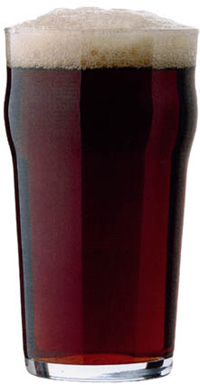
Sara’s Ruby Mild on cask was a delight from the first. It was a deep mahogany color with streaks of ruby red that shone in the afternoon light. The nose was light and subtle, with sweet, bready malt aromas. On cask, it was smooth and easy-drinking. Thick Brussels lace stuck to the sides. There was just a touch of butterscotch up front but it was mostly malt character throughout, dry and biscuity, and never overly sweet. You knew the hops were there because it seemed so balanced, but they never asserted themselves or got in the way, simply staying in their place, out of the way. Overall a very well-conditioned beer with a nice, clean dry finish.
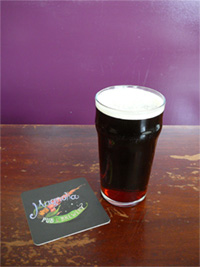
Magnolia used primarily Maris Otter malt — around 65% — and three more crystal malts and some black malt, along with Fuggles and Golding hops. The yeast used was their regular ale yeast, a flocculent London variety. Original gravity was around 1038 or so, and yielded around 3.7% ABV, a true session beer.
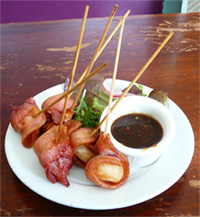
I started with an appetizer of bacon wrapped roasted chestnuts that were superb and were washed down nicely by the mild.
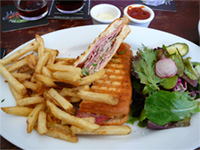
Then a slightly spicy Cuban sandwich of garlic pork and ham with swiss cheese on grilled panini bread. Here the mild paired really well, neutralizing the spiciness with each sip, cleansing my palate and readying me for the next bite. Before I knew it, I’d finished off my second pint.
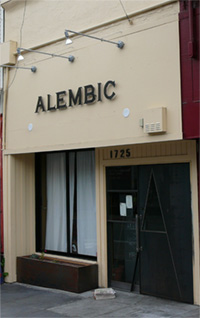
For curiosity’s sake, I walked the few blocks down Haight Street to Dave McLean’s new bar, the Alembic, where he’d mentioned that he had the mild there in its non-cask form. It’s a shame I didn’t try it before the cask, but the Alembic didn’t open until four so there was no way around it. Good as the mild was at the Alembic, it suffered by comparison to the cask-conditioned version. Even in appearance it was slightly more orange and not as ruby, but with a thick, pillowy ivory head. It was gassier, naturally, and not as smooth, which made the hops more pronounced, especially in the finish.
But now I see why CAMRA and English beer lovers are crying over the loss of this fine beer, especially in its real ale form. Because that’s where milds really do shine. On cask, their more subtle flavors really burst forth and you can see yourself enjoying quite a few of these beers in one — ahem — session. If not for the tug of my children (I did have to pick them up at their preschool) I could have easily spent the entire afternoon curled up with a good book or talking with friends, enjoying pint after pint of Sara’s Ruby Mild. This style definitely deserves to be less mysterious, better understood and more available. If there aren’t any milds made where you live, ask your local brewery to make one. There’s no reason that we have to be mild about promoting milds. To borrow CAMRA’s phrase, we can be “wild about milds.”
If you want some history and background on the style Mild, please take a look at my overview of milds, which I posted a few days ago.
Our first “Session” post was by Al at Hop Talk, who blogged about his fruitless search to find a mild in his area. Next, Kevin at KevBrews in Ohio managed to find just one example in his local store stocked with 800 beers, highlighting just how underrepresented this style is in America. The beer they did have was Three Floyds Pride & Joy Mild, a beer the brewery describes as a “hoppy interpretation of the style,” which as Kevin notes makes it “too bright, too hoppy, too citrus to be a true mild.” He concludes that he’ll stick with Bell’s Best Brown for a session beer.
Over in Sweden, Knut at the eponymous Knut Albert’s Beer Blog, writes about Pumpviken påskøl, which is the Easter seasonal from the Nynäshamn Steam Brewery located in a small town south of Stockholm. At 5.8% he finds that it is still close to the English style, describing it as “less bitter than a bitter, and more flavourful than a (standard) brown ale.” Of course, a century or more ago, the original milds were much stronger than today so perhaps Knut has stumbled upon one made in the original way?
Stonch, who’s a Londoner, naturally had an easier time finding a mild, though even in its native England it still requires some effort. He thoughtfully highlights some pubs around London that support and stock milds year round. Look for him to continue writing about milds throught the month. Stonch in an earlier post also reviewed Elgood’s Black Dog, which he describes as “a fantastic 3.6% abv dark mild with a distinctive and moreish smoky flavour.”
At A Good Beer Blog, Alan puts on his armor and goes on an “Unlikely Quest For A Mild,” settling finally on “Vanilla Bean Brown Beer” by Landmark Beer Co., a contract brewer in New York. Ultimately a little disappointed, Alan finds it “a bit overwhelmed by a syrupy and bitter dark chocolate vanilla statement that leaves little left to the malt.” He has one more prospect to open tomorrow, but for now he eloquently concludes.
The lesson is this – you are never going to see a flavoured mild or an extreme mild. Mild is only itself. No muss, no fuss. No fanfare, no breakthrough in technology. Just a newly matured light, clean, flavourful and, yes, watery beer. It’s a confident statement of the light hand that it takes to make it.
Next up, Craig, one of the bloggers at Beers, beers, beers reviewed a bottle of Black Cat, a dark mild from Moorhouses in England. It was gratifying to read that he’d never had a mild before but was giving it a try to participate in the Session. And while he generally prefers “something with a little more punch,” his review is generally positive, concluding that “it’s a little surprising that this isn’t a more popular style here. It’s really drinkable, due to it’s low alcohol content and mild flavor.”
Donovan at Catch & Release went all out, setting sail for the other side of the pond and a visit to the Market Porter (a great London Pub I went to in January) for a podcast show tasting a Gunpowder Strong Mild from Coach House Brewing. You can download the podcast at the Internet Archive.
Captain Hops at the Beer Haiku Daily was also unable to find a mild for today’s Session, though he did write a haiku about his search, and posted the two haikus I wrote about milds. In his e-mail to me, he writes that nothing “could call attention to the plight of the mild like the fact that half the beer bloggers out there had trouble finding one. Now I feel like I am on a mission! It seems that several of the local breweries have made them at one time, but no longer have them on their rosters. Perhaps a little encouragement ….” Still searching for “that elusive mild,” Captain Hops nonetheless has been enjoying Wild Goose Nut Brown Ale lately, which though not strictly a mild is similar in style and certainly a milder, less extreme beer.
Jon from The Brew Site in the Pacific Northwest likewise had some difficulty finding a true mild but in the spirit of the day tasted Old Speckled Hen. While an English Pale Ale, it was considerably milder than most of what he found available in his area. Although earlier this week he did review BridgePort’s new Beertown Brown, another local contender for kinda, sorta mildish.
Thomas, from the other side of the country, in Massachusetts, on his Thom’s Beer Blog, reviewed “Midlands Mild: A Spoonful Weighs A Ton” from John Harvard’s Brew House, a dark mild style which the brewpub described thusly:
Not all ‘light’ beers are light in color, or flavorless; not all ‘dark’ beers are overpowering in flavor or alcohol. Mild ales from England’s Midlands region are a little known example. A so-called ‘cloth cap beer,’ these drinkable session ales sustained farmers through the harvest season. Dark, mellow, flavorful and surprisingly complex at 3.2% alcohol by volume, this is the perfect ale to debunk popular beer myths.
Thom gave the beer high marks and thought it pretty much nailed the style guidelines, writing the following about its flavor. “Very nice maltiness that’s sweet, but never cloying. There are notes of caramel, dark fruit, a little bit of burnt sugar as well as a mild graininess. Mellow, but flavorful.”
Then we skip back to the west coast again to Dave’s blog about the L.A. beer scene, “Hair of the Dog Dave.” Dave also had some difficulty finding a mild, likening his search to trying to find an “honest mechanic.” He eventually stumbled onto Riggwelter from Black Sheep Brewery, located in Masham, England, which is aparently the gateway to Wensleydale (sorry I’m laughing right now, as should everyone who really knows Monthy Python’s Cheese Sketch). Dave followed up to remind me that in fact it’s Black Sheep Brewery that also makes the hilarious Monty Python’s Holy Grail Ale, a novelty beer created for the comedy troupe’s 30th anniversary.
Dave also has some cool information about the beer’s name. Riggwelter, interestingly enough, “comes from Old Norse. Rygg means back and velte means to overturn, so when sheep get stuck on their backs and can’t get up, they are riggwelted. I didn’t even know this happened to sheep.” As for the taste, he was initially put off by over time came to enjoy his foray into milds, describing it as having flavors of “roasted malt, with a subtle bitterness throughout, with the tiniest hint of sourness in the finish.”
Next we head north to Canada and Greg Clow’s Beer, Beats & Bites. He found a “Mild Brown Ale” at C’est What, a Toronto brewpub. At only 3.4% ABV and served on “nitro-tap” it was a real session beer. Greg wrote up the beer back in February for his Beer of the Week column that he does for Taste T.O., concluding that it was “nice to have a flavourful beer that one can quaff several pints of in a session without falling off one’s barstool in the process.”
Then over to Andrew Ager at another eponomously named blog, Andrew Ager dot com, in New England where he posits that Three Floyd’s Pride & Joy Mild, which KevBrews also wrote about, is in fact an extreme mild, thus in effect refuting Alan from A Good Beer Blog’s assertion that we are “never going to see a flavoured mild or an extreme mild.” Andrew goes on to talk about the “rare and lusty Sarah Hughes Dark Ruby Mild,” which is the beer that inspired Dave McLean at Magnolia to create his own “Sara’s Ruby Mild” which in turn was the beer I wrote about. Ah, what comes around goes around, especially if you swirl it.
John at Sine Qua Non made his own homebrew for the ocassion and muses wistfully that, although milds may be one of his favorite styles, he’s “never had a ‘real’ mild, i.e. one brewed in Britain to a traditional recipe” and further questions “if many Brits have either” given that the beer now called in mild is quite different, at least in terms of strength, then it was a century ago. John describes his own effort as “malty-sweet with a bit of a chocolate-nutty character and a touch of roastiness in the dry finish. Medium-full bodied and creamy, with a good head if there’s enough CO2 to support it.”
Our journey next takes us again north of the border to Canada for Stephen Beaumont’s A Mild Session at his blog on That’s the Spirit, where I initially am docked a few points for my choice of mild both on the basis of scarcity and season. Of course, Stephen managed to find two and can I really be faulted for the weather in Toronto? It’s not like I had anything to do with global warming. Did I leave the oven on? When I had my beer yesterday in San Francisco is was cool, slightly gray and a little windy — ideal weather for my mild.
Like fellow Torontoan Greg Clow, Stephen also chose the C’est What Mild Brown Ale. And despite a couple of delivery issues, he liked it, he really liked it, concluding that “the MBA passes the true test of a mild, which is to say it needs make no apologies for its lack of strength. This is not only a very fine beer, but also proof that you don’t necessarily require big hops or big alcohol to make a beer interesting.”
Next we head back south, not quite all the way to the border, to New Mexico for some more history at Stan Hieronymus’ Appellation Beer. Stan decided to break his own promise and made his own mild, though he strayed quite a bit from the style parameters, including using no hops in favor of a mild gruit. I’m not sure he’s entirely happy with the results, but I’ll let his own words describe his beer.
I used a little more lightly smoked malt than [Randy Mosher] suggested — and, by golly, Wheeler and Protz talk about smoked malt in early Milds — and the mix of spices was different since I walked around my yard and collected stuff I knew wouldn’t kill you. Even though I cut back on the cardamom it still dominates right now, and might forever. It adds an unfortunate astringent note, not totally unlike a badly hopped beer.
Alan had one more go at A Good Beer Blog, sampling a Nut Brown Ale from Black Oak Brewing from Canada, but it, too, came up short. Close, but no cigar.
Rick over at Lyke 2 Drink also came up snake eyes in his search for a mild, but Rick regales us with a little more mild history before detailing his Herculean effort to track down a beer to write about.
Late in the evening, just after midnight, Lew Bryson explained his conspicuous absence somewhat cryptically, but then rallied the next day while attending the Southern California Homebrewing Festival, where he found four on cask, three of which he sampled. Lew also philosophized how and where milds fit into his session beer project and theorized as to why they’re not more popular here on this side of the pond.
That looks like it’s all for this “Session.” Thanks to everyone who particiated, even those who were frustrated in their attempts to actually find a mild. Although I felt like a few people gave me a hard time over my choice, the point really was to raise awareness about this somewhat rare and unknown style and I think we succeeded not only with the milds that were found and written about, but also with the fact that they are so hard to find, a fact very well illustrated by many of our intrepid bloggers. But if we play it safe and pick, say “pilsners” (sorry Al, didn’t mean to throw you under the bus) then we have some fun and enjoy ourselves but we don’t really accomplish much of anything. And if nothing else, we should at least use this forum to educate and illuminate what makes beer so special that we take the time to study it, drink it and write about it.
Sadly, the United States is not the only country with people who want others live according to their morals. A British Bulletin reader sent in a BBC article about Alcohol Concern, a UK neo-prohibitionist organization that refers to itself as the “national agency on alcohol misuse.” In the article, “Call to stop children’s drinking,” they, of course, use the “it’s for the children” strategy and it’s peppered with plenty of alarmist language about an increase in drinking among 11-13-year olds and citing that “[i]t is currently illegal to give an alcoholic drink to a child under five except under medical supervision in an emergency.” Now what might constitute such an emergency I can’t fathom but the only reason I can see for including it is that it implies that the whole of English parentage is putting beer in their baby’s bottles. It makes it easier to push an agenda when you hammer home the extremes rather than the truth. Of course, alcohol laws are different in the UK. Here’s an overview.
The group Alcohol Concern is also asking for a whopping 16% raise on taxes for alcohol products. And they also want alcohol education to be added to the National Curriculum, which in and of itself is not a bad thing but at the same time they want to restrict parents’ ability to educate their children about alcohol in the home. “Alcohol Concern would include meal times at home in the ban on giving alcohol to young people.” So what that suggests is they believe the government should be deciding what alcohol information should be given to kids and parents should have little or no hand in raising them. Now does that make any sense at all? Since when is the government in a better position to teach your children about anything better than you are? As Karen Gardner, who operates the Parenting Cafe, puts it in a rebuttal:
Parenting is about preparing your children for life.
I’ve just helped my 11-year-old son open his first bank account. When I get to a road with my four-year-old, I get him to decide when it’s safe to cross. It’s the same with alcohol. On your 15th birthday you don’t suddenly develop the ability to deal with alcohol, but by the time you’re 15 you are going to parties where alcohol is flowing. If Alcohol Concern got their way, you’d be sending them out with absolutely no experience of drinking at all and they’d go out and sink four vodkas.
The thing that really concerns me about this law is that if it’s made illegal, parents will tell kids, ‘You can’t drink, I’ll go to prison’. Then a child goes out and does drink too much and needs to call home for help, but feels they can’t in case they get mum or dad into trouble. I understand that some teenagers are going out and binge drinking in town centres, but parents who let their kids do that won’t care about a law anyway. All the law would do is stop responsible parents from trying to educate their children. It would infantilise parents.
Perhaps more troubling, though, is Alcohol Concerns own education materials. They also run a website, Down Your Drink, which purports to help people figure out whether or not they drink too much. Toward that end they also offer a three-question quiz to determine your level of drinking.
Forget for the time being that your weight or general health plays no role whatsoever in the equation, as absurd a notion as I can imagine, but then real education is not the goal. My own “drinking pattern indicates a possible increased risk of alcohol affecting [my] health.” Well, that’s not a surprise, but it doesn’t take into account that I’m a big fella or that I’m most often drinking as a part of my work. No matter, they want to alarm and proselytize, not educate.
You have to answer “Never” or “Monthly or less,” “1 or 2” and “Never” to be considered “drinking sensibly.” If you have 1 or 2 drinks 2-4 times a month (that would be a pint or two once a week or less) and you too could be at an “increased risk of alcohol affecting your health.” How absurd. Of all the possible ways to answer the questionnaire, only two will get you an answer of being a responsible drinker. As far as they’re concerned having one or two drinks monthly or less with no episodes with six drinks in one session is exactly the same as having “10 or more” drinks “daily or almost daily.” How is such inflexible thinking in any way helpful or useful?
But there’s one more absurdity to tackle. Take a close look at how they define “a drink containing alcohol.” They consider “1 drink” to be either “1/2 pint of beer,” “1 glass of wine” or “1 single measure of spirits.” So what that means is that 8 ounces of beer, with an average alcohol content of 4-5% ABV, is the same as one glass of wine, whose alcohol content average is around 14% ABV. I’m not sure what the average glass of wine holds, but even at 4 ounces it would pack more of a punch than twice as much beer. Now that’s some pretty fancy math. I’d love to know how they came up with that standard where a pint of beer is twice as bad as one glass of wine.
|
No wonder they believe there’s such a problem. When you define almost any amount of drinking, no matter how responsibly small, as being a potential health risk — and ignoring any of the many health benefits — then naturally you will believe there’s an epidemic of drinking problems. But then it’s more likely that you believed that to begin with and are using skewed reasoning and questionable statistics to support your agenda and make it sound more scientific. It’s called lying with statistics and it’s not that hard to do, especially when the mainstream media reports it as fact without questioning it either, which happens more often than not. Take a look at their research team here at the left, undoubtedly a bunch of models. They’re too politically correct in terms of the mix of young and old, male and female, and racial percentages to be the real research team. And those lab coats are hilarious. But that’s the propaganda of trying to make it seem more serious, more worthy of believing. Don’t fall for it. If all looks too perfect or convenient, it probably is. Few issues are as black and white as they try to paint this one. |
Drinking is obviously a huge problem for the people who already don’t and want the rest of us to stop. There are and always will be people who will abuse anything, both benignly and harmful alike. But the answer to dealing with such people should never be to take the object of abuse away from everyone. You don’t end up fixing the problem but instead make it worse, plus you end up punishing the people least deserving of such punishment, the ones who can enjoy things responsibly. Prohibition has never worked for anything. Laws prohibiting murder were among the first laws society ever agreed upon, and it hasn’t eradicated killing yet. You teach people it’s wrong and hope for the best. The same is true concerning alcohol. You teach your children about what it is, how to enjoy it responsibly and how not to abuse it. Take that away, and your kids will be ignorant binge drinkers rebelling against society the first chance they get. But the neo-prohibitionists don’t seem able to grasp this and instead want a Stepford society that forces rather than educates. It uses scare tactics and lies instead of reason and understanding. It would be ridiculous were it not for the growing number of people who think it’s okay to want to tell me and you how to live. Why can’t these people just live how they want to and leave the rest of us alone?
Okay, perhaps a bit too Suessian with the title here, but I’m excited. Beer Chef Bruce Paton’s next beer dinner will feature Maine’s Allagash owner and brewer Rob Tod. It will be another four-course dinner, though Bruce is still working out the menu so I really don’t know if squab or cod will be served. I’ll get it up as soon as it’s available. It will be held at the Cathedral Hill Hotel on Friday, May 25, beginning with a reception at 6:30 p.m. Call 415.674.3406 for reservations. Make your reservations soon, because this dinner should fill up fast and you won’t want to miss this one. Rob is making some great Belgian-inspired beers up in the wilds of Portland, Maine that is, Portland, Maine.

From left: Vinnie and Natalie Cilurzo, from Russian River Brewing, Matt Brynildson and a co-worker, from Firestone Walker Brewing, and Rob Tod, from Allagash, taken at last year’s GABF.
5.25
Dinner with the Brewmaster: Rob Tod of Allagash
Cathedral Hill Hotel, 1101 Van Ness Avenue, San Francisco, California
415.674.3406 [ website ]
There was an amusing little spoof on the Canadian humor site The Toque called “Plant Your Own Beer Garden.” They suggest simply planting the bottles in the ground, but caution against “over-planting. Too many beers in one garden will result in a watery, low-alcohol “lite” beer.”
In German, the famous hop used in those original Czech pilsners is called “saaz” hops, but in the Bohemian part of the Czech Republic, where they’re grown, the word is “zatec,” named for the town where they were first grown. According to the town’s history, “the name of Zatec was first mentioned in the Thietmar of Merseburg Chronicle in 1004.” Today the town of Zatec has its own hop museum.
There’s also a brewery in town, Zatecky Pivovar, and they’ve been brewing in the same location for a long, long time.
The history of Czech breweries contains only two breweries with proven a tradition of brewing beer in a single location for more than 700 years — Svitavy (1256) and Žatec (1261). The Society of Žatec Privileged Brewers was established in Žatec in 1261. The two beers called “Samec” and “Kozel” were in high demand in Bohemia and at court, requested by nobility and lords, at the table as well as for festive parties.
|
Merchant Du Vin, the Seattle importer who also brings Ayinger, Lindemans, Orval, Rochefort, Samuel Smith, Traquair House, and Westmalle, among others, into the U.S., will now be distributing Zatec in the States, as well. According to the press release, product should be in the states some time this June. From the press release:
|
The Zatecky Pivovar in Zatec, Czech Republic.

The British advocacy group CAMRA, the Campaign for Real Ale, promotes the month of May as “Mild Month” in an effort to educate people about a style that’s dying before their eyes throughout England. Since this Friday’s “Session” — a.k.a. Beer Blogging Friday — that I’ll be hosting will be about Milds, I thought I’d collect and provide some basic information about this relatively unknown and misunderstood style. In fact, the theme for Friday’s “Session” is “The Mysterious Misunderstood Mild” in an effort to make these delicious beers less so. Yesterday, CAMRA had a press release in anticipation of Mild Month beginning today that summarizes their efforts.
Mild was once Britain’s most popular style of real ale, but had fallen out of fashion in favour of other beers. However there are still many brewers who are enthusiastic about the future of Mild and CAMRA is dedicated to making sure their beers get the credit they deserve.
May has been designated as Mild Month by CAMRA and the consumer organisation is urging beer lovers to seek out milds in their local pubs and rediscover this wonderfully flavoursome beer.
CAMRA also suggests a few recipes for cooking with mild.
Mild’s popularity has been waning since at least 1960. In 1959 the style accounted for 42% of beer sold in Great Britain, but by 1980 its popularity had dropped to a mere 10% and today it’s far less than that. For a good overview of the history of the style and what led to its decline, read the December 1998 article that All About Beer magazine ran on the subject by Roger Protz, entitled “Vanishing Mild.”
Here’s how CAMRA describes milds:
Mild is one of the most traditional beer styles which is enjoying a revival in today’s real ale market. Usually dark brown in colour, due to the use of well-roasted malts or barley it is less hopped than bitters and often has a chocolatety character with nutty and burnt flavours.
Cask conditioned Mild is a rarity in a lot of parts of the country, which is a crying shame, because Mild is a distinctive and tasty beer. Mild is one of, if not the, oldest beer styles in the country. Until the 15th century, ale and mead were the major British brews, both made without hops. Hops were introduced from Holland, France and Germany after this time. This also started the trend on reducing the gravity of ale, as the Hop is also a preservative, and beers had to be brewed very strongly to try to help preserve them. The hop also started the rapid decline of mead, which is only made in a very few places today.
So what is Mild? It is a beer which has tastes and textures all it’s own. Basically it is a beer that is less hopped than bitter, etc. The darkness of Dark Milds, such as Greene King XX Mild, comes from the use of darker malts and/or roasted barley which are used to compensate for the loss of Hop character. “Chocolate “, “fruity”, “nutty” and “burnt” are all tastes to be found in the complexity of Milds. However, not all milds are dark. Yorkshire brewed Timothy Taylors Golden Best is one of the best examples of a light coloured mild, as is Bank’s Original, the name changed from Mild to try to give it a more modern image. In Scotland, 60/- ale is similar to mild (Belhaven’s being a good example).
Milds today tend to have an ABV in the 3% to 3.5% range, with of course some notable exceptions. In fact, a lot of the Microbreweries who try their hand at mild are bringing the alcohol content back up somewhat! Mild wasn’t always weaker though. In the latter half of the 19th Century, milds were brewed to about the same strength as bitters as a response to the demand for a sweeter beer from the working classes and in those days most bitters were around 6 to 7% ABV.
During the First World War, malt rationing and pressure from the temperance movement led to brewers rapidly reduced the strength. Following the Second World War, as prosperity returned, mild`s popularity as a cheap ale began to fade, not being helped by being kept badly in run down pubs as the Big Brewers began to heavily promote their keg lager brands. Coupled to this was a gradual, but steady decline in heavy industry in the North and Midlands of Britain, mild`s great marketplace.
By the 1970s, the keg lager boom had seen mild’s share of the market fall to around 13% and it was a shame to see a bland gassy and overpriced product, which was generally weaker than the mild it was trying to oust, succeed in many cases.
On this side of the pond, there is a great deal of confusion about milds, though for me the most curious issue is that people don’t like the name. What on earth could be wrong with the word “mild,” which in terms of flavor is defined as “not sharp, pungent, or strong.” It’s the very opposite of extreme, but is still full-flavored and delicious. I can think of countless scenarios where a mild would be the ideal compliment to the situation, weather, food, etc.
Making things more confusing is the fact that oftentimes in England a mild when bottled is called a brown ale, but this is still not the same as a brown ale like Newcastle. And then there’s the fact that there are two recognized styles of milds, pale milds and dark milds, further clouding things.
The BJCP organizes milds under their Style #11, English Brown Ale, with 11A designated mild and two additional sub-styles, northern and southern English brown ale. They suggest IBUs of 10-25, SRM of 12-25, and ABV of 2.8-4.5%, with most falling between 3.1-3.8%. The only American example they list is Goose Island PMD Mild.
For the 2007 Great American Beer Festival, The Brewers Association will for the first time include milds as a separate category in the style guidelines. Two categories, actually, as they’re dividing them into two separate styles, English-Style Pale Mild Ale and English-Style Dark Mild Ale. These appear to be the same as Category 56 for the World Beer Cup. For the BA, Pale Mild has IBUs of 10-20, SRM of 8-17 and ABV of 3.2-4% and for Dark Mild, IBUs of 10-24, SRM of 17-34 and ABV of 3.2-4%.
The color distinctions between the two are described as “golden to amber” for pale mild and “deep copper to dark brown (often with a red tint)” for dark mild. Both are dominated by malt favors with very low bittering discernible and allow for some low levels of diacetyl (butterscotch). The dark mild may also include some licorice or “roast malt tones.”
On Friday, if you’re participating in “The Session,” be sure to post a comment to the mild hosting post that will appear here on the Bulletin shortly after midnight PDT. I’ll try to add links in near-realtime and write up the days’ entries as time permits.
So for Friday’s Mild Session Blogging Extravaganza, it might not be quite as simple to find a mild as going to your friendly neighborhood corner bar or liquor store. Hopefully, the information listed above may give you some help in finding a suitable beer to write about. The beer may not have the word “mild” written anywhere on the label, but if it’s close to the style parameters then go for it. The idea of Beer Blogging Friday is to be as inclusive as possible so we’re not going to get too hung up on strict style standards — whatever those might be. Find a “mild” beer and join us. To get you started, listed below are some American milds listed on the major beer forums:
English Pale Mild Ale:
Mild Ale, from Southern Tier Brewing, Lakewood, New York
Arcadia Special Reserve, from Arcadia Brewing, Battle Creek, Michigan
Cattail Ale, from Lakefront Brewery, Milwaukee, Wisconsin
English Dark Mild Ale:
Merrimack Mild, from The Tap (Haverhill Brewery), Haverhill, Massachusetts
Milltown Mild, from Victory Brewing, Downingtown, Pennsylvania
Harbor Lighthouse Ale, from Bar Harbor Brewing, Bar Harbor, Maine
Pride & Joy Mild Ale, from Three Floyds Brewing, Munster, Indiana
Motor City Brewing Ghettoblaster, from Motor City Brewing Works, Detroit, Michigan
Merrimack Mild, from The Tap (Haverhill Brewery), Haverhill, Massachusetts
Dawn Patrol Dark Mild, from Pizza Port, Solana Beach, California
Titletown Brewing Whistling Chicken Mild Ale, from Titletown Brewing, Green Bay, Wisconsin
Flossmoor Station XXX Mild Ale, from Flossmoor Station, Flossmoor, Illinois
Brew It Up! Northern Mild Brown Ale, from Brew It Up!, Sacramento, California
Bells New World Ale, from Bells Brewery, Galesburg, Michigan
Iron Hill Mild Ale, Iron Hill Brewpubs, various locations in Delaware and Pennsylvania
Jeezum Jim, from Magic Hat Brewing, South Burlington, Vermont
John Harvards British Pale Mild, John Harvards Brewhouse, various locations
Lee’s Mild, Stone Brewing, Escondido, California
London Tavern Mild, from Valley Brewing, Stockton, California
Midlands Mild Ale, from Avery Brewing, Boulder, Colorado
Sara’s Ruby Mild, from Magnolia Pub & Brewery, San Francisco, California
Schlafly English Mild, from the Saint Louis Brewery, St. Louis, Missouri
Thunderhead Mild Ale, from Thunderhead Brewing, Kearney, Nebraska
Triumph Mild Ale, from Triumph Brewing, Princeton, New Jersey
Wynkoop Mayorale Mild, from Wynkoop Brewing, Denver, Colorado
* For both Beer Advocate and Rate Beer, most of the top-rated milds are, naturally, English beers. I removed those British beers from the list here because I figured it was we Americans (and Canadians) that will need the most help in finding a mild. And for all of the listed beers, I have no idea whether or not they are currently available.