Brookston Beer Bulletin

Jay R. Brooks on Beer

  • Home
  • About
  • Editorial
  • Birthdays
  • Art & Beer

Socialize

  • Dribbble
  • Email
  • Facebook
  • Flickr
  • GitHub
  • Instagram
  • LinkedIn
  • Pinterest
  • RSS
  • Twitter
  • YouTube

Powered by Genesis

Twas The Beer Before Christmas: A Brewery Visit From St. Nicholas

December 24, 2025 By Jay Brooks 1 Comment

santa-sleigh-2
While not widely known, St. Nicholas, among his many patronages includes brewers. He is a patron saint of brewers. The way we think of St. Nick in America begins with the publication of Twas the Night Before Christmas: A Visit From St, Nicholas by Clement C. Moore in 1823. So with my tongue firmly set in my cheek, I decided to rewrite Moore’s masterpiece, moving his visit from the home to the brewery. Hoppy Christmas. Enjoy. For more detail on how this came about, and about the original poem, see below.

Twas the Beer Before Christmas:
A Brewery Visit From St. Nicholas

‘Twas the beer before Christmas, when down in the brewery
Not a bottle was stirring, not a mouse dared to scurry;
The hoses were hung by the kettle with care
In hopes that St. Nicholas soon would drink there;

The bottles, like children, nestled snug in their beds,
While visions of candi sugar fermented their heads;
The brewers, in hoodies, gave just the impression,
They’d all settled down for a long winter’s session,

When outside by the tanks there arose such a clatter,
I sprang from the kettle to see what was the matter.
Away to the rollup I flew like a flash,
Tore open the lock, the door flew up with a crash.

The moon on the breast of the newly-paved tarmack
Gave the lustre of stout looking velvety black,
When, what to my sobering eyes should appear,
But a miniature delivery wagon, and eight kegs of beer,

With a little old brewmaster, so lively and quick,
I knew in a moment it must be St. Nick.
More rapid than fermenting his brewers they came,
And he whistled, and shouted, and called them by name:

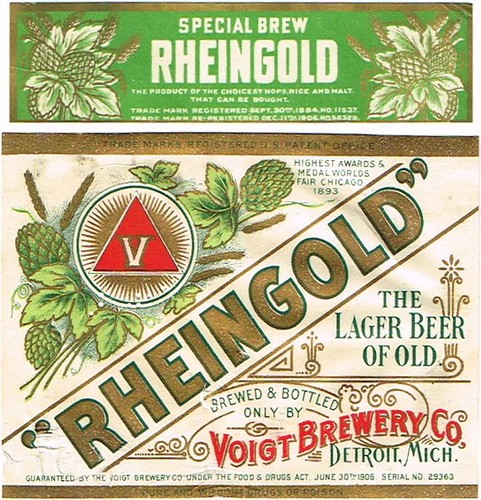
Now, Busch! Now, Rheingold!, now, Pabst and Carling!
On, Schlitz! on, Schmidt! on, Miller and Yuengling!
To the top of the jockey box! To the top of the cask!
Now drink away! drink away! drink away the whole flask!”

As dry hopping that before the wild bittering fly,
When they meet with an obstacle, toast a drink to the sky;
So up to the brewery-top the brewers they flew,
With the wagon full of Beers, and St. Nicholas too.

And then, glasses tinkling, I heard on the roof
The toasting and drinking of each little goof.
As I drew in my head, and was turning around,
Out the fermenter St. Nicholas came with a bound.

He was dressed all in red, from his toes to his top,
And his coveralls were soiled with spent grain and hop;
A carton of Beers he had flung on his back,
And his rubber boots squeaked as he opened his pack.
His besotted eyes—how they twinkled! his dimples how merry!
His cheeks were all rosy, like New Glarus cherry!
His droll little mouth was beseeching our pardon,
And the beard of his chin was as white as Hoegaarden;

The end of a zwickel he held tight in one hand,
While the other held Watermelon Wheat that was canned;
He had a beer belly, that bent two stumpy legs,
That shook when he laughed, like a half-emptied keg.

He was chubby and plump, a right jolly old brewer,
And I drank when I saw him, for what could be truer;
A wink of his eye as he poured generous heads,
Soon gave me to know he would join us instead;

He spoke not a word, but went straight to his work,
And emptied the bottles; then sat with a smirk,
And raising his glass, he gave the first toast,
Then each brewer, in turn, drank to his own riposte;

Then he sprang to his wagon, to his brewers gave a whistle,
And away they all flew like a hop torpedo missile.
But I heard his last toast, ere he drove out of here,
“Hoppy Christmas to all, and to all drink good beer.”

santa-watermelon

More About the Original Poem & How This Version Came To Be

In late 2009 — a Saturday night — I read Porter and Alice, my two kids, Twas the Night Before Christmas: A Visit From St, Nicholas by Clement C. Moore. Whenever I read something I know to my children (which happens a lot, kids love repetition) the writer in me edits as I go. I change words as if it was my work, I flatter myself I’m improving it or correcting mistakes. A scatterbrained scheme was hatched as I again read them what’s probably the most famous Christmas poem.

First published in 1823, according to Wikipedia, “it is largely responsible for the conception of Santa Claus from the mid-nineteenth century to today, including his physical appearance, the night of his visit, his mode of transportation, the number and names of his reindeer, and the tradition that he brings toys to children. Prior to the poem, American ideas about St. Nicholas and other Christmastide visitors varied considerably. The poem has influenced ideas about St. Nicholas and Santa Claus beyond the United States to the rest of the Anglosphere and the world.”

As I’ve written about before, St. Nick is also a Patron Saint of Brewers. So with my tongue firmly set in my cheek, I decided to rewrite Moore’s masterpiece, moving his visit from the home to the brewery.

As it happens, there are a lot of different versions of the poem, with incremental changes having been made over the years. I used, for no particular reason, an edition from Trans-Pacific Radio. Enjoy. Hoppy Christmas. You can also compare the two versions side by side, which also includes the brewers names I’ve used in previous years. The plan is to change those each year.

Feel free to share my version of the poem, with credit if you please, plus a link back here is always appreciated.

UPDATE: Georgia’s Sweetwater Brewing also did their own beer-themed version called Sweetwater’s Night Before Christmas. There’s also another beer-themed one I shared last year, Twas the Brewer’s Night Before Christmas. For many more parodies, check out the Canonical List of ‘Twas the Night Before Christmas Variations, which contains 849 different variations on the poem.

Filed Under: Beers, Breweries, Just For Fun Tagged With: Christmas, Holidays, Poetry

Beer Birthday: Aron Deorsey

December 24, 2025 By Jay Brooks Leave a Comment

hop-oast
Today is the birthday of Aron Deorsey, who for a lot of years was the brewmaster at the Beach Chalet Brewery & Restaurant in San Francisco, along with the Park Chalet and the Lake Chalet in Oakland. I got to know Aron much better a few years back when we roomed together attending Sierra Nevada’s Beer Camp for SF Beer Week. He had been making great beer at the beachside brewpub for a number of years, and is great fun to hang out with, but earlier last year he’s opened his own place, a brewpub in San Francisco called the Hop Oast Pub & Brewery. Join me in wishing Aron a very happy birthday.

Me and Aron at his Hop Oast Brewery.

P1020222
Brendan Dobbel, from Thirsty Bear, Rich Higgins, from Social Kitchen, Aron and Zambo, from 21st Amendment at Sierra Nevada’s Beer Camp a few years ago.

Aron Derosey, from Beach Chalet, and his friend Maggie
Aron and his friend Maggie at the Anchor Christmas Party in 2009.

Clockwise from Left: Rich Higgins, John Tucci, Brenden Dobbel & Aron Deorsey with the 4 bottles of dessert
At a Sierra Nevada beer dinner at the Chico brewery in 2010. Clockwise from Left: Rich Higgins, John Tucci, Brenden Dobbel & Aron with the 4 bottles of dessert.

P1010050
Aron (in the center) at the Thirsty Bear Oktoberfest in 2002.

Filed Under: Birthdays, Just For Fun Tagged With: Bay Area, California, San Francisco

Historic Beer Birthday: Henry Rahr

December 24, 2025 By Jay Brooks Leave a Comment

rahrs
Today is the birthday of Henry Rahr (December 24, 1834-April 14, 1891). He was born in Wesel, Germany, but came the U.S. in 1853, when he was 19. He worked in his uncle’s brewery in Manitowoc, and then opened his own brewery near Green Bay with a partner, August Hochgreve, which they called the Bellvue Brewery. They later had a falling out, and in 1866 Rahr left to start his own brewery in Green Bay, which was initially called the East Rivery Brewery. When he died in 1891, his sons continued the business, but renamed it the Henry Rahr Sons Co. Brewery, later shortening it to Rahr Brewing Co. It survived prohibition, and was known as the Rahr Green Bay Brewing Co. until closing for good in 1966.

History of Brown County, Wisconsin: Past and Present

henry-rahr-bio-1
henry-rahr-bio-2
rahr-memohead
henry-rahr-bio-3
henry-rahr-bio-4
Note: This biography gives his birth date as December 25, but a photo of his tombstone clearly shows it as December 24.
Rahrs-Beer-Coasters-Rahr-Green-Bay-Brewing-Co

Rahrs_Brewery_Green_Bay_1895

This short history of the brewery is from The Neville Public Museum:

One hundred fifty years ago, Henry Rahr established a brew house on the corner of Main Street and N. Irwin Avenue in Green Bay known as the East River Brewery. It would become the largest and most well-known historic brewery in Green Bay. Following the death of Henry Rahr in 1891 the business was passed to his sons Henry Jr. and Frederick and became Henry Rahr & Sons Co. Prior to Prohibition (pre 1920) Rahr’s was producing 60,000 barrels of beer per year. After Prohibition was repealed in 1933, the brewery was back in business and began pumping out “Standard,” “Special,” “Belgian” and “Old Imperial Pale Beer.” In 1966 the company was sold to Oshkosh Brewing Co. Exactly 100 years after opening, Rahr’s Brewery was shut down. The brewery buildings were demolished, leaving no trace behind except for Rahr’s merchandise, barrels, and bottles.

Rahr-packers-1965

And this brewery history is from “Breweries of Wisconsin,” by Jerold W. Apps and Jerry Apps:

rahr-sons-brew

rahr-all-star-brew-1936

Filed Under: Birthdays, Breweries, Just For Fun Tagged With: History, Wisconsin

Beer In Ads #5149: Merry Christmas From The Brewers Of Gem Bock Beer

December 23, 2025 By Jay Brooks Leave a Comment

Last year I decided to concentrate on Bock ads for awhile. Bock, of course, may have originated in Germany, in the town of Einbeck. Because many 19th century American breweries were founded by German immigrants, they offered a bock at certain times of the year, be it Spring, Easter, Lent, Christmas, or what have you. In a sense they were some of the first seasonal beers. “The style was later adopted in Bavaria by Munich brewers in the 17th century. Due to their Bavarian accent, citizens of Munich pronounced ‘Einbeck’ as ‘ein Bock’ (a billy goat), and thus the beer became known as ‘Bock.’ A goat often appears on bottle labels.” And presumably because they were special releases, many breweries went all out promoting them with beautiful artwork on posters and other advertising.

Tuesday’s ad is for Gem Bock Beer, which was published on December 23, 1950. This ad was for the Walter Bros. Brewing Co. of Menasha, Wisconsin, which was originally founded as the Island City Brewery in 1860. It became known as Walter Bros. in 1933 after prohibition, although the brothers had been involved in the brewery since 1888. This ad ran in The Post Crescent, from Appleton, Wisconsin.

Filed Under: Art & Beer, Beers, Breweries, Just For Fun Tagged With: Advertising, Bock, History, Wisconsin

Historic Beer Birthday: Philipp Jung

December 23, 2025 By Jay Brooks Leave a Comment

milwaukee
Today is the birthday of Philipp Jung (December 23, 1845–July 10, 1911). He was born “in Dorn-Assenheim, Hesse-Darmstadt, which today is a part of Reichelsheim in Wetteraukreis, Hesse, Germany,” but came to the U.S. when he was 25, in 1870. He came first to New York City, then Cincinnati before settling in Milwaukee, Wisconsin. “Jung married Anna D. Best, daughter of the brewer Jacob Best, and they had six children.”

philipp-jung-photo
Here’s a history of his career, from his Wikipedia page:

After his arrival in the United States, Jung was employed by Rogge and Feigenhaln Brewing Company in New York. He also worked as the maltster for the Foss, Schneider and Bremer Brewing Company in Cincinnati. After moving to Milwaukee in 1873, Jung became second foreman for the Phillip Best Brewing Company, then first foreman, and finally superintendent of the company’s south side plant. In 1879, he left Best to form a partnership with Ernst Borchert, founding the Jung & Borchert Brewing Company. In 1888 this became the Falk, Jung & Borchert Brewing Company in one of the earliest mergers involving Milwaukee breweries. The company became a rival to the Philip Best Brewery, which was operated by Frederick Pabst and later became the Pabst Brewing Company. Jung was considered “an important factor both as a manufacturer of large quantities and also as one who gave a distinctive quality to the goods sent out from his plant.”

In 1896, Jung purchased the Obermann Brewing Company at Fifth and Cherry Streets in Milwaukee, where he established The Jung Brewing Company. This firm grew and outlived its founder, finally closing because of Prohibition.

Falk-Jung-and-Borchert-Brewing-1870s
The Falk, Jung & Borchert Brewing Company.

This biography is from 100 Years of Brewing, published in 1903.

philipp-jung-100yrs
MJS Jung employees - compressed.jpg
I think this is the Jung Brewing Co. employees, but it’s hard to tell. There were actually at least four Jung’s who brewed commercially in the U.S. One in Ohio, one in Texas, and two in Wisconsin. But seated in front, second from our left looks like Philipp’s mustache, so think this is the right one.

Jung_Beer_ad

Filed Under: Birthdays, Just For Fun Tagged With: Germany, History, Milwaukee, Wisconsin

Historic Beer Birthday: John Roessle

December 23, 2025 By Jay Brooks Leave a Comment

Today is the birthday of John Roessle (December 23, 1808-October 3, 1873). He emigrated from Germany at fifteen, eventually settling in Boston, where he founded the John Roessle Brewery in 1846. It was one of the earliest lager breweries in the country, though they also used the name New England Brewing Co. from 1890 through prohibition. After repeal they became known as the Haffenreffer & Co., presumably having been bought by the Haffenreffer Brewery, which was also located in Boston, before closing in 1951. There’s not personal information I could find out about Roessle, though there’s plenty on his brewery.

And here’s his obituary from the Boston Evening Transcript in 1873:

And this is another account of Roeselle’s passing:

And this was written by Gregg Smith in 1997 for Yankee Brew News:

For centuries businesses have heralded any aspect of a product that can distance it from the competition. Location, processes, raw materials, and packaging have all been used to project an appealing cachet. Lacking those, they often resort to adjectives such as: quality, purity, tradition, best, finest, and preferred. But among all ways to boast a product none works better than the simple proclamation: First!

Brewer John Roessle became a “first” when he established a small brewery at 60 Pynchon street in Roxbury. It earned him a spot in New England beer history because from its opening in 1846 Roessle devoted production exclusively to brewing a new beer style that was capturing America’s taste.

Originating in Germany, the yeast for this beer arrived in the US only shortly before Roessle began construction of his brewery. It produced a distinctively clean beer with a crisp after taste unavailable in the much fruitier ale family of beer. This characteristic signature was the by-product of a lengthy, cold fermentation and so Germans simply named it after their word for storage – lager. The significance of the date not only made Roessle a pioneer of lager in the Northeast, it placed him among the first in the country to brew this style.

In those early days Roessle’s brewery had a maximum capacity of only 300 barrels, but despite its small size it had advantages over ale breweries. First, its flagship beer “Taffel” quickly became a favorite of Boston’s German population. More importantly, Roessle wasn’t burdened with the expense of distribution; enthusiastic and loyal customers bought every drop from the brewery’s door. It didn’t take long for Roessle to capitalize on the brand’s popularity by expanding the brewery. In fact, each time production increased sales rose equally.

Through four decades Roessle personally managed the business, then at his death in 1885 ownership was assumed by son John Roessle Jr. who directed operations for 11 more years. This wasn’t the brewery’s only father and son team. For over twenty years Robert Leiber carried out the duties of head brewer and when he died in 1890 the brew kettle was turned over to his son Albert. The fathers and sons of Roessle brewing performed so well the brewery was admired in the community, but not in the way they imagined.

During the 1890s breweries became the favorite investment of syndicates, and Roessle’s reputation made it one of Boston’s most attractive takeover targets. Among those noting the company’s impressive record was the New England Brewing Company, which presented John Roessle Jr. an offer substantial enough to make him sell. That same year they acquired the Haffenreffer brewery and two years later the Suffolk Brewing Company, and shifted the business address to 1250 Columbus Avenue, Boston. Despite consolidating, the continuing popularity of the Roessle brand prompted the new owners to preserve the name, and as the century turned the facility hit an annual production figure of 65,000 barrels.

For more than 20 years the syndicate reaped the profits of the Roessle’s name, as the beer slowly captured more of the Boston market. By 1918 the brewery was growing outmoded and badly needed a modernization. Then the unimaginable happened–Prohibition. At its onset, the syndicate closed the Roessle plant. It lay slowly decaying, becoming more obsolete with each day of prohibition’s 14 year lock out.

When repeal came they considered it too inefficient for further operation and the only plant they reopened was that of Haffenreffer. Once a darling of the city, the doors were shut forever, but no one will ever again claim the title of New England’s first.

Filed Under: Birthdays, Breweries, Just For Fun Tagged With: Germany, History, Massachusetts

Historic Beer Birthday: Conrad Binding

December 23, 2025 By Jay Brooks Leave a Comment

Today is the birthday of Conrad Binding (December 23, 1846-December 17, 1933). He was a German brewer, entrepreneur and sponsor, and founded the Binding brewery in 1870. “After 1919 the Actien brewery Homburg vd Hoehe was transferred to the Binding brewery, which merged in 1921 with the Hofbierbrauerei Schöfferhof from Mainz and the Frankfurter Bürgerbrauerei to form the Schöfferhof-Binding-Bürgerbräu AG. In 1939, the first barrel of the “Römer Pils” brand, which is still well known today, was tapped. The brewery was 70 percent destroyed in an air raid during World War II. The brewery has belonged to the Oetker Group since 1952.” After the reunification of Germany, they acquired several more breweries in the former East Germany, including Radeberger Pils, and for a time it was known as the Binding Brauerei or Binding Group, but was later renamed the Radeberger Group.

This is part of his biography, translated from German Wikipedia:

Conrad Binding came from a family of bakers. His great-grandfather, Johann Peter Binding (1735-1804) immigrated from Reichelsheim to the Free City of Frankfurt and received Frankfurt citizenship due to his marriage to the master baker’s daughter Sibylla Catharina Becker (1746-1782) . Their son, Johann Lorenz Binding (1776-1856) ran a bakery in the house at Fahrgasse 17 as a master baker and became wealthy. From his marriage to Maria Dorothea Schäfer (1783-1834) came 14 children, including Conrad Binding’s father, Daniel Binding (1810-1883), who took over his father’s bakery. His older brother Eduard Binding (1810-1869) received a doctorate in law, the younger brother Theodor (1820-1892) Müller in Versbach near Würzburg, Emil (1822-1893) wine merchant, Carl (1823-1860) private owner and Ferdinand (1813-1870) operator of the Café du Grand Balcon on the Boulevard des Italiens in Paris.

After returning [from studying brewing and internships in other parts of Germany], he explored the Frankfurt beer market. There were 30 breweries in the city. The brewery founded by Ernst Ehrenfried Glock in 1860 was in financial difficulties. Binding succeeded in acquiring the Glocksche brewery on 1 August 1870 for 84,000 guilders (equivalent to about 144,000 marks after the currency reform of 1875). In addition to the brewery at Garküchenplatz 7 with the “Stadt Schwalbach” inn, he acquired a rock cellar at Darmstädter Landstraße 163 with inventory for 20,000 guilders. He financed the founding of the company with 11,000 guilders from his mother’s inheritance and borrowing.

The business benefited directly from the interruption in the supply of Munich beer as a result of the Franco-Prussian War . The subsequent founding years ensured further growth. In the Frankfurt beer riot of 1873, Binding got away with a small loss of 400 guilders and benefited indirectly from the far larger losses of some competitors. In 1874 he received a loan of 42,000 marks from his father, which he used to expand his business.

The brewing market had changed significantly. The small breweries largely disappeared, the brewery joint stock companies founded from the early days achieved ever larger market shares. Binding also decided to convert the sole proprietorship into a stock corporation . This was founded on May 16, 1885. Binding contributed his company shares, which were valued at 3.2 million marks, and became chairman of the board. In 1895 he moved to the head of the supervisory board. During his time as CEO, beer output had doubled from 86,983 to 167,207 hectoliters.

Binding gradually withdrew from the company and also reduced his shareholding. In 1899 he founded a brewery in Essen . The Brauhaus Essen expanded until the First World War , but then suffered from the wartime economy and was sold in 1918/19.

Inflation hit Binding Brewery hard. With the involvement of the Bank für Brau-Industrie , this merged in 1921 with the Hofbierbrauerei Schöfferhof from Mainz and the Frankfurter Bürgerbrauerei to form the Schöfferhof-Binding-Bürgerbräu AG. Conrad Binding retired from the company and lived privately until his death.

And this history is from a Frankfurt online news service, translated by Google:

For the 1st. August 1870 Conrad Binding (1846-1933) took over the small brewery Ehrenfried Glock on Garküchenplatz in the old town. The brewer’s career for Conrad Binding began as early as 1862. Against the advice of his father, who suggested that he study law, the young man began an apprenticeship as a brewer in Sachsenhausen.

As was customary at the time, Conrad Binding experienced his hiking years as a brewer in southern Germany, Austria and France. In 1869 he returned to his hometown to become self-employed in 1870.

The aspiring entrepreneur stayed in the narrow streets of the old town for only eleven years before building a beer factory on the other side of the Main in Sachsenhausen. Modern production and takeovers of smaller regional competitors have remained the constants in the company’s history for decades. The brother Carl Binding ( 1854-1925 ) joins the company; the one-man company becomes the “Binding’sche brewery company“ 1884.

The first bottled beer filling went into operation in 1905. The brewer’s name is stamped into the brown glass bottles, the variety name is on a neck label – as is the trademark, the eagle, and the note „ brewery filling “. Three years later, a sandstone relief Conrad Bindings as a representative of the brewer’s guild will be attached to the south building of the new town hall in Bethmannstrasse, which can still be seen today.

After the First World War, the Binding brewery, the Hofbierbrauerei Schöfferhof in Mainz and the Frankfurt Bürgerbrauerei merged to form „ Schöfferhof-Binding-Bürgerbräu AG “ in 1921. At the same time, the Johann Jakob Jung brewery is also taken over on Darmstadt’s Landstrasse. More larger breweries will follow.

On the occasion of his 85th. On his birthday, a street in Sachsenhausen was named after Conrad Binding in 1931. Shortly before the completion of his 87th. The master brewer dies on the 17th. December 1933 in his hometown. He is buried in the family grave in the main cemetery in Frankfurt.

The brewery was not spared the Second World War. The brewery on Sachsenhäuser Berg was badly damaged in the severe air raids on the city in 1944. The following years are then going up again. Since 1953 the Oetker Group took over the helm, numerous further acquisitions followed in Hesse, Rhineland-Palatinate, Baden-Württemberg and Lower Saxony.

The establishment of “Clausthaler“ as a national brand for non-alcoholic beer proved to be far-sighted more than 40 years ago. Initially smiled at, In times of falling consumption, the non-alcoholic beers have long since become hopefuls in the brewing industry. Together with the nationwide wheat beer brand Schöfferhofer, Clausthaler forms the economic backbone of the Binding company, which, however, is extremely reluctant to pay exact figures on sales, sales and profits of the individual brands.

Another major cut in the Frankfurt brewery market followed in 2001 with the takeover of the Henninger brewery. It has a much longer tradition: the nucleus was in 1655 when Eberhard Stein founded his brewery. In 1869 Heinrich Christian Henninger joined the Stein brewery. The small traditional brewery becomes a modern brewing company that moves into a new brewing facility in Sachsenhausen in 1875.

This history is from the company’s website, translated by Google:

Conrad Binding was born in Frankfurt am Main on December 23, 1846, the second of four sons of master baker Daniel Binding and his wife Sibylle, née Bieber.

Against the advice of his father, who suggested he study law, Conrad Binding began an apprenticeship as a brewer in 1862, with master cooper Raumer in Frankfurt-Sachsenhausen.

Conrad Binding experienced years of travel as a journeyman beer brewer in southern Germany (Erlangen, Augsburg, Munich), Austria (Vienna-Schwechat) and France (Paris, Sèvres, Lyon, St. Pourcain, Tautonville, Chateauroux). In 1869 he returned to Frankfurt.

On August 1, 1870, Conrad Binding acquired the small Ehrenfried Glock brewery in Frankfurt’s old town at Garküchenplatz 7, with an output of 1,500 hectoliters, for 84,000 guilders. As a brewery owner, he is not only responsible for monitoring production, but also for sales.

Conrad Binding dares the step from a craft to an industrial company and builds a completely new, modern brewery on the Sachsenhausen hill in 1881. The brother Carl Binding (1854 – 1925) joins the company; The one-man company becomes the “Binding’sche Brauereigesellschaft” in 1885,

Conrad Binding becomes the first and Carl Binding the second board member of the newly founded stock corporation “Binding’sche Brauereigesellschaft”.

On January 28, 1902, the name day of Charlemagne, Binding Carolus Doppelbock is served for the first time.

The first bottling of beer goes into operation in 1905. The name of the brewery is embossed in the brown glass bottles, the type designation is on a neck label – as is the trademark, the eagle, and the note “Brauerei-Füllung”. For the first time, the light and dark lager and export beers are also advertised, always emphasizing their special quality.

A sandstone relief of Conrad Binding as a representative of the brewer’s guild is attached to the southern building of the newly built New Town Hall on Bethmannstrasse in 1908.

In 1921, the Binding brewery, the Hofbierbrauerei Schöfferhof and the Frankfurter Bürgerbrauerei merge to form “Schöfferhof-Binding-Bürgerbräu AG”. At the same time, the Johann Jakob Jung brewery on Darmstädter Landstraße is also taken over. The merger creates a strong company. Conrad Binding resigns from the supervisory board and retires to private life.

On the occasion of his 85th birthday, in 1931, a street in Frankfurt-Sachsenhausen is named after Conrad Binding.

Conrad Binding died shortly before his 87th birthday on December 17, 1933, in his hometown. He is buried in the family grave in the Frankfurt main cemetery.

Filed Under: Birthdays, Breweries, Just For Fun Tagged With: Germany, History

Beer In Ads #5148: Frontenac Christmas Bock Beer

December 22, 2025 By Jay Brooks Leave a Comment

Last year I decided to concentrate on Bock ads for awhile. Bock, of course, may have originated in Germany, in the town of Einbeck. Because many 19th century American breweries were founded by German immigrants, they offered a bock at certain times of the year, be it Spring, Easter, Lent, Christmas, or what have you. In a sense they were some of the first seasonal beers. “The style was later adopted in Bavaria by Munich brewers in the 17th century. Due to their Bavarian accent, citizens of Munich pronounced ‘Einbeck’ as ‘ein Bock’ (a billy goat), and thus the beer became known as ‘Bock.’ A goat often appears on bottle labels.” And presumably because they were special releases, many breweries went all out promoting them with beautiful artwork on posters and other advertising.

Saturday’s ad is for Frontenac Christmas Bock Beer, which was published on December 22, 1914. The brewery was the Frontenac Breweries Limited of Montreal, Canada, which was originally founded in 1911. This ad ran in The Montreal Star also of Montreal, Canada.

Filed Under: Art & Beer, Beers, Breweries, Just For Fun Tagged With: Advertising, Bock, Canada, History, Montreal, Quebec

Beer Birthday: JoAnne Carilli

December 22, 2025 By Jay Brooks Leave a Comment

Today is the 59th birthday of JoAnne Carilli, who within the beer industry most recently was the Head Of Business Development at White Labs, but nore recently she’s again left us for a position with EP Climbing, a climbing wall manufacturer. I first met JoAnne when she was the marketing director for the old Association of Brewers in the late 1990s and she became a good friend. After that, she spent the better part of a decade at White Labs as their Sales & Marketing Director. But she spent a number of years outside the beer industry while raising her son, although we did manage to stay in touch sporadically. I was very pleased to see her back in beer (where she belonged, I’ll argue), but I guess she didn’t see it that way in the end, at least for now and she’s left again and is currently the Director of International Business Development at EP Climbing. Join me in wishing Joanne a very happy birthday.

A selfie with me, JoAnne and Ray Daniels at GABF in 2017.
With Britt Antrim.
With Ken Allen, then of Anderson Valley Brewing at CBC in 2007.
Brian Dunn (owner of Great Divide) and his then-new director of brewing operations, Brit Antrim, with Joanne Carilli at the 2008 CBC in Austin, Texas.
Joanne with Susan from HopUnion at the 2006 GABF after-party Rocktoberfest at Rock Bottom in Denver.

Filed Under: Birthdays, Just For Fun Tagged With: Colorado

Historic Beer Birthday: Frederick Krug

December 22, 2025 By Jay Brooks 2 Comments

krug-neb
Today is the birthday of Frederick “Fred” Krug (December 22, 1833-November 18, 1919). He “was the German-immigrant founder of the Frederick Krug Brewing Company of Omaha, Nebraska. Krug is often cited as one of the early settlers of Omaha. In addition to operating the brewery for almost the entire duration of his life, Krug operated Krug Park in the Benson community and was the president of the Home Fire Insurance Company, which was founded in Omaha in 1884.”

Fred-Krug-signature
Here’s a short biography of Krug from Find-a-Grave:

Born in Germany. Married Anna. Came to Omaha in 1859 and became the pioneer brewer of Omaha with a brewery on Farnham between 10th and 11th Streets. Partnered with Rudolph Selzer to form Krug & Selzer, and by 1860 became sole proprietor. In 1867 he moved it to 11th and Jackson and in the 1890’s he built a new brewery at 24th and Vinton Streets. Was on the Board of Directors of the German Savings Bank. Krug Park at 52nd and Maple Street and the Krug Theater were both named in his honor. Lived at 813 S. 20th Street and was a member of St. John’s german Evangelical Church.

Fred-Krug-photo-brewers-journal

And here’s his biography from Wikipedia:

Fred Krug was born in Niederzwehren near Kassel in Germany on December 22, 1833. He lived in Niederzwehren until 19 years of age where he was trained as a brewer. He then emigrated to the U.S. in 1852, settling in St. Louis, Missouri. In St. Louis, he met his wife Anna and had a son, William. In 1858, he moved to Council Bluffs where he worked in a small brewery. Later the same year, he moved to Omaha with his wife and son. He established his first small brewery on Farnam Street. Later, his business moved to Jackson Street between 10th and 11th streets. On October 17, 1893, he and his family celebrated the grand opening of the new Fred Krug Brewery. At the time this new brewery was one of the largest and most modern of its kind. Its capacity was reported to be 150,000 barrels per year and they employed approximately 500 men.

Krug led his company in Omaha for almost 50 years, and was responsible for founding Omaha’s Krug Park in 1904. The city of Omaha named a street after him. Frederick’s sons, including William, Frederick H., Jacob and Albert all worked at the brewery in a variety of capacities. Krug, a German immigrant, served on the State of Nebraska’s Board of Immigration.

This is a commemorative plate created for the brewery’s 50th anniversary.

Fiftieth-Anniversary-Signs-Pre-Pro-Fred-Krug-Brewing-Company
Krug-plate-back

And this is the back of the plate.

Below is a more thorough biography from the “Illustrated History of Nebraska, Volume 1,” by Julius Sterling Morton, published in 1911:

fred-krug-bio-1
Fred-Krug-1859
fred-krug-bio-2

Krug-Brewery-1859

“The Fred Krug Brewery was located at 2435 Deer Park Boulevard in Omaha, Nebraska. Founded in 1859, Krug Brewery was the first brewery in the city. Krug was one of the “Big 4” brewers located in Omaha, which also included the Storz, Willow Springs and Metz breweries. Later sold to Falstaff in 1936, the facility closed in 1987.

Krug-Brewery-1920
The brewery in 1920.

Krug-Brewery-sm
And in its heyday.

This is a short history of the brewery.

In 1859 Frederick Krug established the Krug Brewery with an original output of one and a half barrels a day. In 1878 the brewery was located on Farnam between 10th & 11th Streets in Downtown Omaha, and by 1880 it was brewing approximately 25,000 barrels a year. In 1894 the brewery moved to 29th & Vinton Street near South Omaha. It cost $750,000 and was reportedly one of the best equipped breweries in the country. Omaha’s historic Anheuser-Busch Beer Depot is the only remaining building from the original Krug Brewery.

You wouldn’t believe there was such difference in beers until you use one Krug’s popular brands. They are uniform perfectly brewed and well-aged absolutely pure and leave no bad after effects. The kind of beer that acts as a tonic and a system builder. Order a trial case and begin to enjoy. – Text from a 1910 advertisement by Fred Krug Brewing Company.

Krug brewed beer under several labels: Fred Krug, Cabinet, and Luxus. Krug supported an amateur baseball team called Luxus, taking them as far as the Amateur Baseball World Championship in 1915.

PaxtonHotel
Krug-Luxus-Beer--Labels-Fred-Krug-Brewing-Company
krug1

Filed Under: Birthdays, Just For Fun Tagged With: Germany, History, Nebraska

« Previous Page
Next Page »

Find Something

Northern California Breweries

Please consider purchasing my latest book, California Breweries North, available from Amazon, or ask for it at your local bookstore.

Recent Comments

  • Steve 'Pudgy' De Rose on Historic Beer Birthday: Jacob Schmidt
  • Jay Brooks on Beer Birthday: Bill Owens
  • Steve 'Pudgy' De Rose on Beer Birthday: Charles Finkel
  • Steve 'Pudgy' De Rose on Beer Birthday: Bill Owens
  • Steve "Pudgy" De Rose on Beer Birthday: Pete Slosberg

Recent Posts

  • Historic Beer Birthday: Gottfried Piel December 31, 2025
  • Beer Birthday: Mitch Steele December 31, 2025
  • Beer In Ads #5156: Straub Bock Beer December 30, 2025
  • Beer Birthday: John Dean December 30, 2025
  • Beer In Ads #5155: Bock Beer Festival Parade December 29, 2025

BBB Archives

Feedback

Head Quarter
This site is hosted and maintained by H25Q.dev. Any questions or comments for the webmaster can be directed here.