Brookston Beer Bulletin

Jay R. Brooks on Beer

  • Home
  • About
  • Editorial
  • Birthdays
  • Art & Beer

Socialize

  • Dribbble
  • Email
  • Facebook
  • Flickr
  • GitHub
  • Instagram
  • LinkedIn
  • Pinterest
  • RSS
  • Twitter
  • YouTube

Powered by Genesis

The Mug-House Riots

July 23, 2017 By Jay Brooks

beer-mug
Today, just over three-hundred years ago — July 23, 1716 — a little-known historical event took place in London, known as the Mug-House Riots, between Jacobite and Hanoverian partisans.

One of my favorite old books on dates, entitled “Chamber’s Book of Days,” which was published in England, in 1869, has an account of the Mug-Houe Riots:

On the 23rd of July 1716, a tavern in Salisbury Court, Fleet Street, was assailed by a great mob, evidently animated by a deadly purpose. The house was defended, and bloodshed took place before quiet was restored. This affair was a result of the recent change of dynasty. The tavern was one of a set in which the friends of the newly acceded Hanover family assembled, to express their sentiments and organise their measures. The mob was a Jacobite mob, to which such houses were a ground of offence. But we must trace the affair more in detail.

mug_house

Amongst the various clubs which existed in London at the commencement of the eighteenth century, there was not one in greater favour than the Mug-house Club, which met in a great hall in Long Acre, every Wednesday and Saturday, during the winter. The house had got its name from the simple circumstance, that each member drank his ale (the only liquor used) out of a separate mug. There was a president, who is described in 1722 as a grave old gentleman in his own gray hairs, now full ninety years of age.’ A harper sat occasionally playing at the bottom of the room. From time to time, a member would give a song. Healths were drunk, and jokes transmitted along the table. Miscellaneous as the company was—and it included barristers as well as trades-people—great harmony prevailed. In the early days of this fraternity there was no room for politics, or anything that could sour conversation.

By and by, the death of Anne brought on the Hanover succession. The Tories had then so much the better of the other party, that they gained the mob on all public occasions to their side. It became necessary for King George’s friends to do something in counteraction of this tendency. No better expedient occurred to them, than the establishing of mug-houses, like that of Long Acre, throughout the metropolis, wherein the friends of the Protestant succession might rally against the partizans of a popish pretender. First, they had one in St. John’s Lane, chiefly under the patronage of a Mr. Blenman, a member of the Middle Temple, who took for his motto, ‘Pro rege et loge;’ then arose the Roebuck mug-house in Cheapside, the haunt of a fraternity of young men who had been organised for political action before the end of the late reign. According to a pamphlet on the subject, dated in 1717,

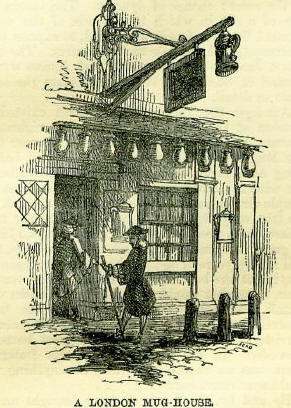
‘The next mug-houses opened in the city were at Mrs. Read’s coffee-house in Salisbury Court, in Fleet Street, and at the Harp in Tower Street, and another at the Roebuck in Whitechapel. About the same time, several other mug-houses were erected in the suburbs, for the reception and entertainment of the like loyal societies; viz., one at the Ship, in Tavistock Street, Covent Garden, which is mostly frequented by loyal officers of the army; another at the Black Horse, in Queen Street, near Lincoln’s-Inn-Fields, set up and carried on by gentlemen, servants to that noble patron of loyalty, to whom this vindication of it is inscribed [the Duke of Newcastle]; a third was set up at the Nag’s Head, in James’s Street, Covent Garden; a fourth at the Fleece, in Burleigh Street, near Exeter Exchange; a fifth at the Hand and Tench, near the Seven Dials; several in Spittlefields, by the French refugees; one in Southwark Park; and another in the Artillery Ground.’ Another of the rather celebrated mud houses was the Magpie, without Newgate, which still exists in the Magpie and Stump, in the Old Bailey. At all of these houses it was customary in the forenoon to exhibit the whole of the mugs belonging to the establishment in a range over the door—the best sign and attraction for the loyal that could have been adopted, for the White Horse of Hanover itself was not more emblematic of the new dynasty than was—the Mug.

It was the especial age of clubs, and the frequenters of these mug-houses formed themselves into societies, or clubs, known generally as the Mug-house Clubs, and severally by some distinctive name or other, and each club had its president to rule its meetings and keep order. The president was treated with great ceremony and respect: he was conducted to his chair every evening at about seven o’clock, or between that and eight, by members carrying candles before and behind him, and accompanied with music. Having taken a seat, he appointed a vice-president, and drank the health of the company assembled, a compliment which the company returned. The evening was then passed in drinking successively loyal and other healths, and in singing songs. Soon after ten, they broke up, the president naming his successor for the next evening, and, before he left the chair, a collection was made for the musicians.

These clubs played a very active part in the violent political struggles of the time. The Jacobites had laboured with much zeal to secure the alliance of the street-mob, and they had used it with great effect, in connection with Dr. Sacheverell, in over-throwing Queen Anne’s Whig government, and paving the way for the return of the exiled family. Disappointment at the accession of George I rendered the party of the Pretender more unscrupulous, the mob was excited to go to greater lengths, and the streets of London were occupied by an infuriated rabble, and presented nightly a scene of riot such as can hardly be imagined in our quiet times. It was under these circumstances that the mug-house clubs volunteered, in a very disorderly manner, to be the champions of order, and with this purpose it became a part of their evening’s entertainment to march into the street and fight the Jacobite mob. This practice commenced in the autumn of 1715, when the club called the Loyal Society, which met at the Roebuck, in Cheapside, distinguished itself by its hostility to Jacobitism. On one occasion, at the period of which we are now speaking, the members of this society, or the Mug-house Club of the Roebuck, had burned the Pretender in effigy. Their first conflict with the mob recorded in the newspapers occurred on the 31st of October 1715.

It was the birthday of the Prince of Wales, and was celebrated by illuminations and bonfires. There were a few Jacobite alehouses, chiefly situated on Holborn Hill [Sacheverell’s parish], and in Ludgate Street; and it was probably the frequenters of the Jacobite public-house in the latter locality who stirred up the mob on this occasion to raise a riot on Ludgate Hill, put out the bonfire there, and break the windows which were illuminated. The Loyal Society men, receiving intelligence of what was going on, hurried to the spot, and, in the words of the newspaper report, ‘soundly thrashed and dispersed’ the rioters. The 4th of November was the anniversary of the birth of King William III, and the Jacobite mob made a large bonfire in the Old Jury, to burn an effigy of that monarch; but the mug-house men came upon them again, gave them ‘due chastisement with oaken plants,’ demolished their bonfire, and carried King William in triumph to the Roebuck. Next day was the commemoration of gunpowder treason, and the loyal mob had its pageant.

A long procession was formed, having in front a figure of the infant Pretender, accompanied by two men bearing each a warmin pan, in allusion to the story about his birth, and followed by effigies, in gross caricature, of the pope, the Pretender, the Duke of Ormond, Lord Bolingbroke, and the Earl of Marr, with halters round their necks, and all of which were to be burned in a large bonfire made in Cheapside. The procession, starting from the Roebuck, went through Newgate Street, and up Holborn Hill, where they compelled the bells of St. Andrew’s Church, of which Sacheverell was incumbent, to ring; thence through Lincoln’s-Inn-Fields and Covent Garden to the gate of St. James’s palace; returning by way of Pall-Mall and the Strand, and through St. Paul’s Churchyard. They had met with no interruption on their way, but on their return to Cheapside, they found that, during their absence, that quarter had been invaded by the Jacobite mob, who had carried away all the materials which had been collected for the bonfire. Thus the various anniversaries became, by such demonstrations, the occasions for the greatest turbulence; and these riots became more alarming, in consequence of the efforts which were made to increase the force of the Jacobite mob.

On the 17th of November, of the year just mentioned, the Loyal Society met at the Roebuck, to celebrate the anniversary of the accession of Queen Elizabeth; and, while busy with their mugs, they received information that the Jacobites, or, as they commonly called them, the Jacks, were assembled in great force in St. Martin’s-le-Grand, and preparing to burn the effigies of King William and King George, along with the Duke of Marlborough. They were so near, in fact, that their party-shouts of High Church, Ormond, and King James, must have been audible at the Roebuck, which stood opposite Bow Church. The ‘Jacks’ were starting on. their procession, when they were overtaken in Newgate Street by the mug-house men from the Roebuck, and a desperate encounter took place, in which the Jacobites were defeated, and many of them were seriously injured. Meanwhile the Roebuck itself had been the scene of a much more serious tumult. During the absence of the great mass of the members of the club, another body of Jacobites, much more numerous than those engaged in Newgate Street, suddenly assembled and attacked the Roebuck mug-house, broke its windows and those of the adjoining houses, and with terrible threats, attempted to force the door. One of the few members of the Loyal Society who remained at home, discharged a gun upon those of the assailants who were attacking the door, and killed one of their leaders. This, and the approach of the lord mayor and city officers, caused the mob to disperse; but the Roebuck was exposed to continued attacks during several following nights, after which the mobs remained tolerably quiet through the winter.

With the month of February 1716, these riots began to be renewed with greater violence than over, and large preparations were made for an active mob-campaign in the spring. The mug – houses were refitted, and re-opened with ceremonious entertainments, and new songs were composed to encourage and animate the clubs. Collections of these mug-house songs were printed in little volumes, of which copies are still preserved, though they now come under the class of rare books. The Jacobite mob was again heard gathering in the streets by its well-known signal of the beating of marrow-bones and cleavers, and both sides were well furnished with staves of oak, their usual arms, for the combat, although other weapons, and missiles of various descriptions, were in common use. One of the mum house songs gives the following account of the way in which these riots were carried on:

Since the Tories could not fight,
And their master took his flight,
They labour to keep up their faction;
With a bough and a stick,
And a stone and a brick,
They equip their roaring crew for action.

Thus in battle-array,
At the close of the day,
After wisely debating their plot,
Upon windows and stall
They courageously fall,
And boast a great victory they’ve got.

But, alas! silly boys!
For all the mighty noise
Of their “High Church and Ormond for ever!”
A brave Whig, with one hand,
At George’s command,
Can make their mightiest hero to quiver.’

One of the great anniversaries of the Whigs was the 8th of March, the day of the death of King William; and with this the more serious mug-house riots of the year 1716 appear to have commenced. A large Jacobite mob assembled to their old watch-word, and marched along Cheapside to attack the Roebuck; but they were soon driven away by a small party of the Loyal Society, who met there. The latter then marched in procession through Newgate Street, paid their respects to the Magpie as they passed, and went through the Old Bailey to Ludgate Hill. On their return, they found that the Jacobite mob had collected in great force in their rear, and a much more serious engagement took place in Newgate Street, in which the ‘Jacks’ were again beaten, and many persons sustained serious personal injury. Another great tumult, or rather series of tumults, occurred on the evening of the 23rd of April, the anniversary of the birth of Queen Anne, during which there were great battles both in Cheapside and at the end of Giltspur Street, in the immediate neighbourhood of the two celebrated snug-houses, the Roebuck and the Magpie, which shows that the Jacobites had now become enterprising. Other great tumults took place on the 29th of May, the anniversary of the Restoration, and on the 10th of June, the Pretender’s birthday.

From this time the Roebuck is rarely mentioned, and the attacks of the mob appear to have been directed against other houses. On the 12th of July, the mug-house in Southwark, and, on the 20th, that in Salisbury Court (Read’s Coffee-house), were fiercely assailed, but successfully defended. The latter was attacked by a much more numerous mob on the evening of the 23rd of July, and after a resistance which lasted all night, the assailants forced their way in, and kept the Loyal Society imprisoned in the upper rooms of the house while they gutted the lower part, drank as much ale out of the cellar as they could, and let the rest run out. Read, in desperation, had shot their ringleader with a blunderbuss, in revenge for which they left the coffeehouse-keeper for dead; and they were at last with difficulty dispersed by the arrival of the military. The inquest on the dead man found a verdict of wilful murder against Read; but, when put upon his trial, he was acquitted, while several of the rioters, who had been taken, were hanged. This result appears to have damped the courage of the rioters, and to have alarmed all parties, and we hear no more of the mug-house riots. Their incompatibility with the preservation of public order was very generally felt, and they became the subject of great complaints. A few months later, a pamphlet appeared, under the title of Down with the Mug, or Reasons for Suppressing the Mug-houses, by an author who only gave his name as Sir H. M.; but who seems to have shown so much of what was thought to be Jacobite spirit, that it provoked a reply, entitled The Mug Vindicated.

But the mug-houses, left to themselves, soon became very harmless.
mug_house_riots

Filed Under: Events, Just For Fun, Politics & Law, Related Pleasures Tagged With: England, Great Britain, History, Pubs

Beer In Ads #2345: Saturday Afternoon At Sportsman’s Park

July 22, 2017 By Jay Brooks


Saturday’s ad is by the Brewing Industry Foundation, from 1945, part of a series of ads the beer industry undertook just as World War 2 was ending, after their “Morale is a Lot of Little Things” series. They were also a precursor to the “Home Life in America” series that was numbered (and which I’ve featured before), and very similar. Each ad featured an original illustration or work of art by prominent artists of the time, along with the first use of the “Beer Belongs…enjoy it!” tagline. It’s also when the UBIF started using “America’s Beverage of Moderation” in their advertising.

In this ad, entitled “Saturday Afternoon at Sportsman’s Park,” the scene is from high up in the stands at a baseball game. While the game is going on far below, a beer salesman is in view bringing welcome refreshment. The painting was done by Edward Laning, who “was an American painter” from Petersburg, Illinois.

Beer-Belongs-1945-baseball

Filed Under: Art & Beer, Beers Tagged With: Advertising, Brewers Association, History

Beer In Ads #2344: Morale, I Love My Dad

July 21, 2017 By Jay Brooks


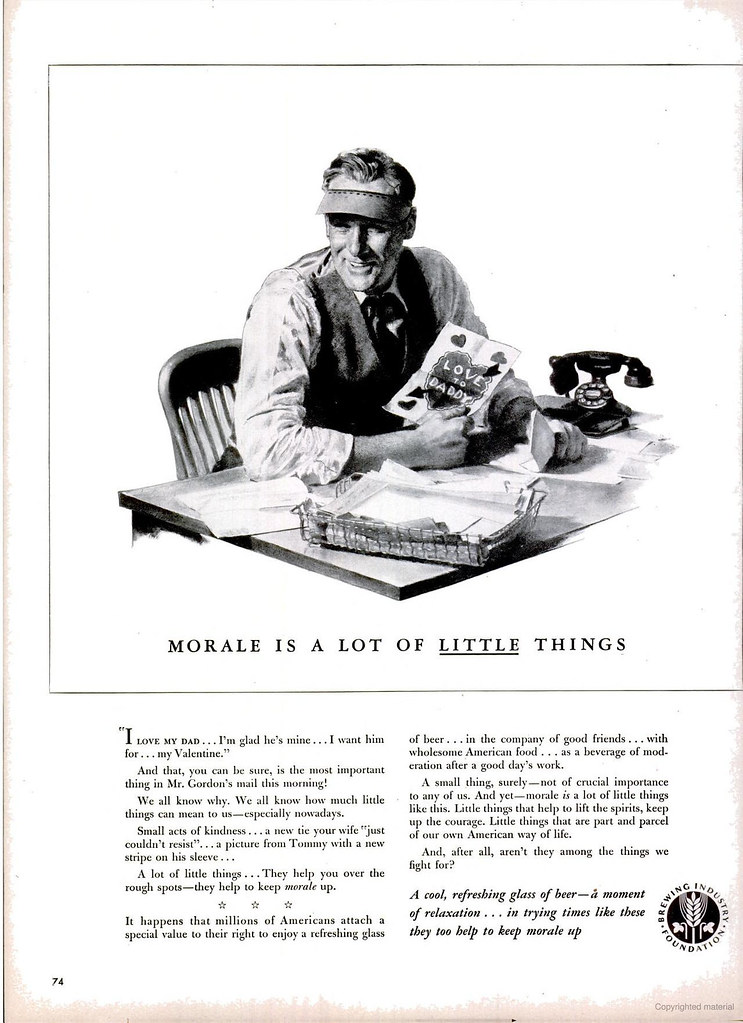
Friday’s ad is by the Brewing Industry Foundation, from 1943, part of a series of ads the beer industry undertook during World War 2 under the title “Morale is a Lot of Little Things.” It was one of the first concerted efforts by the brewing industry after they were getting back on their feet after prohibition finally ended around a decade before. The series tried to show support for the troops and help with morale at home. And it must have worked, because the campaign won awards at the time. In this ad, a man just received a valentine from his son, and that “little” thing was his favorite piece of mail. You might wonder what that has to do with beer? Well, it’s one of many little things that “help to keep morale up” during the war. Oh, and I should add. “It happens that millions of Americans attach a special value to their right to enjoy a refreshing glass of beer.”

USBIF-1943-love-to-daddy

Filed Under: Art & Beer, Beers Tagged With: Advertising, Brewers Association, History

Beer In Ads #2343: Morale, Never Did Get To Finish That Ship Model

July 20, 2017 By Jay Brooks


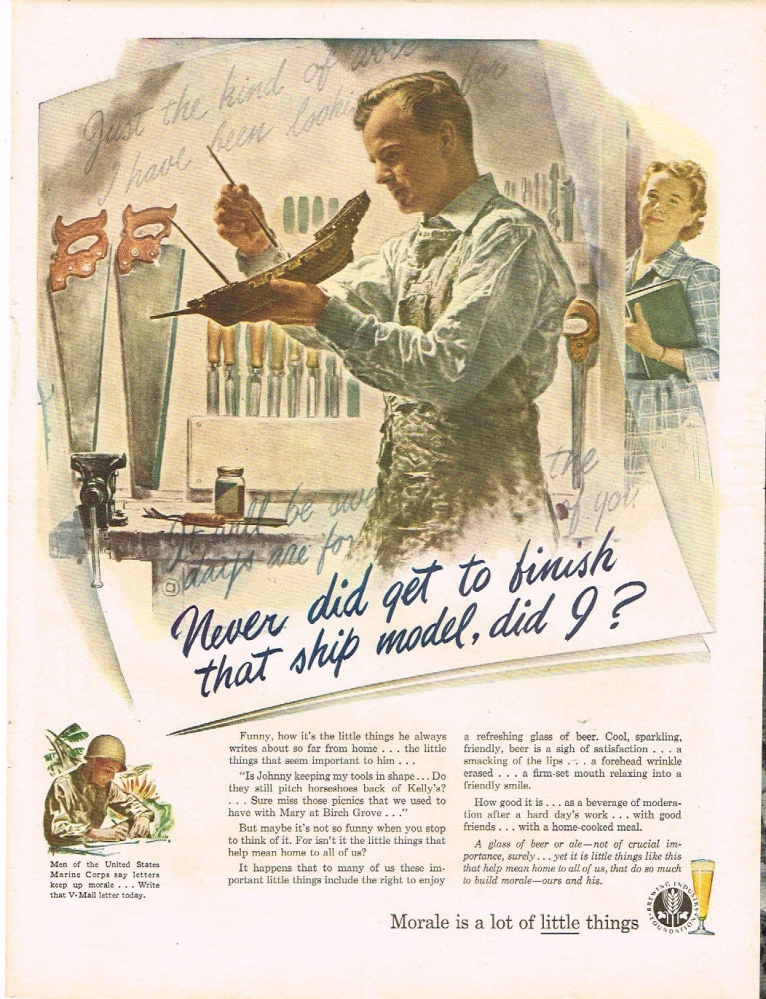
Thursday’s ad is by the Brewing Industry Foundation, from 1944, part of a series of ads the beer industry undertook during World War 2 under the title “Morale is a Lot of Little Things.” It was one of the first concerted efforts by the brewing industry after they were getting back on their feet after prohibition finally ended around a decade before. The series tried to show support for the troops and help with morale at home. And it must have worked, because the campaign won awards at the time. In this ad, a U.S. Marine is writing a letter home, talking about the little things he remembers, including a model ship he never finished building. He also mentions Mary. This is the third time a Mary has been mentioned, so either she’s something of a floozy and “gets around” or it’s the same guy writing all of these letters.

Morale-Is-A-Lot-Of-Little-Things-Paper-Ads-Brewing-Industry-Foundation-9

Filed Under: Art & Beer, Beers Tagged With: Advertising, Brewers Association, History

Beer In Ads #2342: Morale, Nothing Here For The Censor

July 19, 2017 By Jay Brooks


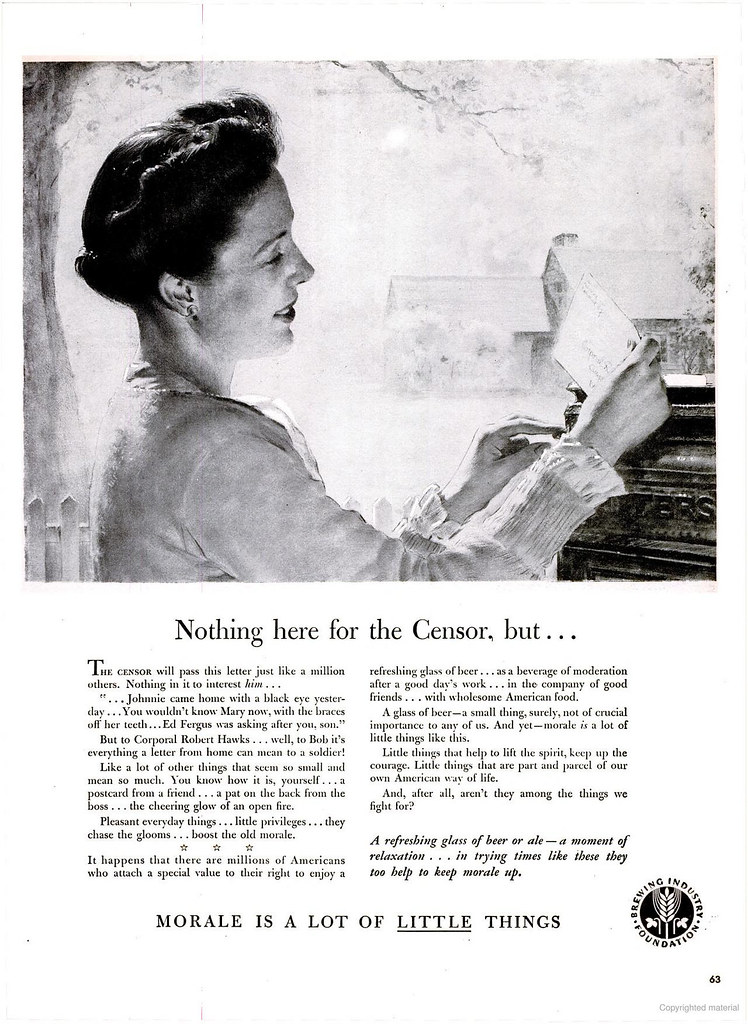
Wednesday’s ad is by the Brewing Industry Foundation, from 1943, part of a series of ads the beer industry undertook during World War 2 under the title “Morale is a Lot of Little Things.” It was one of the first concerted efforts by the brewing industry after they were getting back on their feet after prohibition finally ended around a decade before. The series tried to show support for the troops and help with morale at home. And it must have worked, because the campaign won awards at the time. In this ad, a woman is mailing a letter to the front, telling him all about little things back at home, none of which will be of any concern to the censors reading the letters to and from the war. Of course, it could be in code. But probably not. “A glass of beer — a small thing, surely, not of crucial importance to any of us. And yet — morale is a lot of little things like this.

USBIF-1943-censors

Filed Under: Art & Beer, Beers Tagged With: Advertising, Brewers Association, History

Ballantine’s Literary Ads: A.J. Cronin

July 19, 2017 By Jay Brooks

ballantine
Between 1951 and 1953, P. Ballantine and Sons Brewing Company, or simply Ballentine Beer, created a series of ads with at least thirteen different writers. They asked each one “How would you put a glass of Ballantine Ale into words?” Each author wrote a page that included reference to their beer, and in most cases not subtly. One of them was A.J.
Cronin
, who was a Scottish author, best known for The Citadel, “the story of a doctor from a Welsh mining village who quickly moves up the career ladder in London.”

Today is the birthday of Archibald Joseph Cronin (July 19, 1896–January 6, 1981), who was “was a Scottish novelist and physician. His best-known novel is The Citadel, the story of a doctor from a Welsh mining village who quickly moves up the career ladder in London. Cronin had observed this scene closely as a Medical Inspector of Mines and later as a doctor in Harley Street. The book promoted what were then controversial new ideas about medical ethics and helped to inspire the launch of the National Health Service. Another popular mining novel of Cronin’s, set in the North East of England, is The Stars Look Down. Both these novels have been adapted as films, as have Hatter’s Castle, The Keys of the Kingdom and The Green Years. Cronin’s novella Country Doctor was adapted as a long-running BBC radio and TV series Dr Finlay’s Casebook, revived many years later.”

ballantine-1952-Cronin

His 1952 piece for Ballantine was done as a reminiscence of his first taste of Ballantine in America, just after a well-played round of golf:

My first meeting with Ballantine Ale is still vivid in my memory.

It was a sweltering summer day at York Harbor, Maine, shortly after I first came to these United States. I thought it would be a memorable day because I shot the lowest golf score I ever made — a 72.

But in the locker room after the game, a friend said: “Try a Ballantine.”

I did — straight from the icebox. And as it flowed over by parched throat — tangy and refreshing in every swallow — I realized with a big thrill that my search for my favourite beverage was ended. I had always like ale, but here was something lighter, something better than anything I’d ever had abroad.

Well, my discovery outweighed by golf course. I remember that day as the time the “three rings” first rang the bell for me.

ballantine-1952-Cronin-text

Filed Under: Art & Beer, Beers, Just For Fun Tagged With: Ballantine, History, Literature

Beer In Ads #2341: Morale, I Can Just See The Trout Rising

July 18, 2017 By Jay Brooks


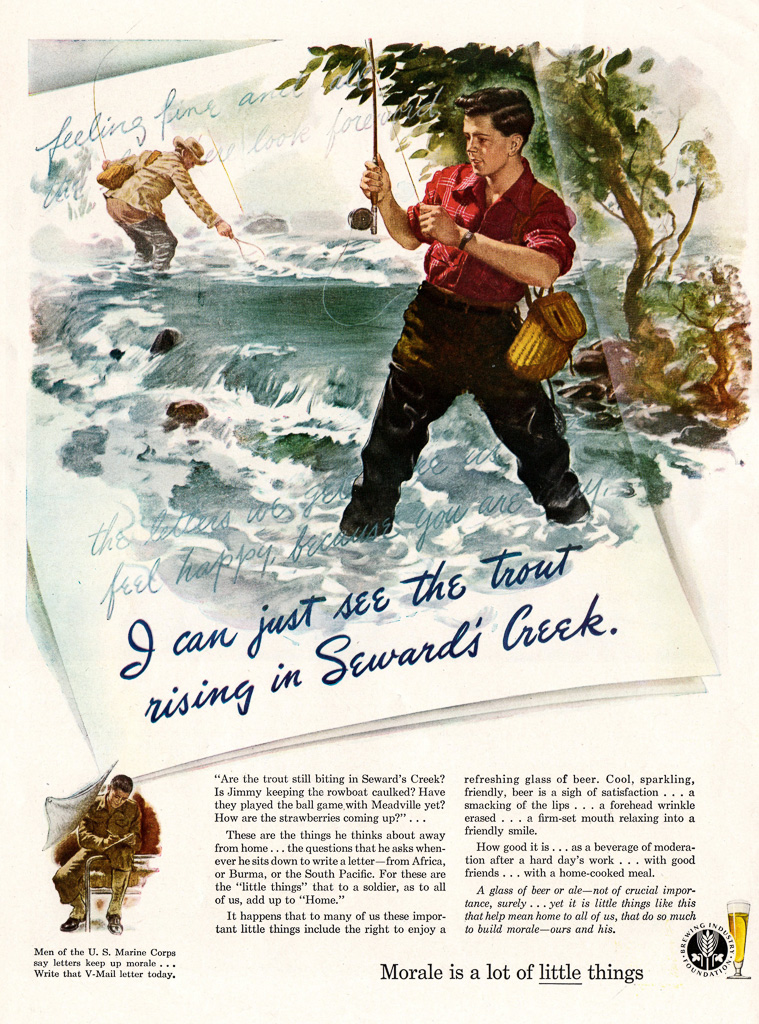
Tuesday’s ad is by the Brewing Industry Foundation, from 1944, part of a series of ads the beer industry undertook during World War 2 under the title “Morale is a Lot of Little Things.” It was one of the first concerted efforts by the brewing industry after they were getting back on their feet after prohibition finally ended around a decade before. The series tried to show support for the troops and help with morale at home. And it must have worked, because the campaign won awards at the time. In this ad, a U.S. Marine is writing a letter home, reminiscing about little things, like fishing in Seward’s Creek, along with rowboats, baseball, and strawberries. Oh, and “the right to enjoy a refreshing glass of beer.”

Brewing Industry Foundation - USA - 1940

Filed Under: Art & Beer, Beers Tagged With: Advertising, Brewers Association, History

Beer In Ads #2340: Morale, Sunday Morning Special

July 17, 2017 By Jay Brooks


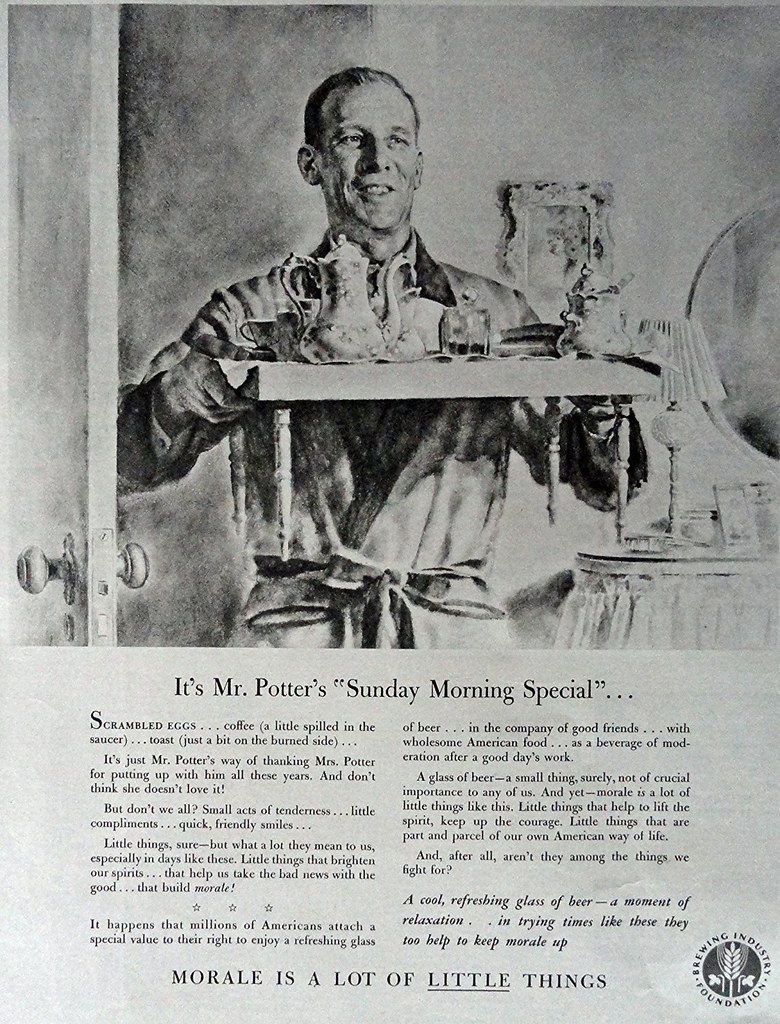
Monday’s ad is by the Brewing Industry Foundation, from 1943, part of a series of ads the beer industry undertook during World War 2 under the title “Morale is a Lot of Little Things.” It was one of the first concerted efforts by the brewing industry after they were getting back on their feet after prohibition finally ended around a decade before. The series tried to show support for the troops and help with morale at home. And it must have worked, because the campaign won awards at the time. In this ad, Mr. Potter makes his wife breakfast in bed every Sunday. It’s one of the little things helping to build morale, like “a refreshing glass of beer.”

USBIF-1943-mr-potter

Filed Under: Art & Beer, Beers Tagged With: Advertising, Brewers Association, History

Beer In Ads #2339: Morale, Remember Those Swell Picnics

July 16, 2017 By Jay Brooks


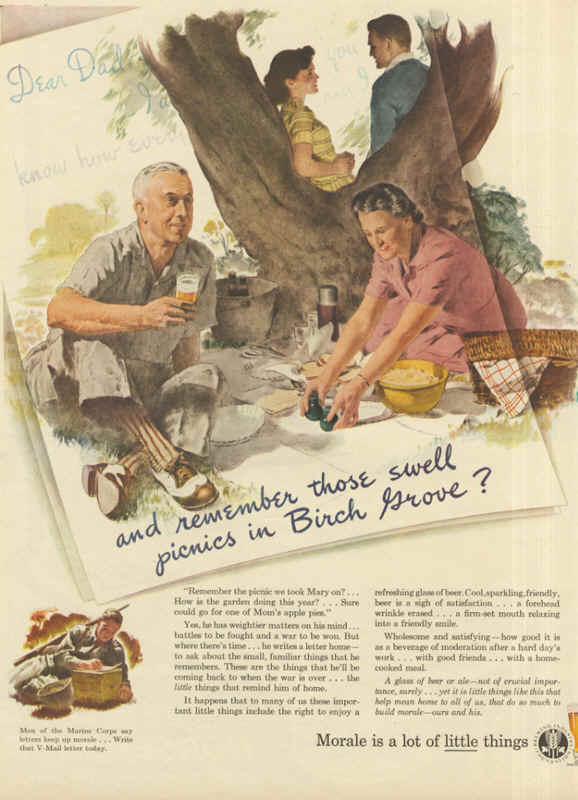
Sunday’s ad is by the Brewing Industry Foundation, from 1944, part of a series of ads the beer industry undertook during World War 2 under the title “Morale is a Lot of Little Things.” It was one of the first concerted efforts by the brewing industry after they were getting back on their feet after prohibition finally ended around a decade before. The series tried to show support for the troops and help with morale at home. And it must have worked, because the campaign won awards at the time. In this ad, a U.S. Marine is writing a letter home, and he’s remembering all of the picnics they used to take Mary on. I wonder if that’s the same Mary they earlier taught to use a baseball bat? It’s just another one of those little morale builders, like “the right to enjoy a refreshing glass of beer.”

USBF-1944-picnic

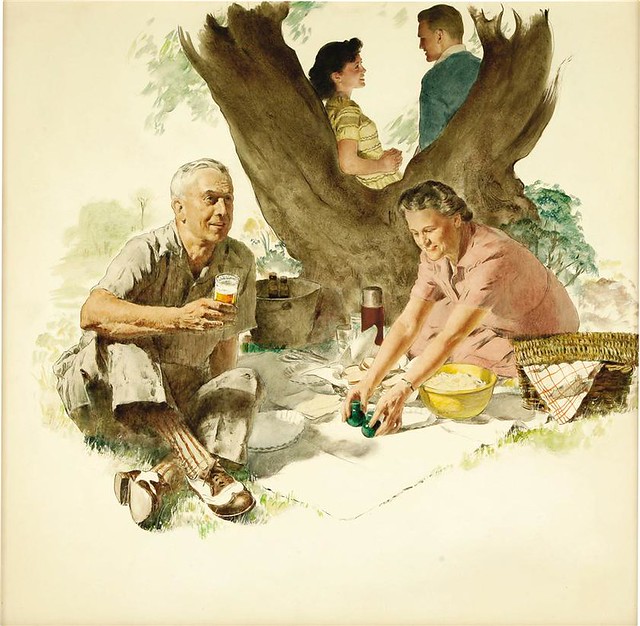
Unfortunately, this was the best resolution of the ad I could find. But I did manage to find the original artwork, and it turns out it was done by Douglass Crockwell, who did a number of the Beer Belongs series that the UBIF did after the War and into the 1950s.

Crockwell-picnic

Filed Under: Art & Beer, Beers Tagged With: Advertising, Brewers Association, History

Hungover Heroes: Max McGee

July 16, 2017 By Jay Brooks

packers
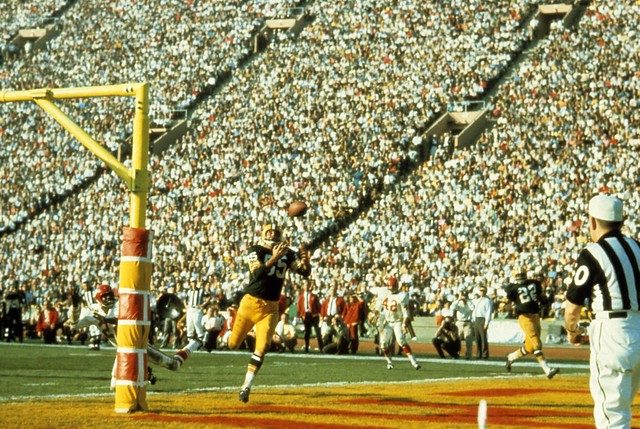
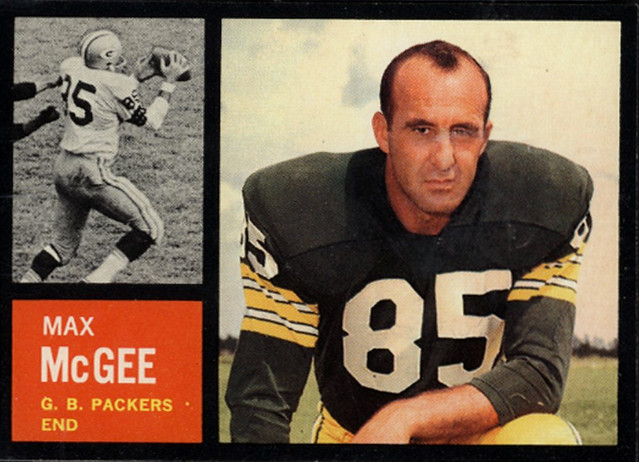
Today is the birthday of Max McGee. Don’t worry if you’ve never heard his name, most people haven’t. He “was a professional football player, a wide receiver for the Green Bay Packers in the NFL. He played from 1954 to 1967, and is best known for his 7 receptions for 138 yards and two touchdowns in the first Super Bowl in 1967.” And it’s his performance in that first Super Bowl that was so amazing, in no small part because he was badly hungover.

In 1967, McGee was at the end of his career. In fact, it was the second-to-last season he played. He was not a starter for the Packers that year they went to the first Super Bowl, and caught only four balls all year. So apparently, not expecting to play at all during the Super Bowl, the night before he broke curfew and spent the night with two women he met at the hotel bar. He rolled in around 6:30 a.m. the morning of the big game, passed Bart Starr in the hallway just getting up, and tried to catch a few winks before game time.

He was feeling pretty rough, but took his spot on the bench, fully expecting to be glued to it all game. He told starting wide receiver Boyd Dowler “I hope you don’t get hurt. I’m not in very good shape,” referring to the fact that he was badly hungover. Unfortunately, shortly after the game started, Dowler separated his shoulder and came out of the game, replaced by McGee. He had to borrow a helmet from another teammate, because he had left his in the locker room. McGee was reportedly startled as he heard Vince Lombardi yell, “McGee! McGee! Get your ass in there.”

max-mcgee-catch

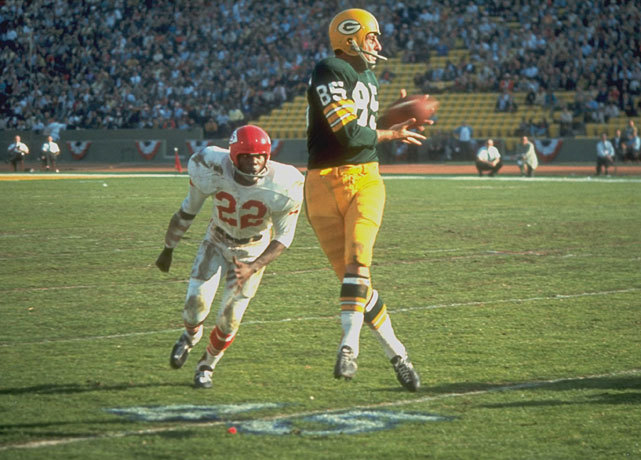
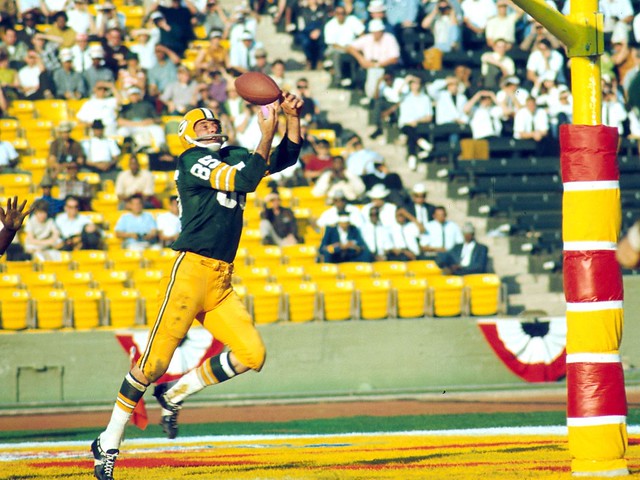
A few plays later, McGee made a one-handed reception of a pass from Bart Starr, took off past Chiefs defender Fred Williamson and ran 37 yards to score the first touchdown in Super Bowl history. This was a repeat of his performance in the NFL championship game two weeks earlier, when he had also caught a touchdown pass after relieving an injured Boyd Dowler. By the end of the game, McGee had recorded seven receptions for 138 yards and two touchdowns, assisting Green Bay to a 35-10 victory.

Just check out that first catch, for the very first touchdown in a Super Bowl. Unfortunately, the NFL won’t allow you to watch the video on my site, even though you can see it on YouTube or directly the NFL website. Thank goodness they protected a 50-year old event from being seen here. Who knows what money might have been lost by them had you been able to see it here instead of their own website.

Here’s more about the story from Sports Illustrated:

McGee came to California ready to party. He chafed at a week of locked-down training camp in Santa Barbara and when the team moved to Los Angeles on the eve of the big game, he made plans with those two flight attendants, assuming that Hornung, who was nursing an injured neck and wouldn’t play in the game, would join him. McGee snuck out after assistant coach Hawg Hanner’s 11 p.m. bed check and soon afterward, called Hornung. “He called and said ‘I’ve got two girls and yours is gorgeous,’ ” says Hornung. ” ‘Come out and have a couple drinks with us.’ ” The fine was at least $5,000 and Hornung was getting married later that week and his neck was sore. He declined. The next time he heard from McGee was at 6:30 the next morning. “He called from the lobby and asked if they did a second check. I said ‘No, you lucky bastard, now get your ass up here.’ ”

Before every game, Dowler, Dale and McGee would have a brief, ritual meeting to go over the game plan and review tendencies one last time. “We’re having our little meeting,” says Dowler, 79 and living in Richmond, Va., “and Max says, ‘Whatever you do, don’t go down today.’ I said, What do you mean? Max says, ‘I was out all night and I had a few more drinks than I should have and I didn’t get much sleep. So just don’t go down.'”

super-bowl-i-kansas-city-chiefs-v-green-bay-packers-1

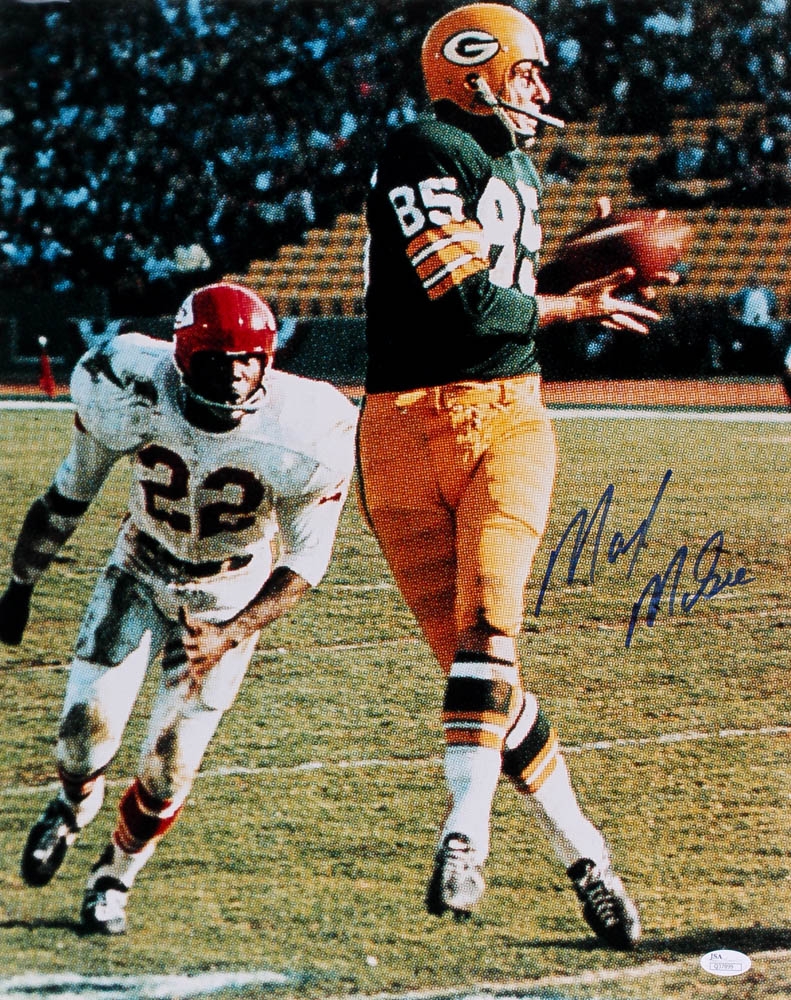
Dowler says, “Max had a strong constitution. I figured he could deal with it. But he did not expect to play.” This was a potential problem. Dowler had played most of the 1965 season and all of the ’66 season with a bad right shoulder; a calcium deposit had developed on the joint. Yet the Packers’ coaching staff had seen weaknesses in the Chiefs’ pass defense, including a propensity to leave the middle of the field open on blitzes. Starr was going to throw the ball extensively. “Plus, their defensive backs,” says Dowler. “They had ‘The Hammer’ [future Hollywood actor Fred Williamson] on one side and some other guy, No. 22 [Willie Mitchell] on the other side. Neither one of them were very good, one-on-one. It wasn’t going to be like trying to beat Lem Barney or Night Train Lane [of the Detroit Lions].”

(McGee knew this, too. Maraniss, in When Pride Still Mattered, quotes McGee as telling Packers broadcaster Ray Scott, “I’ve been studying film and I’ve found me a cornerback. I’m gonna have him for breakfast, lunch and dinner.” Still, if he had expected to play, he most likely would have stayed in the night before. Or possibly not.)

On the Packers’ first series, McGee took a seat next to Hornung on the bench and made small talk about the night before and Hornung’s upcoming wedding. On the field, Lombardi opened with three consecutive running plays. On the third, Dowler executed a crackback block on Chiefs’ free safety Johnny Robinson, who was dropping down in run support. “My shoulder was not in good shape at all coming into the game,” says Dowler. “I usually put a foam pad underneath my shoulder pad, but since we were going to be throwing the ball a lot, I wanted to have some flexibility. I took the pad out. When I hit Johnny Robinson, I heard the calcium deposit crack and I knew immediately that I was finished.”

super-bowl-i-kansas-city-chiefs-v-green-bay-packers-3

McGee was summoned into the game, but couldn’t find his helmet. He put on a giant lineman’s helmet with a full cage and on his first snap missed connecting with Starr on a curl route. On the Packers’ next possession, Starr came out throwing: 11 yards to tight end Marv Fleming, 22 yards to running back Elijah Pitts, 12 yards to Dale. And then on third-and-three from the Kansas City 37, McGee ran a simple skinny post against Mitchell’s outside position and broke wide open. Robinson had blitzed, leaving acres of green in the middle of the secondary. Starr’s pass was far behind McGee, who reached back, controlled the ball and then turned straight upfield, into the end zone and history. It was a remarkable catch, by a man with a hangover and no sleep, running at full speed. McGee’s second touchdown, on another inside move against Mitchell, gave the Packers a 28–10 lead in the third quarter. That one came on a better throw by Starr, but McGee juggled it as he crossed beneath the goalposts, which were on the goalline. “The game of his life,” says Hornung.

Max-McGee-Signed-Packers

You can also see more video from television programs talking about McGee performance, such as when a TV show ranked the Top 50 Super Bowl Performances, and picked McGee’s Super Bowl I play as #31, and in another show which ranked McGee’s catch #10 among the “Top 10 Super Bowl Plays.”

And while it’s true that I’m a giant Green Bay Packers fan, and they’re the only football team I’ve ever rooted for, I still love this story about how the hungover Max McGee helped them win the first Super Bowl in 1967.

McGee-1962-Topps

Filed Under: Beers, Just For Fun, Related Pleasures Tagged With: Football, History, Sports, Wisconsin

« Previous Page
Next Page »

Find Something

Northern California Breweries

Please consider purchasing my latest book, California Breweries North, available from Amazon, or ask for it at your local bookstore.

Recent Comments

  • Bob Paolino on Beer Birthday: Grant Johnston
  • Gambrinus on Historic Beer Birthday: A.J. Houghton
  • Ernie Dewing on Historic Beer Birthday: Charles William Bergner 
  • Steve 'Pudgy' De Rose on Historic Beer Birthday: Jacob Schmidt
  • Jay Brooks on Beer Birthday: Bill Owens

Recent Posts

  • Beer In Ads #5264: Bock-Bier Brauerei Hülsmann Eickel June 9, 2026
  • Beer Birthday: Todd Ashman June 9, 2026
  • Historic Beer Birthday: Edmund Resch June 9, 2026
  • Beer Birthday: Eoghan Walsh June 9, 2026
  • Beer Birthday: Ray Daniels June 9, 2026

BBB Archives

Feedback

Head Quarter
This site is hosted and maintained by H25Q.dev. Any questions or comments for the webmaster can be directed here.