Brookston Beer Bulletin

Jay R. Brooks on Beer

  • Home
  • About
  • Editorial
  • Birthdays
  • Art & Beer

Socialize

  • Dribbble
  • Email
  • Facebook
  • Flickr
  • GitHub
  • Instagram
  • LinkedIn
  • Pinterest
  • RSS
  • Twitter
  • YouTube

Powered by Genesis

Patent No. 20120093992A1: Apparatus And Method For Stripping Wort

April 19, 2016 By Jay Brooks

patent-logo
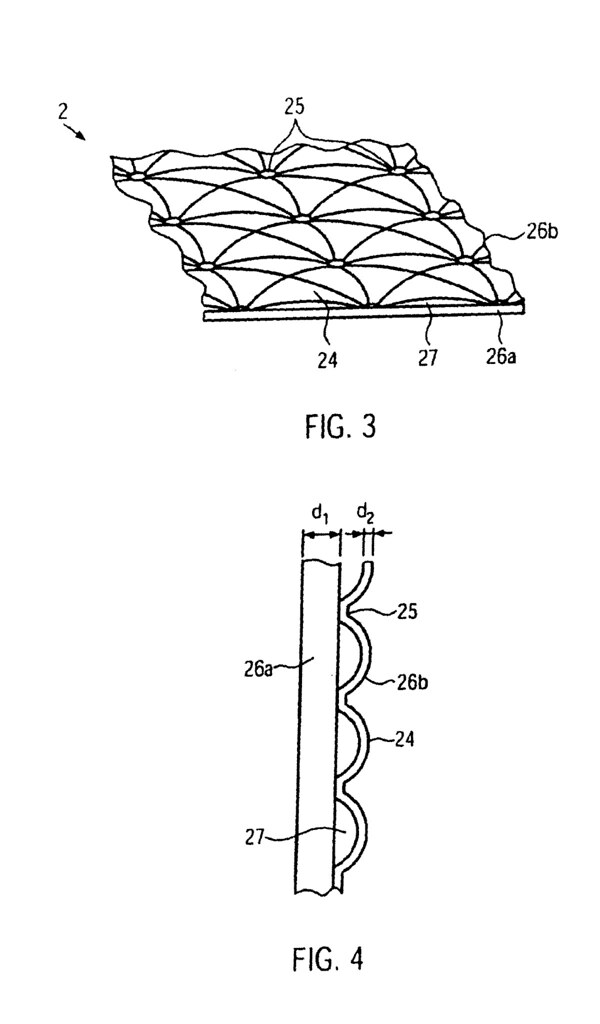
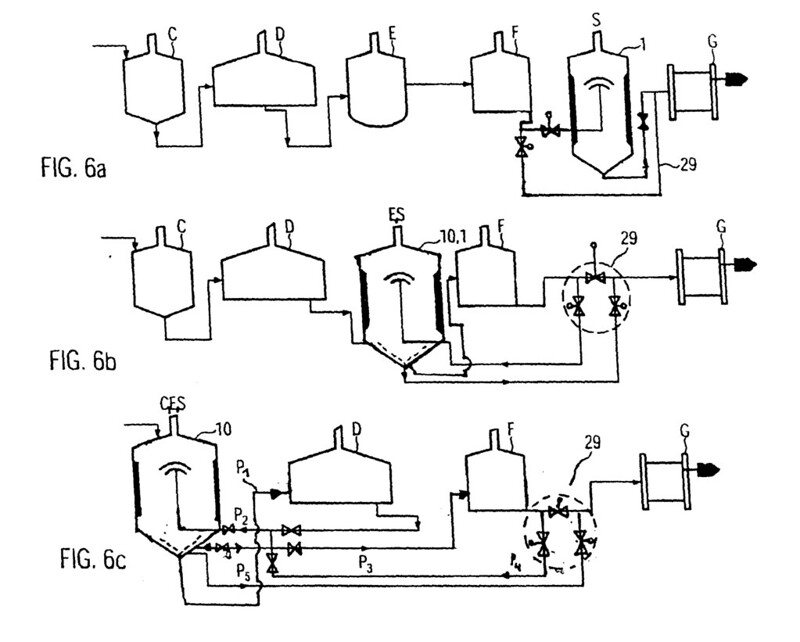
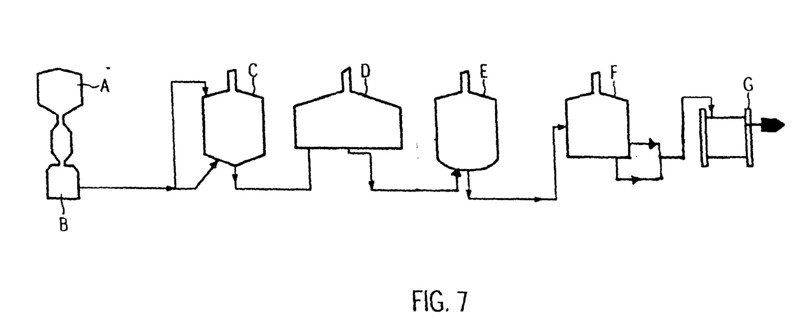
Today in 2012, US Patent 20120093992 A1 was issued, an invention of Peter Gattermeyer and Christian Dorr, assigned to Krones Ag, for their “Apparatus and Method For Stripping Wort.” Here’s the Abstract:

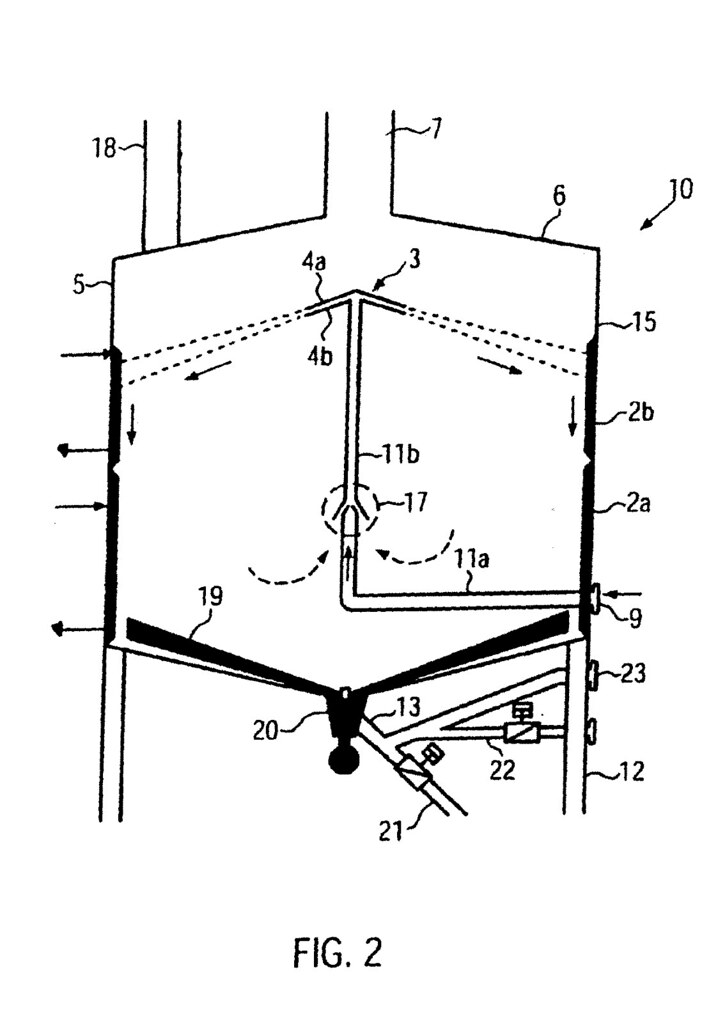
An apparatus and a method for stripping wort, with the apparatus including a receptacle that has a wort inlet and a wort outlet, and a heater on the side wall of the receptacle as well as a distributor device which applies the wort to the heating surface of the heater, such that the wort runs down the heating surface as a film.

US20120093992A1-20120419-D00001
US20120093992A1-20120419-D00002

US20120093992A1-20120419-D00003

US20120093992A1-20120419-D00005
US20120093992A1-20120419-D00006

Filed Under: Beers, Breweries, Just For Fun, Politics & Law, Related Pleasures Tagged With: History, Law, Patent, Science of Brewing, Wort

Beer In Ads #1885: Baseball On Television

April 18, 2016 By Jay Brooks


Monday’s ad is entitled Baseball On Television, and the illustration was done in 1948 by Glenn Grohe. It’s #16 in a series entitled “Home Life in America,” also known as the Beer Belongs series of ads that the United States Brewers Foundation ran from 1945 to 1956. In this ad, a group of people are in a rec. room, which is very sport-oriented. I do love that there’s a ping pong table in the room. They’re all huddled together in the corner watch a baseball game on a TV whose picture looks smaller than an iPad. I don’t know who left their beer bottles sitting on the table, but they need to be banned.

016. Baseball on Television by Glenn Grohe, 1948

Filed Under: Art & Beer, Beers, Just For Fun Tagged With: Advertising, History

Patent No. 7028505B2: Cooling Device For Beer Pitcher

April 18, 2016 By Jay Brooks

patent-logo
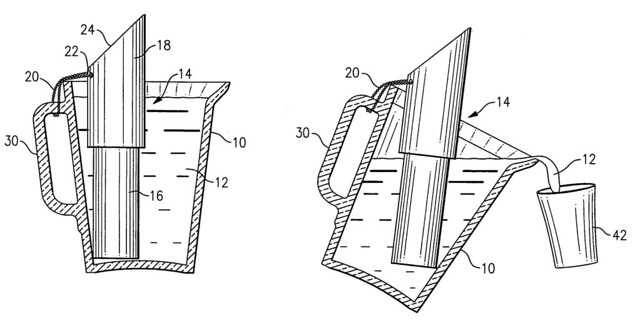
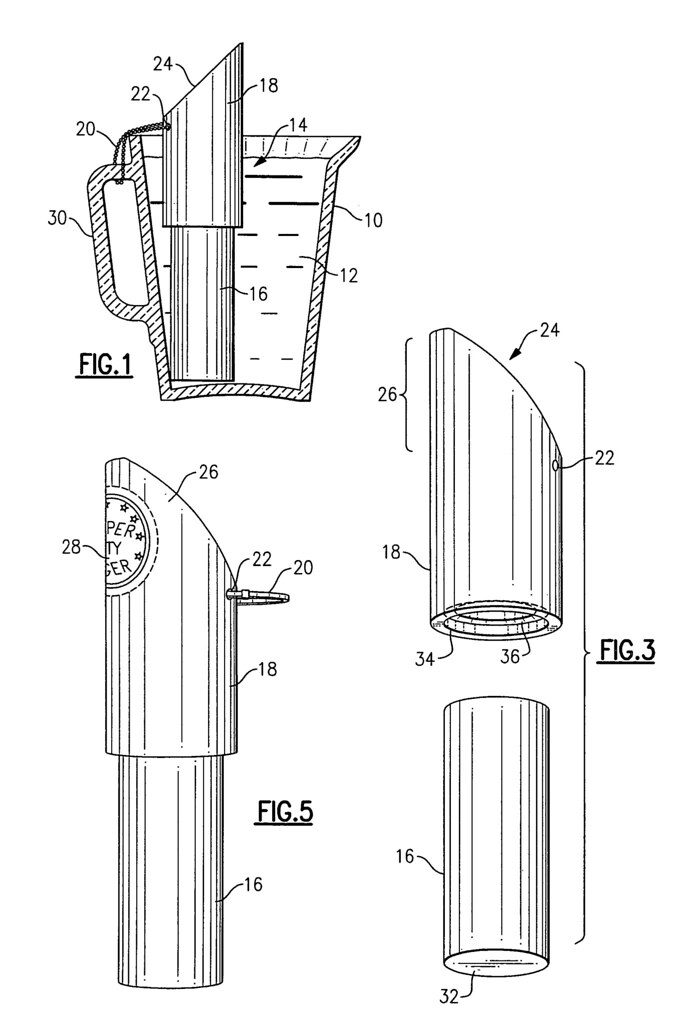
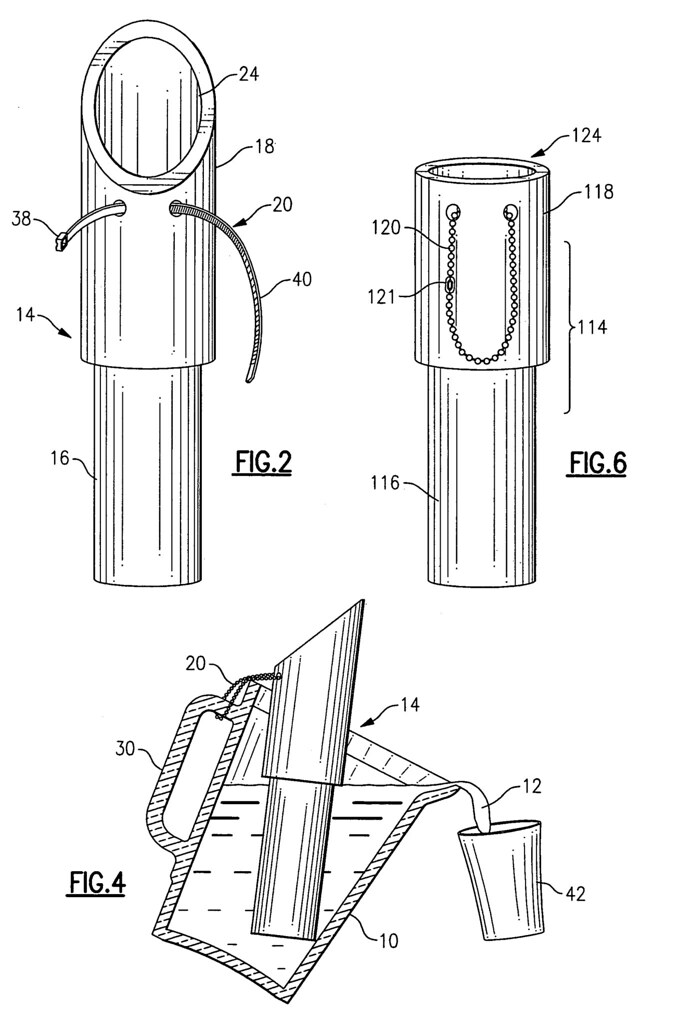
Today in 2006, US Patent 7028505 B2 was issued, an invention of Clement Albert Maus, for his “Cooling Device For Beer Pitcher.” Here’s the Abstract:

A beverage chiller device for a serving pitcher has a lower stainless steel cylinder and an upper food-grade plastic sleeve. The upper end of the device is open to receive ice. A flexible strap attached onto the upper sleeve has a free end that can pass through a handle of the serving pitcher, with the lower end of the device immersed in the beverage and situated at a base of said pitcher. The flexible strap forms a closed loop that secures the chiller device to the serving pitcher. The flexible strap also permits the chiller device to pivot when the pitcher is tipped for pouring, so that the device remains more or less erect, and so meltwater does not pour out of the chiller device when the customer is pouring a drink from the pitcher. The flexible strap allows the stainless steel cylinder to drop down to the base of the pitcher, so the cylinder remains immersed in the beverage at the bottom of the pitcher.

US07028505-20060418-D00000
US07028505-20060418-D00001
US07028505-20060418-D00002

Filed Under: Beers, Just For Fun, Politics & Law, Related Pleasures Tagged With: Glassware, History, Law, Patent

Patent No. 256717A: Apparatus For Drawing Beer

April 18, 2016 By Jay Brooks

patent-logo
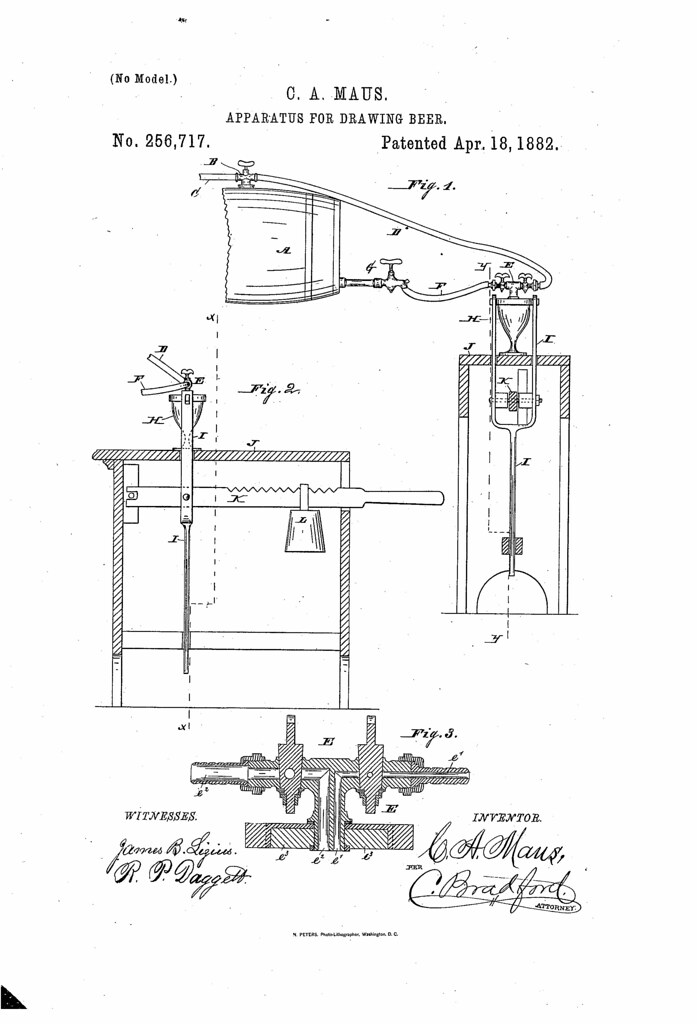
Today in 1882, US Patent 256717 A was issued, an invention of Clement Albert Maus, for his “Apparatus For Drawing Beer.” There’s no Abstract, although in the description it includes this summary:

The object of my said invention is to draw beer, ale, &c., from the keg or other vessel in which it is held without liberating the gases therein contained; and it consists in the construction and arrangement of parts hereinafter described and claimed.

US256717-0

Filed Under: Beers, Just For Fun, Politics & Law, Related Pleasures Tagged With: History, Kegs, Law, Patent

Patent No. 2155134A: Fermentation Process

April 18, 2016 By Jay Brooks

patent-logo
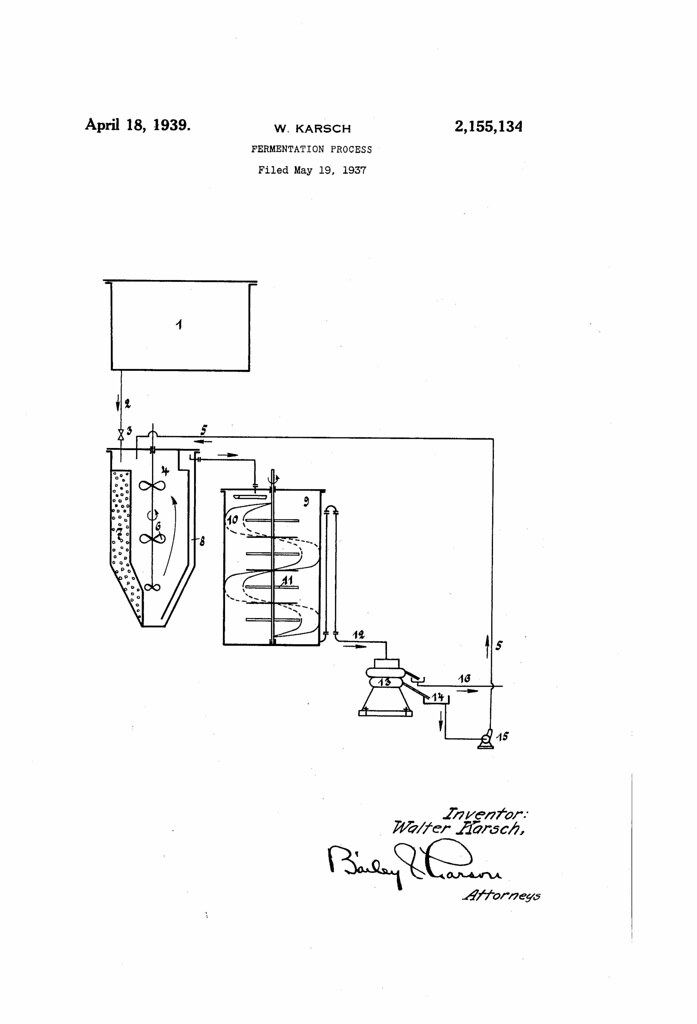
Today in 1939, US Patent 2155134 A was issued, an invention of Walter Karsch, for his “Fermentation Process.” There’s no Abstract, although in the description it includes this summary:

This invention relates to a fermentation process for the production of alcohol from liquids containing carbohydrates.

The invention provides that the total quantity of yeast shallrbe led positively and continuously in a circuit through a fermentation system consisting of a mixing device and a separating device in this wise that the total quantity of .yeast is moved unidirectionally from the mixing device to the separating device and back to the mixing 5 device. Preferably, after a predetermined controllable time, each yeast particle passes through the separating device and thus comes in contact, with fresh particles of sugar. The yeast is thus for a short time only free from the material to be fermented. The fermented liquor, after a predetermined controllable time, and after once traversing the fermentation system, leaves the said system beyond the separating device. It has been found that yeast can operate continuously in this process because it is removed as rapidly as possible from the conversion products formed. The loss of yeast cells observed with discontinuous fermentation practically does not occur in the present process. The mixing oi the yeast and of the liquor to be fermented is as intimate as possible, so that the conversion of the sugar to alcohol and to carbonic acid is effected with the greatest rapidity. At the exchange surface–the yeast membranes-by the intimate admixture the conversion products formed are withdrawn and new sugar molecules added.

By the flow through the fermentation system in the direction from the mixing device to the separating device it is further ensured that each yeast particle is separated positively after a predetermined time from the conversion products and is mixed with fresh sugar particles. No yeast particles can move in the fermentation system otherwise than in the desired direction, or settle, which is of great importance for the attainment of a maximum output of alcohol. Likewise the fermented liquor is led positively to the separating device, so that the result is obtained that the nocuous conversion products formed are separated as soon as possible from the yeast.

In the preferred embodiment the liquor is subjected to an after-fermentation in the interval between the mixing of the yeast with the liquor to be fermented and the separation of the yeast from the fermented liquor.

US2155134-0

Filed Under: Beers, Breweries, Just For Fun, Politics & Law, Related Pleasures Tagged With: History, Law, Patent, Science of Brewing

Beer In Ads #1884: The Prized Possessions

April 17, 2016 By Jay Brooks


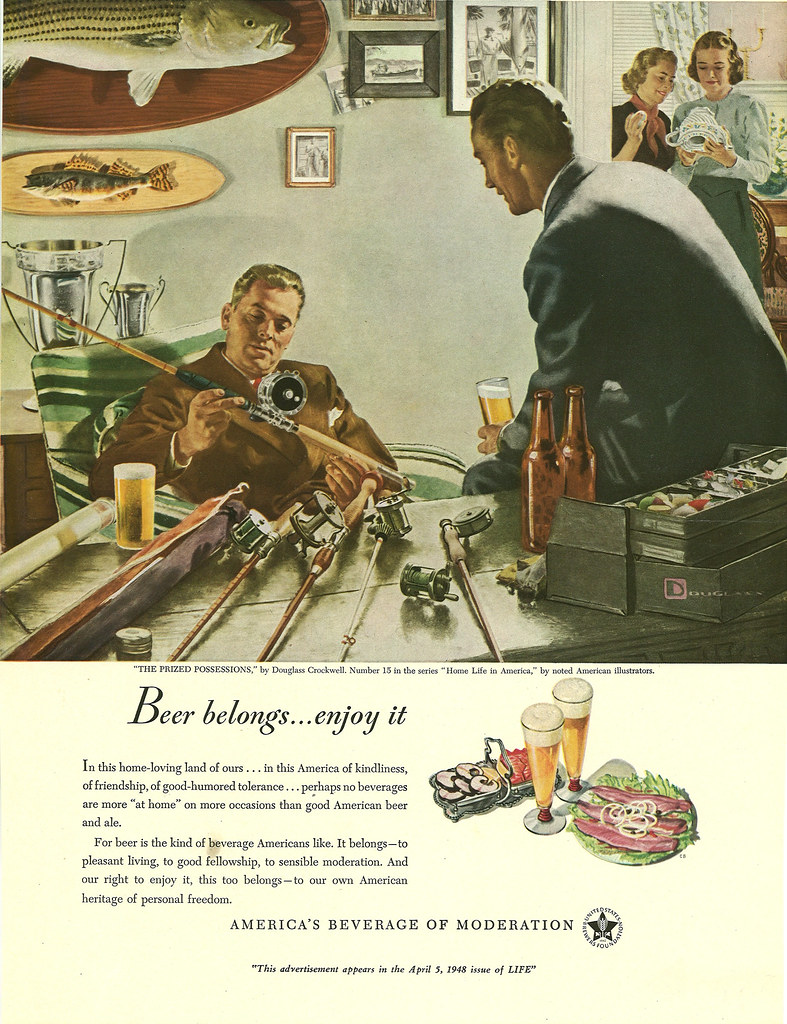
Sunday’s ad is entitled The Prized Possessions, and the illustration was done in 1948 by Douglass Crockwell. It’s #15 in a series entitled “Home Life in America,” also known as the Beer Belongs series of ads that the United States Brewers Foundation ran from 1945 to 1956. In this ad, two couples are at one of their homes for a dinner party or some such. The two men are looking at his fishing poles, which must be his prized possessions. He must be a serious fisherman, with photos and fish on the wall behind them. The lady of the house is showing on one of her prized possessions, too, but I can’t for the life of me figure out what it is. Something ceramic, perhaps.

015. The Prized Possessions by Douglass Crockwell, 1948

Filed Under: Art & Beer, Beers, Just For Fun Tagged With: Advertising, History

Patent No. 818056A: Beer-Cooler

April 17, 2016 By Jay Brooks

patent-logo
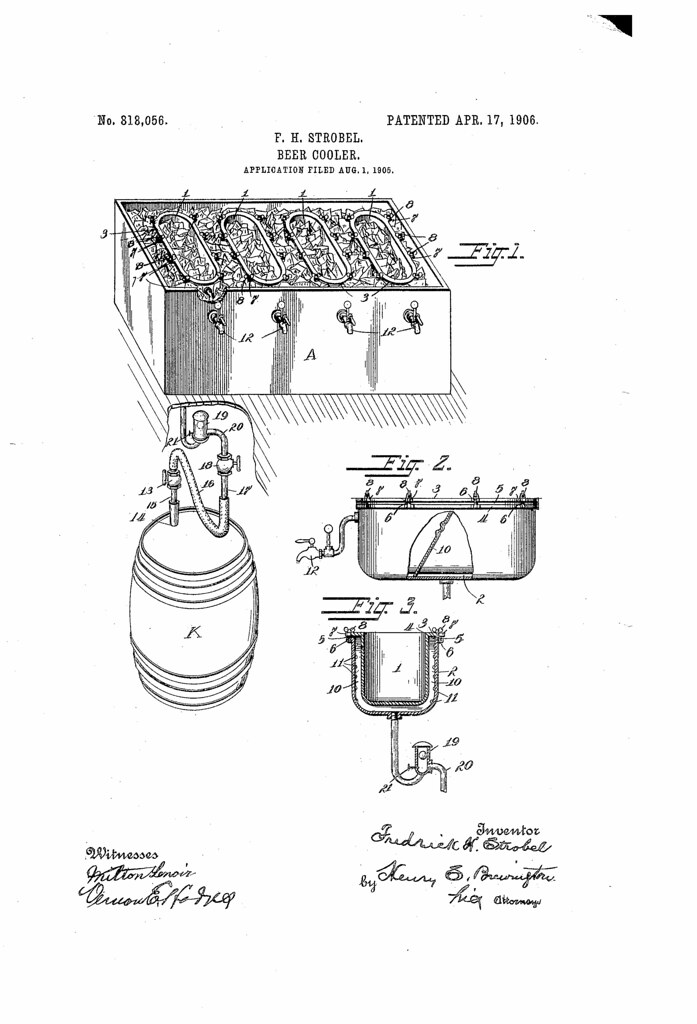
Today in 1906, US Patent 818056 A was issued, an invention of Fredrick H. Strobel, for his “Beer-Cooler.” There’s no Abstract, although in the description it includes this summary:

My invention relates to an improvement in beer-coolers and the principal object is to provide means for thinning out the volume of beer and spreading it over a correspondingly large surface as it is drawn from the tanks.

US818056-0

Filed Under: Beers, Just For Fun, Politics & Law, Related Pleasures Tagged With: History, Kegs, Law, Patent

Patent No. D192604S: Combination Beer Glass And Cocktail Shaker

April 17, 2016 By Jay Brooks

patent-logo
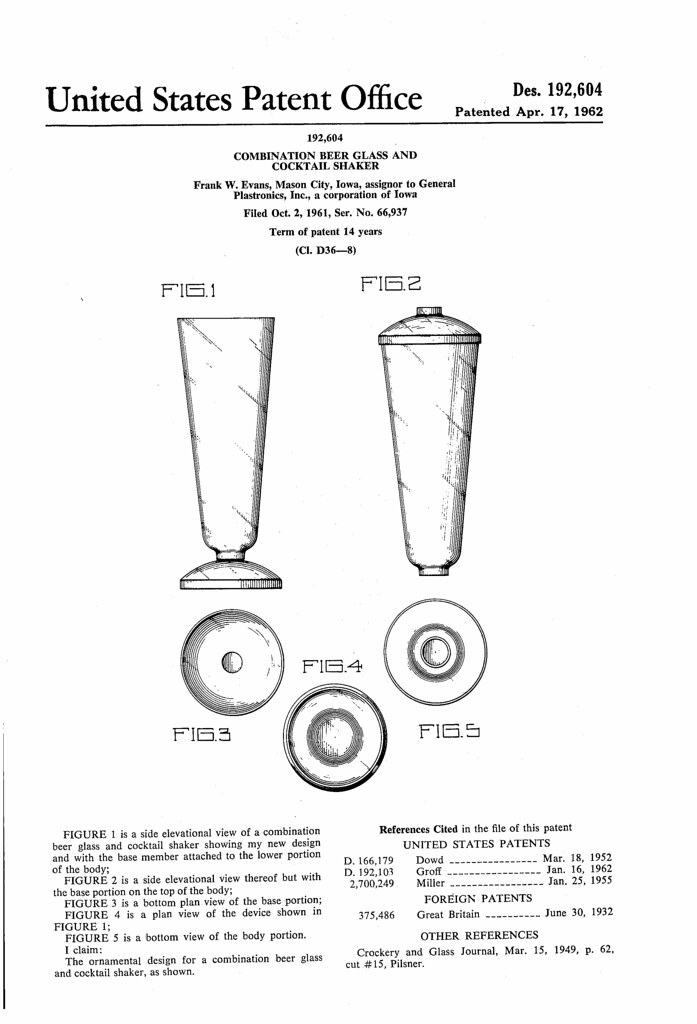
Today in 1962, US Patent D 192604 S was issued, an invention of Frank W. Evans, for his “Combination Beer Glass and Cocktail Shaker.” There’s no Abstract, although in the description it includes this summary:

The ornamental design for a combination beer glass and cocktail shaker, as shown.

USD192604

Filed Under: Beers, Just For Fun, Politics & Law, Related Pleasures Tagged With: Glassware, History, Law, Patent

Beer In Ads #1883: A Snack After The Movies

April 16, 2016 By Jay Brooks


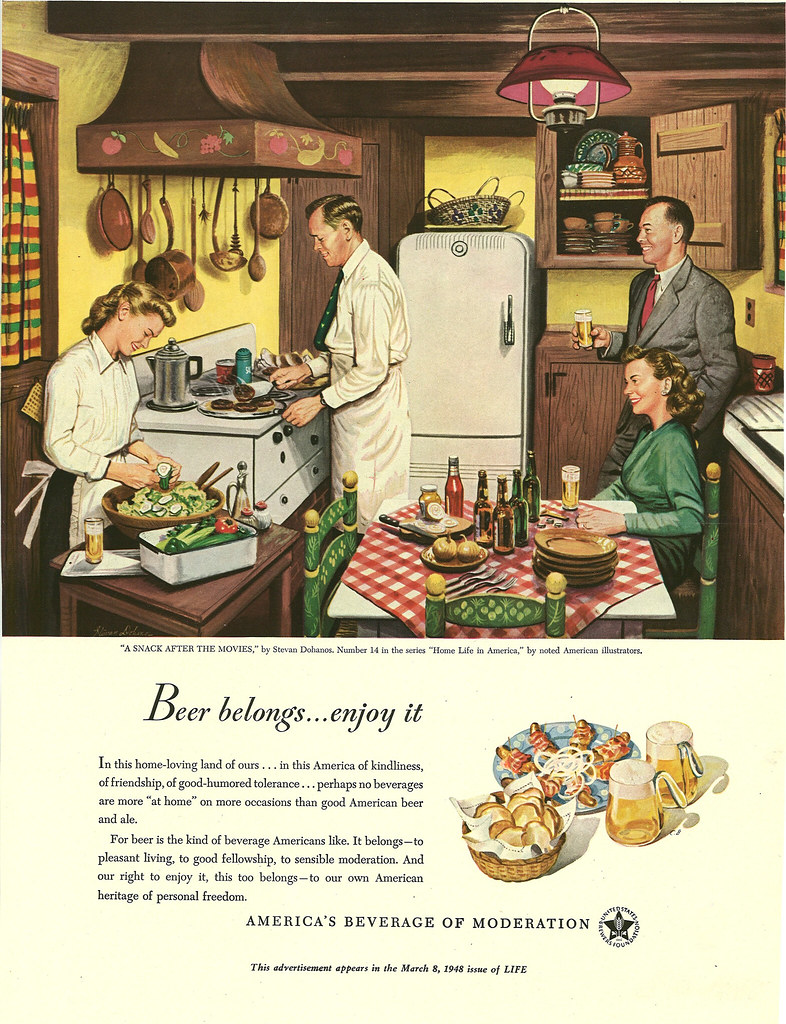
Saturday’s ad is entitled A Snack After the Movies, and the illustration was done in 1948 by Stevan Dohanos. It’s #14 in a series entitled “Home Life in America,” also known as the Beer Belongs series of ads that the United States Brewers Foundation ran from 1945 to 1956. In this ad, two couples have apparently returned from the movies, and are making what the title refers to as “a snack.” But the host couple is making hamburgers and a large salad, not what I’d call a “snack.” I tend to think if you have to both put on an apron to prepare it, then it’s not a snack.

014. A Snack After the Movies by Stevan Dohanos, 1948

Filed Under: Art & Beer, Beers, Just For Fun Tagged With: Advertising, History

Patent No. 20090098075A1: Hops-Based Deodorant

April 16, 2016 By Jay Brooks

patent-logo
Today in 1963, US Patent 20090098075 A1 was issued, an invention of Chantal Bergeron, Stefan Gafner, and Jennifer L. Lafrance, for their “Hops-Based Deodorant.” Here’s the Abstract:

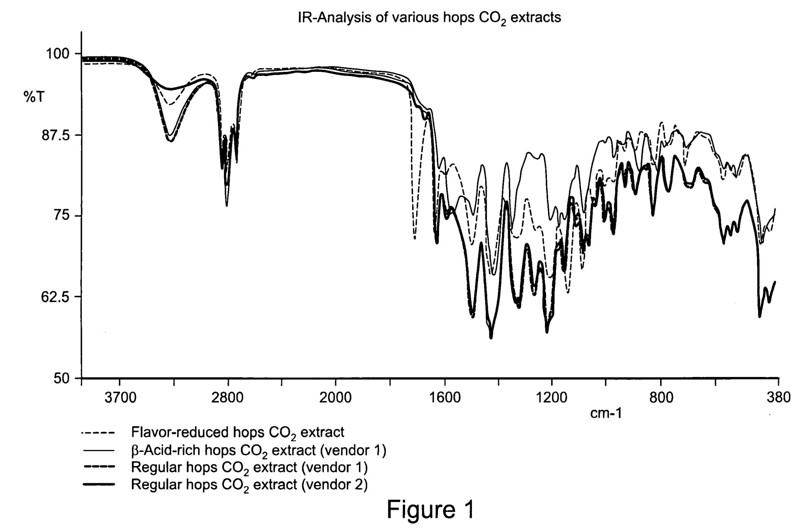
The present invention relates to deodorants and other body care products comprising a CO2 extract of the hops plant having bacteriocide/bacteriostat properties wherein the CO2 extract has a very low level of essential hops oils.

US20090098075A1-20090416-D00001

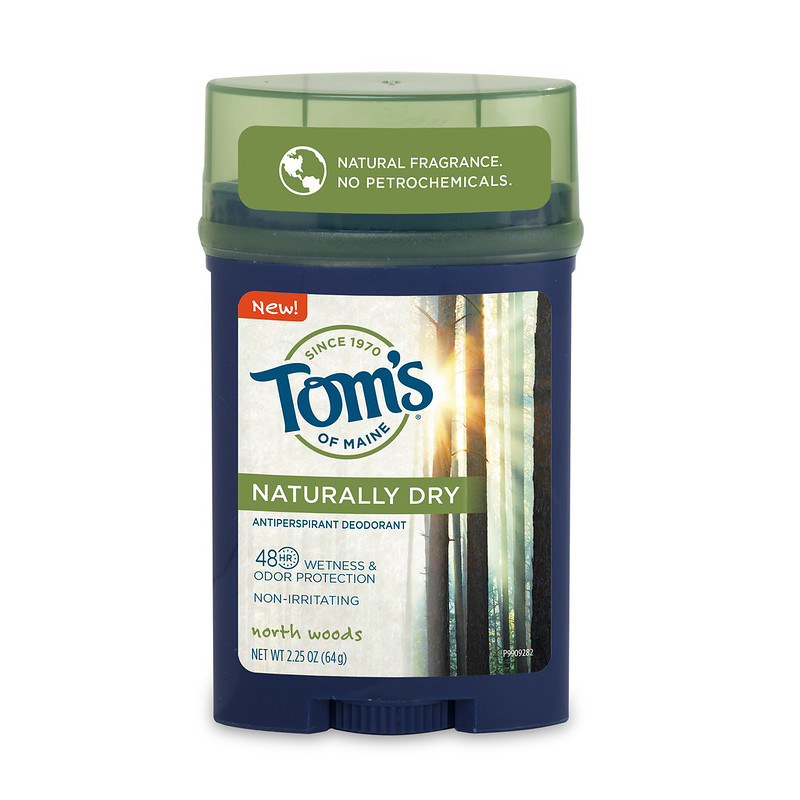
So some deodorants today do list hops as an ingredient, such as the Tom’s of Maine line, all of which list Hops extract [CO2] and caprylic/capric triglyceride as one of the ingredients.

AP_ Mens_NatDry_North_Woods

Which on Tom’s website they have a separate page for each of the body care ingredients, including Hops extract [CO2] and caprylic/capric triglyceride:

What is it?

The hop plant is a perennial herb that grows in vines. Native to Europe, Western Asia, and North America, it is known for the speed and persistence of its growth. Most people are familiar with hops because of its role in beer-making, although it also featured in ancient kitchens and the medical recipes of herbalists. First widely used in beer by monks in 9th- and 10th-century Germany, the hop didn’t gain popularity because of its flavor. Instead, the “bitter principles” of hops exhibit antimicrobial behavior, making the ingredient an effective preservative and stabilizer. In 1516, Wilhelm IV, lord of Bayern, ordered that hops be one of the required ingredients in beer in his Reinheitsgebot (Purity Law). That law led to similar enactments in other countries and helped to standardize the use of hops in brewing. Hops’ distinctive bitterness has now become one of the familiar attributes of a typical beer. Only the female flowers, known as cones, are used in beer-making. For our deodorants, we use hop resins extracted from the cones.

What does it do?

Unpleasant odor is caused by skin bacteria when we sweat. The “bitter principles” that help hops to preserve beer also, it turns out, fight odor. Hops inhibits the growth of bacteria in our deodorant by causing leakage in the bacterial cell membrane, which impairs bacterial function and therefore prevents odor. We use hops in all but our Long-Lasting Roll-On Deodorants.

What are the alternatives?

Lichen (Usnea barbata) has been in our (and many other natural) deodorants since 1991, and it provided effective and natural odor protection. However, a minor percentage of the general population—often, those who tend to have fragrance allergies—may experience a skin reaction to lichen. Even though it’s a relatively uncommon reaction, we weren’t satisfied, and our scientists continued to search for ingredients with less irritancy potential. We also felt increasingly uncomfortable with the environmental drawbacks to using lichen. Studies have shown that the large-scale harvesting of lichen may not be sustainable given its long regeneration rates.

What are the risks?

Hops are believed to have sedative properties, but topical application in the amount found in our deodorant will not cause sleepiness. Tom’s of Maine recognizes that no two people are alike, and even with pure and natural ingredients, some individuals may develop an allergic reaction that is unique to them. As with any product, be sure to discontinue use if you experience discomfort or other indications that the product may not be appropriate for your individual body chemistry.

Filed Under: Just For Fun, Politics & Law, Related Pleasures Tagged With: Health & Beer, History, Hops, Law, Patent

« Previous Page
Next Page »

Find Something

Northern California Breweries

Please consider purchasing my latest book, California Breweries North, available from Amazon, or ask for it at your local bookstore.

Recent Comments

  • Bob Paolino on Beer Birthday: Grant Johnston
  • Gambrinus on Historic Beer Birthday: A.J. Houghton
  • Ernie Dewing on Historic Beer Birthday: Charles William Bergner 
  • Steve 'Pudgy' De Rose on Historic Beer Birthday: Jacob Schmidt
  • Jay Brooks on Beer Birthday: Bill Owens

Recent Posts

  • Beer In Ads #5258: Enjoy Delicious Bock Beer June 3, 2026
  • Historic Beer Birthday: Emil G. Sick June 3, 2026
  • Beer Birthday: Don Tse June 3, 2026
  • Beer In Ads #5257: Dessower Schlossbrauerei Bockbier June 2, 2026
  • Historic Beer Birthday: Thomas Hardy June 2, 2026

BBB Archives

Feedback

Head Quarter
This site is hosted and maintained by H25Q.dev. Any questions or comments for the webmaster can be directed here.