
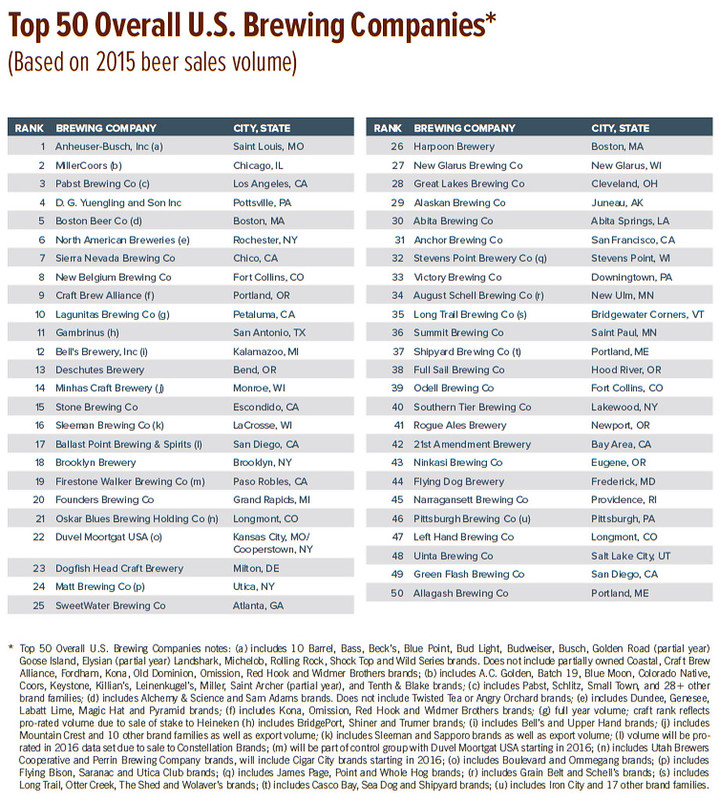
The Brewers Association has also just announced the top 50 breweries in the U.S. based on sales, by volume, for 2015. This includes all breweries, regardless of size or other parameters. Here is the new list:
Here is this year’s press release.

The Brewers Association has also just announced the top 50 breweries in the U.S. based on sales, by volume, for 2015. This includes all breweries, regardless of size or other parameters. Here is the new list:
Here is this year’s press release.

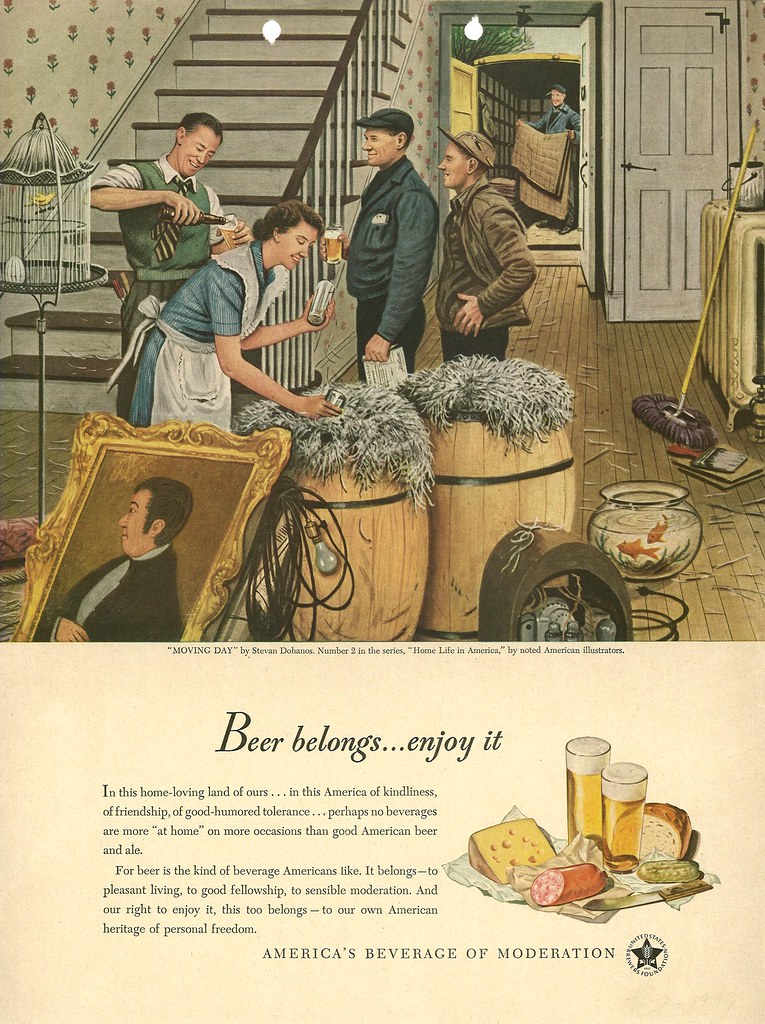
Monday’s ad is entitled Moving Day, and the illustration was done in 1946 by Stevan Dohanos. It’s a second #2 in a series entitled “Home Life in America,” also known as the Beer Belongs series of ads that the United States Brewers Foundation ran from 1945 to 1956. There are just a couple of these I know about, and I’m not sure why they duplicated the number. New ads were created roughly every month and were published in the popular monthly magazine of the time, so possibly they ran concurrently in magazines reaching different groups of people. In this ad, a family is moving. The house is nearly packed up (hopefully that painting is staying behind on the junk pile!) though I’m not sure what’s going to happen to the bird or the goldfish bowl. As the truck is undoubtedly nearly full, they’re thoughtfully rewarding the movers by pouring them glasses of beer.

If you’re a regular reader, you’ve probably noticed that this year’s project is posting “Historic Beer Birthdays” with as much information as I can find about each person. It’s been a lot of fun, especially getting to know more about a lot of the early brewers and breweries that make up the history of our brewing industry. One especially fun find was this piece of breweriana which I found when looking into Frederick J. Poth (whose birthday was March 20, 1840). His father, Frederick A. Poth (born March 15, 1840) founded the F. A. Poth & Sons’ Brewery, and his other son Harry A. Poth (July 11, 1881) also worked for the family business. It was one of the largest breweries in Philadelphia in its heyday.
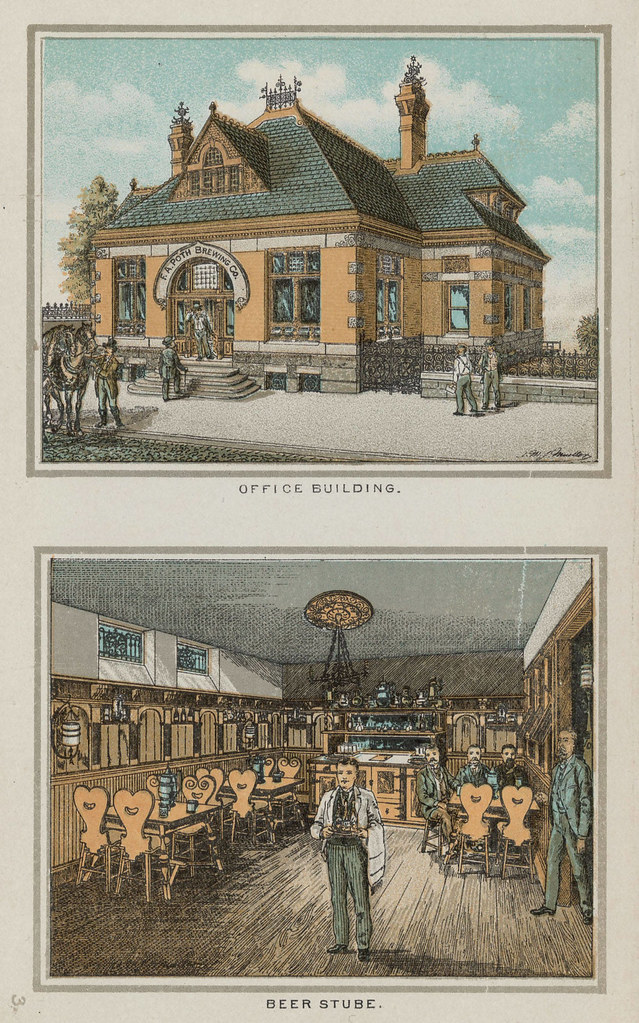
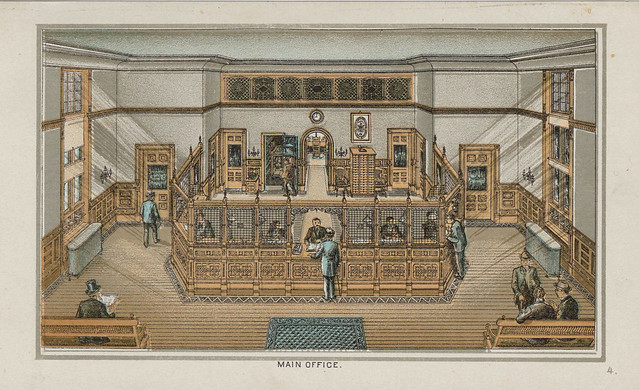
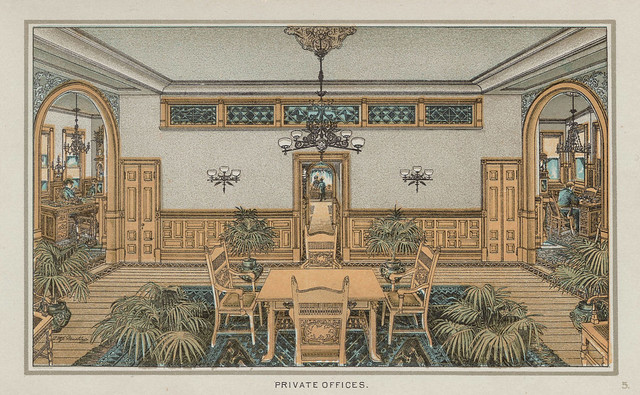
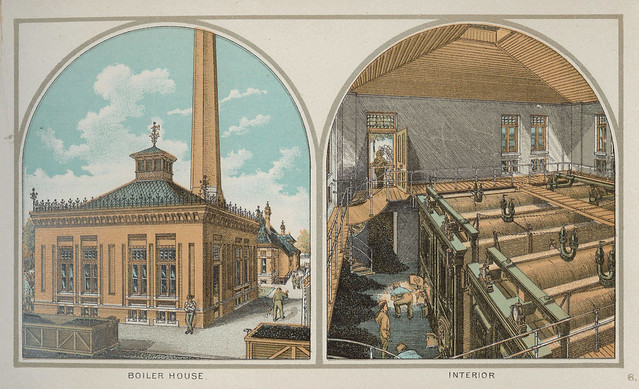
Around 1892, they had a local printer, Avil Printing Co., create a lavish Souvenir Album of 20 pages, with 26 illustrations done by A. M. J. Mueller. The prints are Chromolithographs, a popular process at the time. The booklet presumably would have been given to bars, wholesalers and maybe even consumers as a promotional item, but as these things go, this one is pretty awesome, and gives a great glimpse into the inner workings of a turn of the century American brewery.
Here’s its description from “The Library Company of Philadelphia,” founded by Benjamin Franklin in 1731.
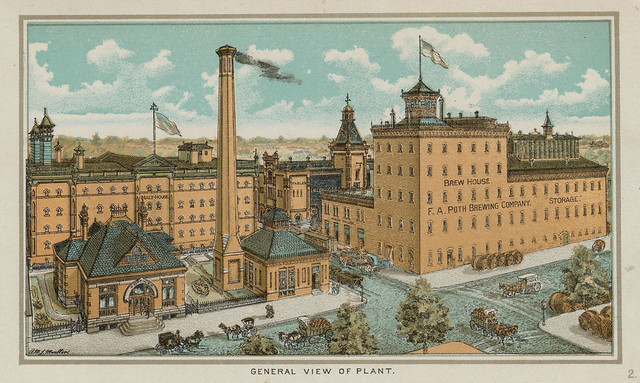
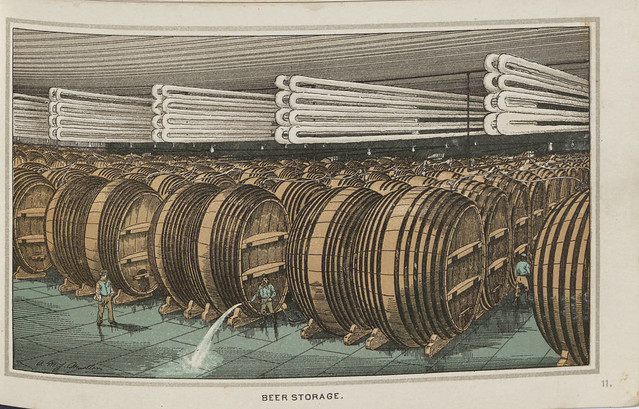
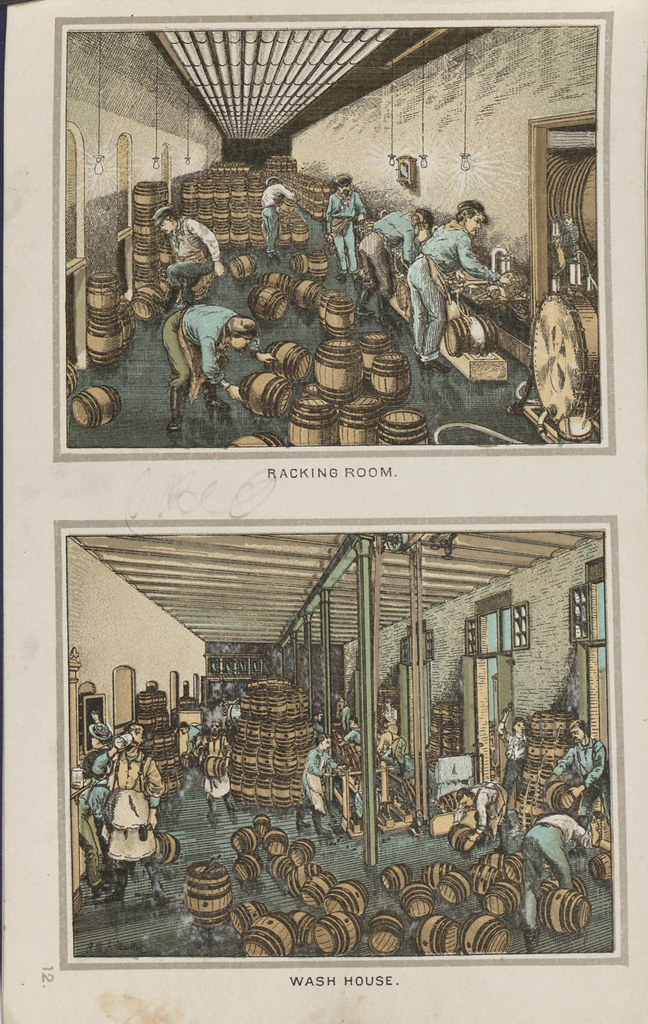
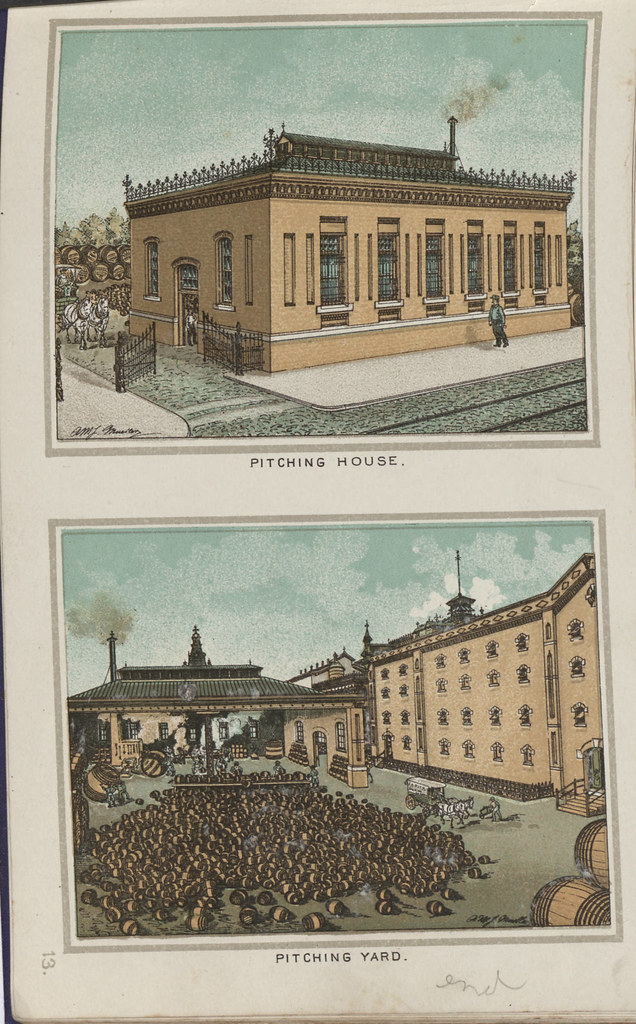
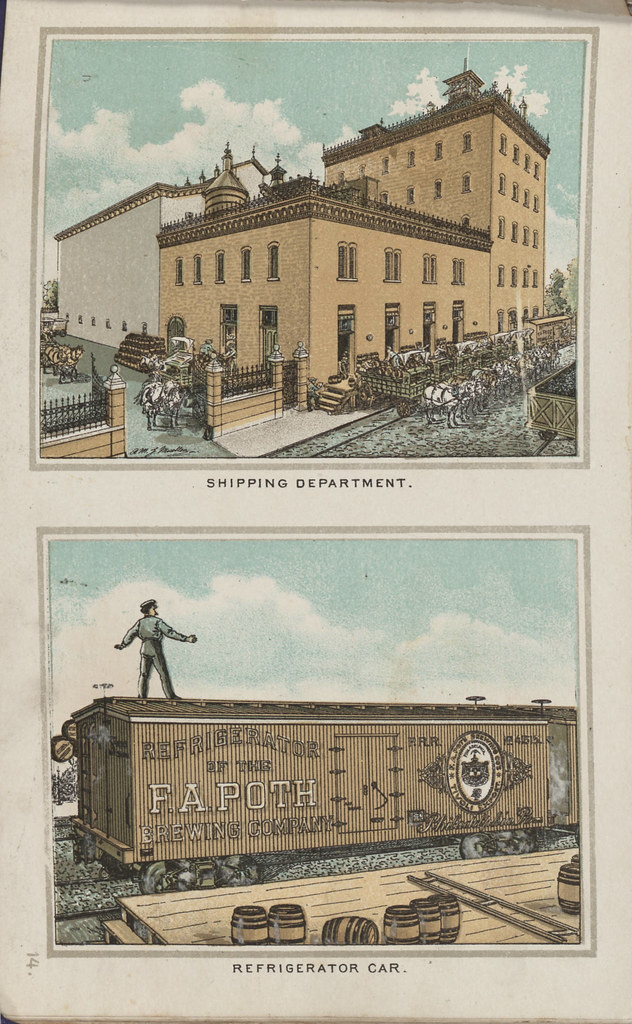
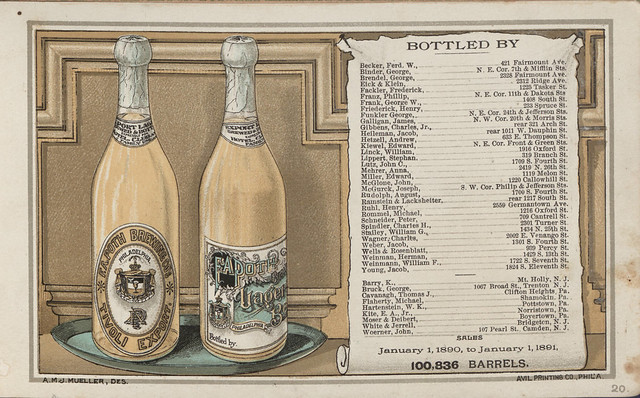
Album containing 26 lithographic illustrations documenting the Philadelphia brewing complex at the northwest corner of Thirty-first and Jefferson Streets, including exterior and interior views of individual buildings within the complex and detailed scenes of laborers operating equipment and transporting the finished product to and from railroad stations. Shows exterior and interior views of the office building, boiler house, stable, and malt house; exterior views only of pitching house, pitching yard, and shipping department; interior views of private offices, beer stube, refrigerating machines and engine room, brew house, fermenting room, beer storage, racking room, wash house, and kiln house; and modes of transport including a delivery wagon loaded with barrels of beer approaching the F.A. Poth depot at Trenton, New Jersey. Includes a “bottled by” list on the last page with names and addresses next to two F.A. Poth bottles of beer. Under the list: “100,836 barrels were sold between January 1, 1890 and January 1, 1891.”
Established in 1865 by Frederick August Poth at the northeast corner of Third and Green Streets, and moved to Thirty-first and Jefferson Streets in 1871. Incorporated in 1877, and later renamed F.A. Poth & Sons, Incorporated.
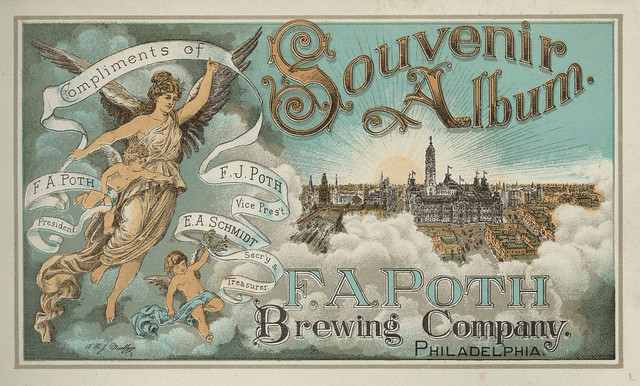
This is the hardbound cover.

Opening the book, you’re greeted by the title page.
General View of [the] Plant.
Office Building & Beer Strube.
Main Office.
Private Offices.
Boiler House & Interior.
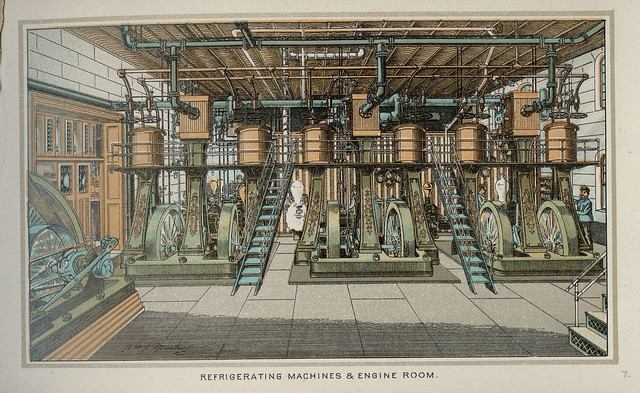
Refrigerating Machines & Engine Room.
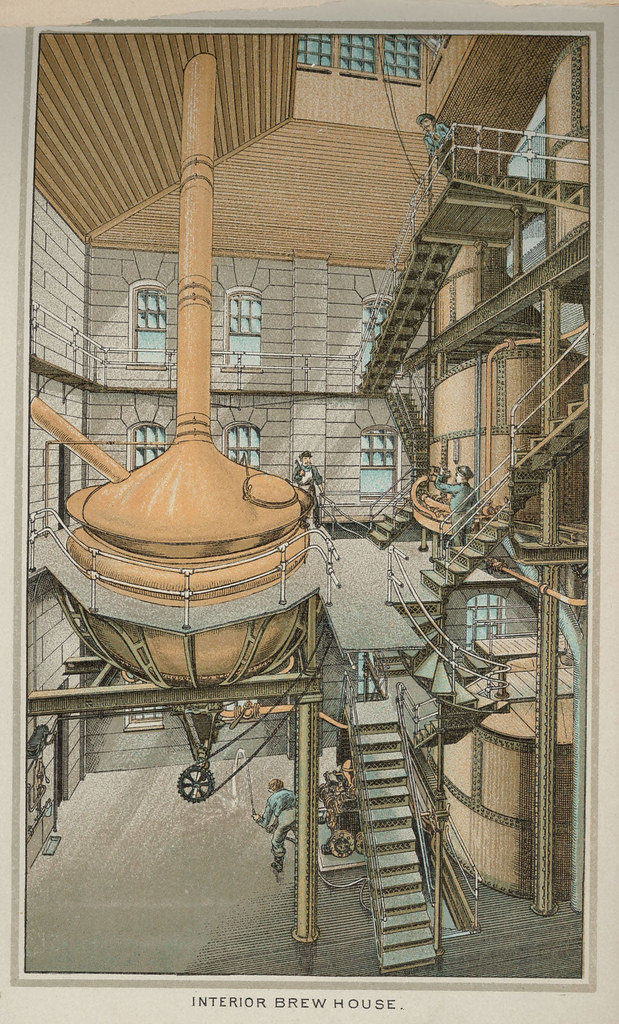
Interior Brew House.
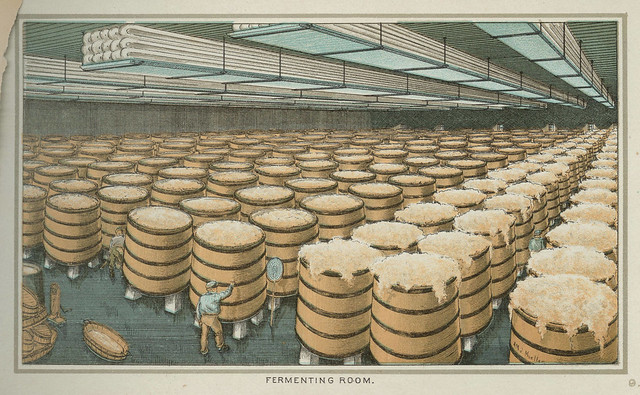
Fermenting Room.
Beer Storage.
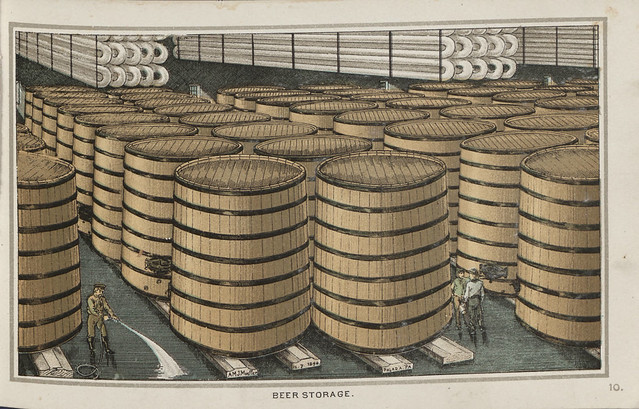
Beer Storage.
Racking Room & Wash House.
Pitching House & Pitching Yard.
Shipping House & Refrigerator Car.
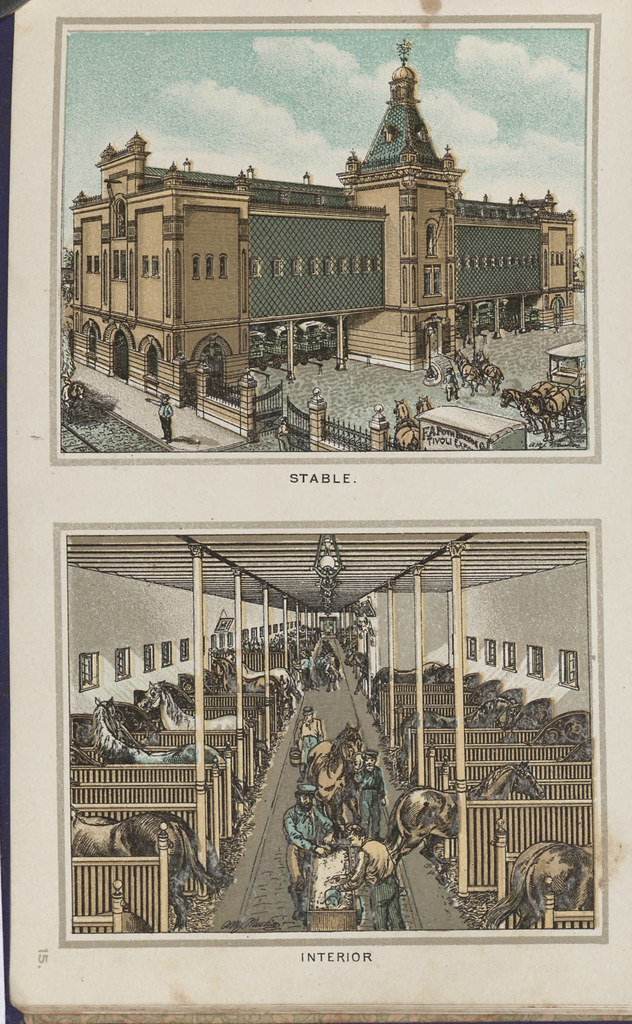
Stable & Interior.
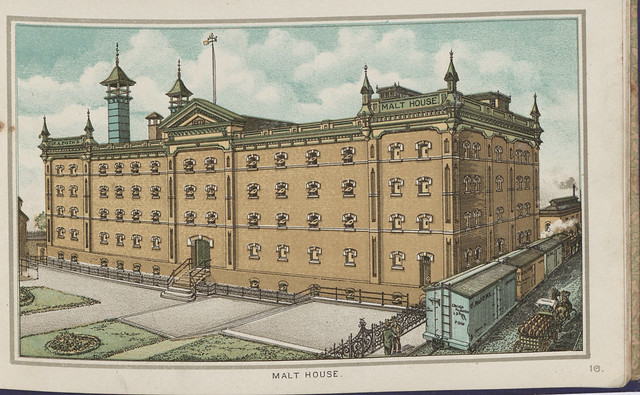
Malt House.
Interior Malt House.

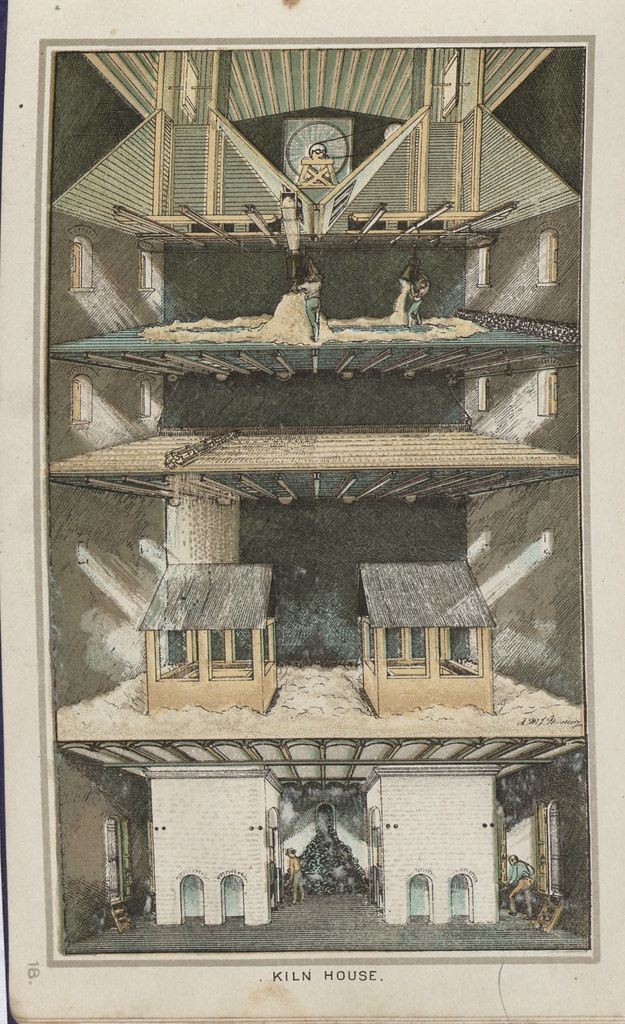
Kiln House.
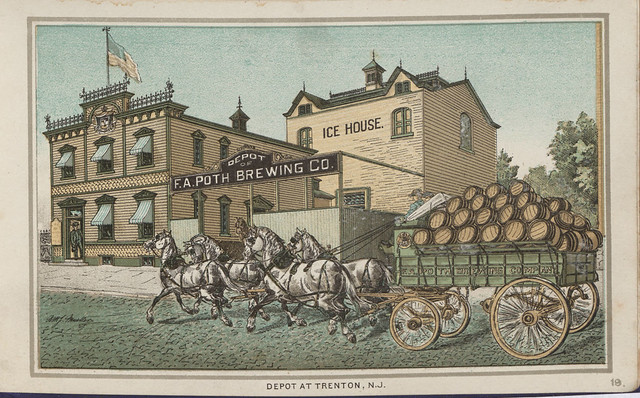
Depot at Trenton, N.J.

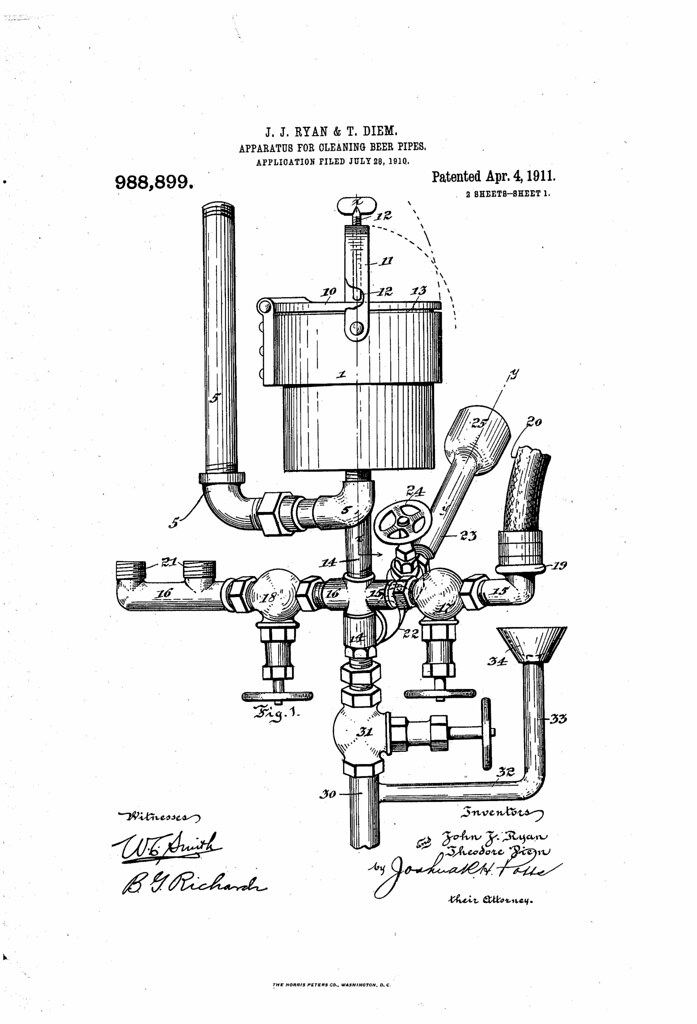
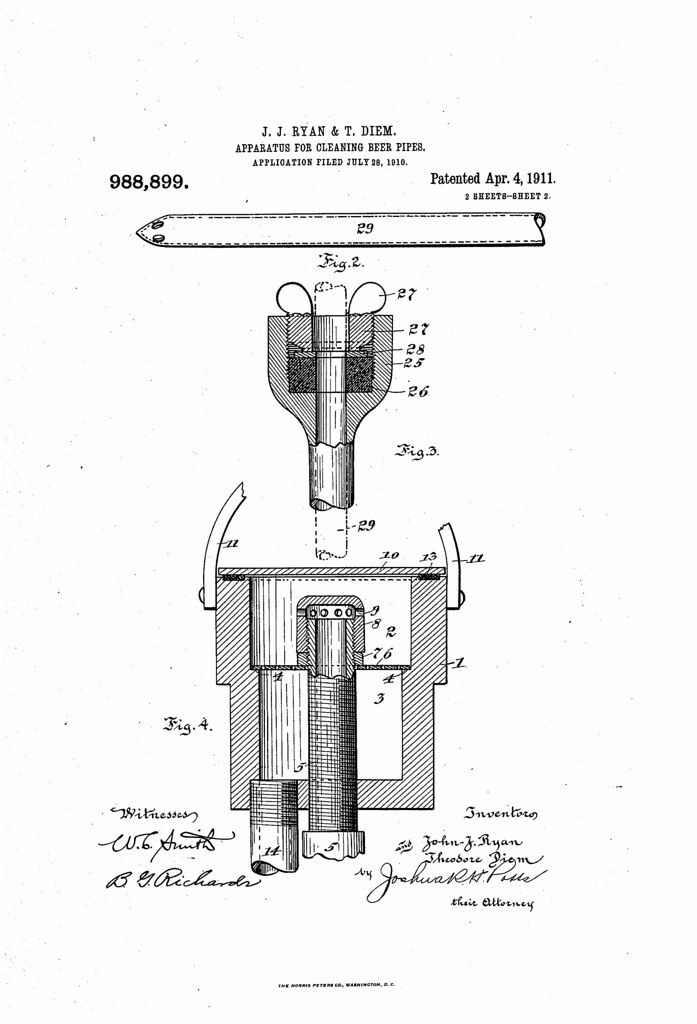
Today in 191a, US Patent 988899 A was issued, an invention of Theodore Diem and John J. Ryan, for their “Apparatus for Cleaning Beer-Pipes.” There’s no Abstract, although in the description it includes this summary:
Our invention relates to improvements in apparatus for cleaning beer pipes and has for its object the provision of such an apparatus which shall be of simple construction and eflicient in operation.
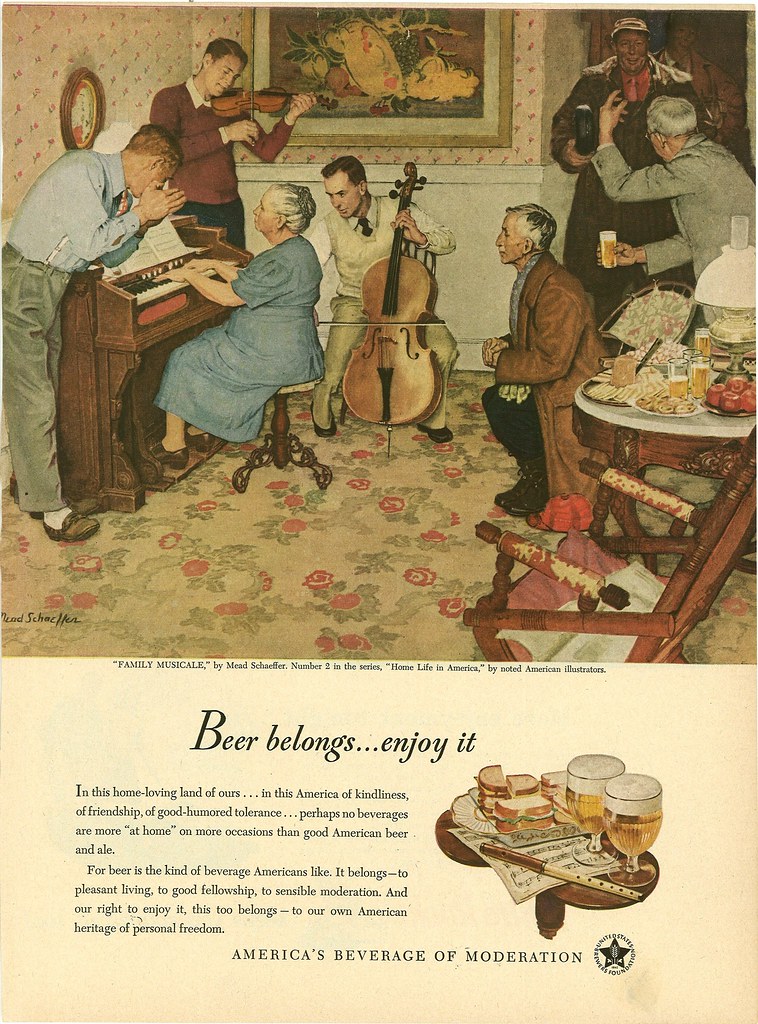
Sunday’s ad is entitled Family Musicale, and the illustration was done in 1946 by Mead Schaeffer. It’s #2 in a series entitled “Home Life in America,” also known as the Beer Belongs series of ads that the United States Brewers Foundation ran from 1945 to 1956. In this ad, at least four family members are performing — though it’s an odd combination of organ, violin, cello and harmonica — but it looks like a fifth is just arriving, case under his arm (with a possible sixth behind him), as the two apparently talentless men of the family watch. But at least they get to drink beer during the concert.
Today in 2013, US Patent CN 202842451 U was issued, an invention of 张津川, for his “Glove Capable Of Opening Beer Bottles.” Here’s the Abstract:
Provided is a glove capable of opening beer bottles. The glove capable of opening beer bottles is characterized in that the top of the glove is sewn with a velcro, a bottle opener is installed on the glove through the velcro, and the bottle opener can be dismantled. The glove capable of opening beer bottles has the advantages that people can use the bottle opener on the glove to open a beer bottle when the glove is needed, hands can not be frostbitten and the glove capable of opening beer bottles is convenient to use.
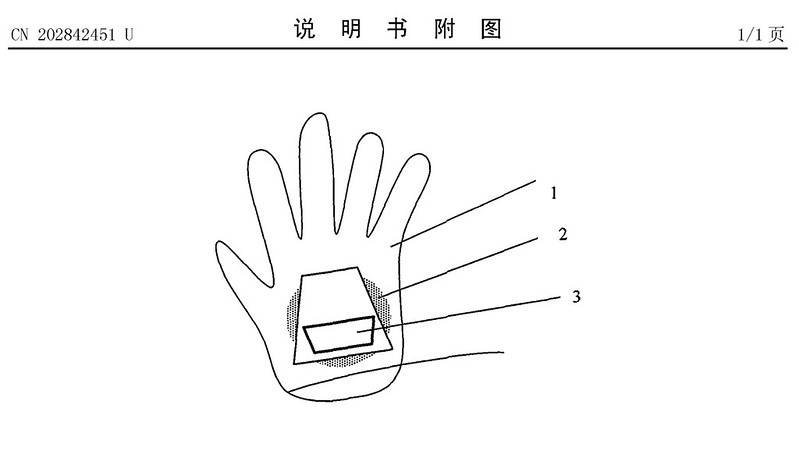
I’m not sure if this commercial example is based on this patent, but it’s certainly pretty close and the same idea.

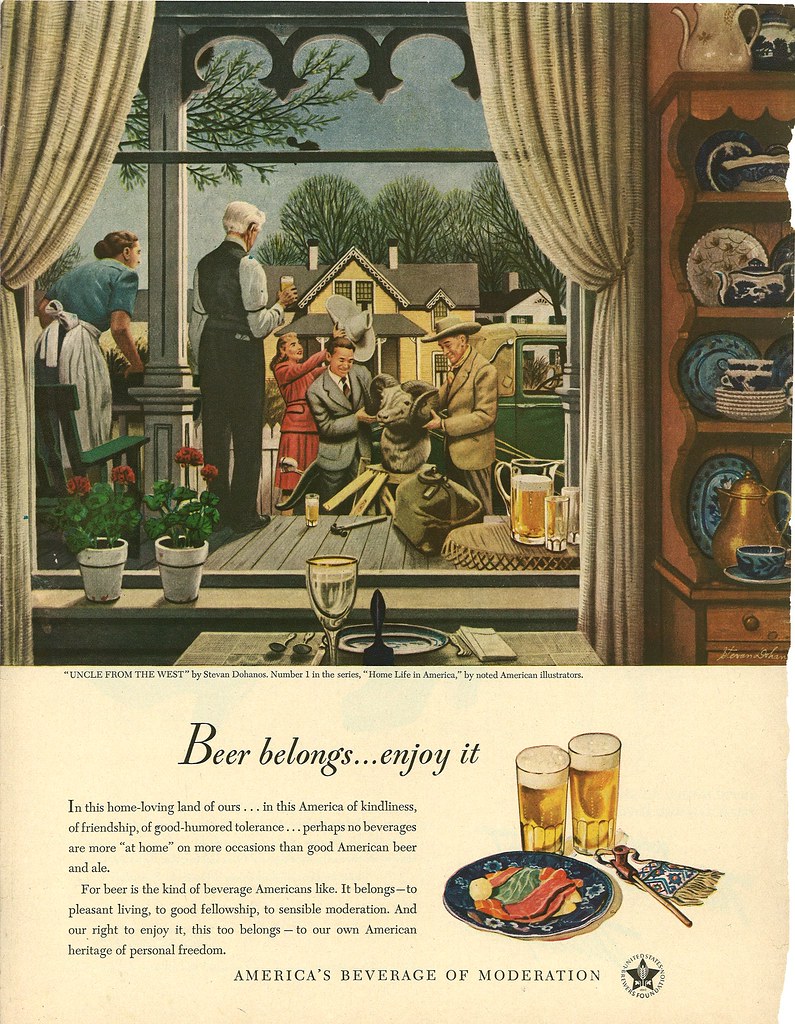
Saturday’s ad is entitled Uncle From the West, and the illustration was done in 1946 by Stevan Dohanos. It’s #1 in a series entitled “Home Life in America,” also known as the Beer Belongs series of ads that the United States Brewers Foundation ran from 1945 to 1956. In this ad, it appears that a relative who lives out west is visiting a more easterly family and bringing western gifts along with him.

Today is the birthday of Danish author Hans Christian Andersen (april 2, 1805-August 4, 1875). Although he wrote numerous plays, travelogues, novels, and poems, Andersen is best known for his fairy tales, like the Little Mermaid, the Emperor’s New Clothes, the Ugly Duckling and the Snow Queen, which was loosely adapted into Disney’s Frozen in 2013. Those are just the highlights, he also wrote many more you’ve probably heard of and undoubtedly quite a bit more you haven’t. One of those lesser known stories is “Ole, The Watchman of the Tower” or “Ole the Tower-Keeper.” It was written in the 1850s and was included as part of his third collection of “New Fairy-Tales and Stories,” which was published in 1859.
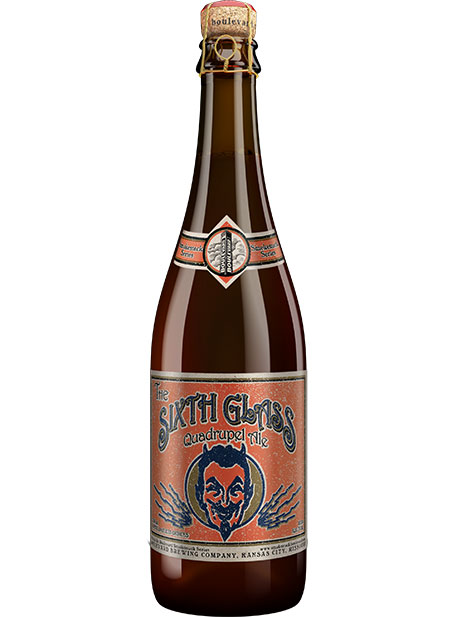
It was from this short tale that Boulevard Brewing of Kansas City, Missouri, was inspired to create their Quadrupel (although they also refer to it as a “Belgian Dark Strong Ale”), The Sixth Glass.

Here’s a synopsis of the story of Ole:
There was a man named Ole who was rumored to be the child of several different people and had been said to have done many interesting things in his life. As time wore on, he became less than enthused with society and decided to become a hermit.
He lived in a church tower because it was the only place where he could easily get bread and still be away from other people. He read books and had visitors around New Years. One person in particular visited him each year around New Years and that person had three stories to tell that Ole had told him.
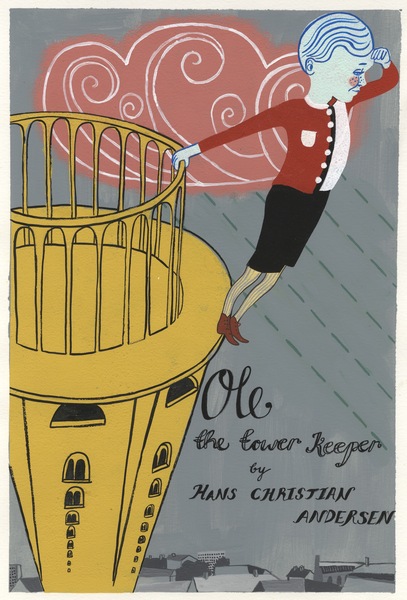
And here’s another, shorter, one:
Our first-person narrator tells us that he likes to visit a watchman of a tower named Ole. He visits twice on New Year’s Eve and hears some kooky stories about cobblestone, the Bible, and alcohol.
But it was during the end of his second of three nights that Ole visited and listened to the Tower-Keeper, after he’d explained about the first five glasses, who was in them, or how they would change you, he told Ole about the sixth glass:
“The sixth glass! Yes, in that glass sits a demon, in the form of a little, well dressed, attractive and very fascinating man, who thoroughly understands you, agrees with you in everything, and becomes quite a second self to you. He has a lantern with him, to give you light as he accompanies you home. There is an old legend about a saint who was allowed to choose one of the seven deadly sins, and who accordingly chose drunkenness, which appeared to him the least, but which led him to commit all the other six. The man’s blood is mingled with that of the demon. It is the sixth glass, and with that the germ of all evil shoots up within us; and each one grows up with a strength like that of the grains of mustard-seed, and shoots up into a tree, and spreads over the whole world: and most people have no choice but to go into the oven, to be re-cast in a new form.
That’s why there’s a devilish demon on the label, because that’s what’s in the bottle, too. Drink it at your own peril. Don’t say you haven’t been warned. Frankly, it only make me want to drink it even more. I love the idea that after reading that passage, founder John McDonald and/or brewmaster Steven Pauwels, were inspired to create a beer fitting that description.
Today in 1919, US Patent 8409647 B2 was issued, an invention of Robert Harvey Moffett, Jeffrey Allen Odle, and Rafael Januario Calabrese, assigned to E. I. Du Pont De Nemours And Company, for their “Silica Microgels For Reducing Chill Haze.” Here’s the Abstract:
The present invention provides a method of reducing chill haze in a protein containing liquid (especially beverages resulting from fermentation such as beer and wine) by contacting the liquid with silica microgels having an average microgel diameter of at least 18 nm, more preferably at least 45 nm, and most preferably at least 70 nm. It has now been discovered that microgels having an average microgel diameter of less than about 18 nm do not adequately reduce chill haze of a protein containing liquid. In particular, while microgels having an average microgel diameter of less than about 18 nm cause the coagulation of haze-forming components, these components remain suspended in liquid and continue to cause haze despite allowing the liquid to settle for long periods of time. Conversely, it has now been discovered that microgels having an average microgel diameter of at least about 18 nm cause the coagulation and precipitation of haze-forming components and the rapid settling thereof without the use of an organic polymer which acts as a flocculating agent.


Friday’s ad is a parody or spoof ad from Mad Magazine, which seems appropriate for April Fool’s Day. The artist was William or Will Elder and what it was making fun of was the Beer Belongs series of ads by the United States Brewers Foundation that ran from 1945 to 1956. In the ad, everyone from the baby to the family pets are drinking a beer.
