Brookston Beer Bulletin

Jay R. Brooks on Beer

  • Home
  • About
  • Editorial
  • Birthdays
  • Art & Beer

Socialize

  • Dribbble
  • Email
  • Facebook
  • Flickr
  • GitHub
  • Instagram
  • LinkedIn
  • Pinterest
  • RSS
  • Twitter
  • YouTube

Powered by Genesis

Patent No. 2371028A: Liquid Dispensing Device

March 6, 2016 By Jay Brooks

patent-logo
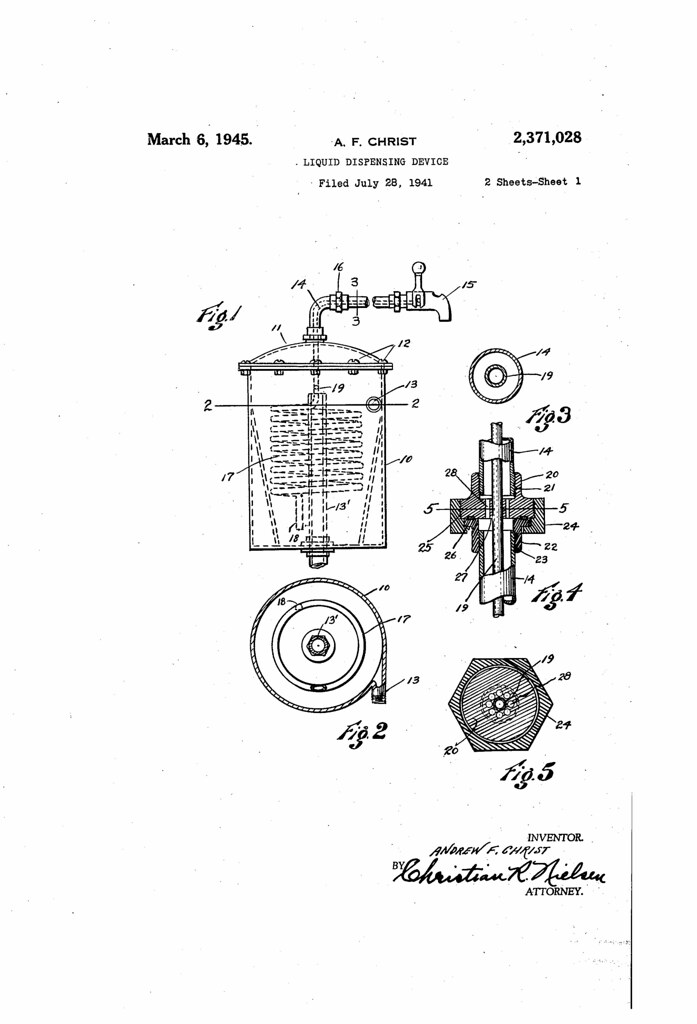
Today in 1945, US Patent 2371028 A was issued, an invention of Andrew F. Christ, for his “Liquid Dispensing Device.” There’s no Abstract, although in the description it includes this summary:

My invention relates to dispensing devices and more particularly to faucets for dispensing, draught beer or the like. The object of my invention is to produce a device that will dispense raw draught beer without the usual foam caused by carbonation and permitting the deposit of a .pre determined quantity of foam into the container onto the top of the raw beer.

Another object of my invention is to produce a device of the character described, that employs the customary attaching means to; the barrel or keg acting as-a container or supply reservoir for the beer, and permitting any conventional type of tapping mechanism.
US2371028-0
US2371028-1

Filed Under: Beers, Just For Fun, Politics & Law, Related Pleasures Tagged With: History, Kegs, Law, Patent

Beer In Ads #1841: Facts Versus Fallacies #70

March 5, 2016 By Jay Brooks


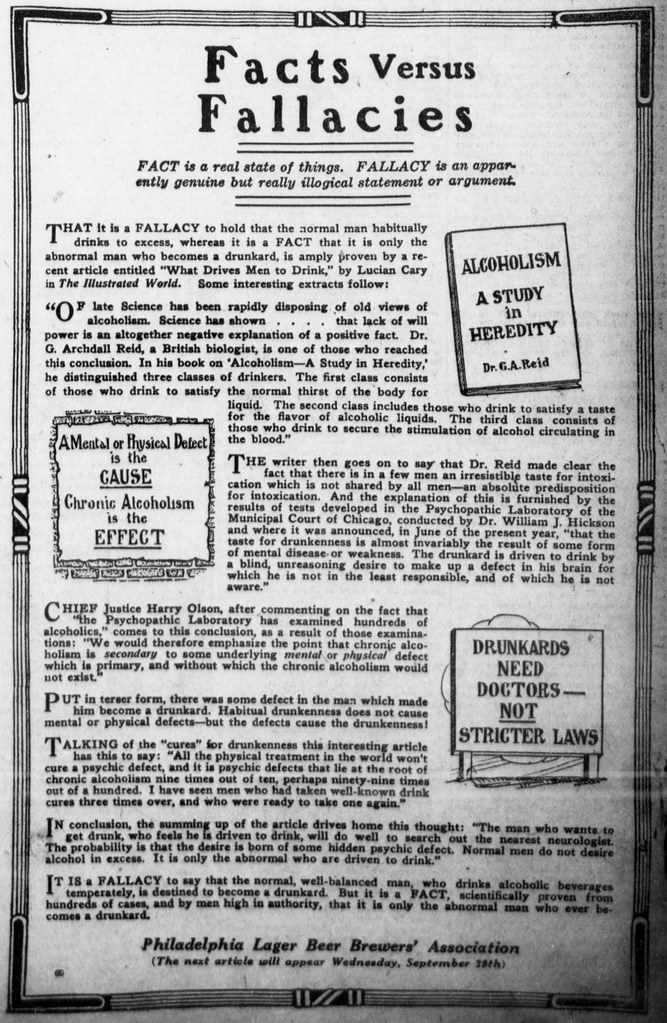
Saturday’s ad is another one for the Pennsylvania State Brewers Association, from 1915, No. 70 in series they did from 1915-17 called “Facts Versus Fallacies.” I have no idea how many were done but some of the them are numbered into low triple digits, suggesting there were a lot of them, all in an effort to stop Prohibition from happening and win over support for beer. This ad, marked “70,” is another interesting one that tackles the prohibitionists’ argument that all alcohol consumption is bad, while the truth is that its excessive drinking that can cause problems, and in fact it’s the position of at least one research doctor that excesses in food, and even water, can be “harmful.” His position is that “Excess of any kind is the is the direct opposite of temperance.” The ad goes on to look at how Europe reacted during World War I, and how the nations at war sent alcohol to the troops fighting. Why? “The beverages are not given as medicine, but as nourishment.”

Facts-v-Fallacies-70-1915

Filed Under: Art & Beer, Beers, Just For Fun Tagged With: Advertising, History, Pennsylvania, Philadelphia, Prohibition

Beer Birthday: Jen Muehlbauer

March 5, 2016 By Jay Brooks

Jen-M
Today is the 41st (I think) birthday of Jen Muehlbauer, who writes East Bay Beer and has also worked at several prominent local beer places — most recently I heard the Albany Taproom and/or Whole Foods. She’s been writing about beer since 2002. Because she’s been in the trenches, I think her voice is more practical, realistically cynical and utterly invaluable. I always love to read her take on what’s being debated on the interwebs. Join me in wishing Jen a very happy birthday.

P1010647
With Fraggle at the Celebrator 25th anniversary party in 2013.

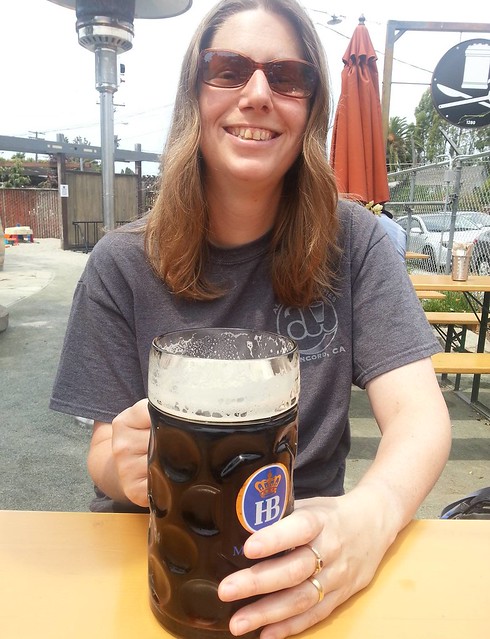
Jen-HB
Enjoying a large mug of beer.

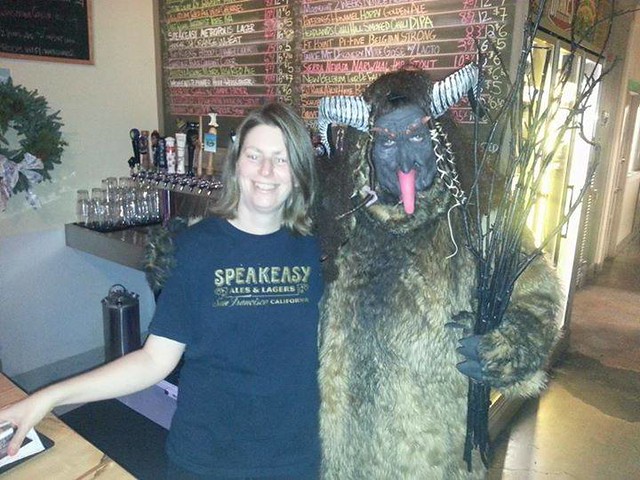
Jen-Krampus
A visit from Krampus.

Note: the last two photos were purloined from Facebook.

Filed Under: Birthdays Tagged With: Bay Area, California

Patent No. 4996823A: Method Of Packaging A Beverage And A Package Structure

March 5, 2016 By Jay Brooks

patent-logo
Today in 1991, US Patent 4996823 A was issued, an invention of William J. Byrne, assigned to Arthur Guinness Son & Company, for his “Method of Packaging a Beverage and a Package Structure.” Here’s the Abstract:

Method of packaging a beverage and a package structure has a cylindrical tube 1 over an end 3 of which is located a partition 2 having restricted orifice and both are sealed, for example by crimping, to the rim of tube 1. Primary chamber 4 is formed within the tube and secondary chamber 8 is formed between the partition 2 and closure 7 which chambers communicate through orifice 6. Chamber 4 is charged with beverage 11 containing gas in solution and sealed with end wall 12 crimped to the rim 9 of the tube 1. Prior to sealing chamber 9 is dosed with liquid nitrogen or carbon dioxide so that headspace 13 is pressurized. The package adjusts to a state of equilibrium in which beverage flows into the secondary chamber 8 to form headspace 14 therein. Upon opening of the package with pull tag 15 a pressure differential between the headspaces 14 and 13 causes beverage and/or gas in chamber 8 to be ejected through orifice 6 into beverage 11 and thereby gas in solution in the beverage to be liberated and form, or assist in the formation of, a head of froth on the beverage.

US4996823-1

Filed Under: Beers Tagged With: Cans, History, Law, Packaging, Patent

Beer In Ads #1840: Facts Versus Fallacies #69

March 4, 2016 By Jay Brooks


Friday’s ad is another one for the Pennsylvania State Brewers Association, from 1915, No. 69 in series they did from 1915-17 called “Facts Versus Fallacies.” I have no idea how many were done but some of the them are numbered into low triple digits, suggesting there were a lot of them, all in an effort to stop Prohibition from happening and win over support for beer. This ad, marked “69,” is another interesting one that tackles the prohibitionists’ argument that men are driven to drink, and most just can’t help themselves, so the only way to “cure” them is take away their alcohol. But the science of the day said no, that instead drunkards were the result of a mental defect or weakness, and in 99% of cases this was the cause. “Normal men do not desire alcohol in excess. It is only the abnormal who are driven to drink.”

Facts-v-Fallacies-69-1915

Filed Under: Art & Beer, Beers, Just For Fun Tagged With: Advertising, History, Pennsylvania, Philadelphia, Prohibition

Session #109: Loving Porter

March 4, 2016 By Jay Brooks

porter-worthy
For our 109th Session, our host is Mark Lindner, who is the Bend Beer Librarian, and writes the By the Barrel in Bend, Oregon. For his topic, he’s chosen the beer style Porter, and wants us to explore what he calls a “highly variable style.” Jon goes on to explain what he means by that in his announcement for the March Session:

porter

Porter

“The history of porter and the men who made it is fascinating, for it deals with the part that beer has played in the development of Western Culture. Conversely, of course, much of porter’s growth was the result of profound changes in the nature of British society. It is also a microcosm of how our industries have developed; events in porter’s history explain the structure of the modern brewing industry, not only in Britain, but in the other major Western countries.

Porter is intimately tied in with the Industrial Revolution, in which Britain led the world. Through the growth it enabled the brewers to achieve, it was instrumental in the development and technological application of a number of important scientific advances” (Foster, Porter, 17).

I am not talking about your long dead relative’s porter—although you might be—but about all of the variations currently and previously available. Hey, feel free to write about the porter of the future or some as-yet-unrecognized sub-style of porter.

There are English porters, Brown porters, Robust porters, American porters, Baltic porters, Imperial porters, Smoked porters, barrel-aged variants of most of the preceding, and so on.

With as many variations as there are it is hard to believe that porter is perhaps a neglected style. Then again, it did disappear for a while [see Foster, Porter, and others]. Of 14 beer people asked about overrated and underrated styles three of them said porter was most underrated and no one suggested it as overrated in our current market climate.

I would like you to sit down with one or more porters of your choosing. Pay a few minutes attention to your beer and then use that as a springboard to further thoughts on the style.

session_logo_all_text_200

One of Mark’s suggestions was to “[c]onstruct a resource along the lines of Jay Brooks’ Typology style pages,” so I figured the easiest thing to do this month was actually that. I chose Robust Porter for no better reason than I like them.

bdg_godSaveTheQueen_lg

Robust Porter

robust-porter Robust Porter is part of a family of beer, Porters, for which I have a personal bias. My son is named Porter. But it’s also a favorite style because I love the chocolate and sometime coffee notes that are usually smoother and less harsh than stouts. Deschutes Black Butte Porter was probably the one that really helped me love the style, but Anchor Porter and St. Bridget’s Porter from Great Divide are also early favorites.

What follows is information about robust porter, collected from a variety of sources. If you know of any additional resources about this type of beer, please let me know.

History

A stronger, more aggressive version of pre-prohibition porters and/or English porters developed in the modern craft beer era. Historical versions existed, particularly on the US East Coast, some of which are still being produced. This style describes the modern craft version. Note: This is the history for “American Porter,” which in 2015 replaced “Robust Porter.”
(BJCP1)

blackbutte
 
Origin: unitedkingdom

robust-porter

A Comparison of Style Ranges

SourceSRMABVO.G.F.G.IBU
BJCP1 (20A) American22-405-6.5%Varies1.008-1.01625-50
Brewery DB20-306.3-7.5%Varies1.018-1.02425-40
GABF2 (83) Robust20-354.4-6%1.045-1.0601.008-1.01625-40
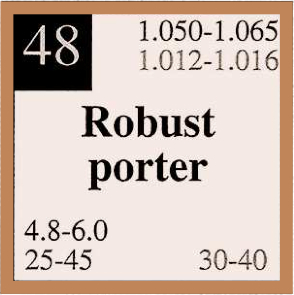
Periodic Table7 (48)30-404.8-6%1.050-1.0651.012-1.01625-45
WBC6 (75) Robust30+5.1-6.6%1.045-1.10601.008-1.01625-40

Yeast

 Ale
 Hybrid
 Lager
 Belgian
 Brettanomyces
 Lactobacillus
 Pediococcus
 Other

BJCP Description: 20A. American Porter1

Overall Impression: A substantial, malty dark beer with a complex and flavorful dark malt character.

Aroma: Medium-light to medium-strong dark malt aroma, often with a lightly burnt character. Optionally may also show some additional malt character in support (grainy, bready, toffee-like, caramelly, chocolate, coffee, rich, and/or sweet). Hop aroma low to high, often with a resiny, earthy, or floral character. May be dry-hopped. Fruity esters are moderate to none.

Color Range


Appearance: Medium brown to very dark brown, often with ruby- or garnet-like highlights. Can approach black in color. Clarity may be difficult to discern in such a dark beer, but when not opaque will be clear (particularly when held up to the light). Full, tan-colored head with moderately good head retention.

Flavor: Moderately strong malt flavor usually features a lightly burnt malt character (and sometimes chocolate and/or coffee flavors) with a bit of grainy, dark malt dryness in the finish. Overall flavor may finish from dry to medium-sweet. May have a sharp character from dark roasted grains, but should not be overly acrid, burnt or harsh. Medium to high bitterness, which can be accentuated by the dark malt. Hop flavor can vary from low to high with a resiny, earthy, or floral character, and balances the dark malt flavors. The dark malt and hops should not clash. Dry-hopped versions may have a resiny flavor. Fruity esters moderate to none.

Mouthfeel: Medium to medium-full body. Moderately low to moderately high carbonation. Stronger versions may have a slight alcohol warmth. May have a slight astringency from dark malts, although this character should not be strong.

Comments: Although a rather broad style open to brewer interpretation. Dark malt intensity and flavor can vary significantly. May or may not have a strong hop character, and may or may not have significant fermentation by-products; thus may seem to have an “American” or “British” character.

Characteristic Ingredients: May contain several malts, prominently dark malts, which often include black malt (chocolate malt is also often used). American hops typically used for bittering, but US or UK finishing hops can be used; a clashing citrus quality is generally undesirable. Ale yeast can either be clean US versions or characterful English varieties.

Style Comparison: More bitter and often stronger with more dark malt qualities and dryness than English Porters or Pre-Prohibition Porters. Less strong and assertive than American Stouts.

CraftBeer.com Description

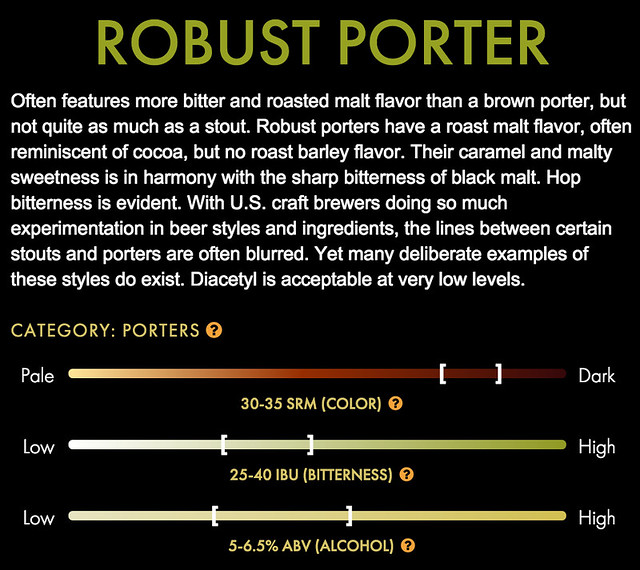
robust-porter
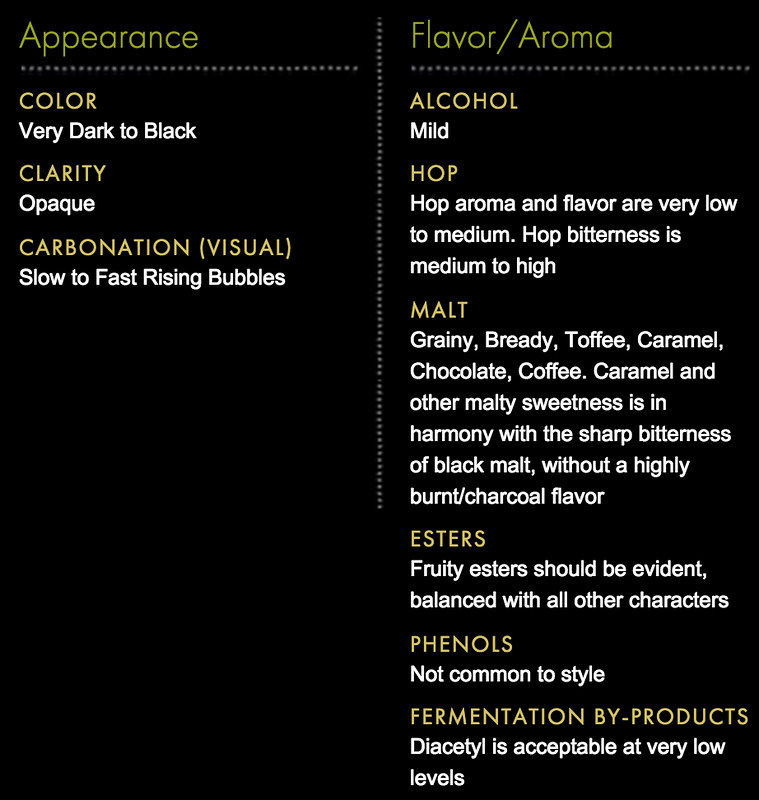
robust-porter-2
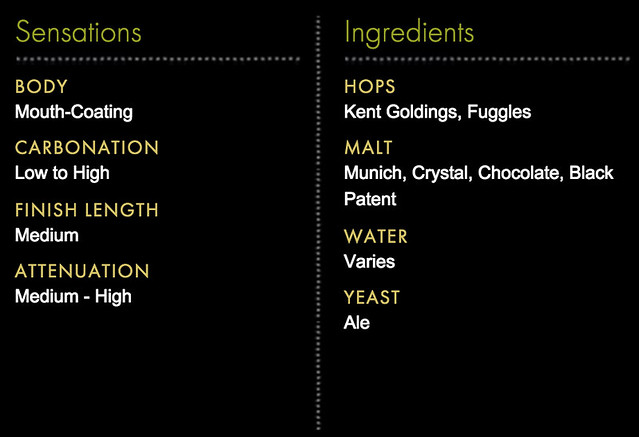
robust-porter-3

GABF/World Beer Cup Description

75. Robust Porter
Robust Porters are very dark to black. Hop aroma is very low to medium. They have a roast malt flavor, often reminiscent of cocoa, but no roast barley flavor. Caramel and other malty sweetness is in harmony with a sharp bitterness of black malt without a highly burnt/charcoal flavor. Hop flavor is very low to medium. Hop bitterness is medium to high. Diacetyl should not be perceived. Fruity esters should be evident, balanced with all other characters. Body is medium to full.

Online Descriptions

Beer Advocate
Inspired from the now wavering English Porter, the American Porter is the ingenuous creation from that. Thankfully with lots of innovation and originality American brewers have taken this style to a new level. Whether it is highly hopping the brew, using smoked malts, or adding coffee or chocolate to complement the burnt flavor associated with this style. Some are even barrel aged in Bourbon or whiskey barrels. The hop bitterness range is quite wide but most are balanced. Many are just easy drinking session porters as well.
Rate Beer
Black or chocolate malt gives the porter its dark brown color. Porters are often well hopped and somewhat heavily malted. This is a medium-bodied beer and may show some sweetness usually from the light caramel to light molasses range. Hoppiness can range from bitter to mild. Porters, in relation to stouts of the same region, are typically more mild and less aggressively hopped.

robust-porter-1935

Glassware

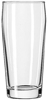
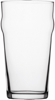
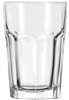
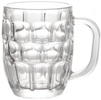
pint-glass becker-pint nonic-pint tumbler seidel stein-ceramic
Pint Glass (or Becker, Nonic, Tumbler), Mug (or Seidel, Stein)3
Nonic Pint5

Food Pairing

bbq cheese-variety chocolate steak_meat prosciutto meatloaf scallops shepherds-pie souffle venison boar
Cuisine (Barbecue) Cheese (buttery; Brie, Gouda, Havarti, Swiss) General (Chocolate, Dessert) Meat (Beef, Smoked Meat, Grilled Meat)3
Aged Ham (prosciutto, Serrano, Bayonne), Meatloaf, Seared Scallops, Shepherd’s Pie, Soufflé, Steak, Venison, Wild Boar4
Roasted or Grilled Meats, Gruyere, Chocolate Peanut Butter Cookies5

Seasonality & Temperature

Season:
season-winter
Winter
Serving:
temp-45-50
45-50° F
Storage:
temp-40-45
40-45° F*
Beer 101:
Beer101-porter
Porter

48-robust-porter

Links About Porter

  • About.com
  • All About Beer’s Profile
  • All About Beer’s Stylistically Speaking by K. Florian Klemp
  • Beer Advocate
  • BJCP 2008 Online (19C)
  • Brew Your Own
  • Brewery DB
  • CraftBeer.com
  • GotBeer.com
  • Michael Jackson’s Beer Styles
  • Rate Beer
  • Wikipedia

Further Reading

bp-porter

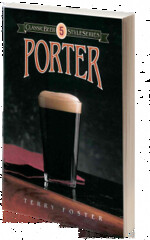
  • Porter (Classic Beer Style) by Terry FOster
  • Page 449 of The Beer Bible, by Jeff Alworth
  • Page 105 of The Essentials of Beer Style, by Fred Eckhardt
  • No. 40 on The Periodic Table of Beer Styles
  • Page 24 of What the Hell am I Drinking?, by Don Russell

Commercial Examples of Robust Porter

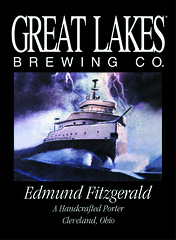
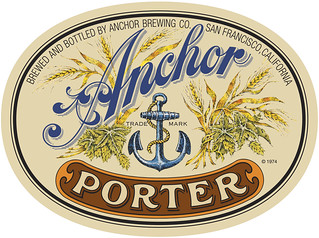
Anchor Porter, Boulevard Bully! Porter, Deschutes Black Butte Porter, Founders Porter, Great Lakes Edmund Fitzgerald Porter, Smuttynose Robust Porter, Sierra Nevada Porter1
Iron Hill Pig Iron Porter, Rock Bottom Moonlight Porter, Deschutes Black Butte Porter5

Edmund Fitzgerald Bully Porter Bottle Label

Top 10 Examples

Beer Advocate

  1. Funky Buddha Morning Wood
  2. Hill Farmstead Everett Porter
  3. Perrin No Rules
  4. Funky Buddha Maple Bacon Coffee Porter
  5. Kane Sunday Brunch
  6. Funky Buddha Last Snow
  7. Jackie O’s Bourbon Barrel Black Maple
  8. Kane Mexican Brunch
  9. Hill Farmstead Birth Of Tragedy
  10. Ballast Point Victory At Sea Coffee Vanilla Imperial Porter

anchor-porter-logo

Rate Beer

  1. Smuttynose Robust Porter
  2. Cigar City Puppy’s Breath Robust Porter
  3. Greenbush Distorter Robust Porter
  4. AleSmith Robust Porter
  5. Reuben’s Robust Porter
  6. Ballast Point Homework Series Batch #6 – Robust Porter
  7. Big Sky Bobo’s Robust Porter
  8. Birbant Double Robust Porter
  9. Wisconsin #006 Porter Joe
  10. Cheshire Valley Robust Porter

schlitz-porter-label

Key to Sources

1 = BJCP 2015
2 = GABF 2015
3 = Beer Advocate
4 = Garrett Oliver’s Brewmaster’s Table
5 = Brewers Association / CraftBeer.com
6 = World Beer Cup Guidelines 2016
7 = The Periodic Table of Beer Styles 2001
8 = GotBeer.com

Key

* = Not recommended for extended aging, unless ABV exceeds average range

Filed Under: Beers, Just For Fun, The Session, Typology Tagged With: Beer Styles, Typography

Patent No. 694477A: Beer Valve

March 4, 2016 By Jay Brooks

patent-logo
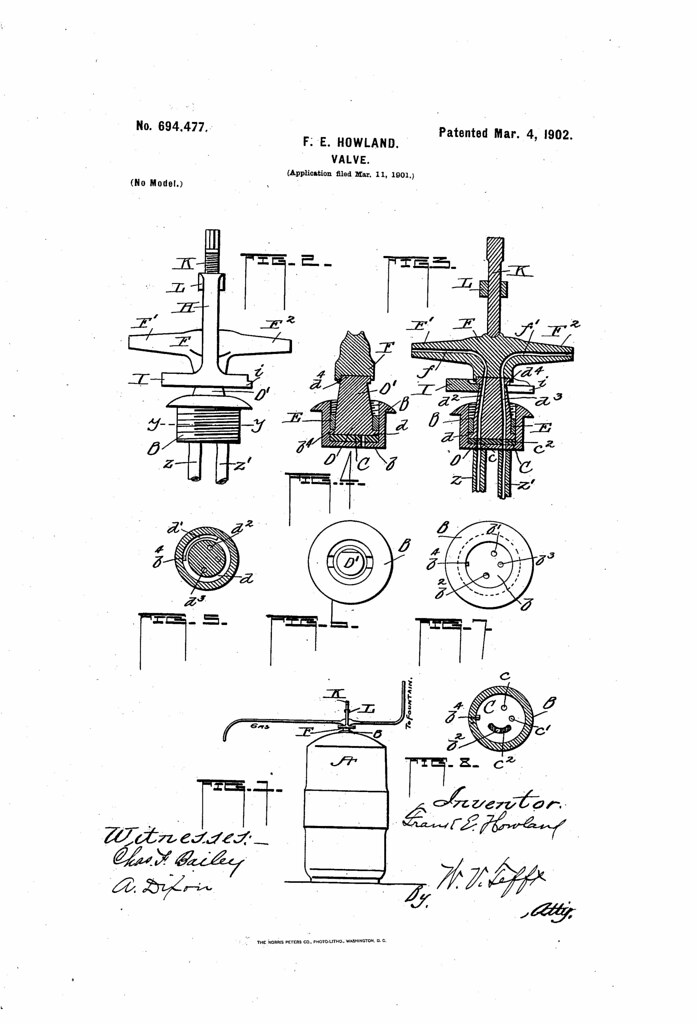
Today in 1902, US Patent 694477 A was issued, an invention of Frank E. Howland, for his “Valve.” There’s no Abstract, although in the description it includes this summary:

My invention relates to certain new and useful improvements in apparatus for carbonating and dispensing liquids. More particularly, my invention relates to a device adapted to be applied to casks, kegs, or other receptacles whereby in its use it is practicable to completely fill the receptacles in the first instance and in such filling and as the liquid is dispensed a constant recarbonating process is instituted which continues until all of the liquid is Withdrawn from the receptacle.

The device is adapted to a receptacle being filled, and by a certain manipulation of the valve part of the device an inlet into the receptacle, which permits the filling, and a vent or air-escape is provided, thus enabling the receptacle to be completely filled.

US694477-0

Filed Under: Beers, Just For Fun, Politics & Law, Related Pleasures Tagged With: Cask, History, Kegs, Law, Patent

Patent No. 212898A: Improvement In Apparatus For Supplying Beer-Barrels

March 4, 2016 By Jay Brooks

patent-logo
Today in 1879, US Patent 212898 A was issued, an invention of William F. Class, for his “Improvement in Apparatus for Supplying Beer-Barrels.” There’s no Abstract, although in the description it includes this summary:

The nature of my improvement consists of a semi-spherical chamber made of india-rubber or other suitable elastic material and connected at the base with a frame or stand having an outlet and an inlet valve-opening. within the chamber is a spiral spring extending from By means of said spring the chamber is expanded after being compressed. The said valve-opening admits the air, and the valve closes on compressing the chamber to force the air out through the induction opening into the barrel, keg, etc.

US212898-0

Filed Under: Beers, Just For Fun, Politics & Law, Related Pleasures Tagged With: History, Kegs, Law, Patent

Beer In Ads #1839: Facts Versus Fallacies #68

March 3, 2016 By Jay Brooks


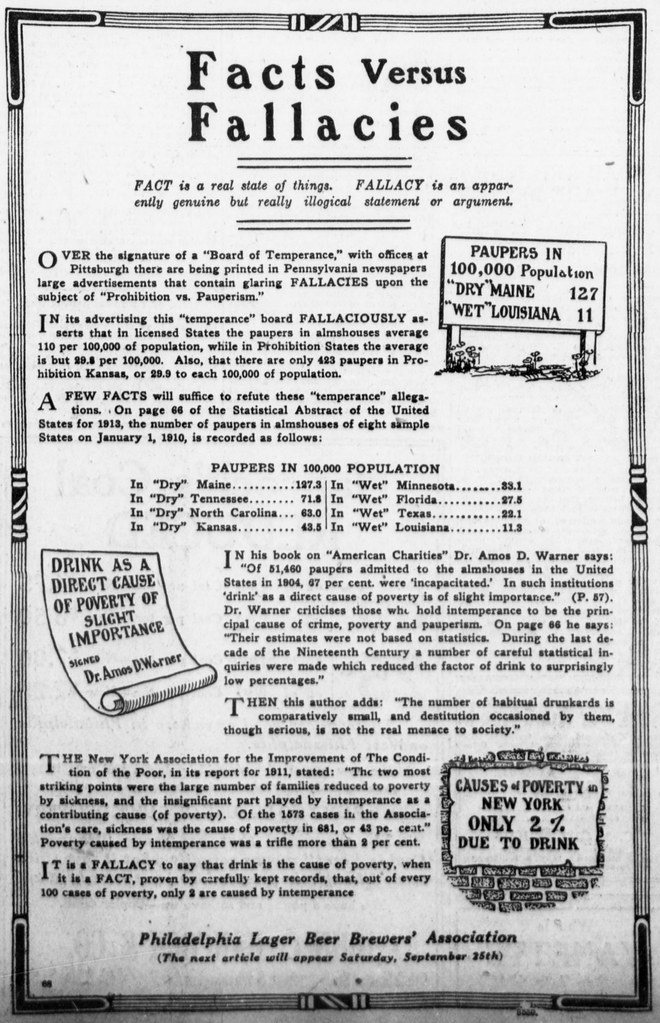
Thursday’s ad is another one for the Pennsylvania State Brewers Association, from 1916, No. 68 in series they did from 1915-17 called “Facts Versus Fallacies.” I have no idea how many were done but some of the them are numbered into low triple digits, suggesting there were a lot of them, all in an effort to stop Prohibition from happening and win over support for beer. This ad, marked “64,” is another interesting one because it talks about drinking causing poverty, and how prohibitionists were arguing that in states that were dry, there were less people in poorhouses, or almshouses, than in “wet” states where alcohol was still permitted. It’s weird to think that there were such places all over the country, and in fact one of my favorite author’s first novels — John Updike — was “The Poorhouse Fair,” is set in the fictional “Diamond County Home for the Aged.” But the statistics offered by the ad contradicted the prohibitionists’ arguments, showing that in at least four dry states, per capita residency in poorhouses was higher than in four comparable wet states. They go on to cite another series of studies that further contradict the prohibitionists, and showing that sickness is the most common cause of poverty in America, and not drinking, which is in fact a vert small percentage of the total.

Facts-v-Fallacies-68-1915-2

Filed Under: Art & Beer, Beers, Just For Fun Tagged With: Advertising, History, Pennsylvania, Philadelphia, Prohibition

Bear Republic To Open 2nd Brewpub

March 3, 2016 By Jay Brooks

bear-republic
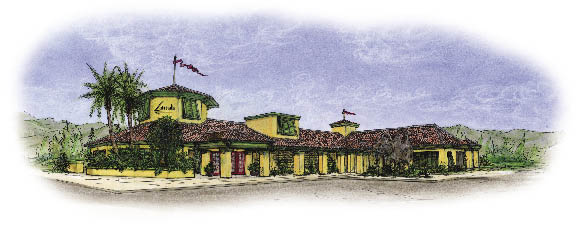
One of my favorite breweries, and the 2nd largest in Sonoma County, announced that they will be opening a second brewpub in the town right next door to me, in Rohnert Park, California. Bear Republic Brewing, whose original brewpub in is Healdsburg, and also operates a production facility in Cloverdale, has taken over the former Latitude Island Grill space in Rohnert Park, just off the Gold Course Drive exit.

latituderendering

Here’s the press release:

In keeping with the tradition of honest ales and family values, Bear Republic Brewing Company®, its employees and the Norgrove Family are excited to announce that after twenty years, Bear Republic will be opening the company’s third brewery operation in the City of Rohnert Park, California.

“Bear Republic looks forward to developing a positive relationship with the Chamber of Commerce, the City Fathers, the local business community and the citizens of Rohnert Park,” said Bear Republic Brewing Company® President & CEO Richard Norgrove.

The former Latitude Restaurant will be the new site of Bear Republic’s Rohnert Park brewpub.
The brewery and brewpub operation is currently in the planning stages and will commence with the construction phase at 5000 Roberts Rd, formerly the site of Latitude Restaurant. No opening date is available as of this writing.

“Rohnert Park is thrilled to have Bear Republic coming to town,” said Rohnert Park City Council Member Amy Ahanotu. He added, “A brewery of their quality is exactly what we’ve been looking for to expand the dining and entertainment choices for our residents and visitors.”

That’s going to be awesome, with Bear Republic so much closer to my house, but also in building their business with this third location. For more information about the space, here’s the original designs from Latitudes.

Filed Under: Breweries, News Tagged With: Business, California, Northern California, Sonoma County

« Previous Page
Next Page »

Find Something

Northern California Breweries

Please consider purchasing my latest book, California Breweries North, available from Amazon, or ask for it at your local bookstore.

Recent Comments

  • Bob Paolino on Beer Birthday: Grant Johnston
  • Gambrinus on Historic Beer Birthday: A.J. Houghton
  • Ernie Dewing on Historic Beer Birthday: Charles William Bergner 
  • Steve 'Pudgy' De Rose on Historic Beer Birthday: Jacob Schmidt
  • Jay Brooks on Beer Birthday: Bill Owens

Recent Posts

  • Historic Beer Birthday: George F. Gund April 5, 2026
  • Historic Beer Birthday: John Friedrich Wiessner Jr. April 5, 2026
  • Beer Birthday: Steve Wagner April 5, 2026
  • Beer In Ads #5206: For The Feast Of Easter April 5, 2026
  • Historic Beer Birthday: Hew Ainslie April 5, 2026

BBB Archives

Feedback

Head Quarter
This site is hosted and maintained by H25Q.dev. Any questions or comments for the webmaster can be directed here.