Today in 1990, US Patent D311868 S was issued, an invention of Kenneth J. Armstrong, for his “Beer Keg Cap.” There’s no Abstract, although in the description it includes this summary:
The ornamental design for a beer keg cap as shown and described.
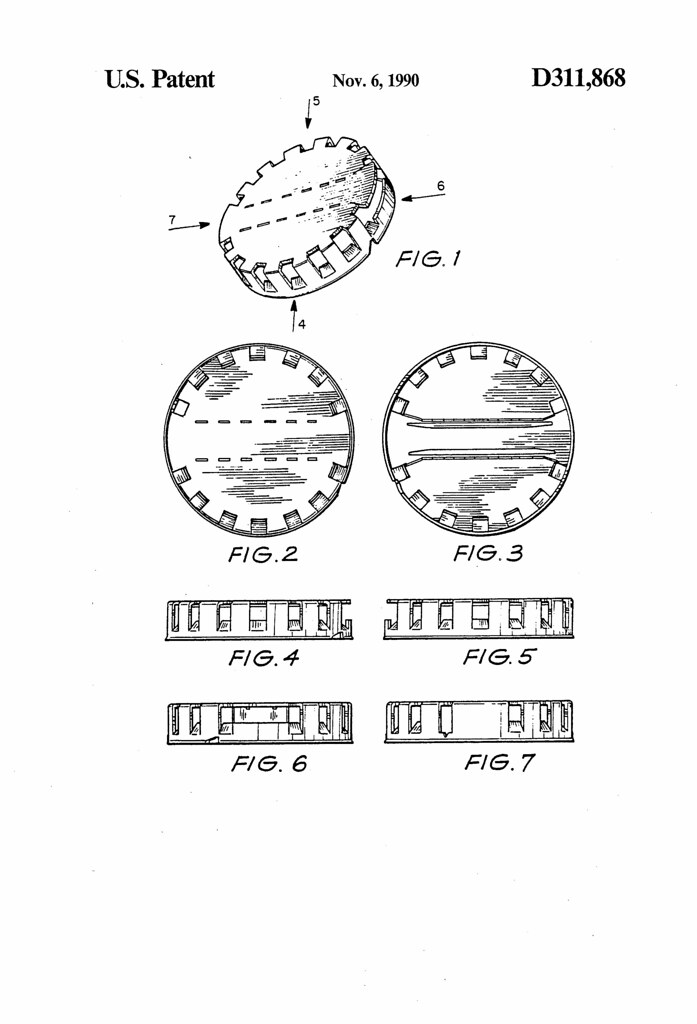

Today in 1990, US Patent D311868 S was issued, an invention of Kenneth J. Armstrong, for his “Beer Keg Cap.” There’s no Abstract, although in the description it includes this summary:
The ornamental design for a beer keg cap as shown and described.

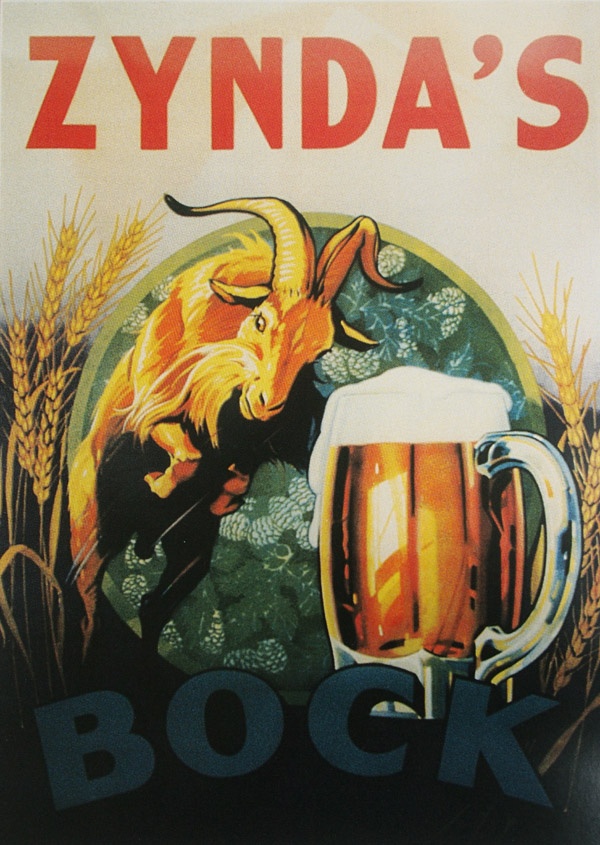
Thursday’s ad is for Zynda’s Bock, from who knows when. John Zynda operated a brewery in Detroit, Michigan, at least until he closed in 1947. Before prohibition, his brewery was known as the White Eagle Brewery, but during prohibition he went underground, literally, and kept brewing beer under the name, John Zynda & Sons Brewery. Here’s a story about they kept making bee through prohibition, from Found Michigan:
Trouble was brewing for Michigan beer companies—big and small—in the spring of 1917, when Michigan jump-started the Prohibition era with its own statewide ban on alcohol nearly three years before the 18th Amendment made drinking a national taboo. Just a handful of Michigan brewers would survive through to the end of Prohibition in 1933, and those that did had to get creative. Several of the bigger companies began making and promoting the still-legal canned hopped malt syrup (the key ingredient needed for homebrewing); Stroh’s turned to making ice cream; and Detroit beer tycoon John Zynda even took his operation underground—literally. In order to avoid the cops, he dug a tunnel from his bottling shop to a garage across the street, rolling the beer to safety a half barrel at a time. When a shipment was ready, he’d then send an empty delivery van away as a decoy, while the real thing made its way off to customers in a car waiting the next block over. Detroit brewers like Zynda, however, had an even harder time making a go of it as of 1927. That year, Canada ended its partial Prohibition, and many Detroit beer makers found it hard to compete once a legal draft at a Windsor saloon was just a boat ride away.
After prohibition ended, and they were legal once again, their name changed to the Zynda Brewing Co. When they brewed Zynda’s Bock, is something I wasn’t able to answer, and although it looks like it’s from the late 1800s, I can’t say for sure.
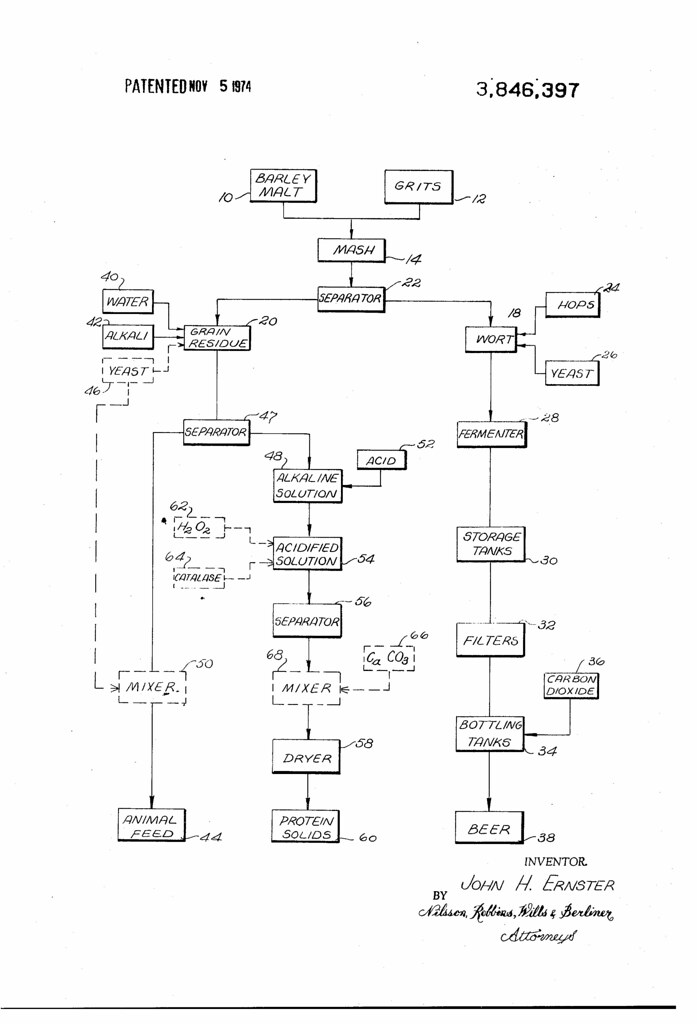
Today in 1974, US Patent 3846397 A was issued, an invention of John H. Ernster, for his “Process For Utilizing Barley Malt.” Here’s the Abstract:
Grain residues from mashed barley malt are separated from wort thereby produced and heated in an alkaline solution to solubilize protein. The alkaline solution is separated from the unsolubilized grain residues and acidified to precipitate water soluble protein. Beer is brewed from the wort and the unsolubilized grain residue can be used as animal feed.
Today in 1912, US Patent 1043683 A was issued, an invention of Jacob A. Fieser, for his “Hose-Coupling.” There’s no Abstract, although in the description it includes this summary:
I have invented certain new and useful Improvements in hose-couplings; and I do hereby declare the following to be a full, clear, and exact description of the invention, such as will enable others skilled in the art to which its improvements in swiveled couplings for hose pipes forming means whereby the different sections of the pipe may be turned to prevent twisting.
The invention consists further of other details of construction and combinations and arrangements of parts which will be hereinafter fully described, shown in the accompanying drawings and then specifically defined in the appended claim.

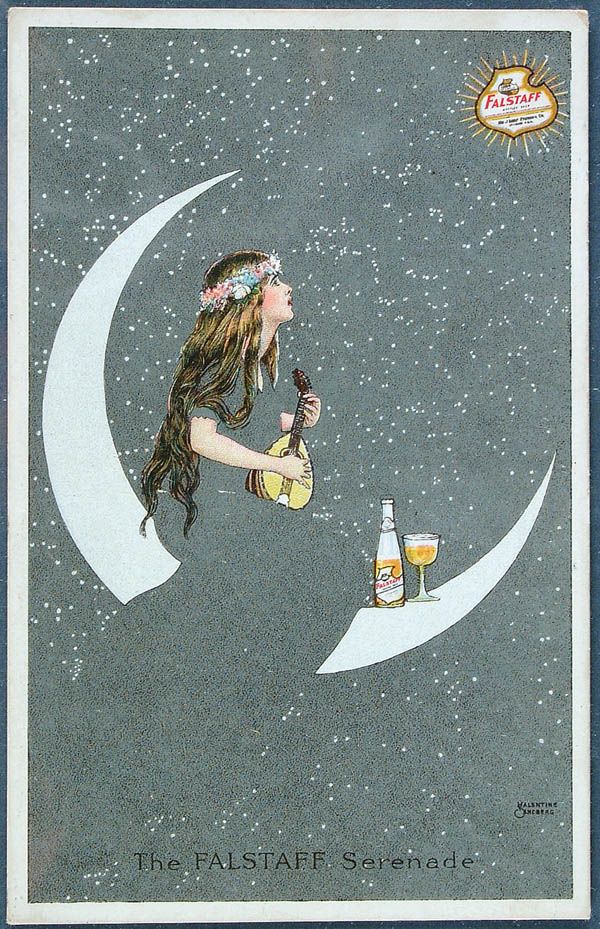
Wednesday’s ad is for Falstaff, from 1910. It’s a beautiful ad, showing a woman serenading the Falstaff star on a — is that a mandolin? — while sitting on a crescent moon. It was done by Valentine Sandberg, who was born in Sweden, but came to the U.S. as an infant and worked doing covers for a variety of popular magazine covers out of New York.
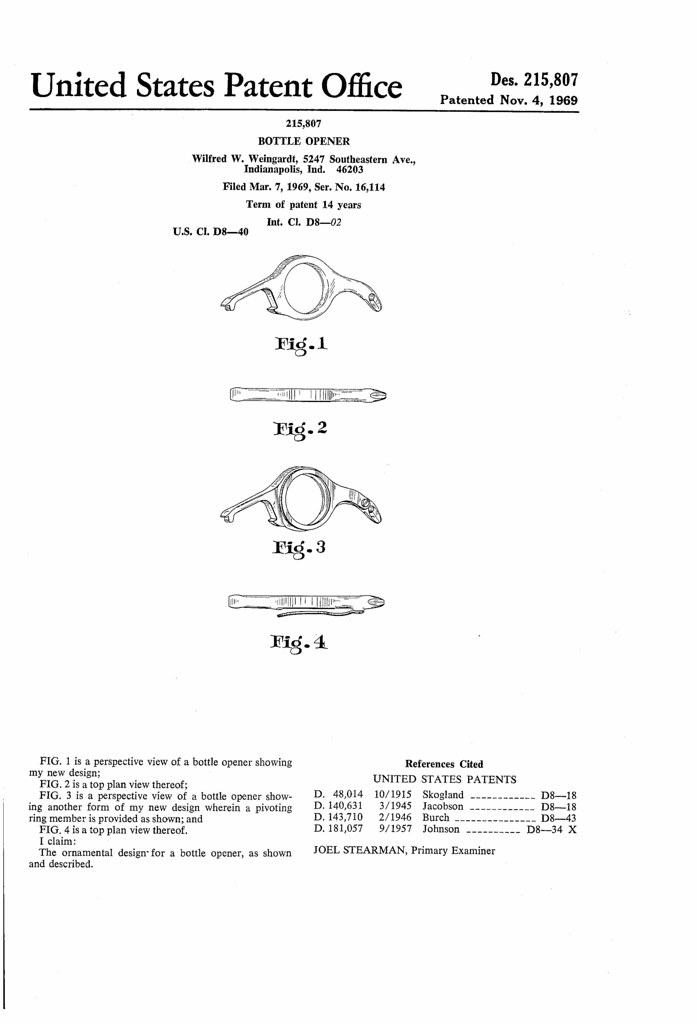
Today in 1969, US Patent D215807 S was issued, an invention of Wilfred W. Weingardt, for his “Bottle Opener.” There’s no Abstract, although in the description it includes this summary:
The ornamental design for a bottle opener, as shown and described.
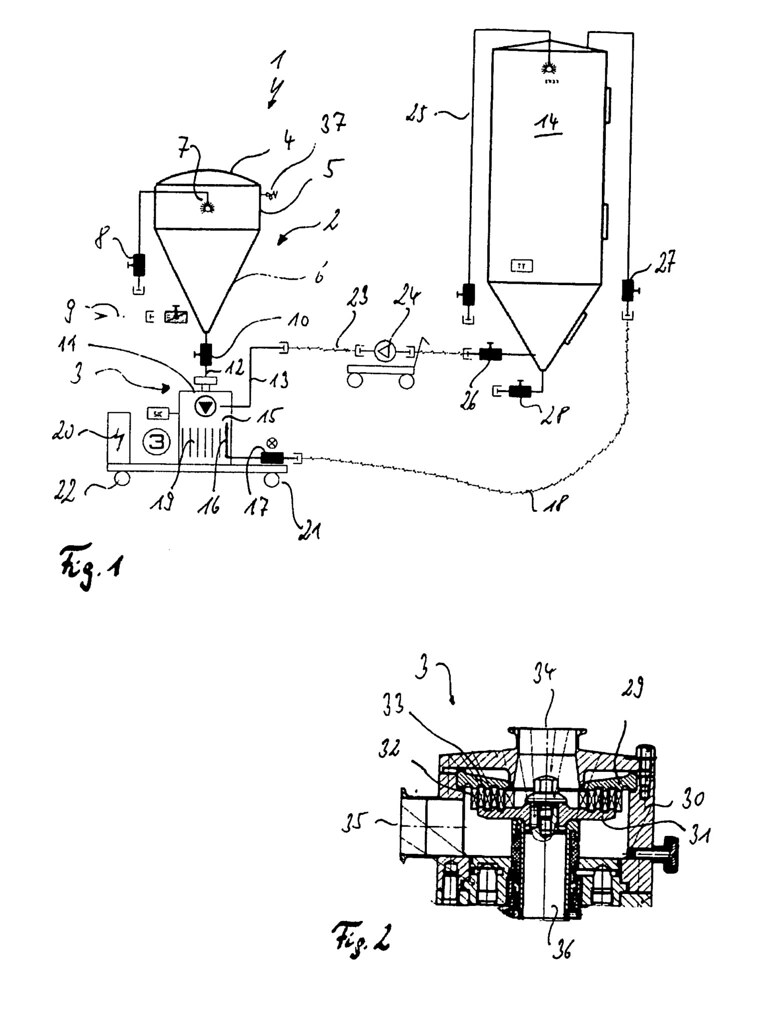
Today in 2014, US Patent 8875616 B2 was issued, an invention of Wolfgang Roth, assigned to Rolec Prozess – Und Brautechnik Gmbh, for his “Facility for Introducing Hop into a Tank.” Here’s the Abstract:
A facility for introducing hop into a tank has a hop receiving tank that can be hermetically sealed and has an outflow and an inert gas supply at its bottom. The facility furthermore has a mixing apparatus that has two inlet pipes on its inflow side and an outlet pipe on the outflow side. This facility is adapted to a method for introducing hop into a tank, in which hop is put into a hop receiving container, air is expelled from the hop receiving container by inert gas and the hop with beer or “young beer” is supplied to the mixing apparatus.
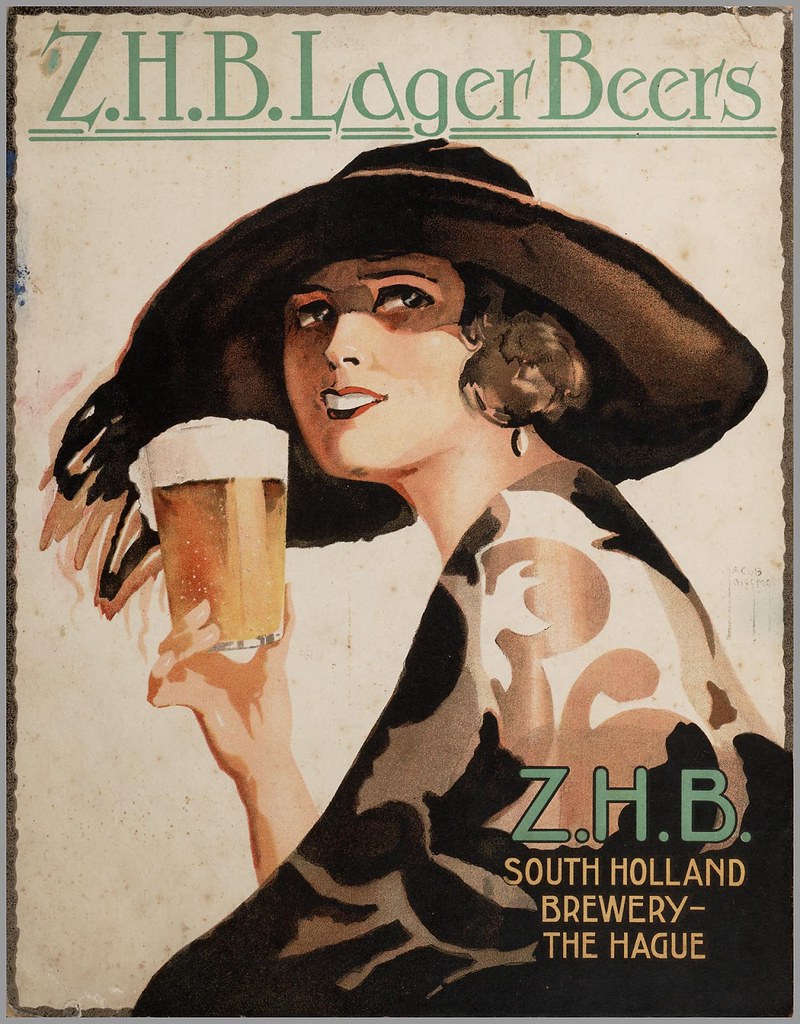
Tuesday’s ad is for Z.H.B. Lager Beers, from the South Holland Brewery (a.k.a. Zuid Hollandse Bierbrouwerijen) in The Hague Center. The ad is from between 1925 and 1950, a wide range to be sure, but that’s according to the Memory of the Netherlands website, who also credits the ad to Jacob Jansma. It’s a pretty great illustration of a woman holding up a glass of beer, and looking slyly to the side, possibly right at you and me.
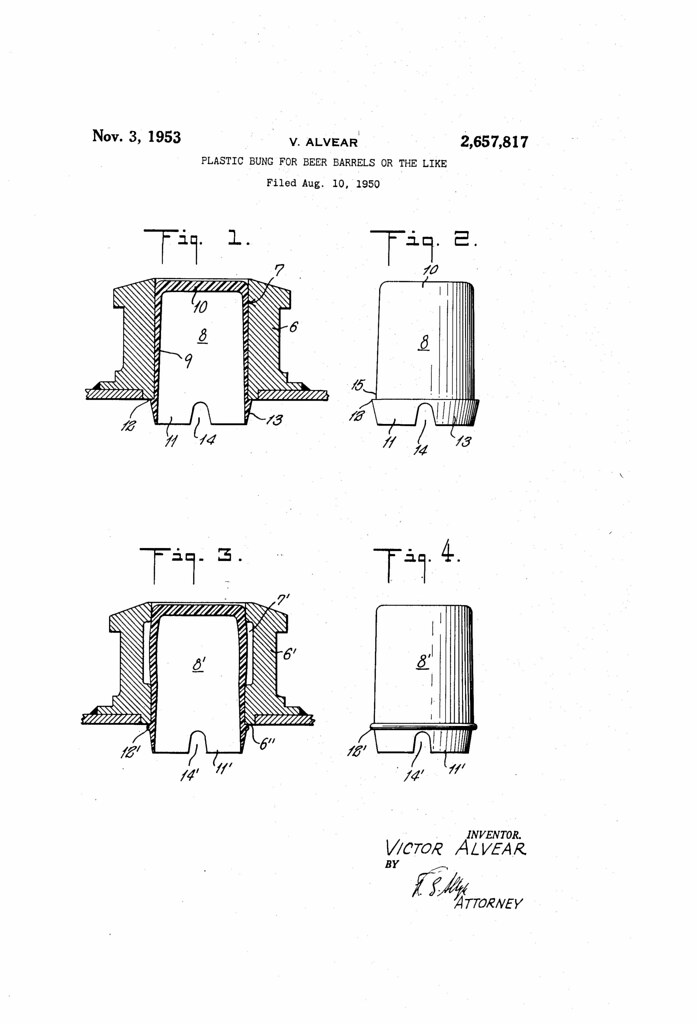
Today in 1953, US Patent 2657817 A was issued, an invention of Victor Alvear, for his “Plastic Bung for Beer Barrels or the Like.” There’s no Abstract, although in the description it includes this summary:
I have found that an elastic and entirely satisfactory and cheap stopper can be formed of synthetic elastomeric plastic having the properties of polyethylene and vinyl derivatives. This is not only cheap to manufacture but the stopper can be used over and over again. Such a stopper has been found to be tasteless, non-absorbent, insoluble, indestructible, can be used in conventional bung hole bushings and when properly formed is entirely effective. The stopper is inert to liquid as well as gases and is entirely sanitary. It is not affected by normal changes in atmospheric conditions and does not stick to the bushing. This type of plastic has the known characteristic of being form retaining under normal pressure but capable of deformation under excessive pressure and return to its original form upon release of such pressure.
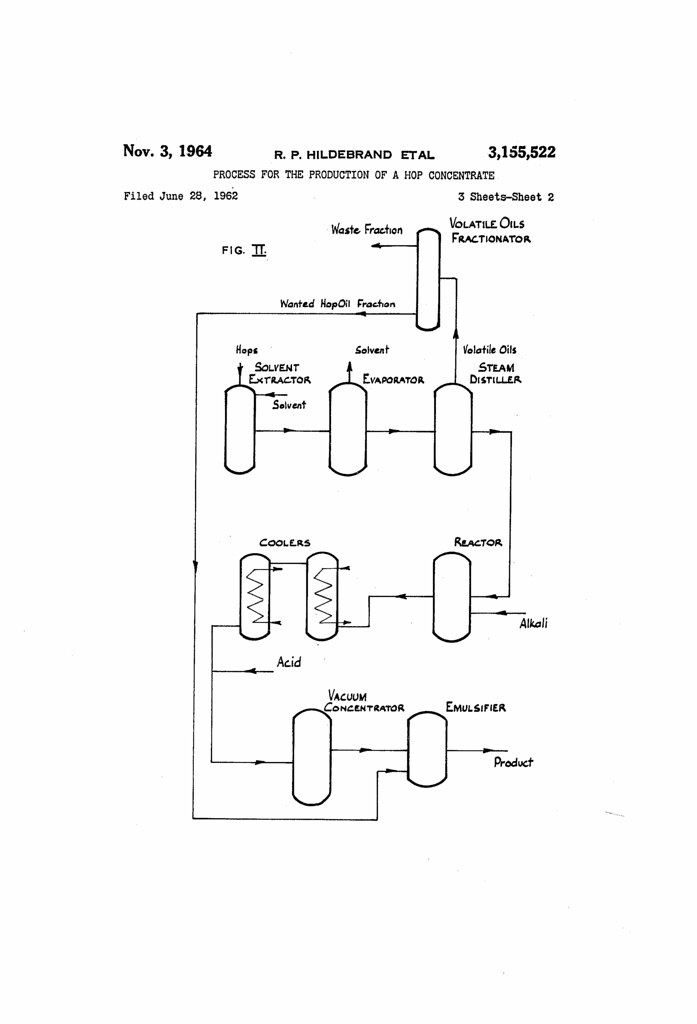
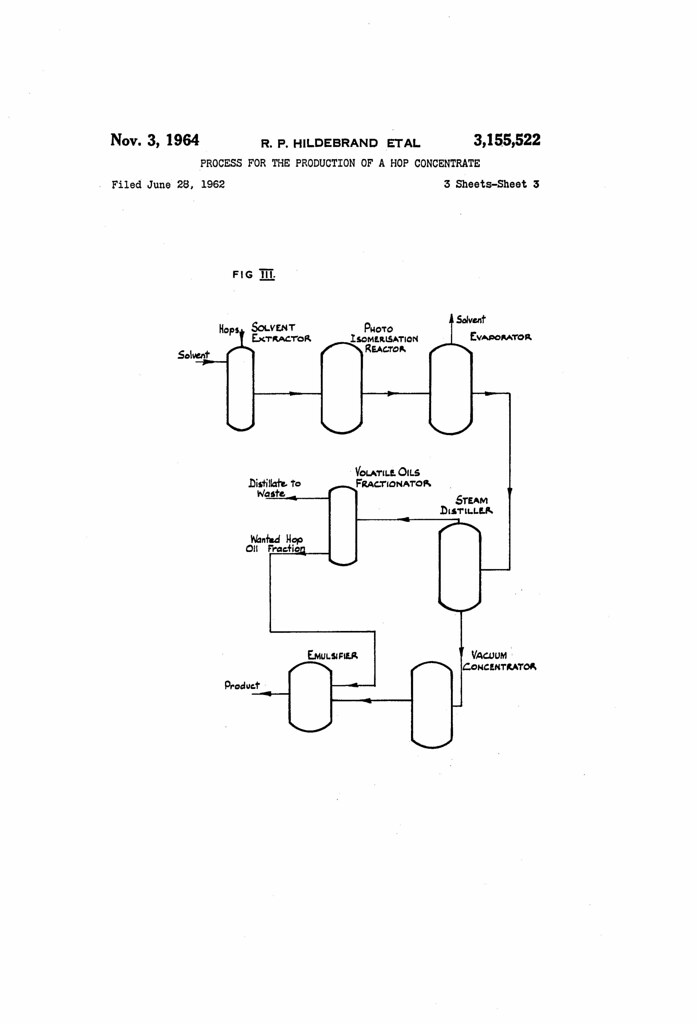
Today in 1964, US Patent 3155522 A was issued, an invention of Peter John Andrew Murray, Brian James Clarke, Robert Peter Hildebrand and Frank Vincent Harold, assigned to Carlton & United Breweries, for their “Process for the Production of a Hop Concentrate.” There’s no Abstract, although in the description it includes this summary:
This invention relates to the preparation of hop concentrates or extracts for brewing purposes, and to the production of hopped beverages, such as beer, utilizing such concentrates.
An object of this invention is to provide a new process for the manufacture of hop concentrates which if used to replace hops will impart to the finished beer in their correct balance those materials contributing to taste characteristics and flavour which are normally found in beer manufactured by conventional processes. A further object is to enable economies to be effected in the manufacture of beer or like beverages.
While the invention applies to the treatment of any part of the hop plant it refers in particular to the hop cones, and the hops used may be either in the freshly picked state or dried as in normal commercial practice.