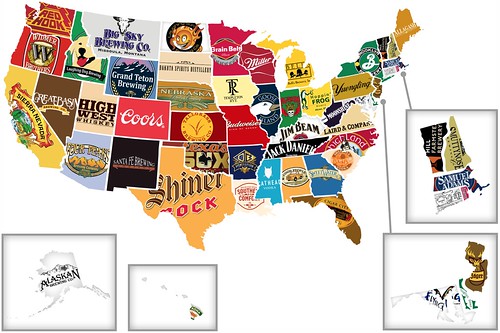
Today’s infographic is from Thrillist, and is entitled Red, White and Booze. The map shows the most iconic brand associated with each state, with the goal of “plotting the biggest/most high-profile liquor or beer companies from each of the 50. We know there are at least infinity amazing craft breweries in each of these states, but this map’s about the big boys, at least when there are big boys to be noted.”
Beer In Ads #953: La Meuse

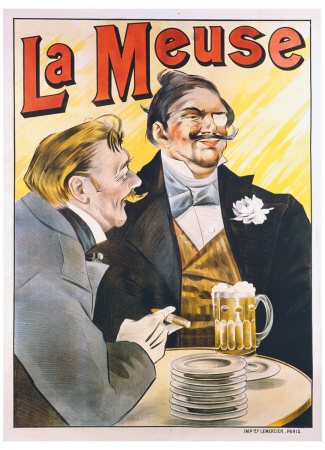
Tuesday’s ad is for La Meuse, this one I’m guessing is from the late 19th century. There are several other, more artistic, ads from the same period advertising bieres de “La Meuse.” This one shows two snooty gentlemen, with one beer between them. It doesn’t make me want to join them; how about you?
Relative Prevalence Of The Word For Beer In Europe’s Ten Most Spoken Languages

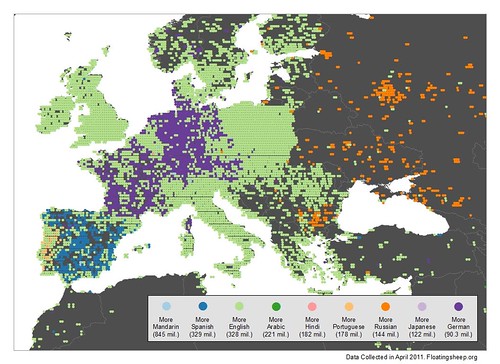
Today’s infographic graphs is similar to yesterday’s one showing “the relative prevalence of the word for beer in the world’s ten most spoken languages (by # of native speakers),” but instead shows the same metric for Europe. The map was also created by http://www.floatingsheep.org/2011/10/wherever-you-are-just-ask-for-beer.html”>Floating Sheep, and was a follow up to yesterdays.
Because simply mapping references to beer in the world’s most spoken languages yielded a relatively homogeneous result due to the significant number of references to “beer” and “ale” in English, we thought a more locally specific analysis would be appropriate. So we instead mapped references to beer in twelve languages spoken primarily in Europe that were not included in our earlier map. And while this map obviously doesn’t include all of the many languages spoken on the continent, these languages were chosen because of their relative prominence within a larger sample of languages.
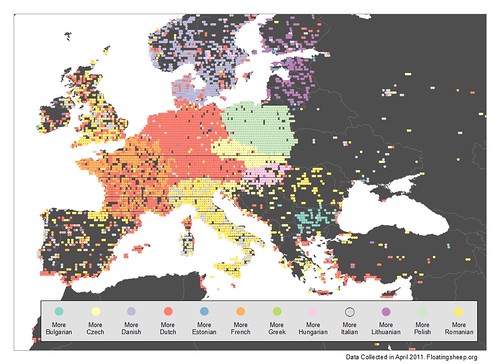
Click here to see the map full size.
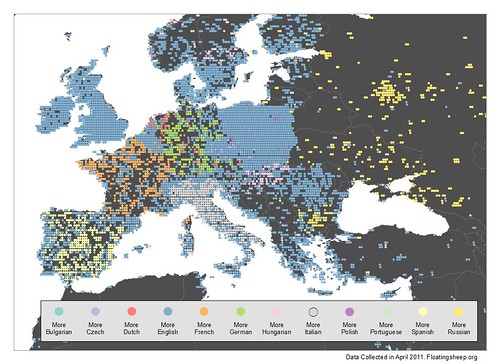
Despite the usefulness of this particular grouping, it remains useful to consider how some of the most spoken languages in the world stack up to these more country-specific languages, so in the map below we reintroduce references in English, as well as references in German, Portuguese, Russian and Spanish, to some of Europe’s more widely spoken tongues.
While this graphic complicates the picture provided by our first map — there continues to be a significant amount of content in the expected, native languages of each country — English remains prominent throughout Europe, especially in reference to beer.
Beer In Ads #952: They All Come Back To Pabst
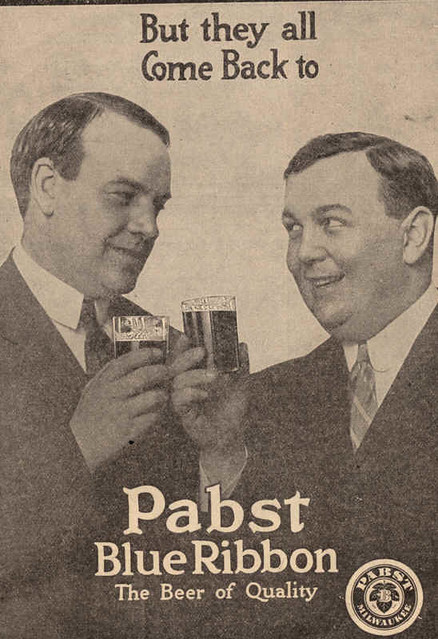
Monday’s ad is for Pabst Blue Ribbon, this one from 1913. It’s a fairly simple ad, with two men (possibly famous? – the one on the left looks a little familiar) clinking some pretty small glasses of beer. They look a lot like modern 4 oz. sample glasses. One thing I am curious about; what was it they were doing that they had to “come back to Pabst?”
Relative Prevalence Of The Word For Beer In The World’s Ten Most Spoken Languages

Today’s infographic graphs out the “the relative prevalence of the word for beer in the world’s ten most spoken languages (by # of native speakers). However, because of the fact that there were no points at which the number of references in the world’s sixth most-spoken language, Bengali, were greater than references to each of the other nine languages, we have excluded Bengali in this particular case. So while we’re sad to see Bengali left off the map, the fact that a language with 181 million native speakers has so few references to “beer” is telling of either vast inequalities in the way Bengalis are represented within the geoweb, or perhaps just their general distaste for beer.” The map was created by Floating Sheep, one of my favorite websites.
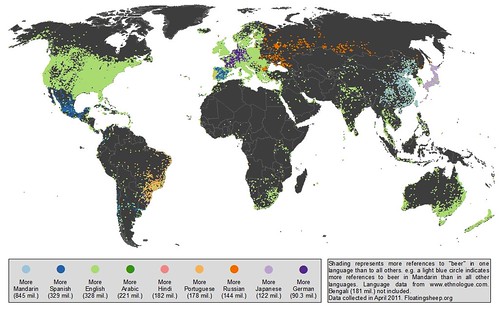
Click here to see the map full size.
“Zooming in to Europe only further accentuates the relative dominance of English among these languages, with significant portions of Portugal, Spain, and Germany even showing more references to beer than in their native languages. Interesting, however, that much of France is a mixture of English and German references, even in the much more southern portions of the country.”
Coming Soon — All Big Brewers Owned By Some Corporate Giant

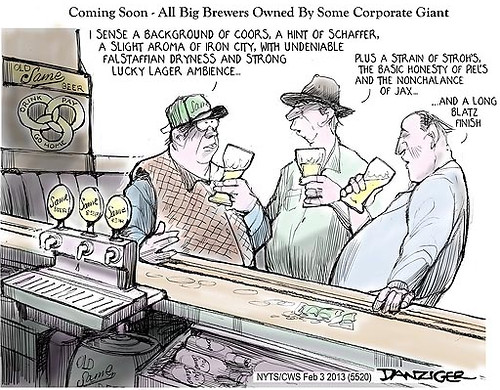
It’s a slow Sunday, but I came across this editorial cartoon by Jeff Danzinger from February of this year. Entitled Coming Soon — All Big Brewers Owned By Some Corporate Giant, it certainly plays on the fears of ever-increasing consolidation in the market, especially internationally. It’s happening in the brewing industry, without a doubt, but perhaps more frightening is that it’s happening in virtually every sector of the marketplace. I especially like the Ballantine-like logo on the wall with the tagline “Drink … Pay … Go Home.” You can see more of Danzinger’s cartoons at his official website.
Drinking And Gambling

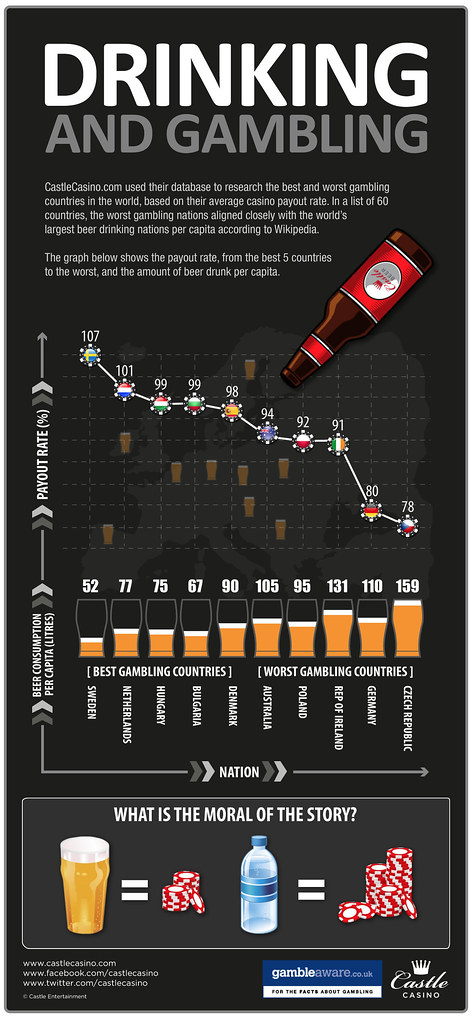
Today’s infographic is a little bit suspect. It’s comparing the best and worst payout rates from various countries based on data from the online Castle Casino, who also is responsible for the infographic itself, Drinking Hampers Gameplay. That conclusion comes taking the payout rates and matching them with the average beer consumption per person figures for the same nations. Unfortunately, there’s absolutely no correlation between the two. There’s no data to support that the countries that drink more per capita were doing their drinking while they were gambling. So the “moral of the story” is utterly meaningless.
Click here to see the infographic full size.
Why Do Men Drink Beer?


Beer In Ads #951: Tommy Henrich, Athlete-of-the-Year
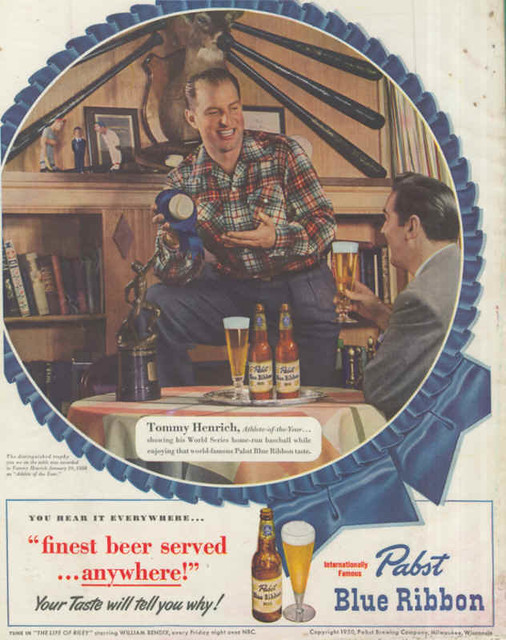
Friday’s ad is again for Pabst Blue Ribbon, also from 1950. This one features New York Yankee Tommy Henrich, who apparently was named Athlete-of-the-Year that year. He’s showing off his World Series home run ball, from what series I have no idea. Given the look on his face, it’s probably a good thing he’s sharing a PBR so his guest can endure his tall tales.