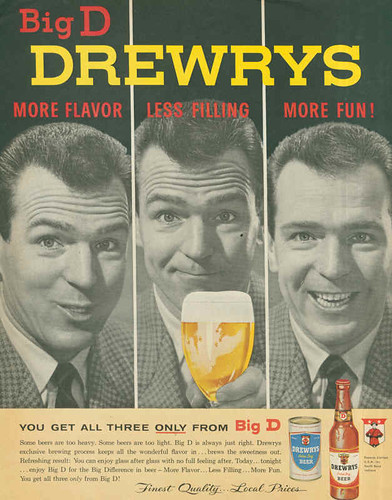
Thursday’s ad is from perhaps the 1950s, another one for the Indiana brewery Drewerys. It also uses the slogan “more flavor, less filling, more fun!” THis one has a different model making faces to express each idea. Hilarious, that’s Big D. Again.
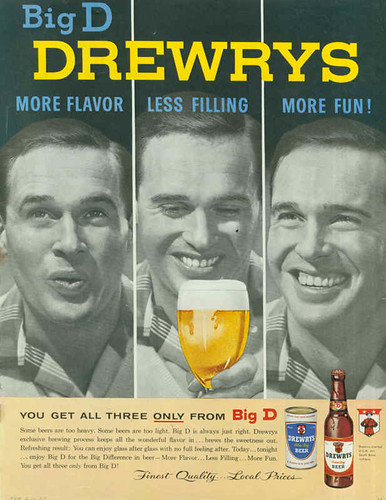

Thursday’s ad is from perhaps the 1950s, another one for the Indiana brewery Drewerys. It also uses the slogan “more flavor, less filling, more fun!” THis one has a different model making faces to express each idea. Hilarious, that’s Big D. Again.

The Bistro, in Hayward, California, has been an institution for … well, eighteen years. They put on four niche festivals each year — Double IPA, IPA, Wet Hop and Wood Aged — plus a hops rhizome event. Tomorrow they’re celebrating their 18th anniversary, not with a whimper, but a bang.
On tap, they’ll have some classic beers, such as Anchor Christmas Ale 1999 and in bottles, such rarities as a vertical tasting of North Coast Old Stock from 2000 until the present vintage, Unibroue’s anniversary ale, from 2004 to 2007. They’ll also have bottles of Russian River Brewing’s first bottling of batch 23 — circa 2007 — and Avery The Beast 2008 to name just a few.
There will be live music at the pub, beginning at 4:30, with The Hipbones, who first played here in 1997, The Travis Larson Band, along with special guest from Canada, Dave Martone.
The festivities start when they open at 10:30. Should be a great time. Happy 18th Vic and Cynthia!
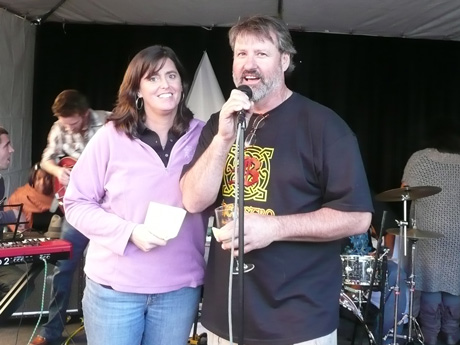
Bistro owners Cynthia and Vic Kralj announcing the winners of the 2009 Double IPA Festival.

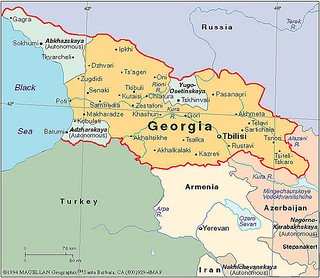
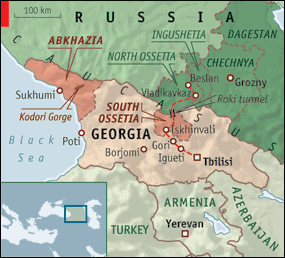
Today in 1990, South Ossetia declared their Independence from Georgia, though it remains unrecognized by most nations.
South Ossetia
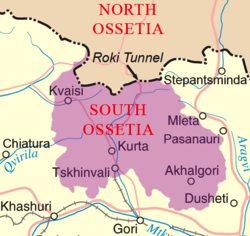
South Ossetia Breweries
South Ossetia Brewery Guides
Other Guides
Guild: None Known
National Regulatory Agency: None
Beverage Alcohol Labeling Requirements: Not Known
Drunk Driving Laws: BAC 0.08%
Beer in Ossetian Mythology: Uacilla (Уацилла; “Saint Elijah”). Also spelled Wasilla. God of rain, thunder and lightning. As protector of the harvest he is known as Хоры Уацилла (Hory Uacilla, “Uacilla of the wheat”). Anyone struck by lightning was considered chosen by the god and, if they survived, a sheep was sacrificed in their honor. His festival was celebrated in the summer with the sacrifice of a lamb and a bull and the drinking of specially brewed beer. On that day women baked bread in silence as a mark of reverence.
Alcohol Consumption By Type:
Alcohol Consumption Per Capita (in litres):
WHO Alcohol Data:
Patterns of Drinking Score: N/A
Prohibition: None

Here’s a fun one, sent in by friend of the Bulletin Alan — a.k.a. The Professor. City Brewery in La Crosse, Wisconsin (the same one that rescued the Latrobe brewery) is taking a novel approach to its energy use and has found a way to be charitable at the same time. They’re figured out a way to use their brewing bio-gas byproducts to “create three million kilowatt hours per year of electricity by capturing, cleaning and burning using a process through an engine called a Jenbacher.”
They then donate all that energy to a nearby hospital, the Gundersen Lutheran Health System, which takes the electricity produced by City Brewery, using it to produce 10-13% of their total energy needs. The hospital is trying to reach complete energy independence by 2014. Below is a short video explaining it all.
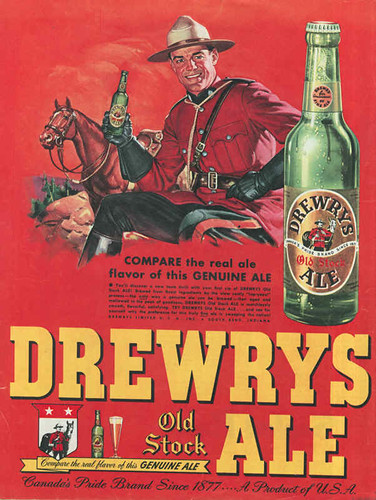
Wednesday’s ad is again possibly from the 1950s, and is another ad for the Indiana brewery Drewerys. This one features a Canadian Mountie and the following confusing tagline. “Canada’s Pride Brand Since 1877 … A Product of U.S.A.”

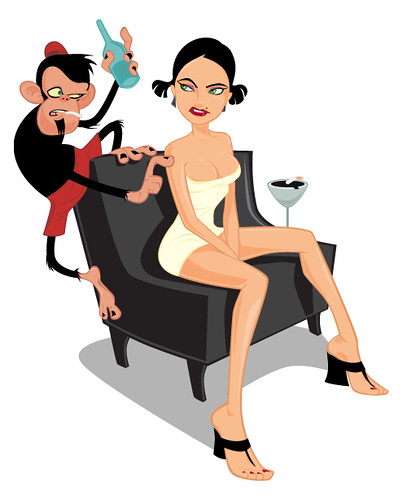
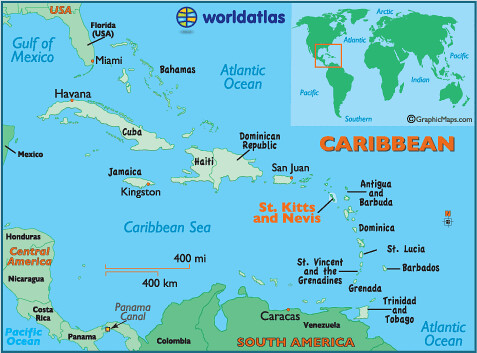
When I hear the term “drunken monkey,” I first think of the Chinese martial art, a kind of Kung Fu. There’s also a surprising number of bars and restaurants called Drunken Monkey this or that. But in searching for information on beer in Saint Kitts and Nevis, the Caribbean island nation who celebrates their independence day today, I found an old news report that there are real drunken monkeys. In Beware of Alcoholic Monkeys on St. Kitts, they recount how these monkeys were “originally imported to the island by pirates, [and] were introduced to the tantalizing effects of umbrella-laden mojitos and shots of tequila by tourists a few decades ago. Not surprisingly, they developed a heavy hankering for it.”
A group of scientists from McGill University in Montreal, Canada, along with a foundation on the islands, saw an opportunity and captured 600 monkeys to study their drinking behavior. The monkeys drinking habits broke down into somewhat predictable groups:
So that breaks down like so:
That looks similar to what I’d expect for people, too. Does anybody know how the same groups shake out for Americans, or humans across the world?
The UK’s Guardian summarized the results.
For many years, alcoholism in humans was thought to be purely a learned behaviour — the result of environmental factors. But more recent studies indicate that in humans, the tendency towards alcohol addiction has a genetic component: it tends to run in families. Research has found three regions on the human genome that may be linked to alcoholism. Unfortunately, since these areas contain up to 300 genes, it may be some years before specific “alcohol genes” are identified.
I think it is interesting that, despite living in a tropical paradise, without any economic problems or deprivation, this video clearly documents that some monkeys still become alcoholics. Additionally, this video shows how vervet monkeys’ alcohol use mirrors that of humans, suggesting that they too, have a genetic component. Further, human and vervet monkey DNA shares an 84.2% similarity. So even though it is difficult to study humans’ genetics and patterns of alcohol consumption, researchers can study vervet monkeys. So research is ongoing in these monkeys to better understand their patterns of alcohol use and abuse — valuable since scientists can carefully control the monkeys’ environment and the monkeys can be selectively bred so researchers can better understand the effects of particular genes on behaviour.
The study itself, Alcohol consumption in vervet monkeys: biological correlates and factor analysis of behavioral patterns, doesn’t reveal too much in the abstract, so I have to take the word of the two reports. But it certainly would be interesting to see if it does correlate to human behavior.

Peter Rowe, the man behind the television show Dirty Jobs, has a new three-part series that debuts tonight: How Booze Built America. I suspect they’ll be playing fast and loose with much of beer’s history, but it should be at least an entertaining show. Check out the first episode on the Discovery channel. Check your local listings for times. Below is a teaser to give you a flavor of the show.

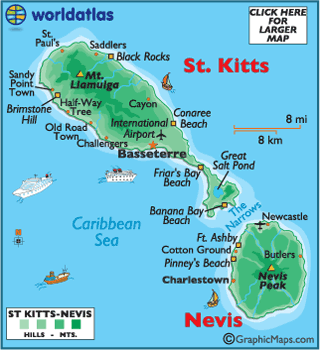
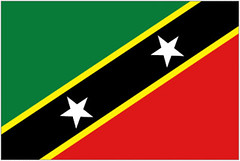
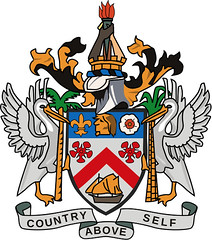
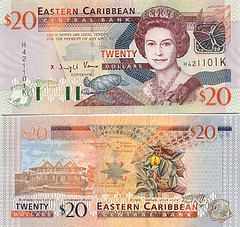
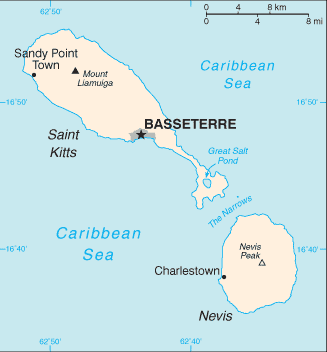
Today in 1983, Saint Kitts and Nevis gained their Independence from the United Kingdom.
Saint Kitts and Nevis
Saint Kitts and Nevis Breweries
Saint Kitts and Nevis Brewery Guides
Other Guides
Guild: None Known
National Regulatory Agency: None
Beverage Alcohol Labeling Requirements: Not Known
Drunk Driving Laws: BAC 0.08%
Alcohol Consumption By Type:
Alcohol Consumption Per Capita (in litres):
WHO Alcohol Data:
Patterns of Drinking Score: N/A
Prohibition: None
Tuesday’s ad is from perhaps the 1950s, for the Indiana brewery Drewerys. I’m assuming this is before Miller introduced their Lite beer and the slogan “tastes great, less filling.” Drewerys is using the somewhat similar “more flavor, less filling, more fun!” How about the faces the model is making to express each idea. Hilarious, that’s Big D.

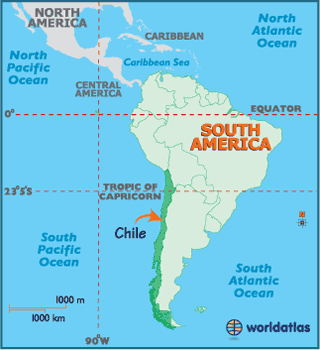
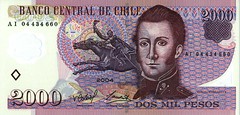
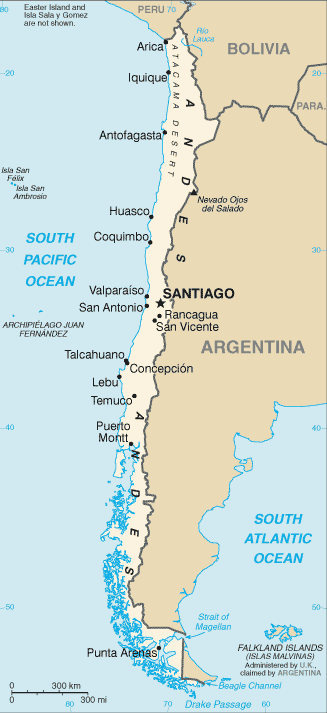
Today in 1818, Chile gained their Independence from Spain.
Chile
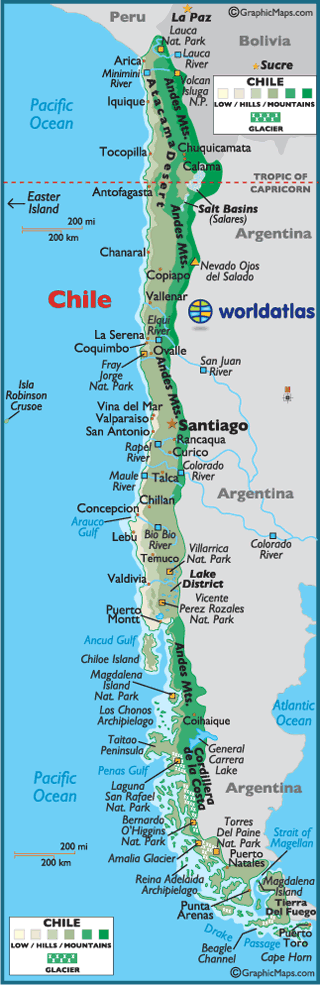
Chile Breweries
Chile Brewery Guides
Other Guides
Guild: None Known
National Regulatory Agency: Servicio Agricola y Ganadero (SAG)
Ministry of Agriculture
Agriculture and Livestock Service
Beverage Alcohol Labeling Requirements: Yes
Labels must include the following information: Name and description, Bottler name and address, Country of origin, Alcohol content, Distributor name and address, Net volume. Ingredient lists are only required for mixed drinks (i.e., with multiple ingredients)
Drunk Driving Laws: BAC 0.05%

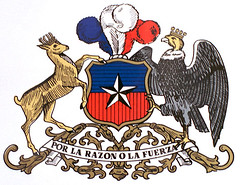
Before taking the first sip of a drink, you say “salud,” which means “to your health,” and be sure to look your host in the eyes. If a formal business proposal is being discussed, a toast is made to the success of the future deal, contract or agreement or to the person or company involved.
Alcohol Consumption By Type:
Alcohol Consumption Per Capita (in litres):
WHO Alcohol Data:
Patterns of Drinking Score: 3
Prohibition: None.